Unlock your full potential by mastering the most common Power Transformer Installation and Maintenance interview questions. This blog offers a deep dive into the critical topics, ensuring you’re not only prepared to answer but to excel. With these insights, you’ll approach your interview with clarity and confidence.
Questions Asked in Power Transformer Installation and Maintenance Interview
Q 1. Explain the different types of power transformers.
Power transformers are broadly classified based on several factors, including their core construction, voltage levels, application, and cooling method. Let’s explore some key types:
- Based on Core Construction:
- Core-type: The most common type, where the windings surround a laminated core. Think of it like a sandwich – the core is the filling, and the windings are the bread slices. This design is efficient for lower to medium voltage applications.
- Shell-type: The windings surround a central limb of the core. Imagine the core as a shell enclosing the windings. This type is better suited for higher voltage applications and often used in larger power transformers.
- Based on Voltage Levels: Transformers are categorized by their voltage transformation ratio – step-up (increasing voltage), step-down (decreasing voltage), or autotransformers (single winding with a tapped connection). A step-up transformer boosts voltage for long-distance transmission, while a step-down transformer reduces voltage for distribution to homes and businesses.
- Based on Application: Specific applications necessitate special designs. For example, distribution transformers deliver power to homes, while power transformers are used in substations for high-voltage transmission. There are also specialized transformers for specific industrial applications like arc welding or furnace operation.
- Based on Cooling Method: The cooling system significantly affects a transformer’s capacity and lifespan. We’ll delve deeper into this in a later answer.
Understanding these classifications is vital for selecting the appropriate transformer for a specific application, ensuring optimal performance and efficiency.
Q 2. Describe the process of installing a power transformer.
Installing a power transformer is a complex process requiring meticulous planning and execution. It’s not a DIY project; specialized equipment and trained personnel are essential. The process generally follows these steps:
- Site Preparation: This includes leveling the ground, creating a foundation (often concrete), and ensuring adequate access for transport and installation.
- Transformer Transportation: Heavy-duty equipment, like cranes, is used to carefully transport the transformer to its designated location. The weight and dimensions must be precisely calculated to prevent accidents.
- Foundation Installation: The transformer is placed on its foundation, ensuring proper alignment and stability. This stage is crucial to minimize vibration and ensure the transformer remains level.
- Winding Connection: Trained technicians carefully connect the transformer’s windings to the respective circuits, adhering strictly to the wiring diagram. Any error can lead to serious damage or malfunction.
- Oil Filling (for oil-filled transformers): If the transformer is oil-filled, the oil is meticulously added, often with vacuum degassing to remove air bubbles. This ensures optimal insulation and cooling.
- Testing: A comprehensive series of tests is conducted to verify the transformer’s insulation resistance, turns ratio, and other critical parameters.
- Commissioning: Once all tests are satisfactory, the transformer is commissioned, and its performance monitored closely.
Each step is meticulously documented, ensuring compliance with safety regulations and industry best practices. A well-executed installation ensures the transformer’s long-term reliability and safety.
Q 3. What safety precautions are crucial during transformer installation?
Safety is paramount during transformer installation. The high voltages involved pose significant risks. Here are some crucial precautions:
- Lockout/Tagout Procedures: Before commencing any work, power must be completely isolated and locked out to prevent accidental energization. Tagging the equipment confirms that it’s out of service and should not be re-energized without proper authorization.
- Personal Protective Equipment (PPE): Appropriate PPE, including safety helmets, insulated gloves, safety shoes, and eye protection, is mandatory. Working with high voltages necessitates specialized equipment such as insulated tools and protective clothing.
- Trained Personnel: Only highly trained and experienced personnel should handle transformer installation. This expertise minimizes the risk of accidents and ensures proper installation techniques.
- Grounding: Thorough grounding is essential to prevent static electricity buildup and provide a safe path for fault currents. This protects both personnel and the equipment.
- Proper Lifting Equipment: Heavy-duty cranes and lifting slings are necessary for safe handling of the transformer. Improper lifting can lead to serious accidents and equipment damage.
- Hot Work Permits: If welding or other hot work is required, obtaining a hot work permit ensures that proper fire safety precautions are in place.
Ignoring safety protocols can have disastrous consequences, including severe injury or even fatality. A safe installation process is crucial to maintain both personnel and equipment safety.
Q 4. How do you test a power transformer for insulation resistance?
Insulation resistance testing is crucial for determining the condition of a power transformer’s insulation. It measures the ability of the insulation to resist the flow of current. A low insulation resistance indicates potential insulation breakdown, which can lead to short circuits and failures. The test uses a megohmmeter (or insulation resistance tester) to apply a high DC voltage to the windings and measure the leakage current.
The process typically involves:
- Preparation: The transformer should be completely de-energized and grounded.
- Test Setup: Connect the megohmmeter to the transformer windings, ensuring proper connections to avoid incorrect readings.
- Test Procedure: Apply the specified test voltage (usually 1000V or 2500V DC depending on voltage class) for a set duration.
- Measurement: The megohmmeter will display the insulation resistance value in megohms (MΩ). Higher values indicate better insulation condition.
- Documentation: Record all test results and compare them with the manufacturer’s specifications or previous test data.
A significantly lower resistance than expected indicates potential insulation problems that require further investigation. This may involve more advanced diagnostic techniques to pinpoint the location and extent of the damage.
Q 5. Explain the significance of transformer oil testing.
Transformer oil testing is critical for assessing the condition of the oil used for insulation and cooling in oil-filled transformers. The oil’s properties can degrade over time due to aging, overheating, or contamination, affecting its insulating capabilities and cooling efficiency. Regular oil testing helps prevent failures and ensures the transformer operates safely and efficiently.
Common tests include:
- Dielectric Strength: Measures the oil’s ability to withstand high voltage without breaking down. A low dielectric strength indicates potential insulation weakness.
- Interfacial Tension: Measures the oil’s cleanliness; low interfacial tension suggests contamination.
- Moisture Content: High moisture content reduces the oil’s dielectric strength and accelerates aging.
- Acidity: Increased acidity indicates degradation of the oil.
- Dissolved Gases Analysis: Detects gases produced by internal faults, such as overheating or arcing.
By regularly testing the oil, we can proactively address any issues before they cause significant damage to the transformer. This preventative maintenance strategy is far more cost-effective than dealing with a major transformer failure.
Q 6. What are the common causes of transformer failure?
Power transformer failures can stem from various causes, both internal and external. Understanding these causes is crucial for effective maintenance and prevention.
- Insulation Failure: Aging, overheating, or contamination can degrade the insulation, leading to short circuits or breakdowns.
- Overheating: Excessive loading, inadequate cooling, or blocked ventilation can cause overheating, damaging windings and insulation.
- Winding Faults: Manufacturing defects, loose connections, or mechanical damage can lead to winding failures.
- Core Problems: Core faults, such as loose laminations or core damage, can cause increased losses and noise.
- Oil Degradation: Contamination, moisture, or aging of the oil (in oil-filled transformers) reduces its insulating and cooling properties.
- External Factors: Lightning strikes, surges, and other external events can cause significant damage to the transformer.
Regular inspection, maintenance, and timely replacement of aging components are vital to minimize the risk of transformer failure. Understanding the root causes allows for targeted preventative measures.
Q 7. Describe the different types of transformer cooling systems.
Transformer cooling systems are designed to dissipate heat generated during operation. The choice of cooling system depends on the transformer’s size and capacity. Common types include:
- ONAN (Oil Natural, Air Natural): The simplest type, relying on natural air circulation and oil convection for cooling. Suitable for smaller transformers.
- OFAF (Oil Forced, Air Forced): Uses fans to force air over the transformer tank and oil pumps to circulate the oil, enhancing cooling capacity.
- ONAF (Oil Natural, Air Forced): Combines natural oil circulation with forced-air cooling.
- OFAF (Oil Forced, Air Forced): Employs both forced oil circulation and forced air cooling for maximum heat dissipation, suitable for large and high-capacity transformers.
- Water Cooling: Some large transformers use water cooling systems to further enhance heat dissipation. This is often integrated with oil cooling systems (e.g., OFWF – Oil Forced, Water Forced).
Selecting the appropriate cooling system is crucial for ensuring the transformer operates within its thermal limits and extending its lifespan. Inadequate cooling can lead to premature aging and failure.
Q 8. How do you troubleshoot a transformer with a faulty tap changer?
Troubleshooting a faulty tap changer involves a systematic approach. Tap changers, crucial for voltage regulation, can malfunction due to various reasons, including mechanical wear, electrical faults, or control system issues.
Step 1: Safety First! Always de-energize the transformer before any inspection or repair. Lockout/Tagout procedures are paramount.
Step 2: Initial Assessment: Check for any visible damage – loose connections, burnt components, or signs of arcing. Examine the tap changer’s selector switch and control circuitry for any indications of problems.
Step 3: Testing: Use a multimeter to check the continuity of the tap changer’s windings and contacts. Verify that the selector switch operates correctly and that the control signals reach the tap changer as expected. Specialized tap changer testing equipment can provide a more thorough diagnosis, including measuring contact resistance and identifying intermittent faults.
Step 4: Isolation and Diagnosis: If a fault is detected, isolate the faulty section of the tap changer. This might involve identifying a specific contact or winding that has failed. This process often requires specialized knowledge of tap changer designs and operation.
Step 5: Repair or Replacement: Minor issues like loose connections can often be repaired. However, more serious problems usually necessitate the replacement of the entire tap changer, or at least a section of it. Proper documentation of the repair or replacement is critical.
Example: Imagine a transformer experiencing voltage fluctuations. Testing might reveal high contact resistance in a specific tap position due to wear. Repair would involve cleaning or replacing the contacts in that position.
Q 9. Explain the process of maintaining a power transformer.
Maintaining a power transformer is crucial for ensuring its longevity and reliable operation. It’s a multi-faceted process incorporating regular inspections, testing, and preventative measures.
- Routine Inspections: Visual inspections should be conducted regularly, checking for signs of overheating (discoloration, loose connections), oil leaks, damage to the tank, and any unusual noises. The frequency depends on the transformer’s size and operating conditions.
- Oil Analysis: Regular oil sampling and laboratory analysis are critical. This checks for dissolved gases, moisture, and degradation products, providing early warning of potential problems like overheating or arcing. This is often done annually or semi-annually.
- DGA (Dissolved Gas Analysis): This advanced technique detects specific gases produced by faults inside the transformer. Different gas ratios can indicate specific types of faults (e.g., overheating, arcing, partial discharges). This analysis provides a significant safety margin.
- Insulation Resistance Tests (IR Testing): Periodically measure the insulation resistance between windings and ground to assess the condition of the insulation. Falling resistance indicates insulation degradation.
- Transformer Winding Tests: These more advanced tests assess the condition of the windings. These often include short circuit impedance and ratio tests, sometimes also involving frequency response analysis and surge response analysis.
- Tap Changer Maintenance: Regular inspection and testing of the tap changer are essential. This often includes cleaning and lubricating the mechanism and checking the contact resistance.
- Cleaning: The transformer’s external surfaces should be kept clean and free of debris to prevent overheating and damage.
Think of maintaining a transformer like maintaining a car—regular oil changes, inspections, and addressing any issues promptly will prevent major breakdowns and extend its life.
Q 10. What are the different types of transformer protection schemes?
Transformer protection schemes are designed to safeguard the transformer from various faults and prevent catastrophic failures. These schemes typically use relays that detect abnormal conditions and initiate protective actions like tripping circuit breakers.
- Overcurrent Protection: Protects against excessive currents due to short circuits or overloading. This is often the primary protection.
- Differential Protection: Compares the currents entering and leaving the transformer. A significant difference indicates an internal fault within the transformer. This is the most sensitive form of transformer protection.
- Buchholz Relay Protection: Detects gas accumulation in the transformer’s conservator tank, indicating internal faults like arcing or overheating. It’s a gas-actuated relay that trips a circuit breaker.
- Overvoltage Protection: Protects against excessive voltages that can damage insulation. Lightning arresters and surge suppressors are often used in conjunction with protective relays.
- Temperature Protection: Monitors winding and oil temperatures. If temperatures exceed limits, it initiates alarms or trips the breaker to prevent overheating damage.
- Gas Pressure Relief Valves: These valves release excessive pressure to prevent the transformer tank from rupturing in the event of an internal fault. These aren’t strictly a relay based scheme but are nonetheless critical.
Modern protection schemes often utilize sophisticated digital relays that can provide extensive data logging, fault analysis, and communication capabilities.
Q 11. How do you interpret transformer nameplate data?
The transformer nameplate provides vital information about its characteristics and operating parameters. It’s crucial to understand this information for proper installation, operation, and maintenance.
Typical information includes:
- Rated Power (kVA or MVA): The transformer’s maximum apparent power output.
- Voltage Ratings (Primary & Secondary): The nominal voltages at which the transformer operates.
- Frequency (Hz): The operating frequency of the power system.
- Connection Group (Vector Group): Defines the phase shift between the primary and secondary windings (e.g., Dyn11, Yyn0).
- Impedance (%): Indicates the transformer’s internal impedance, important for short-circuit current calculations.
- Tap Changer Range: The range of voltage adjustments possible using the tap changer.
- Cooling Type (e.g., ONAN, ONAF): Specifies the transformer’s cooling method (oil natural air natural, oil natural air forced).
- Insulation Class: Indicates the transformer’s insulation temperature rating.
- Serial Number & Manufacturer: Identifies the transformer and the manufacturer.
Example: A nameplate showing ‘1000 kVA, 11kV/400V, 50Hz, Dyn11’ indicates a 1000 kVA transformer operating at 50 Hz, with a primary voltage of 11 kV and a secondary voltage of 400V, and a specific vector group. Understanding the vector group is especially important for proper system integration.
Q 12. Describe the process of commissioning a new power transformer.
Commissioning a new power transformer involves a series of tests and procedures to ensure it is installed correctly and operates as designed. Safety is paramount throughout this process.
- Pre-Commissioning Inspection: A thorough visual inspection of the transformer and its associated equipment (e.g., bushings, tap changer, oil level) to ensure that it has not suffered damage during transportation and storage.
- Insulation Resistance Test: Measure insulation resistance between windings and ground to verify insulation integrity.
- Turn Ratio Test: Verify the correct voltage ratio between the primary and secondary windings.
- Short Circuit Impedance Test: Determine the impedance of the windings. This helps ensure that the transformer has the expected protective characteristics.
- Excitation Current Test: Measure the no-load current to verify the absence of any shorted turns.
- Oil Test: Analyze oil samples to check for contamination and ensure proper quality.
- Tap Changer Test: Verify that the tap changer operates correctly across its entire range.
- Temperature Rise Test: Operate the transformer under load to measure temperature rise to ensure that it is within acceptable limits.
- Protective Relay Testing: Verify that the protection scheme operates correctly and that the protective relays coordinate properly.
- Final Inspection & Documentation: Confirm everything is functioning correctly. Prepare complete commissioning documentation including test results and observations.
Commissioning is like a final check before the transformer enters service, ensuring that everything is working correctly and safely. Thorough documentation is crucial for future reference.
Q 13. What are the regulatory requirements for transformer installation and maintenance?
Regulatory requirements for transformer installation and maintenance vary depending on location and the specific application. However, several common themes apply globally, emphasizing safety and reliability.
- Safety Standards: Installation and maintenance must comply with relevant safety standards such as those from IEEE, IEC, or national standards organizations. These standards cover aspects like electrical safety, fire safety, and environmental protection.
- Permitting and Inspections: Obtaining necessary permits and undergoing inspections are often required before commissioning and during operation. These vary from place to place.
- Work Permits: Strict adherence to lockout/tagout procedures and other work permits is required for all work done on energized transformers.
- Record Keeping: Maintaining detailed records of maintenance activities, inspections, and test results is crucial for compliance and for tracking the transformer’s condition over time.
- Environmental Regulations: Regulations on the handling and disposal of transformer oil must be followed to protect the environment. This often includes specific protocols for oil sampling, testing and disposal.
- Occupational Safety & Health: Regulations must be complied with related to personal protective equipment (PPE) when working on transformers.
These regulations are designed to ensure the safe and reliable operation of transformers, preventing accidents and environmental damage. Non-compliance can lead to penalties and potential liability.
Q 14. Explain the concept of vector group in transformers.
The vector group in a transformer specifies the phase relationship between the primary and secondary windings. It’s a crucial parameter for paralleling transformers and connecting them to power systems.
The vector group is represented by a code, such as ‘Dyn11’, which consists of:
- First Letter: Indicates the primary winding connection (Y=star/wye, D=delta, Z=zigzag).
- Second Letter: Indicates the secondary winding connection (Y=star/wye, D=delta, Z=zigzag).
- Third Letter (Optional): Indicates whether the neutral point of the winding is connected (n=neutral, no letter for no neutral).
- Number: Represents the phase shift (in 30-degree increments) between the primary and secondary voltages.
Example: ‘Dyn11’ indicates a delta primary winding, a star/wye secondary winding with a neutral point, and a 30-degree phase shift between the primary and secondary voltages.
Importance: Matching vector groups is crucial when paralleling transformers to avoid circulating currents and potential damage. Mismatched vector groups can lead to overloading, overheating, and instability in the system. Choosing the correct vector group is essential for ensuring the transformer integrates smoothly into the power system.
Q 15. How do you calculate transformer efficiency?
Transformer efficiency is the ratio of the output power to the input power, expressed as a percentage. It essentially tells us how effectively the transformer converts electrical energy from one voltage level to another. Losses occur due to resistance in the windings (copper losses or I²R losses) and magnetic flux leakage (iron losses or core losses).
The formula for calculating transformer efficiency (η) is:
η = (Output Power / Input Power) x 100%Where:
- Output Power = Output Voltage x Output Current x Power Factor
- Input Power = Input Voltage x Input Current
Example: A transformer has an input voltage of 10 kV and an input current of 10 A. The output voltage is 400 V and the output current is 250 A, and the power factor is 0.8. The efficiency would be:
Output Power = 400V x 250A x 0.8 = 80,000WInput Power = 10,000V x 10A = 100,000Wη = (80,000W / 100,000W) x 100% = 80%Therefore, the transformer’s efficiency is 80%. In real-world applications, understanding efficiency is crucial for cost optimization and minimizing energy waste. Higher efficiency transformers translate to lower operational costs and a smaller carbon footprint.
Career Expert Tips:
- Ace those interviews! Prepare effectively by reviewing the Top 50 Most Common Interview Questions on ResumeGemini.
- Navigate your job search with confidence! Explore a wide range of Career Tips on ResumeGemini. Learn about common challenges and recommendations to overcome them.
- Craft the perfect resume! Master the Art of Resume Writing with ResumeGemini’s guide. Showcase your unique qualifications and achievements effectively.
- Don’t miss out on holiday savings! Build your dream resume with ResumeGemini’s ATS optimized templates.
Q 16. What are the different types of transformer tap changers?
Transformer tap changers allow for adjustments to the transformer’s turns ratio, enabling voltage regulation and compensation for variations in the power system. There are two main types:
- Off-circuit tap changers (OLTC): These changers require the transformer to be de-energized before any tap changes can be made. This is a safer method, typically used in larger transformers. The process involves shutting down the transformer, changing the taps, and then re-energizing. This is a more time-consuming process.
- On-circuit tap changers (LTC): These allow tap changes to be made while the transformer remains energized. This is more convenient but introduces increased complexity and safety concerns due to the risk of arcing and damage. They use a sophisticated mechanism to momentarily break the circuit during tap changes, minimizing disruption.
Both types have their advantages and disadvantages depending on the application. The choice between OLTC and LTC depends on factors like transformer size, voltage level, and the acceptable level of downtime during tap changes.
Q 17. How do you perform a dissolved gas analysis (DGA) on transformer oil?
Dissolved Gas Analysis (DGA) is a crucial diagnostic tool for assessing the condition of transformer oil. It involves analyzing the gases dissolved in the oil to identify potential faults within the transformer. The gases are produced as a result of various fault conditions like overheating, partial discharges, and arcing.
The procedure involves:
- Sampling: A representative sample of the transformer oil is carefully collected using a clean, dry, and airtight container to prevent contamination.
- Analysis: The sample is sent to a specialized laboratory equipped for gas chromatography. This process separates and quantifies the different gases present in the sample (e.g., hydrogen, methane, ethane, acetylene, carbon monoxide, carbon dioxide).
- Interpretation: The concentrations of these gases are compared against established standards and diagnostic keys. Various interpretation methods exist, such as the Duval Triangle and IEC 60599, which help pinpoint the likely fault type and severity.
Example: High levels of acetylene typically indicate arcing, while high levels of hydrogen might suggest overheating. A skilled technician interprets the results to make informed decisions about transformer maintenance or repairs. Regularly scheduled DGA testing is a proactive measure to prevent catastrophic transformer failures.
Q 18. What are the signs of an overheating transformer?
Overheating in a transformer can lead to serious damage, including insulation breakdown and fire. Several signs indicate overheating:
- Increased oil temperature: Oil temperature above the manufacturer’s specified limit is a major warning sign. This can be detected using oil temperature sensors and thermometers.
- Hot spots on the tank: The transformer tank itself may become abnormally hot in certain areas, indicating localized overheating within the windings.
- Unusual humming or buzzing sounds: Increased noise levels can be a sign of internal mechanical issues or excessive vibration caused by overheating.
- Discoloration or bubbling of oil: The transformer oil might become darker in color or show signs of bubbling, suggesting decomposition due to excessive heat.
- Abnormal winding resistance: Measurements of winding resistance can detect increases related to thermal degradation of the insulation.
If any of these signs are observed, immediate action is necessary to investigate the cause and prevent further damage. This might involve load reduction, enhanced cooling, or repairs.
Q 19. Explain the importance of regular transformer oil filtration.
Regular transformer oil filtration is essential for maintaining the dielectric strength and overall health of the transformer. Over time, the oil degrades due to oxidation, contamination, and the accumulation of solid particles.
The importance of filtration lies in:
- Maintaining dielectric strength: Clean oil ensures effective insulation between the windings, preventing short circuits and dielectric breakdown. Contaminants in the oil reduce its dielectric strength.
- Removing moisture and sludge: Filtration removes dissolved moisture and sludge, which can accelerate oil degradation and lead to insulation failure.
- Improving cooling efficiency: Clean oil allows for better heat transfer, preventing overheating.
- Extending transformer life: By removing contaminants and maintaining the oil’s properties, filtration significantly extends the lifespan of the transformer, reducing the need for premature replacement.
Regular filtration is a key part of a preventive maintenance program, typically scheduled annually or more frequently depending on the transformer’s operating conditions and the level of contamination.
Q 20. How do you handle a transformer oil spill?
Transformer oil spills pose significant environmental and safety risks due to the oil’s flammability and toxicity. Effective handling involves:
- Immediate containment: Prevent the oil from spreading further by using absorbent materials like spill pads, booms, or sand.
- Safety precautions: Ensure the area is properly ventilated and that personnel wear appropriate personal protective equipment (PPE), including gloves, eye protection, and respiratory protection. Oil spills are hazardous and require a professional response.
- Recovery and disposal: The spilled oil should be carefully recovered using pumps or vacuum systems and disposed of according to local environmental regulations. This often involves specialized hazardous waste disposal companies.
- Environmental monitoring: Monitor the surrounding area for environmental contamination, taking soil and water samples if necessary.
- Documentation: Maintain detailed records of the spill incident, including the quantity of oil spilled, containment and cleanup procedures, and waste disposal details.
Failure to handle an oil spill properly can result in significant environmental damage and legal penalties.
Q 21. Describe the procedure for repairing a damaged transformer winding.
Repairing a damaged transformer winding is a complex procedure requiring specialized knowledge and equipment. The process typically involves:
- Fault diagnosis: Thorough testing is needed to pinpoint the location and extent of the winding damage using methods like insulation resistance testing and DGA.
- Disassembly: The transformer is carefully disassembled to access the damaged winding. This often requires removing the tank and core.
- Winding repair: The damaged sections of the winding may be repaired by replacing individual coils, sections, or even entire winding segments. Specialized winding machines and techniques are needed for this step.
- Reassembly: Once the repairs are complete, the transformer is reassembled. This requires careful attention to insulation and alignment to ensure proper functionality.
- Testing and commissioning: Rigorous testing is performed to ensure the repaired winding meets the required specifications. This includes insulation resistance testing, dielectric strength testing, and load tests.
Repairing a damaged winding is a complex process that should only be performed by experienced and qualified personnel. If the damage is extensive, it might be more economical to replace the transformer entirely. The decision is made based on a cost-benefit analysis.
Q 22. What are the different types of transformer bushings?
Transformer bushings are vital components that provide electrical insulation and a safe passage for conductors through the transformer tank. They act as a bridge between the high-voltage internal windings and the external connections. Several types exist, each suited for different voltage levels and applications.
- Oil-filled bushings: These are the most common type, using oil for insulation. The oil circulates within the bushing and the main tank, providing excellent dielectric strength. They are generally used for higher voltage applications.
- Solid-filled bushings: These utilize a solid insulating material, often epoxy resin, instead of oil. They offer advantages in terms of reduced maintenance and space requirements. They’re often found in lower voltage transformers or applications where oil leakage is a concern.
- Capacitance-graded bushings: These employ a layered structure with different dielectric constants to manage voltage stress along the bushing length. This is crucial in high-voltage transformers to prevent localized stress that can lead to breakdown.
- Air-core bushings: These have air as the primary insulation. They are less common in power transformers due to higher insulation requirements and susceptibility to environmental factors. They find use in smaller transformers or specific niche applications.
The choice of bushing type depends heavily on the transformer’s voltage rating, size, environmental conditions, and maintenance considerations. For example, a large, high-voltage power transformer in a substation would likely use oil-filled bushings for their superior insulation capabilities, while a smaller distribution transformer might utilize solid-filled bushings for ease of maintenance and reduced risk of leaks.
Q 23. How do you perform a transformer turns ratio test?
The turns ratio test verifies the actual turns ratio of a transformer against its nameplate rating. This test is crucial for ensuring the transformer operates correctly at the intended voltage levels. It involves applying a low-voltage AC signal to one winding and measuring the resulting voltage on the other winding.
Procedure:
- Prepare the transformer: Ensure the transformer is de-energized and disconnected from the system. All windings should be isolated.
- Apply a low-voltage signal: A low-voltage AC signal (typically 10-12 volts) is injected into one winding, usually the low-voltage side.
- Measure the output voltage: Measure the voltage induced on the other winding (the high-voltage side in this example).
- Calculate the turns ratio: The turns ratio is calculated by dividing the measured high-voltage side voltage by the applied low-voltage side voltage:
Turns Ratio = VHigh / VLow - Compare to nameplate: Compare the calculated turns ratio with the nameplate rating. A significant deviation indicates a potential problem with the windings.
Example: If you apply 10 volts to the low voltage winding and measure 100 volts on the high voltage winding, the turns ratio is 10:1 (100/10 = 10).
Any discrepancies from the nameplate rating necessitate further investigation, potentially requiring more detailed tests to diagnose winding faults.
Q 24. Explain the concept of transformer impedance.
Transformer impedance represents the total opposition to current flow within the transformer. It combines the resistive and reactive components of the windings and the core. It’s expressed as a percentage of the transformer’s rated voltage and is a crucial factor in system protection and coordination.
Think of it as a combination of resistance (energy lost as heat) and reactance (energy stored in magnetic fields). Impedance is crucial because it determines the voltage drop across the transformer at different load levels and helps to limit short-circuit currents. A higher impedance limits the short-circuit current, thus reducing stress on the transformer and protective devices.
Significance:
- Voltage regulation: Impedance impacts voltage regulation – the difference between the no-load and full-load voltage. A higher impedance leads to a larger voltage drop at full load.
- Short-circuit current: It directly affects the magnitude of the short-circuit current. A higher impedance implies a lower short-circuit current.
- System protection: Impedance values are critical in coordinating protective devices like circuit breakers to selectively isolate faults while minimizing unnecessary outages.
Impedance is usually determined through short-circuit tests performed in a specialized laboratory.
Q 25. Describe the process of grounding a power transformer.
Grounding a power transformer is essential for safety and proper operation. It provides a low-impedance path for fault currents, protecting personnel and equipment from dangerous voltages. The grounding methods vary depending on the transformer’s size and location but generally involve connecting the transformer tank and neutral point (if applicable) to earth.
Methods:
- Grounding the tank: The transformer tank is typically grounded using a low-resistance ground connection, often through a grounding grid or driven rods. This protects against lightning strikes and other external surges.
- Grounding the neutral: For transformers with a grounded neutral, a separate ground connection is made to the neutral point of the transformer winding. This helps to limit ground fault voltages and prevent voltage imbalances.
- Grounding conductors: Grounding conductors must be appropriately sized to handle fault currents without overheating. Materials are chosen for durability and corrosion resistance.
Proper grounding is critical. Poor grounding can lead to dangerous touch voltages, increased risk of fire, and equipment damage. Regular inspections and maintenance of the grounding system are crucial to ensure its effectiveness.
Q 26. What are the common types of transformer faults?
Power transformers, being complex electromechanical devices, are susceptible to various faults. Understanding these faults is critical for effective maintenance and troubleshooting.
- Winding faults: These are among the most common, including shorted turns, open circuits, and insulation breakdown within the windings. They can be caused by aging, overheating, or external factors.
- Bushings faults: Deterioration of bushing insulation due to aging or environmental factors can lead to flashovers or insulation breakdown.
- Core faults: Faults in the transformer core, such as core overheating or lamination failures, can also occur.
- Oil faults: Contamination of the transformer oil (if applicable), such as moisture or dissolved gases, can compromise its insulating properties.
- Overheating faults: Excessive heat generation, due to overloading or internal faults, can degrade insulation and damage the transformer components.
Identifying the type of fault requires a systematic approach involving inspections, diagnostic testing (like dissolved gas analysis, winding resistance measurements), and potentially advanced techniques such as frequency response analysis.
Q 27. How do you interpret transformer winding resistance measurements?
Measuring winding resistance provides valuable information about the condition of a transformer’s windings. It’s a relatively simple test but can reveal potential problems.
Interpretation:
- Increased resistance: A significant increase in winding resistance compared to previous measurements or manufacturer specifications can indicate deterioration of the winding insulation or the presence of loose connections. This often indicates an aging winding, potentially leading to further insulation breakdown.
- Resistance imbalance: Disparity in resistance values between different phases or windings of a three-phase transformer suggests potential problems in one phase or winding. An imbalance points towards partial short-circuits or faults within one phase.
- Open circuit: An infinitely high resistance reading indicates an open circuit in the winding, preventing current flow. This is a severe fault, requiring repair or winding replacement.
It’s crucial to compare the measured resistance values against the manufacturer’s specifications or previous readings. A small increase in resistance over time is usually acceptable, reflecting the natural aging process; however, a sharp increase necessitates investigation.
Q 28. Describe the procedure for replacing a damaged transformer bushing.
Replacing a damaged transformer bushing is a complex procedure requiring specialized skills and safety precautions due to the high voltages involved.
Procedure:
- De-energize and isolate: The transformer must be completely de-energized and securely isolated from the power system. Lockout/Tagout procedures are crucial.
- Drain oil (if applicable): For oil-filled bushings, the oil level must be lowered to allow access to the bushing.
- Remove the damaged bushing: This typically involves disconnecting the bushing from the winding and removing the connecting hardware. Specialized tools and equipment may be needed.
- Inspect the winding and tank: Carefully examine the winding and transformer tank for any damage caused by the bushing failure.
- Install the new bushing: The new bushing is carefully installed, ensuring proper alignment and sealing. The procedure needs to adhere to the manufacturer’s instructions, paying special attention to torque specifications and insulation clearances.
- Refill with oil (if applicable): If the transformer uses oil, refill it to the correct level, ensuring the oil quality meets the manufacturer’s specifications.
- Test and commission: After the replacement, conduct thorough testing, including insulation resistance, turns ratio, and impedance tests, before energizing the transformer.
This process necessitates experienced personnel adhering to strict safety protocols, using proper tools and equipment, and meticulously following the manufacturer’s recommendations. Any deviation from these procedures can lead to further damage or safety hazards.
Key Topics to Learn for Power Transformer Installation and Maintenance Interview
- Transformer Theory Fundamentals: Understanding transformer principles, voltage regulation, and efficiency calculations. Be prepared to discuss different transformer types (e.g., power, distribution, instrument).
- Installation Procedures: Describe safe handling techniques, grounding procedures, connection diagrams, and commissioning processes. Consider the practical aspects of site preparation and equipment mobilization.
- Maintenance Strategies: Detail routine inspection methods, preventative maintenance schedules (including oil analysis and gas-in-oil testing), and troubleshooting common transformer faults (e.g., overheating, winding failures).
- Safety Regulations and Compliance: Demonstrate knowledge of relevant safety standards (e.g., OSHA, NEC) and best practices for working with high-voltage equipment. Discuss lockout/tagout procedures and personal protective equipment (PPE).
- Troubleshooting and Diagnostics: Explain your approach to diagnosing transformer problems using various diagnostic tools and techniques. Be ready to discuss case studies where you successfully identified and resolved transformer issues.
- Modern Technologies: Discuss your familiarity with advanced technologies used in transformer monitoring and maintenance, such as condition-based maintenance (CBM) and smart grid technologies.
- Documentation and Reporting: Explain your experience in maintaining accurate records, creating reports, and communicating findings effectively to supervisors and clients.
Next Steps
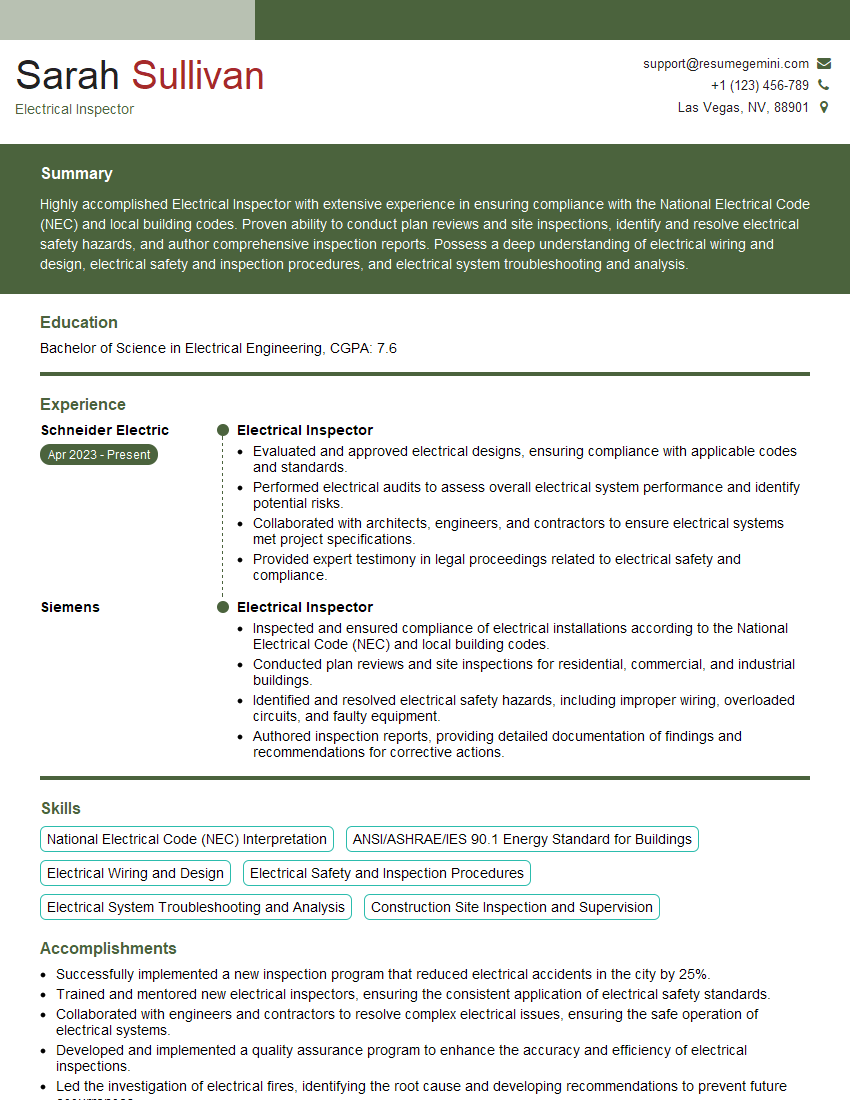
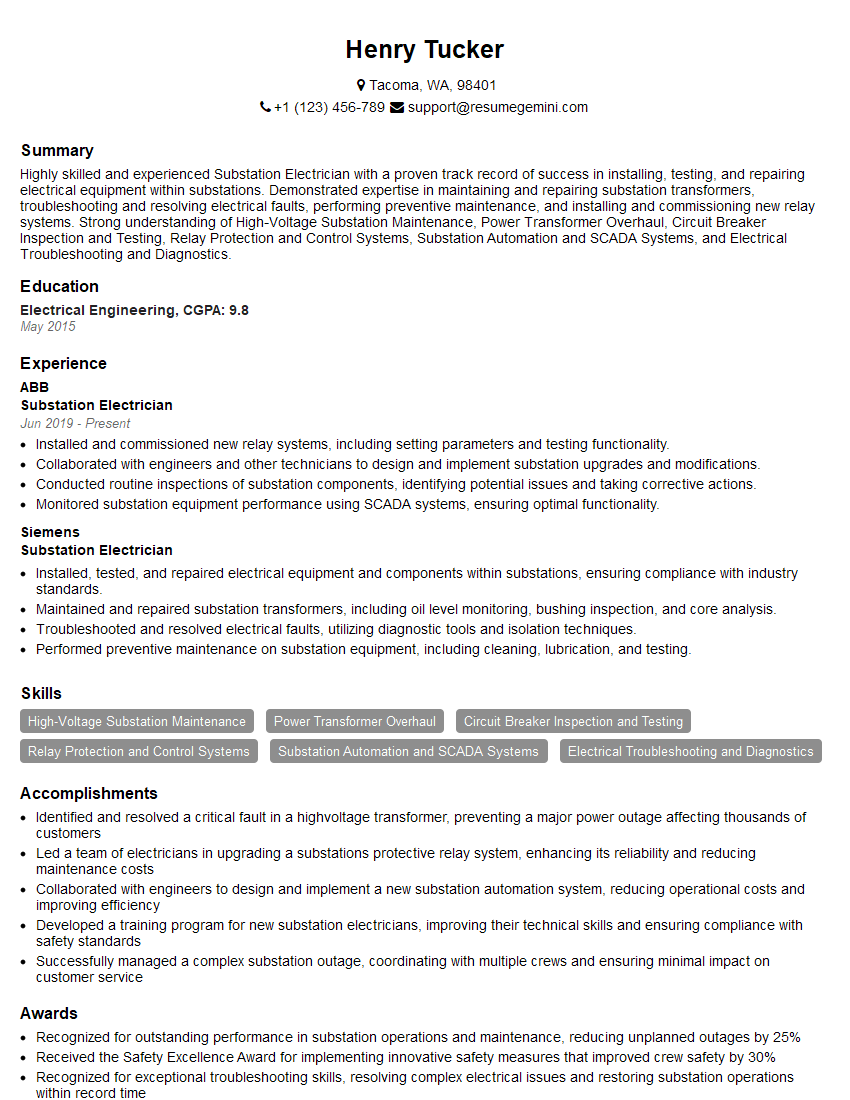
Mastering Power Transformer Installation and Maintenance opens doors to rewarding and highly sought-after careers in the energy sector. Strong expertise in this field translates to excellent job security and opportunities for advancement. To maximize your chances of landing your dream role, invest time in crafting a compelling, ATS-friendly resume that showcases your skills and experience. ResumeGemini is a trusted resource to help you build a professional resume that effectively communicates your qualifications to potential employers. Examples of resumes tailored to Power Transformer Installation and Maintenance are available to guide you through the process, ensuring your resume stands out from the competition.
Explore more articles
Users Rating of Our Blogs
Share Your Experience
We value your feedback! Please rate our content and share your thoughts (optional).
What Readers Say About Our Blog
To the interviewgemini.com Webmaster.
Very helpful and content specific questions to help prepare me for my interview!
Thank you
To the interviewgemini.com Webmaster.
This was kind of a unique content I found around the specialized skills. Very helpful questions and good detailed answers.
Very Helpful blog, thank you Interviewgemini team.