Cracking a skill-specific interview, like one for Prepare surfaces for finishing, requires understanding the nuances of the role. In this blog, we present the questions you’re most likely to encounter, along with insights into how to answer them effectively. Let’s ensure you’re ready to make a strong impression.
Questions Asked in Prepare surfaces for finishing Interview
Q 1. What are the different methods for surface cleaning before finishing?
Surface cleaning before finishing is paramount for ensuring proper adhesion and a durable, aesthetically pleasing final product. The method chosen depends heavily on the substrate material and the type of soiling present. Common methods include:
- Solvent Cleaning: Using appropriate solvents (e.g., mineral spirits for oil-based contaminants, denatured alcohol for water-based) to dissolve and remove loose dirt, grease, or other soluble materials. This is often a preliminary step before more aggressive methods.
- Detergent Washing: A simple yet effective method using a mild detergent and water to remove general dirt and grime. Thorough rinsing is crucial to prevent residue.
- Abrasive Cleaning: Utilizing abrasive pads, brushes, or blasting media (e.g., glass beads, walnut shells) to mechanically remove ingrained dirt, rust, or old coatings. This method offers more aggressive cleaning than solvent or detergent washing.
- Steam Cleaning: Employing high-pressure steam to loosen and remove contaminants. This is particularly effective for removing stubborn grease or embedded dirt.
For example, preparing a wooden surface for painting might involve detergent washing followed by solvent cleaning to remove any residual oils from the wood. In contrast, preparing a rusty metal component for powder coating would likely require abrasive blasting to remove all traces of rust and mill scale.
Q 2. Explain the importance of surface profile in adhesion.
Surface profile plays a critical role in adhesion because it increases the surface area available for the coating to bond with. Think of it like Velcro – the more hooks and loops, the stronger the connection. A smooth surface provides minimal contact points for the coating, leading to poor adhesion and a greater risk of delamination (coating peeling off). A properly profiled surface, on the other hand, creates mechanical interlocking, enhancing adhesion strength.
The desired profile depends on the coating and substrate. For example, a rougher profile might be needed for coatings applied to low-surface-energy materials like plastics, where mechanical interlocking is essential. For some applications, a highly polished surface may be desired to enhance the final finish, yet ensuring sufficient cleanliness is crucial.
Q 3. Describe your experience with abrasive blasting techniques.
I have extensive experience with various abrasive blasting techniques, including air blasting, wet blasting, and vacuum blasting. I’m proficient in selecting the appropriate blasting media (e.g., glass beads, aluminum oxide, silica sand, walnut shells) based on the substrate material and the desired surface profile. For instance, glass beads are often preferred for delicate surfaces like aluminum, while aluminum oxide provides a more aggressive cleaning action for heavily rusted steel. Vacuum blasting helps to minimize dust and environmental impact.
My experience includes overseeing projects ranging from small-scale component preparation to large-scale industrial projects, ensuring adherence to safety protocols and quality control standards. I am also familiar with the use of specialized equipment for effective and efficient surface preparation.
Q 4. How do you determine the appropriate level of surface roughness for a specific coating?
Determining the appropriate surface roughness is crucial for optimal coating performance. This is often specified by the coating manufacturer or determined through industry standards and testing. Surface roughness is typically measured using techniques like profilometry to obtain a quantitative measure of the surface profile. Factors influencing the choice include:
- Coating Type: Different coatings have different adhesion requirements. A high-performance coating might require a more aggressive profile, while a decorative finish might require a smoother surface.
- Substrate Material: The substrate’s properties influence the achievable roughness and adhesion. Porous materials like wood allow for better mechanical interlocking, whereas smooth metals require more surface preparation to achieve adequate roughness.
- Environmental Conditions: The operating environment can affect coating durability. Exposure to harsh conditions might necessitate a slightly rougher profile to ensure better adhesion and resistance to weathering.
In practice, I often refer to industry standards and the coating manufacturer’s recommendations to determine the appropriate roughness level, typically expressed as Ra (average roughness) or other relevant metrics.
Q 5. What safety precautions are crucial when handling surface preparation chemicals?
Safety is paramount when handling surface preparation chemicals. I strictly adhere to all relevant safety data sheets (SDS) and follow established safety protocols. These include:
- Personal Protective Equipment (PPE): Always using appropriate PPE, including respirators, gloves, safety glasses, and protective clothing, depending on the chemical being used.
- Ventilation: Ensuring adequate ventilation to minimize exposure to fumes and vapors. This often involves working outdoors or using local exhaust ventilation systems.
- Proper Handling and Storage: Following safe handling procedures, using appropriate containers, and storing chemicals securely and properly labelled.
- Emergency Preparedness: Having readily available emergency equipment, such as eyewash stations and spill kits, and knowing emergency procedures in case of accidents.
- Waste Disposal: Following proper procedures for the disposal of chemical wastes to comply with environmental regulations.
I always prioritize a safe working environment and provide thorough training to my team on safe chemical handling practices.
Q 6. How do you identify and address surface imperfections like rust, dents, or scratches?
Addressing surface imperfections is an essential step. The approach depends on the nature and severity of the imperfection:
- Rust: Rust removal is typically accomplished through abrasive blasting, wire brushing, or chemical rust converters. The choice depends on the extent of rust and the substrate. Severe rust might require abrasive blasting, while light surface rust can be addressed with wire brushing and a chemical converter.
- Dents: Minor dents in metal substrates might be filled with body filler, followed by sanding to achieve a smooth surface. For major dents, more extensive repair techniques might be required.
- Scratches: Scratches can often be addressed through sanding and filling with appropriate fillers, depending on the depth and nature of the scratch.
The process involves careful assessment of the damage, choosing the appropriate repair method, and ensuring a smooth, even surface before applying any finishing coats. For instance, a deep scratch in wood might require wood filler followed by careful sanding to match the surrounding wood grain.
Q 7. What types of primers are suitable for different substrates (e.g., wood, metal, plastic)?
Primer selection is critical because it ensures proper adhesion between the substrate and the topcoat. The choice of primer depends heavily on the substrate:
- Wood: Wood primers are typically designed to seal the wood, prevent resin bleed-through, and provide a good surface for topcoat adhesion. Options include shellac-based primers, alkyd primers, and water-based primers.
- Metal: Metal primers provide corrosion protection and improve adhesion to the metal surface. Options include zinc-rich primers (for superior corrosion resistance), epoxy primers, and polyurethane primers.
- Plastic: Plastics often have low surface energy, requiring primers that enhance adhesion. Adhesion promoters or specialized plastic primers are used to create a better bond between the plastic and the topcoat.
In each case, selecting the right primer is crucial for long-term durability and aesthetic quality of the finish. For example, using a zinc-rich primer on a steel bridge component offers superior corrosion protection compared to a regular metal primer. Similarly, using an adhesion promoter on a plastic component ensures a durable finish.
Q 8. Explain the difference between chemical and mechanical surface preparation.
Chemical and mechanical surface preparation are two distinct approaches to cleaning and preparing a surface for finishing. Mechanical methods physically remove contaminants and imperfections, while chemical methods use reactive substances to dissolve or alter the surface.
- Mechanical Preparation: This involves techniques like sanding, scraping, grinding, or blasting to remove rust, old paint, or other surface irregularities. Think of it like scrubbing a stubborn stain off a pot – you’re physically removing the unwanted material. Examples include using sandpaper to smooth wood, wire brushing to remove rust from metal, or sandblasting to clean concrete.
- Chemical Preparation: This utilizes chemicals like solvents, cleaners, or etchants to dissolve or react with contaminants on the surface. It’s like using a specialized cleaner to remove grease from a pan – the chemicals break down the grease, making it easier to remove. Examples include using a degreaser to remove oil before painting, or using an etching primer to improve paint adhesion on metal.
The choice between chemical and mechanical methods depends on the material, the type of contamination, and the desired level of surface preparation. Often, a combination of both is used for optimal results.
Q 9. Describe your experience with various surface preparation tools (e.g., sanders, scrapers, brushes).
My experience spans a wide range of surface preparation tools. I’m proficient in using various hand tools like scrapers (both carbide and flexible) for removing loose paint and other debris from different substrates – from delicate wood trim to robust metal structures. I’ve extensive experience with various power tools, including belt sanders for large surface area preparation, random orbital sanders for finer finishing, and angle grinders with specialized attachments for cleaning welds or removing tough coatings. I’m also skilled in using specialized brushes, like wire brushes for metal and nylon brushes for more sensitive materials, to ensure thorough cleaning. Additionally, I have experience operating specialized equipment such as pressure washers for cleaning larger surfaces and shot blasters for heavy-duty surface preparation.
For example, on a recent project involving the restoration of antique furniture, I carefully used hand scrapers to remove old varnish, followed by fine sanding with a random orbital sander to achieve a smooth, even surface. On a larger industrial project, I used a shot blaster to remove rust and mill scale from steel beams before applying a protective coating.
Q 10. How do you ensure consistent surface preparation across large areas?
Ensuring consistent surface preparation across large areas requires careful planning and execution. It’s crucial to establish a standardized procedure and use appropriate tools and techniques. This involves:
- Establishing a grid system: Dividing the large area into smaller, manageable sections helps to track progress and maintain uniformity.
- Utilizing calibrated tools: Using calibrated tools like power sanders and blasters, helps maintain consistent abrasiveness and ensures the desired level of surface preparation is achieved across the entire area.
- Regular inspection and adjustment: Regularly inspecting the prepared surface and making necessary adjustments to tool settings or techniques helps to maintain consistency throughout the process. This prevents any section from being over- or under-prepared.
- Teamwork and communication: When working on a team, clear communication and well-defined roles are crucial to maintaining consistency in the surface preparation techniques. This might include regular check-ins to review the progress and ensure everyone is working according to the established standards.
For instance, on a large-scale painting project, we used a grid system and calibrated spray equipment to apply a consistent primer, ensuring even coverage and proper adhesion across the entire surface area.
Q 11. How do you manage surface contamination (e.g., oil, grease, dust)?
Managing surface contamination is critical for achieving a durable and aesthetically pleasing finish. Contamination like oil, grease, and dust can significantly impair the adhesion of coatings. My approach involves a multi-step process:
- Initial cleaning: This often involves sweeping or vacuuming to remove loose dust and debris. A pressure washer can be used for larger surfaces.
- Degreasing: Solvents or degreasers are used to remove oil and grease. The choice of solvent depends on the substrate and the type of contamination. Proper ventilation is crucial when working with solvents.
- Rinsing: After degreasing, the surface is thoroughly rinsed with clean water or a suitable cleaning agent to remove any residual chemicals.
- Drying: The surface should be completely dry before applying any coatings to avoid trapping moisture, which could cause bubbling or peeling of the finish. This often involves air drying, using fans or specialized drying equipment depending on the scale of the project.
In practice, I’ve used a variety of degreasers – from citrus-based cleaners for sensitive materials to stronger solvent-based solutions for heavy-duty cleaning – always following safety guidelines and ensuring proper disposal of waste materials.
Q 12. What is your experience with masking and protecting areas not being finished?
Masking and protecting areas not being finished is essential to prevent accidental damage or contamination. My experience includes using various masking techniques, depending on the project’s requirements. This includes using:
- Painter’s tape: For precise masking of edges and smaller areas.
- Drop cloths: To protect large floor areas or furniture.
- Plastic sheeting: For covering larger surfaces or protecting sensitive equipment.
- Masking paper: For larger areas where a more durable barrier is needed.
The choice of masking material depends on the substrate, the finish being applied, and the level of protection required. For instance, while painter’s tape is ideal for precise work on wood, heavier-duty masking paper might be necessary when working with abrasive materials or aggressive chemicals.
Proper masking ensures a clean, professional finish, and minimizes rework or cleanup needed after finishing is complete.
Q 13. How do you inspect a surface after preparation to ensure it’s ready for finishing?
Inspecting the prepared surface is a crucial step before applying any finish. My inspection process typically involves:
- Visual inspection: Checking for any remaining contaminants, imperfections, or inconsistencies in the surface preparation.
- Touch testing: Evaluating the surface smoothness and texture to ensure it meets the requirements of the finishing process.
- Substrate testing: Testing for the appropriate level of cleanliness and adhesion, depending on the material type and intended finishing method.
If any defects are found during the inspection, appropriate corrective actions, such as additional sanding, cleaning, or repair, are taken before proceeding with the finish application. A thorough inspection ensures a high-quality and long-lasting finish.
For example, before painting, I carefully inspect the surface for any remaining rust, grease spots, or loose particles which could compromise the paint’s adhesion and longevity.
Q 14. Explain the importance of surface temperature and humidity during preparation.
Surface temperature and humidity significantly impact the success of surface preparation and finishing. Extreme temperatures or humidity can affect the drying time of coatings, impact adhesion, and even cause defects in the finished product.
- Temperature: Ideally, surfaces should be at a moderate temperature. Extremely high temperatures can cause coatings to dry too quickly, leading to cracking or unevenness, whereas extremely low temperatures can slow down the drying process or cause problems with adhesion.
- Humidity: High humidity can slow down the drying process and create conditions for mildew or mold growth. Low humidity, conversely, can lead to coatings drying too quickly and becoming brittle.
To manage these factors, I consider the ambient conditions before starting work. In high-humidity conditions, I may use fans or dehumidifiers to help the surface dry properly. In extremely hot or cold conditions, I might schedule the work for cooler or warmer times of the day, or use specialized products designed for those conditions. Maintaining optimal temperature and humidity helps ensure the successful application of any finish.
Q 15. What are the environmental considerations for surface preparation methods?
Environmental considerations in surface preparation are paramount. We must minimize waste and pollution throughout the process. For example, the use of solvent-based cleaners generates volatile organic compounds (VOCs) that contribute to air pollution and smog. Sustainable alternatives, such as water-based cleaners and eco-friendly abrasives, significantly reduce this impact. Disposal of waste materials, like spent abrasives and cleaning solutions, requires careful handling to prevent soil and water contamination. Proper containment and recycling programs are essential. Another key factor is noise pollution; abrasive blasting, for instance, can be extremely noisy, necessitating the use of noise barriers and hearing protection to minimize disruption to the surrounding environment. Finally, we must consider the energy consumption associated with the various methods; choosing energy-efficient equipment and processes is crucial for environmental responsibility.
- VOC reduction: Switching to water-based cleaning agents.
- Waste management: Implementing proper collection and recycling systems for spent abrasives.
- Noise control: Using noise dampening enclosures during blasting operations.
- Energy efficiency: Utilizing energy-efficient equipment and optimizing process parameters.
Career Expert Tips:
- Ace those interviews! Prepare effectively by reviewing the Top 50 Most Common Interview Questions on ResumeGemini.
- Navigate your job search with confidence! Explore a wide range of Career Tips on ResumeGemini. Learn about common challenges and recommendations to overcome them.
- Craft the perfect resume! Master the Art of Resume Writing with ResumeGemini’s guide. Showcase your unique qualifications and achievements effectively.
- Don’t miss out on holiday savings! Build your dream resume with ResumeGemini’s ATS optimized templates.
Q 16. What are some common surface defects and how to correct them?
Common surface defects vary depending on the material, but some are universal. For instance, pitting, small holes in the surface, can be corrected through filling with specialized fillers or, for more severe cases, localized repairs. Scratches, often from improper handling or previous processes, can sometimes be removed by polishing or light abrading. Rust requires thorough removal using wire brushing, chemical stripping, or abrasive blasting, followed by a protective coating. Cracks are more serious and may require filling, patching, or in extreme cases, replacement of the affected section. Blistering (bubbles in a paint film) usually means poor adhesion and requires removing the affected area and re-applying the coating after proper surface preparation. Each defect requires a tailored approach; a small scratch might only need polishing, whereas severe corrosion might necessitate significant surface removal. Imagine painting a car – a simple scratch can be buffed out, but extensive rust necessitates more aggressive techniques.
- Pitting: Fillers or localized repairs.
- Scratches: Polishing or light abrading.
- Rust: Wire brushing, chemical stripping, abrasive blasting.
- Cracks: Filling, patching, or replacement.
- Blistering: Removal of affected area and recoating.
Q 17. How do you choose the appropriate surface preparation technique for a given project?
Selecting the appropriate surface preparation technique depends on several factors. The substrate material (steel, aluminum, wood, etc.) dictates the methods available. The surface condition (e.g., level of contamination, existing coatings) also plays a critical role. The required surface profile, which dictates the roughness needed for optimal coating adhesion, is crucial. Finally, the project budget and time constraints heavily influence the selection. For example, preparing a steel structure for a high-performance coating might necessitate abrasive blasting to achieve a specific profile, whereas painting a wooden fence might only require sanding and cleaning. A large-scale project might favor automated methods, whereas smaller jobs can be handled manually. Careful consideration of all these factors is essential to ensure the chosen method is both effective and efficient.
- Substrate material: Different materials require different preparation methods.
- Surface condition: Contamination levels influence the cleaning process required.
- Surface profile: Achieving the right roughness for optimal adhesion.
- Budget and time constraints: Balancing cost and time efficiency.
Q 18. Describe your experience with different types of abrasives.
My experience encompasses a wide range of abrasives, from traditional materials like sandpaper and wire brushes to modern options such as abrasive blasting media. Sandpaper, ranging from fine to coarse grits, is excellent for manual smoothing and finishing on smaller projects. Wire brushes are effective for removing rust and loose paint from metal surfaces. Abrasive blasting media, including silica sand, glass beads, and aluminum oxide, offer precision control for achieving specific surface profiles and are crucial for large-scale projects. Each abrasive has unique characteristics: silica sand is cost-effective but poses environmental concerns, while aluminum oxide is more environmentally friendly but more expensive. The choice is determined by the material, surface condition, required profile, and environmental considerations. I’ve also worked with specialized abrasives for delicate surfaces, like plastic media for cleaning sensitive components.
- Sandpaper: Manual smoothing and finishing.
- Wire brushes: Removing rust and loose paint.
- Abrasive blasting media (Silica sand, glass beads, aluminum oxide): Achieving precise surface profiles.
- Specialized abrasives: Cleaning sensitive materials.
Q 19. What is the significance of surface profile measurement?
Surface profile measurement is critical because it directly impacts coating adhesion. A properly prepared surface with the correct profile provides mechanical interlocking between the substrate and the coating, leading to superior durability and longevity. Insufficient profile results in poor adhesion and premature coating failure. We use profile gauges and surface roughness measurement devices to quantify the surface texture (expressed in Ra or Rz values). These measurements ensure that the surface preparation meets the specifications required by the coating manufacturer, maximizing the performance and lifespan of the final finish. Imagine trying to glue two smooth pieces of glass together – the bond would be weak. But if you roughen the surfaces, the glue has much better grip. The surface profile measurement is our way to ensure the ‘roughness’ is just right for the best possible bond between the surface and coating.
Q 20. What are the common health and safety hazards associated with surface preparation?
Surface preparation presents various health and safety hazards. Abrasive blasting can cause silicosis (lung disease) if not performed with appropriate respiratory protection. Chemical stripping involves working with hazardous materials, necessitating proper ventilation, personal protective equipment (PPE), and disposal procedures. Manual methods like sanding and wire brushing can lead to hand injuries, requiring appropriate gloves and safety glasses. Noise exposure from power tools is a significant concern, and hearing protection is always necessary. Dust generation from sanding and abrasive blasting can cause respiratory problems. Furthermore, many solvents used in cleaning can be flammable or toxic, requiring careful handling and storage. A comprehensive risk assessment is essential before any surface preparation work begins.
- Respiratory hazards: Silicosis from abrasive blasting, dust inhalation.
- Chemical hazards: Exposure to solvents and stripping agents.
- Physical hazards: Hand injuries, noise exposure.
- Fire hazards: Flammable solvents.
Q 21. How do you ensure compliance with relevant safety regulations during surface preparation?
Ensuring compliance with safety regulations is crucial and involves several steps. First, a thorough risk assessment identifies potential hazards and determines the necessary precautions. Next, providing appropriate PPE to workers, including respirators, gloves, safety glasses, and hearing protection, is essential. Training on safe work practices, including the proper use of equipment and handling of hazardous materials, is mandatory. Adherence to relevant standards and regulations, such as OSHA guidelines, is paramount. Implementing proper ventilation and dust collection systems minimizes airborne contaminants. Finally, monitoring of worker exposure levels and regular equipment maintenance ensure continued safety. Regular safety meetings and audits reinforce safe work practices and maintain a proactive approach to safety.
- Risk assessment: Identifying and controlling hazards.
- PPE provision: Providing necessary protective gear.
- Worker training: Ensuring safe work practices.
- Compliance with standards: Adhering to relevant regulations.
- Ventilation and dust control: Minimizing airborne contaminants.
- Monitoring and maintenance: Ensuring ongoing safety.
Q 22. Explain your experience with different types of surface coatings.
My experience encompasses a wide range of surface coatings, from primers and sealers to topcoats and specialized finishes. I’m proficient in working with various types including:
- Primers: I’ve extensively used oil-based, water-based, and epoxy primers, selecting the appropriate type based on the substrate material (wood, metal, concrete, etc.) and the final topcoat. For instance, an oil-based primer offers excellent adhesion on porous surfaces like wood, while an epoxy primer is ideal for metal to prevent rust.
- Topcoats: My experience includes working with paints (latex, alkyd, acrylic), stains (oil-based, water-based), varnishes, lacquers, and polyurethane coatings. The choice depends on factors such as durability requirements, aesthetic preferences, and the application method (spraying, brushing, rolling).
- Specialized coatings: I’ve worked with specialized coatings like anti-corrosive paints for metal structures, fire-retardant coatings for wood, and moisture-barrier coatings for concrete. Each requires specific application techniques and safety precautions.
Understanding the properties of each coating type—its drying time, adhesion, durability, and compatibility with other coatings—is crucial for achieving a high-quality finish. I always consult the manufacturer’s data sheets to ensure proper application and optimal results.
Q 23. How do you determine the appropriate drying time for primers and other coatings?
Determining the appropriate drying time is crucial to prevent problems like cracking, peeling, or poor adhesion. It’s not just about the time listed on the can; it depends on several factors:
- Temperature and humidity: Higher temperatures and lower humidity generally lead to faster drying. Conversely, cold, humid conditions significantly prolong drying time.
- Film thickness: Thicker coats take longer to dry than thinner coats. Multiple thin coats are always preferred over one thick coat.
- Ventilation: Good air circulation accelerates drying. Poor ventilation can trap moisture and inhibit the curing process.
- Coating type: Different coatings have vastly different drying times. Oil-based paints, for example, take much longer than water-based paints.
I always check the manufacturer’s instructions, but I also rely on visual inspection and touch tests. The surface should feel dry and not tacky to the touch. I usually allow for longer drying times than the minimum specified, especially in less-than-ideal conditions, to ensure complete curing.
Q 24. How do you troubleshoot problems encountered during surface preparation?
Troubleshooting surface preparation issues requires a systematic approach. I start by identifying the problem: is it poor adhesion, blistering, cracking, discoloration, or something else? Then I investigate the potential causes:
- Improper surface cleaning: Dust, grease, or old coatings can hinder adhesion. Recleaning with appropriate solvents or abrasives is often the solution.
- Incorrect primer selection: Using an incompatible primer can lead to adhesion failures. Switching to a more suitable primer may be necessary.
- Environmental conditions: Extreme temperatures or humidity can affect drying and adhesion. Adjusting the working conditions or using appropriate primers and topcoats designed for these conditions is crucial.
- Substrate problems: Underlying issues like moisture in the substrate (wood, concrete) can cause problems. Addressing these issues, such as moisture remediation, is often required before proceeding.
I systematically eliminate possibilities. If a problem persists, I consult technical resources, contact the manufacturer, and if necessary, involve a specialist to determine the underlying cause.
Q 25. Describe your experience with quality control procedures for surface preparation.
Quality control is paramount. My procedures include:
- Visual inspection: Thorough inspection at each stage – after cleaning, priming, and after each coat of topcoat – to check for imperfections like dust, debris, and inconsistencies in the finish.
- Adhesion testing: Using tape to check the adhesion of primers and topcoats, ensuring they are properly bonded to the substrate. Poor adhesion will show up as peeling when the tape is removed.
- Moisture testing: Utilizing moisture meters to ensure substrates are dry enough to prevent problems caused by trapped moisture.
- Documentation: Maintaining detailed records of materials used, application methods, environmental conditions, and any issues encountered. This documentation assists in troubleshooting and improving future projects.
By adhering to these procedures, I can ensure that the surface preparation meets the required standards of quality and durability.
Q 26. What software or systems have you used to manage surface preparation projects?
While I haven’t used specialized software for surface preparation project management, I’m proficient with project management software like Microsoft Project and Asana. These tools help with task scheduling, resource allocation, and progress tracking. I also utilize spreadsheets (Excel) for material tracking and cost estimations. For communication and collaboration, I frequently use email and project-specific communication platforms.
Q 27. How do you maintain and care for surface preparation equipment?
Proper maintenance extends the life of surface preparation equipment and ensures optimal performance. My routine includes:
- Cleaning: After each use, I thoroughly clean equipment to remove any residual paint, primer, or other materials. This prevents clogging and ensures the equipment functions properly next time.
- Inspection: Regular inspection for signs of wear and tear, such as frayed cords, damaged brushes, or worn rollers. Damaged parts should be promptly replaced.
- Storage: Storing equipment in a clean, dry location, protecting it from extreme temperatures and humidity. This helps prevent rust and corrosion.
- Regular servicing: Following the manufacturer’s recommendations for regular servicing and maintenance of power tools such as sprayers and sanders.
By following these procedures, I can maximize the lifespan and efficiency of my equipment, reducing downtime and improving the overall quality of my work.
Q 28. Describe a time you had to deal with a challenging surface preparation situation.
One challenging situation involved preparing a large, historic building’s exterior for repainting. The brickwork was heavily contaminated with soot, mildew, and flaking paint from previous layers. Simple cleaning methods proved ineffective. The challenge was to remove the contaminants without damaging the delicate brickwork. After thorough research, I developed a multi-stage approach:
- Initial cleaning: Using low-pressure water washing to remove loose debris and soot.
- Chemical cleaning: Applying a specialized biocide to kill the mildew and a paint remover to soften old paint layers.
- Gentle scrubbing: Using soft brushes and low-pressure water to remove the softened contaminants, avoiding excessive scrubbing that could damage the brick.
- Priming: Applying a high-quality primer suitable for masonry and contaminated surfaces, ensuring excellent adhesion.
This multi-stage approach effectively cleaned the surfaces without damaging the brickwork. This success highlighted the importance of adapting techniques to specific circumstances and the value of detailed research to achieve successful surface preparation in difficult situations.
Key Topics to Learn for Prepare surfaces for finishing Interview
- Surface Cleaning and Preparation: Understanding different cleaning methods (chemical, mechanical, etc.) for various materials and their impact on finish adhesion.
- Material Selection and Compatibility: Knowing which primers, sealers, and finishes are appropriate for different substrates (wood, metal, plastic, etc.) and their properties.
- Surface Defects and Repair: Identifying and addressing common surface imperfections like scratches, dents, and holes using appropriate repair techniques.
- Application Techniques: Mastering the practical application of primers, sealers, and finishes using various tools (brushes, rollers, sprayers) and understanding the impact of different application methods on the final finish.
- Health and Safety: Familiarity with relevant safety regulations, personal protective equipment (PPE), and handling of hazardous materials.
- Quality Control and Inspection: Understanding methods for inspecting finished surfaces for defects and ensuring adherence to quality standards.
- Troubleshooting: Diagnosing and resolving common problems encountered during surface preparation and finishing, such as poor adhesion, uneven finish, or discoloration.
- Environmental Considerations: Understanding environmentally friendly practices and the use of sustainable materials and processes.
Next Steps
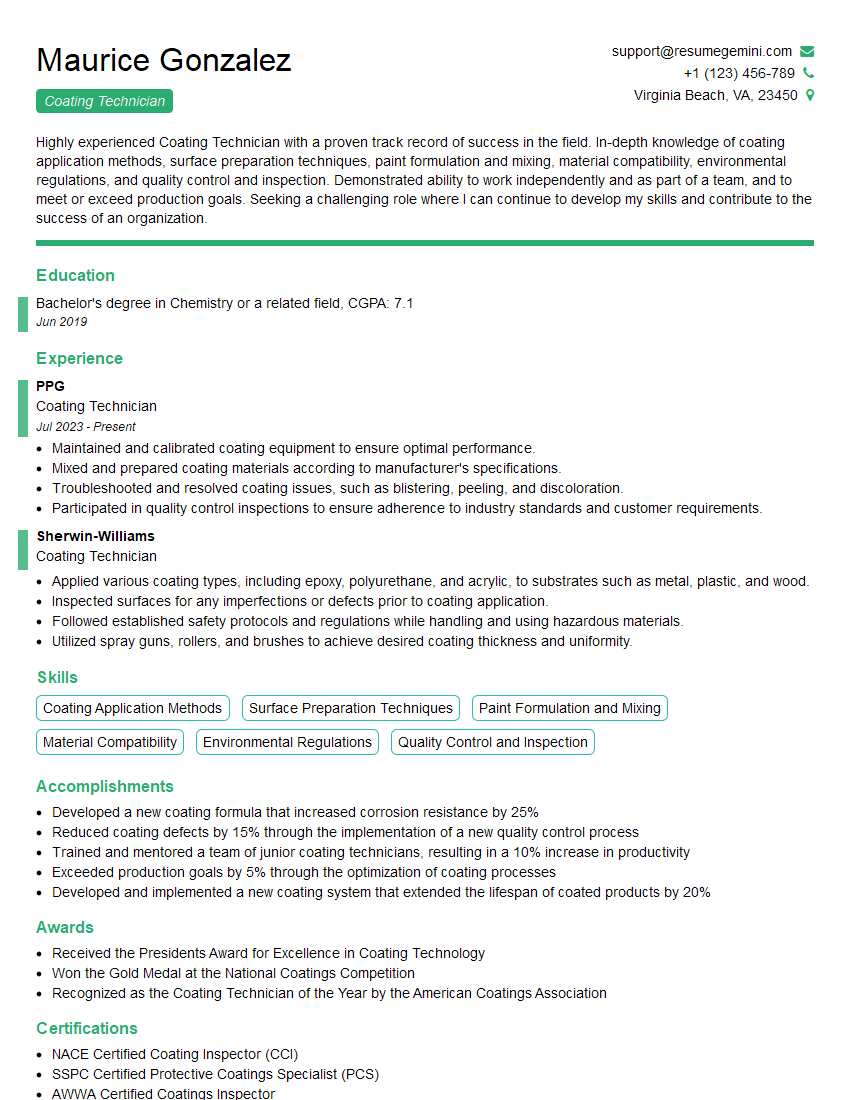
Mastering the art of preparing surfaces for finishing is crucial for career advancement in many industries. A strong understanding of these techniques demonstrates your practical skills and attention to detail, making you a valuable asset to any team. To maximize your job prospects, it’s essential to create a resume that effectively showcases your abilities to Applicant Tracking Systems (ATS). ResumeGemini can help you build a professional, ATS-friendly resume that highlights your skills and experience in preparing surfaces for finishing. Examples of resumes tailored to this field are available to help you get started. Invest in your future – build a compelling resume today!




Explore more articles
Users Rating of Our Blogs
Share Your Experience
We value your feedback! Please rate our content and share your thoughts (optional).
What Readers Say About Our Blog
To the interviewgemini.com Webmaster.
Very helpful and content specific questions to help prepare me for my interview!
Thank you
To the interviewgemini.com Webmaster.
This was kind of a unique content I found around the specialized skills. Very helpful questions and good detailed answers.
Very Helpful blog, thank you Interviewgemini team.