Are you ready to stand out in your next interview? Understanding and preparing for Process Control Management interview questions is a game-changer. In this blog, we’ve compiled key questions and expert advice to help you showcase your skills with confidence and precision. Let’s get started on your journey to acing the interview.
Questions Asked in Process Control Management Interview
Q 1. Explain the difference between open-loop and closed-loop control systems.
Imagine you’re trying to control the temperature of your oven. An open-loop control system is like setting the dial to 350°F and hoping for the best. You’re sending a command (the dial setting), but you’re not measuring the actual temperature to verify if it’s accurate. If the oven is poorly calibrated, or the room is very cold, your actual temperature will be different from what you set. There’s no feedback mechanism to adjust based on the actual result.
A closed-loop control system, on the other hand, is like using an oven with a thermostat. The thermostat continuously measures the actual oven temperature and compares it to your desired temperature (the setpoint). If the actual temperature is too low, it increases the heat; if it’s too high, it reduces it. This continuous feedback loop ensures the oven stays at your desired temperature, even with external factors like room temperature fluctuations. This is a much more accurate and reliable method of control.
Q 2. Describe different types of controllers (PID, cascade, feedforward).
Several types of controllers are used in process control. Let’s look at three common ones:
- PID (Proportional-Integral-Derivative) Controller: This is the workhorse of process control. It uses three terms to determine the control signal: Proportional (responds to the current error), Integral (accounts for accumulated error over time), and Derivative (predicts future error based on the rate of change). This combination provides excellent control and stability.
- Cascade Controller: Imagine you’re controlling the temperature of a chemical reactor. A cascade controller uses two or more controllers working in tandem. One controller might regulate the flow of coolant to maintain the jacket temperature of the reactor, while another uses the jacket temperature as a setpoint to indirectly control the reactor temperature. This is useful when you have multiple processes influencing the primary controlled variable.
- Feedforward Controller: This controller anticipates disturbances. If you know a change is coming (like a surge in feedstock flow), a feedforward controller adjusts the manipulated variable before the disturbance impacts the controlled variable. This helps to minimize the error and improve system response. It works best when you can predict disturbances accurately.
Q 3. What are the benefits of using a PID controller?
PID controllers are ubiquitous because of their many benefits:
- Simplicity and Effectiveness: They are relatively easy to understand and implement, yet highly effective in many applications.
- Wide Applicability: They can be used across a broad range of processes, from simple temperature control to complex chemical reactions.
- Robustness: They handle disturbances and uncertainties well, keeping the process close to the setpoint.
- Tunability: The gains (proportional, integral, derivative) can be adjusted to optimize performance for specific applications.
Q 4. How do you tune a PID controller? Explain Ziegler-Nichols method.
Tuning a PID controller means finding the optimal values for the proportional (Kp), integral (Ki), and derivative (Kd) gains. Improper tuning can lead to oscillations, sluggish response, or even instability. The Ziegler-Nichols method is a popular tuning method, based on experimentally finding the ultimate gain (Ku) and ultimate period (Pu) of the system.
- Set the controller to only Proportional action (Ki = Kd = 0).
- Gradually increase the Kp until the system begins to oscillate continuously. This point is called the ultimate gain (Ku) and the period of these oscillations is the ultimate period (Pu).
- Once Ku and Pu are determined, use the following equations to calculate Kp, Ki, and Kd according to Ziegler-Nichols settings:
Kp = 0.6 * KuKi = 1.2 * Ku / PuKd = 0.075 * Ku * Pu
- Implement the calculated gains and observe system behavior. Fine-tune these gains as needed based on performance.
This method provides a starting point; further adjustments may be needed to achieve optimal performance depending on system characteristics and desired response.
Q 5. Explain the concept of process gain and its significance.
Process gain represents the change in the output variable for a unit change in the input variable. For example, if increasing the heat input to a reactor by 1 kW increases the reactor temperature by 2°C, the process gain is 2°C/kW. This value is crucial in understanding the sensitivity of the process to changes in the manipulated variable.
Its significance lies in:
- Controller Tuning: Process gain is a key parameter in tuning PID controllers. A high gain means a small change in input will result in a large change in output, requiring careful controller adjustments to avoid oscillations.
- Process Modeling: Process gain is often included in process models, which allow engineers to simulate and predict system behavior under various conditions.
- Stability Analysis: Process gain affects the stability of a control system; excessively high gain can lead to instability and oscillations.
Q 6. What is a transfer function and how is it used in process control?
A transfer function is a mathematical representation of a system’s behavior in the frequency domain. It describes the relationship between the input and output of a system as a ratio of two polynomials, usually in terms of the Laplace transform variable ‘s’. In process control, it’s a vital tool for analyzing and designing control systems.
For example, a simple first-order system might have a transfer function like this:
G(s) = K / (τs + 1)
Where:
G(s)is the transfer functionKis the process gainτis the time constant representing the system’s response speed.
Transfer functions allow engineers to:
- Analyze System Stability: By examining the poles and zeros of the transfer function, engineers can determine if the system is stable.
- Design Controllers: Transfer functions are used in the design of advanced control algorithms, helping engineers select suitable controllers and tune their parameters for optimal performance.
- Simulate System Behavior: Using simulation software, transfer functions allow engineers to predict system behavior before implementation.
Q 7. Describe different types of sensors and actuators used in process control.
A wide array of sensors and actuators are employed in process control. The choices depend greatly on the specific application and process parameters. Here are a few examples:
- Sensors:
- Temperature: Thermocouples, RTDs (Resistance Temperature Detectors), thermistors
- Pressure: Pressure transmitters, Bourdon tubes
- Flow: Flow meters (Coriolis, ultrasonic, vortex), orifice plates
- Level: Level transmitters (radar, ultrasonic, capacitance), float switches
- pH: pH electrodes
- Analytical sensors: Gas chromatographs, spectrometers (for advanced process monitoring)
- Actuators:
- Valves: Control valves (pneumatic, electric, hydraulic) for regulating fluid flow
- Pumps: Centrifugal, positive displacement pumps to adjust fluid flow rates
- Heaters: Electric heaters, steam heaters for temperature control
- Motors: Electric motors for controlling position or speed of machinery
The choice of sensors and actuators is crucial for accurate and reliable process control. They must be compatible with the process environment and provide appropriate precision and response times.
Q 8. Explain the concept of process dead time and its impact on control system design.
Process dead time, also known as transportation lag or delay, is the time it takes for a change in the manipulated variable (what we control) to affect the controlled variable (what we’re trying to regulate). Imagine you’re controlling the temperature of a large oven: you increase the heat, but it takes some time for that heat to travel through the oven and actually raise the internal temperature. That time is the dead time.
In control system design, dead time is a significant challenge because it introduces instability. A controller reacts to the *current* state, but the effect of its actions isn’t felt until some time later. This can lead to overcorrection, oscillations, and ultimately, poor control. Controllers designed for systems with dead time need to anticipate future changes, often employing techniques like Smith predictors or model predictive control (MPC) to compensate for this delay.
Example: Think of a chemical process where a valve controls the flow of a reactant into a reactor. The change in flow doesn’t instantaneously impact the concentration of the reactant in the reactor. There’s a delay, caused by the time it takes for the fluid to travel through the pipes – this is dead time. A controller neglecting dead time might overcompensate, leading to oscillations in reactant concentration.
Q 9. What is a control loop and how does it function?
A control loop is a closed-loop system that maintains a process variable at a desired setpoint. Think of it like a thermostat: you set the desired temperature (setpoint), the thermostat measures the actual temperature (process variable), and then adjusts the heating/cooling system (manipulated variable) to reduce the difference between the setpoint and the process variable. This continuous monitoring and adjustment is the essence of a control loop.
Functioning:
- Measurement: A sensor measures the process variable.
- Comparison: The measured value is compared to the desired setpoint.
- Calculation: A controller calculates the necessary adjustment to the manipulated variable based on the difference (error) between the setpoint and the measured value.
- Actuation: An actuator (e.g., a valve, motor) adjusts the manipulated variable according to the controller’s output.
- Feedback: The process repeats continuously, creating a feedback loop that ensures the process variable remains close to the setpoint.
Many industrial processes, from temperature control in chemical reactors to speed regulation in motors, rely on feedback control loops for consistent operation.
Q 10. How do you handle disturbances in a control system?
Disturbances are unplanned changes to a process that affect the controlled variable. They can come from many sources such as changes in feedstock quality, ambient temperature fluctuations, or equipment malfunctions. Handling disturbances effectively is crucial for maintaining process stability and achieving control objectives.
Strategies for handling disturbances include:
- Feedforward control: Anticipate disturbances and take proactive measures. For instance, if you know the incoming feedstock temperature will increase, you can adjust the cooling system *before* the temperature significantly deviates from the setpoint.
- Feedback control (more aggressive tuning): A well-tuned feedback controller quickly corrects deviations caused by disturbances. This often involves adjusting the controller’s gain and other parameters to improve its responsiveness.
- Cascade control: Use multiple control loops, where one loop controls a secondary variable that impacts the primary controlled variable. This can effectively isolate and mitigate disturbances affecting the secondary variable.
- Ratio control: Maintain a constant ratio between two variables. If one variable changes due to a disturbance, the controller automatically adjusts the other to keep the ratio consistent.
The best approach depends on the nature and frequency of the disturbances, as well as the process dynamics. Often a combination of techniques is used to achieve optimal performance.
Q 11. Explain the concept of stability in a control system.
Stability in a control system refers to its ability to maintain a stable output in response to disturbances or setpoint changes without sustained oscillations or runaway behavior. A stable system will settle to a new steady state after a perturbation, while an unstable system will continue to oscillate or diverge from its desired setpoint, potentially leading to equipment damage or unsafe operating conditions.
Stability is assessed using various techniques, including analyzing the system’s transfer function, assessing the controller’s gain and response time, and observing the system’s response to step changes or disturbances. Tools like Bode plots and root locus diagrams help visualize the system’s stability characteristics. A system is considered stable if its output remains bounded (doesn’t grow infinitely) when given a bounded input.
Q 12. What are the common causes of instability in a control system?
Instability in control systems can stem from several factors:
- Excessive controller gain: A high gain amplifies the error signal, leading to overcorrection and oscillations. Think of it like overreacting to a small temperature change by drastically altering the heating setting.
- Inadequate controller tuning: Improperly tuned controllers may not respond quickly enough to correct errors, resulting in slow response or oscillations.
- Process dead time (as discussed before): Significant delays in the process response can lead to instability.
- Non-linear process behavior: Processes that don’t behave linearly (their output is not proportional to their input) are more difficult to control and can exhibit instability.
- Sensor noise: Erratic sensor readings can confuse the controller and lead to erratic control actions.
- Actuator limitations: Actuators that are too slow or have limited range can hamper the controller’s ability to effectively adjust the manipulated variable.
- Unmodeled dynamics: Ignoring significant process dynamics during controller design can result in poor performance and instability.
Diagnosing instability often requires analyzing the process and control loop performance data, identifying the root cause, and then implementing appropriate corrective actions.
Q 13. Explain the importance of safety instrumented systems (SIS).
Safety Instrumented Systems (SIS) are independent safety systems designed to protect against major hazards in industrial processes. Unlike basic process control systems that aim for optimal operation, SIS are designed to prevent accidents and mitigate risks by shutting down or safely controlling a process in emergency situations.
Their importance is paramount, as failures in SIS can lead to catastrophic events like explosions, fires, or releases of toxic substances. They are crucial in industries like oil and gas, chemical manufacturing, and nuclear power where the potential consequences of failures are severe. SIS are often designed to meet stringent safety standards (e.g., IEC 61508) to ensure high reliability and performance.
Q 14. Describe different types of safety instrumented functions (SIFs).
Safety Instrumented Functions (SIFs) are specific safety functions performed by the SIS. These functions are independently designed and implemented to respond to specific hazardous situations. Some common types of SIFs include:
- Emergency shutdown (ESD): Stops a process immediately in response to dangerous conditions, like high pressure or temperature.
- High-level alarm (HLA): Alerts operators to a high-level condition that may lead to a hazard.
- Interlock: Prevents dangerous operations from occurring, such as starting a pump before another is shut down.
- Fire and gas detection and suppression: Detects fires or gas leaks and initiates suppression systems like sprinklers or inert gas injection.
- Pressure relief systems: Safely releases excess pressure to prevent equipment failure.
The specific SIFs needed depend on the inherent risks of the process. Each SIF is designed with redundancy and safeguards to ensure high reliability and availability in the event of an emergency.
Q 15. What is a Programmable Logic Controller (PLC) and its applications?
A Programmable Logic Controller (PLC) is essentially a ruggedized computer specifically designed for industrial automation. Think of it as the brain of a manufacturing process or any automated system. It receives inputs from sensors (like temperature, pressure, level), processes that information according to a pre-programmed logic, and then sends outputs to control actuators (like valves, motors, pumps).
- Applications: PLCs are ubiquitous in countless industries. Imagine the automated assembly line in a car factory – PLCs control the robots, conveyors, and other machinery. They’re also crucial in:
- Manufacturing: Controlling packaging lines, robotic arms, and material handling systems.
- Process Industries: Managing chemical reactions, controlling temperature and pressure in refineries, and regulating flow rates in pipelines.
- Building Automation: Controlling HVAC systems, lighting, and security systems in large buildings.
- Water and Wastewater Treatment: Monitoring and controlling pumps, valves, and chemical dosing systems.
For example, a PLC in a bottling plant might monitor the level of liquid in a bottle, ensuring it’s filled to the correct amount before moving to the next stage. If the level is incorrect, the PLC will trigger an alarm and stop the process.
Career Expert Tips:
- Ace those interviews! Prepare effectively by reviewing the Top 50 Most Common Interview Questions on ResumeGemini.
- Navigate your job search with confidence! Explore a wide range of Career Tips on ResumeGemini. Learn about common challenges and recommendations to overcome them.
- Craft the perfect resume! Master the Art of Resume Writing with ResumeGemini’s guide. Showcase your unique qualifications and achievements effectively.
- Don’t miss out on holiday savings! Build your dream resume with ResumeGemini’s ATS optimized templates.
Q 16. What is Supervisory Control and Data Acquisition (SCADA) system?
Supervisory Control and Data Acquisition (SCADA) is a system that monitors and controls industrial processes. Think of it as a high-level management system that oversees many PLCs or other devices across a large geographical area. It provides a centralized view of the entire operation, allowing operators to monitor data, make adjustments, and respond to alarms.
A SCADA system typically consists of:
- PLCs or RTUs (Remote Terminal Units): These collect data from the field devices.
- Communication Network: This connects the PLCs/RTUs to the SCADA master.
- SCADA Master: This is the central computer that receives data, displays it on the HMI (Human-Machine Interface), and allows operators to control the process.
- HMI (Human-Machine Interface): This is the graphical interface that operators use to interact with the SCADA system.
Imagine a large power grid – the SCADA system allows operators in a control center to monitor the entire grid, adjusting power generation and distribution in real-time to meet demand and prevent outages. This is a prime example of SCADA’s power and scope.
Q 17. Explain the difference between a PLC and a DCS.
While both PLCs and Distributed Control Systems (DCS) are used for process control, they differ significantly in their architecture and applications.
- PLCs: Typically used for smaller, localized applications. They have a simpler architecture, often with one central processor. They’re excellent for discrete control (on/off operations) and simple continuous control.
- DCS: Designed for large-scale, complex processes, such as those found in oil refineries or chemical plants. They use a distributed architecture with multiple processors and redundant systems for enhanced reliability and safety. DCS systems excel at handling complex continuous control loops and have advanced features for safety and redundancy.
Think of it like this: a PLC might control a single machine on a production line, whereas a DCS might control an entire refinery with thousands of interconnected devices and processes. DCS systems often have more advanced features like sophisticated alarm management, detailed historical data logging, and improved safety and security measures compared to PLCs.
Q 18. What are the different communication protocols used in process control?
Numerous communication protocols are used in process control, each with its strengths and weaknesses. The choice depends on factors like speed, distance, reliability, and cost.
- Profibus: A fieldbus protocol widely used in industrial automation, offering high speed and reliability.
- Profinet: An Ethernet-based protocol offering high bandwidth and flexibility.
- Modbus: A widely adopted, simple, and relatively inexpensive serial communication protocol.
- Ethernet/IP: An Ethernet-based protocol offering high speed and robust features for industrial applications.
- OPC UA (Unified Architecture): A platform-independent standard that provides interoperability between different devices and systems.
For example, a Modbus protocol might be used for simple sensor readings from nearby devices, while Ethernet/IP could handle high-speed data transfer between a PLC and a robot controller.
Q 19. How do you handle alarm management in a process control system?
Effective alarm management is critical for safe and efficient operation of a process control system. Poorly managed alarms can lead to operator overload and delayed responses to critical events. A robust strategy includes:
- Alarm Prioritization: Classifying alarms based on severity (critical, major, minor) allows operators to focus on the most important issues first.
- Alarm Filtering: Suppressing unnecessary or redundant alarms reduces noise and improves operator focus. This might involve using deadbands (ignoring small changes) or suppressing alarms during specific operations.
- Alarm Rationalization: Regularly reviewing and optimizing the alarm system to remove unnecessary alarms and ensure effective alarm thresholds.
- Alarm Acknowledgment and Response: Implementing procedures for acknowledging and responding to alarms, documenting the actions taken, and ensuring follow-up actions are completed.
- Alarm Reporting and Analysis: Generating reports to analyze alarm trends and identify areas for improvement.
Imagine a chemical plant – an effective alarm system ensures that operators are alerted to critical process deviations such as high temperature or pressure, allowing them to take corrective action before a hazardous situation develops.
Q 20. What are the best practices for process control system design?
Designing a robust and efficient process control system requires careful planning and consideration of various factors. Best practices include:
- Clear Requirements Definition: Thoroughly defining the process to be controlled, including objectives, constraints, and safety requirements.
- Modular Design: Designing the system in modular units allows for easier expansion, maintenance, and troubleshooting.
- Redundancy and Fail-Safety: Incorporating redundant components and fail-safe mechanisms to ensure continuous operation and prevent catastrophic failures.
- Standardisation: Using standard hardware and software components simplifies maintenance and reduces costs.
- Proper Documentation: Maintaining comprehensive documentation, including system diagrams, logic programs, and operating procedures.
- Thorough Testing and Commissioning: Conducting rigorous testing and commissioning to ensure that the system meets the specified requirements and operates safely and reliably.
Failing to follow these best practices can lead to costly downtime, safety hazards, and operational inefficiencies. A well-designed system anticipates potential issues and ensures the process operates smoothly and safely.
Q 21. Explain the concept of model predictive control (MPC).
Model Predictive Control (MPC) is an advanced control strategy that uses a process model to predict the future behavior of the system. It optimizes the control actions to achieve the desired setpoints while respecting constraints.
Unlike traditional PID controllers that only consider the current error, MPC looks ahead into the future and anticipates how changes will affect the system. It uses an optimization algorithm to determine the best sequence of control actions over a prediction horizon.
How it works:
- Process Model: A mathematical representation of the process is developed.
- Prediction Horizon: The controller predicts the future behavior of the process over a specified time horizon.
- Control Horizon: The controller determines the optimal control actions over a shorter control horizon (typically shorter than the prediction horizon).
- Optimization: An optimization algorithm determines the control actions that minimize the deviation from the setpoint while respecting constraints.
- Feedback: Actual process measurements are used to update the model and improve the predictions.
MPC is particularly useful in multivariable processes, where multiple variables interact and affect each other. It is commonly applied in chemical processing, refineries, and power plants to manage complex interactions and ensure optimal efficiency while respecting operational limitations.
Q 22. What is advanced process control (APC) and its benefits?
Advanced Process Control (APC) goes beyond basic regulatory control by using advanced algorithms and optimization techniques to improve process performance. Think of it as upgrading from a manual car to a self-driving one. Instead of simply maintaining setpoints, APC actively anticipates and adjusts to disturbances, maximizing efficiency and product quality.
Benefits include:
- Increased profitability: By optimizing yields, reducing waste, and minimizing energy consumption.
- Improved product quality and consistency: Through precise control and real-time adjustments.
- Enhanced operational efficiency: By automating tasks and reducing the need for manual intervention.
- Reduced downtime: By predicting and preventing potential problems.
- Better safety: By maintaining optimal operating conditions and minimizing the risk of accidents.
For example, in a chemical plant, APC can dynamically adjust reactant flow rates and temperatures to maximize product yield while adhering to strict quality specifications, ultimately increasing profit margins.
Q 23. Describe your experience with process control software and tools.
My experience spans a wide range of process control software and tools, including widely used platforms like OSI PI, Honeywell Experion, and Emerson DeltaV. I’m proficient in using their respective historian functionalities for data analysis, troubleshooting, and reporting. I’ve also worked extensively with various SCADA (Supervisory Control and Data Acquisition) systems, configuring alarm limits, creating displays, and managing user access permissions. Furthermore, I’m experienced in programming Programmable Logic Controllers (PLCs) using languages such as ladder logic (LD) and structured text (ST), and developing and implementing control strategies using model predictive control (MPC) software packages.
In one project, I used OSI PI to identify a recurring bottleneck in a production line by analyzing historical data and identifying patterns in process variables. This led to the implementation of a new control strategy that increased throughput by 15%.
Q 24. How do you troubleshoot process control problems?
Troubleshooting process control problems is a systematic process that involves a combination of analytical and practical skills. My approach usually follows these steps:
- Identify the problem: Clearly define the deviation from the desired operating conditions. This might involve reviewing alarms, process data, and operator logs.
- Gather data: Collect relevant process data from various sources, such as PLCs, historians, and field instruments. This data helps to pinpoint the root cause of the issue.
- Analyze the data: Use statistical methods, process knowledge, and simulation tools to analyze the collected data. This helps to identify trends, patterns, and potential causes.
- Develop and test solutions: Based on the analysis, propose and test solutions. This might involve adjusting control parameters, replacing faulty components, or modifying the control strategy.
- Implement and monitor: Implement the chosen solution and monitor its effectiveness. Ensure the solution addresses the problem without introducing new issues.
For example, if a reactor temperature consistently drifts above the setpoint, I would first check the temperature sensor calibration. If that’s fine, I’d investigate the heating system, controller tuning, and the flow rate of the reactants. A systematic approach like this ensures efficient and effective problem resolution.
Q 25. Explain your experience with different types of industrial valves.
My experience encompasses a wide variety of industrial valves, including:
- Globe valves: Commonly used for on/off and throttling applications, offering good flow control but prone to cavitation at high pressure drops.
- Ball valves: Ideal for on/off service due to their quick actuation and tight shut-off. Less suitable for precise flow control.
- Butterfly valves: Excellent for large-diameter pipelines, offering low pressure drop but potentially less precise throttling.
- Control valves: Specifically designed for precise flow regulation, often incorporating pneumatic or electric actuators for automated control. These are crucial for maintaining optimal process conditions.
- Safety relief valves (SRVs): Essential safety devices designed to protect equipment from overpressure. Regular testing is critical for their proper functionality.
In one project, we replaced aging globe valves with more efficient control valves in a chemical processing unit. This improved the precision of flow control, leading to significant reductions in waste and energy consumption. Understanding the characteristics of different valve types is vital for selecting the most appropriate valve for a specific application.
Q 26. Describe your understanding of control system architecture.
A typical process control system architecture consists of several layers:
- Field devices: These are the sensors, actuators, and other instruments located directly in the process. They collect data and execute control actions.
- PLCs (Programmable Logic Controllers): These are the brains of the system, executing control algorithms and managing communication between field devices and higher-level systems.
- SCADA (Supervisory Control and Data Acquisition): This layer provides a centralized interface for monitoring and controlling the process. Operators interact with the SCADA system to supervise and manage the process.
- Historian systems: These systems store and manage historical process data for analysis, reporting, and troubleshooting.
- Advanced Process Control (APC) systems: These systems use advanced algorithms to optimize process performance. They often integrate with the SCADA and historian systems.
- Enterprise Resource Planning (ERP) systems: These systems provide an overall view of the entire operation, integrating data from various sources to facilitate decision-making.
Understanding this architecture is critical for effective system design, implementation, and troubleshooting. A well-designed architecture ensures efficient data flow, robust control, and easy maintenance.
Q 27. How do you ensure the safety and reliability of a process control system?
Ensuring safety and reliability is paramount in process control. This involves a multi-faceted approach:
- Redundancy: Implementing redundant components like PLCs, sensors, and actuators to prevent system failures. If one component fails, the redundant component takes over seamlessly.
- Safety instrumented systems (SIS): Designing and implementing safety systems to prevent hazardous events. These systems often include independent safety PLCs and specialized safety-rated devices.
- Regular maintenance: Implementing a comprehensive maintenance schedule to prevent equipment failures and ensure the system operates as intended.
- Operator training: Providing operators with the necessary training to safely operate and troubleshoot the system. Regular drills and simulations prepare them for various scenarios.
- Alarm management: Implementing a well-designed alarm system to promptly alert operators to potential issues. Poorly designed alarm systems can lead to alarm fatigue and missed critical events.
- Cybersecurity: Protecting the system from cyber threats to prevent unauthorized access, data breaches, and malicious actions. This is increasingly important with the growing connectivity of process control systems.
For instance, in a refinery, a properly designed SIS would automatically shut down a process unit if a dangerous pressure increase is detected, preventing a potential explosion. Regular safety audits and rigorous testing are essential to maintain the system’s safety and reliability.
Q 28. Explain your experience with process control system validation and verification.
Validation and verification are crucial aspects of ensuring that a process control system performs as intended and meets regulatory requirements. Verification confirms that the system is built correctly, according to the design specifications. Validation demonstrates that the system performs its intended function in the actual process environment.
My experience includes participating in all phases of the process, from defining the validation plan to executing tests and documenting results. This often involves:
- Developing a validation plan: Defining the scope, objectives, and methods of validation. This plan includes a detailed description of the tests to be performed and acceptance criteria.
- Design qualification (DQ): Ensuring that the design of the system meets the user needs and regulatory requirements.
- Installation qualification (IQ): Verifying that the system is installed correctly and meets the design specifications.
- Operational qualification (OQ): Demonstrating that the system operates as intended under various conditions.
- Performance qualification (PQ): Verifying that the system consistently meets performance requirements in the actual process environment.
- Documentation: Maintaining comprehensive documentation of all validation activities, including test results, deviations, and corrective actions.
For example, during the validation of a new batch reactor control system, we performed numerous tests to verify the accuracy of the temperature and pressure measurements, the responsiveness of the control system, and the effectiveness of the safety systems. Thorough validation and verification ensures a safe, reliable, and efficient operation, while ensuring compliance with regulatory standards.
Key Topics to Learn for Process Control Management Interview
- Process Instrumentation and Sensors: Understanding various sensor types (temperature, pressure, flow, level), their limitations, and calibration methods. Practical application: Troubleshooting sensor malfunctions and selecting appropriate instrumentation for a specific process.
- Control Loops and Feedback Systems: Mastering the principles of Proportional-Integral-Derivative (PID) control, including tuning methods and their impact on process stability and performance. Practical application: Analyzing loop performance, identifying tuning issues, and implementing controller adjustments for optimal control.
- Advanced Process Control (APC) Strategies: Familiarity with model predictive control (MPC), ratio control, cascade control, and their applications in optimizing complex processes. Practical application: Designing and implementing APC strategies to enhance efficiency and product quality.
- Process Dynamics and Modeling: Understanding the behavior of dynamic systems, including transfer functions, response characteristics, and process modeling techniques. Practical application: Developing simplified process models for simulation and controller design.
- Safety Instrumented Systems (SIS): Knowledge of safety requirements, functional safety, and the role of SIS in preventing hazardous events. Practical application: Analyzing safety instrumented functions (SIFs) and contributing to hazard and operability (HAZOP) studies.
- Data Acquisition and SCADA Systems: Understanding data acquisition techniques, SCADA system architecture, and HMI design principles. Practical application: Interpreting process data, diagnosing process upsets, and designing effective operator interfaces.
- Troubleshooting and Problem Solving: Developing systematic approaches to identify and resolve process control issues, including root cause analysis and effective communication strategies. Practical application: Analyzing process deviations, identifying contributing factors, and implementing corrective actions.
Next Steps
Mastering Process Control Management opens doors to exciting and rewarding career opportunities in various industries. A strong understanding of these principles significantly enhances your problem-solving skills and ability to optimize complex processes, making you a valuable asset to any team. To maximize your job prospects, it’s crucial to create an ATS-friendly resume that highlights your skills and experience effectively. ResumeGemini is a trusted resource that can help you build a professional and impactful resume. They provide examples of resumes tailored specifically to Process Control Management to give you a head start. Invest the time to craft a compelling resume – it’s your first impression on potential employers.
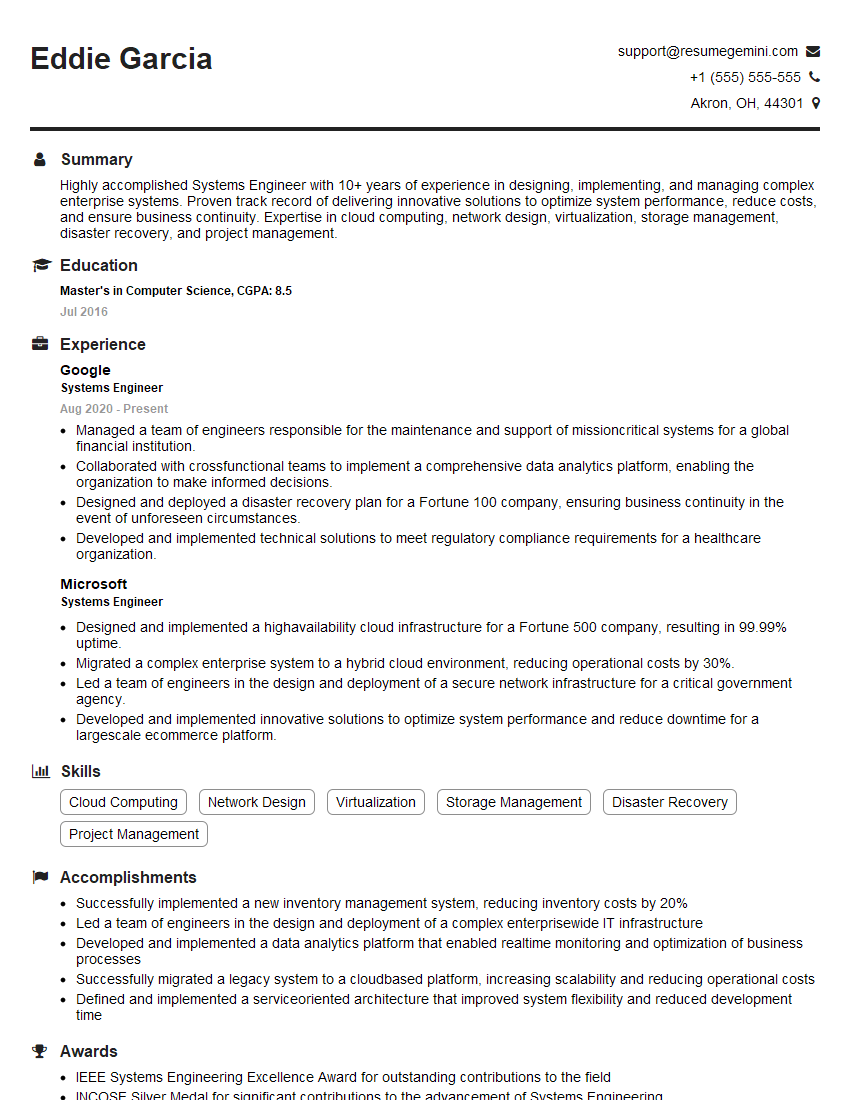
Systems Engineer Resume Sample
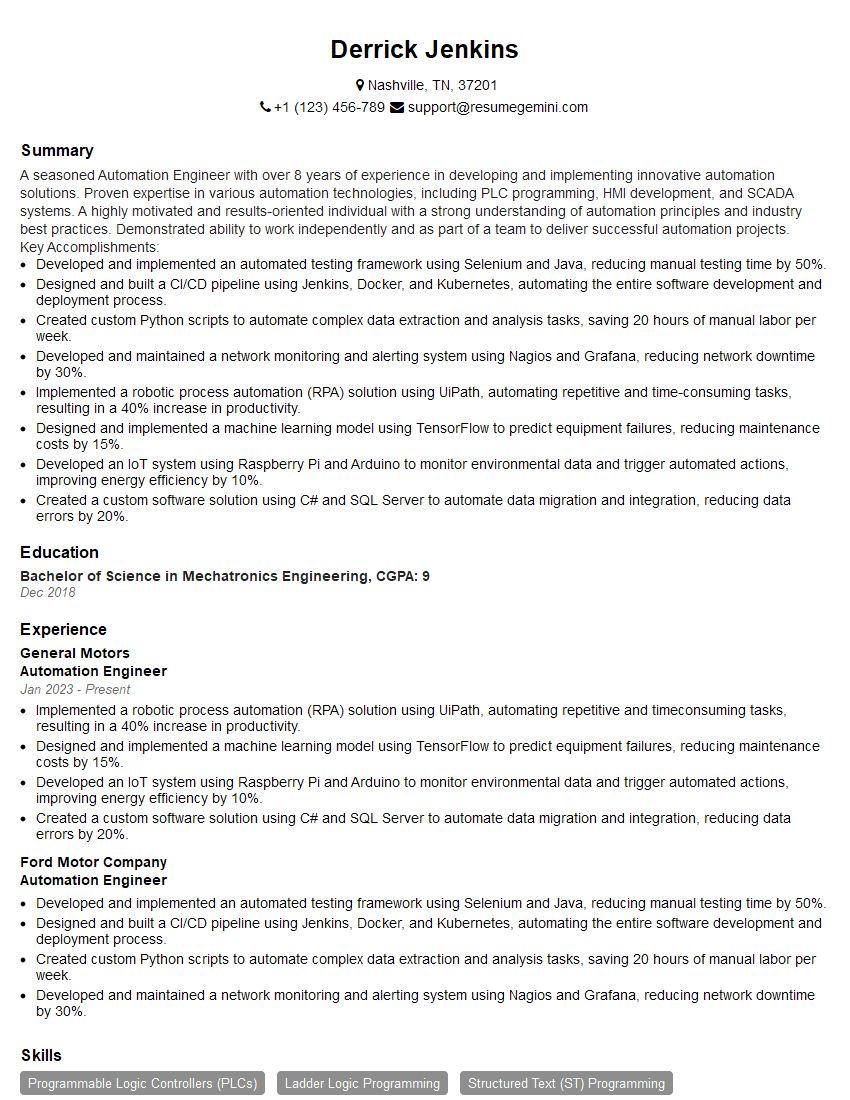
Automation Engineer Resume Sample
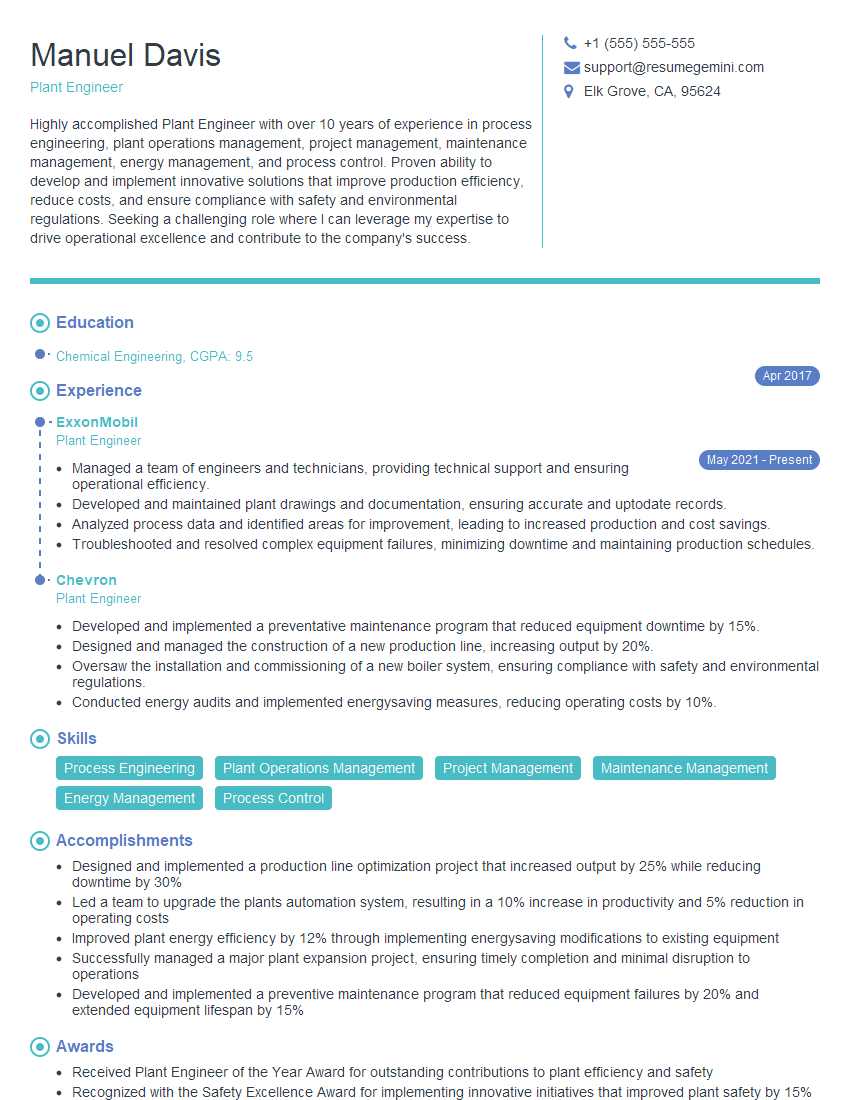
Plant Engineer Resume Sample
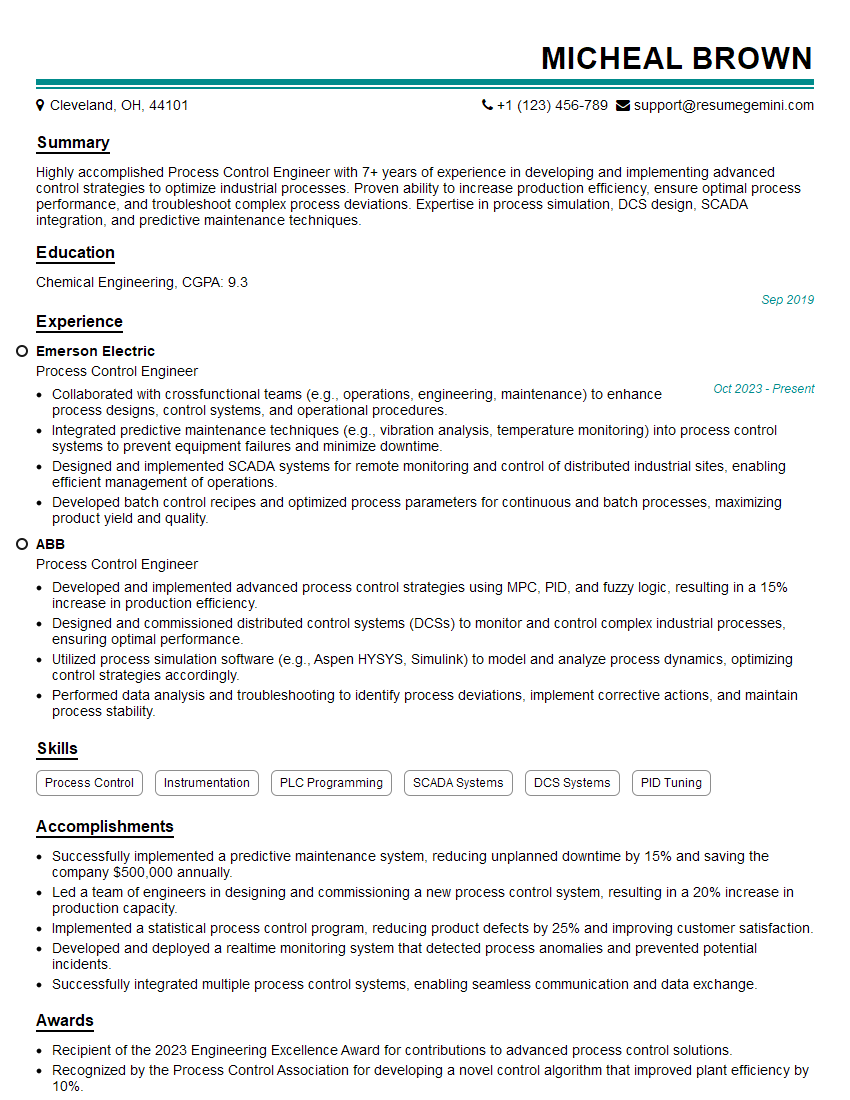
Process Control Engineer Resume Sample
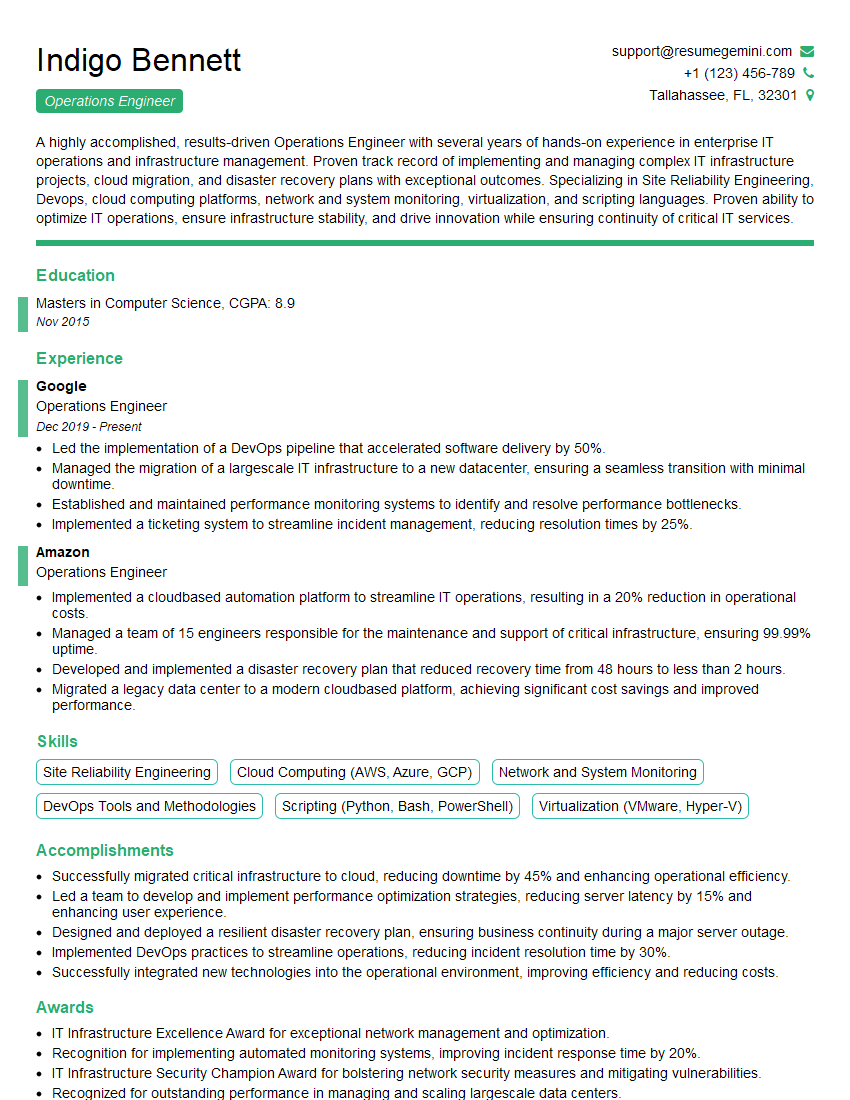
Operations Engineer Resume Sample
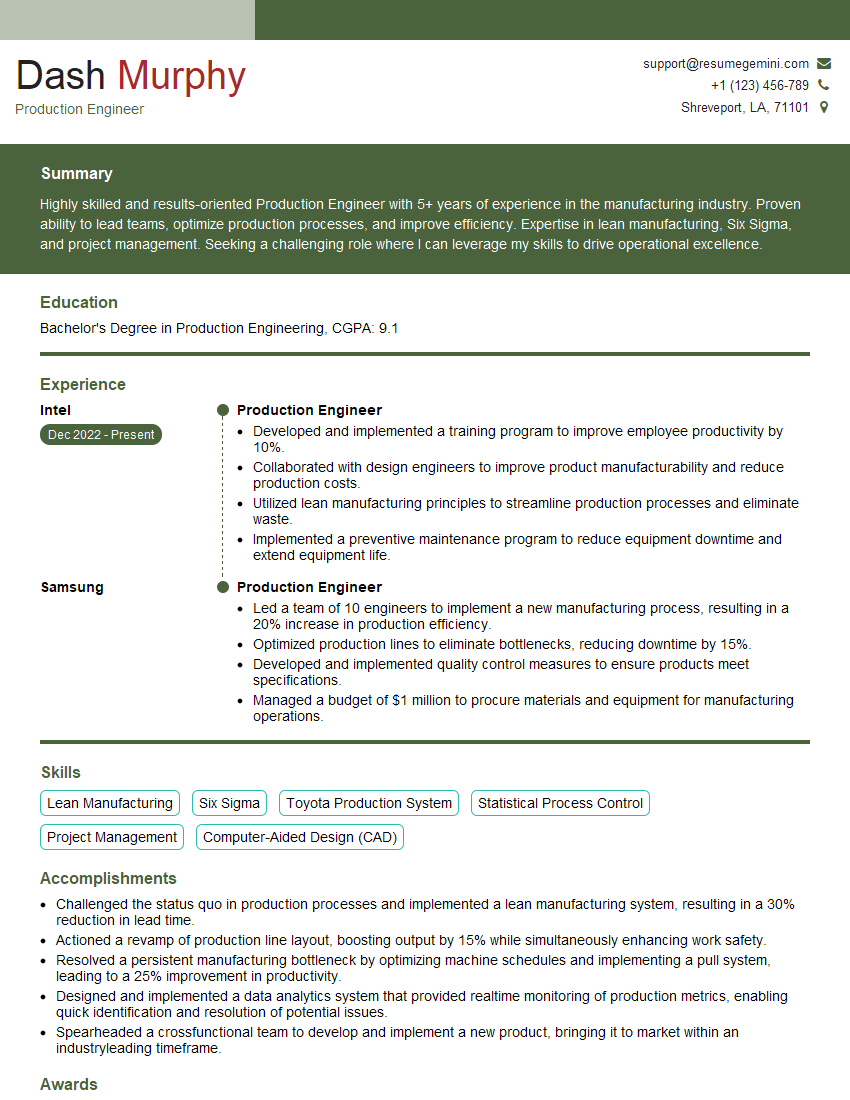
Production Engineer Resume Sample
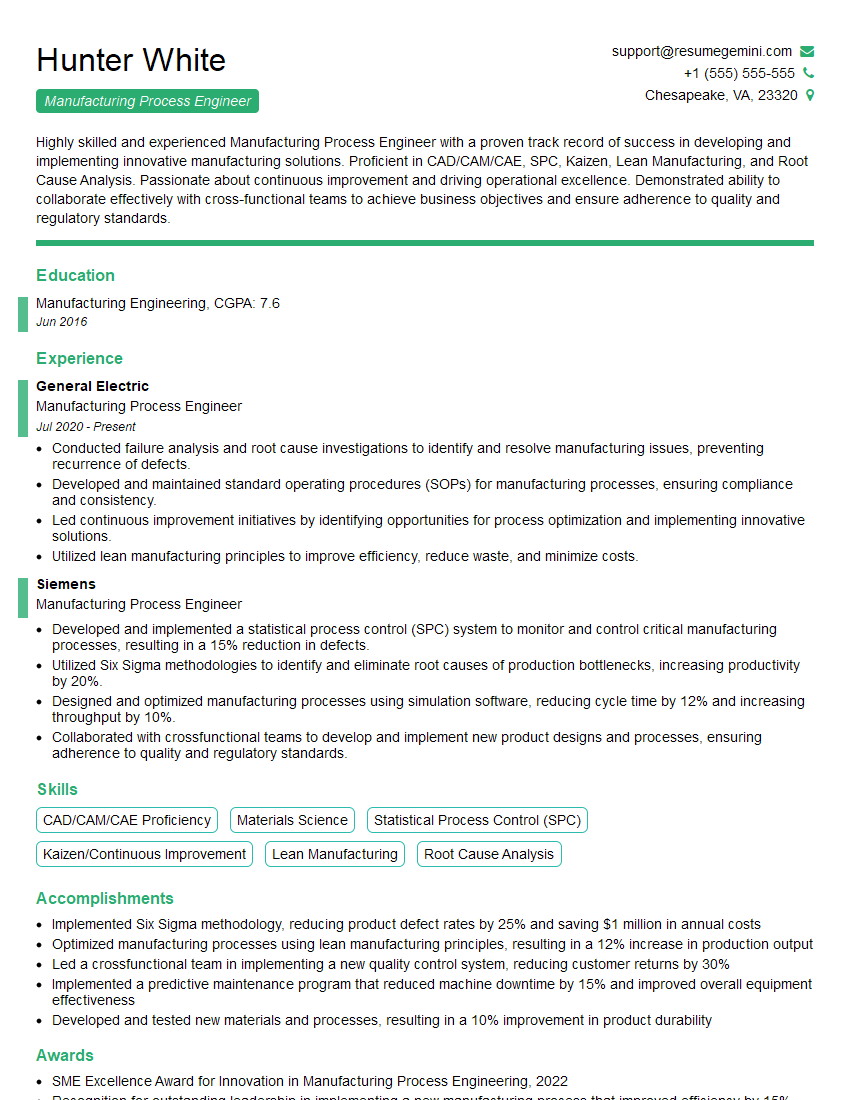
Manufacturing Process Engineer Resume Sample
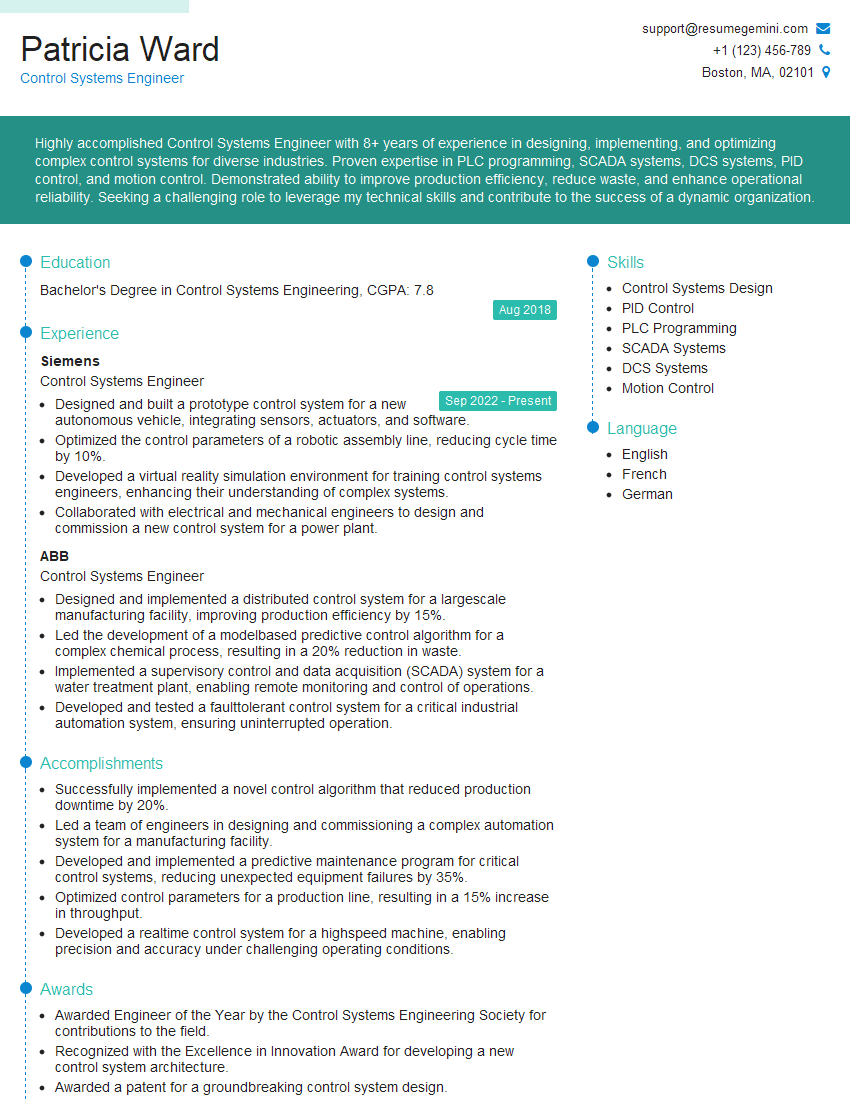
Control Systems Engineer Resume Sample
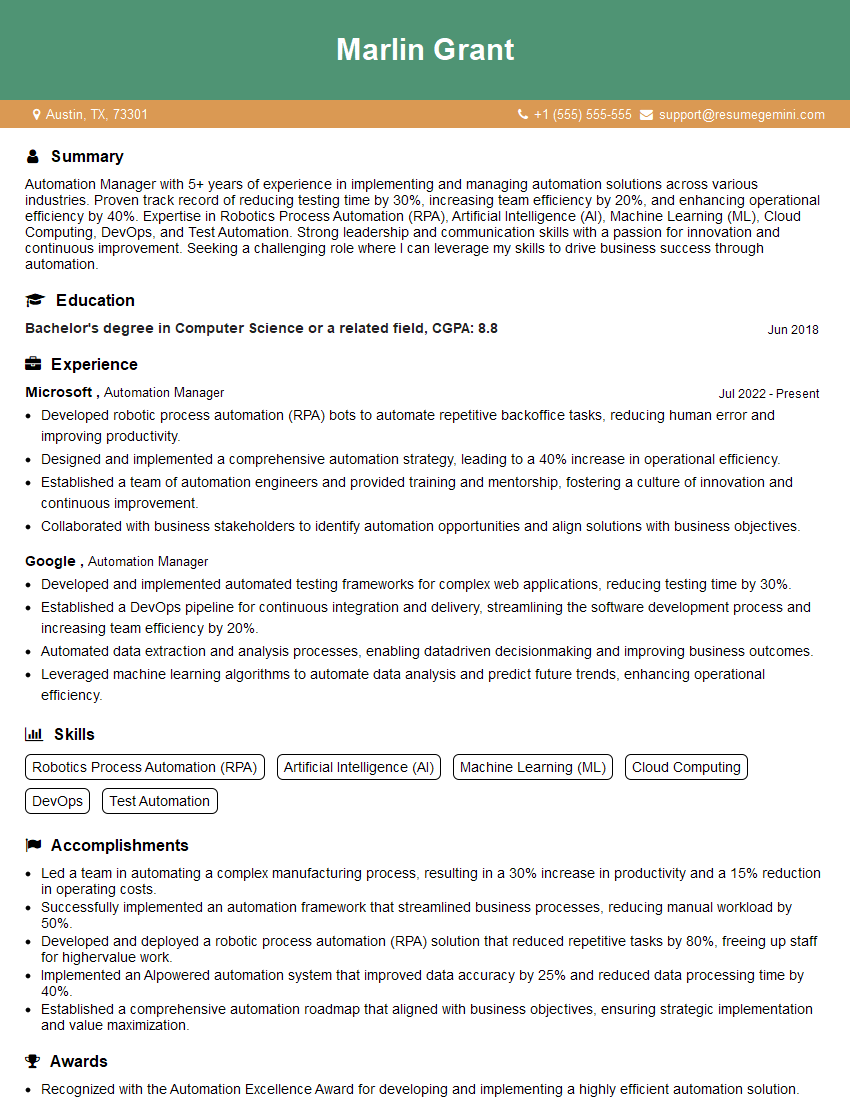
Automation Manager Resume Sample
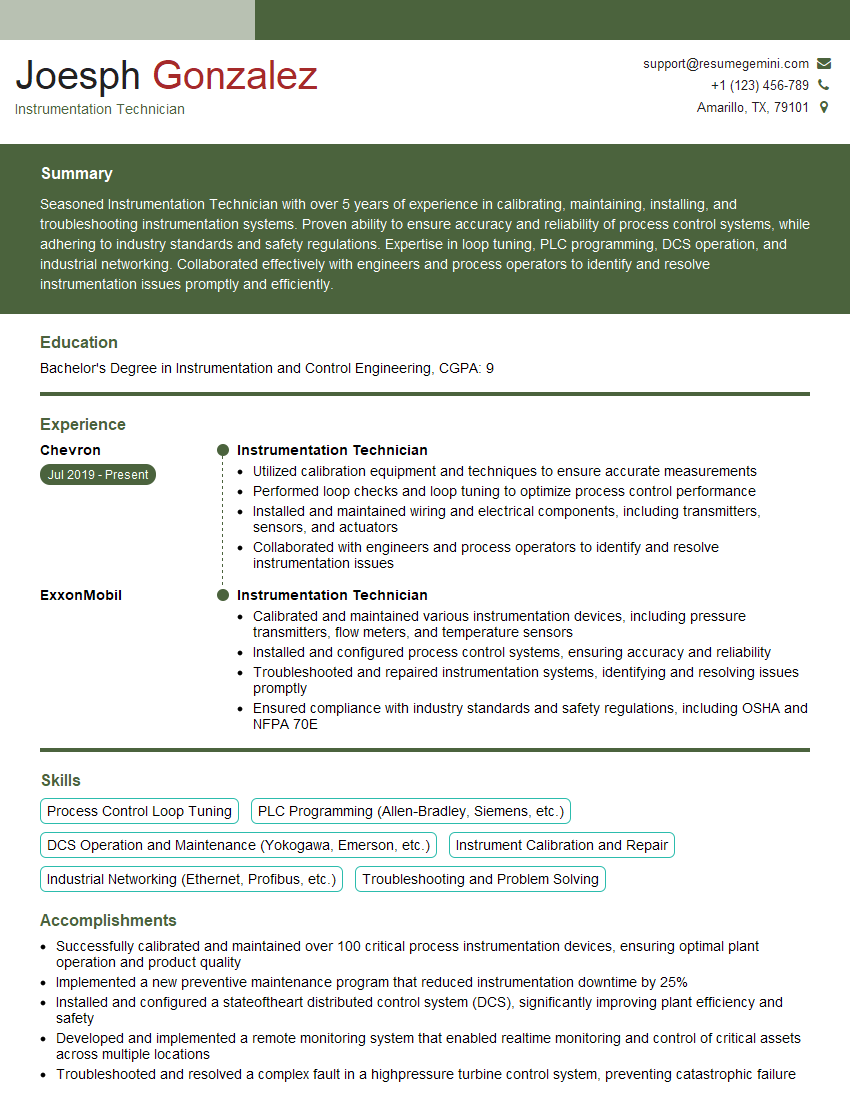
Instrumentation Technician Resume Sample
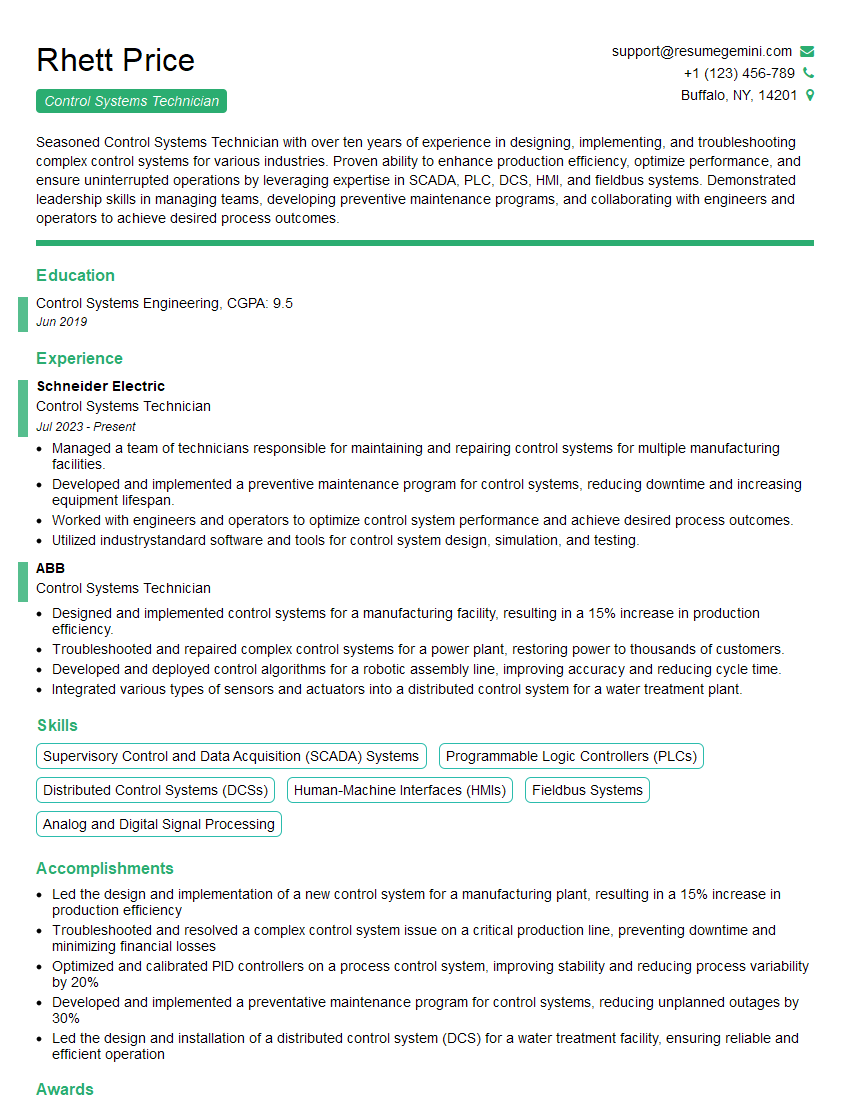
Control Systems Technician Resume Sample
Explore more articles
Users Rating of Our Blogs
Share Your Experience
We value your feedback! Please rate our content and share your thoughts (optional).
What Readers Say About Our Blog
To the interviewgemini.com Webmaster.
Very helpful and content specific questions to help prepare me for my interview!
Thank you
To the interviewgemini.com Webmaster.
This was kind of a unique content I found around the specialized skills. Very helpful questions and good detailed answers.
Very Helpful blog, thank you Interviewgemini team.