Interviews are more than just a Q&A session—they’re a chance to prove your worth. This blog dives into essential Process Quality Control interview questions and expert tips to help you align your answers with what hiring managers are looking for. Start preparing to shine!
Questions Asked in Process Quality Control Interview
Q 1. Explain the difference between Quality Control and Quality Assurance.
Quality Control (QC) and Quality Assurance (QA) are often confused, but they represent distinct, yet complementary, approaches to achieving quality. Think of QC as the inspection process, focusing on identifying defects after a product or service is produced. QA, on the other hand, is the prevention process, aiming to build quality into the system from the very beginning.
Quality Control involves testing and inspecting finished goods or services to ensure they meet predetermined standards. It’s reactive; it addresses problems after they’ve occurred. Examples include conducting final inspections of manufactured products, testing software for bugs after development, or performing audits of completed projects. It relies heavily on statistical methods to identify trends and deviations.
Quality Assurance encompasses all activities involved in ensuring that a product or service meets quality requirements. It’s proactive; it focuses on preventing problems before they happen. Examples include implementing robust design processes, establishing clear quality standards, providing training to employees, and developing quality management systems (QMS).
In essence, QC is about detecting defects, while QA is about preventing them.
Q 2. Describe your experience with Statistical Process Control (SPC).
I have extensive experience with Statistical Process Control (SPC), utilizing it across various projects in manufacturing and software development. My experience includes designing and implementing control charts, analyzing process capability, and using SPC data to drive process improvements.
For instance, in a manufacturing setting, I used control charts (X-bar and R charts) to monitor the diameter of manufactured parts. By tracking the mean and range of the diameter measurements over time, we were able to quickly identify shifts in the process, allowing us to intervene before significant numbers of defective parts were produced. This resulted in a 15% reduction in scrap and rework.
In a software development context, I applied SPC principles to monitor the number of defects found during testing. This allowed us to identify trends in defect rates and pinpoint stages of the development process that required greater attention. We implemented several process changes, based on the SPC data, leading to a 20% reduction in post-release bug reports.
Q 3. What are Control Charts and how are they used in process monitoring?
Control charts are graphical tools used in SPC to monitor the variation in a process over time. They provide a visual representation of process performance, allowing for quick identification of trends, shifts, and patterns that indicate potential problems. Imagine a doctor monitoring a patient’s blood pressure – the control chart acts like the graph tracking the pressure over time.
There are many types of control charts, each designed for different types of data. Common examples include:
- X-bar and R charts: Used for monitoring continuous data, such as weight, length, or temperature.
- p-charts: Used for monitoring the proportion of defective items in a sample.
- c-charts: Used for monitoring the number of defects per unit.
Control charts typically have three lines: the central line (representing the process average), an upper control limit (UCL), and a lower control limit (LCL). Data points falling outside these limits indicate potential process instability, signaling the need for investigation and corrective action.
By regularly monitoring control charts, we can detect and address process variations before they lead to significant quality issues. This proactive approach helps to improve process consistency and reduce waste.
Q 4. Explain the concept of Six Sigma and its methodologies.
Six Sigma is a data-driven methodology aimed at reducing variation and improving process capability. Its goal is to achieve near-perfection, defined as 3.4 defects per million opportunities (DPMO). Think of it as striving for almost zero errors.
Six Sigma relies on a set of tools and techniques to systematically identify and eliminate sources of variation, resulting in significant improvements in quality, cost, and efficiency. Key aspects of Six Sigma include:
- Focus on data and measurement: Driving decisions based on data analysis rather than assumptions.
- Process improvement: Applying methodologies to systematically enhance processes.
- Continuous improvement (Kaizen): Constantly seeking opportunities for incremental change.
- DMAIC and DMADV methodologies: Structured approaches for improving existing processes (DMAIC) and designing new ones (DMADV).
Six Sigma implementations often involve cross-functional teams and a defined project scope, emphasizing project management principles.
Q 5. What are the key tools and techniques used in Six Sigma (DMAIC, DMADV)?
Six Sigma uses several powerful tools and techniques within its DMAIC (Define, Measure, Analyze, Improve, Control) and DMADV (Define, Measure, Analyze, Design, Verify) methodologies. These include:
- DMAIC:
- Define: SIPOC (Suppliers, Inputs, Process, Outputs, Customers), Project Charters, Voice of the Customer (VOC).
- Measure: Process mapping, data collection, gauge R&R (repeatability and reproducibility).
- Analyze: Root cause analysis (5 Whys, Fishbone diagrams), Pareto charts, regression analysis.
- Improve: Design of Experiments (DOE), Kaizen events.
- Control: Control charts, standard operating procedures (SOPs).
- DMADV:
- Define: Similar to DMAIC, focusing on new product or process requirements.
- Measure: Defining critical-to-quality (CTQ) characteristics.
- Analyze: Identifying design alternatives.
- Design: Developing and testing design options.
- Verify: Validating the design meets requirements.
These tools and techniques work together to ensure a thorough and effective process improvement or design process.
Q 6. How do you identify and analyze root causes of quality problems?
Identifying and analyzing root causes of quality problems requires a systematic approach. It starts with clearly defining the problem and then systematically investigating the factors that contributed to it. This isn’t about blaming, it’s about understanding the system.
My approach involves several key steps:
- Problem Definition: Clearly articulate the problem, using specific and measurable terms. What exactly is the issue, and how significant is its impact?
- Data Collection: Gather data to understand the scope and frequency of the problem. This could involve reviewing records, conducting surveys, or observing the process directly.
- Root Cause Analysis: Employ various techniques, such as the 5 Whys, Fishbone diagrams (Ishikawa diagrams), and Pareto charts, to systematically explore potential causes. The goal is to identify the underlying issues, not just surface-level symptoms.
- Verification: Once potential root causes are identified, validate them using data and analysis. Is there sufficient evidence to support the identified causes?
- Corrective Actions: Develop and implement solutions to address the identified root causes. This might involve process changes, training, or equipment upgrades.
- Monitoring & Control: Continuously monitor the effectiveness of the corrective actions, ensuring the problem is resolved and doesn’t recur.
Q 7. Describe your experience with root cause analysis techniques (e.g., 5 Whys, Fishbone diagrams).
I have extensive experience using various root cause analysis techniques. The 5 Whys and Fishbone diagrams are two of my favorites for their simplicity and effectiveness.
The 5 Whys: This is an iterative questioning technique used to drill down to the root cause of a problem by repeatedly asking “Why?” For example, if a machine keeps breaking down, I might ask:
- Why did the machine break down? (Answer: Overheating)
- Why did it overheat? (Answer: Insufficient cooling fan operation)
- Why was the cooling fan not operating? (Answer: The fan belt was broken)
- Why did the fan belt break? (Answer: It was worn and not replaced as per schedule)
- Why wasn’t the fan belt replaced on schedule? (Answer: Lack of preventative maintenance training for operators)
In this example, the root cause is the lack of preventative maintenance training, not just the broken fan belt.
Fishbone Diagrams (Ishikawa diagrams): These are cause-and-effect diagrams visually representing potential causes of a problem, categorized into various factors (e.g., methods, materials, manpower, machines, environment, measurement). This provides a structured approach to brainstorming potential causes and helps to identify contributing factors that might be missed using other techniques. I’ve found this particularly useful for complex problems with multiple potential causes.
Q 8. How do you develop and implement corrective and preventive actions (CAPA)?
Corrective and Preventive Actions (CAPA) are systematic processes for identifying the root cause of quality issues, implementing corrective actions to resolve immediate problems, and preventive actions to stop recurrence. Think of it like fixing a leaky faucet (corrective) and then replacing the worn-out washer to prevent future leaks (preventive).
- Identify the problem: Clearly define the nonconformity or defect, including its impact and severity. For example, a consistently high defect rate in a specific assembly process.
- Investigate the root cause: Use tools like fishbone diagrams (Ishikawa diagrams), 5 Whys, or fault tree analysis to identify the underlying reasons for the problem. Maybe the faulty washer isn’t the only problem; the assembly instructions may be unclear, leading to improper installation.
- Develop corrective actions: Implement immediate actions to address the immediate problem. This might involve retraining the assembly team on the correct procedure, or temporarily using a higher-quality washer.
- Develop preventive actions: Address the root cause to prevent future occurrences. This could involve revising the assembly instructions, improving the quality control checks, or implementing a system for regularly checking and replacing worn washers.
- Verify effectiveness: Monitor the implemented actions to ensure they are effective in preventing recurrence. For instance, track the defect rate after the corrective and preventive actions were implemented to confirm their efficacy.
- Document everything: Meticulous documentation is crucial. This includes the initial problem report, root cause analysis, actions taken, verification results, and follow-up activities. A well-documented CAPA system allows for continuous improvement and demonstrable compliance.
In practice, I’ve used CAPA systems in various settings, from manufacturing to software development. A particularly successful implementation involved a recurring software bug. By thoroughly investigating, we identified a coding flaw and implemented both a fix for the current version (corrective) and a new coding standard to prevent similar errors in future development (preventive). This reduced bug reports by over 80%.
Q 9. What is a process capability study, and how is it conducted?
A process capability study determines whether a process consistently produces output within the specified customer requirements or specifications. Think of it like a baker checking if their oven consistently bakes cookies to the desired size and texture. It’s conducted to assess the process’s inherent variability and its ability to meet predefined limits.
The process involves these steps:
- Define the process: Clearly outline the steps and parameters of the process being studied. In our baking example, it would include the oven type, ingredients, baking time, and temperature.
- Collect data: Gather a sufficient amount of data from the process. The sample size should be large enough to accurately represent the process variability (typically 50-100 samples). Let’s say the baker collects data on the diameter of 100 cookies.
- Analyze data: Calculate process statistics such as the mean (average diameter), standard deviation (variation in diameter), and the process capability indices (Cp, Cpk, discussed later).
- Interpret results: Assess the process capability indices to determine if the process is capable of meeting the customer’s specifications. If not, improvements to the process may be necessary.
- Report findings: Document the process, data collection methods, analysis results, and recommendations for improvement.
Tools like Minitab or JMP are commonly used for statistical analysis in process capability studies. They help in visualizing data distribution, calculating indices, and generating reports.
Q 10. Explain the concept of Cp and Cpk.
Cp and Cpk are process capability indices that quantify the process’s ability to meet specifications. They help us understand how much variation exists within the process compared to the allowed tolerance.
- Cp (Process Capability): Measures the potential capability of a process based solely on its variability, ignoring the process mean. A higher Cp indicates a more capable process. A Cp of 1 means the process’s natural variation is equal to the specification tolerance. Cp values greater than 1 are generally considered good, showing the process is capable of producing conforming output.
- Cpk (Process Capability Index): Measures the actual capability of the process, considering both its variability and the center of the process relative to the specification limits (target). This accounts for the process mean not being exactly in the center of the tolerance range. A Cpk of 1 indicates that the process is capable of producing outputs within the specifications but is centered only at the edge of the tolerance.
Think of a target and a dartboard. Cp describes how tightly clustered the darts are, regardless of whether the cluster is centered on the bullseye. Cpk, on the other hand, considers both the dart cluster tightness and its position relative to the bullseye. A Cpk of 1.33 or higher often indicates a robust, capable process.
Q 11. What is the difference between common cause and special cause variation?
Common cause and special cause variation represent different sources of variability in a process. Understanding the difference is crucial for effective process improvement.
- Common cause variation: This is inherent, random variation within the process. It’s the background noise, always present, and predictable within limits. Think of the slight variations in the weight of individually wrapped candy bars due to the manufacturing process. Common cause variation is usually addressed by improving the process itself.
- Special cause variation: This is variation caused by assignable causes, or unusual events outside the normal process operation. This is unpredictable and often points to a problem needing attention. Examples include a machine malfunction, a change in raw materials, or a poorly trained operator. Special cause variation requires immediate investigation and corrective action.
Imagine a production line making widgets. Slight variations in widget size (common cause) are expected due to normal wear and tear on the machinery. However, a sudden large increase in defects (special cause) might indicate a problem with a particular machine or a shift change in the operators.
Q 12. How do you interpret control charts to identify out-of-control points?
Control charts are graphical tools used to monitor process performance over time and detect out-of-control points, indicating special cause variation. They typically display data points plotted against time, along with control limits (upper and lower) derived from the process data.
Out-of-control points are identified using several rules, including:
- One point outside the control limits: A single data point falling above the upper control limit (UCL) or below the lower control limit (LCL) strongly suggests a special cause.
- Two out of three consecutive points beyond 2 standard deviations from the centerline: This pattern indicates a shift in the process mean.
- Four out of five consecutive points beyond 1 standard deviation from the centerline: Similar to the previous rule, this points towards a trend.
- Nine consecutive points on one side of the centerline: This suggests a process drift.
When an out-of-control point is detected, a thorough investigation is needed to determine the root cause and implement appropriate corrective actions. Ignoring these signals can lead to producing nonconforming outputs and potential customer dissatisfaction. It’s important to note that the specific rules for identifying out-of-control points might vary depending on the type of control chart (e.g., X-bar and R chart, p-chart, c-chart).
Q 13. Describe your experience with auditing quality management systems (e.g., ISO 9001).
I have extensive experience auditing Quality Management Systems (QMS), particularly those based on ISO 9001. My experience includes both internal audits and third-party audits across various industries, including manufacturing, healthcare, and software development.
My audit approach focuses on:
- Understanding the organization’s context: I begin by thoroughly understanding the organization’s business, products, services, customers, and the regulatory environment it operates in.
- Reviewing documentation: I assess the adequacy and effectiveness of the organization’s QMS documentation, including the quality manual, procedures, and records.
- Observing processes: I conduct on-site observations to assess how processes are performed and to gather evidence of process effectiveness.
- Interviewing personnel: I interview personnel at various levels to understand their roles, responsibilities, and perceptions of the QMS.
- Verifying compliance: I evaluate the organization’s compliance with the requirements of ISO 9001 and identify any nonconformities.
- Reporting findings: I prepare a detailed audit report summarizing my findings, including any nonconformities identified and recommendations for improvement.
During one audit of a medical device manufacturer, I discovered a gap in their calibration procedures. This led to recommendations for improvements, including implementing a more robust calibration schedule and enhanced training for staff responsible for calibration. The implementation of these recommendations significantly reduced the risk of defective products reaching the market.
Q 14. How do you measure and track key performance indicators (KPIs) related to quality?
Measuring and tracking key performance indicators (KPIs) related to quality is crucial for continuous improvement. The specific KPIs depend on the industry and the organization’s goals, but some common examples include:
- Defect rate: The percentage of nonconforming products or services.
- Customer complaints: The number of customer complaints received.
- Customer satisfaction: Measured through surveys or feedback mechanisms.
- Process yield: The percentage of conforming products produced relative to the total number of products started.
- Cycle time: The time it takes to complete a process.
- Cost of quality (COQ): The total cost of preventing, detecting, and correcting defects.
These KPIs are tracked using various methods, including data collection sheets, databases, and specialized quality management software. Data analysis techniques, such as control charts and trend analysis, are used to identify patterns and trends in the KPIs, allowing for proactive intervention and process optimization.
In a previous role, we implemented a dashboard that tracked key quality KPIs. This provided real-time visibility into process performance, allowing for faster identification of problems and improved decision-making. We used this data to prioritize improvement projects and track their effectiveness over time. This resulted in a significant reduction in defect rates and an improvement in customer satisfaction.
Q 15. Describe your experience with different types of sampling methods.
Sampling methods are crucial for efficiently assessing product quality without inspecting every single item. The choice of method depends heavily on the context – the production volume, the cost of inspection, and the acceptable level of risk. I have extensive experience with several key methods:
- Simple Random Sampling: Every item has an equal chance of being selected. This is straightforward but may not be representative if the population is heterogeneous. For example, randomly selecting screws from a large batch to check for defects.
- Stratified Random Sampling: The population is divided into subgroups (strata) based on relevant characteristics (e.g., production shift, machine used), and random samples are drawn from each stratum. This ensures representation from all subgroups, providing a more accurate picture of overall quality. Imagine testing different batches of a chemical produced across different production lines.
- Systematic Sampling: Selecting every kth item from a sequence. Simple and efficient, but can be problematic if there’s a pattern in the production process that aligns with the sampling interval. For example, selecting every 10th widget from an assembly line.
- Acceptance Sampling: Used to decide whether to accept or reject a batch based on the number of defects found in a sample. This utilizes acceptance criteria defined by statistical methods like AOQL (Average Outgoing Quality Limit) or AQL (Acceptable Quality Limit). A common scenario would be inspecting a shipment of raw materials before accepting delivery.
My experience includes adapting and justifying the selection of the most appropriate sampling method based on risk assessments and cost-benefit analyses. I am comfortable calculating sample sizes using relevant statistical formulas to ensure statistically sound results.
Career Expert Tips:
- Ace those interviews! Prepare effectively by reviewing the Top 50 Most Common Interview Questions on ResumeGemini.
- Navigate your job search with confidence! Explore a wide range of Career Tips on ResumeGemini. Learn about common challenges and recommendations to overcome them.
- Craft the perfect resume! Master the Art of Resume Writing with ResumeGemini’s guide. Showcase your unique qualifications and achievements effectively.
- Don’t miss out on holiday savings! Build your dream resume with ResumeGemini’s ATS optimized templates.
Q 16. How do you manage and resolve quality issues with suppliers?
Managing supplier quality issues requires a proactive and collaborative approach. My strategy involves several key steps:
- Establishing Clear Expectations: Defining stringent quality standards, including specifications, testing procedures, and acceptance criteria, upfront in supplier contracts. This includes regular communication about these expectations.
- Supplier Audits: Conducting regular audits at supplier facilities to assess their processes, quality control systems, and overall compliance with agreed-upon standards. This allows for early detection of potential problems.
- Root Cause Analysis: When quality issues arise, initiating a thorough investigation to identify the root cause. Tools like fishbone diagrams (Ishikawa diagrams) can be very helpful in this process. This prevents recurrence and ensures corrective actions address the fundamental problem.
- Corrective and Preventive Actions (CAPA): Collaborating with suppliers to implement effective corrective actions to address immediate issues and preventive actions to prevent recurrence. This often involves implementing improved processes or training programs.
- Performance Monitoring: Continuously monitoring supplier performance using key performance indicators (KPIs) such as defect rates, on-time delivery, and compliance rates. This data informs ongoing improvement efforts and performance evaluations.
For instance, I once worked with a supplier whose parts consistently failed a dimensional tolerance test. Through root cause analysis and collaboration, we discovered an issue with their calibration equipment. Implementing corrective actions, including recalibration and operator retraining, resolved the problem.
Q 17. Explain your understanding of Pareto analysis and its application in quality improvement.
Pareto analysis, also known as the 80/20 rule, is a powerful technique for prioritizing quality improvement efforts. It helps identify the vital few causes that contribute to the majority of problems. The principle is that a small percentage of causes account for a large percentage of effects.
In quality improvement, this means focusing on the most significant sources of defects or problems. For example, 80% of customer complaints might stem from just 20% of potential causes. Identifying and addressing these ‘vital few’ yields the most significant improvement with the least effort.
The application involves:
- Data Collection: Gathering data on the types and frequencies of defects or problems.
- Categorization: Grouping similar defects or problems into categories.
- Ranking: Ranking categories by frequency of occurrence.
- Pareto Chart Creation: Creating a Pareto chart (a bar graph) to visualize the relative contribution of each category.
- Prioritization: Focusing improvement efforts on the categories that contribute to the largest percentage of problems.
Imagine a manufacturing process with numerous defect types. A Pareto chart would clearly show which defects are most prevalent, allowing us to prioritize corrective actions on the most impactful areas.
Q 18. What is a Failure Mode and Effects Analysis (FMEA) and how is it used?
A Failure Mode and Effects Analysis (FMEA) is a systematic, proactive method for identifying potential failure modes in a system or process and assessing their potential effects. It helps prioritize actions to mitigate the risks associated with those failures.
The process typically involves a team brainstorming potential failure modes, assessing their severity, occurrence, and detection, and then calculating a Risk Priority Number (RPN) to prioritize mitigation efforts. A higher RPN indicates a higher risk.
The FMEA process:
- Identify Potential Failure Modes: List all possible ways a process or component can fail.
- Assess Severity (S): Rate the severity of each failure mode’s impact on the customer or system (e.g., 1-10 scale).
- Assess Occurrence (O): Estimate the likelihood of each failure mode occurring (e.g., 1-10 scale).
- Assess Detection (D): Determine the likelihood of detecting the failure mode before it affects the customer or system (e.g., 1-10 scale).
- Calculate RPN (Risk Priority Number): Calculate RPN = S x O x D. Higher RPNs indicate higher-risk failure modes.
- Develop Actions: Define actions to mitigate the risks associated with high-RPN failure modes.
- Implement and Monitor Actions: Put the actions into effect and monitor their effectiveness.
In a product development scenario, an FMEA might be used to identify potential failures in a new electronic device, such as battery failure or software glitches. By prioritizing these potential issues, mitigation strategies can be designed and implemented before mass production.
Q 19. Describe your experience with Lean manufacturing principles.
Lean manufacturing principles focus on eliminating waste and maximizing value for the customer. My experience with Lean includes implementing various tools and techniques to streamline processes and improve efficiency.
- Value Stream Mapping: Documenting and analyzing the entire flow of materials and information to identify waste and bottlenecks. This is crucial to visualizing and improving the process flow. I’ve used this to optimize assembly line processes by reducing unnecessary movement and inventory.
- 5S Methodology: Implementing a system for workplace organization (Sort, Set in Order, Shine, Standardize, Sustain). This improves efficiency and reduces errors by creating a structured, clean, and organized work environment.
- Kaizen Events (Rapid Improvement Events): Organizing short-term, focused events with cross-functional teams to identify and eliminate specific problems within a process. This approach is about continuous, incremental improvement.
- Kanban: Using visual cues to manage workflow and inventory, promoting just-in-time production. This helped minimize lead times and reduce work-in-progress inventory.
- Poka-Yoke (Error-Proofing): Designing processes to prevent errors from occurring. This could be anything from checklists to automated safety mechanisms.
In a previous role, we used Lean principles to reduce production lead times by 40% by eliminating unnecessary steps in the manufacturing process and improving material flow. Lean methodology isn’t just about cost reduction; it’s about improving quality and customer satisfaction.
Q 20. How do you use data analysis to improve process quality?
Data analysis is foundational to improving process quality. I use data to identify trends, pinpoint root causes of defects, and measure the effectiveness of improvement initiatives. My approach involves:
- Descriptive Statistics: Calculating measures such as mean, standard deviation, and range to understand the central tendency and variability of process data. This gives a basic understanding of the process performance.
- Control Charts: Monitoring process stability using control charts (e.g., X-bar and R charts, p-charts, c-charts). These charts visually indicate whether a process is in statistical control or if there are assignable causes of variation needing investigation.
- Statistical Process Control (SPC): Applying SPC techniques to monitor and improve process capability. This ensures the process is consistently producing products within specified limits. I use tools like process capability analysis (Cp, Cpk) to assess process performance.
- Regression Analysis: Identifying relationships between different variables to understand the factors affecting quality. This might involve understanding how temperature affects product yield.
- Hypothesis Testing: Using statistical tests to assess the significance of changes or improvements. This helps determine if an implemented change is truly effective.
For example, by analyzing defect data over time using control charts, we identified a recurring pattern of defects at the end of each production shift. Further investigation revealed operator fatigue as the root cause, leading to the implementation of shift rotation and additional training.
Q 21. What software tools are you familiar with for quality control (e.g., Minitab, JMP)?
I am proficient in several software tools commonly used for quality control:
- Minitab: A widely used statistical software package for performing various statistical analyses, including descriptive statistics, control charts, regression analysis, ANOVA, and design of experiments (DOE). I utilize Minitab for process capability analysis and root cause analysis.
- JMP: Another powerful statistical discovery software. JMP’s interactive and visual approach helps to quickly identify patterns and relationships in data. I often use JMP for its graphical capabilities in exploring and presenting data.
- Microsoft Excel: While not a dedicated statistical package, Excel is a valuable tool for basic data analysis, charting, and data management, especially for simpler tasks and creating reports.
- R: I’m also familiar with R, a powerful open-source statistical programming language. R’s flexibility and extensive libraries make it suitable for advanced statistical modeling and data visualization.
My choice of software depends on the complexity of the analysis and the specific requirements of the project. I am comfortable using these tools to generate comprehensive reports and communicate findings effectively.
Q 22. Describe a situation where you had to implement a significant process improvement.
In my previous role at a pharmaceutical manufacturing plant, we faced significant challenges with the consistency of our tablet coating process. The coating thickness varied significantly, leading to rejected batches and impacting our production schedule. To address this, I implemented a Six Sigma DMAIC (Define, Measure, Analyze, Improve, Control) project.
Define: We clearly defined the problem – inconsistent coating thickness leading to high rejection rates and reduced output.
Measure: We meticulously collected data on coating thickness, using various measuring tools and statistical process control (SPC) charts, to establish a baseline and identify the extent of variation.
Analyze: We employed root cause analysis techniques like Pareto charts and Fishbone diagrams to pinpoint the key factors affecting coating thickness. We discovered that inconsistencies in the humidity levels within the coating chamber were the primary culprit.
Improve: Based on our analysis, we implemented several improvements, including installing a more sophisticated humidity control system and modifying the coating process parameters. We also implemented operator training to ensure consistent adherence to the revised procedures.
Control: We implemented a robust monitoring system with SPC charts to continuously track coating thickness and maintain the improvements. We developed a control plan to prevent future deviations.
The result was a dramatic reduction in rejected batches (from 15% to 2%), a significant increase in production efficiency, and a notable improvement in product quality. This project highlighted the power of structured problem-solving and data-driven decision-making in achieving process improvement.
Q 23. What is your experience with designing experiments (DOE)?
I have extensive experience designing experiments (DOE) using both full factorial and fractional factorial designs. My experience spans various methodologies, including Taguchi methods and response surface methodology (RSM). I’m proficient in using statistical software packages like Minitab and JMP to analyze experimental data and draw meaningful conclusions.
For example, in a project optimizing the yield of a chemical reaction, I utilized a 23 full factorial design to investigate the effects of three key process parameters: temperature, pressure, and reactant concentration. The analysis identified the optimal combination of these parameters that maximized the yield while minimizing variability. This involved using ANOVA (Analysis of Variance) to assess the significance of individual factors and their interactions.
Furthermore, in situations with numerous factors, I’ve successfully implemented fractional factorial designs to efficiently screen important factors and reduce the number of experimental runs required. This pragmatic approach is crucial when resources are limited or experiments are expensive.
Example ANOVA table (partial):Source,DF,SS,MS,F,PTemperature,1,100,100,10,0.01Pressure,1,50,50,5,0.05Interaction(Temp*Press),1,25,25,2.5,0.15Q 24. How do you ensure effective communication and collaboration within a quality team?
Effective communication and collaboration are paramount within a quality team. I prioritize open and transparent communication, utilizing various channels to ensure information flows seamlessly. This includes regular team meetings, email updates, project management software (e.g., Jira, Asana), and collaborative documentation platforms (e.g., Google Docs, SharePoint).
To foster collaboration, I encourage active listening, respect for diverse perspectives, and constructive feedback. I believe in establishing clear roles and responsibilities, while simultaneously promoting a team environment where everyone feels empowered to contribute ideas and expertise. Regular brainstorming sessions and knowledge-sharing initiatives further strengthen collaboration and build a cohesive team dynamic. For instance, I might initiate a ‘lessons learned’ session after completing a project to capture insights and improve future processes.
Q 25. How do you handle conflict resolution within a quality team?
Conflict resolution is an inevitable aspect of teamwork. My approach is proactive and focuses on addressing conflicts early and constructively. I begin by actively listening to all parties involved, seeking to understand their perspectives without judgment. Then, I facilitate a discussion to identify the root causes of the conflict, emphasizing common goals and objectives.
I encourage collaborative problem-solving, focusing on finding solutions that meet the needs of all parties involved. Sometimes, this might involve compromise or mediation. However, if the conflict persists, I’m not afraid to escalate it to higher management for intervention if necessary. The focus is always on maintaining a respectful and productive work environment.
For example, I once had a disagreement between two team members regarding the optimal statistical method to analyze some data. By facilitating a discussion and clearly outlining the advantages and disadvantages of each method, we arrived at a consensus on the most appropriate approach, strengthening the team’s understanding of different statistical methods in the process.
Q 26. Describe a time when you had to make a difficult decision related to quality.
I once faced a situation where a critical component failed inspection due to a minor defect that was initially deemed insignificant. While the defect was within the specified tolerance limits, my gut feeling and experience told me it could potentially lead to significant issues in the long run. This meant potentially halting production and incurring substantial costs.
After careful consideration and consulting with my team and senior management, I made the difficult decision to reject the batch of components, even though it was within the initially accepted parameters. This decision resulted in a temporary production delay and incurred some immediate costs. However, it prevented a far greater problem – a potential product recall – downstream.
This decision highlighted the importance of proactive quality control, even when facing pressure to maintain production schedules. It reinforced the need to balance cost considerations with the long-term implications of quality compromises. The subsequent investigation into the root cause of the defect led to improvements in our quality control processes, ultimately preventing similar occurrences.
Q 27. How do you stay updated on the latest trends and best practices in quality control?
Staying updated on the latest trends and best practices in quality control requires a multi-faceted approach. I regularly attend industry conferences and webinars, participate in professional organizations like ASQ (American Society for Quality), and actively read industry publications and journals such as Quality Progress and Quality Engineering.
Furthermore, I actively seek out online resources, such as reputable websites and online courses, to expand my knowledge of new technologies and techniques. I also leverage my professional network, engaging in discussions with colleagues and experts in the field to share insights and stay abreast of current advancements. This continuous learning process allows me to remain at the forefront of quality control advancements and adapt my methods to address emerging challenges.
Q 28. What are your salary expectations for this role?
My salary expectations for this role are in the range of [Insert Salary Range] annually, depending on the overall compensation package, including benefits and bonuses. I am confident that my skills and experience align well with the requirements of this position and that my contributions will generate significant value for your organization.
Key Topics to Learn for Process Quality Control Interview
- Statistical Process Control (SPC): Understanding control charts (e.g., Shewhart, CUSUM, EWMA), process capability analysis (Cp, Cpk), and their practical application in identifying and addressing process variations.
- Quality Management Systems (QMS): Familiarity with ISO 9001, understanding of documentation control, internal audits, and continuous improvement methodologies (e.g., Kaizen, Lean).
- Root Cause Analysis (RCA): Mastering techniques like 5 Whys, Fishbone diagrams, and Pareto analysis to effectively identify and eliminate the root causes of quality issues.
- Process Improvement Methodologies: Practical experience with Six Sigma (DMAIC, DMADV), Lean manufacturing principles, and their application in optimizing processes and reducing defects.
- Measurement Systems Analysis (MSA): Understanding gauge R&R studies, the importance of accurate and reliable measurements, and how to assess measurement system variability.
- Problem-Solving and Decision-Making: Demonstrating a structured approach to problem-solving, using data-driven insights to make informed decisions, and effectively communicating findings.
- Quality Auditing: Knowledge of different audit types (internal, external, supplier), audit planning, conducting audits, and reporting findings.
- Data Analysis and Interpretation: Proficiency in using statistical software (e.g., Minitab) and interpreting data to draw meaningful conclusions and inform process improvement initiatives.
Next Steps
Mastering Process Quality Control opens doors to exciting career opportunities with significant growth potential. A strong understanding of these principles demonstrates your commitment to excellence and problem-solving, making you a highly valuable asset to any organization. To maximize your chances of landing your dream role, it’s crucial to create a compelling and ATS-friendly resume that highlights your skills and experience effectively. ResumeGemini is a trusted resource that can help you craft a professional resume tailored to your specific needs, significantly improving your chances of getting noticed by recruiters. Examples of resumes tailored to Process Quality Control are available to help you get started.

Quality Assurance Manager Resume Sample

Quality Control Manager Resume Sample
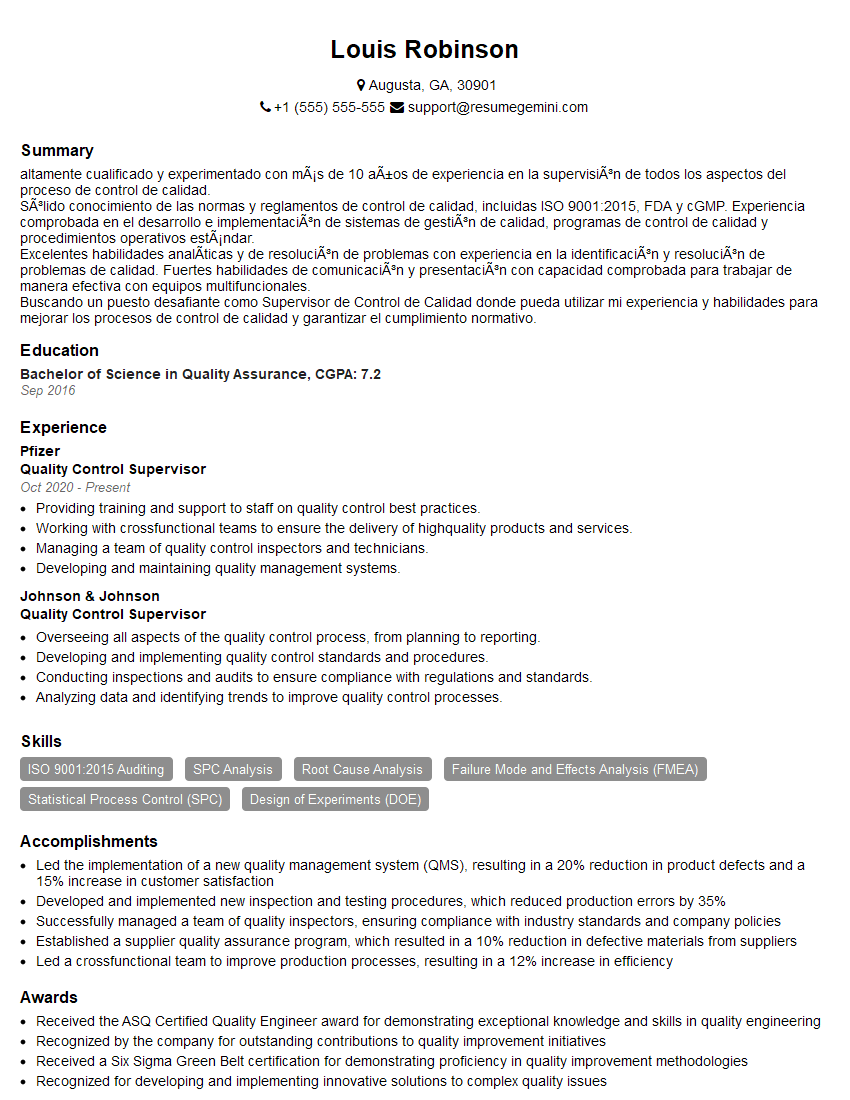
Quality Control Supervisor Resume Sample
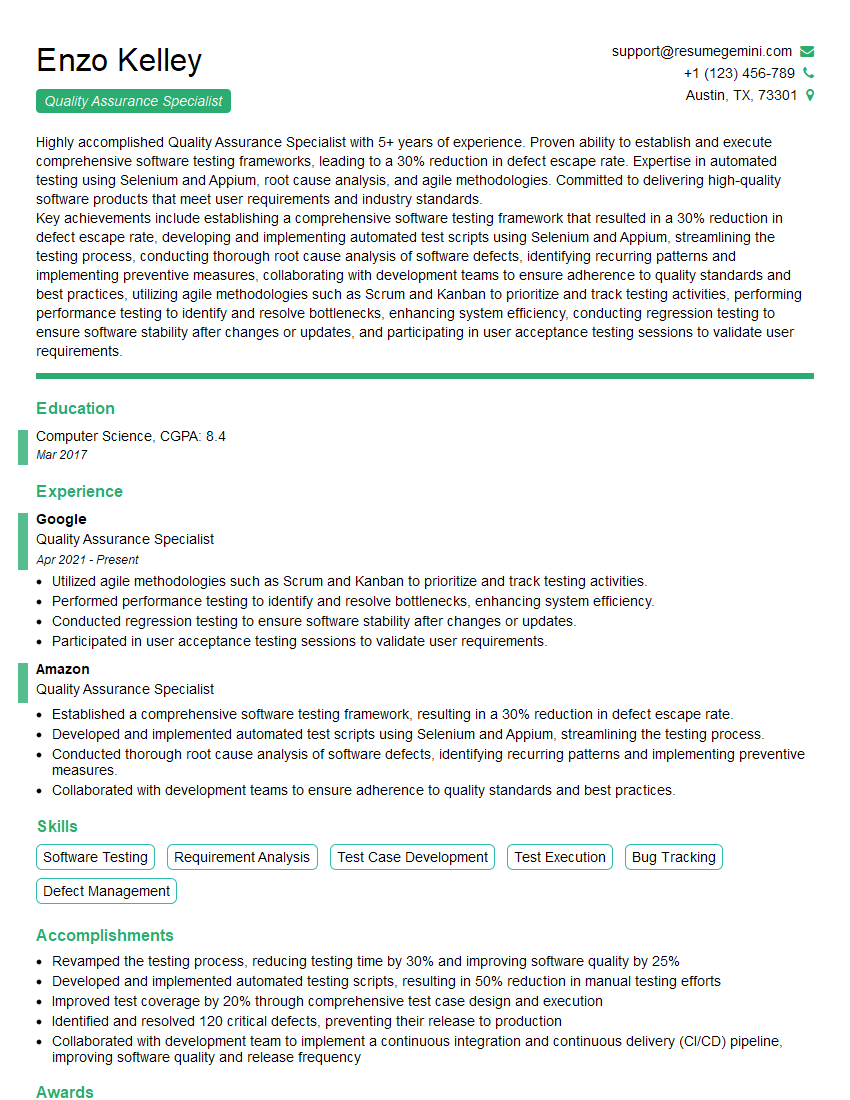
Quality Assurance Specialist Resume Sample
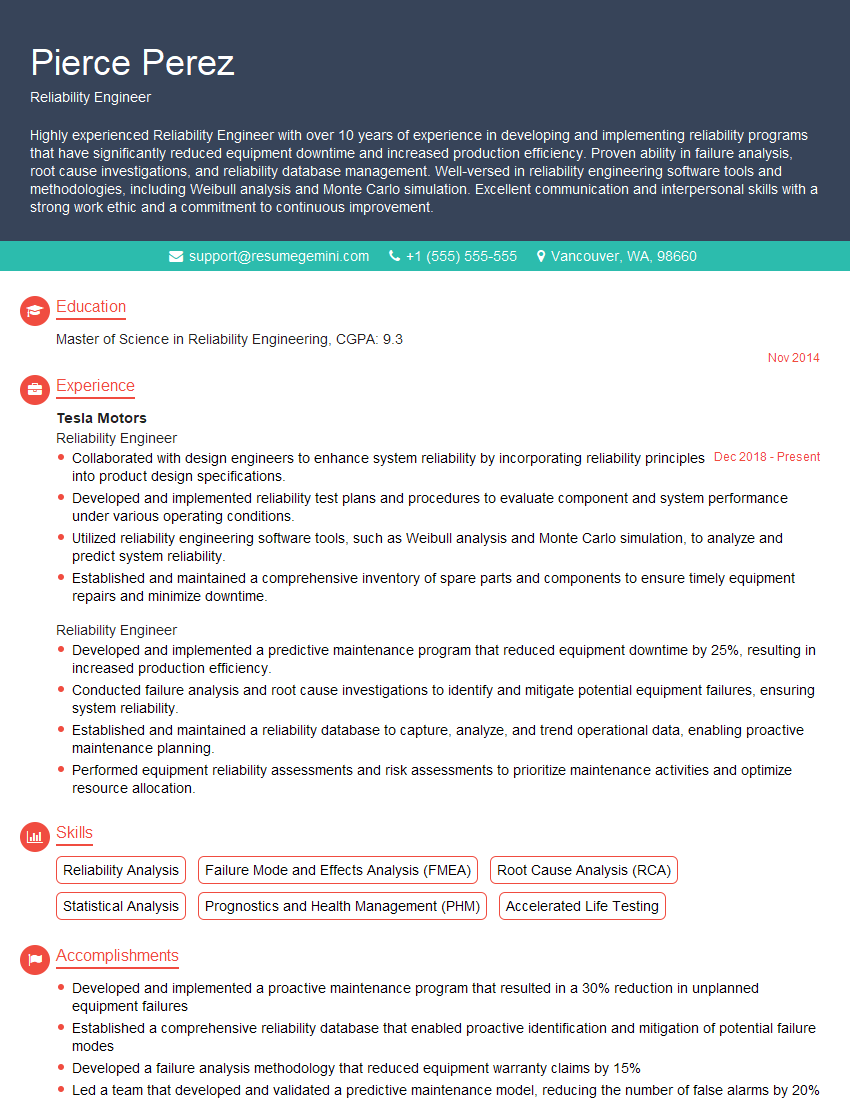
Reliability Engineer Resume Sample
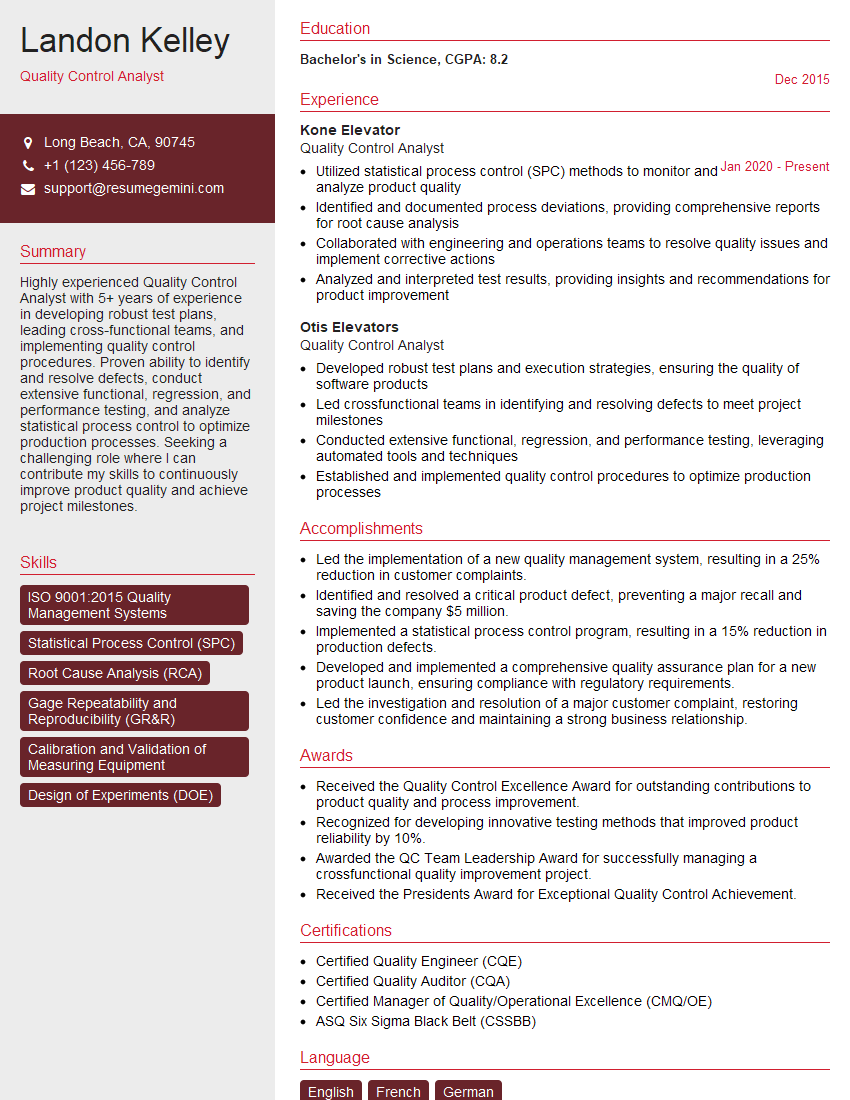
Quality Control Analyst Resume Sample
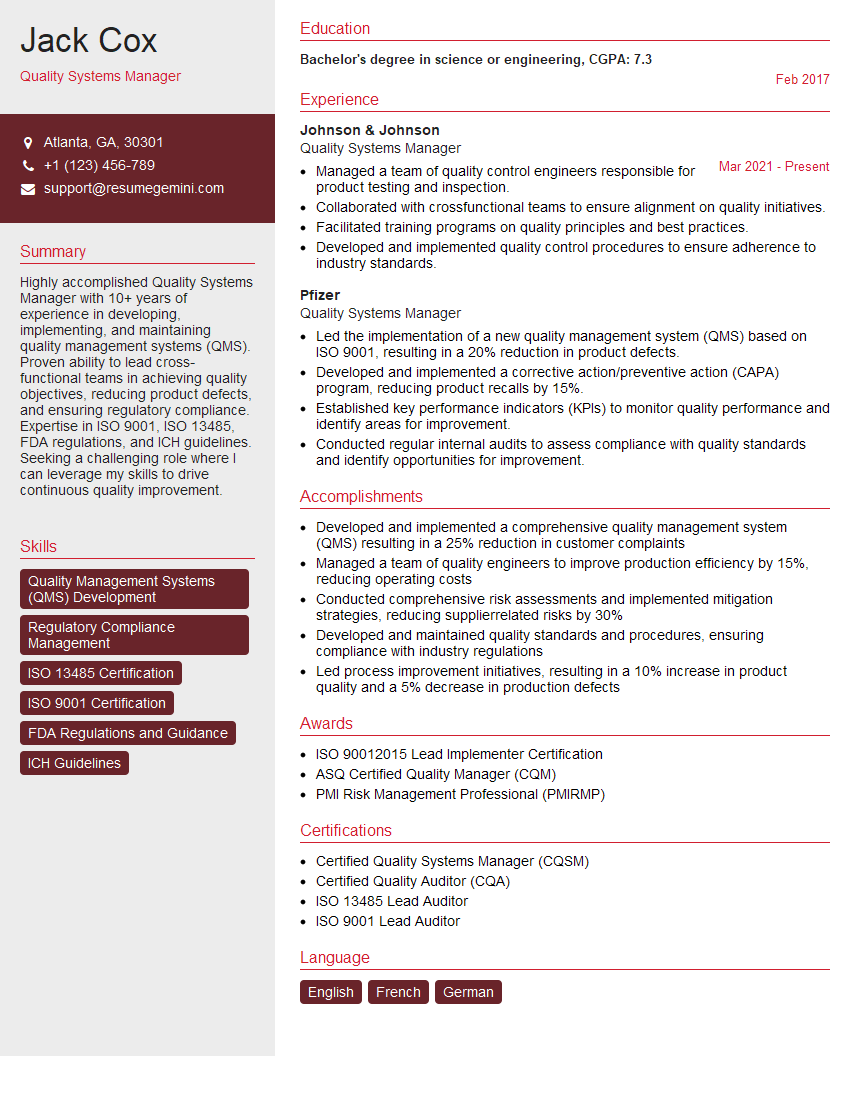
Quality Systems Manager Resume Sample
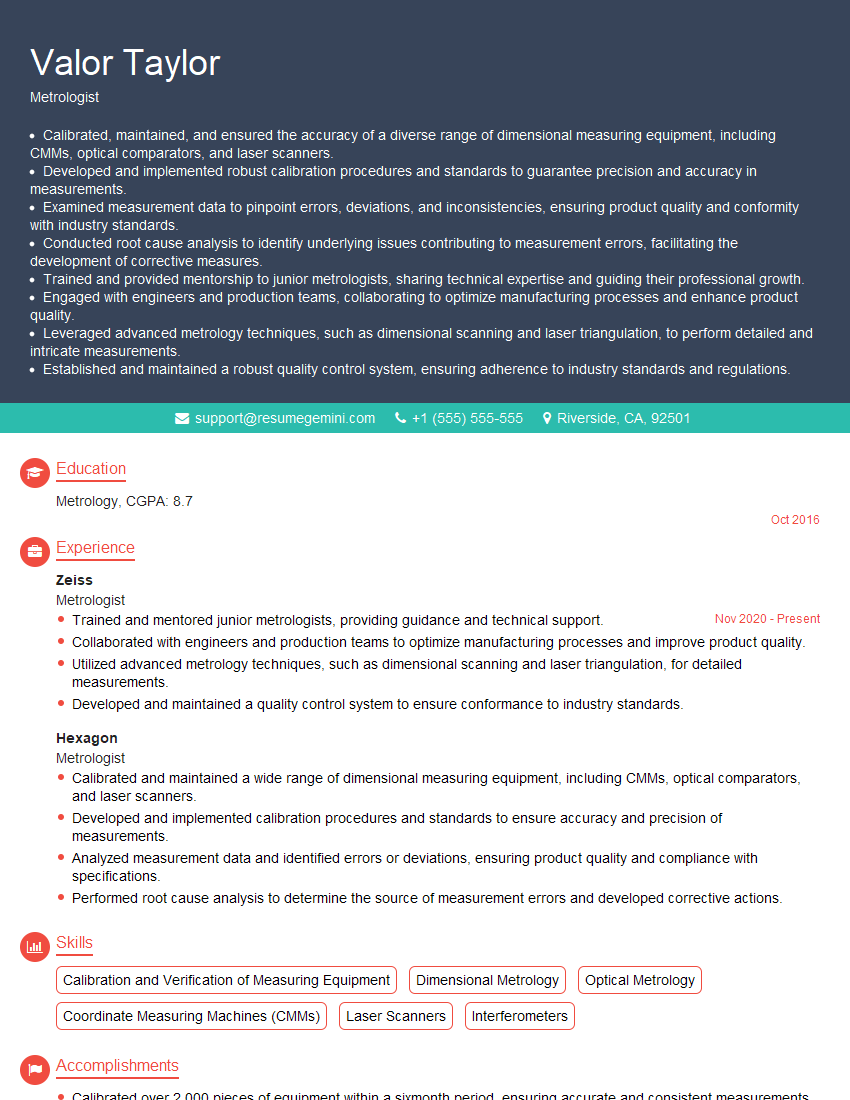
Metrologist Resume Sample
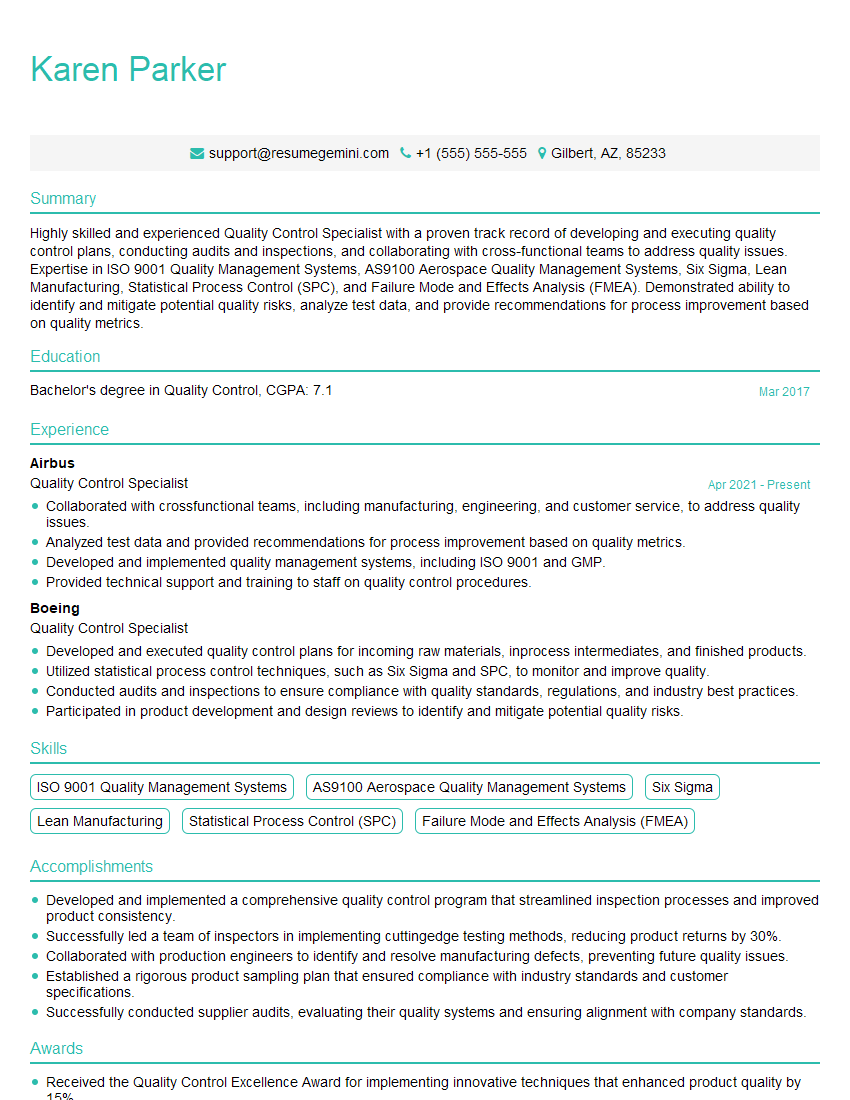
Quality Control Specialist Resume Sample
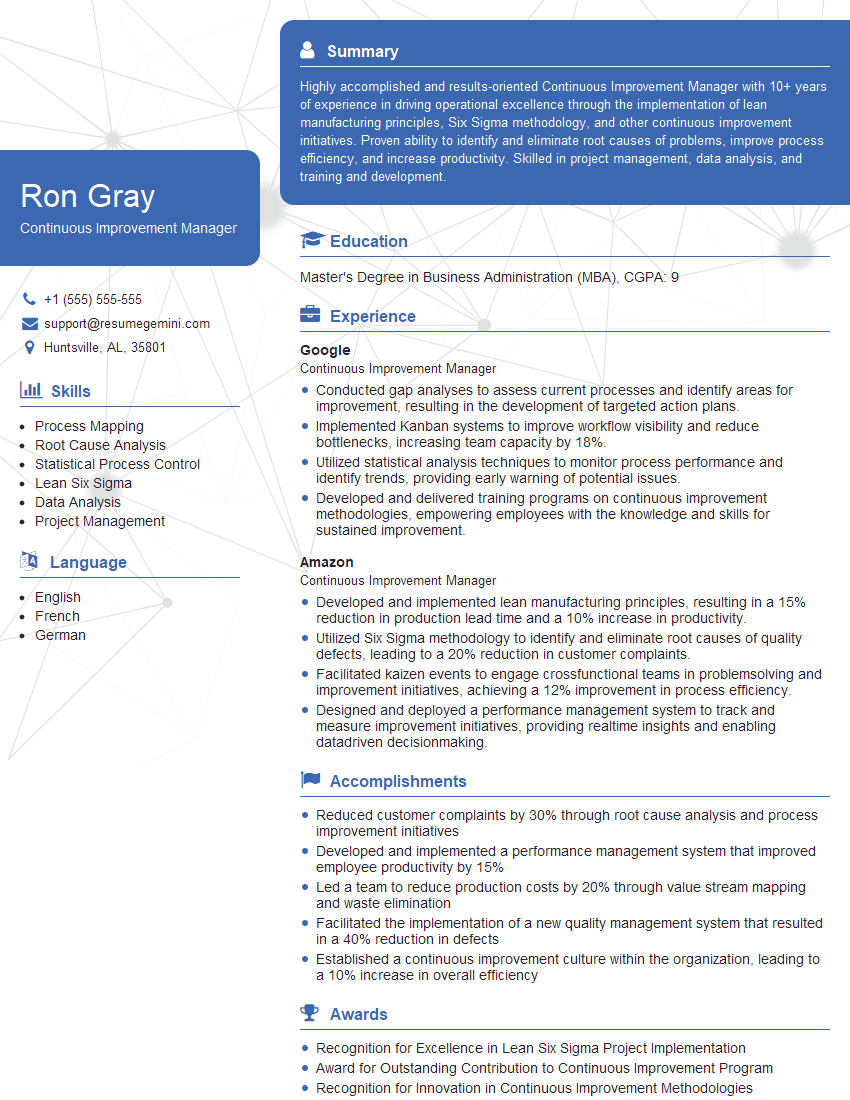
Continuous Improvement Manager Resume Sample
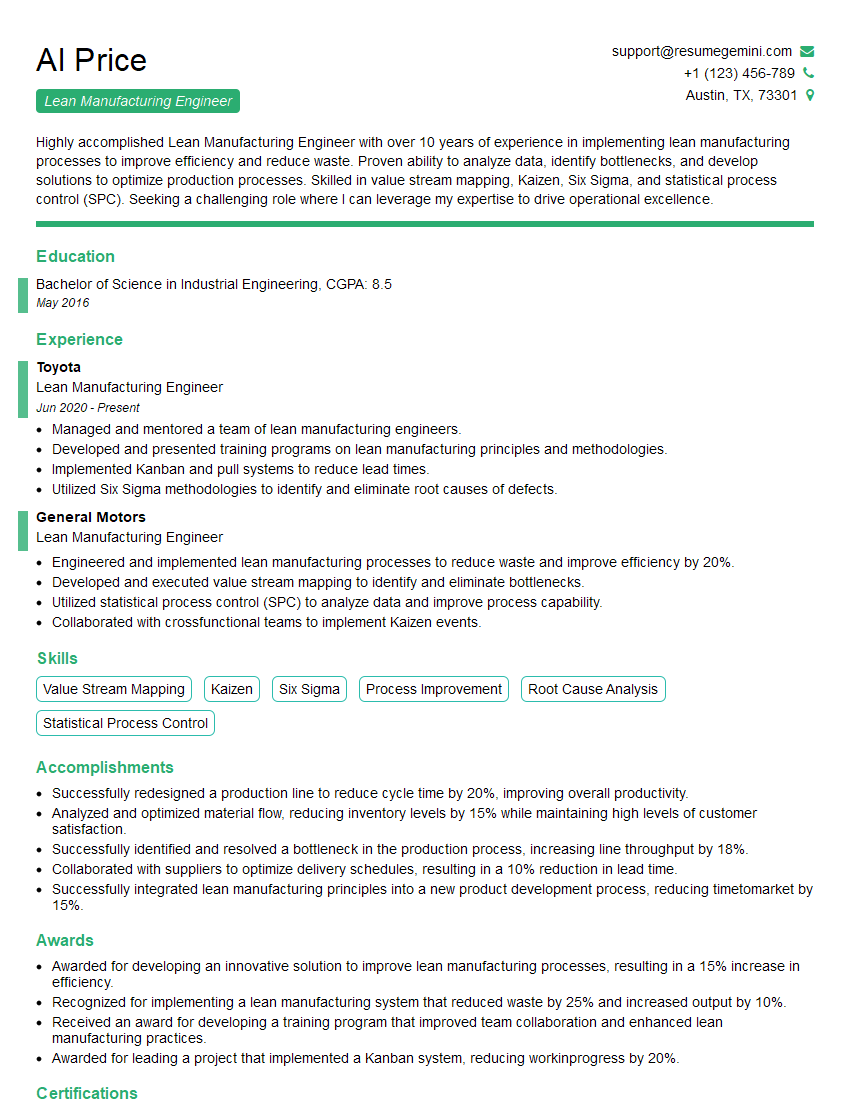
Lean Manufacturing Engineer Resume Sample
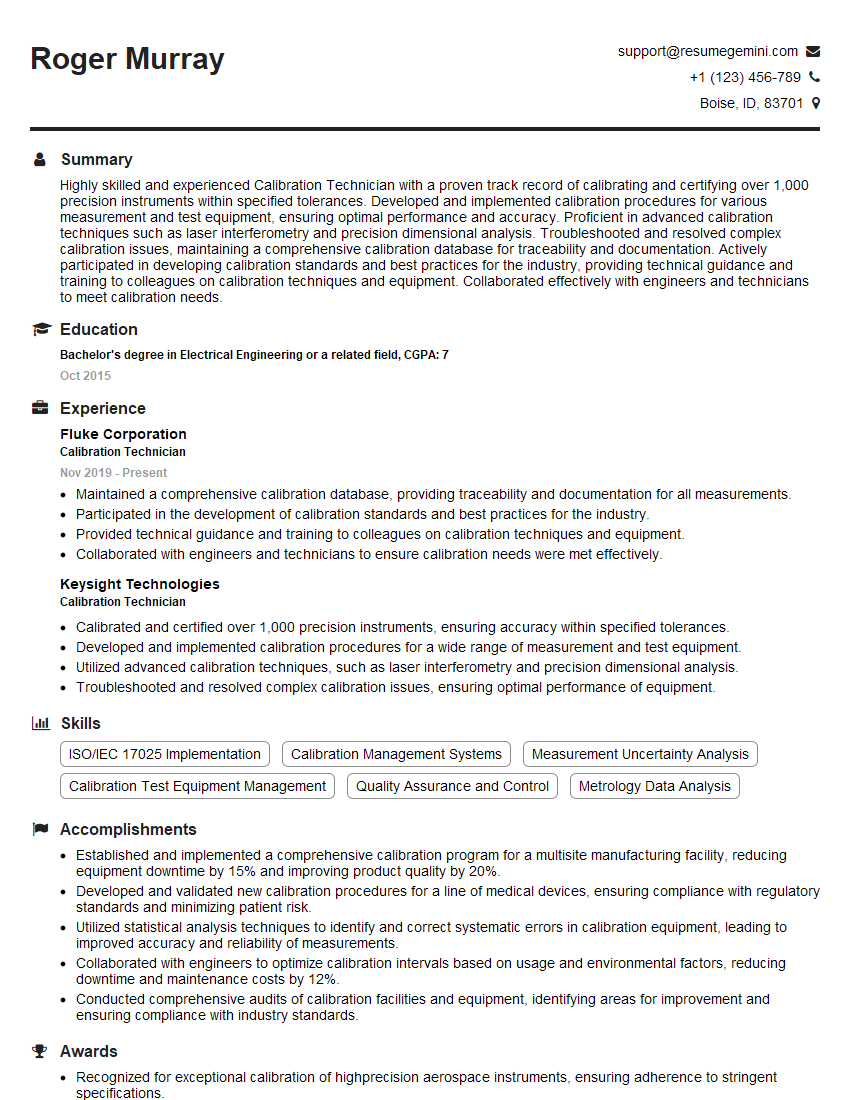
Calibration Technician Resume Sample
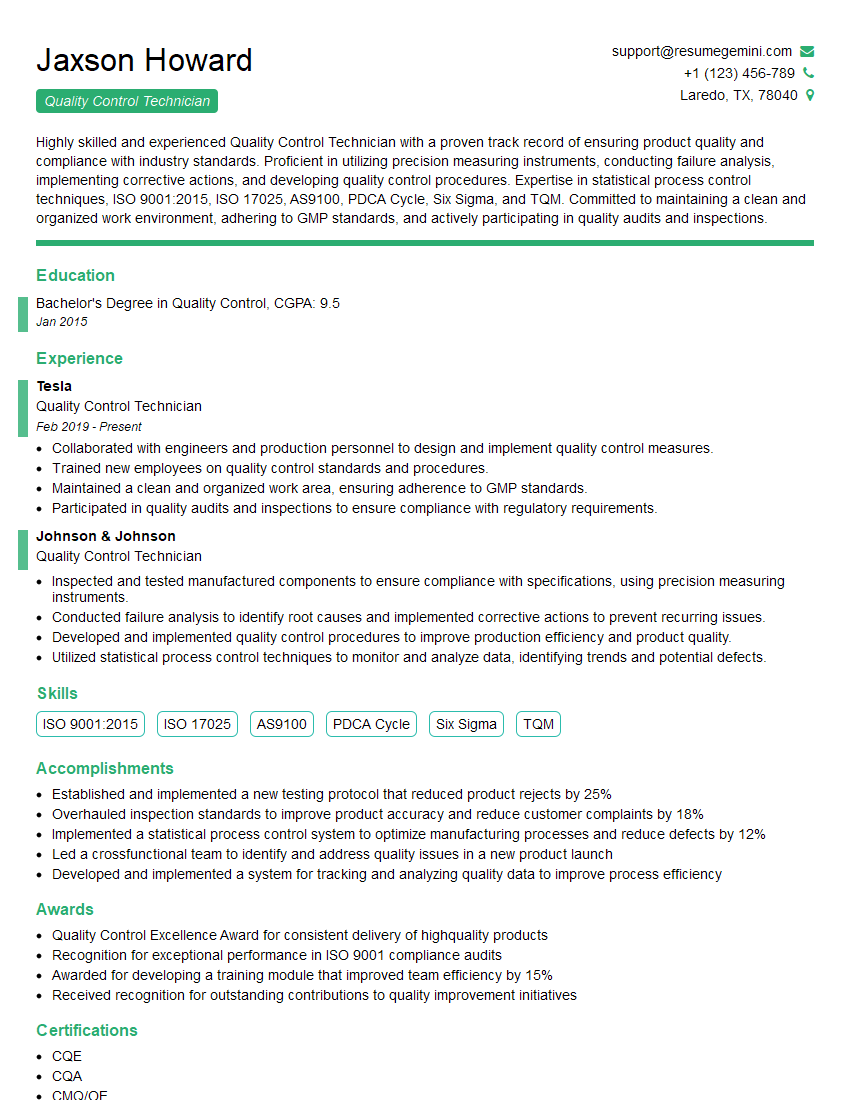
Quality Control Technician Resume Sample
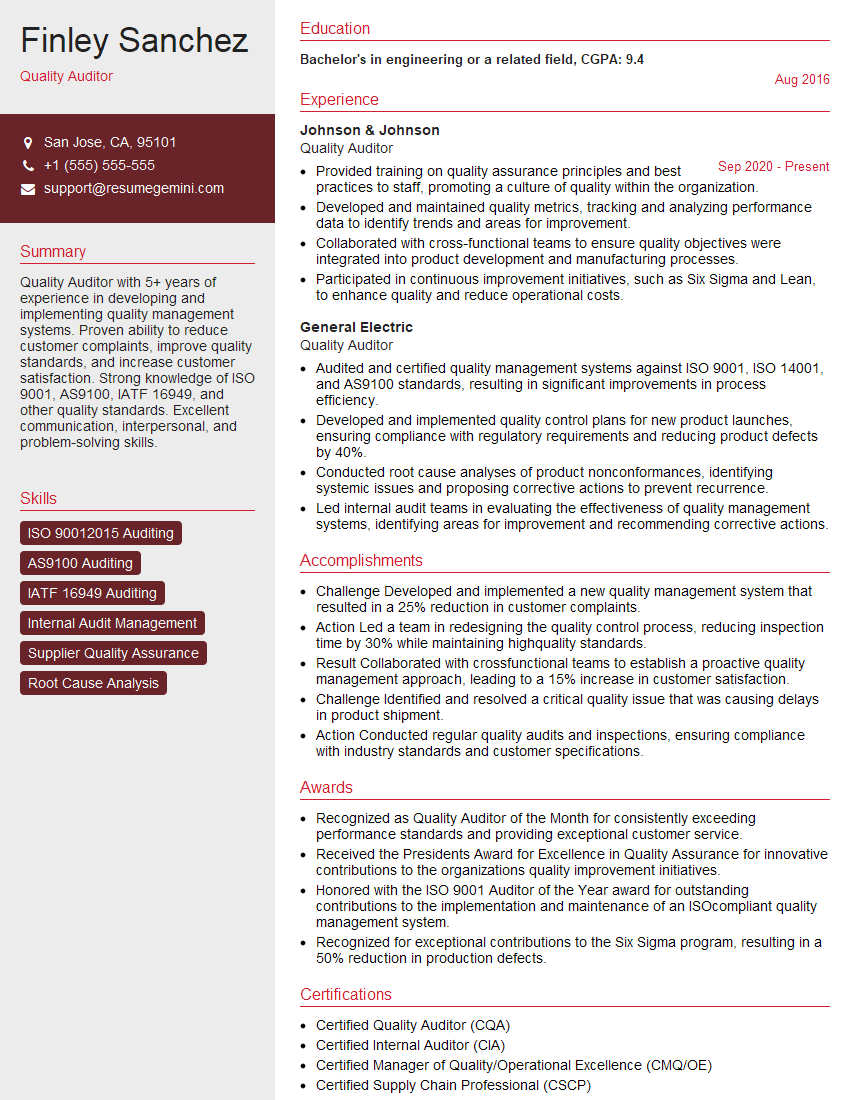
Quality Auditor Resume Sample
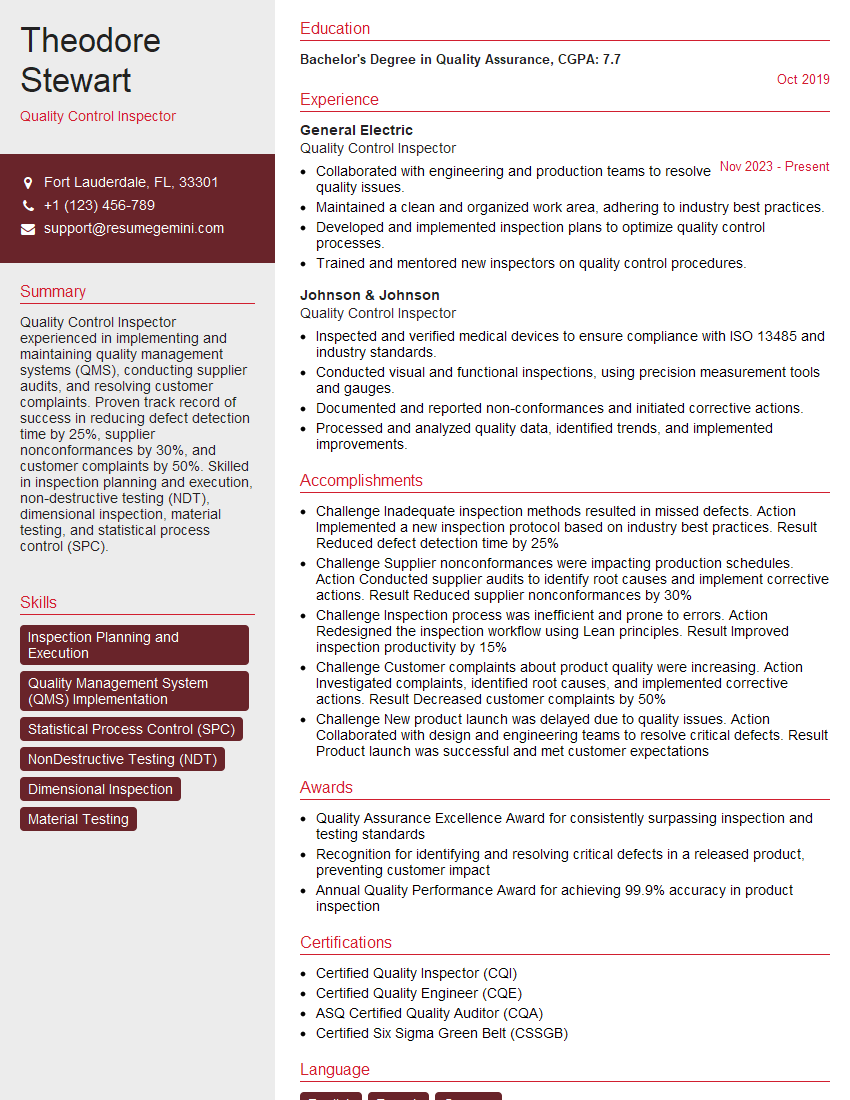
Quality Control Inspector Resume Sample
- Quality Assurance Manager
- Quality Control Manager
- Quality Control Supervisor
- Quality Assurance Specialist
- Reliability Engineer
- Quality Control Analyst
- Quality Systems Manager
- Metrologist
- Quality Control Specialist
- Continuous Improvement Manager
- Lean Manufacturing Engineer
- Calibration Technician
- Quality Control Technician
- Quality Auditor
- Quality Control Inspector
Explore more articles
Users Rating of Our Blogs
Share Your Experience
We value your feedback! Please rate our content and share your thoughts (optional).
What Readers Say About Our Blog
To the interviewgemini.com Webmaster.
Very helpful and content specific questions to help prepare me for my interview!
Thank you
To the interviewgemini.com Webmaster.
This was kind of a unique content I found around the specialized skills. Very helpful questions and good detailed answers.
Very Helpful blog, thank you Interviewgemini team.