Cracking a skill-specific interview, like one for Professional Development and Certification, requires understanding the nuances of the role. In this blog, we present the questions you’re most likely to encounter, along with insights into how to answer them effectively. Let’s ensure you’re ready to make a strong impression.
Questions Asked in Professional Development and Certification Interview
Q 1. Describe your experience designing and delivering training programs.
Designing and delivering training programs is a multi-faceted process that requires a deep understanding of adult learning principles and the specific needs of the target audience. My experience spans various industries, including technology, healthcare, and finance. I’ve designed programs ranging from short workshops to extensive multi-module courses, employing a variety of delivery methods, such as instructor-led training, e-learning modules, blended learning approaches, and virtual instructor-led training (VILT). For example, for a tech company, I developed a comprehensive onboarding program using a blended learning model. The program incorporated online modules for foundational knowledge, followed by hands-on workshops facilitated by experienced engineers, and culminating in a simulated project to reinforce learning. Another example involved creating a series of micro-learning modules for a healthcare organization, focusing on compliance training, which was highly effective because of its short, focused content easily integrated into busy work schedules.
My process typically begins with a detailed needs analysis (discussed further below) to define learning objectives and tailor the program’s content and delivery. This is followed by the development of engaging learning materials, including presentations, activities, assessments, and supplemental resources. I meticulously plan the program’s logistics, considering factors such as venue, technology, and participant support. Post-training, I conduct evaluations to gauge program effectiveness and make improvements for future iterations.
Q 2. Explain your process for needs analysis in professional development.
Needs analysis is the cornerstone of effective professional development. It’s a systematic process of identifying the gap between current skills and desired competencies. My approach involves a multi-pronged strategy combining several methods. First, I conduct interviews with stakeholders, including managers, employees, and subject matter experts, to understand performance gaps, organizational goals, and individual learning needs. Secondly, I analyze existing data, such as performance reviews, surveys, and learning records, to identify recurring trends and areas requiring improvement. Third, I use observation and job shadowing to understand the actual work environment and identify skill deficits in real-time. Finally, I sometimes use questionnaires and focus groups to gather comprehensive data.
For example, in a recent project for a marketing team, interviews revealed a lack of proficiency in data analysis. Analyzing performance data further confirmed this gap, showing low conversion rates on marketing campaigns. Through job shadowing, I observed firsthand how marketing team members were struggling with interpreting campaign metrics. This comprehensive analysis allowed me to design a targeted training program focusing on practical data analysis techniques relevant to their roles.
Q 3. How do you measure the effectiveness of a training program?
Measuring the effectiveness of a training program requires a multifaceted approach focusing on both learner outcomes and organizational impact. I use a combination of methods to gauge the success of each training initiative. Pre-training and post-training assessments measure knowledge acquisition and skill development. These can be knowledge tests, practical exercises, or simulations. Participant feedback surveys provide valuable insights into the program’s engagement, relevance, and overall satisfaction. Finally, I track key performance indicators (KPIs) to assess the program’s impact on the organization. For instance, this might include improvements in employee productivity, reduced error rates, increased sales, or enhanced customer satisfaction.
For example, after a customer service training program, we measured the improvement in customer satisfaction scores and the reduction in call resolution times. The positive changes in these KPIs provided concrete evidence that the training had a positive impact on the company’s bottom line.
Q 4. What are some common challenges in developing and implementing certification programs?
Developing and implementing certification programs presents unique challenges. One major challenge is ensuring the program’s relevance, rigor, and credibility. This requires careful curriculum design, alignment with industry standards, and a robust assessment process. Another challenge lies in maintaining the program’s ongoing viability and relevance in a rapidly evolving environment. This necessitates continuous updates to the curriculum and assessment methods to reflect the latest industry trends and technological advancements. Securing and managing appropriate resources, including subject matter experts, assessment materials, and technology infrastructure, is also crucial. Finally, promoting and marketing the certification program effectively to attract a sufficient pool of candidates is key to ensuring its success.
For example, obtaining accreditation from a recognized body can enhance credibility but also involves a lengthy and rigorous process.
Q 5. How do you stay current with the latest trends in professional development?
Staying current with the latest trends in professional development requires a proactive and multi-faceted approach. I regularly attend industry conferences and workshops to network with other professionals and learn about new developments. I actively participate in online professional communities, such as LinkedIn groups and forums, to engage in discussions and share best practices. I subscribe to relevant professional journals and publications, and regularly read industry blogs and research reports. I also actively seek out opportunities for continuous learning through online courses and certifications to enhance my expertise and knowledge base. Additionally, I encourage feedback from participants and colleagues to stay informed about changing needs and expectations.
Q 6. Describe your experience using learning management systems (LMS).
I have extensive experience using various Learning Management Systems (LMS), including Moodle, Canvas, and TalentLMS. My experience encompasses all aspects of LMS usage, from course creation and content uploading to learner management and performance tracking. I am proficient in designing and delivering online courses using LMS features such as interactive modules, quizzes, assignments, and discussion forums. I also utilize LMS reporting features to monitor learner progress, identify areas needing improvement, and generate insightful performance data. The ability to track learner progress in real-time and provide customized feedback is invaluable in adapting training to individual needs.
For instance, I have successfully implemented gamification features within an LMS to increase learner engagement and motivation. This involved integrating points, badges, and leaderboards to create a fun and competitive learning environment.
Q 7. Explain your approach to creating engaging and effective training materials.
Creating engaging and effective training materials requires a deep understanding of adult learning principles. I focus on creating content that is relevant, practical, and interactive. This includes using various media types, such as videos, simulations, and interactive exercises, to cater to diverse learning styles. I prioritize clear and concise language, avoiding jargon whenever possible. I incorporate real-world case studies and examples to make the learning more relatable and meaningful. Furthermore, I design activities and assessments that promote active learning and knowledge application. Regular feedback mechanisms, such as quizzes and knowledge checks, allow for immediate reinforcement and identification of knowledge gaps.
For example, I replaced lengthy PowerPoint presentations with short, engaging video tutorials supplemented with interactive simulations, which dramatically increased learner engagement and knowledge retention.
Q 8. How do you adapt training materials for different learning styles?
Adapting training materials for different learning styles is crucial for maximizing impact. We need to cater to visual, auditory, and kinesthetic learners, as well as those who prefer different paces and methods of information processing.
- Visual Learners: For these learners, I incorporate plenty of visuals – diagrams, charts, videos, and presentations with strong imagery. I minimize dense text blocks.
- Auditory Learners: I use audio lectures, podcasts, and group discussions. I also encourage verbalization of concepts through activities like role-playing or presentations.
- Kinesthetic Learners: Hands-on activities, simulations, and real-world applications are essential. This could involve workshops, interactive exercises, or projects that allow for practical application of knowledge.
- Diverse Paces and Methods: I offer various formats – short videos, longer in-depth presentations, downloadable materials, and self-paced online modules. This allows learners to choose what works best for them.
For example, when training sales staff on a new product, I might provide a detailed product brochure (visual), a recorded product demo (auditory), and a hands-on workshop where they practice presenting the product to colleagues (kinesthetic).
Q 9. What are your strategies for ensuring employee participation and engagement in training?
Ensuring employee participation and engagement in training requires a multi-faceted approach focusing on relevance, interactivity, and feedback.
- Relevance: Training needs to clearly connect to the employee’s job role and responsibilities. I begin by assessing current skill gaps and tailoring the curriculum to address specific needs.
- Interactivity: Passive learning is ineffective. I incorporate interactive elements such as quizzes, group work, discussions, case studies, games, and simulations. Technology can greatly enhance interactivity through online platforms with collaborative tools.
- Feedback: Regular feedback mechanisms are crucial. This can be through assessments, peer reviews, and informal check-ins. Constructive criticism helps employees track their progress and see the value of the training.
- Gamification: Introducing elements of friendly competition, points, badges, and leaderboards can boost motivation and engagement.
In a recent project training customer service representatives, we implemented a point system where employees earned points for completing modules, achieving high scores on quizzes, and receiving positive feedback from supervisors. This gamified approach resulted in a significant increase in participation and knowledge retention.
Q 10. How do you handle conflict or resistance to training initiatives?
Resistance to training can stem from various factors – time constraints, perceived irrelevance, fear of change, or negative past experiences. Addressing this requires empathy and a proactive approach.
- Understanding the Resistance: I start by identifying the root cause of the resistance through open communication and individual conversations. Listening to concerns is crucial.
- Addressing Concerns: Once I understand the concerns, I address them directly, offering reassurances, providing clear explanations of the benefits, and demonstrating the relevance of the training to their job roles.
- Addressing the ‘Why’: Emphasizing the ‘why’ behind the training, connecting it to organizational goals and individual career development, often alleviates resistance.
- Collaboration and Flexibility: I collaborate with employees to find solutions that work for both sides. This may involve adjusting the training schedule, providing alternative learning methods, or offering personalized support.
For instance, if a team expresses concerns about the time commitment, I might offer shorter modules or allow them to complete the training in stages, fitting it into their schedules.
Q 11. Describe your experience with blended learning models.
Blended learning models combine online and face-to-face learning methods to leverage the strengths of each. I have extensive experience designing and implementing such models.
- Online Components: These include self-paced online modules, eLearning courses, webinars, and virtual simulations. They are effective for delivering foundational knowledge and allowing learners to proceed at their own pace.
- Face-to-face Components: These typically involve workshops, group discussions, mentoring sessions, and hands-on activities. They are beneficial for fostering collaboration, building relationships, and providing opportunities for personalized feedback.
- Integration: Effective blended learning requires seamless integration of online and offline elements. Online modules can prepare learners for face-to-face sessions, while face-to-face activities can reinforce online learning.
For example, I designed a blended learning program for a large corporation. The online portion included eLearning modules covering compliance regulations. The face-to-face component consisted of interactive workshops that explored practical applications of these regulations through case studies and simulations. This approach enhanced engagement and knowledge retention.
Q 12. How do you ensure the quality and consistency of training across different locations or departments?
Maintaining quality and consistency across different locations and departments requires careful planning, standardization, and ongoing monitoring.
- Standardized Curriculum: A central repository for all training materials ensures consistency. All locations and departments use the same core curriculum and resources.
- Centralized Training Management System: A Learning Management System (LMS) can facilitate delivery, tracking, and assessment of training across all locations. It provides centralized reporting and analytics.
- Trainer Training: Trainers across all locations receive consistent training on delivery methods, ensuring a uniform approach. Regular calibrations help maintain consistency.
- Regular Audits and Reviews: Periodic audits and reviews of training materials and delivery ensure that the quality standards are maintained and the curriculum remains relevant.
A standardized training manual, along with regular quality checks and feedback mechanisms, prevents inconsistencies in training quality across branches. This ensures that every employee receives training to the same high standard regardless of their location.
Q 13. Explain your experience with performance improvement plans.
Performance improvement plans (PIPs) are formal documents outlining areas where an employee’s performance falls short of expectations and the steps needed to improve. My experience involves developing and implementing PIPs that are fair, constructive, and supportive.
- Clear and Specific Goals: PIPs must clearly state specific, measurable, achievable, relevant, and time-bound (SMART) goals. Vague objectives are unhelpful.
- Collaboration and Support: The development of a PIP should involve collaboration between the employee and their manager. It’s not a punitive measure but rather a process of support and improvement.
- Regular Check-ins and Feedback: Regular meetings are scheduled to track progress and provide ongoing feedback and support. This ensures that the employee feels supported and doesn’t feel abandoned.
- Documentation: All aspects of the PIP, including goals, progress, and feedback, are meticulously documented.
In past instances, I’ve helped managers develop PIPs, focusing on providing specific, actionable steps for improvement, regular check-ins, and tailored support to help the employee succeed. This approach has resulted in improved performance in many cases.
Q 14. How do you evaluate the ROI of a professional development program?
Evaluating the ROI of a professional development program requires a systematic approach that goes beyond simple cost analysis.
- Define Measurable Outcomes: Before the program begins, define clear, measurable outcomes such as increased productivity, improved employee satisfaction, reduced error rates, or higher customer satisfaction scores.
- Collect Data: Gather data before, during, and after the program using surveys, performance assessments, and other relevant metrics. This data will serve as a baseline and provide post-training comparisons.
- Analyze the Data: Analyze the collected data to determine the impact of the program on the defined outcomes. Statistical analysis can be used to determine significance.
- Calculate ROI: Calculate the ROI by comparing the costs of the program (training materials, trainer fees, time cost) against the benefits (increased productivity, reduced errors, improved employee retention). ROI is often expressed as a percentage.
For example, if a sales training program cost $10,000 and led to a $50,000 increase in sales, the ROI would be 500%. It’s crucial to consider both tangible and intangible benefits when evaluating the overall effectiveness of professional development initiatives.
Q 15. Describe your experience with different training methodologies (e.g., ADDIE, Agile).
My experience spans various training methodologies, most notably ADDIE and Agile. ADDIE, or Analysis, Design, Development, Implementation, and Evaluation, is a structured, linear approach. I’ve used it extensively for creating large-scale, instructor-led training programs, like the onboarding program I developed for new sales representatives. This involved meticulously analyzing their needs, designing engaging content, developing the training materials, implementing the program across multiple locations, and finally, evaluating its effectiveness through post-training assessments and performance reviews.
In contrast, Agile methodologies are iterative and flexible. I’ve found them invaluable for developing eLearning modules and shorter, more focused workshops where rapid prototyping and user feedback are essential. For example, when developing a quick-turnaround training module on a new software update, we utilized an Agile approach, delivering small, testable modules incrementally, allowing for continuous improvement based on user input. This ensured we addressed any learning gaps promptly and delivered a highly relevant training experience.
Career Expert Tips:
- Ace those interviews! Prepare effectively by reviewing the Top 50 Most Common Interview Questions on ResumeGemini.
- Navigate your job search with confidence! Explore a wide range of Career Tips on ResumeGemini. Learn about common challenges and recommendations to overcome them.
- Craft the perfect resume! Master the Art of Resume Writing with ResumeGemini’s guide. Showcase your unique qualifications and achievements effectively.
- Don’t miss out on holiday savings! Build your dream resume with ResumeGemini’s ATS optimized templates.
Q 16. How do you create and maintain a training budget?
Creating and maintaining a training budget requires a strategic approach. It begins with identifying training needs and aligning them with business objectives. I start by analyzing the learning gaps, prioritizing training based on their impact on business goals. Then, I estimate the costs associated with each training initiative, including instructor fees, materials, technology, venue costs (if applicable), and marketing/communication.
Budget maintenance involves regular monitoring of expenses and comparing them to the planned budget. This necessitates tracking the costs incurred in each training program. I utilize project management software and spreadsheets to do so. It also involves proactively identifying and addressing any budget variances. For example, if a particular training program is unexpectedly exceeding the budget, we would analyze the causes and implement corrective actions such as optimizing resource allocation or exploring more cost-effective alternatives without compromising training quality.
Q 17. How do you manage and mentor training staff?
Managing and mentoring training staff involves creating a supportive and collaborative environment. I foster open communication, providing regular feedback and opportunities for professional development. This includes encouraging participation in industry conferences and providing access to relevant online resources. I delegate tasks effectively, ensuring team members are empowered to take ownership of their work.
Mentoring is a key aspect of my management style. I regularly meet with my team members, providing constructive criticism, guidance, and support in addressing challenges. I also encourage them to set professional goals and provide them with the resources they need to achieve them. For instance, one of my team members had an interest in instructional design. I helped her build that skillset by arranging for her to attend relevant workshops and assigned her to shadow senior instructional designers on key projects. This mentorship ultimately benefited both the individual and the team.
Q 18. Explain your experience with different assessment methods (e.g., pre/post-tests, observations).
I have experience with various assessment methods to gauge training effectiveness. Pre-tests help determine learners’ existing knowledge, while post-tests assess learning outcomes. For instance, in a sales training program, a pre-test would assess existing sales techniques, allowing us to tailor the training content and a post-test would measure the improvement in their sales techniques after the training.
Observations are crucial for evaluating practical skills. I frequently observe trainees during simulations or role-playing exercises to assess their application of learned concepts in real-world scenarios. For example, we used role-playing exercises in customer service training to observe trainees handling difficult customer situations. The combination of these methods provides a comprehensive evaluation of learning effectiveness.
Q 19. Describe your experience developing eLearning courses.
My eLearning development experience involves creating engaging and interactive courses using various authoring tools such as Articulate Storyline and Adobe Captivate. I focus on using a variety of media to keep learners engaged, incorporating videos, simulations, interactive exercises, and gamification elements. For example, I recently developed an eLearning course on compliance procedures, using interactive scenarios to simulate real-life situations and allowing learners to make decisions with immediate feedback.
I prioritize a user-centered design approach, conducting thorough needs analyses and testing prototypes with target audiences to ensure the courses are effective and user-friendly. Accessibility features are incorporated throughout the design process, as explained in the next answer. This iterative process ensures a high-quality learning experience.
Q 20. How do you ensure accessibility in your training materials?
Ensuring accessibility in training materials is paramount for inclusivity. This involves adhering to accessibility guidelines like WCAG (Web Content Accessibility Guidelines). I incorporate various strategies throughout the design and development process. This includes using alternative text for images, providing captions for videos, using sufficient color contrast, and ensuring keyboard navigation is possible for all interactive elements.
For instance, in an eLearning module, I would ensure that all images have descriptive alt text so that screen readers can convey the image content to visually impaired learners. Similarly, I would ensure all videos have accurate captions for the benefit of deaf or hard-of-hearing learners. These considerations ensure that all learners, regardless of their abilities, can fully access and benefit from the training materials.
Q 21. What is your experience with creating competency models?
Creating competency models is a crucial step in aligning training with organizational goals. It involves identifying the knowledge, skills, and abilities (KSAs) required for successful job performance in specific roles. I begin by analyzing job descriptions, conducting interviews with job incumbents, and reviewing performance data. This helps identify the key competencies for a particular role.
The model usually takes the form of a matrix outlining the competencies and the proficiency levels required. For example, for a project manager role, competencies might include planning, communication, risk management, and problem-solving, each with defined proficiency levels (e.g., basic, proficient, expert). This competency model guides the design of training programs, focusing on developing the required KSAs to a defined standard, resulting in improved job performance and ultimately, business outcomes.
Q 22. How do you ensure alignment between training and organizational goals?
Ensuring training aligns with organizational goals is crucial for maximizing ROI. It’s not just about delivering training; it’s about strategically developing skills and knowledge that directly contribute to the company’s success. I achieve this through a three-pronged approach:
- Needs Analysis: I begin with a thorough needs assessment, identifying skill gaps and performance deficiencies that hinder the organization’s objectives. This involves collaborating with department heads, analyzing performance data, and conducting employee surveys to pinpoint specific areas requiring improvement. For instance, if the sales team is struggling to meet quotas, the training might focus on advanced sales techniques and negotiation skills.
- Goal Setting and Alignment: Once needs are identified, I work with stakeholders to define clear, measurable, achievable, relevant, and time-bound (SMART) training goals directly linked to overarching organizational objectives. For example, if a company aims to increase market share by 15%, training might focus on improving product knowledge, competitive advantage understanding, and customer relationship management.
- Evaluation and Adjustment: Post-training, I rigorously evaluate effectiveness using various methods, including knowledge tests, performance reviews, and surveys. This data helps determine whether the training achieved its goals and, if not, where adjustments need to be made. For example, if post-training sales figures don’t reflect improvement, we might re-evaluate the training content, delivery method, or even the initial needs assessment.
Q 23. Describe your experience with different certification bodies and standards.
My experience spans several prominent certification bodies and standards, including PMI (Project Management Institute) for project management certifications, CompTIA for IT certifications, and AWS (Amazon Web Services) for cloud computing. I’m familiar with their respective frameworks, standards, and accreditation processes. This includes understanding the nuances of various certifications, such as the PMP (Project Management Professional) certification from PMI, the Security+ certification from CompTIA, and the AWS Certified Solutions Architect certification. I understand the different levels of certification within each body and how they align with various experience levels and career paths. For example, I’ve guided employees through the process of obtaining both entry-level and advanced certifications, tailoring the support and resources based on their individual needs and career goals.
Q 24. How do you manage the certification process for employees?
Managing the certification process for employees requires a structured approach. I typically follow these steps:
- Identification of Needs: We determine which certifications align with employee roles and the organization’s strategic objectives.
- Individual Learning Plans: Personalized learning plans are created for each employee, outlining the required courses, study materials, and exam preparation strategies. This accounts for different learning styles and paces.
- Resource Allocation: I secure necessary resources, including training materials, exam fees, and dedicated study time. This might involve coordinating with external training providers or creating internal learning programs.
- Progress Tracking and Support: Regular check-ins and mentorship are provided to ensure employees stay on track. This includes addressing challenges and providing targeted support where needed.
- Post-Certification Evaluation: After certification, we evaluate the impact on job performance and organizational outcomes to measure the effectiveness of the investment.
Think of it like a personalized fitness plan. We wouldn’t expect everyone to follow the same workout routine; similarly, certification paths need to be individualized.
Q 25. What is your experience with onboarding new employees into training programs?
Onboarding new employees into training programs is crucial for rapid integration and productivity. My approach focuses on a smooth and engaging experience. I start with a comprehensive orientation that introduces the company culture, values, and the importance of professional development. Then, I personalize the training plan based on the role and prior experience of each individual. This involves clearly outlining expectations, providing necessary resources (e.g., learning management system access, mentorship opportunities), and scheduling regular check-ins to address any challenges. I utilize a blended learning approach – incorporating online modules, instructor-led sessions, and on-the-job training – to cater to diverse learning preferences. Effective communication is key; I ensure employees understand the ‘why’ behind each training module, connecting it directly to their role and the broader organizational goals. A well-structured onboarding ensures new hires feel valued, supported, and empowered to succeed.
Q 26. Explain your experience with different adult learning theories.
My experience encompasses several adult learning theories, including:
- Andragogy: This theory emphasizes the self-concept, prior experience, readiness to learn, and orientation to learning of adult learners. I apply this by designing training that is relevant to their lives, encourages self-directed learning, and respects their prior knowledge.
- Experiential Learning: I frequently incorporate hands-on activities, simulations, and case studies to facilitate learning through experience. This helps learners connect theory to practice and retain information better.
- Social Learning: I encourage peer-to-peer learning and collaborative activities, recognizing the power of social interaction in adult learning. This could be through group projects, mentoring programs, or online forums.
Understanding these theories allows me to tailor training methodologies to maximize engagement and knowledge retention. For instance, for a technical skill, I would use hands-on activities, whereas for a leadership training course, I might use case study discussions and role-playing.
Q 27. Describe your experience in using data analytics to improve training effectiveness.
Data analytics plays a vital role in improving training effectiveness. I leverage learning management system (LMS) data to track key metrics like course completion rates, learner engagement (time spent, quiz scores), and post-training performance improvements. This data provides valuable insights into what’s working and what isn’t. For example, if a specific module has low completion rates, we might revise its content or delivery method. Similarly, if post-training performance metrics aren’t improving, we may need to adjust the training’s focus or incorporate additional support. I also use A/B testing to compare different training approaches and identify the most effective methods. By analyzing this data, we can make data-driven decisions to continuously optimize our training programs and maximize their impact on organizational performance. This approach transforms training from a cost center to a strategic investment with measurable ROI.
Q 28. How would you handle a situation where a training program is not meeting its objectives?
If a training program is underperforming, I follow a systematic approach to identify the root cause and implement corrective actions:
- Analyze Data: I would first gather data on the program’s performance, looking at metrics such as completion rates, learner feedback, and post-training performance evaluations. This helps pinpoint specific areas needing improvement.
- Identify Root Causes: Based on the data, I would investigate potential causes for the underperformance. This could include issues with the training content, delivery methods, learner engagement, or even a mismatch between training objectives and organizational needs.
- Develop Solutions: I would then develop specific solutions to address the identified root causes. This could involve revising the training materials, incorporating different learning methods, providing additional support to learners, or adjusting the training objectives.
- Implement and Monitor: I would implement the chosen solutions and closely monitor the program’s performance to assess their effectiveness. This might involve A/B testing different approaches to identify the most effective strategies.
- Iterate and Improve: Based on the results, I would continuously iterate and improve the training program, using data-driven insights to refine its design and delivery.
It’s crucial to remember that training program improvement is an iterative process. We must be willing to adapt and evolve our approaches based on the data and feedback we collect.
Key Topics to Learn for Professional Development and Certification Interview
- Understanding Learning Styles and Development Needs: Explore different learning methodologies and how to identify individual strengths and weaknesses to personalize a professional development plan. Consider practical applications like self-assessment tools and creating a tailored learning roadmap.
- Strategic Certification Selection: Discuss the process of researching and selecting certifications relevant to career goals. This includes evaluating industry trends, comparing certification providers, and assessing the return on investment (ROI) of different certifications. Analyze case studies of successful certification strategies.
- Budgeting and Resource Allocation for Professional Development: Explore practical strategies for managing the financial and time resources required for professional development and certification programs. This includes exploring sponsorship opportunities, utilizing online learning platforms effectively, and prioritizing learning objectives.
- Measuring the Impact of Professional Development: Understand the importance of tracking progress and measuring the effectiveness of professional development initiatives. Discuss methods for quantifying the impact of certifications on career advancement, including salary increases and skill enhancement.
- Mentorship and Networking Strategies: Explore the value of building professional networks and seeking mentorship opportunities to accelerate career growth. This includes discussing effective networking techniques and the benefits of mentorship in professional development.
- Identifying and Addressing Skill Gaps: Analyze methods for identifying skill gaps and developing strategies to bridge them through targeted professional development and training. Practical applications include utilizing skills assessments and developing personalized learning plans.
Next Steps
Mastering professional development and certification demonstrates a commitment to continuous learning and career advancement, making you a highly attractive candidate. An ATS-friendly resume is crucial for maximizing your job prospects. To create a compelling and effective resume that showcases your achievements, we encourage you to utilize ResumeGemini. ResumeGemini provides a user-friendly platform to build a professional resume, and we offer examples of resumes tailored specifically to highlight experience in Professional Development and Certification. Take the next step in your career journey – build your best resume yet!
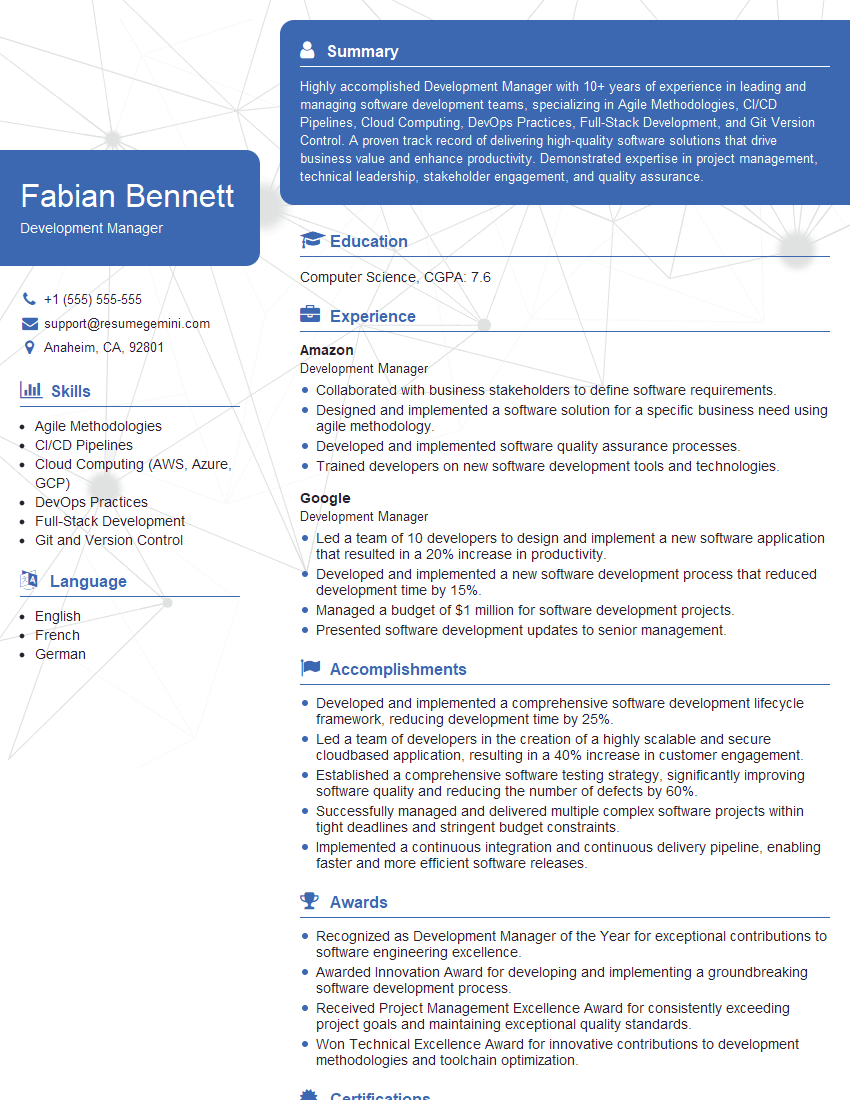
Development Manager Resume Sample
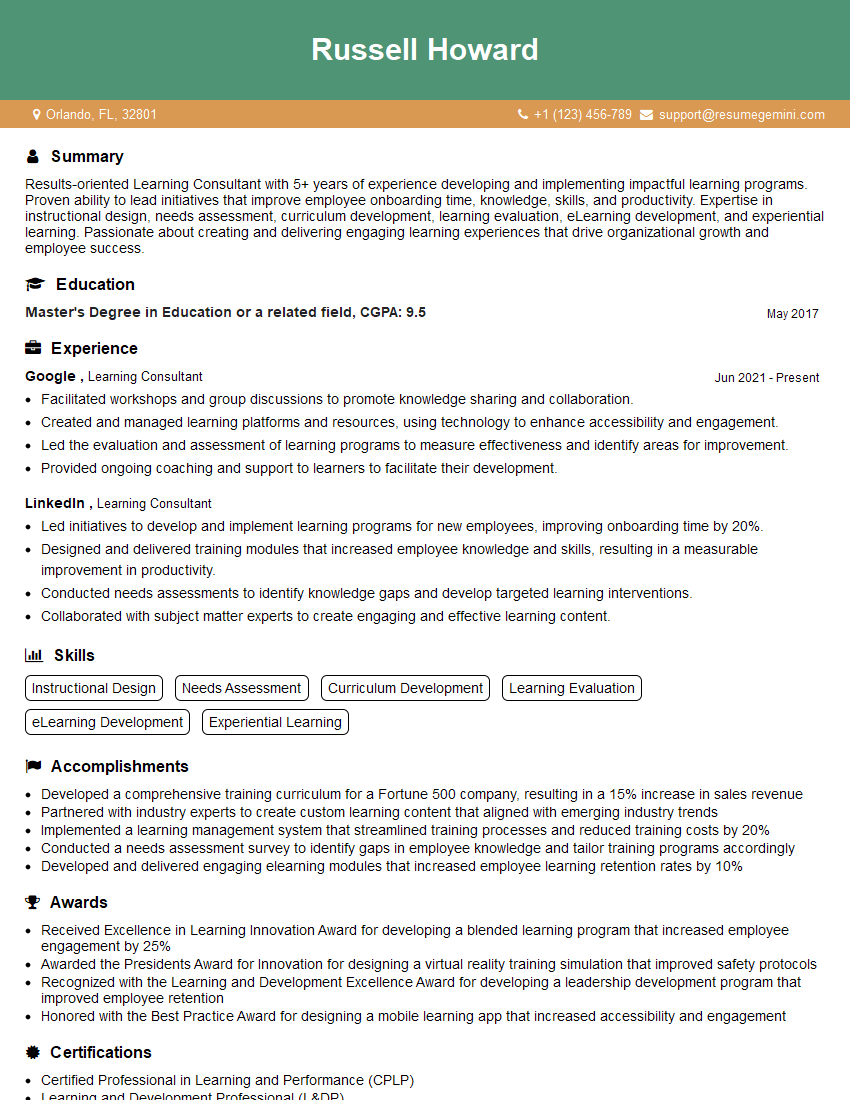
Learning Consultant Resume Sample
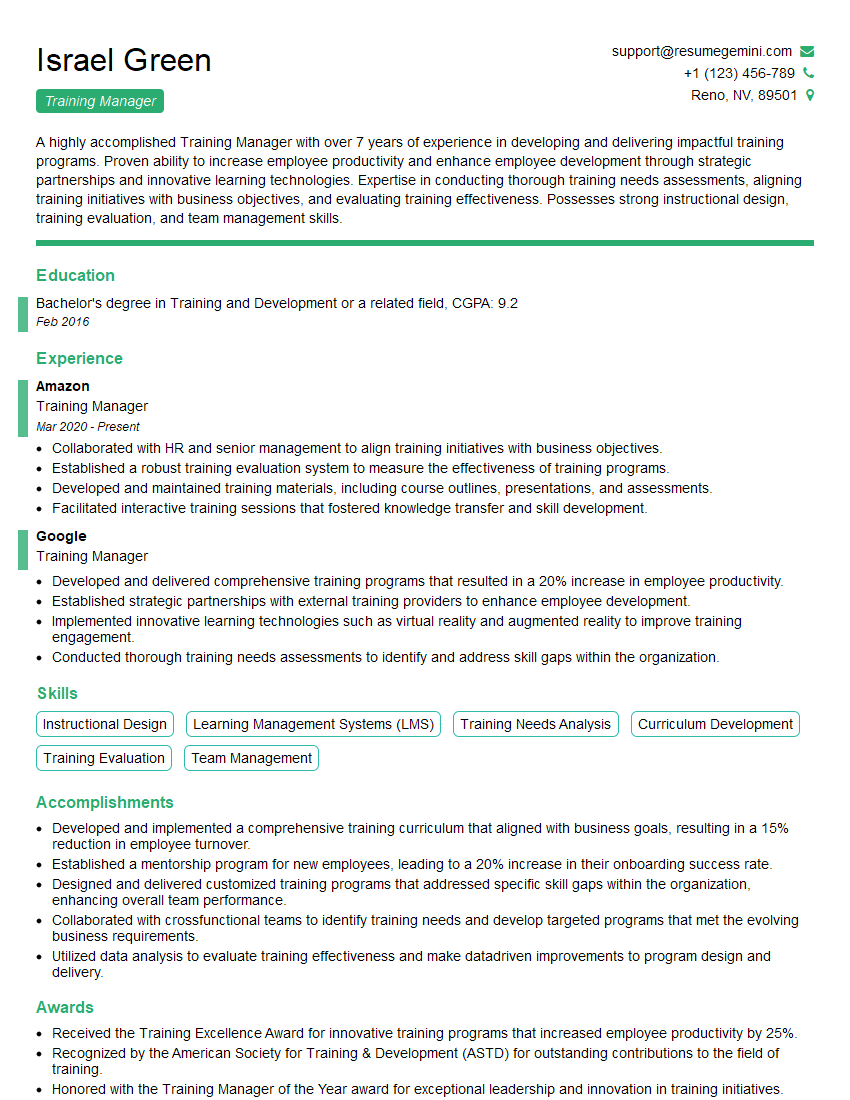
Training Manager Resume Sample
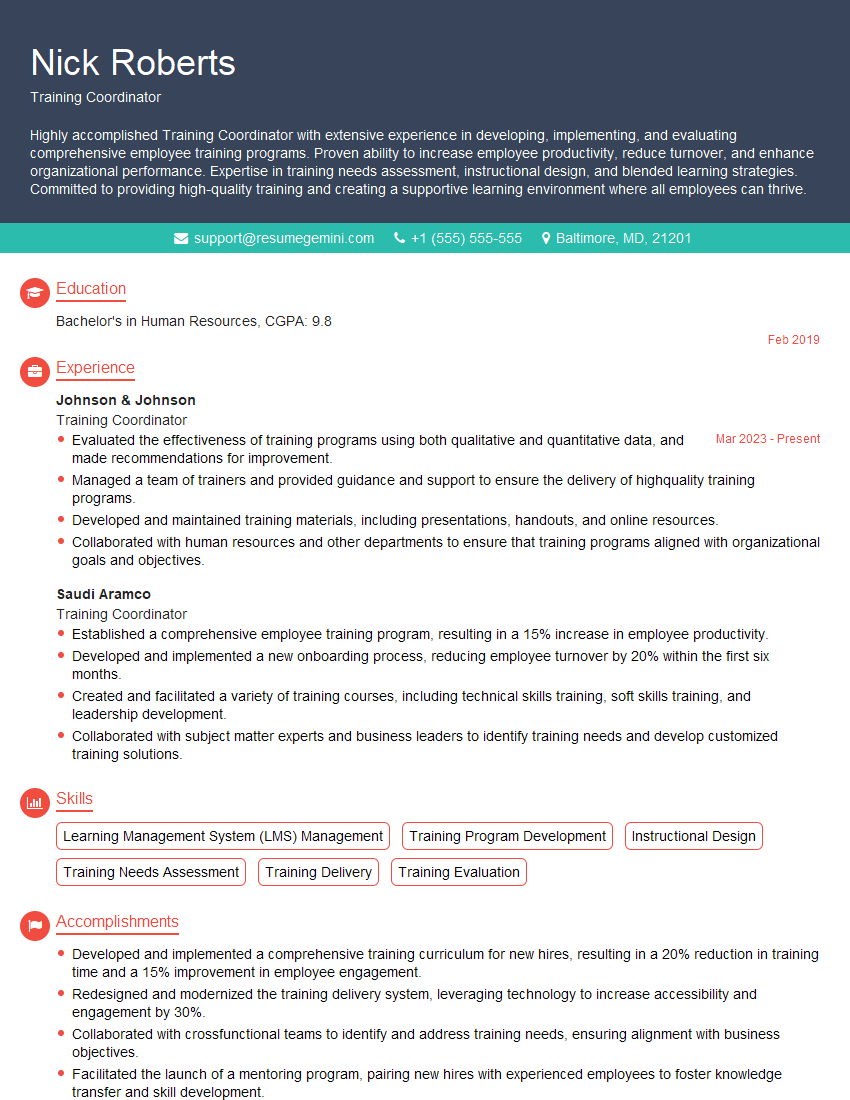
Training Coordinator Resume Sample
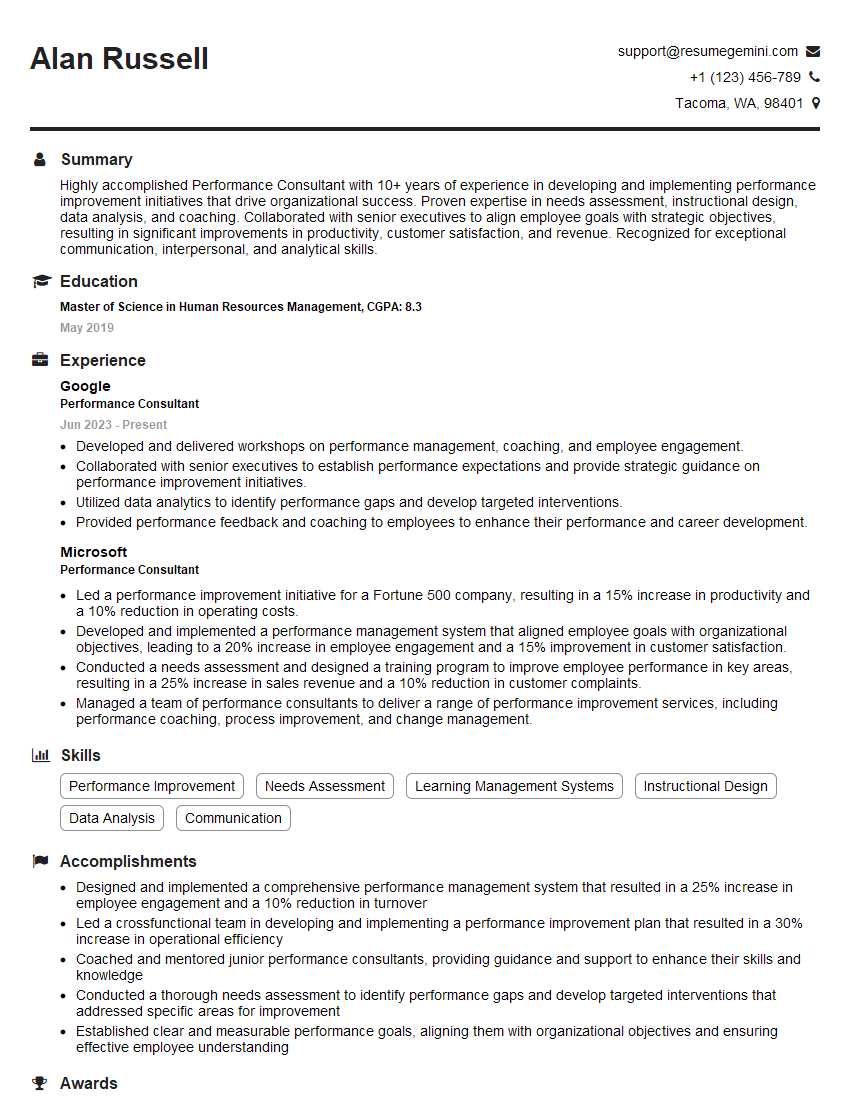
Performance Consultant Resume Sample
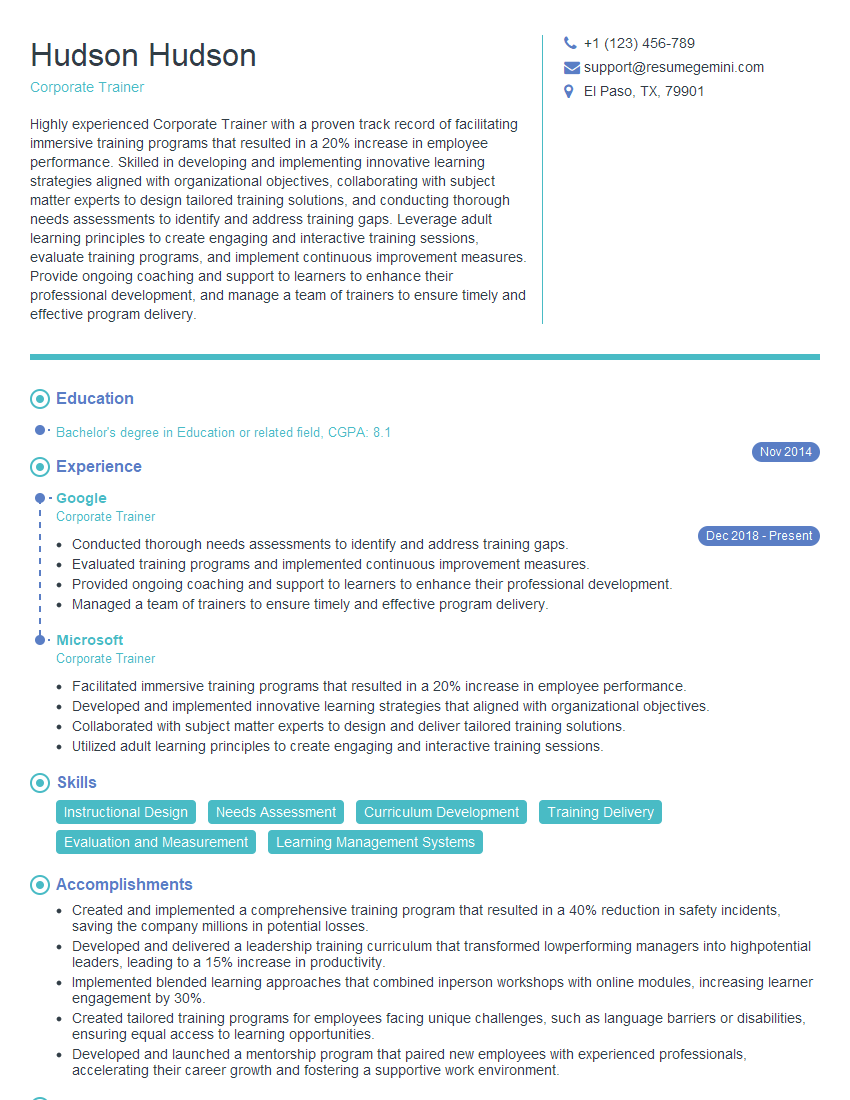
Corporate Trainer Resume Sample

Curriculum Developer Resume Sample

Training Specialist Resume Sample
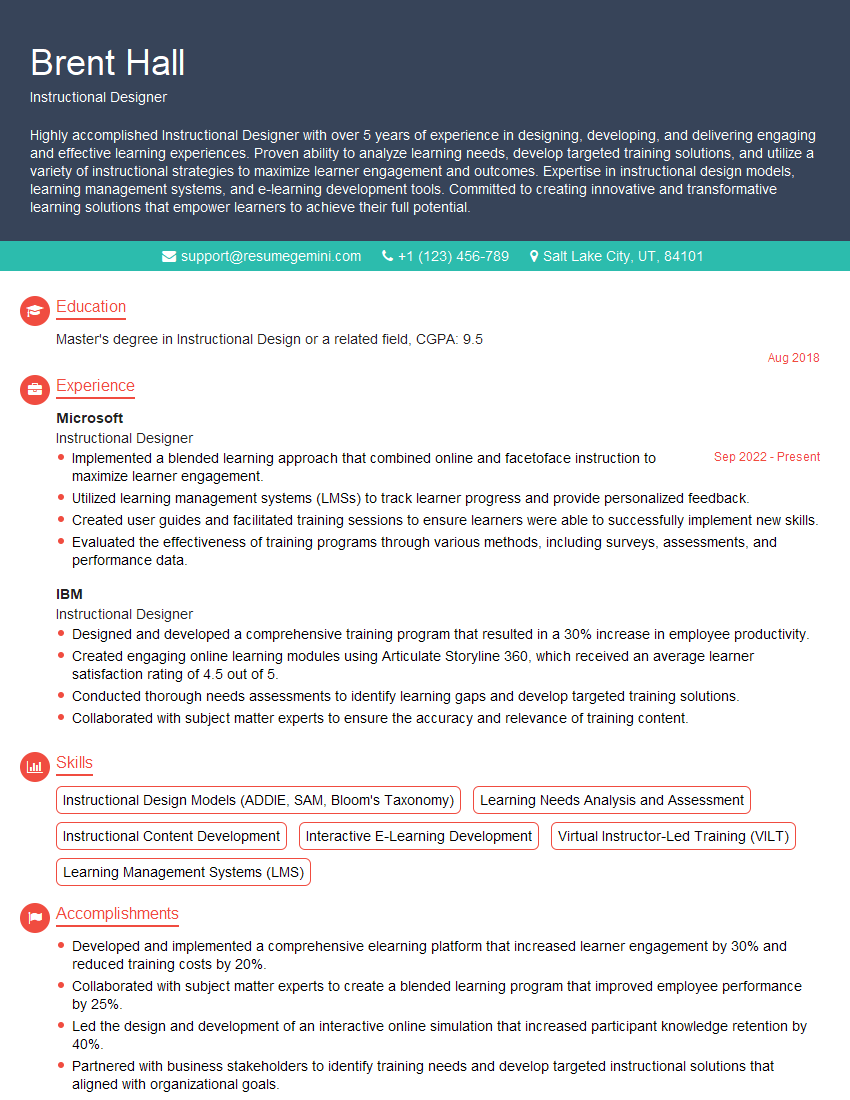
Instructional Designer Resume Sample
Explore more articles
Users Rating of Our Blogs
Share Your Experience
We value your feedback! Please rate our content and share your thoughts (optional).
What Readers Say About Our Blog
To the interviewgemini.com Webmaster.
Very helpful and content specific questions to help prepare me for my interview!
Thank you
To the interviewgemini.com Webmaster.
This was kind of a unique content I found around the specialized skills. Very helpful questions and good detailed answers.
Very Helpful blog, thank you Interviewgemini team.