Preparation is the key to success in any interview. In this post, we’ll explore crucial Proficient in playing a variety of musical instruments interview questions and equip you with strategies to craft impactful answers. Whether you’re a beginner or a pro, these tips will elevate your preparation.
Questions Asked in Proficient in playing a variety of musical instruments Interview
Q 1. Describe your experience playing different instruments.
My musical journey has spanned a variety of instruments, each offering unique challenges and rewards. I began with the piano at age seven, developing a strong foundation in classical technique and music theory. This foundational understanding proved invaluable when I later picked up the saxophone at 14, transitioning smoothly into jazz and improvisation. More recently, I’ve explored the versatility of the guitar, focusing on both acoustic fingerstyle and electric lead playing. Each instrument has honed different aspects of my musicianship: the piano emphasized precision and harmony, the saxophone cultivated improvisation and breath control, and the guitar fostered rhythmic dexterity and expression. I also have experience playing the flute and ukulele, mainly for personal enjoyment and exploring diverse musical styles.
Q 2. What musical genres are you proficient in?
My proficiency extends across several genres. Classical music forms the bedrock of my training, evident in my piano and flute playing. However, my passion lies in jazz, where I’ve spent considerable time mastering improvisation, blues scales, and chord progressions on the saxophone and guitar. I also have a working knowledge of pop, rock, and folk music, enabling me to adapt my playing style to diverse musical contexts. This versatility is a strength, allowing me to contribute effectively to various musical projects. For instance, I recently played a gig incorporating elements of both jazz and folk music, highlighting the adaptability of my playing.
Q 3. What is your preferred method for learning new instruments?
My preferred method for learning new instruments involves a balanced approach combining structured learning with self-directed exploration. I begin with a solid understanding of the instrument’s basic techniques, often through lessons or reputable instructional materials. This foundational knowledge establishes correct posture, fingering, and basic musical concepts. Following this structured phase, I transition into exploring my own musical interests, experimenting with different styles, and improvising freely. For example, when learning the guitar, I began with structured lessons focusing on chords and scales, but soon incorporated my own improvisations and learned song arrangements from online resources. This approach fosters both technical proficiency and personal expression.
Q 4. Explain your approach to sight-reading music.
Sight-reading is a crucial skill for any professional musician. My approach involves a multi-stage process. First, I quickly scan the entire piece to grasp the overall structure, key signature, and time signature. This provides a framework for understanding the music. Then, I proceed phrase by phrase, focusing on rhythmic accuracy and melodic contour before attempting to play the entire piece. I use rhythmic cues and harmonic relationships to guide my interpretation and adapt my approach based on the style of music. Consistent practice is key; I regularly incorporate sight-reading exercises into my routine to maintain fluency and improve accuracy. For complex pieces, I may break down sections into smaller segments, focusing on individual challenges before integrating them into the whole.
Q 5. Describe your experience with ensemble playing.
Ensemble playing has been an integral part of my musical development. I’ve participated in various ensembles, including orchestras, jazz bands, and chamber groups. These experiences have honed my collaborative skills, teaching me the importance of listening attentively, adapting to different playing styles, and contributing to the overall cohesion of the group. I value the dynamic interplay within an ensemble; it pushes me to develop a refined musical sensibility, improving my timing and responsiveness. A particular highlight was playing in a university jazz orchestra, where I learned the importance of blending my solo improvisations with the overall ensemble sound. This experience significantly developed my ensemble playing.
Q 6. How do you handle performance anxiety?
Performance anxiety is a common experience for musicians. My approach involves a combination of preparation and mental strategies. Thorough preparation, including practicing the piece extensively and visualizing a successful performance, significantly reduces anxiety. I also employ relaxation techniques, such as deep breathing exercises, before performances to calm my nerves. Positive self-talk and focusing on the joy of music help to shift my focus from anxiety to the performance itself. Remembering that even seasoned professionals experience some level of nervousness reminds me it is a normal part of performing. By focusing on the preparation and process, I can transform the energy from nervousness into excitement and focus on delivering a compelling musical experience.
Q 7. Discuss your understanding of music theory.
My understanding of music theory is comprehensive. I’m proficient in reading and writing music notation, understanding key signatures, time signatures, and rhythmic patterns. I possess a strong grasp of harmony, including chord progressions, voice leading, and modulation. My knowledge extends to counterpoint, melodic analysis, and form. This theoretical foundation underpins my ability to compose, improvise, and analyze music. For example, while improvising a jazz solo, I draw upon my understanding of scales, modes, and chord changes to create melodic and harmonic lines that align with the song’s structure and overall feel. My theoretical understanding gives me the tools to create dynamic and engaging musical pieces.
Q 8. How do you maintain your instrumental skills?
Maintaining instrumental proficiency is a continuous process, much like maintaining physical fitness. It requires consistent dedication and a multifaceted approach.
- Regular Practice: I dedicate a minimum of 2 hours daily to focused practice, tailoring sessions based on specific needs. This includes technical exercises (scales, arpeggios), etudes for improving technique, and repertoire work for refining musical expression. For instance, if I’m preparing for a performance of a challenging Bach cello suite, I might focus on specific passages that need improvement, slowing them down and working on fingerings and bowing technique until they are smooth and musical.
- Varied Repertoire: I actively challenge myself by learning pieces across various styles and difficulty levels. This prevents stagnation and broadens my musical understanding. Exploring genres like classical, jazz, and folk music keeps my playing fresh and exciting.
- Seeking Feedback: I regularly seek feedback from experienced musicians and teachers. This could involve formal lessons, masterclasses, or informal sessions with colleagues. Constructive criticism is invaluable for identifying areas for improvement and refining my skills.
- Physical Care: As a musician, proper posture and physical health are paramount. I ensure I maintain a healthy posture while playing, warm up properly before practicing, and utilize exercises to prevent injuries. This includes regular stretching and exercises to improve dexterity and strength.
This holistic approach not only maintains but also enhances my playing over time.
Q 9. What are your strengths and weaknesses as a musician?
My strengths lie in my versatility and adaptability as a musician. I’m proficient across multiple instruments (piano, cello, guitar), enabling me to contribute to various musical ensembles and projects. I also possess a strong sense of rhythm and a good ear for harmony, allowing me to quickly grasp and adapt to new musical contexts. For example, I recently joined a jazz band with minimal prior jazz experience, but my foundation in music theory and my ability to listen closely allowed me to learn the repertoire quickly and effectively.
However, my weakness, like most musicians, lies in balancing technical perfection with expressive freedom. Sometimes, my focus on precision can detract from the overall emotional impact of a performance. I am actively working on this by incorporating improvisation and focusing on developing my emotional connection to the music I play.
Q 10. Describe your experience with music software (e.g., notation software, DAWs).
I’m proficient in several music software applications. My experience with Digital Audio Workstations (DAWs) includes Ableton Live and Logic Pro X. I utilize these for recording, editing, mixing, and mastering my own performances, as well as for creating and manipulating audio. For notation software, I’m experienced with Sibelius and Finale, using them to create scores, edit existing scores, and print professional-quality sheet music. I’ve used these tools extensively in both personal projects and collaborative endeavors, creating arrangements, composing original works, and preparing scores for performances. For example, I used Ableton to create backing tracks for a recent solo cello performance and Sibelius to arrange a piece for a string quartet.
Q 11. Explain your understanding of music notation.
Music notation is a standardized system for visually representing music. It’s essentially a language that communicates musical ideas, including pitch, rhythm, dynamics, articulation, and other musical elements. Understanding notation is crucial for both performing and composing music. The basics include the staff, clef (treble, bass), notes, rests, time signatures, key signatures, and dynamic markings.
For instance, a time signature like 4/4 indicates four beats per measure, with a quarter note receiving one beat. A sharp (#) indicates raising a note by a half-step, while a flat (♭) lowers it. Dynamic markings like pianissimo (pp) and fortissimo (ff) communicate volume levels. A thorough understanding of music notation allows for precise interpretation of scores and facilitates accurate communication of musical ideas between composers and performers.
Q 12. How do you adapt your playing style to different musical contexts?
Adapting my playing style is fundamental to working in diverse musical contexts. This requires sensitivity to the specific genre, ensemble, and overall aesthetic. For instance, my cello playing in a classical string quartet demands a precise, controlled, and nuanced approach, emphasizing intonation and articulation. In contrast, playing in a bluegrass band might require a more improvisational, rhythmic, and driving style. I achieve this adaptability by:
- Listening carefully to the musical style and adapting my phrasing, articulation, and dynamics accordingly.
- Understanding the role my instrument plays within the ensemble and adjusting my volume and tone to complement other instruments.
- Exploring different techniques specific to each genre. For example, I employ different bowing techniques for classical vs. jazz performance.
Essentially, it is about finding the balance between stylistic authenticity and my own personal musical voice.
Q 13. How do you troubleshoot technical issues with your instruments?
Troubleshooting technical issues is an essential part of being a musician. This often involves a systematic approach:
- Identify the problem: Is the instrument out of tune, is there a buzzing sound, is the mechanism malfunctioning?
- Check the obvious: For stringed instruments, check tuning, string tension, and the condition of the strings. For woodwinds, check reeds and air pressure. For brass, check valves and mouthpieces.
- Consult resources: I refer to manuals, online resources, and consult with experienced luthiers or repair technicians for more complex problems. I keep a detailed log of repairs and maintenance to keep track of my instruments’ history.
- Preventive maintenance: Regular cleaning and maintenance prevent major issues down the line. For example, I clean my instruments after every use and have them inspected by a professional periodically.
By combining practical knowledge and proactive maintenance, I minimize downtime and ensure my instruments are always in optimal playing condition.
Q 14. Describe your experience with music composition or arrangement.
I have experience in both music composition and arrangement. Composition involves creating original musical works, while arranging involves adapting existing works for different instrumental combinations or styles. My compositional process often begins with a musical idea—a melody, rhythm, or harmonic progression—that I develop and refine. I use notation software like Sibelius to capture and organize my ideas. My arrangements frequently involve adapting classical pieces for smaller ensembles or transcribing improvisations. This requires a strong understanding of music theory, orchestration, and the specific capabilities of different instruments. For example, I recently arranged a Bach prelude for a solo piano piece, simplifying the original score while preserving its essence and musical beauty.
Q 15. What are your long-term career goals as a musician?
My long-term career goals revolve around establishing myself as a versatile and sought-after musician, capable of performing and recording across diverse genres. This includes building a strong reputation through consistent high-quality performances, collaborations, and recordings. I envision a career that balances solo work with collaborative projects, allowing me to explore my artistic vision while also contributing to the broader musical community. Specifically, I aim to compose and release my own albums, perform regularly at prestigious venues, and potentially teach masterclasses to share my knowledge and experience with aspiring musicians. Ultimately, I want to leave a lasting positive impact on the music world, inspiring others and contributing to the ongoing evolution of musical artistry.
Career Expert Tips:
- Ace those interviews! Prepare effectively by reviewing the Top 50 Most Common Interview Questions on ResumeGemini.
- Navigate your job search with confidence! Explore a wide range of Career Tips on ResumeGemini. Learn about common challenges and recommendations to overcome them.
- Craft the perfect resume! Master the Art of Resume Writing with ResumeGemini’s guide. Showcase your unique qualifications and achievements effectively.
- Don’t miss out on holiday savings! Build your dream resume with ResumeGemini’s ATS optimized templates.
Q 16. Describe your experience with improvisation.
Improvisation is a cornerstone of my musical abilities. It’s the art of spontaneously creating music, responding to the moment and my fellow musicians. My experience spans various instruments, including piano, guitar, and saxophone. I’ve honed my improvisational skills through years of jam sessions, ensemble work, and solo performances. I approach improvisation by grounding myself in musical theory, understanding scales, modes, and chord progressions, allowing me to freely create melodies and harmonies within a structured framework. I often draw inspiration from the energy of the performance space, the emotional context, and the other musicians’ contributions. For instance, during a recent jazz gig, I spontaneously developed a melodic line based on a chord progression introduced by the bassist, weaving in elements of blues and bebop styles. This interactive and reactive nature of improvisation is incredibly exciting and rewarding.
Q 17. How do you collaborate with other musicians?
Collaboration is essential to my musical process. I believe in fostering a supportive and communicative environment where everyone feels comfortable contributing their ideas. My approach involves active listening, respectful dialogue, and a willingness to compromise. Before a collaborative project, I typically discuss the musical direction, the desired mood, and individual roles with my fellow musicians. We might brainstorm ideas together, experiment with different arrangements, and offer constructive feedback throughout the process. For example, in a recent orchestral project, I actively engaged with the conductor and other section leaders to ensure a unified and cohesive interpretation of the score. Open communication and mutual respect are crucial for successful collaborations, resulting in a richer and more nuanced musical outcome.
Q 18. What is your process for practicing a new piece of music?
My practice routine for a new piece involves a multi-stage approach. First, I carefully analyze the score, understanding its structure, harmony, and melodic contours. I then break down the piece into smaller, manageable sections, focusing on mastering each section before moving on. I use a combination of slow, deliberate practice to ensure accuracy and speed-building exercises to achieve fluency. I also incorporate ear training to develop my aural skills and sight-reading exercises to improve my ability to read music quickly and accurately. Finally, I integrate performance practice, simulating the conditions of a live performance to build confidence and stamina. This systematic approach, combined with regular self-assessment, allows me to effectively learn and internalize new musical material.
Q 19. How do you approach learning a new musical style?
Learning a new musical style is an exciting journey of discovery. My approach involves active listening to representative works of the genre, identifying its characteristic features like rhythms, melodic patterns, and harmonic structures. I then seek out instructional materials, including books, videos, and online resources, to understand the theoretical underpinnings of the style. I also try to immerse myself in the culture and context surrounding the style to develop a deeper appreciation for its nuances. For instance, when learning flamenco guitar, I spent time listening to renowned artists, studying guitar techniques specific to the style, and even attended live performances to grasp the expressive nature of the music. This holistic approach, incorporating theory, practice, and cultural understanding, enables me to authentically learn and perform in a new musical style.
Q 20. How do you handle constructive criticism?
I view constructive criticism as an invaluable tool for growth. I actively seek feedback from trusted colleagues, mentors, and audiences. I approach criticism with an open mind, focusing on the specific points raised and considering how to integrate them into my performance or practice. I don’t take criticism personally, instead viewing it as an opportunity to identify areas for improvement. For example, a comment about needing more dynamic range in my playing prompted me to focus on developing my control over volume and articulation. By embracing constructive criticism, I continue to refine my technique and artistic expression.
Q 21. Describe your experience with recording music.
My recording experience spans various settings, from home studios to professional recording environments. I’m familiar with different recording techniques, microphone placement, and audio editing software. I understand the importance of preparing well before a recording session, ensuring that my musical parts are polished and my instrument is properly tuned and maintained. During the recording process, I pay close attention to detail, striving for accuracy and expressiveness. I collaborate effectively with sound engineers to achieve the desired sonic quality. For instance, in a recent studio session, I worked closely with the engineer to achieve a specific tone on my saxophone by experimenting with different microphones and signal processing techniques. My goal in recording is to capture the essence of my performance in a way that is both technically proficient and artistically compelling.
Q 22. What is your approach to music editing?
My approach to music editing is meticulous and depends heavily on the context. For a live recording, I prioritize preserving the energy and spontaneity of the performance, focusing on noise reduction, minor timing adjustments, and subtle level balancing. I use software like Audacity for basic tasks and move to more sophisticated DAWs such as Logic Pro X or Ableton Live for complex projects involving multi-track editing, mixing, and mastering. For studio recordings, the process is more involved. It starts with careful planning and preparation, including selecting appropriate microphones and pre-amps, ensuring proper gain staging to avoid distortion. During editing, I pay close attention to details like intonation, timing, and dynamics. I use plugins for various effects such as equalization, compression, and reverb, striving for a polished yet natural sound. A typical workflow includes: cleaning up unwanted noise, editing individual tracks to improve timing and pitch, applying effects to enhance specific instruments or sections, and finally, mixing and mastering for optimal playback across different systems. I always keep the overall artistic vision in mind and avoid over-processing, aiming to retain the essence and character of the original performance.
Q 23. Explain your understanding of different musical forms.
Understanding musical forms is crucial for a musician. Musical forms provide a structural framework that guides the composition and performance of a piece. Some common forms include:
- Sonata Form: This classical form typically consists of three sections: exposition, development, and recapitulation. It involves thematic development and contrast, often found in sonatas, symphonies, and concertos. Think of Beethoven’s 5th Symphony; its opening motif is presented, developed with variations, and finally restated in a modified form.
- Rondo Form: Characterized by a recurring main theme (A) interspersed with contrasting episodes (B, C, etc.). This creates a sense of cyclical return and variety, making it highly memorable. Mozart’s piano concertos frequently use this form.
- Theme and Variations: A central theme is presented and subsequently altered through various transformations (harmonically, rhythmically, melodically). This allows for exploration of a single idea while maintaining a cohesive structure. Bach’s Goldberg Variations exemplify this beautifully.
- Binary Form: A two-part structure (A-B), with the first part often being repeated. It’s a simple but effective form often used in shorter pieces. Many folk songs use a binary structure.
- Ternary Form (ABA): Consists of three sections, where the first (A) is repeated after a contrasting middle section (B). It allows for contrast and unity. Many popular songs utilize ternary form.
Beyond these common forms, countless others exist, often blending elements from various structures, reflecting the diversity and creativity within music composition.
Q 24. What are your preferred methods for tuning your instruments?
My preferred tuning methods vary depending on the instrument. For instruments like the guitar or ukulele, I use a digital tuner for speed and accuracy, often a clip-on tuner for hands-free operation during practice. For instruments like the piano or keyboard, I rely on the instrument’s built-in tuning capabilities; however, occasionally, a professional tuning is necessary to ensure long-term stability and accuracy. When working with orchestral instruments, I frequently use a reference pitch, either a tuning fork (A4 = 440Hz) or a digital tuner, ensuring the whole ensemble is in perfect harmony. For wind instruments, I frequently use a tuner to ensure the correct pitch, then use listening and practice to refine intonation based on the instrument’s particular characteristics and the harmony of the piece.
Q 25. How do you maintain your instruments?
Instrument maintenance is essential for their longevity and optimal performance. It varies significantly between instruments. For string instruments, this includes regular cleaning, string changes, and occasional professional setups (adjusting bridge height, nut slots etc.). Woodwind instruments require regular cleaning, using specialized cleaning swabs to prevent moisture buildup and bacterial growth; for brass instruments, valve oil and slide grease are crucial for smooth operation. Keyboards need occasional cleaning and dusting to protect from dust and debris. I have a regular maintenance schedule tailored to each instrument; if an instrument shows any signs of wear, I don’t hesitate to consult with a qualified repair technician. Preventing damage is key, and this often involves appropriate storage, careful handling, and avoiding extreme temperature or humidity changes.
Q 26. How do you handle feedback from an audience or instructor?
I value feedback as an integral part of my musical growth. Whether it’s from an audience or an instructor, I approach it constructively. Audience feedback provides valuable insights into the impact of my performance. Positive feedback reinforces what resonates and negative feedback helps identify areas for improvement. I carefully analyze both types of feedback, identifying actionable points. For example, if an audience member comments on a lack of dynamics, I work on incorporating more dynamic variations in future performances. Instructor feedback is equally valuable, as it usually presents detailed and focused observations on technique, interpretation, and musicality. I make notes on suggestions, practice the specific areas highlighted, and seek further clarification if needed. The goal is not to please everyone, but to identify and address areas needing improvement, striving towards constant artistic growth and refinement.
Q 27. Describe your understanding of different musical scales and chords.
My understanding of musical scales and chords is fundamental to my musical practice. Scales are sequences of notes arranged in ascending or descending order, creating a musical framework. Major scales have a bright, uplifting quality, while minor scales tend to evoke more melancholic or dramatic emotions. There are many different types of scales beyond major and minor (e.g., harmonic minor, melodic minor, pentatonic, blues scales). Chords are combinations of three or more notes played simultaneously, creating harmonic structures. Triads (three-note chords) are the most basic, followed by seventh chords (four-note chords), and more complex extended chords. Understanding chord progressions (sequences of chords) is key to composing and arranging music. For instance, a common progression in pop music is I-IV-V-I (using Roman numerals to represent chords in a key). My knowledge of scales and chords enables me to improvise, compose, and analyze music with greater understanding and fluency. I can identify chord progressions, harmonize melodies, and create original musical pieces using this knowledge.
Q 28. What is your experience with music education or teaching?
I have extensive experience in music education and teaching, having instructed students of various ages and skill levels for over [Number] years. My teaching philosophy emphasizes a holistic approach combining technical skills with musical expression. I’ve taught private lessons focusing on technique, theory, ear training, and music appreciation. I’ve also led group classes in ensemble playing and music theory, fostering collaboration and musical understanding amongst students. My teaching methodology includes adapting to individual learning styles, setting achievable goals, and providing constructive feedback. I find great satisfaction in watching students progress and develop their musical abilities. I regularly incorporate practical applications, such as composing, performing, and participating in ensemble work, to make the learning experience relevant and engaging. My experiences have equipped me with the skills to communicate complex musical concepts effectively and inspire a love of music in my students.
Key Topics to Learn for Proficient in Playing a Variety of Musical Instruments Interview
- Instrumental Proficiency: Demonstrate a deep understanding of your chosen instruments. Be prepared to discuss your technical skills, including scales, chords, rhythm, and articulation for each instrument.
- Musical Theory Knowledge: Showcase your grasp of music theory concepts relevant to your instruments. This includes understanding of key signatures, time signatures, harmony, and melodic structures. Be ready to explain how these concepts inform your playing.
- Performance Experience: Prepare to discuss your performance history, highlighting ensemble work, solo performances, and any significant achievements or challenges overcome. Quantify your experience whenever possible (e.g., number of performances, years of experience).
- Adaptive Skills: Be ready to discuss your ability to learn new instruments or musical styles quickly. Describe situations where you had to adapt your playing to different contexts or musical genres.
- Collaborative Abilities: Emphasize your teamwork skills, particularly if you’ve played in bands, orchestras, or other ensembles. Highlight your ability to listen, contribute, and adapt to different playing styles.
- Problem-Solving in Music: Discuss instances where you had to solve a musical problem – perhaps a challenging passage, a technical difficulty, or a collaborative issue. Explain your approach to finding a solution.
- Improvisation and Creativity: If applicable, be prepared to discuss your improvisation skills and your creative process in composing or arranging music.
Next Steps
Mastering a variety of musical instruments demonstrates versatility, dedication, and a strong work ethic – highly valuable assets in any career. A well-crafted resume is crucial for showcasing these skills effectively. Building an ATS-friendly resume significantly increases your chances of getting your application noticed. ResumeGemini is a trusted resource to help you build a professional and impactful resume that highlights your unique talents. Examples of resumes tailored to showcasing proficiency in playing a variety of musical instruments are available within ResumeGemini to guide your process.
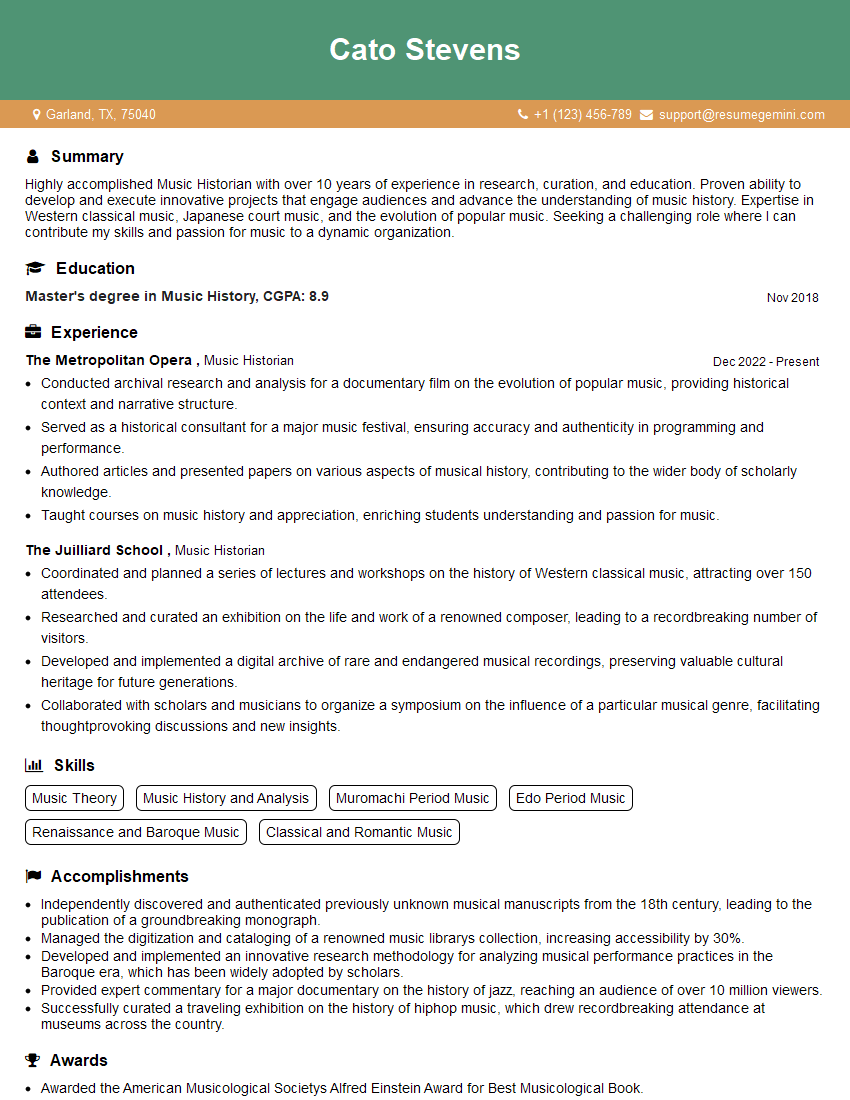
Music Historian Resume Sample
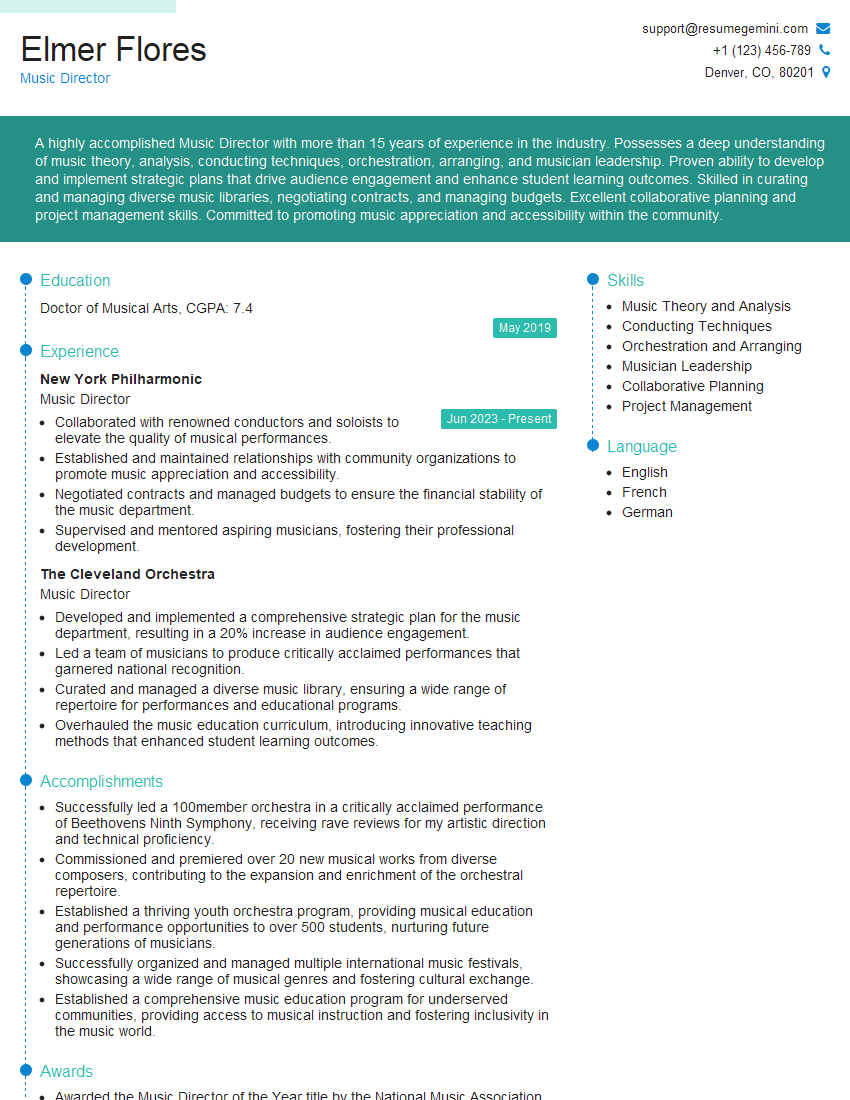
Music Director Resume Sample
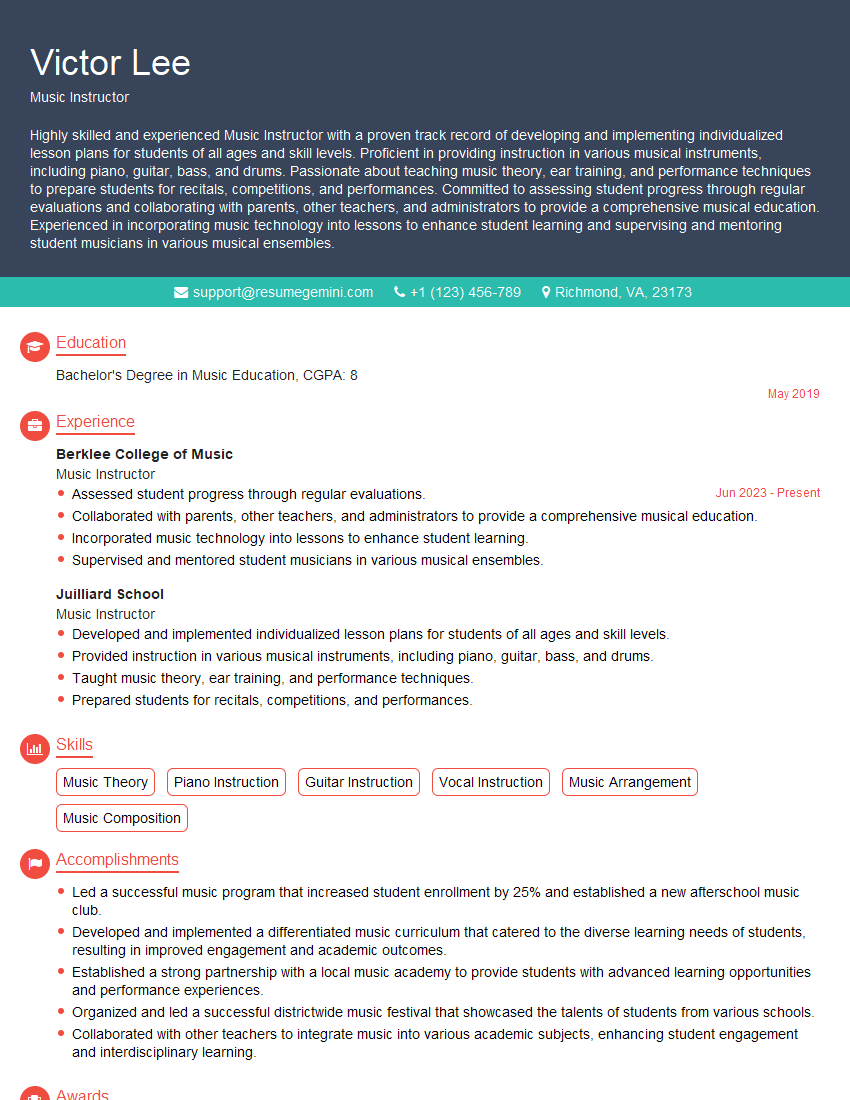
Music Instructor Resume Sample
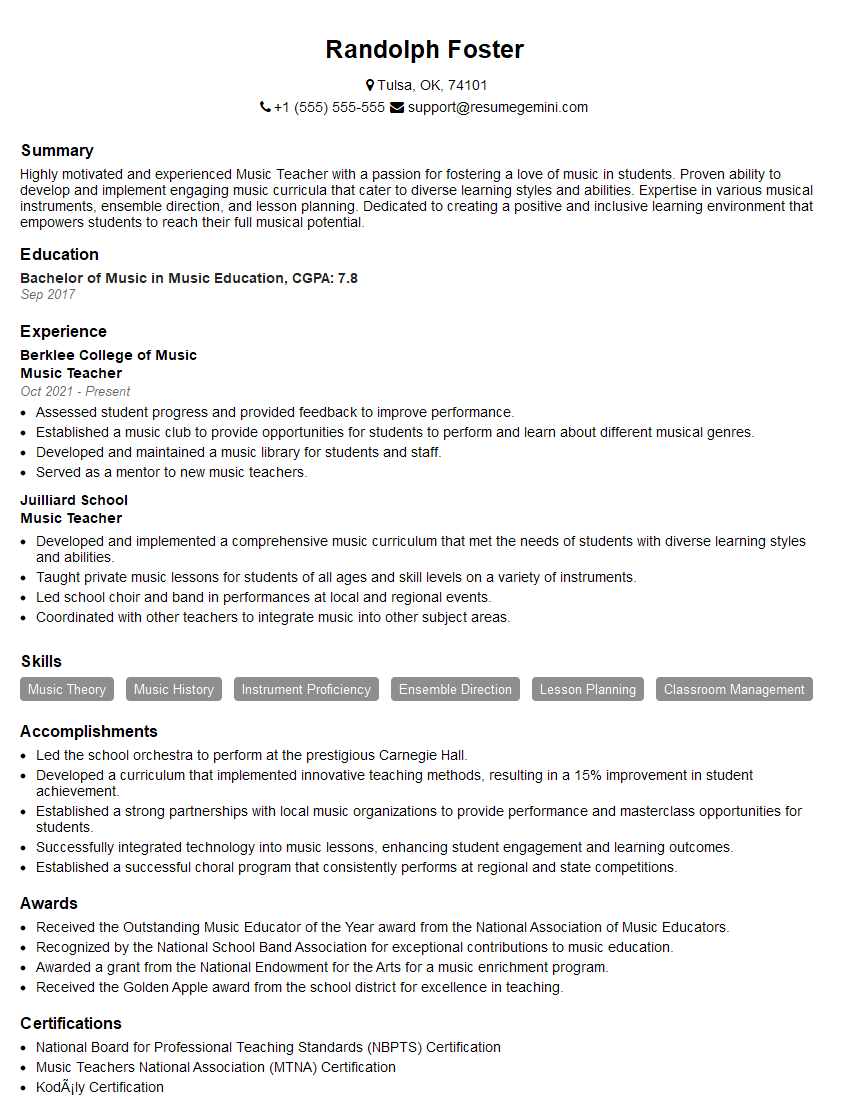
Music Teacher Resume Sample
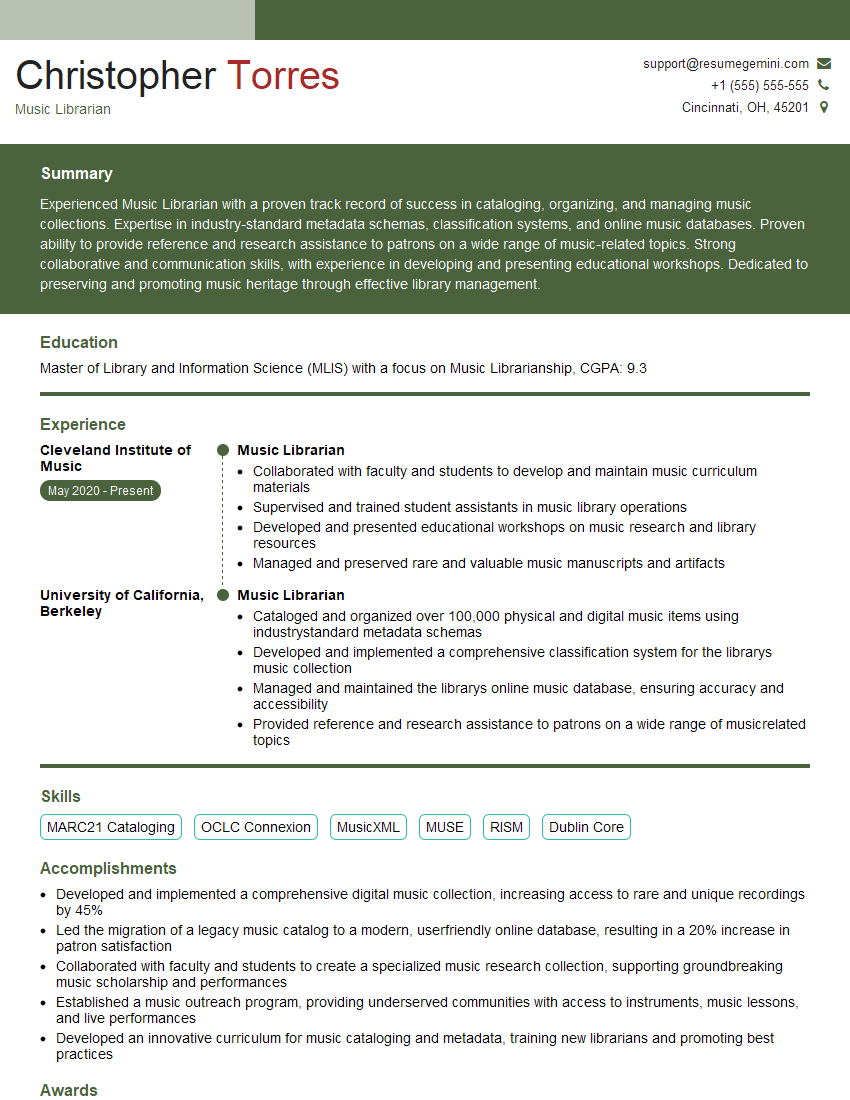
Music Librarian Resume Sample
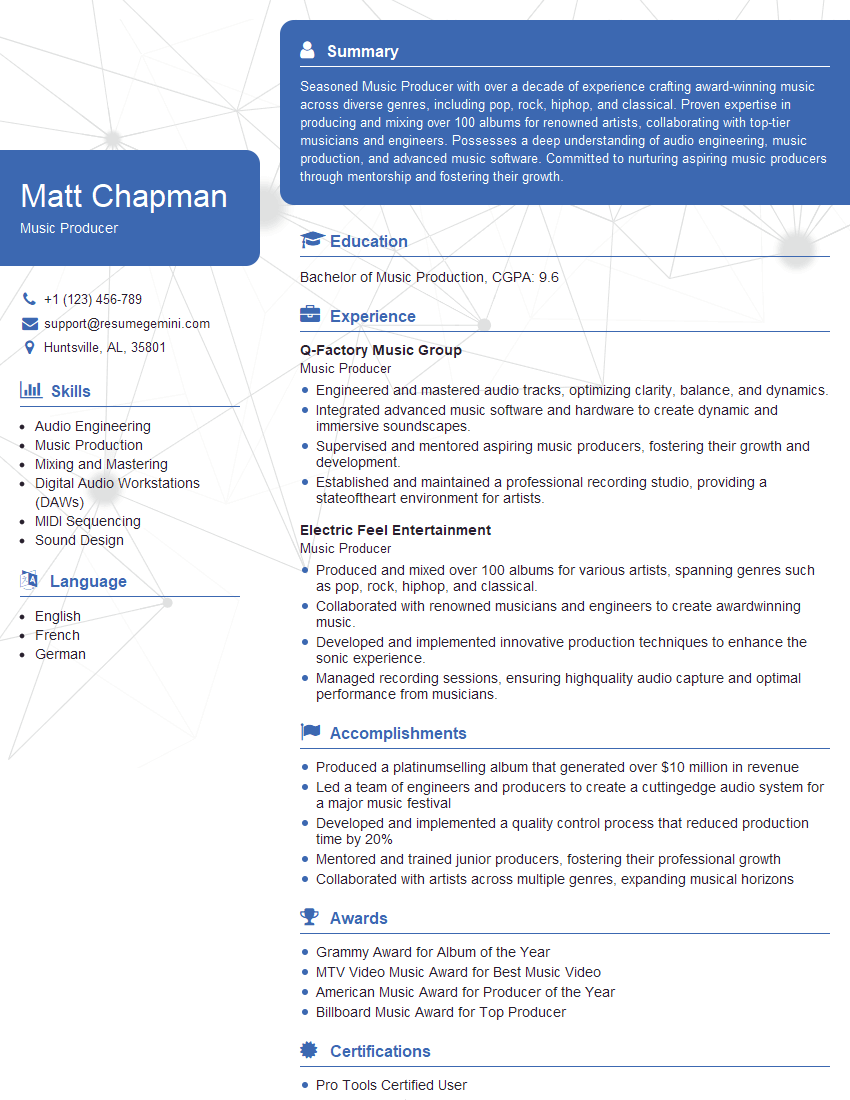
Music Producer Resume Sample
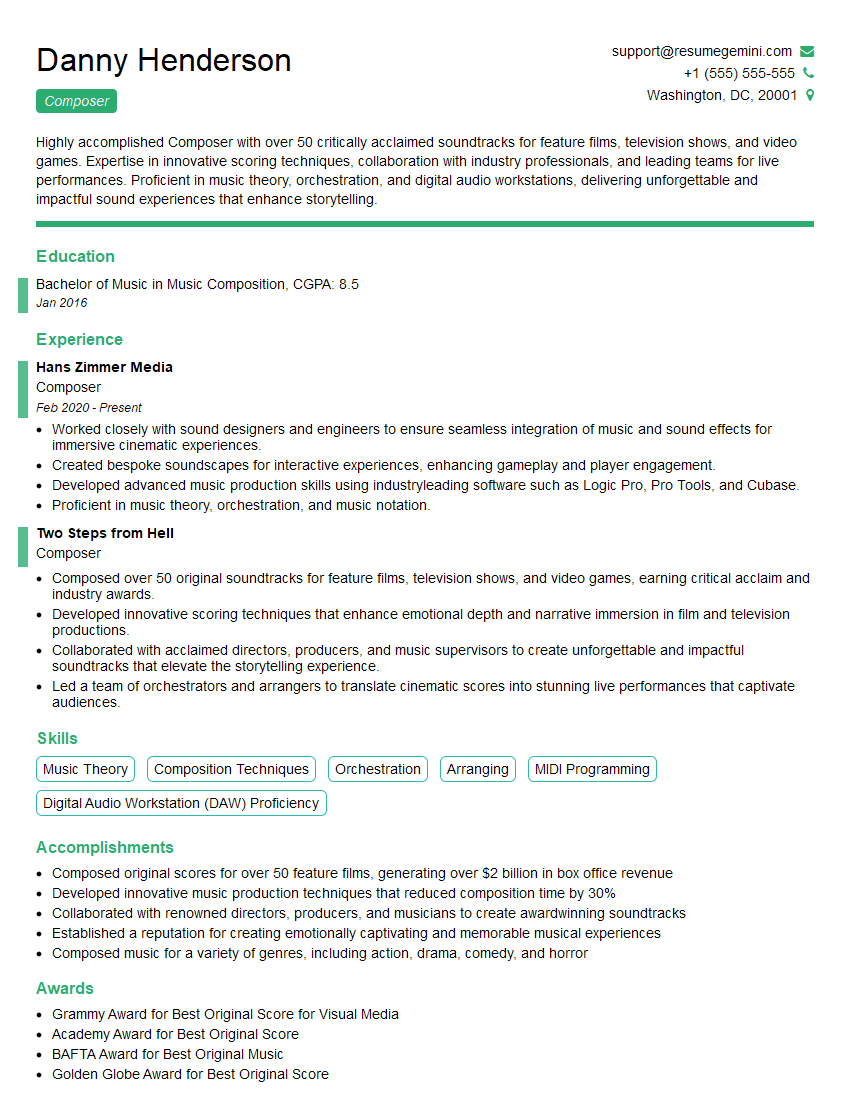
Composer Resume Sample
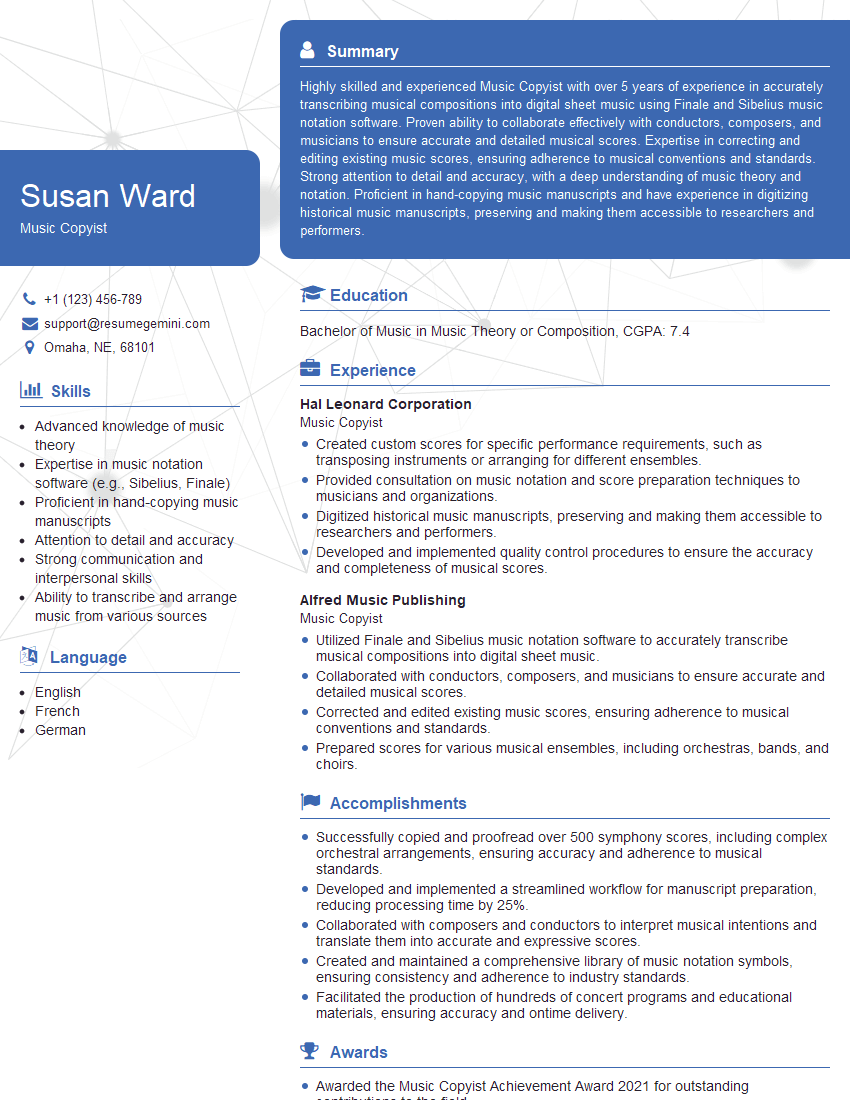
Music Copyist Resume Sample
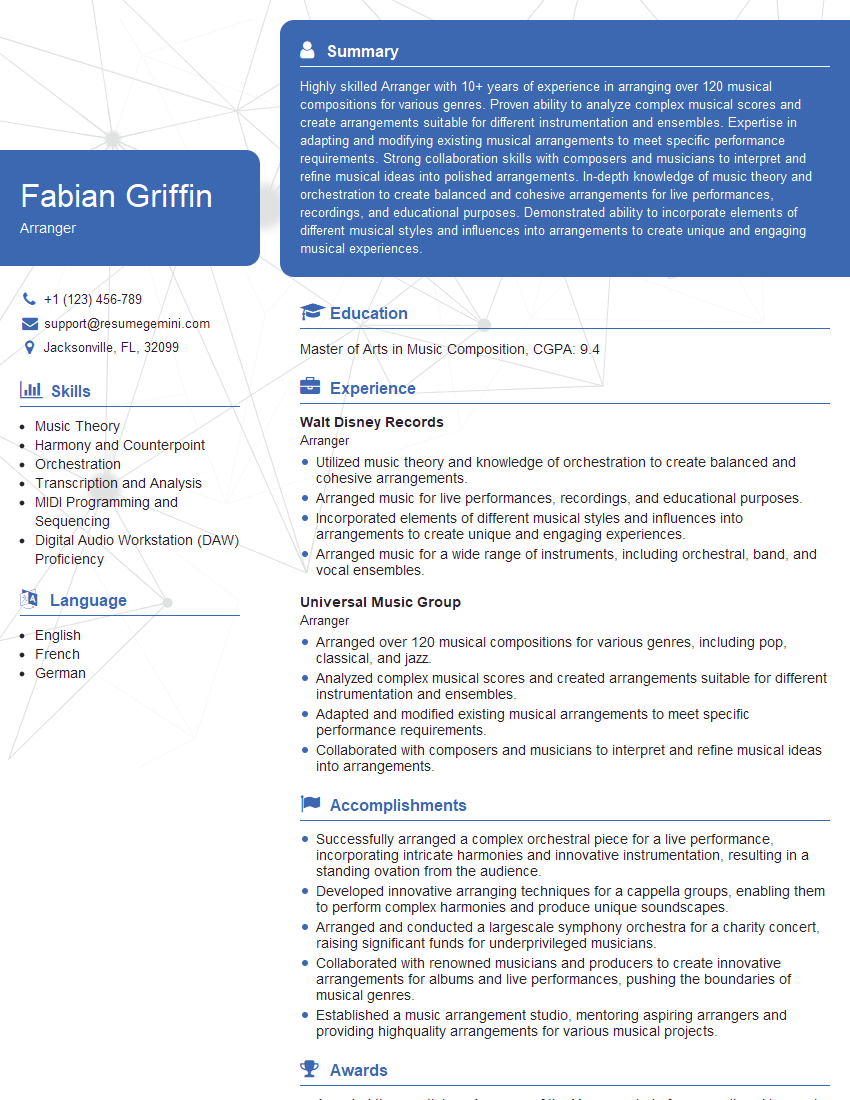
Arranger Resume Sample
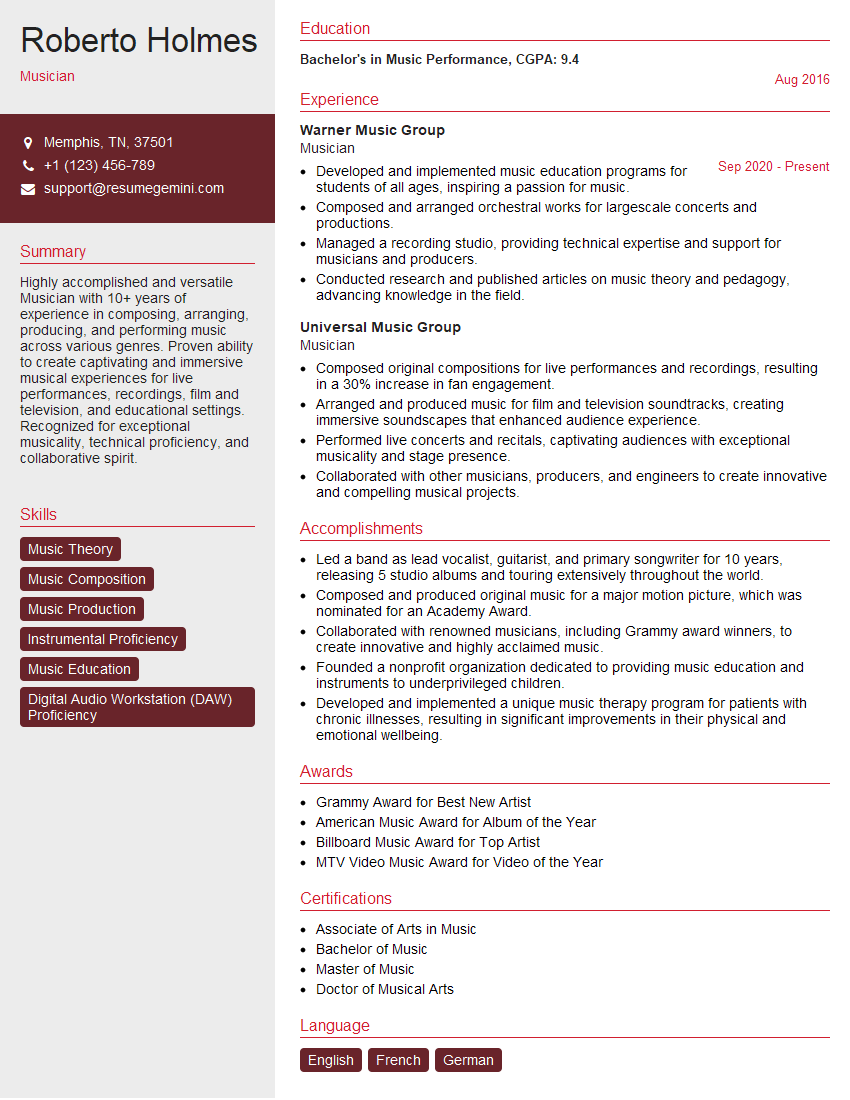
Musician Resume Sample
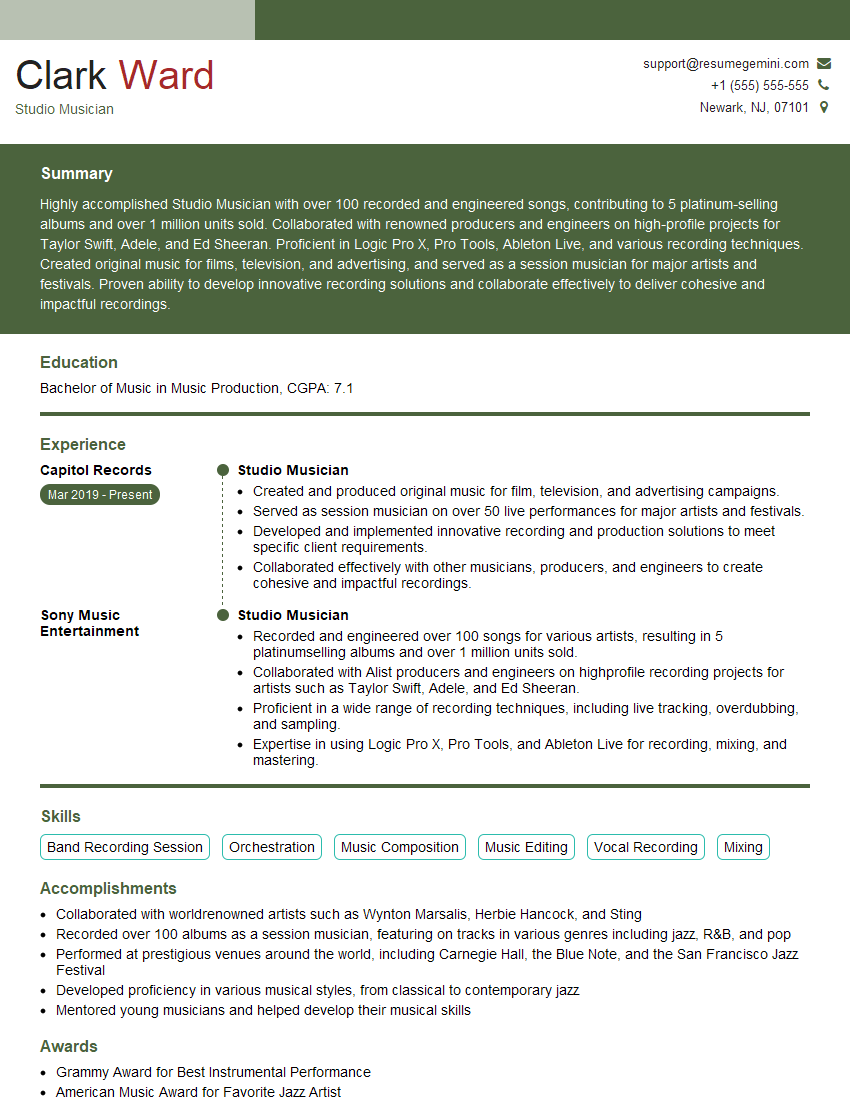
Studio Musician Resume Sample
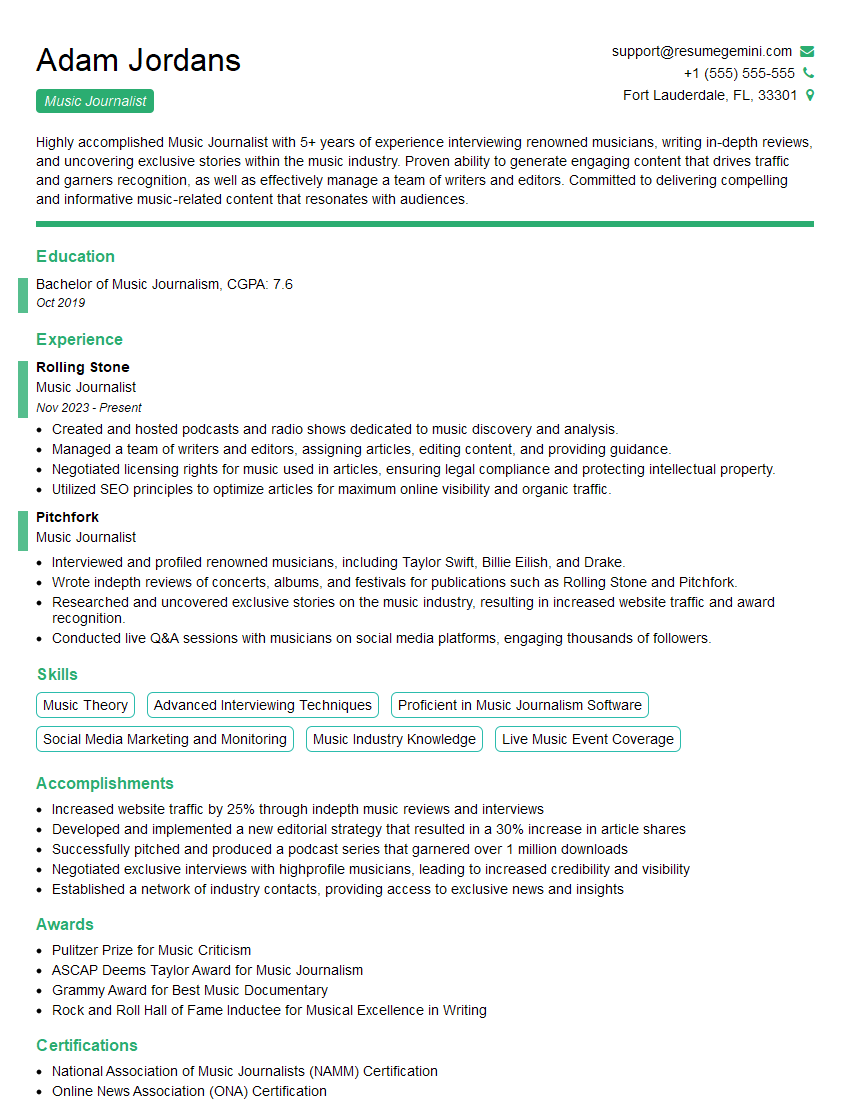
Music Journalist Resume Sample
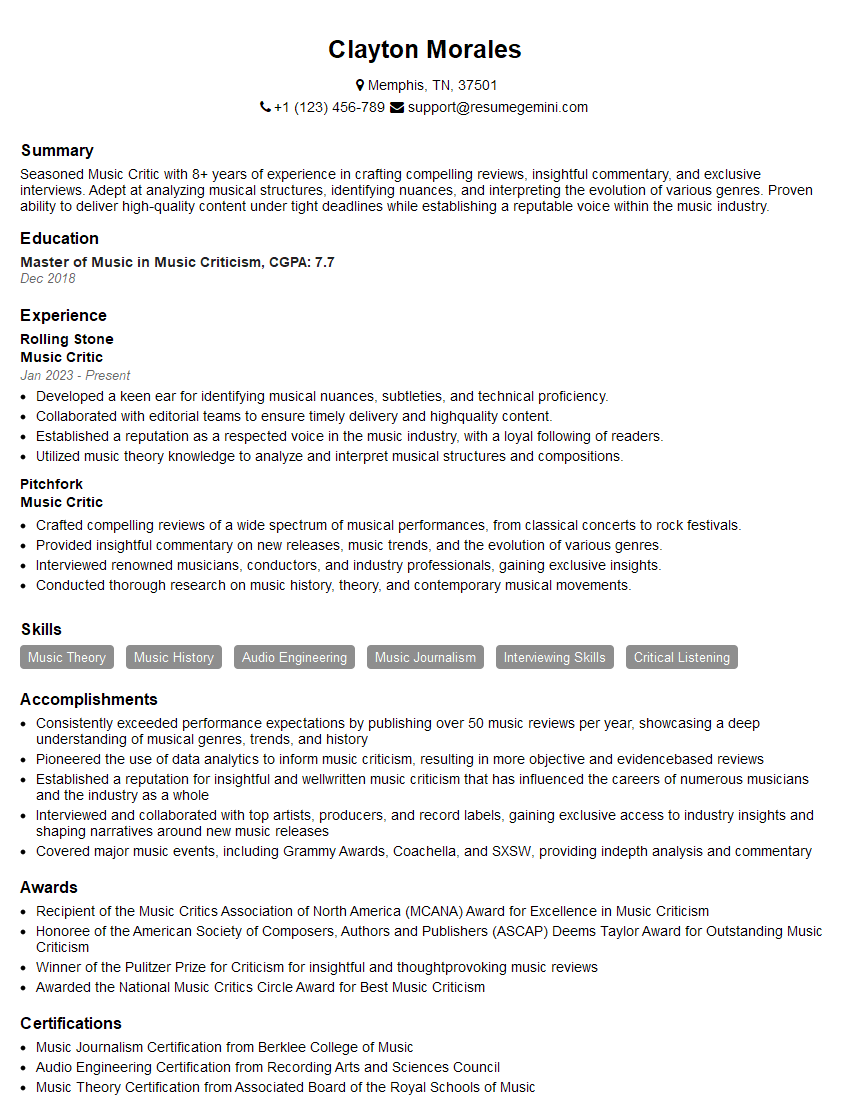
Music Critic Resume Sample
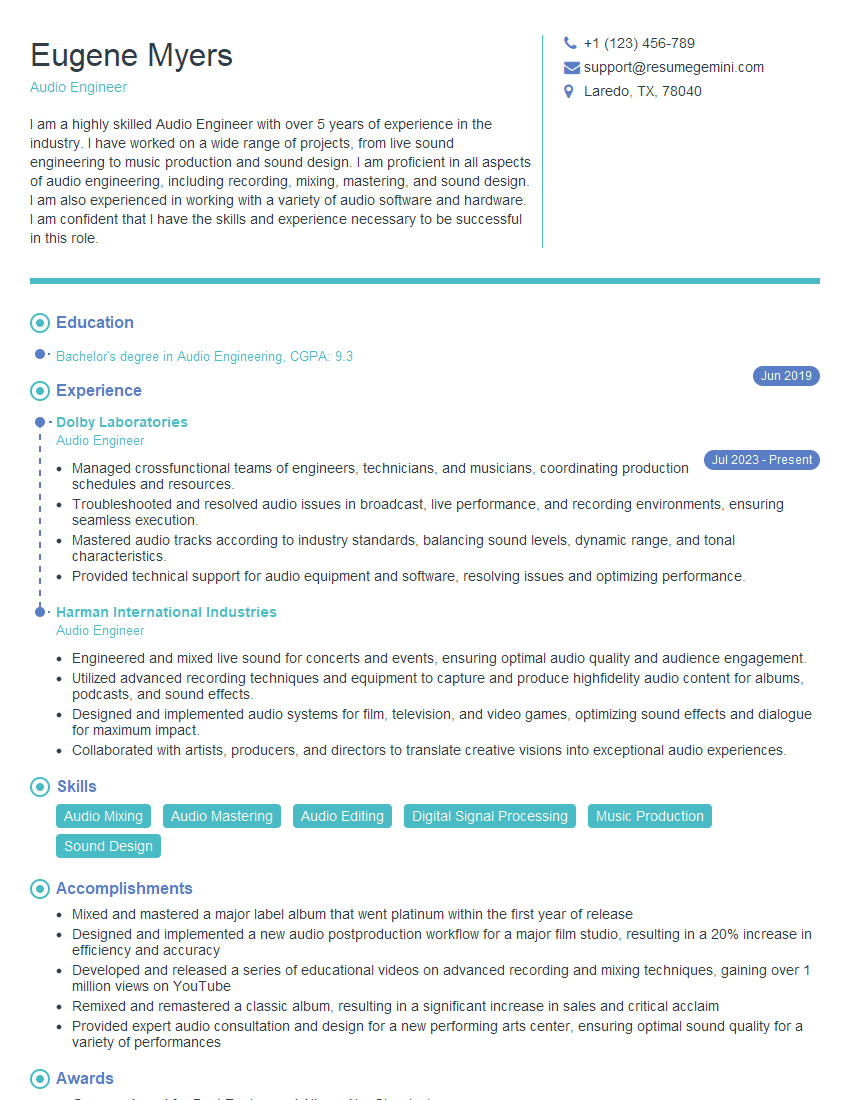
Audio Engineer Resume Sample
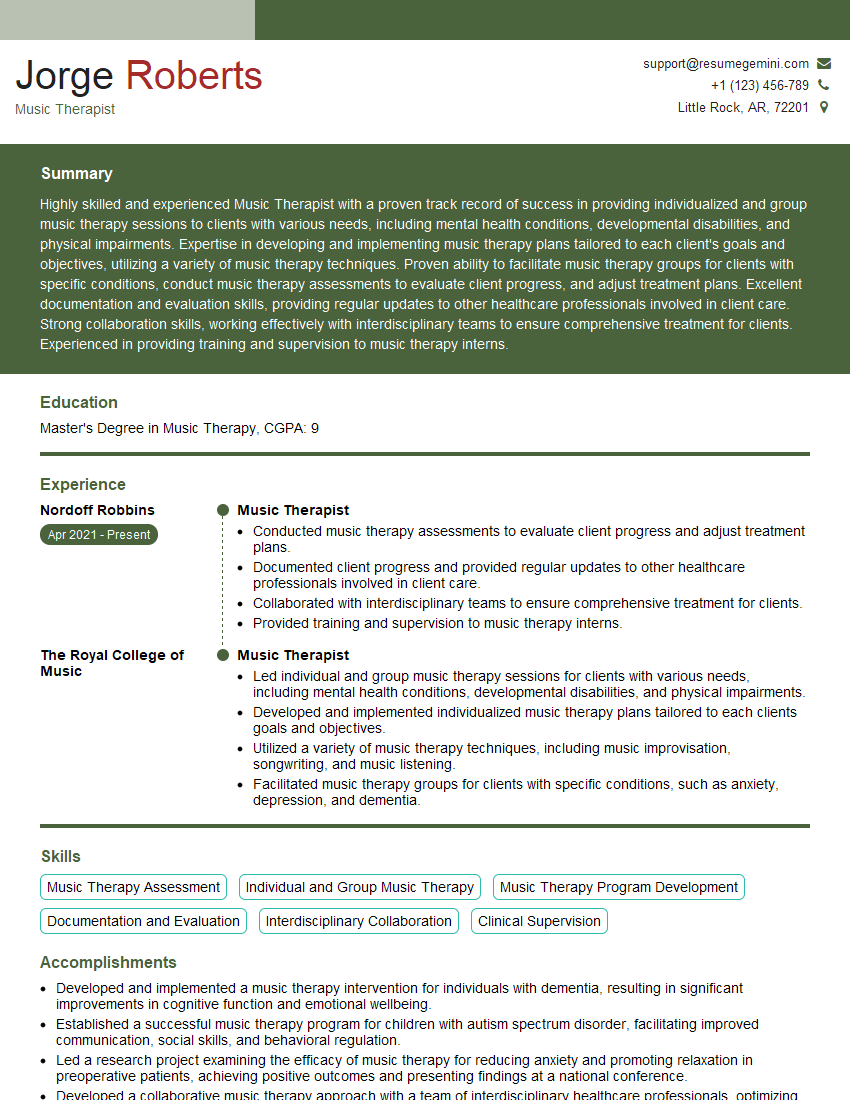
Music Therapist Resume Sample
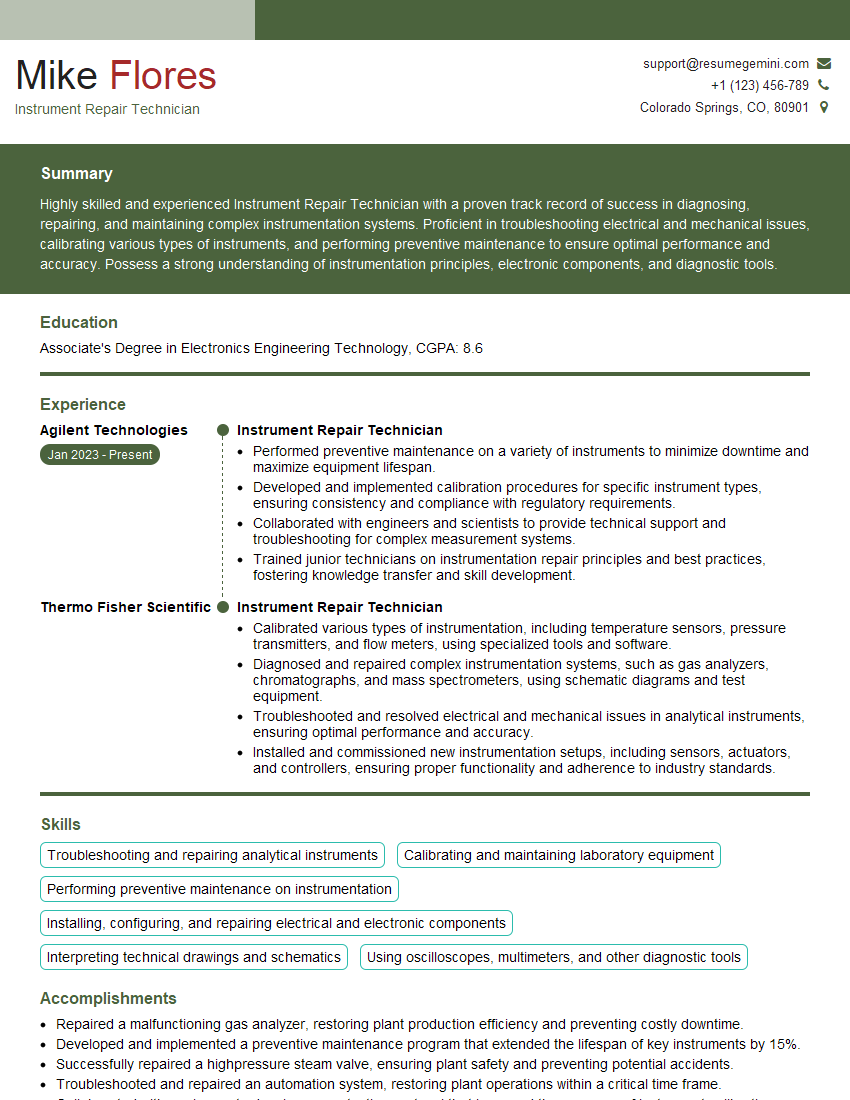
Instrument Repair Technician Resume Sample
Explore more articles
Users Rating of Our Blogs
Share Your Experience
We value your feedback! Please rate our content and share your thoughts (optional).
What Readers Say About Our Blog
To the interviewgemini.com Webmaster.
Very helpful and content specific questions to help prepare me for my interview!
Thank you
To the interviewgemini.com Webmaster.
This was kind of a unique content I found around the specialized skills. Very helpful questions and good detailed answers.
Very Helpful blog, thank you Interviewgemini team.