Every successful interview starts with knowing what to expect. In this blog, we’ll take you through the top Progress Monitoring and Documentation interview questions, breaking them down with expert tips to help you deliver impactful answers. Step into your next interview fully prepared and ready to succeed.
Questions Asked in Progress Monitoring and Documentation Interview
Q 1. Describe your experience with different progress monitoring methodologies.
My experience encompasses a wide range of progress monitoring methodologies, tailored to the specific project needs and context. I’ve extensively used both quantitative and qualitative methods. Quantitative methods often involve tracking key performance indicators (KPIs) using data-driven approaches, such as Agile methodologies with sprint burndown charts or Gantt charts for project management. For instance, in a software development project, I’d track features completed per sprint, bugs resolved, and lines of code written. Qualitative methods, on the other hand, focus on subjective assessments like client feedback surveys, stakeholder interviews, and observation of work processes. For example, when monitoring the implementation of a new training program, I’d analyze participant feedback forms to gauge satisfaction and effectiveness.
I also have experience with hybrid approaches, combining quantitative and qualitative data for a more comprehensive understanding. This might involve using survey data (qualitative) to explain unexpected fluctuations in KPI trends (quantitative). Choosing the right methodology is crucial; the selection process depends heavily on project goals, available resources, and the nature of the work being monitored.
Q 2. How do you ensure data accuracy in progress monitoring?
Data accuracy is paramount. I employ a multi-pronged approach to ensure its integrity. First, I establish clear, well-defined metrics and data collection procedures from the outset. This includes specifying the data points to be tracked, the methods of collection (manual input, automated systems, etc.), and the frequency of updates. Second, I implement robust quality control checks at every stage. This could include cross-referencing data from multiple sources, using automated validation rules to catch inconsistencies, and regularly reviewing data for outliers or anomalies. For example, if a daily progress report shows an unusually high number of units produced, I would investigate potential causes, such as over-reporting or a temporary spike in production efficiency. Third, I train all involved personnel in proper data recording techniques, emphasizing accuracy and consistency. Regular training and refreshers ensure everyone understands the importance of accurate data input.
Q 3. What software or tools are you proficient in for progress monitoring and documentation?
I’m proficient in a variety of software and tools for progress monitoring and documentation. My expertise includes project management software like Jira and Asana, where I can track tasks, milestones, and resource allocation. I’m also skilled in using data visualization tools such as Tableau and Power BI to create insightful dashboards and reports that communicate complex data clearly. Furthermore, I’m comfortable with spreadsheet software like Microsoft Excel and Google Sheets for data entry, manipulation, and analysis. My experience extends to using dedicated progress monitoring platforms – specific tools tailored to certain industries or project types – demonstrating my adaptability and commitment to using the right tool for the job. Finally, I am experienced with document management systems to maintain a complete and organized record of all project documentation.
Q 4. Explain your process for identifying and addressing discrepancies in progress data.
Identifying and addressing discrepancies involves a systematic approach. First, I use data validation techniques (automated checks and manual reviews) to flag potential inconsistencies. Then, I investigate the source of the discrepancy. This often includes reviewing source documents, verifying data entry procedures, and discussing the issue with individuals involved in data collection. For example, if a project timeline slips, I might interview team members to understand the reasons for the delay. Once the root cause is understood, I implement corrective actions, which could involve updating procedures, retraining personnel, or adjusting project plans. I document all findings, corrective actions, and lessons learned to avoid similar issues in future projects. The entire process is carefully documented, providing a clear audit trail for accountability and continuous improvement.
Q 5. How do you translate complex data into easily understandable progress reports?
Translating complex data into easily understandable reports requires clear communication skills and a strong understanding of data visualization. I use several strategies. First, I identify the key audiences for the report and tailor the content and style accordingly. For example, a technical report for project managers might contain detailed metrics, while a summary for senior executives may focus on high-level trends and key takeaways. Second, I employ visual aids, including charts, graphs, and dashboards to illustrate trends and patterns. I avoid overwhelming the audience with raw data; instead, I focus on presenting key insights and conclusions. Third, I use plain language, avoiding technical jargon whenever possible, and accompanying any technical terms with clear definitions. Finally, I ensure the report is well-structured and logically organized to guide the reader through the findings and support clear conclusions.
Q 6. Describe a time you had to troubleshoot a problem with progress monitoring systems.
In a previous project involving a large-scale infrastructure development, our progress monitoring system experienced unexpected data loss due to a server malfunction. This resulted in incomplete progress records and potential delays in decision-making. My immediate response involved collaborating with the IT department to restore data from backups. While some data loss was irretrievable, we successfully recovered a significant portion. To prevent future occurrences, I worked with the IT team to implement a robust data backup and recovery strategy, including regular system audits and enhanced security measures. We also developed contingency plans outlining the procedures to follow in case of similar incidents, which included using alternative data collection methods temporarily. Through proactive measures and collaboration, we minimized the impact of the system failure and learned valuable lessons about data security and redundancy.
Q 7. How do you prioritize tasks when managing multiple progress monitoring projects?
Prioritizing tasks when managing multiple progress monitoring projects requires a structured approach. I utilize a combination of methods: First, I assess the urgency and importance of each project based on deadlines, stakeholder expectations, and potential risks. This often involves using a prioritization matrix, such as an Eisenhower Matrix (urgent/important), to categorize tasks. Second, I allocate resources (time, personnel, etc.) effectively to ensure sufficient attention is given to high-priority projects. Third, I employ project management tools to track progress across multiple projects, enabling me to monitor resource allocation and identify potential bottlenecks. Fourth, I regularly communicate with stakeholders to keep them informed of progress and address any concerns or changing priorities. Regular communication prevents unforeseen issues and keeps all parties aligned. Finally, I remain flexible and adapt my priorities as needed based on emerging issues or changing circumstances, recognizing that project landscapes are rarely static.
Q 8. What are the key performance indicators (KPIs) you typically track in progress monitoring?
The key performance indicators (KPIs) I track in progress monitoring depend heavily on the specific project goals and deliverables. However, some common and crucial KPIs include:
- Schedule adherence: This measures how well the project is staying on track with its planned timeline. I typically use Gantt charts and percent complete metrics to track this. For instance, a project delivering software might track the completion percentage of each sprint.
- Budget adherence: This monitors the project’s spending against its allocated budget. I’d use cost tracking software and regular budget variance reports to identify potential overruns. For example, comparing actual costs to the planned budget for each phase of a construction project.
- Quality metrics: These assess the quality of the deliverables. Depending on the project, this might involve defect rates, customer satisfaction scores, or successful test cases. Imagine a manufacturing facility tracking the number of defective products produced per batch.
- Resource utilization: This measures how efficiently resources (personnel, equipment, materials) are being used. This could involve tracking hours worked against planned hours or equipment uptime. A software development team might track the number of hours each developer spends on specific tasks.
- Risk assessment: This involves identifying, analyzing and mitigating potential risks throughout the project lifecycle. A risk register is often used to track the status of each identified risk. For example, noting the likelihood and impact of each risk in a bridge construction project.
By regularly monitoring these KPIs, I can proactively identify potential issues and take corrective actions to keep the project on track.
Q 9. How do you ensure the security and confidentiality of progress data?
Security and confidentiality of progress data are paramount. My approach involves a multi-layered strategy:
- Access control: I utilize role-based access control (RBAC) to limit access to sensitive data only to authorized personnel. This ensures that only those who need the information can view it.
- Data encryption: All progress data, both in transit and at rest, is encrypted using industry-standard encryption protocols like AES-256. This prevents unauthorized access even if the data is intercepted.
- Secure storage: Progress data is stored in secure, password-protected databases and cloud storage solutions that comply with relevant security standards and regulations (e.g., ISO 27001, HIPAA, GDPR). I also employ regular backups to protect against data loss.
- Regular security audits: I participate in or oversee regular security audits to identify and address any vulnerabilities in the systems and processes used to manage progress data.
- Data anonymization: Where possible, I anonymize data to protect sensitive personal information. This ensures compliance with privacy regulations.
Furthermore, I always adhere to the organization’s security policies and procedures, and I keep abreast of the latest security threats and best practices.
Q 10. Describe your experience with data visualization and reporting for progress monitoring.
I have extensive experience using various tools and techniques for data visualization and reporting. I leverage several techniques, depending on the audience and purpose. For example:
- Interactive dashboards: Tools like Tableau and Power BI allow the creation of dynamic dashboards that present key KPIs in an easily understandable and engaging manner. This enables stakeholders to monitor progress in real-time and identify trends.
- Progress reports: I create concise and well-structured reports using tools like Microsoft Word and Excel, presenting key findings and recommendations based on the collected data. These reports typically include charts, graphs, and tables to present data visually.
- Custom reports: I can create tailored reports to meet specific stakeholder needs. This might involve extracting data from databases and manipulating it to suit the requirements of a specific audience. For example, a detailed report on cost overruns might be made for senior management while a simpler overview is presented to the project team.
I am adept at using data visualization best practices, such as choosing appropriate chart types, using clear labels and legends, and ensuring that the data is presented in a way that is easily understood by the audience, regardless of their technical expertise.
Q 11. How do you adapt your progress monitoring approach to different project requirements?
Adaptability is key in progress monitoring. I tailor my approach based on several project factors:
- Project size and complexity: Large, complex projects require a more detailed and robust monitoring system compared to smaller, simpler projects. This might involve more frequent reporting, more detailed data collection, and the use of more sophisticated tools.
- Project methodology: The chosen project methodology (e.g., Agile, Waterfall) dictates the type of metrics and reporting frequencies used. Agile projects typically favor frequent, iterative reporting, while Waterfall projects may use more traditional, phase-based reporting.
- Stakeholder needs: Different stakeholders have different information needs. I ensure that my progress monitoring approach meets the specific information requirements of each stakeholder group, tailoring the format and content of reports and presentations accordingly.
- Technology available: The availability of appropriate technology impacts the tools and techniques used. I select tools that are best suited to the project needs and the available resources. This may involve using established project management software or developing custom solutions.
By carefully considering these factors, I develop a customized progress monitoring strategy ensuring it aligns with project goals, resource availability, and the needs of all stakeholders.
Q 12. Explain your experience with different types of documentation, such as reports, presentations, and databases.
My experience encompasses various documentation types. I am proficient in creating and managing:
- Progress reports: These provide regular updates on project status, highlighting key achievements, challenges, and risks. They are typically delivered to stakeholders at pre-defined intervals.
- Presentations: I develop visually engaging presentations to communicate project progress effectively to diverse audiences, from project teams to executive management. I adjust the level of detail and technicality based on the audience.
- Databases: I am skilled at designing and maintaining databases to store and manage project data. This ensures data integrity and facilitates data analysis and reporting. Relational databases like SQL Server or MySQL are commonly used.
- Spreadsheets: Excel and Google Sheets are invaluable for tracking key metrics, visualizing data, and performing simple analysis. These can be useful for quick updates and trend identification.
- Meeting minutes: Detailed records of project meetings, capturing decisions made and action items assigned.
The specific documentation type used depends on the context and intended audience. I prioritize clarity, accuracy, and consistency across all documentation.
Q 13. How do you maintain accurate and up-to-date documentation throughout a project?
Maintaining accurate and up-to-date documentation requires a disciplined approach:
- Regular updates: I establish a schedule for regular documentation updates. This might involve daily updates for certain aspects and weekly or monthly updates for others. The frequency depends on the criticality of the data and the project’s pace.
- Version control: I use version control systems (e.g., Git) or document management systems to track changes and ensure that only the latest version of the document is accessible. This prevents confusion and ensures data integrity.
- Centralized repository: All project documentation is stored in a central, easily accessible repository, allowing all authorized personnel to access the most current versions. Cloud-based solutions are ideal for collaboration and accessibility.
- Clear naming conventions: A consistent and descriptive naming convention is essential for easy retrieval and organization of documents.
- Automated updates: Where possible, I automate data entry and reporting using tools and software that can automatically pull data from other systems.
Furthermore, I ensure all team members understand their responsibilities for documentation maintenance and are trained on the established processes.
Q 14. How do you ensure that documentation meets all relevant regulatory requirements?
Ensuring documentation meets regulatory requirements depends on the industry and project. My approach involves:
- Identifying applicable regulations: I start by identifying all relevant regulations, standards, and compliance requirements applicable to the project and industry. This might include HIPAA for healthcare, GDPR for personal data, or industry-specific standards.
- Embedding compliance processes: I integrate compliance checks into the documentation process itself, ensuring that all necessary information is captured and formatted correctly. This might include checklists, templates, and automated validation tools.
- Regular audits: I participate in or oversee regular audits of project documentation to ensure compliance with all applicable regulations. These audits may be internal or conducted by external regulatory bodies.
- Training and awareness: I ensure that all team members are adequately trained on the relevant regulations and the processes for ensuring compliance.
- Documentation review: Before finalizing any document, a thorough review is conducted to verify that it meets all compliance requirements and accurately reflects the project status.
Proactive compliance is paramount. Addressing regulatory issues early in the project prevents costly delays and potential legal repercussions.
Q 15. Describe your experience working with different stakeholders to gather information for progress reports.
Gathering information for progress reports requires a collaborative approach, engaging various stakeholders effectively. My experience involves leveraging diverse communication channels and techniques tailored to each stakeholder’s role and preferences.
For instance, in a recent project, I used a combination of weekly team meetings, individual check-ins, email updates, and online project management tools (like Jira, which I’ll detail later) to gather information from developers, designers, marketing, and clients. With developers, I focused on technical progress and roadblocks. With designers, I emphasized aesthetic progress and usability testing. Marketing stakeholders were key for feedback on marketing materials and campaign progress. And finally, regular client check-ins ensured alignment on milestones and deliverables. Adapting my approach based on their individual communication styles and technical expertise is crucial for successful information gathering.
Career Expert Tips:
- Ace those interviews! Prepare effectively by reviewing the Top 50 Most Common Interview Questions on ResumeGemini.
- Navigate your job search with confidence! Explore a wide range of Career Tips on ResumeGemini. Learn about common challenges and recommendations to overcome them.
- Craft the perfect resume! Master the Art of Resume Writing with ResumeGemini’s guide. Showcase your unique qualifications and achievements effectively.
- Don’t miss out on holiday savings! Build your dream resume with ResumeGemini’s ATS optimized templates.
Q 16. How do you handle conflicting data or information in progress monitoring?
Conflicting data in progress monitoring necessitates a systematic approach to resolution. My strategy involves a three-step process: identification, verification, and reconciliation. First, I identify the discrepancies clearly, documenting where the conflicting data originates. Second, I verify the data by cross-referencing with multiple sources; this might involve checking logs, reviewing documentation, or conducting interviews with relevant individuals. Finally, I reconcile the discrepancies, often by prioritizing data from more reliable or validated sources. If the conflict remains unresolved, I escalate the issue to relevant stakeholders for a collaborative decision. Transparency throughout this process is paramount to maintaining trust and accountability.
For example, if a developer reports a feature as 90% complete, but testing shows only 60% functionality, I would first document the discrepancy. Then, I’d review the developer’s work, examine test results, and potentially discuss the issue with both the developer and the testing team to pinpoint the cause of the discrepancy. This collaborative approach ensures a more accurate and robust progress report.
Q 17. How do you measure the effectiveness of progress monitoring activities?
Measuring the effectiveness of progress monitoring hinges on setting clear, measurable objectives upfront. Key Performance Indicators (KPIs) are crucial. These could include metrics like the accuracy of progress forecasts (percentage of forecasts within a certain margin of error), the timeliness of reporting (number of reports submitted on time), stakeholder satisfaction (measured through surveys or feedback sessions), and the overall project success rate (meeting deadlines and budget). Regularly reviewing these KPIs helps to assess the efficiency and effectiveness of the entire progress monitoring process. Are we getting accurate data? Are the reports providing value? These are the questions we constantly strive to answer.
For example, if our progress forecasts consistently deviate by more than 10%, we would revise our methods of data collection or prediction models. Low stakeholder satisfaction scores might indicate a need for improved communication or report clarity.
Q 18. What are some common challenges in progress monitoring, and how have you overcome them?
Common challenges include incomplete or inaccurate data, inconsistent reporting, and lack of stakeholder engagement. To overcome incomplete data, I implement robust data collection procedures and utilize automated tools where feasible. Inconsistent reporting is addressed through standardized templates, training sessions, and regular feedback. Lack of stakeholder engagement is tackled via improved communication strategies, personalized reports, and incorporating stakeholder feedback into the process. Think of progress monitoring as a living, breathing entity – it requires constant attention and adaptation.
For instance, in one project, we initially struggled with inaccurate data due to inconsistent data entry practices. By implementing a centralized system and providing training, we improved data accuracy significantly. The result was more reliable progress reports and improved decision-making.
Q 19. Describe your experience using a specific progress monitoring system or software (e.g., Jira, Asana).
I have extensive experience using Jira for progress monitoring. Jira’s Kanban boards provide a visual representation of project workflow and task status, allowing for easy tracking of progress. The ability to assign tasks, set deadlines, and track time spent on tasks provides granular data for accurate progress reporting. Customizable dashboards and reporting features enable me to generate reports tailored to different stakeholders’ needs. Jira’s issue tracking system facilitates the identification and resolution of roadblocks, enhancing the overall progress monitoring process. We even used Jira’s automation features to send automated progress reports to stakeholders based on preset rules.
For example, we set up a Jira workflow where the completion of certain tasks automatically triggered an email notification to the project manager, updating them on progress. This automated process saved considerable time and ensured consistency in reporting.
Q 20. How do you ensure that progress monitoring is integrated into the overall project management process?
Integrating progress monitoring into the overall project management process is crucial for effective project execution. This integration typically involves aligning progress monitoring activities with project goals, milestones, and deliverables. Progress reports should be integrated into regular project meetings, and the data collected should inform project planning and decision-making. The progress monitoring system (e.g., Jira) should be seamlessly integrated with other project management tools. Regular review and adjustments to the monitoring process are necessary to ensure its ongoing effectiveness.
In practice, this means having progress updates feed directly into our risk assessment and change management procedures. If progress is lagging significantly, we review the risk profile to identify any unexpected challenges. Similarly, if progress surpasses expectations, we may reassess project milestones and potentially bring the project completion date forward.
Q 21. What are some best practices for creating effective progress reports?
Best practices for creating effective progress reports include: clarity and conciseness, data visualization, focus on key metrics, actionable insights, and timely delivery. Reports should be easy to understand, avoiding jargon and technical details unless absolutely necessary. Visual aids like charts and graphs enhance comprehension. The focus should be on key performance indicators rather than overwhelming details. The report should provide insights that inform decision-making, not just present raw data. Finally, reports should be delivered promptly and regularly to ensure that stakeholders remain informed.
Consider, for example, a progress report that replaces a dense paragraph describing software testing results with a clear bar graph showing pass/fail percentages for each test case. This makes the key information instantly accessible to any stakeholder, regardless of their technical expertise.
Q 22. How do you use progress monitoring data to inform decision-making?
Progress monitoring data is the lifeblood of effective decision-making. It provides objective insights into project performance, allowing for proactive adjustments and informed choices. I use this data in a multi-step process:
- Data Collection & Analysis: First, I ensure comprehensive data is gathered from various sources – project management software, individual reports, client feedback etc. Then, I analyze this data using appropriate statistical methods (e.g., trend analysis, variance analysis) to identify key metrics like schedule adherence, budget compliance, and quality of deliverables.
- Identifying Variances: I compare the actual progress against the planned baseline, highlighting any significant deviations. For instance, a consistent delay in a particular task might indicate resource constraints or an underestimated effort.
- Root Cause Analysis: Understanding *why* there’s a variance is crucial. This involves investigating the contributing factors through discussions with team members, reviewing documentation, and potentially conducting a risk assessment.
- Decision-Making & Action Planning: Based on the analysis and root cause identification, I propose informed solutions. This could involve reallocating resources, adjusting timelines, mitigating risks, or refining project scope. The solutions are documented and communicated to stakeholders for approval.
- Monitoring & Iteration: This isn’t a one-time process. I continuously monitor progress, reassess the data, and iterate on our strategies to ensure we remain on track. Regular progress reviews help ensure ongoing effectiveness.
For example, in a recent project involving website development, progress monitoring data revealed a consistent delay in the backend development phase. Analysis revealed a skill gap within the development team. This led to the decision to bring in a senior consultant for a week of training and mentorship, resulting in a significant improvement in progress and the project’s successful completion on time.
Q 23. How do you communicate progress updates to stakeholders effectively?
Effective communication of progress updates is paramount to stakeholder satisfaction and project success. My approach focuses on clarity, consistency, and tailoring the message to the audience.
- Clear & Concise Reporting: I utilize visual aids like dashboards and charts to present complex data in an easily digestible format. Reports are concise, focusing on key metrics and actionable insights.
- Regular & Consistent Updates: Stakeholders receive regular updates at pre-defined intervals (e.g., weekly status meetings, monthly reports), providing transparency and reducing uncertainty.
- Targeted Communication: The communication style and level of detail are adjusted based on the audience. Executive summaries focus on high-level achievements and challenges, while detailed reports are provided to project team members.
- Proactive Issue Management: I highlight potential risks or challenges early on, providing stakeholders with the opportunity to contribute to mitigation strategies. This fosters collaboration and builds trust.
- Multiple Communication Channels: I leverage various communication channels (e.g., email, project management software, presentations) to reach the widest audience and cater to individual preferences. For example, short email updates for quick information, and detailed reports for formal reviews.
For example, when presenting progress to senior management, I focus on key performance indicators (KPIs) and highlight any achievements or deviations from the plan with recommendations for corrective action, keeping the language concise and jargon-free.
Q 24. Describe your experience with creating and maintaining documentation archives.
Maintaining comprehensive and accessible documentation archives is crucial for project accountability, knowledge sharing, and future reference. My approach involves:
- Consistent Naming Conventions: Utilizing a clear and consistent file naming convention ensures easy retrieval of documents. This often includes date, project name, and document type.
- Version Control: I utilize version control systems (like Git) for documents that are frequently updated, ensuring that all versions are tracked and easily accessible. This prevents confusion and data loss.
- Organized Storage: Documents are stored using a logical and easily navigable system, often leveraging folders and sub-folders based on project, type, or date.
- Metadata Tagging: I use metadata tagging to improve searchability and allow for easy filtering and sorting of documents. Keywords, project names, and author information are key metadata elements.
- Regular Archiving: Completed projects have their documentation archived in a centralized repository with appropriate access permissions. This ensures long-term preservation and easy access for future needs. Regular backups are performed to safeguard against data loss.
In a previous role, I implemented a cloud-based document management system that significantly improved our ability to store, access and manage project documentation. This streamlined our workflows and reduced time spent searching for necessary documents.
Q 25. How do you stay updated on best practices and new technologies in progress monitoring and documentation?
Staying current in the field of progress monitoring and documentation is critical for maintaining expertise and efficiency. My strategies include:
- Professional Development: I regularly attend conferences, webinars, and workshops related to project management and documentation best practices. This keeps me updated on emerging technologies and trends.
- Industry Publications: I subscribe to relevant industry journals and newsletters, allowing me to stay abreast of new research and advancements in the field.
- Online Courses & Certifications: I utilize online platforms such as Coursera and LinkedIn Learning to take courses that enhance my skills and knowledge in specific areas, such as data analytics for project management.
- Networking: I actively engage in professional networks and online communities to exchange ideas, learn from others, and stay updated on the latest developments in the field.
- Experimentation & Implementation: I actively seek opportunities to implement new technologies and methodologies within my current work environment. This hands-on experience accelerates my learning and allows me to assess the practical value of new tools and techniques.
For example, recently I completed a course on Agile project management and incorporated several of the learned techniques into my current projects to improve our progress monitoring systems.
Q 26. What are your strengths and weaknesses in progress monitoring and documentation?
My strengths lie in my analytical abilities, attention to detail, and my proactive approach to problem-solving. I excel at identifying trends and patterns in data, enabling me to anticipate potential issues and make data-driven decisions. I am also adept at creating clear, concise, and visually appealing reports that effectively communicate complex information.
An area where I’m continually developing is my experience with advanced data visualization tools. While I’m proficient with standard charting techniques, expanding my expertise in creating interactive dashboards and employing advanced data analysis techniques would further enhance my ability to present data insights in a more compelling and insightful manner.
Q 27. Explain your experience with analyzing progress data to identify trends and patterns.
Analyzing progress data to identify trends and patterns is fundamental to effective progress monitoring. My process involves:
- Data Preparation: This involves cleaning and organizing the data, ensuring consistency and accuracy. Outliers are investigated to understand if they are valid data points or errors.
- Descriptive Statistics: Calculating descriptive statistics (e.g., mean, median, standard deviation) gives an initial understanding of the data distribution and central tendencies.
- Trend Analysis: Visualizing the data using charts (e.g., line graphs, bar charts) helps identify trends in performance over time. This can reveal consistent delays, improvements, or periods of stagnation.
- Correlation Analysis: Examining the relationship between different variables can reveal hidden patterns. For instance, analyzing the correlation between resource allocation and task completion rates.
- Predictive Modeling (if applicable): Using statistical modeling techniques (e.g., regression analysis) can help predict future performance based on past trends. This allows for proactive planning and risk mitigation.
For example, in a recent project, trend analysis revealed a consistent increase in bug reports towards the end of each sprint. Further investigation revealed a correlation between increased pressure to meet deadlines and an increase in the number of overlooked bugs. This insight led to adjustments in sprint planning and prioritization, reducing the number of late-stage bugs in subsequent sprints.
Q 28. How do you contribute to a team environment when working on progress monitoring projects?
In a team environment, I believe in collaborative progress monitoring. My contributions include:
- Open Communication: I foster open communication within the team, ensuring that everyone is aware of the project’s progress and any challenges.
- Collaborative Data Analysis: I encourage team members to contribute their insights and perspectives during data analysis, benefiting from diverse viewpoints and perspectives.
- Shared Responsibility: I promote a shared responsibility for progress monitoring, delegating tasks appropriately and ensuring that everyone understands their role in data collection and reporting.
- Mentorship & Training: I provide training and mentorship to team members on progress monitoring techniques, data analysis, and reporting best practices.
- Conflict Resolution: I actively participate in resolving any conflicts or disagreements that may arise during the progress monitoring process, ensuring a positive and productive team environment.
For instance, in a recent team project, I introduced a shared progress tracking board using a collaborative software platform. This ensured everyone had real-time visibility into the project’s status and improved communication, contributing to efficient problem solving and ultimately a successful project delivery.
Key Topics to Learn for Progress Monitoring and Documentation Interview
- Defining Progress Monitoring: Understanding the purpose, methods, and importance of tracking progress towards goals. This includes defining metrics and establishing baseline measures.
- Data Collection & Analysis Techniques: Exploring various methods for gathering progress data (e.g., observations, assessments, self-reports) and analyzing that data to identify trends and areas for improvement. Practical application includes choosing appropriate methods based on the context and available resources.
- Documentation Best Practices: Learning to create clear, concise, and accurate documentation that effectively communicates progress, challenges, and successes. This includes understanding relevant legal and ethical considerations.
- Types of Progress Monitoring Systems: Familiarizing yourself with different systems and tools used for progress monitoring and their strengths and weaknesses (e.g., spreadsheets, databases, specialized software). Consider the practical application of selecting the most appropriate system for a given scenario.
- Interpreting Data & Making Informed Decisions: Developing skills in analyzing progress data to identify areas needing intervention, adjust strategies, and make informed decisions about future actions. This includes understanding the limitations of data and the importance of context.
- Communication & Collaboration: Understanding how to effectively communicate progress information to stakeholders (e.g., clients, supervisors, team members) and collaborate effectively to ensure accurate and consistent monitoring.
- Ethical Considerations in Progress Monitoring: Understanding and adhering to ethical guidelines related to data privacy, confidentiality, and bias in data collection and interpretation.
Next Steps
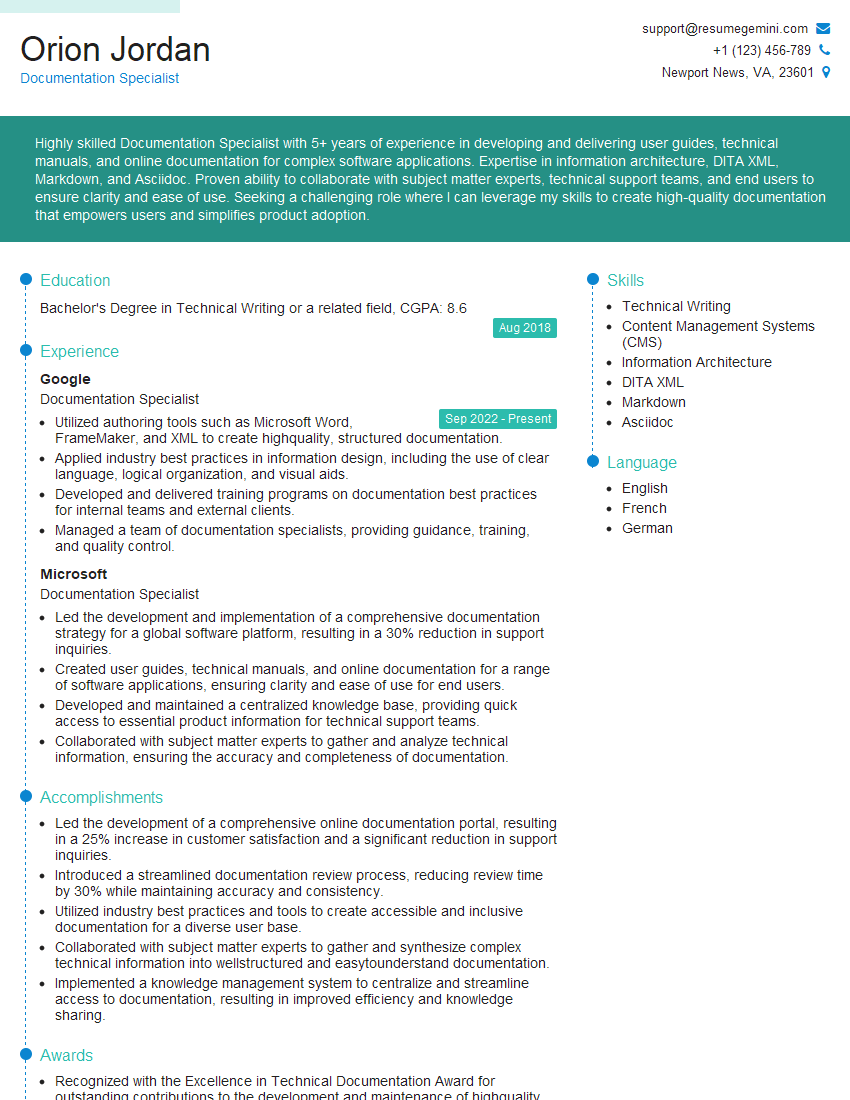
Mastering Progress Monitoring and Documentation is crucial for career advancement in many fields. It demonstrates your ability to track progress effectively, make data-driven decisions, and communicate your findings clearly. To enhance your job prospects, creating a strong, ATS-friendly resume is essential. ResumeGemini is a trusted resource to help you build a professional resume that highlights your skills and experience in this area. Examples of resumes tailored to Progress Monitoring and Documentation are available to guide you. Take the next step in your career journey—build a compelling resume that showcases your expertise!
Explore more articles
Users Rating of Our Blogs
Share Your Experience
We value your feedback! Please rate our content and share your thoughts (optional).
What Readers Say About Our Blog
To the interviewgemini.com Webmaster.
Very helpful and content specific questions to help prepare me for my interview!
Thank you
To the interviewgemini.com Webmaster.
This was kind of a unique content I found around the specialized skills. Very helpful questions and good detailed answers.
Very Helpful blog, thank you Interviewgemini team.