Every successful interview starts with knowing what to expect. In this blog, we’ll take you through the top Project Coordination and Scheduling interview questions, breaking them down with expert tips to help you deliver impactful answers. Step into your next interview fully prepared and ready to succeed.
Questions Asked in Project Coordination and Scheduling Interview
Q 1. Explain the difference between critical path and critical chain.
Both critical path and critical chain methods aim to identify the longest sequence of tasks determining a project’s duration, but they differ significantly in their approach to task dependencies and resource allocation.
The critical path method (CPM) focuses on task dependencies. It identifies the longest sequence of tasks, where any delay impacts the overall project completion. Think of it like a highway – if one section is blocked, the entire flow is affected. CPM assumes tasks are completed consecutively and doesn’t account for resource limitations.
The critical chain method (CCM), on the other hand, incorporates resource constraints and the realities of task execution. It acknowledges that tasks rarely run perfectly sequentially due to resource contention, interruptions, and unforeseen delays. CCM buffers time at the end of each task and at the end of the chain itself to account for these uncertainties. Imagine this like a relay race – each runner has a buffer time, reducing the risk of late finish due to individual delays.
In essence, CPM is a deterministic approach, while CCM is probabilistic, providing a more realistic project timeline by proactively managing resource limitations and task uncertainties.
Q 2. Describe your experience with different scheduling methodologies (e.g., Agile, Waterfall, Kanban).
My experience spans various scheduling methodologies. I’ve successfully applied Waterfall in large-scale, well-defined projects where requirements were stable and changes were minimal. Waterfall’s structured, sequential approach worked well for delivering predictable outputs. For instance, in a large software implementation project for a financial institution, the phased approach of Waterfall allowed for thorough testing and validation at each stage.
In contrast, I’ve embraced Agile methodologies, such as Scrum and Kanban, for projects with evolving requirements and a need for iterative development. Agile’s flexibility allowed for adapting to changing priorities and incorporating client feedback throughout the project life cycle. For example, I led a team developing a mobile application using Scrum, where regular sprints allowed us to deliver functional increments quickly and adjust based on user testing.
I also have practical experience with Kanban in managing continuous workflow processes. In one project involving content creation, a Kanban board visualized the workflow, limiting work in progress and prioritizing tasks based on urgency. This boosted efficiency and transparency.
My expertise encompasses a tailored approach; I select the best methodology based on project specifics, team capabilities, and client expectations.
Q 3. How do you handle schedule conflicts and resource constraints?
Handling schedule conflicts and resource constraints requires a proactive and multi-faceted approach.
- Conflict Resolution: I begin by identifying the root cause of the conflict – are tasks overlapping? Are resources over-allocated? Then, I prioritize tasks based on their criticality using critical path analysis. This might involve negotiating deadlines, re-allocating resources, or re-sequencing tasks. I always ensure open communication with all stakeholders to reach a consensus.
- Resource Constraint Management: When resources are limited, I employ techniques like resource leveling, smoothing, and optimization. Resource leveling aims to distribute resource usage evenly across the project, minimizing peaks and valleys. Resource smoothing aims to minimize resource fluctuation without delaying the project. Optimization utilizes specialized software to find the best resource allocation strategy.
- Mitigation Strategies: This involves identifying and analyzing potential bottlenecks. Strategies include bringing in additional resources (if feasible), adjusting scope, or extending the project timeline in a controlled manner. Regular progress monitoring is crucial for early identification of potential conflicts.
For instance, in a construction project with limited crane availability, I successfully employed resource leveling to ensure the crane was utilized efficiently without delaying critical tasks. Through transparent communication and proactive scheduling adjustments, we avoided major disruptions.
Q 4. What software are you proficient in for project scheduling and coordination?
I’m proficient in several industry-standard project scheduling and coordination software. My core expertise lies in Microsoft Project, which I use for developing detailed schedules, tracking progress, managing resources, and analyzing critical paths. I’m also familiar with Primavera P6, a more robust tool often used for very large and complex projects requiring advanced resource management and cost control features.
Beyond dedicated scheduling software, I utilize collaborative tools like Jira and Asana for task assignment, communication, and progress tracking, especially in Agile projects. My proficiency extends to reporting and visualization tools like Power BI, enabling effective data analysis and communication of project status to stakeholders.
Q 5. How do you identify and mitigate potential schedule risks?
Identifying and mitigating schedule risks is a crucial aspect of successful project management. My process involves:
- Risk Identification: I conduct thorough risk assessments, employing techniques like brainstorming, SWOT analysis, and checklists to identify potential schedule disruptions. This might include factors like resource availability, technology issues, regulatory changes, or unexpected delays.
- Qualitative and Quantitative Risk Analysis: I assess the likelihood and impact of each identified risk. This allows for prioritizing risks based on their potential severity.
- Risk Response Planning: For each significant risk, I develop mitigation strategies. This might involve contingency planning (e.g., having backup resources), developing workarounds, or establishing buffer times to absorb potential delays.
- Monitoring and Control: Throughout the project, I continuously monitor for emerging risks and adjust mitigation strategies as necessary. Regular reporting and communication ensure that stakeholders are informed and involved.
For example, in a software development project, I identified the risk of unforeseen delays due to third-party dependencies. By proactively incorporating buffer times and establishing clear communication channels with the third-party vendor, we successfully mitigated the risk and avoided significant project delays.
Q 6. What is your process for creating a project schedule baseline?
Creating a project schedule baseline is a critical step in ensuring project success. My process involves:
- Define Scope and Objectives: Clearly define the project scope, objectives, and deliverables. This provides a solid foundation for scheduling.
- Work Breakdown Structure (WBS): Decompose the project into smaller, manageable tasks. A well-defined WBS ensures that all aspects of the project are considered.
- Task Sequencing and Dependencies: Identify the logical sequence of tasks and dependencies between them, utilizing a precedence diagram or network diagram. This establishes the order in which tasks need to be performed.
- Duration Estimation: Estimate the duration of each task realistically, considering resource availability and potential risks. Techniques like three-point estimation can help refine these estimates.
- Resource Allocation: Assign resources to tasks and ensure that resource availability is considered in the schedule.
- Critical Path Analysis: Identify the critical path, the sequence of tasks that determines the shortest possible project duration. Any delay on the critical path will impact the project completion date.
- Baseline Approval: Once the schedule is complete, it’s reviewed and approved by relevant stakeholders. This formally establishes the project baseline.
This baseline serves as a reference point for tracking progress, managing changes, and measuring project performance throughout the project life cycle.
Q 7. Describe your experience with Earned Value Management (EVM).
Earned Value Management (EVM) is a powerful project management technique for measuring project performance and progress. It integrates scope, schedule, and cost to provide a comprehensive view of project status. My experience with EVM includes applying its principles to track projects and make data-driven decisions.
I use EVM to calculate key metrics like:
- Planned Value (PV): The budgeted cost of work scheduled to be accomplished up to a specific point in time.
- Earned Value (EV): The value of the work actually completed up to a specific point in time.
- Actual Cost (AC): The actual cost incurred up to a specific point in time.
By comparing PV, EV, and AC, I can calculate the following:
- Schedule Variance (SV): EV – PV. A positive SV indicates the project is ahead of schedule, while a negative SV indicates it’s behind.
- Cost Variance (CV): EV – AC. A positive CV indicates the project is under budget, while a negative CV indicates it’s over budget.
- Schedule Performance Index (SPI): EV / PV. Indicates the efficiency of the schedule.
- Cost Performance Index (CPI): EV / AC. Indicates the efficiency of cost management.
These metrics provide valuable insights into project health and guide proactive decision-making. For example, a negative SV and CPI would indicate a project needs immediate attention; I would investigate the root causes of the variances and implement corrective actions to bring the project back on track. EVM’s ability to provide early warnings of potential issues makes it an indispensable tool in my project management arsenal.
Q 8. How do you communicate schedule updates to stakeholders?
Communicating schedule updates effectively is crucial for project success. My approach involves a multi-faceted strategy tailored to the audience and the nature of the update. I utilize various communication channels to ensure transparency and timely information dissemination.
Regular Status Meetings: I hold regular meetings, using visual aids like Gantt charts and progress reports, to discuss key milestones, upcoming tasks, and potential roadblocks. These meetings allow for immediate feedback and address stakeholder concerns.
Email Updates: For less urgent updates or information dissemination to a larger audience, I utilize email. Concise, well-structured emails with clear subject lines and key performance indicators (KPIs) ensure information is easily digestible.
Project Management Software: Platforms like Asana, Jira, or Microsoft Project allow for real-time collaboration and provide a central repository for all schedule-related information, updates, and documents. Stakeholders can access this information as needed, promoting transparency.
Visual Dashboards: Interactive dashboards visually represent project progress and schedule adherence, allowing for a quick understanding of the project’s health. These dashboards highlight critical path activities and potential delays.
Personalized Communication: For key stakeholders, I might schedule individual briefings or calls to delve into more detailed aspects or address specific concerns.
For example, in a recent construction project, I used a combination of weekly status meetings for the core team and monthly email updates to the client with summary reports and key visuals highlighting project progress. This approach ensured everyone was informed and aligned.
Q 9. How do you measure project schedule performance?
Measuring project schedule performance involves comparing planned progress against actual progress. I use several key metrics and techniques:
Schedule Variance (SV): This metric (SV = Earned Value (EV) – Planned Value (PV)) quantifies the difference between the work completed and the work scheduled. A positive SV indicates ahead of schedule, while a negative SV signifies a delay.
Schedule Performance Index (SPI): This index (SPI = EV / PV) measures the efficiency of the schedule. An SPI greater than 1 indicates better-than-planned performance, while less than 1 suggests schedule slippage.
Critical Path Analysis: Monitoring the critical path (the sequence of tasks that determine the shortest possible project duration) is vital. Delays on the critical path directly impact the project’s overall completion date.
Progress Reporting: Regular progress reports, comparing planned versus actual completion dates for each task, are essential for identifying variances and taking corrective actions.
Burn-Down Charts: These charts visually represent the remaining work against time, providing a clear picture of the project’s progress and potential schedule risks.
For instance, if a task is scheduled for completion by Friday, but it’s only 50% complete by Thursday, the SPI would be less than 1, indicating a potential schedule problem. This allows for proactive intervention.
Q 10. Explain the concept of float/slack in project scheduling.
Float, or slack, in project scheduling refers to the amount of time a task can be delayed without delaying the project’s overall completion date. It’s the buffer time available for a task. There are two main types:
Total Float (TF): The maximum amount of time a task can be delayed without delaying the project’s end date. It’s calculated as the difference between the latest finish time and the earliest finish time of a task.
Free Float (FF): The amount of time a task can be delayed without delaying the early start time of its successor tasks. It’s calculated as the difference between the early finish time of the task and the early start time of its successor.
Imagine building a house. Painting the walls (Task A) has a total float of 3 days. This means you could delay painting for 3 days without affecting the house completion date. However, installing the kitchen cabinets (Task B), which depends on the walls being painted, might only have a free float of 1 day. Delaying painting by more than 1 day would delay cabinet installation.
Understanding float helps in resource allocation and risk management. Tasks with significant float can potentially have resources reallocated to critical path tasks, optimizing project timelines.
Q 11. How do you handle changes to the project schedule?
Handling schedule changes requires a structured approach. My process includes:
Change Request Formally Documented: All schedule changes should be formally documented via a change request form, detailing the reason for the change, its impact on the schedule, and any proposed mitigation strategies.
Impact Assessment: A thorough impact assessment evaluates the ripple effect of the change on the project timeline, resources, budget, and other aspects. This often involves updating the project schedule and critical path analysis.
Stakeholder Communication: Affected stakeholders need to be informed about the proposed changes and their potential impact. Open communication ensures buy-in and minimizes disruptions.
Schedule Update and Revision: Once the change is approved, the project schedule needs to be updated to reflect the revisions. This usually involves adjusting task durations, dependencies, and milestones.
Risk Management: The change’s impact on project risks should be assessed and addressed accordingly. Contingency plans might need to be updated to mitigate potential issues.
For example, if a supplier delays a key component, I would initiate a change request, assess the impact on the critical path, communicate with stakeholders about potential delays, revise the schedule, and explore potential mitigation strategies, such as finding an alternative supplier.
Q 12. How do you prioritize tasks in a project schedule?
Prioritizing tasks in a project schedule is crucial for efficient resource allocation and timely completion. I use a combination of methods:
MoSCoW Method: This prioritization technique categorizes tasks into four levels: Must have, Should have, Could have, and Won’t have. This helps focus on the most critical tasks first.
Dependency Analysis: Prioritizing tasks based on their dependencies. Tasks with no predecessors are generally prioritized first, followed by those dependent on the completion of earlier tasks.
Critical Path Method (CPM): Tasks on the critical path have the highest priority as delays impact the project’s overall completion date. These tasks are usually given precedence in resource allocation.
Value vs. Effort Matrix: This matrix plots tasks based on their value and the effort required to complete them. High-value, low-effort tasks are prioritized first.
For a software development project, I might prioritize the core functionalities (Must have) before focusing on less crucial features (Could have) using the MoSCoW method, ensuring the critical functionality is delivered on time.
Q 13. What is your approach to developing a resource allocation plan?
Developing a resource allocation plan involves a systematic approach that considers various factors:
Resource Identification: First, I identify all resources required for the project, including personnel, equipment, materials, and budget.
Resource Requirements: Determining the quantity and duration of each resource needed for each task. This involves analyzing task dependencies and durations.
Resource Availability: Assessing the availability of each resource, considering current commitments and potential constraints.
Resource Leveling: This technique aims to distribute resource utilization evenly throughout the project to avoid over-allocation or under-utilization. It might involve adjusting task start and finish times.
Resource Smoothing: This technique adjusts the schedule to minimize resource fluctuations while maintaining the project’s completion date.
Over-allocation Management: Identifying and addressing potential resource over-allocation by adjusting the schedule, prioritizing tasks, or acquiring additional resources.
For instance, in a marketing campaign, I would identify the needed designers, writers, and marketing specialists, then assign tasks, ensuring no single individual is overloaded. Resource leveling helps distribute the workload more evenly, preventing burnout and potential delays.
Q 14. How do you manage dependencies between tasks in a project?
Managing task dependencies is crucial for accurate scheduling and efficient project execution. I utilize several techniques:
Precedence Diagramming Method (PDM): This method visually represents task dependencies using arrows to indicate the sequence of tasks. It helps identify critical paths and potential scheduling conflicts.
Defining Dependency Types: Understanding the different types of dependencies is critical:
- Finish-to-Start (FS): Task B cannot start until Task A is finished.
- Start-to-Start (SS): Task B cannot start until Task A starts.
- Finish-to-Finish (FF): Task B cannot finish until Task A finishes.
- Start-to-Finish (SF): Task B cannot finish until Task A starts (less common).
Gantt Charts: These charts visually represent task durations and dependencies, offering a clear overview of the project’s schedule.
Project Management Software: Software like Microsoft Project or Asana automatically tracks dependencies, provides visual representations, and helps identify potential scheduling issues.
For example, in a software development project, the coding of a module (Task B) is dependent on the completion of the database design (Task A) – a Finish-to-Start dependency. The PDM helps visualize this and prevent premature coding efforts.
Q 15. Describe your experience with different project scheduling software (e.g., MS Project, Primavera P6).
My experience with project scheduling software spans several industry-leading tools. I’ve extensively used Microsoft Project for smaller to medium-sized projects, appreciating its user-friendly interface and robust features for task management, resource allocation, and critical path analysis. For larger, more complex projects with multiple teams and intricate dependencies, I’ve relied heavily on Primavera P6. Primavera P6 offers advanced features like Earned Value Management (EVM) and robust reporting capabilities, crucial for effective oversight and control on substantial undertakings. I am also proficient in using other scheduling tools like Smartsheet and Asana, adapting my software choice to the specific needs and scale of each project. For example, on a recent construction project, Primavera P6 was indispensable for managing the intricate scheduling of subcontractors and material deliveries. Conversely, for a smaller marketing campaign, Microsoft Project’s simpler interface proved more efficient.
Career Expert Tips:
- Ace those interviews! Prepare effectively by reviewing the Top 50 Most Common Interview Questions on ResumeGemini.
- Navigate your job search with confidence! Explore a wide range of Career Tips on ResumeGemini. Learn about common challenges and recommendations to overcome them.
- Craft the perfect resume! Master the Art of Resume Writing with ResumeGemini’s guide. Showcase your unique qualifications and achievements effectively.
- Don’t miss out on holiday savings! Build your dream resume with ResumeGemini’s ATS optimized templates.
Q 16. How do you create and maintain a project schedule?
Creating and maintaining a project schedule is a multi-stage process. It begins with a thorough understanding of the project scope and objectives. This involves defining all tasks, their dependencies (which tasks must be completed before others can begin), and estimated durations. I then use my chosen scheduling software to input this data, establishing a Work Breakdown Structure (WBS) to break down the project into smaller, manageable components. Critical path analysis is performed to identify the sequence of tasks that determine the shortest possible project duration. Resource allocation follows, assigning team members and necessary equipment to tasks, considering their availability and skills. Regular updates are key to maintaining the schedule. This includes tracking actual progress against planned progress, identifying potential issues, and making necessary adjustments. I often incorporate buffer times to account for unforeseen delays. For example, when scheduling a software development project, I meticulously break down the project into sprints, defining user stories and tasks within each sprint, and regularly updating the schedule based on sprint reviews and burn-down charts.
Q 17. What is your process for tracking project progress against the schedule?
Tracking project progress against the schedule involves several key methods. Regular status meetings with team members are crucial for gathering real-time updates on task completion. I utilize my chosen scheduling software to input actual start and finish dates for tasks, allowing for a direct comparison against the baseline schedule. Visual tools, such as Gantt charts and progress reports generated by the software, offer a clear picture of overall project health. Key Performance Indicators (KPIs), such as schedule variance and cost variance, are regularly monitored and analyzed. I also use Earned Value Management (EVM) techniques for larger projects to assess schedule performance against planned value and earned value. For instance, on a recent website redesign project, daily updates from the development team were crucial in identifying a potential delay in the backend development, enabling proactive adjustments to mitigate the risk to the overall schedule.
Q 18. How do you identify and resolve schedule slippage?
Identifying and resolving schedule slippage requires a proactive approach. Regular monitoring of progress against the baseline schedule immediately highlights any delays. Once a slippage is identified, I investigate the root cause. This might involve interviewing team members, reviewing project documentation, or analyzing resource allocation. Possible causes range from underestimated task durations to resource conflicts or unexpected external factors. Once the cause is understood, I develop mitigation strategies. This could involve adjusting task durations, reassigning resources, or fast-tracking critical tasks. Communication with stakeholders is paramount; transparency about the slippage and proposed solutions is vital. For example, on a marketing campaign, a delay in securing necessary approvals caused a schedule slippage. By communicating the issue promptly and working with the approval bodies, we were able to minimize the overall impact on the launch date.
Q 19. Explain the concept of a Gantt chart.
A Gantt chart is a visual representation of a project schedule. It displays tasks as horizontal bars, where the length of each bar represents the task’s duration. The bars are placed on a timeline, showing when each task is scheduled to start and finish. Dependencies between tasks are clearly shown, indicating which tasks must be completed before others can begin. Gantt charts provide a clear and concise overview of the project’s timeline, making it easy to identify critical paths, potential bottlenecks, and overlaps. Think of it as a roadmap for your project, instantly showing where things stand. Different colors can be used to represent different teams or statuses, making it even more informative. For example, a Gantt chart for a house construction project would show the various stages – foundation, framing, roofing – with their durations and dependencies, making it easy to visualize the entire construction process.
Q 20. How do you use project scheduling techniques to improve project efficiency?
Project scheduling techniques significantly improve project efficiency. Critical path analysis helps to identify the most time-sensitive tasks, allowing for focused resource allocation and proactive risk management on those critical tasks. Proper task sequencing and dependency identification minimizes idle time and waiting periods. Resource leveling optimizes the utilization of resources, preventing over-allocation and minimizing conflicts. Regular progress tracking and proactive issue resolution prevent minor delays from snowballing into major problems. Techniques like Earned Value Management (EVM) provide a structured approach to monitoring and controlling costs and schedules, ensuring the project remains on track. For instance, in a software development project, efficient scheduling prevented bottlenecks in testing by ensuring sufficient testers were available at the right time, reducing overall development time.
Q 21. How do you handle unexpected delays in a project?
Handling unexpected delays requires a calm, methodical approach. First, I thoroughly investigate the cause of the delay to understand its impact on the overall project schedule. Then, I assess the severity of the delay and its potential consequences. Next, I collaborate with the team to develop mitigation strategies. This might involve adjusting task durations, re-allocating resources, or negotiating with stakeholders for extensions. Transparent communication with all stakeholders is key. I keep everyone informed about the situation, proposed solutions, and potential impacts. Contingency plans are essential for such situations; well-defined buffer times in the initial schedule provide flexibility to absorb unexpected delays without significantly impacting the overall project timeline. For instance, a sudden equipment malfunction on a construction project led to an unexpected delay. By communicating with stakeholders, we adjusted the schedule and implemented a solution involving temporary equipment, minimizing the impact on the project’s final completion date.
Q 22. Describe your experience with creating and maintaining a project calendar.
Creating and maintaining a project calendar involves more than just plugging in dates; it’s about strategically planning task dependencies, resource allocation, and potential roadblocks. I typically start by breaking down the project into manageable tasks, defining clear deliverables for each. Then, I use project management software like Microsoft Project or Jira to create a visual representation of the schedule. This allows for easy identification of critical path activities – those tasks that directly impact the project’s overall completion date. I meticulously input task durations, dependencies (e.g., Task A must be completed before Task B can begin), and resource assignments. Regularly, I update the calendar to reflect actual progress, identifying any deviations from the plan. For example, in a recent website development project, I used a Gantt chart to visualize task dependencies and deadlines. This allowed the team to easily see where potential delays could occur and proactively address them. The calendar wasn’t static; it was a dynamic tool constantly updated and refined throughout the project lifecycle. Beyond the software, I also maintain a master calendar in a shared format (like Google Calendar) for easy visibility and communication among team members.
Q 23. How do you ensure accurate and timely reporting of project schedule progress?
Accurate and timely reporting is crucial for project success. My approach involves a combination of proactive monitoring and regular reporting. I use project management software to track progress against the schedule, comparing planned vs. actual completion dates for each task. Key performance indicators (KPIs) like % complete, critical path slippage, and resource utilization are regularly monitored. I utilize both automated reports generated by the software and manually created status reports which incorporate qualitative data and contextual information. For example, I might include a narrative explaining a delay, coupled with a revised timeline. These reports aren’t just data dumps; they are concise summaries that highlight key successes, risks, and issues impacting the schedule. I often present these findings visually using charts and graphs for better understanding. These reports are shared regularly with stakeholders, typically weekly or bi-weekly, ensuring transparency and prompt issue resolution. This proactive communication fosters accountability and facilitates timely corrective actions when necessary.
Q 24. How do you collaborate with other project team members to maintain the project schedule?
Collaboration is the cornerstone of successful project scheduling. I foster open communication through regular team meetings, utilizing tools like daily stand-ups to discuss progress and roadblocks. I encourage team members to proactively update their task statuses in the project management software. Conflict resolution is handled collaboratively; if disagreements arise regarding task durations or dependencies, I facilitate discussions to reach a consensus based on realistic estimations and available resources. I use a combination of visual tools (like Gantt charts) and regular status meetings to keep everyone aligned. This promotes a shared understanding of the schedule and fosters a sense of collective responsibility. In one project, involving a cross-functional team, we used a shared online whiteboard to collaboratively plan and adjust the schedule in real-time; this significantly improved transparency and team cohesion.
Q 25. What metrics do you use to assess the effectiveness of the project schedule?
Assessing schedule effectiveness requires looking beyond simply meeting deadlines. I use several metrics including:
- Schedule Variance: The difference between planned and actual completion dates. A significant variance indicates potential issues.
- Critical Path Analysis: Identifies the longest sequence of tasks determining the shortest possible project duration. Monitoring its progress helps prevent delays.
- Resource Utilization: Measures how effectively resources (people, equipment, etc.) are being used. Over-allocation can lead to delays.
- Schedule Performance Index (SPI): A ratio of earned value to planned value, indicating schedule efficiency (SPI > 1 indicates ahead of schedule).
- Project Completion Rate: The percentage of tasks completed against the planned schedule.
Q 26. How do you ensure the project schedule aligns with the project budget?
Aligning the project schedule with the budget is critical. This involves careful resource allocation and cost estimation during the initial planning phase. Each task should have an associated cost estimate, and these estimates are aggregated to create the overall project budget. I use earned value management (EVM) techniques to monitor cost and schedule performance. If potential cost overruns are identified due to schedule delays, I collaborate with the project manager and stakeholders to explore options like scope reduction, resource re-allocation, or budget adjustments. For example, in a construction project, unexpected delays in material delivery might impact the schedule and budget. In such cases, I’d collaborate with the procurement team to find alternative suppliers, and propose schedule adjustments to mitigate cost overruns while ensuring project completion within a reasonable timeframe.
Q 27. Describe a situation where you had to make difficult scheduling decisions. What was the outcome?
In a recent software development project, a critical team member unexpectedly left the company midway through the project. This threatened to significantly delay the launch date. I had to make difficult decisions regarding task re-allocation, potentially impacting the quality and scope of some deliverables. After carefully assessing the impact, I prioritized essential features, reassigned tasks to other team members (providing them with additional training where necessary), and implemented stricter quality control measures. We also adjusted the launch date slightly. While the outcome wasn’t ideal, it minimized the overall impact of the situation. The project was successfully completed, albeit with a slightly revised scope and launch date. This highlighted the importance of having a robust contingency plan and a flexible team that can adapt to unexpected challenges.
Q 28. How do you stay organized and manage multiple projects simultaneously?
Managing multiple projects requires a structured approach. I utilize project management software with robust features for tracking multiple projects concurrently. Time blocking is crucial; I dedicate specific time slots for each project, ensuring focused attention. Prioritization is key; I employ a system of categorizing projects based on urgency and importance. Regular review meetings help keep me updated on the status of each project, allowing for proactive issue management. Additionally, effective delegation and clear communication with team members are essential. Think of it like juggling – each project is a ball, and I use my organizational skills to keep all of them in the air simultaneously, adjusting my focus as needed. The key is proactive planning, consistent monitoring, and clear communication to ensure that all projects are progressing smoothly and efficiently.
Key Topics to Learn for Project Coordination and Scheduling Interview
- Project Planning & Initiation: Understanding project lifecycles, defining scope, objectives, and deliverables. Practical application: Developing a detailed project plan using a chosen methodology (e.g., Agile, Waterfall).
- Resource Allocation & Management: Optimizing resource utilization (human, financial, material) across project phases. Practical application: Creating and managing resource schedules to avoid conflicts and ensure timely completion.
- Scheduling Techniques: Proficiency in using Gantt charts, Critical Path Method (CPM), and Program Evaluation and Review Technique (PERT). Practical application: Analyzing project schedules to identify critical paths and potential delays.
- Risk Management & Mitigation: Identifying, assessing, and mitigating potential project risks and developing contingency plans. Practical application: Conducting risk assessments and developing strategies to minimize their impact on project timelines and budgets.
- Communication & Collaboration: Effective communication strategies for keeping stakeholders informed and collaborating effectively within project teams. Practical application: Developing clear communication plans and using appropriate tools for updates and reporting.
- Monitoring & Control: Tracking project progress, identifying deviations from the plan, and implementing corrective actions. Practical application: Using project management software to monitor progress, analyze variances, and report on key performance indicators (KPIs).
- Budgeting & Cost Control: Developing and managing project budgets, tracking expenses, and ensuring cost-effectiveness. Practical application: Creating and monitoring a budget, forecasting costs, and identifying cost-saving opportunities.
- Project Closure & Documentation: Formalizing project completion, documenting lessons learned, and archiving project materials. Practical application: Creating a final project report summarizing achievements, challenges, and recommendations for future projects.
Next Steps
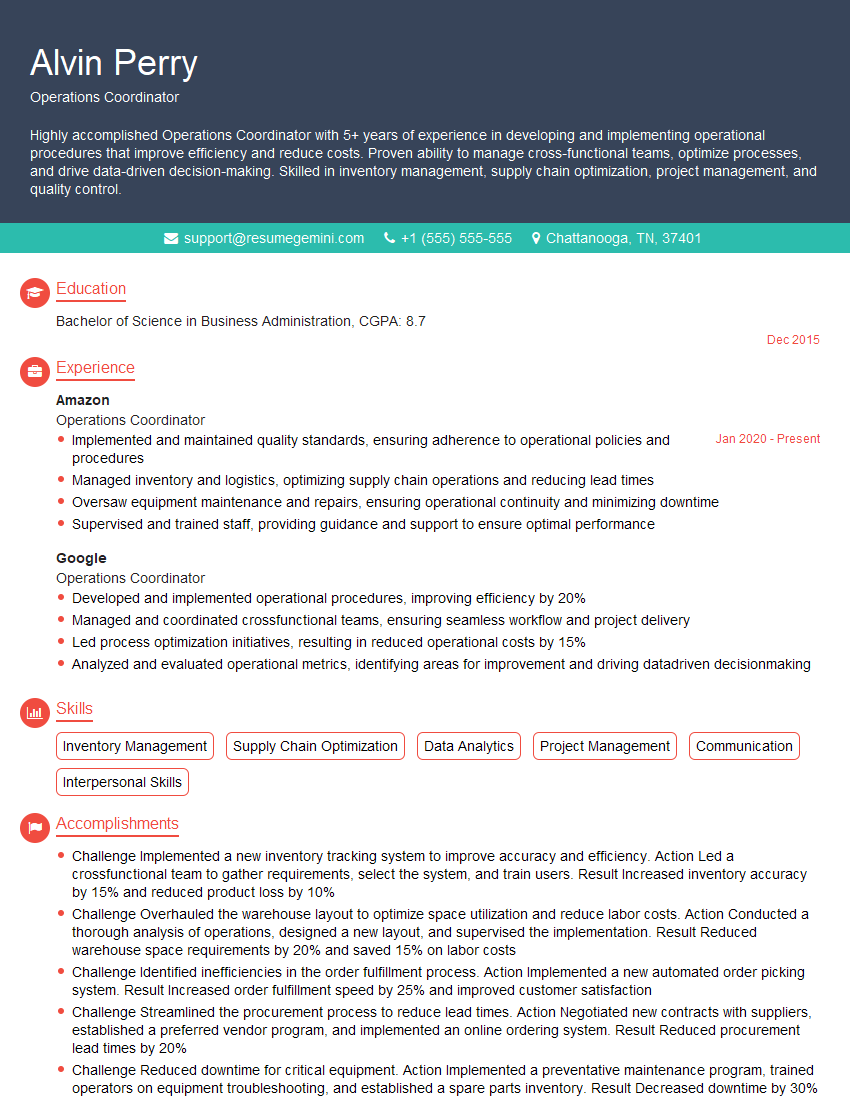
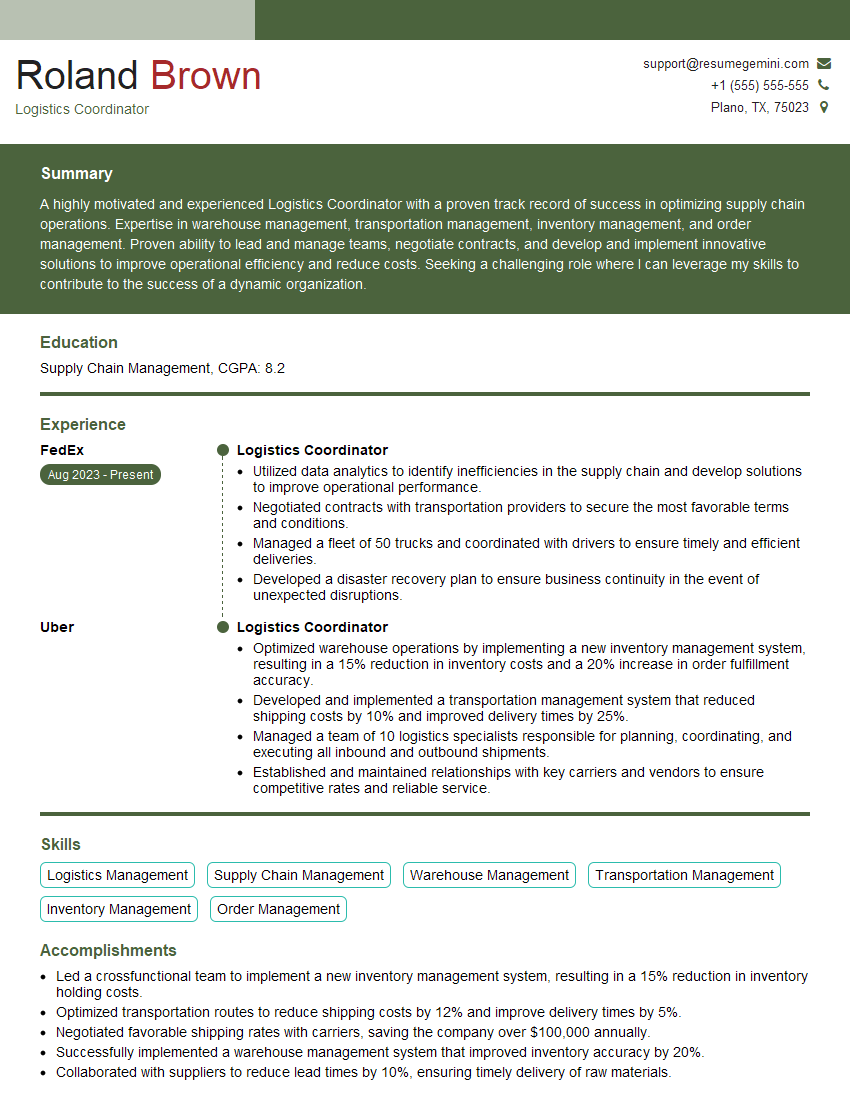
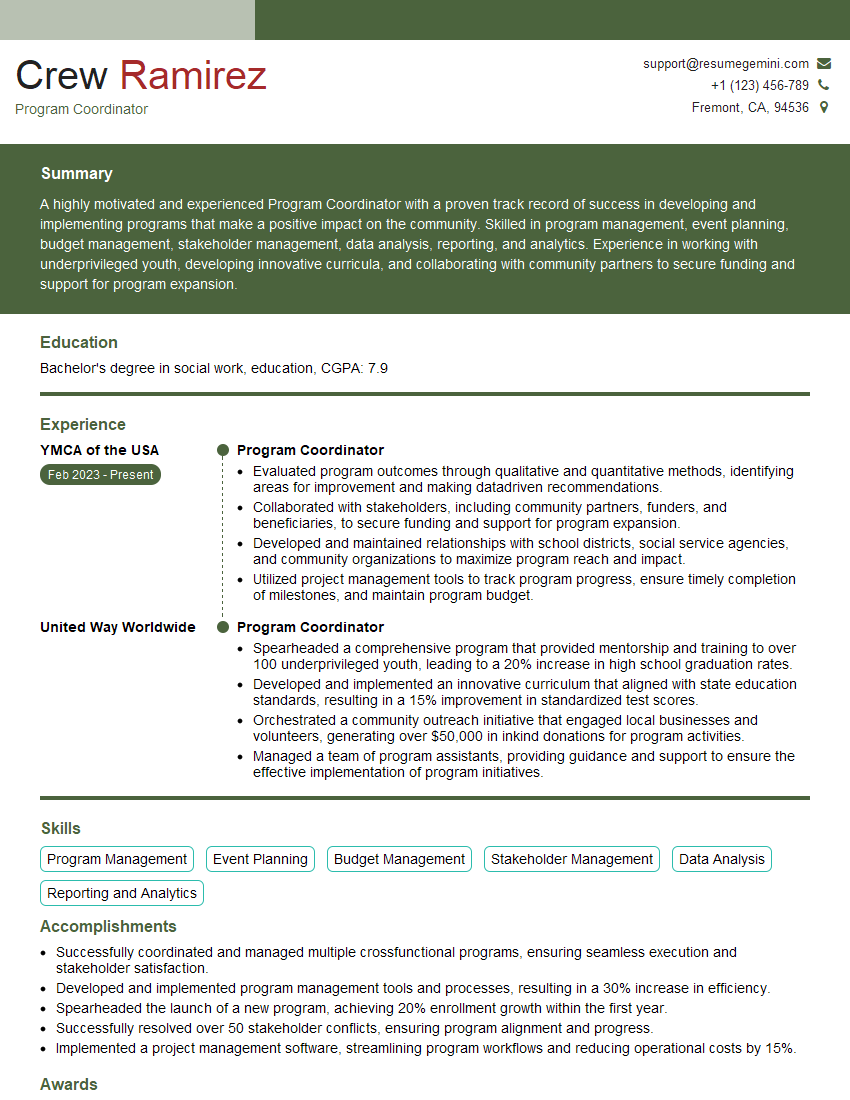
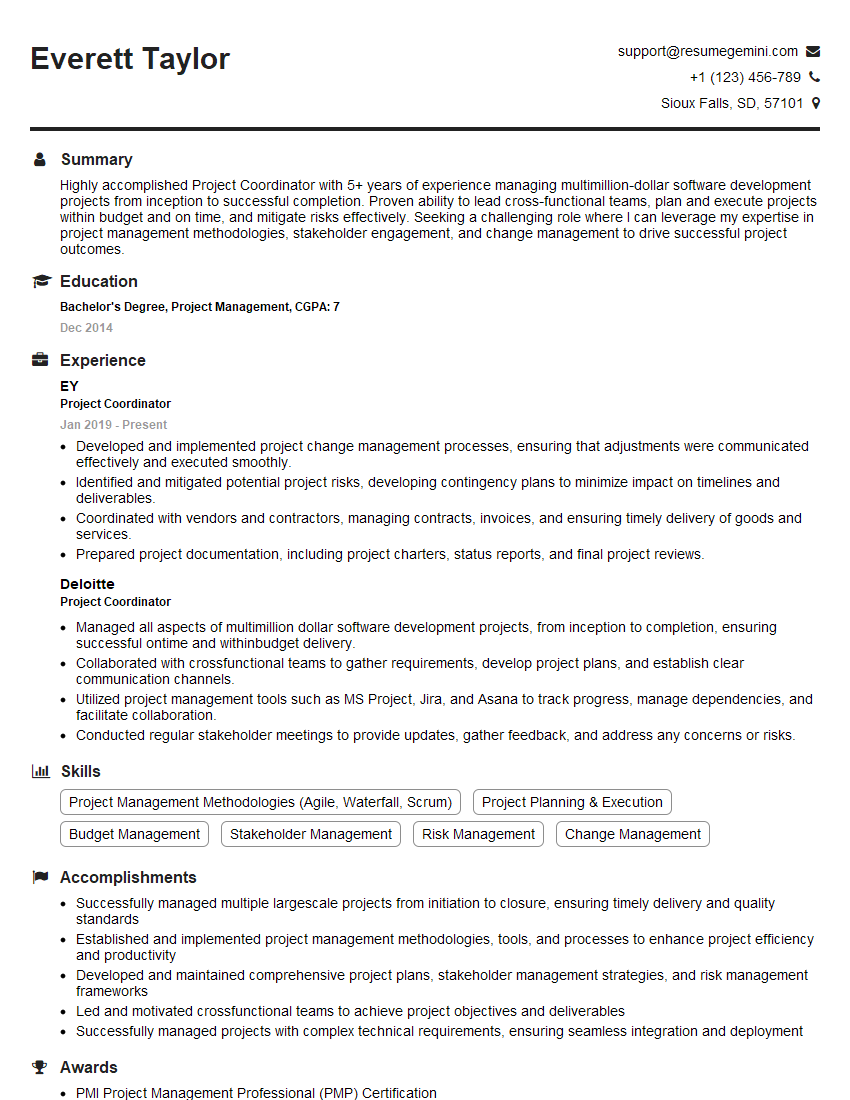
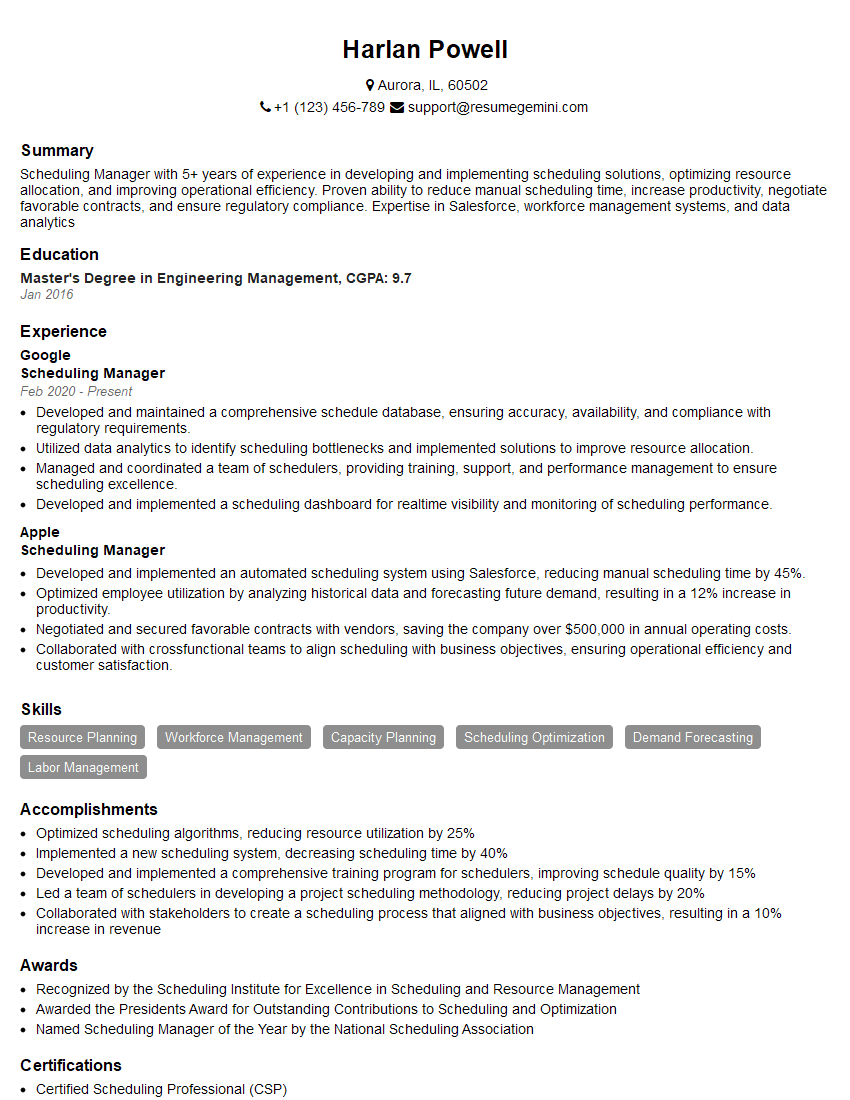
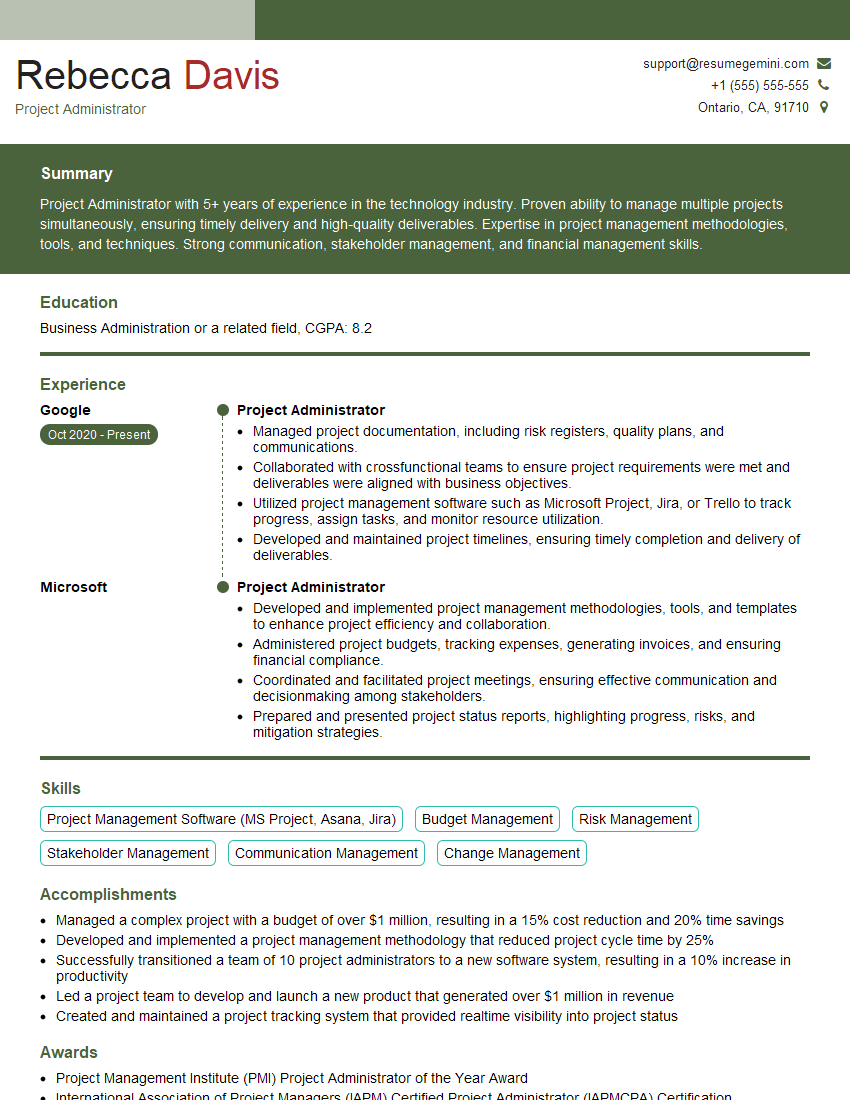
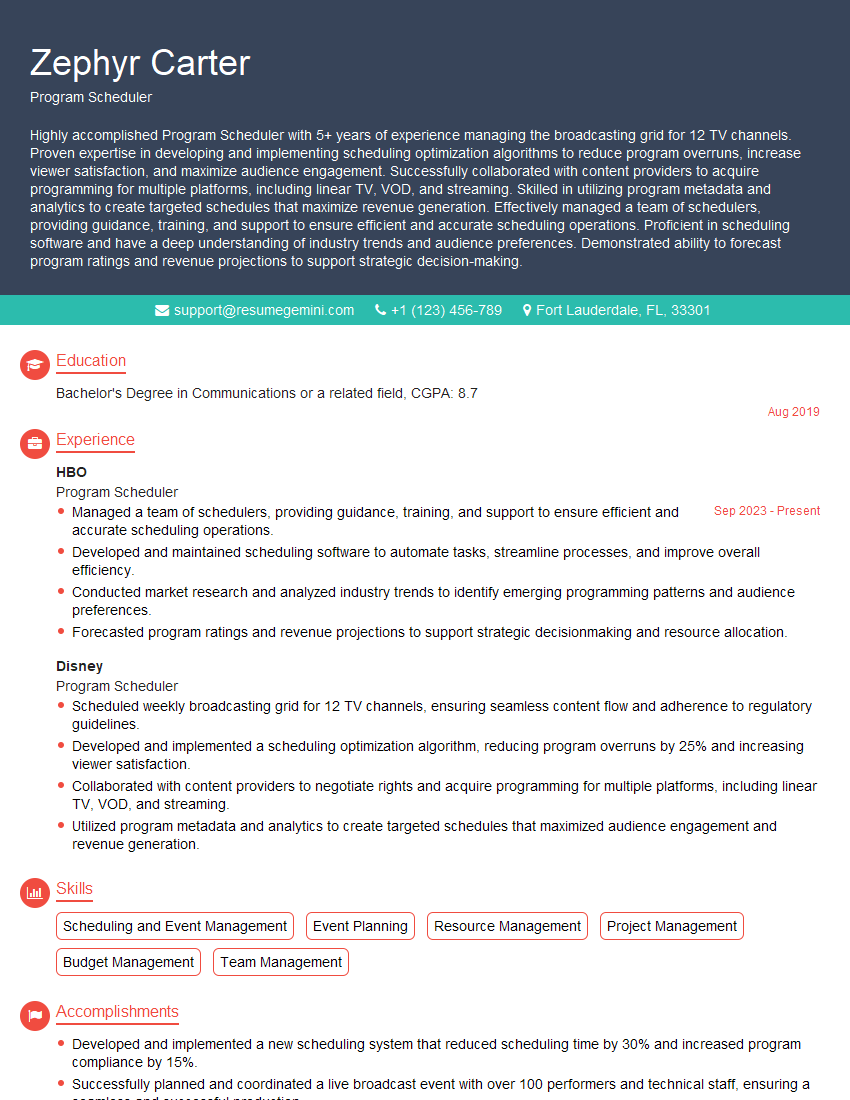
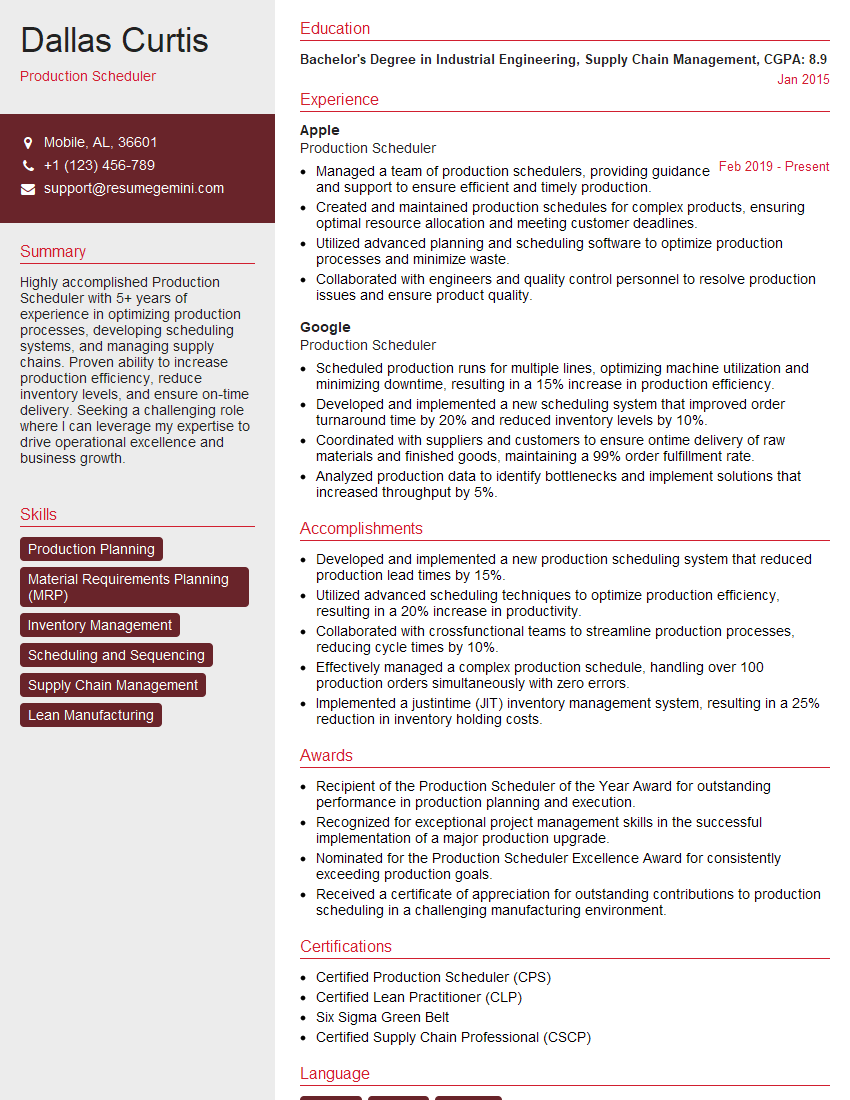
Mastering Project Coordination and Scheduling is crucial for career advancement in many industries. Strong skills in this area demonstrate organizational ability, problem-solving aptitude, and the capacity to deliver projects on time and within budget – highly sought-after qualities in today’s competitive job market. To significantly boost your job prospects, creating an ATS-friendly resume is essential. ResumeGemini is a trusted resource that can help you build a professional and effective resume tailored to highlight your skills and experience. Examples of resumes specifically tailored for Project Coordination and Scheduling roles are available to help you create a winning application.
Explore more articles
Users Rating of Our Blogs
Share Your Experience
We value your feedback! Please rate our content and share your thoughts (optional).
What Readers Say About Our Blog
To the interviewgemini.com Webmaster.
Very helpful and content specific questions to help prepare me for my interview!
Thank you
To the interviewgemini.com Webmaster.
This was kind of a unique content I found around the specialized skills. Very helpful questions and good detailed answers.
Very Helpful blog, thank you Interviewgemini team.