Unlock your full potential by mastering the most common Project Management (as needed) interview questions. This blog offers a deep dive into the critical topics, ensuring you’re not only prepared to answer but to excel. With these insights, you’ll approach your interview with clarity and confidence.
Questions Asked in Project Management (as needed) Interview
Q 1. Describe your experience with Agile methodologies (Scrum, Kanban).
Agile methodologies, such as Scrum and Kanban, are iterative approaches to project management that emphasize flexibility, collaboration, and continuous improvement. I have extensive experience applying both.
Scrum: In Scrum projects, I’ve led teams through sprints (typically 2-4 weeks) focusing on delivering incremental value. My responsibilities included facilitating daily stand-up meetings, sprint planning, sprint reviews, and sprint retrospectives. For example, on a recent e-commerce website redesign project, we used Scrum to deliver new features in short cycles, gathering user feedback after each sprint to adapt and improve the design. This iterative process allowed us to avoid costly mistakes and deliver a product that met user needs more effectively than a traditional waterfall approach.
Kanban: Kanban focuses on visualizing workflow and limiting work in progress. I’ve utilized Kanban boards, both physical and digital (e.g., Trello, Jira), to manage tasks and identify bottlenecks. In one instance, managing a content creation team, Kanban helped us streamline the editorial process, reducing lead times significantly by clearly showing the status of each article and identifying where bottlenecks occurred. We were able to improve our workflow by limiting the number of articles in progress at any given time, ensuring a smoother and more efficient process.
Q 2. Explain the difference between a project and a program.
While both projects and programs involve managing tasks and resources to achieve specific objectives, they differ significantly in scope and complexity.
A project is a temporary endeavor undertaken to create a unique product, service, or result. Projects have a defined start and end date, a specific scope, and a dedicated budget. Think of building a house – it has a clear beginning, end, and defined deliverables.
A program, on the other hand, is a group of related projects, sub-programs, and program management activities managed in a coordinated way to achieve strategic objectives. Programs are ongoing and often have a longer lifespan than individual projects. For instance, a company’s initiative to improve its customer service might involve multiple projects, such as upgrading its CRM system, launching a new customer support app, and implementing employee training programs. These projects are interconnected and form part of the larger program aimed at improving customer service.
Q 3. How do you prioritize tasks in a project with competing deadlines?
Prioritizing tasks with competing deadlines requires a structured approach. I typically use a combination of methods, including:
- MoSCoW Method: Categorizing tasks as Must have, Should have, Could have, and Won’t have helps to focus efforts on the critical elements.
- Prioritization Matrix: A matrix that considers urgency and importance. Tasks are ranked based on their impact and time sensitivity. High-impact, high-urgency tasks take precedence.
- Dependency Analysis: Identifying tasks that depend on others helps create a logical sequence and highlight critical paths that need to be prioritized.
For example, imagine a software release with multiple features nearing their deadlines. Using the MoSCoW method, we might identify core features as ‘Must have’, enhancing features as ‘Should have’, and less crucial ones as ‘Could have’. This helps focus the team on the essentials to meet the critical deadlines.
Q 4. What project management tools and software are you proficient in?
I’m proficient in several project management tools and software, including:
- Jira: For agile project management, issue tracking, and workflow management.
- Trello: For Kanban-style visualization and task organization.
- Asana: For task management, team collaboration, and project tracking.
- Microsoft Project: For complex project scheduling and resource allocation.
- Monday.com: For visual project management and real-time collaboration.
My experience spans using these tools across various project types and team sizes, allowing me to leverage their capabilities effectively to streamline processes and enhance team collaboration.
Q 5. Describe your experience with risk management in a project.
Risk management is a crucial aspect of successful project delivery. My approach involves a proactive and iterative process.
- Risk Identification: I work with the team to identify potential risks throughout the project lifecycle, considering factors like technical challenges, resource constraints, and external factors.
- Qualitative Risk Analysis: We assess the likelihood and impact of each identified risk, prioritizing those with higher probabilities and potential consequences.
- Quantitative Risk Analysis: Where appropriate, I use techniques such as Monte Carlo simulation to quantify the potential impact of risks on project schedules and budgets.
- Risk Response Planning: For each prioritized risk, we develop contingency plans, such as mitigation strategies, risk avoidance, transference, or acceptance.
- Risk Monitoring and Control: Throughout the project, we actively monitor risks, track their status, and execute contingency plans as needed.
For instance, during a large-scale software implementation project, we identified a potential risk of insufficient technical expertise within the team. Our response involved hiring a senior consultant with the required specialized skills to mitigate this risk and ensure successful project completion.
Q 6. How do you handle stakeholder conflicts?
Handling stakeholder conflicts requires diplomacy, effective communication, and a focus on finding mutually acceptable solutions. My approach involves:
- Active Listening: Understanding each stakeholder’s perspective and concerns is crucial. I strive to create a safe space for open communication.
- Facilitation: I often facilitate meetings between conflicting parties to encourage dialogue and find common ground. This may involve mediating discussions and helping them reach a consensus.
- Collaboration and Compromise: Finding solutions that address the concerns of all parties involved is essential. This often necessitates compromise from each side.
- Documentation: Maintaining a clear record of agreements and decisions is important to ensure accountability and prevent future misunderstandings.
In one project, disagreements arose between the marketing and development teams regarding the timeline for launching a new product. I facilitated a meeting where each team explained its concerns and priorities. Through collaborative discussions, we created a revised timeline that accommodated the needs of both teams while meeting the overall project objectives.
Q 7. Explain your approach to project scope management.
Project scope management is the process of defining, controlling, and managing the work required to complete a project successfully. My approach emphasizes clarity, collaboration, and control.
- Scope Definition: This initial phase involves clearly defining the project’s goals, deliverables, and boundaries. This often includes creating a detailed Work Breakdown Structure (WBS) that breaks down the project into smaller, manageable tasks.
- Scope Planning: We define how the scope will be managed, including processes for change management and scope verification. This often involves creating a Change Control Process.
- Scope Verification: Regularly checking deliverables against the project scope to ensure that all the required work is being performed and nothing extra is being done.
- Scope Control: Managing changes to the project scope through a formal process to prevent scope creep (uncontrolled expansion of the project scope).
For example, in a website development project, the initial scope clearly defined the features to be included (e.g., contact form, blog, e-commerce functionality). Throughout the project, any requests for additional features were formally documented and evaluated, ensuring that any scope changes were approved and properly managed to prevent delays and cost overruns.
Q 8. How do you measure project success?
Measuring project success goes beyond simply completing a project on time and within budget. It requires a holistic view, encompassing various factors aligned with the project’s initial goals. I typically use a balanced scorecard approach, considering:
- Scope Achievement: Did we deliver what was promised? This includes evaluating features, functionality, and quality against the project requirements document.
- Time Management: Were milestones met according to schedule? This assesses adherence to the project timeline and any necessary adjustments along the way.
- Budget Adherence: Did the project stay within the allocated budget? This includes analyzing actual costs against the planned budget and investigating any variances.
- Stakeholder Satisfaction: Did we meet the needs and expectations of all key stakeholders (clients, users, management)? This might involve surveys, feedback sessions, or other methods for gathering qualitative data.
- Return on Investment (ROI): Did the project deliver the expected return on investment? This is especially crucial for business projects and requires a clear definition of ROI metrics upfront.
For example, a software development project might be deemed successful if it delivers all features as specified, launches on time and within budget, receives positive user feedback, and shows a measurable increase in user engagement or sales.
Q 9. What is your experience with budget management and forecasting?
I have extensive experience in budget management and forecasting, leveraging both top-down and bottom-up approaches. A top-down approach starts with the overall budget and allocates funds to various tasks. A bottom-up approach involves estimating costs for individual tasks and summing them up to get the total project budget. I use various tools and techniques like:
- Spreadsheets: For detailed cost tracking and creating budget forecasts.
- Project Management Software: Software like MS Project or Jira allows for detailed resource allocation and cost monitoring throughout the project lifecycle.
- Earned Value Management (EVM): This powerful technique helps predict future costs based on the progress made. I’ll explain this in more detail in a later answer.
- Contingency Planning: I always include a contingency buffer in the budget to account for unforeseen expenses or delays.
My forecasting involves analyzing historical data, considering potential risks, and incorporating expert judgments. Regular monitoring and reporting are essential to ensure the project stays on track financially. For instance, I regularly review burn-down charts to visualize progress against the budget.
Q 10. Describe a project that went over budget. What caused it and how did you handle it?
In one project, developing a new e-commerce platform, we went over budget primarily due to unforeseen complexities in integrating with third-party payment gateways. The initial integration estimations proved overly optimistic. We addressed the issue through several steps:
- Transparent Communication: We immediately informed stakeholders about the budget overrun and the reasons behind it. This included detailed explanations and justification for the additional costs.
- Scope Re-evaluation: We worked closely with the client to re-evaluate the scope. Certain non-critical features were either postponed or removed to bring the project back on track.
- Resource Optimization: We identified areas where we could optimize resource allocation. This included renegotiating contracts with some vendors and reallocating internal team members.
- Change Management Process: We formally documented the changes to the scope and budget using a change request process to ensure transparency and accountability.
While exceeding the budget was undesirable, open communication, decisive action, and collaborative decision-making with the client helped minimize the negative impact.
Q 11. Describe a project that failed. What were the key factors contributing to the failure?
A project involving the launch of a new mobile app failed due to a combination of factors. Poor communication between the development team and marketing team led to a lack of alignment on the app’s features and target audience.
- Lack of Clear Requirements: The initial requirements document lacked clarity and detail, leading to misunderstandings and rework.
- Inadequate Risk Management: Potential risks, such as technical challenges and market competition, were not properly identified or addressed.
- Poor Communication: A breakdown in communication between the development team and the marketing team resulted in a mismatched product-market fit.
- Insufficient User Testing: Limited user testing resulted in a product that failed to meet user needs and expectations.
This experience highlighted the critical importance of clearly defined requirements, effective risk management, consistent communication, and rigorous user testing in project success. It taught me the value of proactive risk assessment and the importance of building strong collaborative relationships within the project team and with stakeholders.
Q 12. How do you manage project teams and foster collaboration?
Managing project teams and fostering collaboration is crucial for project success. I employ a collaborative leadership style, focusing on:
- Clear Roles and Responsibilities: Defining clear roles and responsibilities for each team member ensures accountability and reduces confusion.
- Regular Communication: I facilitate regular team meetings, using various communication channels (e.g., daily stand-ups, weekly progress reports) to keep everyone informed and engaged.
- Conflict Resolution: Addressing conflicts promptly and fairly is crucial. I encourage open communication and create a safe space for team members to voice their concerns.
- Team Building Activities: Organizing team-building activities can help strengthen relationships and improve team cohesion.
- Recognition and Appreciation: Acknowledging individual and team accomplishments boosts morale and motivates team members.
I use tools like project management software to facilitate communication, track progress, and manage tasks collaboratively. Building trust and rapport within the team is paramount, creating an environment where everyone feels valued and empowered to contribute.
Q 13. Explain your understanding of critical path analysis.
Critical Path Analysis (CPA) is a project management technique used to identify the longest sequence of dependent tasks in a project. This sequence, known as the critical path, determines the shortest possible duration of the project. Any delay on a task within the critical path directly impacts the overall project completion time.
It involves creating a network diagram that visually represents the tasks and their dependencies. Each task has a duration, and the critical path is the path with the longest total duration. This helps in prioritizing tasks and allocating resources effectively. For instance, if Task A takes 5 days, Task B takes 3 days, and Task B is dependent on Task A, then the critical path (if no other paths exist) will be 8 days long. Delaying Task A will directly delay the entire project.
CPA helps in identifying tasks that need close monitoring and resources allocation. Tasks outside the critical path have some flexibility in their scheduling without affecting the project’s overall duration.
Q 14. What is your experience with earned value management (EVM)?
Earned Value Management (EVM) is a project performance measurement technique that integrates scope, schedule, and cost. It helps in assessing project performance and predicting future outcomes. EVM uses three key metrics:
- Planned Value (PV): The budgeted cost of work scheduled to be done up to a certain point in time.
- Earned Value (EV): The value of work actually completed up to a certain point in time.
- Actual Cost (AC): The actual cost incurred up to a certain point in time.
Using these metrics, EVM calculates various indices like:
- Schedule Variance (SV): EV – PV. A positive SV indicates ahead of schedule, while a negative SV indicates behind schedule.
- Cost Variance (CV): EV – AC. A positive CV indicates under budget, while a negative CV indicates over budget.
- Schedule Performance Index (SPI): EV / PV. An SPI greater than 1 indicates ahead of schedule, while less than 1 indicates behind schedule.
- Cost Performance Index (CPI): EV / AC. A CPI greater than 1 indicates under budget, while less than 1 indicates over budget.
EVM provides a powerful way to monitor and control projects, allowing for early identification of potential problems and proactive mitigation strategies. I regularly use EVM in my projects to track performance, predict future costs, and make data-driven decisions.
Q 15. How do you ensure project quality?
Ensuring project quality is paramount and involves a proactive, multi-faceted approach. It’s not just about meeting requirements, but exceeding expectations by delivering a product or service that is fit for purpose, reliable, and meets the highest standards. My approach focuses on prevention rather than cure, employing quality management principles throughout the project lifecycle.
- Proactive Planning: Defining clear quality standards and metrics from the outset is crucial. This involves creating a detailed quality management plan that outlines specific quality goals, processes for achieving those goals (e.g., using specific software or methodologies), and mechanisms for measuring progress against those goals. For example, in a software development project, this might include defining acceptance criteria for each user story.
- Regular Quality Checks: Implementing regular quality checks at various stages of the project is essential. This can include code reviews, testing (unit, integration, system, user acceptance testing), inspections, and walkthroughs. The frequency and type of checks depend on the project’s complexity and risk profile.
- Continuous Improvement: Adopting a mindset of continuous improvement means actively identifying and addressing areas for enhancement. This often involves post-project reviews and retrospectives where the team analyzes what went well, what could be improved, and how to integrate those learnings into future projects. This could include using tools like retrospectives or implementing lessons learned documents.
- Risk Management: Identifying potential quality risks early on and developing mitigation strategies is key. This might involve using techniques like risk registers and FMEA (Failure Mode and Effects Analysis).
- Team Empowerment: Empowering the team to take ownership of quality is critical. This involves providing training, fostering a culture of accountability, and encouraging proactive problem-solving.
For example, in a recent construction project, we implemented a rigorous quality control process using daily inspections, documented checks, and a robust defect tracking system. This resulted in a significant reduction in rework and improved overall project quality.
Career Expert Tips:
- Ace those interviews! Prepare effectively by reviewing the Top 50 Most Common Interview Questions on ResumeGemini.
- Navigate your job search with confidence! Explore a wide range of Career Tips on ResumeGemini. Learn about common challenges and recommendations to overcome them.
- Craft the perfect resume! Master the Art of Resume Writing with ResumeGemini’s guide. Showcase your unique qualifications and achievements effectively.
- Don’t miss out on holiday savings! Build your dream resume with ResumeGemini’s ATS optimized templates.
Q 16. How do you handle changes in project requirements?
Handling changes in project requirements is an inevitable aspect of project management. The key is to have a structured process that minimizes disruption and ensures that changes are managed effectively. My approach involves a combination of formal change control processes and collaborative communication.
- Formal Change Request Process: All changes should be documented formally through a change request process. This involves submitting a request outlining the proposed change, its impact on the project’s schedule and budget, and the proposed solution. This request is then reviewed and approved or rejected by relevant stakeholders based on predefined criteria.
- Impact Assessment: Before approving any change, a thorough impact assessment should be conducted to determine its effect on the project’s scope, timeline, budget, and resources. This might involve using tools like Gantt charts to visualize the effects.
- Configuration Management: Maintaining a clear and updated record of all changes is crucial. This involves using a configuration management system to track all approved changes and ensure everyone works with the most up-to-date version of the project deliverables.
- Communication: Keeping stakeholders informed about all changes is essential. Regular communication updates are vital to transparency and to avoid misunderstandings.
- Negotiation and Prioritization: Sometimes, multiple change requests may compete for resources. A prioritization process should be in place to determine which changes are most important and to negotiate compromises where necessary.
For instance, in a software development project, a change request might involve adding a new feature. We would follow our change request process, assess the impact, update the project plan accordingly, communicate the changes to the stakeholders, and implement the change using agile sprints to ensure iterative progress.
Q 17. What is your process for reporting project status to stakeholders?
Reporting project status to stakeholders requires clear, concise, and regular communication. The frequency and format of reporting depend on the stakeholders’ needs and the project’s complexity. My process generally involves the following:
- Defining Stakeholders and Their Needs: Identifying all stakeholders and understanding their information requirements is the first step. Some stakeholders may need detailed technical updates, while others may prefer high-level summaries.
- Choosing the Right Reporting Method: Different reporting methods cater to different needs. These include regular project status meetings, email updates, dashboards, progress reports (formal documents), and presentations. I tailor my communication style depending on who I’m speaking with.
- Regular Reporting Cadence: Establishing a regular reporting cadence—daily, weekly, or monthly—ensures stakeholders are kept informed and provides opportunities for early problem detection.
- Using Visual Aids: Visual aids, such as charts, graphs, and dashboards, make complex data easier to understand. For example, using a Gantt chart clearly shows the project timeline, progress, and potential delays.
- Proactive Communication: Proactive communication is essential, particularly when facing challenges or delays. Open communication fosters trust and allows stakeholders to participate in finding solutions.
For example, in a marketing campaign, I would provide weekly email updates to the marketing team with detailed progress on tasks, followed by a monthly presentation to senior management summarizing key performance indicators (KPIs) and overall campaign performance.
Q 18. Describe your experience with different project lifecycle methodologies (Waterfall, Agile).
I have extensive experience with both Waterfall and Agile project lifecycle methodologies, and I choose the most appropriate method based on the project’s characteristics and constraints.
- Waterfall: Waterfall is a linear, sequential approach where each phase must be completed before the next begins. It’s well-suited for projects with well-defined requirements and minimal anticipated changes. I’ve used Waterfall successfully in projects with clear specifications and stable requirements, such as infrastructure projects where detailed planning is essential.
- Agile: Agile is an iterative and incremental approach that emphasizes flexibility and collaboration. It’s ideal for projects with evolving requirements or those where quick feedback loops are necessary. My Agile experience encompasses Scrum and Kanban methodologies. I have utilized Scrum successfully in software development projects, leveraging its sprints and daily stand-ups to adapt quickly to changing user stories and feedback.
The choice between Waterfall and Agile depends heavily on the project’s nature. In some cases, a hybrid approach might be best, combining elements of both methodologies.
Q 19. What is your experience with resource allocation and management?
Resource allocation and management are critical to project success. It involves optimizing the use of available resources—human, financial, and material—to achieve project objectives efficiently and effectively. My approach involves:
- Resource Identification: Identifying all available resources, including team members’ skills and availability, budget constraints, and material resources.
- Demand Forecasting: Predicting the resource needs for each project phase to avoid bottlenecks and delays.
- Resource Allocation: Assigning resources to tasks based on their skills, availability, and the project’s priorities. Tools like resource leveling techniques within project management software help.
- Monitoring and Adjustment: Regularly monitoring resource utilization and adjusting allocations as needed to handle unexpected events or changing priorities.
- Resource Leveling: Optimizing the allocation of resources to minimize peaks and troughs in resource demand, enhancing efficiency and preventing burnout.
- Communication and Collaboration: Maintaining open communication with team members to address any resource-related issues promptly.
For example, in a large-scale software development project, I used resource leveling techniques in MS Project to optimize the allocation of developers and testers across different sprints, ensuring that resources were utilized efficiently and that critical tasks weren’t delayed.
Q 20. How do you identify and mitigate project risks?
Risk management is a crucial aspect of project management. It involves identifying, analyzing, and responding to potential threats that could impact the project’s success. My process involves:
- Risk Identification: Using brainstorming sessions, checklists, SWOT analysis, and historical data to identify potential risks (e.g., technical challenges, resource constraints, regulatory issues).
- Risk Analysis: Assessing the likelihood and impact of each identified risk. This might involve using a risk matrix to categorize risks based on their probability and severity.
- Risk Response Planning: Developing strategies to mitigate, avoid, transfer, or accept each risk. For example, mitigation strategies might involve implementing contingency plans, while risk transfer might involve purchasing insurance.
- Risk Monitoring and Control: Regularly monitoring identified risks and updating the risk register as the project progresses. This allows for proactive adjustments to risk response plans if necessary.
For instance, in a construction project, we identified the risk of inclement weather delaying construction. Our risk response involved developing a contingency plan that included weather monitoring, alternative construction techniques for inclement weather, and a buffer in the project schedule to account for potential delays.
Q 21. How do you handle communication within a project team and with stakeholders?
Effective communication is the cornerstone of successful project management. It involves clear, consistent, and timely exchange of information between team members and stakeholders. My approach focuses on:
- Clear Communication Channels: Establishing clear communication channels for different purposes (e.g., email for formal communication, instant messaging for quick updates, project management software for task assignments and tracking).
- Regular Meetings: Holding regular team meetings (e.g., daily stand-ups in Agile) and stakeholder meetings to ensure everyone is aligned and informed.
- Active Listening: Practicing active listening to understand the perspectives of team members and stakeholders and to address their concerns effectively.
- Transparent Communication: Maintaining transparency by openly communicating challenges, risks, and successes, fostering trust and collaboration.
- Conflict Resolution: Developing strategies to address and resolve conflicts promptly and fairly.
- Tailoring Communication: Adapting communication styles to suit the audience (e.g., technical details for the project team, high-level summaries for senior management).
For example, in a cross-functional project, I used a combination of project management software, regular team meetings, and email updates to ensure everyone was kept informed of the project’s progress and any issues. I also made a point of holding one-on-one meetings with team members to address their individual concerns and to ensure they felt supported.
Q 22. Describe your experience with project closure and post-project review.
Project closure and post-project review are critical for learning and improvement. Closure involves formally ending a project, ensuring all deliverables are completed, and resources are released. The post-project review is a structured process analyzing what went well, what could be improved, and capturing lessons learned for future projects.
In my previous role at Acme Corp, we managed the launch of a new software platform. After successfully deploying the platform, the closure process involved verifying all functionalities, confirming client acceptance, and archiving project documentation. The post-project review involved a meeting with the core team and stakeholders. We used a structured questionnaire focusing on areas like schedule adherence, budget management, risk management, and team dynamics. We identified minor delays in the testing phase due to unforeseen compatibility issues. This led to a recommendation for incorporating more rigorous compatibility testing in future projects.
This rigorous process ensures that projects conclude successfully and offer valuable insights to improve future endeavors.
Q 23. What is your experience with creating and managing project schedules?
Creating and managing project schedules involves defining tasks, sequencing them logically, estimating durations, and allocating resources. Effective scheduling minimizes delays and maximizes efficiency. I utilize various scheduling techniques, including Gantt charts and critical path methods (CPM).
For example, during a website redesign project, I used a Gantt chart to visually represent the project timeline, including milestones like design completion, development, testing, and launch. I also employed CPM to identify the critical path, which highlighted the tasks that most significantly impacted the project timeline. By focusing on the critical path tasks, we were able to mitigate potential delays. We used project management software to track progress against the schedule, regularly updating task durations and dependencies as needed.
Tools like Microsoft Project or similar software are invaluable in this process, allowing for dynamic updates and collaboration.
Q 24. How do you use data and metrics to drive project decisions?
Data and metrics are essential for making informed project decisions. They provide objective insights into project performance, allowing for proactive adjustments. I regularly monitor key performance indicators (KPIs) such as schedule adherence, budget status, resource utilization, and quality metrics.
For instance, if a project is consistently behind schedule, I would analyze the data to determine the root cause. This might involve reviewing task durations, resource allocation, or identifying unforeseen risks. Using Earned Value Management (EVM), we can quantitatively assess project performance by comparing planned vs. actual progress, enabling corrective actions. This data-driven approach ensures that decisions are based on facts rather than intuition.
Regular reporting on these KPIs, including visual representations like dashboards, allows for transparency and facilitates proactive problem-solving.
Q 25. Describe your experience with project documentation and reporting.
Comprehensive project documentation and reporting are crucial for transparency, accountability, and knowledge sharing. This includes maintaining a project charter, detailed plans, meeting minutes, risk registers, change logs, and final reports.
During a recent large-scale project involving the implementation of a new CRM system, I ensured that all project communications, decisions, and changes were documented. This involved using a shared document repository, regular status reports, and conducting comprehensive post-implementation reviews. These documents are vital for auditing, tracking progress, and providing a valuable record of the project lifecycle. The final report summarized the project’s outcomes, lessons learned, and recommendations for future projects, providing a valuable resource for the organization.
Employing a centralized system for document management helps ensure efficient retrieval and collaborative access.
Q 26. What’s your preferred method for tracking project progress?
My preferred method for tracking project progress is a combination of techniques. I find that using project management software that allows for visual representations of the schedule (like Gantt charts), combined with regular status meetings and progress reports, provides the most comprehensive overview.
Specifically, I leverage software that allows task assignment, progress updates, and real-time tracking of individual contributions. This provides a clear view of overall project progress. Status meetings offer opportunities for addressing roadblocks and providing immediate feedback. Combining these methods provides a balance between automated tracking and human interaction, leading to more effective oversight.
Adaptability is key, choosing the best tools to fit the specifics of each project.
Q 27. How do you handle unexpected challenges or roadblocks in a project?
Unexpected challenges are inevitable in project management. My approach involves a structured process to address them effectively. First, I identify and clearly define the challenge. Then, I involve the relevant team members to brainstorm potential solutions. We then evaluate the potential solutions, assessing feasibility, cost, and impact. Finally, we implement the chosen solution and monitor its effectiveness.
For example, during a software development project, we faced an unforeseen technical issue that significantly impacted the project timeline. After identifying the root cause, we formed a dedicated troubleshooting team, explored multiple solutions, and implemented a workaround. This involved close collaboration with the development team, adjusting the schedule and communicating the changes transparently to stakeholders.
Proactive risk management and contingency planning are key to mitigating the impact of such unexpected roadblocks.
Q 28. Explain your approach to conflict resolution within a project team.
Conflict resolution is a crucial skill for project managers. My approach emphasizes open communication and collaboration. I aim to create a safe environment where team members feel comfortable expressing their concerns. I facilitate discussions, actively listen to all perspectives, and seek common ground. I encourage constructive dialogue and focus on finding mutually agreeable solutions.
If a disagreement arises, I facilitate a meeting involving the conflicting parties. I help them define the problem, explore their individual perspectives, and work collaboratively toward a solution. If necessary, I act as a mediator, ensuring fairness and objectivity. Documentation of the conflict and resolution process is important for future reference.
Emphasizing teamwork, clear communication, and respect are vital in preventing and resolving conflicts effectively.
Key Topics to Learn for Project Management Interview
- Project Initiation & Planning: Understanding project charters, scope definition, stakeholder analysis, and creating realistic project plans. Practical application: Developing a project plan with clear deliverables and timelines for a hypothetical scenario.
- Risk Management: Identifying, assessing, and mitigating potential project risks. Practical application: Developing a risk register and outlining mitigation strategies for common project challenges like resource constraints or scope creep.
- Agile Methodologies: Familiarity with Agile frameworks like Scrum and Kanban, including sprint planning, daily stand-ups, and sprint retrospectives. Practical application: Describing your experience (or hypothetical experience) working within an Agile environment and applying Agile principles.
- Project Execution & Monitoring: Tracking progress against the project plan, managing resources effectively, and addressing challenges proactively. Practical application: Explaining how you would monitor project performance using relevant metrics and tools.
- Project Closure & Evaluation: Formalizing project closure, conducting post-project reviews, and documenting lessons learned. Practical application: Describing the process of creating a final project report and capturing key insights for future projects.
- Communication & Stakeholder Management: Effectively communicating project updates to stakeholders and managing expectations. Practical application: Describing strategies for handling difficult conversations or resolving conflicts amongst stakeholders.
- Budgeting & Cost Control: Developing and managing project budgets, tracking expenses, and ensuring projects stay within budget constraints. Practical application: Explaining your approach to budget forecasting and cost variance analysis.
Next Steps
Mastering project management principles is crucial for career advancement, opening doors to leadership roles and higher earning potential. A strong resume is your first impression – make it count! Create an ATS-friendly resume that highlights your skills and experience effectively to maximize your job prospects. ResumeGemini is a trusted resource to help you build a professional and impactful resume. We provide examples of resumes tailored to Project Management roles to guide you.
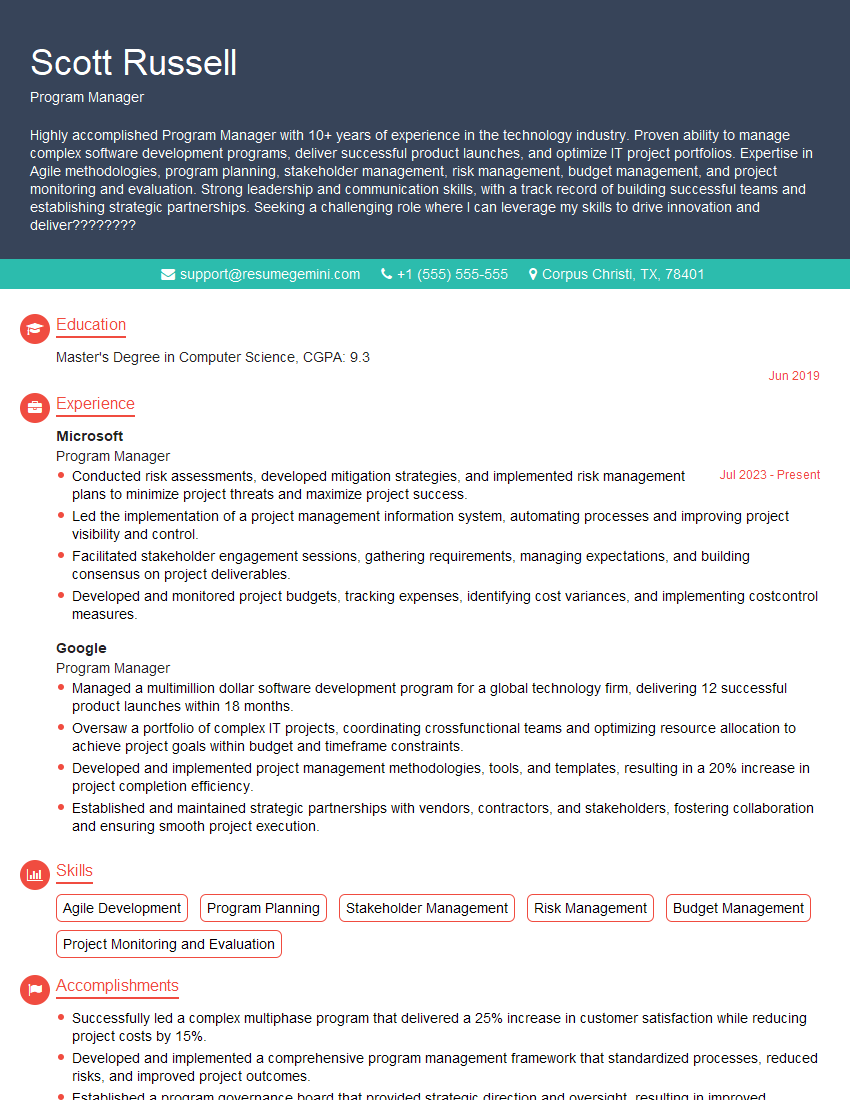
Program Manager Resume Sample
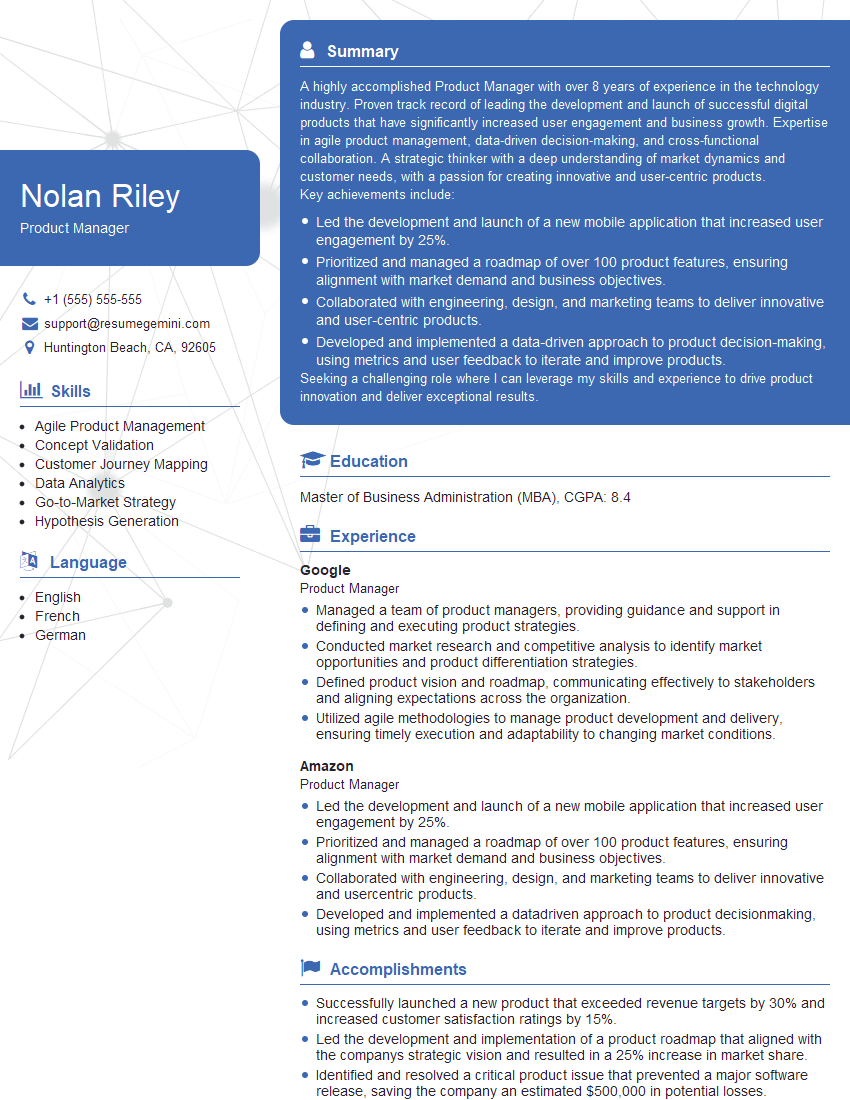
Product Manager Resume Sample
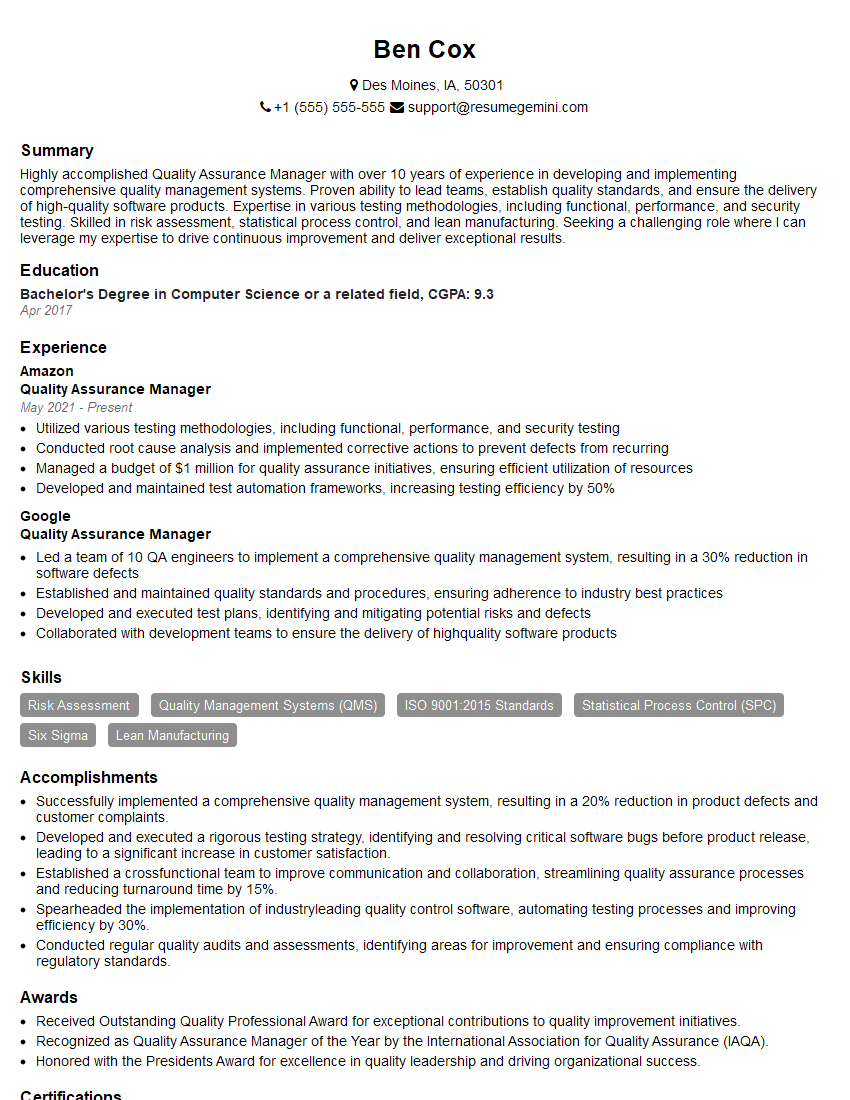
Quality Assurance Manager Resume Sample
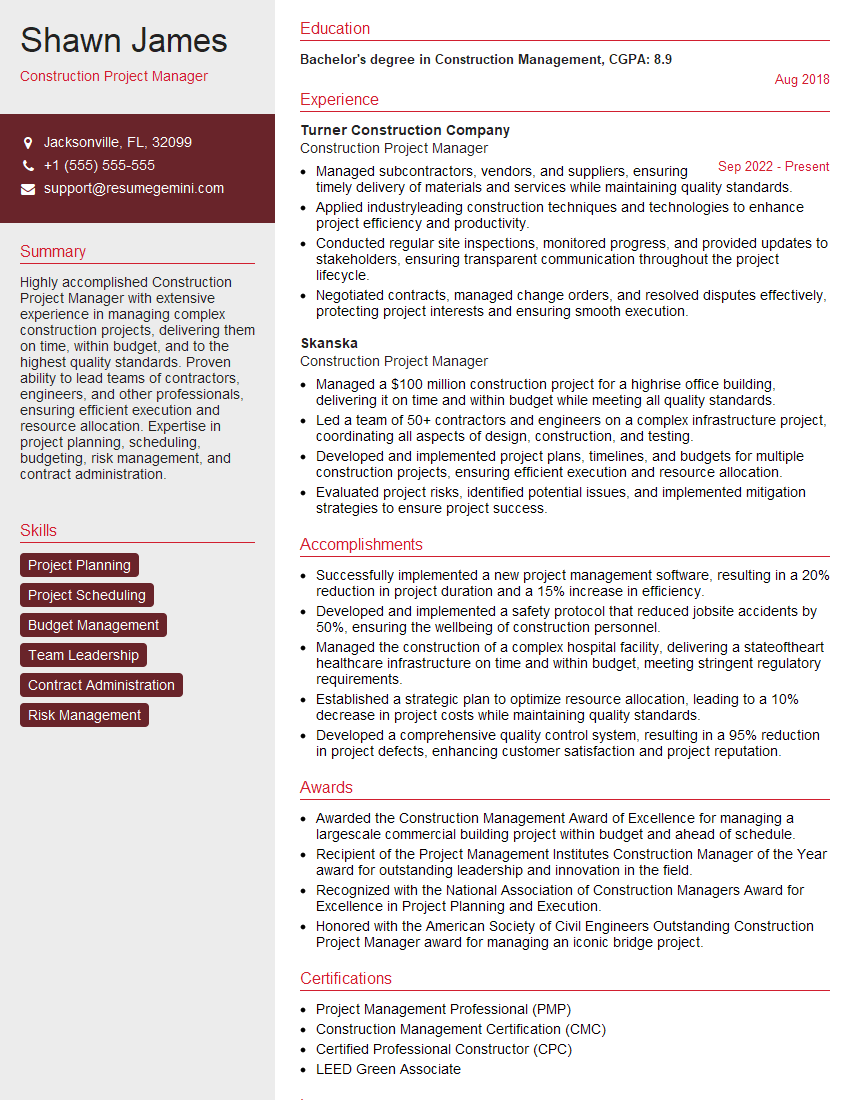
Construction Project Manager Resume Sample
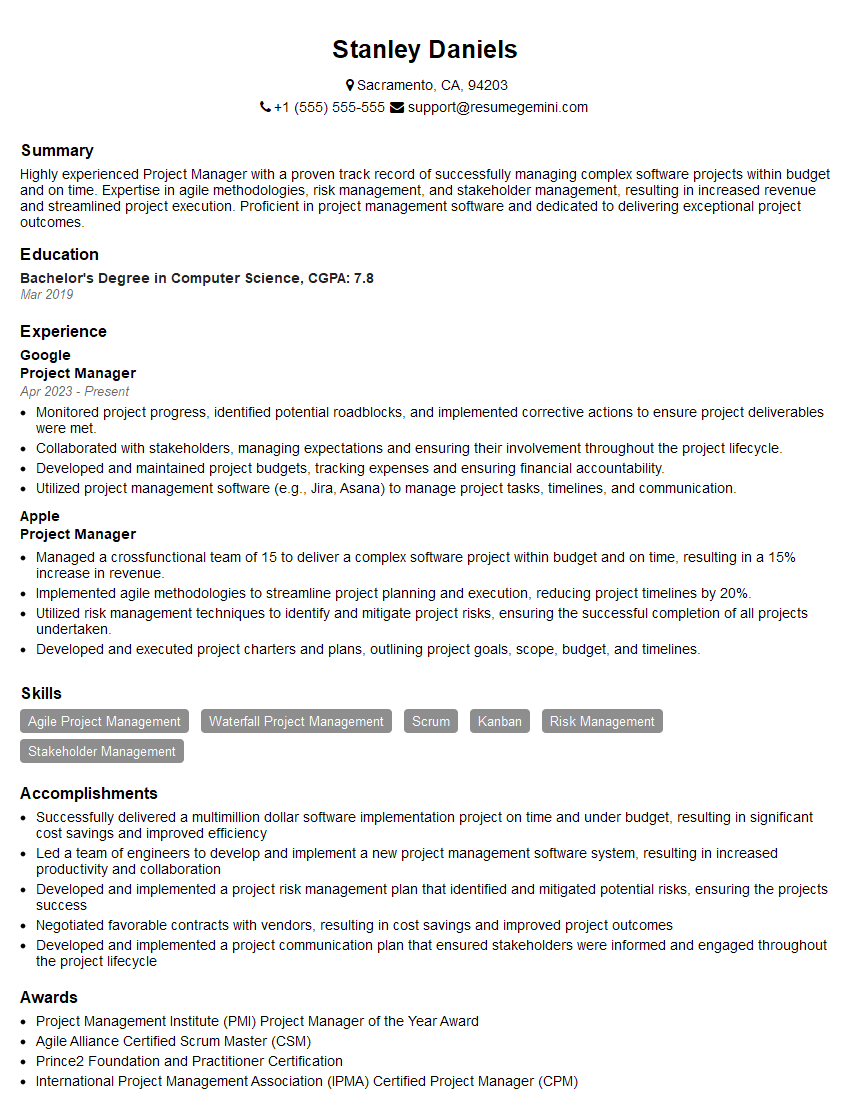
Project Manager Resume Sample
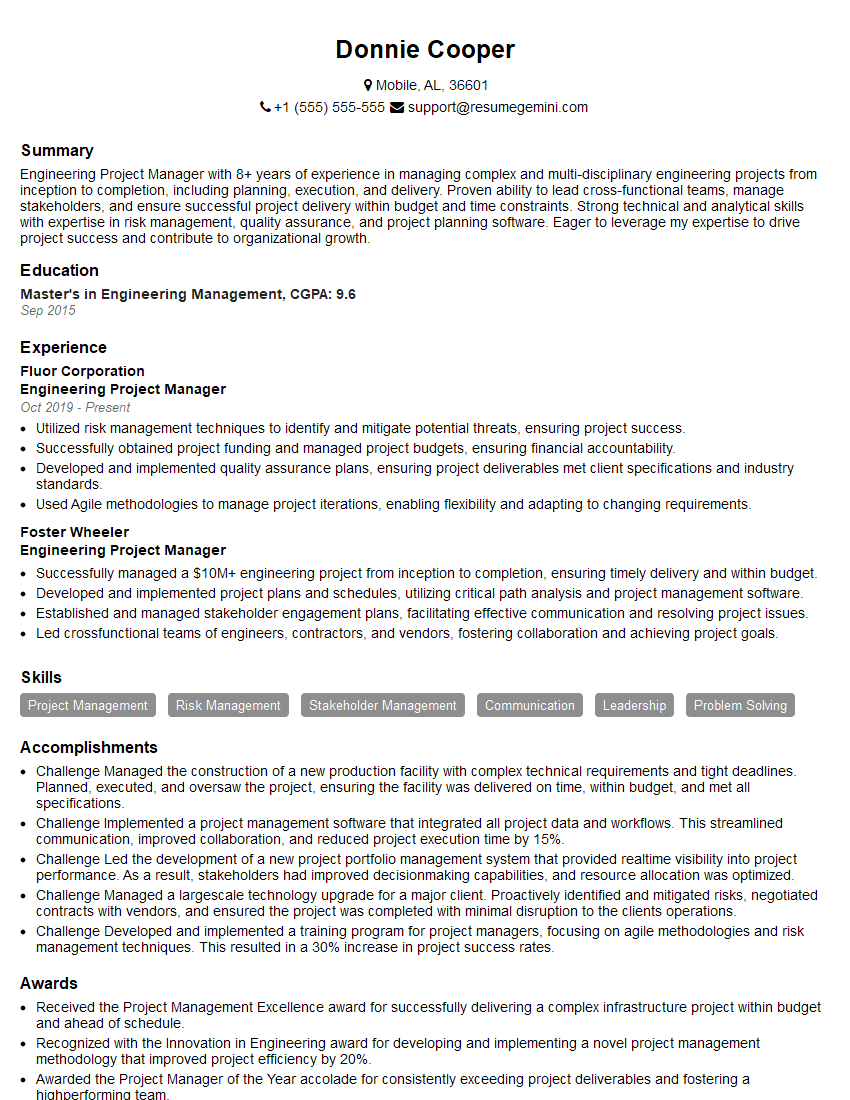
Engineering Project Manager Resume Sample
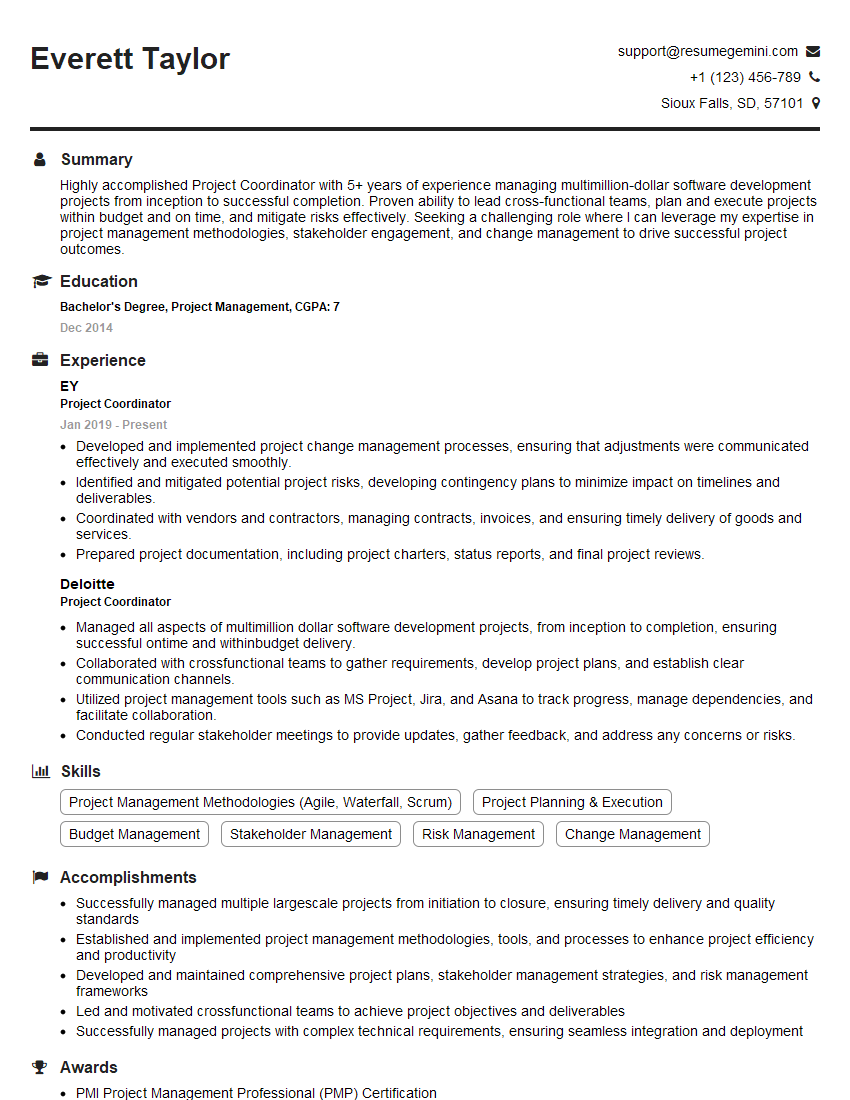
Project Coordinator Resume Sample
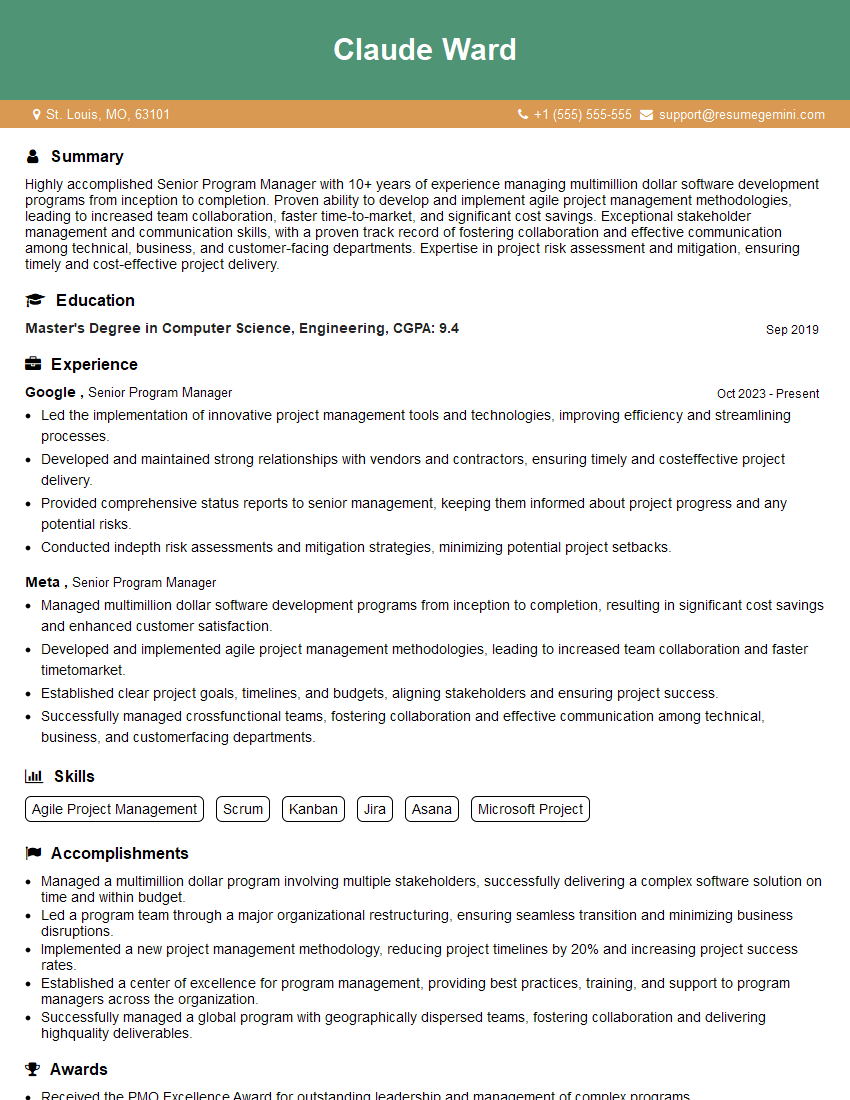
Senior Program Manager Resume Sample
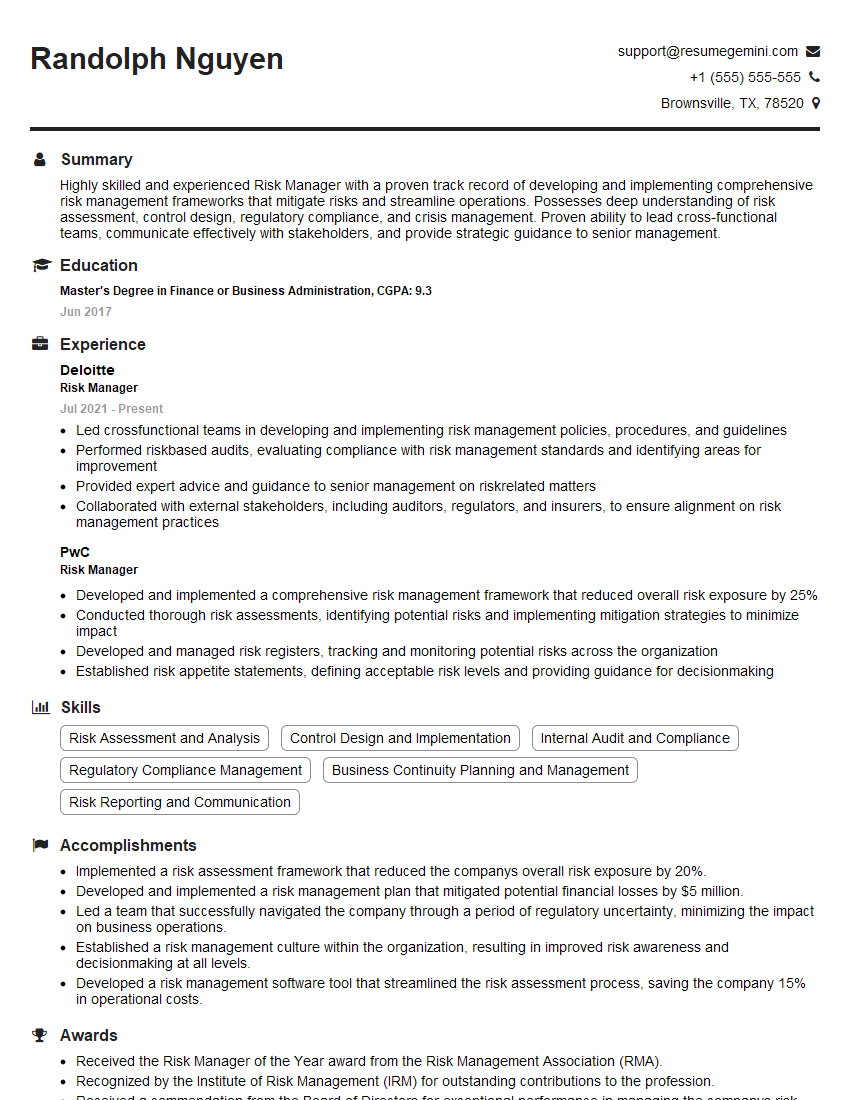
Risk Manager Resume Sample
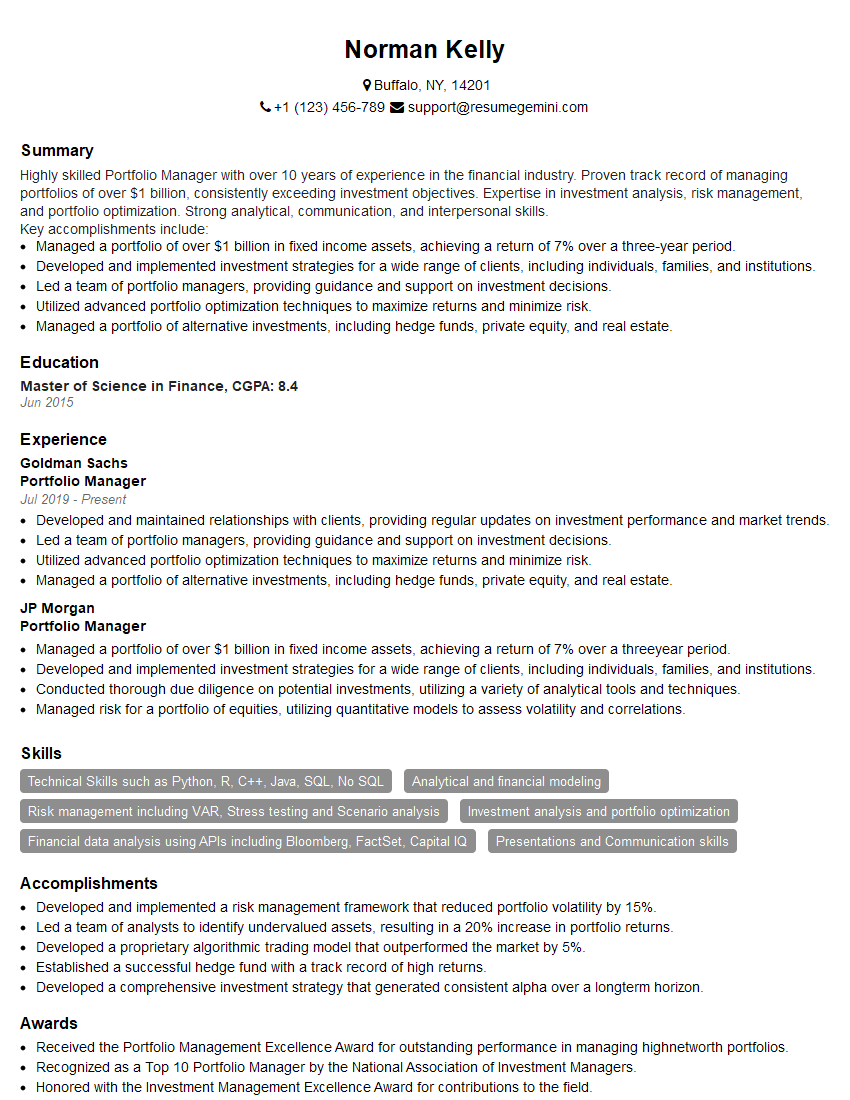
Portfolio Manager Resume Sample
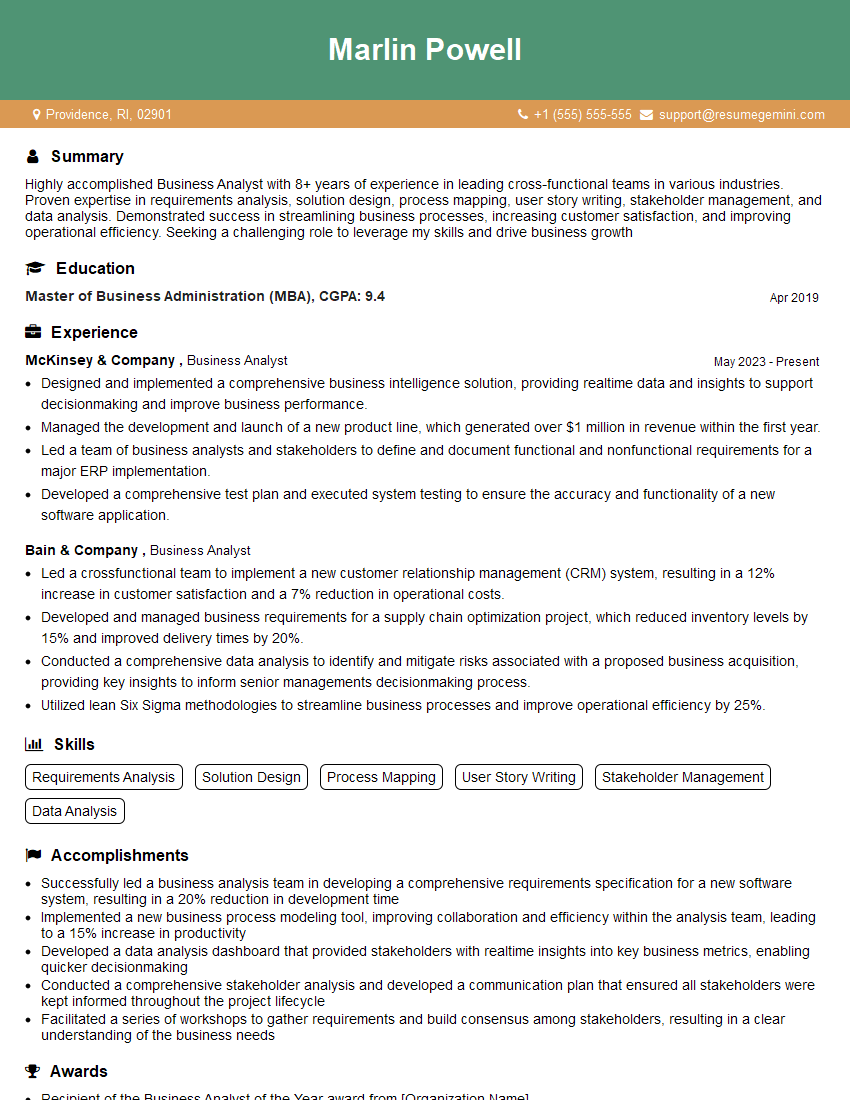
Business Analyst Resume Sample
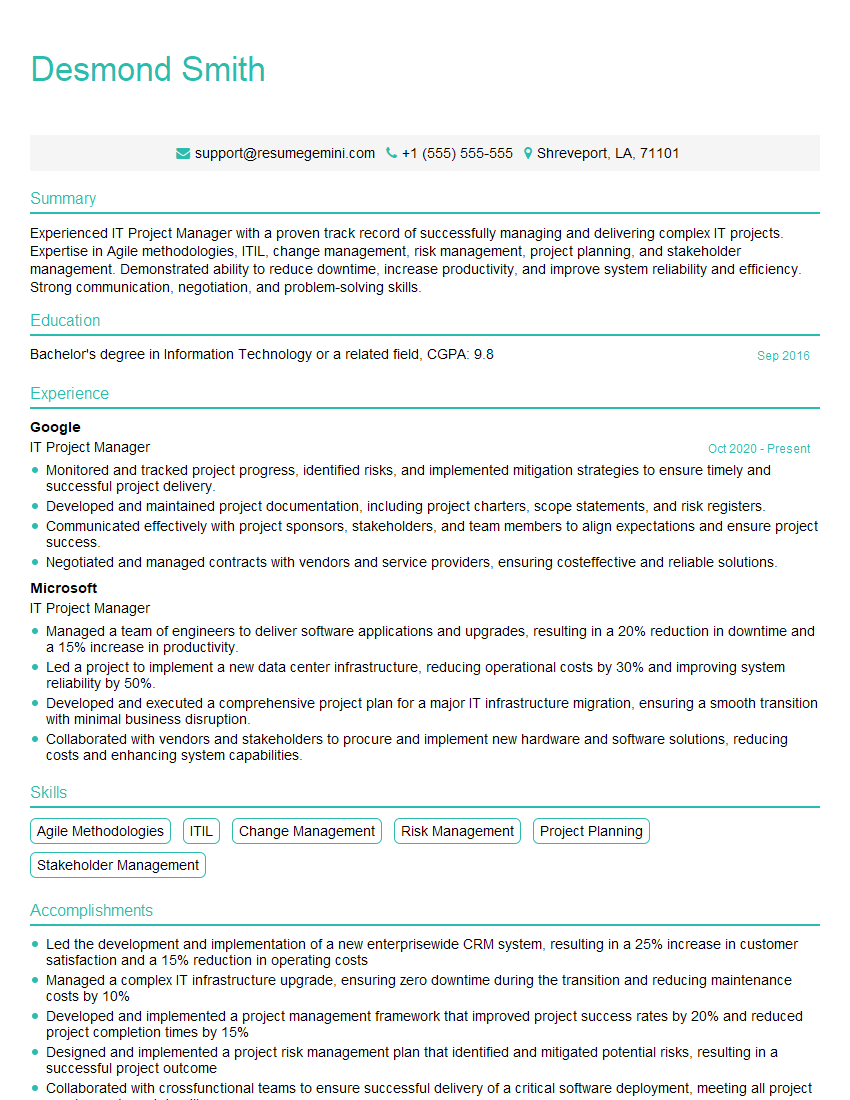
IT Project Manager Resume Sample
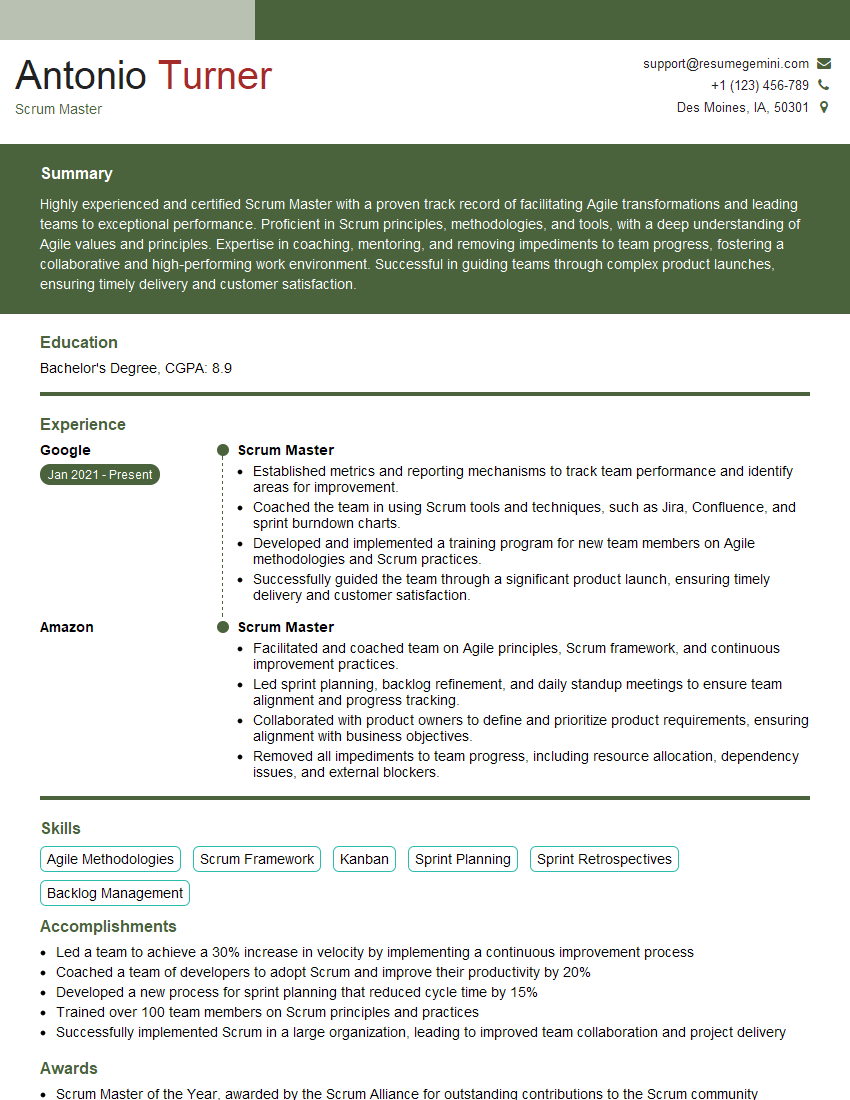
Scrum Master Resume Sample
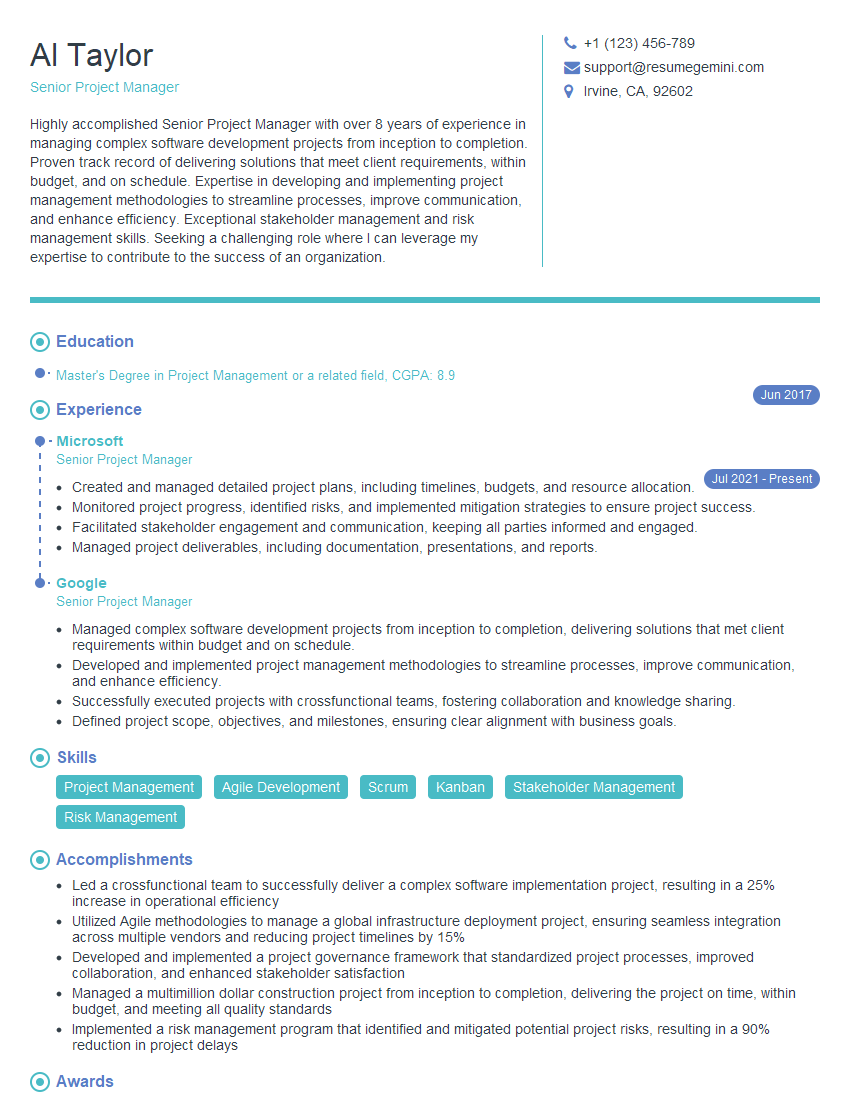
Senior Project Manager Resume Sample
Explore more articles
Users Rating of Our Blogs
Share Your Experience
We value your feedback! Please rate our content and share your thoughts (optional).
What Readers Say About Our Blog
To the interviewgemini.com Webmaster.
Very helpful and content specific questions to help prepare me for my interview!
Thank you
To the interviewgemini.com Webmaster.
This was kind of a unique content I found around the specialized skills. Very helpful questions and good detailed answers.
Very Helpful blog, thank you Interviewgemini team.