Every successful interview starts with knowing what to expect. In this blog, we’ll take you through the top Prostate Cancer Surgery interview questions, breaking them down with expert tips to help you deliver impactful answers. Step into your next interview fully prepared and ready to succeed.
Questions Asked in Prostate Cancer Surgery Interview
Q 1. Describe the different surgical approaches for prostate cancer (open, laparoscopic, robotic).
Prostate cancer surgery, primarily radical prostatectomy, can be approached in three main ways: open, laparoscopic, and robotic-assisted laparoscopic prostatectomy (RALP).
- Open radical prostatectomy: This is the traditional approach, involving a large incision in the lower abdomen to directly access and remove the prostate gland. It allows for excellent visualization and tactile feedback, making it suitable for complex cases or those with significant anatomical variations. Think of it like a traditional car repair – direct access to all parts.
- Laparoscopic radical prostatectomy: This minimally invasive technique utilizes several small incisions through which a camera and specialized instruments are inserted. Surgeons operate with a magnified view on a monitor. Recovery tends to be faster than open surgery. Imagine this like a mechanic working on a car with specialized tools, accessing parts from smaller openings.
- Robotic-assisted laparoscopic prostatectomy (RALP): This advanced minimally invasive method uses a robotic system controlled by the surgeon. It provides enhanced dexterity, precision, and 3D visualization. RALP is frequently chosen for its potential for reduced blood loss, shorter hospital stay, and faster recovery compared to open surgery. This is akin to a highly advanced robotic arm performing the surgery with great precision, guided by the surgeon.
The choice of approach depends on several factors including the surgeon’s expertise, the patient’s overall health, the characteristics of the tumor, and the patient’s preferences.
Q 2. What are the indications and contraindications for radical prostatectomy?
Radical prostatectomy, the complete surgical removal of the prostate gland, is indicated for patients with localized prostate cancer who are fit for surgery. Ideally, the cancer is confined to the prostate gland and hasn’t spread to other organs (metastasized).
- Indications: Localized prostate cancer, patient preference for surgery, failure of other treatments (like radiation).
- Contraindications: Significant cardiovascular or pulmonary disease, severe co-morbidities that increase surgical risk, metastatic disease (cancer spread to other areas of the body), inability to tolerate surgery.
Careful evaluation of the patient’s overall health and the cancer’s characteristics is crucial to determine suitability for radical prostatectomy. A multidisciplinary approach, involving urologists, oncologists, and radiologists, is essential in making this decision.
Q 3. Explain the nerve-sparing technique in radical prostatectomy.
Nerve-sparing radical prostatectomy aims to preserve the nerves responsible for erectile function. These nerves, the neurovascular bundles, lie on either side of the prostate. During the procedure, the surgeon carefully dissects the prostate, aiming to avoid damaging these delicate nerves. This necessitates precise surgical technique and a thorough understanding of anatomy.
The extent of nerve sparing depends on the location and extent of the cancer. If the tumor is close to the nerves, a complete nerve-sparing may not be possible, or a partial nerve-sparing may be attempted. It’s a delicate balance between cancer control and preserving sexual function. The success of nerve-sparing is not guaranteed, and outcomes vary depending on several factors.
Q 4. Discuss the advantages and disadvantages of robotic-assisted laparoscopic prostatectomy (RALP).
RALP offers several advantages over open and traditional laparoscopic prostatectomy, but also has some limitations.
- Advantages: Minimally invasive, smaller incisions, less pain, reduced blood loss, shorter hospital stay, quicker recovery, potentially better cosmetic results, enhanced visualization and precision.
- Disadvantages: Higher cost due to equipment and specialized training, longer operative time compared to open surgery in some cases, a steep learning curve for surgeons, not suitable for all patients (e.g., those with significant pelvic scarring).
The ultimate choice between RALP and other surgical techniques is a personalized decision based on the patient’s characteristics, the surgeon’s expertise, and the specific circumstances of the case.
Q 5. How do you manage complications such as bleeding, urinary incontinence, and erectile dysfunction after prostatectomy?
Complications after prostatectomy, while relatively infrequent, can significantly impact the patient’s quality of life. Management often involves a multidisciplinary approach.
- Bleeding: This can range from minor to life-threatening. Management may involve observation, medication, blood transfusions, or surgical intervention.
- Urinary incontinence: Temporary incontinence is common, typically resolving within months. Management includes pelvic floor exercises, medications, and in some cases, surgical procedures.
- Erectile dysfunction: Nerve-sparing techniques aim to minimize this, but it can still occur. Management includes medication, penile implants, vacuum devices, and counseling.
Post-operative follow-up is critical for early identification and management of these complications. Rehabilitation programs, including physiotherapy, are often beneficial in facilitating recovery.
Q 6. Describe your experience with lymph node dissection during radical prostatectomy.
Lymph node dissection during radical prostatectomy is performed to assess the extent of cancer spread. The extent of dissection varies depending on pre-operative risk factors, such as PSA level, biopsy Gleason score, and MRI findings. It involves the careful removal of lymph nodes from the pelvic region to be examined under a microscope for evidence of cancer cells.
Extended lymph node dissection is more extensive and may be considered for patients at higher risk of lymph node involvement. The decision to perform a lymph node dissection is made on a case-by-case basis, considering the potential benefits of staging against the potential risks of the procedure itself.
My experience encompasses both limited and extended lymph node dissection, tailored to the individual patient needs, guided by current best practice and scientific evidence.
Q 7. What are the current guidelines for prostate cancer staging and treatment?
Prostate cancer staging and treatment guidelines are constantly evolving, reflecting advancements in research and technology. They are typically based on several factors, including PSA levels, digital rectal exam findings, biopsy results (Gleason score), MRI findings, and results from any lymph node dissection.
The NCCN (National Comprehensive Cancer Network) guidelines and similar international guidelines provide comprehensive recommendations for staging and treatment. These guidelines incorporate risk stratification, considering the aggressiveness of the cancer and the patient’s overall health. Treatment options range from active surveillance (monitoring without immediate treatment) for low-risk disease to surgery, radiation therapy, hormone therapy, chemotherapy, or a combination thereof, for higher-risk disease. The choice of treatment is a collaborative decision made with the patient, considering their preferences and the risks and benefits of each approach.
Q 8. How do you counsel patients about the risks and benefits of different surgical options?
Counseling patients about prostate cancer surgery involves a thorough discussion of the available options, weighing their individual risks and benefits. This is a highly personalized process, as each patient presents with unique medical history, tumor characteristics, and personal preferences.
For example, we discuss radical prostatectomy, which involves the complete removal of the prostate gland. The benefits include the potential for cure in early-stage disease and improved survival rates in some cases. However, the risks include urinary incontinence (difficulty controlling urination), erectile dysfunction, and potential complications like infection or bleeding. We use validated risk calculators to provide personalized estimates of these risks based on factors like age, PSA level, and tumor characteristics.
We also discuss less invasive options like brachytherapy (implanting radioactive seeds into the prostate) or high-intensity focused ultrasound (HIFU), which uses focused ultrasound waves to destroy the tumor. These options often have fewer side effects than radical prostatectomy but may not be suitable for all patients, particularly those with advanced-stage disease. The discussion also includes active surveillance, where we closely monitor the cancer without immediate treatment if it’s deemed low-risk.
Throughout the counseling process, I aim to empower patients by providing them with all the necessary information to make informed decisions aligned with their values and preferences. I encourage them to ask questions, voice their concerns, and take their time before making a decision.
Q 9. Explain the role of imaging (MRI, CT, PET) in prostate cancer staging and treatment planning.
Imaging plays a crucial role in prostate cancer staging and treatment planning, guiding our decisions regarding the best course of action. Multiparametric MRI (mpMRI) has become the gold standard for pre-operative assessment. It combines different MRI sequences to provide detailed anatomical images of the prostate, allowing us to identify the tumor’s location, size, and aggressiveness. This helps determine if the cancer is localized or has spread to other parts of the body.
CT scans may be used to evaluate lymph nodes and other organs for signs of metastasis. PET scans, particularly PSMA PET scans, are increasingly important for detecting metastatic disease, especially in patients with suspected recurrence or high-risk disease. These advanced imaging techniques provide more accurate staging information than traditional methods, allowing us to tailor treatment strategies more precisely.
For instance, if mpMRI reveals a small, low-risk tumor confined to the prostate, we may consider active surveillance or less invasive treatments. However, if the imaging shows a large tumor with aggressive features or evidence of lymph node involvement, a more aggressive approach such as radical prostatectomy followed by adjuvant therapy might be necessary.
Q 10. Discuss your experience with different types of urinary diversion.
Urinary diversion is rarely necessary in modern prostate cancer surgery, thanks to advancements in surgical techniques that minimize the risk of urinary damage. However, in cases of extensive pelvic surgery where the bladder or urethra is compromised, urinary diversion may be necessary to create an alternative route for urine elimination.
I have experience with several types of urinary diversions, including ileal conduit (creating a new channel using a segment of the small intestine to divert urine to a stoma on the abdomen), orthotopic neobladder (creating a new bladder from a segment of bowel), and continent cutaneous diversion (creating a reservoir that allows for controlled urination). The choice of diversion depends on several factors, including the extent of pelvic surgery, the patient’s overall health, and their preferences.
The goal is always to achieve the best functional outcome possible, minimizing complications and maximizing the patient’s quality of life. This often includes comprehensive counseling about the advantages and disadvantages of each option and involving the patient in the decision-making process.
Q 11. How do you manage patients with locally advanced prostate cancer?
Managing locally advanced prostate cancer (T3-T4) requires a multidisciplinary approach, often involving a combination of surgery, radiation therapy, and hormone therapy. The specific treatment plan depends on several factors, including the extent of local invasion, the patient’s age and overall health, and the presence of any metastatic disease.
Surgery might involve radical prostatectomy, but the extent of the resection may be limited by the local extent of the cancer. This could mean that complete removal isn’t possible, increasing the chances of positive surgical margins. In such cases, adjuvant radiation therapy is often recommended to target any remaining cancerous tissue. Hormone therapy is almost always used in conjunction with other treatments to suppress testosterone production and slow tumor growth.
Close monitoring is crucial for patients with locally advanced disease, as recurrence is a significant concern. Regular PSA testing, imaging studies, and clinical examinations are essential to detect recurrence early and initiate appropriate treatment.
Q 12. What are the latest advancements in prostate cancer surgery?
Recent advancements in prostate cancer surgery are focused on improving precision, minimizing side effects, and enhancing patient outcomes. Robotic-assisted laparoscopic prostatectomy has become widely adopted, offering improved visualization and dexterity compared to open surgery. This translates to potentially reduced blood loss, shorter hospital stays, and less pain post-operatively.
Another significant development is the use of nerve-sparing techniques during radical prostatectomy. This aims to preserve nerves responsible for erectile function, helping to improve sexual outcomes after surgery. Advances in imaging, such as 3D MRI fusion technology, are guiding surgeons to more accurately target and remove the cancerous tissue, further minimizing damage to healthy surrounding structures.
Furthermore, research is exploring minimally invasive approaches such as focused ultrasound and cryotherapy, offering potentially less invasive alternatives to radical prostatectomy for select patients. These advancements continue to refine the surgical landscape, making prostate cancer treatment increasingly effective and less burdensome for patients.
Q 13. What is your approach to managing patients with positive surgical margins?
Positive surgical margins (PSM), meaning cancer cells are found at the edge of the resected tissue, represent a significant challenge. This indicates incomplete removal of the cancer, increasing the risk of recurrence. Management depends on several factors, including the extent of PSM, the patient’s overall health, and the aggressiveness of the cancer.
The most common approach is adjuvant radiation therapy, which delivers radiation to the prostate bed to kill any remaining cancer cells. This can be external beam radiation or brachytherapy. Hormone therapy is often used in conjunction with radiation to suppress testosterone and slow tumor growth. Close monitoring with PSA tests and imaging studies is crucial to detect any recurrence early.
In some cases, additional surgery might be considered if the PSM are minimal and localized. However, this decision is carefully weighed considering the risks and potential benefits, along with the patient’s preference.
Q 14. How do you monitor patients post-operatively for recurrence?
Post-operative monitoring for recurrence is crucial after prostate cancer surgery. The cornerstone of this monitoring is regular PSA testing. PSA levels typically decline after successful surgery. A rising PSA level after surgery strongly suggests recurrence. The frequency of PSA testing varies but typically starts at 3-6 months post-operation and then continues at intervals.
In addition to PSA testing, imaging studies such as CT, bone scans, and PSMA PET scans are used to assess for metastatic disease, especially if the PSA starts to rise. Regular physical examinations by the surgeon are also important to evaluate for local recurrence. The exact frequency of follow-up appointments and tests is personalized based on the patient’s risk factors and initial disease characteristics.
Early detection of recurrence through vigilant monitoring allows for prompt intervention with appropriate treatment strategies, significantly improving the patient’s chances of long-term survival and maintaining a good quality of life.
Q 15. Describe your experience with brachytherapy and its role in prostate cancer treatment.
Brachytherapy is a form of radiotherapy where radioactive seeds are implanted directly into the prostate gland. It’s a highly targeted approach, minimizing radiation exposure to surrounding tissues. My experience encompasses a wide range of cases, from low-risk patients where it’s often used as a primary treatment, to intermediate-risk cases where it might be combined with external beam radiation. The role of brachytherapy depends heavily on the individual patient’s characteristics, such as tumor stage, grade, and overall health. For example, a patient with a localized, low-grade tumor might be an ideal candidate for brachytherapy alone, offering a high cure rate with minimal side effects. Conversely, a higher-risk patient might benefit from brachytherapy as part of a combined modality treatment approach, improving overall cancer control.
The procedure itself involves carefully placing radioactive seeds using ultrasound guidance. Post-procedure, patients require regular monitoring of PSA levels and imaging to assess treatment response. A significant advantage of brachytherapy is its relative preservation of sexual and urinary function compared to other treatment methods like radical prostatectomy.
Career Expert Tips:
- Ace those interviews! Prepare effectively by reviewing the Top 50 Most Common Interview Questions on ResumeGemini.
- Navigate your job search with confidence! Explore a wide range of Career Tips on ResumeGemini. Learn about common challenges and recommendations to overcome them.
- Craft the perfect resume! Master the Art of Resume Writing with ResumeGemini’s guide. Showcase your unique qualifications and achievements effectively.
- Don’t miss out on holiday savings! Build your dream resume with ResumeGemini’s ATS optimized templates.
Q 16. Explain the use of PSA levels in monitoring prostate cancer recurrence.
Prostate-specific antigen (PSA) is a protein produced by prostate cells. Elevated PSA levels can indicate the presence of prostate cancer, though it’s important to remember that elevated PSA can also result from benign prostatic hyperplasia (BPH). Monitoring PSA after prostate cancer treatment is crucial for detecting biochemical recurrence – a rise in PSA levels suggesting the cancer might be returning, even before it’s detectable on imaging. This is why regular PSA testing is a cornerstone of post-treatment surveillance.
The interpretation of PSA levels post-treatment is complex. We use a combination of PSA velocity (rate of PSA increase), PSA doubling time, and the absolute PSA value to assess the risk of recurrence. A significant and persistent rise in PSA after radical prostatectomy, for instance, might trigger further investigations, such as a bone scan, CT scan, or biopsy, to confirm recurrence and guide further treatment decisions. It’s a dynamic process, and treatment decisions are individualized based on the pattern and magnitude of the PSA elevation.
Q 17. What is your experience with managing metastatic prostate cancer?
Managing metastatic prostate cancer involves a multi-faceted approach tailored to the patient’s specific condition and overall health. This is a more advanced stage where cancer has spread beyond the prostate. Treatment strategies focus on controlling the disease’s progression, managing symptoms, and improving quality of life. Hormone therapy, which deprives cancer cells of testosterone, is a mainstay of treatment for metastatic prostate cancer. This can involve medications like LHRH agonists, anti-androgens, or even surgical castration.
In cases where hormone therapy becomes ineffective (castration-resistant prostate cancer), newer therapies such as chemotherapy, targeted therapies (like PARP inhibitors or immunotherapy), and radiotherapy to specific bone lesions, are employed. Each patient’s journey is unique, and we work closely with the patient and their family to establish realistic goals and manage expectations throughout the treatment process. Regular monitoring of the patient’s symptoms, PSA levels, and imaging studies is essential to adjust the treatment plan as needed.
Q 18. Discuss your understanding of the role of multidisciplinary care in prostate cancer management.
Multidisciplinary care is absolutely paramount in prostate cancer management. It’s not just about surgery; it involves a collaborative team of specialists working together to devise the best plan for each individual patient. This team typically includes urologists (like myself), radiation oncologists, medical oncologists, pathologists, radiologists, and nurses specializing in oncology. Each member brings unique expertise and perspectives to the table.
For example, a patient presenting with intermediate-risk prostate cancer might benefit from a discussion involving all team members to weigh the pros and cons of surgery, radiation therapy, or active surveillance. The pathologist provides crucial information about the tumor’s characteristics, which influences treatment decisions. The radiation oncologist contributes expertise in radiation modalities, while the medical oncologist offers insight into systemic therapies. This integrated approach ensures that patients receive comprehensive care, optimized for their specific circumstances and preferences.
Q 19. Describe your experience with pelvic floor rehabilitation techniques.
Pelvic floor rehabilitation plays a crucial role in managing the side effects of prostate cancer treatment, especially after radical prostatectomy or radiation therapy. Many patients experience urinary incontinence or erectile dysfunction after these procedures. Pelvic floor muscle training, biofeedback, and electrical stimulation are some techniques I utilize. Pelvic floor muscle training involves exercises to strengthen the muscles that support the bladder and bowel. Biofeedback provides visual or auditory feedback to help patients learn to contract and relax these muscles correctly. Electrical stimulation can help improve muscle strength and coordination.
The goal of pelvic floor rehabilitation is to improve continence, reduce urinary frequency and urgency, and potentially enhance erectile function. The success of these techniques depends on patient commitment and participation. We often recommend a combination of techniques tailored to the individual patient’s needs and responses. Regular follow-up appointments are crucial to monitor progress and adjust the rehabilitation program as necessary.
Q 20. How do you manage patients with biochemical recurrence after radical prostatectomy?
Biochemical recurrence after radical prostatectomy refers to a rise in PSA levels after surgery, indicating possible cancer recurrence. Managing this requires a careful evaluation of several factors, including the patient’s age, overall health, PSA kinetics (how quickly PSA is rising), and the patient’s preferences.
Our approach often involves imaging studies like bone scans and CT scans to look for evidence of metastatic disease. If the recurrence is localized, salvage radiation therapy (external beam radiation or brachytherapy) is often considered. For patients with metastatic disease or those who are not good candidates for radiation, hormonal therapy might be employed to slow the cancer’s growth. Active surveillance, where we closely monitor the patient’s PSA and symptoms without immediate treatment, may also be appropriate for certain low-risk cases of biochemical recurrence. The decision-making process is always collaborative and individualized, ensuring the best management strategy for each specific situation.
Q 21. What is your approach to selecting appropriate surgical candidates?
Selecting appropriate surgical candidates for radical prostatectomy involves a thorough assessment of multiple factors. This includes the patient’s overall health, the characteristics of their prostate cancer (stage, grade, PSA level), and their personal preferences.
Patients with localized prostate cancer, meaning the cancer is confined to the prostate gland, are usually the most suitable candidates. We also consider factors like the patient’s age, comorbidities (other health problems), and life expectancy. A thorough discussion about the potential benefits and risks of surgery, including potential complications like incontinence and erectile dysfunction, is essential. Pre-operative imaging, such as MRI, is crucial for accurate staging and to assess the extent of the cancer. Patients who are not suitable candidates for surgery might be better managed with other treatment options like radiation therapy, active surveillance, or hormonal therapy.
Q 22. Explain your understanding of the nomograms used in prostate cancer risk stratification.
Nomograms in prostate cancer risk stratification are essentially sophisticated calculators that combine multiple clinical factors to predict the likelihood of disease recurrence or progression after treatment. They’re not crystal balls, but rather powerful tools that help us personalize treatment plans. Imagine a weather forecast; it doesn’t guarantee rain, but it significantly improves your ability to plan your day. Similarly, nomograms provide a probability, not a certainty.
These nomograms typically include variables such as:
- PSA level: The level of prostate-specific antigen in the blood, a marker often associated with prostate cancer.
- Gleason score: A grading system that assesses the aggressiveness of the cancer cells based on their microscopic appearance.
- Clinical stage: The extent of cancer spread based on physical examination and imaging.
- Age and other relevant patient factors: These can influence the patient’s overall prognosis and tolerance to various treatments.
By inputting a patient’s specific data into a validated nomogram, we get a numerical prediction of the probability of biochemical recurrence (a rise in PSA levels indicating cancer regrowth), distant metastasis (cancer spread to other parts of the body), or even death. This allows us to better tailor treatment strategies, making informed decisions about whether active surveillance, surgery, radiation therapy, or a combination of approaches is most suitable for the individual patient. For example, a patient with a high-risk nomogram score might be a candidate for more aggressive upfront treatment, while a low-risk patient might be better suited for active surveillance.
Q 23. How do you integrate genetic testing into treatment decision-making for prostate cancer?
Genetic testing is increasingly important in prostate cancer management, helping us understand the tumor’s biology and predict its behavior. This information enhances our ability to tailor treatment and improve patient outcomes. We commonly use genetic tests to assess:
- Tumor mutational burden (TMB): This measures the total number of mutations in the cancer cells. Higher TMB can indicate potential responsiveness to immunotherapy.
- Specific gene mutations: Some gene alterations (like BRCA2, ATM, or PTEN) can predict response to certain therapies or signify a higher risk of recurrence.
- DNA repair deficiencies: Deficiencies in DNA repair mechanisms can make the cancer cells more susceptible to certain types of chemotherapy and radiation.
For example, a patient with a high TMB and certain gene mutations might be a better candidate for immunotherapy alongside surgery or radiation. Conversely, a patient lacking these markers might benefit more from conventional treatments. Integrating this information allows for a more precise and potentially more effective treatment strategy. It’s important to note that this is an evolving field, and guidelines continue to be updated as our understanding of prostate cancer genetics deepens.
Q 24. Describe your experience with different types of surgical robots.
My experience encompasses various surgical robots, primarily focusing on the da Vinci Surgical System. I’ve utilized different generations of the da Vinci platform, witnessing firsthand the evolution of its capabilities. The system’s key advantages include improved precision, enhanced visualization through 3D high-definition cameras, and the ability to perform minimally invasive procedures. This translates to smaller incisions, reduced blood loss, less pain, shorter hospital stays, and faster recovery times for patients.
While the da Vinci system is my primary robotic platform, I’m also familiar with other robotic systems and their respective functionalities and limitations. Staying updated on technological advancements and comparing these systems is crucial to providing optimal patient care. The decision of which robotic platform to use often depends on factors such as the specific type of surgery, the patient’s anatomy, and the surgeon’s familiarity with the technology.
Ultimately, the goal is to leverage the most appropriate technology to achieve the best possible surgical outcome while minimizing risks and improving the patient experience.
Q 25. How do you address patient anxiety and concerns about prostate cancer surgery?
Addressing patient anxiety is paramount. Prostate cancer surgery can be daunting, raising concerns about sexual function, urinary control, and overall quality of life. I address these concerns through open and honest communication. I typically start by acknowledging their fears and validating their feelings. I then explain the procedure in detail, using plain language that avoids unnecessary medical jargon.
I take time to answer their questions thoroughly, encouraging them to bring up even their smallest concerns. I involve their family members or support systems in the discussion when appropriate. I provide them with access to support groups and resources, such as patient education materials and contact information for counselors specializing in oncology. Building a strong doctor-patient relationship founded on trust and mutual respect is key to alleviating anxieties. I believe that a well-informed patient is a less anxious patient.
For patients particularly anxious about sexual function, I discuss the potential risks and benefits of nerve-sparing techniques during surgery, which are intended to preserve sexual function. I also discuss realistic expectations of recovery, which can involve a gradual return to sexual activity.
Q 26. What is your approach to perioperative pain management?
Perioperative pain management is crucial for a positive patient experience and optimal recovery. My approach is multifaceted and begins before surgery with patient education about pain management techniques and expectations. Preemptive analgesia, which involves administering pain medication before the onset of pain, is a key component of my strategy. This can significantly reduce postoperative pain intensity.
During surgery, I utilize minimally invasive techniques whenever possible, minimizing tissue trauma and reducing postoperative pain. Postoperatively, I employ a multimodal approach combining various pain relief methods, including:
- Analgesics: A combination of opioid and non-opioid medications, carefully tailored to the individual patient’s needs and tolerance.
- Regional anesthesia techniques: Such as nerve blocks, which can provide targeted pain relief.
- Non-pharmacological approaches: Including ice packs, elevation of the legs, and regular movement to promote healing.
I regularly assess the patient’s pain levels, adjust medications as needed, and proactively address any potential complications. Patient-controlled analgesia (PCA) pumps allow patients to self-administer pain medication, offering them more control and improving their sense of empowerment during recovery.
Q 27. How do you ensure patient satisfaction and follow-up care?
Ensuring patient satisfaction and providing comprehensive follow-up care is paramount. My approach involves regular post-operative visits to monitor healing, address any complications, and assess the impact of the surgery on the patient’s overall quality of life. We meticulously monitor PSA levels, perform regular physical examinations, and schedule imaging studies as needed.
We encourage patients to actively participate in their care, providing opportunities for them to express their concerns and receive personalized guidance. We provide detailed instructions for wound care, medication management, and activity modification to support a smooth recovery. We also maintain open lines of communication, encouraging patients to contact us with any questions or concerns that arise between appointments. Furthermore, we often connect patients with support groups and rehabilitation specialists as needed, ensuring a holistic approach to their recovery.
Patient satisfaction surveys provide valuable feedback, allowing us to continually evaluate and improve our processes. We use this feedback to enhance communication, streamline procedures, and continually improve our approach to care.
Q 28. What are your future goals related to prostate cancer research and surgical practice?
My future goals center around refining prostate cancer surgical techniques, enhancing perioperative care, and contributing to advancements in the field. This includes exploring and implementing new technologies that improve precision and minimize invasiveness. I’m particularly interested in personalized medicine approaches, leveraging genomic information and other biomarkers to tailor surgical strategies and predict outcomes more accurately.
On the research front, I aim to contribute to studies that focus on improving functional outcomes after prostate cancer surgery, including sexual and urinary function. I want to work towards developing novel techniques that minimize side effects and improve long-term quality of life for patients. Collaboration with other specialists and researchers is crucial for achieving these objectives. Ultimately, my goal is to continually improve the lives of patients affected by this disease through cutting-edge research and compassionate, evidence-based clinical care.
Key Topics to Learn for Prostate Cancer Surgery Interview
- Surgical Techniques: Mastering various approaches including open prostatectomy, laparoscopic prostatectomy, robotic-assisted laparoscopic prostatectomy (RALP), and minimally invasive techniques. Understand the advantages and disadvantages of each, considering patient factors and surgical feasibility.
- Oncological Principles: Demonstrate a thorough understanding of surgical margins, lymph node dissection, nerve-sparing techniques, and the importance of achieving complete tumor resection while minimizing complications. Be prepared to discuss current guidelines and best practices.
- Pre-operative Assessment and Planning: Discuss the importance of a comprehensive pre-operative evaluation, including imaging interpretation (MRI, CT, ultrasound), PSA levels, biopsy results, and patient risk stratification. Explain how this information guides surgical decision-making.
- Post-operative Management: Understand the potential complications of prostate cancer surgery, such as urinary incontinence, erectile dysfunction, and bleeding. Be prepared to discuss post-operative care, including catheter management, pain control, and follow-up strategies.
- Advanced Techniques and Technologies: Stay updated on emerging technologies and techniques in prostate cancer surgery, such as fluorescence-guided surgery, image-guided biopsy, and novel approaches to nerve-sparing. Demonstrate your ability to adapt to advancements in the field.
- Patient Selection and Shared Decision-Making: Discuss the importance of patient selection criteria and the process of shared decision-making with patients and their families regarding surgical options and potential risks and benefits.
- Research and Evidence-Based Practice: Familiarity with relevant clinical trials and current research in prostate cancer surgery is crucial. Be prepared to discuss recent advancements and their impact on clinical practice.
Next Steps
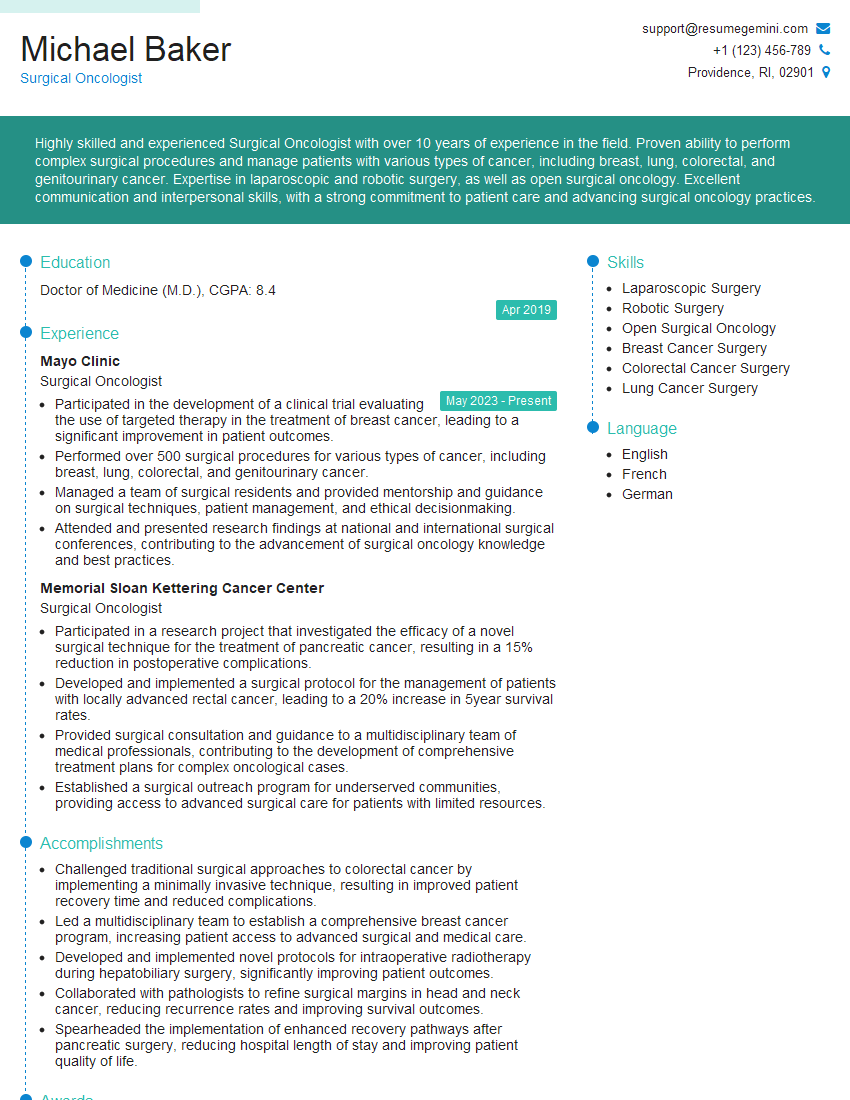
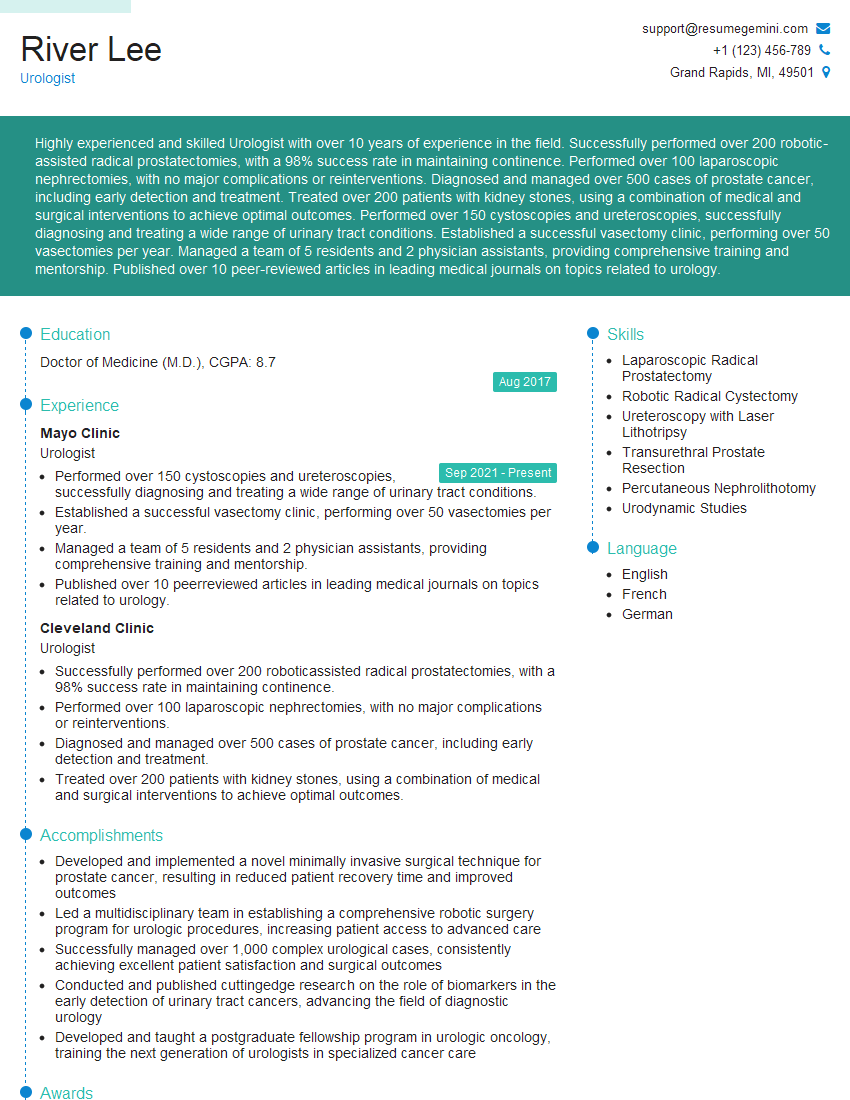
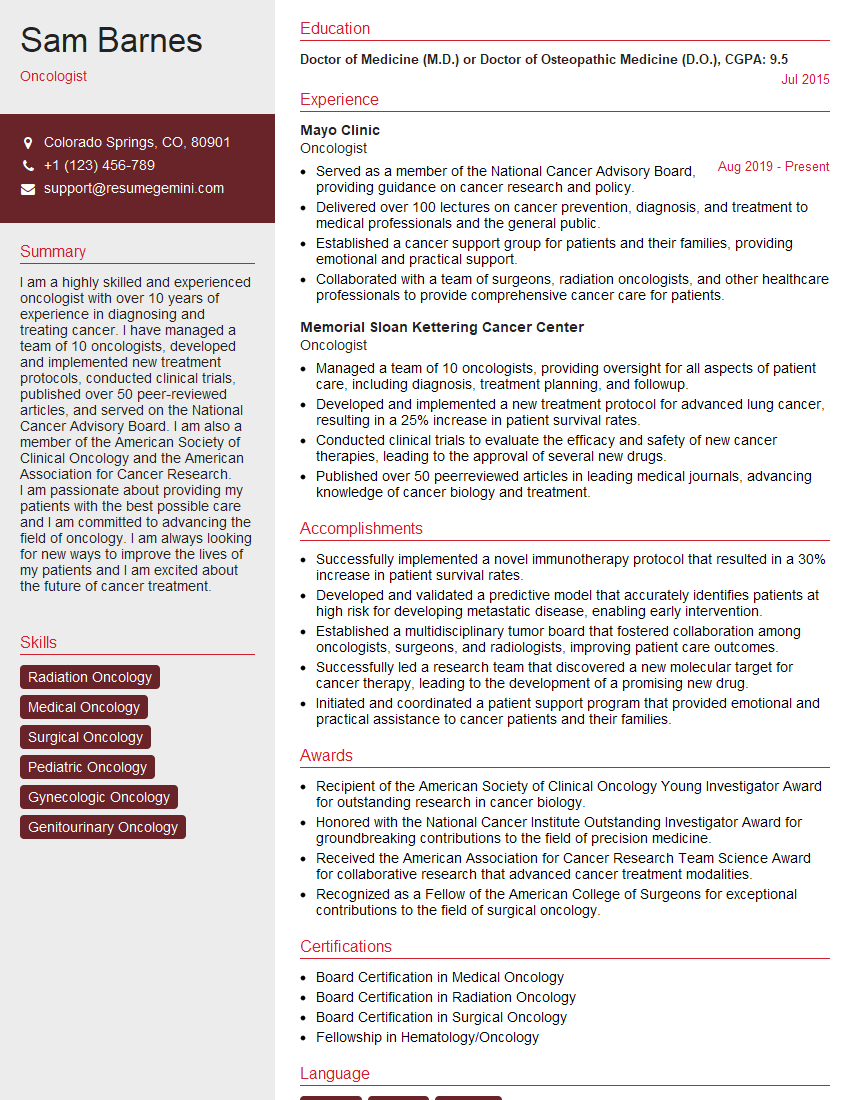
Mastering prostate cancer surgery is vital for career advancement in urology and opens doors to specialized fellowships and leadership roles. To maximize your job prospects, a well-crafted, ATS-friendly resume is essential. ResumeGemini is a trusted resource that can help you build a powerful resume tailored to highlight your skills and experience in prostate cancer surgery. Examples of resumes specifically designed for this field are available to help you create a compelling application that showcases your expertise effectively. Investing time in crafting a strong resume significantly increases your chances of securing your dream position.
Explore more articles
Users Rating of Our Blogs
Share Your Experience
We value your feedback! Please rate our content and share your thoughts (optional).
What Readers Say About Our Blog
To the interviewgemini.com Webmaster.
Very helpful and content specific questions to help prepare me for my interview!
Thank you
To the interviewgemini.com Webmaster.
This was kind of a unique content I found around the specialized skills. Very helpful questions and good detailed answers.
Very Helpful blog, thank you Interviewgemini team.