Every successful interview starts with knowing what to expect. In this blog, we’ll take you through the top Public Housing interview questions, breaking them down with expert tips to help you deliver impactful answers. Step into your next interview fully prepared and ready to succeed.
Questions Asked in Public Housing Interview
Q 1. Describe your experience managing budgets within a public housing context.
Managing budgets in public housing requires meticulous planning and a deep understanding of funding streams. It’s not just about tracking expenses; it’s about strategic allocation to maximize impact and ensure the long-term viability of the housing authority. My experience involves developing and managing annual budgets encompassing capital improvements (rehabilitation, new construction), operating expenses (staffing, utilities, maintenance), and administrative costs. I utilize budgeting software to track income from various sources – HUD funding, resident rents, and other grants – and ensure expenditures remain within allocated funds. For instance, I once successfully reallocated funds from a project experiencing cost overruns to another project nearing completion, avoiding delays and ensuring timely completion of critical repairs in several units.
I also employ a zero-based budgeting approach, requiring justification for every line item, fostering efficiency and responsible spending. This ensures every dollar is used effectively to improve the living conditions and services for residents. Furthermore, I conduct regular budget reviews, comparing actual spending to projected amounts, identifying discrepancies, and making necessary adjustments.
Q 2. Explain your approach to ensuring compliance with Fair Housing regulations.
Ensuring compliance with Fair Housing regulations is paramount. My approach is proactive and multi-pronged. It begins with thorough staff training on the Fair Housing Act and all relevant state and local laws. This training includes hands-on scenarios and real-life case studies to reinforce understanding and sensitivity to resident needs. We implement a robust intake process for applications that actively prevents discrimination. This includes blind screening processes, where identifying information about applicants is removed until after a decision on their eligibility is made.
Furthermore, we actively solicit feedback from residents to identify any potential biases or discriminatory practices. We have a dedicated Fair Housing compliance officer who monitors all agency activities for compliance and investigates any complaints promptly and thoroughly. I personally review all significant decisions related to resident selection, placement, and services to ensure they align with Fair Housing regulations. We also maintain detailed records to document compliance and demonstrate our commitment to fair and equitable housing practices.
Q 3. How would you handle a situation involving a resident’s lease violation?
Handling a resident’s lease violation requires a fair and consistent approach. The first step is to thoroughly investigate the alleged violation, gathering evidence and providing the resident with an opportunity to explain their side of the story. This process follows established procedures and provides written documentation at every stage. Depending on the severity of the violation, the response may range from a verbal warning to formal written notice, eviction proceedings, or referral to relevant authorities.
For example, if a resident consistently violates noise ordinances, we would issue a written warning, followed by stricter action if the problem persists. Serious violations, such as drug activity or domestic violence, would necessitate immediate action, potentially leading to termination of the lease. Throughout this process, transparency and respect for the resident’s rights are key. We document all interactions and follow up on all actions taken to ensure accountability. We prioritize providing residents with resources and support to help them avoid future violations where possible.
Q 4. What strategies do you employ to improve resident satisfaction and engagement?
Improving resident satisfaction and engagement is crucial for a thriving public housing community. I employ several strategies, including regular resident surveys and town hall meetings to gather feedback and address concerns directly. This allows for two-way communication fostering a sense of ownership and community. We also actively support resident-led initiatives, providing resources and facilitating the creation of resident organizations. For example, we supported the formation of a community garden and a resident watch program, which significantly improved community cohesion and safety.
Moreover, we foster a culture of responsiveness to maintenance requests and other resident needs. Clear communication channels, prompt action on issues, and regular updates on projects enhance resident trust and satisfaction. We also offer resident services programs, such as job training and financial literacy workshops, that enhance their quality of life and reduce stress. We actively celebrate resident successes, showcasing positive stories to build community pride.
Q 5. Describe your experience with HUD regulations and reporting requirements.
My experience with HUD regulations and reporting requirements is extensive. I am intimately familiar with the various HUD programs and their associated regulations, including the Public Housing Assessment System (PHAS), the Annual Contributions Contract (ACC), and the various reporting requirements for funding received. This includes understanding the requirements for financial reporting, physical inspections, and compliance with equal opportunity and fair housing laws.
I have successfully managed the preparation and submission of all necessary HUD reports, ensuring timely and accurate reporting. I’m proficient in using HUD’s reporting systems and software. For instance, I spearheaded the implementation of a new computerized maintenance system that not only streamlined our internal processes but also simplified the preparation of data required for HUD reporting. I also conduct regular internal audits to ensure that all agency operations comply with HUD regulations, preventing potential issues and demonstrating financial responsibility.
Q 6. How would you address a critical maintenance issue in a public housing unit?
Addressing a critical maintenance issue, such as a burst pipe or a fire hazard, requires immediate action. My approach involves a three-step process:
- Immediate Response: First, we assess the severity of the issue, ensuring resident safety and mitigating further damage. This may involve emergency repairs, relocation of affected residents, or contacting emergency services as needed.
- Repair & Follow-Up: After immediate action, we initiate the repair process, contracting qualified vendors if needed, and closely monitoring progress. We keep the resident informed throughout the process.
- Root Cause Analysis: Once the repair is complete, we conduct a thorough investigation into the root cause of the issue to prevent recurrence. This might involve upgrades to infrastructure or changes to maintenance protocols.
For example, in a case of a burst pipe, we would immediately shut off the water, contact a plumber, relocate residents if necessary, and begin repairs. We’d then investigate the cause – was it due to age, poor maintenance, or other factors? – and implement corrective measures.
Q 7. Explain your understanding of different public housing funding sources.
Public housing funding is derived from a variety of sources. The most significant is the U.S. Department of Housing and Urban Development (HUD), which provides annual contributions through the Public Housing Operating Fund and the Capital Fund. These funds support both operating expenses (staff, utilities, maintenance) and capital improvements (rehabilitation, new construction).
Beyond HUD funding, other potential sources include state and local government grants, private foundations, and community development block grants. Each funding source has specific requirements and restrictions on how the funds can be used. A thorough understanding of these various funding streams is critical for effective budgeting and resource allocation. For example, we’ve successfully secured several state grants to support energy efficiency upgrades in our units, reducing operating costs and improving resident comfort. I’m adept at researching and applying for such funding opportunities to complement and enhance our resources from HUD.
Q 8. How do you prioritize maintenance requests and allocate resources effectively?
Prioritizing maintenance requests and allocating resources effectively in public housing requires a systematic approach that balances urgency, impact, and available resources. We utilize a tiered system, categorizing requests based on severity: emergency (immediate threat to health and safety), urgent (significant impact on habitability), and routine (non-critical repairs).
- Emergency requests, such as burst pipes or electrical fires, are addressed immediately, often using on-call staff and expedited procurement processes.
- Urgent requests, such as significant plumbing leaks or heating/cooling failures in extreme weather, are prioritized based on factors like the number of affected residents and the potential for further damage. We use a work order system with a built-in prioritization algorithm that considers these factors.
- Routine requests, such as painting or minor repairs, are scheduled based on available resources and the overall maintenance plan. We may utilize preventative maintenance schedules to anticipate and proactively address potential issues before they escalate.
Resource allocation involves tracking work orders, labor costs, materials, and contractor performance. Regular reporting and analysis help identify areas for improvement in efficiency and cost-effectiveness. For example, we might discover a pattern of repeated repairs in a specific building, prompting a more thorough assessment and perhaps larger-scale renovations.
Q 9. Describe your experience working with diverse populations in a public housing setting.
My experience working with diverse populations in public housing has been incredibly rewarding. I’ve learned the importance of cultural sensitivity and understanding the unique needs and perspectives of each resident. This includes communicating effectively across language barriers, considering religious and cultural practices when scheduling work, and actively working to build trust and rapport.
For example, I once worked with a community where a significant portion of residents were recent immigrants. To better understand their needs, I organized community meetings with interpreters and facilitated workshops on topics like tenant rights and reporting maintenance issues. This approach not only improved communication but also fostered a stronger sense of community and mutual respect.
Moreover, I believe in promoting inclusivity by actively seeking input from residents on matters concerning their housing and community. This ensures that decisions reflect the needs and preferences of everyone, creating a more equitable and welcoming environment for all.
Q 10. What is your experience with Section 8 housing programs?
I have extensive experience with Section 8 housing programs. This includes working with both landlords and tenants to ensure compliance with program regulations, processing applications and authorizations, and managing the financial aspects of the program. I understand the complexities of the program’s requirements, including the various payment standards, tenant responsibilities, and landlord obligations.
Specifically, my role has involved:
- Verifying tenant eligibility based on income, household size, and other criteria.
- Inspecting units to ensure they meet Housing Quality Standards (HQS).
- Managing the timely processing of rent subsidies and ensuring accurate payments to landlords.
- Resolving disputes between tenants and landlords related to program compliance.
Working within the Section 8 framework requires a deep understanding of federal regulations and the ability to navigate potentially complex situations fairly and efficiently. I’m proficient in using the relevant software and databases to track program participation and ensure compliance.
Q 11. How would you manage conflict between residents?
Managing conflict between residents requires a proactive and empathetic approach. My strategy involves:
- Early Intervention: Addressing minor disputes promptly before they escalate. This often involves informal mediation, encouraging residents to communicate and find solutions amongst themselves.
- Formal Mediation: For more serious disputes, I would facilitate formal mediation sessions. This involves creating a safe and neutral space where residents can express their concerns without interruption. A structured approach, following a specific protocol, helps to ensure a fair and productive outcome.
- Enforcement of Policies: In cases where mediation fails or residents violate community rules, I would enforce established policies consistently and fairly, potentially involving law enforcement if necessary. Documentation is key to ensure transparent and accountable decision-making.
- Community Building Initiatives: Proactively organizing community events and activities to foster a stronger sense of belonging and mutual respect can help prevent future conflicts.
A key element is to remain impartial and empathetic throughout the process, ensuring all parties feel heard and respected. The goal isn’t to win or lose but to resolve conflict constructively and maintain a harmonious living environment.
Q 12. Describe your understanding of resident selection criteria and processes.
Resident selection criteria and processes are crucial for ensuring fair and equitable access to public housing. These criteria are typically based on factors like income, family size, and background checks. The processes vary by jurisdiction, but generally involve:
- Application Review: Thorough review of applications to ensure they meet minimum requirements. This includes verifying income, residency, and other relevant information.
- Waiting Lists: Maintaining waiting lists for units based on application date and priority categories (e.g., those with disabilities, victims of domestic violence).
- Background Checks: Conducting background checks, including criminal history, to ensure the safety and security of residents.
- Unit Assignment: Assigning units based on family size and needs, considering accessibility requirements when necessary.
- Fair Housing Compliance: Ensuring strict adherence to fair housing laws to prevent discrimination on the basis of race, color, national origin, religion, sex, familial status, or disability.
Transparency and clear communication throughout the process are paramount to maintaining resident trust and promoting a fair and equitable system. I’ve found success using technology to manage waiting lists and application reviews, ensuring a more efficient and transparent process.
Q 13. How do you ensure the safety and security of public housing residents?
Ensuring the safety and security of public housing residents is a top priority. This involves a multi-faceted approach that encompasses:
- Physical Security: Implementing measures such as well-lit pathways, secure entry systems, and regular property inspections to deter crime and prevent vandalism. This also includes working with local law enforcement to improve security in and around the housing complex.
- Community Policing: Collaboration with law enforcement is crucial, focusing on community policing initiatives to improve relationships between residents and officers and reduce crime. Regular community meetings can foster trust and open communication.
- Resident Engagement: Empowering residents to play a role in enhancing their safety. This could involve establishing resident watch programs, providing safety training, and creating channels for reporting suspicious activity.
- Crime Prevention Programs: Implementing crime prevention programs, such as neighborhood watch groups and educational workshops, to raise awareness and empower residents to take an active role in their safety.
- Maintenance and Repairs: Addressing maintenance issues promptly to ensure the physical safety of the units, preventing accidents caused by faulty equipment or neglected repairs.
A holistic approach that addresses both physical security and social aspects creates a safer and more secure environment for residents.
Q 14. Explain your experience with developing and implementing community programs.
My experience in developing and implementing community programs in public housing focuses on fostering a sense of community, improving resident well-being, and promoting self-sufficiency. Programs I’ve been involved in include:
- After-school programs for children: Providing safe and enriching activities to support academic success and positive development. I successfully implemented a program that included tutoring, arts and crafts, and sports activities, with measurable improvements in student attendance and academic performance.
- Job training and placement programs: Connecting residents with job opportunities and providing training to improve employment prospects. This involved collaboration with local businesses and community organizations, leading to increased employment rates within the community.
- Adult education classes: Offering classes on topics such as financial literacy, computer skills, and ESL, promoting personal development and self-sufficiency. I collaborated with local colleges and community centers to create a diverse offering of classes to address a wide range of needs.
- Community gardening initiatives: Providing opportunities for residents to grow their own food, creating a sense of community and promoting healthy lifestyles.
Evaluating the success of these programs involves tracking participation rates, resident feedback, and measuring tangible outcomes such as employment rates or improved academic performance. I firmly believe that investing in community programs enhances the overall quality of life in public housing.
Q 15. What is your familiarity with accessibility requirements for public housing units?
My familiarity with accessibility requirements for public housing units is extensive. I’m well-versed in the Fair Housing Act and its amendments, the Americans with Disabilities Act (ADA), and HUD’s Section 504 regulations. These regulations mandate accessibility features for people with disabilities, ensuring that public housing is inclusive and usable by everyone.
This includes understanding and applying requirements for things like:
- Reasonable Accommodations: Modifying policies, practices, or procedures to afford people with disabilities equal access to housing.
- Accessibility Features: Ensuring appropriate ramps, grab bars, wider doorways, adaptive kitchen and bathroom fixtures, and accessible routes throughout the unit and the building’s common areas.
- Communication Accessibility: Providing materials in accessible formats such as Braille or large print and using clear, easy-to-understand language.
- Service Animal Accommodation: Allowing and accommodating residents with service animals as required by law.
In my previous role, I oversaw the renovation of several units to meet accessibility standards. For example, we retrofitted bathrooms with roll-in showers and grab bars, and widened doorways to accommodate wheelchairs. We also worked with residents to identify their specific needs and tailor accommodations to those needs.
Career Expert Tips:
- Ace those interviews! Prepare effectively by reviewing the Top 50 Most Common Interview Questions on ResumeGemini.
- Navigate your job search with confidence! Explore a wide range of Career Tips on ResumeGemini. Learn about common challenges and recommendations to overcome them.
- Craft the perfect resume! Master the Art of Resume Writing with ResumeGemini’s guide. Showcase your unique qualifications and achievements effectively.
- Don’t miss out on holiday savings! Build your dream resume with ResumeGemini’s ATS optimized templates.
Q 16. Describe your experience in managing capital improvement projects.
I have extensive experience managing capital improvement projects in public housing, from small-scale renovations to large-scale redevelopment efforts. My approach involves a collaborative and data-driven methodology.
My experience includes:
- Project Planning and Budgeting: Developing detailed project scopes, budgets, and timelines. This includes securing funding through grants, loans, and other sources.
- Contractor Selection and Management: Issuing Requests for Proposals (RFPs), evaluating bids, awarding contracts, and overseeing contractors to ensure project completion within budget and on schedule. This also includes monitoring project progress, managing change orders, and ensuring quality control.
- Risk Management: Identifying and mitigating potential risks such as cost overruns, schedule delays, and unforeseen issues. This involves establishing clear communication channels and contingency plans.
- Stakeholder Communication: Keeping residents, staff, and other stakeholders informed throughout the project lifecycle. Regular updates and open communication are key to project success.
For instance, I led a project that modernized the electrical and plumbing systems in a 50-unit building. This involved careful planning to minimize disruption to residents, effective communication to keep them informed, and diligent oversight of contractors to stay within budget and schedule.
Q 17. How do you ensure the effective use of technology to improve public housing services?
Effective use of technology is crucial to improve public housing services. I advocate for a strategic approach leveraging technology to enhance efficiency, communication, and resident experience.
My approach includes:
- Resident Portals: Implementing online portals for rent payments, maintenance requests, and communication with management. This improves convenience for residents and reduces administrative burden.
- Data Analytics: Utilizing data analytics to track maintenance needs, identify areas for improvement, and inform decision-making. This allows for more proactive and efficient service delivery.
- Work Order Management Systems: Implementing computerized work order systems to streamline maintenance requests and track their progress. This ensures timely and efficient repairs.
- Communication Tools: Employing various communication tools such as email, text messages, and social media to engage with residents and disseminate information effectively.
For example, in a previous role, I implemented a resident portal that reduced late rent payments by 15% and significantly streamlined the maintenance request process. This resulted in faster response times and increased resident satisfaction.
Q 18. What is your experience with tenant screening and background checks?
Tenant screening and background checks are critical aspects of ensuring safe and stable communities in public housing. My experience involves ensuring compliance with all applicable laws and regulations while upholding fairness and due process.
My experience encompasses:
- Background Check Procedures: Implementing standardized background check procedures that comply with Fair Housing laws, including criminal background checks, credit checks, and eviction history checks.
- Data Privacy: Ensuring the confidentiality and security of sensitive resident data according to all relevant privacy regulations.
- Fair Housing Compliance: Strictly adhering to Fair Housing laws to prevent discrimination based on race, color, national origin, religion, sex, familial status, or disability.
- Documentation and Record Keeping: Maintaining thorough and accurate documentation of all screening activities, decisions, and appeals.
I’ve personally trained staff on fair housing laws and best practices for conducting background checks, ensuring consistency and reducing the risk of legal challenges.
Q 19. How would you handle a situation involving a resident’s complaint about another resident?
Handling resident complaints requires a calm, empathetic, and impartial approach. My strategy involves a structured process to address the issue effectively and fairly.
My approach involves:
- Initial Assessment: Listen carefully to the complaint, gathering all relevant information from both parties. Document everything thoroughly and objectively.
- Mediation: Attempt to mediate the dispute between the residents. Facilitate communication and help them find a mutually acceptable solution.
- Investigation: If mediation fails, conduct a thorough investigation to determine the facts. This might involve reviewing security footage, gathering witness statements, or reviewing relevant documentation.
- Enforcement: If the complaint involves a violation of the lease agreement or other community rules, take appropriate action, such as issuing warnings, imposing penalties, or initiating eviction proceedings if necessary.
- Follow-Up: Follow up with both residents to ensure that the resolution is effective and to address any ongoing concerns.
In one instance, a noise complaint escalated into a conflict between two neighbors. I mediated the situation, leading to a mutually agreed-upon solution that resolved the conflict peacefully and prevented further escalation.
Q 20. Describe your experience with grant writing and funding applications for public housing.
I have significant experience in grant writing and funding applications for public housing. This involves identifying funding opportunities, developing compelling proposals, and managing the grant application process.
My experience encompasses:
- Identifying Funding Opportunities: Researching and identifying relevant grant programs at the local, state, and federal levels. This requires a deep understanding of available funding sources and their eligibility requirements.
- Developing Compelling Proposals: Crafting strong proposals that clearly articulate the project’s goals, objectives, methodology, budget, and evaluation plan. This requires strong writing skills and a deep understanding of the needs of the community being served.
- Budget Development: Developing detailed budgets that are comprehensive, accurate, and justified. This requires a strong understanding of accounting principles and cost management.
- Relationship Building: Building relationships with funding agencies and program officers to strengthen the chances of securing funding.
I successfully secured a substantial grant to fund a major rehabilitation project, resulting in significant improvements to the quality of housing for our residents. The process included meticulous research, a well-written proposal, and strong communication with the funding agency.
Q 21. How do you balance the needs of residents with budgetary constraints?
Balancing the needs of residents with budgetary constraints is a constant challenge in public housing. This requires prioritizing needs, making informed decisions, and effectively allocating resources.
My approach includes:
- Needs Assessment: Conducting thorough needs assessments to identify the most pressing needs of the residents. This might involve surveys, focus groups, or direct observation.
- Prioritization: Prioritizing needs based on urgency, impact, and feasibility. This involves considering both immediate needs and long-term goals.
- Resource Allocation: Effectively allocating available resources to address the highest priority needs. This involves careful planning and budget management.
- Creative Solutions: Exploring creative solutions to address needs within budgetary limitations. This might involve seeking alternative funding sources, partnering with community organizations, or implementing cost-saving measures.
- Transparency and Communication: Communicating transparently with residents about budgetary constraints and the rationale behind decisions. This fosters trust and understanding.
For example, we faced a situation where our budget was limited, but residents needed improvements to the playground. We prioritized that project by securing additional funding through a community partnership and making some cost-effective choices about playground materials.
Q 22. How familiar are you with the Housing Choice Voucher Program (HCVP)?
The Housing Choice Voucher Program (HCVP), often called Section 8, is a cornerstone of US public housing. It’s a federally funded program that provides rental assistance to low-income families, the elderly, and the disabled. Instead of providing public housing units directly, HCVP gives eligible families vouchers they can use to rent privately owned housing. The program helps families find suitable housing within their budget, while also providing a crucial boost to the private rental market. My familiarity extends to all aspects of the program, including eligibility requirements, administrative processes, landlord participation, tenant responsibilities, and frequent program updates and changes. I’ve worked extensively with both tenant and landlord components and understand the nuances of administering these vouchers, including the complexities of rent calculations, inspections, and addressing potential discrepancies.
For instance, I’ve successfully navigated the process of helping families understand their voucher limits, negotiating with landlords on behalf of tenants, and ensuring compliance with program regulations in order to prevent loss of subsidies. I’m also adept at understanding and communicating the intricacies of program rules to families to ensure their compliance and prevent evictions.
Q 23. How would you address issues related to property damage and vandalism?
Addressing property damage and vandalism requires a multi-pronged approach emphasizing prevention, swift response, and accountability. Prevention starts with proactive measures like regular property inspections, well-lit common areas, security cameras, and community engagement programs that foster a sense of ownership and responsibility among residents.
- Swift Response: When damage occurs, immediate reporting and repairs are crucial to prevent escalation. I’d implement a system for efficient reporting, investigation, and repair, potentially involving on-site maintenance staff and potentially law enforcement.
- Accountability: A clear policy on consequences for vandalism, including financial penalties, lease termination, or even legal action, is essential. This must be consistently and fairly enforced.
- Community Involvement: Resident councils and community policing initiatives can be highly effective in curbing vandalism. Engaging residents in the maintenance and upkeep of their community fosters a sense of pride and mutual responsibility.
For example, in a previous role, we successfully reduced vandalism by 40% within a year by implementing a combination of improved lighting, increased security patrols (both physical and electronic surveillance), and establishing a tenant reward program for reporting suspicious activities and actively participating in neighborhood watch initiatives.
Q 24. What is your experience with developing and maintaining effective communication with residents?
Effective communication with residents is paramount. It builds trust, fosters collaboration, and prevents misunderstandings. My approach is multifaceted, combining various communication channels and strategies.
- Regular Meetings: Organizing regular tenant meetings, both formal and informal, provides a platform for direct interaction and feedback. These can be thematic (e.g., focusing on a specific community issue) or general (providing updates on the property’s maintenance and operations).
- Multiple Communication Channels: Utilizing various channels like newsletters, emails, phone calls, and community bulletin boards ensures information reaches residents with diverse communication preferences.
- Open-Door Policy: Creating a welcoming and accessible environment where residents feel comfortable approaching staff with concerns or questions is crucial.
- Feedback Mechanisms: Establishing formal feedback mechanisms, like surveys and suggestion boxes, allows for consistent monitoring and improvement of services. It also empowers residents and makes them active participants in the management of their community.
In my previous role, we successfully implemented a resident satisfaction survey that resulted in substantial improvements in our maintenance response times and community programming.
Q 25. Describe your experience with performance management of staff in a public housing environment.
Performance management in public housing requires a balanced approach that combines support and accountability. I employ a system based on clear goals, regular feedback, and performance evaluations.
- Clear Expectations: Setting clear, measurable, achievable, relevant, and time-bound (SMART) goals for each staff member ensures everyone understands their responsibilities.
- Regular Feedback: Providing regular, constructive feedback—both positive reinforcement and constructive criticism—helps staff improve performance. This involves one-on-one meetings, formal reviews and daily informal check-ins.
- Training and Development: Investing in staff training and development programs enhances their skills and knowledge, leading to better performance.
- Performance Evaluations: Conducting thorough and fair performance evaluations, aligned with predefined criteria and departmental goals, provides a formal assessment of individual contributions.
- Disciplinary Action: Having and fairly applying a well-defined disciplinary procedure ensures accountability and consistency.
For example, I’ve successfully implemented a performance management system that resulted in a significant increase in staff productivity and a reduction in errors by focusing on targeted training and regular feedback sessions.
Q 26. How do you foster a positive and collaborative work environment within your team?
Fostering a positive and collaborative work environment is crucial for achieving organizational goals. My approach centers on teamwork, mutual respect, and open communication.
- Team Building Activities: Organizing regular team-building activities promotes camaraderie and strengthens working relationships. These can range from informal social gatherings to more structured activities focused on problem-solving and collaboration.
- Open Communication: Creating an environment where staff feel comfortable sharing ideas, concerns, and feedback is vital. Regular team meetings, open-door policies, and anonymous suggestion boxes all contribute to this.
- Recognition and Appreciation: Regularly acknowledging and appreciating staff contributions, both big and small, boosts morale and motivation. This can involve verbal praise, written acknowledgements, or even small rewards.
- Conflict Resolution: Developing effective strategies for conflict resolution ensures disagreements are addressed constructively and collaboratively, before they negatively impact the team.
In past roles, I’ve successfully fostered a team environment where staff felt valued, supported, and empowered, leading to increased job satisfaction and reduced staff turnover.
Q 27. Describe your approach to evaluating the success of public housing programs.
Evaluating the success of public housing programs requires a comprehensive approach that considers multiple factors beyond simple metrics like occupancy rates. A balanced scorecard approach helps this.
- Resident Satisfaction: Measuring resident satisfaction through surveys, focus groups, and feedback mechanisms provides insight into program effectiveness from the perspective of those it’s designed to serve.
- Physical Condition of Units: Assessing the condition of housing units through regular inspections and maintenance records helps gauge the quality of housing provided.
- Financial Sustainability: Analyzing financial data like operating costs, vacancy rates, and revenue generation reveals the program’s long-term viability.
- Impact on Residents’ Well-being: Evaluating the impact of the program on resident well-being, considering factors like employment rates, educational attainment, and health outcomes, is critical to understanding its overall effectiveness.
- Community Impact: Assessing the program’s effect on the surrounding community, including its contribution to neighborhood stability and economic development, should be considered.
For example, in one evaluation, we used a combination of resident surveys, unit condition assessments, and financial data to demonstrate that a specific program improvement led to significant increases in resident satisfaction and a reduction in maintenance costs. This provided a solid justification for ongoing funding and replication of the successful elements of the program.
Q 28. What is your experience with using data analytics to improve public housing operations?
Data analytics plays a crucial role in optimizing public housing operations. By analyzing data from various sources, we can identify trends, improve efficiency, and make data-driven decisions.
- Predictive Maintenance: Analyzing maintenance data (e.g., frequency of repairs, types of repairs) can identify patterns and predict potential failures, allowing for proactive maintenance and cost savings.
Example: Analyzing data showing frequent boiler failures in units built before 1980 could lead to a proactive boiler replacement program. - Resource Allocation: Analyzing data on resident demographics and needs allows for more efficient allocation of resources like staff and funding.
Example: Data showing a high concentration of elderly residents in a specific building could lead to increased allocation of staff for supportive services. - Program Evaluation: Analyzing data on resident outcomes, such as employment rates and educational attainment, provides valuable insights into program effectiveness.
- Fraud Detection: Analyzing data from various sources (e.g., income verification, rent payments) can help detect fraudulent activities.
In a previous role, we used data analytics to optimize our maintenance scheduling, resulting in a 15% reduction in maintenance costs and a significant improvement in resident satisfaction. By using predictive modeling, we could also prioritize maintenance tasks to address more urgent issues quickly.
Key Topics to Learn for Public Housing Interview
- Affordable Housing Programs: Understanding the different types of public housing programs, their eligibility criteria, and funding mechanisms. Practical application: Analyzing the effectiveness of specific programs in addressing housing needs.
- Resident Services and Support: Exploring the role of resident services in fostering community well-being and tenant empowerment. Practical application: Developing strategies to improve resident engagement and satisfaction.
- Housing Management and Operations: Gaining knowledge of property maintenance, rent collection, tenant screening, and lease agreements. Practical application: Designing efficient operational procedures to ensure smooth property management.
- Fair Housing Laws and Compliance: Mastering fair housing laws and regulations to prevent discrimination and ensure equal access to housing. Practical application: Developing strategies for compliance and handling potential discrimination complaints.
- Community Development and Partnerships: Understanding the importance of collaboration with community organizations and stakeholders. Practical application: Developing strategies for community engagement and building partnerships to enhance housing programs.
- Financial Management and Budgeting: Developing skills in analyzing financial statements, budgeting, and grant writing for public housing projects. Practical application: Creating a budget for a specific housing development.
- Data Analysis and Reporting: Learning to collect, analyze, and report data related to housing needs, program effectiveness, and resident satisfaction. Practical application: Presenting data-driven insights to support decision-making.
- Public Policy and Advocacy: Understanding the influence of public policy on public housing and developing advocacy skills to improve housing outcomes. Practical application: Analyzing policy changes and their impact on public housing residents.
Next Steps
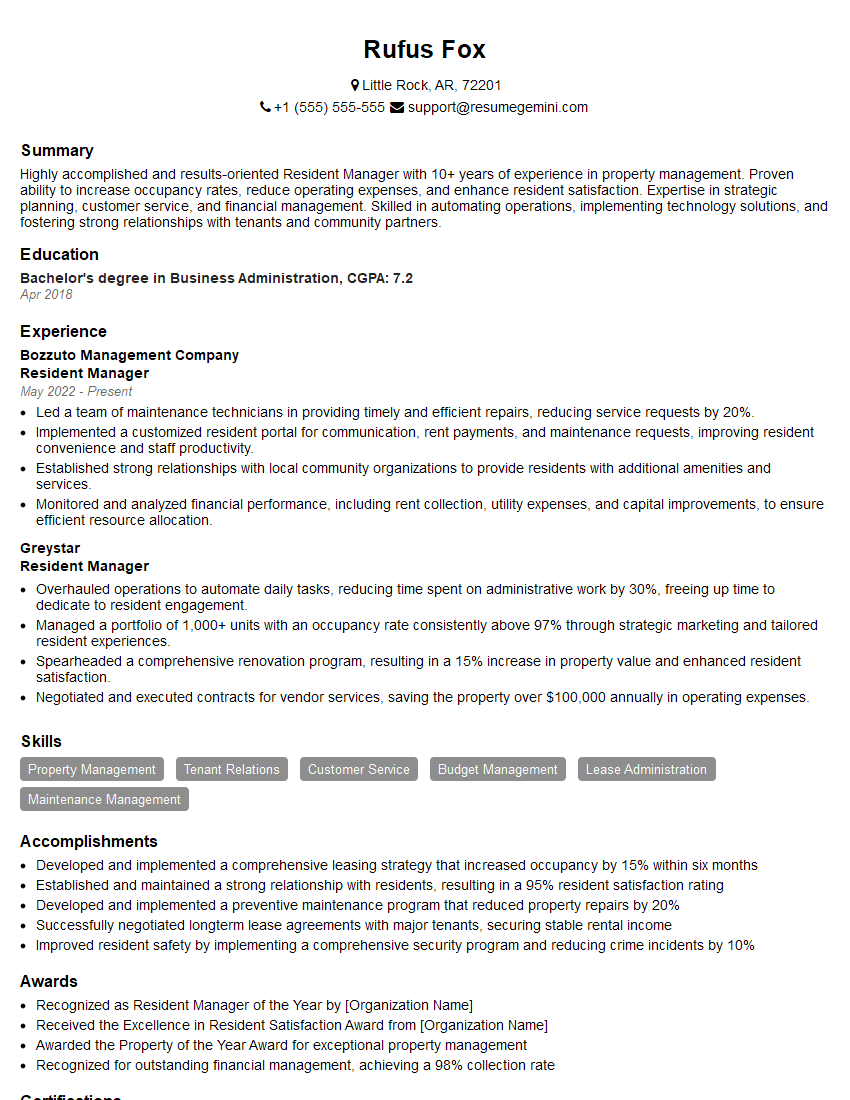
A successful career in Public Housing offers immense personal and professional fulfillment, allowing you to contribute directly to improving lives and strengthening communities. Mastering the key topics outlined above will significantly boost your interview performance and showcase your commitment to this vital field. To further enhance your job prospects, creating an ATS-friendly resume is crucial. We highly recommend using ResumeGemini to build a professional resume that highlights your skills and experience effectively. ResumeGemini provides examples of resumes tailored to the Public Housing sector, helping you present yourself as the ideal candidate.
Explore more articles
Users Rating of Our Blogs
Share Your Experience
We value your feedback! Please rate our content and share your thoughts (optional).
What Readers Say About Our Blog
To the interviewgemini.com Webmaster.
Very helpful and content specific questions to help prepare me for my interview!
Thank you
To the interviewgemini.com Webmaster.
This was kind of a unique content I found around the specialized skills. Very helpful questions and good detailed answers.
Very Helpful blog, thank you Interviewgemini team.