Preparation is the key to success in any interview. In this post, we’ll explore crucial Public Transit Operations Planning interview questions and equip you with strategies to craft impactful answers. Whether you’re a beginner or a pro, these tips will elevate your preparation.
Questions Asked in Public Transit Operations Planning Interview
Q 1. Describe your experience with transit scheduling software.
My experience with transit scheduling software encompasses a wide range of tools, from basic spreadsheet-based solutions to sophisticated, integrated platforms. I’ve worked extensively with HASTUS, GiRo, and other similar systems. These platforms allow for the creation and optimization of service schedules, considering factors like vehicle capacity, crew availability, maintenance schedules, and anticipated ridership. For example, in a previous role, we used HASTUS to optimize our bus network, leading to a 15% reduction in operating costs while maintaining service levels. My expertise extends beyond simply using the software; I understand the underlying algorithms and can adapt the software’s parameters to meet specific operational needs, such as adjusting block times to accommodate variations in traffic conditions or passenger dwell times.
Furthermore, I’m proficient in data analysis related to schedule adherence and performance reporting generated by these systems. This allows me to identify areas for improvement, such as adjusting headways or repositioning vehicles to minimize delays and improve on-time performance.
Q 2. How do you optimize bus routes for efficiency and ridership?
Optimizing bus routes is a multifaceted process that aims to balance efficiency and ridership. It involves several key steps. First, we analyze ridership data using Geographic Information Systems (GIS) to identify high-demand areas and travel patterns. Then, we use network optimization algorithms, often incorporated into scheduling software, to design routes that minimize travel time, distance, and operating costs. Think of it like solving a complex puzzle: we need to connect all the key points (stops) efficiently, taking into account traffic patterns, speed limits, and passenger demand.
For instance, if we observe consistently high ridership during peak hours on a particular route, we might consider increasing the frequency of service (reducing headways) or adding an express route to bypass less populated areas. Conversely, routes with low ridership might be adjusted or even consolidated to reduce operational costs without significantly impacting service for existing passengers. Continuous monitoring and iterative adjustments based on real-time data and passenger feedback are crucial for ongoing optimization.
Q 3. Explain your understanding of transit signal priority.
Transit signal priority (TSP) is a system that gives buses and other transit vehicles priority at traffic signals. This is achieved through various technologies, such as dedicated signal phases, extended green times, or even signal preemption. The goal is to reduce transit delays, improve on-time performance, and enhance the overall passenger experience.
Imagine a scenario where a bus approaches an intersection. Without TSP, it might have to wait through several cycles of green lights for other traffic. With TSP, the system detects the approaching bus and adjusts the signal timing to allow it to proceed more quickly. This not only speeds up the bus’s journey but also reduces congestion for other vehicles by preventing the bus from blocking the intersection for an extended period. Effective TSP systems rely on accurate real-time vehicle location data and sophisticated communication between the transit agency and the traffic management system. Implementing TSP requires coordination with city traffic engineers and careful planning to ensure it doesn’t negatively impact other road users.
Q 4. How would you address overcrowding on a specific bus route?
Addressing overcrowding on a specific bus route requires a multi-pronged approach involving data analysis, operational adjustments, and potentially longer-term solutions. First, I’d investigate the root causes of overcrowding. This might involve analyzing ridership data to pinpoint peak times and locations of congestion. For instance, if overcrowding is concentrated during rush hour on a particular segment of the route, adding additional trips or using larger capacity vehicles during those periods could alleviate the problem.
Next, I’d review the current schedule and consider adjusting headways to increase service frequency. This could be complemented by deploying real-time passenger information systems that provide accurate wait times and encourage passengers to stagger their trips. Alternatively, it might be necessary to reassess the route itself, considering adjustments like adding bus stops or rerouting to better serve high-demand areas. In some cases, a longer-term solution might involve implementing a bus rapid transit system (BRT) to increase capacity and efficiency significantly.
Q 5. What are the key performance indicators (KPIs) you use to measure transit efficiency?
Key Performance Indicators (KPIs) for measuring transit efficiency are vital for assessing operational success. These KPIs often fall into several categories:
- On-Time Performance: The percentage of trips that arrive within a pre-defined time window of the scheduled arrival time. This indicates the reliability of the service.
- Headway Adherence: How closely actual headways (time between buses) match the scheduled headways.
- Passenger Load Factor: The average occupancy rate of vehicles, showing how effectively capacity is utilized.
- Speed and Travel Time: The average speed of vehicles and the total travel time on routes, reflecting operational efficiency and traffic conditions.
- Dwell Time: The average time a bus spends at each stop, indicating boarding and alighting efficiency.
- Vehicle Utilization: The percentage of time vehicles are actively in service, representing how well the fleet is utilized.
- Customer Satisfaction: Measured through surveys or other feedback mechanisms, providing insights into passenger experience.
By tracking these KPIs, we can identify areas for improvement and make data-driven decisions to enhance the efficiency and effectiveness of the transit system.
Q 6. Describe your experience with transit demand forecasting.
Transit demand forecasting is crucial for effective transit planning. It involves predicting future passenger demand based on historical data, demographic trends, land use patterns, and economic factors. I have experience using various forecasting techniques, including statistical models (like time series analysis and regression models) and agent-based modeling. Statistical models help identify trends and patterns in historical ridership data, while agent-based models simulate individual passenger behavior to predict how changes in the system (like route changes or fare increases) might impact demand.
For example, when forecasting demand for a new light rail line, we might consider factors such as population growth in the area, proximity to employment centers, and planned developments. This data would be incorporated into a model to project future ridership and inform decisions about the frequency of service, vehicle size, and staffing levels. Accuracy in forecasting is essential for ensuring that the system has sufficient capacity to meet passenger demand while avoiding excessive operational costs.
Q 7. How do you handle unexpected service disruptions?
Handling unexpected service disruptions requires a proactive and well-coordinated response. My approach involves a multi-step process:
- Real-time Monitoring: Utilizing GPS tracking and communication systems to quickly identify and assess the nature and scope of the disruption.
- Communication: Immediately informing passengers of the disruption via various channels, including real-time passenger information systems, social media, and mobile apps. This includes providing alternative transportation options where possible.
- Incident Management: Dispatching appropriate personnel (e.g., mechanics, supervisors) to address the issue and restore service as quickly as possible. This might involve rerouting buses, deploying replacement vehicles, or providing shuttle service.
- Data Analysis: After the disruption is resolved, analyzing the incident to identify the root cause and implement preventative measures to reduce the likelihood of similar disruptions in the future.
For example, if a major accident blocks a key route, we would immediately reroute affected buses, notify passengers via multiple channels, and potentially deploy shuttle buses to bridge the gap in service. Post-incident analysis might reveal a need for improved traffic management strategies or more robust contingency planning.
Q 8. What strategies do you employ for improving on-time performance?
Improving on-time performance is crucial for public transit. It hinges on a multi-pronged approach focusing on predictability, efficiency, and real-time responsiveness.
- Predictive Scheduling: We analyze historical data – including dwell times at stops, traffic patterns, and passenger loads – to create schedules that account for variations. For instance, we might schedule extra time during peak hours or on routes known for congestion. This reduces delays stemming from unforeseen circumstances.
- Optimized Routing & Dispatching: Advanced routing software analyzes real-time traffic conditions and suggests the most efficient routes for vehicles. This dynamic routing helps avoid bottlenecks and keeps buses and trains on schedule. For example, during road closures, the system might reroute buses along alternative streets.
- Real-time Monitoring & Intervention: We use GPS tracking and communication systems to monitor vehicle locations and identify potential delays. This allows dispatchers to proactively intervene – perhaps by adjusting schedules or sending assistance to address mechanical issues or passenger incidents – minimizing disruptions. This could involve prioritizing buses experiencing significant delays to allow them to recover lost time.
- Driver Training & Communication: Proper training equips drivers with the skills to navigate efficiently and adhere to schedules. Clear communication between drivers and dispatchers ensures swift responses to incidents.
By combining these strategies, we significantly reduce delays and improve the overall reliability of the transit system, making it more attractive and convenient for passengers.
Q 9. Explain your understanding of transit accessibility regulations.
Transit accessibility regulations aim to ensure that public transportation is usable by people with disabilities. These regulations vary by location but commonly cover aspects like:
- Physical Accessibility: This includes requirements for wheelchair ramps, elevators, accessible restrooms, and level boarding on buses and trains. The Americans with Disabilities Act (ADA) in the US is a prime example, mandating accessibility features for public transportation systems.
- Information Accessibility: Regulations often address the need for clear and accessible information, such as audible announcements, braille signage, and real-time information displays. This ensures individuals with visual or auditory impairments can navigate the transit system independently.
- Service Accessibility: This includes requirements related to service frequency, coverage area, and the availability of paratransit services for those who cannot use fixed-route transit. Sufficiently frequent service minimizes wait times, enhancing accessibility for everyone.
Compliance with these regulations is not merely a legal obligation; it’s a fundamental principle of equitable public service. Understanding and adhering to these regulations is essential for creating a truly inclusive transit system that benefits all members of society.
Q 10. How do you manage real-time data to improve transit operations?
Real-time data is the backbone of modern transit operations, providing critical insights to improve efficiency and passenger experience. We use Automatic Vehicle Location (AVL) systems, passenger counters, and other sensors to collect a wealth of information.
- Predictive Modeling: Real-time data feeds into predictive models that forecast passenger demand, identify potential bottlenecks, and optimize resource allocation. This allows us to adjust service frequency dynamically, deploying more vehicles during peak times and reducing them during off-peak hours.
- Service Adjustments: Real-time data allows for immediate responses to unexpected events. If a vehicle breaks down, we can reroute other vehicles or provide alternative transportation to minimize disruptions. We can also use data on passenger crowding at specific stops to determine if additional service is needed during specific times.
- Improved Communication: Real-time data is used to provide accurate and up-to-date information to passengers via mobile apps, websites, and digital signage. This enhances transparency and trust in the system.
- Performance Monitoring: We constantly monitor key performance indicators (KPIs) like on-time performance, passenger loads, and vehicle speed. This allows for continuous improvement and identification of areas needing attention.
Effectively managing real-time data requires robust data infrastructure, sophisticated analytics, and a culture that values data-driven decision-making. It’s a continuous process of refinement and adaptation to optimize operations and enhance passenger satisfaction.
Q 11. Describe your experience with fleet management and maintenance scheduling.
Fleet management and maintenance scheduling are critical for ensuring the reliability and safety of our transit operations. This involves:
- Preventive Maintenance: We utilize Computerized Maintenance Management Systems (CMMS) to track vehicle maintenance schedules, ensuring regular inspections and servicing. This minimizes breakdowns and extends the lifespan of our vehicles. We schedule routine maintenance based on mileage, hours of operation, and manufacturer recommendations, preventing costly repairs.
- Predictive Maintenance: Using data from vehicle sensors, we can anticipate potential failures and schedule maintenance proactively. This avoids costly unplanned downtime and ensures the safety of passengers and drivers. For example, we can detect abnormal engine vibrations or brake wear and schedule maintenance before a critical failure occurs.
- Parts Inventory Management: Efficient inventory management is essential for minimizing downtime. We maintain sufficient levels of spare parts to ensure quick repairs. We use data analysis to predict part usage and optimize inventory levels.
- Vehicle Allocation & Routing: We allocate vehicles to different routes based on their condition and capacity to optimize utilization. We also analyze vehicle usage data to identify opportunities for improving efficiency and reducing maintenance costs.
Effective fleet management and maintenance scheduling are essential for ensuring the operational efficiency, safety, and longevity of the public transit fleet.
Q 12. How do you incorporate passenger feedback into service planning?
Passenger feedback is invaluable for service planning. We actively solicit feedback through various channels:
- Surveys: Regular surveys provide quantitative data on passenger satisfaction, identifying areas of strength and weakness. We use these to guide improvements and address concerns.
- Comment Cards & Online Forms: These provide a means for passengers to provide qualitative feedback, including specific suggestions and complaints. These are analyzed thematically to identify recurring issues.
- Social Media Monitoring: We actively monitor social media platforms for mentions of our service, addressing concerns and gathering insights in real-time. This offers quick access to passenger feedback and allows for immediate responses.
- Focus Groups & Interviews: In-depth focus groups and interviews provide richer, qualitative data, enabling us to understand passengers’ needs and preferences on a deeper level. We use this information to guide larger service planning decisions.
We analyze this feedback using various techniques to identify trends and prioritize areas for improvement. The insights gleaned are crucial for developing new services, optimizing existing routes, and enhancing the overall passenger experience. We create a feedback loop where passenger input directly influences our service improvements.
Q 13. What are your strategies for reducing transit operating costs?
Reducing transit operating costs requires a multifaceted approach focusing on efficiency, optimization, and strategic resource allocation.
- Optimized Scheduling & Routing: Efficient scheduling and routing minimize vehicle idle time and fuel consumption. Data-driven route optimization is key.
- Preventive Maintenance: A proactive maintenance program minimizes costly repairs and extends the lifespan of vehicles. Regular servicing prevents major breakdowns.
- Fuel Efficiency Improvements: Investing in fuel-efficient vehicles and implementing driver training programs focused on fuel-efficient driving techniques can significantly reduce fuel costs.
- Energy Management: Implementing energy-efficient technologies in facilities and vehicles can help reduce operational costs.
- Streamlined Procurement Processes: Efficient procurement of goods and services ensures cost-effectiveness. Negotiating favorable contracts with suppliers and optimizing procurement strategies can minimize operational expenses.
- Data-Driven Decision Making: Utilizing data analytics to identify operational inefficiencies allows for targeted cost reduction strategies. This ensures resources are utilized effectively.
Cost reduction must always balance with service quality and passenger satisfaction. A comprehensive approach that prioritizes efficiency without compromising service quality is essential for long-term sustainability.
Q 14. Explain your understanding of different transit modes and their operational characteristics.
Public transit encompasses various modes, each with unique operational characteristics:
- Buses: Buses are versatile and cost-effective, suitable for various route types and passenger volumes. Operations involve route planning, scheduling, dispatching, and driver management. Flexibility is a key advantage but can lead to increased congestion during peak hours.
- Rail Transit (Light Rail, Subway, Commuter Rail): Rail systems offer higher capacity and speed than buses but require significant capital investment in infrastructure. Operations involve train scheduling, signaling, maintenance of tracks and rolling stock, and station management. Rail systems are less flexible than buses but often experience higher ridership.
- Streetcars/Trams: Streetcars combine some features of buses and rail, operating on dedicated tracks or mixed traffic. Operations are similar to buses, but with considerations for track maintenance. They often offer a balance between flexibility and capacity.
- Paratransit (Demand-Responsive Transit): Paratransit services cater to passengers with disabilities or those in areas not served by fixed-route transit. Operations involve trip scheduling, dispatching, and vehicle routing. Efficient routing algorithms are critical for minimizing travel times and costs.
Understanding the operational nuances of each mode is crucial for efficient system planning and management. A well-integrated multi-modal system can provide comprehensive and efficient service to a wider range of passengers.
Q 15. How do you ensure the safety and security of transit passengers and staff?
Ensuring safety and security in public transit is paramount. It’s a multi-faceted approach requiring a robust strategy encompassing preventative measures, reactive responses, and continuous improvement.
- Preventative Measures: This includes things like well-lit stations and vehicles, CCTV surveillance systems with real-time monitoring and recording, emergency communication systems readily available to passengers and staff, and regular security patrols, especially during late-night or low-traffic hours. We also train staff in de-escalation techniques and crisis management, and implement comprehensive background checks for all employees.
- Reactive Responses: Having clear emergency protocols and procedures is crucial. This includes swift response times to incidents, close collaboration with local law enforcement, and well-trained staff who know how to handle various scenarios, from medical emergencies to security threats. Regular drills and simulations prepare our teams for real-world situations.
- Continuous Improvement: Data analysis plays a key role. We regularly review incident reports, crime statistics, and passenger feedback to identify safety gaps and implement improvements. This might involve adjusting patrol schedules, upgrading security technology, or enhancing staff training based on emerging needs. For instance, after analyzing data showing an increase in incidents at a particular bus stop, we might install additional lighting or increase patrol frequency in that area.
Think of it like building a layered security system – each layer adds to the overall safety and security, creating a robust and effective defense.
Career Expert Tips:
- Ace those interviews! Prepare effectively by reviewing the Top 50 Most Common Interview Questions on ResumeGemini.
- Navigate your job search with confidence! Explore a wide range of Career Tips on ResumeGemini. Learn about common challenges and recommendations to overcome them.
- Craft the perfect resume! Master the Art of Resume Writing with ResumeGemini’s guide. Showcase your unique qualifications and achievements effectively.
- Don’t miss out on holiday savings! Build your dream resume with ResumeGemini’s ATS optimized templates.
Q 16. How do you collaborate with other departments (e.g., marketing, finance) to achieve transit goals?
Collaboration is essential for effective transit planning. Marketing, finance, and operations are interconnected. For example, marketing campaigns might focus on promoting new routes or services; finance provides the budget and tracks expenses; operations ensures the smooth running of those services. Effective collaboration ensures alignment across all departments.
- Joint Planning Sessions: We hold regular meetings where representatives from each department share information, discuss upcoming projects, and identify potential challenges. This allows us to align strategies and budgets.
- Data Sharing and Reporting: Real-time data sharing is critical. Marketing provides data on ridership trends and customer feedback, finance provides budget updates and cost analyses, and operations uses this to optimize routes, staffing, and schedules. This collaborative approach ensures that resources are allocated efficiently and strategically.
- Shared Goals and Metrics: We define shared goals (e.g., increase ridership by X%, improve on-time performance by Y%) and track progress using common metrics. This allows us to measure the overall success of our transit system and identify areas where improvements are needed.
Imagine it as a well-oiled machine where each part plays its crucial role, ensuring smooth operation and attainment of common objectives. For instance, a successful marketing campaign promoting a new bus route requires the operations department to ensure sufficient busses and drivers are available to meet the anticipated increased demand, and finance to have budgeted appropriately for the added operational costs.
Q 17. Describe your experience with Geographic Information Systems (GIS) in transit planning.
Geographic Information Systems (GIS) are invaluable in transit planning. They allow us to visualize and analyze spatial data, leading to better decision-making.
- Route Optimization: GIS helps us optimize routes to minimize travel time, reduce operational costs, and improve service coverage. We can analyze factors like road networks, traffic patterns, and population density to create efficient and effective routes.
- Network Analysis: We can use GIS to model different scenarios, such as the impact of adding new routes or changing existing ones. This helps us assess the potential benefits and drawbacks of different plans before implementing them. We can, for example, simulate various scenarios to determine the optimal location for new bus stops to improve accessibility without disrupting existing traffic flow.
- Asset Management: GIS enables us to track and manage our assets, such as buses, stations, and infrastructure. This allows us to identify areas that need maintenance or repair, improving the overall efficiency and reliability of the transit system.
For example, using GIS to visualize ridership patterns can help us identify areas with high demand but limited service and allows us to determine whether a new route or increased frequency on an existing route is needed. It’s like having a powerful map that goes beyond simple location; it provides insights into how people move and interact with the transit system.
Q 18. How do you evaluate the effectiveness of different transit service improvements?
Evaluating the effectiveness of transit service improvements requires a multi-pronged approach using both quantitative and qualitative data.
- Quantitative Data: This includes analyzing ridership numbers, on-time performance, speed, customer complaints, and operational costs. For example, if we implement a new bus route, we would track the number of passengers using the route, the frequency of delays, and the cost of operating the new service to assess its success.
- Qualitative Data: This involves gathering customer feedback through surveys, focus groups, and social media monitoring. This helps us understand passenger satisfaction, identify areas for improvement, and gauge the overall impact of the service changes.
- Before-and-After Comparisons: We compare key metrics before and after implementing service improvements to determine their effectiveness. Statistical analysis helps us identify meaningful changes and avoid drawing conclusions based on random variations.
It’s a holistic approach combining hard numbers with real-world feedback to get a complete picture. For example, increasing bus frequency on a route might lead to a slight increase in operational costs but a substantial increase in ridership and passenger satisfaction, making it a successful improvement.
Q 19. What are the challenges of implementing new technologies in transit operations?
Implementing new technologies in transit operations presents several challenges:
- High Initial Costs: New technologies, such as smart card systems, real-time tracking systems, or electric buses, often require significant upfront investments. This can be a barrier, especially for transit agencies with limited budgets.
- Integration Issues: Integrating new technologies with existing systems can be complex and time-consuming. Compatibility issues between different software and hardware platforms can arise.
- Training and Support: Staff training is crucial for successful technology adoption. Providing adequate training and ongoing technical support is essential to ensure that employees can use the new systems effectively.
- Data Security and Privacy: New technologies often involve the collection and storage of sensitive passenger data. Robust data security measures are crucial to protect this information and ensure compliance with privacy regulations.
- Resistance to Change: Some employees may be resistant to adopting new technologies due to unfamiliarity or concerns about job security. Addressing these concerns and providing sufficient training can help mitigate this challenge.
For instance, implementing a new fare payment system requires significant investment in hardware, software, and staff training, while also ensuring data security and addressing potential user resistance among riders accustomed to the old system.
Q 20. How do you manage driver schedules and ensure adequate staffing levels?
Managing driver schedules and ensuring adequate staffing levels is a complex process that involves several steps:
- Forecasting Demand: We use historical data and predictive models to forecast ridership and determine the number of drivers needed for each shift and route. This includes accounting for peak hours, special events, and seasonal variations.
- Scheduling Software: We utilize specialized scheduling software to create driver schedules that comply with labor laws, minimize overtime, and maximize efficiency. This software considers various constraints, such as driver preferences, seniority, and rest requirements.
- Real-Time Monitoring: We continuously monitor driver attendance, delays, and absences to address any staffing shortages promptly. This might involve adjusting schedules, calling in extra drivers, or reassigning routes.
- Employee Communication: Maintaining clear communication with drivers is crucial. This includes providing timely updates on schedule changes, addressing concerns, and providing feedback on performance.
Think of it as a complex puzzle where we need to fit various pieces (drivers, routes, time constraints) together to create an optimal and efficient schedule that ensures adequate coverage without exceeding the budget. Effective communication and proactive problem-solving are key to success.
Q 21. Explain your experience with developing and implementing transit service plans.
Developing and implementing transit service plans is a comprehensive process. It begins with a thorough understanding of the community’s needs and then progresses through several key stages.
- Needs Assessment: This involves analyzing existing data (ridership, demographics, traffic patterns) and conducting surveys and public forums to understand the current transit needs and identify gaps in service. This informs the development of a comprehensive strategy that meets the needs of the community.
- Service Design: Based on the needs assessment, we design the transit network. This includes determining route alignments, frequencies, and vehicle types. Simulation software is often used to analyze different service scenarios and optimize the network.
- Financial Planning: We develop a detailed budget that outlines the costs associated with implementing the plan, including vehicle acquisition, infrastructure upgrades, staffing, and operational expenses. This requires coordination with the finance department to ensure adequate funding.
- Implementation: This involves procuring vehicles, hiring and training staff, and putting the plan into action. A phased approach might be adopted to allow for adjustments based on initial feedback.
- Monitoring and Evaluation: Once the service is implemented, we continuously monitor its performance using key performance indicators (KPIs). We collect data on ridership, on-time performance, and customer satisfaction and make adjustments as needed. This is a continuous cycle of improvement and refinement.
For example, in one project, we conducted a thorough needs assessment that revealed a growing demand for transit services in a rapidly developing suburb. Our service plan, incorporating community input, resulted in two new bus routes that significantly improved access to employment centers and essential services, increasing ridership by 30% within the first year.
Q 22. Describe your experience with analyzing transit ridership data.
Analyzing transit ridership data is crucial for optimizing routes, scheduling, and resource allocation. It involves more than just looking at raw numbers; it’s about understanding the why behind the data. My approach involves several key steps:
- Data Collection and Cleaning: This includes gathering data from various sources like Automatic Passenger Counters (APCs), fare card systems, and surveys. Cleaning the data involves handling missing values, outliers, and inconsistencies to ensure accuracy.
- Descriptive Statistics and Visualization: I use tools like Tableau and R to create graphs and charts (e.g., heatmaps, line graphs) to visualize ridership trends over time, by day of the week, and by location. This helps identify peak hours, popular routes, and areas with low ridership.
- Predictive Modeling: I leverage statistical models, such as time series analysis and regression models, to forecast future ridership demand. This helps in proactive service planning and resource allocation.
- Segmentation and Analysis: I segment ridership data by demographics (age, income) and trip purpose (work, leisure) to understand different passenger groups and tailor services accordingly. For instance, we might find that students have a different ridership pattern than commuters, requiring different service adjustments.
- Reporting and Recommendations: Finally, I present my findings in clear, concise reports with actionable recommendations for service improvements, such as adjusting schedules, rerouting services, or adding new routes.
For example, in a previous role, I analyzed ridership data to identify a significant drop in ridership on a particular bus route during off-peak hours. By investigating further, we found that the route was poorly connected to a major shopping center. This led to a service adjustment that improved connectivity and boosted ridership by 15% within three months.
Q 23. How do you address issues related to transit equity and accessibility?
Transit equity and accessibility are paramount. Addressing these issues requires a multi-faceted approach that considers both physical and social factors.
- Accessibility for People with Disabilities: This involves ensuring that vehicles are equipped with ramps, lifts, and securement systems for wheelchairs and other mobility devices. Stops should also be accessible with ramps, clear signage, and audible announcements. Compliance with ADA (Americans with Disabilities Act) regulations is critical.
- Addressing Socioeconomic Disparities: We must ensure that transit services are affordable and accessible to all income levels. This might involve implementing fare discounts for low-income riders, expanding service to underserved communities, and coordinating with social service agencies to provide transportation assistance.
- Environmental Justice: Transit planning should consider the disproportionate impact of pollution on vulnerable communities. This involves prioritizing electric buses, reducing emissions, and locating transit infrastructure in ways that minimize environmental harm to these communities.
- Community Engagement: Effective solutions require engaging with the community to understand their needs and preferences. This can be achieved through public forums, surveys, and focus groups.
For instance, in a past project, we worked with a community organization to improve bus service to a low-income neighborhood with limited transit options. By adding a new route and adjusting schedules based on community input, we significantly improved access to jobs, healthcare, and other essential services.
Q 24. Explain your understanding of different types of transit contracts (e.g., fixed-route, on-demand).
Transit contracts define the agreement between a transit agency and a service provider (which can be a private company or a public entity). Different contract types are suited to different service models.
- Fixed-Route Contracts: These are the most traditional type, where a service provider operates buses or trains along a pre-determined route and schedule. The agency typically specifies the route, frequency, and service standards. Payment is often based on a per-mile or per-hour basis.
- On-Demand Contracts: These contracts use technology to offer flexible, responsive transportation services. Passengers book rides through a mobile app, and vehicles are dispatched dynamically to meet demand. These are particularly useful in areas with lower ridership density or for serving specialized populations. Payment models are usually more complex and might involve performance-based incentives.
- Hybrid Contracts: Some agencies utilize a mix of fixed-route and on-demand services to cater to diverse needs. Fixed routes address core ridership, while on-demand services fill gaps and provide greater flexibility.
The choice of contract type depends on factors such as ridership density, geographic area, budgetary constraints, and agency goals. Each contract type requires careful consideration of performance metrics, service levels, and risk management.
Q 25. How do you prepare a budget for transit operations?
Preparing a transit operations budget is a complex process requiring detailed forecasting and resource allocation. It typically includes the following components:
- Operating Expenses: This is the largest portion and includes personnel costs (drivers, mechanics, administrators), fuel, vehicle maintenance, insurance, and administrative expenses.
- Capital Expenses: This covers investments in new vehicles, infrastructure improvements (stations, tracks), and technology upgrades. These are usually spread over multiple years.
- Revenue Projections: This involves forecasting revenue from fares, grants, and other sources. Accurate ridership forecasts are crucial for this component.
- Cost Allocation: Allocating costs to different service lines or routes based on their operating expenses and revenue generation. This helps in understanding the profitability (or lack thereof) of individual services.
- Contingency Planning: Including a reserve for unforeseen expenses, such as unexpected repairs or fuel price increases.
The budget process often involves collaboration with various departments, financial analysts, and stakeholders. Utilizing budgeting software and forecasting models is essential for accuracy and transparency.
Q 26. What experience do you have with developing and managing capital improvement projects for transit?
I have extensive experience in developing and managing capital improvement projects for transit systems. My involvement ranges from initial planning and feasibility studies to project execution and completion.
- Project Planning and Scoping: Defining project objectives, developing detailed plans, and securing necessary permits and approvals.
- Stakeholder Engagement: Collaborating with community members, agencies, and contractors to ensure project alignment with community needs.
- Budget Management: Developing detailed budgets, tracking expenses, and ensuring projects remain within allocated funds.
- Construction Oversight: Monitoring construction progress, ensuring adherence to specifications and safety standards.
- Project Completion and Evaluation: Conducting post-project evaluations to assess project success, identify lessons learned, and inform future projects.
For example, I led a project to upgrade a light rail system’s signaling system. This involved meticulous planning, coordination with multiple contractors, and managing a budget of over $10 million. The project was completed on time and under budget, resulting in improved safety, reliability, and capacity of the system.
Q 27. How familiar are you with different transit fare collection systems?
I am familiar with a range of fare collection systems, each with its own advantages and disadvantages:
- Cash Fare Collection: The simplest but least efficient method, prone to errors and security concerns.
- Magnetic Strip Cards: Older technology, but still used in some systems. Offers some level of automation but is susceptible to fraud.
- Smart Cards (Contactless): These cards store fare information electronically and are widely used. They offer greater security, efficiency, and flexibility.
- Mobile Ticketing: Passengers purchase and display tickets on their smartphones, offering convenience and integration with other transit apps. Requires robust technology infrastructure.
- Open Payment Systems: Allow passengers to pay fares using credit/debit cards, mobile wallets (Apple Pay, Google Pay), etc., directly on validators. Offers seamless integration and enhanced convenience.
The selection of a fare collection system depends on factors such as budget, ridership volume, technological infrastructure, and agency goals. A key consideration is the user experience – the system should be easy to use and accessible to all riders.
Q 28. How do you stay updated on industry best practices and technological advancements in public transit?
Staying updated on industry best practices and technological advancements is critical in public transit. I employ several strategies:
- Professional Organizations: Active membership in organizations like the American Public Transportation Association (APTA) provides access to conferences, publications, and networking opportunities.
- Industry Publications and Journals: Regularly reading journals and industry publications keeps me abreast of new research, technologies, and best practices.
- Conferences and Workshops: Attending conferences and workshops allows me to learn from experts, network with peers, and explore new ideas.
- Online Resources and Databases: Utilizing online resources, databases, and research papers to stay informed about the latest developments.
- Networking: Engaging with colleagues, experts, and vendors to exchange knowledge and insights.
For example, I recently attended an APTA conference where I learned about the application of artificial intelligence in optimizing bus scheduling and improving on-time performance. I’m currently exploring ways to implement similar technologies in my current role.
Key Topics to Learn for Public Transit Operations Planning Interview
- Service Planning & Scheduling: Understanding frequency, headways, and route optimization techniques. Practical application includes analyzing ridership data to propose schedule adjustments for improved efficiency.
- Fleet Management & Vehicle Scheduling: Optimizing vehicle assignments, maintenance schedules, and depot operations. This involves practical problem-solving scenarios such as addressing unexpected vehicle breakdowns and rerouting services.
- Crew Management & Rostering: Developing efficient crew scheduling considering labor laws, union agreements, and employee preferences. Practical application includes creating robust rosters that minimize overtime while ensuring adequate staffing levels.
- Performance Measurement & Analysis: Utilizing key performance indicators (KPIs) to track operational efficiency, on-time performance, and customer satisfaction. This involves data analysis and the ability to interpret findings to suggest improvements.
- Network Planning & Design: Understanding principles of network design, including route planning, modal integration, and capacity planning. Practical application includes evaluating the impact of new developments or changing demographics on existing transit networks.
- Safety & Security: Implementing and managing safety protocols and security measures within the transit system. This includes familiarity with risk assessment methodologies and emergency response plans.
- Budgeting & Resource Allocation: Understanding the financial aspects of transit operations and effective resource allocation strategies. This encompasses cost analysis, forecasting, and budget management.
- Technology & Data Analytics: Familiarity with the use of Geographic Information Systems (GIS), passenger information systems, and other technologies used in modern transit operations. This involves analyzing large datasets to identify trends and improve decision-making.
Next Steps
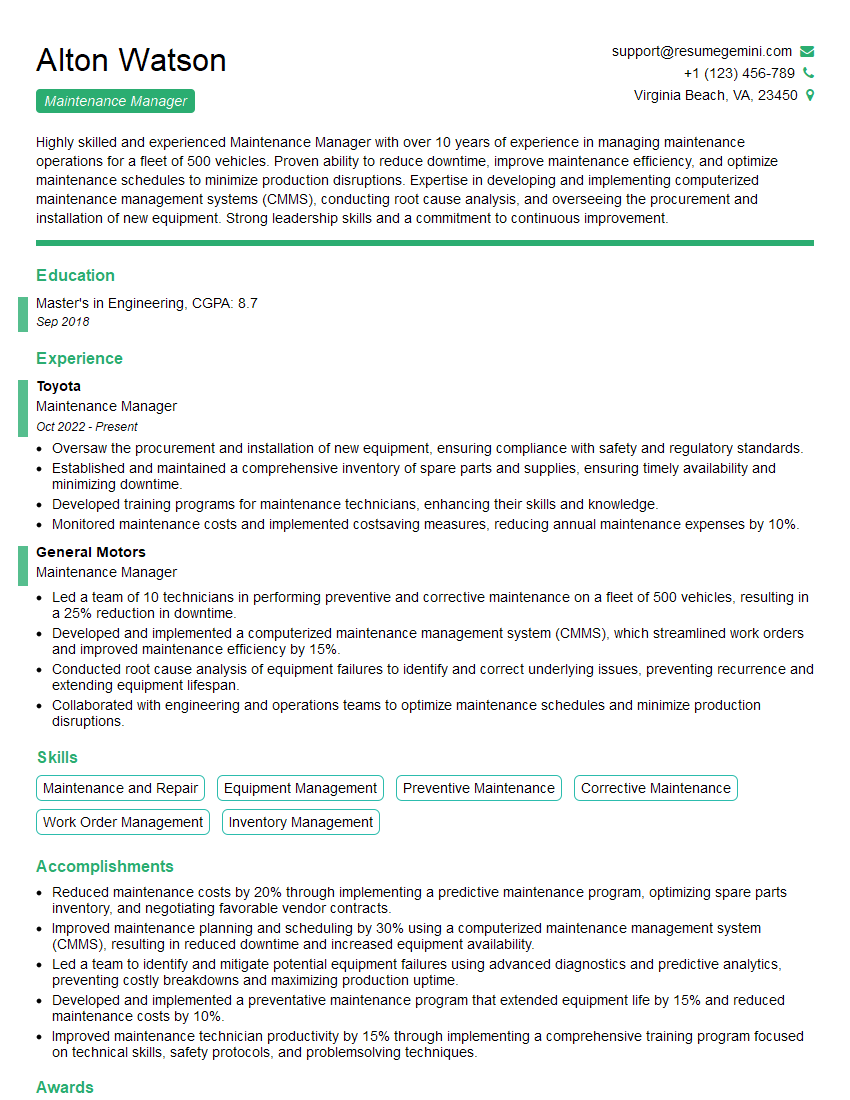
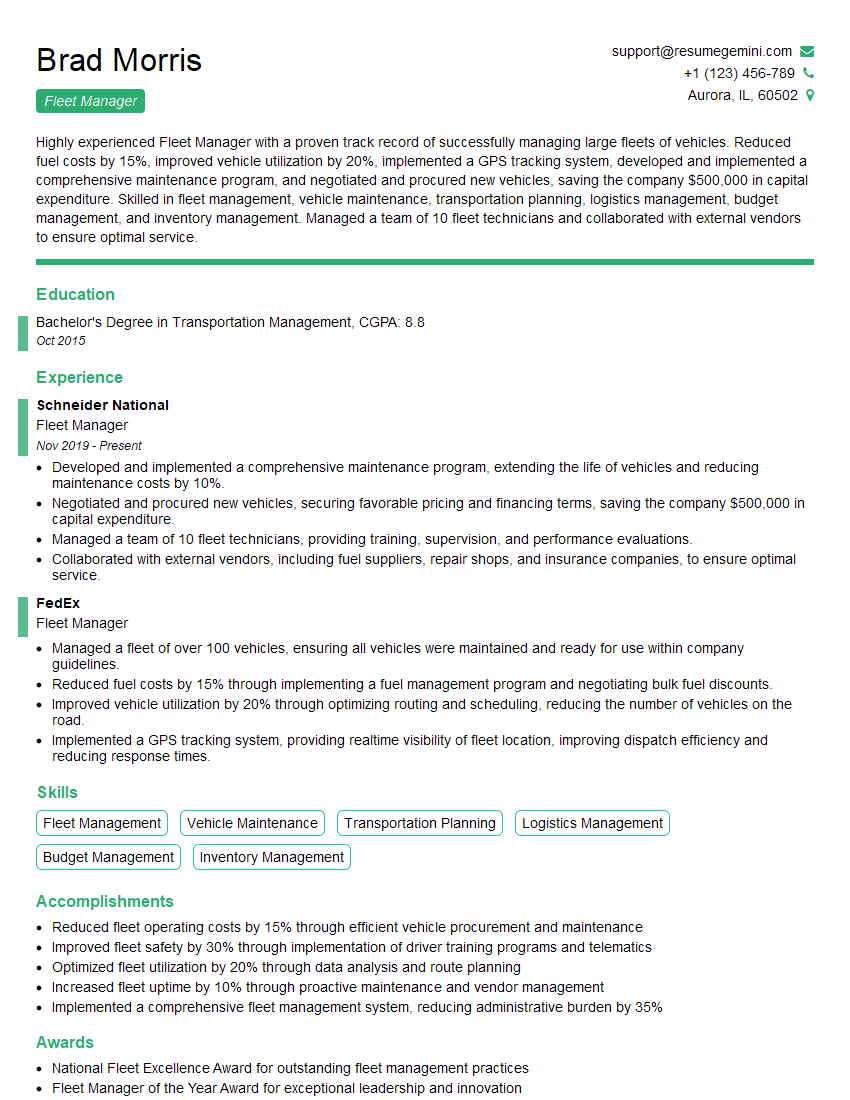
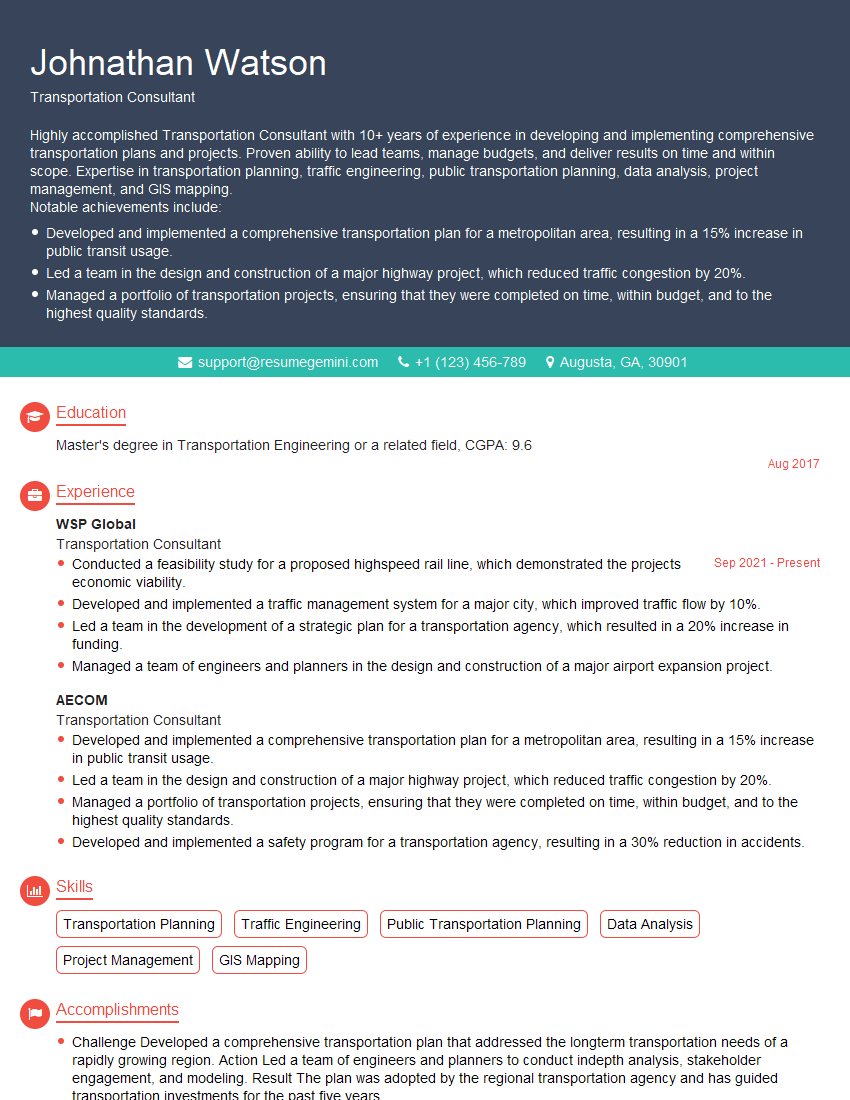
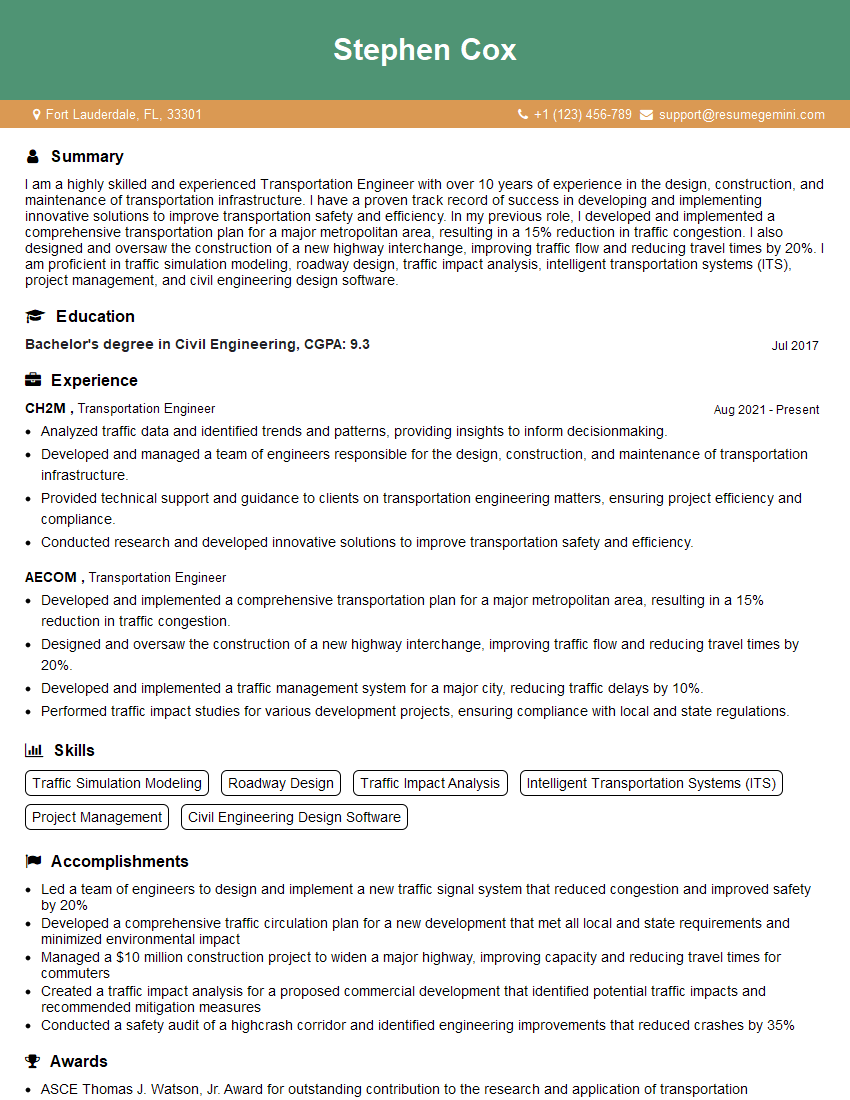
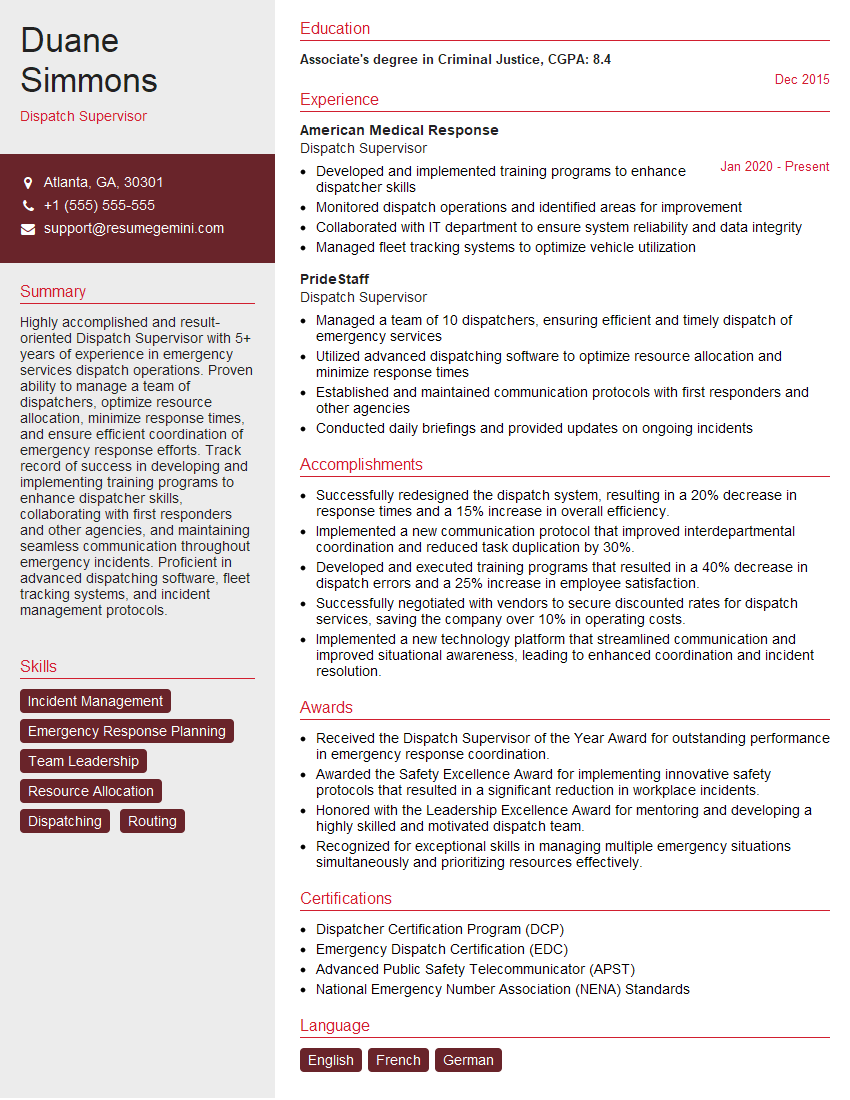
Mastering Public Transit Operations Planning opens doors to rewarding careers with significant impact on community mobility and economic development. A strong understanding of these principles is crucial for career advancement and securing your dream role. To significantly boost your job prospects, create an ATS-friendly resume that highlights your skills and experience effectively. We highly recommend using ResumeGemini, a trusted resource for building professional resumes. ResumeGemini provides examples of resumes tailored to Public Transit Operations Planning, helping you showcase your qualifications in the best possible light.
Explore more articles
Users Rating of Our Blogs
Share Your Experience
We value your feedback! Please rate our content and share your thoughts (optional).
What Readers Say About Our Blog
To the interviewgemini.com Webmaster.
Very helpful and content specific questions to help prepare me for my interview!
Thank you
To the interviewgemini.com Webmaster.
This was kind of a unique content I found around the specialized skills. Very helpful questions and good detailed answers.
Very Helpful blog, thank you Interviewgemini team.