The right preparation can turn an interview into an opportunity to showcase your expertise. This guide to Radiation Detection and Measurement Techniques interview questions is your ultimate resource, providing key insights and tips to help you ace your responses and stand out as a top candidate.
Questions Asked in Radiation Detection and Measurement Techniques Interview
Q 1. Explain the principles of Geiger-Müller counters.
Geiger-Müller (GM) counters are perhaps the most well-known radiation detectors, renowned for their simplicity and robustness. They operate on the principle of gas ionization. A GM tube contains a gas-filled chamber with a central anode wire held at a high positive voltage relative to the cathode (the tube’s outer wall). When ionizing radiation (alpha, beta, or gamma) enters the tube, it ionizes the gas molecules, creating ion pairs (electrons and positive ions).
These freed electrons are accelerated towards the anode by the strong electric field. As they travel, they collide with more gas molecules, causing further ionization in a chain reaction known as gas multiplication or avalanche. This avalanche creates a significant pulse of current that’s easily detected. The size of this pulse is largely independent of the initial radiation energy, meaning a GM counter simply detects the *presence* of ionizing radiation, not its energy.
Think of it like a domino effect: one domino (ionizing particle) triggers a cascade (gas multiplication) resulting in a measurable signal. GM counters are ideal for applications needing simple radiation detection, such as surveying for radiation contamination, though they lack energy resolution.
Q 2. Describe the different types of radiation detectors and their applications.
Radiation detectors come in various types, each suited to different applications. Here are a few examples:
- Geiger-Müller Counters: As discussed earlier, these are excellent for simple presence detection and are widely used in radiation surveys.
- Scintillation Detectors: These detectors use a scintillating material that emits light when struck by ionizing radiation. The light is then detected by a photomultiplier tube (PMT), converting the light into an electrical signal. They offer better energy resolution than GM counters and are used in various applications including medical imaging (PET scans) and nuclear spectroscopy.
- Semiconductor Detectors: These leverage the properties of semiconductors to directly measure the energy deposited by ionizing radiation. They have excellent energy resolution and are employed in high-resolution spectroscopy and X-ray fluorescence analysis.
- Ionization Chambers: These measure the ionization current produced by radiation directly, providing a more accurate measurement of radiation dose rate. They are used in radiation monitoring and dosimetry.
- Proportional Counters: These detectors offer a balance between the simplicity of GM counters and the energy resolution of scintillation detectors. They provide a signal proportional to the energy of the incident radiation.
The choice of detector depends on the type of radiation being measured, required energy resolution, sensitivity, and cost considerations. For example, a high-resolution semiconductor detector is essential for identifying specific radioactive isotopes, while a simpler GM counter might suffice for general radiation surveys.
Q 3. What are the limitations of scintillation detectors?
While scintillation detectors are highly versatile, they have certain limitations:
- Non-linear response: The light output isn’t always perfectly proportional to the energy deposited by the radiation, potentially affecting accuracy.
- Afterglow: Some scintillators exhibit afterglow, where they continue to emit light after the radiation has stopped. This can lead to signal artifacts and affect measurements.
- Sensitivity to temperature and humidity: The performance of both the scintillator and the PMT can vary with changes in temperature and humidity.
- High voltage requirements: PMTs require a high voltage supply, potentially increasing complexity and safety considerations.
- Limited lifetime of the PMT: PMTs have a finite lifetime, necessitating replacement eventually.
For instance, in a high-radiation environment, afterglow could significantly affect the accuracy of radiation measurements, requiring careful consideration of the scintillator material and signal processing techniques. Similarly, in medical imaging, non-linearity may need compensation through calibration and data correction procedures.
Q 4. How does a semiconductor detector work?
Semiconductor detectors work by utilizing the properties of semiconductors to directly measure the energy deposited by ionizing radiation. When ionizing radiation interacts with a semiconductor material (like silicon or germanium), it creates electron-hole pairs. This process is very similar to the ionization in gas-filled detectors but happens in a solid-state material.
These electron-hole pairs are then collected by applying a reverse bias voltage to the detector. The number of electron-hole pairs created is directly proportional to the energy deposited by the radiation. The collected charge is then amplified and processed to produce a signal that represents the energy of the incident radiation.
Imagine it like this: the semiconductor is a tightly packed grid. The radiation entering the grid knocks loose electrons, creating a measurable electrical current directly proportional to the amount of energy transferred in the interaction. The high energy resolution of semiconductor detectors stems from the precision with which this charge can be measured.
Q 5. Explain the concept of radiation shielding and its importance.
Radiation shielding is crucial for protecting personnel and the environment from harmful effects of ionizing radiation. The primary goal is to reduce the radiation dose received by individuals or sensitive equipment. The effectiveness of shielding depends on the type and energy of the radiation, the shielding material, and its thickness.
Consider a nuclear power plant; substantial shielding is required to protect workers from the intense radiation emitted by the reactor core. Similarly, in medical settings, shielding protects patients and staff from exposure during radiation therapy or diagnostic imaging procedures. The importance of radiation shielding cannot be overstated in ensuring radiation safety.
Q 6. What are the different types of radiation shielding materials and their properties?
Various materials are used for radiation shielding, each with its own properties:
- Lead: Highly effective against gamma rays and X-rays due to its high atomic number. It’s often used in shielding for medical and industrial applications.
- Concrete: A cost-effective shielding material commonly used for gamma rays and neutrons. Its effectiveness depends on density and thickness.
- Steel: Provides good shielding against beta particles and low-energy gamma rays.
- Water: Effective for neutron shielding due to its hydrogen content.
- Boron-containing materials: Used for neutron absorption due to boron’s high neutron capture cross-section.
The choice of material depends on the type and energy of the radiation, cost, and practical considerations. For example, while lead is excellent for gamma shielding, its high density makes it less practical for large-scale applications compared to concrete. Often, a combination of materials is used for optimal shielding effectiveness.
Q 7. Describe the methods used for calibrating radiation detectors.
Calibrating radiation detectors ensures accurate and reliable measurements. Methods include:
- Using calibrated sources: This involves exposing the detector to sources with known activity, then comparing the detector’s response to the known value. This is the most common approach. Different sources are used to check the detector’s response across a range of energies.
- Comparison with a reference detector: The detector’s response can be calibrated by comparing it to a detector that has already been calibrated using traceable standards.
- Monte Carlo simulations: In some cases, Monte Carlo simulations can be used to model the detector’s response and develop calibration curves. This is particularly useful for complex geometries and detector designs.
Calibration is a critical step; a poorly calibrated detector will provide inaccurate measurements, potentially leading to incorrect interpretations and safety hazards. Regular calibration, following established protocols, is vital for maintaining the accuracy and reliability of radiation measurement systems.
Q 8. How do you ensure the accuracy and reliability of radiation measurements?
Ensuring accurate and reliable radiation measurements requires a multi-faceted approach, encompassing instrument calibration, quality control, and proper measurement techniques. Think of it like a high-precision scale – if it’s not calibrated correctly, your weight readings will be off.
Calibration: Radiation detectors need regular calibration against traceable standards to ensure their readings are accurate. This involves using known radiation sources to verify the detector’s response. Without this, your measurements are essentially guesses.
Quality Control: This involves regular checks of the instrument’s performance, including background radiation measurements and linearity tests. This is like performing a routine health check on your equipment, identifying any potential drift or malfunction early on.
Measurement Techniques: Proper measurement techniques are critical. Factors such as the detector’s geometry relative to the source, background radiation levels, and environmental conditions must be considered and accounted for. Imagine trying to measure the temperature of a cup of coffee with a thermometer that’s touching the table – you won’t get an accurate reading.
Data Analysis: Statistical analysis is crucial to assess the uncertainty associated with measurements and ensure the reliability of the results. This involves understanding things like counting statistics and propagation of errors.
For instance, in a nuclear power plant, regular calibration of radiation detectors ensures that the plant’s safety systems are functioning correctly and that radiation levels are within acceptable limits.
Q 9. Explain the concept of radiation dose and its units.
Radiation dose refers to the amount of energy deposited by ionizing radiation in a material, typically living tissue. It’s a measure of the potential biological harm caused by radiation. Imagine throwing pebbles (radiation) at a sandcastle (your body). The more pebbles, and the harder they hit, the more damage is done. The dose quantifies this damage.
The most common unit for radiation dose is the Sievert (Sv), which takes into account the biological effectiveness of different types of radiation. A smaller unit, the millisievert (mSv), is frequently used for smaller doses (1 mSv = 0.001 Sv). Another unit, the Gray (Gy), measures the absorbed dose of radiation, representing the energy absorbed per unit mass. However, Gray doesn’t consider the biological impact as effectively as Sieverts.
Q 10. What are the different types of radiation dose measurements?
Several types of radiation dose measurements exist, each providing a different aspect of the radiation exposure:
Absorbed Dose (Gy): The amount of energy deposited per unit mass of tissue. Measured using devices like ionization chambers.
Equivalent Dose (Sv): Takes into account the type of radiation and its relative biological effectiveness (RBE). For example, alpha particles are more damaging than beta particles, so the equivalent dose will be higher for a given absorbed dose of alpha particles. This is often determined using personal dosimeters.
Effective Dose (Sv): Considers both the type and location of radiation exposure within the body. Different organs have different sensitivities to radiation. This is a more holistic measure of the overall risk from radiation exposure and helps us evaluate potential health implications.
For example, a worker in a nuclear facility might wear a personal dosimeter which tracks their effective dose over time. Environmental monitoring stations measure absorbed dose rates in the environment.
Q 11. Describe the biological effects of ionizing radiation.
Ionizing radiation, with sufficient energy to ionize atoms, can cause significant damage to biological tissues. The effects range from minor to severe, depending on several factors, including the dose, dose rate, type of radiation, and the part of the body exposed.
Direct Effects: Ionizing radiation can directly damage DNA molecules, leading to mutations, cell death, or cancer. Imagine a direct hit damaging the blueprint of a cell.
Indirect Effects: Radiation can ionize water molecules in the body, creating free radicals that can subsequently damage DNA and other cellular components. These free radicals are like tiny destructive agents unleashed by radiation.
Acute effects manifest quickly after high-dose exposure, like radiation sickness (nausea, vomiting, fatigue). Chronic effects, such as cancer and genetic defects, may appear years or decades after exposure to lower doses. The severity of the effects is directly proportional to the dose received, which emphasizes the critical importance of radiation safety measures.
Q 12. What are the safety regulations and procedures related to radiation detection and measurement?
Safety regulations and procedures for radiation detection and measurement are stringent and vary depending on the specific application and location (e.g., nuclear power plant, hospital, research laboratory). They always prioritize the ALARA principle: As Low As Reasonably Achievable. This means minimizing exposure to radiation to the lowest practical level.
Training and Certification: Personnel working with radiation sources must receive proper training and certification to ensure they understand the risks and safety procedures.
Regulatory Compliance: Facilities handling radiation must comply with local, national, and international regulations, such as those set by the Nuclear Regulatory Commission (NRC) in the US or similar bodies worldwide.
Personal Protective Equipment (PPE): This includes lead aprons, gloves, and dosimeters to minimize exposure. Dosimeters are like personal radiation trackers, recording the cumulative dose received by an individual.
Engineering Controls: These involve using shielding, distance, and time to reduce exposure. Shielding absorbs radiation, increasing distance reduces exposure intensity, and minimizing time spent near radiation reduces the overall dose.
Emergency Procedures: Clear emergency plans should be in place to handle accidents or spills.
For example, before entering a radiation area, workers must be properly trained, use appropriate PPE, and follow the established safety protocols and radiation control guidelines.
Q 13. Explain the process of radiation survey and monitoring.
Radiation survey and monitoring involves systematic measurement of radiation levels in a given area to assess potential hazards and ensure compliance with safety regulations. It’s like taking a detailed health check of the radiation environment.
The process generally includes:
Pre-Survey Planning: Defining the scope of the survey, identifying potential radiation sources, and selecting appropriate instruments.
Instrument Selection: Choosing the right instruments based on the type and energy of the expected radiation.
Background Radiation Measurement: Establishing a baseline radiation level before commencing the survey.
Systematic Measurements: Taking readings at predetermined locations and following a grid pattern to ensure complete coverage.
Data Recording and Analysis: Documenting all measurements, identifying hotspots, and interpreting the results.
Report Generation: Summarizing the findings and making recommendations for remediation or safety improvements if needed.
A common example is conducting a radiation survey in a decommissioned nuclear facility before demolition to ensure the area is safe for workers.
Q 14. How do you interpret radiation measurement results?
Interpreting radiation measurement results requires a thorough understanding of the measurement techniques, instrument limitations, and relevant safety standards. It’s not just about reading a number; it’s about understanding what that number means in the context of the situation.
Compare to Background Levels: The first step is comparing the measured radiation levels to background radiation levels. A significant increase above background indicates a potential source of radiation.
Consider the Type of Radiation: Different types of radiation have different biological effects, so understanding the type of radiation measured is essential. For example, alpha radiation poses a greater internal hazard than external exposure to gamma radiation.
Assess Dose Rates: This is essential for determining exposure risk, especially for personnel working in radiation areas. It indicates how rapidly the dose is accumulating.
Uncertainty Analysis: All measurements have some level of uncertainty. This uncertainty must be considered during interpretation and when making decisions based on the results.
Regulatory Limits: Compare the results against the relevant safety regulations and limits to determine if any action is required.
For instance, if a radiation survey of a hospital room shows radiation levels significantly exceeding background, the source must be identified and addressed to ensure patient and staff safety.
Q 15. What are the different types of radiation sources?
Radiation sources can be broadly categorized into natural and artificial sources. Natural sources include cosmic rays from space, terrestrial radiation from radioactive elements in the Earth’s crust (like uranium and thorium), and naturally occurring radioactive materials (NORM) in our environment, such as radon gas. Artificial sources are created by human activities, primarily through nuclear technologies. These include:
- Nuclear reactors: These generate significant amounts of ionizing radiation during fission.
- Nuclear weapons: The detonation of nuclear weapons releases enormous amounts of radiation.
- Medical applications: X-ray machines, radiotherapy units, and nuclear medicine procedures all utilize radioactive isotopes or produce radiation.
- Industrial applications: Various industrial processes, such as gauging thickness using gamma rays or using radioactive tracers in pipelines, employ radiation sources.
- Consumer products: Some consumer products, although usually with low levels, contain small amounts of radioactive material, such as smoke detectors (americium-241).
Understanding the type of source is crucial for effective radiation protection and safety measures.
Career Expert Tips:
- Ace those interviews! Prepare effectively by reviewing the Top 50 Most Common Interview Questions on ResumeGemini.
- Navigate your job search with confidence! Explore a wide range of Career Tips on ResumeGemini. Learn about common challenges and recommendations to overcome them.
- Craft the perfect resume! Master the Art of Resume Writing with ResumeGemini’s guide. Showcase your unique qualifications and achievements effectively.
- Don’t miss out on holiday savings! Build your dream resume with ResumeGemini’s ATS optimized templates.
Q 16. Explain the concept of radioactive decay.
Radioactive decay is the process by which an unstable atomic nucleus loses energy by emitting radiation, transforming into a more stable form. Think of it like a ball rolling down a hill – the unstable nucleus (at the top) wants to reach a more stable state (at the bottom) by releasing energy in the form of radiation. This process is spontaneous and occurs at a characteristic rate for each radioactive isotope, governed by its half-life.
The emitted radiation can take various forms, including alpha particles, beta particles, and gamma rays, each with different properties and penetrating power. The decay process continues until a stable, non-radioactive isotope is reached. For example, Carbon-14, a radioactive isotope, decays into stable Nitrogen-14 through beta decay.
Q 17. What are the different types of radioactive decay processes?
There are several types of radioactive decay processes:
- Alpha decay: An alpha particle (two protons and two neutrons) is emitted from the nucleus. Alpha particles have low penetration power and are easily stopped by a sheet of paper or skin.
- Beta decay: A beta particle (an electron or positron) is emitted from the nucleus. Beta particles have greater penetration power than alpha particles and can penetrate several millimeters of aluminum.
- Gamma decay: A gamma ray (high-energy electromagnetic radiation) is emitted from the nucleus. Gamma rays have high penetration power and require thick shielding materials like lead or concrete to stop them.
- Electron capture: The nucleus absorbs an inner electron, converting a proton into a neutron. This often leads to the emission of an X-ray.
- Spontaneous fission: A heavy nucleus splits into two smaller nuclei, releasing a significant amount of energy and neutrons.
The type of decay dictates the appropriate radiation protection measures to be taken.
Q 18. How do you identify and manage radiation contamination?
Identifying and managing radiation contamination involves a multi-step process. First, contamination must be detected using appropriate instruments like Geiger-Müller counters, scintillation detectors, or survey meters. These instruments measure the radiation levels in a given area or on a surface. The type of instrument used depends on the suspected type of radiation and the level of contamination.
Once contamination is identified, the next step is containment and remediation. This involves isolating the contaminated area, preventing further spread, and cleaning up the contamination. Methods include:
- Decontamination: This may involve washing, scrubbing, or using specialized cleaning agents to remove radioactive material from surfaces.
- Disposal: Contaminated materials may need to be disposed of as radioactive waste according to regulations.
- Shielding: Using shielding materials like lead or concrete to reduce radiation exposure.
Proper personal protective equipment (PPE), such as respirators, protective clothing, and gloves, must always be worn during any contamination response activities.
Q 19. Describe the methods used for radiation waste management.
Radiation waste management involves handling and disposing of radioactive materials safely and responsibly. The methods employed depend on the level of radioactivity and the physical form of the waste. They include:
- Storage: Short-lived waste is often stored until the radioactivity decays to acceptable levels.
- Disposal in near-surface repositories: Low-level waste, with relatively low radioactivity, can be buried in engineered landfills.
- Disposal in deep geological repositories: High-level waste, which remains radioactive for thousands of years, requires specialized geological repositories for long-term isolation.
- Incineration: For certain types of waste, incineration can reduce volume and facilitate disposal.
- Vitrification: High-level liquid waste can be solidified into glass logs for improved handling and disposal.
Regulatory oversight is essential to ensure safe and environmentally sound waste management practices.
Q 20. Explain the concept of radiation protection and its principles.
Radiation protection is the science and practice of protecting people and the environment from the harmful effects of ionizing radiation. Its principles aim to minimize exposure to radiation while allowing the beneficial uses of radiation sources. These principles include:
- Justification: Any activity involving radiation must be justified, meaning its benefits must outweigh the potential risks.
- Optimization: Radiation exposure should be kept As Low As Reasonably Achievable (ALARA) – this is a core principle.
- Dose limits: Regulatory bodies set dose limits for occupational and public exposures to protect individuals from harmful effects.
Implementing these principles requires a multi-faceted approach involving careful planning, training, engineering controls, administrative procedures, and monitoring.
Q 21. What are the ALARA principles in radiation protection?
ALARA, or As Low As Reasonably Achievable, is the cornerstone of radiation protection. It means that all radiation exposures should be kept as low as reasonably achievable, taking into account economic and social factors. It’s not about eliminating all radiation exposure, which is often impractical, but rather about minimizing it to the extent feasible.
Implementing ALARA involves a combination of strategies including:
- Time: Minimizing the time spent near a radiation source.
- Distance: Increasing the distance from a radiation source; radiation intensity decreases with the square of the distance.
- Shielding: Using appropriate shielding materials (lead, concrete, etc.) to reduce radiation exposure.
ALARA requires a proactive approach, integrating radiation protection considerations into every stage of a radiation-related activity, from design and planning to operation and decommissioning. For example, in a medical setting, using the lowest effective dose of radiation for a diagnostic procedure is a key principle of ALARA.
Q 22. Describe the role of a radiation safety officer.
A Radiation Safety Officer (RSO) is responsible for ensuring the safety of personnel and the environment from the hazards of ionizing radiation. This is a multifaceted role encompassing a wide range of responsibilities. Think of them as the radiation safety expert and manager within an organization.
- Developing and implementing radiation safety programs: This includes creating and updating written safety procedures, training programs, and emergency plans.
- Conducting radiation surveys and monitoring: Regular checks of radiation levels in work areas and equipment to ensure they are below regulatory limits. This often involves using various instruments, from Geiger counters to sophisticated spectrometry systems.
- Managing radioactive materials: This includes procurement, storage, use, and disposal of radioactive materials in accordance with relevant regulations and best practices.
- Providing radiation safety training: Educating personnel on radiation safety procedures, risks, and emergency response protocols.
- Investigating radiation incidents and accidents: Identifying causes, implementing corrective actions, and reporting to regulatory bodies.
- Maintaining radiation safety records: Accurate documentation of radiation levels, personnel exposures, and safety training is crucial for compliance and accountability.
For example, an RSO at a nuclear power plant would oversee all aspects of radiation safety, from ensuring workers wear proper protective equipment to managing the disposal of radioactive waste.
Q 23. Explain the importance of quality control in radiation measurement.
Quality control in radiation measurement is absolutely paramount for accurate and reliable results. Inaccurate measurements can lead to serious consequences, from misdiagnosis in medical applications to incorrect assessments of environmental contamination. It’s about ensuring that the data we obtain is trustworthy and fit for its intended purpose.
- Calibration: Regularly calibrating instruments against traceable standards is essential. Think of it like regularly checking the accuracy of a scale – if it’s off, your measurements will be wrong.
- Instrument testing: This involves performing periodic checks on the instrument’s functionality, ensuring all components work correctly, and detecting any potential drifts in performance. This often includes using quality control sources with known activities.
- Data validation: Examining the collected data for any inconsistencies or anomalies. Are the results reasonable given the context? Do they align with previous measurements? This is crucial for identifying potential errors early on.
- Proficiency testing: Participating in proficiency testing programs allows for comparison of results with other laboratories, helping to identify systematic biases and ensuring accuracy.
- Maintaining detailed records: All calibration, testing and maintenance procedures must be carefully documented to ensure traceability and compliance with regulations.
For example, in a medical setting, inaccurate radiation measurements during radiotherapy could lead to under- or over-dosing, with potentially life-threatening consequences.
Q 24. How do you deal with equipment malfunctions during radiation measurements?
Equipment malfunctions during radiation measurements are a serious concern. A methodical approach is needed to address these situations effectively and safely.
- Safety first: If the malfunction poses a safety risk (e.g., high radiation leak), immediately secure the area, evacuate personnel, and follow established emergency procedures.
- Identify the problem: Determine the nature of the malfunction. Is there a power issue? A sensor problem? A software glitch? Check error messages, and if possible, try simple troubleshooting steps (e.g., power cycling).
- Consult documentation: Refer to the instrument’s operation manual for troubleshooting guidance. Many manuals include flowcharts or diagnostic steps for common problems.
- Contact support: If the problem persists, contact the equipment manufacturer’s technical support for assistance. They have the expertise to diagnose and resolve complex issues.
- Calibration check: Once the malfunction is resolved, recalibrate the instrument to ensure accuracy and reliability before resuming measurements.
- Preventive maintenance: Implement regular preventative maintenance to minimize the likelihood of future malfunctions.
For instance, during an environmental survey, if a Geiger counter’s probe malfunctions, I would immediately stop the survey, assess the safety situation, check for obvious damage, consult the manual, and if unable to resolve it, contact the vendor for repairs. The data obtained before the malfunction would need to be reviewed carefully for potential impact.
Q 25. Describe your experience with various radiation detection instruments.
My experience encompasses a wide range of radiation detection instruments, from basic survey meters to sophisticated spectrometry systems. I am proficient in using:
- Geiger-Müller counters: These are widely used for rapid surveys of radiation levels, providing a quick indication of potential hazards.
- Scintillation detectors: These detectors offer higher sensitivity and energy resolution, making them suitable for more precise measurements and identification of different radionuclides.
- Proportional counters: Useful for measuring low-energy radiation and providing better energy discrimination compared to Geiger-Müller counters.
- High-purity germanium (HPGe) detectors: These are used in gamma spectrometry for detailed analysis of radioactive materials and identification of specific isotopes. They are known for exceptional energy resolution.
- Sodium iodide (NaI) detectors: Widely used for gamma-ray detection in various applications, providing good sensitivity but lower energy resolution compared to HPGe detectors.
- Liquid scintillation counters: Specialized instruments for measuring low-energy beta emitters and alpha emitters in liquid samples.
My experience includes using these instruments in diverse settings, such as nuclear power plants, environmental monitoring, and medical physics.
Q 26. Explain your understanding of different radiation detection techniques.
Radiation detection techniques are diverse, each with its strengths and weaknesses depending on the type of radiation being measured and the specific application. The choice of technique depends critically on factors such as the type of radiation (alpha, beta, gamma, neutron), energy, activity level and the environment.
- Gas ionization detectors (Geiger-Müller, proportional): These detectors work by ionizing gas molecules through the interaction of radiation. The resulting current is then measured. Simple, robust and relatively inexpensive.
- Scintillation detection: This technique uses scintillating materials that emit light when radiation interacts with them. The light is then detected by a photomultiplier tube and converted to an electrical signal. Offers higher sensitivity and energy resolution compared to gas ionization detectors.
- Semiconductor detectors (HPGe): These detectors use semiconductor materials to directly convert radiation energy into electrical signals. They provide excellent energy resolution, allowing for precise identification of radionuclides.
- Neutron detection: This requires specialized techniques as neutrons don’t ionize matter directly. Methods include using 3He proportional counters, or scintillation detectors with materials like lithium iodide.
For example, in environmental monitoring, a Geiger-Müller counter might be used for a rapid survey, while HPGe spectrometry would be used for detailed analysis of soil samples to identify specific radionuclides.
Q 27. What software are you familiar with for radiation data analysis?
I’m proficient in several software packages for radiation data analysis, each tailored to different applications and data types. These include:
- Genie 2000 (or similar MCA software): This is widely used for analyzing data from multi-channel analyzers (MCAs), which are commonly connected to spectrometry systems. It allows for peak identification, energy calibration, and quantitative analysis of radioactive samples.
- MATLAB: A powerful mathematical and programming environment useful for complex data analysis, modeling, and visualization. It’s highly versatile and can be customized for specific needs.
- R: Another powerful statistical computing environment, especially useful for data processing, statistical analysis, and creating publication-quality graphs.
- Specialized software for dosimetry: Software packages specific to dosimetry calculations, providing tools to estimate personnel radiation exposure.
My expertise extends beyond simply using these packages; I understand the underlying principles of data analysis relevant to radiation measurements, and can adapt my approach to different analytical challenges.
Q 28. Describe a time you had to troubleshoot a problem with radiation detection equipment.
During a routine environmental radiation survey near a decommissioned nuclear facility, the HPGe detector on our spectrometry system started exhibiting unusual peak broadening and instability. The initial readings seemed unreliable and inconsistent with previous data.
- Initial assessment: I first checked the detector’s cooling system; HPGe detectors need to be cryogenically cooled for optimal performance. The cooling system appeared to be functioning normally.
- Systematic troubleshooting: I then examined the detector’s high voltage supply, ensuring the voltage was stable and within the specified range. I also checked the connections to the MCA and the signal cables for any signs of damage or loose connections.
- Data analysis: I analyzed the spectral data for any consistent artifacts. The peak broadening suggested a problem with either the detector itself or the electronics chain.
- Manufacturer support: After ruling out simple issues, I contacted the manufacturer’s technical support. They guided me through more advanced diagnostic steps, including software diagnostics and checking the baseline resolution of the detector.
- Resolution: It turned out to be a faulty preamplifier. After replacing it, the system regained its normal performance, and the data became consistent and reliable. I documented all troubleshooting steps and the solution in detail for future reference.
This incident underscored the importance of thorough troubleshooting, methodical data analysis, and the invaluable role of manufacturer support in resolving complex equipment problems.
Key Topics to Learn for Radiation Detection and Measurement Techniques Interview
- Interaction of Radiation with Matter: Understand the fundamental processes by which different types of radiation (alpha, beta, gamma, neutron) interact with various materials. This forms the basis for detector design and selection.
- Detector Types and Principles: Become familiar with the operating principles of various radiation detectors, including gas-filled detectors (ionization chambers, proportional counters, Geiger-Müller tubes), scintillation detectors, semiconductor detectors (e.g., HPGe, CdZnTe), and neutron detectors. Focus on their strengths, weaknesses, and applications.
- Signal Processing and Data Acquisition: Learn about the electronic circuits used to process signals from radiation detectors, including amplification, pulse shaping, and discrimination. Understand data acquisition systems and their role in collecting and analyzing radiation data.
- Radiation Measurement Units and Calculations: Master the concepts of activity, dose, and dose rate. Be prepared to perform calculations involving decay schemes, radiation shielding, and exposure estimations.
- Health Physics and Safety Protocols: Demonstrate a strong understanding of radiation safety principles, including ALARA (As Low As Reasonably Achievable) and relevant safety regulations. This is crucial for any role in radiation detection.
- Calibration and Quality Control: Understand the importance of detector calibration and quality control procedures to ensure accurate and reliable measurements. This includes the use of standard sources and traceability.
- Applications in Various Fields: Be prepared to discuss the practical applications of radiation detection and measurement techniques in fields such as nuclear medicine, environmental monitoring, nuclear power, security, and research. Specific examples demonstrate your understanding of real-world contexts.
- Data Analysis and Interpretation: Practice interpreting radiation spectra and understanding how to extract meaningful information from experimental data. This might involve statistical analysis techniques.
- Troubleshooting and Problem Solving: Prepare to discuss common issues encountered in radiation detection systems and how to effectively troubleshoot and resolve them. This demonstrates practical experience and skills.
Next Steps
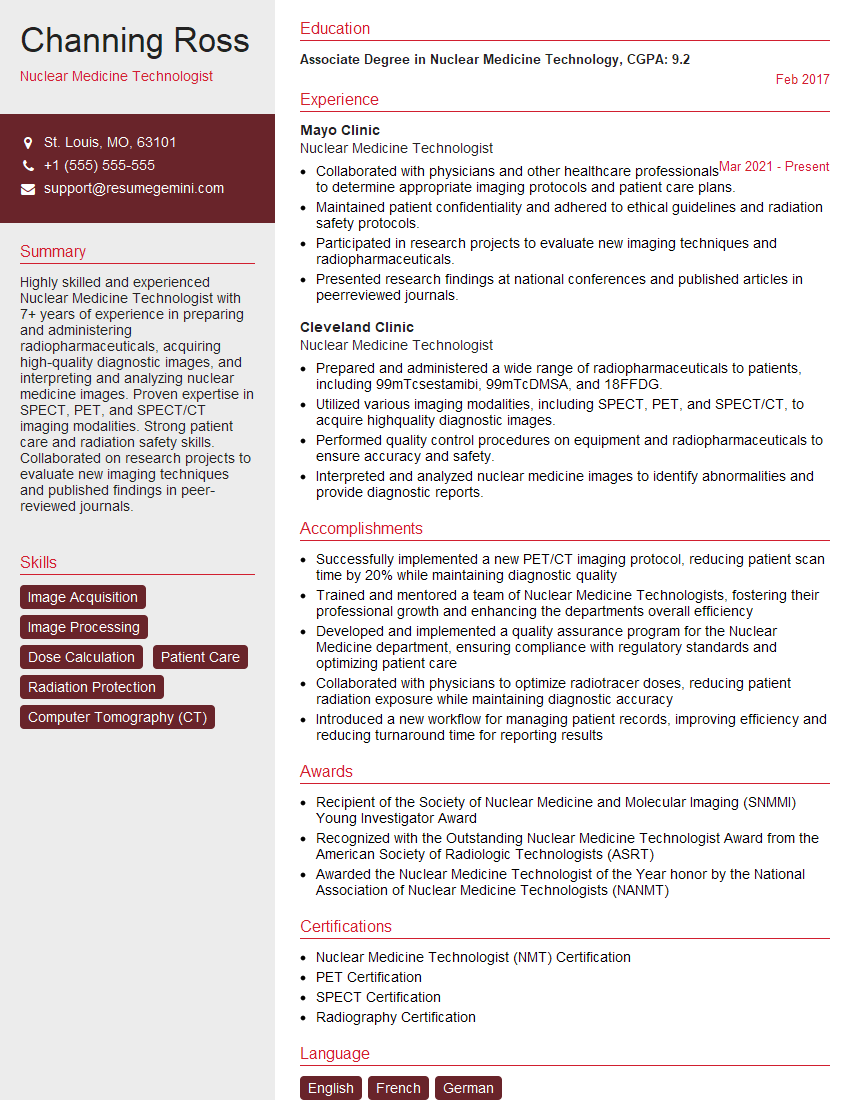
Mastering Radiation Detection and Measurement Techniques opens doors to exciting and impactful careers in diverse fields. A strong understanding of these techniques is highly valued by employers and can significantly enhance your career prospects. To maximize your chances of landing your dream job, create a compelling and ATS-friendly resume that showcases your skills and experience effectively. ResumeGemini is a trusted resource to help you build a professional and impactful resume. They provide examples of resumes tailored to Radiation Detection and Measurement Techniques, making the process significantly easier and ensuring your qualifications shine.




Explore more articles
Users Rating of Our Blogs
Share Your Experience
We value your feedback! Please rate our content and share your thoughts (optional).
What Readers Say About Our Blog
To the interviewgemini.com Webmaster.
Very helpful and content specific questions to help prepare me for my interview!
Thank you
To the interviewgemini.com Webmaster.
This was kind of a unique content I found around the specialized skills. Very helpful questions and good detailed answers.
Very Helpful blog, thank you Interviewgemini team.