Interviews are opportunities to demonstrate your expertise, and this guide is here to help you shine. Explore the essential Radiation Protection and Health Physics interview questions that employers frequently ask, paired with strategies for crafting responses that set you apart from the competition.
Questions Asked in Radiation Protection and Health Physics Interview
Q 1. Explain the ALARA principle.
ALARA, which stands for As Low As Reasonably Achievable, is a fundamental principle in radiation protection. It emphasizes that all radiation exposure should be kept as far below regulatory limits as is reasonably achievable, taking into account economic and social factors. It’s not just about meeting minimum safety standards; it’s about striving for continuous improvement in reducing unnecessary radiation exposure.
Think of it like this: Imagine you’re a chef preparing a meal. You have to meet food safety regulations, but ALARA encourages you to go beyond the bare minimum – washing your hands thoroughly, using clean utensils, and ensuring proper cooking temperatures to minimize any potential health risks. Similarly, in radiation protection, we aim to minimize radiation doses through various means beyond simply complying with regulations.
Practical Application: ALARA is implemented through various strategies such as optimization of procedures, use of shielding, time minimization near sources, distance maximization from sources, and the use of appropriate instrumentation for radiation monitoring and dose reduction.
Q 2. Describe the different types of ionizing radiation.
Ionizing radiation is radiation that carries enough energy to ionize atoms, meaning it can remove electrons from atoms and create ions. There are two main categories:
- Particulate Radiation: This consists of subatomic particles with mass and charge. Examples include:
- Alpha particles (α): Relatively large, heavy particles with a positive charge. They have a short range in air and are easily stopped by a sheet of paper or skin. However, if ingested or inhaled, they are very dangerous due to their high ionizing density.
- Beta particles (β): Smaller and lighter than alpha particles, carrying a negative charge. They penetrate further than alpha particles, requiring thicker shielding like aluminum or plastic.
- Neutrons (n): Uncharged particles that penetrate deeply and require substantial shielding materials like concrete, water, or specialized neutron-absorbing materials.
- Electromagnetic Radiation: This is energy in the form of waves, without mass or charge. Examples include:
- Gamma rays (γ): High-energy photons that have high penetrating power and require dense shielding like lead or concrete.
- X-rays: Similar to gamma rays but typically lower in energy and produced artificially through various processes. The shielding requirements are similar to gamma rays, although often less substantial.
Understanding the differences in their penetrating power and ionizing density is crucial for effective radiation protection.
Q 3. What are the units used to measure radiation exposure?
Several units are used to measure radiation exposure and dose, each with a specific meaning:
- Exposure (X): Measured in Coulombs per kilogram (C/kg), it describes the ionization produced in air by X-rays and gamma rays. It’s an older unit, less commonly used now in radiation protection.
- Absorbed Dose (D): Measured in Gray (Gy), it represents the energy absorbed per unit mass of irradiated material. 1 Gy = 1 joule/kilogram.
- Equivalent Dose (H): Measured in Sieverts (Sv), it takes into account the different biological effects of various types of radiation using weighting factors. It adjusts the absorbed dose to reflect the biological harm of different radiation types.
- Effective Dose (E): Also measured in Sieverts (Sv), it considers both the absorbed dose and the sensitivity of different organs and tissues to radiation. It provides a measure of the overall risk of radiation-induced harm to the whole body.
It’s essential to understand the distinction between these units because they provide different perspectives on radiation’s impact. For instance, a certain absorbed dose of alpha radiation will result in a significantly higher equivalent dose than the same absorbed dose of beta radiation due to alpha’s higher ionizing density.
Q 4. How do you calculate effective dose?
Effective dose (E) is calculated by summing the weighted equivalent doses to individual organs and tissues. The formula is:
E = Σ wT HTWhere:
Eis the effective dose in Sieverts (Sv)wTis the tissue weighting factor for tissue T. These factors represent the relative sensitivity of different organs and tissues to radiation-induced cancer and hereditary effects. These values are established by organizations like the International Commission on Radiological Protection (ICRP).HTis the equivalent dose in Sieverts (Sv) to tissue T.
Example: Let’s say the equivalent dose to the lungs (Hlung) is 2 mSv, and the tissue weighting factor for the lungs (wlung) is 0.12. The contribution of the lung dose to the effective dose would be 0.12 * 2 mSv = 0.24 mSv. This process is repeated for all organs and tissues, and the results are summed to obtain the total effective dose.
Q 5. Explain the inverse square law in radiation protection.
The inverse square law states that the radiation intensity is inversely proportional to the square of the distance from the source. In simpler terms, if you double your distance from a radiation source, the intensity of radiation you receive is reduced to one-fourth. If you triple the distance, the intensity drops to one-ninth.
Mathematically:
I1/I2 = (d2/d1)2Where:
I1is the radiation intensity at distanced1I2is the radiation intensity at distanced2
Practical Application: This principle is critical in radiation protection. Maintaining a safe distance from radiation sources is a fundamental method of reducing exposure. For example, in nuclear medicine, technicians use long-handled tools to manipulate radioactive sources, maximizing their distance and thereby minimizing their radiation dose.
Q 6. What are the different types of radiation detectors?
Many types of radiation detectors exist, each suited for different applications. Here are some examples:
- Geiger-Müller (GM) counters: Simple, portable devices that detect ionizing radiation by producing an electrical pulse each time a particle or photon ionizes the gas within the detector. They are useful for detecting the presence of radiation but don’t provide accurate dose measurements.
- Scintillation detectors: Use a scintillating material (like sodium iodide) that emits light when interacting with radiation. This light is then detected by a photomultiplier tube, providing a signal proportional to the radiation energy. They are widely used in nuclear medicine and research.
- Ionization chambers: Measure radiation by collecting ions produced in a gas-filled chamber. They are known for their accuracy and are used for calibrating other radiation instruments.
- Thermoluminescent dosimeters (TLDs): Contain a material that stores energy when exposed to radiation. The stored energy is released as light upon heating, providing a measurement of the radiation dose. They are often used for personal dosimetry.
- Optically Stimulated Luminescence (OSL) dosimeters: Similar to TLDs, but the stored energy is released by stimulating the material with light. OSL dosimeters are known for their wider dose range and better stability.
The choice of detector depends on the type of radiation, the required accuracy, the energy range of interest, and the specific application.
Q 7. Describe the principles of shielding against radiation.
Shielding against radiation involves placing materials between the radiation source and the person or object to be protected. The effectiveness of shielding depends on several factors: the type and energy of the radiation, the thickness and density of the shielding material, and the geometry of the setup.
- Alpha radiation: Easily shielded by a few centimeters of air, paper, or skin.
- Beta radiation: Requires thicker shielding, typically aluminum or plastic.
- Gamma and X-rays: Require dense materials like lead, concrete, or depleted uranium for effective shielding. The required thickness increases with the energy of the radiation.
- Neutron radiation: Requires specialized shielding, often using materials with high hydrogen content (like water or polyethylene) to moderate the neutrons, and materials like boron or cadmium to absorb them.
Shielding design often involves complex calculations to determine the optimal thickness and material to achieve the desired level of protection. The principle of layered shielding, using different materials to enhance the effectiveness of the overall shield, is frequently employed. For instance, a combination of concrete and lead might be used to shield against both gamma radiation and neutrons. The design will also account for radiation scattering and potential pathways for radiation to bypass the shield. Proper shielding design is crucial in ensuring the safety of personnel and the environment in facilities handling radioactive materials.
Q 8. What are the regulatory requirements for handling radioactive materials?
Regulatory requirements for handling radioactive materials are stringent and vary depending on the type and quantity of material, as well as the location and application. These regulations are designed to protect workers, the public, and the environment from the harmful effects of ionizing radiation. Generally, they encompass:
- Licensing and registration: Organizations and individuals must obtain licenses or registrations before possessing or using radioactive materials. The licensing process involves demonstrating competency in radiation safety practices and adherence to regulatory standards.
- Safety procedures and protocols: Detailed written procedures must be developed and followed for all activities involving radioactive materials. These procedures cover aspects like handling, storage, transportation, waste disposal, and emergency response.
- Radiation monitoring and surveys: Regular monitoring of radiation levels is mandatory to ensure compliance with regulatory limits. This involves using radiation detection instruments to measure exposure levels and environmental contamination.
- Personnel dosimetry: Individuals working with radioactive materials must wear personal dosimeters to monitor their radiation exposure. These devices track accumulated dose, ensuring exposure remains within regulatory limits.
- Waste management: Radioactive waste must be handled and disposed of according to strict regulations. This involves proper packaging, labeling, and transportation to authorized disposal facilities.
- Record keeping: Detailed records of all activities involving radioactive materials must be maintained for regulatory audits and inspections. This includes inventory records, radiation monitoring data, and personnel dosimetry readings.
- Training and education: All personnel working with radioactive materials must receive adequate training and education on radiation safety principles and practices. This ensures they understand the hazards and can follow appropriate safety procedures.
Examples of regulatory bodies include the Nuclear Regulatory Commission (NRC) in the US, the Canadian Nuclear Safety Commission (CNSC) in Canada, and the International Atomic Energy Agency (IAEA) which sets international standards.
Q 9. Explain the concept of half-life.
Half-life is the time it takes for half of the atoms in a radioactive substance to decay into a more stable form. It’s a fundamental concept in understanding radioactive decay and predicting the remaining radioactivity over time. Each radioactive isotope has a unique half-life, ranging from fractions of a second to billions of years.
Imagine you start with 100 grams of a substance with a half-life of 1 day. After 1 day, 50 grams will remain. After another day (2 days total), 25 grams will remain. After 3 days, 12.5 grams, and so on. The amount of material never reaches zero, but it approaches it asymptotically.
This concept is crucial for predicting how long a radioactive material will pose a radiation hazard and for determining appropriate storage and disposal times. For instance, the long half-life of certain radioactive waste necessitates long-term storage solutions.
Q 10. Describe the biological effects of ionizing radiation.
Ionizing radiation, which carries enough energy to ionize atoms, can cause a range of biological effects, from minor damage to cell death. These effects depend on several factors, including the type and energy of the radiation, the dose received, and the individual’s sensitivity.
- Deterministic Effects: These effects have a threshold dose; meaning they only occur above a certain level of radiation exposure. Examples include radiation burns (skin reddening), cataracts, and radiation sickness (nausea, vomiting, fatigue). The severity increases with higher doses.
- Stochastic Effects: These effects have no threshold; the probability of occurrence increases with dose, but the severity is independent of the dose. The most significant stochastic effect is cancer. Other stochastic effects include genetic mutations that can be passed to future generations.
At the cellular level, ionizing radiation can damage DNA, leading to mutations or cell death. This damage can initiate a cascade of events, ultimately leading to the various biological effects described above. The body has repair mechanisms, but extensive damage may overwhelm these capabilities.
For example, high doses of radiation, such as those experienced in a nuclear accident, can cause acute radiation sickness, which can be fatal. Lower doses, received over a longer period, might increase the risk of cancer development later in life.
Q 11. What are the different types of radiation monitoring instruments?
Radiation monitoring instruments are essential tools for assessing radiation levels and ensuring radiation safety. The choice of instrument depends on the type of radiation being measured and the application. Some common types include:
- Geiger-Müller (GM) counters: These are portable instruments that detect beta and gamma radiation. They are widely used for area surveys and contamination monitoring due to their simplicity and relatively low cost.
- Scintillation detectors: These instruments use a scintillating material that emits light when radiation interacts with it. The light is then detected by a photomultiplier tube. Scintillation detectors are more sensitive than GM counters and can measure alpha, beta, and gamma radiation.
- Ionization chambers: These are used for measuring high radiation levels, typically in controlled environments such as calibration laboratories. They provide accurate dose measurements.
- Proportional counters: These detectors offer high sensitivity and energy resolution, useful for identifying different types of radiation.
- Neutron detectors: These specialized instruments are needed for detecting neutrons, which are a type of ionizing radiation.
Each instrument has its strengths and limitations, and the selection depends on the specific needs of the application. Calibration and regular maintenance are crucial for ensuring accurate and reliable measurements.
Q 12. How do you conduct a radiation survey?
Conducting a radiation survey involves systematically measuring radiation levels in a given area or on objects to identify potential radiation hazards. A thorough survey requires careful planning and execution, using appropriate instrumentation and safety precautions:
- Planning: Define the scope of the survey, including the area to be surveyed, the types of radiation to be measured, and the required level of accuracy.
- Instrument Selection: Choose the appropriate radiation detection instrument based on the expected radiation types and levels.
- Calibration: Ensure the instrument is properly calibrated before conducting the survey.
- Measurement: Systematically measure radiation levels at various locations, using a consistent measurement technique. Record the measurements, including location, date, time, and instrument readings.
- Data Analysis: Analyze the collected data to identify areas with elevated radiation levels or potential contamination.
- Reporting: Prepare a report summarizing the findings of the survey, including recommendations for corrective actions if necessary.
For example, a radiation survey might be conducted before decommissioning a nuclear facility to identify areas with residual contamination. Another example would be surveying a work area before handling radioactive sources to ensure it is within regulatory limits.
Q 13. Explain the importance of radiation safety training.
Radiation safety training is paramount to minimize the risks associated with working with radioactive materials. It equips personnel with the knowledge and skills necessary to handle radioactive materials safely and to respond effectively to potential radiation emergencies. Effective training programs should cover:
- Radiation physics and biology: Understanding the nature of ionizing radiation and its biological effects.
- Radiation protection principles: ALARA (As Low As Reasonably Achievable) philosophy, time, distance, and shielding.
- Radiation detection and measurement techniques: Using radiation monitoring instruments and interpreting the results.
- Regulatory requirements: Knowing and adhering to relevant regulations and standards.
- Emergency procedures: Knowing what to do in case of a radiation accident or spill.
- Waste management: Proper handling and disposal of radioactive waste.
Regular refresher training is also essential to maintain proficiency and update knowledge on best practices and regulatory changes. A well-trained workforce is the cornerstone of a robust radiation safety program.
Q 14. Describe the process of developing a radiation safety program.
Developing a comprehensive radiation safety program involves a systematic approach to ensure the safe handling of radioactive materials. This program should be tailored to the specific operations and activities of the organization and should encompass the following elements:
- Radiation Safety Officer (RSO): Appoint a qualified RSO responsible for overseeing the program’s implementation and enforcement.
- Risk Assessment: Conduct a thorough risk assessment to identify potential radiation hazards and evaluate the associated risks.
- Safety Procedures and Protocols: Develop clear and concise written procedures for all activities involving radioactive materials.
- Radiation Monitoring Program: Establish a program for regularly monitoring radiation levels and personnel exposures.
- Personnel Dosimetry: Implement a comprehensive personnel dosimetry program to track individual radiation exposures.
- Emergency Preparedness and Response: Develop and regularly practice emergency response plans for handling radiation accidents or spills.
- Training and Education: Provide appropriate radiation safety training to all personnel working with or near radioactive materials.
- Waste Management Plan: Develop a plan for the safe handling, storage, and disposal of radioactive waste.
- Record Keeping: Maintain accurate and complete records of all radiation safety-related activities.
- Regular Audits and Reviews: Regularly audit and review the effectiveness of the radiation safety program.
A well-structured program should proactively manage risks, ensuring compliance with regulatory requirements and protecting the health and safety of workers and the public. It needs regular review and updates as operations and technologies evolve.
Q 15. What are the different types of personnel dosimeters?
Personnel dosimeters are devices worn by radiation workers to monitor their individual exposure to ionizing radiation. Different types exist, each with its own strengths and weaknesses depending on the type of radiation being measured and the level of accuracy required.
- Film badges: These are older technology but still used. They use photographic film that darkens proportionally to the radiation dose received. Simple, passive, and relatively inexpensive, but require processing and offer limited sensitivity and energy dependence.
- Thermoluminescent dosimeters (TLDs): TLDs utilize crystals (like lithium fluoride) that store energy when exposed to radiation. This energy is released as light when heated, providing a measure of the absorbed dose. They’re more sensitive and accurate than film badges, but require a reader device.
- Optically stimulated luminescence dosimeters (OSLDs): Similar to TLDs, OSLDs use aluminum oxide crystals. However, instead of heat, they’re stimulated with laser light to release the stored energy. They offer even greater sensitivity, wider dynamic range, and reusability compared to TLDs.
- Electronic personal dosimeters (EPDs): These are real-time, electronic devices that display the accumulated dose immediately. They offer instant feedback and can provide data on dose rate as well, but they are more expensive and their batteries need to be regularly monitored.
The choice of dosimeter depends on the specific radiation environment, regulatory requirements, and the needs of the worker. For instance, a nuclear power plant worker might use an EPD for real-time monitoring, while a medical technician performing X-rays might utilize a simpler TLD.
Career Expert Tips:
- Ace those interviews! Prepare effectively by reviewing the Top 50 Most Common Interview Questions on ResumeGemini.
- Navigate your job search with confidence! Explore a wide range of Career Tips on ResumeGemini. Learn about common challenges and recommendations to overcome them.
- Craft the perfect resume! Master the Art of Resume Writing with ResumeGemini’s guide. Showcase your unique qualifications and achievements effectively.
- Don’t miss out on holiday savings! Build your dream resume with ResumeGemini’s ATS optimized templates.
Q 16. How do you interpret personnel dosimeter readings?
Interpreting personnel dosimeter readings involves understanding the units of measurement and the regulatory limits. The most common unit is the Sievert (Sv) or millisievert (mSv), which represents the biological effect of radiation. The reading itself is compared against regulatory limits set by organizations like the NRC (Nuclear Regulatory Commission) or national health protection agencies.
For example, an annual dose limit for occupational exposure is usually 50 mSv. If a worker’s dosimeter shows a reading of 20 mSv after six months, it’s within the allowable limit, but precautions should still be taken to ensure they don’t exceed the annual limit. Readings beyond the permissible limits trigger investigations to identify the cause and implement corrective measures. This might include reviewing work practices, equipment calibration, or shielding modifications.
Detailed reports are typically provided with dosimeter readings, which provide a breakdown of the type of radiation detected (e.g., beta, gamma, neutron) and the energy distribution. This is crucial because different types of radiation have varying biological effects.
Q 17. What are the emergency procedures in case of a radiation accident?
Emergency procedures for a radiation accident are designed to minimize exposure, provide immediate medical care, and prevent further contamination spread. These procedures are heavily dependent on the nature of the accident (e.g., dispersal of radioactive material, criticality event).
- Immediate Actions: Evacuate personnel from the area, establishing a safe perimeter. Notify emergency services and radiation protection experts.
- Assessment and Monitoring: Rapid assessment of the situation is critical, using radiation survey meters to determine radiation levels and the extent of contamination. This also involves monitoring individuals for contamination using contamination detectors.
- Decontamination: Contaminated individuals undergo decontamination procedures using appropriate methods (discussed further in the next question). This could involve removing clothing, washing with soap and water, or using specialized decontamination agents.
- Medical Treatment: Individuals exhibiting symptoms of radiation sickness receive appropriate medical attention.
- Long-term monitoring: Following the incident, long-term monitoring of affected individuals is necessary to assess health impacts and potential long-term effects.
Detailed emergency plans should be established and regularly practiced within any facility handling radioactive materials, including well-defined roles, communication protocols, and the use of protective equipment.
Q 18. Describe the different methods of decontamination.
Decontamination methods vary depending on the type of contaminant and the surface involved. The goal is to remove or reduce radioactive material from individuals, surfaces, or equipment.
- Physical Removal: This includes brushing, vacuuming, or wiping contaminated surfaces with absorbent materials. For personnel, removing clothing is an important initial step.
- Washing and Scrubbing: Using soap and water is often effective for removing loosely bound contaminants. High-pressure washing or scrubbing may be used for more stubborn contamination.
- Chemical Decontamination: Specialized chemical agents are used to dissolve or neutralize radioactive materials. The choice of agent depends on the specific radionuclide. Careful consideration is needed to avoid damaging the decontaminated surface.
- Specialized Techniques: More advanced techniques such as chelation (using chemicals to bind to radioactive ions) may be employed for particularly difficult contaminants.
After decontamination, radiation surveys are conducted to verify the effectiveness of the procedure. Proper disposal of contaminated materials is essential to prevent further spread of radiation. Effective decontamination procedures require trained personnel, appropriate equipment, and a thorough understanding of the radiological hazards involved. For example, during a spill involving a cesium source, chemical decontamination with a specific agent would likely be more appropriate than simply washing with soap and water.
Q 19. Explain the concept of internal dosimetry.
Internal dosimetry deals with assessing the radiation dose received from radioactive materials that have entered the body via inhalation, ingestion, or absorption through the skin. Unlike external dosimetry, which measures radiation from external sources, internal dosimetry considers the radiation emitted from within the body.
Assessing internal dose requires several steps. First, the amount and type of radionuclide(s) ingested or inhaled must be determined. This is often achieved through bioassay techniques such as urine or fecal analysis, or by direct measurement with a whole-body counter. Then, using biokinetic models that describe the movement and distribution of the radionuclide within the body, the effective dose to the organs can be calculated using specialized software.
This is significantly more complex than external dosimetry, as it accounts for factors like the specific radioactive material, its chemical form (influencing its absorption and excretion), its decay properties, and its distribution in different organs. Effective dose estimates are based on sophisticated models accounting for these factors.
Consider a worker accidentally ingesting a small amount of tritium. Internal dosimetry would assess the amount ingested, its distribution in body fluids, and the resulting radiation dose to tissues, which would differ significantly from an external tritium exposure.
Q 20. What are the limitations of different radiation detection techniques?
Radiation detection techniques, while diverse and powerful, possess limitations. The ideal detector would be highly sensitive, energy-independent, and capable of identifying all types of radiation with high accuracy. However, no single detector fulfills all these criteria perfectly.
- Geiger-Müller Counters: Simple, portable, and good for detecting beta and gamma radiation, but they don’t provide energy discrimination and can saturate at high dose rates.
- Scintillation Detectors: Highly sensitive and provide energy discrimination (allowing identification of the type of radiation), but they’re more complex and require sophisticated electronics.
- Ionization Chambers: Accurate for measuring high radiation levels, but less sensitive at low levels.
- Proportional Counters: Offer good energy resolution and sensitivity, but are less robust and more sensitive to environmental conditions than Geiger counters.
The choice of detection method depends on the specific application. For example, a Geiger counter is suitable for rapid survey of an area for contamination, while a scintillation detector may be more appropriate for precise measurements of the energy spectrum of a radioactive source.
Furthermore, all detectors have backgrounds (inherent counts from environmental sources), which must be accounted for. Different detectors have different energy dependencies, meaning their efficiency varies depending on the energy of the radiation, affecting accuracy.
Q 21. How do you assess the risk associated with a radiation source?
Assessing the risk associated with a radiation source involves considering several factors, ultimately aiming to estimate the potential harm to individuals and the environment. This is a complex process that relies on a combination of measurements and calculations.
- Source Characterization: Identify the type and quantity of radioactive material (activity), its physical form (solid, liquid, gas), and its energy spectrum.
- Exposure Pathways: Determine how individuals could be exposed, such as inhalation, ingestion, direct radiation from the source, or skin contamination.
- Exposure Scenarios: Consider plausible scenarios, including accidental release, normal operation, and potential accidents.
Using this information, dose assessments are made to predict the radiation dose received by individuals under the various exposure scenarios. These dose estimates are used to calculate the potential risks, often expressed in terms of probability of harm or excess cancer risk. Factors such as the distance from the source, shielding, and the duration of exposure are also critical in these calculations.
Regulatory bodies use this approach to establish safety limits and control measures for handling radioactive sources. For example, assessing the risk from a medical X-ray machine involves calculating the patient dose, considering shielding, and ensuring it’s within acceptable limits set by regulatory authorities.
Q 22. Explain the difference between deterministic and stochastic effects of radiation.
The effects of radiation exposure are broadly classified into deterministic and stochastic effects. Deterministic effects, also known as non-stochastic effects, are those where the severity of the effect increases with the radiation dose. Think of it like sunburn – the higher the UV exposure (dose), the worse the burn (effect). There’s a threshold dose below which no effect is observed. Examples include skin burns, cataracts, and radiation sickness. These effects are predictable and directly related to the dose received.
Stochastic effects, on the other hand, are those where the probability of the effect occurring increases with dose, but the severity of the effect is independent of the dose. It’s like playing Russian roulette – the more times you pull the trigger (higher dose), the greater the chance of being shot (effect), but if you’re shot, the outcome is the same regardless of how many times you pulled the trigger. Stochastic effects include cancer and genetic mutations. They are unpredictable, and even a small dose carries a tiny risk.
Q 23. What are the ethical considerations in radiation protection?
Ethical considerations in radiation protection are paramount. Our primary obligation is to minimize radiation exposure to individuals and the population as a whole, applying the ALARA principle – As Low As Reasonably Achievable. This involves a careful balancing act. We must weigh the benefits of radiation applications (medical imaging, industrial uses, research) against the potential risks. Informed consent is crucial, especially in medical procedures involving ionizing radiation. Transparency and open communication about the risks and benefits are essential. Protecting vulnerable populations, like children and pregnant women, requires special attention. Furthermore, equitable access to radiation protection measures, regardless of socioeconomic status or geographic location, is a critical ethical consideration.
For example, during a medical procedure, a health physicist must justify the use of radiation and ensure that the benefit to the patient outweighs the risks. This involves selecting optimal imaging techniques and adjusting parameters to minimize the dose while maintaining diagnostic quality. Similarly, in industrial settings, we must ensure that workers are adequately protected and trained, and that appropriate safety protocols are in place.
Q 24. Describe the role of the regulatory bodies in radiation safety.
Regulatory bodies play a vital role in ensuring radiation safety. These organizations, such as the Nuclear Regulatory Commission (NRC) in the US or the International Atomic Energy Agency (IAEA) internationally, establish regulations, provide guidance, and conduct inspections to ensure compliance. Their roles include:
- Setting dose limits and safety standards for radiation workers and the public.
- Licensing and regulating the use of radioactive materials and radiation-producing devices.
- Developing and enforcing regulations for the transport, storage, and disposal of radioactive waste.
- Conducting inspections and audits to verify compliance with regulations.
- Investigating radiation incidents and accidents.
- Providing training and education on radiation safety.
These regulations are based on scientific evidence and international best practices, aiming to minimize the risks associated with radiation exposure while facilitating the beneficial uses of radiation technology.
Q 25. How do you ensure compliance with radiation safety regulations?
Ensuring compliance with radiation safety regulations is a multi-faceted process. It begins with a comprehensive radiation safety program encompassing:
- Radiation Safety Officer (RSO): Designating a qualified RSO responsible for implementing and overseeing the program.
- Training and Education: Providing thorough training to all personnel who work with or near radiation sources.
- Instrumentation and Monitoring: Using appropriate radiation monitoring equipment and implementing regular monitoring programs to assess exposure levels.
- Administrative Controls: Establishing and implementing written procedures, work permits, and safety protocols.
- Engineering Controls: Employing shielding, distance, and time optimization to reduce exposure.
- Record Keeping: Maintaining meticulous records of radiation exposures, safety inspections, and equipment maintenance.
- Emergency Preparedness: Developing and practicing emergency response plans for radiation incidents.
Regular internal audits and external inspections by regulatory bodies are essential to identify areas for improvement and ensure continued compliance. Corrective actions must be implemented promptly to address any deficiencies. This proactive approach is crucial for maintaining a safe working environment and preventing radiation accidents.
Q 26. What are the current advancements in radiation protection technologies?
Advancements in radiation protection technologies are constantly evolving. Some significant developments include:
- Improved Shielding Materials: Development of new materials with enhanced shielding capabilities, reducing the need for bulky shielding.
- Advanced Dosimetry Systems: More accurate and sensitive dosimeters provide real-time radiation monitoring, enabling faster response to potential exposures.
- Robotic Systems: Automation of tasks involving radioactive materials reduces human exposure.
- Personal Protective Equipment (PPE): Continual improvement in the design and materials of PPE, such as lead aprons and gloves, enhances protection.
- Computational Modeling and Simulation: Sophisticated computer models help predict radiation fields and optimize shielding design.
- Artificial Intelligence (AI) in Radiation Safety: AI is being applied for real-time monitoring, anomaly detection, and optimizing radiation protection strategies.
These advancements are crucial for enhancing radiation safety in various fields, from nuclear medicine to industrial applications, reducing worker exposure and improving the effectiveness of protection measures.
Q 27. Explain your experience in handling radioactive waste.
My experience in handling radioactive waste encompasses all aspects from generation to disposal. I’ve been involved in the implementation of waste management plans, adhering to strict regulatory requirements. This included:
- Waste Segregation and Classification: Categorizing waste according to its radioactivity level and chemical properties.
- Packaging and Labeling: Ensuring proper packaging to prevent leakage and contamination, and applying appropriate labels with hazard information.
- Transportation and Storage: Coordinating the safe transport of radioactive waste to licensed storage facilities, adhering to strict regulations.
- Disposal: Working with licensed contractors to manage the final disposal of radioactive waste, ensuring environmental protection and compliance with all regulations.
I’ve worked on projects involving both low-level and high-level waste, gaining experience in diverse techniques, including incineration, solidification, and deep geological disposal. Safety has always been paramount, ensuring all operations comply with national and international best practices.
Q 28. Describe your experience in conducting radiation safety audits.
My experience in conducting radiation safety audits involves a systematic and comprehensive review of all aspects of a facility’s radiation safety program. This includes:
- Review of written procedures and protocols: Assessing the adequacy and effectiveness of the facility’s written safety program, ensuring compliance with regulations and best practices.
- Inspection of radiation safety equipment: Evaluating the calibration and proper functioning of radiation monitoring instruments and safety equipment.
- Review of radiation exposure records: Analyzing dose records of personnel to identify any potential exposure exceedances and trends.
- Observation of work practices: Observing personnel performing radiation-related tasks to assess adherence to established procedures and identify any potential hazards.
- Interviewing personnel: Speaking with personnel to evaluate their understanding of radiation safety principles and their preparedness for emergencies.
- Report writing and recommendations: Preparing detailed audit reports, including findings, conclusions, and recommendations for improvement.
Throughout these audits, I maintain an objective and impartial approach, ensuring that all findings are well-documented and supported by evidence. My goal is always to help facilities improve their radiation safety programs and prevent potential accidents.
Key Topics to Learn for Radiation Protection and Health Physics Interview
- Radiation Physics Fundamentals: Understanding the nature of ionizing radiation (alpha, beta, gamma, neutron), its interactions with matter, and associated quantities like activity, dose, and exposure.
- Dosimetry and Radiation Measurement: Principles of radiation detection and measurement techniques, including various instruments and their applications in different settings (e.g., Geiger counters, scintillation detectors).
- Radiation Protection Principles: ALARA principle (As Low As Reasonably Achievable), time, distance, shielding, and their practical implementation in minimizing radiation exposure.
- Regulatory Compliance and Standards: Familiarization with relevant national and international radiation protection regulations and standards (e.g., ICRP recommendations).
- Internal Dosimetry and Biokinetics: Understanding the behavior of radionuclides within the body, including uptake, distribution, metabolism, and excretion, and methods for assessing internal dose.
- Radiation Safety Management: Developing and implementing radiation safety programs, including risk assessment, emergency preparedness, and training personnel.
- Environmental Radiation Monitoring: Techniques for monitoring radiation levels in the environment (air, water, soil) and assessing potential impacts on human health.
- Medical Applications of Radiation: Understanding the use of radiation in medical imaging (X-rays, CT scans) and radiotherapy, including associated radiation protection considerations.
- Problem-solving and Risk Assessment: Applying your knowledge to solve practical problems related to radiation safety and risk management, demonstrating a systematic and analytical approach.
Next Steps
Mastering Radiation Protection and Health Physics opens doors to a rewarding career with significant societal impact, offering opportunities in diverse sectors like nuclear power, medical physics, environmental protection, and research. To maximize your job prospects, crafting a compelling and ATS-friendly resume is crucial. ResumeGemini is a trusted resource to help you build a professional resume that highlights your skills and experience effectively. Examples of resumes tailored specifically for Radiation Protection and Health Physics professionals are available to help you get started. Invest the time to create a strong resume – it’s your first impression to potential employers.

Nuclear Engineer Resume Sample

Health Physicist Resume Sample

Nuclear Physicist Resume Sample
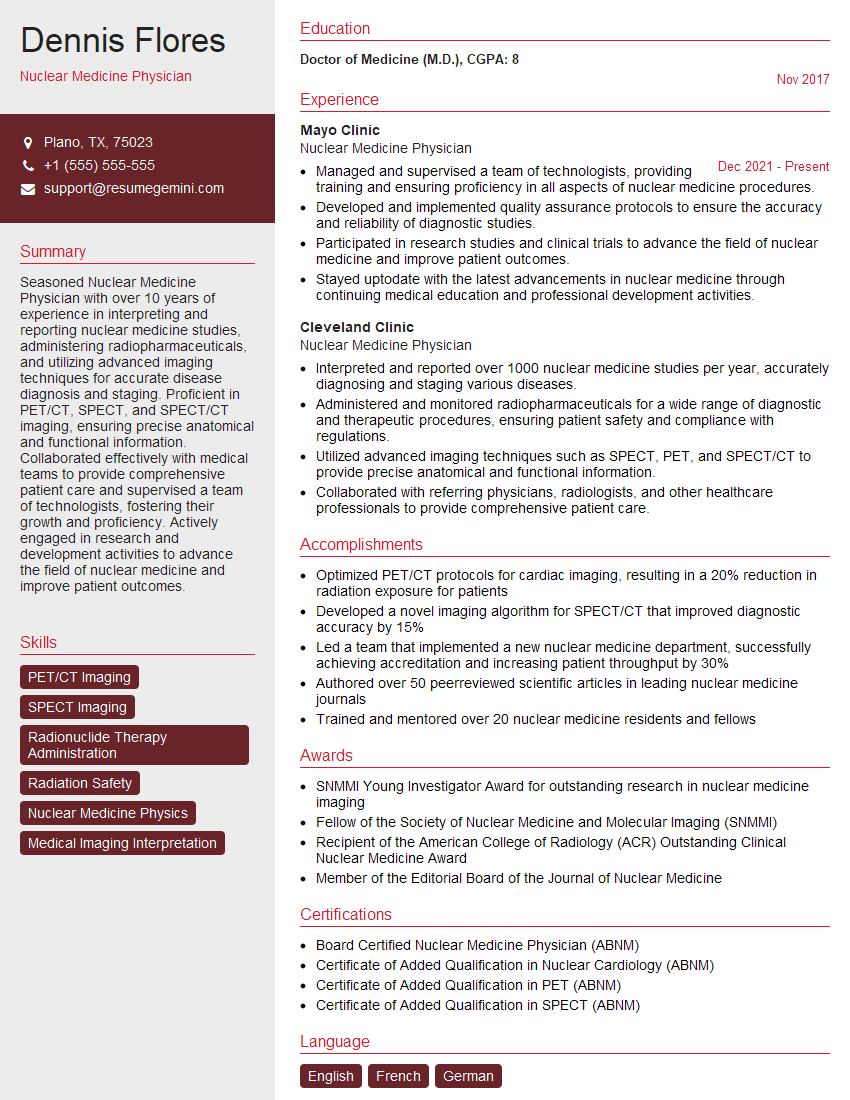
Nuclear Medicine Physician Resume Sample

Dosimetrist Resume Sample

Radiation Therapist Resume Sample
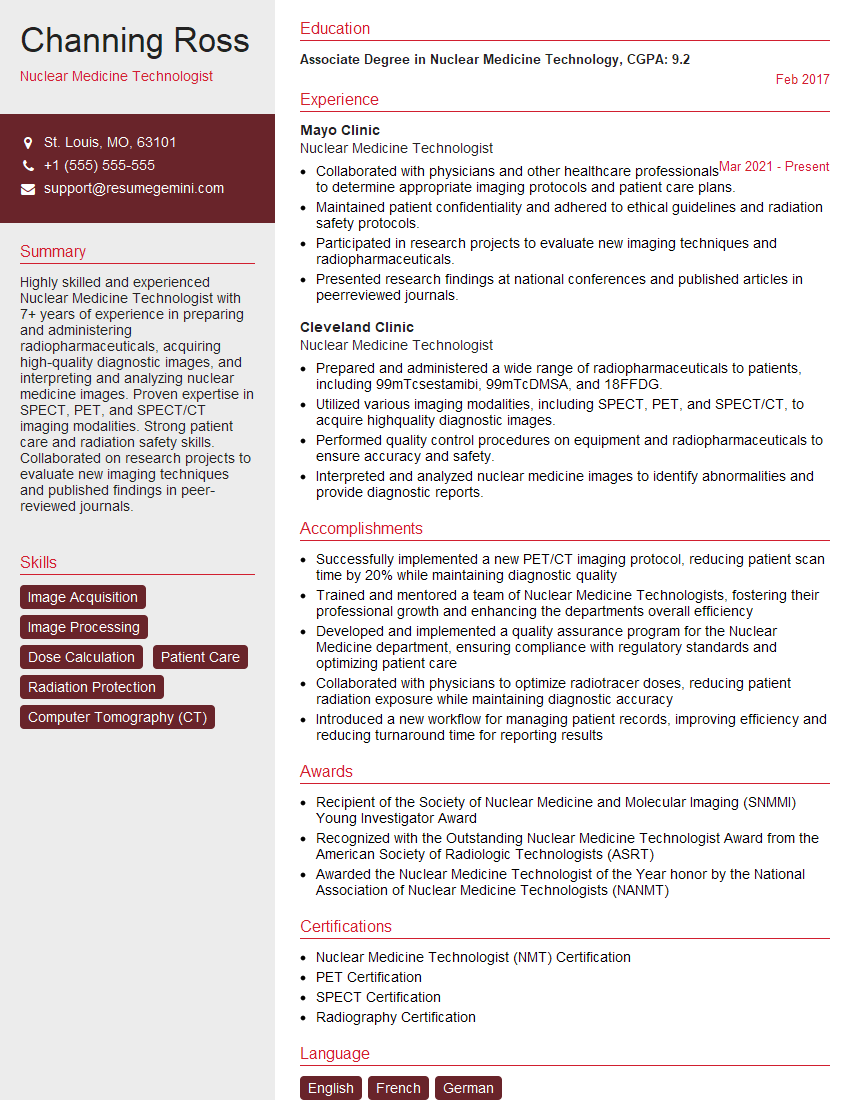
Nuclear Medicine Technologist Resume Sample

Radiation Safety Officer Resume Sample

Radiological Technologist Resume Sample

Health Physics Technician Resume Sample
Explore more articles
Users Rating of Our Blogs
Share Your Experience
We value your feedback! Please rate our content and share your thoughts (optional).
What Readers Say About Our Blog
To the interviewgemini.com Webmaster.
Very helpful and content specific questions to help prepare me for my interview!
Thank you
To the interviewgemini.com Webmaster.
This was kind of a unique content I found around the specialized skills. Very helpful questions and good detailed answers.
Very Helpful blog, thank you Interviewgemini team.