Cracking a skill-specific interview, like one for Radiation Protection Program Development and Implementation, requires understanding the nuances of the role. In this blog, we present the questions you’re most likely to encounter, along with insights into how to answer them effectively. Let’s ensure you’re ready to make a strong impression.
Questions Asked in Radiation Protection Program Development and Implementation Interview
Q 1. Describe the key components of a comprehensive radiation protection program.
A comprehensive radiation protection program is multifaceted, aiming to minimize radiation exposure to as low as reasonably achievable (ALARA) levels. Key components include:
- Radiation Safety Officer (RSO): A designated individual responsible for overseeing the program and ensuring compliance.
- Written Program: A detailed document outlining procedures, responsibilities, and emergency plans. This acts as a blueprint for radiation safety.
- Radiation Surveys and Monitoring: Regular measurements of radiation levels to identify potential hazards and ensure compliance with regulatory limits. This is like a health check for the radiation environment.
- Personnel Monitoring: Tracking individual radiation exposure through dosimeters or other monitoring devices. This ensures workers aren’t exceeding safe limits.
- Training and Education: Providing appropriate training to all personnel handling radioactive materials or working in radiation areas. This equips individuals with the knowledge to work safely.
- Emergency Preparedness and Response Plan: Procedures for responding to spills, accidents, or other emergencies involving radiation. This ensures safety and minimizes potential harm.
- Waste Management: Proper handling, storage, and disposal of radioactive waste in accordance with regulations. This prevents environmental contamination.
- Security: Secure storage of radioactive materials to prevent theft or unauthorized access. This is paramount for preventing potential harm to individuals and the environment.
- Record Keeping: Detailed documentation of radiation surveys, personnel monitoring results, and all other relevant data for auditing and tracking. This provides a comprehensive history of radiation safety practices.
For example, a hospital with a nuclear medicine department needs a robust program including regular surveys of all areas where radioactive materials are used, strict protocols for handling and disposal of radioactive waste, and comprehensive training for all staff interacting with these materials.
Q 2. Explain the ALARA principle and its application in radiation safety.
ALARA, which stands for “As Low As Reasonably Achievable,” is a fundamental principle in radiation protection. It emphasizes that radiation exposure should always be kept as low as possible, taking into account economic and social factors. It’s not about eliminating all radiation, but rather optimizing safety.
Application: ALARA guides decisions regarding radiation safety practices. For instance, when designing a new facility using X-ray equipment, ALARA principles would dictate the use of shielding materials to minimize stray radiation, optimizing the distance from the source, and choosing procedures that minimize exposure time. In a research setting involving radioactive isotopes, ALARA might involve using the minimum amount of radioactive material needed for the experiment, employing remote handling techniques, and using appropriate shielding. It’s a continuous process of evaluation and improvement.
Imagine a dentist using X-rays. ALARA principles would mean using the lowest possible radiation dose while still obtaining a diagnostically useful image. This might involve using faster film, precise collimation (limiting the beam size), and proper shielding.
Q 3. What are the different types of radiation and their associated hazards?
Radiation encompasses various types, each posing unique hazards:
- Alpha (α) radiation: Consists of positively charged particles; relatively low penetrating power, easily stopped by skin or paper. However, it’s highly damaging if inhaled or ingested.
- Beta (β) radiation: Consists of negatively charged particles or positrons; greater penetrating power than alpha, can penetrate skin but is generally stopped by thin sheets of metal.
- Gamma (γ) radiation: High-energy electromagnetic radiation; highly penetrating, requiring thick shielding materials like lead or concrete.
- X-radiation: Similar to gamma radiation but produced by different processes. It’s used extensively in medical imaging and industrial applications.
- Neutron radiation: Consists of neutral particles; highly penetrating and can induce radioactivity in materials. Requires specialized shielding.
Hazards: Exposure to ionizing radiation can lead to various health effects, from skin burns and radiation sickness to long-term risks like cancer. The severity depends on the type and amount of radiation, the duration of exposure, and the part of the body exposed. For example, ingestion of alpha-emitting radioactive material can cause severe internal damage.
Q 4. How do you conduct a radiation risk assessment?
A radiation risk assessment systematically evaluates the potential hazards associated with radiation sources and identifies measures to mitigate risks. It follows a structured process:
- Identify Radiation Sources: Determine all sources of radiation present, including sealed sources, unsealed sources, and naturally occurring radiation.
- Identify Workers at Risk: Determine who is potentially exposed and their level of exposure.
- Assess Exposure Pathways: Analyze how radiation might reach individuals (e.g., inhalation, ingestion, external exposure).
- Estimate Radiation Doses: Quantify the potential radiation doses to workers based on exposure scenarios.
- Evaluate Risks: Compare estimated doses to regulatory limits and evaluate associated health risks.
- Implement Control Measures: Develop and implement measures to reduce radiation exposure to ALARA levels, including administrative controls (e.g., work procedures), engineering controls (e.g., shielding), and personal protective equipment (PPE).
- Monitor and Review: Monitor exposure levels and review the effectiveness of control measures regularly, updating the assessment as needed.
For instance, a risk assessment for a nuclear power plant would be extensive, involving detailed calculations of doses from various sources and incorporating sophisticated safety systems. A smaller-scale assessment, like one for a dental X-ray unit, would be simpler but still necessitates careful consideration of factors such as shielding, exposure time, and collimation.
Q 5. What are the regulatory requirements for radiation safety in your area?
Regulatory requirements for radiation safety vary by location but generally involve adherence to national and international standards. These regulations outline permissible exposure limits, licensing requirements for radioactive materials, and mandatory safety procedures. Key aspects usually include:
- Licensing: Obtaining licenses to possess or use radioactive materials.
- Exposure Limits: Compliance with established dose limits for radiation workers and the public.
- Record Keeping: Maintaining thorough records of radiation exposure, surveys, and other relevant data.
- Emergency Preparedness: Establishing procedures for dealing with radiation accidents or emergencies.
- Training and Qualification: Requiring personnel to undergo appropriate training before handling radioactive materials.
- Inspections and Audits: Regular inspections and audits to ensure compliance with regulations.
Specific regulations might be set by agencies such as the Nuclear Regulatory Commission (NRC) in the United States or equivalent national bodies in other countries. These regulations are essential to protect workers and the public from the hazards of radiation.
Q 6. Explain the methods used for personnel radiation monitoring.
Personnel radiation monitoring tracks individual radiation exposure to ensure it remains below regulatory limits. Methods include:
- Film Badges: Contain photographic film that darkens upon exposure to radiation; provides a measurement of total exposure over a period of time. Relatively inexpensive but less precise than other methods.
- Thermoluminescent Dosimeters (TLDs): Crystals that store energy when exposed to radiation; the stored energy is released as light when heated, providing a measure of exposure. More accurate and sensitive than film badges.
- Optically Stimulated Luminescence Dosimeters (OSLs): Similar to TLDs, but use light stimulation to measure stored energy, offering high sensitivity and accuracy.
- Electronic Dosimeters: These devices measure radiation in real-time and can provide immediate feedback on exposure levels. They are often more expensive but very versatile.
The choice of monitoring method depends on factors like the type of radiation, the expected dose levels, and the required accuracy. For example, workers handling high-energy gamma radiation might use OSL dosimeters for their superior sensitivity.
Q 7. Describe different types of radiation detection instruments and their uses.
Various instruments detect and measure radiation, each suited to specific applications:
- Geiger-Müller (GM) counters: Detect beta and gamma radiation, often used for quick surveys to identify areas of higher radiation. Think of it as a radiation metal detector.
- Scintillation detectors: Measure various types of radiation with higher sensitivity and energy resolution than GM counters. Used in laboratories and research settings.
- Ionization chambers: Measure radiation dose rates, often used for area monitoring in high-radiation environments. Provides accurate dose readings for calibrated instruments.
- Proportional counters: Offer higher energy resolution than GM counters, suitable for specific applications like measuring alpha and beta emissions.
- Survey meters: Portable instruments measuring radiation levels, used for routine surveys and assessing potential hazards. They come in different types depending on the radiation being measured.
For example, a GM counter is useful for quickly checking for contamination in a lab, while a scintillation detector would be used for precise measurement of radioactivity in a sample. The choice of instrument depends on the type of radiation being measured, the required accuracy, and the application.
Q 8. How do you develop and implement radiation safety training programs?
Developing and implementing effective radiation safety training programs is crucial for minimizing radiation exposure risks. It’s not just about ticking boxes; it’s about fostering a safety-conscious culture.
My approach involves a multi-pronged strategy:
- Needs Assessment: First, I identify the specific radiation hazards and the knowledge gaps within the workforce. This involves analyzing job roles, radiation sources used, and potential exposure scenarios. For example, a radiologist will need a vastly different training program than a nurse handling radioactive materials.
- Curriculum Design: The training content must be tailored to the specific needs, including regulatory requirements (like those from the NRC or IAEA), practical procedures, emergency response plans, and the use of personal protective equipment (PPE). I always ensure it’s clear, concise, and engaging. Interactive elements like simulations and case studies significantly improve retention.
- Delivery Methods: Training can involve a mix of methods—classroom lectures, online modules, hands-on training, and competency assessments. Regular refresher courses are also essential, especially considering the evolving nature of radiation safety protocols.
- Assessment and Evaluation: Effective training programs are evaluated based on participant understanding and competency. Methods include written exams, practical demonstrations, and observation of workers in their actual work environment. Feedback is crucial for iterative improvement.
- Documentation: Meticulous record-keeping is paramount. This includes training records, assessment results, and any corrective actions taken based on performance gaps.
For instance, I once developed a training program for a medical imaging facility, incorporating realistic scenarios of spill management and emergency procedures. This resulted in a 20% reduction in reported near misses within the first six months.
Q 9. How do you manage radiation waste according to regulations?
Radiation waste management is a critical aspect of radiation protection, governed by stringent regulations to protect human health and the environment. My approach focuses on compliance, safety, and efficiency.
The process typically involves:
- Segregation and Classification: Different types of radioactive waste are segregated based on their activity level and physical form (e.g., liquids, solids). This ensures appropriate handling and disposal. Improper segregation can lead to significant safety and regulatory violations.
- Packaging and Labeling: Waste is carefully packaged to prevent leakage and contamination. Clear and unambiguous labeling, adhering to international standards, is crucial to ensure safe handling and transportation.
- Storage and Monitoring: Temporary storage is done in designated areas with appropriate shielding and environmental monitoring. Regular checks ensure the integrity of the containers and the level of radiation remains within acceptable limits.
- Transportation and Disposal: Transporting radioactive waste requires specialized vehicles and permits. Disposal methods depend on the waste’s characteristics and regulatory guidelines. This can range from shallow land burial to deep geological repositories for high-level waste.
- Record Keeping: Maintaining detailed records of waste generation, handling, storage, transportation, and disposal is paramount for compliance and accountability.
For example, I’ve worked with nuclear power plants, implementing waste minimization strategies that led to a 15% reduction in overall waste volume, minimizing costs and environmental impact.
Q 10. What are the emergency procedures in case of a radiation incident?
Emergency procedures for radiation incidents must be well-defined, regularly practiced, and readily accessible to all personnel. A robust plan is critical to minimizing harm and mitigating environmental consequences.
Key elements include:
- Incident Notification: Clear procedures for immediate reporting to the relevant authorities (e.g., emergency services, regulatory bodies). Speed and accuracy are paramount.
- Evacuation and Shelter-in-Place Protocols: Defined evacuation routes and assembly points, along with shelter-in-place procedures depending on the nature and extent of the incident. These need to be regularly drilled.
- Containment and Control: Procedures to contain the radiation source and prevent further spread of contamination.
- Decontamination Procedures: Detailed plans for personnel and environmental decontamination using appropriate methods and equipment.
- Medical Surveillance: Provisions for monitoring personnel exposed to radiation for potential health effects.
- Post-Incident Investigation: A thorough investigation to determine the root cause of the incident, identify areas for improvement, and prevent recurrence.
Imagine a scenario where a sealed radioactive source is damaged in a laboratory. The emergency response plan should detail procedures for isolating the area, notifying emergency personnel, evacuating non-essential personnel, and using appropriate shielding and decontamination protocols.
Q 11. Explain the process of radiation safety audits and inspections.
Radiation safety audits and inspections are systematic evaluations to verify compliance with regulations and identify potential hazards. It’s a proactive approach to ensuring ongoing safety.
The process generally involves:
- Planning and Scoping: Defining the scope of the audit, identifying areas to be reviewed, and determining the audit methodology. This might include reviewing documentation, conducting interviews, and performing on-site observations.
- On-Site Assessment: Inspecting facilities, equipment, and work practices to identify any deviations from established procedures and regulatory requirements. This can involve radiation measurements using specialized instruments.
- Documentation Review: Examining records related to radiation safety, such as training records, radiation surveys, and waste management logs, to ensure accuracy and completeness.
- Interviewing Personnel: Talking to workers at all levels to gain their perspectives on safety practices and identify any concerns or suggestions.
- Reporting and Corrective Actions: Preparing a comprehensive report detailing audit findings, highlighting areas of compliance and non-compliance, and recommending corrective actions.
- Follow-up: Verifying the implementation of corrective actions and confirming their effectiveness.
For example, during an audit of a hospital’s nuclear medicine department, I discovered a minor calibration issue with a radiation monitoring device. By addressing the issue promptly, we prevented potential inaccuracies in radiation exposure monitoring.
Q 12. Describe the role of the Radiation Safety Officer in a healthcare setting.
The Radiation Safety Officer (RSO) in a healthcare setting plays a vital role in ensuring the safety of patients, staff, and the environment. It’s a position that demands significant expertise and responsibility.
The RSO’s responsibilities typically include:
- Developing and Implementing Radiation Safety Program: Creating and overseeing the facility’s radiation safety program, ensuring it meets regulatory requirements and best practices.
- Radiation Safety Training: Providing training and education to staff on radiation safety procedures and protocols.
- Radiation Monitoring and Surveys: Conducting regular radiation surveys to assess radiation levels and identify potential hazards.
- Radiation Protection Equipment Management: Managing the use and maintenance of radiation protection equipment, such as lead aprons and shielding.
- Waste Management: Overseeing the management and disposal of radioactive waste in accordance with regulations.
- Regulatory Compliance: Ensuring the facility complies with all relevant radiation safety regulations and reporting requirements.
- Emergency Response: Developing and implementing emergency procedures for radiation incidents.
The RSO serves as a crucial link between the facility and regulatory authorities, acting as a knowledgeable resource and advocate for radiation safety.
Q 13. How do you ensure compliance with radiation safety regulations?
Ensuring compliance with radiation safety regulations is an ongoing process requiring a proactive and multi-faceted approach. It’s not simply about reacting to violations; it’s about creating a culture of safety.
My strategy includes:
- Regular Audits and Inspections: Conducting regular internal audits and facilitating external inspections to identify potential areas of non-compliance.
- Training and Education: Providing comprehensive radiation safety training to all personnel. Refresher courses are vital to address evolving regulations and best practices.
- Documentation and Record-Keeping: Maintaining detailed and accurate records of all radiation safety activities, including radiation surveys, waste management, and training records. This serves as proof of compliance.
- Equipment Calibration and Maintenance: Regular calibration and maintenance of radiation monitoring equipment and other radiation protection devices ensure their accuracy and reliability.
- Emergency Preparedness: Developing and regularly testing emergency response plans for radiation incidents.
- Regulatory Updates: Staying abreast of changes in radiation safety regulations and incorporating these updates into the facility’s radiation safety program. Regulatory updates are frequent, so continuous learning is crucial.
- Communication and Collaboration: Open communication with staff, management, and regulatory agencies to ensure everyone is aware of radiation safety procedures and potential risks.
For instance, I recently helped a medical facility implement a new inventory management system for radioactive materials, enhancing traceability and minimizing the risk of loss or misuse.
Q 14. What are the different types of radiation shielding and their effectiveness?
Radiation shielding materials are crucial for protecting personnel and the environment from ionizing radiation. The effectiveness of a shielding material depends on several factors, including the type and energy of the radiation, the thickness of the shielding, and the material’s density.
Common types of shielding include:
- Lead: Excellent for shielding against gamma rays and X-rays. Its high density effectively absorbs these types of radiation.
- Concrete: Used extensively in nuclear facilities due to its cost-effectiveness and availability. The thickness required depends on the radiation energy.
- Steel: Provides good shielding against beta particles and low-energy gamma rays.
- Water: Effective for shielding against neutrons and gamma rays. Often used in nuclear reactors and research facilities.
- Earth or Soil: A natural and cost-effective option often used for low-level radiation sources.
The effectiveness of shielding is often expressed in terms of Half-Value Layer (HVL) – the thickness of the material required to reduce the radiation intensity by half. For example, lead may have a significantly lower HVL for gamma radiation compared to concrete, meaning less lead is needed to achieve the same level of shielding.
Choosing the right shielding material involves considering the type and energy of the radiation, cost, space constraints, and the ease of handling and installation.
Q 15. Explain the concept of effective dose and equivalent dose.
Effective dose and equivalent dose are both measures of the biological harm caused by ionizing radiation, but they account for different aspects of the exposure. Think of it like this: equivalent dose considers the type of radiation, while effective dose considers both the type and the organ sensitivity.
Equivalent Dose: This quantifies the biological effect of different types of ionizing radiation on a specific tissue or organ. It takes into account the Relative Biological Effectiveness (RBE) of the radiation. Different types of radiation (alpha, beta, gamma, X-rays, neutrons) have different abilities to cause damage. For example, alpha particles are more damaging than gamma rays at the same energy level. The unit for equivalent dose is the Sievert (Sv).
Equivalent Dose (HT) = DT x WR where DT is the absorbed dose in a tissue or organ (Gray, Gy), and WR is the radiation weighting factor (dimensionless). The radiation weighting factor accounts for the RBE of different radiation types.
Effective Dose: This represents the overall health risk from radiation exposure to the entire body. It accounts for both the equivalent dose to each organ and the tissue-specific weighting factors (WT) reflecting the different sensitivities of various organs to radiation. Some organs, like the bone marrow, are more sensitive than others, like the skin. The unit is also the Sievert (Sv).
Effective Dose (E) = Σ (WT x HT) where WT is the tissue weighting factor and HT is the equivalent dose in tissue T.
In short: Equivalent dose tells us the damage in a specific organ, while effective dose tells us the overall risk to the whole body. For example, a worker handling a radioactive source might receive a certain equivalent dose to their hands, but the effective dose would be lower because the weighting factors for the hands are lower than those of organs like the bone marrow.
Career Expert Tips:
- Ace those interviews! Prepare effectively by reviewing the Top 50 Most Common Interview Questions on ResumeGemini.
- Navigate your job search with confidence! Explore a wide range of Career Tips on ResumeGemini. Learn about common challenges and recommendations to overcome them.
- Craft the perfect resume! Master the Art of Resume Writing with ResumeGemini’s guide. Showcase your unique qualifications and achievements effectively.
- Don’t miss out on holiday savings! Build your dream resume with ResumeGemini’s ATS optimized templates.
Q 16. How do you manage radiation exposure to workers?
Managing radiation exposure to workers requires a multi-faceted approach, encompassing robust planning, implementation, and monitoring. The cornerstone is a comprehensive Radiation Protection Program (RPP).
- ALARA Principle: The foundation of any RPP is the ALARA principle – As Low As Reasonably Achievable. This means we minimize radiation exposure to workers through engineering controls, administrative controls, and personal protective equipment (PPE).
- Engineering Controls: These are physical modifications to the work environment that reduce exposure. This includes things like shielding (lead, concrete), distance (increasing distance from a source reduces exposure significantly), and containment (keeping radioactive materials enclosed).
- Administrative Controls: These are procedural controls to minimize exposure. Examples include establishing work procedures, training programs, work permits, and limiting the time spent in radiation areas (time).
- Personal Protective Equipment (PPE): This includes protective clothing, gloves, respirators, and dosimeters to monitor individual exposure. The selection of PPE is critical and depends on the type and level of radiation.
- Monitoring and Dosimetry: Regular monitoring of work areas and individual worker exposures is essential. This includes using various radiation detectors and providing personnel dosimeters (e.g., film badges, thermoluminescent dosimeters – TLDs) to measure individual dose.
- Medical Surveillance: Workers may need periodic medical examinations, depending on the nature of their work and potential exposure levels, to monitor for any radiation-induced health effects.
- Record Keeping: Meticulous record-keeping of all radiation exposures, incidents, and medical surveillance is mandatory for compliance and future reference.
For instance, in a nuclear power plant, engineers will use shielded remote handling tools to manage spent nuclear fuel, limiting direct worker exposure. In a hospital, proper training of technicians minimizes scatter radiation during X-ray procedures.
Q 17. Describe the process of investigating a radiation incident.
Investigating a radiation incident is a critical step in ensuring worker safety and preventing future occurrences. The process should follow a structured approach, ensuring thoroughness and accuracy.
- Immediate Actions: The first step involves securing the area, evacuating personnel if necessary, and providing immediate medical attention to those potentially exposed. The objective is to minimize further exposure and potential harm.
- Incident Assessment: A thorough assessment of the incident is performed, including determining the source and extent of the radiation release, identifying affected individuals and areas, and collecting initial data from radiation monitoring instruments.
- Data Collection and Analysis: Comprehensive data collection is crucial, encompassing radiation measurements, personnel dosimetry readings, witness accounts, and a review of operational procedures. This step may involve using specialized equipment and analysis software.
- Cause Determination: A root cause analysis is performed to identify the factors contributing to the incident. This often involves interviewing personnel, reviewing operational logs, and examining equipment for malfunctions.
- Corrective Actions: Based on the root cause analysis, corrective actions are implemented to prevent future occurrences. This may involve modifications to equipment, procedural changes, additional training, or enhanced safety measures.
- Reporting and Documentation: A detailed report is prepared documenting the incident, investigation, findings, corrective actions, and lessons learned. This report is submitted to regulatory authorities and internal management.
- Follow-up and Monitoring: After the immediate response, ongoing monitoring is needed to ensure the effectiveness of corrective actions and to identify any lingering effects of the incident.
For instance, a spill of radioactive material in a laboratory would trigger an immediate evacuation, followed by a detailed investigation to identify the source of the spill, the extent of contamination, and the corrective actions needed to prevent future spills, such as improved storage practices or enhanced worker training.
Q 18. How do you calculate radiation dose from a given source?
Calculating radiation dose from a given source isn’t a simple single formula, but rather depends heavily on the type of source, its activity, the distance from the source, and any shielding present. The basic principles utilize the Inverse Square Law and shielding factors.
Inverse Square Law: This states that the radiation intensity decreases proportionally to the square of the distance from the source. Doubling the distance reduces the intensity to one-fourth. I2 = I1 (d12 / d22) where I is intensity and d is distance.
Shielding: Different materials attenuate radiation differently. Lead, concrete, and water are commonly used as shielding materials. The shielding factor depends on the material’s thickness and the type and energy of the radiation. Shielding calculations often involve complex exponential decay functions based on material properties and radiation energy.
Point Source: For a simple point source emitting gamma radiation, a simplified calculation might use: Dose Rate = (Activity x Gamma Constant x Exposure Factor) / (Distance2). Here, the Gamma Constant is a source-specific value. However, this is a highly simplified model and doesn’t include shielding or other factors.
Complex Sources: For complex sources or geometries, Monte Carlo simulations are commonly employed. These computer programs use statistical methods to model the radiation transport, providing accurate dose estimations that include the effects of scattering, absorption, and other complex phenomena. This is the preferred method for complex radiation scenarios.
Real-world scenarios necessitate using specialized software (e.g., MCNP, FLUKA, Geant4) to account for the intricate factors involved in radiation transport and shielding, particularly for irregularly shaped objects and non-uniform source distributions.
Q 19. What are the limitations of different types of radiation detectors?
Various radiation detectors exist, each with unique advantages and limitations. The choice of detector depends on the type of radiation being measured, the energy range, the required sensitivity, and the application.
- Geiger-Müller (GM) Counters: Simple, portable, and relatively inexpensive, GM counters are excellent for detecting the presence of ionizing radiation but provide limited information on the type or energy of the radiation. They are not suitable for precise dosimetry.
- Scintillation Detectors: These detectors are highly sensitive and can provide information on both the energy and type of radiation. However, they are more complex and expensive than GM counters. They’re widely used in medical imaging and nuclear physics.
- Ionization Chambers: These detectors provide accurate measurements of radiation exposure rates but have lower sensitivity than scintillation detectors. They are often used for area monitoring.
- Thermoluminescent Dosimeters (TLDs): TLDs are personal dosimeters that accumulate radiation dose over time and are read out later. They are very useful for assessing personnel exposures, but require specific reading equipment and are not suitable for real-time monitoring.
- Proportional Counters: These offer better energy resolution than GM counters, enabling better discrimination between different types of radiation. However, they are generally less sensitive than scintillation detectors.
For example, a GM counter is suitable for a quick radiation survey of an area, while a scintillation detector is necessary for precise energy measurements of radioactive sources. TLDs are ideal for personal monitoring but are not useful for real-time monitoring of radiation levels.
Q 20. Explain the importance of radiation safety in medical imaging.
Radiation safety in medical imaging is paramount because it involves exposing patients (and sometimes staff) to ionizing radiation. While the benefits of medical imaging are immense in diagnosis and treatment, it’s crucial to minimize unnecessary exposure. The ALARA principle is strictly applied here.
- Optimization of Techniques: Radiologists and technicians must optimize imaging techniques to minimize radiation dose while maintaining diagnostic image quality. This includes selecting appropriate imaging modalities, adjusting technical parameters (kVp, mAs), and employing collimation to restrict the x-ray beam to the area of interest.
- Patient Shielding: Lead aprons and shields should be used whenever possible to protect sensitive organs from unnecessary radiation exposure, especially during fluoroscopy procedures. This reduces the radiation dose to the patient.
- Image Quality Assurance: Regular quality assurance programs are necessary to ensure that imaging equipment is functioning correctly, producing high-quality images with minimal radiation doses. This involves periodic testing and calibration of equipment.
- Staff Training and Protection: Medical staff should receive adequate training in radiation protection and should adhere to strict safety protocols to minimize their exposure to scatter radiation and leakage radiation. The use of lead shields and distance from the radiation source are critical.
- Dose Reporting and Record Keeping: Medical imaging facilities should maintain accurate records of patient doses, which are often used for epidemiological studies and dose optimization analysis.
Examples of practical applications include using digital radiography (DR) instead of film-screen radiography because DR systems are inherently more efficient and need less radiation to produce comparable images. Furthermore, careful collimation (reducing the size of the x-ray beam) restricts the area exposed to radiation, reducing the overall patient dose.
Q 21. What are the potential health effects of ionizing radiation?
The potential health effects of ionizing radiation depend on several factors, including the dose received, the type of radiation, the duration of exposure, and the individual’s age and overall health. Effects can be categorized as deterministic or stochastic.
Deterministic Effects: These effects have a threshold dose; below this threshold, no effect is observed. The severity of the effect increases with the dose. Examples include:
- Skin burns: High doses of radiation can cause redness, blistering, and ulceration of the skin.
- Radiation sickness: High doses can cause nausea, vomiting, fatigue, and other symptoms.
- Sterility: High doses can damage reproductive organs, leading to infertility.
Stochastic Effects: These effects have no threshold; any dose, no matter how small, carries a risk of causing an effect, although the probability increases with dose. The severity is independent of the dose. Examples include:
- Cancer: Ionizing radiation can damage DNA, increasing the risk of various cancers (leukemia, thyroid cancer, etc.).
- Hereditary effects: Radiation-induced genetic changes can be passed on to future generations, resulting in increased risk of birth defects or genetic diseases.
It’s essential to remember that the risk of stochastic effects is low at typical occupational and medical exposure levels. However, it’s crucial to minimize exposure as much as reasonably achievable, to limit any potential risk. The overall risk assessment depends on a variety of factors and usually involves a complex calculation.
Q 22. Describe the process of selecting appropriate personal protective equipment (PPE) for radiation workers.
Selecting appropriate Personal Protective Equipment (PPE) for radiation workers is a crucial step in ensuring their safety. It’s not a one-size-fits-all approach; the selection process depends heavily on the type and energy of the radiation, the anticipated dose, and the specific tasks being performed.
The process typically involves:
- Hazard Assessment: A thorough assessment identifies the radiation sources, their energy levels, and the potential pathways of exposure. This might involve radiation surveys and dose calculations.
- PPE Selection: Based on the hazard assessment, appropriate PPE is chosen. This could include lead aprons, thyroid shields, gloves, eye protection, and specialized garments. For example, working with high-energy X-rays might necessitate thicker lead aprons than working with low-energy gamma rays.
- Fit Testing: Ensuring the PPE fits correctly is vital. A poorly fitting apron leaves exposed areas vulnerable to radiation. Fit checks are essential and should be documented.
- Training and Education: Workers must receive proper training on how to use, maintain, and inspect their PPE. They need to understand its limitations and when it may not provide adequate protection.
- Regular Inspection and Maintenance: PPE should be regularly inspected for damage (cracks, tears, etc.) and replaced as needed. Lead aprons, for instance, can degrade over time, reducing their effectiveness.
Example: In a nuclear medicine department, technicians handling radioactive pharmaceuticals would require lead aprons, thyroid shields, and gloves appropriate for the specific isotope being handled. The type and thickness of the lead would vary based on the energy and activity of the isotope.
Q 23. How do you maintain radiation safety records and documentation?
Maintaining accurate and comprehensive radiation safety records and documentation is paramount for demonstrating compliance with regulations and ensuring worker safety. This involves a multifaceted approach.
- Personnel Monitoring Records: Detailed records of individual dosimeter readings, including type of dosimeter, wearer identification, and reading dates, must be maintained. This data provides crucial information about individual exposures.
- Radiation Surveys: Records of radiation surveys performed in work areas should include the date, time, location, instruments used, readings obtained, and the name of the individual conducting the survey. This helps track radiation levels over time and identify potential problem areas.
- Training Records: Documentation of radiation safety training received by each worker, including the date, topics covered, and instructor’s name, is crucial for demonstrating compliance.
- Incident Reports: Any incidents or near misses involving radiation exposure must be meticulously documented, including details of the event, actions taken, and corrective measures implemented. This helps prevent future occurrences.
- Equipment Calibration Records: Radiation detection instruments must be regularly calibrated to ensure accuracy. Detailed records of calibration dates, results, and any necessary adjustments are vital for ensuring reliable measurements.
- Waste Management Records: Records of radioactive waste generated, its type, quantity, disposal method, and date of disposal must be maintained. This ensures compliance with waste disposal regulations.
Software Applications: Many software applications specifically designed for radiation safety recordkeeping can greatly simplify this process, allowing for efficient data management, reporting, and compliance monitoring.
Q 24. Describe the process of implementing a new radiation safety procedure.
Implementing a new radiation safety procedure requires a systematic approach to ensure its effectiveness and acceptance by staff. The process generally involves:
- Need Identification: Clearly define the reason for the new procedure. This could be to address a newly identified hazard, improve existing practices, or comply with new regulations.
- Procedure Development: Develop a detailed, clear, and concise procedure outlining the steps to be followed. Use simple language and avoid jargon. Include diagrams or flowcharts as needed for clarity.
- Review and Approval: Have the procedure reviewed by relevant personnel, including radiation safety officers, supervisors, and potentially affected workers. Obtain necessary approvals before implementation.
- Training and Education: Provide comprehensive training to all personnel who will be affected by the new procedure. Ensure they understand the reasons behind it, the steps involved, and the importance of adherence.
- Implementation and Monitoring: Implement the new procedure and closely monitor its effectiveness. Observe workers using the procedure and address any challenges or concerns that arise.
- Evaluation and Revision: Periodically evaluate the effectiveness of the new procedure and make revisions as needed based on experience and feedback. This iterative process ensures continuous improvement.
Example: If a new type of radiation source is introduced to a facility, a new procedure would need to be developed to outline safe handling, storage, and use of this source, including appropriate PPE, work practices, and emergency response plans.
Q 25. What are the ethical considerations in radiation protection?
Ethical considerations in radiation protection are paramount. They center around the principles of beneficence (doing good), non-maleficence (avoiding harm), and justice (fairness).
- ALARA Principle: The ALARA (As Low As Reasonably Achievable) principle dictates that all radiation exposures should be kept as low as reasonably achievable, taking into account social and economic factors. This principle reflects a commitment to minimizing harm.
- Informed Consent: Individuals should be fully informed about the potential risks associated with radiation exposure before undergoing any procedures involving radiation. They must have the opportunity to provide informed consent.
- Transparency and Open Communication: Open and honest communication with workers and the public regarding radiation risks and protective measures is essential. Transparency builds trust and fosters collaboration.
- Equitable Distribution of Risks and Benefits: The benefits and risks of radiation exposure should be distributed equitably among all stakeholders. This means considering the potential impact on vulnerable populations and minimizing the burden on workers.
- Protecting Future Generations: Radiation protection practices should consider the long-term effects of radiation exposure, including the potential impact on future generations.
Example: When designing a new medical imaging procedure, ethical considerations must include weighing the benefits of improved diagnostics against the risks of radiation exposure to the patient and staff. Minimizing the radiation dose while maintaining diagnostic quality is paramount.
Q 26. How do you communicate radiation safety information effectively to non-technical audiences?
Communicating radiation safety information effectively to non-technical audiences requires careful planning and a clear understanding of the audience’s knowledge and concerns.
- Simple Language and Visual Aids: Avoid jargon and technical terms. Use simple, everyday language and visual aids such as diagrams, charts, and videos to explain complex concepts. Analogies can be particularly helpful. For instance, explaining radiation as invisible energy similar to sunlight, but with more potential harm, can make the concept relatable.
- Focus on Relevance: Explain why radiation safety is important to the audience. Connect it to their daily lives or concerns. For example, for patients, emphasize the benefits of medical imaging while explaining how radiation dose is minimized. For the general public, highlight the environmental impact of nuclear waste or radiation’s role in medical treatment.
- Interactive Sessions: Engage the audience through interactive sessions like Q&A or workshops. This allows them to ask questions and address their concerns directly.
- Tailored Messaging: Adapt the message to the specific audience. A presentation to healthcare workers will differ significantly from a public lecture.
- Multiple Channels: Use various communication channels such as brochures, posters, websites, social media, and presentations to reach a wider audience.
Example: To explain radiation to the public during a community outreach event, you might use a simple analogy comparing radiation exposure to sun exposure, emphasizing the importance of limiting both to protect one’s health.
Q 27. Describe your experience with radiation safety software and tools.
My experience with radiation safety software and tools is extensive. I am proficient in using various software packages designed for dose calculations, radiation monitoring, and record keeping.
- Dose Calculation Software: I have used programs like MCNP (Monte Carlo N-Particle Transport Code) and EGSnrc (Electron Gamma Shower version nrc) for complex dose calculations and simulations to optimize radiation shielding designs and procedures.
- Radiation Monitoring Software: I have experience using software that interfaces with radiation monitoring instruments, allowing for real-time data acquisition, analysis, and reporting. This includes software for managing personal dosimeters and environmental monitoring data.
- Record Keeping Software: I am familiar with dedicated software for managing radiation safety records, ensuring compliance with regulatory requirements, and generating reports for audits. This software usually includes features for personnel monitoring, training records, survey data, and incident reports.
- Data Analysis and Reporting Tools: I utilize various data analysis and reporting tools to generate summaries, trends, and statistical analyses of radiation safety data. This helps identify areas for improvement and demonstrate compliance.
Example: In one project, I used MCNP to simulate the radiation field around a new medical linear accelerator, optimizing the shielding design to minimize radiation exposure to staff and patients. The resulting data informed the construction of the facility.
Q 28. Explain your approach to continuously improving a radiation protection program.
Continuously improving a radiation protection program is an ongoing process that requires a commitment to excellence and a proactive approach.
- Regular Audits and Reviews: Conduct regular internal audits and external reviews of the radiation protection program to identify areas for improvement and ensure compliance with regulations. This involves reviewing all aspects of the program, including training, monitoring, procedures, and record keeping.
- Performance Indicators: Establish key performance indicators (KPIs) to track the effectiveness of the program. This might include metrics such as the average radiation dose to workers, the number of radiation incidents, and the rate of compliance with procedures.
- Feedback Mechanisms: Establish mechanisms for gathering feedback from workers, supervisors, and other stakeholders. This information can highlight areas where improvements are needed. Anonymous feedback surveys and suggestion boxes are valuable tools.
- Stay Updated: Keep abreast of the latest developments in radiation protection technology, regulations, and best practices through professional development activities, participation in conferences, and continuous reading of relevant literature.
- Incident Investigation: Thoroughly investigate any radiation incidents or near misses to identify the root causes and implement corrective actions. The lessons learned should be incorporated into the program to prevent future occurrences.
- Technology Integration: Explore and implement new technologies that can enhance radiation protection. This might include advanced dosimetry systems, improved radiation monitoring equipment, or new software tools for data management and analysis.
Example: After reviewing radiation dose data and identifying a trend of slightly elevated doses in a specific work area, we implemented a new procedure involving improved shielding and modified work practices. This resulted in a significant reduction in radiation exposure in that area.
Key Topics to Learn for Radiation Protection Program Development and Implementation Interview
- Regulatory Compliance: Understanding and applying relevant national and international radiation safety regulations (e.g., NRC, IAEA) to program design and implementation.
- Risk Assessment and Management: Conducting thorough radiation risk assessments, identifying hazards, and implementing effective control measures to minimize exposure.
- Radiation Monitoring and Measurement: Selecting and utilizing appropriate radiation detection and monitoring equipment; interpreting measurement data to inform program effectiveness.
- Personnel Protection: Designing and implementing training programs for personnel; ensuring proper use of personal protective equipment (PPE) and ALARA principles.
- Emergency Preparedness and Response: Developing and practicing emergency response plans for radiation incidents; ensuring effective communication and coordination with relevant authorities.
- Program Documentation and Reporting: Maintaining comprehensive records of program activities, including monitoring data, training records, and incident reports; preparing clear and concise reports for regulatory agencies and stakeholders.
- Program Evaluation and Improvement: Regularly reviewing program effectiveness, identifying areas for improvement, and implementing changes to enhance safety and compliance.
- Practical Application: Developing a radiation protection program for a specific scenario (e.g., hospital, research facility, industrial setting), considering unique challenges and regulatory requirements.
- Problem-Solving: Analyzing radiation incidents or near misses, identifying root causes, and implementing corrective actions to prevent recurrence.
Next Steps
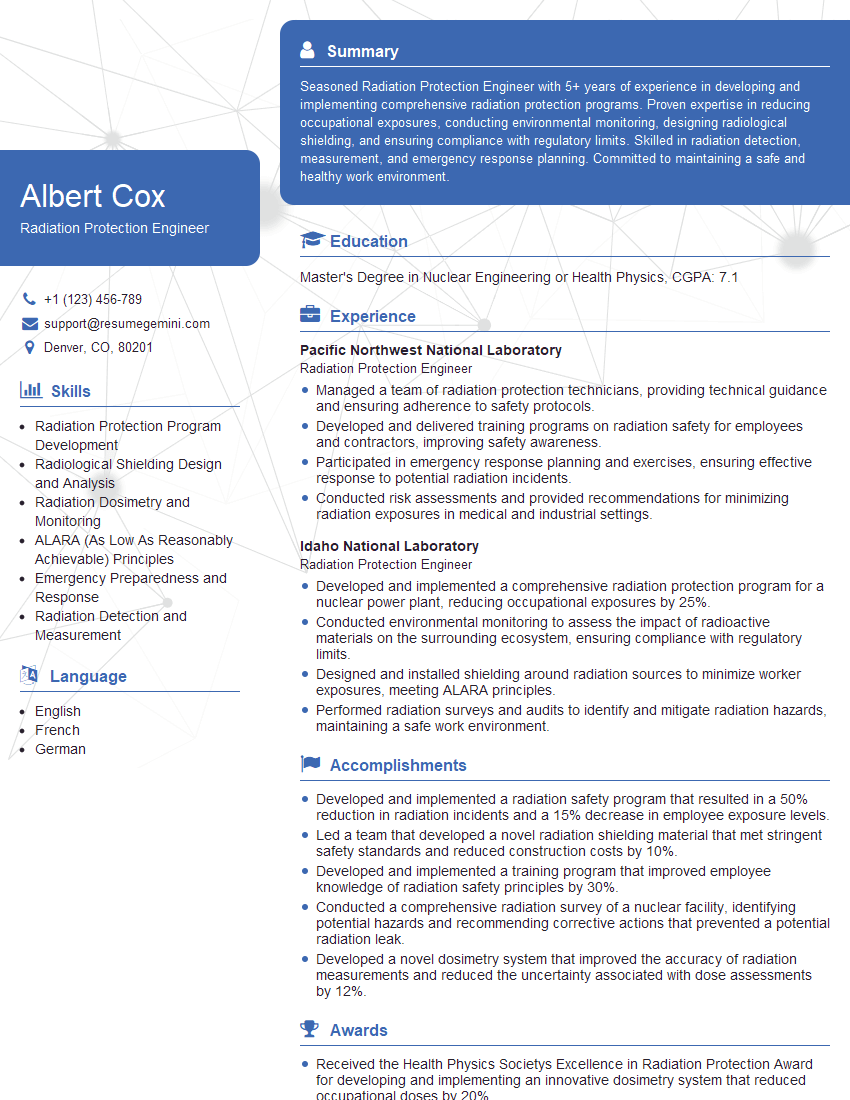
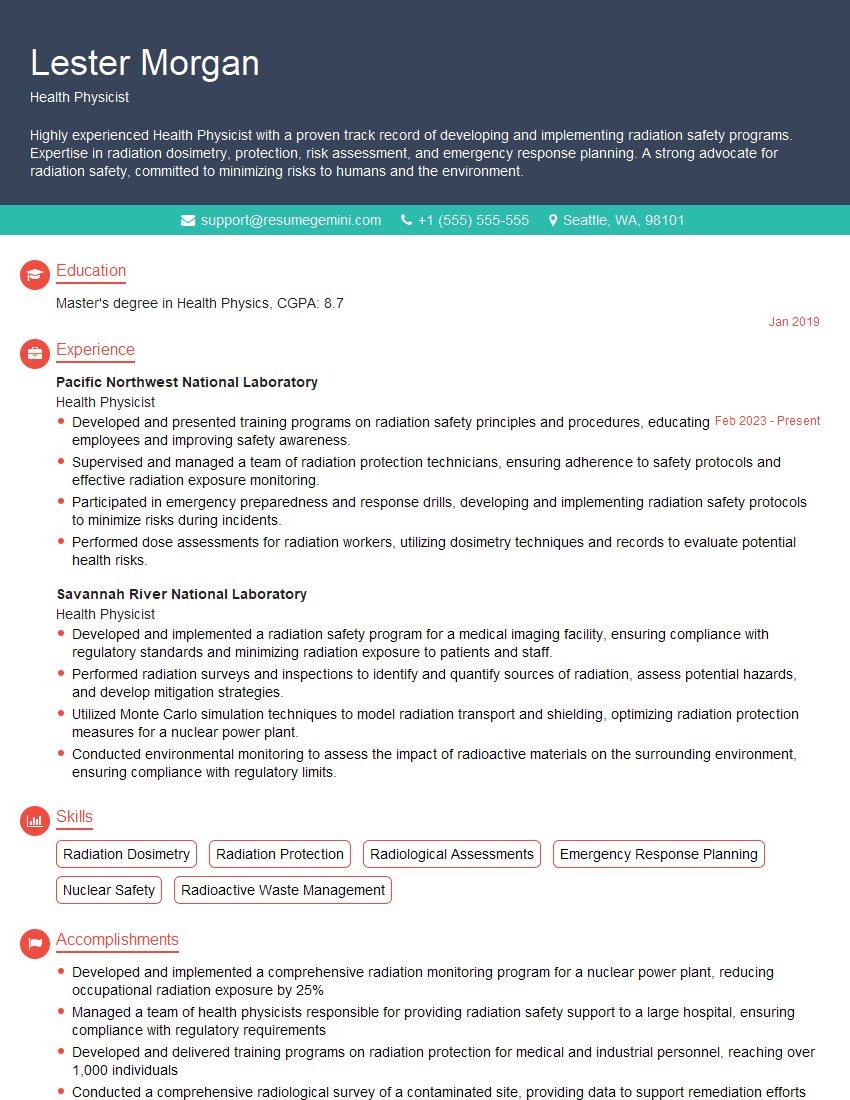
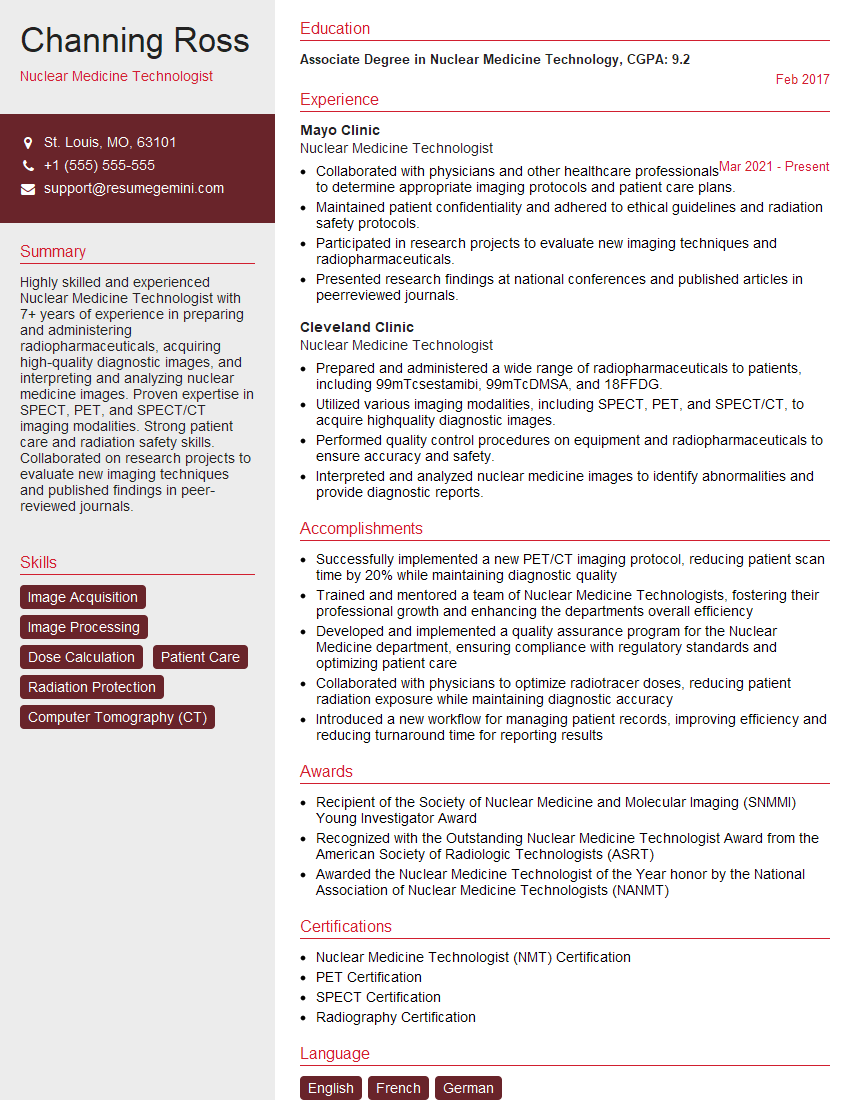
Mastering Radiation Protection Program Development and Implementation opens doors to exciting career advancements in a field crucial for public health and safety. A strong understanding of these principles is highly valued by employers and significantly enhances your job prospects. To further boost your chances, creating a compelling and ATS-friendly resume is essential. ResumeGemini is a trusted resource that can help you build a professional and effective resume, tailored to highlight your skills and experience. Examples of resumes specifically designed for Radiation Protection Program Development and Implementation professionals are available through ResumeGemini to provide you with valuable guidance.

Explore more articles
Users Rating of Our Blogs
Share Your Experience
We value your feedback! Please rate our content and share your thoughts (optional).
What Readers Say About Our Blog
To the interviewgemini.com Webmaster.
Very helpful and content specific questions to help prepare me for my interview!
Thank you
To the interviewgemini.com Webmaster.
This was kind of a unique content I found around the specialized skills. Very helpful questions and good detailed answers.
Very Helpful blog, thank you Interviewgemini team.