Are you ready to stand out in your next interview? Understanding and preparing for Radiation Safety Culture interview questions is a game-changer. In this blog, we’ve compiled key questions and expert advice to help you showcase your skills with confidence and precision. Let’s get started on your journey to acing the interview.
Questions Asked in Radiation Safety Culture Interview
Q 1. Describe the ALARA principle and its application in a radiation safety program.
ALARA, which stands for As Low As Reasonably Achievable, is a fundamental principle in radiation protection. It emphasizes that all radiation exposure should be kept as far below regulatory limits as is reasonably practical. This isn’t about eliminating all radiation; it’s about a balanced approach. We strive to minimize exposure, weighing the benefits of radiation use against the potential risks. It’s a continuous process of optimization.
In a radiation safety program, ALARA is applied through various methods. For example, a hospital using X-ray machines might implement ALARA by using high-quality shielding around the equipment, reducing patient exposure times, and employing appropriate collimation to focus the beam precisely. In nuclear power plants, ALARA might involve optimizing work procedures to minimize time spent in radiation areas, using robotic systems for maintenance tasks, and implementing sophisticated monitoring and alarm systems. The implementation is highly context-dependent.
Think of it like driving a car: you aim to drive safely, but you don’t necessarily avoid driving entirely. ALARA applies the same principle to radiation exposure: we strive to minimize risk without completely eliminating the benefits of radiation technology.
Q 2. Explain the importance of a strong safety culture in a radiation-using facility.
A strong safety culture in a radiation-using facility is paramount. It’s not just about following rules; it’s about a shared commitment to safety at every level. This culture fosters a proactive environment where individuals feel empowered to identify and report hazards, ask questions, and challenge unsafe practices without fear of reprisal. When everyone takes ownership of safety, the likelihood of incidents drastically decreases.
Imagine a facility where staff routinely ignores safety protocols because they feel pressure to meet deadlines or fear management’s reaction to delays. This is a weak safety culture. Conversely, a strong safety culture is characterized by open communication, active participation in safety programs, robust training, and continuous improvement. It’s an environment where safety is viewed as a shared value, not just a set of rules.
A strong safety culture translates to fewer accidents, less radiation exposure, higher employee morale, and ultimately, a safer and more productive work environment. It’s an investment that yields substantial returns in terms of improved safety performance and reduced risk.
Q 3. What are the key elements of an effective radiation safety training program?
An effective radiation safety training program must be comprehensive, tailored to the specific needs of the individuals and the facility, and regularly updated to reflect advancements in technology and regulations. It should include both theoretical and practical components.
- Theoretical Knowledge: This covers the basics of radiation physics, biology, and protection; regulatory requirements; types of radiation; and hazards associated with exposure.
- Practical Skills: This incorporates hands-on training, including the use of radiation monitoring equipment, proper handling of radioactive materials, emergency response procedures, and the application of ALARA principles.
- Regular Updates: The training must be updated to reflect changes in regulations, technology, and best practices. Regular refresher courses are crucial to ensure competency.
- Competency Assessment: The program should incorporate methods to assess trainees’ understanding and skills, such as written examinations and practical demonstrations.
- Documentation: Maintain thorough records of all training received by personnel.
For example, a medical facility might offer different training programs for physicians, radiology technicians, and nurses, each tailored to their specific roles and responsibilities.
Q 4. How do you ensure compliance with relevant radiation safety regulations?
Ensuring compliance with radiation safety regulations requires a multifaceted approach. It begins with a thorough understanding of the relevant regulations – be it national, regional, or international – which often requires consultation with regulatory bodies. This knowledge needs to be incorporated into all aspects of the radiation safety program.
- Develop and Implement Written Procedures: Establish clear, concise, and readily available written procedures covering all radiation-related activities, reflecting the regulations.
- Regular Audits and Inspections: Conduct both internal and external audits to identify areas needing improvement. Regular inspections of equipment and facilities help prevent malfunctions.
- Radiation Monitoring and Dosimetry: Implement a robust radiation monitoring and dosimetry program to track exposures and ensure limits are not exceeded.
- Record Keeping: Maintain meticulous records of all radiation-related activities, including training, inspections, and dosimetry results, to demonstrate compliance.
- Reporting: Establish clear protocols for reporting any radiation incidents or near misses to the appropriate authorities.
Failing to comply with regulations can result in significant penalties, including fines and even facility closure. Therefore, a culture of proactive compliance is essential for responsible radiation use.
Q 5. Describe your experience with radiation monitoring and dosimetry.
My experience with radiation monitoring and dosimetry spans over [Number] years. I’ve been involved in the selection, calibration, and operation of various radiation detection instruments, including Geiger counters, ionization chambers, and survey meters. I’m proficient in performing area surveys, assessing contamination levels, and interpreting dosimetry results.
I’ve worked extensively with personal dosimeters, both film badges and electronic dosimeters, ensuring their proper use, processing, and data interpretation. I’ve also been involved in investigating radiation incidents, analyzing the dosimetry data to determine exposure levels and contributing to the development of corrective actions. I’m particularly experienced in [Mention specific types of dosimetry or monitoring techniques, e.g., neutron dosimetry, environmental monitoring].
Data analysis and interpretation are crucial; I’m skilled in using various software packages for managing and analyzing dosimetry data, identifying trends, and generating reports for regulatory compliance.
Q 6. Explain the different types of radiation and their potential hazards.
Radiation encompasses various types, each with unique properties and hazards. The primary types are:
- Alpha radiation: Consists of heavy, positively charged particles. It has low penetration power, easily stopped by a sheet of paper or the outer layer of skin, but is highly damaging if ingested or inhaled.
- Beta radiation: Composed of high-energy electrons or positrons. It has moderate penetration power, penetrating a few millimeters of tissue. Shielding can be achieved with thin sheets of metal (e.g., aluminum).
- Gamma radiation: High-energy electromagnetic radiation. It has high penetration power, requiring thick shielding such as lead or concrete. It poses a significant external hazard.
- Neutron radiation: Consists of uncharged particles. Its penetration power varies, and it can cause significant biological damage.
- X-radiation: High-energy electromagnetic radiation similar to gamma radiation, produced by electronic transitions in atoms.
The potential hazards vary depending on the type, energy, and duration of exposure. Exposure can cause various effects, ranging from skin burns and radiation sickness to long-term health problems, including cancer and genetic damage. The severity of the effects depends on several factors including the dose received, the type of radiation, and the individual’s susceptibility.
Q 7. What are the key performance indicators (KPIs) for a successful radiation safety program?
Key Performance Indicators (KPIs) for a successful radiation safety program demonstrate that the program is effective in minimizing risks and ensuring compliance. These KPIs should be measurable, specific, and directly related to the program’s objectives.
- Dose rates: Track average and maximum individual doses, ensuring they remain well below regulatory limits.
- Number of incidents: Monitor the number of radiation incidents or near misses, aiming for a continuous decline.
- Compliance audit results: Assess the outcomes of regular audits to identify areas of weakness and improvement.
- Training effectiveness: Measure employees’ understanding of radiation safety through testing and observations.
- Equipment reliability: Monitor equipment uptime and performance, reducing potential for failures.
- Timeliness of reports: Ensure that all necessary radiation safety reports are submitted promptly.
- Employee satisfaction with safety training: Gauge employee understanding and comfort level with the program via surveys or feedback.
Regularly reviewing these KPIs and identifying trends allows for proactive adjustments to the radiation safety program, ensuring continuous improvement and a sustained commitment to safety.
Q 8. How do you investigate and report radiation incidents or accidents?
Investigating and reporting radiation incidents or accidents requires a systematic approach, prioritizing safety and regulatory compliance. It starts with immediate action to mitigate any ongoing hazard, ensuring the safety of personnel and the environment.
- Initial Assessment: First responders secure the area, assess the situation, and identify any injured individuals. Emergency services are contacted if necessary. Dosimetry readings are taken to determine potential exposures.
- Data Collection: A thorough investigation ensues, collecting data on the type and amount of radiation released, the source of the radiation, the duration and extent of exposure, and any contributing factors. This involves reviewing operational logs, interviewing witnesses, and analyzing radiation monitoring equipment data.
- Reporting: A formal report is prepared, detailing the incident, the investigative findings, the corrective actions taken, and any recommendations to prevent similar incidents in the future. This report is submitted to the relevant regulatory authorities in compliance with established regulations, such as those defined by the Nuclear Regulatory Commission (NRC) in the United States or equivalent agencies in other countries.
- Example: Imagine a sealed source containing Cobalt-60 is accidentally dropped and damaged. The immediate response would be evacuation of the area, followed by the use of radiation survey meters to map the extent of contamination. Subsequently, a detailed report would include the type of source, the level of contamination, and corrective measures like decontamination and proper disposal of the damaged source.
Q 9. Describe your experience with radiation safety audits and inspections.
My experience in radiation safety audits and inspections involves performing both internal and external reviews to assess compliance with safety regulations and best practices. Audits are proactive, focusing on preventative measures and identifying potential vulnerabilities. Inspections are more reactive, often following an incident or regulatory request.
- Audit Process: A typical audit includes a review of radiation safety programs, procedures, training records, emergency response plans, and radiation monitoring data. On-site observations of radiation-producing equipment and work practices are conducted. Interviews with personnel assess their understanding of safety protocols.
- Inspection Process: Inspections often focus on specific equipment or areas of concern, checking calibration records, documenting compliance with safety procedures, and assessing the effectiveness of radiation shielding. Non-compliance findings may lead to corrective actions.
- Example: During a recent audit of a medical imaging facility, we discovered a discrepancy between the facility’s documented procedures and the actual practices used by the technicians. This led to additional training and updated procedures to ensure consistent compliance with regulations.
Q 10. Explain the role of a Radiation Safety Officer (RSO).
The Radiation Safety Officer (RSO) is a critical figure, responsible for ensuring compliance with all applicable radiation safety regulations and the protection of personnel and the environment. They are the central point of contact for all matters concerning radiation safety within an organization.
- Responsibilities: RSOs develop and implement radiation safety programs, train personnel, conduct radiation surveys, manage radiation waste, respond to radiation incidents, and maintain comprehensive records. They work closely with regulatory agencies, ensuring compliance with all applicable laws and regulations.
- Qualifications: The specific qualifications for an RSO vary depending on the type of facility and regulations, but typically require a strong background in radiation physics, health physics, or a related field. They must possess a deep understanding of radiation safety principles and regulatory requirements.
- Example: An RSO in a nuclear power plant would be responsible for overseeing all aspects of radiation safety, from the design and operation of the plant to the management of radioactive waste. They would also conduct regular training for plant personnel and oversee emergency response procedures.
Q 11. What are the different types of radiation detectors and their applications?
Various radiation detectors are used depending on the type and energy of the radiation being measured. They measure different types of ionizing radiation. The selection of the detector depends heavily on the application and the radiation being measured.
- Geiger-Müller Counters: These are widely used for detecting beta and gamma radiation. They are relatively inexpensive and easy to use, but less accurate in measuring radiation dose.
- Scintillation Detectors: These detectors use a scintillating material that emits light when radiation interacts with it. The light is then converted into an electrical signal, allowing for precise measurements of various types of radiation. They are used in many applications such as nuclear medicine and environmental monitoring.
- Ionization Chambers: These are used to measure higher levels of radiation accurately and are often used for area monitoring in radiation protection. They provide better accuracy than Geiger counters at higher radiation levels.
- Proportional Counters: These detectors offer a greater sensitivity to radiation than Geiger counters, allowing for better detection of low-energy radiation.
- Thermoluminescent Dosimeters (TLDs): These passive dosimeters are used for personnel monitoring, measuring the accumulated radiation dose received by an individual over a period of time.
The choice of detector will depend on factors such as the type of radiation, the energy range of interest, and the required sensitivity and accuracy. For example, a Geiger-Müller counter might be suitable for a quick survey of an area for potential contamination, while a scintillation detector would be better suited for precise measurements of radiation levels in a research laboratory.
Q 12. How do you manage radiation waste in accordance with regulations?
Managing radiation waste in accordance with regulations is paramount for protecting human health and the environment. It involves classifying waste based on radioactivity levels, using appropriate packaging and storage methods, and ensuring proper transportation and disposal.
- Classification: Radioactive waste is classified based on its level of radioactivity and its physical form (e.g., liquid, solid). This determines the requirements for storage, transportation, and disposal.
- Packaging and Storage: Radioactive waste is packaged in containers designed to prevent leakage and protect against damage during transportation. It is stored in designated areas that meet strict safety standards, often with multiple levels of containment to prevent leakage or accidental release.
- Transportation and Disposal: Transporting radioactive waste requires special licenses and adherence to stringent safety regulations. Disposal methods may include shallow land burial, deep geological repositories, or specialized processing for volume reduction or stabilization.
- Record Keeping: Meticulous record keeping is crucial, documenting the generation, handling, storage, transportation, and disposal of all radioactive waste. This is essential for demonstrating compliance with regulations and for tracking the long-term management of waste.
- Example: Low-level radioactive waste from a hospital (e.g., contaminated syringes) might be disposed of by incineration, while high-level waste from a nuclear power plant (spent nuclear fuel) requires long-term geological disposal in highly secure facilities.
Q 13. How do you communicate radiation safety information effectively to staff?
Effective communication is crucial for a strong radiation safety culture. It involves using multiple methods to reach all staff members, tailoring the message to the audience’s level of understanding and employing clear, concise language.
- Training Programs: Comprehensive training programs are essential, covering radiation safety principles, procedures, emergency response plans, and the use of personal protective equipment. Training should be tailored to the specific job roles and tasks of personnel.
- Regular Communication: Regular updates, newsletters, or meetings keep staff informed about recent changes in regulations, best practices, and any significant events related to radiation safety.
- Visual Aids: Using visual aids like posters, diagrams, and videos can make complex information more accessible and understandable, especially for those with limited scientific backgrounds.
- Feedback Mechanisms: Establishing a system for feedback allows staff to voice concerns or ask questions, improving communication and fostering a culture of open dialogue about radiation safety.
- Example: Using simple, relatable analogies (e.g., comparing radiation exposure to the sun) can help non-technical personnel better grasp the concepts of radiation and its potential effects.
Q 14. Describe your experience with emergency preparedness and response related to radiation incidents.
Emergency preparedness and response are vital in radiation incidents. It requires well-defined procedures, regular drills, and trained personnel capable of handling various scenarios.
- Emergency Plans: Comprehensive emergency plans should address all possible scenarios, including radiation releases, equipment malfunctions, and transportation accidents. These plans should clearly define roles and responsibilities, evacuation procedures, and communication protocols.
- Training and Drills: Regular training and drills are crucial to ensure that personnel are prepared to respond effectively to any incident. Drills should simulate real-world scenarios, testing the effectiveness of emergency procedures and communication systems.
- Equipment and Resources: Adequate equipment and resources should be available, including radiation detectors, protective clothing, decontamination equipment, and communication systems.
- Communication: Effective communication is critical during an emergency. Clear communication channels should be established between personnel, emergency services, and regulatory authorities.
- Post-Incident Analysis: After any incident, a thorough analysis should be conducted to identify areas for improvement and to prevent similar incidents in the future.
- Example: A hospital using radioactive materials must have a plan outlining procedures for handling a spill of radioactive iodine, including the use of appropriate protective clothing, evacuation of the area, and notification of the relevant authorities. Regular drills ensure staff know exactly what to do.
Q 15. Explain the importance of personal protective equipment (PPE) in radiation safety.
Personal Protective Equipment (PPE) is paramount in radiation safety. It acts as a crucial barrier between the radiation source and the worker, significantly reducing the amount of radiation absorbed by the body. Think of it like a suit of armor against invisible threats. The specific PPE used depends on the type and level of radiation involved.
- Lead aprons and thyroid shields: These protect the most vulnerable parts of the body during procedures involving X-rays or gamma rays.
- Gloves: Used to prevent contamination from radioactive materials.
- Protective eyewear: Shields the eyes from scattered radiation.
- Respiratory protection: Essential when dealing with airborne radioactive particles or gases.
For instance, a radiologist performing a fluoroscopy procedure would wear a lead apron, thyroid shield, and gloves to minimize exposure. Failure to use appropriate PPE can result in significant radiation doses and potential long-term health consequences.
Career Expert Tips:
- Ace those interviews! Prepare effectively by reviewing the Top 50 Most Common Interview Questions on ResumeGemini.
- Navigate your job search with confidence! Explore a wide range of Career Tips on ResumeGemini. Learn about common challenges and recommendations to overcome them.
- Craft the perfect resume! Master the Art of Resume Writing with ResumeGemini’s guide. Showcase your unique qualifications and achievements effectively.
- Don’t miss out on holiday savings! Build your dream resume with ResumeGemini’s ATS optimized templates.
Q 16. What are the limitations of radiation safety monitoring equipment?
Radiation safety monitoring equipment, while crucial, has limitations. No device is perfect, and accuracy can be affected by various factors.
- Calibration: Equipment needs regular calibration to ensure accurate readings. A poorly calibrated instrument can lead to inaccurate dose estimations, potentially underestimating or overestimating the actual exposure.
- Environmental factors: Background radiation, temperature, and humidity can influence readings, creating uncertainty.
- Detector limitations: Different detectors have different sensitivities and energy responses. A detector optimized for gamma radiation may not be as effective in detecting beta particles. This means you need specific instruments for specific radiation types.
- User error: Improper use or placement of equipment can lead to inaccurate readings. For example, incorrect positioning of a dosimeter can under-report actual exposure.
A real-world example: A Geiger counter might register higher readings in an area with naturally occurring radioactive materials, thus masking a potentially dangerous localized radiation source.
Q 17. How do you ensure the accuracy and reliability of radiation monitoring data?
Ensuring the accuracy and reliability of radiation monitoring data involves a multi-faceted approach.
- Regular calibration: Equipment must be calibrated against traceable standards according to a strict schedule.
- Quality control checks: Regular checks and maintenance should be performed to identify and fix any malfunctions.
- Cross-checking: Using multiple monitoring instruments helps to validate data and catch inconsistencies.
- Data validation: Reviewing data for inconsistencies or anomalies and comparing it with operational records is essential. Any suspicious results should prompt an investigation.
- Trained personnel: Using properly trained individuals to operate and maintain the equipment is crucial.
For instance, we regularly send our dosimeters to a National Calibration Laboratory for verification. Discrepancies are investigated to ensure data reliability. We also maintain detailed logs of calibration and maintenance activities.
Q 18. How do you address non-compliance with radiation safety procedures?
Addressing non-compliance with radiation safety procedures requires a systematic approach that emphasizes education, training, and corrective actions.
- Identify the root cause: Was it a lack of understanding, inadequate training, a procedural flaw, or simply negligence? This investigation is critical to prevent recurrence.
- Retraining and reinforcement: Provide refresher training to address the specific issue and reinforce the importance of adherence to procedures.
- Disciplinary action: If negligence or willful disregard is found, disciplinary action might be necessary, ranging from verbal warnings to suspension or termination, depending on the severity and context.
- Procedure revision: If a procedural flaw is identified, the procedure must be reviewed and revised to make it clearer, safer, and less prone to error.
- Reporting and documentation: Meticulous documentation of all incidents, corrective actions, and follow-up is essential for continuous improvement and regulatory compliance.
In my experience, a proactive approach focusing on prevention through clear communication and training is significantly more effective than solely relying on punitive measures.
Q 19. What are the ethical considerations in radiation safety?
Ethical considerations in radiation safety are paramount. The fundamental principle is to ensure the safety and well-being of workers and the public. This includes:
- ALARA (As Low As Reasonably Achievable): This principle guides all radiation safety practices, minimizing exposure to radiation to the lowest practical levels.
- Transparency and informed consent: Workers must be fully informed about the potential risks associated with their work and given the opportunity to participate in decision-making processes.
- Confidentiality: Maintaining the confidentiality of health information related to radiation exposure is vital.
- Justice and fairness: Equitable distribution of risks and benefits related to radiation exposure. Everyone should have access to adequate protection.
- Professional responsibility: Radiation safety professionals have an ethical obligation to maintain competence, uphold professional standards, and act in the best interest of those exposed to radiation.
A clear example is the ethical obligation to report any potential radiation safety violations, even if it involves colleagues, to protect public health and safety.
Q 20. Explain the difference between internal and external radiation exposure.
The difference between internal and external radiation exposure lies in how the radiation interacts with the body.
- External exposure: Occurs when the source of radiation is outside the body. The radiation penetrates the body from the outside, causing ionization and potential damage to tissues and organs. This is the most common type of radiation exposure, such as that from X-rays or gamma rays.
- Internal exposure: Happens when radioactive material is ingested, inhaled, or absorbed through the skin. The radioactive material then emits radiation from within the body, leading to prolonged exposure and a potentially greater risk of damage. This could be from inhaling radon gas or ingesting contaminated food.
Imagine an X-ray: that’s external exposure. Now, imagine accidentally ingesting radioactive material: that’s internal exposure, with the radioactive substance emitting radiation directly within your body.
Q 21. Describe your experience with regulatory interactions concerning radiation safety.
My experience with regulatory interactions concerning radiation safety has been extensive and collaborative. I have worked closely with regulatory bodies like the [Insert relevant regulatory body, e.g., Nuclear Regulatory Commission (NRC) or equivalent in your region] throughout my career. This has included:
- License applications: Assisting in preparing and submitting license applications for various radiation-producing devices and activities.
- Inspections: Participating in regulatory inspections, ensuring compliance with all safety regulations, and addressing any findings.
- Reporting: Submitting regular reports on radiation levels, incidents, and corrective actions taken.
- Training and guidance: Staying informed on the latest regulations and participating in training programs to ensure that our practices remain compliant.
One significant experience involved working with regulators to implement a new radiation safety program for a facility undergoing a major upgrade. This required extensive collaboration, detailed documentation, and a thorough understanding of both the facility’s operations and the regulatory requirements. The successful completion of this project resulted in a significantly enhanced safety profile for the facility.
Q 22. How do you conduct a radiation safety risk assessment?
A radiation safety risk assessment is a systematic process to identify hazards, analyze risks, and determine appropriate control measures to minimize radiation exposure. Think of it like a detective investigating a potential crime scene – we’re looking for potential sources of radiation and how they could harm people.
The process typically involves these steps:
- Identifying radiation sources: This includes all potential sources of ionizing radiation, such as X-ray machines, sealed sources, and radioactive materials.
- Identifying potentially exposed individuals: Who might be exposed? This includes workers, patients, members of the public, and even the environment.
- Estimating radiation doses: Using physics principles and available data, we calculate the potential radiation dose to each identified individual.
- Evaluating risks: We compare the estimated doses to regulatory limits and consider the potential health consequences of exceeding those limits. This often involves using risk matrices to prioritize actions.
- Implementing control measures: This is where we develop and implement strategies to minimize or eliminate the risk. Examples include shielding, distance, time limitation, administrative controls, and personal protective equipment (PPE).
- Monitoring and review: The entire process is monitored and reviewed regularly to ensure its effectiveness and to adapt to changes.
For example, in a hospital setting, we’d assess the risk associated with an X-ray machine by considering the shielding, operating procedures, patient positioning, and the training of personnel. In an industrial setting, we’d analyze the potential radiation exposure from a gauge using sealed radioactive sources, factoring in shielding, working distances, and the frequency of use.
Q 23. What are the key components of a radiation safety manual?
A comprehensive radiation safety manual is the cornerstone of any successful radiation safety program. It’s like the rulebook for safe radiation practices. Key components include:
- Statement of policy and commitment: A clear declaration of the organization’s commitment to radiation safety.
- Organization chart and responsibilities: Clearly defining roles and responsibilities for radiation safety. Who’s in charge? Who is responsible for training?
- Radiation safety procedures: Detailed instructions for handling radioactive materials, using radiation-generating devices, and managing emergencies.
- Emergency response plan: Procedures for handling spills, accidents, and other emergencies.
- Training programs: Descriptions of training programs for workers, including frequency and content.
- Records management: A system for maintaining radiation safety records, including exposure monitoring data and training records.
- Radiation safety rules and regulations: A summary of applicable laws, regulations, and standards.
- References and appendices: Supporting documents, such as safety data sheets (SDS) for radioactive materials.
The manual should be readily accessible to all personnel and regularly reviewed and updated to reflect changes in regulations, technology, or organizational structure.
Q 24. How do you stay up-to-date with changes in radiation safety regulations and best practices?
Staying current in radiation safety requires continuous effort. It’s a dynamic field! I employ several strategies:
- Professional organizations: Active membership in organizations like the Health Physics Society provides access to publications, conferences, and networking opportunities.
- Regulatory agency websites: I regularly check the websites of agencies such as the Nuclear Regulatory Commission (NRC) and the Environmental Protection Agency (EPA) for updates and changes in regulations.
- Scientific journals and publications: I stay abreast of the latest research and advancements in radiation safety through peer-reviewed journals and industry publications.
- Continuing education: Attending workshops, seminars, and conferences allows me to learn about new techniques, technologies, and best practices.
- Networking: Engaging with colleagues and experts in the field helps to share knowledge and stay informed about emerging issues.
This proactive approach ensures that my knowledge and practices align with the most up-to-date information.
Q 25. Describe your experience with radiation safety in specific applications (e.g., medical, industrial).
My experience spans both medical and industrial applications of radiation safety. In the medical field, I’ve worked extensively with diagnostic X-ray machines, ensuring proper shielding, quality control, and operator training to minimize patient and staff exposure. This involved developing and implementing ALARA (As Low As Reasonably Achievable) programs for various radiology departments. One memorable project involved optimizing the shielding design for a new CT scanner, resulting in a significant reduction in scatter radiation.
In industrial applications, I’ve worked with facilities using sealed radioactive sources for non-destructive testing. This required rigorous adherence to safety protocols, including meticulous source inventory management, regular leak testing, and strict controls over access to restricted areas. I’ve also been involved in decommissioning projects, safely removing and disposing of obsolete radioactive sources, ensuring environmental protection.
Q 26. Explain the concept of shielding and its role in radiation protection.
Shielding is a crucial aspect of radiation protection. It’s like building a wall between you and a source of radiation, reducing the amount of radiation that reaches you. Different materials offer varying levels of protection depending on the type and energy of the radiation.
The effectiveness of shielding depends on several factors including:
- Type of radiation: Alpha, beta, gamma, and X-rays require different types of shielding.
- Energy of radiation: Higher-energy radiation requires thicker and denser shielding.
- Shielding material: Lead, concrete, and water are commonly used shielding materials, each with its own advantages and disadvantages.
- Thickness of shielding: The thickness of the shielding material directly affects its effectiveness.
For example, lead is excellent for shielding against gamma rays and X-rays, while concrete is often used for shielding against neutrons. The choice of shielding material and thickness is determined through calculations based on the specific radiation source and the required level of protection.
Q 27. How do you ensure the safety of radiation workers?
Ensuring the safety of radiation workers is paramount. A multi-pronged approach is needed, encompassing:
- Comprehensive training: Regular training programs cover radiation safety principles, procedures, and emergency response. This must be tailored to the specific tasks and risks involved.
- Appropriate personal protective equipment (PPE): Providing and ensuring the correct use of PPE, such as lead aprons, gloves, and dosimeters.
- Effective work practices: Implementing ALARA (As Low As Reasonably Achievable) principles in all operations to minimize exposure.
- Regular monitoring: Performing routine monitoring of radiation levels in the workplace and individual worker doses to identify potential issues promptly.
- Medical surveillance: Providing regular health check-ups for workers to detect any potential health effects related to radiation exposure.
- Incident reporting and investigation: Developing procedures for reporting and investigating any radiation-related incidents or accidents, leading to corrective actions.
A strong safety culture is essential, where safety is prioritized over production, and workers feel empowered to raise concerns without fear of reprisal.
Q 28. Describe your experience with the development and implementation of radiation safety programs.
I have extensive experience in developing and implementing radiation safety programs. My approach is always to consider the specific needs of the organization and its workers. The process typically involves:
- Needs assessment: Identifying the radiation sources, workers potentially exposed, and the associated risks.
- Program development: Based on the needs assessment, developing a comprehensive radiation safety program that addresses all identified risks.
- Implementation: Implementing the program, including providing training, procuring necessary equipment, and establishing monitoring protocols.
- Training: Delivering tailored training to all personnel to ensure understanding of procedures and responsibilities.
- Monitoring and evaluation: Continuously monitoring program effectiveness, reviewing data, and adapting the program as needed.
- Regulatory compliance: Ensuring that the program meets all applicable regulatory requirements.
For instance, I once developed a program for a research facility that involved the safe handling and storage of radioactive isotopes. This included designing specialized containment systems, implementing stringent access controls, and creating detailed procedures for waste disposal. The successful implementation of this program ensured the safety of researchers and minimized environmental impact.
Key Topics to Learn for Radiation Safety Culture Interview
- Regulatory Compliance: Understanding and applying relevant regulations (e.g., NRC, IAEA) related to radiation safety, including licensing, reporting, and emergency preparedness.
- Radiation Protection Principles: Applying ALARA (As Low As Reasonably Achievable) principles, time, distance, and shielding techniques in practical scenarios.
- Risk Assessment and Management: Conducting radiation risk assessments, identifying hazards, evaluating potential exposures, and implementing control measures.
- Radiation Safety Programs: Developing and implementing effective radiation safety programs, including training, monitoring, and emergency response plans.
- Communication and Training: Effectively communicating radiation safety information to diverse audiences, designing and delivering engaging training programs.
- Incident Investigation and Reporting: Investigating radiation incidents, analyzing root causes, and preparing comprehensive reports.
- Quality Assurance and Quality Control: Implementing quality assurance and quality control measures to ensure the effectiveness of radiation safety programs.
- Personal Protective Equipment (PPE): Selecting, using, and maintaining appropriate PPE for various radiation work environments.
- Measurement and Monitoring Techniques: Understanding different radiation detection and measurement instruments and applying appropriate monitoring strategies.
- Waste Management: Proper handling, storage, and disposal of radioactive waste in compliance with regulations.
Next Steps
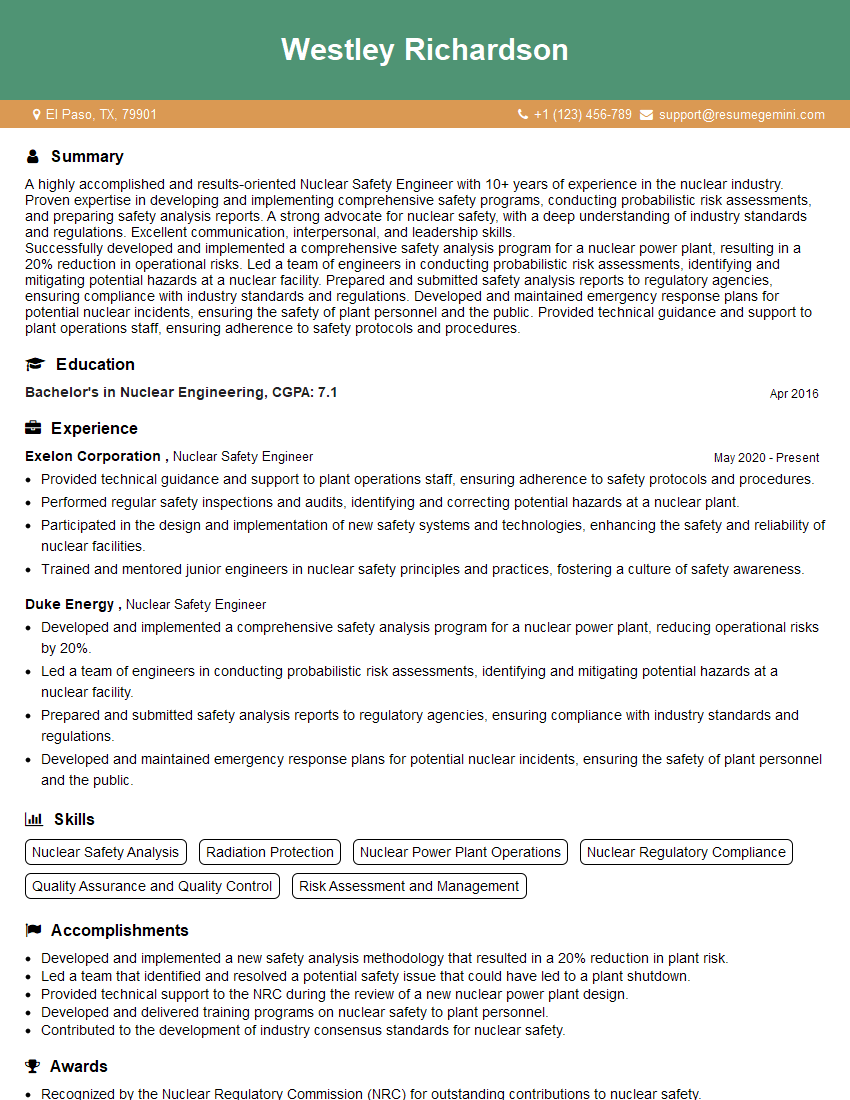
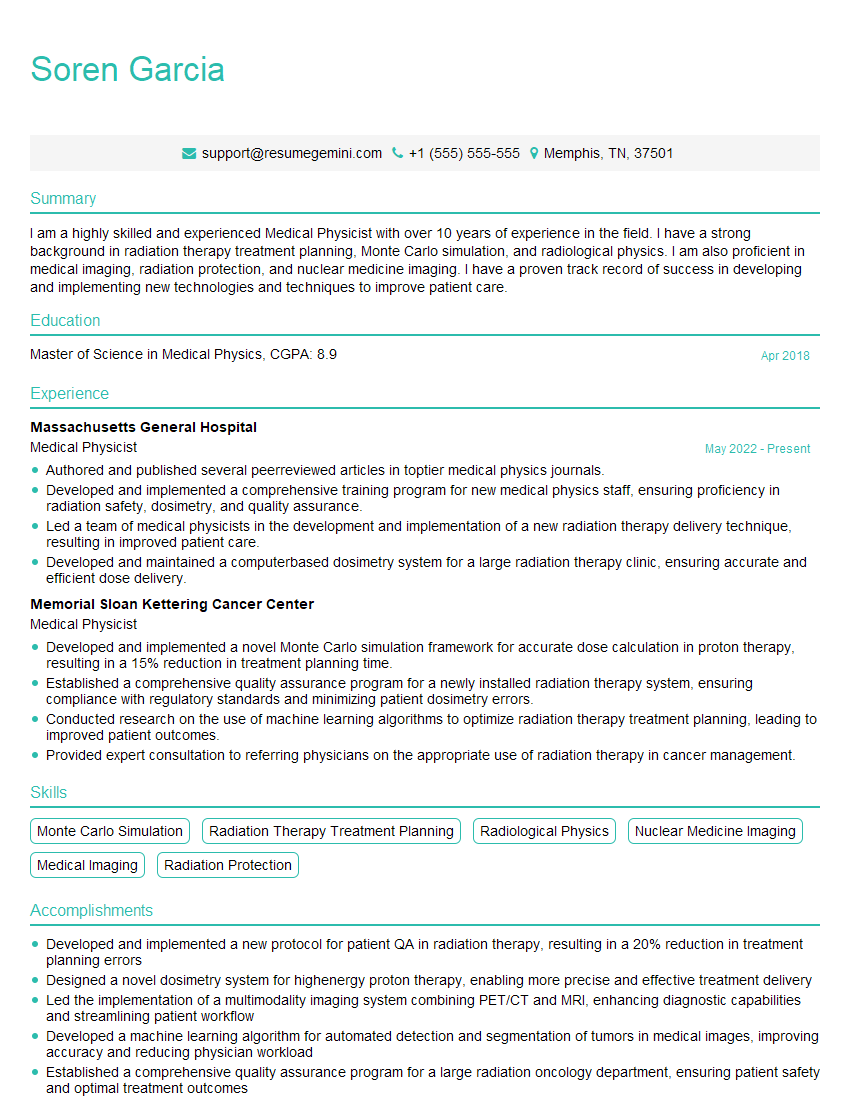
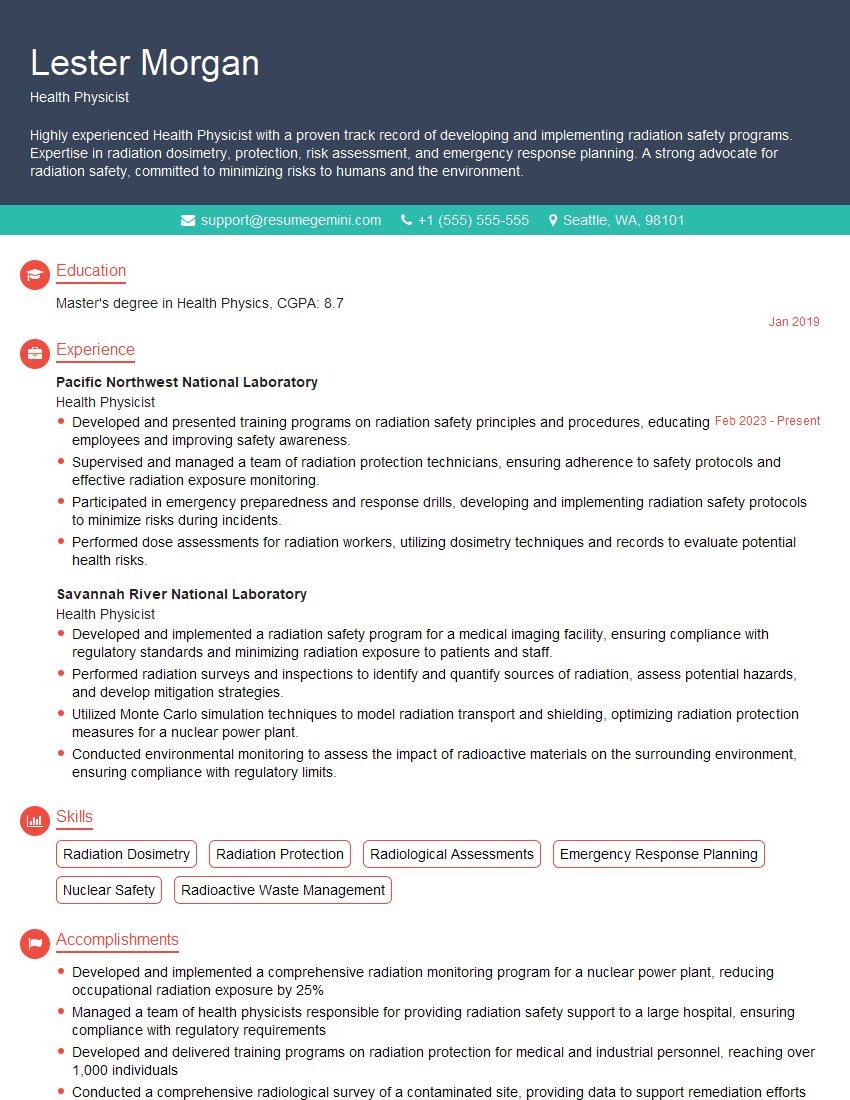
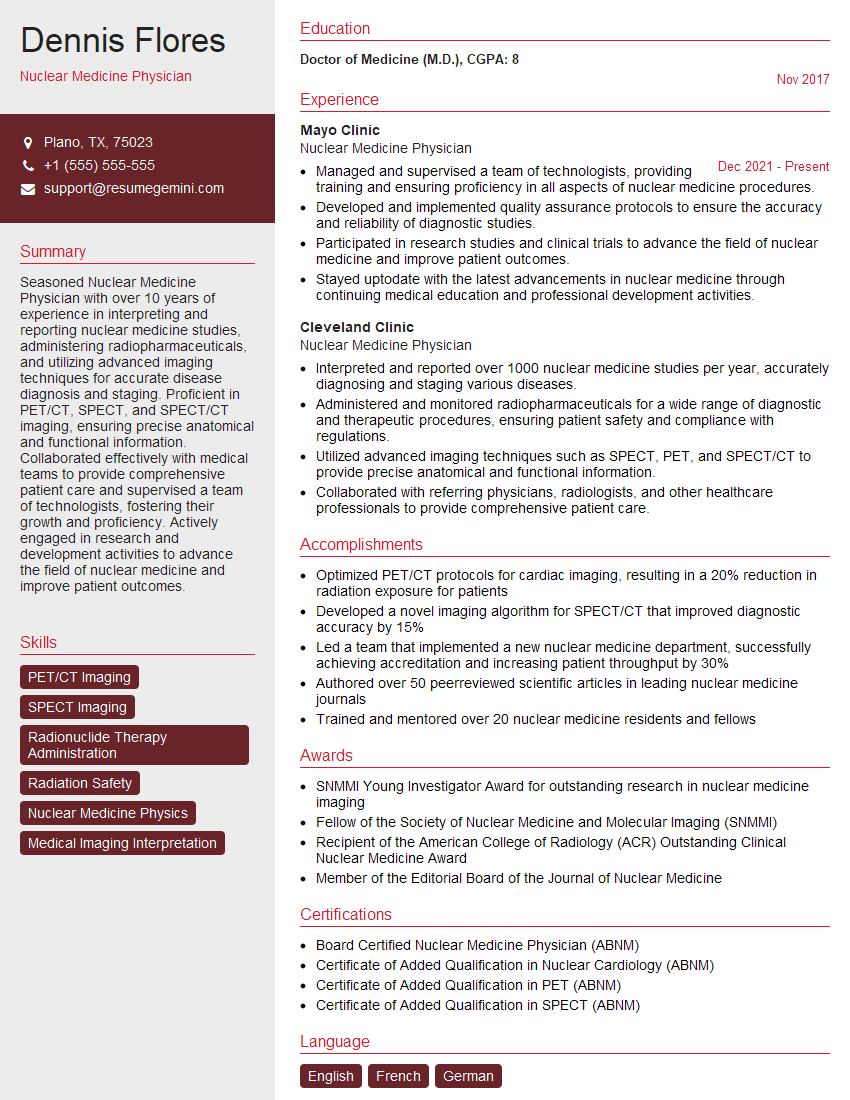
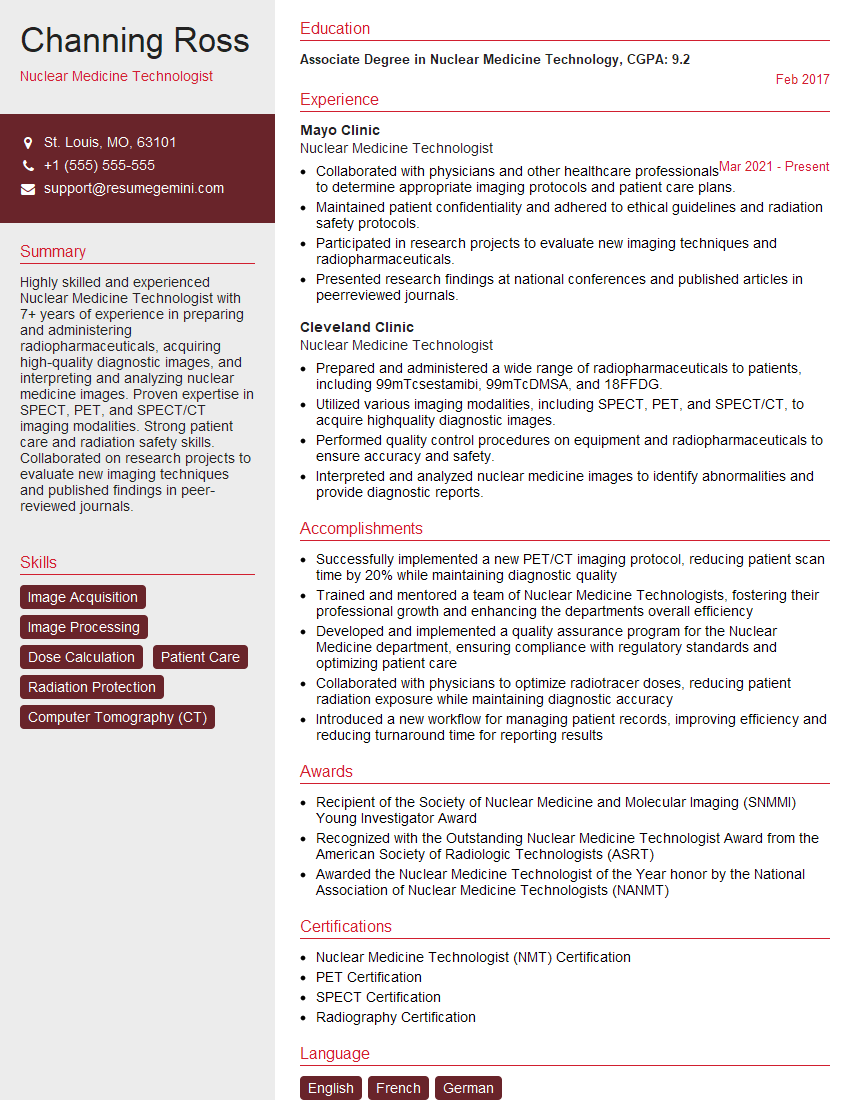
Mastering Radiation Safety Culture is paramount for career advancement in this specialized field. A strong understanding of these principles demonstrates commitment to safety and professionalism, opening doors to leadership roles and greater responsibility. To maximize your job prospects, create an ATS-friendly resume that highlights your relevant skills and experience. ResumeGemini is a trusted resource to help you build a professional and impactful resume. We provide examples of resumes tailored to Radiation Safety Culture to guide you in showcasing your qualifications effectively.

Explore more articles
Users Rating of Our Blogs
Share Your Experience
We value your feedback! Please rate our content and share your thoughts (optional).
What Readers Say About Our Blog
To the interviewgemini.com Webmaster.
Very helpful and content specific questions to help prepare me for my interview!
Thank you
To the interviewgemini.com Webmaster.
This was kind of a unique content I found around the specialized skills. Very helpful questions and good detailed answers.
Very Helpful blog, thank you Interviewgemini team.