Feeling uncertain about what to expect in your upcoming interview? We’ve got you covered! This blog highlights the most important Radiological Instrumentation interview questions and provides actionable advice to help you stand out as the ideal candidate. Let’s pave the way for your success.
Questions Asked in Radiological Instrumentation Interview
Q 1. Explain the principles of ionizing radiation detection.
Ionizing radiation detection relies on the principle that when ionizing radiation interacts with matter, it causes ionization – the removal of electrons from atoms, creating ion pairs (positive ions and free electrons). Various detectors exploit this effect differently. Some detectors directly measure the ionization current produced, while others use the ionization to initiate a cascade of events that can be easily detected. For example, in a gas-filled detector, the ion pairs created in the gas by radiation cause a measurable electrical pulse. In a scintillation detector, the ionization triggers light emission, which is then detected.
Think of it like this: imagine throwing pebbles (radiation) into a pond (matter). The pebbles create ripples (ionization) which spread out. We can detect these ripples to infer the presence and intensity of the pebble throw. Different detectors have different sensitivities to the size and type of ripples.
Q 2. Describe the function of a Geiger-Müller counter.
A Geiger-Müller (GM) counter is a type of gas-filled radiation detector that’s incredibly sensitive to ionizing radiation. It’s essentially a sealed tube filled with a low-pressure inert gas, such as argon. Inside the tube are two electrodes: a central anode wire and a cylindrical cathode. When ionizing radiation enters the tube, it ionizes the gas molecules. These ions are then accelerated by the high voltage applied between the electrodes, causing further ionization in a cascading effect called an avalanche. This avalanche produces a measurable electrical pulse, signaling the detection of radiation.
The simplicity and robustness of GM counters make them ideal for radiation surveys and monitoring. They’re relatively inexpensive and easy to use, although they lack energy discrimination – meaning they can’t distinguish between different types of radiation or their energies. Think of it as a simple ‘yes/no’ detector: radiation present or not, without specifying the type or strength.
Q 3. What are the different types of radiation detectors used in medical imaging?
Medical imaging uses a variety of radiation detectors, each optimized for specific applications. Common examples include:
- Scintillation detectors: Widely used in SPECT (Single-Photon Emission Computed Tomography) and PET (Positron Emission Tomography) scans, they detect gamma rays and positrons emitted by radiotracers. These detectors use scintillating crystals that produce light when struck by radiation, which is then detected by photomultiplier tubes.
- Semiconductor detectors: These offer superior energy resolution compared to scintillation detectors, making them valuable in applications such as gamma cameras and some specialized CT scanners. They work by creating electron-hole pairs when radiation interacts with the semiconductor material.
- Gas-filled detectors (e.g., ionization chambers): Used in radiation therapy dosimetry to measure the radiation dose delivered to a patient.
The choice of detector depends on factors such as the type of radiation being detected, the required energy resolution, and the sensitivity needed.
Q 4. How does a scintillation detector work?
A scintillation detector works by converting ionizing radiation into detectable light. It uses a scintillator material—a substance that emits light (scintillates) when it interacts with ionizing radiation. The light is then detected by a photomultiplier tube (PMT) or other light sensor. When radiation interacts with the scintillator, it excites the atoms in the material. As these atoms return to their ground state, they release energy in the form of photons (light). The number of photons emitted is proportional to the energy of the incident radiation.
The PMT amplifies the weak light signal from the scintillator, producing a measurable electrical pulse. The pulse height is proportional to the energy deposited by the radiation in the scintillator, allowing for energy discrimination. Imagine it like hitting a glow-in-the-dark toy: the harder you hit it, the brighter it glows. The brightness (light intensity) is analogous to the radiation energy.
Q 5. Explain the concept of radiation dose and its measurement units.
Radiation dose refers to the amount of ionizing radiation absorbed by a material or tissue. It’s a measure of the energy deposited by the radiation. The most common unit for radiation dose is the Gray (Gy), which represents 1 joule of energy absorbed per kilogram of tissue. Another common unit, especially in assessing biological effects, is the Sievert (Sv). The Sievert takes into account the type and energy of radiation and its biological effectiveness. For instance, 1 Gy of alpha particles will cause more damage than 1 Gy of gamma rays; therefore, the Sievert value will be higher for alpha radiation.
Understanding radiation dose is crucial in medical imaging and radiation therapy to balance the benefits of the procedure with the potential risks of radiation exposure. Accurate dose measurements are vital for ensuring patient safety and treatment efficacy.
Q 6. Describe the principles of image reconstruction in computed tomography (CT).
Computed tomography (CT) image reconstruction involves mathematically creating a cross-sectional image of the body from a series of X-ray projections taken at different angles. The process involves several steps:
- Data Acquisition: An X-ray source rotates around the patient, and detectors measure the X-ray intensity transmitted through the body at various angles.
- Raw Data Processing: The measured data is corrected for various artifacts, such as scattering and beam hardening.
- Filtered Back Projection (FBP) or Iterative Reconstruction: This is the core of the reconstruction algorithm. FBP is a classic method that involves filtering the projection data and back-projecting it onto a grid to create an image. Iterative methods, such as algebraic reconstruction techniques (ART), offer improved image quality but require more computation.
The final result is a series of detailed cross-sectional images, allowing physicians to visualize internal structures with unparalleled clarity. Think of it like solving a complex jigsaw puzzle, where each X-ray projection provides a piece of the puzzle, and the reconstruction algorithm puts all the pieces together to form the final image.
Q 7. What are the safety protocols for handling radioactive materials?
Safety protocols for handling radioactive materials are paramount to prevent radiation exposure and contamination. These protocols typically include:
- Time minimization: Limiting the time spent near radioactive sources reduces exposure.
- Distance maximization: Increasing the distance from the source significantly reduces radiation intensity (inverse square law).
- Shielding: Using appropriate shielding materials (e.g., lead) to absorb radiation.
- Personal Protective Equipment (PPE): Wearing appropriate PPE, such as lead aprons and gloves, to protect the body from radiation.
- Proper disposal: Radioactive waste must be handled and disposed of according to strict regulations.
- Regular monitoring: Personnel working with radioactive materials must undergo regular radiation monitoring to track their exposure.
These protocols are designed to adhere to the ALARA principle – As Low As Reasonably Achievable – minimizing radiation exposure to both personnel and the environment.
Q 8. How do you ensure quality control in radiological instrumentation?
Ensuring quality control in radiological instrumentation is paramount for patient safety and accurate diagnoses. It’s a multi-faceted process involving regular preventative maintenance, rigorous testing, and adherence to strict protocols.
- Regular Calibration and Performance Testing: We use standardized phantoms (objects mimicking human anatomy) and testing tools to verify the accuracy of the equipment. For example, in X-ray machines, we check for consistency in kVp (kilovolt peak – the voltage accelerating electrons) and mAs (milliampere-seconds – the product of current and time). Deviations from pre-defined acceptable ranges trigger immediate servicing.
- Image Quality Assessment: We meticulously review images for artifacts, noise, and overall clarity, comparing them to established benchmarks. This involves checking factors like spatial resolution, contrast, and image distortion. If anomalies occur, we analyze the source, whether it’s a technical issue or a procedural one (patient movement, incorrect settings).
- Quality Assurance Program: We follow a comprehensive quality assurance program incorporating regular audits, staff training on equipment operation and safety protocols, and meticulous documentation. This program incorporates the use of check-lists and regular quality control meetings to identify trends, address issues promptly, and ensure ongoing improvement. This documentation is vital for regulatory compliance and tracking equipment history.
- Safety Checks: Before each procedure, we perform crucial safety checks, including radiation leakage testing (to ensure radiation is contained within the machine) and verifying the functionality of safety interlocks (systems designed to prevent accidental exposure).
Think of it like maintaining a high-precision instrument, where even minor deviations can impact the results significantly. Consistent quality control procedures ensure the reliability and safety of our equipment.
Q 9. Explain the differences between various imaging modalities (X-ray, CT, MRI, PET).
Different imaging modalities utilize various principles to generate images of the human body. They each have unique strengths and weaknesses, making them suitable for different diagnostic applications.
- X-ray: This is the oldest and most common modality, using ionizing radiation to create images. X-rays pass through soft tissues relatively easily, but are absorbed more by denser materials like bone. The resulting image shows bone as white (high absorption), soft tissue as shades of gray, and air as black (low absorption). It’s excellent for visualizing fractures, foreign bodies, and some lung pathologies.
- CT (Computed Tomography): CT utilizes X-rays but rotates a source around the patient, collecting multiple projections to reconstruct a 3D cross-sectional image. This offers superior spatial resolution and better differentiation of soft tissues compared to plain X-rays. It is excellent for diagnosing trauma, tumors, and vascular abnormalities.
- MRI (Magnetic Resonance Imaging): MRI doesn’t utilize ionizing radiation but instead uses strong magnetic fields and radio waves to excite atomic nuclei within the body. Different tissues have unique relaxation times after the excitation, allowing for excellent soft tissue contrast. MRI is ideal for brain imaging, musculoskeletal imaging, and detecting many types of tumors.
- PET (Positron Emission Tomography): PET uses radioactive tracers that emit positrons, which annihilate with electrons to produce gamma rays. The distribution of these gamma rays is detected to create images showing metabolic activity. PET is particularly useful in oncology, cardiology, and neurology, to identify cancerous tissues and assess organ function.
Choosing the right modality depends on the specific clinical question. For example, a suspected fracture would be investigated using X-ray, while a complex brain tumor might require MRI and PET imaging for comprehensive evaluation.
Q 10. Describe the function of a linear accelerator in radiation therapy.
A linear accelerator (linac) is a sophisticated machine used in radiation therapy to deliver high-energy ionizing radiation to cancerous tumors. It accelerates electrons to near the speed of light, which then produce X-rays or other particles for treatment.
The linac’s primary function is to precisely target the tumor while minimizing damage to surrounding healthy tissues. This precision is achieved through several mechanisms:
- Electron Acceleration: Electrons are accelerated through a series of microwave cavities, gaining kinetic energy and reaching very high speeds.
- Target Interaction: Once the electrons reach the desired energy, they strike a target (typically tungsten), generating high-energy X-rays through bremsstrahlung radiation. Alternatively, electrons can be directly used to deliver radiation.
- Collimators: Collimators, essentially adjustable metal blocks, shape the radiation beam to precisely match the target area.
- Multileaf Collimators (MLCs): Sophisticated MLCs allow for highly conformal radiation delivery, shaping the beam with leaf-like structures to conform precisely to the tumor’s contours, further reducing radiation to healthy tissue.
- Treatment Planning System: Treatment plans are created using sophisticated software that incorporates images from CT, MRI, and PET scans, allowing for highly accurate targeting.
The linac’s ability to deliver precise, high-dose radiation to tumors while protecting healthy organs is a cornerstone of modern cancer treatment.
Q 11. What are the common types of image artifacts in medical imaging and how are they addressed?
Image artifacts are imperfections or distortions in medical images that can hinder accurate diagnosis. They can be caused by various factors, both patient-related and equipment-related.
- Motion Artifacts: Patient movement during image acquisition causes blurring or streaking. Solutions include immobilization techniques, shorter scan times, and gated imaging (synchronizing image acquisition with the patient’s breathing or heartbeats).
- Metal Artifacts: Metal implants (e.g., joint replacements, dental fillings) can cause significant streaking and signal dropout. Specialized sequences or imaging techniques might be employed to minimize their effect.
- Scatter Radiation Artifacts: In X-ray and CT, scatter radiation can degrade image quality. Grids or collimation techniques are used to reduce scatter.
- Ring Artifacts: In CT, detector malfunction can lead to ring-like artifacts. These require detector repair or replacement.
- Partial Volume Averaging: This happens when a small structure is included in multiple voxels (3D pixels), averaging its signal and obscuring details.
- Ghosting Artifacts: These appear as faint replicas of real objects. Often due to data processing problems in CT or MRI.
Identifying and addressing artifacts is a crucial aspect of image interpretation. Understanding their causes allows for choosing appropriate mitigation strategies and improving diagnostic confidence.
Q 12. How do you troubleshoot malfunctioning radiological equipment?
Troubleshooting malfunctioning radiological equipment requires a systematic approach combining technical knowledge, methodical investigation, and adherence to safety procedures.
The process typically involves:
- Safety First: Always prioritize safety. Turn off the machine, and ensure the area is safe before initiating any troubleshooting.
- Identify the Problem: Precisely describe the malfunction. Is it a display error, a functional issue, or a safety concern?
- Check Obvious Issues: Start with basic checks – are the power cables connected, are fuses intact, is the machine receiving the correct power supply?
- Consult Documentation: Check the equipment’s manual for troubleshooting guides and error codes.
- Perform Basic Tests: Run built-in self-tests, and check for error messages.
- Visual Inspection: Carefully examine the equipment for any physical damage, loose connections, or signs of overheating.
- Advanced Diagnostics: If the problem persists, more advanced diagnostic tools and techniques might be necessary. This can involve checking electronic components or using specialized test equipment.
- Seek Expert Assistance: If the issue can’t be resolved, always seek assistance from qualified service engineers or biomedical engineers. Never attempt repairs beyond your training and expertise.
Effective troubleshooting saves time and resources and is essential for maintaining the availability of critical radiological equipment.
Q 13. Explain the concept of radiation shielding and its importance.
Radiation shielding is crucial for protecting individuals from harmful ionizing radiation. It involves using materials that absorb or attenuate radiation, minimizing exposure to both patients and personnel.
The importance of shielding stems from the damaging effects of ionizing radiation on living tissues. Exposure can lead to various health problems, including cancer, birth defects, and radiation sickness. Shielding materials include:
- Lead: Lead is a highly effective shielding material due to its high atomic number, absorbing a significant portion of radiation. It’s commonly used in aprons, barriers, and walls in radiological areas.
- Concrete: Concrete is used in building construction to provide structural shielding, with thicker walls offering greater protection.
- Other materials: Other materials like barium, tungsten, and steel can also offer effective shielding, depending on the type and energy of the radiation.
The design of shielding is based on factors like the type and energy of the radiation source, the distance from the source, and the time of exposure. Proper shielding ensures that exposure levels remain well below regulatory limits, protecting both staff and patients from potential harm. It’s a critical element of radiation safety in medical and industrial settings.
Q 14. Describe the regulatory requirements for the use of radiological equipment.
Regulatory requirements for the use of radiological equipment are stringent and vary slightly across jurisdictions, but generally focus on ensuring patient safety and the protection of workers from ionizing radiation. Key aspects include:
- Licensing and Permits: Operating radiological equipment typically requires licenses and permits, demonstrating competency and adherence to safety standards.
- Quality Control and Assurance: Strict protocols for quality control and assurance are mandated, including regular calibrations, performance tests, and safety checks.
- Radiation Safety Officer (RSO): Many facilities require a designated RSO responsible for overseeing radiation safety procedures, ensuring compliance with regulations, and managing radiation safety programs.
- Personnel Training: Staff must receive appropriate training on safe operating procedures, radiation protection measures, and emergency protocols.
- Record Keeping: Meticulous record-keeping is vital, documenting equipment performance, patient exposures, and any incidents.
- Safety Surveys: Regular radiation surveys are needed to assess radiation levels in various areas to ensure compliance with established limits.
- Emergency Preparedness: Facilities must have emergency plans to handle accidental spills or equipment malfunctions, with well-defined procedures to minimize radiation exposure and protect personnel.
These regulations are overseen by regulatory bodies (e.g., the FDA in the US, or national equivalents in other countries). Failure to adhere to regulations can result in severe penalties, including fines and facility closure.
Q 15. What are the different types of radiation detectors used in nuclear medicine?
Nuclear medicine employs a variety of radiation detectors, each optimized for specific types of radiation and applications. The most common include:
- Scintillation detectors: These detectors use scintillating crystals (like NaI(Tl)) that produce light when interacting with gamma rays or X-rays. Photomultiplier tubes then convert this light into an electrical signal, proportional to the energy of the radiation. They are widely used in gamma cameras and other imaging systems due to their high efficiency and good energy resolution. Think of them like tiny light bulbs that flash when hit by radiation.
- Semiconductor detectors: These detectors, such as High-Purity Germanium (HPGe) detectors, utilize the interaction of radiation with a semiconductor material to create electron-hole pairs. The number of pairs is proportional to the radiation energy. They offer superior energy resolution compared to scintillation detectors, making them ideal for precise energy measurements in spectroscopy. They’re like very sensitive electronic sensors.
- Gas-filled detectors: These detectors, including ionization chambers and proportional counters, utilize the ionization of gas molecules by radiation. The amount of ionization is measured, providing information about the radiation’s energy and intensity. They are often used for radiation monitoring and dosimetry. Imagine them as tiny air-filled spaces that measure the impact of radiation by how much they conduct electricity.
The choice of detector depends on factors like the type of radiation being detected, the required energy resolution, efficiency, and cost.
Career Expert Tips:
- Ace those interviews! Prepare effectively by reviewing the Top 50 Most Common Interview Questions on ResumeGemini.
- Navigate your job search with confidence! Explore a wide range of Career Tips on ResumeGemini. Learn about common challenges and recommendations to overcome them.
- Craft the perfect resume! Master the Art of Resume Writing with ResumeGemini’s guide. Showcase your unique qualifications and achievements effectively.
- Don’t miss out on holiday savings! Build your dream resume with ResumeGemini’s ATS optimized templates.
Q 16. How does a gamma camera work?
A gamma camera, also known as an Anger camera, is a key instrument in nuclear medicine imaging. It’s designed to detect and image gamma rays emitted by radiopharmaceuticals administered to the patient. Here’s how it works:
- Gamma ray detection: The camera’s main component is a large crystal (typically NaI(Tl)) that scintillates when it interacts with gamma rays from the patient. This scintillation light is proportional to the energy of the gamma rays.
- Position determination: The crystal is coupled to an array of photomultiplier tubes (PMTs) that detect the light produced. The position of the gamma ray interaction within the crystal is determined by analyzing the pattern of light detected by the PMTs. Imagine triangulation to locate an earthquake based on many different sensors’ detection time.
- Energy discrimination: The PMTs’ signals are processed to determine the energy of the detected gamma rays. This helps to filter out scattered radiation and improve image quality. It is like filtering out unwanted noises from your audio signal.
- Image formation: Once the position and energy of the gamma rays are determined, they are used to construct an image of the radiopharmaceutical distribution within the patient’s body. This is achieved through computer processing which adds up each detected gamma event.
In essence, the gamma camera works like a sophisticated light-sensitive sensor that uses many individual detectors to create a whole image.
Q 17. Explain the principles of positron emission tomography (PET).
Positron Emission Tomography (PET) is a powerful nuclear medicine imaging technique that utilizes the annihilation of positrons. Here’s how it works:
- Radiotracer injection: A patient is injected with a radiopharmaceutical containing a positron-emitting radionuclide (e.g., 18F-FDG). These isotopes emit positrons, the antimatter counterparts of electrons.
- Positron annihilation: Once inside the body, the positron travels a short distance before encountering an electron. The two particles annihilate each other, releasing two gamma rays of equal energy (511 keV) that travel in almost opposite directions.
- Gamma ray detection: These gamma rays are detected by a ring of detectors surrounding the patient. The detectors are arranged in pairs, called coincidence detectors.
- Coincidence detection: Only gamma ray pairs detected simultaneously (within a narrow time window) are considered ‘true’ events, since they originate from the same annihilation event. This helps reduce background noise.
- Image reconstruction: The location of each annihilation event is calculated using the timing and position information from the detectors. A sophisticated computer algorithm uses this information to reconstruct a three-dimensional image of the radiotracer distribution in the body.
PET scans are highly valuable for detecting metabolic activity within the body, making them exceptionally useful in oncology, cardiology and neurology.
Q 18. Describe the process of calibrating radiological equipment.
Calibrating radiological equipment ensures accurate measurements and reliable results. The process typically involves several steps:
- Energy calibration: This step verifies that the energy scale of the detector is accurate. It often involves using sources of known gamma-ray energies to determine the relationship between the detector signal and energy. Imagine it like calibrating a ruler to ensure accurate measurements.
- Linearity calibration: This step checks that the detector’s response is linear across the energy range of interest. Non-linearity can introduce errors in energy measurements. Think of it as testing the uniformity of the ruler’s scale.
- Spatial calibration (for imaging systems): This step involves verifying the accuracy of position determination in imaging systems like gamma cameras. It ensures that the location of events in the image corresponds accurately to their actual location in the patient’s body. This is like calibrating a map.
- Efficiency calibration: This step measures the detector’s ability to detect radiation. It involves measuring the response to a known source of radiation. It determines the percentage of detected radiation compared to the total radiation emitted.
- Quality control checks: Regular quality control checks are crucial to maintain the calibration of the equipment. These may include tests of detector stability, uniformity, and resolution.
Calibration procedures are device-specific and must be performed according to manufacturer’s instructions and regulatory guidelines.
Q 19. How do you maintain accurate patient dosimetry?
Accurate patient dosimetry is critical for minimizing radiation exposure while ensuring diagnostic efficacy. It involves several key considerations:
- Accurate activity measurements: The exact amount of radioactivity administered to the patient needs to be precisely measured using calibrated instruments.
- Patient-specific calculations: Dosimetry calculations are often performed using computer software that takes into account the patient’s size, anatomy, and the distribution of the radiopharmaceutical within the body.
- Organ dose calculations: The effective dose to each organ must be estimated, considering the energy of the radiation, the uptake of the radiopharmaceutical in the organ, and the organ’s radiation sensitivity.
- Quality assurance programs: Comprehensive quality assurance programs are crucial, ensuring the accuracy and reliability of dosimetry calculations. This includes regular instrument calibration and checks for systematic errors.
- Regulatory compliance: All dosimetry procedures must comply with applicable national and international radiation protection regulations.
Maintaining accurate patient dosimetry requires a rigorous and multi-faceted approach, combining precise measurements, sophisticated calculations, and robust quality assurance programs.
Q 20. What are the potential biological effects of ionizing radiation?
Ionizing radiation, due to its ability to ionize atoms, can cause significant biological damage. The effects range from minor to severe, depending on several factors including:
- Dose: Higher doses of radiation lead to more severe effects. The total dose is also highly significant in determining the extent of the biological damage.
- Dose rate: A high dose rate (dose delivered quickly) generally causes more damage than a low dose rate (dose spread out over time).
- Type of radiation: Different types of radiation have varying biological effectiveness. Alpha particles, for instance, are far more damaging than X-rays at the same absorbed dose.
- Type of tissue or organ: Some tissues are more sensitive to radiation damage than others. For example, rapidly dividing cells like those in bone marrow are particularly vulnerable.
Potential effects include:
- Acute radiation syndrome (ARS): At very high doses, ARS can manifest with symptoms such as nausea, vomiting, fatigue, and potentially death.
- Cancer: Ionizing radiation can damage DNA, increasing the risk of developing various cancers. This risk increases with the dose received.
- Genetic effects: Radiation can cause mutations in reproductive cells, potentially leading to genetic defects in future generations.
- Other effects: Other potential effects include cataracts, sterility, and various other organ-specific damage.
Understanding these potential effects is paramount in implementing appropriate radiation protection measures.
Q 21. Explain the concept of ALARA principle in radiation protection.
The ALARA principle (As Low As Reasonably Achievable) is a fundamental tenet of radiation protection. It emphasizes that all radiation exposure should be kept as low as possible, consistent with the purpose of the exposure. This isn’t about eliminating all radiation exposure, which is unrealistic, but rather about optimizing the balance between the benefits of using radiation and the risks associated with its use.
Three basic approaches to applying the ALARA principle are:
- Time: Minimize the time spent near radiation sources. The shorter the exposure time, the lower the dose received.
- Distance: Increase the distance from radiation sources. Radiation intensity decreases rapidly with distance (inverse square law).
- Shielding: Use appropriate shielding materials (e.g., lead, concrete) to absorb radiation.
ALARA is not just a set of guidelines, it’s a philosophy that requires careful planning, implementation, and monitoring of all procedures involving ionizing radiation. It’s a continuous effort to minimize radiation dose without compromising the quality of medical imaging or other beneficial applications.
Q 22. Describe your experience with image processing and analysis software.
My experience with image processing and analysis software spans over a decade, encompassing various modalities like X-ray, CT, and MRI. I’m proficient in using industry-standard software such as OsiriX, Horos, and 3D Slicer. My expertise extends beyond basic image viewing to advanced techniques including image segmentation, registration, and quantitative analysis. For example, in a recent project involving lung cancer detection, I used 3D Slicer to segment tumor volumes from CT scans, allowing for precise measurement of tumor size and response to therapy. I’m also familiar with programming languages like Python, utilizing libraries such as Scikit-image and OpenCV for custom image processing tasks, which allows for automation and development of specialized analysis pipelines tailored to specific clinical needs. This proficiency allows me to extract meaningful clinical information from raw image data, improving diagnostic accuracy and treatment planning.
Q 23. What are the advantages and disadvantages of various imaging techniques?
Different imaging techniques offer unique advantages and disadvantages. For instance, X-rays are excellent for visualizing bone fractures due to their high bone contrast, but they offer limited soft tissue detail. CT scans, using X-rays in a rotating manner, provide superior cross-sectional imaging allowing for detailed visualization of both bone and soft tissues, but involve higher radiation doses. MRI, using magnetic fields and radio waves, excels in visualizing soft tissues and the brain, providing exceptional detail, but is more time-consuming and has contraindications for patients with certain metal implants. Ultrasound, employing sound waves, offers a real-time, non-ionizing imaging modality, useful for guiding procedures and assessing vascular structures but lacks the resolution of CT or MRI. The choice of technique depends on the clinical question, patient factors, and the trade-off between image quality, radiation dose, and cost. Think of it like choosing the right tool for a job: a hammer is great for nails, but a screwdriver is better for screws.
Q 24. How do you ensure the safety of patients and staff during radiological procedures?
Patient and staff safety is paramount. We adhere strictly to ALARA (As Low As Reasonably Achievable) principles, minimizing radiation exposure through optimized imaging protocols, proper shielding, and the use of appropriate personal protective equipment (PPE) such as lead aprons and thyroid shields. We verify patient identification meticulously before each procedure to avoid errors. Regular equipment calibration and quality control checks are performed to ensure optimal performance and minimize radiation leakage. In addition, comprehensive safety training is mandatory for all staff, covering radiation safety, emergency procedures, and infection control practices. We maintain detailed radiation exposure records for both patients and staff, facilitating ongoing monitoring and assessment of safety practices.
Q 25. Explain your understanding of radiation protection legislation.
My understanding of radiation protection legislation is comprehensive, encompassing national and international regulations. I am familiar with the Ionizing Radiation Regulations, which dictate safe practices for handling and using radioactive materials. This includes the requirements for radiation safety officers, radiation monitoring, and record-keeping. I am well-versed in the legal obligations related to dose limits for both patients and occupational workers, and I understand the reporting requirements for radiation incidents. The legislation ensures accountability and helps maintain a safe environment for everyone involved in radiological procedures. The core principles, such as ALARA and justification, are woven into our everyday work practices.
Q 26. Describe your experience with different types of radiation sources.
My experience encompasses various radiation sources, including X-ray tubes, gamma cameras using radioactive isotopes like Technetium-99m, and linear accelerators used in radiation therapy. I understand the physics governing each source, their specific applications, and the associated safety precautions. For example, I am skilled in the safe handling and disposal of radioactive materials, following strict protocols to prevent contamination. I have hands-on experience with the quality assurance and calibration of these sources, ensuring their accuracy and reliability. My experience spans across diagnostic and therapeutic applications of radiation.
Q 27. How do you handle emergency situations related to radiological equipment malfunctions?
In case of radiological equipment malfunctions, our established protocols prioritize safety. The first step is to immediately shut down the equipment and secure the area, preventing further exposure. Patients and staff are evacuated to a safe location. Next, we follow the established emergency procedures, contacting relevant authorities and the equipment manufacturer’s service team. We meticulously document the incident, including the time, nature of the malfunction, and any potential radiation exposure. A thorough investigation is conducted to identify the root cause of the malfunction and prevent recurrence. Regular maintenance and preventive checks are key to mitigating such situations.
Q 28. What are the latest advancements in radiological instrumentation?
Recent advancements in radiological instrumentation are revolutionizing medical imaging. One key development is the increasing use of artificial intelligence (AI) and machine learning for image analysis and automated interpretation, improving diagnostic accuracy and efficiency. Another significant advance is the development of low-dose imaging techniques, such as iterative reconstruction algorithms in CT, minimizing patient radiation exposure without sacrificing image quality. We are also seeing the rise of hybrid imaging systems, combining modalities like PET and CT for more comprehensive diagnostic information. Furthermore, advancements in detector technology, such as improved spatial resolution and sensitivity, are continually enhancing image quality across various modalities. These advancements not only improve diagnostic capabilities but also contribute to better patient care and improved workflow efficiency.
Key Topics to Learn for Your Radiological Instrumentation Interview
- Radiation Detection Principles: Understand the physics behind various radiation detection methods (e.g., ionization, scintillation, semiconductor detectors) and their applications in medical imaging and radiation therapy.
- Image Acquisition and Processing: Explore the processes involved in acquiring radiological images (X-ray, CT, MRI, PET) and the techniques used for image enhancement, reconstruction, and analysis. Consider the role of algorithms and software in these processes.
- Instrumentation Design and Calibration: Familiarize yourself with the components and functionality of different radiological instruments. Understand calibration procedures and quality control measures to ensure accurate and reliable measurements.
- Safety and Radiation Protection: Master the principles of radiation safety, including shielding techniques, dose calculation, and regulatory compliance. Demonstrate your understanding of ALARA principles (As Low As Reasonably Achievable).
- Data Analysis and Interpretation: Practice analyzing radiological data to identify anomalies, diagnose medical conditions, and support treatment decisions. Develop your skills in interpreting images and reports.
- Troubleshooting and Maintenance: Be prepared to discuss common issues encountered with radiological instrumentation and the troubleshooting steps involved. Understanding preventative maintenance procedures is also crucial.
- Emerging Technologies: Stay updated on advancements in radiological instrumentation, such as novel detector technologies, AI-assisted image analysis, and advanced imaging modalities.
Next Steps
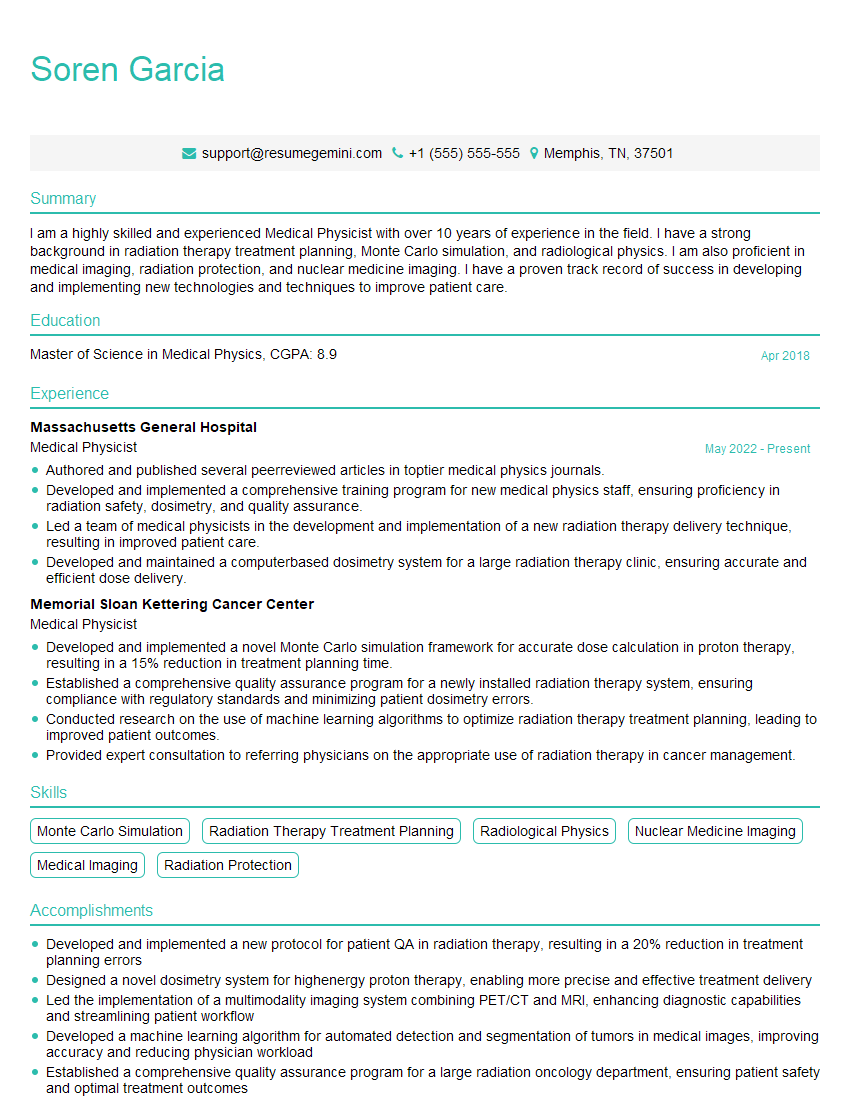
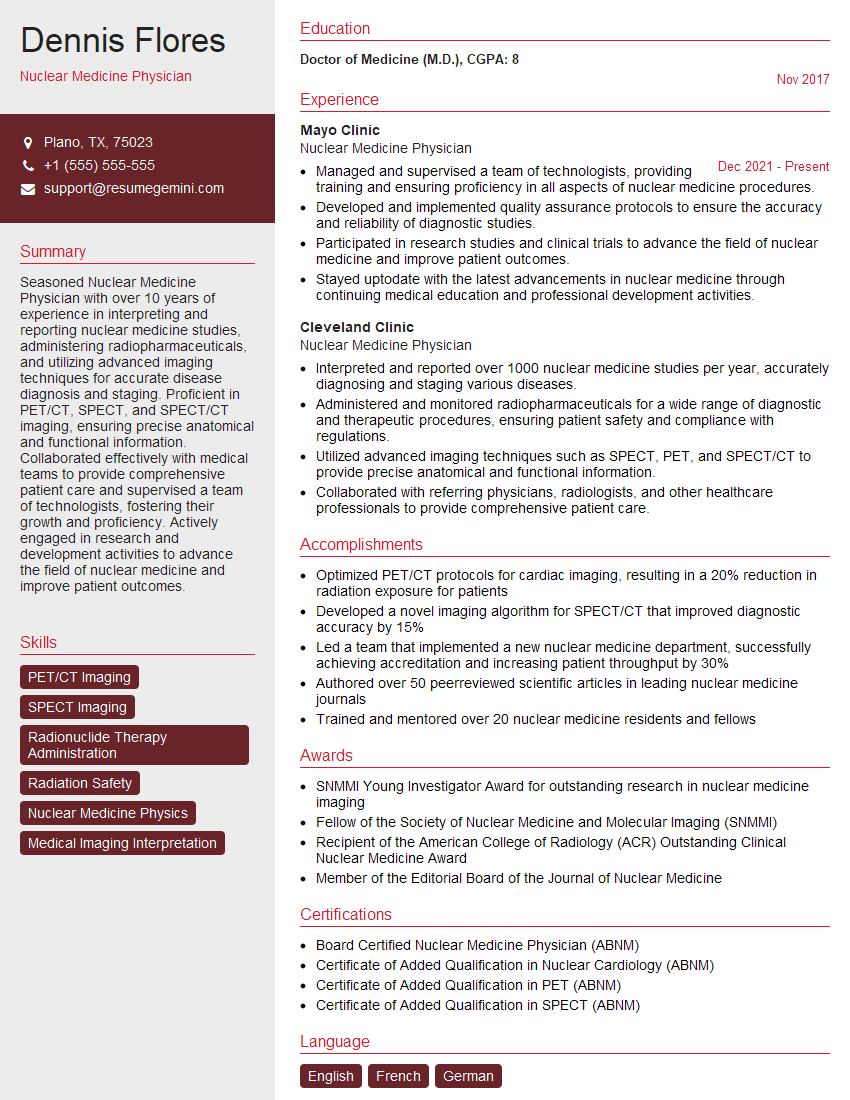
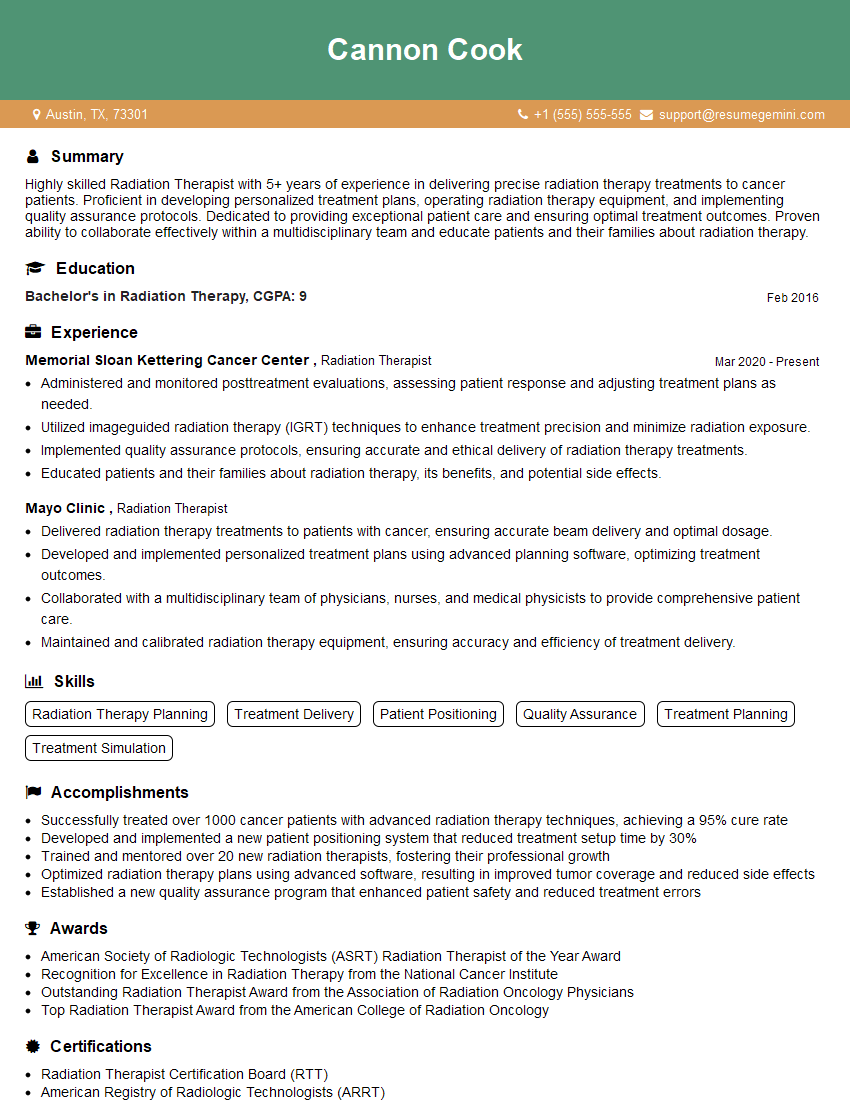
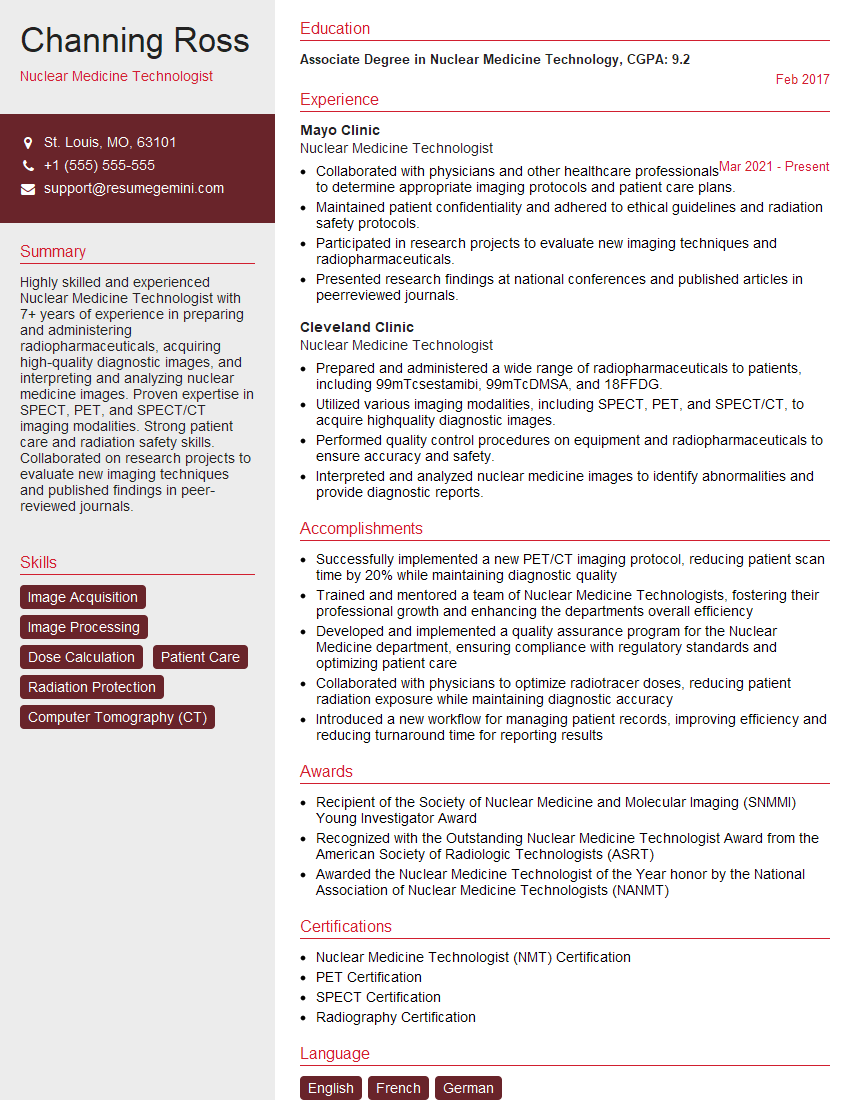
Mastering Radiological Instrumentation opens doors to exciting and impactful careers in healthcare, research, and industrial applications. A strong understanding of these principles is highly valued by employers and sets you apart from other candidates. To maximize your job prospects, it’s crucial to present your skills and experience effectively through an ATS-friendly resume. ResumeGemini is a trusted resource to help you build a professional and compelling resume that highlights your qualifications. We offer examples of resumes tailored to Radiological Instrumentation to help you create a winning application.




Explore more articles
Users Rating of Our Blogs
Share Your Experience
We value your feedback! Please rate our content and share your thoughts (optional).
What Readers Say About Our Blog
To the interviewgemini.com Webmaster.
Very helpful and content specific questions to help prepare me for my interview!
Thank you
To the interviewgemini.com Webmaster.
This was kind of a unique content I found around the specialized skills. Very helpful questions and good detailed answers.
Very Helpful blog, thank you Interviewgemini team.