Unlock your full potential by mastering the most common Reactor Startup and Shutdown interview questions. This blog offers a deep dive into the critical topics, ensuring you’re not only prepared to answer but to excel. With these insights, you’ll approach your interview with clarity and confidence.
Questions Asked in Reactor Startup and Shutdown Interview
Q 1. Describe the pre-startup safety checks for a nuclear reactor.
Pre-startup safety checks for a nuclear reactor are crucial to prevent accidents and ensure safe operation. Think of it like performing a thorough pre-flight checklist for an airplane – every detail matters. These checks are rigorously documented and meticulously followed. They broadly fall into several categories:
- System Integrity Checks: This involves verifying the functionality of all safety-related systems, including the reactor protection system (RPS), emergency core cooling system (ECCS), and containment systems. We’re looking for things like proper pressure readings, valve positions, and sensor calibration. A faulty sensor could lead to inaccurate readings, potentially causing a shutdown or even worse.
- Fuel Integrity Checks: Before startup, the fuel assemblies’ integrity is verified. This involves checking for any damage or defects that could compromise fuel cladding and lead to leaks of radioactive materials. Imagine a tiny crack in a fuel rod – that’s a potential disaster waiting to happen.
- Radiation Level Checks: Background radiation levels around the reactor are meticulously measured. An unusually high reading could indicate a leak or malfunction needing attention before we even consider startup.
- Personnel Readiness: Reactor operators undergo training and simulations to prepare for various scenarios, including normal and abnormal operations. Their competency and preparedness are verified before any startup attempt.
- Procedure Reviews: A comprehensive review of the startup procedures is conducted to ensure they are up-to-date and correctly implemented. This is like having a flight crew going over their pre-flight checklist, making sure everyone is on the same page.
These checks are performed in a sequential manner, with each step requiring verification before proceeding to the next. Failure to pass any check will result in a delay until the issue is resolved. Safety is paramount.
Q 2. Explain the process of reactor startup, including the stages involved.
Reactor startup is a gradual process, carefully controlled to prevent damage and ensure safe operation. It’s not like flicking a light switch! It involves several stages:
- Cold Shutdown to Hot Shutdown: The reactor is initially in a cold shutdown state (low temperature and pressure). We begin by slowly increasing the temperature and pressure of the primary coolant, which is the water circulating around the reactor core. This is done to ensure uniform heating and prevent thermal stress on components.
- Initial Criticality: Control rods are gradually withdrawn to allow a controlled increase in neutron flux, the rate of nuclear reactions. This is a crucial stage where the chain reaction starts slowly building up. The goal is to achieve criticality, meaning the rate of neutron production equals the rate of neutron loss.
- Power Ascension: Once criticality is achieved, the power level is gradually increased in steps. Each step is meticulously monitored, with operators carefully adjusting control rod positions to maintain the desired power level. This gradual increase ensures that the reactor core’s temperature and pressure remain within safe operating limits.
- Synchronization with the Grid: Once the desired power level is reached (a process that can take hours), the reactor is synchronized with the electrical grid, allowing it to contribute to electricity generation.
Each step is carefully documented and monitored, with multiple safety systems in place to prevent any unexpected events. Think of it as a well-orchestrated symphony, with each instrument playing its part in harmony.
Q 3. What are the critical parameters monitored during reactor startup?
During reactor startup, a multitude of critical parameters are continuously monitored. These parameters provide a comprehensive picture of the reactor’s status and health. Some key parameters include:
- Neutron Flux: This measures the rate of nuclear fission reactions. A sudden change in neutron flux could indicate an anomaly.
- Reactor Power Level: This reflects the overall rate of energy production. It is carefully controlled to avoid exceeding safety limits.
- Temperature: The temperature of the primary coolant, reactor core, and other components is closely monitored to prevent overheating and thermal stress.
- Pressure: The pressure within the primary coolant system is critically monitored to prevent leaks or explosions.
- Control Rod Position: The position of control rods is vital for regulating the reactor’s power level. Precise control is essential for safety.
- Radiation Levels: Radiation levels inside and outside the containment are monitored to detect any leaks or malfunctions.
Any deviation from the predefined parameters triggers an alarm, alerting operators to potential problems. These parameters are monitored using an extensive network of sensors, data loggers, and sophisticated monitoring systems.
Q 4. How do you handle unexpected events during reactor startup?
Handling unexpected events during reactor startup requires a calm and systematic approach. Operators are trained to follow well-defined emergency procedures. The response depends on the nature and severity of the event. Imagine it as a well-rehearsed fire drill – everyone knows their roles.
- Immediate Action: The first step involves immediate action to mitigate the problem. This might include inserting control rods to reduce power, activating emergency cooling systems, or isolating affected components.
- Diagnostics and Assessment: Once the immediate danger is averted, operators conduct diagnostics to determine the root cause of the event. This involves analyzing data from various sensors and instruments.
- Corrective Actions: Based on the diagnostics, corrective actions are taken. This could involve repairing a faulty component, recalibrating sensors, or adjusting operational procedures.
- Reporting and Documentation: A detailed report is prepared documenting the event, the actions taken, and any lessons learned. This information is crucial for improving safety procedures in the future.
Regular simulations and drills help operators prepare for unexpected events, ensuring that they are equipped to handle any situation effectively. This continuous training builds confidence and expertise, fostering a safety-conscious culture.
Q 5. Describe the shutdown procedure for a nuclear reactor in a normal operating condition.
Normal reactor shutdown is a controlled process, quite different from an emergency shutdown. It involves gradually reducing the reactor’s power level to zero. Think of it like gently braking a car to a stop, rather than slamming on the brakes.
- Power Reduction: The power level is gradually decreased by carefully inserting control rods into the reactor core. This reduces the rate of nuclear reactions, resulting in a slower decrease in power.
- Coolant Circulation Maintenance: Even after shutdown, coolant continues circulating through the core to remove residual heat. This is critical to prevent overheating and damage to fuel elements.
- Decay Heat Removal: After shutdown, the reactor continues to generate heat due to radioactive decay of fission products. This decay heat needs to be removed effectively to maintain safe temperatures.
- Reactor Vessel Cooling: Once the reactor is at a sufficiently low temperature, the reactor vessel is gradually cooled down.
- Final Shutdown: After achieving a stable, cold shutdown condition, the reactor is declared shut down, and various systems are put into their post-shutdown state.
The entire process is meticulously monitored and documented, with regular checks ensuring the safe and orderly removal of residual heat.
Q 6. What are the emergency shutdown procedures for a nuclear reactor?
Emergency shutdown procedures are designed to quickly and safely shut down the reactor in response to a severe accident or malfunction. This is the equivalent of hitting the emergency brakes in a car.
The primary method is the insertion of scram rods, which are rapidly inserted into the reactor core to halt the chain reaction. This is often initiated automatically by the reactor protection system (RPS) in response to abnormal parameters. The RPS is akin to a highly sophisticated alarm system that triggers a rapid response to prevent catastrophic failures.
Beyond scram, emergency shutdown procedures also include activating emergency core cooling systems (ECCS) to prevent core melt, isolating the primary coolant system to prevent radioactive release, and activating containment systems to prevent the spread of radioactivity. Each of these steps is designed to mitigate the consequences of the emergency and ensure the protection of personnel and the environment.
Regular drills and simulations are critical for maintaining operator readiness to execute these emergency procedures swiftly and accurately.
Q 7. Explain the role of the control rods in reactor startup and shutdown.
Control rods play a vital role in both reactor startup and shutdown. They are neutron-absorbing materials (like cadmium or boron) that can be inserted into and withdrawn from the reactor core to regulate the rate of nuclear fission reactions.
During startup, control rods are gradually withdrawn. This reduces the absorption of neutrons, allowing more neutrons to initiate fission reactions and increase the reactor power level. Think of it as opening a valve to increase the flow of water.
During shutdown, control rods are rapidly inserted into the core. This significantly increases neutron absorption, effectively stopping the chain reaction and bringing the reactor to a safe state. This is analogous to closing the valve to abruptly stop the water flow.
The precise control of control rod position is essential for safe and efficient reactor operation, allowing operators to carefully manage the reactor’s power level throughout its lifecycle.
Q 8. Describe the safety systems that ensure reactor shutdown.
Reactor shutdown safety systems are paramount to preventing accidents. They’re designed with multiple layers of redundancy to ensure a safe and controlled shutdown even in the event of multiple component failures. Think of it like a backup system for your backup system!
Scram System: This is the primary shutdown system, rapidly inserting neutron-absorbing control rods into the reactor core to halt the chain reaction. It’s activated automatically by various sensors detecting abnormal conditions (like high power, temperature, or pressure).
Emergency Core Cooling System (ECCS): This system kicks in to cool the reactor core if the primary cooling system fails. It uses various methods to remove the decay heat generated after shutdown, preventing core damage from overheating. Different reactor designs have different ECCS configurations, but they all share the same crucial goal of maintaining core integrity.
Containment System: This structure is designed to prevent the release of radioactive materials into the environment in case of an accident. It’s a physical barrier that helps contain any potential leakages, maintaining public safety.
Safety Instrumented Systems (SIS): These are independent systems that monitor critical parameters and automatically initiate safety actions (like initiating a scram) if pre-defined limits are exceeded. Think of them as highly sensitive alarm systems with automatic fail-safes.
These systems work in concert, with multiple independent pathways to ensure a safe shutdown. The design emphasizes diversity, ensuring that a single point of failure won’t compromise the entire system’s effectiveness.
Q 9. What are the potential hazards associated with reactor startup and shutdown?
Reactor startup and shutdown carry inherent risks. These hazards stem from the high power levels, extreme temperatures, and radioactive materials involved. Let’s look at some examples:
Radiation Exposure: During both startup and shutdown, the potential for accidental radiation exposure to personnel exists. This is mitigated by strict procedures and radiation monitoring.
Thermal Shock: Rapid temperature changes in reactor components during shutdown can cause thermal stress, potentially leading to cracking or failure. Controlled cooldown procedures are crucial here.
Reactivity Accidents: An uncontrolled increase in reactivity during startup can lead to a power surge, potentially damaging the reactor core. Precise control and monitoring of reactivity are essential.
Equipment Malfunction: Failure of any component in the cooling, control, or safety systems can lead to serious consequences. Redundancy and regular maintenance are critical to prevent such events.
Human Error: Mistakes in procedures or misinterpretations of data can lead to unsafe conditions. Rigorous training and strict adherence to protocols are essential.
Mitigation of these hazards relies heavily on robust safety systems, well-defined procedures, and highly trained personnel.
Q 10. How do you ensure the integrity of reactor components during startup and shutdown?
Maintaining the integrity of reactor components during startup and shutdown is achieved through a multi-pronged approach.
Controlled Rate Changes: The reactor power and temperature are changed gradually to avoid thermal shocks. Think of it like slowly heating a glass – a rapid change would likely cause it to shatter.
Regular Inspections and Maintenance: Components are regularly inspected using non-destructive testing (NDT) methods to detect any signs of wear, corrosion, or damage. Regular maintenance prevents issues from escalating into failures.
Material Selection: Reactor components are made from materials designed to withstand high temperatures, pressures, and radiation. This careful selection ensures long-term durability and reliability.
Stress Analysis: Computer models are used to analyze the stress on reactor components under various operating conditions. This helps ensure that components can handle the stresses imposed during startup and shutdown.
Operational Limits: Strict operational limits are imposed on parameters like pressure, temperature, and power to avoid exceeding the design limits of components.
This combination of preventative measures, rigorous monitoring, and proactive maintenance ensures that reactor components remain safe and reliable throughout their operational lifetime.
Q 11. What are the regulatory requirements for reactor startup and shutdown procedures?
Regulatory requirements for reactor startup and shutdown are extremely stringent, varying slightly by country but sharing core principles. These regulations are designed to ensure public safety and environmental protection.
Licensing and Permits: Operating a nuclear reactor requires extensive licensing and permits from the relevant regulatory authority. These licenses are contingent upon demonstrating compliance with all safety standards and regulations.
Detailed Procedures: The regulatory bodies mandate detailed written procedures for startup and shutdown, covering every step of the process. These procedures are rigorously reviewed and approved before implementation.
Operator Training and Qualification: Operators must undergo extensive training and qualification before being allowed to operate a reactor. This ensures that operators are competent to handle all aspects of startup and shutdown safely.
Regular Inspections and Audits: Regulatory authorities conduct regular inspections and audits of nuclear power plants to ensure ongoing compliance with safety regulations. These inspections include a thorough review of safety systems and operating procedures.
Emergency Preparedness: Nuclear power plants must have comprehensive emergency preparedness plans in place, outlining procedures for dealing with various emergency scenarios.
Non-compliance with these regulations can lead to significant penalties and operational shutdowns, highlighting the importance of adhering to the stringent guidelines.
Q 12. Explain the importance of operator training in reactor startup and shutdown.
Operator training in reactor startup and shutdown is critical to ensuring safe and efficient operations. It’s not simply about following instructions; it’s about developing a deep understanding of the systems and the ability to handle unexpected events.
Theoretical Knowledge: Operators must possess a thorough understanding of reactor physics, thermodynamics, and the operation of all reactor systems.
Simulator Training: Operators undergo extensive training using realistic simulators that replicate the control room environment and allow them to practice handling various scenarios, including emergencies.
On-the-Job Training: Experienced operators mentor and guide new operators during actual startup and shutdown procedures, providing hands-on experience under supervision.
Emergency Response Training: Operators are trained to respond effectively to various emergencies, including equipment failures and unforeseen events. Regular drills and exercises reinforce these procedures.
Continuing Education: Operators are required to participate in ongoing education and training to stay updated on the latest technologies and safety procedures.
This comprehensive training program ensures that operators are highly skilled and capable of safely and efficiently operating the reactor, protecting both the facility and the public.
Q 13. Describe the different types of reactor shutdown systems.
Reactor shutdown systems aren’t monolithic; they are designed with multiple layers and types, offering diverse pathways to achieve a safe shutdown.
Control Rod System: This is the primary shutdown system, employing neutron-absorbing control rods to quickly reduce reactor power. These rods can be inserted either manually or automatically (scram).
Chemical Shutdown System: Some reactors utilize chemical shim systems (like boric acid addition) to control reactivity. In a shutdown situation, adding more boric acid effectively ‘poisons’ the reactor, slowing down the fission process.
Shutdown Cooling System: This system removes the decay heat generated after shutdown, preventing overheating and core damage. It’s crucial to prevent a meltdown scenario.
The specific systems used depend on the reactor type and design. A combination of these systems typically provides a layered defense against accidents.
Q 14. How do you manage the heat generated by the reactor during shutdown?
Even after shutdown, the reactor core continues to generate heat from radioactive decay. This decay heat is significant and must be managed to prevent core damage and potential accidents. This is where the shutdown cooling system comes into play.
Decay Heat Removal Systems: These systems utilize various methods, including natural circulation, pumps, and heat exchangers, to transfer the heat away from the reactor core. The choice of method depends on the specific reactor design and its safety features.
Redundancy and Diversity: Multiple independent decay heat removal systems are typically employed to ensure reliability even if one system fails. This redundancy is a crucial aspect of safety.
The decay heat removal systems are designed to operate for an extended period, typically until the core’s temperature reduces to safe levels. This is a critical process that ensures the continued safety of the reactor even after the fission chain reaction has ceased.
Q 15. How do you ensure the containment of radioactive materials during startup and shutdown?
Containment of radioactive materials during reactor startup and shutdown is paramount to safety. It relies on multiple layers of protection, working in concert. The primary barrier is the fuel itself, contained within robust fuel rods. These rods are further encased within the reactor core, which is itself a highly engineered structure designed to withstand extreme conditions. The reactor vessel, a thick-walled pressure vessel, forms the next layer of containment, preventing the release of radioactive materials into the reactor building. Finally, the reactor building itself, often a reinforced concrete structure, acts as the outermost barrier, offering additional protection against accidents and preventing the release of radiation to the environment. Regular inspections and rigorous maintenance of all these components are crucial.
Think of it like a Russian nesting doll: each layer provides additional safety, ensuring that even if one layer fails, others are in place to prevent a release. We continuously monitor pressure, temperature, and radiation levels within each containment layer to ensure its integrity. Any anomaly triggers immediate investigation and action.
Career Expert Tips:
- Ace those interviews! Prepare effectively by reviewing the Top 50 Most Common Interview Questions on ResumeGemini.
- Navigate your job search with confidence! Explore a wide range of Career Tips on ResumeGemini. Learn about common challenges and recommendations to overcome them.
- Craft the perfect resume! Master the Art of Resume Writing with ResumeGemini’s guide. Showcase your unique qualifications and achievements effectively.
- Don’t miss out on holiday savings! Build your dream resume with ResumeGemini’s ATS optimized templates.
Q 16. Explain the process of reactor refueling and its relation to shutdown.
Reactor refueling is a major operation that requires a complete shutdown. It involves replacing spent fuel assemblies, which have become depleted of fissile material, with fresh ones. This is done while the reactor is in a subcritical state—meaning it cannot sustain a chain reaction. The process is incredibly precise and meticulously planned. First, the reactor is shut down, the coolant is drained, and the reactor vessel is opened. Specialized equipment, including remote handling systems, is used to carefully remove and replace the fuel assemblies. The spent fuel is then transferred to spent fuel storage pools for cooling and eventual long-term storage or reprocessing. The entire process is governed by strict safety protocols and overseen by experienced engineers and technicians. Refueling directly impacts the reactor’s operational cycle, influencing its power output and overall efficiency.
Imagine changing the batteries in a complex piece of machinery. You can’t do it while it’s running; you must first power down the machinery carefully before performing the replacement.
Q 17. What are the key performance indicators (KPIs) for reactor startup and shutdown?
Key Performance Indicators (KPIs) for reactor startup and shutdown focus on safety, efficiency, and regulatory compliance. Some critical KPIs include:
- Startup Time: The time it takes to bring the reactor to a safe and stable operating power level. Minimizing this time reduces downtime and maximizes operational efficiency.
- Shutdown Time: The time taken to safely shut down the reactor. Quick and controlled shutdown is essential in emergency scenarios.
- Radiation Levels: Continuous monitoring of radiation levels throughout the process, ensuring they remain within acceptable limits.
- System Availability: Tracking the reliable operation of critical systems such as the coolant system, control rods, and instrumentation.
- Compliance with Regulatory Limits: Adherence to all safety regulations and procedures established by the regulatory body.
- Personnel Dose: Monitoring the radiation exposure of personnel involved in the operation to ensure it stays below the mandated limits.
These KPIs are regularly monitored and analyzed to identify potential areas for improvement and to maintain the highest levels of safety and operational excellence.
Q 18. Describe the role of instrumentation and control systems in reactor startup and shutdown.
Instrumentation and Control (I&C) systems are the nervous system of a nuclear reactor, playing a vital role in startup and shutdown. They constantly monitor various parameters like temperature, pressure, neutron flux, and coolant flow. This data is used by the control system to adjust control rods (which regulate the reactor’s power level) and other critical systems to ensure safe and efficient operation. During startup, the I&C system precisely controls the reactor’s power increase, ensuring that it follows the prescribed startup curve. During shutdown, it manages the controlled reduction of power, safely bringing the reactor to a subcritical state. I&C systems incorporate multiple layers of redundancy and safety features, including automatic safety systems that will quickly shut down the reactor in case of unexpected events.
Think of the I&C system as the pilot of an airplane, carefully monitoring instruments and adjusting controls to ensure a safe and smooth flight. The sophisticated control algorithms incorporated within these systems ensure precise and stable operations.
Q 19. How do you troubleshoot common problems during reactor startup or shutdown?
Troubleshooting during startup or shutdown requires a systematic approach, combining technical expertise with a thorough understanding of the reactor’s systems. Common problems might include issues with the coolant system (e.g., leaks or insufficient flow), malfunctions in the control rod system, or anomalous readings from instrumentation. The initial step is to carefully analyze the available data—instrument readings, system logs, and operator logs—to identify the root cause. This often involves checking for alarm conditions and reviewing safety system responses. Diagnostics may include examining system schematics, using specialized diagnostic tools, and conducting tests to isolate the faulty component.
Following established procedures is crucial. A documented troubleshooting strategy is often used, guiding engineers through a series of steps to diagnose and resolve the problem. In complex situations, experienced engineers and operators may consult technical manuals, simulations, and potentially seek expert advice from other specialists.
Q 20. What is the significance of maintaining detailed logs during reactor operations?
Maintaining detailed logs during reactor operations is vital for safety, regulatory compliance, and operational improvement. These logs meticulously record all aspects of the reactor’s operation, including parameter readings, operator actions, maintenance activities, and any anomalies detected. These records provide crucial information for analyzing trends, identifying potential issues, and investigating events. They are essential for regulatory audits and are invaluable in accident investigation and analysis. Detailed logs also contribute to continuous improvement by revealing operational patterns and areas needing improvement.
Imagine a detailed flight recorder in an aircraft. The data recorded provides vital information in accident investigation and allows engineers to understand the sequence of events leading up to the incident. Similarly, in a nuclear reactor, detailed logs serve to safeguard the plant and ensure effective operations.
Q 21. How do you ensure the effective communication and coordination among team members during reactor startup and shutdown?
Effective communication and coordination are critical during reactor startup and shutdown. A well-defined communication protocol is essential. This typically involves a hierarchical structure with clear lines of authority and responsibility. Regular briefings and shift handovers ensure that all team members are aware of the reactor’s status and any ongoing procedures. Communication tools such as control room displays, dedicated communication channels, and emergency response plans facilitate timely exchange of information. The use of checklists and standardized procedures minimizes errors and ensures that tasks are performed consistently. Training programs for operators and engineers emphasize effective communication strategies, including clear and concise language, active listening, and appropriate use of terminology.
Clear and concise communication during an emergency situation, for instance, is crucial for mitigating the consequences effectively. Teamwork is paramount, and training is essential for fostering a team that can effectively coordinate their actions during stressful situations.
Q 22. Explain the concept of criticality and its relation to reactor startup.
Criticality refers to the state where a nuclear chain reaction is self-sustaining. In a reactor, this means the rate of neutron production equals or exceeds the rate of neutron loss. During reactor startup, we carefully and gradually increase the reactor power level from zero, carefully controlling the rate of neutron production to achieve and maintain criticality. Think of it like lighting a fire – you need just the right amount of kindling and air to get it going and keep it burning steadily, not too fast and not too slow. Too little, and the reaction fizzles out (subcritical); too much, and it explodes (supercritical). Reactor operators use control rods, which absorb neutrons, to precisely regulate the rate of the chain reaction and achieve a controlled and safe critical state.
The approach to criticality is a very precisely controlled process, following strict procedures outlined in the plant’s operating manuals. This ensures the chain reaction grows at a safe and predictable rate, and operators continuously monitor various parameters to prevent any unplanned excursions.
Q 23. Describe the role of the reactor protection system during startup and shutdown.
The Reactor Protection System (RPS) is the last line of defense against accidents. Its role during startup and shutdown is crucial. During startup, the RPS continuously monitors parameters like neutron flux, temperature, pressure, and control rod positions. If any of these parameters deviate significantly from their setpoints – indicating a potential for an uncontrolled chain reaction or other hazardous condition – the RPS automatically trips the reactor, shutting down the chain reaction rapidly. Think of it as a highly sensitive safety net. During shutdown, while the risk is lessened, the RPS remains active, monitoring parameters and ensuring a safe and controlled power reduction.
For example, if the reactor pressure were to rise too rapidly during startup, the RPS would immediately shut the reactor down, preventing a potential accident. This is a critical safety feature, acting as an automated safeguard against human error or unforeseen events.
Q 24. How do you handle deviations from planned procedures during reactor startup or shutdown?
Handling deviations from planned procedures during startup or shutdown requires a structured approach. The first step is to immediately assess the nature and severity of the deviation. A minor deviation might be easily handled by adjusting parameters within the approved range. However, significant deviations demand immediate action according to the plant’s emergency operating procedures. These procedures usually provide detailed step-by-step instructions to mitigate the situation. For example, if a control rod gets stuck during shutdown, trained personnel would follow established protocols to address the situation. This might include trying alternate control systems or using manual methods to resolve the issue, while maintaining strict safety protocols.
Communication is key. The operator immediately informs the shift supervisor and other relevant personnel. This ensures a collective response and appropriate action. A deviation may necessitate a complete shutdown to prevent any further risk.
Q 25. What are the post-shutdown procedures for a nuclear reactor?
Post-shutdown procedures are designed to ensure the reactor remains in a safe and stable state until it is ready for future operations. These procedures involve systematically reducing the reactor’s power to zero, cooling the reactor core to a safe temperature, and ensuring the containment systems remain sealed and pressure is controlled. This may include depressurization of the reactor coolant system, followed by a controlled cooldown of the core. Regular monitoring of various parameters including radiation levels is done to ensure the integrity of the system. It also involves implementing specific actions, like transferring heat out of the core, maintaining water levels, and securing all auxiliary systems. These procedures vary depending on reactor type and size.
The duration of post-shutdown activities can extend over several hours or days, depending on the specific reactor design and operational requirements.
Q 26. Explain the process of verifying the successful completion of a reactor shutdown.
Verification of successful reactor shutdown involves a multi-step process to confirm the reactor is truly subcritical and that all safety systems are functioning correctly. This includes confirming that the reactor power has reached and is maintained at zero power, confirming that control rods are fully inserted, and monitoring core temperature and pressure to ensure they are decreasing at a controlled rate. Radiation levels around the reactor vessel are also continuously monitored to verify there’s no leakage. Physical inspections of critical components may also be necessary. All these data are logged and reviewed to verify that all parameters are within safe operational limits.
This verification process involves multiple independent checks and balances to ensure the accuracy and reliability of the data. Often multiple instruments monitor crucial parameters.
Q 27. Describe the long-term consequences of improper reactor startup or shutdown procedures.
Improper reactor startup or shutdown procedures can have severe long-term consequences, ranging from minor operational issues to catastrophic failures. An uncontrolled power increase during startup can lead to core damage, fuel melting, and the release of radioactive materials. Similarly, insufficient cooling during shutdown can cause overheating, potentially leading to a meltdown, causing significant environmental and health consequences. Even seemingly minor procedural deviations, if repeated, could lead to equipment degradation over time, compromising the safety and integrity of the reactor in the future. The consequences can include plant repairs or replacements, costly regulatory penalties, potential environmental contamination, and damage to the reputation of the operating facility. In the worst-case scenario, improper procedures can lead to severe accidents with significant loss of life and widespread environmental consequences.
This highlights the extreme importance of following precisely established procedures and maintaining high safety standards in the nuclear industry.
Q 28. How would you prioritize safety measures during a reactor emergency shutdown?
During a reactor emergency shutdown, safety measures are prioritized in a hierarchical manner. The primary focus is on preventing core damage and preventing the release of radioactive materials into the environment. This may involve rapid insertion of control rods to shut down the chain reaction, engaging emergency cooling systems to remove heat from the reactor core, and activating containment systems to isolate the radioactive materials. Maintaining operator safety is also paramount, requiring evacuation and protection from radiation exposure as needed. Communication is another critical factor; clear and timely communication with regulatory bodies, emergency responders, and the public is absolutely necessary.
The principle of defense-in-depth guides the decision-making process: multiple safety layers and systems operate in parallel to prevent accidents and mitigate their consequences. Prioritization shifts based on the specific nature of the emergency and the available resources.
Key Topics to Learn for Reactor Startup and Shutdown Interview
- Reactor Physics Fundamentals: Understanding criticality, reactivity control, and neutron kinetics is paramount. This includes mastering the theoretical concepts and their practical implications during startup and shutdown procedures.
- Control Rod Manipulation and Reactivity Control: Learn the intricacies of control rod movement strategies, their impact on reactor power, and the safety systems involved in maintaining stable operation during startup and shutdown phases. Practice problem-solving scenarios related to unexpected reactivity changes.
- Heat Transfer and Thermal Hydraulics: Gain a firm grasp of how heat is transferred within the reactor core and the primary coolant loop. Understand the implications of temperature changes during startup and shutdown, and how these affect system pressure and stability. Explore the role of thermal hydraulic models in predicting and managing these changes.
- Instrumentation and Control Systems: Familiarize yourself with the various sensors, actuators, and control systems responsible for monitoring and managing the reactor during startup and shutdown. Practice analyzing instrument readings and interpreting their significance in different operating conditions.
- Safety Systems and Procedures: Deeply understand the safety systems designed to prevent accidents during startup and shutdown. This involves analyzing emergency shutdown procedures, the role of redundant systems, and the response to various fault scenarios.
- Operational Procedures and Checklists: Familiarize yourself with the standard operating procedures and checklists used in reactor startup and shutdown. Understand the rationale behind each step and the potential consequences of deviations from established protocols.
- Troubleshooting and Problem-Solving: Develop your ability to diagnose and resolve problems that may arise during startup or shutdown. This includes analyzing alarms, identifying root causes, and implementing corrective actions while maintaining safety.
Next Steps
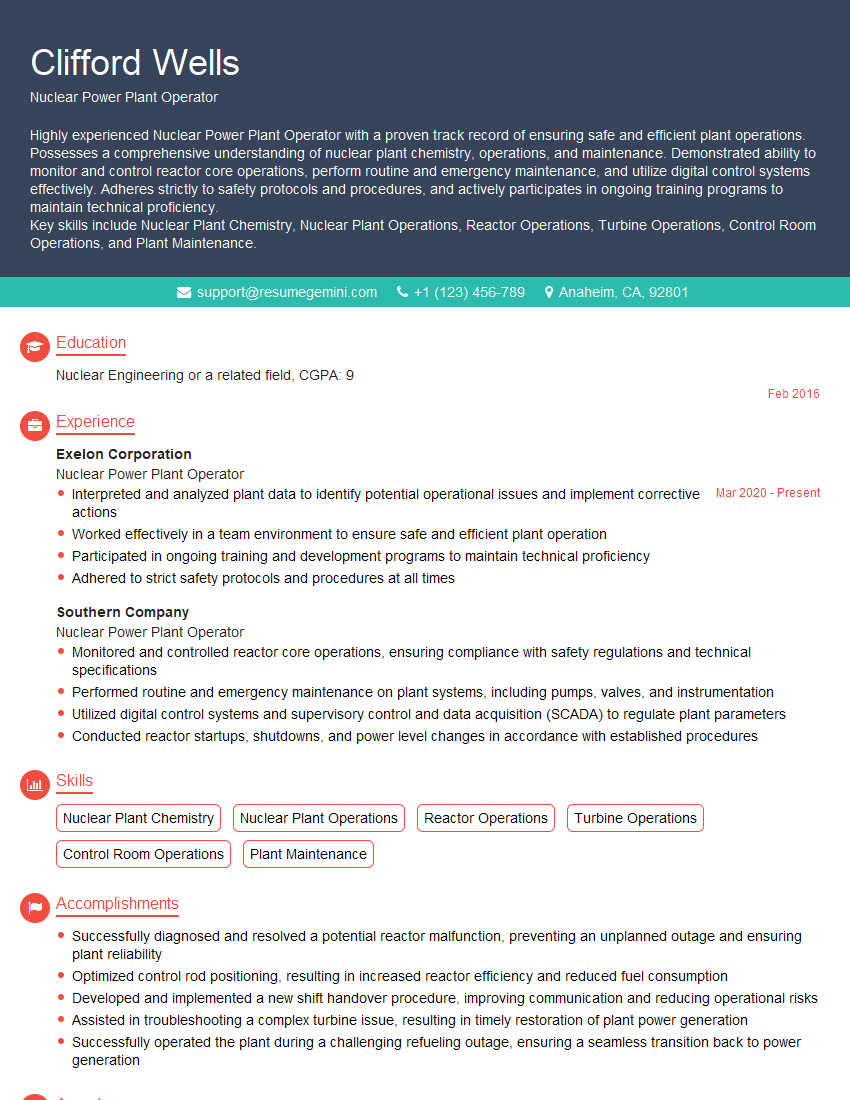
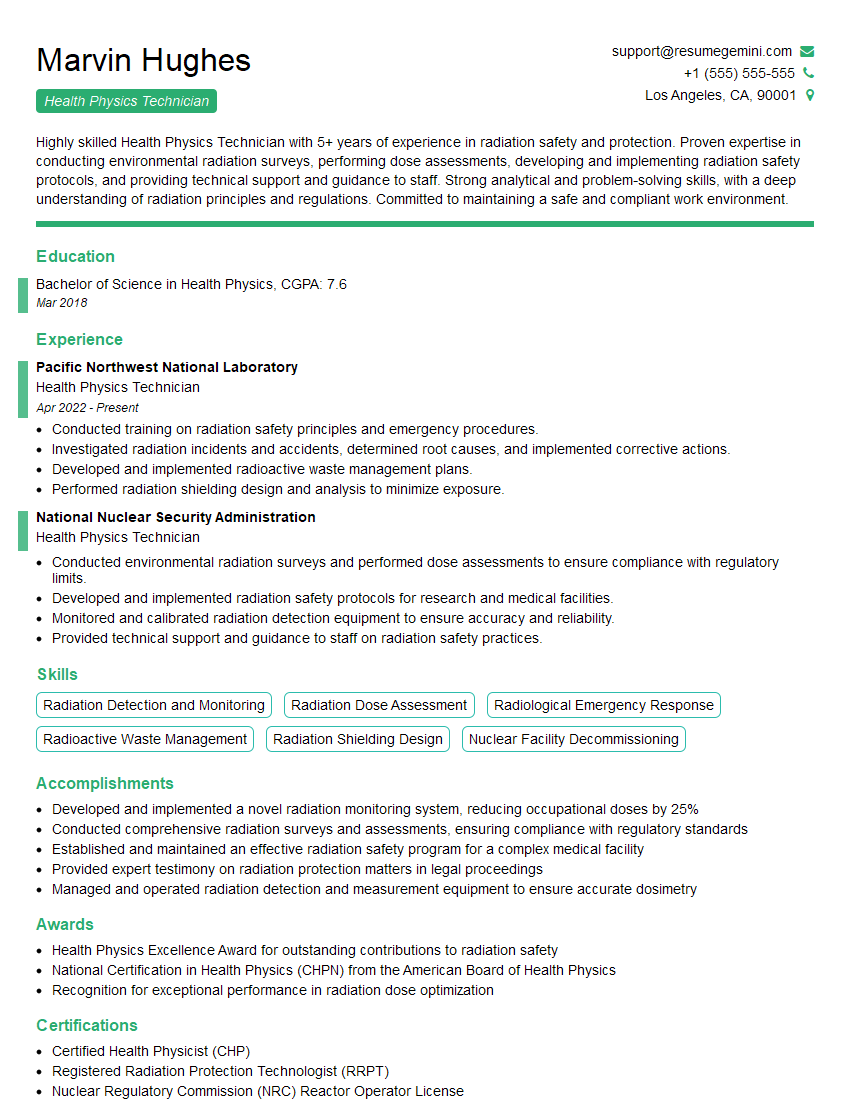
Mastering reactor startup and shutdown procedures is crucial for advancement in the nuclear industry, demonstrating a high level of technical competence and commitment to safety. A strong resume is your key to unlocking these opportunities. Building an ATS-friendly resume is essential for getting your application noticed. To enhance your resume and increase your chances of landing your dream job, leverage the power of ResumeGemini. ResumeGemini provides a user-friendly platform to create professional, impactful resumes, and we offer examples tailored specifically to highlight experience in reactor startup and shutdown. Take the next step in your career journey – build a resume that shines.
Explore more articles
Users Rating of Our Blogs
Share Your Experience
We value your feedback! Please rate our content and share your thoughts (optional).
What Readers Say About Our Blog
To the interviewgemini.com Webmaster.
Very helpful and content specific questions to help prepare me for my interview!
Thank you
To the interviewgemini.com Webmaster.
This was kind of a unique content I found around the specialized skills. Very helpful questions and good detailed answers.
Very Helpful blog, thank you Interviewgemini team.