Preparation is the key to success in any interview. In this post, we’ll explore crucial Reading and interpretation of electrical blueprints and schematics interview questions and equip you with strategies to craft impactful answers. Whether you’re a beginner or a pro, these tips will elevate your preparation.
Questions Asked in Reading and interpretation of electrical blueprints and schematics Interview
Q 1. Explain the difference between a single-line diagram and a schematic diagram.
Single-line diagrams and schematic diagrams both represent electrical systems, but they differ significantly in their level of detail and purpose. Think of a single-line diagram as a roadmap showing the major highways of an electrical system – the main power flow paths – while a schematic diagram is a detailed street map showing every street, building, and connection.
A single-line diagram simplifies a complex electrical system by representing each component with a single line, focusing on the main power flow and connections between major equipment like transformers, generators, and buses. It’s used for system overview, planning, and protection coordination studies. It omits details like wiring specifics, control circuitry, and individual component connections.
A schematic diagram, on the other hand, provides a detailed representation of the electrical circuit, showing all components and their interconnections. It’s used for design, troubleshooting, and construction purposes. Every wire, component, and connection is explicitly drawn, allowing for a thorough understanding of the system’s operation.
Example: Imagine a building’s electrical system. A single-line diagram would show the main power supply entering the building, the distribution panels, and the major loads (like lighting or HVAC). A schematic diagram would then detail the wiring within a specific panel, showing the exact connections of each breaker, wire size, and the devices they power.
Q 2. How do you identify different types of electrical components on a blueprint?
Electrical blueprints utilize standardized symbols to represent components. Identifying them requires familiarity with these symbols, but generally, components are categorized by function. For example, resistors are represented by zig-zag lines, capacitors by parallel lines, and inductors by coils. Specific manufacturers might slightly alter these symbols, but the underlying shape remains mostly consistent.
Visual Cues: Look for shape, size, and accompanying text. A large circle might represent a transformer, while smaller symbols typically represent individual components like diodes or transistors. The text associated with the symbol often includes the component’s value (e.g., resistance in ohms, capacitance in farads). Component labels or reference designators (like R1, C2) are used for easy identification within the context of the larger schematic.
Experience and Resources: Years of working with schematics have honed my ability to quickly recognize these symbols. I also frequently consult industry standards, like IEEE or IEC standards, for symbol definitions when ambiguity arises.
Q 3. What are the standard symbols used in electrical drawings?
Standard symbols are crucial for clear communication in electrical drawings. They are defined by industry standards like ANSI, IEEE, and IEC. While slight variations might exist, the core shapes generally remain consistent across these standards. Some common symbols include:
Resistor:A zig-zag lineCapacitor:Two parallel linesInductor:A coilTransformer:Two coupled coilsSwitch:Various symbols depending on the switch type (single-pole, double-pole, etc.)Battery:Long and short parallel linesGround:A triangle or a ground symbolFuse:A circle with a break in it
These symbols, along with numerous others, are consistently applied to ensure that anyone reading the schematic, regardless of their background, can understand the system being depicted. It’s crucial to refer to the specific standard used for the schematic to ensure accurate interpretation.
Q 4. Describe your experience with reading and interpreting electrical schematics.
I have extensive experience in reading and interpreting electrical schematics, gained through years of working on diverse projects in industrial automation, building control systems, and power distribution networks. My expertise involves not only understanding individual components and their interconnections but also analyzing the overall functionality and behavior of complex circuits. I’ve worked with both hand-drawn and computer-generated schematics, ranging from simple circuits to sophisticated control systems.
Example Project: In a recent project involving a large industrial facility, I was responsible for analyzing the existing electrical schematics to identify areas for improvement in energy efficiency. This involved tracing the circuit paths to determine energy losses in different sections of the facility’s power distribution system. My thorough understanding of schematics enabled me to provide detailed recommendations for optimization, resulting in substantial energy savings for the client.
Q 5. How do you determine the voltage and amperage ratings of components from a blueprint?
Voltage and amperage ratings are typically indicated directly on the schematic diagram next to the component’s symbol. They might be explicitly stated or be part of a component’s designation. For example, a resistor might be labeled ‘R1 1kΩ 1/4W’, indicating a 1-kilohm resistance and a 1/4-watt power rating. This power rating gives an idea of the maximum current the resistor can handle. The wattage, resistance and voltage can be used to calculate the current.
Indirect Determination: Sometimes, the ratings aren’t explicitly stated, especially in older or less detailed drawings. In such cases, you might need to refer to the component’s datasheet or manufacturer’s specifications using the component’s part number, which may be included in the schematic. Or, if you are familiar with similar designs, use that knowledge to determine the components’ rating. The context of the circuit can also offer clues: the voltage of the power source and the type of circuit often imply the voltage and current requirements of its components.
Q 6. Explain the process of tracing a circuit on a schematic diagram.
Tracing a circuit involves systematically following the path of electricity from its source to its destination, using the schematic as a guide. It’s like following a path on a map. Begin at the power source (e.g., a battery or power supply) and visually trace the wires and connections to understand the flow.
Step-by-Step Approach:
- Identify the Source: Locate the power supply or source of the circuit.
- Follow the Path: Trace the wires connected to the source. Pay close attention to the connections between components, noting any junctions, branches, or loops in the circuit path.
- Note Components: Identify the function of each component along the path.
- Check for Loops and Branches: Analyze parallel or series connections of components.
- Identify the Load: Determine the final destination of the electrical current (the load, such as a motor, light bulb, or other device).
Tooling: Highlighting the path with a pen or using digital annotation tools can be very helpful, especially in complex schematics.
Q 7. How do you identify potential hazards or safety concerns from an electrical drawing?
Identifying potential hazards and safety concerns is crucial when working with electrical drawings. Several aspects need careful review:
- Grounding: Ensure proper grounding symbols are present and correctly implemented to prevent electrical shocks.
- Overcurrent Protection: Verify the presence and correct sizing of fuses, circuit breakers, and other overcurrent protection devices to prevent overheating and fire hazards.
- Wiring: Check wire sizes and types to ensure they are appropriate for the current and voltage levels. Insufficient wire size can lead to overheating.
- Isolation: Look for clear isolation between high voltage circuits and low voltage components to prevent accidental contact.
- Enclosure and Safety Devices: Verify that equipment is properly enclosed and that safety devices like emergency stop switches are correctly implemented.
- Clearance and Spacing: Confirm that sufficient clearance is maintained between components and conductors, to prevent short-circuits and arcs.
Experience-Based Assessment: Years of experience allow me to quickly identify potential issues. I cross-reference the drawings with safety codes and regulations (e.g., NEC, IEC) to validate the design’s safety.
Q 8. What software are you familiar with for working with electrical blueprints and schematics?
I’m proficient in several software packages commonly used for electrical design and schematic interpretation. AutoCAD Electrical is my primary tool; its robust capabilities for creating and modifying electrical drawings, including generating reports and performing calculations, are invaluable. I also have experience with Revit for integrated building design, and EPLAN Electric P8, known for its comprehensive library of symbols and components and its suitability for large-scale projects. Finally, I’m comfortable using simpler programs like Microsoft Visio for creating basic diagrams when needed.
Q 9. How do you interpret conduit sizes and types from an electrical drawing?
Conduit size and type are crucial for safety and code compliance. On electrical drawings, conduit is typically represented by lines with accompanying specifications. The line’s thickness sometimes indicates size, but more often, a reference is given with a schedule or a legend. For example, you might see ‘1″ EMT’ indicating a 1-inch diameter Electrical Metallic Tubing. ‘3/4″ Rigid Conduit’ would specify rigid conduit with a 3/4-inch inner diameter. The type of conduit (EMT, Rigid, PVC, etc.) is crucial as each has different properties regarding strength, flexibility, and resistance to fire and corrosion. Understanding these types is essential for proper installation and code adherence.
For example, if the drawing shows ‘2″ SCH 40 PVC’ beside a line representing a conduit run, I immediately understand that a 2-inch Schedule 40 Polyvinyl Chloride conduit is needed. Schedule 40 refers to the pipe’s wall thickness, influencing its strength and pressure resistance.
Q 10. How do you determine the proper wire gauge for a given circuit?
Determining the correct wire gauge involves several factors: the circuit’s amperage, voltage, and length, as well as the type of installation and ambient temperature. The National Electrical Code (NEC) provides tables to guide this selection. For example, a 15-amp circuit typically uses 14-gauge wire, while a 20-amp circuit usually requires 12-gauge. Heavier loads necessitate thicker wires (lower gauge numbers) to handle the increased current flow and prevent overheating. Longer runs may also require a larger gauge to compensate for voltage drop. I utilize NEC tables and specialized calculation software to ensure accurate wire sizing for every project, always prioritizing safety and efficiency.
In practice, I might be designing a circuit for a high-power appliance. After calculating the load’s amperage draw, I’d consult the NEC tables. If the calculation indicates a 40-amp load, the tables would guide me towards using 8-gauge wire. Ignoring this and using smaller wire could lead to overheating, fire hazards, and system failure.
Q 11. Explain your experience with different types of electrical drawings (e.g., one-line diagrams, three-line diagrams).
I’ve worked extensively with various electrical drawing types. One-line diagrams provide a simplified overview of the entire electrical system, showing major components and their connections, ideal for planning and system overview. They’re like a roadmap of the electrical system. Three-line diagrams show more detail, including phases and neutral conductors, helpful for analyzing power distribution and fault current calculations. I also have experience with detailed schematic diagrams that show the exact wiring connections within panels and equipment, crucial for installation and troubleshooting. Each type serves a distinct purpose in the design and maintenance process; I choose the appropriate type based on the project needs and specific design stage.
Q 12. Describe your experience using electrical symbols and their meanings.
Electrical symbols are the language of electrical drawings. I’m very familiar with the wide range of symbols representing switches, breakers, motors, transformers, and other components. For instance, a circle with a cross inside represents a ground connection, while a zigzag line usually indicates a resistor. Understanding these symbols is fundamental. A simple mistake in interpreting a symbol could lead to an incorrect installation or hazardous condition. My experience includes working with various industry standards and symbol sets, ensuring seamless interpretation across different projects and designs.
For example, a symbol for a three-way switch is different from a single-pole switch. Recognizing this subtle difference is crucial for proper wiring and circuit functionality.
Q 13. How do you interpret grounding and bonding symbols on electrical drawings?
Grounding and bonding symbols are critical for safety and represent crucial aspects of electrical system design. Grounding symbols typically show a connection to earth, protecting against electrical shock. Bonding symbols, on the other hand, indicate connections between metal parts to equalize potential, reducing the risk of voltage differences that could cause electric shock or fires. These symbols are usually represented by different shapes and lines, indicating the type of grounding or bonding method used. It’s important to recognize these distinctions to ensure correct interpretation and implementation for safety. Misinterpreting these symbols can result in significant safety hazards.
For example, a ground symbol connected to a metal enclosure indicates that the enclosure is electrically connected to earth ground, providing a low-resistance path for fault currents.
Q 14. Explain how to use a blueprint to troubleshoot an electrical system.
Blueprints are essential for troubleshooting. When facing an electrical problem, I’d first consult the blueprints to trace the circuit path involved. I’d start by identifying the affected area and then follow the circuit path on the schematic, checking for components such as breakers, switches, and other devices along the way. This methodical approach helps to pinpoint the location of the fault efficiently. By carefully examining the wiring diagrams, I can also identify potential points of failure, such as loose connections or damaged components. The blueprints provide a visual representation of the entire system, facilitating a systematic approach to diagnose the issue.
For instance, if a particular outlet is not functioning, I will follow the wire paths shown in the blueprint to trace the circuit from the panel to the outlet, checking for any breaks, loose connections, or tripped breakers along the way. Using the blueprint ensures a logical approach, preventing unnecessary work and potentially dangerous guesses.
Q 15. Describe your process for verifying the accuracy of electrical drawings.
Verifying the accuracy of electrical drawings is a crucial step ensuring safety and functionality. My process involves a multi-stage approach, starting with a thorough visual inspection for inconsistencies, missing information, or obvious errors. I then cross-reference the drawings with other project documentation, such as equipment specifications and panel schedules, to ensure component compatibility and correct sizing. Next, I perform a detailed check for compliance with relevant electrical codes, primarily the National Electrical Code (NEC), paying close attention to grounding, wire sizing, and protection devices. Finally, I often use software tools for electrical design verification to catch any potential errors automatically. For instance, I might simulate the circuit behavior to identify potential short circuits or overloads before implementation. Think of it like proofreading a crucial document multiple times – each stage serves as a double-check to catch mistakes early.
For example, I recently caught a discrepancy where the drawing indicated a 20-amp breaker for a circuit requiring a 30-amp breaker based on the load calculation. This simple oversight could have resulted in significant issues, and my verification process prevented a potentially dangerous situation.
Career Expert Tips:
- Ace those interviews! Prepare effectively by reviewing the Top 50 Most Common Interview Questions on ResumeGemini.
- Navigate your job search with confidence! Explore a wide range of Career Tips on ResumeGemini. Learn about common challenges and recommendations to overcome them.
- Craft the perfect resume! Master the Art of Resume Writing with ResumeGemini’s guide. Showcase your unique qualifications and achievements effectively.
- Don’t miss out on holiday savings! Build your dream resume with ResumeGemini’s ATS optimized templates.
Q 16. How familiar are you with NEC codes and their application in electrical design?
I’m highly familiar with the NEC codes and their application in electrical design. My experience encompasses various editions of the NEC, and I understand the implications of these standards on safety, code compliance, and best practices. I regularly utilize the NEC during design, ensuring that all aspects of a project, from wiring methods to grounding techniques, meet the required safety standards. Knowing the NEC isn’t simply about avoiding penalties – it’s about creating safe and reliable electrical systems. It’s about understanding the ‘why’ behind the rules, not just the ‘what’.
For instance, understanding Article 210 (Branch Circuits) is crucial when determining the appropriate circuit breaker size based on the load, and Article 250 (Grounding) is essential for ensuring the safety of personnel and equipment. In short, the NEC is my guiding principle, ensuring every electrical project is built with safety and reliability as the top priorities.
Q 17. How do you handle discrepancies or errors found in electrical blueprints?
When discrepancies or errors are discovered, my approach involves a systematic process to rectify the issue. First, I meticulously document the error, clearly outlining its location, nature, and potential implications. Then, I investigate the root cause. Was it a design oversight, a drafting error, or a mismatch between different documents? Once the root cause is identified, I propose a solution, ensuring the correction aligns with the NEC and overall design intent. This may involve updating the drawings, revising calculations, or consulting with other engineering professionals.
For instance, if a discrepancy involved conflicting wire sizes on a drawing, I would research the load requirements, apply the NEC sizing rules, and provide a revised drawing with the correct sizing. The key is clear and thorough communication throughout the process with all stakeholders.
Q 18. How do you communicate technical information from an electrical drawing to non-technical personnel?
Communicating technical information from electrical drawings to non-technical personnel requires clear, concise, and non-technical language. I avoid jargon and use analogies whenever possible to explain complex concepts. For instance, I might describe a circuit breaker as a ‘safety switch that protects against overloads and short circuits,’ rather than using technical terms. Visual aids, such as simplified diagrams or labeled photographs, are extremely helpful. I also break down complex information into smaller, digestible pieces to improve understanding. It’s all about tailoring the explanation to the audience’s level of technical expertise.
For example, when explaining a panel layout to a building owner, I might use a simplified diagram showing the main breaker, branch circuits, and their corresponding appliances. I would also verbally describe the function of each component in plain language, ensuring they grasp the essential aspects of the electrical system.
Q 19. Describe your experience with electrical panel layouts and schematics.
I have extensive experience with electrical panel layouts and schematics. This includes designing layouts for various applications, ranging from small residential panels to larger industrial setups. My expertise covers understanding and implementing NEC requirements for panel sizing, breaker placement, grounding, and labeling. I’m proficient in using software for panel design and creating accurate, detailed schematics. I understand the importance of optimizing panel layouts for ease of maintenance and accessibility, ensuring that all components are properly sized and arranged for efficient operation.
For example, in a recent industrial project, I designed a panel layout that efficiently accommodated a large number of motor control circuits while adhering to strict NEC requirements for spacing, grounding, and labeling. This resulted in a functional and easy-to-maintain system.
Q 20. How do you interpret motor control circuits on a schematic diagram?
Interpreting motor control circuits on a schematic diagram involves understanding the different components and their functions within the circuit. This includes identifying the motor itself, the starter (contactor or starter relay), overload protection, control switches, and any interlocks or safety devices. I trace the path of power flow, noting how components interact to start, stop, and protect the motor. Understanding relay logic and ladder diagrams is critical here. I pay particular attention to the wiring sequence and the function of each wire. I also check for potential hazards like improper grounding or lack of overload protection.
For example, I might interpret a three-phase motor control circuit by tracing the power flow from the main power supply to the contactor, then to the motor, with the overload relay connected in series to detect excessive current. The start and stop commands would be controlled by external switches or programmable logic controllers (PLCs).
Q 21. Explain your understanding of relay logic and its representation in electrical schematics.
Relay logic is a fundamental aspect of many electrical control systems. It uses relays to control the flow of electricity, creating complex switching arrangements. In electrical schematics, this is often represented using ladder diagrams, which depict the logic visually. I’m proficient in reading and interpreting ladder diagrams, understanding how different contacts (normally open and normally closed) and coils interact to produce the desired control sequence. I understand various relay types, such as timing relays, latching relays, and overload relays, and their applications in different control circuits. I use my understanding of Boolean algebra to analyze and design relay logic circuits.
For instance, a simple ladder diagram might show a motor controlled by two push buttons: start and stop. The start button would energize the motor coil, and the stop button would interrupt the power to the coil, stopping the motor. This seemingly simple application illustrates the fundamental concepts of relay logic – providing a clear picture of signal flow and the logic of the control system.
Q 22. How do you identify and interpret control system components on a blueprint?
Identifying and interpreting control system components on a blueprint requires a systematic approach. First, you need to understand the symbols used. Electrical blueprints utilize standardized symbols defined by organizations like IEEE (Institute of Electrical and Electronics Engineers) and ANSI (American National Standards Institute). These symbols represent various components like motors, valves, sensors, programmable logic controllers (PLCs), and human-machine interfaces (HMIs).
For example, a motor might be represented by a circle with an ‘M’ inside, while a valve could be a circle with an arrow indicating flow direction. PLCs are often represented by a rectangular symbol with specific input/output designations. Understanding these symbols is crucial. Next, trace the lines connecting these symbols to understand the signal flow. The lines represent wires or communication pathways carrying signals between the different components. The blueprint will show how each component interacts within the overall control system. Look for things like relay coils, timers, and counters which are often indicated by specific symbols, providing insights into the logic and timing sequences. Finally, always refer to the legend or key provided on the blueprint itself. This legend will clearly define each symbol used in that particular drawing.
Example: Imagine a system controlling a conveyor belt. The blueprint would show a motor (M) controlled by a PLC. The PLC would receive input from a proximity sensor (PS) indicating the presence of items. The PLC’s logic would then signal the motor to start and stop, all represented by lines connecting the symbols with notations indicating power supply, signal direction, and wiring specifications. Understanding these connections lets you understand the system’s operation.
Q 23. How do you interpret lighting and power distribution systems from electrical drawings?
Interpreting lighting and power distribution systems from electrical drawings involves understanding the different circuit elements. The blueprint will show the power source (e.g., main electrical panel), branch circuits distributing power to different areas, and the specific lighting fixtures and receptacles. Power distribution is typically represented with thicker lines denoting higher amperage capacity while lighting circuits will have thinner lines.
Look for symbols that indicate things like circuit breakers, fuses, switches, transformers, and outlets. The size and type of conductor (wire gauge) will be indicated either in the drawing or via a reference to a specification sheet. Numbers and labels will identify specific circuits and their associated breakers/fuses in the main panel. For lighting, pay close attention to the types of fixtures specified (e.g., fluorescent, LED) and their wattage/lamp details, which influence the necessary circuit sizing. Following the circuit paths from the panel to the load (light or outlet) lets you visualize the power flow and understand its distribution across the system. It’s important to understand that lighting loads often need a specific number of circuits based on location, to prevent overloading.
Example: A blueprint showing a building’s lighting layout will display a series of circuits originating from a main panel. Each branch circuit will feed a specific section of the building with multiple lighting fixtures on each circuit. Careful analysis of circuit breaker ratings ensures that the lighting load on each circuit remains within safe operating limits.
Q 24. How do you use electrical blueprints to create a bill of materials?
Creating a bill of materials (BOM) from electrical blueprints is a critical step before any construction or installation. It involves systematically extracting all the components from the drawings and compiling them into a list with necessary quantities and specifications. Start by carefully reviewing the entire set of blueprints. Identify all the components shown including circuit breakers, conductors (wires), switches, outlets, lighting fixtures, conduits, and any other specialized equipment.
For each item, you will need to determine the quantity, size (e.g., wire gauge, breaker amperage), type (e.g., single-pole switch, three-way switch), and any other relevant specifications. Often, a separate parts list or specifications will accompany the blueprints which provide further information. A systematic approach, such as going through the blueprints room by room or circuit by circuit helps avoid missing items. Cross-reference multiple drawings if necessary to ensure accurate quantification, particularly when components are shown across multiple sheets. Once you have compiled the list, you can organize it into a clear and concise BOM, with appropriate columns for description, quantity, part number, manufacturer, and any other relevant information.
Example: If a blueprint shows 10 double-pole circuit breakers, 200 feet of 12-gauge wire, and 5 LED lighting fixtures, your BOM would include entries reflecting these quantities and specifications.
Q 25. Explain your experience with using electrical drawings for installation and maintenance.
Electrical drawings are essential tools for installation and maintenance. During installation, I use the blueprints to verify the correct placement of all components, ensuring proper wiring configurations. The drawings help guide the process, ensuring compliance with local codes and the overall design. This includes verifying the correct size of conduits and wiring to match the amperage requirements of the load, ensuring the correct grounding practices are followed, and the proper installation of all components and devices.
During maintenance, I rely on the blueprints to troubleshoot issues by tracing circuits and locating problematic components. They help identify the location of specific breakers, wiring runs, and components for quick and efficient repair. For example, if a circuit trips, the blueprint helps trace the circuit to find the overloaded component or faulty wiring. A well-documented blueprint even shows the locations of junctions and pull boxes, aiding in efficient troubleshooting and access.
Example: Recently, during a maintenance call, a circuit breaker kept tripping. Using the blueprint, I quickly identified the circuit it protected, pinpointed the specific devices it powered, and ultimately found a faulty appliance that was drawing excessive current and causing the issue. Without the blueprint, this process would have been significantly more time-consuming and complex.
Q 26. Describe your experience with reviewing and approving electrical drawings.
My experience in reviewing and approving electrical drawings involves ensuring compliance with codes, standards, and best practices. This includes checking for accuracy, completeness, and clarity. I start by verifying that all components are correctly identified and sized to handle the expected loads. I carefully review the circuits for proper grounding, bonding, and protection using appropriate safety devices. I also look for potential hazards or design flaws that could compromise safety or create conflicts during installation or operation.
The review process ensures adherence to the National Electrical Code (NEC) or other applicable building codes. I pay close attention to the labeling and identification of circuits, and the overall layout to check for efficiency and accessibility during maintenance. The proper use of symbols and clear labeling of components is crucial for successful installation and future troubleshooting. I often use software tools to analyze the design for potential conflicts or discrepancies. If any errors or inconsistencies are detected, I provide detailed feedback to the design engineer, explaining the necessary corrections before approval is granted.
Example: I once reviewed a set of blueprints where a circuit breaker was undersized for the intended load. This was detected during the review, and subsequent calculations proved my point. The corrected blueprint showed an appropriately sized breaker, averting a potential fire hazard.
Q 27. How familiar are you with different types of electrical protection devices (e.g., circuit breakers, fuses)?
I am very familiar with various electrical protection devices. Circuit breakers are automatic switches that interrupt the flow of current when an overload or short circuit occurs. They come in various types, including thermal-magnetic breakers (which use both heat and magnetic sensing to trip), and electronic trip breakers (more advanced and often used in industrial settings). Fuses are similar in function but are one-time use devices. When they blow, they must be replaced. There are various fuse types including slow-blow, fast-blow, and others to accommodate different types of current spikes.
Ground Fault Circuit Interrupters (GFCIs) are designed to protect against ground faults, interrupting power if a leakage current to ground exceeds a safe limit. They are commonly found in kitchens, bathrooms, and outdoor settings. Arc-fault circuit interrupters (AFCIs) prevent electrical fires caused by arcing faults. The selection of the appropriate device depends on factors such as circuit characteristics, type of load, and the level of protection required. Understanding the specifications of each device, such as its amperage rating and voltage rating, is essential to ensure correct application and safe operation.
Example: In a residential setting, you would typically find GFCI protection in the bathroom and kitchen, while AFCIs are often used in bedrooms to protect against arc faults. Industrial settings may require more advanced devices to protect sophisticated equipment and machinery.
Q 28. How do you ensure compliance with safety standards when interpreting and using electrical blueprints?
Ensuring compliance with safety standards when interpreting and using electrical blueprints is paramount. This involves a multi-pronged approach. First, always verify that the drawings conform to the current edition of the National Electrical Code (NEC) or other applicable standards. Pay particular attention to requirements related to grounding, bonding, and overcurrent protection.
Secondly, carefully check the specifications of all components to ensure that they meet or exceed the required ratings for the application. Verify that wire sizes are adequate to handle the expected currents, and that circuit breakers or fuses are correctly sized to protect the circuits. Thirdly, always double-check the drawings for potential hazards or design flaws, and look for things like improper grounding, inadequate clearances, or missing safety devices. Lastly, if any discrepancies or ambiguities are detected, always seek clarification from the design engineer or other relevant experts before proceeding. This proactive approach ensures that the electrical system is designed and installed safely, mitigating risks and ensuring compliance with all applicable safety regulations. Regular reviews and inspections are important throughout the project lifecycle.
Example: One should always check for proper grounding of equipment to avoid electrical shock hazards. The blueprint should clearly show grounding connections at appropriate points in the system.
Key Topics to Learn for Reading and Interpretation of Electrical Blueprints and Schematics Interview
- Schematic Symbols and Notation: Understanding standard symbols for components (resistors, capacitors, transistors, etc.), wiring diagrams, and annotations crucial for interpreting circuit behavior.
- Circuit Analysis Techniques: Applying Ohm’s Law, Kirchhoff’s Laws, and other fundamental circuit analysis methods to predict circuit performance and troubleshoot potential issues. This includes analyzing both DC and AC circuits.
- Blueprint Reading Fundamentals: Interpreting architectural drawings to understand the building layout and identify locations of electrical components and systems. This includes understanding scale and referencing different drawing sheets.
- Understanding Wiring Diagrams: Deciphering single-line diagrams, ladder diagrams, and other representations of electrical systems to trace power flow and identify connections. Focus on identifying power sources, loads, and control devices.
- Troubleshooting and Problem-Solving: Applying your understanding of schematics and blueprints to identify and diagnose electrical faults, considering the implications of component failures on the overall system.
- Electrical Codes and Standards: Familiarity with relevant electrical codes (e.g., NEC) and industry standards is vital for ensuring safe and compliant designs.
- Safety Precautions: Demonstrating awareness of safety procedures when working with electrical systems, including lockout/tagout procedures and proper use of personal protective equipment (PPE).
- Power Distribution Systems: Understanding different power distribution methods (e.g., single-phase, three-phase) and their applications in various settings.
Next Steps
Mastering the reading and interpretation of electrical blueprints and schematics is paramount for career advancement in the electrical engineering field. It demonstrates a crucial skillset for design, installation, maintenance, and troubleshooting of electrical systems. To significantly increase your job prospects, create an ATS-friendly resume that effectively highlights these skills. ResumeGemini is a trusted resource that can help you build a professional resume that gets noticed. We provide examples of resumes tailored specifically to showcasing expertise in reading and interpretation of electrical blueprints and schematics, helping you present your skills effectively to potential employers.
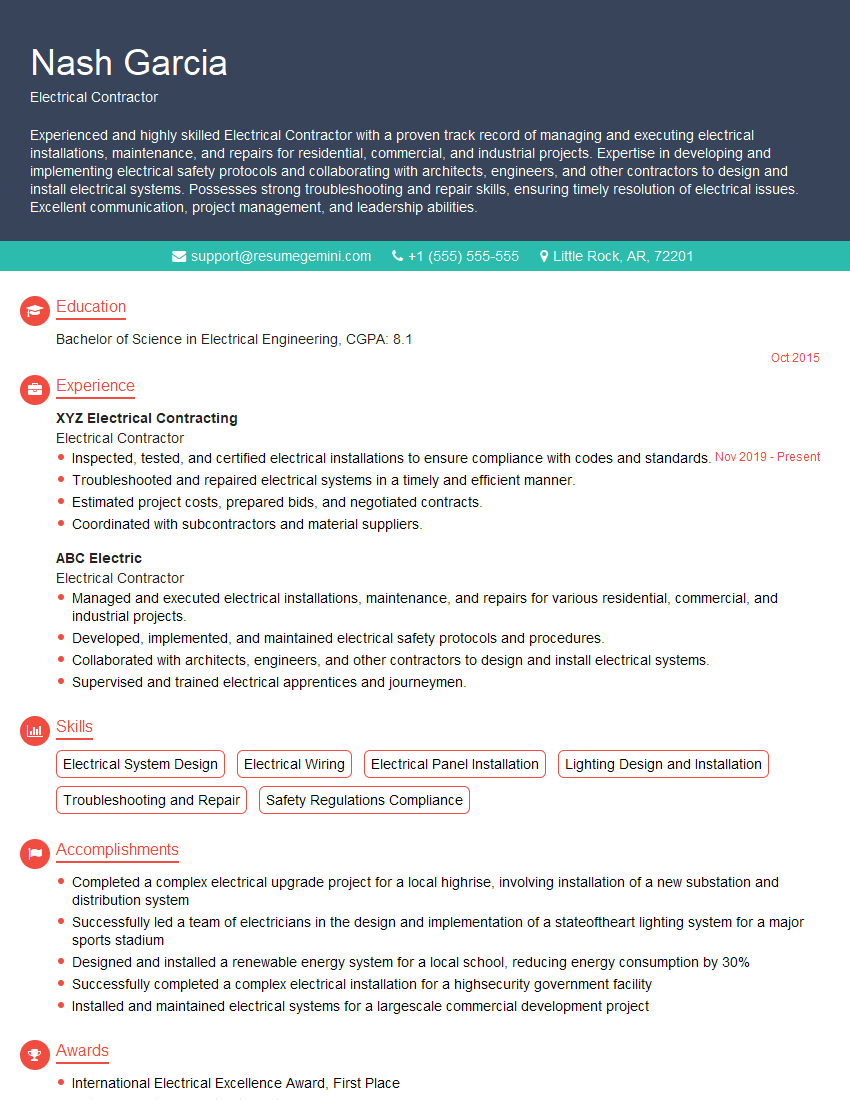
Electrical Contractor Resume Sample

Electrical Estimator Resume Sample

Automation Engineer Resume Sample
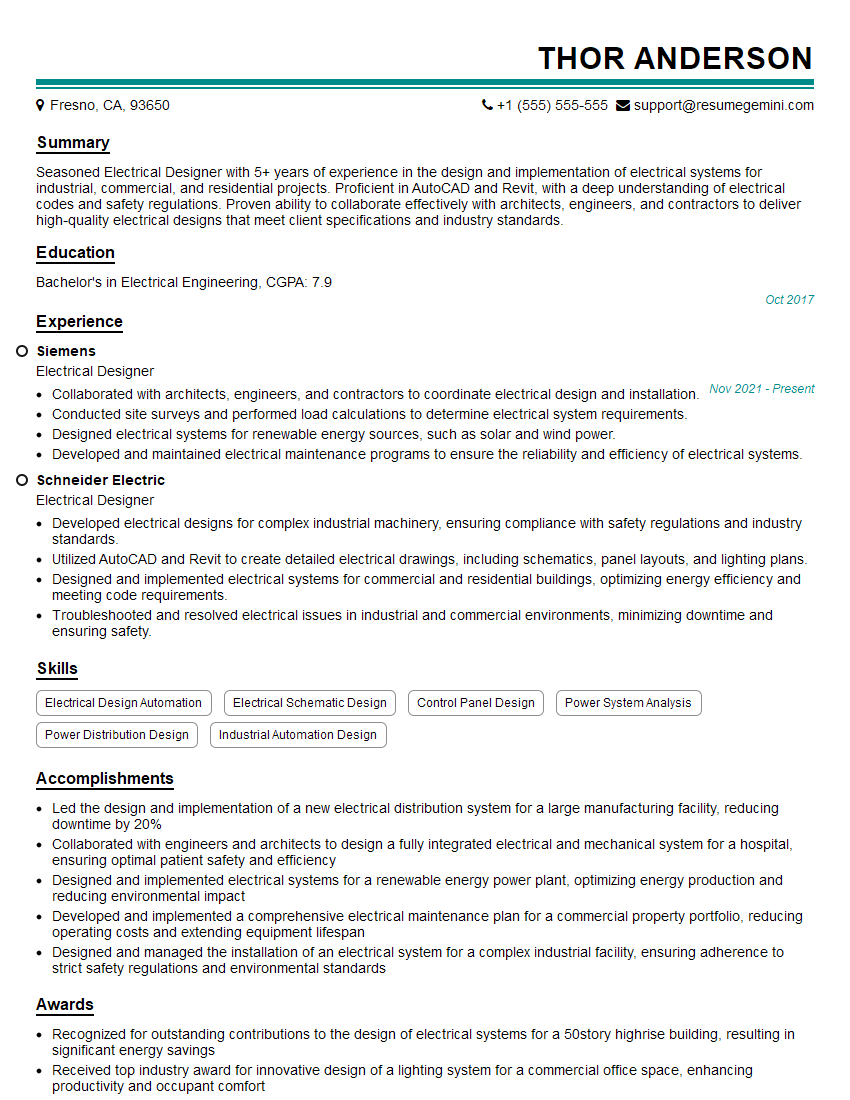
Electrical Designer Resume Sample

Electrical Engineer Resume Sample

Power Systems Engineer Resume Sample

Control Systems Engineer Resume Sample

Robotics Engineer Resume Sample

Electrical Drafter Resume Sample

Electrical Technician Resume Sample
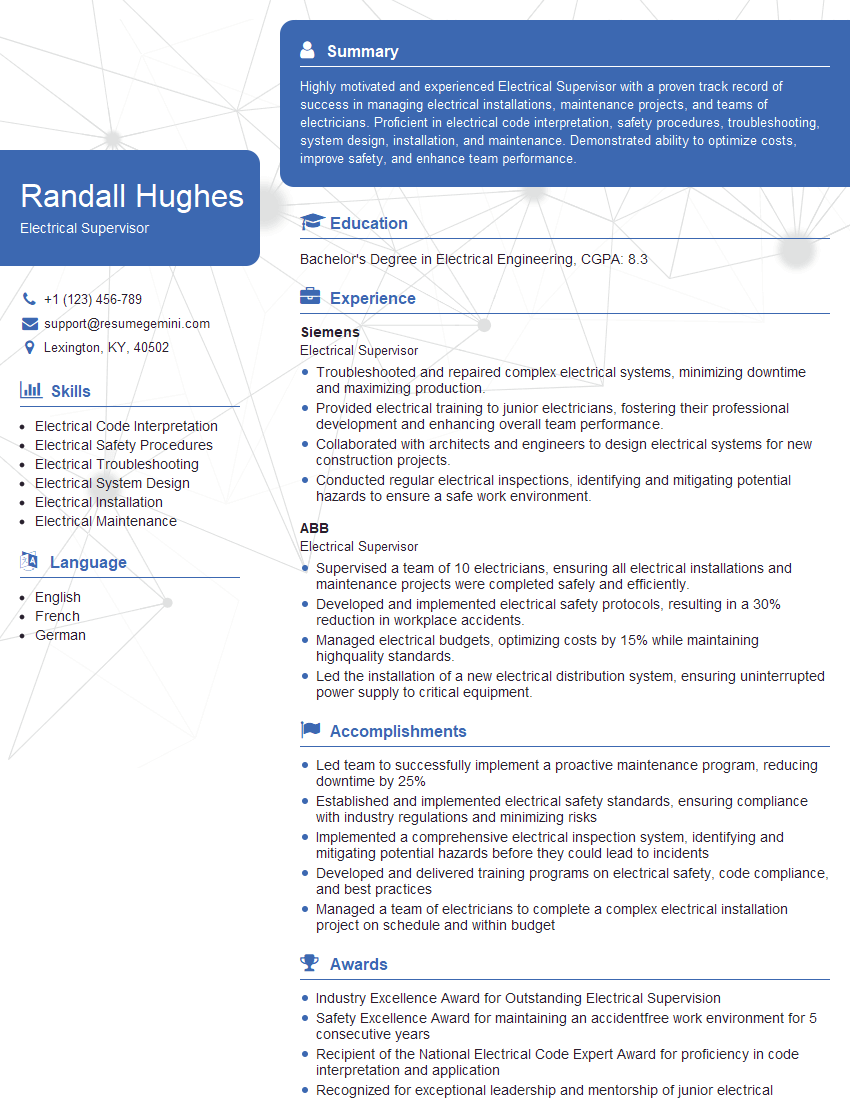
Electrical Supervisor Resume Sample

Electrician Resume Sample

Maintenance Electrician Resume Sample
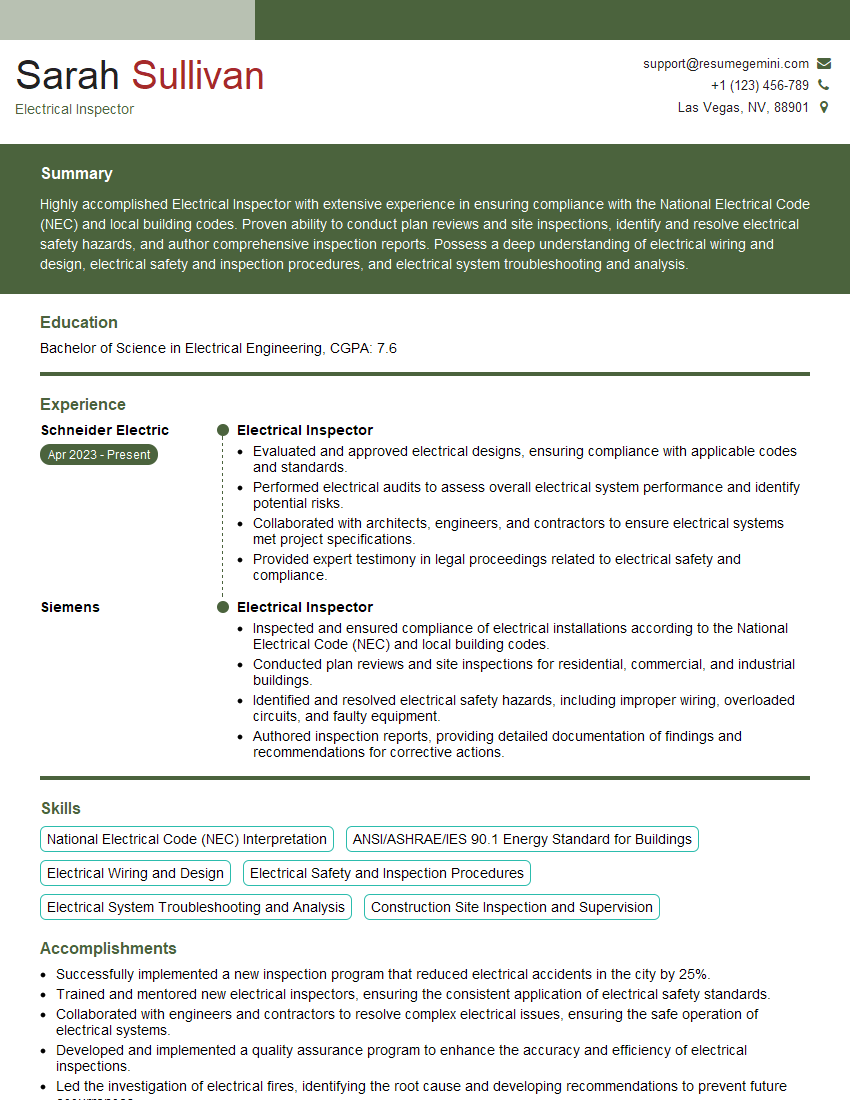
Electrical Inspector Resume Sample
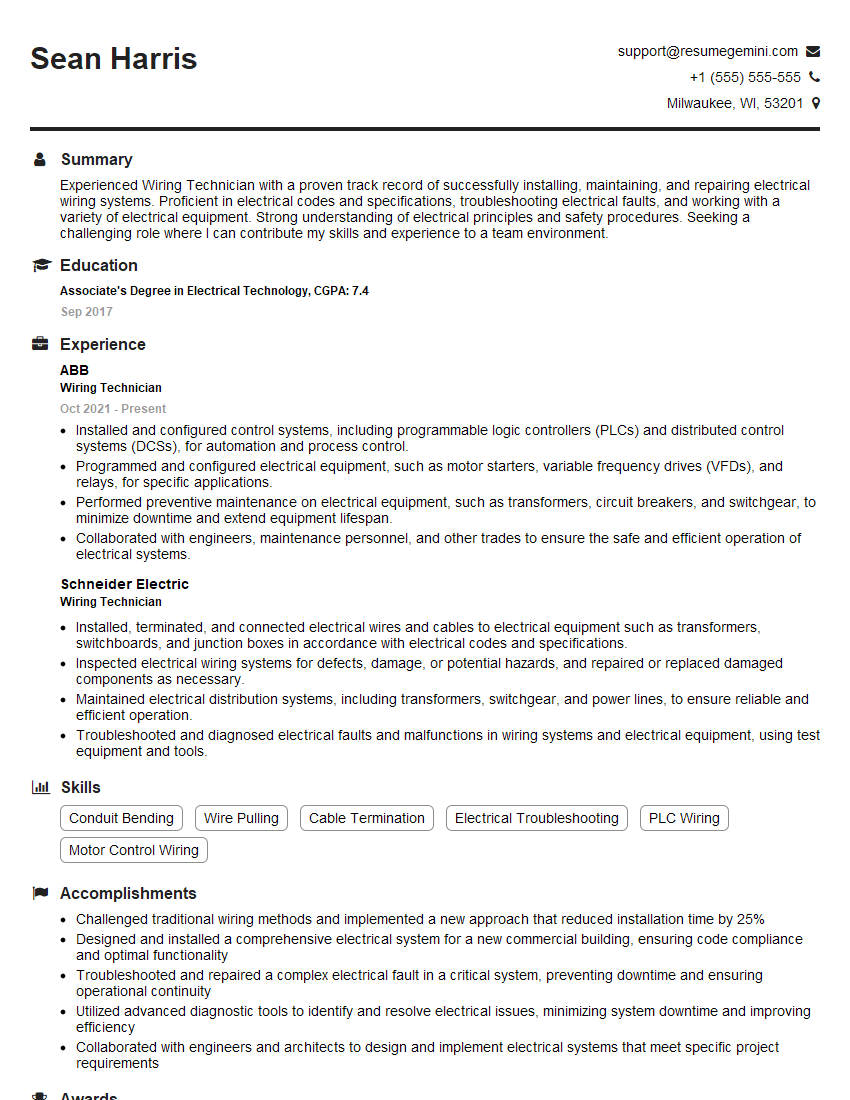
Wiring Technician Resume Sample
- Electrical Contractor
- Electrical Estimator
- Automation Engineer
- Electrical Designer
- Electrical Engineer
- Power Systems Engineer
- Control Systems Engineer
- Robotics Engineer
- Electrical Drafter
- Electrical Technician
- Electrical Supervisor
- Electrician
- Maintenance Electrician
- Electrical Inspector
- Wiring Technician
Explore more articles
Users Rating of Our Blogs
Share Your Experience
We value your feedback! Please rate our content and share your thoughts (optional).
What Readers Say About Our Blog
To the interviewgemini.com Webmaster.
Very helpful and content specific questions to help prepare me for my interview!
Thank you
To the interviewgemini.com Webmaster.
This was kind of a unique content I found around the specialized skills. Very helpful questions and good detailed answers.
Very Helpful blog, thank you Interviewgemini team.