Interviews are opportunities to demonstrate your expertise, and this guide is here to help you shine. Explore the essential Residential Glazing interview questions that employers frequently ask, paired with strategies for crafting responses that set you apart from the competition.
Questions Asked in Residential Glazing Interview
Q 1. What are the different types of residential glazing systems?
Residential glazing systems encompass various types of windows and doors designed to enhance energy efficiency, security, and aesthetics. The primary differentiator lies in the glazing unit itself – the combination of glass panes and the space between them.
- Single Glazing: The simplest form, consisting of a single pane of glass. It offers minimal insulation and is rarely used in new constructions due to its poor energy performance. Think of older homes – these are the windows you’ll likely find.
- Double Glazing (IGU): This is the most common type, featuring two panes of glass separated by a gas-filled cavity (usually argon or krypton). This cavity acts as an insulator, significantly reducing heat transfer and improving soundproofing. The gas helps minimize conduction and convection of heat.
- Triple Glazing (IGU): Offers even greater insulation than double glazing, using three panes of glass separated by two gas-filled cavities. The benefit is substantially improved energy efficiency, particularly valuable in colder climates, but comes at a higher cost.
- Laminated Glass: A safety feature that combines two or more sheets of glass with a layer of polyvinyl butyral (PVB) interlayer. This interlayer holds the glass together if broken, preventing shattering and reducing injury risk. Often used in ground floor windows for security.
- Specialty Glazing: This broad category encompasses various specialized glasses such as low-E (low-emissivity) glass, which reflects infrared radiation, reducing heat transfer; self-cleaning glass, which uses a titanium dioxide coating to break down dirt; and noise-reducing glass, which incorporates specialized layers to dampen sound transmission.
Q 2. Explain the process of installing a double-glazed window.
Installing a double-glazed window is a precise process requiring careful measurement, preparation, and installation techniques to ensure a weathertight and energy-efficient fit. Here’s a breakdown of the process:
- Preparation: Carefully measure the existing window opening and order the replacement window to the exact specifications. Removing the old window frame is crucial, ensuring the opening is clean and structurally sound.
- Framing: If necessary, install a new frame that fits snugly into the opening. This frame provides support and a secure surface for the new window. The type of frame material (uPVC, aluminum, wood) will influence this step.
- Window Placement: Carefully position the new double-glazed window into the frame, ensuring it’s level and plumb. Shims are often used to ensure precise alignment.
- Securing: Secure the window using appropriate fasteners. Over-tightening can cause damage, so care is essential.
- Sealing: Apply a high-quality sealant (such as silicone) around the edges of the window frame, creating a waterproof and airtight seal. This prevents drafts and water ingress.
- Finishing: Once the sealant has cured, any exposed fasteners or gaps are neatly finished to enhance aesthetics.
Throughout the process, adherence to manufacturer’s instructions and safety precautions is paramount. For example, always wear safety glasses and gloves.
Q 3. Describe your experience with different types of window frames (e.g., uPVC, aluminum, wood).
My experience spans across various window frame materials, each with its own strengths and weaknesses:
- uPVC (Unplasticized Polyvinyl Chloride): Highly popular due to its low maintenance, durability, and good insulation properties. It’s relatively cost-effective and comes in a variety of colors and styles. I’ve found uPVC to be particularly effective in damp climates due to its resistance to rot and moisture.
- Aluminum: Offers strength and sleek, modern aesthetics. Aluminum frames are excellent for large windows and doors, but they can be more prone to heat transfer, requiring thermal breaks to improve insulation. I’ve used aluminum extensively in contemporary designs where its slim profile is a design asset.
- Wood: A classic choice offering natural beauty and excellent insulation. Wood frames require regular maintenance, including painting or staining, to prevent rot and damage. Properly maintained wood frames can last for decades, adding significant character to a home. The choice of wood type also affects durability and cost.
The ideal frame material depends on factors such as budget, climate, aesthetics, and maintenance preferences. For example, I would recommend uPVC for a cost-effective, low-maintenance solution in a coastal area, while wood might be preferred for a period property where aesthetics are paramount.
Q 4. How do you ensure the proper sealing and weatherproofing of windows and doors?
Proper sealing and weatherproofing are crucial for preventing drafts, water leaks, and energy loss. My approach involves a multi-layered strategy:
- Careful Installation: Precise installation is the foundation of a good seal. Ensuring the window or door fits snugly within its frame is the first line of defense.
- High-Quality Sealants: I use durable, weather-resistant sealants, such as high-grade silicone, to fill gaps and cracks around frames. The choice of sealant depends on the substrate material and the specific application.
- Weatherstripping: Weatherstripping, often made of rubber or foam, is applied to the edges of windows and doors to further enhance the seal and prevent air leakage. There are various types of weatherstripping, each suited to different applications.
- Flashing: Proper flashing around the exterior of the frame prevents water from penetrating the wall behind the window or door. This is especially important in areas with heavy rainfall.
- Regular Inspection: Regular inspection and maintenance are essential for identifying and addressing any issues before they become significant problems.
A poorly sealed window or door can lead to significant energy loss and structural damage over time. Therefore, meticulous attention to detail during the sealing process is paramount.
Q 5. What are the common issues encountered during glazing installations, and how do you resolve them?
Common glazing installation issues often stem from poor planning, incorrect measurements, or inadequate preparation. Here are some examples and their solutions:
- Incorrect Measurements: Incorrectly sized windows or doors will not fit properly, leading to gaps and poor weatherproofing. Solution: Always double-check measurements and ensure the window or door is ordered to the exact specifications.
- Uneven Frames: An uneven frame will result in a misaligned window or door and compromised sealing. Solution: Use shims to level and plumb the frame before securing it.
- Poor Sealant Application: Inadequate sealant application leads to drafts and water leaks. Solution: Use a high-quality sealant and apply it in a continuous bead, ensuring complete coverage.
- Damage During Installation: Rough handling can damage the window or door during installation. Solution: Handle glazing components with care, using appropriate protective measures.
- Condensation: Condensation between panes indicates a possible seal failure in the IGU. Solution: Replacement of the IGU is often required. This highlights the importance of using quality components.
Proactive problem-solving, meticulous attention to detail, and the use of quality materials are crucial to prevent and resolve these issues.
Q 6. Explain your experience with various glass types (e.g., laminated, tempered, insulated).
My experience with various glass types is extensive, and the choice often depends on the specific needs of the project:
- Laminated Glass: Offers excellent safety and security features. The PVB interlayer keeps the glass fragments together upon breakage, minimizing injury risk and preventing intrusion. I’ve often used laminated glass on ground floor windows or in areas requiring enhanced security.
- Tempered Glass (Toughened Glass): Significantly stronger than annealed glass, making it ideal for applications where impact resistance is crucial. It shatters into small, relatively harmless fragments, reducing injury risks. I use tempered glass in shower doors, sidelights, and areas subject to potential impact.
- Insulated Glass Units (IGUs): The core of energy-efficient glazing systems. I’ve worked extensively with IGUs containing various gases (argon, krypton) to optimize insulation values. The choice of gas and the spacing between panes are critical for maximizing energy efficiency.
- Low-E Glass: Reduces heat transfer, improving energy efficiency. The microscopic coatings reflect infrared radiation, keeping heat inside in the winter and outside in the summer. It’s become a standard in modern window construction.
Understanding the properties of each glass type is essential for selecting the appropriate glass for specific applications. For instance, tempered glass is mandatory in certain applications due to safety regulations.
Q 7. How do you measure and calculate the size of windows and doors for installation?
Accurate measurement is paramount for a successful glazing installation. My process involves several steps:
- Preliminary Assessment: I begin by assessing the existing opening, noting any irregularities or obstructions.
- Precise Measurements: I use accurate measuring tools, such as a laser measure, to record the height, width, and depth of the opening. Multiple measurements are taken to ensure accuracy. I also check for squareness and plumbness.
- Allowance for Frame: I factor in the dimensions of the new window or door frame, ensuring sufficient space for proper installation and a secure fit. This allowance is critical and can vary depending on the frame material.
- Documentation: All measurements are meticulously documented, along with any relevant notes or observations. This documentation is crucial for ordering the correct glazing components.
- Verification: Before ordering, I double-check all measurements to minimize errors and potential delays.
Incorrect measurements can lead to significant problems, from a poor fit to the need for costly rework. The extra time spent on accurate measurement is a crucial investment in a successful installation.
Q 8. Describe your experience with different types of glazing beads and their application.
Glazing beads are the small, decorative strips that hold the glass panes in place within a window or door frame. Different types exist, each with specific applications.
- Standard Glazing Beads: These are the most common, typically made from wood, PVC (polyvinyl chloride), or composite materials. They’re easy to install and relatively inexpensive. I’ve used these extensively in standard window replacements and new constructions, particularly with timber frames where the aesthetic matches the frame material.
- Glazing Beads with Seals: These offer improved weather sealing. A rubber or foam gasket is incorporated into the bead, providing a tighter fit and enhancing energy efficiency. I often choose these when working with older homes or in areas with harsh weather conditions, as the extra seal prevents drafts and water ingress.
- Decorative Glazing Beads: These come in various profiles, colors, and materials, offering design flexibility. I’ve used decorative beads on numerous projects to match the overall style of the house, creating a custom look that enhances the property’s aesthetic appeal. For example, I once used ornate wooden beads on a Victorian-era home restoration project to maintain the period charm.
- External Glazing Beads: These sit on the exterior of the window frame and offer protection from the elements. They’re essential in areas prone to extreme weather or high winds, helping to maintain the integrity of the window system.
Choosing the right glazing bead depends on factors such as budget, desired aesthetic, climate, and the type of window frame being used. My experience allows me to select the optimal bead for each project, ensuring a long-lasting, high-quality installation.
Q 9. What safety measures do you take during glazing installation and repair?
Safety is paramount in glazing work. I always prioritize the following:
- Personal Protective Equipment (PPE): I consistently use safety glasses, gloves, and dust masks to protect myself from flying debris, sharp edges, and dust. When working at heights, I use harnesses and appropriate fall protection equipment.
- Secure Work Area: The work area is always properly secured and free from obstructions. Warnings and barriers are set up to prevent accidents. This includes ensuring stable ladders and scaffolding.
- Tool Safety: Power tools are inspected before each use to ensure they’re in good working order. I follow all manufacturer’s instructions and use the correct safety guards and attachments. I always disconnect power tools before making adjustments or changing blades.
- Handling Glass Safely: Glass is handled with care, using appropriate lifting techniques and gloves to prevent cuts and breaks. Broken glass is always disposed of properly in marked containers.
- Working at Heights: When working on upper floors or elevated areas, I always use appropriate safety harnesses and follow all fall protection protocols.
My commitment to safety ensures a safe working environment for myself and others, preventing accidents and promoting a professional work ethic.
Q 10. How do you handle customer complaints or issues during or after installation?
Addressing customer concerns is crucial. My approach involves:
- Active Listening: I carefully listen to the customer’s complaint, allowing them to fully explain their issue without interruption. I always validate their feelings and concerns.
- Thorough Investigation: I thoroughly investigate the issue, examining the installation and considering potential causes. This often includes taking photos and detailed notes.
- Honest Communication: I communicate openly and honestly with the customer, explaining the potential solutions and the timeframe for resolution. If it’s a legitimate issue, I never hesitate to take ownership.
- Swift Resolution: I work quickly to resolve the issue, providing timely updates to the customer. This might involve repairs, replacements, or adjustments as needed. A recent example was a slight misalignment on a patio door; I quickly returned, adjusted the hardware, and ensured perfect functionality, leaving the customer very satisfied.
- Follow-up: I always follow up with the customer after the issue is resolved to ensure they are fully satisfied. This shows my dedication to customer service and builds trust.
My goal is to turn a negative experience into a positive one, strengthening the customer relationship and maintaining my professional reputation.
Q 11. What are the building codes and regulations related to residential glazing in your area?
(Note: Building codes and regulations vary significantly by location. This answer provides a general overview and should not be considered a substitute for consulting local building codes. Always refer to the most up-to-date local authority documentation.)
Residential glazing in my area is subject to various building codes and regulations focusing primarily on:
- Energy Efficiency: Regulations often specify minimum performance standards for glazing, such as U-values (heat transfer coefficient) and solar heat gain coefficient (SHGC). These aim to improve energy efficiency and reduce energy consumption.
- Safety: Codes address safety aspects, such as the use of safety glass (e.g., tempered or laminated glass) in specific areas, to minimize the risk of injury from breakage.
- Wind Resistance: Regulations specify minimum wind load resistance for windows and doors to ensure structural integrity in high-wind conditions.
- Water Resistance: Codes stipulate requirements for water tightness to prevent water leakage and damage to the building structure.
- Accessibility: Regulations related to accessibility for people with disabilities might apply, such as requirements for operable windows in certain locations.
I always ensure my work complies with all applicable building codes and regulations, obtaining necessary permits when needed. Staying informed about updates is vital for delivering compliant and safe installations.
Q 12. Explain your knowledge of different types of window hardware (e.g., hinges, handles, locks).
Window hardware is crucial for functionality, security, and aesthetics. My experience covers a wide range of components:
- Hinges: I work with various hinge types, including butt hinges (common for casement windows), pivot hinges (for large windows and doors), and friction hinges (for smooth operation). The selection depends on the window type, weight, and desired operation.
- Handles and Knobs: I’m familiar with various styles and materials, from basic lever handles to more elaborate designs. Considerations include durability, ease of use, and aesthetics. Security features, like locking mechanisms integrated within the handle, are also important.
- Locks: I’ve installed a wide variety of locks, including multi-point locking systems for enhanced security on doors and windows, and sash locks for casement windows. The choice depends on the level of security required.
- Latches and Bolts: These are essential for securing windows and doors. I use different types based on the design and security requirements of each project.
- Window Stays and Restrictors: These limit window opening, enhancing safety and preventing accidental falls. I’ve used various designs depending on the window type and customer requirements.
Proper selection and installation of hardware are crucial for optimal window and door performance, ensuring smooth operation, security, and longevity. I ensure the hardware chosen complements the window or door’s style and meets the client’s needs and safety preferences.
Q 13. How do you ensure the proper alignment and functionality of windows and doors after installation?
Ensuring proper alignment and functionality involves a multi-step process:
- Precise Measurements and Planning: Accurate measurements and careful planning are essential before starting the installation. This helps to prevent misalignments and ensures a perfect fit.
- Proper Installation Techniques: I use precise installation techniques, ensuring that windows and doors are level, plumb, and square. This includes using shims and other tools to achieve accurate positioning.
- Hardware Adjustment: Fine adjustments to hinges, latches, and other hardware are often necessary to achieve optimal functionality and alignment. I have the experience and tools to make these adjustments precisely.
- Testing and Inspection: After installation, I thoroughly test all windows and doors to ensure smooth and easy operation. This includes checking for proper sealing, latching, and locking mechanisms. I also inspect for any gaps or misalignments.
- Quality Control: I have a strong focus on quality control. I carefully inspect the completed installation to ensure it meets my high standards before handing over to the client.
Addressing any minor adjustments promptly is critical. A poorly aligned window can lead to problems like drafts, water leakage, and even structural issues over time. My attention to detail in this step ensures a long-lasting and functional installation.
Q 14. Describe your experience with using power tools and hand tools for glazing work.
Glazing work requires proficiency with both power tools and hand tools. My experience encompasses:
- Power Tools: I’m proficient with various power tools such as circular saws (for cutting frames), drills (for pilot holes and securing hardware), impact drivers (for efficient screw driving), and pneumatic nail guns (for speed and efficiency on certain projects, always prioritizing safety). I’m familiar with different safety protocols and maintenance procedures for each power tool.
- Hand Tools: Hand tools such as chisels, putty knives, scrapers, measuring tapes, and levels are essential for precise work. I regularly use these for tasks ranging from removing old glazing to applying sealant and ensuring accurate alignment.
- Specialized Tools: I also utilize specialized glazing tools like glazing wedges and beading tools to ensure efficient and accurate installation of glazing beads and to protect the glass.
The choice between power and hand tools depends on the specific task and the level of precision required. I skillfully combine both to achieve optimal efficiency and a high-quality finish. For example, I might use a power saw for rough cuts on framing and then meticulously use chisels and hand planes for precise adjustments. This approach ensures accuracy and minimizes any risk of damage to the window frame.
Q 15. What is your experience with using silicone sealant and other glazing sealants?
Silicone sealant is a crucial component in residential glazing, providing a weatherproof and durable seal around window and door frames. My experience spans over ten years, encompassing a wide range of applications, from basic window installations to complex curtain wall systems. I’m proficient in using different types of silicone, selecting the appropriate formulation based on the substrate (e.g., wood, aluminum, PVC) and the specific application requirements. For example, I’ve used neutral cure silicone for its compatibility with various materials and low odor, while choosing acetic cure silicone for its faster curing time in specific situations. Beyond silicone, I’m also experienced with polyurethane sealants, which offer superior adhesion and elasticity, especially beneficial in areas prone to movement, such as older buildings. I carefully follow manufacturer instructions, ensuring proper surface preparation (cleaning and priming when needed) for optimal adhesion and longevity of the seal. I also regularly inspect my work to ensure the sealant’s integrity and address any issues promptly.
One challenging scenario I recall involved sealing a large bay window in a historic home. The existing frame was quite warped, requiring careful attention to detail and multiple sealant applications to ensure a watertight seal. This experience reinforced the importance of proper preparation and using high-quality sealants for long-term performance.
Career Expert Tips:
- Ace those interviews! Prepare effectively by reviewing the Top 50 Most Common Interview Questions on ResumeGemini.
- Navigate your job search with confidence! Explore a wide range of Career Tips on ResumeGemini. Learn about common challenges and recommendations to overcome them.
- Craft the perfect resume! Master the Art of Resume Writing with ResumeGemini’s guide. Showcase your unique qualifications and achievements effectively.
- Don’t miss out on holiday savings! Build your dream resume with ResumeGemini’s ATS optimized templates.
Q 16. How do you handle damaged or broken glass during installation or repair?
Handling damaged glass during installation or repair requires meticulous attention to safety and precision. My first priority is always safety, ensuring I wear appropriate personal protective equipment (PPE), including gloves, safety glasses, and sometimes a face shield. Depending on the extent of the damage, I’ll use different techniques. For small chips or cracks, I might attempt a repair using specialized glass repair kits. However, if the damage is significant, the glass needs to be replaced. I carefully remove the broken glass, taking precautions to avoid further damage. This often involves using specialized tools to carefully cut the glazing bead and then remove the broken pane. I always dispose of broken glass safely, following appropriate regulations. Once the broken glass is removed, the frame is cleaned and inspected. The new glass is then carefully measured and installed, ensuring a precise and secure fit. The glazing bead is then replaced and sealed with appropriate sealant. Throughout the entire process, I prioritize minimizing risk to the property and personnel.
A particularly challenging case involved a broken window high up on a three-story building. Safety was paramount. I used scaffolding and safety harnesses, employing a methodical approach that prioritized safe glass removal and proper installation of the replacement pane.
Q 17. Describe your experience with window and door repairs, including glass replacement.
My experience in window and door repairs, including glass replacement, covers a wide range of scenarios. I’ve worked on various window types – from simple single-pane windows to complex double- or triple-glazed units, and various door styles. My expertise extends to identifying the root cause of the problem, not just addressing the immediate issue. For example, a seemingly simple glass replacement might reveal underlying problems with the frame, requiring additional repairs. I’m experienced with various repair techniques, such as replacing broken glass, repairing damaged frames, adjusting window and door hardware, and repairing weatherstripping. I always strive to use high-quality materials to ensure long-lasting repairs. I also consider the aesthetic aspects, matching replacement parts to existing materials as closely as possible.
One memorable repair involved a historic window with intricately detailed frames. The glass was cracked, and the old putty was crumbling. The repair required meticulous attention to detail, including removing the old putty, cleaning the frame, carefully installing new glass, and using traditional glazing techniques to ensure the window’s historical integrity was preserved while providing a durable repair.
Q 18. How do you maintain a clean and organized work area?
Maintaining a clean and organized work area is crucial for efficiency, safety, and professionalism. Before I begin any work, I always clear the area of any obstructions. I use drop cloths to protect floors and surfaces from damage and spills. I keep my tools neatly organized and readily accessible. Once the job is complete, I thoroughly clean the work area, removing all debris and disposing of it appropriately. This includes properly disposing of broken glass and other hazardous materials. A clean workspace also minimizes the risk of accidents and allows for more accurate and efficient work. I’ve found that taking the time to clean and organize my workspace greatly reduces errors and increases the overall quality of my work.
I use labeled containers for screws, nails, and other small parts to keep everything sorted and easily accessible.
Q 19. Explain your understanding of energy efficiency standards related to residential glazing.
Energy efficiency in residential glazing is a critical consideration in modern construction and renovation. My understanding encompasses various standards and regulations designed to minimize energy loss through windows and doors. This includes understanding U-values (representing the rate of heat transfer), Solar Heat Gain Coefficients (SHGC, indicating how much solar heat is transmitted through the glazing), and Visible Transmittance (VT, measuring how much visible light is transmitted). Higher-performance glazing systems typically feature low U-values (indicating better insulation), lower SHGCs (reducing solar heat gain in summer), and appropriate VT levels to balance daylighting with heat gain/loss. I’m familiar with energy codes and standards in my area and can recommend glazing solutions that meet or exceed those requirements. I also consider the overall building envelope design, ensuring that the glazing selection contributes to the building’s overall energy efficiency.
For example, I recently helped a client choose triple-glazed windows with low-E coatings for their home renovation, significantly improving their energy efficiency and reducing their heating and cooling costs.
Q 20. What is your experience with thermal break technology in window frames?
Thermal break technology in window frames is designed to reduce heat transfer between the interior and exterior of a building. It involves incorporating a non-conductive material, such as polyamide or fiberglass, into the frame’s structure, separating the inner and outer metal components. This prevents the direct transfer of heat or cold through the frame, resulting in better insulation and improved energy efficiency. My experience with thermal break technology includes selecting and installing windows with such frames. I understand the impact of different materials and designs on the overall thermal performance of the window system and can advise clients on the best options based on their specific climate and energy efficiency goals. I’m aware that thermal breaks can also improve condensation control by reducing the temperature difference across the frame.
In a recent project, using windows with a polyamide thermal break was crucial in achieving the client’s energy efficiency goals in a cold climate.
Q 21. What are the benefits and drawbacks of different types of window films?
Window films offer various benefits and drawbacks, depending on the type and application. Different films are designed for specific purposes, such as heat reduction, UV protection, privacy, or security. For example, low-E films can significantly reduce heat transfer through windows, lowering energy costs. However, they might slightly reduce visible light transmission. Security films offer protection against breakage and intrusion but can slightly reduce the clarity of the glass. Privacy films provide increased privacy but can reduce visible light transmission. UV-blocking films protect against sun damage to furniture and fabrics, but might not offer significant heat reduction. The selection of the appropriate window film depends on the specific needs and priorities of the homeowner or building owner. I carefully consider these factors and guide clients to make informed decisions.
I recently advised a client to install solar control film to reduce glare and heat gain in their south-facing windows, significantly improving comfort and reducing energy consumption without compromising daylighting.
Q 22. How do you determine the appropriate type of glazing for a particular application?
Selecting the right glazing for a residential application involves a careful consideration of several factors. It’s not a one-size-fits-all approach; the perfect solution depends heavily on the client’s needs and the specific characteristics of the property.
- Climate: In colder climates, you’d prioritize glazing with high U-values (low heat transfer) to minimize energy loss. Double or triple glazing with low-E coatings (low emissivity) are essential here. In warmer climates, the focus shifts to solar heat gain coefficient (SHGC), aiming for lower values to reduce heat intake. Consider the balance between insulation and solar control.
- Budget: The cost of different glazing types varies significantly. Standard double glazing is generally more affordable than triple glazing or specialized options like self-cleaning or acoustic glazing. A thorough understanding of the budget constraints is critical for recommending suitable solutions.
- Aesthetics: The appearance of the glazing is key to a home’s overall design. Options range from classic clear glass to tinted, patterned, or textured glass. This aspect requires a collaborative discussion with the client to match the glazing choice with their architectural vision.
- Security: Laminated glass offers enhanced security by holding together even when shattered, making it a desirable choice for ground-floor windows or areas with higher security concerns. Consider the risk factors of the location.
- Energy Efficiency: Government regulations and building codes often dictate minimum energy efficiency standards. Understanding these regulations is essential in proposing compliant and efficient solutions. For example, certain regions mandate a specific minimum U-value.
For example, a project in a cold, northerly location might necessitate triple-glazed units with argon gas fill and a low-E coating for optimal thermal performance. Conversely, a project in a sunny, southwestern climate might use double glazing with a low SHGC coating to minimize solar heat gain and reduce cooling loads.
Q 23. Describe your experience with working from heights and using safety harnesses.
Safety is paramount in my work, especially when dealing with heights. I’ve extensive experience working from heights, always adhering to strict safety protocols. My training includes comprehensive instruction on the proper use and inspection of safety harnesses and fall arrest systems. I’m proficient in inspecting equipment before each use, ensuring all components are functional and correctly fastened.
I regularly undergo refresher courses on fall protection techniques, including proper anchoring points, rescue procedures, and emergency response. I’ve never had a fall-related incident, thanks to meticulous adherence to safety regulations and a proactive approach to risk assessment.
I always ensure that the work area is secured properly, using scaffolding or other appropriate access equipment. I always double-check my harness, ensuring all buckles and straps are securely fastened before commencing work at heights. Teamwork is crucial; I collaborate closely with colleagues to monitor each other’s safety and ensure all procedures are followed.
Q 24. How do you manage your time and prioritize tasks during a busy workday?
Managing time effectively in a busy workday involves a combination of planning, prioritization, and efficient execution. I use a digital project management system to schedule tasks, set deadlines, and track progress. I prioritize tasks based on urgency and importance, focusing on high-impact activities first.
I break down large projects into smaller, manageable steps to avoid feeling overwhelmed. Time-blocking helps to allocate specific time slots for particular tasks. I regularly review my schedule and make adjustments as needed, factoring in unforeseen delays or changes in priorities. Communication is vital – I keep clients and colleagues informed of my progress and any potential roadblocks.
For example, if I have multiple glazing installations scheduled for a day, I’ll prioritize the most complex or time-sensitive projects first, while delegating simpler tasks when appropriate.
Q 25. What is your experience with working independently and as part of a team?
I’m comfortable working both independently and as part of a team. Independent work requires self-discipline, organizational skills, and the ability to manage my time effectively. I excel at this aspect, able to focus on individual tasks and ensure projects are completed to a high standard. For instance, I’ve often completed pre-installation assessments and site surveys independently.
Teamwork is equally essential in glazing projects, particularly for larger or more complex installations. I actively participate in team discussions, contribute my expertise, and collaborate effectively with other tradespeople. Open communication, respectful interaction, and a willingness to share knowledge are key to successful teamwork. I’ve always found that team projects are completed faster and more efficiently with open communication.
Q 26. How do you stay up-to-date with the latest trends and technologies in residential glazing?
Staying current in the dynamic field of residential glazing requires continuous learning and engagement. I subscribe to industry publications and journals, attend trade shows and workshops, and actively participate in online forums and professional organizations. I also maintain a network of contacts within the industry, allowing for the exchange of information and best practices.
I regularly research new technologies and materials, such as advancements in smart glass, energy-efficient coatings, and innovative installation techniques. This helps me remain informed about evolving standards and regulations, ensuring that my work meets the latest requirements and integrates the most effective solutions.
For example, attending the recent Glasstec trade show enabled me to learn about a new type of self-cleaning glass that would significantly benefit clients in certain climates.
Q 27. Describe a challenging glazing project and how you overcame the obstacles.
One challenging project involved installing bespoke, curved glazing in a heritage building. The complexity stemmed from the intricate curves of the glass, the need for precise measurements, and the constraints imposed by the building’s historical significance. We encountered difficulties in sourcing the specialized curved glass and ensuring its precise fit within the existing framework.
To overcome these obstacles, we collaborated closely with the glass manufacturer to customize the glazing to the exact specifications, including meticulous templates and detailed fabrication drawings. We used advanced laser measurement techniques to ensure the accurate placement and alignment of the glass units. The installation required experienced glaziers with expertise in handling curved glass, meticulous attention to detail, and significant patience. The project was completed successfully, exceeding client expectations and showcasing our expertise in handling challenging projects.
Q 28. What are your salary expectations?
My salary expectations are commensurate with my experience, skills, and the market rate for experienced residential glazing professionals with my qualifications. I’m open to discussing a competitive compensation package that reflects my contributions and aligns with the company’s compensation structure. I’m eager to learn more about the specifics of this role and how my skills can contribute to your team’s success.
Key Topics to Learn for Your Residential Glazing Interview
- Types of Residential Glazing: Understanding the differences between double glazing, triple glazing, laminated glass, and insulated glass units (IGUs), including their respective energy efficiency ratings and applications.
- Installation Techniques: Familiarize yourself with proper installation procedures, including sealing, weatherproofing, and handling different window frame materials (e.g., wood, vinyl, aluminum).
- Energy Efficiency and Regulations: Learn about building codes and energy efficiency standards related to residential glazing. Understand the impact of glazing on thermal performance and sound insulation.
- Glazing Materials and Properties: Explore the properties of different glass types, their strengths, weaknesses, and suitability for various applications (e.g., impact resistance, UV protection).
- Troubleshooting and Repair: Develop your problem-solving skills related to common glazing issues such as condensation, leaks, and broken seals. Understand different repair techniques.
- Safety Procedures and Regulations: Understand relevant health and safety regulations concerning working at heights and handling glass materials.
- Customer Interaction and Communication: Prepare to discuss your experience with interacting with clients, understanding their needs, and addressing their concerns.
- Project Management and Estimating: Understand basic project planning, scheduling, and cost estimation principles as they relate to glazing projects.
Next Steps
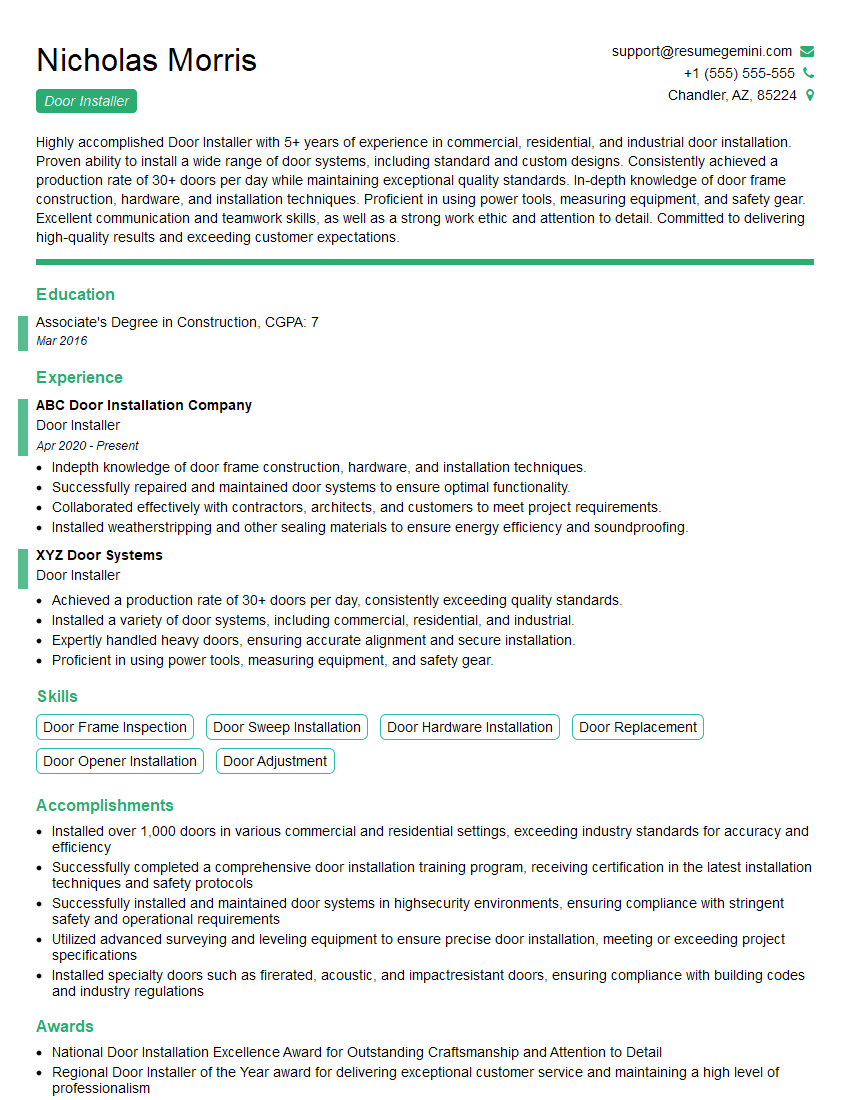
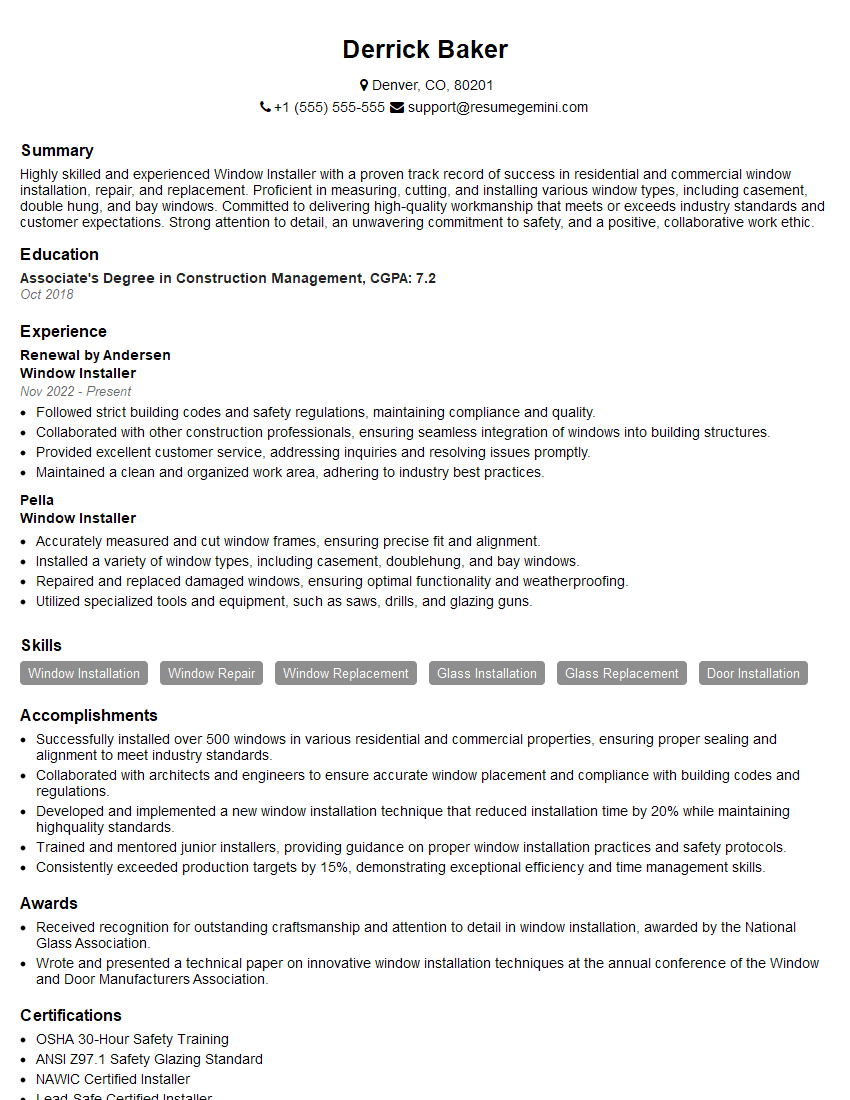
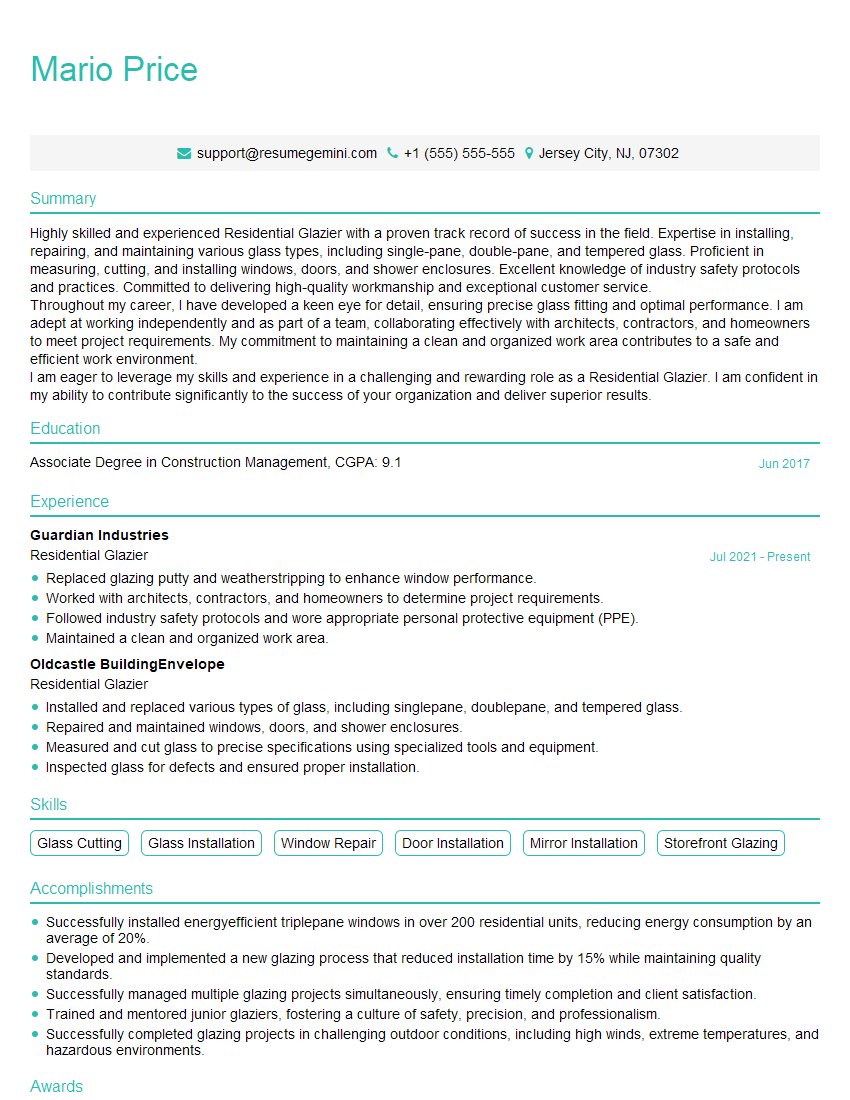
Mastering residential glazing opens doors to a rewarding career with excellent growth potential in a constantly evolving industry. A strong understanding of these key topics significantly increases your interview success rate and allows you to showcase your expertise. To further enhance your job prospects, crafting an ATS-friendly resume is crucial. This ensures your application gets noticed by recruiters and hiring managers. We highly recommend using ResumeGemini to build a professional and impactful resume. ResumeGemini provides a user-friendly platform and offers examples of resumes tailored specifically to the Residential Glazing industry to help you stand out from the competition.
Explore more articles
Users Rating of Our Blogs
Share Your Experience
We value your feedback! Please rate our content and share your thoughts (optional).
What Readers Say About Our Blog
To the interviewgemini.com Webmaster.
Very helpful and content specific questions to help prepare me for my interview!
Thank you
To the interviewgemini.com Webmaster.
This was kind of a unique content I found around the specialized skills. Very helpful questions and good detailed answers.
Very Helpful blog, thank you Interviewgemini team.