The right preparation can turn an interview into an opportunity to showcase your expertise. This guide to Residential Piping interview questions is your ultimate resource, providing key insights and tips to help you ace your responses and stand out as a top candidate.
Questions Asked in Residential Piping Interview
Q 1. Explain the difference between PVC and CPVC piping.
Both PVC (Polyvinyl Chloride) and CPVC (Chlorinated Polyvinyl Chloride) are common thermoplastic materials used for residential piping, but they differ significantly in their properties and applications. PVC is more rigid and economical, making it suitable for cold water lines and drainage systems. CPVC, however, is designed to withstand higher temperatures, making it the preferred choice for hot water lines.
Think of it like this: PVC is the sturdy workhorse for cooler tasks, while CPVC is the more resilient athlete built for hotter conditions. CPVC can handle temperatures up to 200°F (93°C) consistently, while PVC is typically limited to 140°F (60°C). This temperature resistance is crucial for preventing softening and potential failure in hot water systems. CPVC also offers slightly better impact resistance than PVC.
- PVC: Lower cost, suitable for cold water lines and drainage.
- CPVC: Higher temperature resistance, more expensive, suitable for hot and cold water lines.
Q 2. Describe the process of sizing residential water pipes.
Sizing residential water pipes involves calculating the required diameter to ensure adequate water flow throughout the house without excessive pressure drops. This depends on several factors including the number of fixtures, the distance from the water meter, and the desired flow rate.
We use flow rate calculations and consult industry standards like the IAPMO (International Association of Plumbing and Mechanical Officials) code. For example, a typical bathroom might require a 1/2-inch pipe, while the main water supply line entering the house could be significantly larger (e.g., 3/4-inch or 1-inch) to accommodate the overall demand. Insufficient pipe size leads to low water pressure, while oversized pipes are wasteful and expensive. Specialized software and online calculators can assist in this process, simplifying the calculations and ensuring compliance with relevant codes.
Imagine trying to fill a bathtub with a tiny straw versus a large pipe. The large pipe efficiently delivers the necessary flow rate, just as correctly sized pipes deliver adequate water pressure to all fixtures.
Q 3. What are the common types of pipe fittings used in residential plumbing?
Residential plumbing utilizes a variety of fittings to connect pipes, change directions, or adapt to different pipe sizes. Common types include:
- Elbows: Change the direction of the pipe (45° or 90° elbows are common).
- Tees: Allow for branching connections.
- Couplings: Join two pipes of the same diameter.
- Unions: Allow for easy disconnection and reconnection of pipes.
- Reducers/Adapters: Connect pipes of different diameters.
- Caps: Seal the end of a pipe.
- Nipples: Short pieces of pipe used as connectors.
Choosing the right fitting ensures watertight connections and a functional plumbing system. Always use fittings that are compatible with the pipe material (e.g., PVC fittings for PVC pipes).
Q 4. How do you identify and address a low water pressure issue?
Low water pressure is a common problem with various causes. Troubleshooting involves a systematic approach:
- Check the water meter: Make sure the meter is running when a faucet is opened. A malfunctioning meter could restrict flow.
- Examine faucets and showerheads: Mineral deposits or debris can clog aerators and showerheads, reducing flow.
- Inspect the pipes for leaks or blockages: Low pressure could indicate a leak somewhere in the system.
- Check the main water shut-off valve: Ensure it’s fully open.
- Look for pressure regulator issues: A malfunctioning pressure regulator could reduce water pressure to the entire house.
- Check for low water pressure in the neighborhood: If it’s a widespread problem, the issue might be with the main water supply to the area.
Addressing the issue depends on the cause. Cleaning or replacing showerheads, repairing leaks, or adjusting the pressure regulator are potential solutions. In some cases, a plumber’s expertise might be necessary to identify and solve more complex issues.
Q 5. Explain the function of a pressure relief valve.
A pressure relief valve (PRV), also known as a pressure release valve, is a safety device installed in water heaters and other pressurized systems. Its purpose is to prevent dangerous pressure buildup that could lead to tank rupture or system failure. When the pressure exceeds a predetermined limit (typically around 150 PSI), the PRV automatically opens, releasing water and reducing the pressure to a safe level.
Think of it as a pressure safety valve, similar to a pressure cooker’s safety valve. This ensures that the system doesn’t explode if pressure becomes excessive. Regular inspection and testing of the PRV are essential to guarantee its proper functioning.
Q 6. What are the different types of drains used in residential plumbing?
Residential plumbing uses several types of drains, each designed for specific applications:
- Cast iron: Durable and long-lasting, but heavy and prone to corrosion.
- PVC: Lightweight, corrosion-resistant, and cost-effective, commonly used for drain, waste, and vent (DWV) systems.
- ABS (Acrylonitrile Butadiene Styrene): Another type of plastic pipe also used for DWV systems; similar to PVC in many ways.
- Copper: Durable and resistant to corrosion, but more expensive.
The choice of drain material depends on factors such as budget, building codes, and the specific application. Properly sloping drains are essential to ensure efficient wastewater removal.
Q 7. Describe the process of installing a toilet.
Toilet installation involves several steps:
- Prepare the floor: Ensure the floor is level and the flange (the ring bolted to the floor) is properly positioned.
- Connect the water supply line: Attach a flexible supply line to the toilet’s fill valve, ensuring a secure connection.
- Position the toilet: Carefully lower the toilet onto the flange, aligning the bolts.
- Secure the toilet: Tighten the bolts to secure the toilet to the flange.
- Connect the wax ring: A wax ring creates a watertight seal between the toilet and the flange.
- Connect the drain line: Attach the toilet’s drain outlet to the drainpipe.
- Caulk the base: Caulk around the base of the toilet to prevent water leaks.
- Test for leaks: Flush the toilet several times and check for leaks around the base and connections.
Properly installed toilets prevent leaks and ensure reliable functionality. Always follow the manufacturer’s instructions and adhere to local plumbing codes. If you are not experienced in plumbing, it’s best to seek professional help.
Q 8. How do you test for leaks in a residential plumbing system?
Leak detection in residential plumbing relies on a combination of methods, starting with visual inspection. We look for obvious signs like dripping faucets, wet spots on walls or ceilings, and unusual water sounds. However, many leaks are hidden. For those, we employ several advanced techniques.
Pressure Testing: This involves isolating a section of the plumbing system, pressurizing it with air or water, and monitoring the pressure drop over time. A slow pressure drop indicates a leak. We often use specialized pressure gauges for this. For example, if we suspect a leak in the main water line, we’ll shut off the water supply, connect a pressure gauge, and observe the pressure reading over a few hours.
Dye Testing: This is useful for pinpointing leaks in specific areas, particularly toilets and shower drains. We add a non-toxic dye to the water and observe where it appears, indicating the leak location.
Electronic Leak Detectors: These devices use acoustic sensors to detect the high-frequency sounds of escaping water, even behind walls or under floors. This is invaluable for finding leaks that aren’t visually apparent.
Thermal Imaging: Infrared cameras can detect temperature differences caused by leaking water, revealing hidden leaks, even within walls.
The choice of method depends on the suspected location and severity of the leak. A combination of techniques is often employed for comprehensive diagnosis.
Q 9. What are the common causes of clogged drains?
Clogged drains in residential plumbing are usually caused by a build-up of materials that shouldn’t be in the system. Think of it like a slowly narrowing artery.
Hair and Soap Scum: These are common culprits, particularly in shower and bathroom drains. Hair gets tangled, and soap scum clings to it, forming a sticky barrier that traps other debris.
Grease and Oils: These solidify as they cool, adhering to the inside of pipes and eventually restricting flow. Kitchen drains are particularly susceptible. Never pour grease down the drain—it’s a recipe for disaster!
Food Waste: Improper disposal of food scraps, especially fibrous vegetables and rice, can lead to clogs in kitchen drains. Garbage disposals can help but aren’t foolproof.
Mineral Buildup: Over time, minerals in hard water can accumulate on pipe walls, reducing the diameter and causing slow drainage. This is more of a gradual issue.
Foreign Objects: Items accidentally flushed down the toilet, such as toys or hygiene products, can cause complete blockages.
Prevention is key! Using drain strainers, avoiding pouring grease down drains, and being mindful of what’s flushed down the toilet can significantly reduce the risk of clogs.
Q 10. Explain the principles of water hammer and how to mitigate it.
Water hammer is the loud banging sound that occurs in pipes when a faucet or appliance is suddenly shut off. Imagine a speeding train suddenly hitting a wall—that’s the effect on the water inside your pipes.
It happens because the rapidly decelerating water creates a pressure wave that travels through the pipes, causing them to vibrate and bang against walls or supports. The rapid stop and subsequent pressure surge creates a hammering effect. Think of it like a sudden stop of a moving mass.
Mitigation strategies involve:
Installing Water Hammer Arrestors: These are small devices installed on pipes near faucets and appliances. They contain a chamber filled with air or other compressible material that absorbs the shock wave, dampening the noise.
Air Chambers: These are sections of pipe filled with air, providing a cushion to absorb the pressure surge. Older plumbing systems sometimes incorporated these; however, modern arrestors are more effective.
Proper Pipe Support: Ensuring pipes are securely fastened and properly supported minimizes their vibration during a water hammer event.
Slow-Closing Valves: Using faucets and valves that close slowly reduces the sudden deceleration of water and minimizes the water hammer effect. It’s akin to gradually bringing a speeding car to a stop.
Addressing water hammer is crucial for both preventing pipe damage and ensuring peace and quiet in the house. A well-planned plumbing system will incorporate these preventative measures.
Q 11. What are the building codes and regulations relevant to residential piping in your area?
Building codes and regulations governing residential piping vary by location. In my area, we primarily adhere to the [Insert relevant local building code, e.g., International Plumbing Code (IPC)]. Key aspects include:
Pipe Material Specifications: The code specifies acceptable materials for different plumbing applications, including requirements for pressure ratings, corrosion resistance, and chemical compatibility. For example, certain pipes may not be suitable for carrying hot water.
Installation Standards: These standards detail proper pipe sizing, slope requirements for drainage, venting configurations, and methods for joining pipes. These standards aim to ensure safety and prevent failures.
Water Conservation Measures: Many codes now incorporate water efficiency requirements, such as low-flow fixtures and fittings. This reflects the move towards responsible water usage.
Accessibility Requirements: Provisions for accessibility for people with disabilities, such as accessible fixtures and grab bars, are frequently incorporated into the building codes.
Backflow Prevention: The code addresses measures to prevent contaminated water from flowing back into the potable water supply. This is a critical aspect of public health.
Staying updated on local code amendments and interpretations is crucial for ensuring compliance and maintaining high standards in residential plumbing installations. We regularly attend workshops and training sessions to stay abreast of changes.
Q 12. Describe your experience with different types of pipe joining methods (e.g., soldering, gluing).
I have extensive experience with various pipe joining methods, each suitable for different pipe materials and applications.
Soldering (for Copper Pipes): This involves melting solder to create a strong, leak-proof joint. It requires specialized equipment, such as a torch and flux, and a skilled hand. I’ve used this extensively for hot and cold water lines in many residential projects. Safety is paramount; proper ventilation is critical to prevent inhaling harmful fumes.
Solvent Welding (for PVC and CPVC Pipes): This method uses a solvent cement to join plastic pipes. It’s faster than soldering but requires precise application to ensure a durable bond. This is a common method for drainage systems and some cold water lines, depending on local codes.
Threaded Connections (for Galvanized Steel or Black Iron Pipes): This involves using threaded fittings to connect pipes. It’s a reliable method, often used for gas lines, but it can be slower and requires careful thread preparation to avoid leaks. It’s less common in new residential builds unless restoring older systems.
Compression Fittings: These are widely used in water lines, offering a relatively quick and easy way to connect pipes without soldering or glue. They require appropriate tightening to ensure a secure connection.
Mechanical Fittings (e.g., SharkBite): These are push-fit connections that offer speed and ease of installation without the need for heat or solvent. They are increasingly popular for non-pressure applications like water supply lines but need to be chosen appropriately based on local codes and application.
The selection of the joining method depends on the pipe material, pressure rating, application, and local building codes. I always ensure the chosen method is appropriate for the specific project.
Q 13. How do you ensure proper ventilation in a plumbing system?
Proper ventilation in a plumbing system is essential to prevent the buildup of sewer gases and maintain negative pressure. Think of it as providing fresh air to your drainage system.
Methods for ensuring proper ventilation include:
Vent Stacks: These are vertical pipes that extend through the roof, allowing sewer gases to escape to the outside. Their proper sizing and placement are critical to effective ventilation. The vent stack needs to be sized appropriately for the number and types of fixtures served.
Vent Pipes: These connect individual fixtures to the vent stack, providing pathways for air to flow into and out of the drainage system. Correctly sizing and routing these is crucial.
Air Admittance Valves (AAVs): These are one-way valves installed in drain lines to provide air circulation without requiring a vent pipe to the outside. They’re often used in situations where a traditional vent is difficult to install, but the use of these should meet local codes.
Inadequate ventilation can lead to several issues including foul odors, pressure imbalances, and even the potential for sewage backup. Ensuring proper ventilation is critical for a safe and sanitary plumbing system. I always carefully plan and check ventilation during the design and installation phases of a project.
Q 14. What is the purpose of a vent stack?
A vent stack serves a crucial role in maintaining the proper functioning of a drainage system. Its primary purpose is to provide a pathway for air to enter the drainage system, equalizing pressure differences and preventing siphoning and sewer gas backups. Think of it as a pressure relief valve for your drains.
Without adequate venting, a negative pressure can develop within the drain lines as water flows through them, leading to several problems:
Siphoning: The water seal (the water column in the trap) in fixtures like toilets and sinks can be siphoned out, allowing sewer gases to escape into the building.
Gurgling Sounds: The vacuum created can generate gurgling noises as air tries to enter the system to equalize the pressure.
Slow Drains: The pressure imbalance can hinder the flow of wastewater, causing sluggish drains.
Sewer Gas Backups: In severe cases, a lack of venting can lead to sewer gases being forced back into the building through fixtures, posing a health hazard.
The vent stack ensures a continuous flow of air, maintaining atmospheric pressure in the drainage system and preventing these problems. Proper sizing and placement are critical for efficient performance.
Q 15. Explain the difference between a trap and a cleanout.
Traps and cleanouts are both crucial components of a residential plumbing system, but they serve very different purposes. Think of a trap as a built-in safety feature, preventing sewer gases from entering your home, while a cleanout is an access point for maintenance and repairs.
Trap: A trap is a U-shaped or S-shaped pipe section that holds a small amount of water. This water acts as a seal, preventing sewer gases—which contain unpleasant odors and potentially harmful bacteria—from rising up through the drain pipes and into your living spaces. Every plumbing fixture, such as sinks, showers, and toilets, needs a trap. For example, a common P-trap is used under sinks.
Cleanout: A cleanout, on the other hand, is a capped opening in the drainpipe system. Its purpose is to provide easy access for cleaning or clearing blockages. They’re strategically placed throughout the plumbing system, often at changes in direction or at the end of long drain lines. If a drain gets clogged, plumbers can access the blockage directly through a cleanout, avoiding the need to tear apart walls or floors. It’s much like a manhole for your house’s plumbing.
In short: Traps prevent sewer gases, and cleanouts facilitate maintenance.
Career Expert Tips:
- Ace those interviews! Prepare effectively by reviewing the Top 50 Most Common Interview Questions on ResumeGemini.
- Navigate your job search with confidence! Explore a wide range of Career Tips on ResumeGemini. Learn about common challenges and recommendations to overcome them.
- Craft the perfect resume! Master the Art of Resume Writing with ResumeGemini’s guide. Showcase your unique qualifications and achievements effectively.
- Don’t miss out on holiday savings! Build your dream resume with ResumeGemini’s ATS optimized templates.
Q 16. Describe your experience working with different types of plumbing fixtures.
Throughout my career, I’ve worked extensively with a wide variety of plumbing fixtures. My experience encompasses both the installation and repair of various types including:
- Toilets: From low-flow models to high-efficiency dual-flush systems, I’m proficient in all types of toilet installations and repairs, including troubleshooting issues with flapper valves, fill valves, and tank leaks.
- Sinks: I have hands-on experience with various sink materials (porcelain, stainless steel, composite) and styles (drop-in, undermount, vessel sinks) and the associated drain systems including garbage disposals.
- Showers and Tubs: I’m familiar with both standard and specialized shower/tub fixtures, including pressure-balancing valves, thermostatic mixing valves, and various showerhead types. I’m also adept at repairing or replacing shower pans and tile work as needed.
- Faucets: I’ve worked with a range of faucets, from simple compression faucets to more sophisticated cartridge and ceramic disc faucets. My experience extends to repairing leaks, replacing cartridges, and installing new faucets.
This broad experience allows me to quickly diagnose and resolve plumbing fixture problems, regardless of their type or complexity. For example, I once had to troubleshoot a low-water pressure issue in a shower that turned out to be a partially clogged showerhead. A simple cleaning solved the problem quickly, saving the homeowner a costly replacement.
Q 17. How do you handle a plumbing emergency?
Handling a plumbing emergency requires a calm and efficient approach. My first priority is always safety—both mine and the homeowner’s. Here’s my typical process:
Assessment: I start by carefully assessing the situation to determine the nature and extent of the emergency. Is it a burst pipe, a major leak, or a clogged drain? Understanding the problem’s scope is critical for prioritizing actions.
Containment: The next step is to contain the damage as much as possible. This might involve turning off the main water supply, using towels or buckets to absorb water, or identifying and addressing the immediate source of the problem to prevent further damage.
Repair or Mitigation: Depending on the situation, I either perform emergency repairs to stabilize the system or implement temporary solutions to mitigate the damage until permanent repairs can be scheduled. This might include patching a leaking pipe or using a plunger to clear a clogged drain.
Communication: I keep the homeowner informed throughout the entire process, explaining what’s happening, what steps I’m taking, and what to expect next. Open communication helps alleviate stress and build trust.
Follow-up: After the immediate emergency is addressed, I discuss longer-term solutions and schedule any necessary follow-up repairs or installations.
For example, I once responded to a call about a burst pipe in a basement. I immediately turned off the main water supply, contained the water flow, and then contacted the homeowner’s insurance company. I implemented a temporary fix, and scheduled a more extensive repair once the water damage was assessed.
Q 18. What safety precautions do you take when working with plumbing systems?
Safety is paramount in residential plumbing work. I always adhere to a strict set of safety precautions, including:
Personal Protective Equipment (PPE): I consistently use appropriate PPE, including gloves, safety glasses, and work boots. For specific tasks, I also use respirators, hearing protection, and other protective gear as needed.
Water Safety: When working near water, I take extra precautions to avoid electrical shocks. This includes using ground fault circuit interrupters (GFCIs) and ensuring that any electrical equipment is properly insulated and grounded.
Confined Spaces: When working in confined spaces like crawl spaces or attics, I use proper ventilation and take steps to prevent oxygen deficiency or exposure to hazardous materials.
Proper Tools and Equipment: I always use the right tools and equipment for the job, and I make sure they’re in good working condition. This minimizes the risk of accidents due to malfunctioning tools.
Following Codes and Regulations: I strictly adhere to all relevant plumbing codes and regulations. This ensures that the work is done safely and to the highest standards.
I believe that a proactive approach to safety not only protects me but also guarantees that my work is completed efficiently and accurately without compromising safety.
Q 19. How do you interpret plumbing drawings and blueprints?
Interpreting plumbing drawings and blueprints is fundamental to my work. These documents provide a detailed visual representation of the existing or planned plumbing system. My interpretation process involves several key steps:
Understanding Symbols and Conventions: Familiarity with standard plumbing symbols and conventions is critical. I understand how different lines, symbols, and annotations represent pipes, fittings, fixtures, and other components. This includes understanding scale and the meaning of various notations like pipe diameters and materials.
Identifying Key Components: I carefully identify the key components of the system, including the location of fixtures, pipes, valves, vents, and traps. I understand the flow of water and waste throughout the system.
Analyzing System Layout: I analyze the overall layout of the system to understand its design and how the various components interact. This helps me anticipate potential challenges or conflicts during installation or repair.
Checking for Compliance: I carefully review the drawings to ensure that the plumbing system complies with local codes and regulations. This includes verifying the sizing of pipes, the location of vents, and the proper installation of fixtures.
For example, I once reviewed a blueprint for a new residential construction project and discovered a potential conflict between the proposed location of a water heater and the nearby gas line. By identifying this early, I was able to suggest a minor adjustment to the plan that prevented a significant safety issue. Accurate interpretation of blueprints saved time and potential problems later.
Q 20. What is your experience with using plumbing software or CAD?
I have extensive experience using various plumbing software and Computer-Aided Design (CAD) programs. My proficiency includes:
AutoCAD: I’m comfortable creating and interpreting detailed plumbing drawings using AutoCAD. This allows me to design efficient and code-compliant plumbing systems.
Other CAD Software: I also have experience with other CAD software packages like Revit and other industry-specific software for creating 3D models and simulations, which helps in planning and visualizing complex projects.
Plumbing Software: I’m familiar with various plumbing software packages that assist with calculations, material estimation, and project management.
Utilizing CAD software enhances precision and efficiency in project planning. For example, I used AutoCAD to design a complex plumbing system for a multi-unit apartment building. By creating a detailed 3D model, I could identify potential clashes and conflicts early on, leading to a more streamlined installation process and reduced costs.
Q 21. How do you estimate the cost of a plumbing project?
Accurately estimating the cost of a plumbing project involves a comprehensive approach. My estimation process typically includes:
Detailed Scope of Work: I begin by carefully defining the scope of work, identifying all tasks involved in the project, and noting any special considerations.
Material Costs: I obtain accurate pricing for all necessary materials, factoring in potential variations and the need for extra materials in case of unforeseen circumstances.
Labor Costs: I calculate labor costs based on the estimated time required for each task, considering factors like the complexity of the job, the number of workers needed, and their respective hourly rates.
Overhead Costs: I include overhead costs such as transportation, permits, insurance, and any other expenses related to running my business.
Profit Margin: I add a reasonable profit margin to ensure the project’s financial viability.
I often use software or spreadsheets to organize and track costs and create a detailed breakdown for the client. Transparency is key, so the client understands every aspect of the estimated cost. For example, when estimating the cost of replacing a water heater, I’d factor in not just the cost of the new water heater, but also the cost of removing the old unit, installing the new one, connecting it to the plumbing system, and disposing of the old one properly. I often provide a range to account for unforeseen circumstances.
Q 22. Describe your experience with different types of pumps used in residential plumbing.
In residential plumbing, pumps are primarily used to boost water pressure or move water to higher elevations. I have extensive experience with several types, including:
- Centrifugal Pumps: These are the most common in residential settings, particularly for boosting water pressure from a well or city supply. They use a spinning impeller to increase water velocity and pressure. I’ve worked with both single-stage and multi-stage centrifugal pumps, selecting the appropriate type based on the required pressure increase and flow rate.
- Submersible Pumps: These are typically used in wells to lift water to the surface. I’m familiar with their installation, maintenance, and troubleshooting, including dealing with issues like cavitation or motor burnout. A recent project involved replacing a worn-out submersible pump in a well with a new, more energy-efficient model, resulting in significant cost savings for the homeowner.
- Pressure Booster Pumps: These are used to increase water pressure in specific areas of a house, like an upper floor or a distant fixture. I often specify and install these when low pressure is a concern, ensuring consistent water flow throughout the house. My experience includes sizing these pumps correctly based on pipe diameter and flow requirements to prevent unnecessary energy consumption.
My experience extends beyond mere installation; I also troubleshoot pump malfunctions, diagnose problems, and perform necessary repairs or replacements to ensure optimal performance and longevity.
Q 23. What is your experience with backflow prevention devices?
Backflow prevention devices are crucial for preventing contaminated water from entering the potable water supply. I’m proficient in installing, inspecting, and maintaining various types, including:
- Double Check Valve Assemblies (DCVA): These are commonly used in residential settings, offering a relatively simple and cost-effective solution. I regularly inspect these for proper operation and ensure they meet local codes.
- Reduced Pressure Zone Backflow Preventers (RPZ): These offer a higher level of protection, especially important when there’s a higher risk of cross-connection. I have experience in installing and testing RPZs, complying strictly with manufacturer instructions and local regulations. This includes regularly scheduled testing and maintenance reports to ensure continued protection.
I understand the importance of proper backflow prevention and the potential health risks associated with its failure. My work consistently prioritizes compliance with all relevant codes and regulations, including regular testing and maintenance of these vital devices.
Q 24. How do you troubleshoot a running toilet?
Troubleshooting a running toilet often involves a systematic approach. Here’s a typical workflow:
- Check the flapper: This is the most common culprit. A worn or improperly seated flapper allows water to continuously seep into the bowl. Replacing the flapper is usually a simple and inexpensive fix.
- Inspect the fill valve: A faulty fill valve might overfill the tank, leading to a running toilet. This could involve adjusting the valve’s height or replacing the entire valve. I’d check for any leaks or blockages in this component.
- Examine the chain: If the chain is too long or tangled, it might prevent the flapper from sealing completely. Adjusting or replacing the chain can resolve this issue.
- Check for leaks around the base of the toilet: If you see water leaking from around the base, it is likely a problem with the wax ring between the toilet and the floor, needing replacement.
- Consider the float ball (older models): In older toilets with a float ball, a misadjusted or damaged float ball could lead to overfilling. Adjusting the ball or replacing the whole assembly may be necessary.
I approach this systematically. It’s less about guessing and more about eliminating possibilities until the root cause is identified. I also educate homeowners on preventative maintenance to avoid these problems in the future.
Q 25. Describe your experience with gas piping installation and safety.
Gas piping installation requires meticulous attention to safety. I’m experienced in all aspects, from design and planning to installation and testing. My expertise includes:
- Material selection: I choose the appropriate pipe material (e.g., black iron, copper, or CSST) based on the application and local codes. I ensure all materials are properly rated for gas service.
- Proper fittings and connections: Leak-free connections are paramount. I use the correct fittings and techniques to ensure a secure and gas-tight system. This includes using pipe dope and ensuring proper torque on fittings.
- Pressure testing: After installation, a thorough pressure test is conducted to identify any leaks before the system is put into service. I’m familiar with the appropriate pressure testing methods and documentation.
- Safety precautions: I always prioritize safety, using proper ventilation, gas detectors, and following all relevant safety regulations. I would never work with gas lines without the proper training and safety equipment.
I’ve worked on both new installations and renovations, and in each instance, safety and code compliance are my top priorities. I’ve also handled emergency situations, such as gas leaks, responding quickly and effectively to mitigate any potential hazards.
Q 26. What is your experience with water treatment systems?
My experience with water treatment systems ranges from simple filter installations to more complex whole-house systems. I’m familiar with:
- Sediment filters: Removing sediment and rust from water improves the lifespan of appliances and enhances water quality. I’ve installed and maintained various types, selecting the appropriate filter based on water quality and flow rate.
- Carbon filters: These remove chlorine and other impurities, improving taste and odor. I understand the difference between granular activated carbon (GAC) and carbon block filters and choose the right one for the specific needs.
- Water softeners: I have experience installing and maintaining water softeners to address hard water problems. This includes selecting the appropriate size and resin type, ensuring proper regeneration and brine disposal.
- Reverse osmosis (RO) systems: I’ve installed and serviced RO systems, understanding the nuances of membrane replacement and proper pressure regulation. I can also diagnose common problems like low water flow or membrane fouling.
My work focuses on selecting and installing systems that are tailored to the client’s specific needs and budget, always emphasizing efficiency and effectiveness.
Q 27. Describe a challenging plumbing project you’ve worked on and how you overcame the challenges.
One challenging project involved a complete repiping of a century-old home with significant structural issues. The existing piping was severely corroded, and access to many areas was limited due to the home’s age and construction.
The challenge wasn’t just the condition of the existing plumbing; it was coordinating the work with other contractors involved in the extensive renovation. We needed to work efficiently and minimize disruption. To overcome these challenges, I meticulously planned the project. This included:
- Detailed inspections: Thorough visual and non-destructive testing to determine the extent of the corrosion.
- Careful planning: Creating a detailed plan with access routes and work sequencing.
- Phased approach: Completing sections one at a time to minimize impact on other renovations.
- Collaboration: Regular communication with other contractors to ensure smooth coordination. This involved scheduling and material delivery alignment.
Through careful planning, meticulous execution, and effective communication, we completed the project on time and within budget, delivering a completely updated and functional plumbing system while preserving the historical integrity of the house.
Q 28. What are your skills in pipe bending and fabrication?
I possess strong skills in pipe bending and fabrication, essential for creating custom solutions in residential plumbing. My abilities include:
- Manual bending: I’m proficient in bending various pipe materials, including copper and PEX, using both hand tools and specialized bending machines. This involves understanding the different bending techniques to avoid kinking or collapsing the pipe.
- Using bending springs and other tools: I use these tools to make tight bends in confined spaces, a skill often needed in older homes or renovations where access is limited.
- Fabrication: I can fabricate custom pipe sections and components to fit specific requirements. This often involves cutting, threading, and joining pipes using various techniques and fittings. I have experience working with both ferrous and non-ferrous materials.
- Soldering and brazing: I am skilled in creating strong and leak-proof joints using soldering and brazing techniques on copper pipes. This ensures a durable and safe system.
I consider these skills indispensable for problem-solving during installations and repairs, allowing me to create customized solutions for unusual situations. A successful custom fabrication minimizes unnecessary joints and improves the overall efficiency and aesthetics of the plumbing system.
Key Topics to Learn for Your Residential Piping Interview
- Pipe Materials and Selection: Understanding the properties of various pipe materials (copper, PVC, PEX, CPVC) and their appropriate applications in residential settings. Consider factors like pressure resistance, temperature tolerance, and cost-effectiveness.
- Plumbing Codes and Regulations: Familiarity with local and national plumbing codes is crucial. Be prepared to discuss code compliance and best practices related to residential installations.
- Water Distribution Systems: Mastering the design and installation of efficient and reliable water distribution systems, including understanding pressure regulators, backflow preventers, and water hammer mitigation techniques.
- Drainage and Venting Systems: Thorough knowledge of gravity drainage systems, vent design, and trap installation to ensure proper waste removal and prevent sewer gas from entering the building.
- Fixture Installation and Connections: Practical experience with installing and connecting various plumbing fixtures (sinks, toilets, showers, etc.) and understanding the necessary components and techniques.
- Soldering and Joining Techniques: Proficiency in various pipe joining methods, including soldering copper pipes, using compression fittings, and working with solvent-weld PVC. Demonstrate a thorough understanding of safety precautions.
- Troubleshooting and Repair: Ability to diagnose and repair common plumbing issues in residential settings. This includes identifying leaks, clogs, and other malfunctions.
- Blueprint Reading and Interpretation: Understanding residential plumbing blueprints and interpreting piping diagrams to plan and execute installations accurately.
- Safety Procedures and Regulations: Understanding and adhering to all relevant safety regulations and procedures, including proper use of personal protective equipment (PPE).
Next Steps
Mastering residential piping opens doors to a rewarding and stable career with opportunities for growth and specialization. To maximize your job prospects, creating a strong, ATS-friendly resume is critical. ResumeGemini can help you build a professional and effective resume that highlights your skills and experience. They offer examples of resumes tailored specifically to the Residential Piping industry, giving you a head start in presenting yourself as the ideal candidate. Invest the time to craft a compelling resume – it’s your first impression!
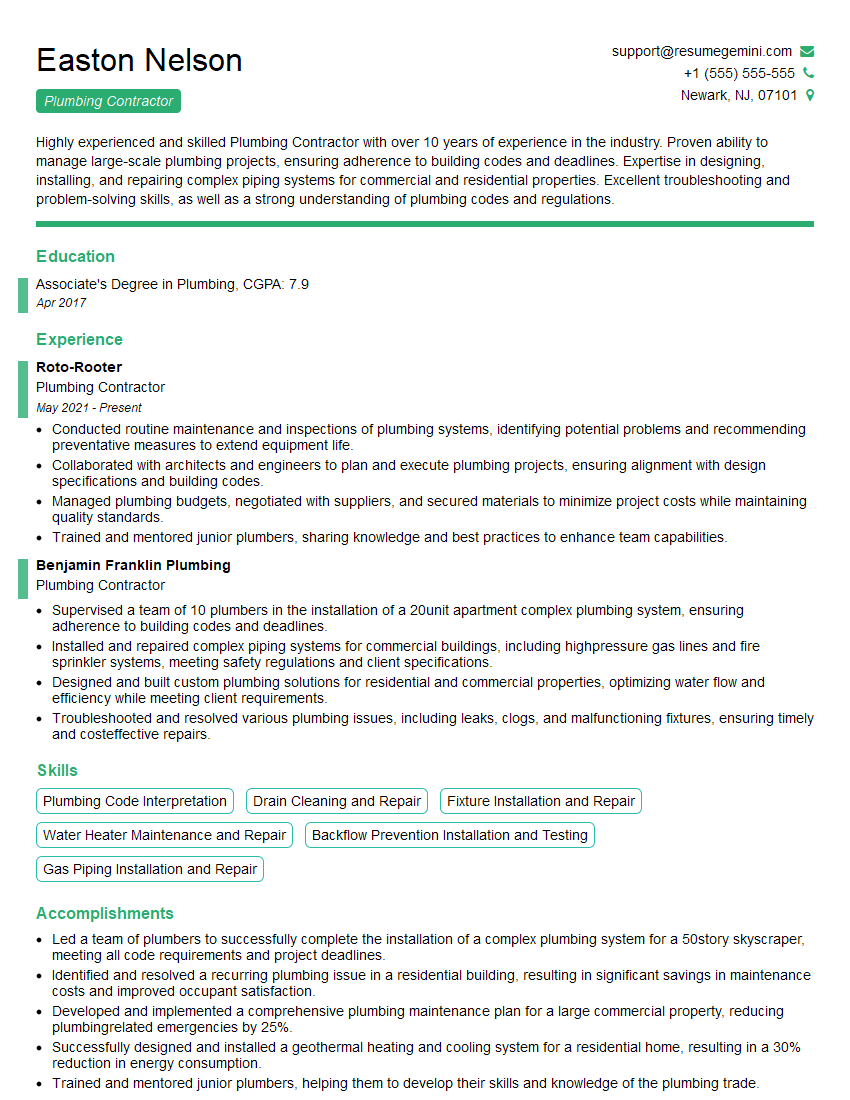
Plumbing Contractor Resume Sample
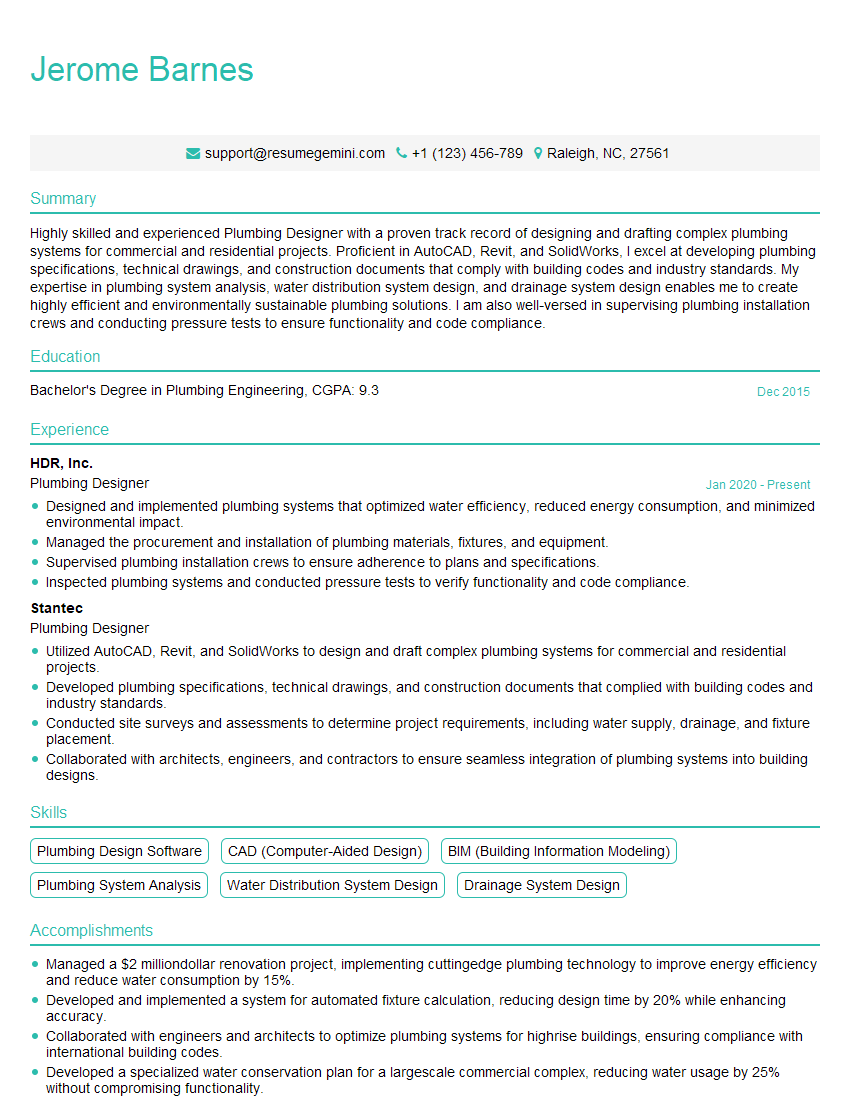
Plumbing Designer Resume Sample
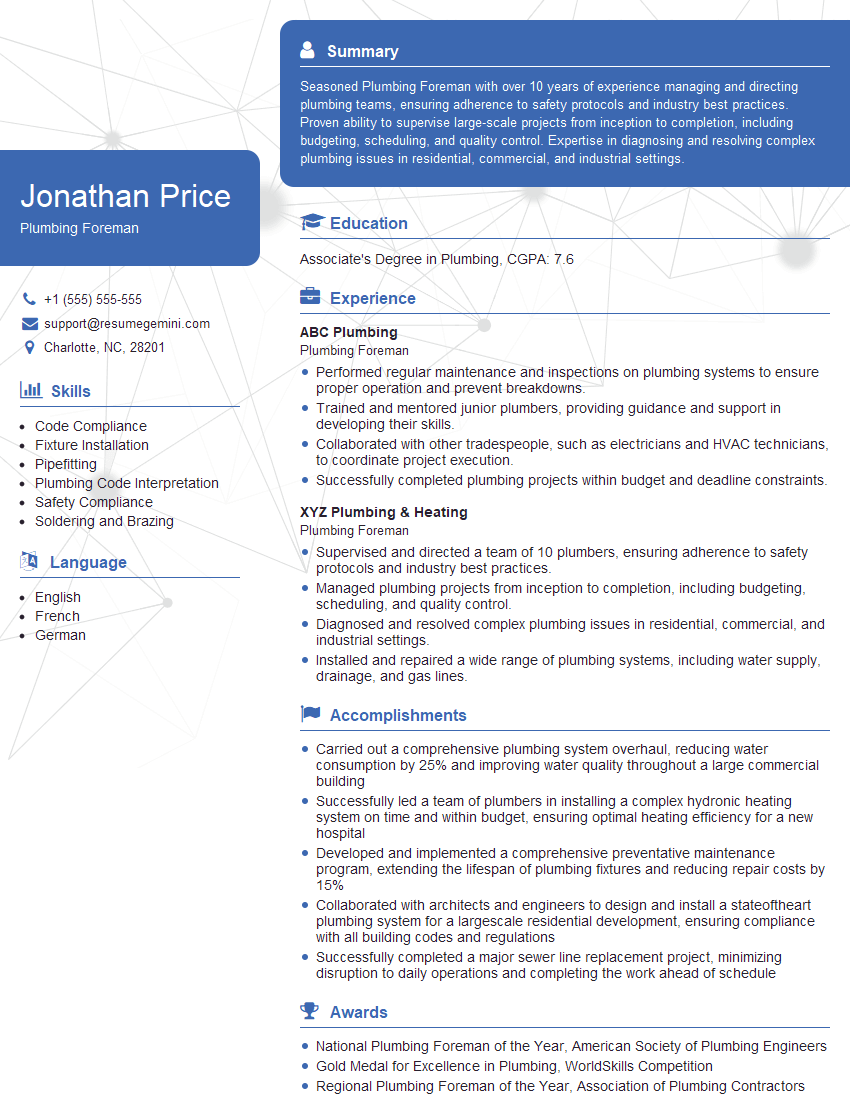
Plumbing Foreman Resume Sample
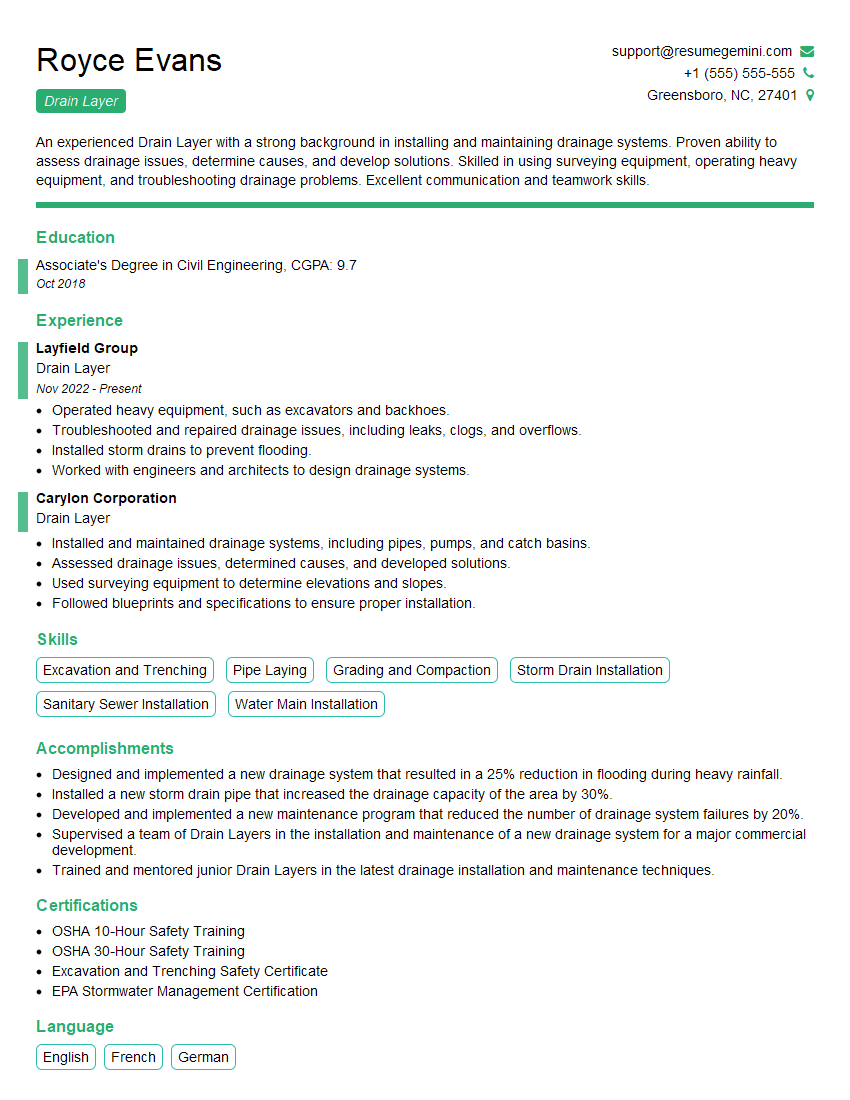
Drain Layer Resume Sample
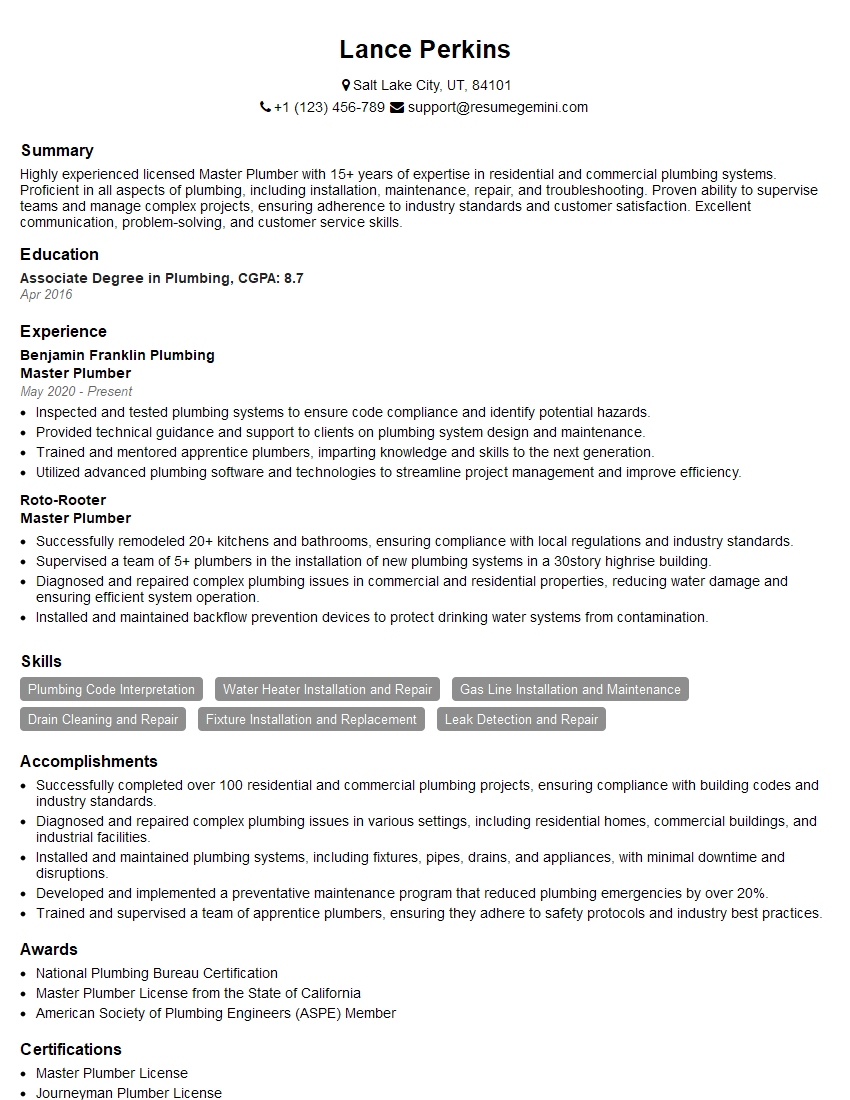
Master Plumber Resume Sample
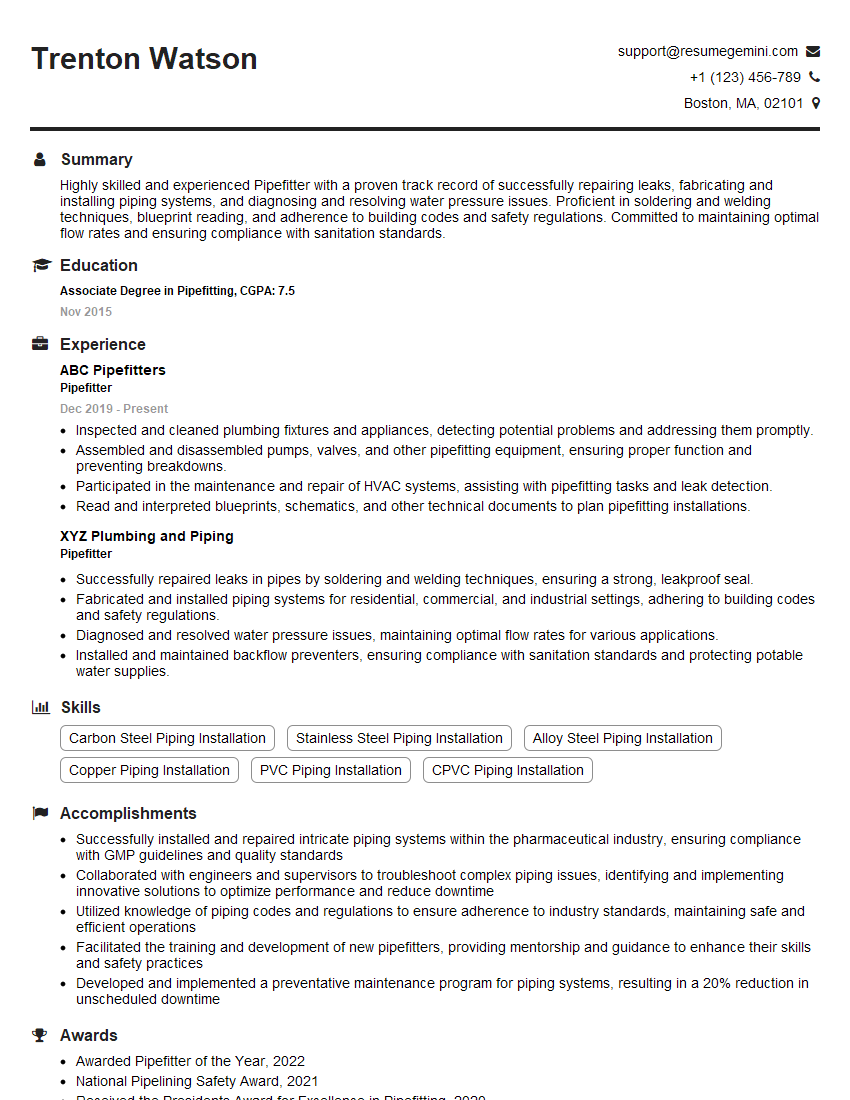
Pipefitter Resume Sample
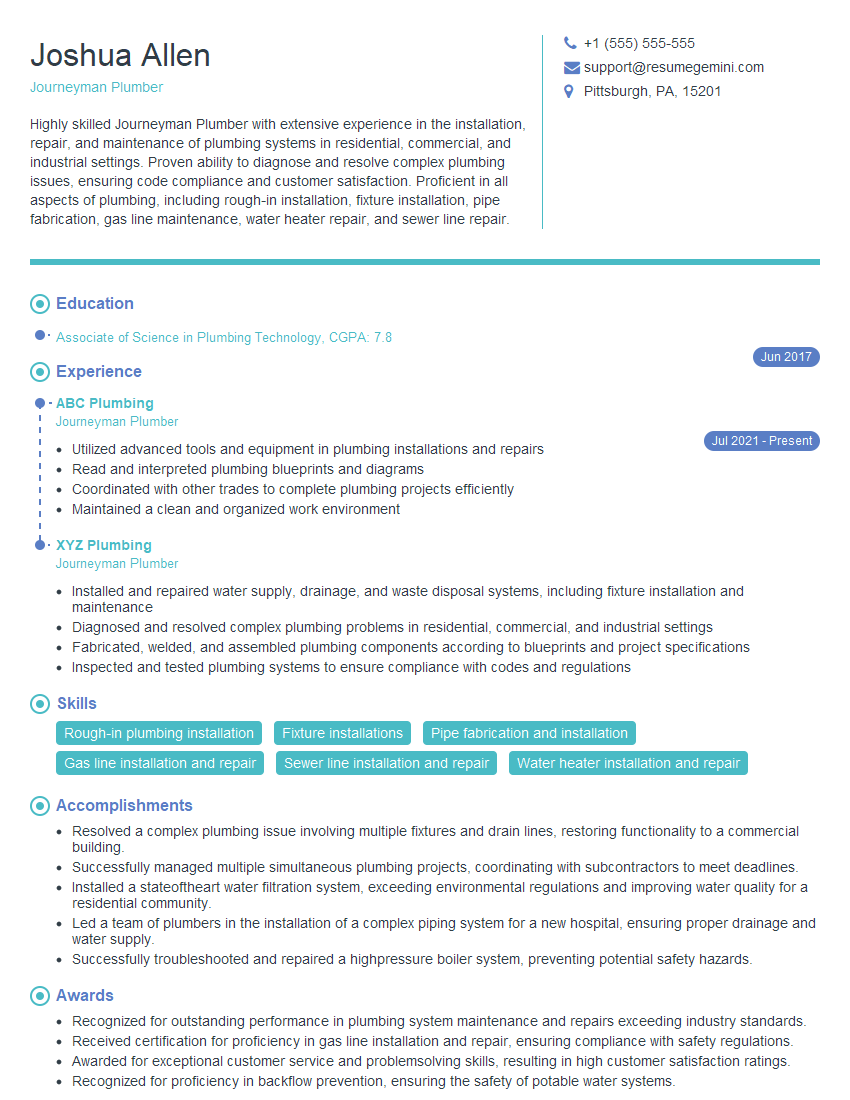
Journeyman Plumber Resume Sample

Residential Plumber Resume Sample
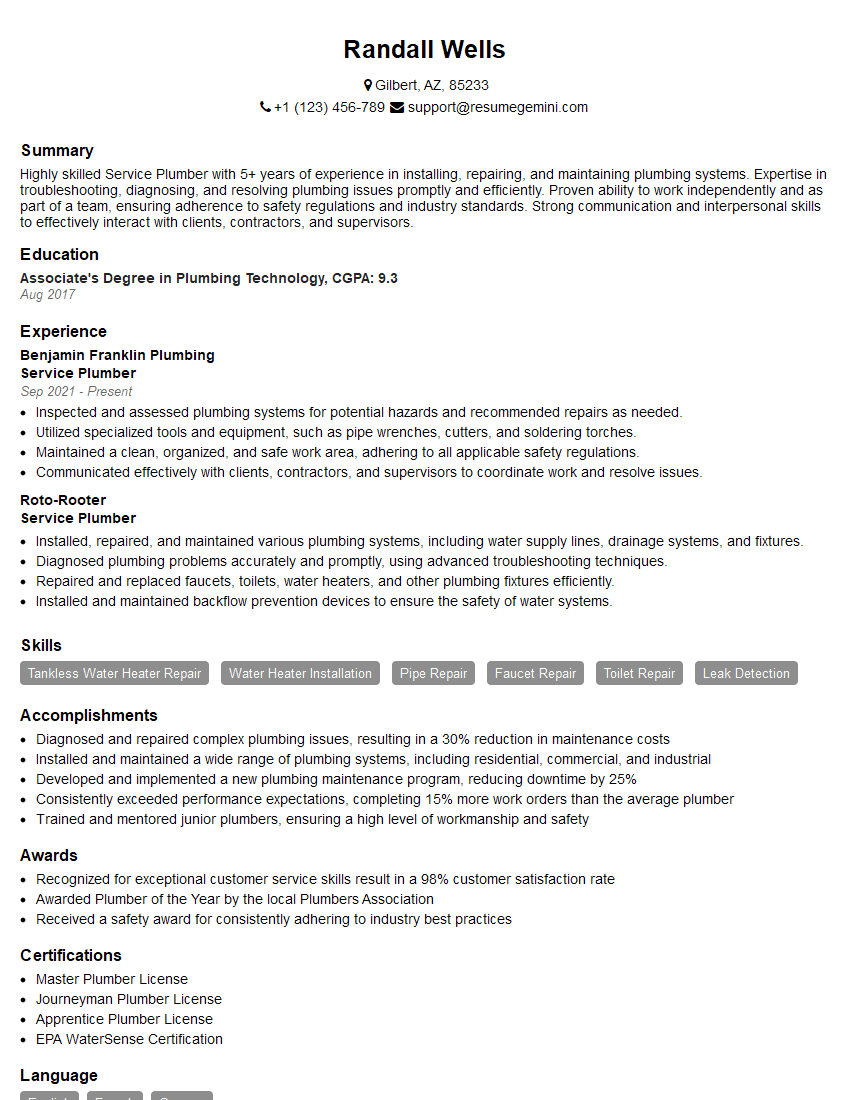
Service Plumber Resume Sample
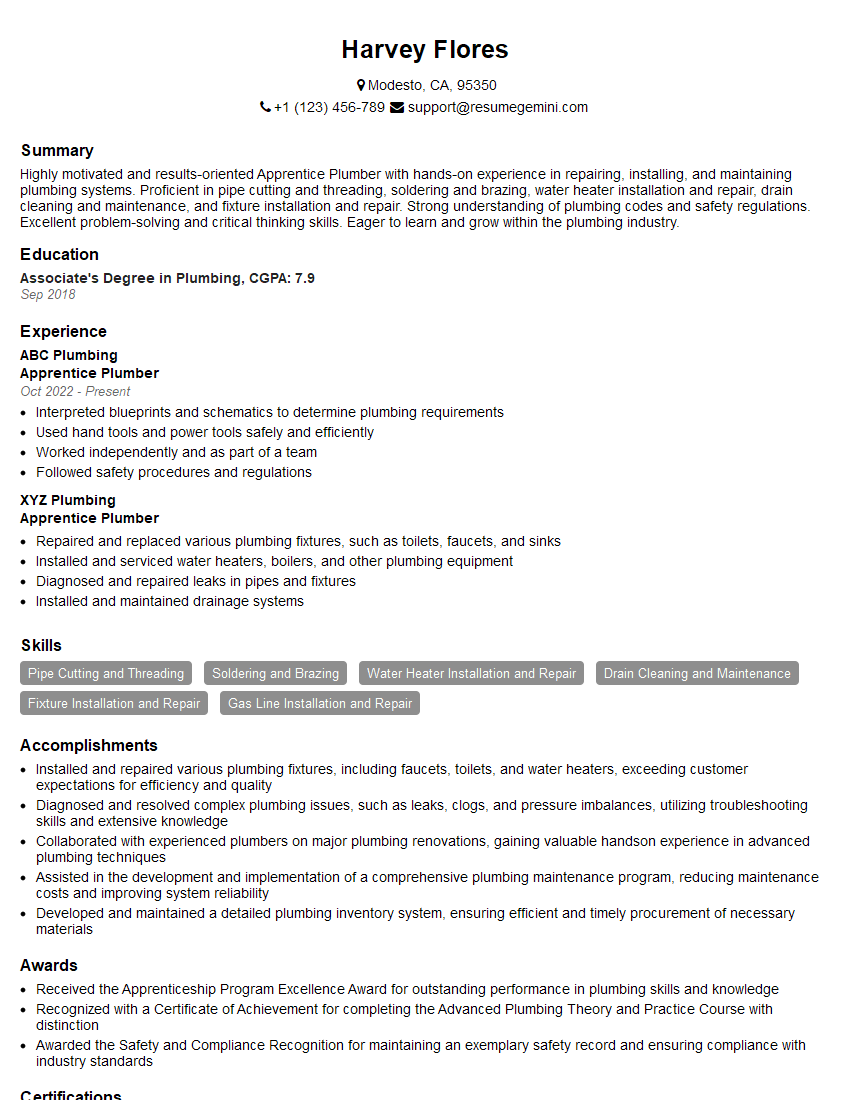
Apprentice Plumber Resume Sample
Explore more articles
Users Rating of Our Blogs
Share Your Experience
We value your feedback! Please rate our content and share your thoughts (optional).
What Readers Say About Our Blog
To the interviewgemini.com Webmaster.
Very helpful and content specific questions to help prepare me for my interview!
Thank you
To the interviewgemini.com Webmaster.
This was kind of a unique content I found around the specialized skills. Very helpful questions and good detailed answers.
Very Helpful blog, thank you Interviewgemini team.