Preparation is the key to success in any interview. In this post, we’ll explore crucial Reverse Osmosis (RO) System Operation interview questions and equip you with strategies to craft impactful answers. Whether you’re a beginner or a pro, these tips will elevate your preparation.
Questions Asked in Reverse Osmosis (RO) System Operation Interview
Q 1. Explain the principle of Reverse Osmosis.
Reverse Osmosis (RO) is a water purification technology that uses a semipermeable membrane to remove ions, molecules, and larger particles from water. Imagine a sieve, but instead of separating things by size, it separates by the ability of substances to pass through. RO works by applying pressure to the water higher than the osmotic pressure. This forces water molecules through the membrane while leaving behind dissolved salts, minerals, and other contaminants. Think of it like squeezing water through a very fine filter – the clean water goes through, while the impurities are left behind. This is in contrast to osmosis, where water naturally flows from a less concentrated solution to a more concentrated one across a semipermeable membrane.
Q 2. Describe the components of a typical RO system.
A typical RO system consists of several key components working together:
- Pre-treatment: This stage usually involves sediment filters and carbon filters to remove large particles and chlorine, protecting the more delicate RO membrane.
- High-Pressure Pump: This pump increases the water pressure to overcome the osmotic pressure of the feed water and force water through the RO membrane.
- RO Membrane: The heart of the system, this semipermeable membrane selectively removes dissolved solids from the water.
- Permeate Tank: This stores the purified water (permeate) produced by the RO system.
- Concentrate Discharge: This is the wastewater stream containing the rejected salts and other contaminants removed by the membrane. Proper disposal is crucial.
- Pressure Gauge: Monitors the pressure in the system, crucial for optimal performance and preventing membrane damage.
- Flow Meter: Measures the flow rate of both permeate and concentrate.
- Post-treatment (Optional): This may include UV sterilization or additional filtration to enhance water quality further.
These components interact to create a continuous process of water purification.
Q 3. What are the different types of RO membranes and their applications?
RO membranes are classified based on their material and pore size, influencing their performance and applications. Common types include:
- Cellulose Acetate Membranes: These were among the first RO membranes but are less efficient and have a shorter lifespan compared to modern alternatives. They are still used in some low-pressure applications.
- Thin Film Composite (TFC) Membranes: These are the most commonly used membranes today. They offer high salt rejection, higher flux rates, and greater durability. They consist of a thin, selective layer on a porous support layer. This design provides a good balance of performance and cost.
- Spiral Wound Membranes: This is the most common membrane configuration. The membrane is wrapped around a central core, creating a compact and high-surface-area module.
- Hollow Fiber Membranes: These membranes are in the shape of thin tubes bundled together. They offer a high surface area to volume ratio but can be more susceptible to fouling.
The choice of membrane depends on factors such as feed water quality, desired permeate quality, operating pressure, and cost considerations. For instance, a high-pressure application requiring superior salt rejection might opt for a specific type of TFC membrane, whereas a smaller, less demanding application might use a cellulose acetate membrane.
Q 4. How do you calculate the RO system’s recovery rate?
The recovery rate of an RO system is the percentage of feed water that becomes permeate. It’s calculated as follows:
Recovery Rate (%) = (Permeate Flow Rate / Feed Water Flow Rate) x 100For example, if the feed water flow rate is 10 gallons per minute (GPM) and the permeate flow rate is 5 GPM, the recovery rate is (5/10) x 100 = 50%. A higher recovery rate indicates greater efficiency, but it also increases the concentration of salts in the concentrate stream which could lead to scaling and membrane fouling. Therefore, a balance must be struck between recovery rate and system longevity and efficiency.
Q 5. What are the key parameters monitored in an RO system?
Several key parameters are continuously monitored in an RO system to ensure optimal performance and prevent problems:
- Feed Water Pressure: Ensures sufficient pressure for efficient operation.
- Permeate Pressure: Indicates the pressure of the purified water.
- Transmembrane Pressure (TMP): The difference in pressure across the membrane (explained in detail in the next answer).
- Permeate Flow Rate: Monitors the output of clean water.
- Feed Water TDS (Total Dissolved Solids): Measures the total amount of dissolved minerals and salts in the input water.
- Permeate TDS: Indicates the level of impurities in the purified water; should be significantly lower than feed water TDS.
- Concentrate TDS: Shows the concentration of rejected solids in the wastewater stream.
- pH: Monitoring pH helps prevent corrosion and scaling.
- Temperature: Affects membrane performance and can indicate potential issues.
Regular monitoring and analysis of these parameters are crucial for preventative maintenance and troubleshooting.
Q 6. Explain the concept of transmembrane pressure (TMP).
Transmembrane Pressure (TMP) is the difference in pressure between the feed water side and the permeate side of the RO membrane. It represents the driving force for water to pass through the membrane. A higher TMP generally leads to a higher permeate flow rate, but excessively high TMP can damage the membrane or lead to increased fouling.
Imagine trying to push water through a very fine sponge. The TMP is the force you apply to push the water through. Too little force, and the water won’t pass; too much force, and you might tear the sponge. Similarly, the TMP in an RO system must be carefully managed to optimize performance and protect the membrane.
Q 7. How do you troubleshoot high TDS in the permeate?
High TDS in the permeate indicates a problem with the RO system, potentially leading to compromised water quality. Troubleshooting involves systematically checking several areas:
- Membrane Failure: The most likely cause. A damaged or fouled membrane will allow more solids to pass through. Consider membrane replacement or cleaning.
- High Feed Water TDS: If the feed water TDS is abnormally high, pre-treatment may need improvement or upgrading. This includes ensuring adequate sediment and carbon filtration.
- Pre-treatment Failure: If pre-treatment is inadequate, more contaminants reach the membrane, leading to higher permeate TDS. Check filter integrity and replace as needed.
- High Recovery Rate: Operating at too high a recovery rate concentrates salts in the concentrate stream and forces more solids through the membrane. Lowering the recovery rate often resolves this.
- Membrane Scaling or Fouling: Mineral deposits or biological growth on the membrane surface restrict water flow and increase permeate TDS. Regular cleaning and chemical treatments are essential.
- High TMP: Excessive TMP can force more contaminants through the membrane. Check for obstructions and ensure proper system pressure.
Addressing these points systematically will help pinpoint the cause of high permeate TDS and restore the system to optimal performance. Remember to document all findings and actions taken during troubleshooting.
Q 8. How do you troubleshoot low permeate flow rate?
Low permeate flow in an RO system is a common problem, often indicating a blockage or reduced membrane efficiency. Think of it like a clogged water pipe – less water flows through. To troubleshoot, we systematically investigate potential causes.
- Check the feed pressure: Insufficient pressure is a primary culprit. The system needs enough pressure to force water across the membrane. Verify the pressure gauge readings are within the operational range specified by the manufacturer. Low pressure could point to a problem with the pump, pre-filters or even a leak in the system.
- Inspect pre-filters: Clogged pre-filters are frequent offenders. These filters prevent larger particles from reaching the membrane. A simple pressure drop across the pre-filters compared to the specified range can indicate clogging. Replacing or cleaning these filters is often a quick fix.
- Examine the membrane elements: Over time, membranes become fouled (covered with accumulated particles) and lose efficiency. This is often the root cause of long-term low permeate flow, requiring specialized cleaning or membrane replacement.
- Check for leaks: Leaks in the system divert water away from the membrane, reducing the permeate flow. A thorough visual inspection of all connections and tubing is crucial. Leaks are often identified by unusually high feed water usage or water pooling around pipes or valves.
- Assess the concentration factor: This is the ratio of feed water to permeate flow. An excessively high concentration factor may show that the system is trying to process too much water than is efficient. Check and adjust this according to the system design.
Troubleshooting is a process of elimination. We start with the simplest checks (pressure and pre-filters) and move to more complex issues (membrane fouling or leaks). Documenting each step and measurement is vital for future reference and preventive maintenance.
Q 9. Explain the importance of pre-treatment in RO systems.
Pre-treatment in RO systems is crucial for protecting the expensive and sensitive RO membranes. Imagine trying to filter fine sand with a tea strainer – it would quickly clog. Pre-treatment acts as that initial coarse filter, removing impurities that could damage or foul the RO membranes.
Effective pre-treatment extends the membrane’s lifespan, improves permeate quality, reduces operational costs (less frequent cleaning and replacement), and maintains consistent water production.
Without adequate pre-treatment, the RO membranes are bombarded with sediments, organic matter, chlorine, and other contaminants. This leads to rapid fouling, reduced performance, and increased maintenance requirements. It’s like constantly trying to clean a clogged kitchen sink instead of regularly clearing the drain. It becomes a far more challenging task in the long run.
Q 10. What are the common types of pre-treatment methods used?
Several pre-treatment methods are employed depending on the source water quality. Common techniques include:
- Sediment filtration: This removes suspended solids, sand, silt, and other larger particles using various filter media like sand, anthracite, or multimedia filters. Think of it as a coarse filter that prevents large debris from reaching the more delicate filtration stages.
- Carbon filtration: This removes chlorine, chloramines, organic matter, and other taste- and odor-causing compounds. Activated carbon acts like a sponge, absorbing these impurities.
- Media filtration: This utilizes specialized media (such as activated carbon or other specialized resin) in a pressure vessel to remove various contaminants depending on the selection of media.
- Ultrafiltration (UF): This membrane-based technology removes even finer particles and colloidal matter that sediment filters might miss, providing a higher degree of purification.
- Softening: For hard water, softening is crucial. This reduces calcium and magnesium ions, preventing scaling (formation of mineral deposits) on the RO membranes.
The choice of pre-treatment methods is determined by a thorough water quality analysis, considering factors like turbidity, hardness, organic content, and chlorine levels. A well-designed pre-treatment system ensures the RO membranes are protected and the system operates efficiently.
Q 11. Describe the process of cleaning and sanitizing RO membranes.
Cleaning and sanitizing RO membranes is a critical maintenance procedure. It’s like giving your membranes a thorough spa treatment to restore their performance. The process typically involves two steps:
- Cleaning: This removes accumulated foulants (organic and inorganic matter) using specific cleaning chemicals tailored to the type of fouling. Common cleaning agents include citric acid, sodium hydroxide, and specialized enzymatic cleaners. The cleaning process may require several cycles of chemical soaking and rinsing, followed by a thorough flushing to remove any chemical residues.
- Sanitizing: After cleaning, the membranes are sanitized to eliminate bacteria and other microorganisms. A chlorine-based solution or other approved sanitizing agent is used for this purpose. Careful attention must be paid to contact time and concentration to avoid membrane damage.
The cleaning and sanitizing procedures are carefully planned based on the type of fouling detected and the manufacturer’s recommendations. Always adhere strictly to safety procedures and use personal protective equipment (PPE) to prevent chemical exposure. Proper documentation of the cleaning and sanitizing process is essential for tracking membrane performance and ensuring regulatory compliance.
Q 12. How do you identify and address membrane fouling?
Membrane fouling is the accumulation of substances on the membrane surface, reducing its permeability and efficiency. Identifying and addressing it is critical.
Identification: We look for signs such as reduced permeate flow rate, increased operating pressure, changes in permeate quality, and visual inspection of the membrane (if possible). We can also perform a water quality analysis of both the feed and permeate to identify specific foulants.
Addressing: The approach depends on the type of fouling:
- Organic fouling: This often requires enzymatic cleaning to break down the organic matter.
- Inorganic fouling (scaling): Acid cleaning is typically used to dissolve mineral deposits.
- Colloidal fouling: This may require specialized cleaning agents and may indicate the need for improved pretreatment.
Regular cleaning and maintenance, as well as effective pre-treatment, are the best defenses against fouling. If fouling becomes severe, membrane replacement may be necessary.
Q 13. What are the safety precautions when working with RO systems?
Safety is paramount when working with RO systems. High-pressure systems can be dangerous if not handled properly.
- High-pressure systems: Always use appropriate PPE, including safety glasses and gloves. Never work on a pressurized system without first isolating and depressurizing it.
- Chemical handling: RO systems use various chemicals for cleaning and sanitizing. Always consult the Safety Data Sheets (SDS) for each chemical before use, and wear appropriate PPE to minimize exposure risks. Ensure proper ventilation when using chemicals.
- Electrical hazards: Many RO systems include electrical components. Ensure that all electrical work is performed by qualified personnel and that proper lockout/tagout procedures are followed.
- Waterborne pathogens: Depending on the source water, there may be pathogenic organisms present. Follow all safety protocols regarding exposure to water and potential biological hazards.
Regular safety training and adherence to established safety protocols are essential to prevent accidents and maintain a safe working environment.
Q 14. Explain the importance of regular maintenance in RO systems.
Regular maintenance in RO systems is vital for optimal performance, extended lifespan, and cost savings. It’s like regular servicing of a car – preventing small problems from escalating into major failures.
Regular maintenance includes:
- Pre-filter replacement: This prevents fouling of the RO membranes and maintains optimal system performance.
- Membrane cleaning and sanitizing: This removes accumulated foulants and maintains membrane efficiency.
- System inspection: Regularly check for leaks, damaged components, and signs of fouling.
- Pressure gauge monitoring: This ensures the system is operating within the specified pressure range.
- Permeate quality testing: This verifies the system’s output meets the desired quality standards.
A well-defined maintenance schedule, tailored to the specific system and water conditions, is crucial for ensuring the long-term efficiency and reliability of the RO system. This preventative maintenance saves money and time in the long run compared to dealing with major system failures.
Q 15. How do you interpret RO system performance data?
Interpreting RO system performance data involves analyzing key parameters to assess its efficiency and identify potential issues. Think of it like a car’s dashboard – each gauge tells you something important. We look at:
- Permeate flow rate: This indicates the amount of purified water produced. A drop signifies potential membrane fouling or reduced pressure.
- Product water quality: We measure TDS (Total Dissolved Solids), conductivity, and specific contaminants to ensure it meets standards. High TDS suggests membrane failure or insufficient pretreatment.
- Recovery rate: This is the percentage of feed water converted to permeate. A low recovery rate might indicate high salinity in the feed water or membrane issues.
- Rejection rate: This shows the system’s efficiency in removing contaminants. A low rejection rate points towards membrane degradation or operational problems.
- Pressure readings: High pressure might indicate membrane fouling or scaling, while low pressure could mean leaks or pump problems. We compare these to historical data to spot trends.
- Cleaning cycles: Regular cleaning is essential. Data on cleaning frequency and effectiveness reveals the system’s overall health.
For instance, a consistent drop in permeate flow along with increased pressure could indicate that the membranes are becoming fouled and need cleaning or replacement. By regularly monitoring these parameters and analyzing trends, we can proactively address potential problems and maintain optimal performance.
Career Expert Tips:
- Ace those interviews! Prepare effectively by reviewing the Top 50 Most Common Interview Questions on ResumeGemini.
- Navigate your job search with confidence! Explore a wide range of Career Tips on ResumeGemini. Learn about common challenges and recommendations to overcome them.
- Craft the perfect resume! Master the Art of Resume Writing with ResumeGemini’s guide. Showcase your unique qualifications and achievements effectively.
- Don’t miss out on holiday savings! Build your dream resume with ResumeGemini’s ATS optimized templates.
Q 16. What are the common causes of RO membrane failure?
RO membrane failure is often a gradual process, not a sudden event. Common causes include:
- Fouling: This is the most frequent cause, where organic matter, inorganic minerals, or bacteria accumulate on the membrane surface, reducing its permeability. Imagine it like a clogged filter. Different types of fouling (organic, inorganic, biological) require different cleaning strategies.
- Scaling: Minerals in the feed water, like calcium and magnesium, can precipitate and form hard deposits on the membrane surface. This reduces efficiency and can even damage the membrane. Think of it as a layer of hard water buildup.
- Oxidative stress: Exposure to chlorine and other oxidizing agents can damage the membrane structure over time. This is like the sun bleaching a fabric.
- Physical damage: High pressure, improper handling, or abrasive particles can physically damage the membrane causing tears or punctures.
- Membrane aging: Even with proper care, membranes have a limited lifespan. Their performance gradually deteriorates with age. It’s like a car’s engine; components wear out over time.
Proper pretreatment (filtration, chemical dosing) and regular cleaning and maintenance significantly extend membrane life and prevent premature failure.
Q 17. How do you calculate the rejection rate of an RO system?
The rejection rate signifies how effectively the RO system removes dissolved salts and other contaminants from the feed water. It’s calculated as:
Rejection Rate (%) = [(Concentration of solute in feed water - Concentration of solute in permeate water) / Concentration of solute in feed water] x 100
For example, if the feed water has a TDS of 500 ppm and the permeate water has a TDS of 50 ppm, the rejection rate is:
Rejection Rate = [(500 - 50) / 500] x 100 = 90%
This means the system rejects 90% of the dissolved solids. A higher rejection rate indicates better performance. It’s crucial to measure rejection for specific contaminants of concern (e.g., nitrates, arsenic) to assess the system’s overall effectiveness.
Q 18. Describe the different types of RO system configurations.
RO systems come in various configurations depending on the application and water quality requirements. Common types include:
- Single-pass system: The simplest configuration, where feed water passes through the membrane once. This is suitable for relatively low-salinity water.
- Multi-pass system: The feed water passes through the membrane multiple times to increase recovery. This is more efficient but requires more complex equipment.
- Two-stage system: Two membrane stages are used in series; the first removes a significant amount of salts, and the second stage polishes the water to higher purity. This is beneficial for high-salinity feed water.
- Energy-recovery system: These systems recover energy from the high-pressure reject stream to reduce energy consumption. This is a more sustainable choice.
The choice of configuration depends on factors like feed water quality, desired permeate quality, recovery rate, and budget. Each configuration has its own advantages and disadvantages in terms of cost, efficiency, and complexity.
Q 19. What is the role of chemical dosing in RO systems?
Chemical dosing plays a critical role in maintaining optimal RO system performance and extending membrane life. Chemicals are added to the feed water to:
- Prevent scaling: Antiscalants prevent the precipitation of minerals like calcium and magnesium on the membrane surface.
- Control biological growth: Biocides inhibit the growth of bacteria and other microorganisms, preventing biofouling.
- Clean the membranes: Cleaning agents are used periodically to remove accumulated foulants from the membrane surface.
- pH adjustment: Adjusting the pH can improve the efficiency of antiscalants and reduce corrosion.
The type and concentration of chemicals used depend on the feed water quality and the specific requirements of the system. Improper chemical dosing can lead to membrane damage, scaling, or reduced efficiency. Careful monitoring and control of chemical dosing are essential for optimal system operation.
Q 20. Explain the concept of salt passage in RO systems.
Salt passage refers to the amount of dissolved salts that pass through the RO membrane into the permeate water. Ideally, this should be minimal. Factors influencing salt passage include:
- Membrane integrity: Damaged or aged membranes allow more salt to pass through.
- Operating pressure: Higher pressure generally increases salt passage.
- Feed water salinity: Higher salinity leads to higher salt passage.
- Temperature: Higher temperature generally increases salt passage.
- Membrane type and properties: Different membranes have different salt rejection characteristics.
Salt passage is directly related to the rejection rate. High salt passage reduces the quality of the permeate water and necessitates adjustments to operational parameters or membrane replacement.
Q 21. How do you handle chemical spills in an RO plant?
Handling chemical spills in an RO plant requires immediate action to prevent environmental damage and ensure worker safety. The steps include:
- Evacuate the area: Immediately remove personnel from the spill area to avoid exposure to hazardous chemicals.
- Contain the spill: Use absorbent materials (e.g., spill pads, sand) to contain the spill and prevent its spread.
- Notify emergency services: Contact local emergency responders and your company’s safety personnel. Report the type and quantity of spilled chemical.
- Neutralize the spill (if safe and possible): Certain chemical spills may require neutralization using appropriate agents. This should only be done by trained personnel following safety protocols.
- Clean up the spill: After neutralization, remove contaminated materials following proper disposal procedures. Specialized equipment might be needed.
- Document the incident: Record details of the spill, including the time, location, type of chemical, quantity, and cleanup procedures. This is crucial for future safety improvements.
Having a well-defined emergency response plan, including readily available safety equipment (PPE, spill kits), is crucial for minimizing the impact of chemical spills. Regular safety training for plant personnel is equally important.
Q 22. Describe the process of troubleshooting a high pressure alarm.
A high-pressure alarm in an RO system indicates a problem hindering the normal flow of water, usually a blockage or malfunction. Troubleshooting involves a systematic approach. First, check the pre-treatment stage: Is the feed water pressure too high? Are the sediment filters clogged, restricting water flow? Inspect and clean or replace these filters as needed. Next, examine the high-pressure pump. Is it running correctly? Check for unusual noises or vibrations – these can indicate mechanical issues like bearing wear or impeller damage. Verify the pump’s power supply and check for any leaks. If the pump is functioning, inspect the RO membrane elements. A fouled or damaged membrane can significantly increase system pressure. Consider flow rate; low flow could indicate a membrane problem. Finally, check the pressure gauge and sensors themselves; faulty instrumentation can trigger false alarms. If the problem persists after these checks, a professional service may be required.
For example, I once dealt with a high-pressure alarm caused by a simple, overlooked issue: a partially closed valve downstream of the RO system. Opening the valve completely resolved the problem immediately.
Q 23. Explain the different types of pumps used in RO systems.
RO systems utilize various pumps depending on the application and required pressure. The most common types are:
- Centrifugal pumps: These are widely used for their reliability, efficiency, and relatively low cost. They are suitable for moderate-pressure applications. They work by increasing the velocity of the water through a spinning impeller, converting kinetic energy into pressure.
- Positive displacement pumps: These pumps deliver a consistent flow rate regardless of pressure fluctuations, making them suitable for applications demanding high-pressure and precise flow control. However, they are generally more expensive than centrifugal pumps. Examples include piston, diaphragm, and screw pumps.
- Booster pumps: These are used to increase the pressure of the feed water to the RO system, especially when the source water pressure is insufficient. They often work in conjunction with a main pump.
The choice of pump depends on factors such as flow rate requirements, desired pressure, and budget. Higher-pressure applications may necessitate positive displacement pumps, while applications with lower pressure needs may utilize centrifugal pumps.
Q 24. How do you determine the appropriate size of an RO system for a specific application?
Determining the appropriate size of an RO system depends on the specific application’s water demand and quality requirements. Key factors include:
- Required flow rate (gallons per minute or liters per minute): This is the amount of purified water needed per unit of time.
- Feed water quality: The higher the concentration of contaminants, the larger the system needed, as more membrane area is required for efficient removal.
- Desired product water quality: The stricter the quality standards (e.g., lower TDS), the larger the system may need to be.
- Recovery rate: The percentage of feed water that is converted to purified water.
A professional assessment is often required to accurately determine the appropriate size. Manufacturers provide sizing software or tools based on these parameters. For instance, if a facility needs 1000 gallons of purified water per hour with a high concentration of dissolved salts, a larger system with more membrane elements will be necessary compared to one needing only 100 gallons per hour with lower salinity.
Q 25. Describe your experience with different types of RO membrane materials.
I have extensive experience with various RO membrane materials, each with its strengths and weaknesses:
- Thin-film composite (TFC) membranes: These are the most common type, consisting of a thin, selective layer on a porous support layer. They offer good rejection rates for salts and other contaminants and are relatively cost-effective.
- Cellulose acetate membranes: These were historically prevalent but are less common now due to their lower salt rejection and susceptibility to chlorine damage. They are more economical than TFC but may require more frequent replacement.
- Polyamide membranes: A subtype of TFC membranes known for excellent salt rejection and high flux. These are often preferred for high-purity applications.
The selection of the membrane material depends on several factors, including the type and concentration of contaminants present, the desired product water quality, and the operating conditions (pH, temperature, pressure).
In a previous project, we switched from cellulose acetate to a polyamide membrane to improve salt rejection in a pharmaceutical application, resulting in a significant enhancement in product water quality.
Q 26. What are the environmental considerations related to RO system operation?
RO systems have environmental implications primarily due to the generation of brine (concentrated wastewater) and energy consumption. Brine disposal needs careful consideration:
- Brine volume: RO systems typically produce a concentrated wastewater stream, the volume of which depends on the recovery rate. Higher recovery rates reduce brine volume but increase energy use and membrane fouling.
- Brine disposal methods: Methods include discharge to a sewer (often regulated), reuse for other purposes (e.g., irrigation, industrial processes), or evaporation ponds, each with its own environmental impact.
- Energy consumption: RO systems are energy-intensive, requiring significant power for the pumps. Choosing energy-efficient pumps and optimizing the system’s recovery rate is critical for reducing the carbon footprint.
Sustainable practices involve minimizing brine generation, optimizing energy consumption, and exploring environmentally friendly brine disposal methods.
Q 27. How do you ensure compliance with regulatory standards for water quality?
Ensuring compliance with water quality regulatory standards requires a multifaceted approach:
- Regular monitoring: Conducting routine testing of both feed water and purified water to ensure compliance with parameters like TDS, pH, turbidity, and specific contaminant levels (e.g., heavy metals, bacteria).
- Record keeping: Maintaining accurate and detailed records of all monitoring results, system operation parameters, maintenance activities, and any corrective actions taken.
- Calibration and maintenance: Regularly calibrating instruments, performing preventive maintenance on the system, and replacing components as needed to maintain optimal performance and accuracy.
- Compliance with local and national regulations: Staying informed about and complying with all applicable regulations regarding water quality, waste disposal, and environmental protection.
For example, I have experience working with facilities subject to stringent FDA regulations for pharmaceutical water quality. This includes maintaining meticulous records and implementing rigorous cleaning and sanitization procedures in addition to the regular testing and maintenance practices.
Q 28. Describe a time you had to troubleshoot a complex RO system problem.
One challenging case involved a large-scale RO system experiencing consistently low product water flow and increased pressure. Initial inspections revealed no obvious blockages or pump malfunctions. After systematically checking all components, we found the problem lay within the membrane elements themselves: despite normal visual inspection, the membranes exhibited significant internal fouling. Standard cleaning procedures were ineffective. We employed advanced cleaning techniques using specialized chemicals and increased backwashing cycles. Further analysis identified a specific contaminant in the feed water not previously detected which was causing the fouling. Once the feed water pre-treatment was enhanced to remove this specific contaminant, and the membranes were thoroughly cleaned, the system returned to normal operation. This case highlighted the importance of thorough analysis when troubleshooting complex RO issues, going beyond initial visual inspections to pinpoint the root cause of the problem.
Key Topics to Learn for Reverse Osmosis (RO) System Operation Interview
- Membrane Technology: Understanding different membrane types (e.g., spiral wound, hollow fiber), their characteristics, and selection criteria for optimal performance.
- Pretreatment Systems: Knowledge of various pretreatment methods (e.g., filtration, coagulation, softening) and their impact on RO system efficiency and longevity. Practical application: Troubleshooting issues arising from inadequate pretreatment.
- System Design and Components: Familiarity with the various components of an RO system (pumps, pressure vessels, flow meters, etc.) and their functions. Practical application: Diagnosing malfunctions based on understanding component interactions.
- Water Chemistry and Quality Parameters: Understanding key water quality parameters (TDS, conductivity, pH, etc.) and their influence on RO system performance. Practical application: Interpreting water quality test results and adjusting system parameters accordingly.
- Operation and Maintenance Procedures: Knowledge of routine maintenance tasks (e.g., cleaning, chemical dosing, membrane replacement) and troubleshooting common operational problems. Practical application: Developing and implementing a preventative maintenance schedule.
- Data Analysis and Interpretation: Ability to analyze system performance data (pressure, flow rate, permeate quality) to identify trends and potential issues. Practical application: Utilizing data to optimize system efficiency and reduce water waste.
- Safety Procedures and Regulations: Understanding relevant safety protocols and regulatory compliance related to RO system operation and maintenance. Practical application: Ensuring safe and compliant operation of the system.
- Energy Efficiency and Optimization: Strategies for minimizing energy consumption in RO systems through optimized operation and maintenance practices. Practical application: Implementing measures to reduce the system’s carbon footprint.
Next Steps
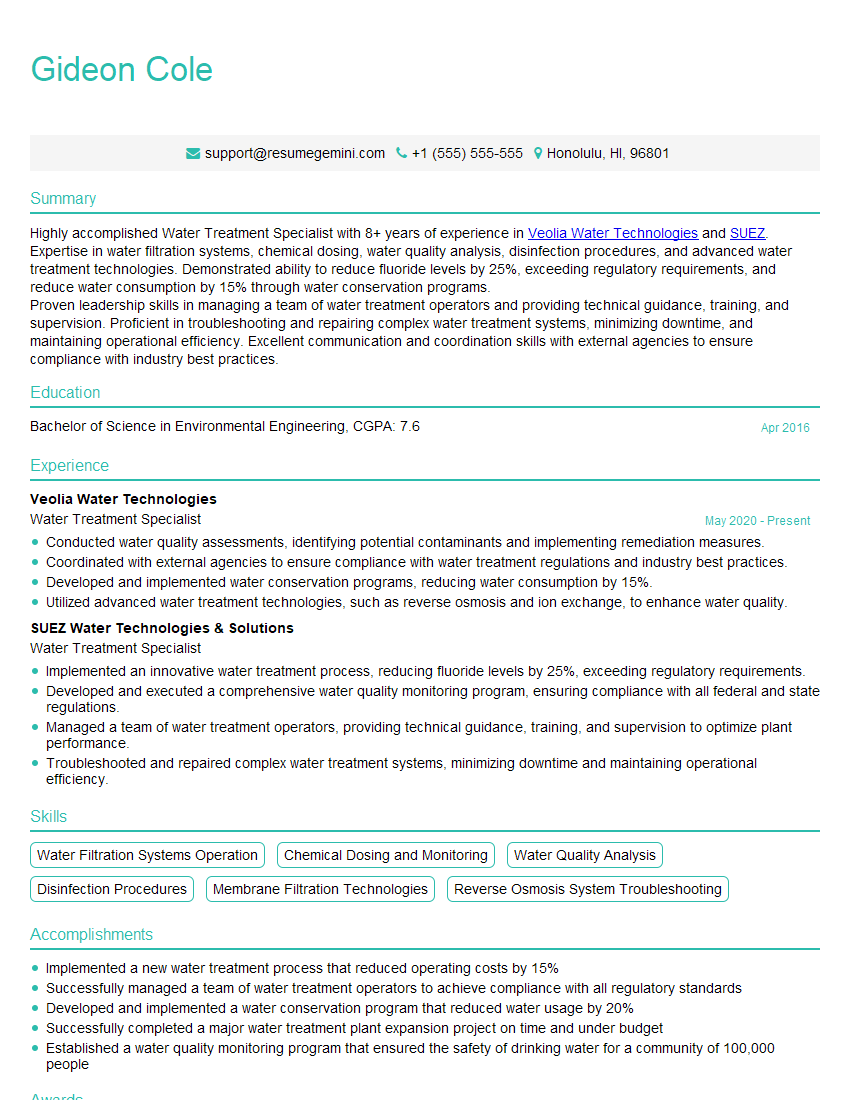
Mastering Reverse Osmosis (RO) System Operation opens doors to exciting career opportunities in water treatment, industrial processing, and related fields. A strong understanding of these systems demonstrates valuable technical skills and problem-solving abilities highly sought after by employers. To maximize your job prospects, create an ATS-friendly resume that highlights your expertise. ResumeGemini is a trusted resource to help you build a professional and impactful resume that grabs the attention of recruiters. They provide examples of resumes tailored to Reverse Osmosis (RO) System Operation to help you craft a winning application. Invest time in refining your resume; it’s your first impression and a crucial step in securing your ideal role.
Explore more articles
Users Rating of Our Blogs
Share Your Experience
We value your feedback! Please rate our content and share your thoughts (optional).
What Readers Say About Our Blog
To the interviewgemini.com Webmaster.
Very helpful and content specific questions to help prepare me for my interview!
Thank you
To the interviewgemini.com Webmaster.
This was kind of a unique content I found around the specialized skills. Very helpful questions and good detailed answers.
Very Helpful blog, thank you Interviewgemini team.