The right preparation can turn an interview into an opportunity to showcase your expertise. This guide to River Hydrology and Meteorology interview questions is your ultimate resource, providing key insights and tips to help you ace your responses and stand out as a top candidate.
Questions Asked in River Hydrology and Meteorology Interview
Q 1. Explain the hydrological cycle in detail.
The hydrological cycle, also known as the water cycle, describes the continuous movement of water on, above, and below the surface of the Earth. It’s a closed system, meaning water is neither created nor destroyed, only transformed and transported.
- Evaporation: The sun’s energy transforms liquid water (from oceans, lakes, rivers, and soil) into water vapor, rising into the atmosphere.
- Transpiration: Plants release water vapor into the atmosphere through their leaves.
- Evapotranspiration: This is the combined effect of evaporation and transpiration.
- Condensation: As the water vapor rises, it cools and condenses into tiny water droplets or ice crystals, forming clouds.
- Precipitation: When these water droplets or ice crystals become too heavy, they fall back to Earth as rain, snow, sleet, or hail.
- Infiltration: A portion of the precipitation seeps into the ground, recharging groundwater aquifers.
- Runoff: The remaining precipitation flows over the land surface, eventually reaching rivers, lakes, and oceans, completing the cycle.
Think of it like a giant, global recycling system for water, constantly moving and changing states. Understanding this cycle is crucial for managing water resources and predicting flood events.
Q 2. Describe different types of precipitation and their impact on river flow.
Precipitation comes in various forms, each impacting river flow differently:
- Rain: The most common type. Its impact on river flow depends on intensity, duration, and the antecedent soil moisture conditions. A heavy rainfall on already saturated soil will lead to rapid and significant increases in river discharge, potentially causing floods. Light rainfall on dry soil may lead to little or no immediate change in river flow, with much of the water being absorbed.
- Snow: Accumulates and melts gradually, providing a sustained contribution to river flow over an extended period. Snowmelt can cause significant spring flooding, particularly in mountainous regions. The rate of snowmelt is highly sensitive to temperature changes.
- Sleet: Frozen rain, often impacting river flow minimally as it may freeze on contact with the ground.
- Hail: Ice pellets formed in thunderstorms, impacting river flow similarly to sleet – usually with a negligible effect.
The type and amount of precipitation, alongside the characteristics of the watershed (e.g., soil type, vegetation cover, topography), directly determine the magnitude and timing of river flow responses.
Q 3. What are the key components of a hydrological model?
A hydrological model is a simplified representation of the hydrological processes within a specific watershed or region. Key components include:
- Precipitation input: Data on rainfall, snowfall, etc., often from weather stations or radar.
- Evaporation and transpiration models: Estimate water loss from the land surface, often using equations that consider factors like temperature, humidity, and wind speed.
- Snowmelt model: Simulates snow accumulation and melt based on temperature and solar radiation.
- Infiltration and soil moisture accounting: Tracks the movement of water into and through the soil.
- Groundwater flow model: Represents the movement of water in underground aquifers.
- Channel routing model: Simulates the flow of water through the river network.
- Output: Produces various outputs, including streamflow, evapotranspiration, and groundwater levels.
The complexity of a hydrological model varies depending on the specific application and available data. Some models are highly simplified, while others can be extremely intricate, incorporating many detailed processes.
Q 4. How do you calibrate and validate a hydrological model?
Calibration and validation are crucial steps in ensuring a hydrological model accurately represents the real-world system.
- Calibration: This involves adjusting model parameters (e.g., soil parameters, roughness coefficients) to best match the model’s simulated streamflow to observed historical streamflow data. This is often an iterative process using optimization techniques, aiming to minimize the difference between simulated and observed data.
- Validation: After calibration, the model is tested against an independent dataset (data not used during calibration). This ensures the model’s ability to predict streamflow under different conditions and confirms its general applicability. Various statistical measures are used to assess the model’s performance during validation, such as Nash-Sutcliffe efficiency and Root Mean Square Error.
A well-calibrated and validated hydrological model is essential for accurate predictions of future streamflow, which is vital for water resource management, flood forecasting, and drought monitoring.
Q 5. Explain the concept of unit hydrograph and its applications.
A unit hydrograph is a hydrograph (a graph of streamflow over time) resulting from 1 unit (e.g., 1 inch or 1 cm) of effective rainfall distributed uniformly over a watershed in a short period.
It’s a powerful tool because it’s a linear system: the response to 2 units of rainfall is simply twice the unit hydrograph.
- Applications: It’s used to predict the streamflow response to various rainfall events, helping in flood forecasting and water resource management. By convolving (mathematically combining) the unit hydrograph with a rainfall hyetograph (a graph showing rainfall intensity over time), we can estimate the resulting streamflow hydrograph.
For example, if a watershed has a unit hydrograph and it experiences a rainfall of 3 inches, we can use the unit hydrograph to predict the resulting flood hydrograph. This allows for better preparation and mitigation strategies.
Q 6. Describe different methods for measuring river discharge.
Several methods exist for measuring river discharge (the volume of water flowing past a point in a river per unit time):
- Velocity-area method: This is the most common method, involving measuring the cross-sectional area of the river and the velocity of the flow at various points across the section. The discharge is calculated as the product of the area and the average velocity. Velocity is often measured using current meters.
- Acoustic Doppler Current Profiler (ADCP): This instrument uses sound waves to measure the velocity of water at multiple points in the river, providing a more comprehensive profile than traditional current meters. It’s particularly useful in deep or fast-flowing rivers.
- Float method: A simple method suitable for smaller rivers. A floating object is timed as it travels a known distance, giving an estimate of the surface velocity. This is less accurate than other methods, as it only measures surface velocity.
- Stage-discharge rating curves: These relate the water level (stage) in the river to the discharge. The curve is developed by collecting simultaneous stage and discharge measurements using other methods. Once established, the curve can be used to estimate discharge based on stage measurements alone, which are easily obtained.
The choice of method depends on the river’s size, flow characteristics, and available resources.
Q 7. What are the factors influencing evapotranspiration?
Evapotranspiration (ET) is the combined process of evaporation from the land surface and transpiration from plants. Several factors influence ET:
- Climate: Temperature, humidity, wind speed, and solar radiation are crucial. Higher temperatures, lower humidity, stronger winds, and increased solar radiation generally lead to higher ET rates.
- Soil moisture: Available soil moisture is a limiting factor. If the soil is dry, ET will be reduced even under favorable climatic conditions.
- Vegetation type and cover: Different plants have different transpiration rates. Dense vegetation generally leads to higher ET than sparse vegetation or bare soil.
- Soil properties: Soil texture and structure affect the availability of water for both evaporation and transpiration. Sandy soils, for example, tend to have higher evaporation rates than clay soils.
- Topography: Slope and aspect influence solar radiation and wind patterns, affecting ET rates.
Accurate estimation of ET is essential for water resource management, irrigation scheduling, and climate modeling. Various methods exist for estimating ET, ranging from simple empirical formulas to complex physically based models.
Q 8. Explain the concept of groundwater recharge and its importance.
Groundwater recharge is the process by which water replenishes underground aquifers. Imagine it like a giant sponge beneath the ground; recharge is the process of filling that sponge with water. This water infiltrates from the surface, primarily from rainfall, but also from snowmelt, irrigation, and even leaking water pipes. The rate of recharge depends on factors like soil type, vegetation, and the intensity and duration of rainfall.
Its importance is paramount for several reasons: It sustains baseflow in rivers, ensuring a continuous supply of water even during dry periods. It provides a crucial source of drinking water for many communities worldwide. Finally, it supports various ecosystems that rely on groundwater for sustenance.
For example, in arid regions, efficient groundwater recharge strategies are critical for sustaining agriculture and human populations. Conversely, over-extraction of groundwater without sufficient recharge can lead to depletion of aquifers, land subsidence, and saltwater intrusion in coastal areas.
Q 9. How do you assess flood risk and vulnerability?
Assessing flood risk and vulnerability involves a multi-step process that combines hydrological modeling, statistical analysis, and geographic information systems (GIS). We first need to understand the potential for flooding, known as hazard, by looking at historical flood data, rainfall patterns, and river channel characteristics. We would analyze factors like rainfall intensity, duration, and antecedent soil moisture to estimate potential flood peaks. We use hydrological models, like HEC-HMS or MIKE FLOOD, to simulate flood events under different scenarios.
Next, we assess vulnerability by examining the elements at risk, such as populations, infrastructure, and economic activities within the floodplains. This involves GIS-based analysis to overlay flood hazard maps with information on population density, building locations, and critical infrastructure. Finally, we combine hazard and vulnerability to estimate overall risk. This often uses methods like risk matrices and quantitative risk assessment, to prioritize areas requiring mitigation efforts. For instance, a highly vulnerable area with a high flood hazard poses the highest risk and requires immediate action.
Q 10. Describe different flood mitigation measures.
Flood mitigation measures are implemented to reduce the impact of floods. These measures can be broadly classified into structural and non-structural approaches.
- Structural measures involve physical interventions to control floodwaters. Examples include dams, levees, reservoirs, and floodwalls that store or divert floodwaters. Channel improvements like widening or deepening rivers also increase their capacity to handle larger flows.
- Non-structural measures focus on reducing vulnerability through planning and management strategies. Examples include floodplain zoning, early warning systems, land-use planning that restricts development in flood-prone areas, public awareness campaigns, and improved drainage systems. Insurance schemes and evacuation plans also fall under this category.
The choice of mitigation measures depends on the specific context, considering factors like the size of the flood, the economic resources available, and the environmental impacts. For example, while dams can offer excellent flood protection, they can have significant environmental consequences, altering river ecosystems and impacting downstream flows. Thus, a holistic approach that integrates structural and non-structural measures is often preferred for effective and sustainable flood management.
Q 11. What are the impacts of climate change on river hydrology?
Climate change significantly impacts river hydrology. Rising global temperatures are altering precipitation patterns, leading to changes in river discharge and flow regimes. Increased evaporation rates due to higher temperatures can reduce streamflow in some regions, leading to droughts and water scarcity. Conversely, intensified rainfall events can result in more frequent and severe flooding. Changes in snowmelt patterns in mountainous regions will also alter seasonal river flows, impacting water availability throughout the year.
These changes aren’t uniform globally; some regions might experience increased rainfall while others face prolonged droughts. This variability makes it challenging to predict the exact impacts on individual river systems. However, the overall trend suggests that climate change will increase the frequency and intensity of both floods and droughts, posing significant challenges for water resource management and flood risk reduction. Adapting to these changes will require robust water management strategies that account for the uncertainty and variability introduced by climate change.
Q 12. Explain the concept of water balance.
The water balance is a fundamental concept in hydrology representing the relationship between the inputs and outputs of water within a defined system, such as a watershed or a lake. Think of it like an accounting system for water: it tracks all the water coming in and going out. The basic equation is: Precipitation (P) = Evapotranspiration (ET) + Runoff (R) + Change in Storage (ΔS).
Precipitation includes rainfall, snowfall, and other forms of atmospheric water deposition. Evapotranspiration refers to the combined processes of evaporation from water bodies and transpiration from plants. Runoff is the flow of water over the land surface into streams and rivers. Finally, the change in storage represents the net increase or decrease in water stored within the system (e.g., in soils, groundwater, lakes, or reservoirs). Understanding the water balance is critical for managing water resources, predicting flood events, and assessing the impact of human activities on water systems. For example, changes in land use, such as deforestation, can significantly alter the water balance, resulting in increased runoff and reduced groundwater recharge.
Q 13. How do you analyze rainfall data for hydrological applications?
Analyzing rainfall data for hydrological applications involves several steps. First, we need to ensure the quality of the data, checking for any missing values, outliers, or inconsistencies. We might use statistical methods to detect and correct errors. Next, we examine the temporal characteristics of the rainfall data – for example, calculating rainfall totals for different time periods (daily, monthly, annually) and analyzing the frequency and intensity of rainfall events.
Statistical analysis plays a key role in understanding rainfall patterns. We might calculate descriptive statistics (mean, standard deviation, etc.) and explore relationships between rainfall and other variables. Frequency analysis helps us estimate the probability of different rainfall events, which is crucial for designing hydraulic structures or assessing flood risks. For example, we can use techniques like the Gumbel distribution to estimate the recurrence interval of extreme rainfall events. Furthermore, spatial analysis using GIS tools allows us to map rainfall patterns across a region, identifying areas with high or low rainfall and understanding the spatial variability of rainfall. Finally, the data is often used as input for hydrological models to simulate river flows, groundwater recharge, and other hydrological processes.
Q 14. Describe different types of river morphology.
River morphology refers to the shape and form of a river channel and its surrounding floodplain. River morphology is highly variable and influenced by various factors, including geology, sediment load, discharge, and human activities.
- Straight channels are relatively rare in nature, typically occurring in areas with strong bedrock control or artificial channelization.
- Meandering channels are characterized by sinuous bends and curves. These bends form due to the interaction between the flow and the erodibility of the banks.
- Braided channels have multiple interconnected channels separated by sandbars or islands. These are common in rivers with high sediment loads and variable discharge.
- Anastomosing channels are similar to braided channels, but the channels are more stable and separated by vegetated islands.
Understanding river morphology is essential for various applications, including flood risk assessment, river restoration, and habitat management. For example, changes in river morphology due to human activities like dam construction or deforestation can have significant ecological and hydrological consequences. Thus, understanding the natural evolution and dynamics of river morphology is critical for managing river systems sustainably.
Q 15. What are the key principles of water resource management?
Water resource management hinges on the sustainable and equitable provision of water for various needs, balancing ecological integrity with human demands. Key principles encompass:
- Integrated Water Resource Management (IWRM): This holistic approach considers all aspects – water quantity, quality, and allocation – across sectors (agriculture, industry, domestic) and stakeholders. It emphasizes collaboration and participatory decision-making.
- Sustainability: Meeting present water needs without compromising the ability of future generations to meet their own. This involves efficient use, minimizing waste, and protecting water sources.
- Equity: Fair and just distribution of water resources among different users and communities. This is particularly crucial in regions facing water scarcity.
- Economic Efficiency: Optimizing water use to maximize economic benefits while minimizing environmental impacts. This involves pricing mechanisms that reflect the true cost of water.
- Environmental Protection: Maintaining the health of aquatic ecosystems and protecting water quality. This includes preserving riparian zones, controlling pollution, and restoring degraded watersheds.
- Data-Driven Decision Making: Relying on accurate and reliable hydrological data for informed planning, management, and policy formulation.
For example, implementing a rainwater harvesting system in a drought-prone region promotes sustainability and reduces reliance on dwindling groundwater resources. Similarly, allocating water rights based on equitable principles ensures fair access to water for all users.
Career Expert Tips:
- Ace those interviews! Prepare effectively by reviewing the Top 50 Most Common Interview Questions on ResumeGemini.
- Navigate your job search with confidence! Explore a wide range of Career Tips on ResumeGemini. Learn about common challenges and recommendations to overcome them.
- Craft the perfect resume! Master the Art of Resume Writing with ResumeGemini’s guide. Showcase your unique qualifications and achievements effectively.
- Don’t miss out on holiday savings! Build your dream resume with ResumeGemini’s ATS optimized templates.
Q 16. How do you use GIS in hydrological analysis?
Geographic Information Systems (GIS) are invaluable tools in hydrological analysis, enabling the spatial visualization and analysis of hydrological data. I use GIS to:
- Map hydrological features: Visualize rivers, lakes, watersheds, and groundwater aquifers to understand their spatial relationships.
- Analyze spatial patterns: Identify areas prone to flooding, drought, or erosion based on elevation, soil type, and rainfall data.
- Model hydrological processes: Integrate various datasets (elevation, rainfall, soil moisture) to simulate water flow, sediment transport, and groundwater recharge using hydrological models within a GIS environment.
- Perform spatial statistics: Calculate statistics such as average rainfall, streamflow, or groundwater levels within specific areas or watersheds.
- Create thematic maps: Display various hydrological parameters (e.g., flood risk, water quality) to communicate findings effectively to stakeholders.
For instance, I might use GIS to overlay a rainfall map with a digital elevation model to determine the areas most susceptible to flash flooding. The integration of these data layers enables targeted interventions like the construction of flood control structures.
Q 17. Explain the concept of streamflow routing.
Streamflow routing is the process of predicting how water flows through a river channel over time. It involves tracking the changes in the volume and timing of flow as water moves downstream. Several methods exist, including:
- Hydrologic Routing: Uses a simplified representation of the channel and focuses on the water volume balance. The Muskingum method is a common example, using a storage function to relate inflow, outflow, and storage within a channel reach.
Qout = K * Qin + (1-K) * Qout_previous, whereQoutis outflow,Qinis inflow, andKis a routing coefficient. - Hydraulic Routing: Solves the Saint-Venant equations (equations of motion and continuity) for water flow in the channel, considering factors like channel geometry, friction, and backwater effects. This is more computationally intensive but provides a more detailed and accurate representation of flow dynamics.
These methods are crucial for flood forecasting, reservoir operation, and water resources planning. For example, accurate streamflow routing allows water managers to predict the arrival time and magnitude of flood waves downstream, enabling timely evacuation and mitigation efforts.
Q 18. What are the different types of hydrological data available?
Hydrological data comes in many forms, including:
- Streamflow data: Measured at gauging stations using flow meters, providing continuous records of river discharge.
- Rainfall data: Collected from rain gauges, radar, and satellites, providing information on the spatial and temporal distribution of precipitation.
- Water quality data: Measured for various parameters (temperature, pH, dissolved oxygen, nutrients) to assess water quality conditions.
- Groundwater level data: Measured in wells, providing information on groundwater storage and availability.
- Evaporation data: Measured using evaporation pans or estimated using empirical equations, representing water loss from surfaces.
- Snowpack data: Measured using snow surveys and remote sensing techniques, providing information on snow water equivalent.
- Soil moisture data: Measured using sensors in the soil, providing information on the water content in the soil.
The choice of data depends on the specific hydrological application. For example, a flood forecasting model may heavily rely on streamflow and rainfall data, while a water quality assessment would require water quality data and potentially other environmental information.
Q 19. How do you handle missing data in hydrological time series?
Missing data in hydrological time series is a common problem. Several methods exist for handling this, including:
- Deletion: Simply removing records with missing values. However, this can bias results, especially if missing data is not random.
- Interpolation: Estimating missing values using neighboring data points. Linear interpolation, spline interpolation, and kriging are common methods. Linear interpolation is simple but may not be suitable for complex patterns; kriging is more sophisticated but needs spatially correlated data.
- Substitution: Replacing missing values with the mean, median, or mode of the available data. This is a simple method but can reduce variability and affect statistical analyses.
- Stochastic imputation: Generating synthetic data based on the statistical properties of the available data. This method aims to preserve the statistical characteristics of the original data.
The best method depends on the nature of the missing data, the amount of missing data, and the intended application. For example, if there’s a small number of randomly missing values in a long time series, linear interpolation might be sufficient. However, for larger gaps or non-random missingness, more sophisticated techniques are required.
Q 20. Explain the concept of sediment transport in rivers.
Sediment transport in rivers involves the movement of sediment particles (sand, gravel, silt, clay) by the flow of water. It’s a complex process influenced by factors like flow velocity, sediment size and shape, and channel geometry. The process includes:
- Bed load transport: Movement of larger particles along the riverbed through rolling, sliding, or saltation.
- Suspended load transport: Movement of finer particles carried within the water column.
- Wash load transport: Very fine particles that remain suspended even at low flow velocities.
Understanding sediment transport is critical for river management, as it impacts channel morphology, water quality, and habitat suitability. For instance, excessive sediment can lead to reservoir sedimentation, reducing storage capacity and harming aquatic life. Conversely, insufficient sediment supply can lead to river incision and instability.
Different empirical formulas (e.g., Meyer-Peter and Müller equation for bed load, Einstein’s method for suspended load) estimate sediment transport rates based on flow characteristics and sediment properties. Numerical models are also used for more detailed and comprehensive simulations.
Q 21. Describe different methods for estimating groundwater levels.
Groundwater levels are estimated using various methods:
- Direct Measurement: The most common method, involving measuring water levels in wells using a measuring tape or electronic water level sensors. This provides point measurements at specific locations.
- Piezometers: Specialized wells designed to measure pore water pressure, which is related to groundwater levels. They are often used in areas with complex groundwater flow systems.
- Remote Sensing: Techniques like satellite imagery and airborne surveys can provide information on the spatial distribution of groundwater levels, though indirectly. These techniques infer groundwater levels based on changes in vegetation, soil moisture, or surface topography.
- Numerical Modeling: Groundwater flow models simulate the movement of groundwater based on geological and hydrological information. These models can estimate groundwater levels across large areas and under various scenarios.
The choice of method depends on factors such as the availability of wells, the scale of the investigation, and the desired level of accuracy. For example, direct measurement using wells is suitable for local-scale monitoring, while numerical modeling is necessary for regional-scale groundwater management.
Q 22. What are the environmental impacts of dam construction?
Dam construction, while providing benefits like hydroelectric power and water storage, significantly impacts the environment. These impacts are multifaceted and can be both upstream and downstream of the dam.
- Habitat alteration and loss of biodiversity: Dams fragment river ecosystems, impacting fish migration, breeding grounds, and overall biodiversity. For example, the construction of large dams on the Mekong River has severely affected several fish species crucial to local communities.
- Changes in water flow and temperature: Dams alter the natural flow regime of rivers, leading to reduced downstream flow, increased water temperature (due to slower flow and reservoir stratification), and changes in sediment transport. This affects aquatic life and riparian ecosystems (the areas alongside the river).
- Sedimentation: Reservoirs trap sediment, depriving downstream areas of fertile material essential for healthy ecosystems and river morphology. This can lead to erosion and channel instability downstream.
- Greenhouse gas emissions: Decomposition of organic matter in reservoirs can produce methane, a potent greenhouse gas. The magnitude of these emissions depends on factors such as reservoir size, water temperature, and organic matter input.
- Impacts on riparian communities and livelihoods: Dam construction often leads to displacement of communities and affects traditional livelihoods that depend on the river, such as fishing and agriculture. This can have significant social and economic consequences.
Mitigation strategies are crucial to minimize these impacts. These include designing dams with fish passages, managing reservoir water releases to mimic natural flow patterns, and implementing sustainable development plans that consider the needs of local communities.
Q 23. How do you assess water quality parameters?
Assessing water quality involves measuring various physical, chemical, and biological parameters. The specific parameters monitored depend on the intended use of the water and the potential sources of pollution. A comprehensive assessment typically includes:
- Physical parameters: Temperature, turbidity (cloudiness), color, odor, and dissolved oxygen (DO). DO is crucial for aquatic life; low levels indicate pollution.
- Chemical parameters: pH, nutrients (nitrogen and phosphorus—excess can cause eutrophication), heavy metals (lead, mercury, etc.), pesticides, and salinity. These are analyzed using laboratory methods like spectrophotometry and chromatography.
- Biological parameters: This involves examining the presence and abundance of indicator species – organisms sensitive to pollution. For example, the presence of certain types of algae can indicate nutrient enrichment, while the absence of sensitive insects can signal pollution.
The process typically involves collecting water samples at multiple locations and depths, analyzing them in a certified laboratory, and comparing the results with established water quality standards. Data analysis often involves statistical techniques to identify trends and potential pollution sources. For example, a sudden increase in turbidity could indicate recent soil erosion due to a storm event.
Q 24. What are the challenges in predicting extreme hydrological events?
Predicting extreme hydrological events like floods and droughts presents significant challenges due to the inherent complexity of hydrological systems and the influence of climate change. Key difficulties include:
- Data limitations: Reliable, long-term hydrological data, especially in data-scarce regions, is often limited. This hinders the development and calibration of accurate predictive models.
- Model uncertainty: Hydrological models are complex and involve many simplifying assumptions. Model parameters are often uncertain, and the models may not capture all the relevant physical processes.
- Climate change impacts: Climate change is altering precipitation patterns and increasing the frequency and intensity of extreme events, making it difficult to extrapolate past trends into the future.
- Antecedent conditions: The state of the hydrological system (soil moisture, snowpack, etc.) prior to an extreme event significantly influences the response. Accurately modeling these antecedent conditions is crucial but challenging.
- Data assimilation: Integrating real-time data into forecasting models is crucial for accurate short-term predictions. However, this requires efficient data collection and assimilation techniques.
To improve predictions, researchers are focusing on advanced modeling techniques, incorporating climate change projections, improving data assimilation methods, and using ensemble forecasting (running multiple models to assess uncertainty). For example, ensemble forecasting provides a range of possible outcomes, along with their probabilities, giving a more realistic picture of uncertainty than a single prediction.
Q 25. Describe the role of remote sensing in hydrological monitoring.
Remote sensing plays a vital role in hydrological monitoring, providing synoptic (wide-area) coverage and repeated observations over time, which are difficult to achieve with ground-based measurements alone. Different remote sensing techniques are employed depending on the hydrological variable being monitored.
- Satellite imagery: Provides information on land surface features relevant to hydrology, such as snow cover extent, vegetation indices (indicators of plant health and water stress), soil moisture, and water surface area. For example, Landsat and MODIS imagery are frequently used to monitor changes in water bodies and vegetation.
- Radar altimetry: Measures the elevation of the water surface, allowing for the estimation of water levels in rivers and lakes. This is particularly useful for monitoring flood extent and water storage in reservoirs.
- Synthetic aperture radar (SAR): Can penetrate cloud cover and provide information on surface roughness, soil moisture, and flood inundation extent, even in challenging weather conditions.
Data from remote sensing platforms are often integrated with ground-based measurements to improve the accuracy of hydrological models and to provide a more complete picture of the hydrological system. For example, satellite-derived soil moisture data can be used to improve the accuracy of rainfall-runoff models.
Q 26. Explain the use of hydrological indices in drought monitoring.
Hydrological indices are calculated from readily available meteorological and hydrological data to quantitatively assess drought conditions. They provide a standardized way to compare drought severity and duration across different regions and time periods. Some commonly used indices include:
- Standardized Precipitation Index (SPI): Measures the departure of precipitation from the long-term average, normalized to a standard normal distribution. Different time scales (e.g., 3-month, 12-month SPI) can be used to characterize short-term and long-term droughts.
- Palmer Drought Severity Index (PDSI): Considers both precipitation and temperature, providing a more comprehensive assessment of drought conditions. It incorporates evapotranspiration (water loss from the land surface) and soil moisture dynamics.
- Streamflow Drought Index (SDI): Based on streamflow data, this index captures the impact of drought on water resources. Low SDI values indicate drought conditions.
These indices are valuable tools for drought monitoring, early warning systems, and water resource management. For example, a region with a consistently low SPI value over several months may trigger a drought response plan, including water restrictions or emergency water supplies.
Q 27. How do you integrate hydrological and meteorological data?
Integrating hydrological and meteorological data is essential for a comprehensive understanding of the water cycle. Meteorological data (precipitation, temperature, humidity, solar radiation, wind speed) provides the forcing inputs for hydrological processes. Hydrological data (streamflow, soil moisture, groundwater levels, lake levels) represents the system’s response to these inputs.
Integration is achieved through various methods:
- Data assimilation: Real-time meteorological data is incorporated into hydrological models to improve predictions of streamflow and other hydrological variables. Techniques like Kalman filtering are commonly used.
- Coupled hydrological-meteorological models: These models simulate the interactions between the atmosphere and the land surface, providing a more holistic representation of the water cycle. These models often use land surface schemes that explicitly represent soil moisture and evapotranspiration.
- Statistical methods: Simple statistical relationships can be developed between meteorological variables and hydrological variables. For example, regression analysis can be used to estimate streamflow based on precipitation.
The choice of integration method depends on the specific application, the available data, and the desired level of detail. For example, simple statistical methods may be sufficient for initial assessments, while coupled models are necessary for advanced simulations and predictions.
Q 28. Describe your experience with hydrological software and tools.
Throughout my career, I have extensively utilized various hydrological and meteorological software and tools. My experience spans from data processing and analysis to model development and simulation. Some of the key software packages I am proficient in include:
- HEC-HMS: A widely used hydrological modeling system for simulating rainfall-runoff processes, including flood forecasting.
- ArcGIS: A powerful GIS platform for spatial data analysis, map creation, and visualization of hydrological data. I have used it to create flood inundation maps and analyze spatial patterns of rainfall and streamflow.
- R: A statistical programming language extensively used for data analysis, model calibration, and visualization in hydrology. I have used R for statistical analysis of hydrological time series and developing custom hydrological models.
- Python with hydrological libraries (e.g., HydroMT, PyDAP): Python offers significant flexibility in developing custom tools and workflows for data processing, model development, and remote sensing data analysis. I’ve used it for automating tasks and building advanced analysis pipelines.
In addition to software, I am experienced with various data formats and databases used in hydrology (e.g., NetCDF, HDF5). My experience allows me to efficiently process and analyze large hydrological datasets and integrate diverse data sources for comprehensive hydrological studies.
Key Topics to Learn for River Hydrology and Meteorology Interview
- Hydrological Cycle: Understanding the processes of precipitation, evaporation, infiltration, and runoff, and their interactions within river basins. Consider exploring different hydrological models and their applications.
- River Morphology and Dynamics: Analyzing channel geometry, sediment transport, and river flow patterns. Be prepared to discuss practical applications such as river restoration projects or flood risk management.
- Hydrological Modeling: Familiarize yourself with various hydrological models (e.g., rainfall-runoff models, watershed models) and their strengths and limitations. Practice applying these models to solve real-world problems.
- Meteorological Data Analysis: Understanding the importance of meteorological data (e.g., rainfall, temperature, wind speed) in hydrological studies. Develop skills in data interpretation, analysis, and visualization.
- Flood Forecasting and Warning Systems: Learn about different flood forecasting techniques and the role of hydrological and meteorological data in predicting and mitigating flood events. Discuss practical applications and limitations of these systems.
- Water Quality and Management: Understand the impact of hydrological processes on water quality and the importance of water resource management strategies. Explore case studies of successful water quality management initiatives.
- Climate Change Impacts: Discuss the projected impacts of climate change on river flows and water resources, and how these impacts can be addressed through adaptation and mitigation strategies. Explore relevant research and modeling efforts.
- Data Acquisition and Instrumentation: Understand the principles and applications of various hydrological and meteorological instruments used for data collection. Be prepared to discuss data quality control and error analysis.
Next Steps
Mastering River Hydrology and Meteorology opens doors to a rewarding career in environmental science, water resource management, and climate change research. A strong understanding of these fields is highly valued by employers. To increase your job prospects, crafting an ATS-friendly resume is crucial. ResumeGemini is a trusted resource to help you build a professional and impactful resume that showcases your skills and experience effectively. Examples of resumes tailored to River Hydrology and Meteorology are available within ResumeGemini to guide you.

Hydrogeologist Resume Sample
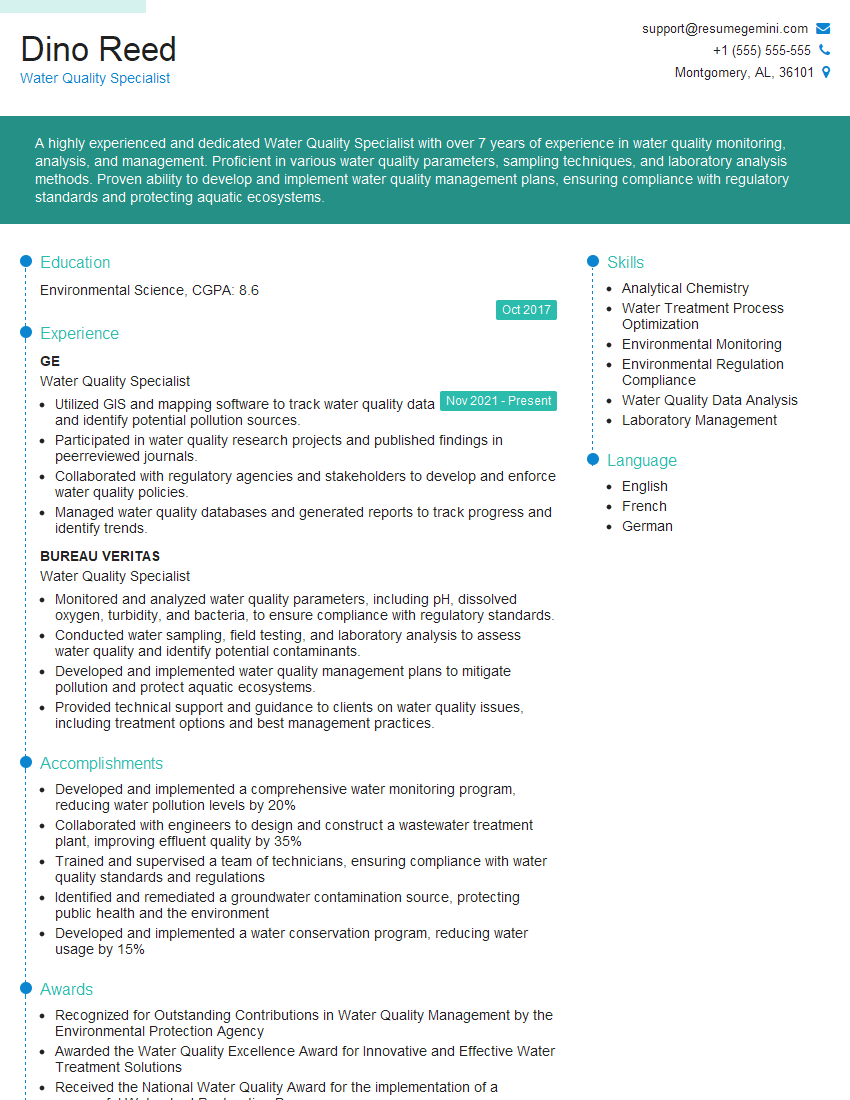
Water Quality Specialist Resume Sample
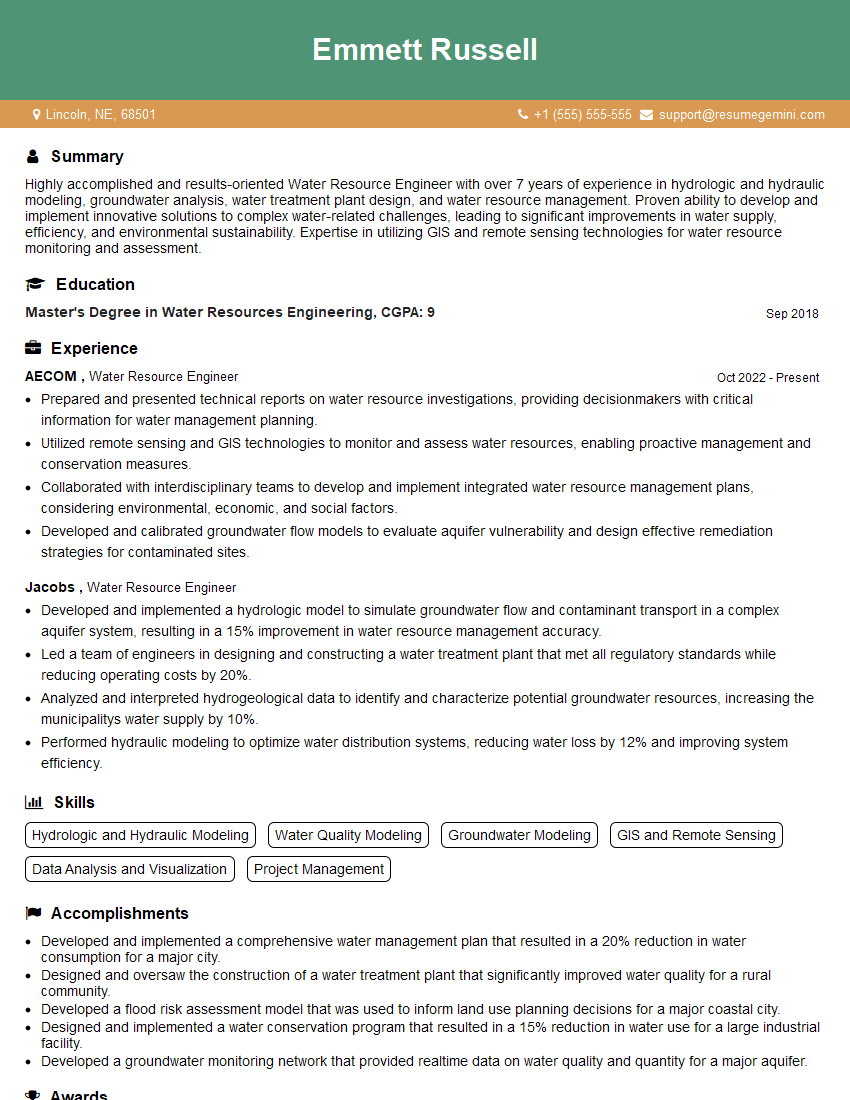
Water Resource Engineer Resume Sample

Hydraulic Engineer Resume Sample

Floodplain Manager Resume Sample

Climatologist Resume Sample

Meteorologist Resume Sample

Hydrologist Resume Sample

Meteorological Technician Resume Sample
Explore more articles
Users Rating of Our Blogs
Share Your Experience
We value your feedback! Please rate our content and share your thoughts (optional).
What Readers Say About Our Blog
To the interviewgemini.com Webmaster.
Very helpful and content specific questions to help prepare me for my interview!
Thank you
To the interviewgemini.com Webmaster.
This was kind of a unique content I found around the specialized skills. Very helpful questions and good detailed answers.
Very Helpful blog, thank you Interviewgemini team.