Unlock your full potential by mastering the most common River Hydrology interview questions. This blog offers a deep dive into the critical topics, ensuring you’re not only prepared to answer but to excel. With these insights, you’ll approach your interview with clarity and confidence.
Questions Asked in River Hydrology Interview
Q 1. Explain the hydrological cycle in detail.
The hydrological cycle, also known as the water cycle, describes the continuous movement of water on, above, and below the surface of the Earth. It’s a closed system, meaning water isn’t created or destroyed, only transformed and relocated. Think of it like a giant, global recycling program for water!
- Evaporation: The sun’s energy transforms liquid water (from oceans, lakes, rivers, and even puddles) into water vapor, rising into the atmosphere.
- Transpiration: Plants also release water vapor into the atmosphere through their leaves – a process similar to sweating in humans.
- Evapotranspiration: This combined process of evaporation and transpiration is a crucial component of the water cycle, particularly in understanding regional water balances.
- Condensation: As the warm, moist air rises, it cools and the water vapor condenses, forming clouds. This is like when you see your breath on a cold day – the water vapor in your breath condenses into tiny droplets.
- Precipitation: When the clouds become saturated, water falls back to Earth as rain, snow, sleet, or hail. This is the replenishment phase for our rivers, lakes, and groundwater.
- Infiltration: A portion of the precipitation soaks into the ground, replenishing groundwater supplies and eventually feeding into rivers. The soil type and land use significantly impact infiltration rates.
- Runoff: Water that doesn’t infiltrate flows over the land surface, eventually making its way into rivers, lakes, and oceans. This runoff contributes directly to river discharge.
- Groundwater Flow: Water slowly moves underground through aquifers, eventually discharging into rivers, lakes, or oceans. This is a crucial, but often unseen, component of river flow, particularly during dry periods.
Understanding the hydrological cycle is fundamental to managing water resources effectively, predicting floods and droughts, and designing sustainable water infrastructure. For instance, changes in land use, like deforestation, can drastically alter infiltration rates and increase runoff, leading to increased flood risk.
Q 2. Describe different methods for measuring river discharge.
Measuring river discharge, the volume of water flowing past a given point in a river per unit time, is crucial for water resource management and flood forecasting. Several methods exist, each with its strengths and limitations:
- Velocity-Area Method: This is a common method involving measuring the cross-sectional area of the river and the average water velocity at several points across the section. The discharge is calculated as the product of the area and the average velocity (Q = A * V). Velocity is often measured using current meters or Acoustic Doppler Current Profilers (ADCPs).
- Dilution Gauging: A known quantity of a tracer (often salt or dye) is injected into the river, and its concentration is measured downstream. By tracking the dilution of the tracer, the discharge can be estimated. This method is particularly useful in rivers with difficult-to-access cross-sections.
- Flow Metering: Various types of flow meters, such as electromagnetic or ultrasonic flow meters, are used to directly measure the flow rate within a pipe or channel. These are often used for smaller streams or canals.
- Stage-Discharge Rating Curve: This indirect method establishes a relationship between the water level (stage) and discharge at a specific location. By continuously monitoring the water level using a gauge, discharge can be estimated using the pre-established curve. This is widely used for long-term monitoring.
The choice of method depends on factors such as river size, accessibility, available resources, and the required accuracy. For instance, the velocity-area method is suitable for larger rivers, while dilution gauging is better for smaller, more inaccessible streams.
Q 3. What are the key components of a hydrological model?
A hydrological model is a simplified representation of the hydrological processes within a catchment (the area that drains to a common point). It helps us understand and predict the movement and storage of water within a given area. Key components include:
- Catchment Geometry: The shape, size, and elevation of the catchment area are essential for determining runoff pathways and water storage.
- Land Use and Soil Properties: These determine infiltration rates, evapotranspiration, and runoff generation.
- Rainfall-Runoff Processes: Models describe how rainfall translates into surface runoff, considering factors such as soil moisture, infiltration capacity, and antecedent soil conditions.
- Channel Routing: This component simulates the movement of water through the river channel network, considering factors such as channel geometry, slope, and roughness.
- Evaporation and Transpiration: These are critical components, influencing the overall water balance.
- Groundwater Processes: Infiltration into and flow from aquifers are often considered, particularly for long-term simulations.
Different models use varying levels of complexity and detail, ranging from simple empirical models to complex physically-based models. Choosing the appropriate model depends on the specific application and available data.
Q 4. How do you calibrate and validate a hydrological model?
Calibration and validation are crucial steps in developing a reliable hydrological model. Calibration involves adjusting the model parameters to match the model’s output to observed data (e.g., streamflow). Validation involves testing the calibrated model’s performance using independent data not used during calibration.
Calibration:
- Data Selection: Identify high-quality observed data, such as streamflow measurements and rainfall data, for a suitable period.
- Parameter Estimation: Adjust the model’s parameters (e.g., soil parameters, channel roughness) iteratively to minimize the difference between simulated and observed data. This often involves optimization techniques.
- Goodness-of-Fit Metrics: Evaluate the model performance using statistical metrics such as Nash-Sutcliffe efficiency, R-squared, and root mean square error (RMSE). These metrics quantify the agreement between simulated and observed data.
Validation:
- Independent Data: Use data from a period not used in calibration to test the model’s predictive ability.
- Performance Evaluation: Assess the model’s performance on the independent data using the same goodness-of-fit metrics as during calibration.
- Model Adjustment: If the model performs poorly during validation, adjustments might be necessary, potentially requiring further calibration or a refinement of the model structure.
Successful calibration and validation result in a model that can reliably simulate hydrological processes and predict future behavior. A poorly calibrated or validated model can lead to inaccurate predictions and poor decision-making, potentially with significant consequences.
Q 5. Explain the concept of a flood hydrograph and its significance.
A flood hydrograph is a graph showing the variation of river discharge (flow rate) with time at a specific location. It’s essentially a time series plot of the river’s flow response to a rainfall event or snowmelt. The shape of the hydrograph reveals crucial information about the catchment’s hydrological characteristics.
Key features of a flood hydrograph include:
- Rising limb: Represents the increase in discharge as water from the rainfall event reaches the river.
- Peak discharge: The highest discharge recorded during the flood event.
- Receding limb: Shows the gradual decrease in discharge as the floodwaters recede.
- Baseflow: The background flow of the river before the rainfall event – this is typically groundwater contribution.
- Lag time: The time difference between the center of mass of rainfall and the peak discharge – a measure of the catchment’s response time.
Flood hydrographs are essential for flood forecasting, flood risk assessment, and design of flood control structures. For example, by analyzing the hydrograph’s shape and characteristics, engineers can design dams, levees, and other infrastructure to manage flood risks effectively. A hydrograph with a rapid rising limb and high peak flow indicates a high flood risk.
Q 6. Discuss different methods for flood forecasting.
Flood forecasting involves predicting the timing, magnitude, and extent of future floods. Several methods exist:
- Empirical Methods: These methods use statistical relationships between past rainfall and flood events to predict future floods. They are relatively simple but might not capture the complexity of hydrological processes.
- Hydrological Models: These models simulate the entire hydrological cycle within a catchment, providing more detailed and accurate flood forecasts. They require extensive data and computational resources but offer better predictive capabilities than empirical methods.
- Ensemble Forecasting: This approach combines multiple models or methods to generate a range of potential flood scenarios, reducing the uncertainty associated with individual forecasts. It’s increasingly used to give a better picture of the possible flood extent.
- Real-time Rainfall Data and Remote Sensing: Integrating real-time rainfall data from weather radar and satellite remote sensing improves forecast accuracy by incorporating the most up-to-date information.
- Early Warning Systems: These integrate various flood forecasting methods with communication networks to warn communities about potential floods, allowing for effective evacuation and mitigation measures.
The choice of method depends on factors such as available data, computational resources, and the time scale of the forecast. Real-time flood forecasting systems, often employing a combination of these methods, are critical for protecting lives and property in flood-prone regions.
Q 7. Describe the factors influencing river water quality.
River water quality is a complex issue affected by a variety of factors, encompassing physical, chemical, and biological characteristics.
- Point Sources: These are identifiable sources of pollution such as industrial discharges, sewage treatment plants, and agricultural runoff from concentrated areas. These are often easier to monitor and regulate.
- Non-point Sources: These are diffuse sources of pollution, such as agricultural runoff from fields, urban stormwater runoff, and atmospheric deposition. They are more difficult to manage because their impact is spread across large areas.
- Land Use: Changes in land use, such as deforestation and urbanization, can significantly impact water quality by altering runoff patterns, increasing erosion, and introducing pollutants into rivers.
- Climate Change: Changes in precipitation patterns and temperature can affect water quality by altering the flow regime of rivers and influencing the transport and fate of pollutants.
- Natural Factors: Natural factors such as geology, soil type, and vegetation also contribute to river water quality. For instance, the presence of certain minerals in the soil can influence the chemical composition of the water.
- Biological Processes: The presence of bacteria, algae, and other organisms influences water quality. Eutrophication, caused by excessive nutrient loading (often from agricultural runoff), can lead to algal blooms, depleting oxygen and harming aquatic life.
Monitoring and managing river water quality is crucial for protecting human health, aquatic ecosystems, and ensuring the sustainable use of water resources. Water quality indices are used to assess water quality for different purposes, such as drinking water supply and recreational use.
Q 8. What are the common water quality parameters and their significance?
Water quality parameters are crucial indicators of a river’s health and suitability for various uses, from drinking water to aquatic life support. Common parameters include:
- Dissolved Oxygen (DO): Measures the amount of oxygen dissolved in the water, essential for aquatic organisms. Low DO indicates pollution.
- pH: Indicates the acidity or alkalinity of the water. Optimal pH ranges support diverse aquatic life. Significant deviations can harm organisms and impact chemical reactions.
- Temperature: Affects the solubility of oxygen and the metabolic rates of aquatic organisms. Changes can disrupt ecosystems.
- Turbidity: Measures the water’s cloudiness due to suspended solids. High turbidity reduces light penetration, harming aquatic plants and affecting water treatment processes.
- Nutrients (Nitrate, Phosphate): Excess nutrients lead to eutrophication – excessive algae growth that depletes oxygen, creating dead zones.
- Bacteria (e.g., E. coli): Presence indicates fecal contamination, posing a health risk.
- Heavy Metals (e.g., lead, mercury): Toxic pollutants that accumulate in the food chain, harming both aquatic and terrestrial organisms.
Understanding these parameters helps us assess river health, identify pollution sources, and implement effective management strategies. For example, monitoring DO levels can reveal the impact of industrial discharge, while tracking nutrient levels can guide decisions on agricultural runoff management.
Q 9. Explain the concept of a watershed and its importance in hydrology.
A watershed, also known as a drainage basin or catchment area, is the land area that drains water to a common outlet, such as a river, lake, or ocean. Imagine it like a giant funnel, collecting all rainfall and snowmelt within its boundaries. Its importance in hydrology is paramount because:
- Hydrological Processes: Watersheds are the fundamental units for understanding hydrological processes like precipitation, runoff, infiltration, and evapotranspiration. They help predict water availability and flood risks.
- Water Resource Management: Managing water resources within a watershed ensures sustainable use and minimizes conflicts among water users (agriculture, industry, municipalities).
- Pollution Control: Identifying pollution sources and pathways within a watershed is crucial for implementing effective pollution control measures. Understanding how pollutants move through the watershed helps in designing remediation strategies.
- Environmental Monitoring: Watersheds provide a framework for monitoring water quality and ecological health. By establishing monitoring stations throughout a watershed, we can track changes over time and assess the impact of human activities.
For example, understanding the characteristics of a watershed—its size, soil type, land use, and topography—is crucial for predicting the impacts of a storm event, which may include predicting runoff volume and the risk of flooding downstream.
Q 10. How do you determine the return period of a flood event?
The return period of a flood event, also known as the recurrence interval, is the average time interval between floods of a given magnitude. It’s a statistical measure of how often a flood of a certain size is expected to occur. Determining the return period involves analyzing historical flood data using statistical methods such as:
- Frequency Analysis: Flood data (peak discharges or water levels) are ranked from largest to smallest. Then, a probability distribution (e.g., Gumbel, Log-Pearson Type III) is fitted to the data to estimate the probability of exceedance for different flood magnitudes.
- Plotting Position: Each ranked flood is assigned a plotting position, which represents its probability of exceedance. Commonly used plotting positions include Weibull and Gringorten.
- Return Period Calculation: The return period (T) is calculated as the inverse of the probability of exceedance (P):
T = 1/P
For instance, a flood with a 100-year return period (T=100) has a 1% chance of being equaled or exceeded in any given year. Note that this doesn’t mean it will occur exactly every 100 years; it’s a probabilistic estimate. This information is vital for designing infrastructure that can withstand floods of a specific magnitude, ensuring public safety and minimizing economic losses.
Q 11. What are the different types of hydrological droughts?
Hydrological droughts are prolonged periods of below-normal water availability, impacting various aspects of the water cycle. They are categorized into different types:
- Meteorological Drought: Defined by a prolonged period of below-average precipitation. It’s the starting point for other drought types.
- Agricultural Drought: Occurs when soil moisture is insufficient to meet crop needs. This depends not only on rainfall but also on factors like soil type, evapotranspiration, and irrigation practices.
- Hydrological Drought: Characterized by significantly reduced streamflow, reservoir levels, and groundwater levels. This is often a consequence of prolonged meteorological drought.
- Socioeconomic Drought: Occurs when water demand exceeds supply, leading to water shortages and impacting society and the economy. It reflects the interplay between water availability and societal needs.
Understanding the different types of droughts helps tailor management strategies. For example, addressing agricultural drought might involve implementing water-efficient irrigation techniques, while managing hydrological drought requires managing reservoir releases and groundwater withdrawals.
Q 12. Describe the impact of climate change on river systems.
Climate change is significantly impacting river systems globally, causing wide-ranging effects:
- Altered Precipitation Patterns: Changes in rainfall intensity and frequency lead to more frequent and intense floods in some areas and more severe droughts in others. This alters river flow regimes significantly.
- Increased Temperatures: Higher temperatures increase evaporation rates, reducing river flows and impacting water quality. This also affects aquatic ecosystems, with species potentially migrating or becoming extinct.
- Glacier and Snowmelt Changes: Melting glaciers and snowpacks are altering the timing and magnitude of river flows, particularly in mountainous regions, impacting downstream water availability.
- Sea Level Rise: Rising sea levels can increase saltwater intrusion into rivers and estuaries, contaminating freshwater sources and impacting ecosystems.
- Extreme Events: Climate change is exacerbating the frequency and intensity of extreme events such as floods and droughts, making it increasingly challenging to manage river systems.
These impacts necessitate the development of adaptation strategies, such as improving water storage capacity, implementing drought-resistant crops, and restoring riparian vegetation to mitigate the effects of climate change on river systems.
Q 13. Explain the principles of river morphology and its evolution.
River morphology refers to the form and shape of a river channel and its associated features, such as floodplains, terraces, and deltas. It’s a dynamic system constantly evolving due to interactions between water flow, sediment transport, and the surrounding landscape. Key principles include:
- Sediment Transport: Rivers carry sediment, shaping their channels through erosion, deposition, and transport processes. The balance between erosion and deposition determines channel morphology.
- Water Flow Dynamics: The velocity and discharge of river flow greatly influence erosion and deposition patterns. High-energy flows cause erosion, while lower-energy flows favor deposition.
- Channel Patterns: Rivers develop characteristic channel patterns, such as meandering (winding), braided (multiple channels), and straight channels, influenced by factors like slope, sediment load, and bank stability.
- Bank Stability: Vegetation, soil type, and human interventions (e.g., bank protection) influence the stability of river banks, affecting channel erosion and migration.
River morphology evolves over time due to natural processes and human interventions. For example, deforestation can increase erosion and sediment load, leading to channel changes. Understanding these principles is crucial for managing rivers sustainably, preventing erosion, and mitigating flood risks.
Q 14. What are the different types of river channels and their characteristics?
River channels exhibit various types, each with distinct characteristics:
- Straight Channels: Relatively rare and often occur in steep gradients with resistant bedrock. They tend to be less sinuous and exhibit rapid flow.
- Meandering Channels: Characterized by sinuous bends (meanders) created by erosion on the outer bank and deposition on the inner bank. These are common in gentler slopes with cohesive banks.
- Braided Channels: Composed of multiple channels separated by islands or bars. These form in high-sediment environments with unstable banks and variable flow.
- Anastomosing Channels: Similar to braided channels but with more stable islands and less frequent channel switching. They often have relatively low gradients and high sediment loads.
The type of river channel influences its hydrological behavior and ecological characteristics. For example, meandering channels promote habitat diversity due to the varied flow conditions, while braided channels often experience frequent changes in flow paths, posing challenges for infrastructure development.
Q 15. Discuss the role of groundwater in river systems.
Groundwater plays a vital, often unseen, role in maintaining river flows, particularly during dry periods. Think of it as a hidden reservoir that continuously replenishes rivers. Rivers receive groundwater through seepage from aquifers – underground layers of rock and soil saturated with water. This baseflow, as it’s called, sustains the river even when rainfall is minimal. Conversely, rivers can also recharge groundwater through infiltration – water percolating down from the river channel into the aquifer. This dynamic interaction between surface water and groundwater is crucial for maintaining ecological health and water availability.
For example, in arid regions, groundwater is the primary source of baseflow in many rivers, keeping them flowing even during prolonged droughts. In contrast, in regions with high rainfall, the influence of groundwater on river flow might be less pronounced but still significant in maintaining a stable flow regime. Understanding this relationship is crucial for effective water resource management, as over-extraction of groundwater can severely deplete river flows and impact aquatic ecosystems.
Career Expert Tips:
- Ace those interviews! Prepare effectively by reviewing the Top 50 Most Common Interview Questions on ResumeGemini.
- Navigate your job search with confidence! Explore a wide range of Career Tips on ResumeGemini. Learn about common challenges and recommendations to overcome them.
- Craft the perfect resume! Master the Art of Resume Writing with ResumeGemini’s guide. Showcase your unique qualifications and achievements effectively.
- Don’t miss out on holiday savings! Build your dream resume with ResumeGemini’s ATS optimized templates.
Q 16. How do you assess the impact of land use changes on river flows?
Assessing the impact of land use changes on river flows requires a multi-faceted approach. Changes like deforestation, urbanization, and agricultural intensification significantly alter the hydrological cycle. Deforestation reduces evapotranspiration (water loss from plants) and increases runoff, leading to higher peak flows and potentially increased flooding. Urbanization increases impervious surfaces, causing rapid runoff and reduced infiltration, similarly leading to higher peak flows and lower baseflows. Agricultural practices, especially irrigation, can significantly alter the amount of water available in the river system.
We use various methods for assessment, including hydrological modeling. These models simulate the flow of water through a catchment area, incorporating factors like rainfall, evapotranspiration, and land use. We can compare model outputs under different land use scenarios to estimate the potential impacts of land use changes on river flows. Remote sensing and GIS techniques are also used to map land use changes and assess their spatial extent and impact. Field measurements of streamflow, soil moisture, and groundwater levels help to calibrate and validate the models and provide ground truth data.
Q 17. Explain the concept of sediment transport in rivers.
Sediment transport in rivers is the process by which sediment particles are eroded, transported, and deposited by flowing water. Imagine a river as a conveyor belt carrying a mix of sand, gravel, silt, and clay. The capacity of a river to transport sediment depends on its flow velocity, the size and density of the sediment particles, and the slope of the river bed. Sediment transport occurs in three main ways: dissolved load (dissolved minerals), suspended load (fine particles carried within the water column), and bed load (larger particles rolling, sliding, or saltating along the riverbed).
The amount of sediment transported affects the river’s morphology (shape and form), aquatic habitats, and water quality. Excessive sediment can lead to channel aggradation (filling up), causing flooding and harming fish spawning grounds. Conversely, insufficient sediment can lead to channel degradation (erosion), undermining river banks and structures. Understanding sediment transport processes is vital for managing river ecosystems and mitigating erosion and sedimentation issues. For example, dam construction can significantly alter sediment transport patterns, leading to downstream erosion or reservoir sedimentation.
Q 18. Describe the different methods for managing river erosion and sedimentation.
Managing river erosion and sedimentation requires a combination of structural and non-structural measures. Structural measures involve physical interventions to the river channel, while non-structural measures focus on land management practices. Examples of structural measures include:
- Check dams: Small dams built across the river to trap sediment and reduce downstream erosion.
- Revetments: Structures built along riverbanks to protect against erosion.
- Groynes: Structures extending from the bank into the river to stabilize the channel and reduce erosion.
Non-structural measures focus on controlling the source of the problem and include:
- Reforestation and afforestation: Planting trees to reduce runoff and soil erosion.
- Improved agricultural practices: Techniques such as contour plowing and terracing to reduce soil erosion.
- Floodplain management: Allowing the river to naturally flood its floodplain in a controlled manner, reducing erosion and improving ecological health.
The choice of methods depends on the specific site conditions, the severity of the problem, and the available resources. Often, a combination of both structural and non-structural measures is employed for a holistic approach.
Q 19. What are the principles of sustainable river management?
Sustainable river management centers around the principles of ecological integrity, social equity, and economic viability. It’s about managing rivers in a way that meets the needs of present generations without compromising the ability of future generations to meet their own needs. Key principles include:
- Maintaining ecological integrity: Protecting and restoring the natural biodiversity and ecosystem functions of the river system. This includes preserving habitat for aquatic species and maintaining natural flow regimes.
- Ensuring social equity: Fair and equitable allocation of water resources among different users and stakeholders. This necessitates considering the needs of all communities that depend on the river.
- Promoting economic viability: Supporting sustainable economic activities that depend on the river, such as agriculture, fisheries, and tourism, without harming the river’s health. This often involves balancing economic development with environmental protection.
- Adaptive management: A flexible approach that involves monitoring river conditions, evaluating management strategies, and adapting approaches as new information becomes available. This acknowledges the inherent uncertainties involved in river management.
In essence, sustainable river management is a holistic and adaptive process aiming for a balance between human needs and ecological health.
Q 20. Discuss the challenges in managing transboundary river basins.
Managing transboundary river basins presents unique challenges due to the involvement of multiple countries. These challenges include:
- Conflicting interests: Different countries may have different priorities regarding water allocation, pollution control, and hydropower development.
- Lack of trust and cooperation: Political tensions and lack of trust between countries can hinder cooperation and agreement on management strategies.
- Data scarcity and asymmetry: Unequal access to data and information among countries can create disparities in understanding the river system and hinder joint decision-making.
- Enforcement difficulties: Enforcing agreements across international borders can be challenging, particularly in cases of pollution or water overuse.
Successful management of transboundary river basins requires strong international cooperation, transparent data sharing, and the development of mutually beneficial agreements. This often involves creating joint management committees or institutions to facilitate communication and collaboration among the involved countries. International legal frameworks and treaties can provide a basis for cooperation and conflict resolution.
Q 21. Explain the concept of water allocation and its challenges.
Water allocation refers to the process of distributing available water resources among competing users, such as agriculture, industry, municipalities, and the environment. It’s a complex issue, often characterized by scarcity and conflicting demands. Allocations can be based on various principles, such as historical use, economic value, environmental needs, and social equity.
Challenges in water allocation include:
- Water scarcity: Increasing populations and changing climate patterns are exacerbating water scarcity in many regions, leading to intense competition for limited resources.
- Conflicting demands: Different users have different needs and priorities, leading to conflicts over water allocation. For instance, agricultural needs may conflict with environmental flow requirements.
- Data limitations: Accurate and reliable data on water availability and demand are crucial for effective allocation. However, such data is often lacking or unreliable, particularly in data-scarce regions.
- Institutional and legal frameworks: Weak or ineffective institutions and legal frameworks can hinder efficient and equitable water allocation. Clear rules, regulations, and enforcement mechanisms are essential.
Effective water allocation requires a holistic approach that considers ecological, social, and economic factors. This involves participatory processes that engage stakeholders and promote transparency and accountability.
Q 22. How do you assess the environmental impact of a dam project?
Assessing the environmental impact of a dam project requires a holistic approach, considering the multifaceted changes it introduces to the river system. We need to evaluate impacts across various ecological and socio-economic aspects.
- Changes in water flow regime: Dams fundamentally alter the natural flow of rivers, leading to reduced downstream flow, altered flood pulses, and changes in sediment transport. This impacts aquatic habitats and riparian ecosystems, affecting fish spawning, nutrient cycling, and overall biodiversity.
- Water quality changes: Dams can cause changes in water temperature, dissolved oxygen levels, and nutrient concentrations. Increased sedimentation upstream can lead to water quality degradation, while a reduction in sediment downstream can lead to erosion and habitat loss. The formation of reservoirs can also lead to increased greenhouse gas emissions.
- Habitat alteration and loss: The flooding of riparian zones for reservoir creation leads to direct habitat loss. Changes in flow regime affect the species that depend on specific water levels and flow velocities. Fish migration patterns can be severely disrupted, leading to population declines.
- Impacts on fish populations: Many fish species rely on specific flow regimes for migration, spawning, and feeding. Dams can act as barriers to migration, fragmenting populations and impacting their genetic diversity.
- Socio-economic impacts: While dams can provide hydropower and irrigation benefits, they can also lead to displacement of communities, loss of livelihoods (e.g., fishing), and altered recreational opportunities.
A comprehensive environmental impact assessment (EIA) utilizes various methods, including field surveys, hydrological modeling, biological assessments, and stakeholder consultations. For example, we might use hydrological models to predict changes in flow downstream and then couple this with habitat suitability models to assess the potential impact on fish populations. Ultimately, a robust EIA balances the potential benefits of a dam with its potential environmental consequences.
Q 23. Describe the different methods for restoring degraded river ecosystems.
Restoring degraded river ecosystems is a complex undertaking requiring a multi-faceted approach tailored to the specific causes of degradation. Common methods include:
- Removing barriers to flow: Dam removal or modification is a crucial step in restoring natural flow regimes. This allows for the re-establishment of natural sediment transport and improves connectivity for migratory fish.
- Riparian zone restoration: Rehabilitating riparian vegetation along riverbanks helps stabilize banks, improve water quality, and provide habitat for various species. This may involve planting native vegetation, controlling invasive species, and restoring natural hydrological processes.
- In-stream habitat restoration: Creating or improving in-stream habitat features, such as pools, riffles, and side channels, increases habitat diversity and enhances biodiversity. This can involve adding large woody debris (LWD), constructing fish passage structures, or re-profiling the river bed.
- Water quality improvement: Addressing sources of pollution, such as agricultural runoff or industrial discharges, is essential for restoring water quality. This might involve implementing best management practices in agriculture, upgrading wastewater treatment plants, and controlling sediment erosion.
- Bioremediation: Using biological processes to clean up pollutants in the river water or sediments. This could involve the use of specific plant species or microorganisms to remove contaminants.
- Flow regime restoration: This involves mimicking natural flow patterns through controlled releases from dams or other water management structures. This can involve environmental flow releases that simulate natural hydrological conditions.
The success of river restoration projects depends on a thorough understanding of the degradation causes, the application of appropriate restoration techniques, and ongoing monitoring to track progress and adapt strategies as needed. For instance, a restoration project might involve removing a small dam that’s blocking fish migration, replanting native vegetation along the riverbanks, and modifying the river channel to create more diverse habitats.
Q 24. Explain the role of remote sensing and GIS in river hydrology.
Remote sensing and Geographic Information Systems (GIS) are indispensable tools in modern river hydrology, providing efficient and cost-effective ways to collect and analyze data over large spatial and temporal scales.
- Remote Sensing: Satellite and airborne imagery provide data on various hydrological parameters, such as water surface area, river width, water levels, and vegetation cover. Techniques like LiDAR (Light Detection and Ranging) can create high-resolution digital elevation models (DEMs) essential for hydrological modeling and flood risk assessment. Multispectral and hyperspectral imagery can provide information about water quality parameters such as turbidity and chlorophyll concentration.
- GIS: GIS serves as a platform for integrating and analyzing data from various sources, including remote sensing data, hydrological models, and field measurements. It allows for the spatial visualization of hydrological data, facilitating the identification of patterns and trends, and enables the development of hydrological models at different scales.
For example, we can use satellite imagery to monitor changes in river channel morphology over time, identify areas prone to erosion or flooding, and assess the extent of riparian vegetation. This information can then be integrated into a GIS to create a comprehensive map of the river system and its hydrological characteristics. This integrated approach is crucial for effective river management and decision-making.
Q 25. Discuss the challenges in data collection and management in hydrology.
Data collection and management in hydrology present several significant challenges:
- Data scarcity and heterogeneity: Hydrological data can be sparse, particularly in remote areas or developing countries. Moreover, data from different sources may have varying formats, accuracy, and reliability, making integration difficult.
- Data quality issues: Measurement errors, sensor malfunctions, and inconsistencies in data collection methods can compromise the quality of hydrological data. This necessitates rigorous quality control and validation procedures.
- Data accessibility and sharing: Access to hydrological data can be restricted due to proprietary rights or lack of centralized data repositories. Effective data sharing and collaboration are crucial for advancing hydrological science and water resources management.
- High cost of data acquisition: Collecting high-quality hydrological data, particularly through field measurements and remote sensing, can be expensive. This requires careful planning and prioritization of data collection efforts.
- Data management and archiving: Managing large hydrological datasets requires sophisticated database systems and data management strategies. Archiving data in a way that ensures long-term accessibility and usability is also critical.
To overcome these challenges, a strategic approach is required, involving the development of standardized data collection protocols, the use of advanced data management technologies, and improved mechanisms for data sharing and collaboration. For instance, open-data initiatives and the use of cloud-based data storage can help improve accessibility and collaboration. Robust quality control procedures are essential at every stage, from data acquisition to analysis.
Q 26. How do you handle uncertainty in hydrological modeling?
Uncertainty is inherent in hydrological modeling due to the complexity of hydrological processes, limitations in data availability, and inherent variability in natural systems. Handling uncertainty is crucial for reliable model predictions and decision-making.
- Stochastic methods: These methods incorporate randomness into the model parameters and inputs, representing the variability in hydrological processes. Monte Carlo simulations are a common stochastic method, generating numerous model runs with different parameter sets to quantify the uncertainty in model predictions.
- Ensemble forecasting: Running multiple models with different structures and parameterizations allows for a better representation of the range of possible outcomes and provides a more robust assessment of uncertainty.
- Sensitivity analysis: This technique helps identify the model parameters that have the largest influence on the predictions. This allows us to focus data collection and model calibration efforts on the most important parameters, reducing overall uncertainty.
- Bayesian methods: These statistical approaches combine prior knowledge about model parameters with new data to update our understanding and estimate uncertainty.
- Data assimilation techniques: Integrating observed data into the model using data assimilation techniques helps constrain model predictions and reduce uncertainty.
The choice of uncertainty handling method depends on the specific modeling objectives, available data, and computational resources. For example, a flood forecasting model might employ an ensemble approach, using multiple models with different parameter sets to estimate the probability of exceeding various flood levels. Transparency and clear communication about the sources and levels of uncertainty are vital for responsible use of hydrological models in decision-making.
Q 27. Describe your experience with specific hydrological software packages.
Throughout my career, I’ve extensively used several hydrological software packages, each with its own strengths and weaknesses, adapting my choice to the specific project requirements.
- HEC-HMS (Hydrologic Modeling System): I’ve used HEC-HMS extensively for rainfall-runoff modeling, particularly for flood forecasting and water resource management. It’s a robust and widely accepted software with a user-friendly interface and extensive documentation.
- MIKE SHE (System Hydrologic European): MIKE SHE is a powerful integrated hydrological model that I’ve employed for simulating complex hydrological processes, including groundwater flow and water quality. Its flexibility in representing various hydrological processes makes it suitable for diverse applications.
- ArcGIS: I utilize ArcGIS for geospatial analysis and visualization of hydrological data. Integrating remote sensing data, hydrological model outputs, and other geospatial information in ArcGIS is crucial for understanding spatial patterns and trends.
- R: I leverage the R programming language and its numerous hydrological packages (e.g., hydroTSM, airGR) for statistical analysis, time series analysis, and development of custom hydrological models.
My experience with these software packages enables me to effectively analyze hydrological data, develop and calibrate models, and visualize results to support decision-making in various water resource management applications.
Q 28. Explain a situation where you had to solve a complex hydrological problem.
During a project assessing the impacts of climate change on a large river basin, we faced a complex hydrological challenge: predicting the combined impacts of altered rainfall patterns and increased glacier melt on downstream water availability. The existing hydrological models struggled to accurately represent the interactions between snowmelt, glacier melt, and rainfall.
To address this, we implemented a multi-step approach:
- Model improvement: We enhanced the existing hydrological model by incorporating a more detailed representation of glacier dynamics and snowmelt processes, using a distributed hydrological model capable of resolving spatial variability.
- Data integration: We integrated high-resolution climate projections, glacier inventory data, and remote sensing data on snow cover to improve the accuracy of model inputs.
- Uncertainty analysis: We performed a comprehensive uncertainty analysis using ensemble forecasting and sensitivity analysis to account for uncertainties in climate projections and model parameters.
- Scenario development: We developed different scenarios reflecting various future climate change scenarios and their potential impacts on glacier melt and rainfall patterns.
- Stakeholder engagement: We presented our findings to stakeholders, including water resource managers and local communities, facilitating informed decision-making and adaptation strategies.
Through this collaborative and iterative process, we were able to develop improved projections of future water availability under different climate change scenarios, providing valuable information for water resource planning and management in the region. This experience highlighted the importance of integrating multiple data sources, employing advanced modeling techniques, and collaborating with stakeholders to tackle complex hydrological problems.
Key Topics to Learn for Your River Hydrology Interview
- Hydrological Cycle and River Systems: Understand the processes involved in precipitation, infiltration, runoff, evapotranspiration, and their impact on river flow regimes. Consider how different land uses influence these processes.
- Hydrograph Analysis: Learn to interpret hydrographs, identifying key features like peak flow, time to peak, recession characteristics, and baseflow. Practice analyzing hydrographs to determine the impact of various hydrological events.
- Streamflow Measurement and Estimation: Familiarize yourself with various methods for measuring streamflow (e.g., weirs, current meters) and techniques for estimating flow when direct measurements are unavailable (e.g., rating curves, regional regression equations).
- Hydrological Modeling: Gain understanding of different hydrological models (e.g., lumped, distributed) and their applications in water resource management. Explore model calibration and validation techniques.
- Water Quality and River Ecology: Understand the key parameters used to assess river water quality and their impact on aquatic ecosystems. Explore how human activities affect river health and the concepts of nutrient cycling and pollution transport.
- Flood Frequency Analysis: Master the statistical methods used to estimate flood magnitudes and probabilities for different return periods. Understand the implications of these analyses for flood risk management.
- River Morphology and Sediment Transport: Explore the relationships between river channel morphology, sediment transport processes, and flow characteristics. Understand the impact of human interventions on river morphology.
- Data Analysis and Interpretation: Develop strong skills in analyzing hydrological data using statistical software. Practice visualizing data effectively to communicate your findings.
Next Steps: Launch Your River Hydrology Career
Mastering River Hydrology opens doors to a rewarding career in water resource management, environmental consulting, research, and government agencies. To maximize your job prospects, it’s crucial to present your skills effectively. Creating an Applicant Tracking System (ATS)-friendly resume is essential for getting your application noticed. ResumeGemini is a trusted resource to help you build a professional, impactful resume that highlights your expertise in River Hydrology. We provide examples of resumes tailored specifically to this field to guide you in showcasing your qualifications effectively.

Hydrogeologist Resume Sample
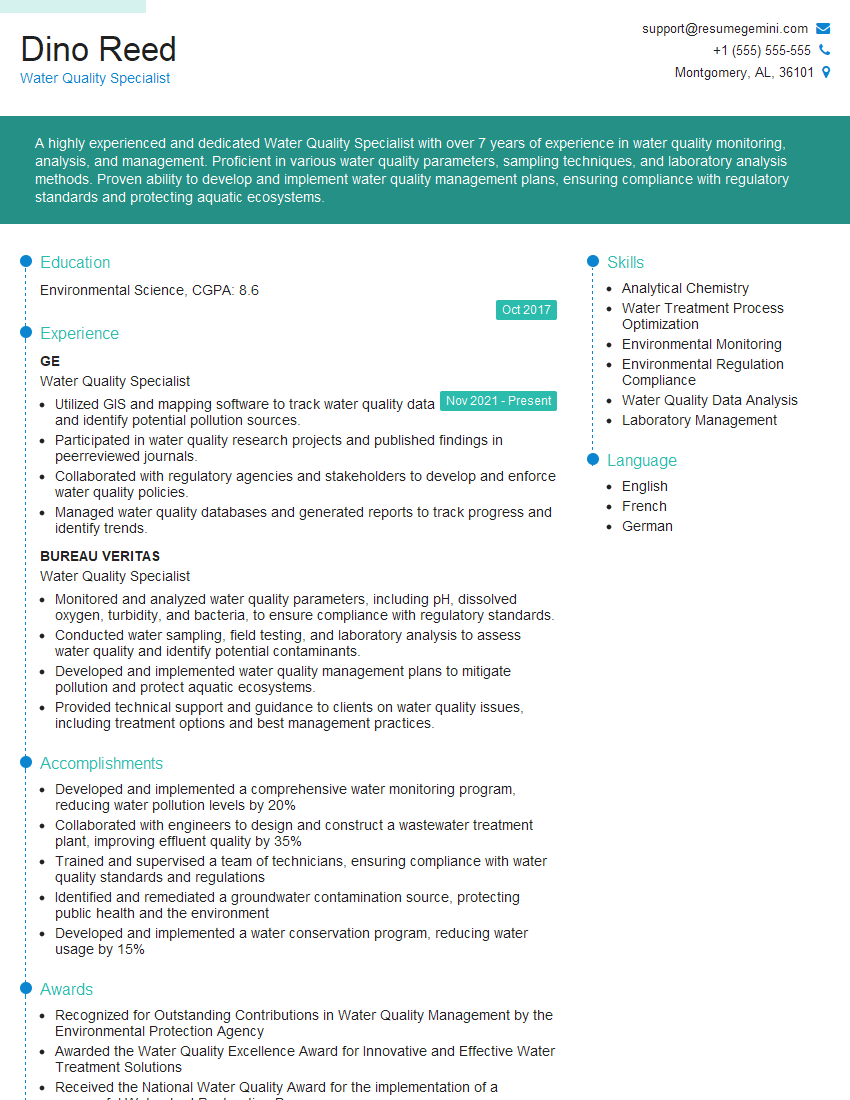
Water Quality Specialist Resume Sample

Water Resource Manager Resume Sample

Watershed Manager Resume Sample

Drainage Engineer Resume Sample

Hydraulic Engineer Resume Sample
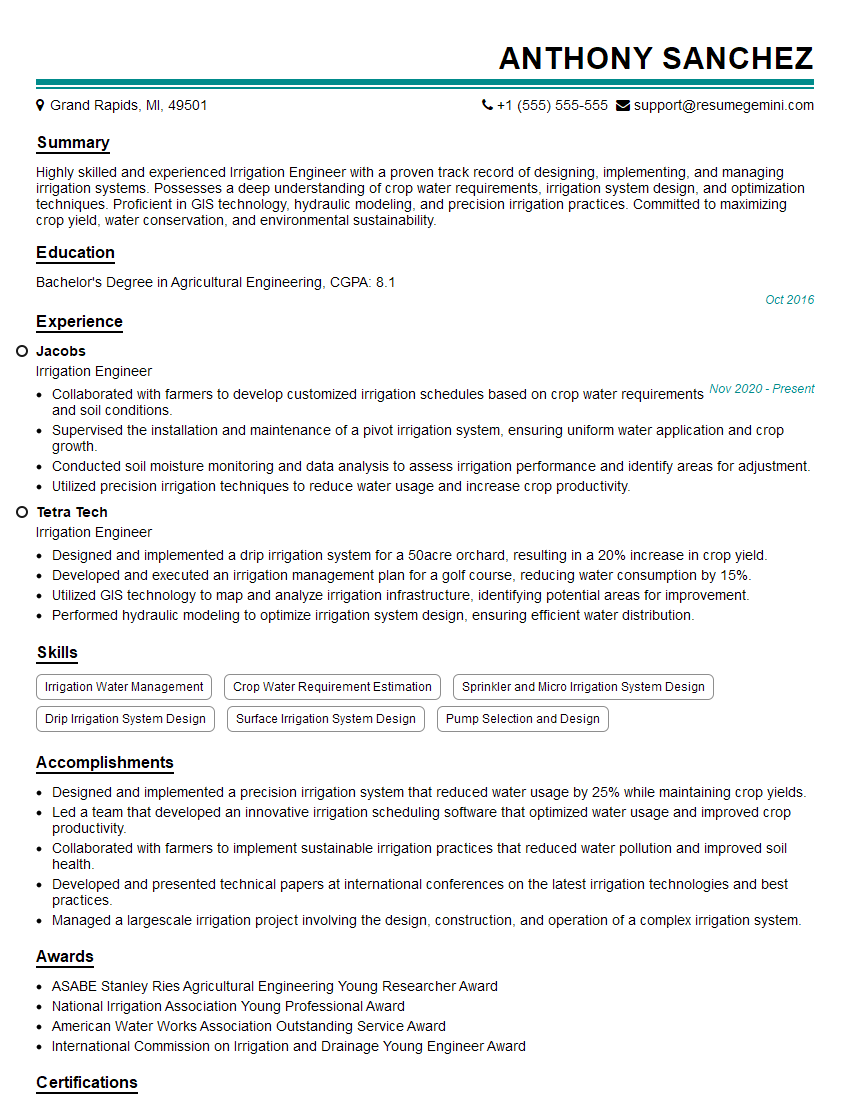
Irrigation Engineer Resume Sample
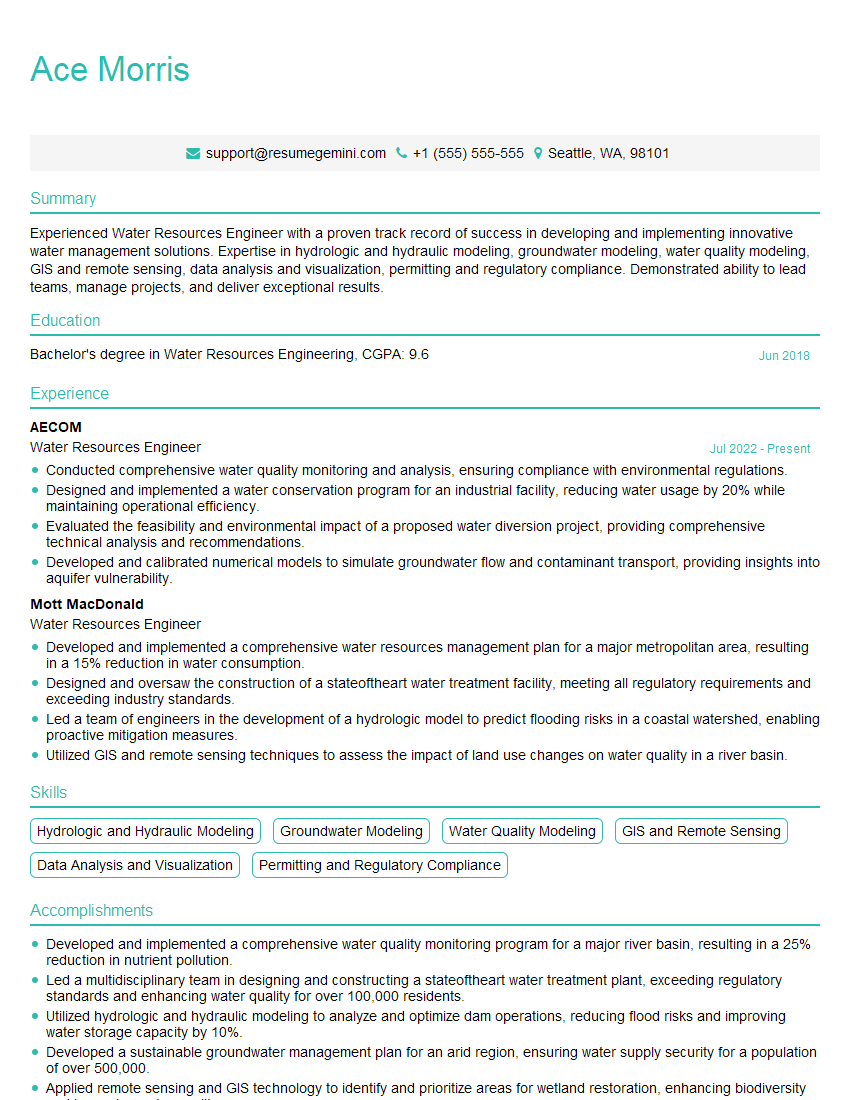
Water Resources Engineer Resume Sample

Floodplain Manager Resume Sample

Hydrologist Resume Sample
Explore more articles
Users Rating of Our Blogs
Share Your Experience
We value your feedback! Please rate our content and share your thoughts (optional).
What Readers Say About Our Blog
To the interviewgemini.com Webmaster.
Very helpful and content specific questions to help prepare me for my interview!
Thank you
To the interviewgemini.com Webmaster.
This was kind of a unique content I found around the specialized skills. Very helpful questions and good detailed answers.
Very Helpful blog, thank you Interviewgemini team.