Every successful interview starts with knowing what to expect. In this blog, we’ll take you through the top Rooftop Solar Installations interview questions, breaking them down with expert tips to help you deliver impactful answers. Step into your next interview fully prepared and ready to succeed.
Questions Asked in Rooftop Solar Installations Interview
Q 1. What are the different types of solar panels?
Solar panels are broadly categorized based on their cell technology. The most common types are monocrystalline, polycrystalline, and thin-film.
- Monocrystalline Silicon Panels: These panels use single-crystal silicon, resulting in a dark, uniform appearance. They are known for their high efficiency (typically 18-22%), meaning they generate more power per unit area than other types. Think of them as the ‘sports car’ of solar panels – high performance but often at a higher cost.
- Polycrystalline Silicon Panels: Made from multiple silicon crystals, these panels have a characteristic blueish, speckled appearance. They’re generally less expensive than monocrystalline panels but have slightly lower efficiency (around 15-17%). They’re a good balance between cost and performance, making them popular for larger projects.
- Thin-Film Solar Panels: These are made by depositing a thin layer of photovoltaic material onto a substrate. They are more flexible and can be produced at a lower cost than crystalline silicon panels, but their efficiency is generally lower (8-13%). They might be a good choice for situations needing flexible panels or where aesthetics are particularly important.
The choice of panel type depends on various factors, including budget, energy needs, roof space availability, and aesthetic preferences.
Q 2. Explain the process of designing a rooftop solar system.
Designing a rooftop solar system is a multi-step process that begins with a thorough assessment of the customer’s needs and the site’s characteristics.
- Site Assessment: This involves a detailed evaluation of the roof’s orientation, shading, size, structural integrity, and available electrical infrastructure. We utilize specialized software and satellite imagery to determine sunlight exposure throughout the year.
- Energy Audit: We analyze the customer’s energy consumption patterns to determine their annual electricity usage and establish the required system size. This involves examining their energy bills and understanding their lifestyle and appliances.
- System Design: Based on the site assessment and energy audit, we design a system that optimizes energy production, considering factors like panel type, array configuration, and inverter selection. We use sophisticated software to model energy production and minimize shading losses.
- Permitting and Approvals: We handle all necessary permits and approvals from relevant authorities, ensuring compliance with all building codes and regulations. This involves close coordination with local building inspectors.
- Component Selection: We choose high-quality components from reputable manufacturers, ensuring system reliability and performance. This includes selecting appropriate panels, inverters, mounting systems, and wiring.
The entire design process is documented and shared with the customer for transparency and approval.
Q 3. Describe the safety procedures you follow when working on a roof.
Rooftop solar installations require meticulous adherence to safety protocols. Our team undergoes regular safety training and always employs the following procedures:
- Fall Protection: We always utilize appropriate fall protection equipment, including harnesses, lifelines, and anchor points. Before starting any work, we inspect the roof for stability and potential hazards.
- Roof Access: We use safe and stable access points to the roof, avoiding unnecessary risks. Ladders are inspected and used correctly, and where feasible, roof access points are preferred.
- Personal Protective Equipment (PPE): Our team always wears appropriate PPE, including hard hats, safety glasses, gloves, and safety footwear. This is paramount for preventing injuries from potential falls, cuts, or electrical shocks.
- Communication: Clear and consistent communication is maintained within the team at all times, minimizing potential misunderstandings. A spotter should always be present for any work at height.
- Weather Monitoring: We always monitor weather conditions and postpone work if necessary. High winds, rain, or lightning can create dangerous situations.
Our commitment to safety ensures a safe working environment for our team and protects the property.
Q 4. How do you determine the optimal placement of solar panels on a roof?
Optimal placement maximizes sunlight exposure throughout the day. This involves considering:
- Roof Orientation: South-facing roofs (in the Northern Hemisphere) generally receive the most sunlight. East and west-facing roofs are also suitable but receive less sunlight overall.
- Roof Angle: The optimal angle depends on the latitude. Steeper roofs are typically better in areas with higher latitudes.
- Shading Analysis: We use specialized software to analyze shading from trees, buildings, or other obstructions. Shading significantly reduces energy production.
- Roof Structure: We assess the roof’s load-bearing capacity to ensure it can support the weight of the solar panel system. This involves reviewing structural plans if available and may require a structural engineer’s assessment.
- Accessibility: We need to ensure easy access for installation, maintenance, and future repairs.
We use 3D modeling software to visualize panel placement and optimize energy generation based on these factors, creating a customized solution for each installation.
Q 5. What are the different types of mounting systems used for rooftop solar installations?
Several mounting systems are used for rooftop solar installations, each chosen based on the roof type and structure.
- Racking Systems: These are the most common type and consist of a framework of rails and clamps that secure the panels to the roof. They are suitable for various roof types, including asphalt shingles, tile, and metal.
- Ballasted Systems: These systems use weight (ballast) to hold the panels in place, eliminating the need for penetration into the roof. Ideal for roofs where penetration is not allowed or is difficult.
- Integrated Systems: These systems are built directly into the roofing material, offering a seamless, aesthetically pleasing look. Often more expensive and may require specialized roofing materials.
- Tile-in Systems: Designed for tile roofs, these mount the panels directly between or on top of the tiles, minimizing damage to the existing roof.
The choice of mounting system significantly impacts cost, aesthetics, and the installation process. We always select the system best suited to the specific project requirements.
Q 6. Explain the process of wiring a solar panel array.
Wiring a solar panel array involves connecting the panels in series and parallel to optimize voltage and current output, ultimately feeding the energy to the inverter.
- Series Connections: Connecting panels in series increases the voltage but maintains the current. This is done by connecting the positive (+) terminal of one panel to the negative (-) terminal of the next.
- Parallel Connections: Connecting panels in parallel increases the current while maintaining the voltage. This is done by connecting all the positive (+) terminals together and all the negative (-) terminals together.
- Combiner Boxes: These boxes consolidate the output from multiple strings of panels, simplifying wiring and providing protection against overcurrent.
- DC Wiring: We use appropriately sized and insulated DC (direct current) wires to connect the panels and the combiner boxes. These wires must be resistant to UV degradation and able to handle the voltage and current.
- Grounding: All components are properly grounded to protect against electrical shocks and prevent damage from lightning strikes.
- Inverter Connection: The output of the combiner box is then connected to the solar inverter, which converts the DC electricity to AC (alternating current) electricity for use in the home.
Proper wiring is crucial for system safety and efficiency. All connections are made according to industry standards and building codes.
Q 7. How do you ensure the proper grounding of a solar system?
Proper grounding is essential for safety and performance. It provides a path for fault currents to safely flow to the earth, preventing electrical shocks and protecting equipment from damage.
- Grounding Rod: We typically install a grounding rod driven deep into the earth, providing a low-impedance path to ground.
- Grounding Wire: A heavy-gauge copper wire connects the grounding rod to the system’s grounding busbar, which is connected to the inverter, racking system, and other metallic components.
- Grounding Clamps: We use grounding clamps to securely connect the grounding wire to metal components such as the racking system and the inverter.
- Ground Fault Circuit Interrupter (GFCI): GFICs protect against ground faults by detecting current leakage and cutting off power, preventing electric shocks.
- Periodic Inspection: Regular inspections are crucial to ensure the integrity of the grounding system and prevent corrosion, which can degrade grounding effectiveness.
We follow all applicable codes and standards for grounding to ensure system safety and reliability. This protects both personnel and equipment.
Q 8. What are the common issues encountered during rooftop solar installations?
Rooftop solar installations, while offering significant environmental and economic benefits, can present various challenges. These issues often fall into categories of site limitations, equipment malfunctions, and regulatory hurdles.
- Roof Compatibility: Not all roofs are suitable. Issues like insufficient structural integrity, unsuitable roofing materials (e.g., asbestos), or complex roof geometries can complicate installation and necessitate costly modifications.
- Shading: Trees, buildings, or even chimney stacks can significantly reduce energy production. Careful site assessment and potentially expensive mitigation strategies (e.g., tree trimming) are often necessary.
- Electrical System Limitations: Existing electrical panels may need upgrades to handle the increased power capacity. Wiring may be inadequate or require extensive modifications to safely accommodate the solar array.
- Permitting and Inspections: Navigating local building codes and obtaining necessary permits can be time-consuming and challenging. Failure to comply can lead to delays and legal issues.
- Weather-Related Delays: Inclement weather can significantly delay project timelines, impacting both installation and performance testing.
- Equipment Defects: Although rare, faulty panels or inverters can arise, necessitating replacements and impacting the system’s overall efficiency.
For example, I once encountered a project where the homeowner’s existing electrical panel was outdated and couldn’t handle the new solar array’s output. This required a costly panel upgrade, which added to the project’s overall expense but was crucial for safety and system performance.
Q 9. How do you troubleshoot problems with a solar system?
Troubleshooting a solar system requires a systematic approach. It’s crucial to use safety precautions and potentially involve qualified electricians when working with high-voltage equipment.
- Visual Inspection: Begin by checking for obvious issues like loose connections, damaged wiring, or debris on panels. Look for signs of overheating or unusual sounds.
- Performance Monitoring: Use a monitoring system (if present) to assess panel and inverter performance. Look for inconsistencies in energy production compared to expected output.
- Voltage and Current Measurements: Use a multimeter to measure voltage and current at various points in the system to identify voltage drops or circuit interruptions. This often involves tracing the wiring from the panels, to the inverter, and finally to the main panel.
- Inverter Diagnostics: Most modern inverters have built-in diagnostic tools that can provide error codes and pinpoint the problem.
- Panel Testing: Individual panels can be tested with a multimeter to identify faulty units. A consistently low output from a single panel points to a problem with that panel.
- Call for Support: If the problem persists after these steps, contact the system’s installer or the manufacturer for assistance. They may have access to specialized diagnostic equipment.
For instance, a significant drop in voltage between the panels and the inverter might indicate a problem with the wiring or connections between these components. A systematic approach, starting with a visual inspection and progressing to more advanced diagnostic techniques, is essential to quickly identify and resolve the issue.
Q 10. What are the different types of inverters used in solar systems?
Inverters are crucial components in a solar system, converting the DC (direct current) electricity generated by solar panels into AC (alternating current) electricity used in homes and businesses. There are several types:
- String Inverters: These are the most common and connect multiple panels in a series (a string). They are cost-effective but have the drawback that a single shaded or faulty panel in the string can impact the performance of the entire string.
- Microinverters: These are smaller inverters that are attached to each individual panel, converting DC to AC at the panel level. This approach improves efficiency and mitigates the impact of shading on overall system output.
- Power Optimizers: These devices sit between the solar panel and the string inverter, maximizing energy production from each panel, even in the presence of shading.
- Hybrid Inverters: These inverters combine the functions of a traditional solar inverter with a battery backup system, providing energy storage and grid independence.
The choice of inverter type depends on factors like system size, budget, desired performance, and the presence of shading.
Q 11. Explain the importance of microinverters vs. string inverters.
The choice between microinverters and string inverters involves a trade-off between cost and performance. Think of it like this: string inverters are like a single powerful engine for a group of cars, while microinverters are like individual engines for each car.
- Microinverters: Offer superior performance, especially in situations with shading. Each panel operates independently, maximizing energy harvest even if some panels are shaded. They also provide panel-level monitoring, which helps identify and troubleshoot problems more easily. However, they are generally more expensive.
- String Inverters: Are more cost-effective but less efficient in shaded conditions. A single shaded panel can significantly reduce the output of an entire string. They are simpler to install and require less space.
In a scenario with significant shading, like a roof partially obscured by trees, microinverters would be the better choice to mitigate shading losses and optimize energy production. If budget is a primary concern and shading is minimal, string inverters might be a more economical option.
Q 12. What are the NEC codes related to solar installations?
The National Electrical Code (NEC) provides a comprehensive set of standards for electrical installations, including those for solar photovoltaic (PV) systems. Relevant articles include:
- Article 690: This article specifically addresses solar photovoltaic (PV) systems. It covers requirements for system design, installation, grounding, and safety precautions.
- Article 110: Provides general safety requirements, including those for working with energized electrical systems.
- Article 250: Covers grounding and bonding requirements, which are critical for electrical safety in solar installations.
- Article 705: Addresses the interconnection requirements between the PV system and the utility grid.
Compliance with the NEC is essential for ensuring the safety and reliability of a rooftop solar installation. Failure to comply can lead to significant safety hazards and legal repercussions. It is crucial for installers to be thoroughly familiar with all relevant NEC articles and local amendments.
Q 13. How do you calculate the energy output of a solar panel system?
Calculating the energy output of a solar panel system involves several factors. It’s not a simple calculation, but rather a process that involves several steps and estimations.
1. Panel Rating: Determine the power rating (in watts) of each individual solar panel. This information is usually found on the panel’s label.
2. Number of Panels: Count the total number of panels in the system.
3. System Size: Multiply the power rating of a single panel by the total number of panels to determine the system’s peak power output (in watts).
4. Solar Irradiance: Account for the amount of sunlight the panels receive. This varies by location, season, and time of day. This is often expressed in kilowatt-hours per square meter per day (kWh/m²/day) and is obtainable from solar resource maps.
5. System Losses: Factor in system losses, such as those due to wiring, inverter efficiency, shading, and temperature. These losses typically range from 10-15% and need to be subtracted from the peak power calculation.
6. Daily Energy Production: Multiply the adjusted peak power output (after accounting for losses) by the daily solar irradiance to estimate the daily energy production.
7. Annual Energy Production: For an annual estimate, take the daily energy production and multiply it by the number of days in a year, considering seasonal variations in solar irradiance. This requires a more sophisticated approach potentially involving specialized software or online tools.
For example: A 10kW system (assuming 10% loss) in an area with 5kWh/m²/day irradiance would produce (10,000W * 0.9) * (5 kWh/m²/day) = 45 kWh per day approximately. This is a simplified example and does not account for several nuanced factors.
Q 14. What are the environmental considerations for rooftop solar installations?
Environmental considerations are paramount in rooftop solar installations. While solar energy is inherently clean, the manufacturing, installation, and disposal phases have potential environmental impacts.
- Manufacturing Impacts: The production of solar panels involves the use of energy and various materials, some of which can be toxic. Choosing panels from manufacturers with robust environmental management systems can mitigate these impacts.
- Waste Generation: Solar panel installation generates construction waste, which needs to be properly managed and disposed of to prevent environmental pollution.
- Habitat Disturbance: Installing solar panels on a rooftop may involve minor habitat disruption. Minimizing this disruption through careful planning and execution is essential.
- End-of-Life Management: At the end of their lifespan, solar panels need to be properly recycled to prevent the release of hazardous materials into the environment. Choosing panels from manufacturers who have comprehensive recycling programs is important.
- Carbon Footprint: While solar energy significantly reduces carbon emissions compared to fossil fuels, the overall carbon footprint of the solar system should be considered, from manufacturing to transportation and installation.
By prioritizing sustainable practices throughout the project lifecycle, from material selection to waste management, we can minimize the environmental impact of rooftop solar installations and maximize their environmental benefits.
Q 15. What are your experiences with different types of roofing materials?
My experience encompasses a wide range of roofing materials, crucial for safe and effective solar panel installation. Understanding the properties of each material is paramount to ensuring system longevity and structural integrity.
- Asphalt Shingles: This is the most common roofing material. We carefully assess the shingle’s age, condition, and underlayment to determine the best attachment method, often utilizing specialized solar mounting hardware designed to minimize shingle damage.
- Tile Roofs (Clay & Concrete): These require a different approach, often necessitating penetration-free mounting systems or careful drilling techniques to avoid cracking. We carefully plan the layout to minimize penetrations and use high-quality sealant to prevent leaks.
- Metal Roofs (Standing Seam & Corrugated): Metal roofs are generally very robust and ideal for solar installations. We typically use specialized clamps and attachments designed specifically for metal roofing to prevent damage and ensure a secure mount.
- Flat Roofs (Built-up & Membrane): Flat roofs present unique challenges, requiring careful consideration of ballast systems, penetration points, and the roof’s overall structural integrity. We conduct thorough assessments to ensure proper drainage and prevent any water infiltration.
For each roof type, we always prioritize safety and employ best practices to minimize the risk of roof damage and ensure a long-lasting, efficient solar system.
Career Expert Tips:
- Ace those interviews! Prepare effectively by reviewing the Top 50 Most Common Interview Questions on ResumeGemini.
- Navigate your job search with confidence! Explore a wide range of Career Tips on ResumeGemini. Learn about common challenges and recommendations to overcome them.
- Craft the perfect resume! Master the Art of Resume Writing with ResumeGemini’s guide. Showcase your unique qualifications and achievements effectively.
- Don’t miss out on holiday savings! Build your dream resume with ResumeGemini’s ATS optimized templates.
Q 16. How do you handle unexpected issues during installation?
Unexpected issues are part of the job. Our approach is systematic and proactive. We always have contingency plans in place.
- Problem Identification & Assessment: The first step is accurate diagnosis of the problem. This might involve using thermal imaging cameras to detect electrical faults, or carefully inspecting the roof for hidden structural issues.
- Communication & Collaboration: Open communication with the homeowner is vital. We explain the issue, potential solutions, and the necessary steps transparently and clearly. We also work closely with subcontractors or manufacturers if needed.
- Solution Implementation & Documentation: We implement the best solution based on safety, code compliance, and efficiency. Every step is documented for future reference and warranty purposes.
- Example: Once, during an installation, we discovered unexpected rot in a section of the roof decking. Instead of proceeding, we immediately stopped work, informed the homeowner, and collaborated with a roofing contractor to repair the damage before resuming the solar installation. This prevented a potentially bigger, more costly issue down the line.
Our experience has taught us that dealing with unexpected issues professionally is crucial to maintaining client trust and ensuring a successful project.
Q 17. Describe your experience with permitting and inspections.
Navigating permitting and inspections is a critical aspect of our work. We have extensive experience with local jurisdictions and building codes.
- Permit Application: We meticulously complete all necessary paperwork, including detailed plans, specifications, and calculations. We ensure all documentation is accurate and comprehensive to streamline the approval process.
- Code Compliance: We meticulously design and install systems that meet or exceed all relevant building codes and electrical safety standards.
- Inspection Coordination: We schedule and coordinate all necessary inspections proactively, ensuring the inspector has easy access to all necessary documentation and system components.
- Addressing Issues: If an inspection reveals any issues, we address them immediately and efficiently, ensuring timely completion of the project and client satisfaction.
We maintain strong relationships with local building inspectors which has proven incredibly helpful in addressing potential delays and resolving any questions proactively.
Q 18. How do you ensure the system is compliant with building codes?
Building code compliance is non-negotiable. We utilize a multi-layered approach to ensure our work adheres to all relevant standards.
- Design Phase: From the outset, our designs incorporate all relevant building codes and electrical safety standards. We use specialized software to ensure proper spacing, grounding, and other critical elements.
- Material Selection: We only use components listed on the approved manufacturer’s list that meet or exceed code requirements. This includes solar panels, inverters, mounting hardware, and wiring.
- Installation Practices: Our installation techniques follow strict guidelines and best practices, ensuring adherence to code requirements for grounding, wiring, and system safety.
- Inspections: We actively participate in all inspections to ensure the inspector’s complete understanding of our work. We address any discrepancies immediately.
Our commitment to building code compliance is not only essential for safety and legality, but also for ensuring the longevity and performance of the solar system. We even maintain updated records of all installations to assist in future maintenance or upgrades.
Q 19. What software or tools do you use for design and calculations?
We use a suite of industry-leading software and tools for design and calculations. This ensures accuracy, efficiency, and optimal system performance.
- Helioscope: This software helps us perform detailed solar panel system simulations, taking into account factors like shading, roof orientation, and panel performance to optimize energy production.
- Autodesk AutoCAD: We use AutoCAD for creating detailed system designs and drawings, which are essential for permitting and installation.
- PVsyst: This software helps us perform detailed energy yield calculations, considering various factors such as panel performance, weather data, and energy consumption patterns.
- Specialized Electrical Design Software: We use specialized software for designing electrical systems, ensuring compliance with electrical codes, and calculating wire sizes, breaker capacities, and other critical parameters.
These tools are not just for aesthetics; they ensure a safe, efficient, and code-compliant solar energy system tailored to each individual homeowner’s needs.
Q 20. What is your experience with different solar panel technologies (e.g., monocrystalline, polycrystalline)?
My experience encompasses various solar panel technologies, each with unique characteristics affecting performance and cost.
- Monocrystalline Silicon: These panels are known for their high efficiency and sleek, black appearance. They are more expensive but generate more power per unit area. They are a great choice for projects where space is limited.
- Polycrystalline Silicon: These are typically more cost-effective than monocrystalline panels, with slightly lower efficiency. They are a good balance of cost and performance, and a popular choice.
- Thin-Film Solar Panels (Amorphous Silicon, Cadmium Telluride, Copper Indium Gallium Selenide): These panels are lightweight and flexible, suitable for specific applications. However, their efficiency is generally lower compared to crystalline silicon panels.
We guide clients in selecting the most suitable technology based on their budget, energy needs, roof space, and aesthetic preferences. We carefully consider the long-term performance and warranties associated with each technology when making recommendations.
Q 21. Explain your understanding of solar energy production and efficiency.
Solar energy production is determined by several interconnected factors. Understanding these is crucial for designing and installing effective systems.
- Solar Irradiance: This refers to the amount of solar energy reaching the earth’s surface. It varies depending on location, time of day, and weather conditions. Higher irradiance means more energy generation.
- Panel Efficiency: This refers to how effectively a solar panel converts sunlight into electricity. Higher efficiency panels generate more power for the same surface area.
- System Losses: Several factors contribute to energy losses, including shading, temperature, inverter efficiency, and wiring losses. These losses must be accounted for during system design.
- Energy Production Calculation: We use specialized software to calculate expected energy production, taking into account all these factors. This ensures we meet the client’s energy needs.
Think of it like this: the amount of energy you get is like baking a cake. The sunlight is your ingredients, panel efficiency is the recipe, and system losses are what gets lost during the baking process. We need to carefully balance all these factors to get the best “cake” (energy production) possible.
Q 22. How do you ensure system longevity and maintenance requirements are addressed?
System longevity is paramount in rooftop solar installations. We achieve this through a multi-pronged approach focusing on quality components, meticulous installation, and proactive maintenance planning.
- High-Quality Materials: We prioritize Tier 1 solar panels and inverters known for their durability and warranties. This minimizes the risk of premature failure and ensures consistent performance over the system’s lifespan. For example, we often specify panels with robust anti-PID (Potential Induced Degradation) protection to extend their operational life in varying weather conditions.
- Professional Installation: Our certified installers adhere strictly to manufacturer guidelines and best practices. This includes proper grounding, secure mounting, and optimized wiring to prevent issues like arcing and overheating, both of which can significantly shorten the lifespan of a solar system.
- Preventative Maintenance: We offer comprehensive maintenance plans. These typically include annual inspections to check for module defects, loose connections, or signs of degradation. Early detection and remediation of minor issues significantly reduces the likelihood of major problems and costly repairs later on.
- Monitoring Systems: Real-time monitoring systems allow us to remotely track system performance, identify potential issues, and address them proactively. We often integrate advanced diagnostics that alert us to any anomalies, like shading or underperforming strings, enabling quick troubleshooting.
By combining high-quality components, expert installation, and regular maintenance, we can confidently guarantee a long and productive life for our solar systems, often exceeding the typical 25-year panel lifespan.
Q 23. Describe your experience with various battery storage systems.
My experience with battery storage systems spans several leading brands and technologies. I’ve worked extensively with both AC-coupled and DC-coupled systems, each with its own advantages and drawbacks.
- AC-Coupled Systems: These systems are generally easier to install as they connect to the inverter after the solar array. They offer a straightforward integration with existing solar setups, making them a popular choice for retrofits. However, they may have slightly lower efficiency compared to DC-coupled systems.
- DC-Coupled Systems: DC-coupled systems connect directly to the solar array, offering higher efficiency and potentially improved performance. However, they may require more complex integration and potentially specialized inverters.
- Battery Chemistry: I’m familiar with various battery chemistries, including Lithium-ion (the most prevalent type), offering different capacities, lifespans, and performance characteristics. The choice of battery chemistry often depends on the client’s budget, energy needs, and available space.
Beyond the technical aspects, my experience includes sizing batteries based on client energy consumption, load profiles, and desired backup power duration. I also consider factors like safety, thermal management, and the warranty offered by the manufacturer when making recommendations. Each project requires a careful assessment to determine the optimal battery storage solution for the client’s specific circumstances.
Q 24. What is your familiarity with net metering and its implications?
Net metering is a billing mechanism that allows solar energy system owners to sell excess electricity generated by their systems back to the utility grid. It effectively credits customers for the energy they produce, offsetting their consumption and potentially reducing their overall electricity bills.
Implications: The details of net metering policies vary by location and utility company. Some jurisdictions offer one-to-one crediting (meaning you get a credit for every kilowatt-hour (kWh) you generate), while others may provide time-of-use rates or even less favorable buyback rates. Understanding the specifics of net metering policies in a given area is critical for accurately assessing the financial viability of a solar installation project. For example, a location with a generous net metering policy could significantly improve the return on investment (ROI) compared to one with less attractive incentives.
Furthermore, changes in net metering policies can impact the value proposition of rooftop solar systems. It’s essential to consider the potential long-term implications of these policy shifts when making investment decisions. We help our clients navigate these complexities, ensuring they’re well-informed about the net metering landscape specific to their region.
Q 25. How do you manage customer expectations and communication throughout the installation process?
Managing customer expectations and maintaining clear communication is crucial for a successful solar installation. We employ a transparent and proactive approach throughout the entire process.
- Initial Consultation: We begin with a thorough needs assessment, realistically evaluating the client’s energy consumption, roof suitability, and budget. We clearly explain the various system options and potential challenges, setting realistic expectations regarding timelines and costs.
- Detailed Proposals: Our proposals are detailed and transparent, outlining all costs, including equipment, labor, permits, and any potential add-ons. We explain the technical details in layman’s terms, ensuring the client fully understands what they’re investing in.
- Regular Updates: We keep clients informed at every stage, from permit applications and inspections to equipment delivery and installation. We use email, phone calls, and project management software to provide updates, addressing any concerns promptly and effectively.
- Post-Installation Support: We provide comprehensive post-installation support, including training on the system’s operation, addressing any questions or issues, and scheduling routine maintenance.
By prioritizing open communication and transparency, we build trust and ensure our clients feel comfortable and informed throughout the entire process. This approach minimizes surprises and ultimately contributes to higher customer satisfaction.
Q 26. Explain your understanding of solar panel cleaning and maintenance.
Solar panel cleaning and maintenance is essential for maximizing energy production and extending the lifespan of the system. While solar panels are designed to withstand the elements, regular cleaning removes dust, debris, bird droppings, and other contaminants that can significantly reduce their efficiency.
- Frequency: The frequency of cleaning depends on the environment. In dusty or polluted areas, cleaning may be required more often (e.g., every 3-6 months), while in cleaner locations, annual cleaning might suffice.
- Methods: Generally, simple cleaning with water is effective. High-pressure washers should be used cautiously to avoid damaging the panels. We always advise against using abrasive cleaners or harsh chemicals.
- Safety: Safety is paramount when cleaning solar panels, particularly on rooftops. We recommend using proper safety equipment, including fall protection and harnesses. It’s best to leave cleaning to experienced professionals or provide comprehensive guidelines to clients attempting DIY cleaning.
In addition to cleaning, regular inspections for any damage, loose connections, or signs of degradation should be conducted, typically as part of an annual maintenance plan. Ignoring these aspects can lead to reduced energy production, premature component failure, and even potential safety hazards.
Q 27. What is your experience with different types of energy monitoring systems?
I have experience with various energy monitoring systems, ranging from basic to advanced solutions.
- Basic Monitoring: Simple systems often provide basic information on total energy generation, consumption, and net metering data, usually displayed on a small screen or via a simple web portal.
- Advanced Monitoring: More sophisticated systems offer real-time performance monitoring of individual panels, strings, and inverters, allowing for granular data analysis and early detection of potential problems. These systems may also provide detailed energy consumption information, allowing for better load management and optimization of energy usage. Some systems integrate with smart home technology, providing homeowners with comprehensive control and insights into their energy usage patterns.
- Data Logging and Analysis: Many advanced monitoring systems log extensive data over time, providing historical performance trends that can be used to optimize system performance and identify potential areas of improvement.
The selection of an appropriate monitoring system depends on the client’s needs and budget. Basic systems can offer sufficient information for basic tracking, while more advanced options offer granular insights and predictive capabilities, leading to higher system efficiency and reduced maintenance costs.
Q 28. Describe a challenging solar installation project and how you overcame the obstacles.
One particularly challenging project involved a complex installation on a historic building with a steeply pitched, irregular roof. The constraints were significant:
- Difficult Access: Access to the roof was limited, requiring specialized equipment and safety precautions.
- Roof Structure: The old roof structure presented challenges in finding suitable mounting points that would not compromise the building’s integrity.
- Aesthetics: The building’s historical significance required a visually unobtrusive installation that blended with the existing architecture.
Overcoming the Obstacles: We meticulously planned the project, using 3D modeling software to simulate the installation and ensure optimal panel placement. We collaborated closely with structural engineers and historical preservation experts to ensure the safety and integrity of the building. We employed experienced installers with specialized training in high-angle work and utilized advanced mounting systems designed for challenging roof configurations. The result was a successful installation that met the client’s needs while preserving the building’s historical character. This experience highlighted the importance of thorough planning, expert collaboration, and the use of specialized tools and techniques when dealing with complex installation scenarios. We carefully documented our processes, adapting our solutions for future projects with similar challenges.
Key Topics to Learn for Rooftop Solar Installations Interview
- Solar Panel Technology: Understanding different panel types (monocrystalline, polycrystalline, thin-film), their efficiency ratings, and degradation characteristics. Practical application: Explain the pros and cons of various panel types for specific roof orientations and climates.
- System Design and Engineering: Calculating energy needs, sizing inverters and batteries, understanding array design and optimization for maximum energy production. Practical application: Describe your approach to designing a system for a residential home with specific energy consumption data.
- Electrical Wiring and Safety: Knowledge of NEC codes and safety regulations related to solar installations, including grounding, overcurrent protection, and arc flash mitigation. Practical application: Explain the steps you would take to ensure a safe and compliant installation.
- Roofing and Structural Considerations: Assessing roof suitability, understanding different roofing materials and their impact on installation, and ensuring structural integrity. Practical application: Describe how you would evaluate the suitability of a roof for a solar installation, including identifying potential challenges.
- Permitting and Inspections: Navigating the permitting process, understanding local regulations, and preparing for inspections. Practical application: Outline the steps involved in obtaining permits for a solar installation project.
- Troubleshooting and Maintenance: Diagnosing system malfunctions, performing routine maintenance, and addressing common issues. Practical application: Describe your approach to troubleshooting a system with reduced energy output.
- Energy Storage (Batteries): Understanding battery chemistry, sizing, and integration into solar systems. Practical application: Discuss the benefits and challenges of incorporating battery storage in a residential solar setup.
- Monitoring and Data Analysis: Utilizing monitoring systems to track performance, identify issues, and optimize system efficiency. Practical application: Explain how you would interpret data from a solar monitoring system to identify potential problems.
Next Steps
Mastering Rooftop Solar Installations opens doors to a rewarding and rapidly growing career field, offering excellent job prospects and competitive salaries. To maximize your chances of landing your dream job, creating a strong, ATS-friendly resume is crucial. ResumeGemini is a trusted resource to help you build a professional and impactful resume that highlights your skills and experience effectively. ResumeGemini provides examples of resumes tailored specifically to Rooftop Solar Installations to help you craft the perfect application. Take the next step toward your career goals today!
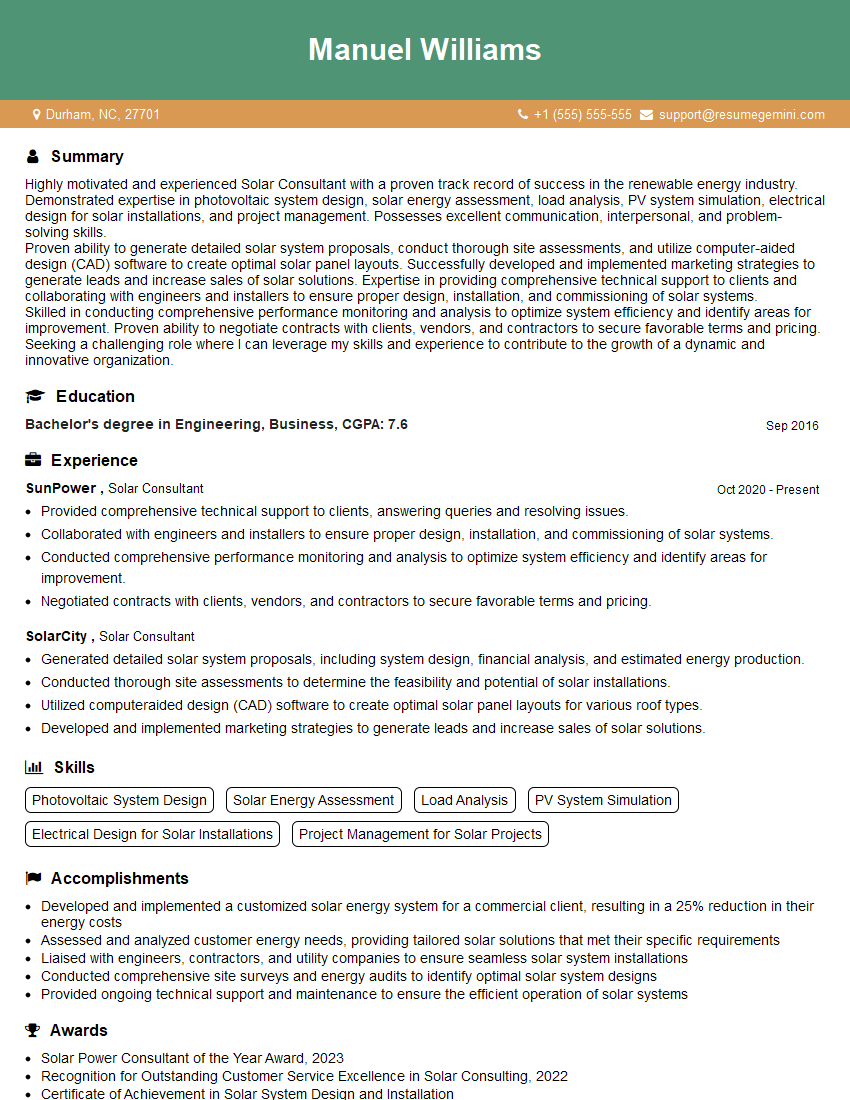
Solar Consultant Resume Sample

Solar System Designer Resume Sample
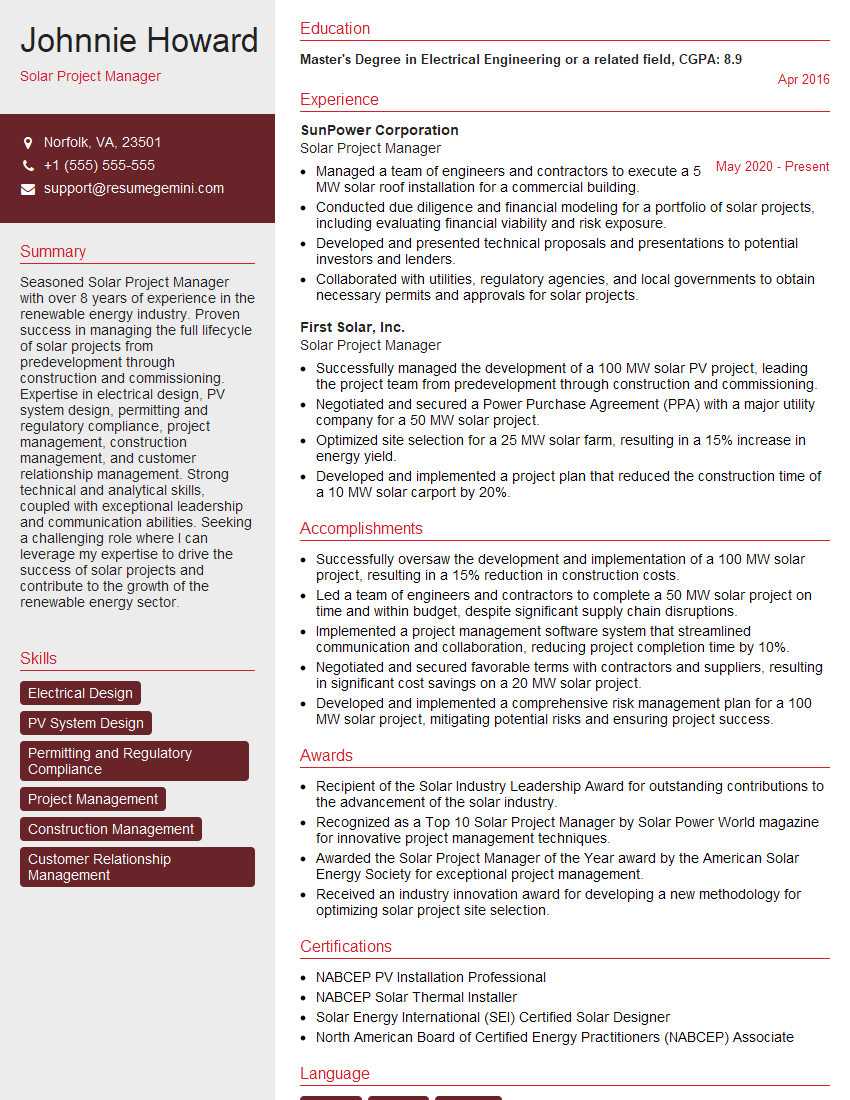
Solar Project Manager Resume Sample

Solar Energy Technician Resume Sample
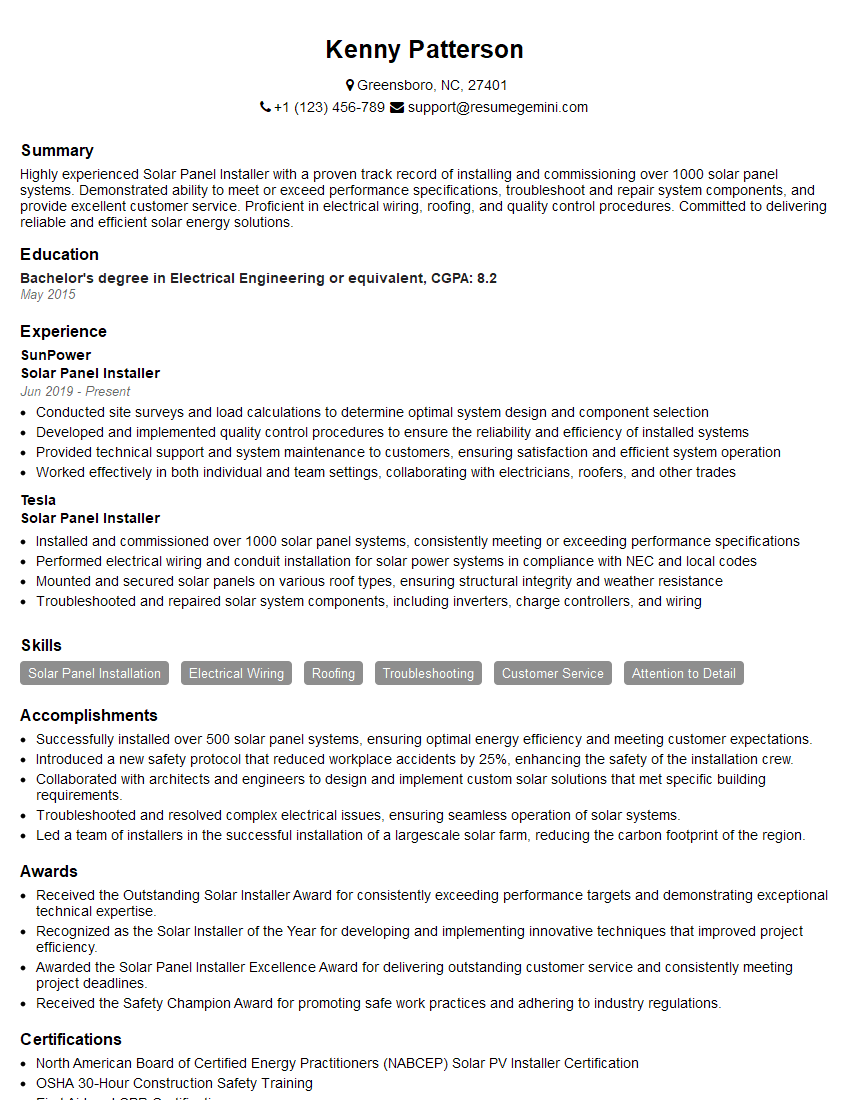
Solar Panel Installer Resume Sample
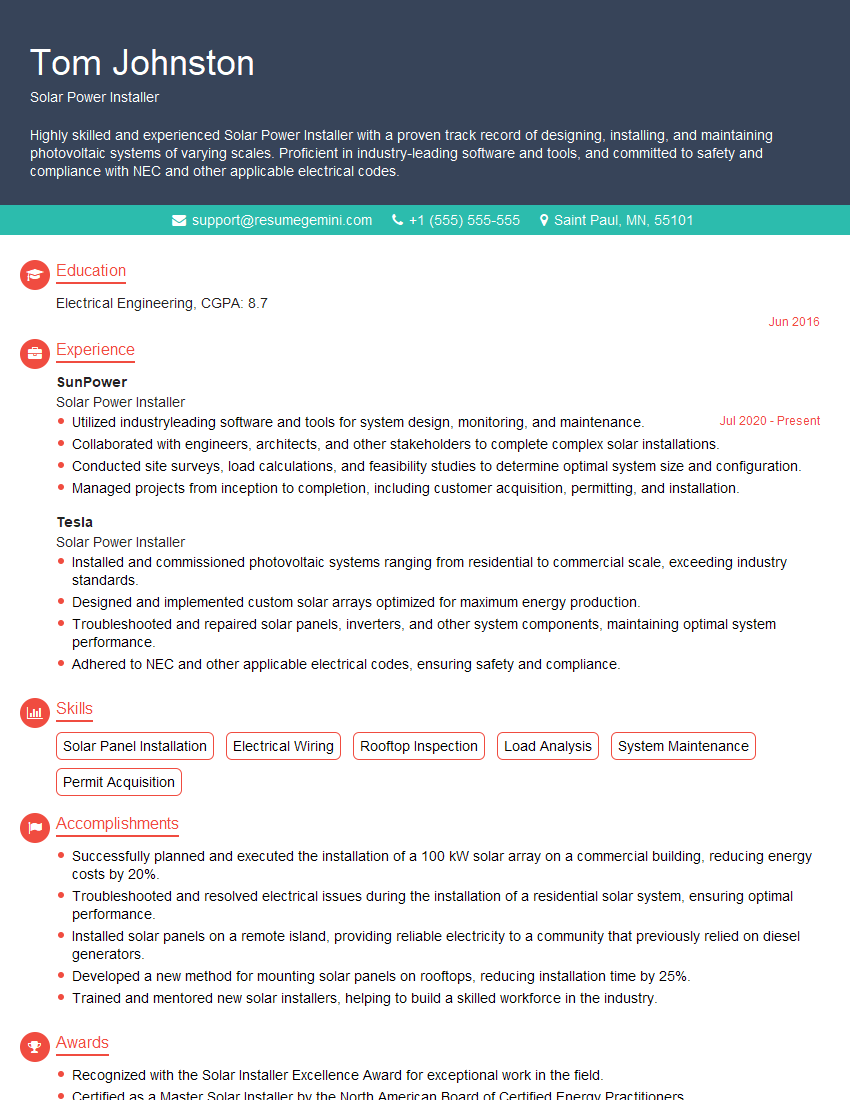
Solar Power Installer Resume Sample
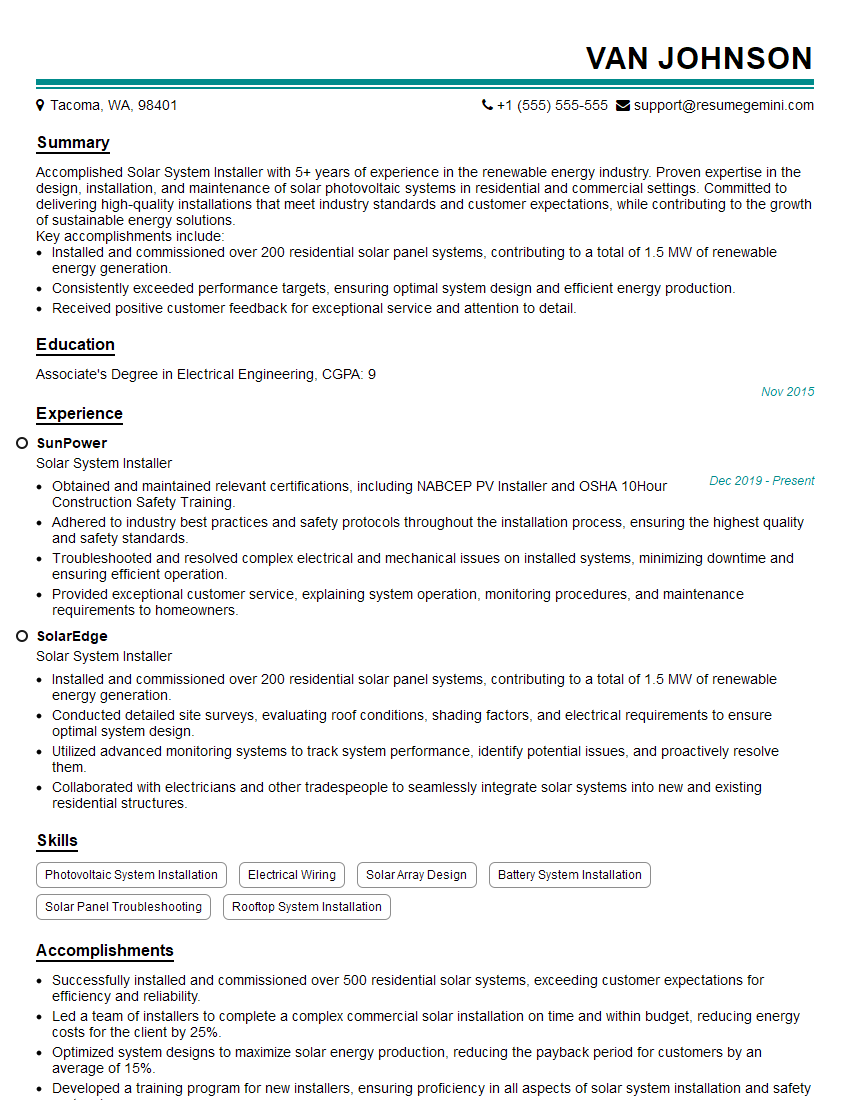
Solar System Installer Resume Sample
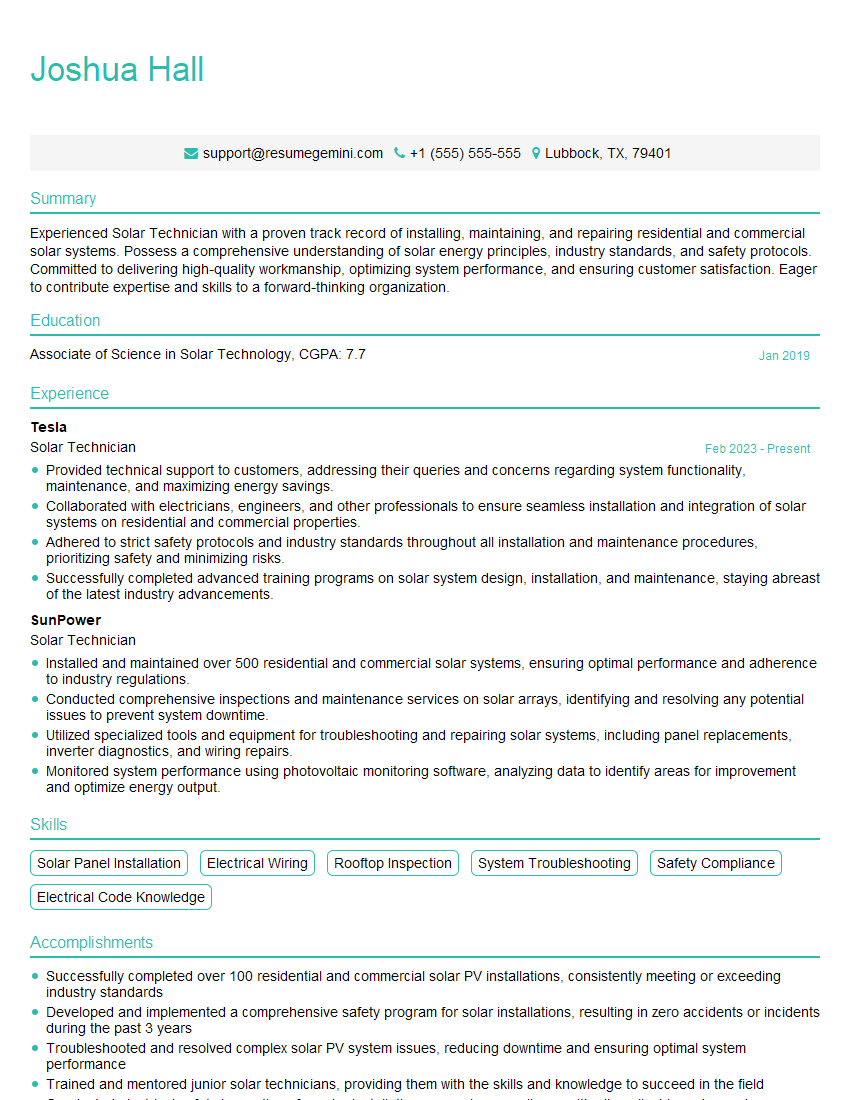
Solar Technician Resume Sample
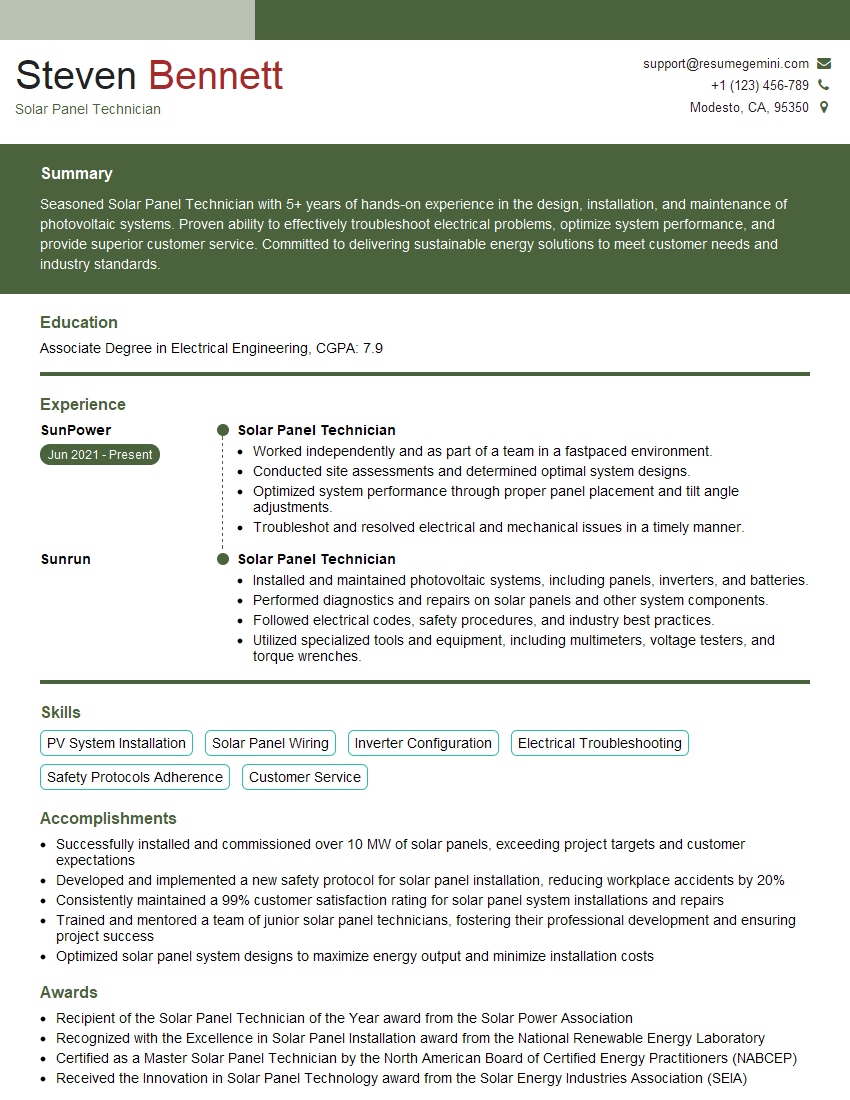
Solar Panel Technician Resume Sample
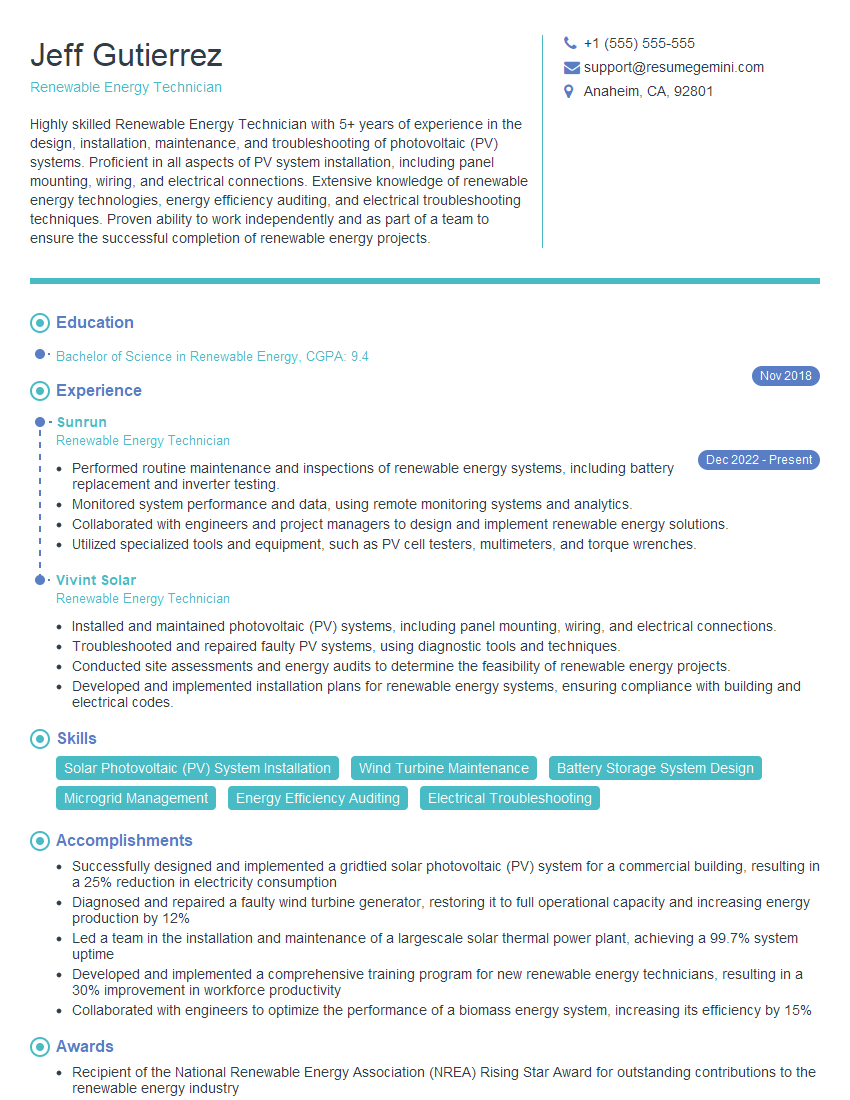
Renewable Energy Technician Resume Sample
Explore more articles
Users Rating of Our Blogs
Share Your Experience
We value your feedback! Please rate our content and share your thoughts (optional).
What Readers Say About Our Blog
To the interviewgemini.com Webmaster.
Very helpful and content specific questions to help prepare me for my interview!
Thank you
To the interviewgemini.com Webmaster.
This was kind of a unique content I found around the specialized skills. Very helpful questions and good detailed answers.
Very Helpful blog, thank you Interviewgemini team.