Interviews are opportunities to demonstrate your expertise, and this guide is here to help you shine. Explore the essential Sampling Design interview questions that employers frequently ask, paired with strategies for crafting responses that set you apart from the competition.
Questions Asked in Sampling Design Interview
Q 1. Explain the difference between probability and non-probability sampling.
The core difference between probability and non-probability sampling lies in how the sample is selected. In probability sampling, every member of the population has a known, non-zero chance of being selected. This allows for generalizations from the sample to the population. Think of it like a fair lottery – everyone has a ticket, and the winner is chosen randomly. Conversely, in non-probability sampling, the probability of selection is unknown. This limits the ability to generalize findings to the wider population. Imagine choosing raffle winners only from people who came early; it’s not a fair representation of all ticket holders.
Q 2. Describe different types of probability sampling (simple random, stratified, cluster, systematic).
Probability sampling offers several methods:
- Simple Random Sampling: Every member of the population has an equal chance of selection. Imagine drawing names out of a hat – each name has the same probability of being picked. This is straightforward but may not be efficient for diverse populations.
- Stratified Sampling: The population is divided into subgroups (strata) based on relevant characteristics (e.g., age, gender, income), and then random samples are taken from each stratum. This ensures representation from all subgroups, giving a more accurate picture of a varied population. For example, if studying consumer preferences, you’d want to ensure representation from different age groups and income levels.
- Cluster Sampling: The population is divided into clusters (e.g., geographic areas, schools), and then a random sample of clusters is selected. All members within the selected clusters are included in the sample. This is useful for large, geographically dispersed populations where it’s impractical to reach every individual. Think of surveying students in a large school district; you’d select a few schools randomly, then survey all students within those selected schools.
- Systematic Sampling: Every kth member of the population is selected after a random starting point. For instance, selecting every 10th person from a customer list. This is simpler than simple random sampling but can be problematic if there’s a pattern in the population that aligns with the sampling interval.
Q 3. What are the advantages and disadvantages of each probability sampling method?
Each probability sampling method has its own strengths and weaknesses:
- Simple Random Sampling: Advantages: Unbiased, easy to understand. Disadvantages: Can be inefficient and costly for large populations, may not represent all subgroups adequately.
- Stratified Sampling: Advantages: Ensures representation of all subgroups, increased precision. Disadvantages: Requires knowledge of population strata, can be complex to implement.
- Cluster Sampling: Advantages: Cost-effective for large populations, geographically dispersed samples. Disadvantages: Higher sampling error than simple random sampling, requires careful cluster selection.
- Systematic Sampling: Advantages: Simple to implement, can be more efficient than simple random sampling. Disadvantages: Prone to bias if there’s a pattern in the data that matches the sampling interval.
Q 4. Describe different types of non-probability sampling (convenience, purposive, snowball, quota).
Non-probability sampling methods include:
- Convenience Sampling: Selecting participants based on their accessibility and availability. This is easy but highly susceptible to bias. Think of surveying shoppers at a single mall – the sample will likely not be representative of all shoppers.
- Purposive Sampling: Selecting participants based on specific characteristics or criteria relevant to the research question. For example, interviewing experts in a particular field. While useful for gaining in-depth insights, it’s not generalizable.
- Snowball Sampling: Participants recruit other participants, useful for reaching hard-to-reach populations (e.g., individuals with rare diseases). This method can lead to bias due to self-selection.
- Quota Sampling: Similar to stratified sampling, but selection within strata is non-random. Researchers ensure a specific number of participants from each stratum. This approach is efficient but lacks the statistical rigor of probability sampling.
Q 5. When would you choose a non-probability sampling method over a probability sampling method?
Non-probability sampling is preferred over probability sampling when:
- Exploratory research: When the goal is to generate hypotheses or explore a topic rather than make population-level inferences.
- Qualitative research: When in-depth understanding is prioritized over generalizability.
- Resource constraints: Probability sampling can be expensive and time-consuming; non-probability methods may be more feasible when resources are limited.
- Hard-to-reach populations: Non-probability methods like snowball sampling can be useful in accessing populations that are difficult to identify or contact.
However, it’s crucial to acknowledge the limitations of non-probability sampling and avoid making broad generalizations based on the findings.
Q 6. How do you determine the appropriate sample size for a given study?
Determining the appropriate sample size depends on several factors:
- Population size: Larger populations generally require larger samples.
- Desired precision (margin of error): A smaller margin of error requires a larger sample size.
- Confidence level: A higher confidence level (e.g., 99% vs. 95%) requires a larger sample size.
- Expected variability in the population: Higher variability requires a larger sample size.
There are sample size calculators and statistical software (like G*Power) that can help determine the appropriate sample size based on these factors. It’s crucial to carefully consider these factors to ensure that the sample is large enough to provide reliable results without being unnecessarily large and costly.
Q 7. Explain the concept of sampling error and how it relates to sample size.
Sampling error is the difference between the sample statistic (e.g., sample mean) and the true population parameter (e.g., population mean). It’s inevitable when using a sample instead of the entire population. A larger sample size generally reduces sampling error because it leads to a sample statistic that is a more accurate representation of the population parameter. Think of it like this: if you’re estimating the average height of students in a school by measuring just a few, your estimate may be off significantly. But if you measure a larger number, your estimate will be closer to the true average height of all students.
The relationship between sample size and sampling error is inverse: as sample size increases, sampling error decreases. However, the reduction in error diminishes with increasingly large sample sizes; there’s a point of diminishing returns.
Q 8. What is the central limit theorem and its importance in sampling?
The Central Limit Theorem (CLT) is a cornerstone of statistical inference. It states that the distribution of the sample means (or averages) from a large number of independent random samples from any population with a finite mean and variance will approximate a normal distribution, regardless of the shape of the original population distribution. This approximation improves as the sample size increases.
Importance in Sampling: The CLT is crucial because it allows us to make inferences about a population using sample data, even if we don’t know the population’s distribution. For example, if we want to estimate the average height of adult women in a country, we can take many random samples, calculate the mean height for each, and the distribution of those sample means will be approximately normal. We can then use this normal distribution to construct confidence intervals and conduct hypothesis tests about the population mean height.
Imagine trying to weigh every grain of sand on a beach to find the average weight. The CLT allows us to take a smaller, representative sample of sand grains and, using the sample mean and standard deviation, accurately estimate the average weight of all the grains with a known degree of confidence.
Q 9. How do you address non-response bias in a survey?
Non-response bias occurs when the individuals who respond to a survey differ systematically from those who don’t. This leads to a sample that doesn’t accurately reflect the population. For example, a survey about political preferences might find that those who are highly engaged politically are more likely to respond, skewing the results.
Addressing this bias requires proactive strategies:
- Maximize response rates: Use incentives, shorter surveys, multiple contact methods (e.g., phone, email, mail), and clear communication about the survey’s purpose and importance.
- Weighting techniques: If you know characteristics of non-respondents (e.g., age, location), you can adjust the weights of respondents to better reflect the population. This involves assigning higher weights to respondents who represent underrepresented groups in your sample.
- Non-response analysis: Conduct a study to understand why people did not respond. If a specific demographic consistently doesn’t respond, you need to consider alternative sampling strategies in future studies to reach them. This can involve targeted outreach or the use of different sampling techniques.
- Imputation methods: Carefully consider using imputation (filling in missing data) only if you have strong justification and the method is suitable for your data and goals.
It’s important to acknowledge and discuss the potential limitations of non-response bias in your analysis, even if you take steps to minimize it.
Q 10. Explain the concept of sampling frame and its importance.
The sampling frame is a list or a description of the population from which you draw your sample. It’s essentially your master list of all eligible units. For example, if you want to survey students at a university, your sampling frame might be a student roster provided by the university’s registrar’s office. If you’re surveying businesses in a city, your sampling frame could be a list of businesses obtained from the chamber of commerce or the city’s business license database.
Importance: The quality of your sampling frame directly affects the representativeness and generalizability of your results. An incomplete or inaccurate sampling frame can lead to significant bias. If your sampling frame excludes a large portion of the population, your sample will not be representative, and any conclusions drawn will be unreliable. For instance, using only landline phone numbers to sample households excludes those who only use cell phones, leading to an underrepresentation of younger demographics.
Q 11. How do you handle missing data in a sample?
Missing data is a common challenge in sampling. Several strategies exist, each with its strengths and weaknesses:
- Listwise deletion: Removing entire cases with missing data. Simple, but can significantly reduce sample size and introduce bias if data is not missing completely at random (MCAR).
- Pairwise deletion: Using all available data for each analysis, meaning different variables may have different sample sizes. Can lead to inconsistencies and biased results if the data is not MCAR.
- Imputation: Replacing missing values with estimated values. Methods include mean imputation (replacing with the average), regression imputation (using a regression model to predict missing values), or multiple imputation (generating multiple plausible values for each missing data point).
The best approach depends on the nature of the missing data, the amount of missing data, and the research question. A thorough understanding of the reasons behind missing data is crucial for selecting the appropriate method. If missing data is not random (e.g., people with low incomes are less likely to complete a survey), imputation might not fully resolve the bias.
Q 12. What are some common challenges in sampling design?
Common challenges in sampling design include:
- Defining the population: Clearly and precisely defining the target population is crucial. Ambiguity can lead to sampling errors.
- Access to the sampling frame: Obtaining a complete and accurate sampling frame can be difficult and expensive. Incomplete frames lead to undercoverage bias.
- Sampling bias: Various biases can creep in if the sampling method is not carefully designed. This includes selection bias (systematic exclusion of certain groups) and non-response bias (discussed earlier).
- Sample size determination: Determining the appropriate sample size to achieve desired precision and confidence levels requires careful consideration of statistical power and resources.
- Cost and time constraints: Sampling can be expensive and time-consuming. Balancing cost-effectiveness with the need for a representative sample is a crucial challenge.
- Maintaining confidentiality and anonymity: Ensuring the privacy of respondents is crucial, especially in sensitive surveys.
Q 13. How do you ensure the representativeness of your sample?
Ensuring sample representativeness is paramount. Key strategies include:
- Probability sampling: Employing probability sampling methods like simple random sampling, stratified sampling, cluster sampling, or systematic sampling guarantees every member of the population has a known, non-zero chance of selection. This reduces the risk of systematic bias.
- Stratification: Dividing the population into relevant strata (e.g., age groups, geographic regions) and then sampling from each stratum proportionally ensures that subgroups are adequately represented in the sample.
- Careful sample design: Choosing the appropriate sampling method based on the research question, resources, and characteristics of the population. This might involve multi-stage sampling for geographically dispersed populations or weighting techniques to adjust for unequal probabilities of selection.
- Pilot testing: Conducting a small-scale pilot study to identify and address potential problems before launching the main survey.
- Monitoring and adjusting: Throughout the sampling process, monitor progress and address any emerging biases or challenges.
Remember that perfect representativeness is often unattainable. The goal is to minimize bias and obtain a sample that reasonably reflects the key characteristics of the population.
Q 14. Describe different methods for estimating population parameters from a sample.
Several methods estimate population parameters from a sample:
- Point estimation: Calculating a single value (e.g., sample mean, sample proportion) to estimate the population parameter. For example, the sample mean is a point estimate of the population mean.
- Interval estimation: Constructing a range of values (confidence interval) that is likely to contain the population parameter with a specified level of confidence. This accounts for sampling variability.
- Hypothesis testing: Formulating a hypothesis about a population parameter and using sample data to test the validity of that hypothesis. This involves calculating a test statistic and comparing it to a critical value.
- Regression analysis: When exploring relationships between variables, regression analysis uses sample data to estimate population regression parameters.
The choice of method depends on the research question, the type of data, and the desired level of precision. For example, if you are interested in estimating the average income of a city’s residents, you might use point estimation and interval estimation with a confidence interval to express the uncertainty in the estimate.
Q 15. Explain the concept of confidence intervals and margin of error.
Imagine you’re trying to guess the average height of all students in a large university. You can’t measure everyone, so you take a sample. A confidence interval gives you a range of values within which you’re fairly certain the true average height lies. The margin of error is half the width of that range. For example, you might find a 95% confidence interval of 5’6″ to 5’8″, with a margin of error of 1 inch. This means you’re 95% confident the true average height falls somewhere between 5’6″ and 5’8″. The higher the confidence level (e.g., 99% instead of 95%), the wider the interval and larger the margin of error; conversely, a larger sample size will result in a narrower interval and smaller margin of error. The margin of error quantifies the uncertainty inherent in estimating a population parameter from a sample.
Career Expert Tips:
- Ace those interviews! Prepare effectively by reviewing the Top 50 Most Common Interview Questions on ResumeGemini.
- Navigate your job search with confidence! Explore a wide range of Career Tips on ResumeGemini. Learn about common challenges and recommendations to overcome them.
- Craft the perfect resume! Master the Art of Resume Writing with ResumeGemini’s guide. Showcase your unique qualifications and achievements effectively.
- Don’t miss out on holiday savings! Build your dream resume with ResumeGemini’s ATS optimized templates.
Q 16. What is a sampling distribution?
A sampling distribution isn’t a distribution of your sample data itself. Instead, imagine you repeatedly take many samples of the same size from a population, and for each sample, you calculate a statistic (e.g., the mean). The sampling distribution is the distribution of all these calculated statistics. It shows how much these sample statistics vary from each other and from the true population parameter. It’s crucial because it allows us to make inferences about the population based on a single sample. For example, the Central Limit Theorem tells us that the sampling distribution of the mean will be approximately normal, regardless of the population distribution’s shape, as long as the sample size is sufficiently large. This normality is essential for many statistical tests.
Q 17. How do you choose the appropriate statistical test for analyzing sample data?
Choosing the right statistical test depends on several factors: the type of data (categorical or numerical), the number of groups being compared, and the research question.
- For comparing means: If you have one group, use a one-sample t-test; for two independent groups, use an independent samples t-test; for two dependent groups (e.g., before-and-after measurements), use a paired samples t-test; for more than two groups, use ANOVA.
- For comparing proportions or frequencies: Use a chi-squared test for independence or a z-test for proportions.
- For correlation: Use Pearson’s correlation for continuous data and Spearman’s rank correlation for ordinal data.
The choice also depends on assumptions like normality of data. Violations of assumptions might necessitate non-parametric alternatives (e.g., Mann-Whitney U test instead of an independent samples t-test if normality is violated).
Consider a study comparing the effectiveness of three different drugs. ANOVA would be appropriate if the outcome is a continuous variable (e.g., blood pressure), while a chi-squared test would be suitable if the outcome is categorical (e.g., improvement vs. no improvement).
Q 18. Explain the difference between stratified and cluster sampling.
Both stratified sampling and cluster sampling are probability sampling techniques designed to improve efficiency or representation, but they achieve this differently.
- Stratified sampling: The population is divided into subgroups (strata) based on relevant characteristics (e.g., age, gender, income). A random sample is then taken from each stratum. This ensures representation from all strata and reduces sampling error, especially if strata differ significantly. For instance, in a survey about voting preferences, stratifying by age groups would give a more accurate representation than simple random sampling if age significantly influences voting patterns.
- Cluster sampling: The population is divided into clusters (e.g., geographic areas, schools), and then a random sample of clusters is selected. All individuals within the selected clusters are included in the sample. This is cost-effective when it’s expensive or impractical to sample individuals across a wide geographical area. Imagine surveying households across a large city. Cluster sampling, selecting certain neighborhoods randomly and surveying all houses in those neighborhoods, is far more efficient than trying to randomly select houses across the entire city.
The key difference lies in the sampling unit: in stratified sampling, the sampling unit is an individual from each stratum, while in cluster sampling, the sampling unit is a cluster.
Q 19. How do you deal with outliers in your sample?
Outliers are data points that significantly deviate from the rest of the data. Dealing with them requires careful consideration. Simply removing them is generally not recommended without a justifiable reason.
- Investigation: First, identify why the outlier exists. Is it a data entry error? Is it a truly unusual observation within the population? If it’s an error, correct or remove it. If it’s a genuine observation, consider its impact on the analysis.
- Robust methods: Use statistical methods less sensitive to outliers. For example, the median is more robust to outliers than the mean. Non-parametric tests are often less sensitive than their parametric counterparts.
- Transformation: Transforming the data (e.g., using a logarithmic transformation) can sometimes reduce the influence of outliers.
- Reporting: Always report the presence of outliers and how they were handled. Transparency is crucial.
For instance, if you’re analyzing income data and find a few individuals with exceptionally high incomes, these might be outliers. Before removing them, investigate whether they are valid data points representing the population or errors. If genuine, you may choose to report your analysis with and without these values to assess their impact.
Q 20. What are the ethical considerations in sampling design?
Ethical considerations in sampling design are paramount. They focus on ensuring fairness, honesty, and respect for participants.
- Informed consent: Participants must understand the study’s purpose, procedures, and potential risks before participating.
- Confidentiality and anonymity: Protecting the privacy of participants is vital. Data should be anonymized whenever possible, and appropriate measures taken to prevent identification of individuals.
- Avoiding bias: The sampling method must be chosen to minimize bias and ensure a representative sample. This includes avoiding selection bias, non-response bias, and other forms of systematic error.
- Transparency and reporting: The sampling method, sample size, and any limitations should be clearly reported.
For instance, a biased sample could lead to inaccurate conclusions, and concealing the sampling method reduces transparency and trustworthiness. Ensuring diverse representation within a sample avoids discriminatory outcomes.
Q 21. How do you use software (e.g., R, SAS, SPSS) for sampling and analysis?
Software like R, SAS, and SPSS are invaluable tools for sampling and analysis. They provide functions for generating random samples, implementing various sampling methods, and performing statistical analyses.
- R:
sample()function for random sampling; various packages for stratified, cluster, and other sampling techniques; extensive statistical testing capabilities. - SAS: PROC SURVEYSELECT for complex survey sampling; powerful statistical procedures for analysis.
- SPSS: Similar capabilities to SAS, with user-friendly interface.
For example, in R, you could generate a simple random sample of 100 observations from a data frame called mydata using:
sample_data <- mydata[sample(nrow(mydata), 100), ]These software packages automate many complex tasks, enhancing efficiency and accuracy in sampling and analysis. They also enable visualization of the data and results, leading to better understanding and communication of findings.
Q 22. Describe your experience with different sampling software packages.
Throughout my career, I’ve worked extensively with various sampling software packages, adapting my choices to the specific needs of each project. My experience spans both commercial and open-source options. For instance, I’ve used R with packages like survey and sampling for complex sample designs, including stratified, clustered, and multi-stage sampling. These packages offer powerful tools for weight calculation, variance estimation, and analysis of complex survey data. I’m also proficient in SAS, particularly its procedures for survey data analysis. SAS provides a robust environment for handling large datasets and incorporates advanced statistical methods. For simpler designs or quick analysis, I’ve utilized SPSS, leveraging its user-friendly interface and built-in sampling capabilities. Finally, I’ve worked with specialized software like Qualtrics, which integrates survey design with sampling tools, streamlining the process from questionnaire creation to data collection and analysis. The choice of software always depends on project scale, complexity, and the specific requirements of the analysis.
Q 23. Explain your experience with power analysis in determining sample size.
Power analysis is crucial for determining the appropriate sample size before starting any research. It ensures that the study has sufficient statistical power to detect a meaningful effect if it exists. I approach power analysis by first clearly defining the research question and hypotheses. Then, I determine the effect size – the magnitude of the difference or relationship I expect to observe. This often involves reviewing literature or using prior data to establish a realistic expectation. Next, I select the significance level (alpha), typically 0.05, and the desired statistical power (often 80% or higher). Finally, using statistical software like G*Power or the power analysis functions within R or SAS, I calculate the necessary sample size. For instance, in a study comparing the means of two groups, I would input the expected difference in means, the standard deviation, alpha, and power to obtain the required sample size for each group. Ignoring power analysis can lead to underpowered studies, where true effects might be missed, or overpowered studies, leading to unnecessary expenses and ethical concerns.
Q 24. How do you validate the accuracy and reliability of your sampling methods?
Validating the accuracy and reliability of sampling methods is paramount. I employ a multi-faceted approach. First, I meticulously review the sampling frame—the list from which the sample is drawn—to ensure it’s complete, up-to-date, and representative of the target population. Any biases present in the frame will directly affect the sample’s representativeness. Second, I assess the sampling procedure itself. For probability samples, I check for random selection and appropriate weighting strategies to compensate for unequal probabilities of selection. For non-probability samples, I acknowledge the limitations in generalizability and carefully consider the implications for inference. Third, I assess the sampling error—the variability inherent in any sample—through statistical methods, calculating confidence intervals around key estimates. Fourth, I compare the sample characteristics to known population characteristics, identifying any significant discrepancies that might indicate bias. This can involve calculating summary statistics for the sample and comparing them to population parameters. Finally, I document all stages of the sampling process, including the rationale behind decisions made, to ensure transparency and replicability.
Q 25. Describe a time you had to adjust your sampling strategy due to unexpected challenges.
In a recent study on consumer preferences, we initially planned a simple random sample of online users. However, we quickly encountered a significant challenge: extremely low response rates from our target demographic. This threatened to bias our results and render our findings unreliable. To address this, we adapted our strategy by incorporating a mixed-methods approach. We augmented our online survey with focus groups and in-depth interviews, which provided richer qualitative data to complement the quantitative findings. Furthermore, we implemented a stratified sampling approach within our online survey, focusing on key demographic segments that exhibited lower response rates. We also redesigned the survey to be more concise and engaging. This adjustment, while requiring more time and resources, yielded a more representative and insightful dataset, leading to more robust conclusions. It highlighted the importance of flexibility and adaptability when designing and executing sampling strategies.
Q 26. What are some advanced sampling techniques you are familiar with?
Beyond basic random sampling techniques, I’m experienced with several advanced methods. These include:
- Network sampling: Used when the population of interest is connected through a network (social networks, supply chains). It helps to efficiently reach hard-to-access populations.
- Adaptive sampling: Modifies the sampling strategy during data collection based on initial findings. This is useful when some parts of the population are harder to reach or contain more valuable information.
- Imputation methods: Used to handle missing data by filling in plausible values. This ensures that analyses can be conducted on a more complete dataset.
- Two-phase sampling: A cost-effective method where an initial large sample is screened, and a smaller subsample is selected for more detailed data collection.
- Bayesian sampling: Incorporates prior information about the population into the sampling process, resulting in more efficient estimators, particularly useful when data is scarce.
Q 27. Explain your understanding of design effects in complex sample designs.
Design effects are crucial in complex sample designs because they account for the impact of stratification, clustering, or weighting on the variance of estimators. In simple random sampling, the variance is easily calculated. However, when you introduce clustering (e.g., sampling households within neighborhoods) or stratification (e.g., sampling from different age groups), the variance increases. The design effect is the ratio of the variance of an estimator from a complex sample to the variance of the same estimator from a simple random sample of the same size. A design effect greater than 1 indicates increased variance, implying that a larger sample size might be needed to achieve the same level of precision. Understanding design effects is vital for accurate estimation of standard errors and confidence intervals. For example, neglecting the design effect in a clustered sample could lead to overly optimistic precision estimates, resulting in inaccurate conclusions. Software packages like R’s survey package help account for design effects in variance calculations during analysis.
Q 28. How do you communicate complex statistical concepts to a non-technical audience?
Communicating complex statistical concepts to a non-technical audience requires clear, concise language and relatable analogies. I avoid jargon and technical terms whenever possible, explaining concepts using everyday examples. For instance, instead of talking about ‘sampling error,’ I might explain it as the ‘margin of error’ in a poll. Visual aids like charts and graphs are also invaluable tools for simplifying complex data. I often use storytelling, weaving the statistical analysis into a narrative that resonates with the audience. If a specific technical term is unavoidable, I define it simply and provide a clear, illustrative example. Focusing on the ‘so what?’—the practical implications and relevance of the findings—is crucial to maintain audience engagement and ensure that the message is understood and appreciated. I tailor my communication style to the specific audience, ensuring the level of detail and technical language is appropriate for their understanding.
Key Topics to Learn for Sampling Design Interview
- Types of Sampling: Understand the differences between probability (simple random, stratified, cluster, systematic) and non-probability (convenience, quota, snowball) sampling methods. Consider the strengths and weaknesses of each in various contexts.
- Sample Size Determination: Learn how to calculate appropriate sample sizes based on factors like desired precision, confidence level, and population variability. Practice applying different formulas and understanding their assumptions.
- Sampling Bias and Error: Explore the various sources of bias that can affect the accuracy of your sample and understand how to minimize them. Learn to differentiate between sampling error and non-sampling error.
- Stratification and Clustering: Master the techniques of stratified and cluster sampling, including how to define strata and clusters effectively to enhance precision and reduce costs.
- Practical Applications: Familiarize yourself with real-world applications of sampling design in market research, quality control, public health, and other relevant fields. Be prepared to discuss specific examples.
- Sampling Frameworks and Data Collection: Understand the importance of a well-defined sampling frame and different data collection methods (e.g., surveys, interviews, observations) and their impact on the sampling process.
- Analysis and Interpretation: Know how to analyze data collected from a sample, taking into account the sampling method used, and correctly interpret the results, including limitations.
- Advanced Topics (for senior roles): Explore more advanced concepts such as multi-stage sampling, adaptive sampling, and the use of statistical software for sample design and analysis.
Next Steps
Mastering sampling design is crucial for career advancement in various fields requiring data-driven decision-making. A strong understanding of these concepts demonstrates valuable analytical skills and problem-solving abilities highly sought after by employers. To increase your job prospects, focus on building an ATS-friendly resume that clearly highlights your expertise in sampling design. ResumeGemini is a trusted resource that can help you craft a professional and impactful resume. We provide examples of resumes tailored to Sampling Design to help you showcase your skills effectively.

Market Research Manager Resume Sample

Director of Research Resume Sample
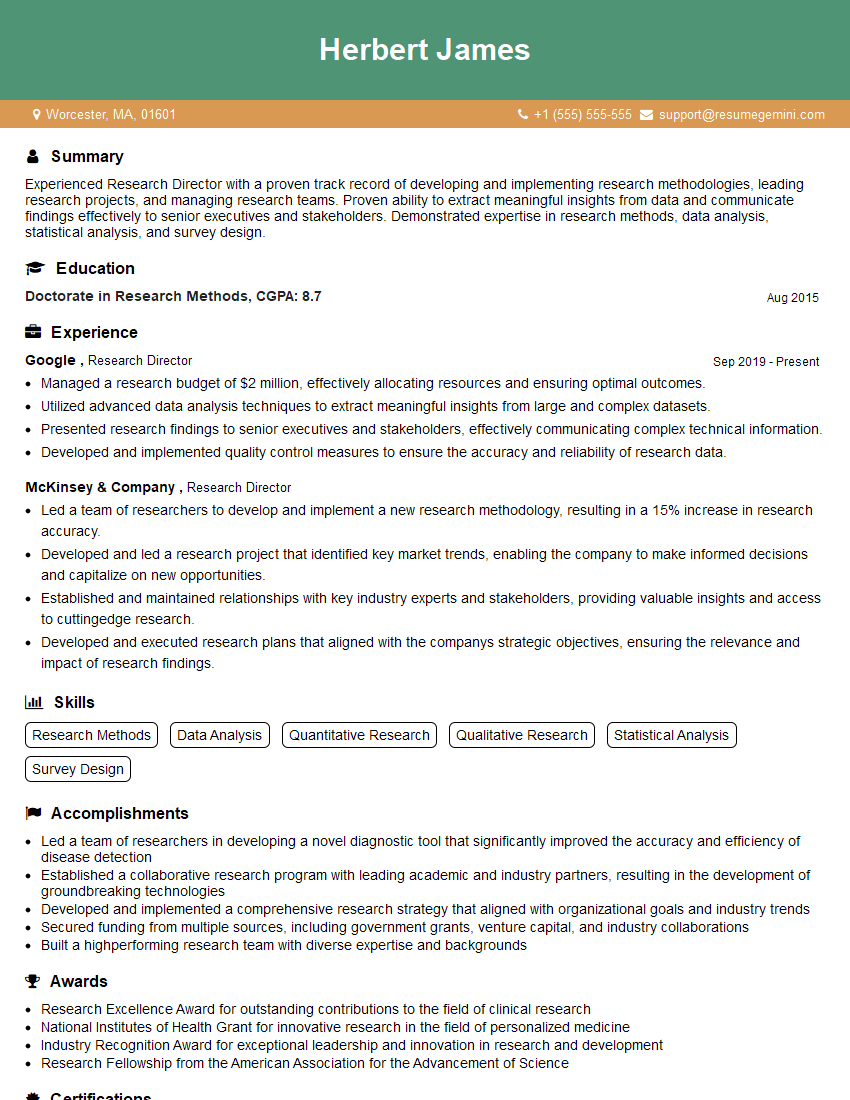
Research Director Resume Sample
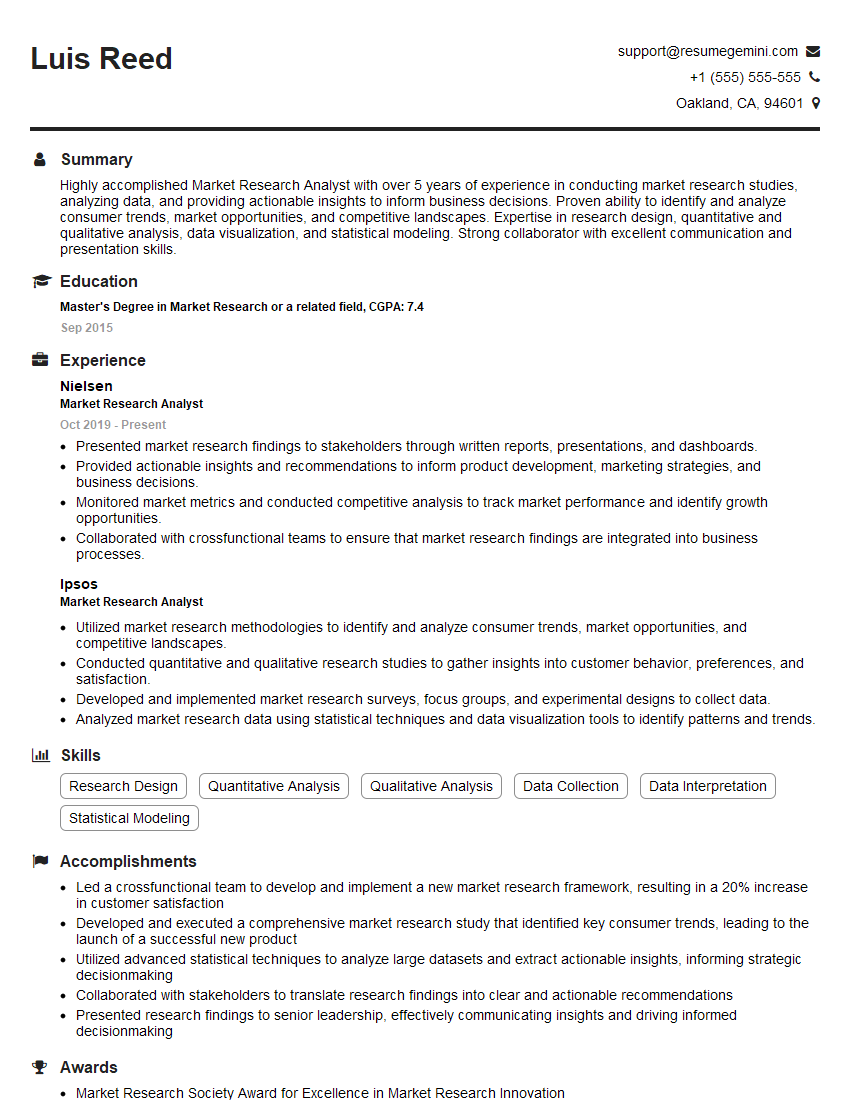
Market Research Analyst Resume Sample
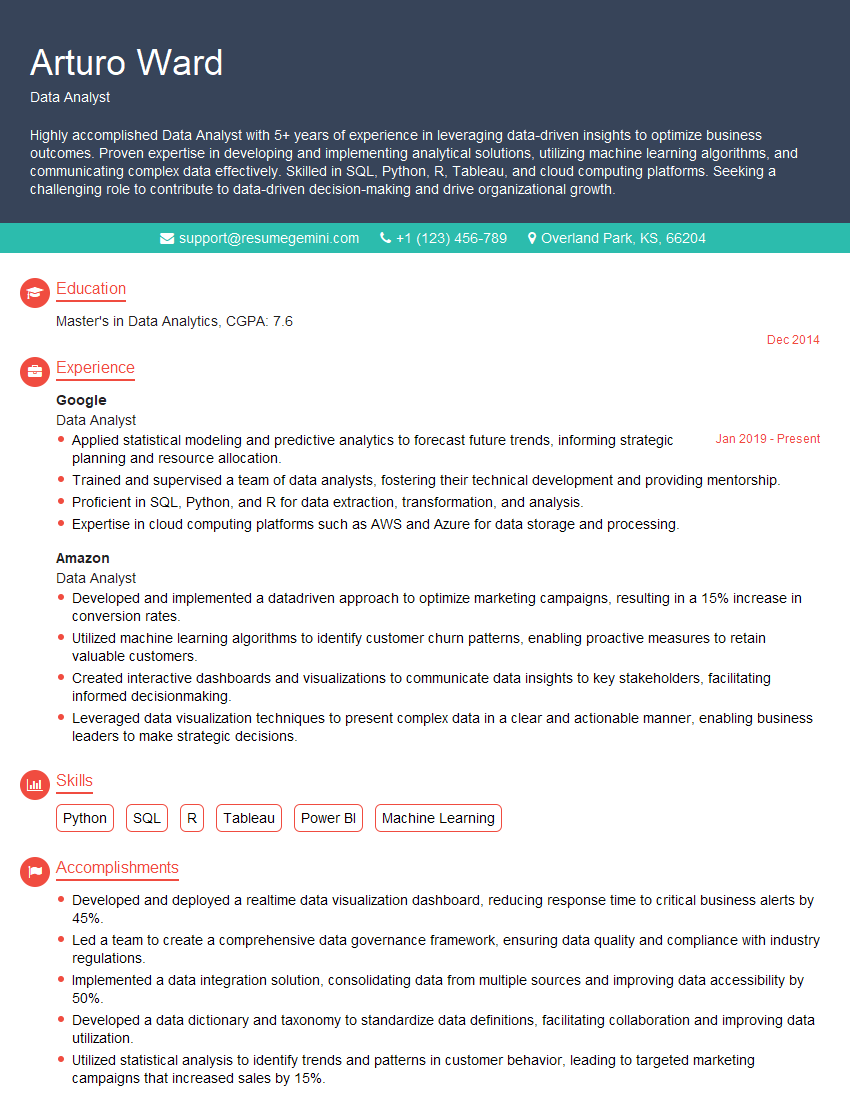
Data Analyst Resume Sample

Quantitative Analyst Resume Sample
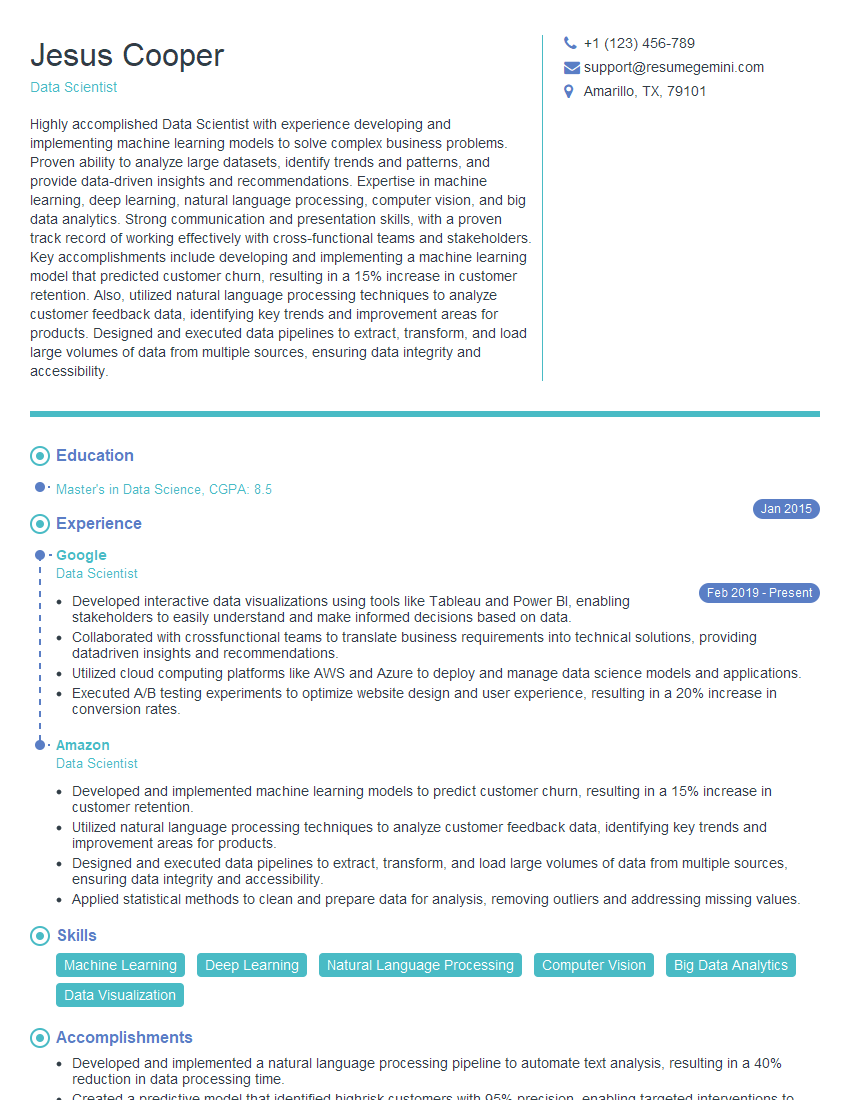
Data Scientist Resume Sample
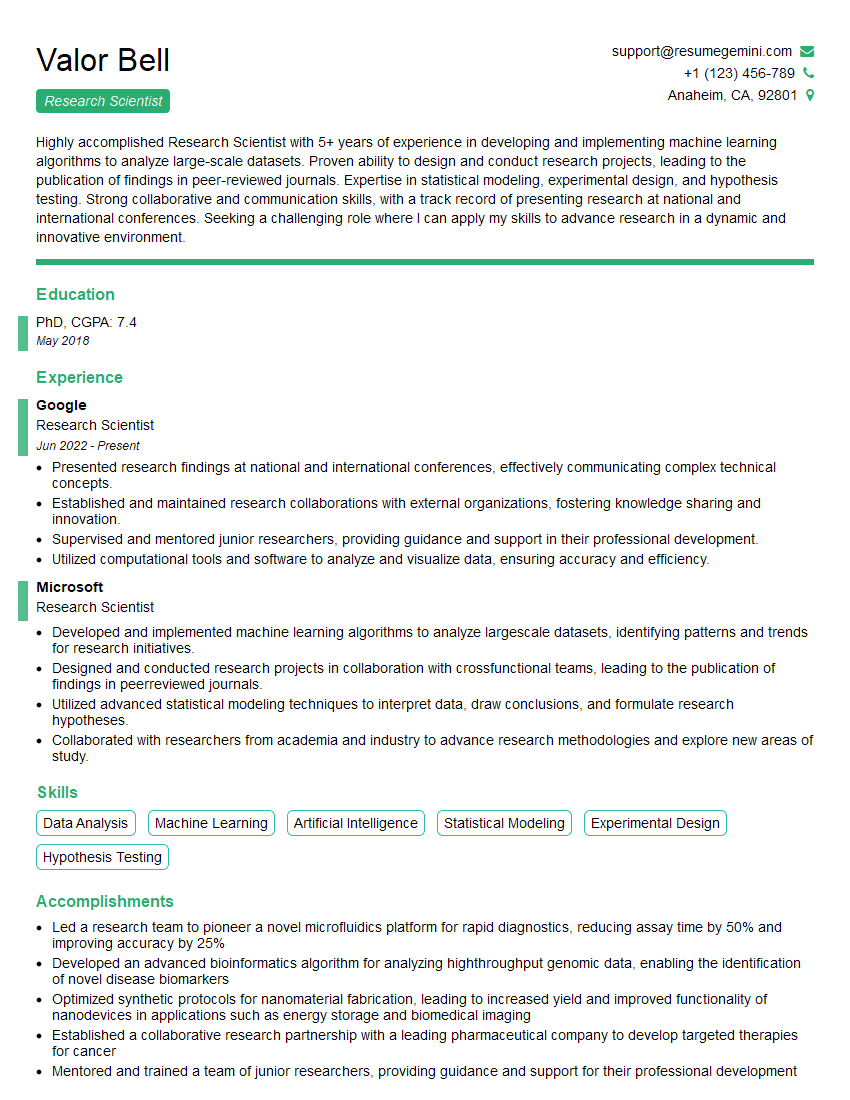
Research Scientist Resume Sample

Actuary Resume Sample

Operations Research Analyst Resume Sample
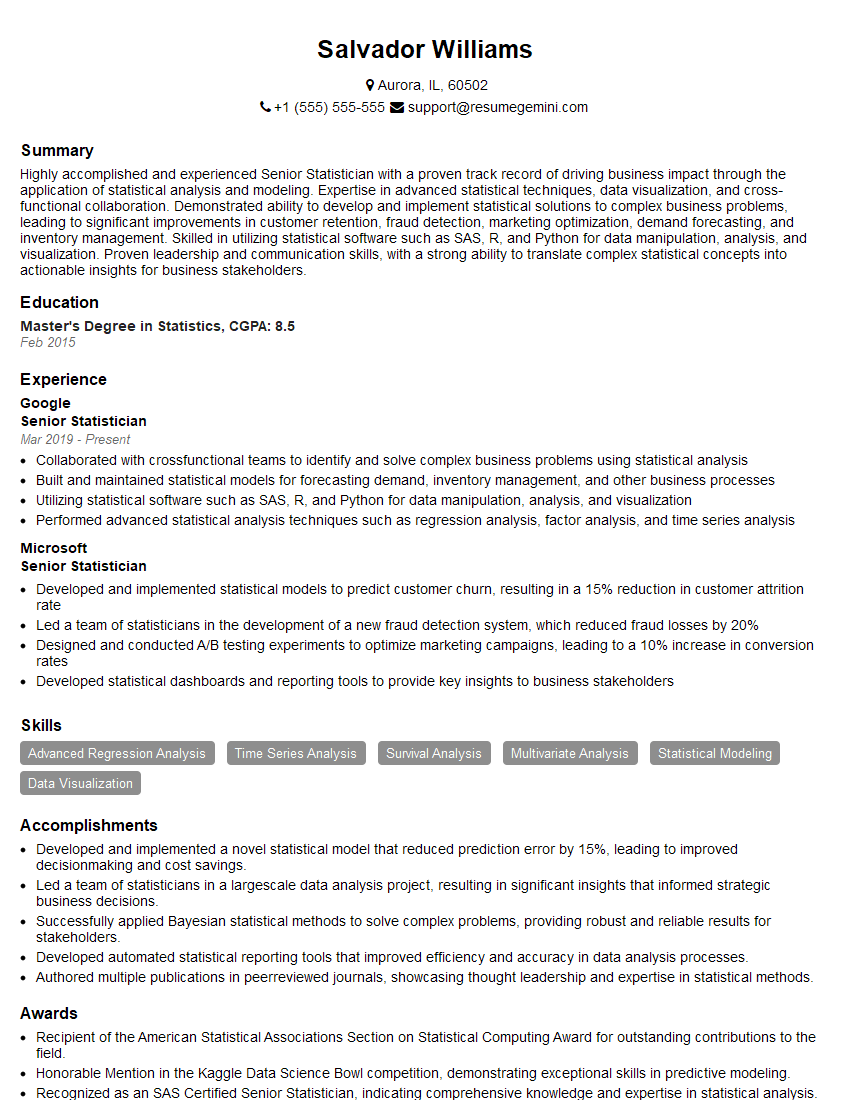
Senior Statistician Resume Sample
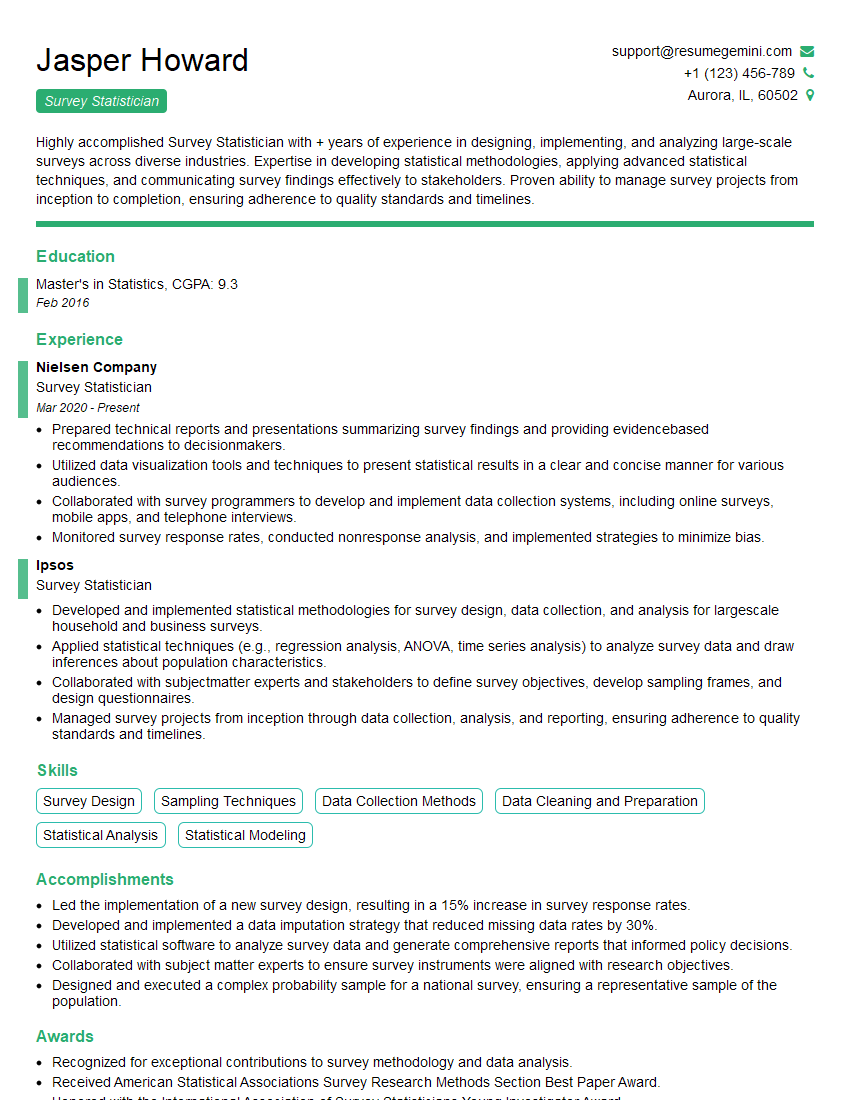
Survey Statistician Resume Sample
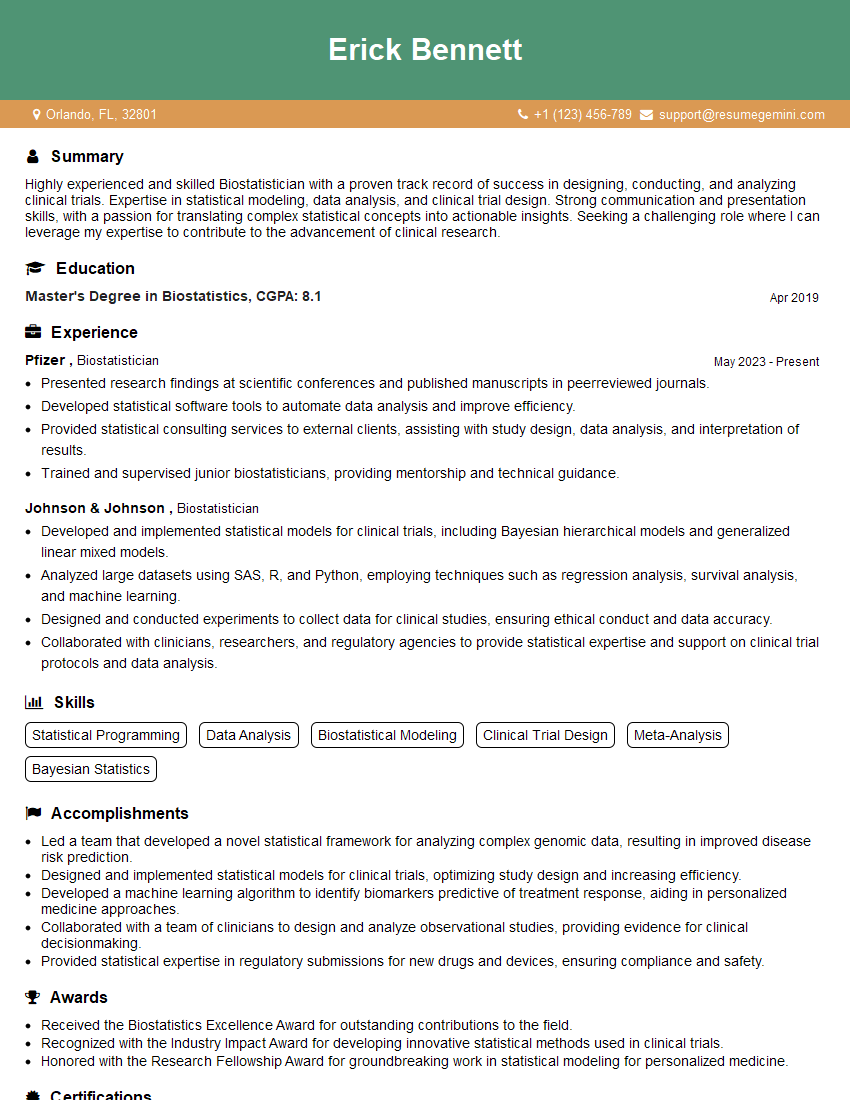
Biostatistician Resume Sample
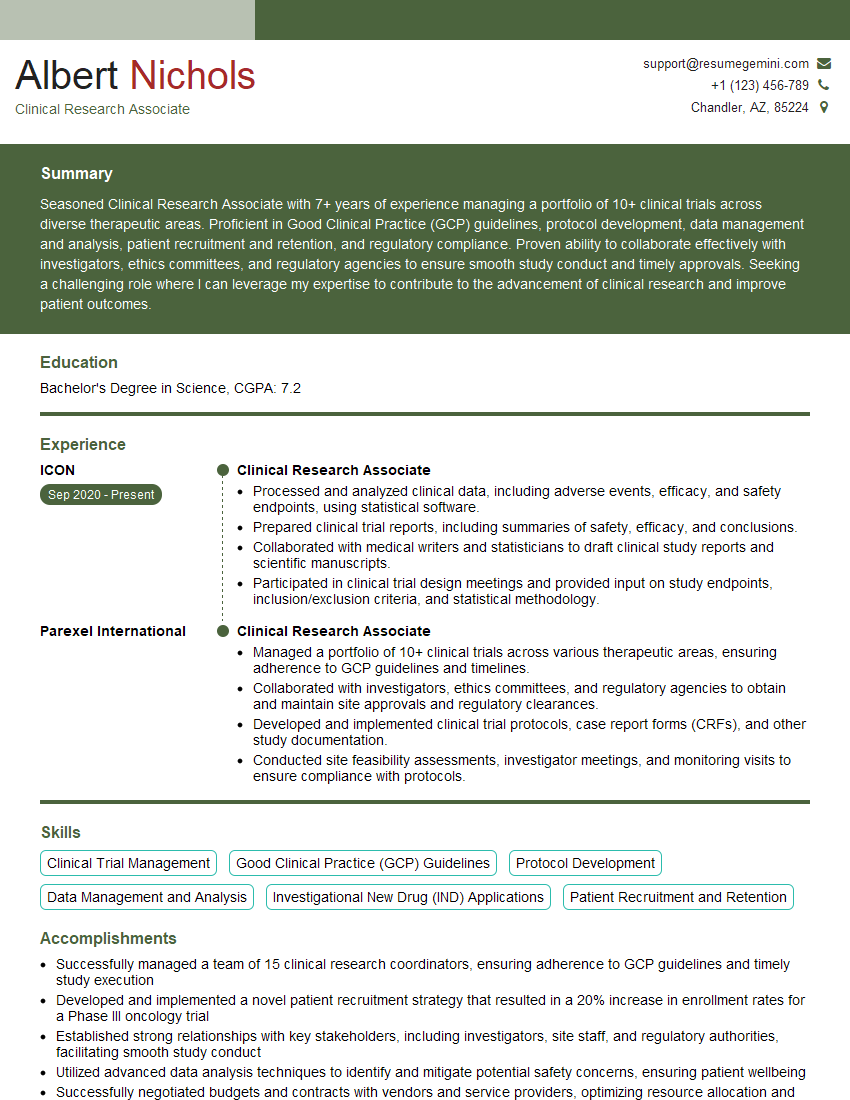
Clinical Research Associate Resume Sample
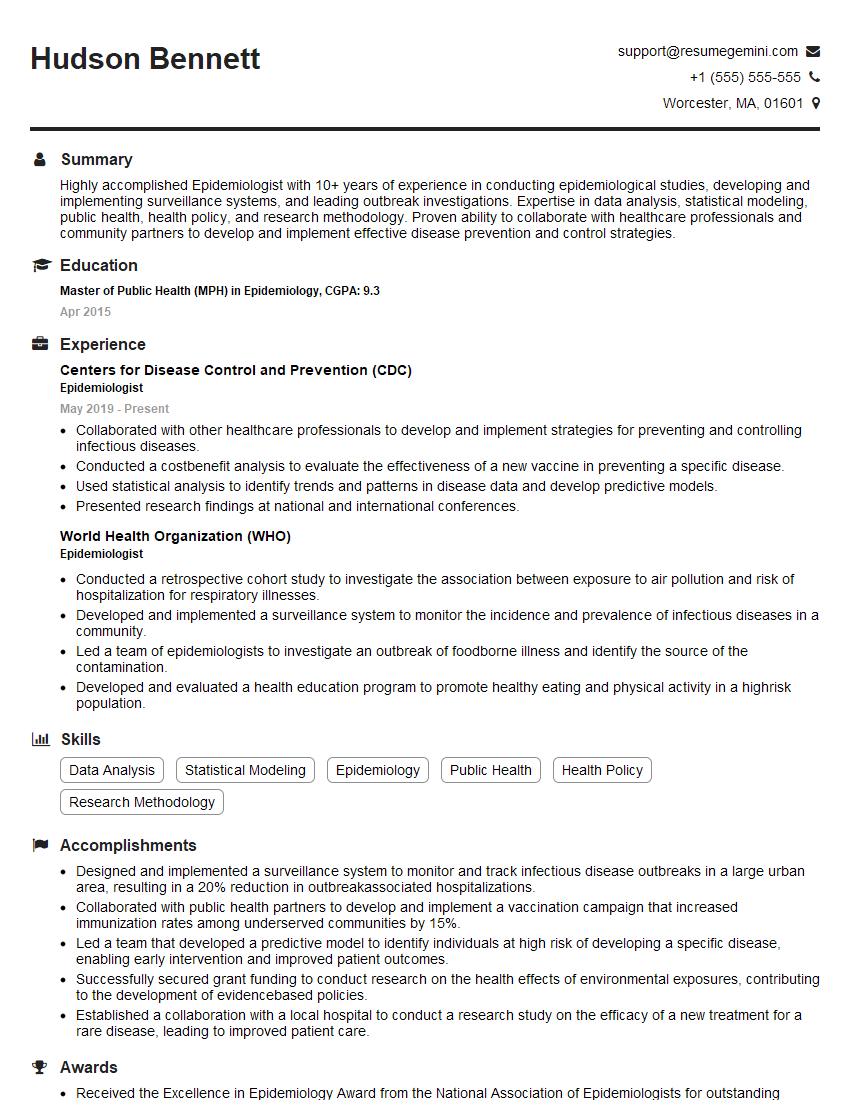
Epidemiologist Resume Sample

Principal Investigator Resume Sample
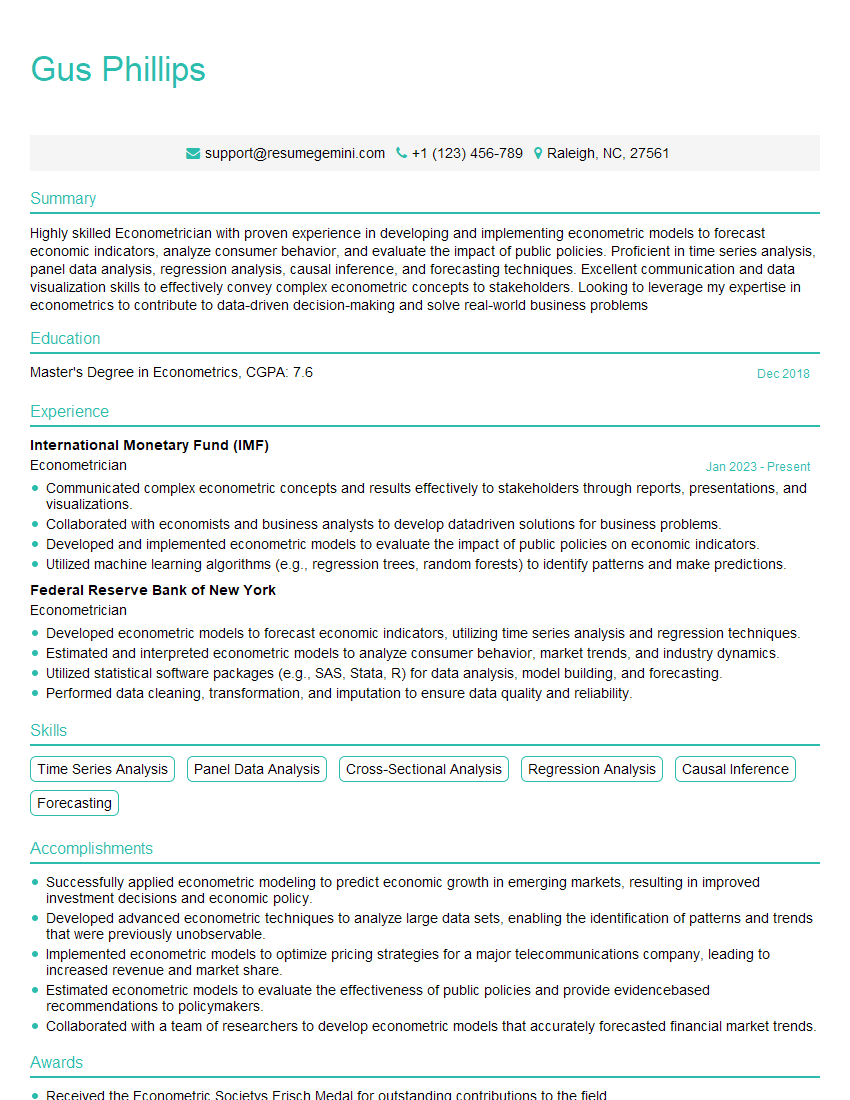
Econometrician Resume Sample
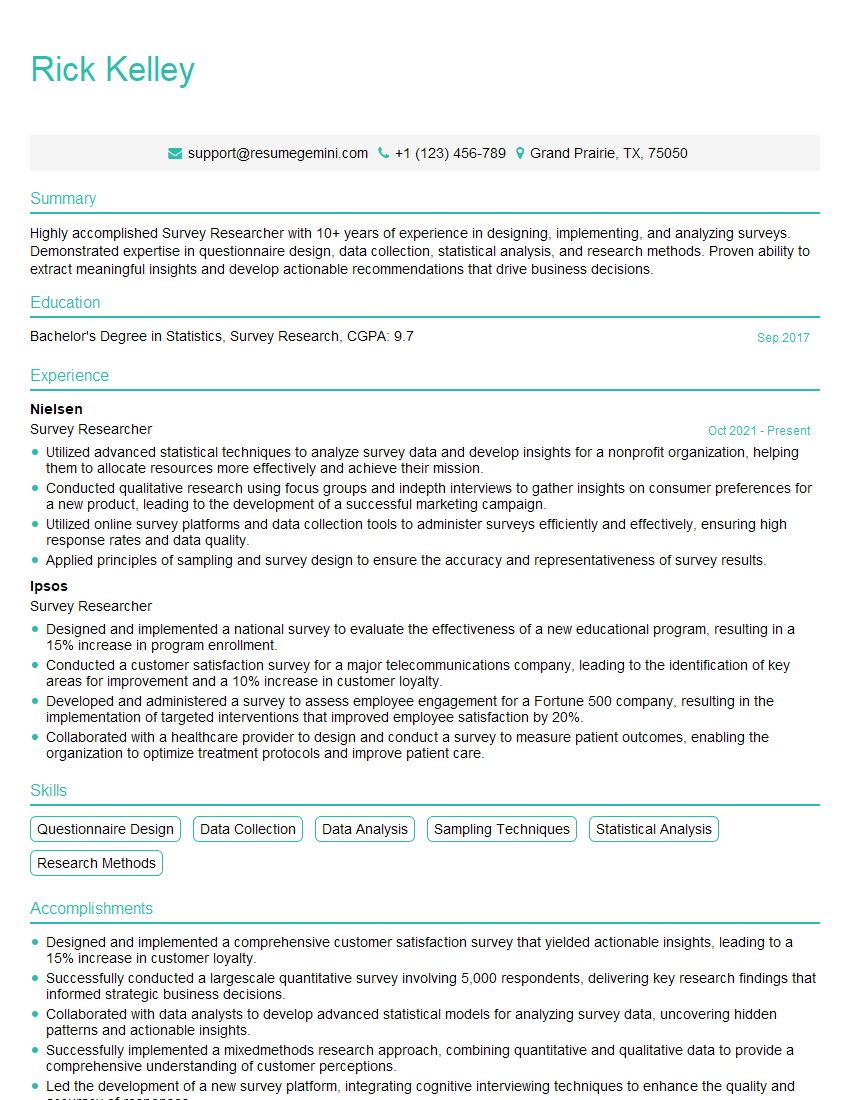
Survey Researcher Resume Sample
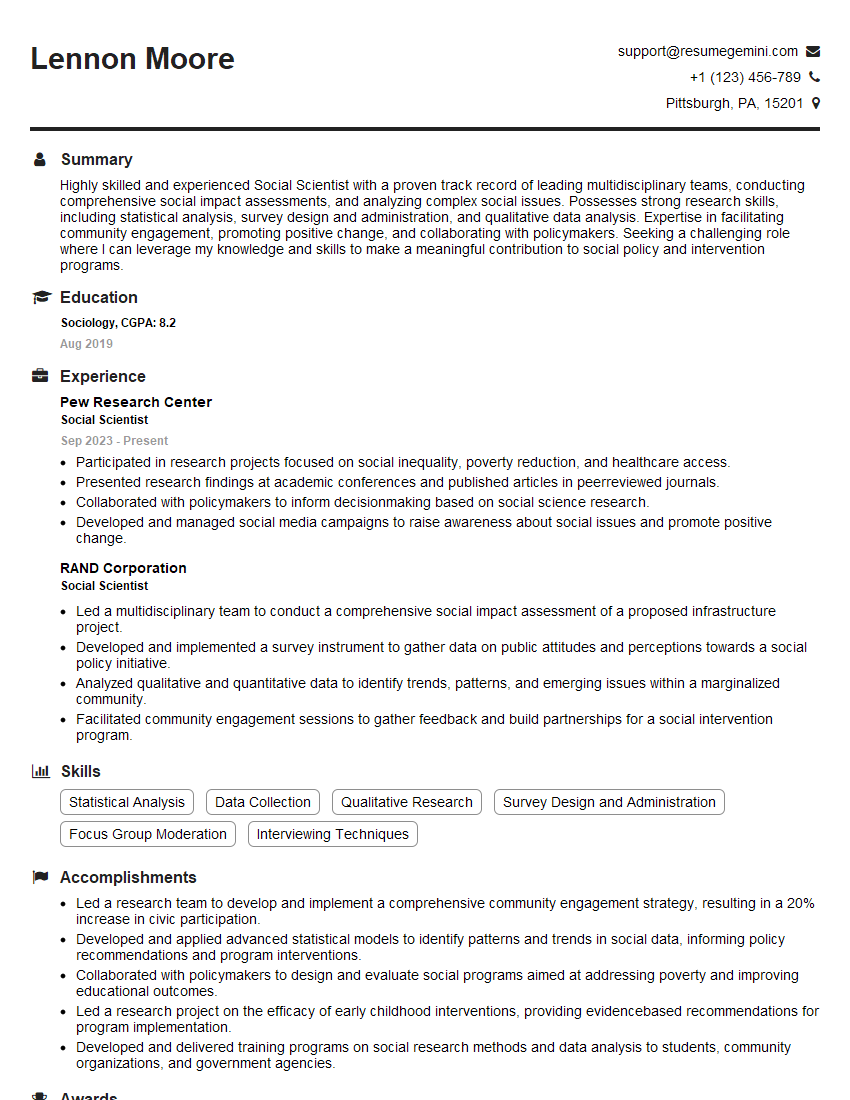
Social Scientist Resume Sample
- Market Research Manager
- Director of Research
- Research Director
- Market Research Analyst
- Data Analyst
- Quantitative Analyst
- Data Scientist
- Research Scientist
- Actuary
- Operations Research Analyst
- Senior Statistician
- Survey Statistician
- Biostatistician
- Clinical Research Associate
- Epidemiologist
- Principal Investigator
- Econometrician
- Survey Researcher
- Social Scientist
Explore more articles
Users Rating of Our Blogs
Share Your Experience
We value your feedback! Please rate our content and share your thoughts (optional).
What Readers Say About Our Blog
To the interviewgemini.com Webmaster.
Very helpful and content specific questions to help prepare me for my interview!
Thank you
To the interviewgemini.com Webmaster.
This was kind of a unique content I found around the specialized skills. Very helpful questions and good detailed answers.
Very Helpful blog, thank you Interviewgemini team.