Every successful interview starts with knowing what to expect. In this blog, we’ll take you through the top SAR Image Processing interview questions, breaking them down with expert tips to help you deliver impactful answers. Step into your next interview fully prepared and ready to succeed.
Questions Asked in SAR Image Processing Interview
Q 1. Explain the difference between single-look complex (SLC) and multi-look complex (MLC) SAR data.
Single-look complex (SLC) and multi-look complex (MLC) SAR data represent different stages of SAR image processing. Think of it like taking a photograph: SLC is like the raw, unprocessed image straight from the camera, while MLC is like the enhanced, edited version.
SLC data retains the full complex information (amplitude and phase) from the SAR sensor. This is crucial for interferometric applications like creating Digital Elevation Models (DEMs) because phase information is essential for measuring differences in path lengths to the target. However, SLC data is characterized by high speckle noise – a granular pattern obscuring the details.
MLC data is generated by averaging multiple SLC looks (independent samples of the same area). This averaging process reduces speckle noise, making the image appear smoother and easier to interpret visually. However, this averaging comes at the cost of spatial resolution; the image becomes less sharp. The amount of speckle reduction is directly related to the number of looks. More looks mean less speckle but lower resolution.
In summary: SLC is high-resolution but noisy; MLC is lower-resolution but smoother. The choice depends on the application; interferometry needs SLC, while visual interpretation benefits from MLC.
Q 2. Describe the speckle phenomenon in SAR imagery and methods for its reduction.
Speckle is a granular noise pattern inherent to SAR imagery, similar to film grain in photography. It’s caused by the coherent nature of the radar signal; constructive and destructive interference of backscattered waves from multiple scattering elements within a resolution cell create this speckled appearance. Imagine shining a laser pointer on a rough surface – the reflected light will show a mottled pattern.
Several methods exist for speckle reduction, each with trade-offs:
- Multi-looking: As described earlier, averaging multiple looks reduces speckle. Simple and effective, but lowers resolution.
- Adaptive filtering: These techniques, like Lee filtering or Frost filtering, adaptively smooth the image based on local statistics, trying to preserve edges while reducing speckle. They’re more sophisticated than multi-looking, offering better speckle reduction with less resolution loss.
- Wavelet-based filtering: This method uses wavelet transforms to decompose the image into different frequency components, allowing for targeted speckle reduction in specific frequency bands while preserving image details.
- Speckle filtering based on Partial Differential Equations (PDEs): These methods use mathematical models based on PDEs to remove speckle while preserving edges.
The choice of method depends on factors such as the desired level of speckle reduction, the acceptable loss of resolution, and computational resources.
Q 3. What are the advantages and disadvantages of different SAR polarizations (HH, VV, HV, VH)?
SAR polarization refers to the orientation of the electric field vector of the transmitted and received radar waves. Different polarizations provide different sensitivities to various surface characteristics.
- HH (Horizontal Transmit, Horizontal Receive): Sensitive to rough surfaces and volume scattering (e.g., forests). Strong backscatter from objects with vertical structure and rough surfaces.
- VV (Vertical Transmit, Vertical Receive): Sensitive to smooth surfaces and surface scattering (e.g., water). Strong backscatter from smooth surfaces like water and calm seas.
- HV (Horizontal Transmit, Vertical Receive): Sensitive to double-bounce scattering (e.g., corner reflectors, buildings). Often used to detect man-made structures or to identify the presence of dihedrals in the scene.
- VH (Vertical Transmit, Horizontal Receive): Similar to HV; also sensitive to double-bounce scattering.
Advantages: Using multiple polarizations provides more information about the target. Combining HH and VV, for example, allows for better discrimination between different land cover types.
Disadvantages: Acquiring multiple polarizations increases processing time and data volume. Also, some polarizations may be less sensitive to certain types of targets.
For instance, in agricultural monitoring, HH might be better for assessing crop biomass, while VV might be more useful for mapping flooded areas.
Q 4. Explain the concept of SAR geometry and its impact on image interpretation.
SAR geometry describes the relative positions of the sensor, the target, and the Earth’s surface. It is crucial because it dictates the radar signal’s interaction with the target and significantly affects image interpretation. Key elements include incidence angle, look direction, and range.
Incidence angle is the angle between the radar signal’s direction and the normal to the Earth’s surface at the target point. A steeper incidence angle leads to shorter wavelengths for the same frequency and generally results in stronger backscatter from rough surfaces but weaker backscatter from smooth surfaces.
Look direction refers to the direction of the satellite’s flight path relative to the scene. This affects the geometry of the shadowing and layover effects.
Range is the distance between the sensor and the target. Range affects the signal strength and the geometry of the image.
Understanding SAR geometry is crucial for correcting geometric distortions (e.g., layover and shadowing) and for interpreting backscatter values accurately. For example, layover happens when a tall structure appears closer to the sensor than it actually is because the signal from its top arrives before the signal from the base. Shadowing occurs when terrain blocks the radar signal from reaching a certain area.
Q 5. How does the incidence angle affect SAR backscatter?
The incidence angle significantly impacts SAR backscatter. It’s the angle between the radar signal and the normal to the surface. A simple analogy: shining a flashlight directly onto a surface (low incidence angle) will result in different reflection than shining it at a grazing angle (high incidence angle).
Low incidence angles (near-nadir): Generally produce lower backscatter from rough surfaces but higher backscatter from smooth surfaces. This is because the signal is reflected specularly (like a mirror) from smoother surfaces.
High incidence angles (near-grazing): Generally yield higher backscatter from rough surfaces due to increased surface roughness at the larger spatial scales viewed. Smooth surfaces at high incidence angles exhibit much lower backscatter.
This relationship is complex and depends on the surface roughness, dielectric constant, and the radar wavelength. Understanding this relationship is vital for correctly interpreting backscatter values and classifying land cover types.
Q 6. Describe different SAR acquisition modes (e.g., stripmap, spotlight, ScanSAR).
SAR acquisition modes determine how the radar antenna illuminates the Earth’s surface. Each mode offers different trade-offs between spatial resolution, swath width (area covered in a single pass), and acquisition time.
- Stripmap: The simplest mode. The antenna points sideways, acquiring data in a continuous strip along the flight path. Offers consistent spatial resolution across the swath but limited swath width.
- Spotlight: The antenna continuously points at the same target area, leading to very high spatial resolution but a narrow swath width and longer acquisition time. Useful for detailed imaging of small areas.
- ScanSAR (Scanned SAR): The antenna electronically scans across a wider swath, dividing it into multiple sub-swaths. Each sub-swath is processed separately, achieving a wide swath with moderate spatial resolution. A balance between swath width and resolution, ideal for wide-area mapping.
- Interferometric SAR (InSAR): Uses two antennas or two passes over the same area to measure the phase difference between the signals. This phase difference is used to generate Digital Elevation Models (DEMs).
The selection of an acquisition mode depends heavily on the specific application. Stripmap is suitable for regional mapping, spotlight is preferred for detailed observations of specific targets, and ScanSAR is used for large-scale monitoring.
Q 7. Explain the concept of range and azimuth resolution in SAR imagery.
Range and azimuth resolution determine the sharpness of a SAR image. They are related to how well the sensor can distinguish between targets in the range (distance to the sensor) and azimuth (direction across the flight path) directions.
Range resolution is determined primarily by the bandwidth of the transmitted signal. A wider bandwidth leads to finer range resolution. Imagine it like the precision of a ruler – a ruler with finer markings (higher bandwidth) allows for more precise measurements (higher range resolution).
Azimuth resolution is mainly determined by the antenna length and the synthetic aperture technique. A longer antenna or a longer synthetic aperture yields finer azimuth resolution. Think of it as the sharpness of your vision – a sharp lens provides finer details (higher azimuth resolution).
Both range and azimuth resolution are crucial for accurate image interpretation. High resolution means clearer distinction between objects, crucial for accurate mapping and classification. The resolution values are usually expressed in meters.
Q 8. How is geometric correction performed on SAR imagery?
Geometric correction in SAR imagery is crucial because raw SAR data suffers from distortions due to the sensor’s viewing geometry and the Earth’s curvature. The goal is to transform the image from its sensor-centric coordinates to a map projection, aligning it with a geographic coordinate system (like latitude and longitude).
This is achieved through a process called geocoding, which typically involves these steps:
- Preprocessing: This might include removing noise and radiometric calibration.
- Control Point Selection: Identifying ground control points (GCPs) in both the SAR image and a reference dataset (e.g., a high-resolution map or aerial photograph). These GCPs act as anchors for the transformation.
- Transformation Model Selection: Choosing a suitable mathematical model (e.g., polynomial, piecewise linear) to describe the relationship between the SAR image coordinates and the geographic coordinates. The complexity of the model depends on the severity of the distortions.
- Transformation Parameter Estimation: Calculating the parameters of the chosen model using the GCPs. This often involves least-squares adjustment techniques.
- Resampling: Using the transformation parameters to resample the SAR image pixels to their correct geographic locations. Common resampling methods include nearest-neighbor, bilinear, and cubic convolution. The choice impacts the accuracy and smoothness of the corrected image.
Imagine trying to flatten a crumpled map – geometric correction is like carefully smoothing out the wrinkles to create an accurate representation of the terrain.
Example: A SAR image acquired over a mountainous region will exhibit significant geometric distortions. Geocoding aligns the image with a digital elevation model (DEM) to correct for these distortions, ensuring accurate measurements of distances and areas.
Q 9. What are the common preprocessing steps involved in SAR image processing?
Preprocessing in SAR image processing is vital for improving the quality of the data and preparing it for further analysis. It’s like cleaning a gemstone before polishing it to reveal its true beauty. Key steps include:
- Radiometric Calibration: Converting the raw digital numbers (DNs) to backscatter coefficients (σ⁰), representing the radar reflectivity of the targets. This ensures consistent measurement across different acquisitions.
- Speckle Filtering: Reducing the granular noise (speckle) inherent in SAR imagery. Common filters include Lee, Frost, and Kuan filters, each with different strengths and weaknesses in preserving edges and reducing noise.
- Geometric Correction: As detailed in the previous answer, this corrects for geometric distortions due to sensor geometry and Earth curvature.
- Terrain Correction: Correcting for the effects of topography on the radar signal. This step is crucial for quantitative analysis and involves using a DEM to account for layover and shadowing.
- Atmospheric Correction: Accounting for the attenuation of the radar signal by atmospheric gases and precipitation. This is often challenging and depends on the specific atmospheric conditions.
Example: Before classifying land cover types in a SAR image, speckle filtering is essential to reduce the noise and enhance the visibility of features. Otherwise, the classifier would likely be misled by the noise.
Q 10. Explain the concept of interferometric SAR (InSAR) and its applications.
Interferometric SAR (InSAR) exploits the phase information from two or more SAR images acquired over the same area at slightly different times or from slightly different positions. By comparing the phases of the two images, we can measure the difference in the distance between the sensor and the target, which can be used to derive information about surface deformation or topography.
InSAR’s magic lies in its ability to measure extremely subtle changes in the Earth’s surface. Think of it as a highly sensitive measuring device capable of detecting millimetre-scale changes.
Applications:
- Ground deformation monitoring: Detecting land subsidence, volcanic deformation, earthquake displacement, and glacier movement.
- Digital Elevation Model (DEM) generation: Creating high-resolution topographic maps with exceptional accuracy.
- Change detection: Identifying changes in the landscape over time, such as deforestation or urban expansion.
Example: InSAR was used extensively after the 2010 Haiti earthquake to map the extent of ground deformation and aid in disaster response efforts. Similarly, InSAR data are regularly employed to monitor the movement of glaciers and assess the risks of glacial lake outburst floods.
Q 11. Describe the principles of polarimetric SAR (PolSAR) and its applications.
Polarimetric SAR (PolSAR) uses multiple polarizations (transmitting and receiving signals with different polarizations like HH, HV, VH, VV) to gather more complete information about the scattering properties of targets. This allows us to discriminate between different surface features based on their scattering mechanisms.
The different polarization combinations provide a “fingerprint” of the target’s structure and composition. For example, smooth surfaces like water will exhibit different scattering behaviour than rough surfaces like forests. This is unlike single-polarization SAR which only provides information on the overall backscatter intensity.
Applications:
- Land cover classification: Distinguishing between different land cover types like forests, urban areas, and water bodies with greater accuracy.
- Vegetation analysis: Measuring biomass, estimating vegetation structure and health.
- Sea ice monitoring: Differentiating between different types of sea ice and analyzing ice properties.
- Target detection and identification: Identifying military targets, vehicles, or infrastructure.
Example: PolSAR can distinguish between different types of forests based on the polarization signatures. A dense forest with many vertical trunks will have a different polarization signature than a sparse forest with shorter vegetation. This detailed information is invaluable for forest management and environmental monitoring.
Q 12. What are the different types of SAR calibration techniques?
SAR calibration is essential for ensuring accurate measurements of backscatter. It corrects for the biases introduced by the sensor and other factors. Common techniques include:
- Absolute Calibration: Determining the relationship between the received power and the backscatter coefficient (σ⁰). This often involves using calibrated targets (e.g., corner reflectors) in the scene.
- Relative Calibration: Comparing the signal strength of different parts of the image or between multiple images. This method is less accurate than absolute calibration but simpler to implement.
- Internal Calibration: Using internal components of the sensor (e.g., receivers) to monitor and correct for variations in the system’s response.
- Cross-calibration: Using data from multiple sensors to establish a consistent calibration among them.
Example: Absolute calibration might involve placing corner reflectors of known reflectivity in a scene. The radar backscatter from these reflectors is then used to scale the measured backscatter values of the rest of the image, obtaining accurate σ⁰ values.
Q 13. How do you handle atmospheric effects in SAR imagery?
Atmospheric effects can significantly affect the quality and interpretation of SAR imagery. They can attenuate the signal, introduce distortions, and create artifacts. The primary atmospheric effects include:
- Atmospheric attenuation: Gases like water vapor and oxygen absorb and scatter the radar signal, reducing its strength. This attenuation is distance and frequency dependent.
- Ionospheric effects: The ionosphere can refract the radar signal, causing distortions in the image geometry.
- Hydrometeors: Rain, snow, and other hydrometeors can scatter and attenuate the signal, especially at higher frequencies.
Handling atmospheric effects often requires sophisticated models and techniques. Methods include:
- Atmospheric correction models: Using models to estimate the atmospheric attenuation and correct for its impact on the backscatter measurements.
- Dual-frequency SAR: Utilizing SAR data acquired at two different frequencies to estimate and correct for atmospheric attenuation.
- Data preprocessing: Eliminating areas significantly affected by atmospheric effects from further analysis.
Example: In coastal areas, high humidity levels can lead to significant atmospheric attenuation. Atmospheric correction models can estimate the attenuation and correct the backscatter values to get more accurate representations of surface properties.
Q 14. Explain the concept of SAR target detection and classification.
SAR target detection and classification aim to identify and categorize specific objects within a SAR image. It’s a crucial task in various applications, from military surveillance to environmental monitoring.
Target detection: This step involves identifying the presence of a target of interest. Techniques include:
- Thresholding: Setting a threshold on the backscatter intensity or other features to separate targets from the background.
- Constant false alarm rate (CFAR) detectors: Adaptive thresholding techniques that adjust the threshold based on the local background noise.
- Pattern recognition techniques: Using techniques like matched filtering to detect targets with known shapes or signatures.
Target classification: After detection, this step categorizes the detected targets into predefined classes. Techniques include:
- Machine learning algorithms: Training classifiers (e.g., support vector machines, neural networks) on labeled SAR data to automatically classify targets based on their features (backscatter, texture, shape).
- Feature extraction: Calculating features that capture the characteristics of the targets, such as texture, shape, and polarization signatures.
Example: Detecting ships in a coastal SAR image might involve using CFAR detection to identify regions with higher backscatter intensities than the surrounding water. Then, a classifier could be used to distinguish between different types of ships based on their size, shape, and radar signature.
Q 15. Discuss various SAR image segmentation methods.
SAR image segmentation aims to partition a SAR image into meaningful regions with similar characteristics. Think of it like creating a detailed map highlighting different land cover types—forests, urban areas, water bodies—from a satellite radar image. Several methods exist, each with strengths and weaknesses:
- Thresholding: A simple technique where pixels above or below a certain intensity value are assigned to different classes. This is computationally efficient but sensitive to noise and variations in illumination. For example, we might threshold to separate water (low backscatter) from land (high backscatter).
- Region-based Segmentation: This involves grouping pixels based on their similarity in features like intensity, texture, or polarization. Algorithms like region growing or watershed segmentation fall into this category. For instance, region growing can start from a seed pixel and iteratively add neighboring pixels with similar backscatter values to the same region.
- Edge-based Segmentation: This focuses on detecting boundaries between regions using edge detectors like the Sobel operator. These boundaries delineate different land cover types. However, noisy SAR data can lead to false edges.
- Object-based Image Analysis (OBIA): A more advanced approach that combines image segmentation with object features and contextual information. It’s particularly useful when dealing with complex scenes where different land cover types are intermixed. OBIA can incorporate ancillary data, like elevation maps or GIS data, to refine the segmentation results.
- Machine Learning-based Segmentation: Techniques such as support vector machines (SVMs), random forests, and convolutional neural networks (CNNs) are increasingly used. These methods learn patterns from labelled data to accurately segment SAR images. CNNs, in particular, excel at capturing complex spatial relationships in the image, outperforming traditional methods in many scenarios. Deep learning, however, requires substantial amounts of labeled training data.
The choice of method depends heavily on the specific application, the characteristics of the SAR data, and the available computational resources. For instance, thresholding might suffice for a simple classification task, whereas complex scenes requiring high accuracy would benefit from a machine learning approach.
Career Expert Tips:
- Ace those interviews! Prepare effectively by reviewing the Top 50 Most Common Interview Questions on ResumeGemini.
- Navigate your job search with confidence! Explore a wide range of Career Tips on ResumeGemini. Learn about common challenges and recommendations to overcome them.
- Craft the perfect resume! Master the Art of Resume Writing with ResumeGemini’s guide. Showcase your unique qualifications and achievements effectively.
- Don’t miss out on holiday savings! Build your dream resume with ResumeGemini’s ATS optimized templates.
Q 16. What are the challenges in SAR image interpretation compared to optical imagery?
Interpreting SAR images presents unique challenges compared to optical imagery, mainly due to the nature of the data acquisition process. Optical sensors rely on reflected sunlight, while SAR uses its own emitted microwaves. This leads to several key differences:
- Speckle Noise: SAR images are inherently noisy due to the coherent nature of the radar signal. This speckle noise appears as granular texture, obscuring details and complicating interpretation. Optical images generally have less inherent noise.
- Geometric Distortions: The geometry of SAR images can be complex due to the satellite’s motion and the terrain’s topography. Correcting these distortions (geocoding) requires specialized processing techniques. Optical imagery typically has simpler geometry.
- Sensitivity to Look Direction and Polarization: The backscattered signal in SAR depends strongly on the radar look direction and the polarization of the emitted and received waves. This means that the same object may look dramatically different depending on these parameters, complicating interpretation and requiring careful consideration of the sensor’s configuration.
- Limited Spectral Information: Unlike optical imagery, which provides rich spectral information across multiple wavelengths, SAR provides limited spectral information, usually represented by backscatter intensity. This restricts direct identification of materials based on spectral signatures.
- Shadowing and Layover: SAR images can suffer from shadowing (areas not illuminated by the radar) and layover (overlapping features due to the viewing geometry), especially in mountainous regions. These phenomena further complicate image interpretation.
To overcome these challenges, various techniques are used. Speckle filtering reduces noise, geocoding corrects geometric distortions, and polarization analysis helps differentiate features. Experienced analysts must account for these limitations to correctly interpret SAR data.
Q 17. Describe your experience with SAR processing software (e.g., SNAP, ENVI, ROI_PAC).
I have extensive experience using several SAR processing software packages, including SNAP, ENVI, and ROI_PAC. My work involved a wide range of tasks, from pre-processing to advanced analysis.
- SNAP (Sentinel Application Platform): I used SNAP extensively to process Sentinel-1 data. My work included orthorectification, speckle filtering using techniques like Lee, Frost, and Refined Lee filters, and various geometric corrections. I’ve also utilized the SNAP tools for polarimetric decomposition and classification. A recent project involved using SNAP’s time series capabilities for monitoring deforestation in the Amazon. For example, I used the backscatter coefficients from different time points to create a time series analysis of vegetation changes.
- ENVI: ENVI provided a comprehensive environment for various image processing tasks. I used it primarily for advanced analysis, including object-based image analysis (OBIA) and supervised classification using algorithms like maximum likelihood and support vector machines. One specific project used ENVI’s tools for fusing SAR data with optical imagery to enhance the quality of land cover mapping. This involved combining the spatial resolution of optical data with the penetration capabilities of SAR.
- ROI_PAC: This package is invaluable for processing interferometric SAR (InSAR) data. I’ve utilized ROI_PAC for creating interferograms, performing phase unwrapping, and generating digital elevation models (DEMs). A recent application involved the use of InSAR for monitoring ground deformation in areas prone to earthquakes.
My experience spans various aspects of SAR processing, enabling me to select the most appropriate software and techniques for each project based on its specific requirements.
Q 18. How do you assess the quality of SAR imagery?
Assessing SAR image quality involves several key aspects:
- Geometric Accuracy: Evaluating the accuracy of the image’s geographic location and the presence of geometric distortions is crucial. This often involves comparing the SAR image to a reference dataset, such as a high-resolution DEM or a well-established map.
- Radiometric Accuracy: This focuses on the fidelity of the backscatter intensity values. It assesses the consistency and correctness of the radiometric calibration and the presence of any radiometric distortions. We can check this by looking for inconsistencies or artifacts in the image and comparing it to expected values for known land cover.
- Speckle Noise Level: The level of speckle noise is a significant factor in determining image quality. High noise levels obscure details and can make interpretation difficult. Quantitative measures of noise can be used, along with visual inspection.
- Spatial Resolution: The spatial resolution determines the level of detail visible in the image. Higher resolution generally equates to better quality, but it’s vital to consider the trade-offs between resolution and other factors like swath width and data volume.
- Temporal Resolution: For time-series analyses, the frequency of image acquisition is crucial. More frequent images allow for the detection of subtle changes over time. However, achieving high temporal resolution might compromise other aspects of quality such as spatial resolution.
Tools like visual inspection, statistical measures (e.g., signal-to-noise ratio), and comparisons against ground truth data or other high-quality datasets are used to assess these aspects.
Q 19. Explain your experience with different SAR data formats.
My experience encompasses a variety of SAR data formats, including:
- GeoTIFF: A widely used format that stores georeferenced image data, including spatial information.
- HDF5 (Hierarchical Data Format): Commonly used for storing large, complex datasets, particularly from sensors like Sentinel-1. It allows for efficient storage and access to multi-dimensional data.
- ERS/ASAR: Older formats specific to the ERS and ASAR satellite missions.
- RADARSAT: Formats related to the RADARSAT series of satellites.
- SLC (Single Look Complex): Raw, complex SAR data that contains both amplitude and phase information, suitable for interferometric processing.
- GRD (Ground Range Detected): Processed SAR data where the data has been projected to ground range geometry.
I’m proficient in handling these different formats using appropriate software tools and understanding their specific characteristics to ensure correct processing and analysis. For example, working with SLC data requires different processing steps than working with GRD or GeoTIFF data. Each format is chosen according to the purpose of the analysis.
Q 20. How do you handle data from multiple SAR sensors?
Handling data from multiple SAR sensors requires careful consideration of several factors:
- Data Preprocessing: Each sensor has unique characteristics in terms of resolution, polarization, and acquisition geometry. Consistent preprocessing steps, such as radiometric calibration, orthorectification, and speckle filtering, are crucial to ensure data compatibility.
- Data Fusion: Combining data from different sensors can enhance the overall information content. Methods like image fusion, data assimilation, or multi-sensor classification are used to integrate the data effectively. Techniques like wavelet transforms or principal component analysis can be used to merge the information.
- Data Registration: Precisely aligning data from different sensors is crucial for accurate comparison and analysis. Georeferencing and geometric correction techniques must account for differences in sensor platforms and acquisition geometries.
- Sensor-Specific Considerations: The characteristics of each sensor must be carefully considered during the analysis. For example, differences in polarization configurations or incidence angles can affect backscatter values and interpretations.
A recent project involved integrating data from Sentinel-1 and ALOS-2 PALSAR-2 to improve forest biomass mapping. The high spatial resolution of ALOS-2 combined with the high temporal resolution of Sentinel-1 proved highly synergistic.
Q 21. Describe your experience with feature extraction techniques for SAR data.
Feature extraction for SAR data involves deriving meaningful information from the raw backscatter values. These features can then be used for various applications, including classification, segmentation, and change detection.
- Textural Features: Measures of image texture, such as gray-level co-occurrence matrices (GLCM) or local binary patterns (LBP), capture the spatial arrangement of pixel intensities. These features are particularly useful for differentiating land cover types based on their textural characteristics.
- Polarimetric Features: Polarimetric SAR data provides information about the scattering mechanisms of targets. Features such as coherence, entropy, and anisotropy derived from polarimetric decomposition provide valuable information about surface properties. These features can distinguish between different land cover types based on their polarimetric signatures.
- Radiometric Features: Simple features like mean backscatter intensity or backscatter variance can be used. These are often the starting point for many analyses.
- Geometrical Features: These features incorporate spatial information, such as shape, size, and context of regions. They are particularly relevant in object-based image analysis.
- Wavelet Transform Features: Wavelets are used to decompose the image into different frequency components, highlighting both coarse and fine details. Features extracted from these decomposition levels can enhance the classification or segmentation of specific elements.
The choice of features depends on the specific application. For example, texture features are often effective in identifying urban areas, while polarimetric features are invaluable for separating different types of vegetation.
Q 22. How familiar are you with different SAR applications (e.g., mapping, change detection, disaster response)?
My familiarity with SAR applications is extensive. I’ve worked extensively across various domains. Think of SAR data as a powerful tool with many uses; it’s like having a superpower for seeing through clouds and darkness. For mapping, SAR provides high-resolution imagery for creating detailed topographic maps, even in areas with persistent cloud cover. This is crucial for infrastructure development and environmental monitoring. In change detection, by comparing SAR images acquired at different times, we can identify changes in land use, deforestation, or even subtle ground movements, valuable for urban planning and disaster risk reduction. Finally, disaster response utilizes SAR’s ability to penetrate cloud cover and vegetation for rapid damage assessment after events like earthquakes or floods. I’ve personally used SAR data to assess flood damage in Southeast Asia, mapping the extent of the inundation and aiding in the allocation of relief efforts. The speed and accuracy SAR offers in these situations are truly life-saving.
- Mapping: Creating detailed topographic maps, monitoring infrastructure
- Change Detection: Identifying deforestation, urban sprawl, ground deformation
- Disaster Response: Assessing flood damage, earthquake impact, landslide extent
Q 23. Describe your experience with programming languages used in SAR image processing (e.g., Python, MATLAB).
My expertise in SAR image processing leverages both Python and MATLAB. Python, with its rich ecosystem of libraries like scikit-image, Rasterio, and GDAL, is my go-to for tasks involving large datasets and complex workflows. I’ve built automated pipelines using Python for pre-processing, filtering, and classification of SAR imagery. For instance, I’ve developed a script to automate the removal of speckle noise using advanced filtering techniques. MATLAB, on the other hand, excels in its image processing toolbox, providing efficient algorithms for tasks like interferometric processing (InSAR) and polarimetric analysis. I’ve used it extensively for developing InSAR processing workflows for precise deformation measurements, analyzing ground subsidence in urban areas, for example. Below is a simple Python code snippet demonstrating speckle filtering:
import numpy as np
from skimage.filters import median
# ... load SAR image data into a numpy array 'image' ...
filtered_image = median(image, selem=np.ones((3, 3)))
# ... further processing ...
Q 24. Explain your understanding of cloud computing and its role in SAR data processing.
Cloud computing is revolutionizing SAR data processing. Think of it as a super-powered computer in the sky, ready to handle enormous datasets that would be impossible to manage locally. Platforms like Google Earth Engine and AWS provide scalable infrastructure, enabling processing of terabytes of SAR data efficiently. This is particularly crucial for handling the massive datasets generated by modern SAR satellites. The parallel processing capabilities of cloud platforms significantly reduce processing times, allowing for faster analysis and quicker results. Furthermore, cloud-based solutions offer readily available storage, avoiding the need for expensive and limited local storage. This accelerates workflows, enables collaborative projects across geographical locations, and enhances accessibility for researchers and professionals who might not have the resources for large-scale local processing.
Q 25. How would you approach a project that involves large volumes of SAR data?
Handling large volumes of SAR data demands a strategic approach. The key is to avoid loading everything into memory at once. I would employ a distributed processing strategy leveraging cloud computing or high-performance computing (HPC) clusters. This involves breaking down the task into smaller, manageable chunks that can be processed concurrently on multiple processors. Tools like Apache Spark or Dask in Python are excellent for this. Furthermore, efficient data formats such as GeoTIFF are crucial for minimizing storage and I/O overhead. Data compression techniques and careful selection of processing algorithms that minimize memory footprint are also essential. Finally, rigorous quality control procedures at each stage of the processing pipeline ensure data integrity and reliability. Imagine processing a dataset the size of a small city: a distributed approach is essential for timely completion.
Q 26. Describe a challenging SAR image processing project you worked on and how you overcame the challenges.
One challenging project involved analyzing SAR data to monitor glacier movement in a remote, mountainous region. The challenge stemmed from the complex terrain, resulting in significant geometric distortions in the SAR images. Moreover, the data suffered from considerable speckle noise due to the high resolution. To overcome these challenges, I employed advanced geometric correction techniques, including precise terrain correction using a high-resolution DEM (Digital Elevation Model). I then applied a multi-stage filtering approach to minimize speckle noise while preserving fine details crucial for accurately mapping glacier movement. This involved a combination of adaptive speckle filters and wavelet-based denoising methods. The final result was a precise and reliable map of glacier velocity, contributing significantly to understanding glacier dynamics and climate change impact in that region. The project taught me the importance of utilizing appropriate tools and having a well-defined workflow to handle complex data issues.
Q 27. Explain your experience with different SAR data acquisition techniques.
My experience encompasses various SAR data acquisition techniques. Different acquisition modes provide varying information, like having different lenses on a camera. Stripmap mode provides continuous coverage along a flight path, suitable for mapping large areas. Spotlight mode focuses the radar beam on a specific area, yielding higher resolution, ideal for detailed monitoring of smaller regions or specific targets. Interferometric (InSAR) uses two or more SAR images to create interferograms, revealing surface deformation. This is particularly useful in applications like ground deformation monitoring and earthquake studies. Finally, polarimetric SAR measures the polarization of the backscattered signal, enabling better classification of different surface features and materials. Each mode offers unique benefits and choosing the right one depends heavily on the specific application and required spatial resolution. I’ve worked with data from various satellites employing these modes, providing diverse perspectives for analysis.
Q 28. What are some current trends and future directions in SAR image processing?
The field of SAR image processing is rapidly evolving. Several exciting trends are shaping its future. Deep learning is transforming classification and object detection tasks, offering automated feature extraction and highly accurate results. AI-powered change detection techniques using time series of SAR data are increasingly sophisticated. Moreover, the development of more advanced SAR sensors with higher resolution and wider bandwidth is improving data quality and expanding applications. The integration of SAR data with other geospatial data sources, such as optical imagery and LiDAR, using data fusion techniques, is enriching analysis capabilities. The increasing accessibility of SAR data through open-source platforms and cloud computing makes it available to a wider range of researchers and practitioners. I believe the future will see even more sophisticated applications of SAR in environmental monitoring, disaster management, and infrastructure development.
Key Topics to Learn for SAR Image Processing Interview
- Fundamentals of SAR: Understand the basic principles of Synthetic Aperture Radar, including its working mechanism, different modes (e.g., Stripmap, Spotlight), and advantages over optical imagery.
- SAR Image Geometry and Geometry Correction: Grasp the concepts of range and azimuth resolution, slant range and ground range, and techniques for geometric correction like range Doppler processing and terrain correction.
- SAR Image Speckle Noise: Learn about the nature of speckle noise in SAR images and various filtering techniques for speckle reduction (e.g., Lee filter, Frost filter). Understand the trade-off between noise reduction and detail preservation.
- SAR Image Classification: Explore supervised and unsupervised classification methods for extracting information from SAR data, including techniques like Support Vector Machines (SVMs), Random Forests, and k-means clustering. Be prepared to discuss their strengths and weaknesses.
- SAR Interferometry (InSAR): Understand the principles of InSAR for creating digital elevation models (DEMs) and detecting ground deformation. Familiarize yourself with different InSAR techniques and their applications.
- Polarimetric SAR: Explore the concepts of polarimetric SAR data acquisition and processing, including the decomposition of the scattering matrix and its applications in land cover classification and target detection.
- Practical Applications: Be ready to discuss real-world applications of SAR image processing, such as environmental monitoring, disaster response, precision agriculture, and urban planning. Consider specific examples and case studies.
- Problem-Solving and Algorithm Design: Demonstrate your ability to approach SAR image processing problems systematically. Practice designing algorithms for specific tasks and be prepared to discuss your problem-solving methodology.
Next Steps
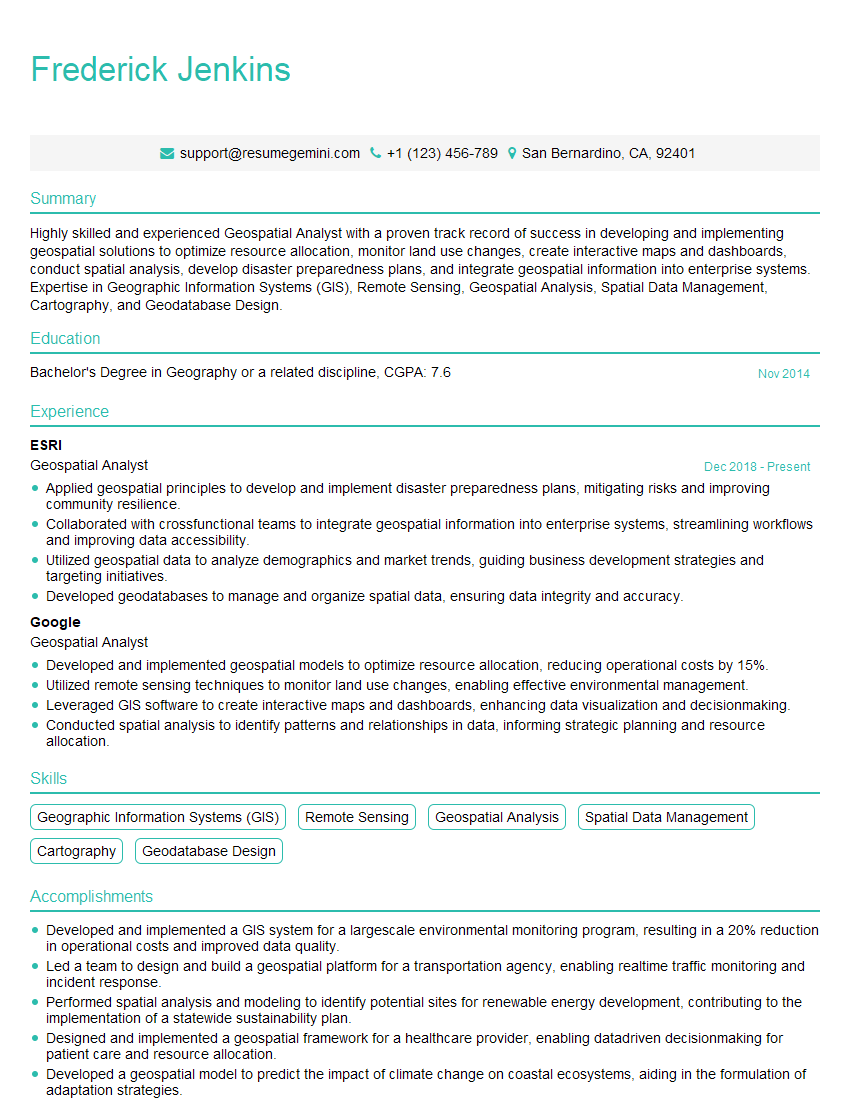
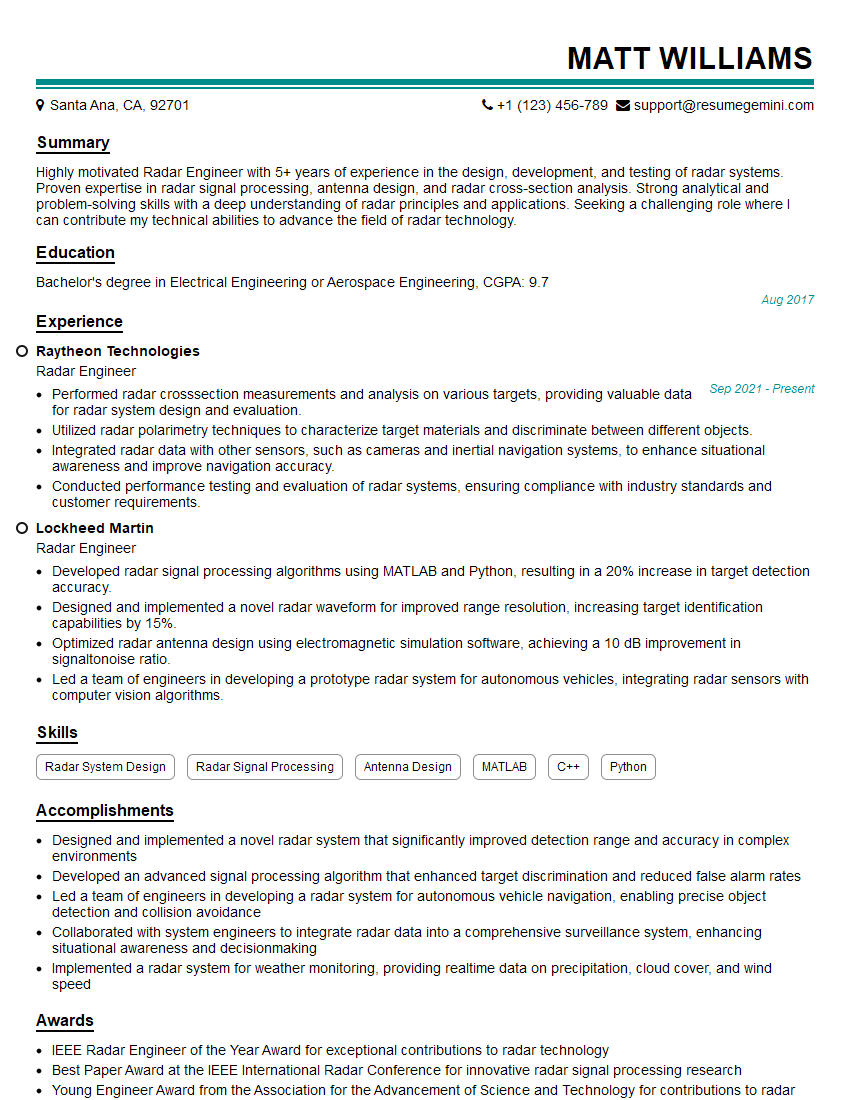
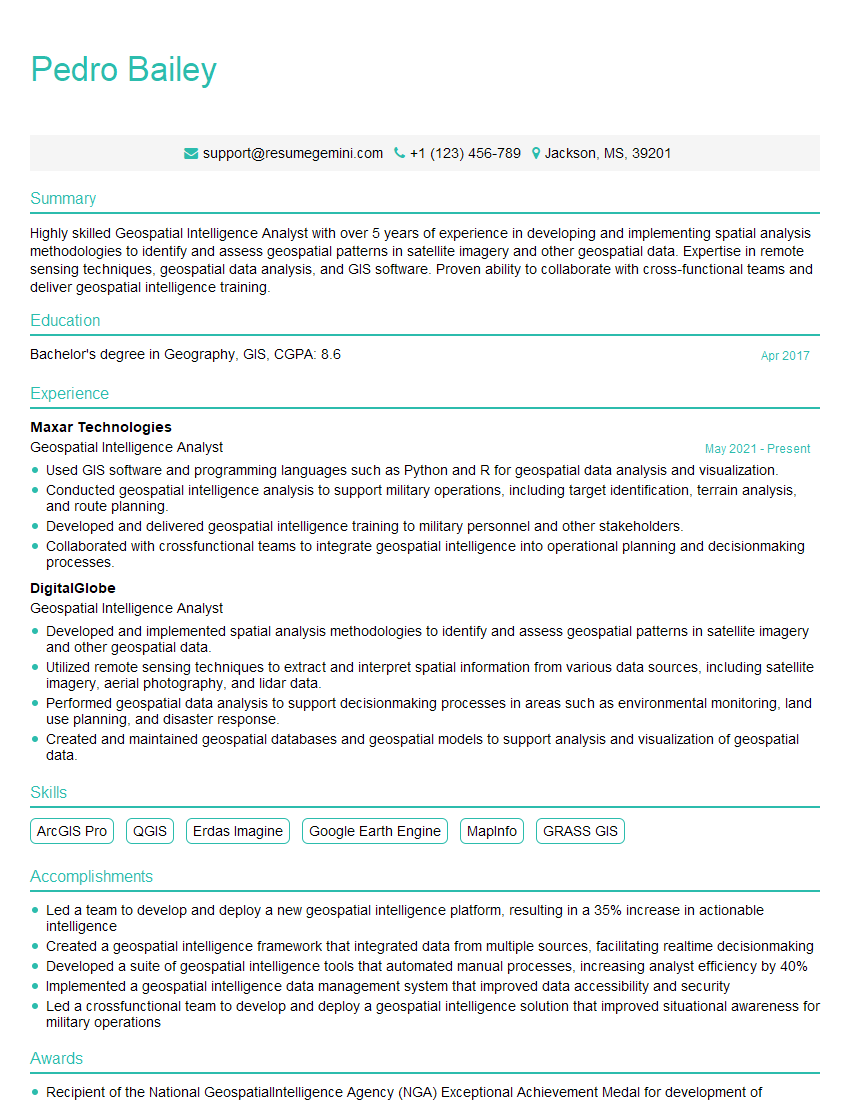
Mastering SAR Image Processing opens doors to exciting and impactful careers in remote sensing, geospatial intelligence, and various related fields. To maximize your job prospects, creating a strong, ATS-friendly resume is crucial. ResumeGemini is a trusted resource that can help you craft a professional and effective resume tailored to the specific requirements of SAR Image Processing roles. We provide examples of resumes tailored to this field to guide you through the process. Invest time in crafting a compelling resume – it’s your first impression on potential employers.
Explore more articles
Users Rating of Our Blogs
Share Your Experience
We value your feedback! Please rate our content and share your thoughts (optional).
What Readers Say About Our Blog
To the interviewgemini.com Webmaster.
Very helpful and content specific questions to help prepare me for my interview!
Thank you
To the interviewgemini.com Webmaster.
This was kind of a unique content I found around the specialized skills. Very helpful questions and good detailed answers.
Very Helpful blog, thank you Interviewgemini team.