Every successful interview starts with knowing what to expect. In this blog, we’ll take you through the top SAR Imaging interview questions, breaking them down with expert tips to help you deliver impactful answers. Step into your next interview fully prepared and ready to succeed.
Questions Asked in SAR Imaging Interview
Q 1. Explain the basic principles of Synthetic Aperture Radar (SAR) imaging.
Synthetic Aperture Radar (SAR) uses microwaves to create images of the Earth’s surface, regardless of weather or sunlight conditions. Unlike optical sensors relying on reflected sunlight, SAR actively transmits its own microwave signals and records the backscattered energy. This backscatter depends on the surface’s roughness, dielectric constant (how well it interacts with microwaves), and the angle of incidence of the signal. The key to SAR’s high resolution lies in its ability to ‘synthesize’ a large antenna aperture by cleverly processing signals gathered as the sensor moves. Imagine a tiny antenna taking many measurements as it flies along; by combining these measurements, it’s as if a much larger, higher-resolution antenna were present. This synthetic aperture allows for extremely fine detail in the resulting images.
Q 2. Describe the differences between various SAR modes (e.g., stripmap, spotlight, ScanSAR).
Different SAR modes optimize for various factors like resolution, coverage area, and imaging geometry.
- Stripmap: The simplest mode; the antenna points sideways and continuously transmits and receives signals. It provides a continuous swath of data but with limitations on resolution across the swath. Think of it like taking a continuous photograph of a landscape from an airplane.
- Spotlight: Offers the highest resolution but covers a smaller area. The antenna beam is steered to focus on a specific target for extended periods, effectively synthesizing a very long aperture. It’s like using a zoom lens to focus on a small area of interest.
- ScanSAR (Scanned SAR): This mode prioritizes wide coverage by rapidly scanning the antenna beam across a wide area. Each scan forms a separate sub-swath, which are then stitched together. The result is a very wide image, albeit with lower resolution than spotlight, ideal for large-scale mapping. Think of it as a wide-angle lens providing a comprehensive overview.
Q 3. What are the advantages and disadvantages of SAR compared to optical remote sensing?
SAR and optical remote sensing offer complementary capabilities.
- Advantages of SAR over optical:
- All-weather capability: SAR penetrates clouds and operates day or night.
- Active sensing: Provides its own illumination, unlike optical which relies on sunlight.
- High resolution: Can achieve very fine spatial resolution, especially in spotlight mode.
- Penetration capability: Microwaves can penetrate certain materials (e.g., vegetation, dry soil) to reveal subsurface features.
- Disadvantages of SAR over optical:
- Lower spatial resolution (in some modes): Stripmap and ScanSAR modes often provide lower resolution compared to high-resolution optical imagery.
- Higher cost and complexity: SAR systems are typically more expensive and technically demanding to operate.
- Speckle noise: SAR images are affected by speckle noise, requiring specialized processing techniques.
- Geometric distortion: Requires careful processing for accurate geolocation.
- In practice: A combination of both optical and SAR data is often used to provide a more complete picture. Optical sensors provide detailed visual information, while SAR offers penetration and all-weather data, which is invaluable for tasks like mapping flood damage or monitoring deforestation in cloudy regions.
Q 4. Explain the concept of range and azimuth resolution in SAR.
SAR resolution refers to the smallest discernible detail in the image.
- Range resolution refers to the ability to distinguish objects in the direction of the radar signal (the distance from the sensor to the target). It is primarily determined by the transmitted pulse width. A shorter pulse means better range resolution. Think of it like the sharpness of your focus in the distance.
- Azimuth resolution refers to the ability to distinguish objects in the direction perpendicular to the radar signal (across the flight track). In SAR, it’s not limited by the antenna’s physical size but rather by the synthetic aperture. A longer synthetic aperture means better azimuth resolution. Think of it as the sharpness of your focus from side to side.
High resolution in both range and azimuth is crucial for detailed SAR imagery.
Q 5. How does speckle noise affect SAR images, and what techniques are used to reduce it?
Speckle is a granular noise pattern inherent to coherent SAR images. It’s caused by the interference of multiple backscattered waves from within a single resolution cell. Imagine looking at a surface with tiny, randomly scattered reflective elements—the interference of the reflected waves creates a mottled, speckled appearance. This noise can obscure details and hinder image interpretation.
Several techniques are used to reduce speckle:
- Filtering techniques: Spatial filters like the Lee filter and Frost filter exploit the statistical properties of speckle to smooth the image while preserving edges. The Lee filter adapts its smoothing based on local image statistics, while the Frost filter uses a more sophisticated model of speckle.
- Multi-looking: Combining multiple looks (independent SAR images of the same area) averages out the speckle noise, but at the expense of reduced resolution.
- Speckle reduction filters based on wavelet transforms: These techniques decompose the image into different frequency bands, allowing for selective noise removal.
Q 6. Describe the process of SAR image geolocation and its importance.
SAR image geolocation is the process of accurately assigning geographic coordinates (latitude and longitude) to each pixel in a SAR image. It’s crucial for integrating SAR data with other geographic information systems (GIS) and for accurate mapping and analysis. The process involves:
- Precise sensor position and attitude knowledge: This information is usually obtained through GPS and Inertial Measurement Units (IMUs) on the sensor platform.
- Geometric correction: SAR images are prone to distortions due to the sensor’s motion and Earth’s curvature. Geometric correction techniques, such as orthorectification, account for these distortions to create a georeferenced image.
- Ground control points (GCPs): Identifying known locations on the image and associating them with their geographic coordinates helps improve the accuracy of geolocation.
Accurate geolocation is essential for applications like monitoring changes in land use, measuring glacier movement, or assessing the impact of natural disasters, as it allows for precise measurement and comparison over time.
Q 7. Explain different SAR image filtering techniques (e.g., Lee filter, Frost filter).
Several filtering techniques target speckle reduction in SAR images. Each offers a trade-off between noise reduction and detail preservation.
- Lee filter: A locally adaptive filter that analyzes the statistical properties of the speckle in a small neighborhood around each pixel and applies a different smoothing factor based on the local variance. It’s effective in preserving edges but can sometimes leave some residual speckle.
- Frost filter: A more sophisticated filter than Lee, modeling the speckle statistically more accurately and applying a multiplicative filter. It generally offers better speckle reduction than the Lee filter, but at a higher computational cost.
- Other filters: Many other filters exist including Kuan filter, Gamma MAP filter etc. The choice of filter depends on the specific application and desired level of noise reduction.
Proper filter selection is important; overly aggressive filtering can blur important image details, while inadequate filtering may leave significant speckle noise affecting interpretation.
Q 8. What are the challenges associated with SAR data processing?
SAR data processing presents several significant challenges. One major hurdle is the inherent complexity of the raw SAR data. The signal is often corrupted by noise, speckle (a granular pattern due to the coherent nature of the signal), and geometric distortions caused by the sensor’s movement and the Earth’s curvature.
Another challenge is the computational intensity of the processing algorithms. Techniques like interferometric SAR (InSAR) and SAR tomography require vast amounts of data and significant processing power. The time required to process even moderately sized datasets can be considerable, often requiring specialized hardware and optimized algorithms.
Furthermore, accurate calibration and compensation for various systematic errors (e.g., antenna pointing errors, platform motion inaccuracies) are crucial for obtaining high-quality results. These errors can significantly impact the accuracy of measurements derived from the SAR data, demanding careful attention to calibration and preprocessing steps. Finally, choosing the appropriate processing techniques for a specific application and data characteristics requires expertise and careful consideration.
Q 9. How is SAR used in different applications (e.g., agriculture, forestry, disaster monitoring)?
SAR’s versatility extends across various domains. In agriculture, SAR can monitor crop growth, assess soil moisture, and detect crop diseases. By observing changes in backscatter over time, farmers can optimize irrigation and fertilization strategies. For example, the different backscatter from healthy and stressed crops can be easily distinguished using SAR data.
In forestry, SAR is invaluable for monitoring deforestation, mapping forest biomass, and assessing forest health. Its ability to penetrate vegetation allows for the estimation of tree height and density even under dense canopy cover. Think of it like a superpower for foresters, helping to monitor large areas from a distance.
In disaster monitoring, SAR plays a crucial role in assessing the extent of damage caused by earthquakes, floods, or hurricanes. SAR’s ability to provide images regardless of weather conditions is vital for rapid response efforts. For example, after an earthquake, SAR can quickly map areas affected by landslides and building collapses, helping to prioritize rescue efforts.
Q 10. Explain the concept of polarimetric SAR and its applications.
Polarimetric SAR (PolSAR) is a powerful technique that measures the scattering properties of the target at different polarizations of the transmitted and received microwave signals. Unlike single-polarization SAR, which only provides amplitude information, PolSAR captures the complete scattering matrix, providing far richer information about the target’s properties. Imagine it as taking multiple pictures of the same scene, but each picture highlighting different features.
This extra information allows for improved target classification and discrimination. For instance, PolSAR can differentiate between different types of vegetation, soil types, and even man-made structures more effectively than single-polarization SAR. Applications include improved land cover classification, forest monitoring, and urban area mapping. Researchers utilize this rich information to identify specific features that are otherwise impossible to distinguish using conventional methods.
Q 11. Describe the different types of SAR polarizations and their significance.
SAR uses different polarizations, each offering unique advantages. Common polarizations include HH (horizontal transmit, horizontal receive), VV (vertical transmit, vertical receive), HV (horizontal transmit, vertical receive), and VH (vertical transmit, horizontal receive). HH and VV are co-polarized, while HV and VH are cross-polarized.
The significance of different polarizations lies in their sensitivity to different scattering mechanisms. For example, HH polarization is sensitive to double-bounce scattering (e.g., from man-made structures with corner reflectors), while VV polarization is more sensitive to surface scattering (e.g., from smooth surfaces like water). Cross-polarized signals (HV and VH) are generally weak and are often related to volume scattering (e.g., from vegetation). By analyzing the backscattered power in different polarizations, we can extract valuable information about target characteristics.
Q 12. How is interferometric SAR (InSAR) used for elevation mapping?
Interferometric SAR (InSAR) utilizes the phase difference between two SAR images acquired from slightly different positions to measure the relative distance between the sensor and the ground. By processing these phase differences, InSAR can generate digital elevation models (DEMs) with high accuracy. Imagine it like determining the distance to an object by measuring the difference in the apparent location of the object from two slightly different viewpoints.
The process involves acquiring two SAR images of the same area, ideally with a small baseline (the distance between the two sensor positions). By subtracting the phase information from the two images, a so-called interferogram is generated, where each fringe represents a specific height difference. Sophisticated processing algorithms are then applied to convert the fringe pattern into accurate height information, resulting in a high-resolution DEM.
Q 13. Explain the concept of SAR tomography and its applications.
SAR tomography uses multiple SAR images acquired from different viewing angles to create a three-dimensional representation of the scene. This is like creating a 3D model of an area by taking many pictures from different perspectives. By processing the images using advanced algorithms, one can “slice” through the data to reveal different layers within the scene.
Applications are numerous and range from urban area mapping (identifying buildings at different heights) to forestry (determining the structure of a forest canopy). This technique is especially powerful for areas with significant vertical structure, allowing for detailed analysis of the scene’s vertical profile that isn’t possible with single-image SAR or even InSAR.
Q 14. What are the limitations of InSAR techniques?
InSAR techniques, despite their power, have certain limitations. One significant constraint is the temporal decorrelation, where changes in the scene between acquisitions (e.g., vegetation growth or ground movement) lead to phase inconsistencies and reduce the accuracy of the measurements. This is particularly challenging in areas with dynamic environments.
Another limitation is the atmospheric effects. Variations in atmospheric conditions between acquisitions can introduce phase errors and affect the accuracy of the elevation measurements. This is especially problematic in areas with significant atmospheric turbulence. Finally, the presence of layover and shadowing, geometric distortions caused by steep slopes and occlusions, limits the applicability of InSAR in mountainous or heavily forested regions.
Q 15. Describe the role of calibration in SAR data processing.
Calibration in SAR data processing is crucial for obtaining accurate and reliable measurements of backscattered power. Think of it like calibrating a scale before weighing groceries – without it, your measurements are unreliable. The process corrects for systematic errors introduced by the sensor, the transmission system, and the receiving system. This ensures that the measured backscatter is a true reflection of the target’s properties and not an artifact of the instrument.
Several calibration techniques exist, including:
- Radiometric Calibration: This corrects for variations in the sensor’s gain and other factors affecting the signal strength. It aims to convert the raw digital numbers (DNs) to meaningful physical units, usually sigma-naught (σ°) which represents the backscattering coefficient.
- Geometric Calibration: This corrects for distortions in the image geometry caused by platform motion, Earth’s curvature, and other factors. This is essential for accurate measurements of distances and areas.
Without proper calibration, analysis results, such as land cover classification or change detection, would be significantly compromised. For instance, an uncalibrated SAR image might show a building appearing brighter than a field simply due to a calibration error, not an actual difference in backscatter.
Career Expert Tips:
- Ace those interviews! Prepare effectively by reviewing the Top 50 Most Common Interview Questions on ResumeGemini.
- Navigate your job search with confidence! Explore a wide range of Career Tips on ResumeGemini. Learn about common challenges and recommendations to overcome them.
- Craft the perfect resume! Master the Art of Resume Writing with ResumeGemini’s guide. Showcase your unique qualifications and achievements effectively.
- Don’t miss out on holiday savings! Build your dream resume with ResumeGemini’s ATS optimized templates.
Q 16. How is SAR data used in change detection applications?
SAR data excels in change detection because it provides a consistent view of the Earth’s surface regardless of weather or lighting conditions. This is unlike optical imagery which is highly susceptible to cloud cover and time-of-day variations. Change detection using SAR involves comparing images acquired at different times to identify areas where changes have occurred.
The process typically involves several steps:
- Preprocessing: This includes calibration, geometric correction, and speckle filtering to enhance image quality.
- Coregistration: Aligning the images precisely is paramount. Sub-pixel accuracy is often needed to reliably detect even small changes.
- Change Detection Algorithm: Several techniques are available. Simple methods involve image differencing or ratios, while more advanced methods use techniques like principal component analysis (PCA) or post-classification comparison.
- Post-processing and Interpretation: The resulting change map needs careful interpretation considering potential sources of error and false positives. For example, temporal decorrelation (changes in the scattering properties of the target unrelated to real-world changes) needs consideration.
Example: Monitoring deforestation. By comparing SAR images over several years, areas of significant forest loss can be easily identified even under cloudy conditions. This allows for effective monitoring of illegal logging and other environmental changes.
Q 17. Explain the process of SAR image classification.
SAR image classification is the process of assigning each pixel in a SAR image to a specific land cover class (e.g., urban, forest, water). It is similar to assigning labels to different objects in an image. This is done using the backscatter intensity and other textural characteristics extracted from the SAR data. The classification process can be supervised or unsupervised.
Supervised Classification: This involves training a classifier using a set of labeled samples where the land cover type for each pixel is known. Common classifiers include Support Vector Machines (SVM), Random Forest, and Maximum Likelihood Classification.
Unsupervised Classification: This method automatically groups pixels into clusters based on their similarity in backscatter values and texture. K-means clustering is a common unsupervised technique.
The process generally involves:
- Preprocessing: This includes speckle filtering, geometric correction, and potentially the generation of texture features.
- Feature Selection: Selecting the most relevant features from the SAR data to improve classification accuracy. This may involve using band ratios, polarimetric features (for polarimetric SAR data), or texture metrics like GLCM (Gray Level Co-occurrence Matrix).
- Classification: Applying the chosen classifier to assign classes to all pixels.
- Accuracy Assessment: Evaluating the classification accuracy by comparing the classified image to ground truth data.
Example: Mapping urban areas. SAR’s ability to penetrate vegetation makes it useful for identifying buildings under tree cover which would be impossible with optical imagery alone. This is vital in urban planning and disaster response.
Q 18. What are the different types of SAR sensors and their capabilities?
SAR sensors vary significantly in their capabilities, primarily differentiated by their operating frequency, polarization, and imaging mode. The choice of sensor depends heavily on the application.
- Frequency: Different frequencies penetrate vegetation and soil to different degrees. L-band (1-2 GHz) is known for its deeper penetration, making it suitable for forest monitoring, while X-band (8-12 GHz) offers higher resolution but less penetration, ideal for urban mapping.
- Polarization: This refers to the orientation of the electromagnetic wave’s electric field. Single-polarization (e.g., HH or VV) sensors are simpler and cheaper. Polarimetric sensors (e.g., full polarimetry with HH, HV, VH, VV) provide much more information about the target’s scattering properties, enabling better discrimination between different land cover types.
- Imaging Modes: Stripmap provides continuous imaging over a swath, while spotlight mode provides higher resolution but covers a smaller area. Interferometric SAR (InSAR) uses two antennas to generate elevation data and monitor ground deformation. Polarimetric SAR (PolSAR) exploits the polarization of the transmitted and received signal to gain additional information on target characteristics.
Examples: Sentinel-1 (C-band), RADARSAT-2 (C-band), TerraSAR-X (X-band) are popular SAR missions with varying capabilities. Choosing the appropriate sensor depends on the specific application, for example, forest biomass mapping might favor L-band due to penetration capabilities while high-resolution mapping of urban areas might benefit from X-band’s finer resolution.
Q 19. How is SAR data affected by atmospheric conditions?
Atmospheric conditions significantly impact SAR data quality. Unlike optical imagery which is heavily affected by cloud cover, SAR can penetrate clouds, but atmospheric effects still introduce various distortions and noise.
Key atmospheric effects include:
- Attenuation: Atmospheric gases and hydrometeors (rain, snow) absorb and scatter the radar signal, reducing the signal strength received by the sensor and leading to signal degradation and lower image quality. The impact is frequency-dependent, with higher frequencies experiencing greater attenuation.
- Refraction: Variations in atmospheric density can bend the radar signal, causing geometric distortions in the image. This effect is especially pronounced in areas with strong temperature gradients or high humidity.
- Ionospheric Effects: The ionosphere (the ionized layer of the Earth’s atmosphere) can reflect and refract radar signals, particularly at lower frequencies, resulting in phase distortions and errors in range measurements.
Mitigation techniques include atmospheric correction algorithms which model and remove the effects of atmospheric attenuation and refraction using meteorological data or through advanced processing algorithms using multiple images or a reference image. For instance, the use of digital elevation models (DEMs) can help in correcting for refraction effects.
Q 20. Describe your experience with SAR image processing software (e.g., ENVI, SNAP, SARscape).
I have extensive experience with several SAR image processing software packages, including ENVI, SNAP, and SARscape. My experience spans the entire processing chain, from raw data import and calibration to advanced analysis techniques.
ENVI: I’ve used ENVI for various tasks including geometric correction, speckle filtering, classification, and change detection. Its user-friendly interface and extensive toolset are particularly valuable for routine tasks and visualization.
SNAP: SNAP’s strength lies in its open-source nature and comprehensive support for Sentinel data. I’ve leveraged its capabilities for pre-processing Sentinel-1 data, particularly for InSAR applications. Its ability to handle large datasets effectively is critical in my work.
SARscape: SARscape is my go-to software for advanced interferometric processing. Its powerful tools for InSAR analysis, including interferogram generation, phase unwrapping, and deformation mapping, are unparalleled. I often utilize its advanced features for tasks requiring precise measurements of ground deformation.
I’m proficient in scripting within these platforms (e.g., using Python in ENVI and SNAP) to automate repetitive tasks and tailor the processing workflow to specific needs, thereby increasing efficiency.
Q 21. How would you approach a SAR data processing problem involving significant geometric distortions?
Significant geometric distortions in SAR data are often caused by factors such as inaccurate sensor position information, terrain effects, and atmospheric refraction. Addressing these requires a multi-step approach.
- Identify the Source: First, careful investigation is necessary to pinpoint the cause of the distortion. Examining the metadata associated with the SAR image, including platform parameters and acquisition geometry, can often provide clues.
- Preprocessing: Robust radiometric and geometric calibration is essential. This usually involves applying correction algorithms within the processing software (e.g., using the built-in functions in SNAP or ENVI).
- Orthorectification: This step involves geometrically correcting the image by warping it to a reference surface, usually a DEM. The DEM provides accurate elevation information needed to compensate for terrain-induced distortions.
- Refinement: After orthorectification, residual distortions might still exist. In such cases, advanced techniques like polynomial warping or bundle adjustment might be used for finer geometric correction. These techniques require more computational power but achieve sub-pixel accuracy.
- Accuracy Assessment: Finally, assess the accuracy of the corrected image using ground control points (GCPs) or other reference data. This ensures the correction process has effectively mitigated the distortions.
Example: In mountainous terrain, strong perspective effects can cause severe geometric distortions. Using a high-resolution DEM during orthorectification is crucial for accurately correcting these distortions and obtaining a georeferenced image suitable for further analysis. The accuracy of the DEM directly affects the accuracy of the final geometrically corrected image.
Q 22. Explain your experience with different SAR data formats.
My experience with SAR data formats spans a wide range, encompassing both raw and processed data. Raw data often arrives in proprietary formats specific to the sensor, such as those used by TerraSAR-X (usually in .raw or .data files) or Sentinel-1 (using .SAFE format, which is a self-describing archive). These raw files contain the complex-valued signal data directly from the radar. Processing these often involves using specialized software provided by the sensor manufacturer or open-source tools.
Processed data, on the other hand, is usually in more common formats like GeoTIFF (.tif) for single-band imagery representing amplitude, intensity, or backscatter. For multi-band data, like those from polarimetric SAR systems, we’d see formats like ENVI (.hdr/.img) or even HDF5 (.h5) which are particularly useful for handling large multidimensional datasets. I’m also proficient in working with various metadata formats accompanying the SAR data, like XML, which provides essential information about acquisition parameters (e.g., orbit, incidence angle, polarization).
Understanding these diverse formats is crucial for efficient data handling and processing. For instance, knowing the intricacies of the .SAFE format allows for quick access to specific data subsets within the Sentinel-1 archive, saving processing time. Similarly, familiarity with the metadata helps in accurately geo-referencing the imagery and applying appropriate corrections.
Q 23. Describe your experience in handling large SAR datasets.
Handling large SAR datasets is a common task in my work, and I’ve employed several strategies to efficiently manage them. We’re talking terabytes of data, not megabytes! The first step is always careful planning. This involves identifying the relevant subset of data needed for a specific project to avoid unnecessary processing of irrelevant areas. Tools like GDAL (Geospatial Data Abstraction Library) are invaluable for subsetting and reformatting data.
For processing, I leverage parallel processing techniques and cloud computing platforms (more on that in a later response). Partitioning the data into smaller, manageable chunks allows for concurrent processing on multiple cores or cloud instances, drastically reducing overall processing time. This is akin to having many workers each tackling a small part of a large construction project, leading to quicker completion. Effective data organization within the cloud environment – using hierarchical file structures and well-defined naming conventions – is crucial for preventing chaos and ensuring efficient data retrieval.
Data compression also plays a significant role. Lossless compression, like those offered by HDF5, balances data integrity with storage efficiency. Lossy compression can be used cautiously where minor data loss isn’t detrimental to the analysis objectives. Regular data backups and version control are, of course, essential to manage the risk of data loss or corruption.
Q 24. What are your strengths and weaknesses in SAR image processing?
My strengths lie in my solid understanding of SAR principles, from basic backscattering mechanisms to advanced processing techniques like speckle filtering, interferometry, and polarimetric decomposition. I’m highly proficient in using various SAR processing software packages, including SNAP (Sentinel Application Platform), GAMMA, and ENVI SARscape. I possess considerable experience in developing custom algorithms using Python and MATLAB, tailoring solutions to specific research questions.
One area where I aim for continued improvement is real-time SAR processing. While I have experience with batch processing, real-time capabilities would significantly enhance applications in emergency response and environmental monitoring. My current weakness, which I’m actively addressing, is expanding my expertise in deep learning applications for SAR data, such as automatic target recognition or change detection. I regularly attend workshops and online courses to bridge this gap.
Q 25. Explain your experience with cloud computing platforms for SAR data processing.
I have significant experience utilizing cloud computing platforms, primarily AWS and Google Cloud Platform, for SAR data processing. These platforms offer scalability and computational resources beyond what’s typically available on local machines, which is particularly crucial for the massive SAR datasets we frequently deal with. For example, using AWS’s EC2 instances, I can easily spin up multiple virtual machines with high-performance computing capabilities for parallel processing of large SAR images.
I’m familiar with using cloud storage services like S3 (AWS) and Google Cloud Storage for efficient storage and management of SAR data. The ability to access and process data from anywhere with a stable internet connection is invaluable for collaborative projects and remote data analysis. Moreover, the cloud’s pay-as-you-go model allows for cost-effective processing, as we only pay for the computing resources used. Cloud platforms also offer integrated tools for data management, workflow orchestration, and collaboration, enhancing productivity and project efficiency.
For instance, I recently processed a 2TB Sentinel-1 dataset using a cluster of EC2 instances on AWS. By breaking the dataset into smaller tiles and processing each in parallel, the processing time was reduced significantly compared to local processing on a high-end workstation.
Q 26. How do you ensure the quality and accuracy of your SAR data analysis?
Ensuring quality and accuracy in SAR data analysis is paramount. This involves a multi-faceted approach starting with careful consideration of the acquisition parameters. Understanding the sensor’s characteristics, the incidence angle, and the polarization mode allows for appropriate pre-processing steps. These include radiometric and geometric corrections which are vital for accurate interpretation.
I rigorously evaluate the quality of the raw data. This includes checking for anomalies, such as dropouts or noise spikes. Visual inspection is crucial; for instance, I’d look for unusual patterns or artifacts in the SAR image. Quantitative assessment involves calculating metrics such as speckle statistics to evaluate the quality of the data. Then I implement rigorous quality control steps during each stage of the processing pipeline.
Validation is also critical. I always compare processed data with ground truth data or other independent data sources where available. This helps in assessing the accuracy of the results. I also incorporate uncertainty estimates into the final analysis, acknowledging the inherent limitations of the data and the processing methods used. Documenting the entire process, including all parameters and decisions made, is key for reproducibility and traceability.
Q 27. Describe a challenging SAR project you worked on and how you overcame the challenges.
One particularly challenging project involved monitoring glacier movement in a remote, mountainous region using InSAR (Interferometric SAR). The area was characterized by high relief, dense vegetation, and frequent cloud cover, making data acquisition and processing exceptionally difficult. Many SAR acquisitions were unusable due to insufficient coherence caused by atmospheric effects and temporal decorrelation.
To overcome these challenges, I employed several strategies. First, I carefully selected acquisitions with the highest coherence, prioritizing those with minimal cloud cover and stable atmospheric conditions. Second, I used advanced processing techniques, such as adaptive filtering and multi-temporal InSAR, to enhance coherence and reduce the effect of noise and decorrelation. Third, I incorporated a rigorous error analysis to account for uncertainties in the measurements, considering atmospheric delays, terrain effects, and the limitations of InSAR techniques.
The final results, while not perfect due to inherent limitations, provided valuable insights into the glacier’s dynamics, exceeding initial expectations. The project highlighted the importance of careful data selection, advanced processing techniques, and a robust error analysis in challenging InSAR applications. It reinforced the need for adaptive strategies when working with imperfect data, a frequent occurrence in remote sensing.
Key Topics to Learn for SAR Imaging Interview
- Fundamentals of Radar: Understand the basic principles of radar operation, including signal transmission, reflection, and reception. Explore different radar types and their applications.
- SAR Geometry and Processing: Grasp the concepts of range, azimuth, and the geometry involved in SAR data acquisition. Familiarize yourself with different SAR processing techniques, such as range compression, azimuth compression, and focusing.
- SAR Image Characteristics and Interpretation: Learn to analyze SAR imagery, understanding speckle noise, resolution, and the impact of different imaging parameters on image quality. Practice interpreting various features and targets within SAR images.
- SAR Applications: Explore the diverse applications of SAR, including remote sensing, mapping, environmental monitoring (e.g., deforestation, flood mapping), and defense/security. Be prepared to discuss specific examples and their challenges.
- SAR System Design and Calibration: Understand the components of a SAR system and the processes involved in calibration and data quality control. This includes antenna design, signal processing hardware, and data acquisition strategies.
- Advanced SAR Techniques: Explore more advanced topics such as Interferometric SAR (InSAR), Polarimetric SAR (PolSAR), and Synthetic Aperture Radar tomography (TomoSAR), depending on the specific job requirements.
- Problem-Solving and Data Analysis: Practice analyzing SAR data to extract meaningful information. Develop your ability to troubleshoot issues related to data acquisition, processing, and interpretation.
Next Steps
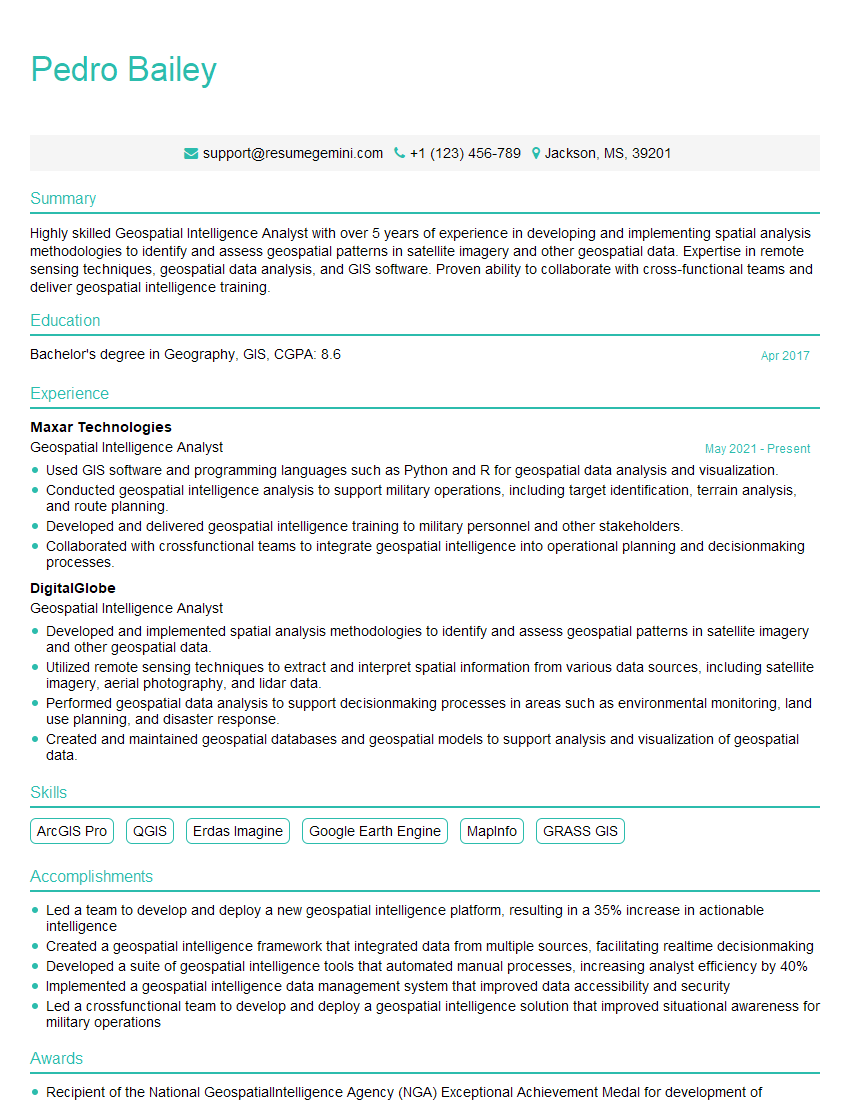
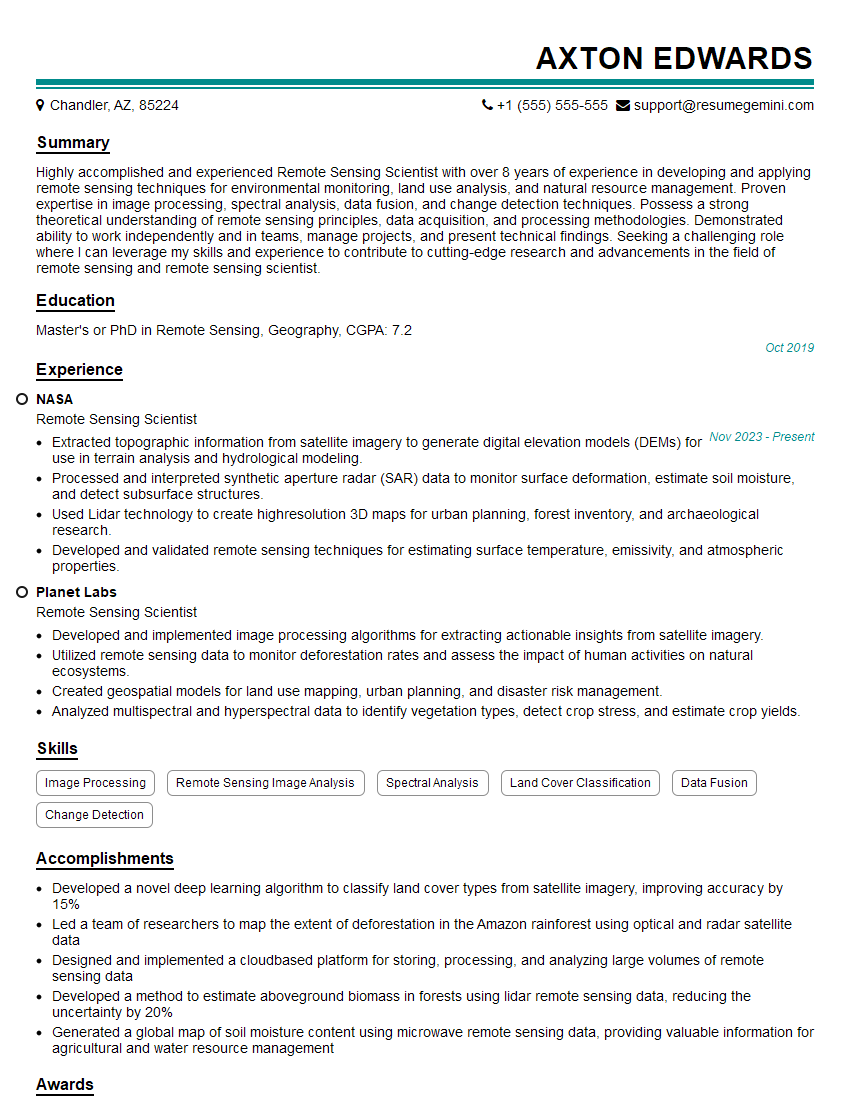
Mastering SAR imaging opens doors to exciting and impactful careers in fields like remote sensing, geospatial intelligence, and environmental science. To maximize your job prospects, it’s crucial to present your skills effectively. An ATS-friendly resume is essential for getting your application noticed by recruiters and hiring managers. We highly recommend leveraging ResumeGemini to craft a professional and compelling resume tailored to the SAR imaging field. ResumeGemini offers a user-friendly platform to build a standout resume, and examples of SAR imaging-focused resumes are available to guide you.
Explore more articles
Users Rating of Our Blogs
Share Your Experience
We value your feedback! Please rate our content and share your thoughts (optional).
What Readers Say About Our Blog
To the interviewgemini.com Webmaster.
Very helpful and content specific questions to help prepare me for my interview!
Thank you
To the interviewgemini.com Webmaster.
This was kind of a unique content I found around the specialized skills. Very helpful questions and good detailed answers.
Very Helpful blog, thank you Interviewgemini team.