Are you ready to stand out in your next interview? Understanding and preparing for Self-Care and Risk Management interview questions is a game-changer. In this blog, we’ve compiled key questions and expert advice to help you showcase your skills with confidence and precision. Let’s get started on your journey to acing the interview.
Questions Asked in Self-Care and Risk Management Interview
Q 1. Describe your experience developing and implementing a self-care plan for a team.
Developing a self-care plan for a team requires a holistic approach, focusing on individual needs while fostering a supportive team culture. I begin by conducting anonymous surveys and informal discussions to understand team members’ stress levels, work-life balance challenges, and preferred self-care activities. This helps avoid assumptions and creates a personalized plan.
Next, I facilitate workshops to educate the team on burnout prevention, stress management techniques (mindfulness, time management, exercise), and the importance of setting healthy boundaries. We collaboratively identify manageable self-care strategies, such as regular breaks, designated ‘no-meeting’ times, or team-building activities that encourage relaxation and connection.
Finally, I establish a system for tracking progress and providing support. This might involve regular check-ins, peer mentoring, or access to resources like wellness apps or employee assistance programs. The plan is iterative, adapting to evolving team needs and feedback. For example, in a previous role, I noticed a trend of late-night working. By introducing a ‘switch-off’ hour and providing training on efficient task management, we collectively improved work-life balance and reduced stress.
Q 2. How do you prioritize competing risks within a project?
Prioritizing competing risks involves a systematic approach. I typically use a risk matrix, plotting each risk against its likelihood and impact. This provides a visual representation, making it easy to identify high-priority risks. The likelihood is assessed based on the probability of the risk occurring, while the impact considers the severity of consequences if it materializes.
However, a purely quantitative approach isn’t sufficient. Qualitative factors, such as urgency, project dependencies, and resource availability, also influence prioritization. For instance, a risk with high likelihood but low impact might be addressed through preventative measures, while a low-likelihood but high-impact risk might require a contingency plan. Ultimately, the prioritization process is a balance of objective data and subjective judgment. It often involves discussion and agreement among stakeholders.
Think of it like a triage system in a hospital: life-threatening injuries (high impact, high likelihood) get immediate attention, while minor wounds (low impact, low likelihood) are treated later.
Q 3. Explain your approach to conducting a risk assessment.
My risk assessment approach follows a structured methodology. It begins with identifying potential hazards, using brainstorming sessions, checklists, and historical data. Next, I analyze each hazard, evaluating its likelihood and potential impact using a risk matrix as described earlier. This helps quantify and visualize the risk level.
Crucially, this process is collaborative. I involve subject matter experts, stakeholders, and the team to ensure comprehensive identification of risks and a shared understanding of their potential consequences. This fosters ownership and strengthens commitment to mitigation strategies. Following the assessment, we develop a risk response plan detailing mitigation strategies, contingency plans, and risk acceptance criteria. Regular monitoring and review of this plan are essential to adapt to changing circumstances.
For example, in a recent software development project, our risk assessment highlighted the possibility of a critical security vulnerability. Our response involved rigorous security testing, implementing a robust patching system, and developing a communication plan for rapid response in the event of a breach.
Q 4. What are the key indicators of burnout, and how can they be mitigated?
Burnout manifests through several key indicators, often categorized as emotional, physical, and behavioral. Emotionally, individuals might experience cynicism, detachment, and a sense of reduced personal accomplishment. Physically, fatigue, headaches, and digestive problems are common. Behaviorally, changes in productivity, increased absenteeism, and irritability can be observed.
Mitigating burnout requires a multi-pronged approach. Promoting a healthy work-life balance through flexible work arrangements, encouraging regular breaks, and promoting vacation time is crucial. Providing resources for stress management, such as mindfulness training or access to mental health services, is also important. Fostering a supportive team environment where open communication and mutual support are encouraged can significantly reduce burnout risk. Regular performance feedback and recognition of accomplishments helps restore a sense of purpose and accomplishment.
Q 5. How do you integrate self-care principles into a high-pressure work environment?
Integrating self-care into a high-pressure environment requires conscious effort and a proactive approach. It’s not about escaping the pressure but about managing it effectively. This begins with establishing clear boundaries, like defining specific working hours and consistently adhering to them. Regular breaks are essential; even short, mindful breaks can refresh the mind and prevent mental fatigue. Prioritizing tasks and learning to delegate effectively can reduce workload and stress. This approach isn’t about doing less but about working smarter.
Regular physical activity, adequate sleep, and a healthy diet are non-negotiable components of self-care. Encourage team members to utilize vacation time and provide support for their personal lives. Creating a culture that values work-life balance and prioritizes employee well-being is a critical aspect of a successful strategy. For instance, our team implemented ‘Wellness Wednesdays,’ where we engaged in team activities such as yoga or walking meetings, fostering a more relaxed and supportive work environment.
Q 6. Describe a time you identified a potential risk that others overlooked.
During a project launch, the team focused on marketing and sales projections, overlooking the potential impact of a competitor’s newly announced product. While others were confident in our sales forecasts, I recognized the risk of significant market share loss if we didn’t adapt our strategy. I presented my concerns using market research data and competitor analysis to illustrate the potential threat.
My analysis revealed a considerable overlap in our target market and the competitor’s new offering. I proposed a revised marketing plan that emphasized our product’s unique features and included a contingency plan to address potential decreased sales. The team ultimately adopted my suggestions, allowing us to mitigate the risk and retain a significant portion of our market share. This highlights the importance of considering broader market forces and not just internal factors when assessing potential risks.
Q 7. What are your preferred methods for stress management?
My preferred stress management methods are multifaceted and depend on the nature and intensity of the stress. Regular exercise is crucial for physical and mental well-being; I find running or cycling particularly effective for clearing my head. Mindfulness techniques, such as meditation and deep breathing, help manage anxiety and improve focus. I also prioritize quality time with loved ones and engage in hobbies, like reading and photography, to relax and recharge.
Crucially, I maintain a good work-life balance, ensuring adequate sleep and regular breaks. I actively avoid overcommitting and learn to say ‘no’ to additional tasks when necessary. Building strong social connections provides support and perspective during challenging times. It is a continuous process of self-awareness and experimenting with different methods to find what works best in any given situation.
Q 8. How do you quantify and communicate risk to different stakeholders?
Quantifying and communicating risk involves translating complex data into easily understandable information for diverse audiences. This requires a multi-faceted approach.
- Risk Assessment: We start by identifying potential hazards, analyzing their likelihood and impact (using scales like low, medium, high or assigning numerical probabilities and consequences). For example, a project delay might have a medium likelihood and high impact on budget. We then calculate a risk score – a product of likelihood and impact – to prioritize risks.
- Visualizations: Risk registers, heat maps, and dashboards are powerful tools. A heat map visually represents risks based on their score, making it clear which require immediate attention. A risk register provides detailed information on each identified risk.
- Tailored Communication: The communication style changes depending on the stakeholder. For executives, concise summaries with key risk indicators are sufficient. For project teams, a detailed breakdown with mitigation strategies is necessary. For example, an executive summary might focus on top 3 risks and their potential financial impact, while a project team would receive a breakdown of all identified risks with specific mitigation tasks and responsibilities.
- Scenario Planning: We explore different ‘what-if’ scenarios. This helps stakeholders understand potential consequences of different risks and the effectiveness of mitigation plans. For instance, we could model the impact of a supplier delay on project timelines and costs under various scenarios.
By using a combination of quantitative data and qualitative descriptions, we ensure that risk information is accessible, actionable, and relevant to all stakeholders.
Q 9. What strategies do you use to promote a culture of safety and wellness?
Promoting a culture of safety and wellness requires a holistic approach that integrates multiple strategies. It’s not just about policies; it’s about fostering a mindset.
- Leadership Commitment: Visible and consistent support from leadership is crucial. Leaders need to actively participate in safety initiatives and model safe behaviors.
- Open Communication: Creating a safe space for reporting near misses, incidents, and concerns without fear of retribution is essential. This includes regular safety meetings, feedback mechanisms, and anonymous reporting systems.
- Training and Education: Regular training programs are vital to ensure everyone understands safety procedures and protocols. This training should be engaging and tailored to different roles and responsibilities.
- Wellness Programs: Implementing employee assistance programs, stress management workshops, and promoting healthy lifestyle choices demonstrates a commitment to employee well-being. Examples include offering gym memberships, mindfulness sessions, or ergonomic assessments.
- Recognition and Rewards: Recognizing and rewarding individuals and teams for safe work practices reinforces positive behaviors and encourages continuous improvement.
Imagine a construction site where leadership regularly checks safety protocols, workers feel comfortable reporting hazards, and safety successes are celebrated. That’s the kind of culture we aim to build.
Q 10. How would you address a conflict between competing safety measures and project deadlines?
Conflicts between safety and deadlines are common challenges. The solution isn’t to compromise safety; it’s about finding creative solutions that address both.
- Risk Assessment: Thoroughly assess the risks associated with rushing the project, prioritizing those that directly impact safety. For example, a shortcut that saves time but increases the risk of injury needs immediate attention.
- Prioritization: Identify the most critical safety aspects and the most impactful tasks in the project timeline. Are there any tasks that can be delayed, outsourced, or streamlined without compromising safety?
- Collaboration and Communication: Engage all stakeholders (project managers, safety officers, team members) in a discussion to find a balance. Open communication is key to finding mutually agreeable solutions.
- Negotiation: Explore options like reallocating resources, adjusting the project scope, or requesting an extension. Provide data demonstrating the risks of compromising safety (financial and reputational costs).
- Documentation: Document all decisions, including the risks accepted, the mitigation strategies employed, and the rationale behind them. This protects against future liability.
For example, if a deadline for software release clashes with thorough security testing, the team might prioritize critical security vulnerabilities, release a minimum viable product, and plan for a later security update rather than compromising security for the sake of the deadline.
Q 11. Explain your understanding of different risk mitigation strategies.
Risk mitigation involves reducing the likelihood or impact of identified risks. Several strategies exist:
- Risk Avoidance: Completely eliminating the risk by not engaging in the activity. For example, not launching a product in a volatile market.
- Risk Reduction: Implementing measures to decrease the likelihood or impact of a risk. This might involve investing in safety equipment or improving training.
- Risk Transfer: Shifting the risk to a third party, such as through insurance or outsourcing.
- Risk Acceptance: Acknowledging the risk and accepting the potential consequences. This is usually appropriate for low-impact risks.
- Risk Monitoring and Control: Continuously tracking the risk and adjusting mitigation strategies as needed.
For example, a construction company might reduce the risk of workplace accidents by investing in better safety equipment (risk reduction), transfer the risk of liability through insurance (risk transfer), and accept minor risks like minor equipment malfunctions (risk acceptance).
Q 12. Describe your experience with risk reporting and analysis tools.
My experience encompasses a range of risk reporting and analysis tools, both quantitative and qualitative. I’m proficient in using software such as:
- Spreadsheet software (Excel, Google Sheets): For building risk registers, calculating risk scores, and tracking mitigation efforts.
- Project management software (Jira, Asana, MS Project): For integrating risk management into project workflows and tracking risk-related tasks.
- Specialized risk management software: These platforms often offer advanced features for risk assessment, analysis, and reporting, providing more sophisticated modeling and visualization capabilities.
Beyond software, I utilize frameworks such as Failure Mode and Effects Analysis (FMEA) and Fault Tree Analysis (FTA) to systematically identify and analyze potential failures and their consequences. I am also experienced in developing custom reporting dashboards to visualize key risk indicators and provide clear, concise reports to stakeholders. My proficiency ensures data is accurately captured, analyzed, and presented effectively, informing informed decision-making.
Q 13. How do you ensure the effectiveness of your self-care strategies?
Ensuring the effectiveness of my self-care strategies involves regular monitoring, adjustments, and honest self-reflection.
- Tracking and Measurement: I track my progress in key areas, like sleep, exercise, and stress levels. This provides data-driven insights into what’s working and what needs improvement. I use journals, apps, or simple spreadsheets.
- Regular Review: I periodically review my self-care plan to ensure it remains relevant to my current needs and challenges. Life changes, so my self-care routine must adapt accordingly.
- Flexibility and Adaptation: I embrace flexibility and adjust my plan based on changing circumstances. If a strategy isn’t working, I’m not afraid to try something different.
- Mindfulness and Self-Awareness: Regular reflection helps me understand my triggers, stressors, and patterns. This allows for proactive adjustments to my self-care plan.
- Seeking Support: I’m not afraid to seek professional help when needed, such as therapy or coaching. It’s a sign of strength, not weakness.
Effective self-care is not a one-size-fits-all approach; it’s a dynamic and evolving process requiring consistent attention and adaptation.
Q 14. How would you handle a situation where a team member shows signs of burnout?
Addressing burnout requires a sensitive and empathetic approach, focusing on both immediate support and long-term prevention.
- Private Conversation: I would schedule a private conversation with the team member, creating a safe space for them to share their experiences without judgment. Active listening is paramount.
- Assessment: I’d gently assess the situation, looking for signs of burnout (exhaustion, cynicism, reduced professional efficacy). I might use validated assessment tools to gain a clearer picture.
- Support and Resources: I’d connect the team member with available resources, such as employee assistance programs, mental health professionals, or stress management workshops.
- Workload Management: We’d collaboratively assess their workload, identifying tasks that can be delegated, postponed, or removed. Setting realistic expectations and providing clear boundaries is crucial.
- Encouragement of Self-Care: I’d encourage them to prioritize their self-care, offering suggestions and support. This might involve suggesting short breaks, encouraging exercise, or promoting healthy eating habits.
- Follow-up and Monitoring: Regular check-ins are essential to monitor their progress and provide ongoing support. We’d adjust our strategies based on their feedback and progress.
Remember, burnout is not a personal failing; it’s often a consequence of systemic issues. Addressing both the individual’s needs and the organizational factors contributing to burnout is vital for a sustainable solution.
Q 15. Describe your experience with conducting root cause analysis of incidents.
Root cause analysis (RCA) is a systematic process for identifying the underlying causes of incidents, rather than just addressing the symptoms. My experience involves using various techniques, including the '5 Whys', fault tree analysis, and fishbone diagrams. For instance, in a previous role, we experienced a significant data breach. Instead of simply patching the security vulnerability, we used the '5 Whys' technique to drill down: Why was the vulnerability exploited? Because outdated software lacked critical security updates. Why weren’t the updates applied? Due to a lack of clear communication and training for the IT team. Why was there inadequate training? Because budget constraints limited professional development opportunities. Why were budget constraints in place? Because of a misallocation of funds in the previous year’s planning. This helped us implement systemic changes, including software update mandates, improved training programs, and a revised budget allocation process to prevent similar incidents.
In another case, we utilized fault tree analysis for a near-miss incident involving a faulty piece of equipment. This method allowed us to map out all potential contributing factors and their probabilities, helping us prioritize preventative maintenance and improve safety protocols.
Career Expert Tips:
- Ace those interviews! Prepare effectively by reviewing the Top 50 Most Common Interview Questions on ResumeGemini.
- Navigate your job search with confidence! Explore a wide range of Career Tips on ResumeGemini. Learn about common challenges and recommendations to overcome them.
- Craft the perfect resume! Master the Art of Resume Writing with ResumeGemini’s guide. Showcase your unique qualifications and achievements effectively.
- Don’t miss out on holiday savings! Build your dream resume with ResumeGemini’s ATS optimized templates.
Q 16. How do you balance the need for safety with operational efficiency?
Balancing safety and operational efficiency is crucial. It’s not an either/or proposition; rather, it’s about creating a culture where safety is inherently woven into the operational fabric. Think of it like building a high-performance car – you need both speed (efficiency) and strong safety features (seatbelts, airbags) to ensure both performance and safety. This balance is achieved through proactive risk assessment, identifying potential hazards, implementing control measures (engineering controls, administrative controls, personal protective equipment), and regularly reviewing their effectiveness.
For example, implementing automated safety systems reduces the reliance on human intervention, improving both safety and efficiency. Regular safety training and communication helps foster a culture where employees are empowered to identify and report hazards without fear of reprisal. A well-designed system ensures that safety improvements don’t lead to significant workflow disruptions but instead streamline processes and prevent costly incidents.
Q 17. What are the ethical considerations related to risk management?
Ethical considerations in risk management are paramount. Transparency and fairness are essential. Risk assessments should be objective and not manipulated to suit specific agendas. For example, neglecting to report a significant risk because it might negatively impact profits is unethical. Similarly, ensuring that all stakeholders – employees, customers, the public – are considered and their safety prioritized is crucial. Privacy concerns are also key; data collected during risk assessments must be handled responsibly and ethically, in compliance with relevant privacy regulations.
In short, ethical risk management means prioritizing the well-being of all affected parties and acting with integrity and accountability. It involves a commitment to continuous improvement and a willingness to learn from mistakes.
Q 18. Explain your knowledge of relevant safety regulations and standards.
My knowledge of safety regulations and standards is extensive and spans various domains, depending on the specific industry. I’m familiar with OSHA standards (in the US context), ISO standards (e.g., ISO 45001 for occupational health and safety), and other relevant industry-specific regulations. I understand the importance of compliance and the potential legal and financial ramifications of non-compliance. For example, I have experience working with regulations concerning hazardous materials handling, workplace ergonomics, and emergency response procedures. My expertise allows me to interpret complex regulations and apply them to real-world scenarios, ensuring a safe and compliant work environment.
Q 19. How do you build a strong safety culture within an organization?
Building a strong safety culture is a continuous process, not a one-time project. It starts with leadership commitment and visible support. Managers must champion safety, and it should be integrated into the organization’s values and goals. Open communication is vital; employees must feel comfortable reporting hazards and near misses without fear of retribution. Regular safety training, tailored to the specific risks faced by the organization, is crucial. This should extend beyond simple compliance training and focus on empowering employees to take ownership of their safety and the safety of their colleagues.
Incentivizing safe behavior through reward programs, recognizing and celebrating success, and actively investigating incidents to learn and improve are effective ways to reinforce a positive safety culture. This creates a culture of shared responsibility and proactive risk management where safety is everyone’s concern.
Q 20. Describe your experience with emergency preparedness planning.
My experience with emergency preparedness planning includes developing and implementing comprehensive plans, conducting drills and exercises, and collaborating with emergency response teams. This process typically involves identifying potential hazards, assessing their likelihood and impact, developing mitigation strategies, and establishing communication protocols. For example, I have been involved in creating evacuation plans, developing crisis communication strategies, and establishing procedures for handling various types of emergencies (e.g., fire, natural disaster, security breaches). Regular testing and updating of the plans, based on lessons learned from drills and real-world events, is essential for maintaining preparedness.
The goal is to minimize disruptions, protect personnel, and ensure business continuity during emergencies. The plan should be clearly documented, easily accessible, and regularly reviewed and updated.
Q 21. How do you stay updated on current best practices in self-care and risk management?
Staying current with best practices in self-care and risk management requires a multi-faceted approach. I actively participate in professional organizations, attending conferences and webinars. I subscribe to relevant journals and publications, and regularly review industry news and research. Online learning platforms and professional development courses help me keep abreast of new techniques and methodologies. Furthermore, networking with colleagues and experts in the field provides valuable insights and perspectives. Continuous learning is vital in this ever-evolving field, ensuring that my skills and knowledge remain relevant and up-to-date.
Q 22. How do you measure the success of a risk management program?
Measuring the success of a risk management program isn’t about a single metric, but rather a holistic assessment across several key areas. It’s like judging the health of a tree – you need to look at the leaves, branches, and roots.
Reduced Frequency and Severity of Incidents: This is the most straightforward measure. A successful program will demonstrably decrease the number of incidents (e.g., accidents, data breaches, project failures) and the severity of their impact (e.g., financial losses, reputational damage).
Improved Compliance: Regular audits and monitoring should show improved adherence to relevant regulations and internal policies. This can be measured through audit scores, the number of non-compliance issues, and the speed of remediation.
Enhanced Risk Awareness and Culture: Effective programs foster a culture of safety and proactive risk identification. This can be assessed through employee surveys, feedback mechanisms, and observations of workplace behavior. Do people actively report near misses and potential hazards?
Cost-Effectiveness: While the program itself has a cost, it should ultimately save the organization money by preventing larger losses. A cost-benefit analysis comparing the program’s cost to the avoided losses is crucial.
Improved Stakeholder Confidence: Successful risk management boosts confidence among stakeholders (investors, customers, employees) in the organization’s ability to manage its challenges and safeguard their interests.
For example, in a healthcare setting, a successful risk management program might demonstrate a reduction in patient falls, medication errors, and infections, alongside improved staff training and compliance with hygiene protocols.
Q 23. Describe your experience with risk transfer strategies, such as insurance.
Risk transfer, primarily through insurance, is a vital component of a comprehensive risk management strategy. It’s like having a safety net. It doesn’t prevent the risk, but it mitigates the financial impact if the risk materializes.
My experience includes working with various types of insurance policies, including general liability, professional indemnity, cyber insurance, and product liability, tailoring coverage to specific organizational needs. I have been involved in:
Needs Assessment: Identifying the organization’s key risks and determining the appropriate insurance coverage required to address them.
Policy Selection: Evaluating different insurance providers and policy options to ensure optimal coverage at a competitive price. This involves understanding policy exclusions and limitations.
Claims Management: Working with insurance providers to file claims and ensure prompt and efficient processing in case of an incident.
Policy Renewal and Optimization: Regularly reviewing insurance policies to ensure continued relevance and cost-effectiveness.
For example, I worked with a small tech startup to secure cyber insurance to protect them against data breaches, a significant risk given their business model. This involved analyzing their data security practices and recommending specific policy provisions to cover potential financial losses and legal liabilities.
Q 24. How do you prioritize risk mitigation efforts based on likelihood and impact?
Prioritizing risk mitigation efforts requires a structured approach, often using a risk matrix. This matrix plots the likelihood and impact of each risk, allowing for a clear visualization of which risks demand immediate attention.
The process involves:
Identifying Risks: A thorough risk assessment process, often involving brainstorming sessions and data analysis, is the starting point. This creates a comprehensive inventory of potential risks.
Assessing Likelihood and Impact: Each risk is assigned a probability (likelihood) of occurrence and a severity rating (impact). These are often categorized using a qualitative scale (e.g., low, medium, high) or quantitative scale (e.g., percentage probability, monetary value of potential loss).
Creating a Risk Matrix: The likelihood and impact scores are plotted on a matrix, usually a 2×2 or 3×3 grid. This clearly highlights the high-priority risks located in the high-likelihood, high-impact quadrant.
Prioritizing Mitigation: Resources are allocated to address the high-priority risks first, using appropriate mitigation strategies (avoidance, reduction, transfer, acceptance). Lower-priority risks might be monitored regularly, with mitigation action taken only if their likelihood or impact increases significantly.
Imagine a project with risks such as a key supplier failing (high likelihood, high impact), a minor software bug (low likelihood, low impact), and potential regulatory changes (medium likelihood, high impact). The risk matrix would guide the team to focus first on the supplier issue, then the regulatory change, and finally the minor bug.
Q 25. What are your strengths and weaknesses in the area of risk management?
My strengths in risk management lie in my analytical skills, my ability to communicate complex information clearly, and my proactive approach to identifying and mitigating risks. I excel at translating complex data into actionable insights and building consensus among stakeholders.
One of my weaknesses is my tendency to be somewhat detail-oriented, which can sometimes slow down the decision-making process. To mitigate this, I actively focus on prioritizing tasks and delegating effectively. I also seek feedback to ensure that my thoroughness doesn’t become counterproductive.
Q 26. How would you handle resistance to implementing new self-care or safety initiatives?
Resistance to new self-care or safety initiatives is often rooted in fear, lack of understanding, or perceived inconvenience. Addressing this requires a multi-faceted approach.
Education and Communication: Clearly explaining the rationale behind the initiative, its benefits, and how it addresses specific risks is vital. This should involve various communication channels – presentations, training sessions, written materials, and informal discussions.
Involving Stakeholders: Actively seeking input from employees during the design and implementation phases fosters ownership and reduces resistance. This shows that their concerns are valued.
Addressing Concerns: Directly addressing concerns and providing solutions is crucial. This could involve addressing perceived inconvenience by providing support and training, and alleviating fears by demonstrating the safety aspects of the initiative.
Pilot Programs: Testing the initiative on a small scale before full implementation helps identify and address potential issues and build confidence.
Incentives and Recognition: Positive reinforcement can help encourage adoption. This could involve rewards for participation, recognition for early adopters, or highlighting success stories.
For instance, when introducing a new safety procedure, I’d start by demonstrating the procedure’s benefits with real-world examples, address potential concerns during a team meeting, and offer training and support to ensure everyone feels comfortable using it.
Q 27. Describe your experience with data analysis techniques relevant to risk assessment.
Data analysis is essential for effective risk assessment. I’m proficient in several techniques, including:
Descriptive Statistics: Analyzing historical data to identify trends, patterns, and frequencies of incidents. This can reveal potential risk factors.
Regression Analysis: Identifying correlations between different variables to understand the relationship between risk factors and the occurrence of incidents. For example, analyzing the correlation between employee training hours and the rate of accidents.
Predictive Modeling: Using historical data and statistical models to predict the likelihood of future incidents. This allows for proactive risk mitigation.
Data Visualization: Presenting complex data in an easily understandable format (charts, graphs) to communicate risk information effectively to stakeholders.
In a previous role, I used regression analysis to determine the factors influencing employee absenteeism, ultimately identifying a correlation between long working hours and increased sick days. This led to targeted interventions to improve employee well-being and reduce absenteeism.
Q 28. How do you communicate effectively about safety and risk management issues?
Effective communication about safety and risk management is paramount. It’s not just about conveying information; it’s about fostering a culture of open communication and collaboration.
My approach involves:
Tailoring the Message: Communicating information in a way that is appropriate for the audience. Technical information for experts versus simple explanations for non-technical staff.
Using Multiple Channels: Employing a variety of communication channels (meetings, emails, posters, intranet articles) to ensure that everyone receives and understands the message.
Visual Aids: Using charts, graphs, and infographics to make complex data easily understandable.
Active Listening and Feedback: Creating opportunities for two-way communication, actively listening to concerns, and incorporating feedback into future initiatives.
Storytelling: Using real-life examples and case studies to make safety messages relatable and memorable. This makes abstract concepts tangible.
For example, instead of simply stating ‘follow safety procedures,’ I’d share a story about an incident that could have been avoided by following a specific procedure, emphasizing the human impact and the importance of adherence.
Key Topics to Learn for Self-Care and Risk Management Interview
- Defining Self-Care in a Professional Context: Understanding the boundaries between personal well-being and professional performance, and how to effectively manage both.
- Stress Management Techniques: Exploring practical strategies for mitigating workplace stress, including time management, mindfulness, and boundary setting. Consider discussing specific techniques and their applicability in high-pressure situations.
- Risk Identification and Assessment: Developing a strong understanding of identifying potential risks, analyzing their impact, and prioritizing mitigation strategies. This includes understanding different risk assessment methodologies.
- Risk Mitigation and Control Strategies: Exploring proactive and reactive approaches to risk management, including preventative measures, contingency planning, and crisis management. Practical examples in a professional setting are key.
- Communication and Collaboration in Risk Management: Highlighting the importance of effective communication in conveying risk information to stakeholders and collaborating effectively within teams to implement mitigation strategies.
- Ethical Considerations in Self-Care and Risk Management: Discuss the ethical implications of decisions related to both self-care and risk management, especially in situations involving potential conflicts of interest.
- Building Resilience: Understanding the importance of resilience in navigating challenges and setbacks, both personally and professionally. Explore strategies for developing and maintaining resilience.
- Work-Life Integration: Exploring strategies for balancing professional responsibilities with personal well-being to achieve sustainable career success and avoid burnout. Consider the practical applications of this in different workplace environments.
Next Steps
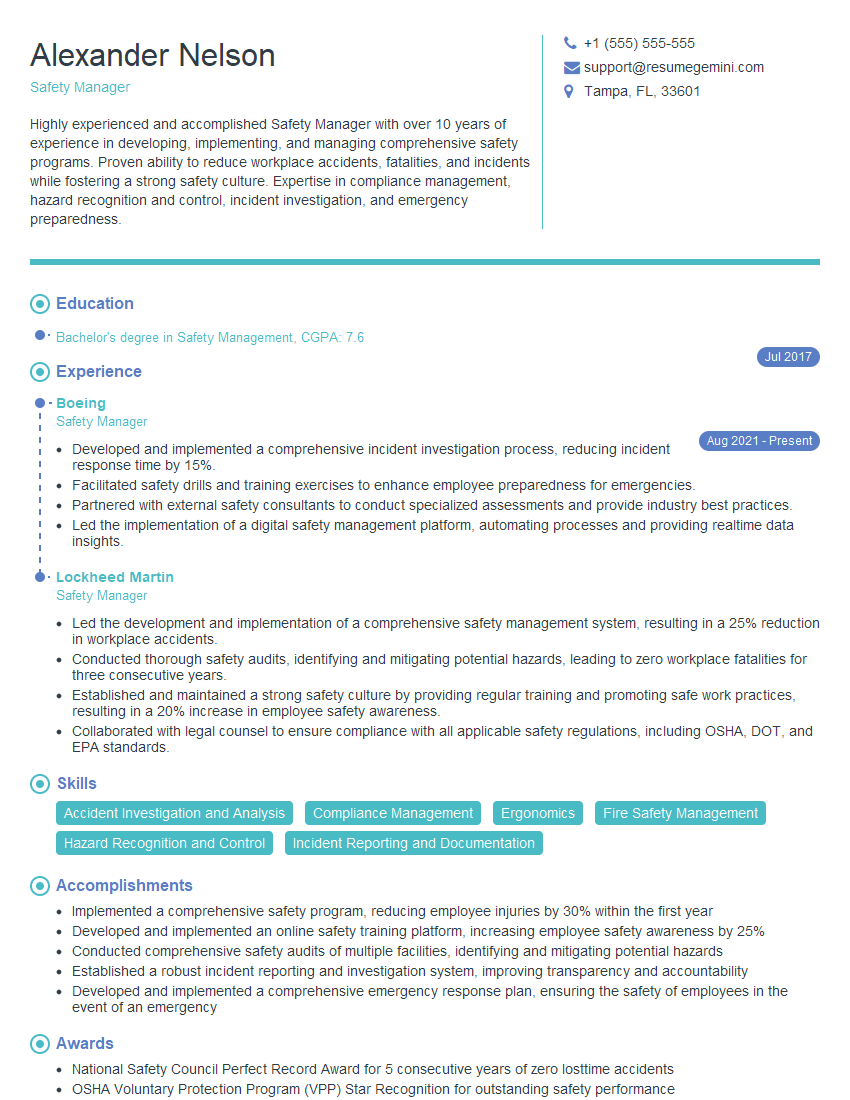
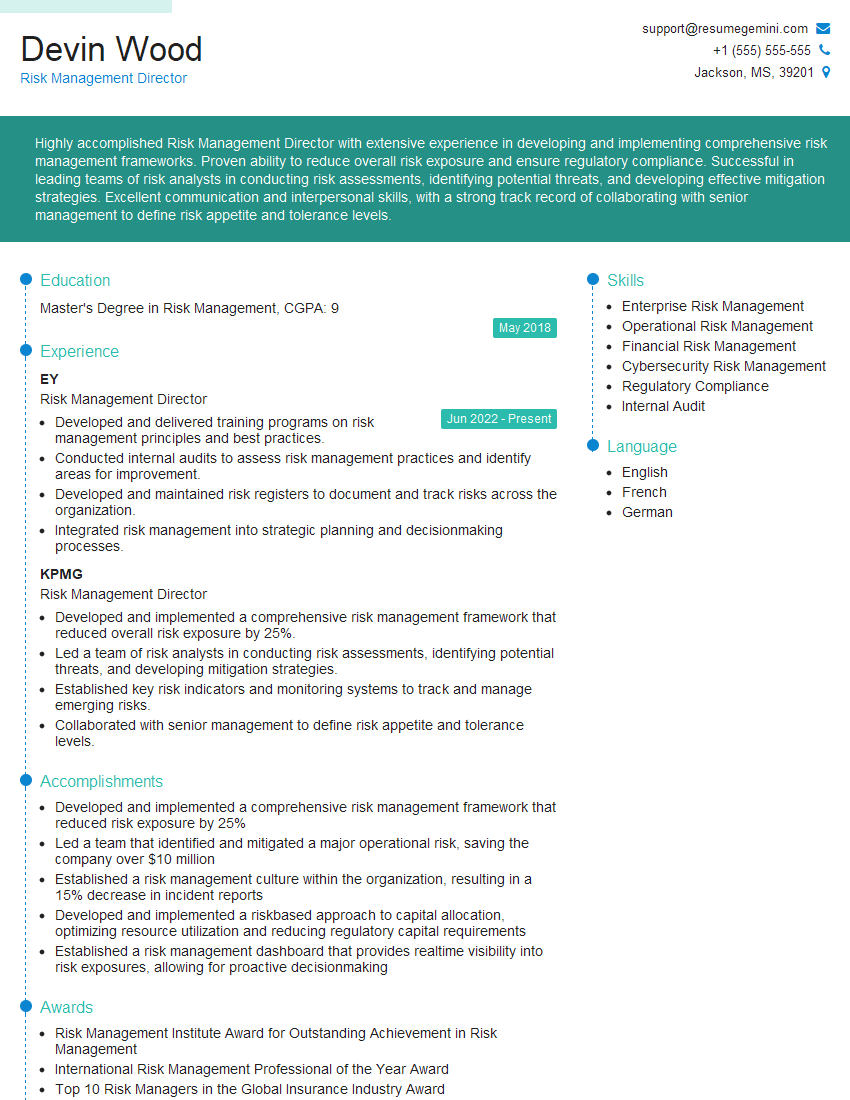
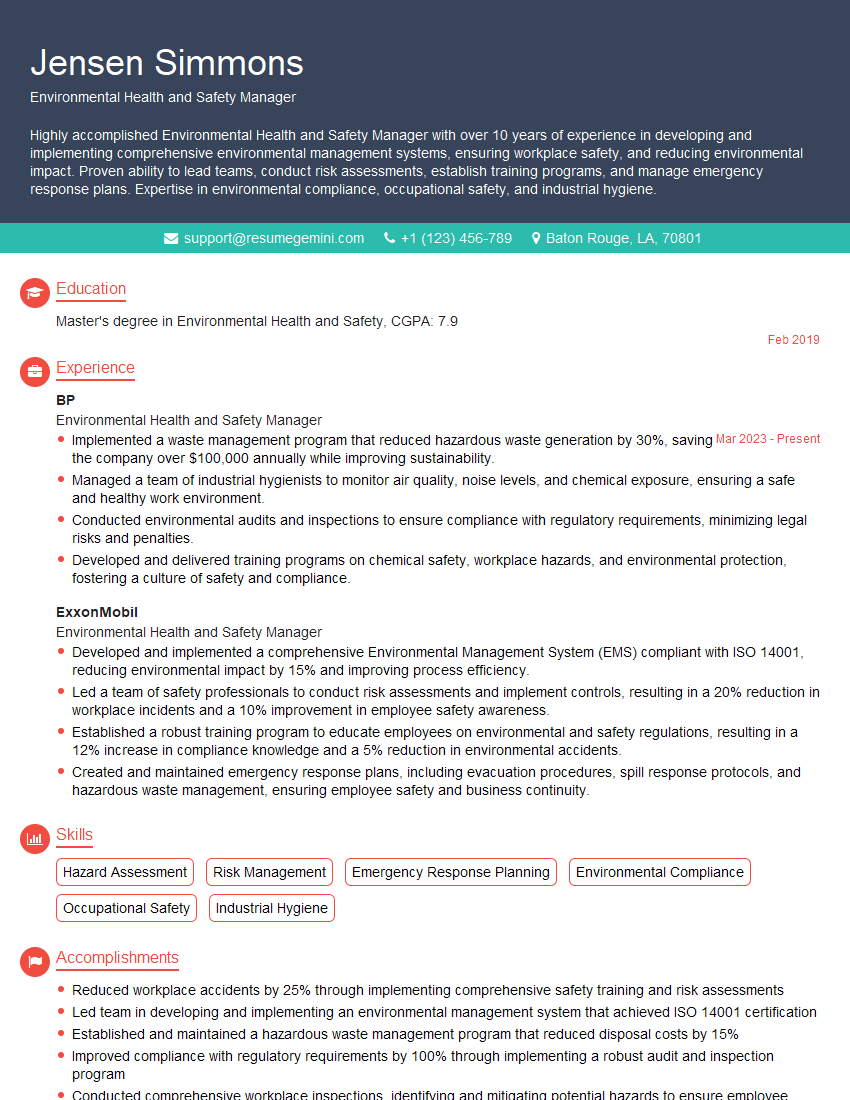
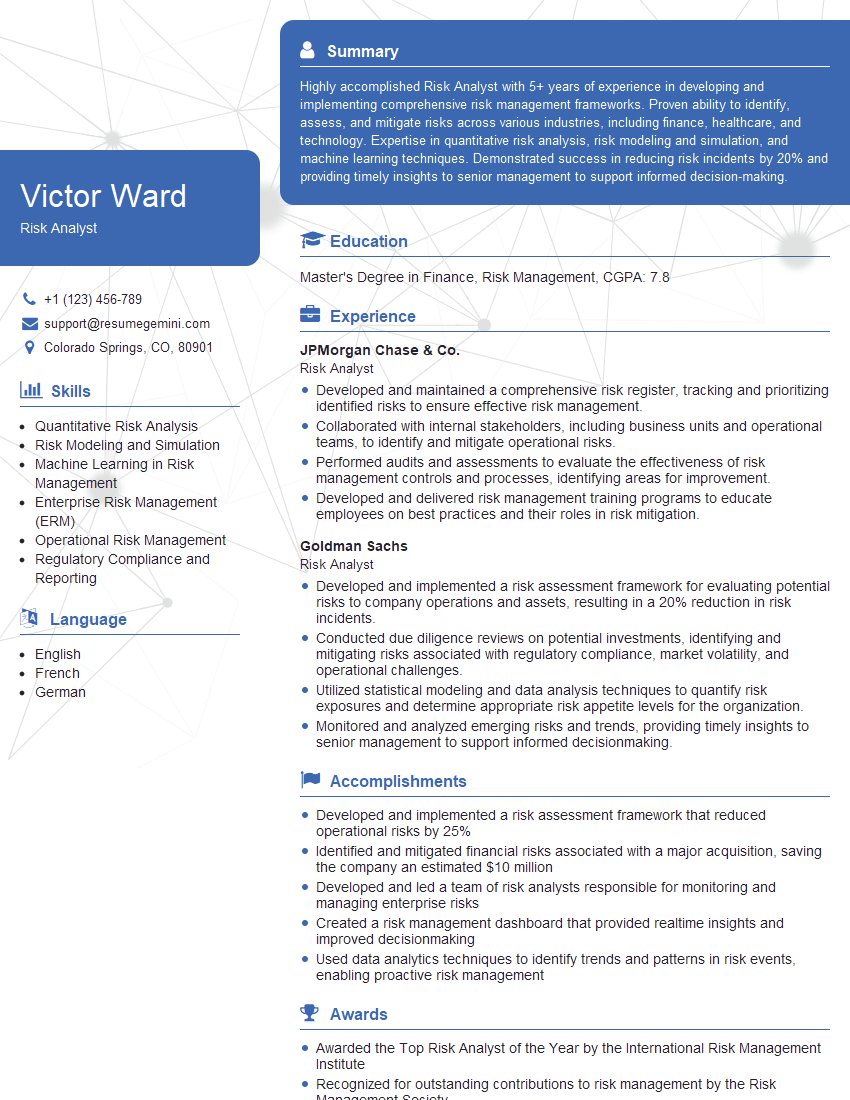
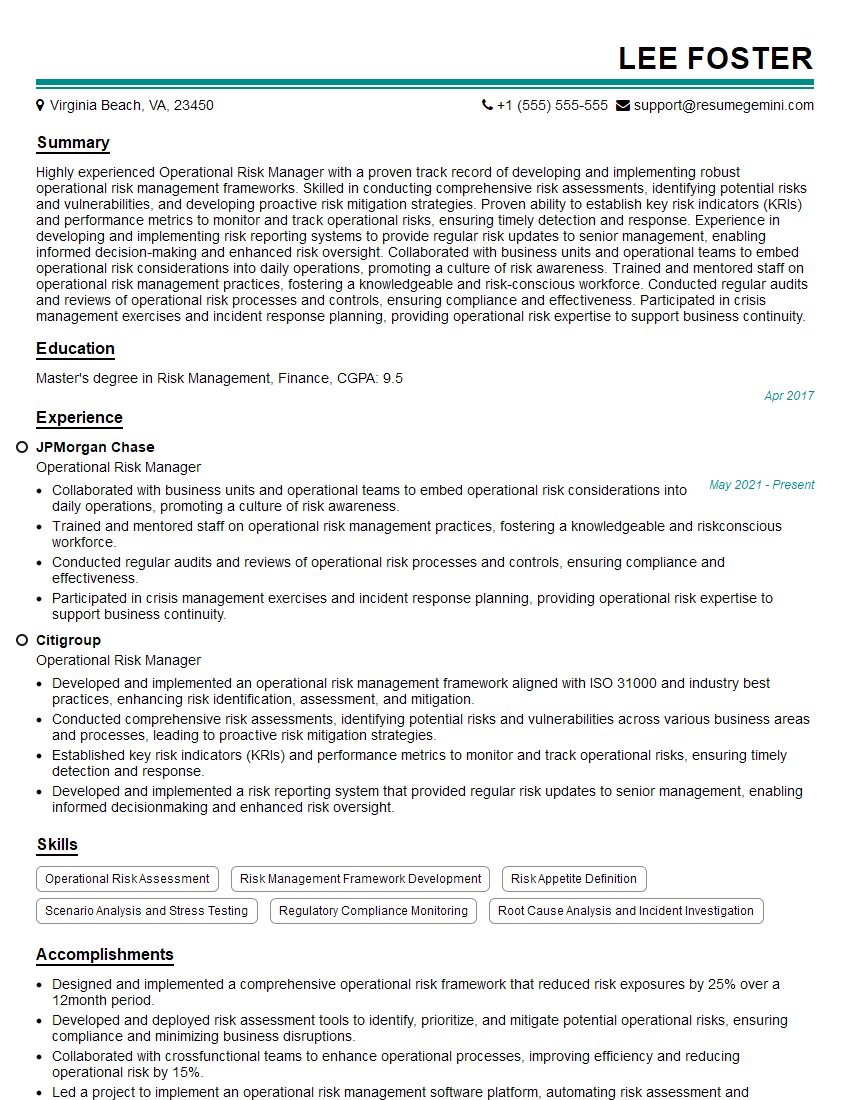
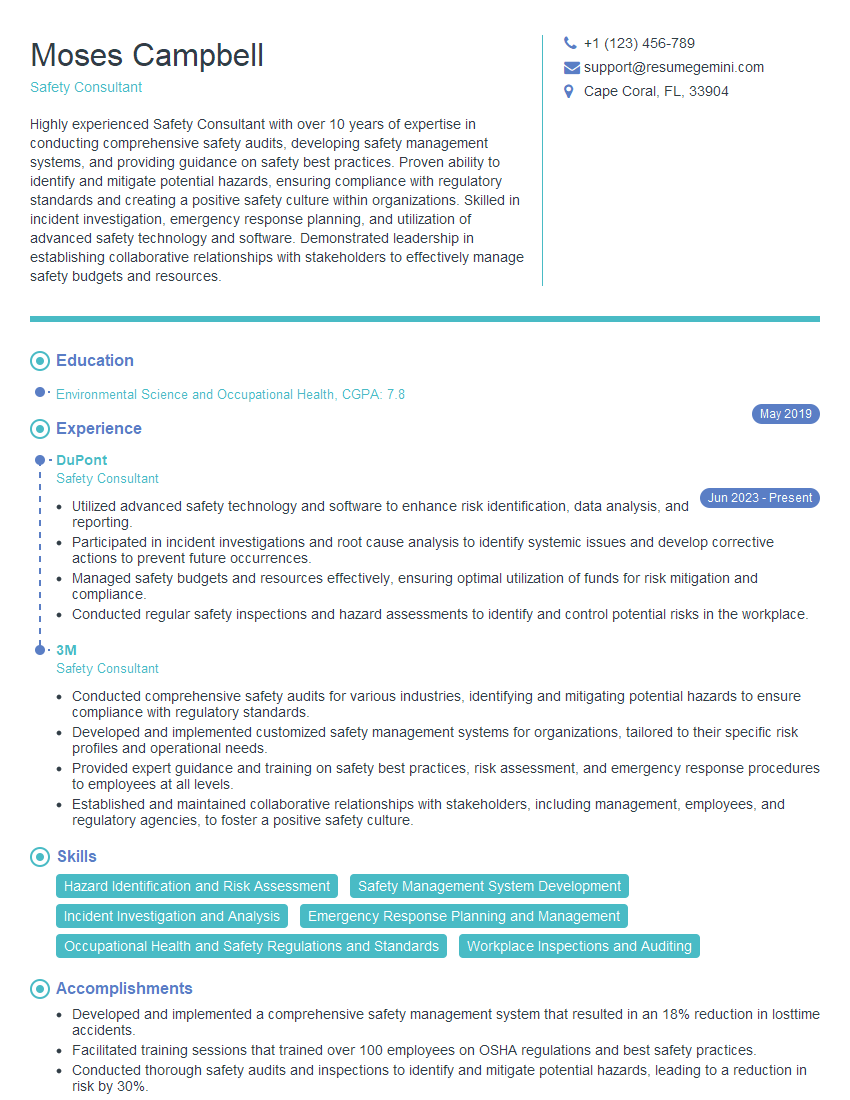
Mastering Self-Care and Risk Management is crucial for career advancement. It demonstrates a holistic approach to professional life, highlighting your ability to not only manage tasks effectively but also prioritize your well-being and the well-being of your team. To maximize your job prospects, create a compelling, ATS-friendly resume that clearly showcases these skills. ResumeGemini is a trusted resource that can help you build a professional resume that highlights your unique qualifications. We provide examples of resumes tailored to Self-Care and Risk Management to help you get started.


Explore more articles
Users Rating of Our Blogs
Share Your Experience
We value your feedback! Please rate our content and share your thoughts (optional).
What Readers Say About Our Blog
To the interviewgemini.com Webmaster.
Very helpful and content specific questions to help prepare me for my interview!
Thank you
To the interviewgemini.com Webmaster.
This was kind of a unique content I found around the specialized skills. Very helpful questions and good detailed answers.
Very Helpful blog, thank you Interviewgemini team.