Interviews are opportunities to demonstrate your expertise, and this guide is here to help you shine. Explore the essential Shielding and Dosimetry interview questions that employers frequently ask, paired with strategies for crafting responses that set you apart from the competition.
Questions Asked in Shielding and Dosimetry Interview
Q 1. Explain the difference between absorbed dose and equivalent dose.
Absorbed dose and equivalent dose are both measures of radiation exposure, but they quantify different aspects. Absorbed dose measures the energy deposited by ionizing radiation in a unit mass of matter. It’s simply the amount of radiation energy absorbed, regardless of the type of radiation. The unit is the Gray (Gy), where 1 Gy equals 1 joule of energy absorbed per kilogram of tissue. Imagine throwing a handful of marbles (radiation) at a sandcastle (tissue). The absorbed dose is simply the total energy the marbles transferred to the sandcastle.
Equivalent dose, on the other hand, takes into account the biological effectiveness of different types of radiation. Different types of radiation cause different amounts of damage to living tissue, even if they deposit the same amount of energy. Equivalent dose is calculated by multiplying the absorbed dose by a radiation weighting factor (WR), which reflects the relative biological effectiveness (RBE) of the radiation. The unit is the Sievert (Sv). For example, alpha particles have a higher WR than gamma rays, meaning that the same absorbed dose of alpha particles will result in a higher equivalent dose because alpha particles cause more damage per unit of energy deposited. Going back to our sandcastle analogy, equivalent dose considers not just how many marbles hit the sandcastle but also how much damage each marble type inflicts. Alpha particles might be like heavier, more destructive marbles compared to lighter gamma ray marbles.
Q 2. Describe the different types of radiation and their shielding requirements.
Radiation comes in various forms, each requiring specific shielding strategies:
- Alpha particles: These are large, heavy, and positively charged particles. They have low penetration power, easily stopped by a sheet of paper or even the outer layer of skin. Shielding is relatively straightforward.
- Beta particles: These are lighter and faster than alpha particles. They can penetrate further, requiring shielding such as thin sheets of aluminum or plastic.
- Gamma rays and X-rays: These are high-energy electromagnetic radiation. They possess high penetration power and require denser shielding materials like lead, concrete, or depleted uranium. The thickness required depends on the energy of the radiation and the desired level of attenuation.
- Neutrons: These are uncharged particles that interact differently with matter than charged particles. They require specialized shielding materials like hydrogenous materials (water, polyethylene) and heavy materials (lead, boron) to moderate and absorb them. This often involves a combination of materials for optimal shielding.
The choice of shielding material and thickness depends on the energy and type of radiation, the desired level of attenuation, and practical considerations such as cost and space.
Q 3. What are the main principles of radiation protection?
The main principles of radiation protection are based on the ALARA principle and the three basic principles: time, distance, and shielding.
- Time: Minimize the time spent near a radiation source. The shorter the exposure time, the lower the dose received.
- Distance: Increase the distance from the radiation source. Radiation intensity decreases with the square of the distance (inverse square law). Doubling the distance reduces the dose by a factor of four.
- Shielding: Use appropriate shielding materials to absorb or attenuate radiation. The choice of shielding material and its thickness depends on the type and energy of the radiation.
These principles are fundamental to ensuring radiation safety in any setting involving ionizing radiation.
Q 4. How do you calculate the shielding thickness required for a specific radiation source?
Calculating shielding thickness involves understanding the attenuation properties of the shielding material and the radiation source’s intensity and energy. It’s not a simple calculation, and specialized software or tables are often used. The calculation often involves the following steps:
- Determine the source activity and energy spectrum: You need to know how much radiation is emitted and its energy distribution.
- Specify the required dose reduction: What level of radiation exposure is acceptable at the shielding location?
- Select a shielding material: Choose a material suitable for the radiation type and energy (e.g., lead for gamma rays, concrete for neutrons).
- Use attenuation equations or tables: These equations or tables provide the relationship between the shielding material’s thickness and the reduction in radiation intensity. The half-value layer (HVL) – the thickness of material that reduces the radiation intensity by half – is a commonly used parameter.
- Iterative calculations: Often, an iterative process is needed to find the appropriate thickness that meets the dose reduction requirement.
Specialized software packages are often employed for accurate and efficient shielding calculations, as these calculations can be quite complex, particularly when dealing with multiple radiation sources or complex geometries.
Q 5. Explain the concept of ALARA (As Low As Reasonably Achievable).
ALARA, which stands for As Low As Reasonably Achievable, is a fundamental principle in radiation protection. It emphasizes that radiation exposure should be kept as low as possible, while remaining practical and economically feasible. It’s not about achieving zero exposure—that’s often unrealistic—but about optimizing radiation safety practices to minimize unnecessary exposure. It involves a cost-benefit analysis that balances radiation safety with practical and economic considerations. For instance, adding an extra layer of shielding might significantly reduce radiation exposure, but the cost of the extra shielding and the potential disruption during installation might not be justified by the minimal decrease in exposure. ALARA guides decision-making towards achieving the lowest achievable radiation exposure that’s reasonably practical.
Q 6. What are the different methods for personnel dosimetry?
Personnel dosimetry uses various methods to measure the radiation dose received by individuals. Common methods include:
- Film badges: These use photographic film that darkens when exposed to radiation. The degree of darkening is proportional to the dose received. While relatively inexpensive, they are less accurate and have limited dynamic range.
- Thermoluminescent dosimeters (TLDs): These contain materials that store energy when exposed to radiation and release this energy as light when heated. The amount of light emitted is proportional to the dose received. TLDs are more sensitive and accurate than film badges.
- Optically stimulated luminescence dosimeters (OSLDs): Similar to TLDs, OSLDs store energy and release it as light when stimulated by light. OSLDs are highly sensitive and offer a wider dose range.
- Electronic personal dosimeters (EPDs): These are electronic devices that directly measure radiation dose. They offer real-time dose readings and can provide immediate feedback to the wearer. They are more expensive than passive dosimeters but provide significant advantages in certain circumstances.
The choice of dosimeter depends on the type and energy of radiation being monitored, the required accuracy, and cost constraints.
Q 7. Discuss the limitations of different types of radiation detectors.
Different radiation detectors have limitations:
- Gas-filled detectors (e.g., Geiger-Müller counters): These are simple and relatively inexpensive but have limited energy resolution and can suffer from dead time (inability to detect further radiation immediately after detecting a radiation event). They are also prone to counting inaccuracies at high radiation levels.
- Scintillation detectors: These offer good energy resolution but are more complex and expensive than gas-filled detectors. Their performance can be affected by temperature and light levels.
- Semiconductor detectors: These offer excellent energy resolution and are widely used in various applications, but they are relatively expensive and require careful calibration and handling.
- Film badges: As mentioned previously, these are limited in sensitivity, energy range, and accuracy compared to other modern dosimeters.
Understanding the limitations of a specific detector is crucial for accurate radiation measurement and interpretation. Choosing the right detector for the specific application is essential to ensure reliable and meaningful results.
Q 8. How do you interpret a personnel dosimetry report?
Interpreting a personnel dosimetry report involves understanding the different types of radiation measured, the units used, and the regulatory limits. The report typically shows the dose received from different types of radiation (e.g., beta, gamma, neutron) over a specific period, usually a month or quarter. Each type of radiation will have its respective dose equivalent, measured in milliSieverts (mSv).
Let’s break it down: First, you’ll look at the deep dose equivalent (DDE), representing the dose to the body’s deeper tissues. This is crucial for assessing overall radiation exposure. Next, you’ll examine the shallow dose equivalent (SDE), indicating the dose to the skin, crucial for beta radiation exposure. Some reports also include the dose to the lens of the eye. These values are compared to regulatory limits; exceeding the limits triggers an investigation into potential overexposure and necessitates corrective actions. For instance, a consistently high DDE might indicate a need for improved shielding in a work area or changes to operational procedures.
The report may also include information about the type of dosimeter used, its calibration date, and any unusual events that might affect the reading. It’s vital to understand the uncertainties associated with the measurements and to know the reporting limits of the dosimeter. A low reading doesn’t necessarily mean zero exposure, simply that it is below the detection threshold.
Q 9. Describe the regulations and standards related to radiation safety in your country/region.
Radiation safety regulations and standards vary by country and region but generally follow the recommendations of international organizations like the International Atomic Energy Agency (IAEA) and the International Commission on Radiological Protection (ICRP). In many jurisdictions, these recommendations are incorporated into national legislation and regulations. These often cover licensing requirements for handling radioactive materials, radiation protection procedures, emergency response plans, and waste disposal methods. Specific standards dictate permitted dose limits for workers, the public, and even environmental exposures.
For instance, a common feature in many regulatory frameworks is the establishment of dose limits for radiation workers, usually expressed as an annual effective dose limit. There are also limits for the public, which are generally significantly lower than those for workers. These limits are often categorized based on exposure type and body part. There are also strict regulations regarding the use and disposal of radioactive waste, including requirements for packaging, transport, and final disposal at licensed facilities.
These regulations are enforced through inspections, audits, and licensing procedures to ensure compliance and maintain a safe working environment. Non-compliance can result in penalties, including fines or even suspension or revocation of licenses.
Q 10. What is the role of Monte Carlo simulations in shielding design?
Monte Carlo simulations are invaluable tools in shielding design. They use statistical methods to model the interaction of radiation with matter, allowing engineers to predict the effectiveness of different shielding materials and configurations. Unlike simpler analytical models, Monte Carlo simulations can handle complex geometries and radiation transport phenomena with high accuracy. This is especially important for scenarios involving multiple radiation sources, heterogeneous materials, or complex geometries.
In a typical shielding design process, a Monte Carlo code would be used to simulate the passage of radiation through a proposed shield. The code tracks the path of individual particles, modeling scattering, absorption, and other interactions with the shielding material. The simulation provides detailed information on the radiation dose at various points behind the shield, allowing for optimization of the design. For example, one could compare the shielding effectiveness of different thicknesses of lead, concrete, or other materials, or explore different configurations to minimize radiation leakage.
Example: A Monte Carlo simulation might be used to optimize the shielding around a medical linear accelerator. By varying the thickness and materials of the shielding components, the simulation would show the resulting dose distribution in the treatment room and surrounding areas, allowing for the design of a safe and efficient system.
Q 11. Explain the concept of effective dose and its significance.
Effective dose is a radiation protection quantity that accounts for the different biological effects of various types of radiation on different organs and tissues. It’s expressed in Sieverts (Sv) and represents the overall health risk associated with a radiation exposure. It’s not a direct measure of the physical amount of radiation, but rather a weighted average of the doses to individual organs and tissues. Different organs have different weighting factors, reflecting their relative sensitivity to radiation damage.
The significance of effective dose lies in its ability to provide a single, comprehensive measure of the overall health risk from radiation exposure. It is used to set regulatory limits for occupational and public exposure, and it allows for a consistent comparison of different radiation scenarios. For example, a 1 mSv effective dose from X-rays might be deemed equivalent in terms of risk to a 1 mSv effective dose from gamma rays, although the underlying biological mechanisms may differ.
Understanding effective dose is crucial in assessing and managing radiation risks, ensuring that protection measures are implemented effectively and that exposure levels remain well below regulatory limits. A higher effective dose indicates a greater potential for long-term health effects.
Q 12. What are the common materials used for radiation shielding?
The choice of shielding material depends on the type and energy of the radiation being shielded. Several common materials are used:
- Lead: Excellent for shielding gamma rays and X-rays, due to its high atomic number.
- Concrete: A cost-effective material, widely used for shielding gamma rays and neutrons. Its effectiveness depends on density and composition.
- Steel: Effective for shielding beta particles and lower-energy gamma rays.
- Water: Can be used for neutron shielding and also to moderate the energy of neutrons.
- Polyethylene: Often used in combination with boron or cadmium for neutron shielding.
- Tungsten: Provides high density shielding and is frequently used in specialized applications requiring compact shielding.
The optimal choice often involves a combination of materials, tailored to the specific radiation field. For instance, a shield might comprise a layer of lead for gamma rays, followed by a layer of concrete for neutrons. The thickness of each layer will be carefully calculated to achieve the desired level of attenuation.
Q 13. How do you evaluate the effectiveness of a shielding design?
Evaluating the effectiveness of a shielding design involves a combination of methods, both theoretical and experimental. Theoretical evaluations often utilize Monte Carlo simulations to predict the radiation dose behind the shield, as previously discussed. This allows for a detailed analysis of the dose distribution and identification of potential weaknesses in the design. It is also possible to use simpler analytical models but these are only applicable to specific, well-defined scenarios.
Experimental evaluation often involves direct measurement of the radiation dose behind the installed shield using radiation detectors such as Geiger-Müller counters, ionization chambers, or thermoluminescent dosimeters (TLDs). These measurements are compared to the predictions from the simulations or analytical calculations, allowing for validation of the design and identification of any discrepancies. It is important to account for uncertainties in both the measurements and calculations.
In some cases, a combination of both theoretical and experimental approaches may be necessary to provide a comprehensive evaluation of the shielding effectiveness. A discrepancy between the predicted and measured doses might indicate an error in the design, the material properties, or the measurement process. This necessitates an investigation to identify the source of error and implement any necessary corrections.
Q 14. What are the safety precautions you would take when handling radioactive materials?
Safety precautions when handling radioactive materials are paramount and should never be compromised. These precautions revolve around the ALARA principle – As Low As Reasonably Achievable. This means minimizing exposure time, maximizing distance from the source, and using shielding to reduce the radiation intensity.
- Time: Minimize the time spent near the radioactive source. This often involves careful planning and efficient work procedures.
- Distance: Increase the distance from the radioactive source. The intensity of radiation decreases with the square of the distance.
- Shielding: Use appropriate shielding materials, as discussed earlier, to attenuate the radiation.
- Personal Protective Equipment (PPE): This includes gloves, lab coats, safety glasses, and respirators (depending on the type of radioactive material), to prevent contamination and reduce potential inhalation or ingestion of radioactive material.
- Monitoring: Use radiation monitoring instruments to assess radiation levels and ensure that they remain within safe limits. Personal dosimeters should be worn to measure the actual dose received by the worker.
- Proper Training and Procedures: Thorough training is vital, ensuring that personnel understand the risks, proper handling techniques, and emergency procedures.
- Waste Disposal: Radioactive waste must be handled and disposed of in accordance with all relevant regulations. It should be properly packaged and labelled for safe transport and disposal at licensed facilities.
A well-defined safety plan and adherence to strict protocols are crucial to ensuring the safety of workers and the environment.
Q 15. Describe your experience with different types of dosimeters (e.g., TLD, OSL).
Dosimeters are essential tools for measuring radiation exposure. I have extensive experience with various types, including Thermoluminescent Dosimeters (TLDs) and Optically Stimulated Luminescence Dosimeters (OSLs).
- TLDs: These utilize crystals (like lithium fluoride) that store energy when exposed to radiation. This stored energy is released as light when heated, and the amount of light is proportional to the radiation dose. I’ve used TLDs extensively in personnel monitoring programs, ensuring workers in nuclear power plants and medical facilities remained within safe exposure limits. The advantages are their low cost and relatively long-term storage capability, but the reading process is destructive, requiring the dosimeter to be replaced after each reading.
- OSLs: These are similar to TLDs but use different materials (aluminum oxide) and are stimulated by light instead of heat. This non-destructive reading allows for repeated measurements. OSLs offer greater sensitivity and better precision than TLDs, making them ideal for applications requiring lower-dose measurements, such as environmental monitoring or research involving low-level radiation sources. For instance, during a research project involving low-level radiation background studies, OSLs proved crucial in capturing subtle variations in radiation levels.
My experience also encompasses other dosimeter types, including electronic personal dosimeters (EPDs) providing real-time readings. Each dosimeter type has its strengths and weaknesses, and the selection depends on the specific application and required accuracy.
Career Expert Tips:
- Ace those interviews! Prepare effectively by reviewing the Top 50 Most Common Interview Questions on ResumeGemini.
- Navigate your job search with confidence! Explore a wide range of Career Tips on ResumeGemini. Learn about common challenges and recommendations to overcome them.
- Craft the perfect resume! Master the Art of Resume Writing with ResumeGemini’s guide. Showcase your unique qualifications and achievements effectively.
- Don’t miss out on holiday savings! Build your dream resume with ResumeGemini’s ATS optimized templates.
Q 16. How would you handle a radiation spill or emergency?
Handling a radiation spill or emergency requires immediate, decisive action following established protocols. My approach would involve these steps:
- Immediate Evacuation and Isolation: The primary concern is to evacuate personnel from the affected area and establish a secure perimeter to prevent further exposure. This would involve clear communication and coordination with emergency response teams.
- Assessment and Monitoring: Utilizing radiation survey meters, we would assess the extent of the spill, identifying hotspots and radiation levels. This information is vital for developing an effective cleanup strategy.
- Decontamination: Depending on the nature of the spill and the material involved, appropriate decontamination procedures would be implemented. This could range from simple washing and removal of clothing to more complex procedures involving specialized cleaning agents.
- Waste Management: Contaminated materials would be properly packaged and disposed of according to regulatory guidelines and safety standards, ensuring environmental protection. This includes documentation of all actions taken.
- Post-Incident Review: After the emergency is under control, a thorough review of the incident is essential to identify any shortcomings in the safety procedures and implement corrective actions to prevent future occurrences. This might include revising emergency response plans, providing additional training to personnel, and improving safety protocols.
Throughout the entire process, strict adherence to radiation safety regulations and the use of appropriate personal protective equipment (PPE) are paramount. Effective communication and collaboration with all stakeholders, including emergency responders and regulatory agencies, are also crucial for a successful response.
Q 17. What is your experience with radiation safety software?
My experience with radiation safety software includes the use of several packages for dosimetry data management, radiation protection calculations, and simulations. I am proficient in software that allows for:
- Dosimetry Data Management: Inputting, processing, and analyzing dosimetry data from various sources (TLDs, OSLs, EPDs).
- Radiation Shielding Calculations: Performing shielding designs for different radiation sources using Monte Carlo simulation software.
- Emergency Response Simulation: Modeling radiation spread scenarios during accidents and assessing the effectiveness of emergency response plans.
- Regulatory Reporting: Generating reports for regulatory compliance, including dose records and incident reports.
For example, I have used software like MCNP for shielding calculations and specialized software for personal dosimetry management, allowing for efficient data analysis and regulatory reporting.
Q 18. Explain the concept of radiation attenuation.
Radiation attenuation refers to the reduction in the intensity of radiation as it passes through a material. Imagine throwing pebbles at a wall – some will pass through, some will bounce off, and some will be absorbed by the wall itself. Radiation behaves similarly.
The extent of attenuation depends on several factors:
- Type of Radiation: Alpha particles are easily stopped, whereas gamma rays require much thicker shielding materials.
- Energy of Radiation: Higher-energy radiation is more penetrating than lower-energy radiation. A high-energy gamma ray will have a greater chance of passing through a material compared to a lower energy one.
- Material Properties: The density and atomic number of the shielding material significantly influence attenuation. Dense materials like lead are effective shields, while lighter materials like plastic offer less protection.
- Thickness of Material: A thicker shield attenuates more radiation than a thinner one.
In a practical scenario, we utilize this principle to design shielding for X-ray machines, nuclear reactors, and other radiation sources. Calculations determine the optimal shielding material and thickness to reduce radiation exposure to acceptable levels.
Q 19. What are the different types of radiation detectors and their applications?
Numerous radiation detectors are available, each with specific applications:
- Geiger-Müller Counters: These are simple, portable detectors suitable for detecting alpha, beta, and gamma radiation. They are widely used for radiation surveys in environmental monitoring and emergency response.
- Scintillation Detectors: These use scintillating materials that emit light when radiation interacts with them. The light is then detected by a photomultiplier tube. Scintillation detectors are used in various applications, including medical imaging (PET scans), nuclear spectroscopy, and high-energy physics.
- Ionization Chambers: These measure the ionization produced by radiation in a gas-filled chamber. They are used for precise measurements of radiation exposure rate, particularly in radiation therapy and environmental monitoring.
- Semiconductor Detectors: These utilize semiconductor materials to detect radiation, offering high energy resolution. They are commonly used in nuclear spectroscopy and material analysis.
The choice of detector depends on the type and energy of radiation, required sensitivity, and the application. For example, a Geiger-Müller counter would be sufficient for a quick radiation survey, while a semiconductor detector is necessary for precise energy measurements in research applications.
Q 20. How do you assess the risk associated with a radiation source?
Assessing the risk associated with a radiation source involves considering several factors:
- Type and Energy of Radiation: Alpha particles pose a higher risk if ingested or inhaled, while gamma rays are more penetrating.
- Activity of the Source: This measures the rate of radioactive decay and directly impacts the radiation emission rate.
- Distance from the Source: Radiation intensity decreases with the square of the distance from the source (inverse square law).
- Duration of Exposure: Longer exposure times result in greater radiation doses.
- Shielding: The presence and effectiveness of shielding significantly reduce radiation exposure.
Risk assessment involves calculating the potential dose to individuals and comparing it to established dose limits. Software packages and mathematical models are often used for this purpose. For instance, in the design of a nuclear power plant, extensive risk assessments are carried out to ensure worker and public safety. This involves modeling potential accident scenarios and evaluating the efficacy of safety systems in minimizing radiation exposure.
Q 21. Explain the concept of half-value layer (HVL).
The half-value layer (HVL) is the thickness of a material required to reduce the intensity of a beam of radiation to half its original value. Imagine shining a flashlight through several layers of cardboard. Each layer reduces the light intensity; the HVL is the thickness of one such layer that halves the light.
The HVL is a crucial concept in radiation shielding design. It allows us to determine the necessary thickness of a shielding material to attenuate radiation to a safe level. The HVL is specific to both the type of radiation and the shielding material. For example, the HVL for lead shielding against gamma rays will be different than that for concrete shielding against the same gamma rays.
In practice, knowing the HVL enables us to calculate the required shielding thickness for specific applications. If a certain thickness of lead reduces the intensity of gamma radiation by half, then twice that thickness would reduce the intensity to a quarter of the original value. This allows for the precise design of shielding for medical equipment and various radiation sources, ensuring effective radiation protection.
Q 22. How do you perform a radiation survey?
Performing a radiation survey involves systematically measuring the radiation levels in a specific area to assess potential hazards. This process is crucial for ensuring safety in various settings, from nuclear power plants to medical facilities and research labs. The survey’s scope depends on the potential radiation sources and the environment.
A typical radiation survey involves these steps:
- Planning: Defining the survey area, potential radiation sources, and required accuracy. This includes identifying the types of radiation (alpha, beta, gamma, neutron) to be measured.
- Instrument Selection: Choosing appropriate radiation detection instruments based on the type and energy of radiation. Common instruments include Geiger-Müller counters, scintillation detectors, and survey meters. The choice depends on sensitivity, measurement range, and the type of radiation being measured.
- Measurement: Systematically measuring radiation levels at various points within the survey area. Multiple measurements should be taken at each location to ensure accuracy and account for fluctuations. Recording measurements with detailed location information is essential. Proper calibration of instruments is vital before, during and after the survey.
- Data Analysis: Analyzing the collected data to identify areas with elevated radiation levels. This may involve creating maps illustrating radiation distribution and comparing results to regulatory limits.
- Reporting: Preparing a comprehensive report detailing the survey methodology, findings, and any recommendations for mitigating potential risks. This includes specifying any areas needing remediation or further investigation.
For example, in a hospital setting, a radiation survey might focus on areas where radioactive materials are stored or used, such as a nuclear medicine department. The survey would help identify any potential leaks or spills and ensure the safety of both patients and staff. In an industrial setting, it might be used to assess the radiation exposure of workers around equipment containing radioactive isotopes.
Q 23. What are the ethical considerations in radiation protection?
Ethical considerations in radiation protection are paramount, emphasizing the ALARA principle (As Low As Reasonably Achievable). It’s about minimizing radiation exposure to individuals and the population while balancing the benefits of radiation applications (e.g., medical imaging, industrial processes). This principle requires careful consideration of several factors:
- Informed Consent: Individuals must be fully informed about the potential risks and benefits of radiation exposure before undergoing any procedure involving ionizing radiation. This is especially critical in medical contexts.
- Justice and Equity: Radiation protection measures should be implemented equitably, ensuring that all individuals, regardless of socioeconomic status or geographic location, receive the same level of protection. Disparities in access to radiation protection technology and expertise should be addressed.
- Transparency and Communication: Open and honest communication about radiation risks and safety measures is essential to build trust and promote responsible radiation use. This includes providing clear and accessible information to the public.
- Professional Responsibility: Radiation protection professionals have a responsibility to adhere to strict ethical guidelines and best practices. This includes continuous professional development to remain abreast of new findings and techniques.
- Risk Assessment and Management: Thorough risk assessment should always precede any activity involving radiation, ensuring that exposure levels are minimized. This requires a commitment to using the best available technology and practices.
Ethical dilemmas may arise when balancing the benefits of radiation applications (e.g., cancer treatment) with the risks of exposure. The decision-making process should always prioritize the well-being of individuals and the protection of the environment. For instance, a researcher might face ethical dilemmas when deciding the necessary dose in an experiment, balancing scientific advancement with the ethical duty to minimize radiation exposure for participants.
Q 24. What are the different types of shielding (e.g., lead, concrete, water)?
Different shielding materials offer varying levels of protection against different types of radiation. The choice depends on the type and energy of radiation, cost, and practicality.
- Lead: Excellent at attenuating gamma and X-rays. Its high density effectively absorbs these high-energy photons through photoelectric absorption and Compton scattering. However, lead is expensive, heavy, and can be difficult to work with. It’s frequently used in medical applications like X-ray shielding and nuclear medicine.
- Concrete: Commonly used for shielding against neutrons and gamma radiation. Its effectiveness increases with density and thickness. Ordinary concrete is readily available and relatively inexpensive, making it a practical choice for larger shielding structures, like reactor containment buildings and particle accelerator shielding. The hydrogen atoms in the concrete are particularly effective at slowing down neutrons via elastic scattering.
- Water: Effective at attenuating neutrons and gamma radiation, particularly neutrons. The hydrogen in water efficiently moderates and absorbs neutrons through elastic scattering. Water is also often used as a shielding material in reactors and other nuclear facilities. Its advantage is its self-repairing nature (water can’t be damaged like lead or concrete) and the easy availability.
- Other Materials: Other shielding materials include steel, polyethylene (for neutron moderation), and boron-containing materials (for neutron absorption). The choice of material often depends on the specific application and the type of radiation being shielded.
For instance, a medical linear accelerator (LINAC) uses a combination of lead, concrete, and steel for shielding, with the specific thicknesses calculated to meet regulatory safety standards. In nuclear power plants, various shielding materials are employed in multiple layers to provide comprehensive protection against different radiation types.
Q 25. Describe your experience with radiation transport codes (e.g., MCNP, FLUKA).
I have extensive experience using radiation transport codes, primarily MCNP (Monte Carlo N-Particle Transport Code) and FLUKA. These codes are essential tools for simulating the interaction of radiation with matter, enabling accurate predictions of radiation dose and shielding effectiveness. I have used them in various projects to design shielding systems, optimize radiation therapy plans, and assess radiation risks in diverse settings.
My experience with MCNP includes modeling complex geometries, implementing variance reduction techniques to enhance computational efficiency, and analyzing results to optimize shielding design. I have used it to model radiation transport in nuclear reactors, medical accelerators, and industrial facilities. An example is designing the shielding for a new medical isotope production facility, optimizing the shield thickness and composition to minimize radiation leakage whilst keeping construction costs and material sourcing factors in mind.
With FLUKA, my work focused on simulating high-energy particle interactions. I have used it to study the production of secondary particles in high-energy physics experiments and to assess radiation damage in spacecraft components. One project involved evaluating the radiation shielding of a satellite in geostationary orbit, using FLUKA to simulate the cosmic ray flux and the resulting dose to sensitive electronics. The results were vital in designing the satellite’s radiation hardening scheme.
In both cases, I have utilized the code’s capabilities to create detailed models, perform sensitivity analyses, and generate comprehensive reports documenting the results and their implications for safety and design.
Q 26. Explain the importance of quality control in dosimetry.
Quality control in dosimetry is critical for ensuring the accuracy and reliability of radiation measurements, ultimately protecting individuals from unnecessary radiation exposure. It involves a comprehensive system of checks and balances throughout the entire dosimetry process.
- Instrument Calibration: Regular calibration of dosimeters and radiation detection instruments against traceable standards is essential to ensure accuracy. This is usually performed against national or international standards by specialized laboratories.
- Traceability: Maintaining a clear chain of traceability for all calibration standards and measurements, linking them back to national or international standards. This is vital for ensuring the reliability of the dosimetry results.
- Quality Assurance Procedures: Implementing rigorous quality assurance procedures throughout the dosimetry process, including detailed record-keeping, regular instrument checks, and participation in intercomparison exercises. Blind samples and internal auditing help ensure accuracy and prevent bias.
- Personnel Training: Providing adequate training for personnel involved in dosimetry, ensuring they are competent in operating and maintaining the equipment and interpreting the results. Regular refresher training is important to keep up with new techniques and regulations.
- Data Management: Implementing robust data management systems to ensure the integrity and security of dosimetry data. This includes secure storage, backup procedures, and quality checks of data entry.
Poor quality control in dosimetry can lead to inaccurate radiation dose assessments, potentially resulting in underestimation or overestimation of the exposure. Underestimation poses a significant health risk, while overestimation can lead to unnecessary anxiety and potentially inappropriate medical interventions. Therefore, a robust quality control system is essential for maintaining public health and safety.
Q 27. How would you design a shielding system for a specific application?
Designing a shielding system involves a systematic approach considering several factors:
- Identify Radiation Sources: Define the type, energy, and intensity of radiation sources. This step involves detailed characterization of the radioactive materials or radiation-producing equipment.
- Determine Shielding Requirements: Calculate the required shielding thickness to reduce radiation levels to acceptable limits. This usually involves using radiation transport codes or handbook data, considering the radiation type and energy spectrum.
- Select Shielding Materials: Choose appropriate shielding materials based on the radiation type, cost, availability, and practicality. Different materials have varying effectiveness against different types of radiation. (See question 3 for examples)
- Design Shielding Geometry: Design the physical layout of the shielding, considering factors such as space constraints, accessibility, and ease of maintenance. The geometry significantly affects the effectiveness of the shielding.
- Perform Simulations and Analysis: Use radiation transport codes (like MCNP or FLUKA) to model the shielding system and simulate the radiation transport. This allows for optimization of the design and verification that it meets the required safety standards.
- Fabrication and Testing: Construct the shielding system and perform tests to verify that the radiation levels are within the acceptable limits. This may involve measuring radiation levels with various instruments to ensure the design’s effectiveness.
For example, consider designing a shielding system for a medical isotope production facility. This would involve identifying the isotopes produced, calculating the necessary shielding thicknesses for gamma and neutron radiation, selecting appropriate shielding materials (likely a combination of lead, concrete, and possibly borated polyethylene), designing the shielding geometry (considering access for maintenance and storage), simulating the design using MCNP to optimize shielding thicknesses, and then finally constructing the facility and verifying shielding efficacy via radiation surveys.
The process is iterative; simulation results might necessitate adjustments to the design and material choices before final fabrication and verification testing.
Key Topics to Learn for Shielding and Dosimetry Interview
- Radiation Transport Fundamentals: Understanding concepts like attenuation, scattering, and buildup factors. Consider exploring different radiation types and their interactions with matter.
- Shielding Materials and Design: Learn about the properties of various shielding materials (lead, concrete, water, etc.) and how to design effective shielding configurations for different radiation sources and applications. Practical application: Designing shielding for a medical linear accelerator.
- Dosimetry Principles: Grasp the concepts of radiation dose, dose rate, and different dosimetry techniques (e.g., ionization chambers, thermoluminescent dosimeters). Explore the calibration and uncertainties associated with dosimetry measurements.
- Radiation Protection Regulations and Standards: Familiarity with relevant safety regulations and standards (e.g., ALARA principle) is crucial. Consider how these standards influence shielding design and dosimetry practices.
- Monte Carlo Simulation Techniques: Understanding how Monte Carlo methods are used to model radiation transport and optimize shielding designs. Practical application: Using MCNP or FLUKA to simulate a specific shielding problem.
- Practical Dosimetry Applications: Explore the application of dosimetry in various fields like nuclear medicine, radiation therapy, and nuclear power plants. Think about the challenges and solutions involved in accurate dose measurement in different scenarios.
- Troubleshooting and Problem-Solving: Be prepared to discuss how you would approach problems related to unexpected high dose rates, inaccurate dosimetry readings, or inefficient shielding designs. This demonstrates your analytical skills.
Next Steps
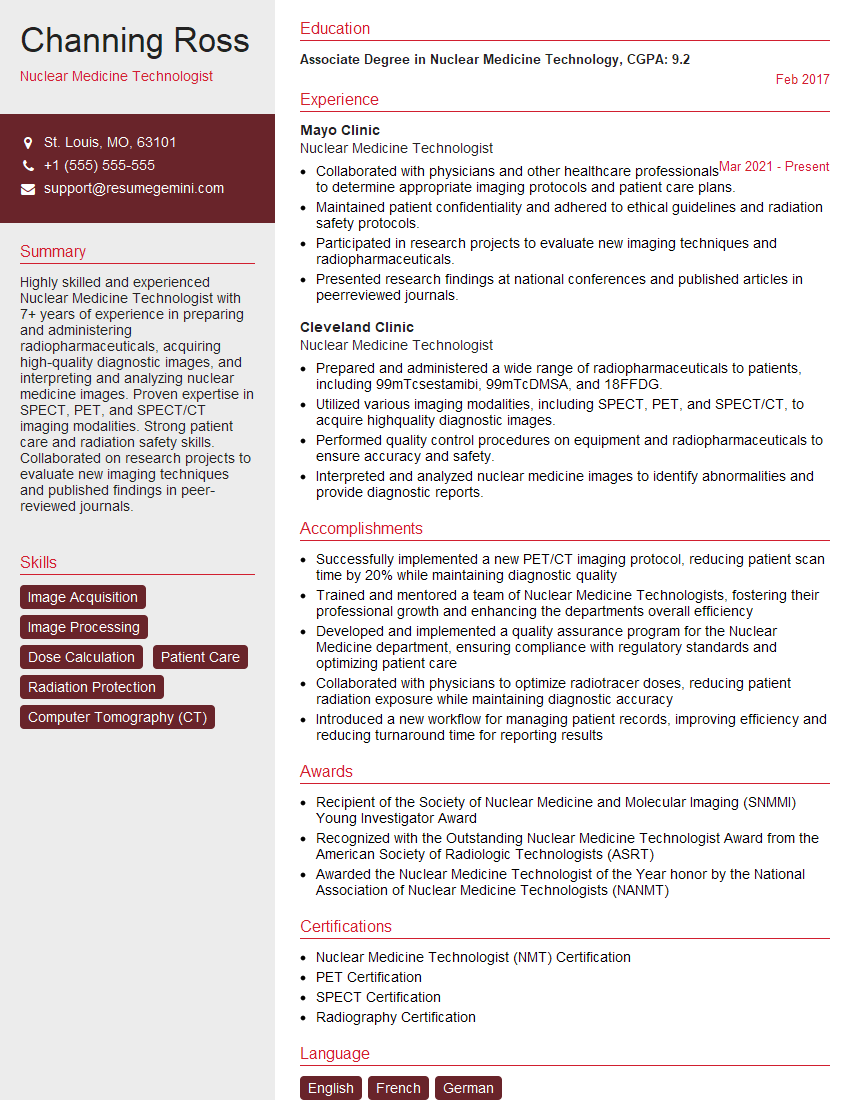
Mastering Shielding and Dosimetry opens doors to exciting career opportunities in diverse fields, offering excellent growth potential and the chance to contribute to critical areas like healthcare, nuclear energy, and environmental safety. To maximize your chances of landing your dream role, crafting a compelling and ATS-friendly resume is paramount. ResumeGemini can help you build a professional, impactful resume that highlights your skills and experience effectively. We provide examples of resumes tailored specifically to Shielding and Dosimetry to guide you in creating a standout application. Invest the time in building a strong resume – it’s your first impression with potential employers.





Explore more articles
Users Rating of Our Blogs
Share Your Experience
We value your feedback! Please rate our content and share your thoughts (optional).
What Readers Say About Our Blog
To the interviewgemini.com Webmaster.
Very helpful and content specific questions to help prepare me for my interview!
Thank you
To the interviewgemini.com Webmaster.
This was kind of a unique content I found around the specialized skills. Very helpful questions and good detailed answers.
Very Helpful blog, thank you Interviewgemini team.