The thought of an interview can be nerve-wracking, but the right preparation can make all the difference. Explore this comprehensive guide to Sibling and Parent Support interview questions and gain the confidence you need to showcase your abilities and secure the role.
Questions Asked in Sibling and Parent Support Interview
Q 1. Describe your experience working with siblings experiencing conflict.
Sibling conflict is a common occurrence, stemming from competition for resources, attention, or simply differing personalities. My experience involves working with siblings across various age groups and conflict intensities, from minor squabbles to significant aggression. I approach each situation by first understanding the root cause of the conflict. This often involves individual interviews with each sibling in a safe and non-judgmental space, allowing them to express their feelings and perspectives without interruption. I then use active listening and reflective techniques to validate their emotions and help them understand each other’s viewpoints. For example, I recently worked with two brothers aged 8 and 10 who were constantly fighting over video games. After speaking with them individually, I discovered the older brother felt the younger one was cheating, while the younger brother felt the older brother was hogging the console. By understanding these individual perspectives, we were able to work together to establish fair rules for gaming time and develop conflict resolution strategies.
Further, I often incorporate role-playing and problem-solving activities to help siblings develop effective communication and conflict-resolution skills. This might involve practicing using “I feel” statements to express emotions constructively, or collaboratively brainstorming solutions to their disagreements. The focus is always on building empathy and understanding between siblings, equipping them with tools to manage future conflicts independently.
Q 2. How do you support parents in resolving sibling rivalry?
Supporting parents in resolving sibling rivalry requires a multifaceted approach. It begins with validating the parents’ feelings – parental stress is amplified significantly by ongoing sibling conflict. I help parents understand that sibling rivalry is a normal developmental stage, and that their own reactions to the conflict can inadvertently escalate it. Therefore, a key element is teaching parents effective parenting strategies, emphasizing consistency, fairness, and clear boundaries. This includes helping parents to establish consistent routines and rules that are applied fairly to all children.
We explore techniques such as ignoring minor squabbles (unless unsafe), focusing on positive reinforcement of prosocial behaviours, and mediating conflicts effectively. I often employ a collaborative approach, guiding parents to develop their own solutions tailored to their family dynamics. For instance, I might work with a family to create a visual schedule outlining daily routines, including allocated time for individual activities and sibling interactions. This provides structure and reduces ambiguity, decreasing the likelihood of conflict.
Furthermore, I emphasize the importance of providing each child with individual attention and affirmation. Parents often inadvertently fuel rivalry by comparing siblings, and I work to help them shift to a focus on celebrating each child’s unique strengths and talents.
Q 3. Explain your approach to mediating sibling disputes.
My approach to mediating sibling disputes is based on restorative justice principles, aiming to repair relationships and foster understanding, rather than simply assigning blame. I facilitate a structured discussion where each sibling has the opportunity to express their perspective without interruption. I use active listening skills to ensure each child feels heard and understood. I then help them to identify the root cause of the conflict, focusing on the behaviour rather than labelling the child as ‘good’ or ‘bad’.
I guide them through collaborative problem-solving, brainstorming potential solutions together. This process allows children to take ownership of the resolution process, increasing the likelihood of compliance and fostering a sense of responsibility. It’s crucial to ensure that all parties feel their concerns have been addressed and a mutually agreeable solution is found. For example, in a dispute over a toy, the siblings might agree on a shared usage schedule or a system for taking turns. The focus is on empowering children to resolve future disagreements independently.
Finally, I always ensure a positive conclusion, reinforcing the importance of empathy, communication, and compromise. Follow-up sessions are often beneficial to monitor progress and provide ongoing support.
Q 4. What strategies do you employ to foster positive sibling relationships?
Fostering positive sibling relationships is a long-term process requiring consistent effort. My strategies focus on building strong individual identities within the sibling group, encouraging cooperation, and modelling positive communication. I work with families to create opportunities for positive sibling interaction, such as family game nights, shared chores, or collaborative projects. These shared experiences build positive memories and promote a sense of teamwork.
I also educate parents about the importance of positive reinforcement, praising positive interactions and minimizing attention to negative behaviours. Techniques like sibling-focused praise (‘You both worked so well together to clean up the toys!’) can encourage prosocial behaviours. Additionally, I help families to develop strategies for dealing with conflict constructively, emphasizing the importance of calm communication, active listening, and compromise. I might introduce the concept of taking a break when emotions run high, allowing space for everyone to calm down before re-engaging in problem-solving.
We may also explore family rituals and traditions that reinforce family bonds and a sense of belonging, creating positive associations between siblings. This helps to counter any feelings of competition or resentment.
Q 5. How would you address a situation where siblings exhibit different emotional needs?
Addressing differing emotional needs amongst siblings requires a nuanced approach. Recognizing that each child is unique and may express their emotions differently is paramount. My approach starts with understanding the individual needs of each child through open communication with the parents and, where appropriate, with the children themselves. For example, one child may express their distress openly, while another may withdraw. Understanding these differences allows for tailored support.
I then work with the parents to develop strategies that address the specific needs of each child. This may include providing individual attention to address specific needs, setting different expectations based on developmental stages, or employing different communication styles. For instance, a child who struggles with expressing emotions may benefit from creative outlets like art or music therapy, while a more assertive child may need help learning to express themselves assertively but respectfully.
It is important to emphasize fairness, ensuring that each child feels loved and valued, even if their needs and the way they are met differ. This might involve allocating time and resources differently, but always within a framework of consistent love and support. The goal is to foster a sense of security and belonging for each child within the family.
Q 6. Describe your experience supporting parents facing parental stress and burnout.
Parental stress and burnout are significant concerns, frequently exacerbated by sibling conflict and the general demands of parenting. My experience involves providing support to parents experiencing these challenges through a combination of empathetic listening, practical strategies, and referrals to appropriate services. I begin by validating their feelings of overwhelm and exhaustion, acknowledging that parenting is demanding, and it’s perfectly normal to feel stressed at times.
I then collaborate with parents to identify the specific sources of their stress, whether it’s sibling rivalry, work-life balance issues, financial worries, or other factors. We co-create personalized strategies to manage these stressors. This might include time management techniques, stress-reduction strategies (mindfulness, exercise), strategies for improving communication within the family, or exploring options for external support such as respite care or parenting support groups.
I also emphasize the importance of self-care and prioritize parents’ own well-being as essential for their ability to effectively parent. I often recommend resources and connect parents with community support services, such as mental health professionals or family support organizations, to provide ongoing assistance and prevent burnout. It’s crucial to remember that supporting parents is crucial for supporting the entire family.
Q 7. How do you educate parents about effective parenting techniques?
Educating parents about effective parenting techniques is a core part of my work. I employ a collaborative and empowering approach, focusing on evidence-based strategies while acknowledging the unique context of each family. I start by building a strong therapeutic alliance, ensuring parents feel comfortable and respected. I then use a combination of educational materials, practical demonstrations, and role-playing to teach positive parenting techniques. This may include discussing topics such as setting clear expectations, using positive reinforcement, effective communication, conflict resolution strategies, and discipline methods that focus on teaching and guiding rather than punishment.
I tailor my approach to meet the specific needs and challenges of the family, considering factors like age and developmental stage of the children, family culture, and the parents’ personal preferences. For instance, I might introduce positive parenting tools like ‘active listening’, explaining how to reflect children’s feelings and validate their experiences. We might practice implementing these techniques through role-playing scenarios that the parents might face in real life, ensuring they gain practical experience.
Throughout the process, I provide opportunities for parents to share their experiences, ask questions, and receive feedback. This collaborative approach empowers parents to choose the strategies that work best for their family, encouraging them to develop their own unique parenting style.
Q 8. What resources do you utilize to assist parents facing challenges?
Assisting parents requires a multifaceted approach leveraging a range of resources. I utilize a combination of evidence-based practices and community resources tailored to each family’s unique circumstances.
- Direct Support Services: This includes individual and family therapy, parent education workshops focusing on areas like effective communication, discipline strategies, and stress management. For example, I often utilize the Positive Parenting Program (Triple P) or similar evidence-based curricula.
- Community Resources: I connect families with local organizations offering respite care, parenting support groups, financial assistance programs, and mental health services. Knowing the available resources within the community is crucial – this might involve food banks, housing support, or childcare subsidies.
- Online Resources and Educational Materials: Reliable websites and apps offering parenting tips, information on child development, and access to online support communities can be incredibly valuable tools. I often share these based on the family’s specific needs and tech literacy.
- Collaboration with Other Professionals: Building a strong network with pediatricians, educators, and other professionals is key to providing holistic support. Open communication and collaboration ensure a consistent and supportive environment for the family.
The selection of resources is always guided by a careful assessment of the family’s needs and preferences, ensuring the support provided is both effective and culturally sensitive.
Q 9. How do you assess the needs of a family seeking support?
Assessing family needs is a crucial first step. It involves a thorough process that respects the family’s autonomy and builds trust. I use a combination of methods, including:
- Initial Interview and Intake: This provides an overview of the family’s concerns, presenting challenges, and their goals for support. I use open-ended questions to allow parents to share their experiences freely.
- Observation: Observing family interactions, during sessions if possible, offers invaluable insight into communication patterns, dynamics, and parenting styles. This is done with the family’s consent and understanding.
- Formal Assessments: Depending on the circumstances, standardized tools might be used to assess specific challenges, such as parenting stress, child behavior problems, or family functioning. Examples include the Parenting Stress Index or the Family Assessment Device.
- Collateral Information: When appropriate and with parental consent, I may gather information from other professionals involved with the family, such as teachers or pediatricians.
This comprehensive assessment informs the development of an individualized support plan that addresses the family’s specific needs and strengths, ensuring that the intervention is targeted and effective.
Q 10. Describe your experience with trauma-informed care within families.
Trauma-informed care is central to my approach. I understand that adverse childhood experiences (ACEs) can significantly impact family dynamics and parenting styles. My experience includes:
- Understanding the Impact of Trauma: Recognizing that trauma can manifest in various ways, such as emotional dysregulation, attachment difficulties, and behavioral challenges, in both children and parents is crucial.
- Creating a Safe and Supportive Environment: Providing a non-judgmental and empathetic space where families feel comfortable sharing their experiences is paramount. This involves establishing clear boundaries, respecting individual preferences, and working at the family’s pace.
- Empowerment and Collaboration: Partnering with families to develop solutions, rather than imposing interventions, fosters a sense of agency and control. It’s about collaborative decision-making and respecting their strengths.
- Focus on Strengths and Resilience: Highlighting and building on the family’s existing strengths and resilience factors is crucial for healing and promoting positive change. Even in the face of significant trauma, families possess remarkable resources and coping mechanisms.
For example, I’ve worked with families who have experienced domestic violence or loss, adapting my strategies to address the specific impact of trauma on their relationships and parenting. This often involves referring families to specialized trauma-focused therapy, in addition to providing parent support.
Q 11. How do you ensure confidentiality and maintain professional boundaries?
Confidentiality and professional boundaries are non-negotiable. I adhere strictly to ethical guidelines and legal requirements regarding privacy.
- Informed Consent: I obtain informed consent from all parties involved before initiating any intervention, ensuring they understand the limits of confidentiality and the purpose of the support being provided.
- Data Protection: All records are stored securely and confidentially, adhering to relevant data protection regulations. I am meticulous in maintaining accurate and secure records.
- Professional Boundaries: I maintain clear professional boundaries, avoiding dual relationships or personal involvement with families under my care. This includes avoiding social contact outside of professional interactions.
- Mandatory Reporting: In situations where there is a risk of harm to a child or vulnerable adult, I am obligated to report to the relevant authorities. This is a legal and ethical responsibility.
Transparency and open communication about confidentiality are vital in building trust with families. I clearly explain the limits of confidentiality at the outset and address any concerns they may have.
Q 12. What is your experience with diverse family structures and dynamics?
I have extensive experience working with diverse family structures and dynamics. This includes single-parent families, blended families, LGBTQ+ families, immigrant families, and families with diverse cultural backgrounds.
- Culturally Sensitive Approach: I recognize that cultural values, beliefs, and practices significantly influence family dynamics and parenting styles. My approach is tailored to respect and incorporate the family’s cultural context.
- Understanding Diverse Family Structures: I am adept at understanding and supporting the unique challenges and strengths associated with various family structures. This includes recognizing that families may deviate from the traditional nuclear family model, without judgment.
- Addressing Systemic Barriers: I am aware of the systemic barriers that certain families may face, such as language barriers, discrimination, or access to resources. I work to advocate for families and connect them with appropriate resources to address these challenges.
- Inclusive Language and Practices: I use inclusive language and practice in all interactions to create a welcoming and respectful environment for all family members.
My experience has shown me the resilience and strength of families from diverse backgrounds. It is a privilege to support them in navigating their unique challenges.
Q 13. How do you adapt your support strategies to meet individual family needs?
Adaptability is key to effective family support. I don’t use a ‘one-size-fits-all’ approach. My strategies are tailored based on several factors:
- Family Goals and Priorities: The support plan is co-created with the family, ensuring it aligns with their specific goals and priorities. What’s important to one family may differ significantly from another.
- Family Strengths and Resources: I build upon existing family strengths and resources. This could involve empowering a parent who excels in a certain area or leveraging a supportive extended family member.
- Child’s Developmental Stage: Understanding the child’s developmental stage is critical to selecting appropriate strategies and interventions. What works for a toddler won’t necessarily work for an adolescent.
- Challenges and Needs: Strategies are adjusted based on the family’s specific challenges, whether it’s sibling rivalry, behavioral problems, or parental stress.
For instance, a family struggling with sibling conflict might benefit from sibling-focused interventions such as conflict-resolution skills training. Another family struggling with financial stress might need help accessing community resources like food banks and financial counseling. Flexibility and responsiveness are essential to ensure the support provided is relevant and impactful.
Q 14. Explain your understanding of child development and its impact on sibling relationships.
A strong understanding of child development is crucial for supporting sibling relationships. Child development significantly influences how siblings interact and the nature of their bond.
- Developmental Stages and Sibling Dynamics: The age gap between siblings, their individual developmental stages, and their personalities heavily influence their relationship. For example, the rivalry between two close-in-age children may differ greatly from the relationship between an older sibling mentoring a younger one.
- Impact on Attachment and Security: The quality of each child’s relationship with their parents can significantly impact sibling dynamics. Secure attachment can foster positive sibling relationships, while insecure attachment can lead to conflict and rivalry.
- Parenting Styles and Influence: Parents play a pivotal role in shaping sibling relationships. Parents who model positive conflict resolution and fairness can promote positive sibling bonds, while those who favor one child over another might create conflict.
- Developmental Milestones and Challenges: Understanding developmental milestones, such as language acquisition, emotional regulation, and social skills, is important in navigating common sibling challenges at different ages.
For example, a parent whose children are struggling with jealousy over attention might benefit from learning techniques to ensure fair distribution of parental time and attention, while also promoting individual sibling strengths and independence. Understanding how children develop their sense of self and how this affects their perception of siblings is key in effectively supporting them.
Q 15. Describe your approach to collaborating with other professionals (e.g., teachers, therapists).
Collaboration is the cornerstone of effective sibling and parent support. My approach centers around building strong, respectful relationships with all professionals involved, prioritizing open communication and shared goals. This involves regular meetings, sharing relevant information (while maintaining client confidentiality), and collaboratively developing and implementing intervention plans. For instance, if a child is struggling academically, I’d work closely with their teacher to understand the challenges, explore potential classroom adjustments, and coordinate strategies at home to support learning. With therapists, I focus on consistent communication about the child’s progress, ensuring a cohesive therapeutic approach, and avoiding conflicting messages. This might involve joint sessions or regular case conferences to share observations and insights.
I see my role as a facilitator, ensuring everyone is on the same page and working towards the family’s best interest. A key element is understanding each professional’s expertise and leveraging those strengths for the greatest impact.
Career Expert Tips:
- Ace those interviews! Prepare effectively by reviewing the Top 50 Most Common Interview Questions on ResumeGemini.
- Navigate your job search with confidence! Explore a wide range of Career Tips on ResumeGemini. Learn about common challenges and recommendations to overcome them.
- Craft the perfect resume! Master the Art of Resume Writing with ResumeGemini’s guide. Showcase your unique qualifications and achievements effectively.
- Don’t miss out on holiday savings! Build your dream resume with ResumeGemini’s ATS optimized templates.
Q 16. How do you identify and address potential safety concerns within families?
Identifying and addressing safety concerns is paramount. My approach involves a multi-faceted assessment process, beginning with careful observation during sessions and attentive listening to family narratives. I use standardized risk assessment tools, such as the Danger Assessment, to objectively evaluate the presence of potential violence or neglect. Early warning signs, such as escalating conflict, substance abuse, or signs of child neglect or abuse, are immediately addressed.
If a safety concern arises, I’m mandated to report it to the appropriate child protection authorities. This is a process that requires careful documentation and collaboration with other professionals like social workers and law enforcement. My role is to provide support and resources to the family while ensuring the child’s immediate safety. This could involve creating safety plans, connecting families with shelters or support groups, and referring families to relevant specialized services.
Q 17. What are your strategies for supporting parents through difficult transitions (e.g., divorce, separation)?
Transitions like divorce or separation can be incredibly challenging for families. My support focuses on creating a safe space for parents to process their emotions and develop healthy coping mechanisms. This includes validating their feelings, providing education on the impact of separation on children, and helping them develop effective co-parenting strategies. I employ a variety of evidence-based techniques, including collaborative problem-solving and communication skills training. For example, I might guide parents through creating a parenting plan that minimizes conflict and maximizes the child’s stability.
I also emphasize the importance of maintaining a consistent and supportive environment for the children. This involves helping parents develop strategies for maintaining positive relationships with their children, minimizing conflict in the child’s presence, and ensuring the child feels loved and secure. It might involve working with the children individually to address their specific concerns and anxieties related to the transition.
Q 18. How do you help siblings cope with grief or loss?
Helping siblings cope with grief and loss requires sensitivity, understanding, and age-appropriate strategies. The first step involves validating their feelings and creating a safe space for them to express their grief in whatever way feels comfortable. This might involve art therapy, play therapy, or simply listening attentively. It’s crucial to avoid minimizing their pain or pressuring them to “get over it.”
I help siblings understand the grieving process, normalize their reactions (which can range from anger to sadness to denial), and provide them with tools to manage their emotions. This might involve journaling, mindfulness techniques, or creating memorial rituals. I also focus on fostering sibling connection and support, recognizing that siblings can often be a crucial source of comfort and strength during difficult times. It’s also important to work with the family as a whole, helping them establish healthy rituals for remembering the lost loved one.
Q 19. How do you facilitate communication and conflict resolution within families?
Facilitating communication and conflict resolution involves teaching families effective communication skills and conflict resolution strategies. I use a variety of techniques, such as active listening, empathy training, and identifying and challenging negative communication patterns. For example, I might teach parents how to use “I” statements to express their needs and feelings without blaming or criticizing. I also help families identify their individual needs and interests, enabling more productive discussions.
For conflict resolution, I might introduce methods like mediation, where I facilitate a structured conversation to help family members reach a mutually agreeable solution. Creating clear boundaries, establishing respectful communication rules, and setting realistic expectations are also vital aspects of conflict resolution. The overall goal is to empower families to resolve their conflicts independently in a healthy and respectful manner.
Q 20. What methods do you use to assess the effectiveness of your interventions?
Assessing the effectiveness of my interventions involves a multi-faceted approach. I regularly monitor progress through ongoing assessments, utilizing both quantitative and qualitative data. This includes tracking changes in family interactions, children’s behavior, and parental stress levels. I also utilize standardized measures, such as questionnaires and rating scales, to objectively assess the impact of interventions.
Regular feedback sessions with the family are crucial, allowing for open communication and adjustment of strategies as needed. I document progress meticulously, noting changes in the family’s functioning and the effectiveness of different strategies. This systematic approach allows me to evaluate the overall success of interventions and adapt my approach to best meet the family’s evolving needs. Ultimately, successful outcomes are defined collaboratively with the family, ensuring that the intervention aligns with their specific goals.
Q 21. Describe your experience working with parents from different cultural backgrounds.
My experience working with parents from diverse cultural backgrounds has been extensive and incredibly enriching. I understand that cultural values and beliefs significantly influence family dynamics and parenting styles. My approach emphasizes cultural sensitivity and humility. I avoid imposing my own cultural framework and strive to understand each family within its unique cultural context. This involves learning about different parenting practices, communication styles, and family structures.
I adapt my interventions to be culturally relevant and appropriate, seeking guidance from community resources and cultural experts when necessary. For example, I would carefully consider the family’s beliefs about child discipline and mental health when developing an intervention plan. Building trust and rapport is paramount, and I do so by demonstrating respect for their cultural values and beliefs. Open communication, active listening, and collaboration are key to ensuring culturally responsive and effective support.
Q 22. How do you maintain appropriate professional boundaries while building rapport with families?
Maintaining professional boundaries while building rapport with families is a delicate balancing act. It’s about creating a trusting relationship where families feel comfortable sharing, while ensuring the support remains professional and ethical. I achieve this through:
- Clear communication of roles and responsibilities: From the outset, I clearly define my role, the limits of my support, and the confidentiality expectations. For example, I might explain that while I’m there to support them, I’m not a therapist or legal advisor.
- Setting appropriate boundaries around contact: I establish clear guidelines about communication methods (e.g., phone calls during business hours, email for non-urgent matters), and I avoid socializing outside of professional interactions. This prevents blurring of professional and personal lives.
- Self-reflection and supervision: I regularly reflect on my interactions with families to identify any potential boundary crossings. I also participate in regular supervision sessions with a senior colleague to discuss any ethical dilemmas or boundary concerns, ensuring I remain objective and professional.
- Respecting family autonomy: Ultimately, the decisions about their family’s life rest with them. My role is to empower them with information and support, not to dictate choices. This fosters respect and trust.
For instance, I once worked with a family struggling with sibling conflict. While I empathized deeply with their situation, I carefully maintained professional distance. I offered strategies and resources, but avoided giving unsolicited advice or becoming overly involved in their family dynamics. This approach allowed me to effectively support them while preserving professional integrity.
Q 23. What is your experience with crisis intervention within families?
Crisis intervention is a crucial aspect of family support work. My experience involves responding to various situations, including domestic violence, child abuse allegations, and severe mental health crises within families. My approach focuses on:
- Immediate safety and stabilization: My priority is ensuring the safety of all family members. This involves assessing the immediate risk, accessing emergency services when necessary (e.g., police, child protective services), and providing immediate support to de-escalate the situation.
- Trauma-informed care: I recognize that crises often stem from trauma and adopt a trauma-informed approach, prioritizing safety, trustworthiness, choice, collaboration, and empowerment. I avoid triggering further trauma with my interventions.
- Connecting families with resources: Following immediate crisis intervention, I help connect families with appropriate support services such as mental health professionals, domestic violence shelters, or legal aid. This is vital for long-term recovery and stability.
- Collaboration with other professionals: Effective crisis intervention often requires collaboration. I work closely with other professionals, such as social workers, police, and healthcare providers, to create a coordinated and effective response.
For example, I once responded to a family experiencing a severe mental health crisis. I immediately ensured the family’s safety, contacted mental health services for immediate intervention, and stayed with them until support arrived. Later, I helped them access ongoing support, including therapy and medication management, promoting their long-term well-being.
Q 24. Explain your understanding of the legal and ethical considerations relevant to family support work.
Legal and ethical considerations are paramount in family support work. My understanding encompasses several key areas:
- Confidentiality and data privacy: I am bound by strict confidentiality agreements, adhering to relevant data protection laws (e.g., HIPAA in the US, GDPR in Europe). I only share information with relevant authorities when legally mandated or when there is an immediate risk to someone’s safety.
- Informed consent: I always ensure that families provide informed consent before initiating any support services. This means providing clear and concise information about my services, their rights, and the implications of participation.
- Child protection and safeguarding: I am mandated to report any suspicion of child abuse or neglect to the relevant authorities, regardless of the family’s wishes. This is a legal and ethical obligation to protect vulnerable children.
- Cultural sensitivity and competence: I strive to be culturally sensitive and competent, recognizing that different families have diverse needs, values, and beliefs. My interventions are tailored to respect their cultural context.
- Professional boundaries: As discussed earlier, maintaining appropriate professional boundaries is crucial. This includes avoiding dual relationships, personal conflicts of interest, and any behavior that compromises objectivity or integrity.
For example, I recently encountered a situation where a parent disclosed information about potential child neglect. I carefully documented the situation and, following established procedures, reported my concerns to Child Protective Services, ensuring the child’s safety was prioritized while also providing support to the family.
Q 25. How do you utilize data and assessments to inform your support strategies?
Data and assessments are essential for developing effective support strategies. I utilize a variety of methods, including:
- Needs assessments: I conduct thorough needs assessments to understand the family’s strengths, challenges, and goals. This involves engaging in open conversations with family members, observing their interactions, and reviewing relevant documentation.
- Standardized tools: I may utilize standardized assessment tools, such as family functioning scales or child behavior questionnaires, to objectively measure various aspects of family well-being. These tools provide quantifiable data to track progress over time.
- Data analysis and tracking: I track the progress of interventions through regular data collection and analysis. This data informs adjustments to my support strategies, ensuring they remain relevant and effective.
- Developing individualized support plans: Based on the collected data, I collaborate with the family to develop individualized support plans that address their specific needs and goals. These plans outline specific interventions and measurable outcomes.
For instance, using a family functioning scale, I can objectively measure changes in family cohesion and adaptability over the course of an intervention. This quantitative data allows me to better assess the impact of my work and adjust my strategies as needed.
Q 26. How do you handle situations where parents resist your recommendations?
When parents resist recommendations, I approach the situation with empathy and understanding. Resistance can stem from various factors, including mistrust, cultural differences, or fear of change. My strategy focuses on:
- Collaborative problem-solving: I shift from a directive approach to a collaborative one. I work with the parents to understand their concerns and perspectives. We collaboratively explore alternative strategies that align with their values and preferences.
- Empathetic listening and validation: I actively listen to their concerns and validate their feelings. This builds trust and encourages open communication. I might say something like, “I understand that this change may feel overwhelming, and I want to work with you to find a solution that feels manageable.”
- Educating and empowering parents: I provide clear explanations of the rationale behind my recommendations, presenting evidence-based information in a way they can easily understand. This empowers them to make informed decisions.
- Negotiation and compromise: I work towards finding a mutually agreeable solution through negotiation and compromise. This may involve adjusting the intervention slightly to accommodate their concerns while still addressing the core issue.
- Referrals to other services: In some cases, if resistance persists, it may be appropriate to refer the family to other support services that may be a better fit for their needs and preferences.
In one case, a parent resisted my recommendation for a parenting skills class. After listening to their concerns about time constraints, we explored shorter, more flexible options, eventually finding a program that met their needs and helped them improve their parenting skills.
Q 27. Describe your experience with advocating for families within systems.
Advocating for families within systems is a critical part of my role. This often involves navigating complex bureaucracies and advocating for families’ access to necessary resources and services. My approach involves:
- Building strong working relationships: I foster strong working relationships with professionals from other agencies (e.g., schools, healthcare providers, social services). This facilitates effective communication and collaboration when advocating for families.
- Clearly articulating family needs: I clearly and concisely articulate the family’s needs and challenges to the relevant authorities. I use factual evidence, assessments, and progress reports to support my arguments.
- Navigating bureaucratic systems: I’m adept at navigating bureaucratic systems to access resources for families. This involves understanding eligibility criteria, completing paperwork, and following up on applications.
- Empowering families to advocate for themselves: I empower families to advocate for themselves by equipping them with the necessary information, skills, and support. This ensures their voice is heard effectively.
- Persistence and resilience: Advocating for families can be challenging. I remain persistent and resilient in pursuing positive outcomes for the families I support.
For example, I successfully advocated for a family to receive financial assistance to address housing instability. I compiled evidence of their financial struggles and worked with housing authorities to secure them subsidized housing, improving their stability and well-being.
Q 28. What are your strategies for self-care and managing stress in this demanding role?
Self-care and stress management are essential for sustaining effectiveness and well-being in this demanding role. My strategies include:
- Maintaining healthy boundaries: As discussed previously, maintaining strong professional boundaries protects my mental and emotional well-being.
- Regular supervision and peer support: I utilize regular supervision and peer support to process challenging cases and maintain a healthy perspective. Discussing cases with colleagues helps normalize feelings and provides strategies for challenging situations.
- Mindfulness and stress reduction techniques: I practice mindfulness techniques, such as meditation or deep breathing exercises, to manage stress and improve emotional regulation. Regular exercise and healthy eating also play a crucial role.
- Engaging in activities outside of work: I maintain a healthy work-life balance by pursuing hobbies and spending time with loved ones. These activities provide a much-needed escape from the stressors of the job.
- Seeking professional support when needed: I recognize the importance of seeking professional support when needed. This might involve therapy or counseling to address any burnout or secondary trauma.
For example, I regularly schedule time for yoga and meditation to de-stress and maintain a clear mind, and I actively engage in social activities to avoid feeling isolated from friends and family. Prioritizing my well-being allows me to provide the best possible support to the families I serve.
Key Topics to Learn for Sibling and Parent Support Interview
- Understanding Child Development: Comprehending the developmental stages of children and how these impact sibling relationships and parental dynamics. This includes recognizing typical behaviors at different ages and understanding developmental milestones.
- Sibling Dynamics: Exploring the complexities of sibling relationships – competition, cooperation, conflict resolution, and the impact of birth order and family structure. Practical application: Developing strategies to foster positive sibling interactions and address common conflicts.
- Parenting Styles and their Influence: Analyzing different parenting approaches and their effect on children’s well-being and sibling relationships. Practical application: Identifying effective communication techniques and conflict-resolution strategies for parents.
- Communication and Active Listening Skills: Mastering effective communication techniques to build rapport with both parents and children. Practical application: Employing active listening skills to understand individual perspectives and concerns.
- Trauma-Informed Care: Understanding how past trauma can affect family dynamics and applying trauma-informed approaches to support families effectively. Practical application: Recognizing signs of trauma and implementing appropriate interventions.
- Resource Management and Referral Processes: Knowing available community resources and referral pathways to support families facing challenges. Practical application: Developing a strong network of contacts and understanding criteria for different support services.
- Ethical Considerations and Confidentiality: Understanding ethical boundaries, maintaining client confidentiality, and navigating sensitive situations. Practical application: Applying ethical decision-making frameworks in real-world scenarios.
- Crisis Intervention and De-escalation Techniques: Developing skills to effectively manage and de-escalate stressful situations with families. Practical application: Implementing safe and effective strategies for crisis intervention.
Next Steps
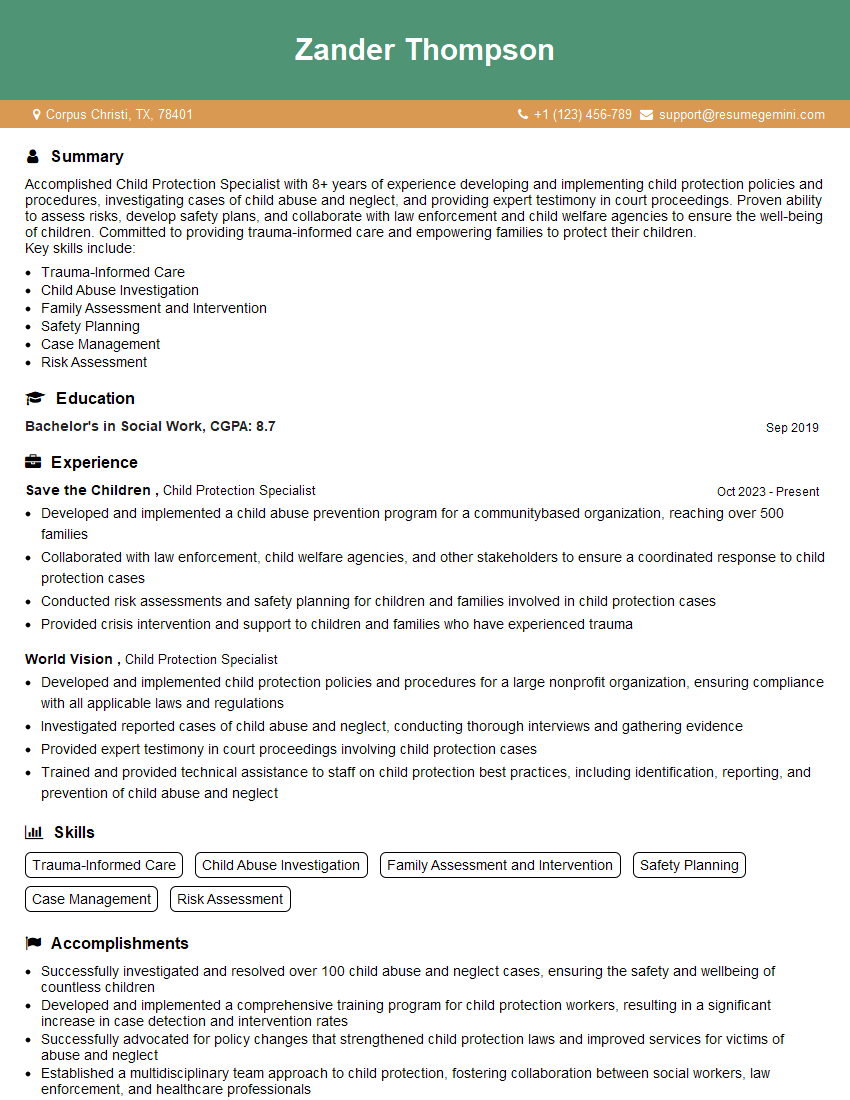
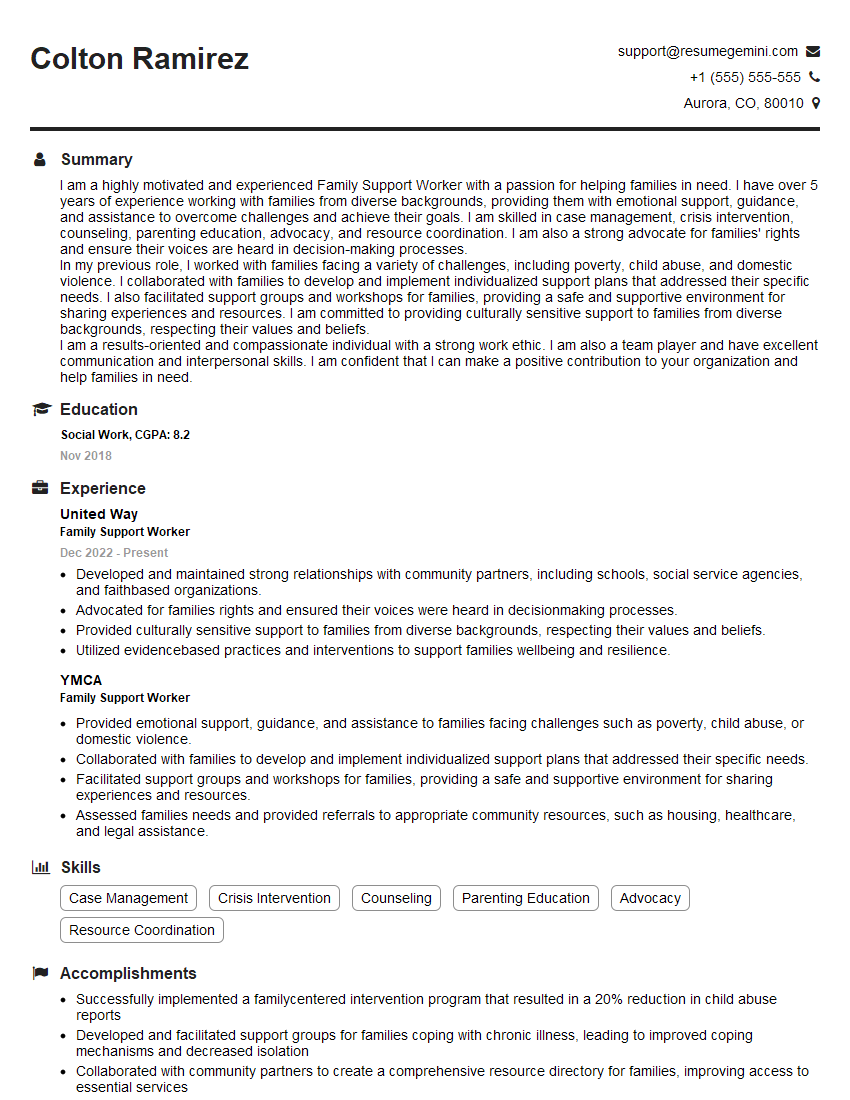
Mastering Sibling and Parent Support significantly enhances your career prospects in the social work, education, and mental health fields. It demonstrates your ability to work with diverse families and address complex challenges with empathy and expertise. To maximize your job search success, creating an ATS-friendly resume is crucial. We strongly recommend using ResumeGemini to build a professional and impactful resume that highlights your skills and experience effectively. ResumeGemini provides examples of resumes tailored to Sibling and Parent Support roles, giving you a head start in crafting your application materials.
Explore more articles
Users Rating of Our Blogs
Share Your Experience
We value your feedback! Please rate our content and share your thoughts (optional).
What Readers Say About Our Blog
To the interviewgemini.com Webmaster.
Very helpful and content specific questions to help prepare me for my interview!
Thank you
To the interviewgemini.com Webmaster.
This was kind of a unique content I found around the specialized skills. Very helpful questions and good detailed answers.
Very Helpful blog, thank you Interviewgemini team.