Interviews are more than just a Q&A session—they’re a chance to prove your worth. This blog dives into essential Site Selection Analysis interview questions and expert tips to help you align your answers with what hiring managers are looking for. Start preparing to shine!
Questions Asked in Site Selection Analysis Interview
Q 1. Explain the key factors you consider when performing a site selection analysis.
Site selection analysis is a multifaceted process that requires careful consideration of numerous factors. Think of it like choosing the perfect location for a new restaurant – you wouldn’t just pick the first available spot! My approach centers around a holistic view, encompassing:
- Market Access: Proximity to target customers, suppliers, and distribution networks. This includes analyzing population density, demographics, and competitor locations.
- Infrastructure: Availability of utilities (water, electricity, gas), transportation (roads, rail, ports), and communication networks (internet, phone). A reliable infrastructure is crucial for smooth operations.
- Labor Market: Assessing the availability of skilled and unskilled labor, wage rates, and employee benefits. A strong local workforce can significantly impact operational costs and efficiency.
- Regulatory Environment: Understanding zoning regulations, building codes, environmental permits, and tax incentives. Navigating local regulations can be complex and time-consuming.
- Economic Factors: Analyzing the overall economic health of the region, including growth prospects, cost of living, and property values. A stable and growing economy provides a more favorable investment climate.
- Environmental Considerations: Evaluating potential environmental impacts, access to natural resources, and adherence to environmental regulations. Sustainability is increasingly a critical factor in site selection.
- Site Characteristics: The physical attributes of the site itself, such as size, topography, accessibility, and existing buildings. The suitability of the land for your specific operations is paramount.
I use a weighted scoring system to prioritize these factors based on the specific needs of each project. For instance, for a manufacturing plant, infrastructure and labor market might carry more weight, while for a retail store, market access would be the most significant factor.
Q 2. Describe your experience using Geographic Information Systems (GIS) in site selection.
Geographic Information Systems (GIS) are indispensable tools in site selection. I have extensive experience using GIS software (like ArcGIS or QGIS) to analyze spatial data and visualize potential sites. Imagine it as a powerful map that allows you to overlay various layers of information, such as population density, transportation networks, and environmental data. This visualization helps identify areas meeting specific criteria.
For example, in a recent project for a logistics company, I used GIS to overlay maps of highway access, population density of the target demographic, and the locations of competitors. This allowed us to quickly identify areas with optimal access to major highways while minimizing competition and maximizing proximity to potential customers. I’ve also used GIS for analyzing proximity to utilities, environmental constraints (e.g., floodplains, wetlands), and the availability of suitable land parcels. The resulting analysis provides a visual representation, making it easier for stakeholders to understand the advantages and disadvantages of each potential location.
Q 3. How do you assess the transportation infrastructure of a potential site?
Assessing transportation infrastructure is critical. It’s not just about the presence of roads; it’s about their capacity, condition, and connectivity to wider networks. My assessment includes:
- Road Network Analysis: Evaluating road quality, traffic congestion levels, proximity to major highways and interstates, and travel times to key destinations (suppliers, customers, ports).
- Rail and Air Freight Access: Determining the availability and capacity of rail lines and airports for efficient transportation of goods. This is crucial for industries reliant on large-scale shipping.
- Port Access (if applicable): Analyzing the proximity to seaports, their handling capacity, and the availability of maritime transportation services for businesses involved in international trade.
- Public Transportation: Considering access to public transportation for employees and potential customers, especially relevant for businesses with a large workforce or relying on public transit commuters.
I often use tools like Google Maps and specialized transportation modeling software to analyze travel times, traffic patterns, and network connectivity. This data is then integrated into a comprehensive site suitability score.
Q 4. What are the primary quantitative and qualitative factors influencing site selection decisions?
Site selection decisions are influenced by a blend of quantitative and qualitative factors. Think of it as a balance between hard data and softer, more subjective aspects.
Quantitative Factors: These are measurable and often expressed numerically. Examples include:
- Land cost
- Construction costs
- Labor costs
- Transportation costs
- Tax incentives
- Utility costs
- Property taxes
Qualitative Factors: These are harder to quantify but are still crucial. Examples include:
- Community support and acceptance
- Environmental impact
- Quality of life for employees
- Proximity to amenities
- Political stability of the region
- Cultural considerations
Balancing these factors requires careful judgment and often involves stakeholder consultation. A cost-benefit analysis, as discussed later, is essential in integrating these considerations.
Q 5. Explain your process for evaluating the labor market in a given region.
Evaluating the labor market is crucial. I use a multi-pronged approach:
- Unemployment Rates: Analyzing local and regional unemployment rates to assess the availability of potential employees.
- Skill Availability: Investigating the availability of workers with the necessary skills and experience. This might involve contacting local workforce development agencies or reviewing job postings.
- Wage Rates: Researching prevailing wage rates for comparable jobs in the region to estimate labor costs.
- Education Levels: Considering the level of education and training of the workforce. A highly educated workforce might be more attractive for technology-intensive industries.
- Labor Union Presence: Understanding the presence and influence of labor unions in the region, as this can impact labor relations and costs.
I also consider factors like employee commute times and the availability of affordable housing near the potential site. Accessing data from the Bureau of Labor Statistics and other relevant sources is vital in this process.
Q 6. How do you handle conflicting priorities in site selection (e.g., cost vs. proximity to markets)?
Conflicting priorities are inevitable in site selection. For example, a site offering low land costs might be far from major markets, increasing transportation costs. I address this using several strategies:
- Weighted Scoring System: Assigning weights to different criteria based on their importance to the project. This helps quantify the relative importance of conflicting factors.
- Sensitivity Analysis: Testing the impact of varying assumptions on the overall site score. This allows us to assess the robustness of the decision in the face of uncertainty.
- Scenario Planning: Developing multiple scenarios based on different combinations of priorities. This helps evaluate trade-offs and identify potential risks.
- Stakeholder Input: Engaging stakeholders in the decision-making process to gather diverse perspectives and ensure that all relevant considerations are addressed.
The goal is to find an optimal balance that meets the project’s overall objectives while mitigating potential risks. Often, there is no single ‘best’ site, but rather a range of acceptable options. This process prioritizes transparency and informed decision-making.
Q 7. Describe your experience with cost-benefit analysis in site selection projects.
Cost-benefit analysis (CBA) is fundamental to my site selection work. It’s a systematic approach to evaluating the financial implications of different site options. I consider both direct and indirect costs and benefits.
Direct Costs: Land acquisition, construction, equipment, and operational expenses.
Indirect Costs: Transportation, labor, and regulatory compliance.
Direct Benefits: Increased sales, improved efficiency, and reduced operating costs.
Indirect Benefits: Improved brand image, access to skilled labor, and enhanced community relations.
I use discounted cash flow (DCF) analysis to compare the present value of costs and benefits over the project’s lifespan. This helps determine which site offers the highest net present value (NPV). Presenting results clearly to stakeholders, often with visual aids like charts and graphs, is crucial for making sound, data-driven decisions. This ensures that the final site selection is not only strategically sound but also financially viable.
Q 8. How do you incorporate environmental considerations into your site selection analysis?
Environmental considerations are paramount in modern site selection. We can’t simply choose the cheapest or most convenient location; we must assess the potential environmental impact and ensure compliance with regulations. This involves a multifaceted approach.
- Environmental Impact Assessment (EIA): This is a crucial first step. We conduct a thorough EIA to identify potential risks, such as pollution, habitat disruption, or resource depletion. This often involves engaging environmental consultants specializing in the specific industry and location.
- Regulatory Compliance: We meticulously examine relevant environmental regulations at the local, state, and federal levels. This includes understanding permitting requirements, emission standards, waste management regulations, and endangered species protection laws. For example, proximity to protected wetlands or endangered bird habitats might necessitate significant modifications to the project or even eliminate the site as an option.
- Sustainability Factors: We integrate sustainability goals into the analysis. This could include assessing the site’s access to renewable energy sources, its potential for reducing carbon emissions, and its ability to support green building practices. A site with efficient public transportation access, for example, reduces the carbon footprint associated with employee commutes.
- Stakeholder Engagement: Community input is vital. We engage with local residents, environmental groups, and other stakeholders to address their concerns and incorporate their feedback into the decision-making process. This transparency often leads to smoother project approvals and a stronger community relationship.
For instance, in a recent project for a manufacturing plant, we discovered a potential site with lower land costs but close proximity to a sensitive ecosystem. The EIA highlighted potential risks of water pollution, ultimately leading us to select a slightly more expensive site with superior environmental safeguards and community support.
Q 9. What are the different types of site selection models and when would you use each?
Several models help us analyze potential sites. The best choice depends on the project’s specifics and data availability.
- Factor Rating Method: This simple, weighted scoring system assigns scores to criteria (e.g., proximity to labor, transportation costs, land prices) and weights them based on importance. It’s easy to understand and implement, but lacks sophisticated statistical analysis. We might use this for a preliminary screening of many potential sites.
- Linear Programming: This optimization technique helps identify the best site by maximizing or minimizing an objective function (e.g., profit, cost) subject to constraints (e.g., land availability, environmental regulations). It’s suitable for complex scenarios with quantifiable factors and well-defined objectives, but requires accurate data.
- Geographic Information Systems (GIS): GIS combines spatial data (maps, satellite imagery) with site attribute data to visualize and analyze spatial relationships. This is invaluable for understanding site proximity to infrastructure, resources, and potential hazards. GIS allows for sophisticated overlay analysis, showing the optimal location considering multiple factors visualized on a map.
- Multi-Criteria Decision Analysis (MCDA): This handles both quantitative and qualitative factors (e.g., community acceptance, regulatory hurdles) using various techniques like AHP (Analytic Hierarchy Process) or ELECTRE (Elimination Et Choix Traduisant la REalité). This is often used when subjective factors are critical and objective data might be limited.
Imagine selecting a distribution center. For initial screening, a factor rating method based on transportation costs and proximity to major highways might suffice. For the final decision, a GIS-based analysis showing optimal locations minimizing transportation time and costs, while considering zoning regulations, would likely be used.
Q 10. How do you assess the regulatory and permitting environment of a potential site?
Navigating the regulatory landscape is crucial. A thorough assessment goes beyond simply checking if a site is zoned appropriately.
- Zoning and Land Use Regulations: We ascertain whether the site’s intended use is permitted under local zoning ordinances. We also explore potential variance requirements. For example, a manufacturing plant might require a special use permit in a residential area.
- Environmental Permits: This includes air quality permits, water discharge permits, and waste management permits. The complexity and time involved in obtaining these permits significantly influence site selection. Delays can be costly.
- Building Codes and Construction Permits: Compliance with local building codes and obtaining necessary construction permits are critical. Differences in building codes across jurisdictions need careful consideration.
- Health and Safety Regulations: We must ensure compliance with occupational safety and health regulations to protect workers’ well-being.
- Tax Incentives and Economic Development Programs: We explore available tax incentives, grants, or other economic development programs that can significantly reduce project costs. This involves researching local, state, and federal programs.
For example, a project involving hazardous materials requires specific permits and stringent safety protocols, which need to be factored into the analysis upfront. Any failure to comply with these regulations can result in substantial fines and project delays, highlighting the significance of a comprehensive regulatory assessment.
Q 11. Describe your experience using various data sources for site selection (e.g., demographic data, economic data).
Data is the backbone of effective site selection. We leverage a variety of sources to build a comprehensive picture.
- Demographic Data (Census Bureau, Nielsen): This provides insights into population size, age distribution, income levels, and other socio-economic characteristics. Understanding the local workforce is critical for labor planning.
- Economic Data (Bureau of Economic Analysis, Bureau of Labor Statistics): We examine employment trends, industry clusters, average wages, and cost of living to assess market demand and operating costs.
- Geographic Data (GIS platforms, satellite imagery): This provides information on terrain, climate, proximity to infrastructure (roads, utilities, railways), and natural hazards.
- Real Estate Data (commercial real estate databases): These help us determine land prices, availability of suitable buildings, and property taxes.
- Industry-Specific Data: Depending on the industry, we might utilize specialized datasets related to energy consumption, water availability, or transportation infrastructure.
In a recent project for a technology company, we used demographic data to identify locations with a highly skilled workforce in software development and utilized GIS data to analyze proximity to universities and research institutions.
Q 12. How do you handle uncertainty and risk in site selection decisions?
Uncertainty and risk are inherent in site selection. We employ several strategies to mitigate them.
- Sensitivity Analysis: This technique helps us understand how changes in key input variables (e.g., land prices, energy costs) affect the overall outcome. This reveals which factors are most critical and where risk is greatest.
- Scenario Planning: We develop different scenarios based on various assumptions about future market conditions, regulations, or economic factors. This provides a range of possible outcomes and helps prepare for contingencies.
- Risk Assessment Matrices: These matrices identify potential risks (e.g., natural disasters, regulatory changes), their likelihood, and potential impact. This allows for prioritized risk mitigation strategies.
- Quantitative Risk Modeling: For complex projects, we might employ Monte Carlo simulations or other quantitative methods to estimate the probability distribution of key outcomes.
- Contingency Planning: This involves developing backup plans and contingency measures to address potential problems or disruptions.
For example, when evaluating a site near a fault line, we would conduct a detailed seismic risk assessment and incorporate the cost of potential earthquake damage into the analysis. A contingency plan might involve structural reinforcements or insurance to minimize financial risk.
Q 13. Explain your understanding of the different types of business locations and their suitability for different industries.
Different industries have varying location requirements.
- Urban Locations: These offer proximity to a large workforce, consumers, and infrastructure. Suitable for industries with high labor demands, consumer-facing businesses, and industries relying on specialized services.
- Suburban Locations: These provide a balance between urban amenities and lower land costs. Suitable for distribution centers, light manufacturing, and office parks.
- Rural Locations: These offer lower land costs and potential tax incentives but might lack access to a skilled workforce and infrastructure. Suitable for industries needing large tracts of land, such as agriculture, mining, or some manufacturing.
- Brownfield Sites: These are previously developed sites with potential environmental contamination. Redeveloping these sites can have environmental and economic benefits, though remediation costs need careful consideration.
- Free Trade Zones/Special Economic Zones: These locations offer tax incentives, streamlined customs procedures, and other benefits designed to attract investment. Suitable for industries focused on export or import activities.
For instance, a data center might prefer a suburban location with ample power and cooling capabilities, while an agricultural business might benefit from a rural setting with vast land areas and access to water resources. Each location type presents unique advantages and disadvantages that need careful evaluation.
Q 14. How do you prioritize potential sites based on your analysis?
Prioritization is the final stage, involving a structured approach that synthesizes the analysis.
- Weighted Scoring System: We can use a weighted scoring system, assigning weights to different criteria (based on their importance to the business) and calculating a total score for each site. Higher scores indicate preferable sites.
- Ranking Based on Key Criteria: This approach ranks sites based on a few critical criteria (e.g., cost, risk, access to labor). This simplifies the decision-making process by focusing on the most impactful factors.
- Sensitivity Analysis and Scenario Planning: We can re-evaluate the top-ranked sites under different scenarios (e.g., changes in market conditions, economic downturns) to test their robustness and resilience.
- Qualitative Considerations: Finally, we incorporate qualitative factors, such as community acceptance, potential for future expansion, and overall fit with the company’s culture and values.
A simple example of prioritization might involve ranking three potential locations based on a weighted score derived from proximity to transportation, cost of land, and the availability of skilled labor. The location with the highest weighted score would then become the preferred site, subject to further due diligence.
Q 15. How do you communicate your site selection recommendations to stakeholders?
Communicating site selection recommendations effectively requires a multi-faceted approach that caters to diverse stakeholder needs. I start by crafting a clear, concise executive summary highlighting the key findings and recommendations. This summary uses plain language, avoiding overly technical jargon. Then, I present a more detailed report, broken down into sections that address specific concerns and interests. This might include dedicated sections on cost analysis, risk mitigation, environmental impact, and workforce availability. I always include supporting data and visuals – maps, charts, and graphs – to make the complex information more accessible and compelling. For example, a visual representation of transportation costs compared to potential revenue generation can clearly demonstrate the financial advantages of a particular site. Finally, I facilitate interactive presentations and Q&A sessions, allowing stakeholders to engage directly with the analysis and address any questions or concerns they may have. This collaborative approach ensures transparency and buy-in from all parties involved.
Career Expert Tips:
- Ace those interviews! Prepare effectively by reviewing the Top 50 Most Common Interview Questions on ResumeGemini.
- Navigate your job search with confidence! Explore a wide range of Career Tips on ResumeGemini. Learn about common challenges and recommendations to overcome them.
- Craft the perfect resume! Master the Art of Resume Writing with ResumeGemini’s guide. Showcase your unique qualifications and achievements effectively.
- Don’t miss out on holiday savings! Build your dream resume with ResumeGemini’s ATS optimized templates.
Q 16. Describe a time you had to overcome a challenge in a site selection project.
During a recent project for a large logistics company, we encountered an unexpected challenge: a significant discrepancy between the projected and actual availability of skilled labor in our top-ranked location. Our initial analysis, based on publicly available data, indicated a robust workforce. However, during on-site visits and interviews with local employment agencies, we discovered a skills gap and a higher-than-expected employee turnover rate. To overcome this, we adapted our approach. We broadened our search criteria, exploring locations with potentially slightly higher operational costs but a more reliable and readily available workforce. We also collaborated with local vocational schools and training providers to explore workforce development programs that could address the skills gap. Ultimately, we identified a slightly less optimal location from a purely cost perspective, but one that offered a more stable and predictable workforce, which significantly minimized long-term risks and maximized the project’s chances of success. This experience reinforced the importance of conducting thorough due diligence beyond relying solely on secondary data.
Q 17. What are some common pitfalls to avoid in site selection?
Several common pitfalls can derail a site selection project. One major pitfall is relying solely on readily available, publicly accessible data without conducting thorough on-site verification. Public data may be outdated or inaccurate, leading to flawed conclusions. Another is focusing solely on cost minimization and neglecting other crucial factors such as proximity to markets, infrastructure quality, or workforce availability. This can result in selecting a site that is initially cheaper but ultimately more expensive due to inefficiencies or increased operational challenges. Another pitfall is failing to account for future growth and scalability. Selecting a site that meets current needs but not future expansion plans can be costly and disruptive down the line. Finally, neglecting the cultural and regulatory environment of a potential location can lead to unforeseen delays, difficulties, and increased costs. A thorough site selection process accounts for all these factors.
Q 18. How do you validate your site selection recommendations?
Validating site selection recommendations involves a rigorous process of cross-checking and verification. We use sensitivity analysis to assess how changes in key variables (e.g., labor costs, transportation costs, utility rates) might affect the overall ranking of potential sites. This helps identify potential risks and uncertainties. We also conduct thorough risk assessments, identifying potential downsides associated with each location and developing mitigation strategies. On-site visits are critical for validating data and assessing factors that are difficult to quantify from secondary data sources, such as community support, infrastructure quality, and the overall business environment. Finally, we present our findings to stakeholders and incorporate their feedback into the final recommendation. This multi-stage validation process greatly increases the probability of selecting the most suitable location for the client’s needs.
Q 19. Explain your familiarity with different site selection software and tools.
I am proficient in several site selection software and tools. My experience includes using GIS software (e.g., ArcGIS) for spatial analysis, mapping, and visualization of data. I am also familiar with various location analytics platforms that provide access to demographic, economic, and infrastructure data. I use these tools to identify, analyze, and rank potential sites based on customized criteria. For example, I regularly utilize tools that allow for scenario planning, enabling clients to explore various ‘what-if’ scenarios and understand the impact of different choices. In addition, I’m skilled in using spreadsheet software such as Excel for data manipulation and financial modeling, which are essential in performing detailed cost-benefit analyses and comparing different options. My expertise extends to using specialized software for supply chain optimization and modeling to integrate logistics factors into the site selection decision.
Q 20. How do you incorporate supply chain considerations into your site selection analysis?
Supply chain considerations are paramount in site selection. I incorporate them by meticulously analyzing factors such as proximity to suppliers, distribution centers, and major transportation hubs. This includes evaluating transportation costs (road, rail, air, sea), lead times, and the overall efficiency of the logistics network. Tools like supply chain mapping software help visualize and analyze the network flows, identifying potential bottlenecks and opportunities for optimization. For instance, a detailed analysis might reveal that while one location has lower operating costs, its distance from key suppliers results in significantly higher transportation costs, ultimately offsetting the initial savings. Therefore, a comprehensive supply chain analysis is integral to making an informed decision that minimizes overall costs and maximizes efficiency. This might also include analyzing the risk of supply chain disruptions and developing contingency plans.
Q 21. How do you evaluate the tax incentives and other financial incentives offered by different locations?
Evaluating tax incentives and financial incentives offered by different locations is a crucial aspect of site selection. I begin by thoroughly researching and documenting all available incentives, including property tax abatements, sales tax exemptions, grants, and loans. This often involves collaborating with local economic development agencies and other relevant authorities. Then, I perform a detailed financial analysis to quantify the present value of each incentive package, considering the time horizon of the project and the relevant discount rates. This allows for a direct comparison of the financial benefits offered by different locations. It’s important to also consider the potential administrative burden and compliance requirements associated with claiming these incentives. A cost-benefit analysis that considers both the financial benefits and associated compliance costs is essential for making an informed decision. For example, a location offering a significant tax break but requiring complex and time-consuming documentation might ultimately be less advantageous than a location with fewer but easier-to-obtain incentives.
Q 22. Describe your experience working with different stakeholders in a site selection project.
Successfully navigating a site selection project hinges on effective collaboration with diverse stakeholders. My experience involves working with teams including executive leadership, operations managers, real estate professionals, local government officials, and community representatives. Each group brings unique priorities and perspectives. For instance, executive leadership focuses on long-term strategic goals like return on investment and market access, while operations managers prioritize logistical factors like utility availability and workforce proximity. I facilitate open communication, utilizing tools like regular stakeholder meetings, shared online platforms for document sharing, and carefully crafted reports to ensure everyone is informed and their concerns are addressed proactively. In one project, I successfully mediated a disagreement between the engineering team who favored a site with better infrastructure and the marketing team who preferred a location closer to target customers, ultimately resulting in a compromise that satisfied both parties and aligned with the overall project goals. I prioritize active listening and transparent communication to build trust and ensure a collaborative project outcome.
Q 23. What are some key performance indicators (KPIs) used to evaluate the success of a site selection project?
Key Performance Indicators (KPIs) for a successful site selection project are multifaceted and should align with the project’s overarching objectives. Some critical KPIs include:
- Time to Selection: Measuring the efficiency of the entire process from initiation to final site choice.
- Total Cost of Ownership (TCO): Encompassing all costs associated with the site, including land acquisition, construction, utilities, and ongoing operational expenses. This KPI is crucial for demonstrating cost-effectiveness.
- Return on Investment (ROI): A measure of profitability and demonstrating that the chosen site contributes positively to the business’s bottom line.
- Project Timeline Adherence: Ensuring the project stays on schedule.
- Stakeholder Satisfaction: Gauging the level of contentment among all involved parties—a crucial aspect often overlooked.
- Community Acceptance: Measuring the positive impact on the local community, which may encompass job creation or economic stimulus.
These KPIs are tracked throughout the project lifecycle, and any deviations are analyzed to identify potential issues and implement corrective actions. For instance, if the project lags behind schedule, a detailed analysis helps identify bottlenecks and adjust the plan.
Q 24. How do you stay current with trends and best practices in site selection?
Staying current in the dynamic field of site selection requires a multi-pronged approach. I actively participate in professional organizations like the International Site Selection Association (ISSA), attending conferences, webinars, and workshops. This provides exposure to the latest methodologies, technologies, and trends. I also regularly review industry publications, journals (such as Area Development), and online resources, including market research reports and governmental data releases. Staying abreast of technological advancements, particularly in Geographic Information Systems (GIS) and data analytics, is critical for enhancing the efficiency and accuracy of site selection analysis. Furthermore, I maintain a professional network of colleagues and experts in the field, engaging in discussions and knowledge sharing. This collaborative approach allows for a continuous learning process, enabling me to effectively incorporate the best practices into my work.
Q 25. How do you assess the community impact of a potential site?
Assessing the community impact is an ethically crucial and increasingly important aspect of site selection. My approach involves a thorough assessment of several key factors:
- Economic Impact: This includes evaluating job creation, potential tax revenue generation, and the impact on local businesses.
- Social Impact: Examining the project’s effect on the community’s quality of life, including potential traffic congestion, environmental concerns, and changes to the social fabric.
- Environmental Impact: Conducting an environmental assessment to identify potential risks and mitigation strategies. This may involve an analysis of air and water quality, waste management, and habitat preservation.
I utilize a variety of methods, including community surveys, interviews with local residents and business leaders, and reviews of local government data and environmental impact reports. For example, in a recent project, we conducted public forums to gather feedback and address community concerns regarding potential traffic increases near the proposed site, demonstrating a commitment to transparency and engagement.
Q 26. Describe your experience with conducting due diligence on potential sites.
Due diligence is paramount in site selection. My approach involves a comprehensive and systematic review of all aspects of a potential site. This includes:
- Legal Review: Examining zoning regulations, environmental permits, and other relevant legal documents.
- Environmental Assessment: Identifying potential environmental risks and liabilities, including soil contamination, floodplains, and endangered species habitats.
- Infrastructure Assessment: Evaluating the availability and capacity of utilities (water, sewer, electricity, gas), transportation infrastructure (roads, rail, airports), and communication networks.
- Market Analysis: Analyzing the local market conditions, competition, and potential customer base.
- Financial Analysis: Evaluating the financial viability of the site, including land costs, development expenses, and ongoing operating costs.
I use a combination of desk research, site visits, and engagement with local experts to gather the necessary information. For a recent project, we discovered a previously unreported environmental issue during the due diligence phase, leading to a change in the site selection which ultimately prevented significant environmental and financial risks.
Q 27. How do you use data visualization to communicate your findings in a site selection analysis?
Data visualization is essential for effectively communicating complex site selection findings to stakeholders. I leverage various tools and techniques to present information clearly and concisely:
- Maps: GIS software is used to create thematic maps illustrating key site characteristics such as proximity to transportation, utilities, and workforce.
- Charts and Graphs: Bar charts, line graphs, and pie charts are used to represent quantitative data such as cost analysis, ROI projections, and market share projections.
- Interactive Dashboards: Tools like Tableau or Power BI are used to create dynamic dashboards that allow stakeholders to explore the data and filter results based on their specific interests.
For example, a GIS map showing potential sites overlaid with data on transportation costs, labor availability, and proximity to suppliers provides a clear visual representation of the trade-offs involved in each location.
Q 28. What is your approach to managing competing priorities and stakeholder interests in a site selection project?
Managing competing priorities and stakeholder interests requires a structured approach. I utilize a combination of strategies:
- Prioritization Framework: Developing a clear set of selection criteria that weigh various factors based on their importance to the project’s success. This framework is then used to evaluate potential sites objectively.
- Stakeholder Engagement Plan: Proactively involving stakeholders in the decision-making process through regular communication, meetings, and feedback sessions.
- Conflict Resolution Techniques: Employing negotiation and mediation skills to address disagreements and find mutually acceptable solutions. This might involve compromise or exploring alternative solutions that address each stakeholder’s concerns.
- Decision Support Tools: Utilizing decision matrices and other analytical tools to objectively evaluate different options and justify the final site selection.
Transparency and clear communication are essential throughout the process. By involving stakeholders early and often, fostering open dialogue, and using data-driven decision-making, I aim to build consensus and ensure buy-in from all parties involved.
Key Topics to Learn for Site Selection Analysis Interview
- Market Analysis: Understanding target market demographics, size, and growth potential. Practical application: Evaluating market demand for a new manufacturing facility.
- Location Factors: Analyzing factors like labor costs, transportation infrastructure, utilities, and regulatory environment. Practical application: Comparing the suitability of multiple potential sites based on weighted criteria.
- Quantitative Modeling: Utilizing techniques like cost-benefit analysis, location-allocation models, and GIS mapping to optimize site selection decisions. Practical application: Developing a model to minimize total logistics costs for a distribution network.
- Qualitative Considerations: Assessing intangible factors such as community support, environmental impact, and quality of life. Practical application: Conducting stakeholder interviews to understand community concerns related to a proposed project.
- Risk Assessment: Identifying and mitigating potential risks associated with each site, such as natural disasters, political instability, and supply chain disruptions. Practical application: Developing a contingency plan to address potential disruptions to a chosen site.
- Data Analysis & Visualization: Utilizing data analysis techniques and creating compelling visualizations to effectively communicate findings to stakeholders. Practical application: Presenting site selection recommendations using maps, charts, and data tables.
- Legal & Regulatory Compliance: Understanding zoning regulations, environmental permits, and other legal requirements related to site development. Practical application: Ensuring compliance with all applicable regulations during the site selection process.
Next Steps
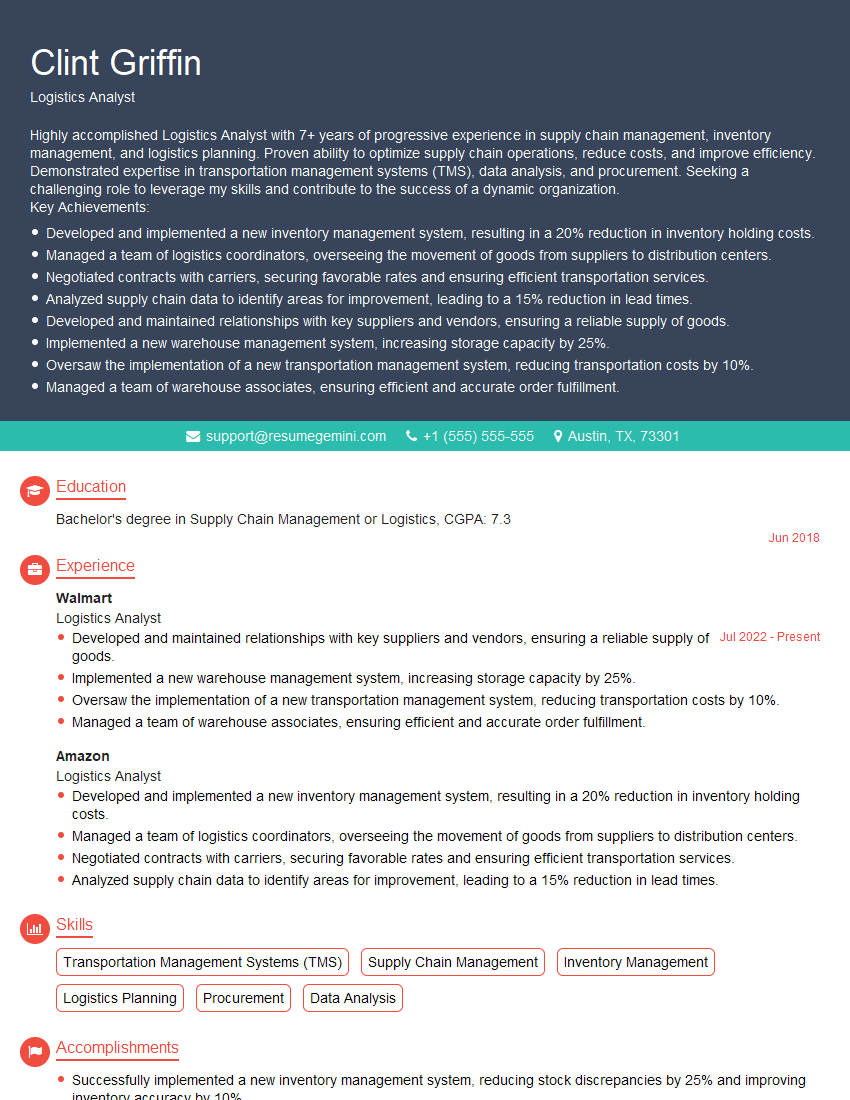
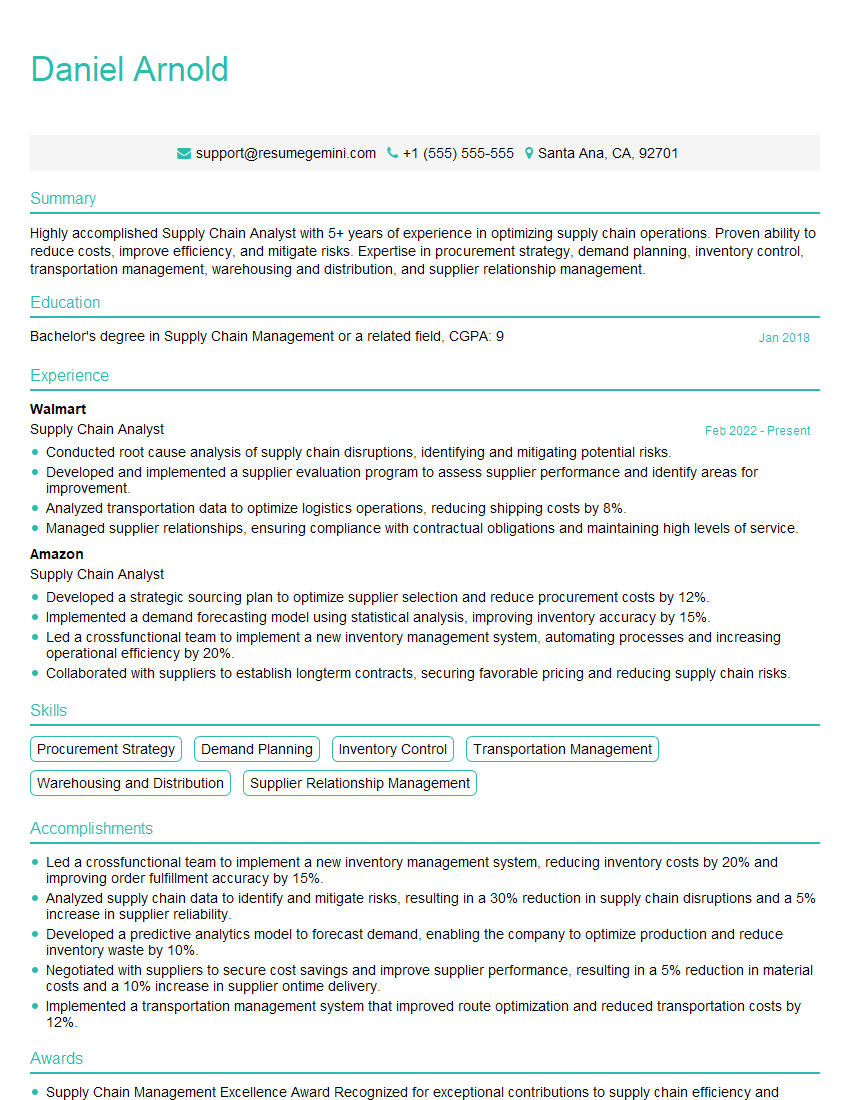
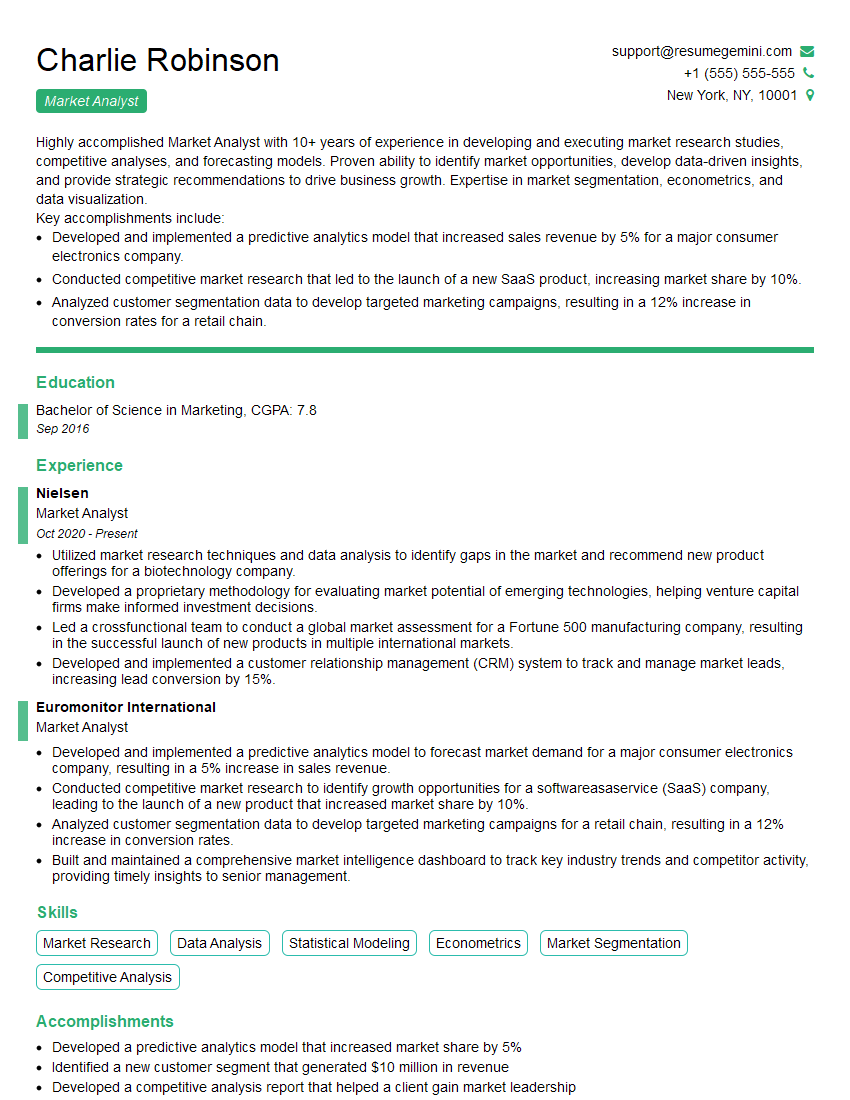
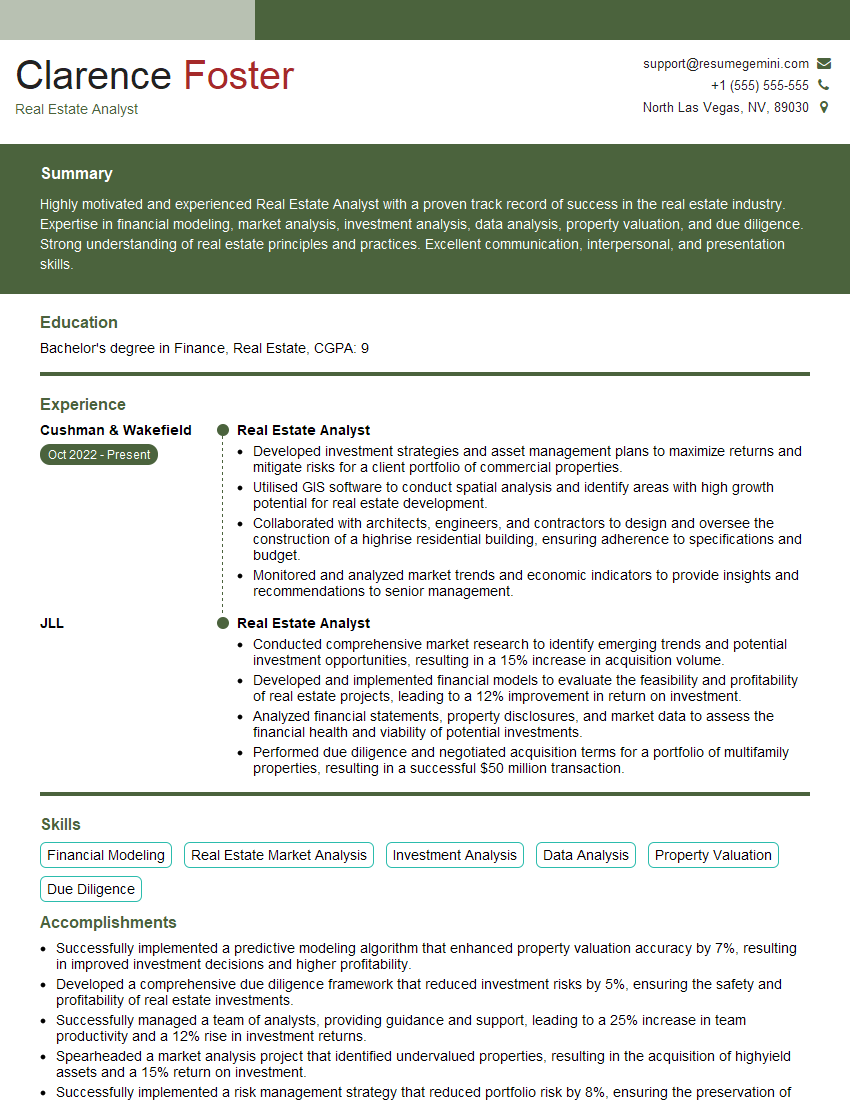
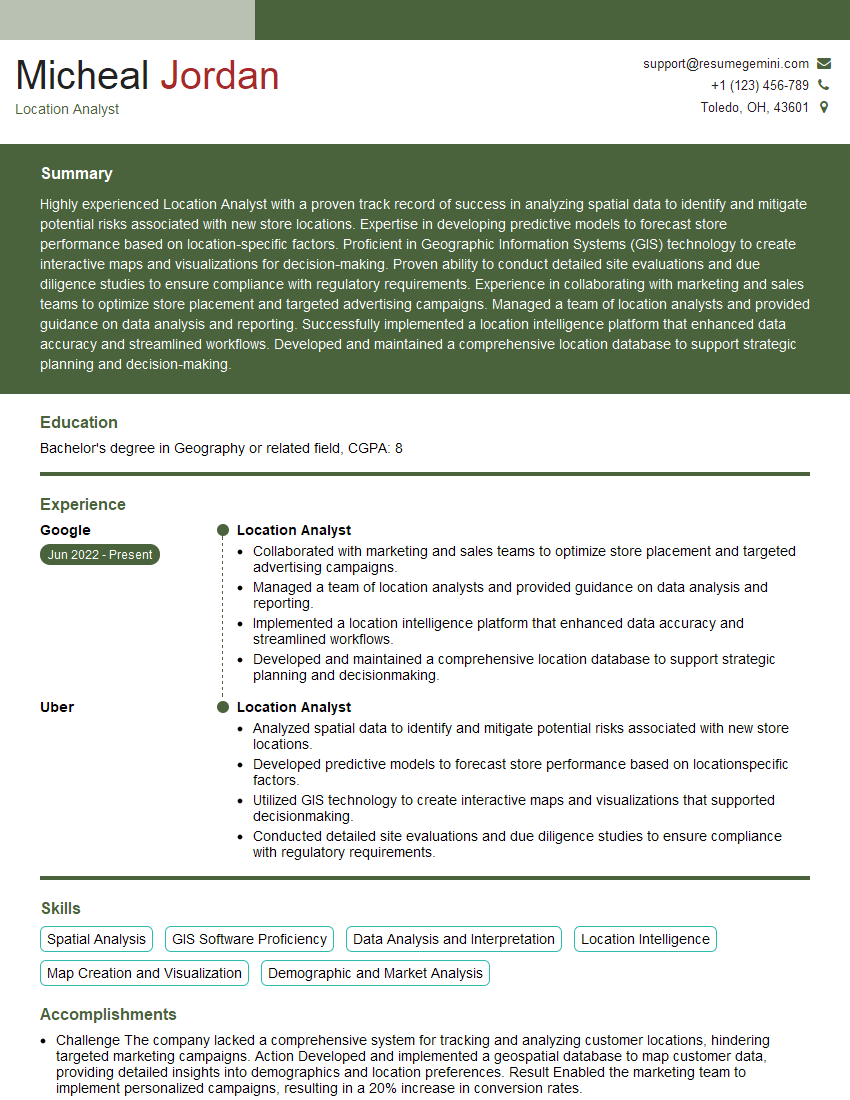
Mastering Site Selection Analysis opens doors to exciting opportunities in logistics, real estate, and various industries demanding strategic location decisions. To significantly improve your job prospects, crafting an ATS-friendly resume is crucial. ResumeGemini can help you create a compelling and effective resume that highlights your skills and experience in Site Selection Analysis, maximizing your chances of landing your dream job. Examples of resumes tailored to Site Selection Analysis are available to further guide your preparation.
Explore more articles
Users Rating of Our Blogs
Share Your Experience
We value your feedback! Please rate our content and share your thoughts (optional).
What Readers Say About Our Blog
To the interviewgemini.com Webmaster.
Very helpful and content specific questions to help prepare me for my interview!
Thank you
To the interviewgemini.com Webmaster.
This was kind of a unique content I found around the specialized skills. Very helpful questions and good detailed answers.
Very Helpful blog, thank you Interviewgemini team.