Unlock your full potential by mastering the most common Site Surveys and Data Collection interview questions. This blog offers a deep dive into the critical topics, ensuring you’re not only prepared to answer but to excel. With these insights, you’ll approach your interview with clarity and confidence.
Questions Asked in Site Surveys and Data Collection Interview
Q 1. Explain the different types of site surveys.
Site surveys are categorized based on their purpose and the data collected. They aren’t mutually exclusive; a single project might utilize aspects of several types.
- Topographic Surveys: These focus on the Earth’s surface, mapping elevation changes, natural and man-made features. Think of creating a detailed contour map for construction planning. They often involve techniques like leveling and total station use.
- Cadastral Surveys: These define property boundaries and land ownership. Accuracy is paramount here, as legal implications are significant. They typically involve referencing legal descriptions and boundary markers.
- As-Built Surveys: These document the final construction of a project, verifying that the built structure matches the design plans. Discrepancies are noted and reported. This is crucial for handover and future maintenance.
- Route Surveys: These determine the optimal path for linear projects like roads, pipelines, or railways. Factors like terrain, environmental impact, and cost are considered.
- Hydrographic Surveys: These map bodies of water, charting depths, underwater features, and shoreline details. Sonar and other specialized equipment are used.
- Underground Utility Surveys: These locate buried utilities like pipes, cables, and conduits to prevent damage during excavation. Ground-penetrating radar (GPR) is commonly used.
The type of survey dictates the equipment, methodology, and level of detail required.
Q 2. Describe your experience with GPS equipment and data processing.
I have extensive experience with various GPS equipment, from handheld receivers to high-precision RTK (Real-Time Kinematic) systems. I’m proficient in using both static and kinematic surveying techniques. My experience includes operating Trimble and Leica GPS receivers, processing data using post-processing software such as Trimble Business Center and Leica GeoOffice.
For example, during a recent project involving the creation of a highly accurate topographic map for a large-scale construction site, I utilized a Leica RTK system. The raw data collected was then processed in Leica GeoOffice, incorporating corrections from a base station to achieve centimeter-level accuracy. This involved careful quality control checks, identifying and eliminating outliers, and verifying the data against known control points. The final output was a 3D model of the site ready for design and planning.
Q 3. How do you ensure data accuracy in site surveys?
Data accuracy is paramount. I employ a multi-faceted approach:
- Calibration and Maintenance: Regularly calibrating equipment and performing maintenance checks on all instruments ensures optimal performance and minimizes errors.
- Redundant Measurements: I always take multiple measurements of the same point, using different methods if possible. This allows for the identification and rejection of outliers.
- Control Points: Establishing a network of accurately surveyed control points provides a framework for checking the accuracy of all other measurements. These are usually obtained from existing survey data or by highly precise methods.
- Data Validation: Thorough data validation is crucial. This involves checking for inconsistencies, outliers, and gross errors. Software tools and visual inspection are used.
- Quality Control Checks: Regular checks are performed throughout the process, including checking the instrument setup, checking the data in the field, and performing post-processing quality control checks.
Think of it like baking a cake – precise measurements are key. Multiple checks throughout the process ensure the final product meets expectations.
Q 4. What are the common challenges faced during site surveys?
Site surveys often encounter challenges. Some common ones include:
- Obstructions: Trees, buildings, and other obstacles can hinder visibility and accurate measurement.
- Weather Conditions: Rain, wind, and extreme temperatures can affect equipment performance and data quality. Extreme weather can also halt fieldwork altogether.
- Difficult Terrain: Steep slopes, dense vegetation, and uneven ground can make access and measurement challenging. Specialized equipment or techniques might be needed.
- Underground Utilities: Unexpected encounters with buried utilities pose safety risks and require careful handling. A thorough utility investigation beforehand is crucial.
- Legal Access Restrictions: Gaining access to private property or restricted areas requires appropriate permissions and coordination.
- Data Processing Challenges: Large datasets require efficient and reliable data processing techniques. Manual data entry introduces errors.
Effective planning and problem-solving skills are essential to mitigate these challenges.
Q 5. Explain your experience with different data collection methods (e.g., total stations, drones).
My experience encompasses a wide range of data collection methods:
- Total Stations: I’m proficient in using total stations for precise distance, angle, and elevation measurements. I’m familiar with different measurement techniques, including robotic total stations.
- GPS/GNSS: As mentioned earlier, I have significant experience with various GPS/GNSS receivers and post-processing techniques.
- Drones (UAVs): I’m experienced in using drones equipped with high-resolution cameras and LiDAR for data acquisition. This involves planning flight paths, processing imagery using photogrammetry software, and creating 3D models. For instance, I used drones to capture high-resolution imagery of a coastal area, resulting in an accurate topographic model that facilitated erosion assessment.
- Leveling: I’m proficient in performing precise leveling using automated levels and traditional methods.
The choice of method depends on factors like project scale, accuracy requirements, and environmental conditions. A combination of methods is often optimal.
Q 6. How do you handle conflicting data points?
Conflicting data points require careful investigation and resolution. My approach involves:
- Identifying the Discrepancy: First, I pinpoint the conflicting data points and analyze the source of the conflict.
- Investigating Potential Causes: This could be due to instrument errors, human error, environmental factors, or other issues. I’ll look at the equipment calibration and the surrounding conditions when the data was collected.
- Evaluating Data Quality: I assess the reliability of each data point based on factors like the number of measurements, measurement precision, and the potential for error.
- Resolving the Conflict: Depending on the cause and the severity of the conflict, I might re-measure the points, eliminate outliers, or apply statistical methods like weighted averaging to reconcile the data.
- Documenting the Resolution: I thoroughly document the process, including the identified conflict, the investigation conducted, the chosen resolution method, and the rationale behind the decision. This ensures transparency and traceability.
It’s like a detective solving a case – examining all evidence before arriving at a solution.
Q 7. What software are you proficient in for data processing and analysis (e.g., ArcGIS, AutoCAD)?
I am proficient in several software packages used for data processing and analysis. My expertise includes:
- ArcGIS: I use ArcGIS for geospatial data management, analysis, and visualization. This includes creating maps, performing spatial analyses, and generating reports.
- AutoCAD: I use AutoCAD for creating and editing 2D drawings, preparing plans and sections, and integrating survey data into design projects.
- Trimble Business Center: This is my go-to software for processing GPS data, performing quality control checks, and generating precise coordinate outputs.
- Leica GeoOffice: Similarly, I utilize Leica GeoOffice for processing data from Leica GPS and total station equipment.
- CloudCompare: I use CloudCompare for point cloud processing and manipulation, particularly for data derived from LiDAR scans and drone surveys.
My software skills ensure efficient and accurate processing of survey data, transforming raw measurements into actionable information.
Q 8. Describe your experience with data quality control and assurance.
Data quality control and assurance (QA/QC) is crucial for reliable site surveys. It involves a systematic process of identifying, preventing, and correcting errors in collected data. My approach is multifaceted, starting before data collection even begins.
- Planning and Preparation: Thorough planning, including defining clear data specifications, choosing appropriate equipment and methodologies, and training personnel, significantly reduces errors from the outset. For example, before a building survey, I’d ensure the team understands the required accuracy and the specific data points needed (e.g., precise location of utilities, building corners, etc.).
- Data Collection Procedures: Implementing robust data collection protocols is paramount. This might involve using standardized checklists, employing double-checking mechanisms (like having two people independently measure a critical distance), and using equipment calibration protocols to minimize instrument error. I’d always document every step of the process.
- Data Validation: This involves checking for outliers, inconsistencies, and improbable values. I utilize various techniques such as statistical analysis and visual inspection of data plots to identify anomalies. A simple example is checking for impossible elevation differences between two closely located points.
- Data Cleaning: Once potential errors are identified, I correct them or flag them for further investigation. This might include replacing erroneous data points with valid measurements, adjusting for known systematic errors, or removing outliers beyond a defined threshold after careful analysis.
- Documentation and Reporting: All QA/QC processes, including the identification and correction of errors, are meticulously documented. A final report detailing the QA/QC procedures and the quality of the final dataset is essential.
Through this rigorous approach, I ensure the highest level of data integrity, leading to accurate and reliable results for clients. A recent project involving a large-scale infrastructure survey demonstrated the effectiveness of this method, resulting in a dataset with an error rate well below the defined tolerance.
Q 9. How do you manage large datasets efficiently?
Managing large datasets efficiently requires a combination of strategic planning and the use of appropriate tools and techniques. Think of it like organizing a massive library – you wouldn’t just throw books on the floor!
- Database Management Systems (DBMS): I utilize relational databases like PostgreSQL or spatial databases like PostGIS to store, organize, and query large datasets. These systems allow for efficient data storage, retrieval, and analysis.
- Data Compression Techniques: Employing lossless compression algorithms reduces storage space and improves data transfer speeds. This is particularly important when dealing with high-resolution imagery or point cloud data.
- Cloud Computing: Cloud-based platforms like AWS or Azure provide scalable storage solutions for handling extremely large datasets. They offer cost-effective solutions and allow for easy data sharing and collaboration.
- Data Partitioning and Indexing: Breaking down large datasets into smaller, manageable chunks (partitioning) and creating indexes to speed up data retrieval are fundamental. This is similar to indexing books in a library for easier searching.
- Data Processing Frameworks: Using frameworks like Apache Spark or Hadoop allows for parallel processing of data, drastically reducing processing time. Imagine many librarians working simultaneously on organizing different sections of the library.
- Data Visualization Tools: Tools like QGIS, ArcGIS, or Python libraries (e.g., Matplotlib, Seaborn) help visualize and understand trends within the data, enabling faster identification of potential errors or anomalies.
The key is to choose the right tools for the job and employ a structured approach. In a recent project involving millions of LiDAR points, using cloud-based storage and Spark for processing ensured timely delivery of the project despite the sheer size of the data.
Q 10. Explain your understanding of coordinate systems and projections.
Coordinate systems and projections are fundamental to geospatial data. A coordinate system defines the location of points on the Earth’s surface, while a projection transforms the 3D Earth onto a 2D plane for representation on maps.
Coordinate Systems: These define how we locate points using latitude and longitude. The most common is the World Geodetic System 1984 (WGS84), but others exist, such as UTM (Universal Transverse Mercator) which uses a grid system.
Projections: Transforming the Earth’s curved surface to a flat map inevitably introduces distortion. Different projections minimize different types of distortion (area, shape, distance, direction). For example:
- Mercator: Preserves direction, but distorts area greatly at higher latitudes.
- Albers Equal-Area Conic: Preserves area, but distorts shape.
- Lambert Conformal Conic: Preserves shape and direction in limited areas.
Understanding these is vital because using the wrong coordinate system or projection can lead to significant errors in measurements and spatial analysis. For instance, if I’m measuring distances between points using different projections, my results would be inaccurate. In practice, I always meticulously document the coordinate system and projection used in any project, ensuring consistency throughout the workflow.
Q 11. How do you ensure data security and confidentiality?
Data security and confidentiality are paramount in site surveys, especially when dealing with sensitive information. My approach focuses on a multi-layered security strategy.
- Data Encryption: All data, both in transit and at rest, is encrypted using strong encryption algorithms (e.g., AES-256). This prevents unauthorized access even if data is intercepted.
- Access Control: Strict access control measures are implemented to limit access to sensitive data only to authorized personnel. This involves using role-based access control systems and secure password policies.
- Data Storage: Data is stored securely on encrypted servers, often utilizing cloud services with robust security measures. Regular backups are performed to prevent data loss.
- Data Anonymization: Where possible, I anonymize data to remove any personally identifiable information. For example, in a survey involving people’s homes, I might replace house numbers with unique identifiers.
- Compliance with Regulations: I adhere to all relevant data protection regulations (e.g., GDPR, CCPA) to ensure legal compliance.
- Security Audits: Regular security audits are conducted to identify and address potential vulnerabilities in the systems and processes.
The importance of data security cannot be overstated. A breach of confidentiality could have serious consequences, both legally and for client trust. My rigorous approach safeguards data and protects my clients’ interests.
Q 12. How do you prepare for a site survey?
Preparing for a site survey is akin to planning a military operation – thoroughness is key. My preparation involves several critical steps:
- Project Review: A comprehensive review of the project requirements is the first step, including understanding the objectives, scope of work, required accuracy, and deliverables. What kind of data is needed? What’s the desired level of precision?
- Site Reconnaissance: If possible, a preliminary site visit allows me to assess the terrain, identify potential hazards, and plan optimal data acquisition strategies. This could involve checking for accessibility, identifying potential obstructions, and assessing weather conditions.
- Equipment Check: All surveying equipment is thoroughly inspected and calibrated to ensure accuracy and functionality. This includes checking batteries, sensors, and software updates.
- Logistics Planning: This involves planning transportation, accommodation (if required), permits, and any necessary permissions. I would consider access to the site, parking, and potential disruption to the local area.
- Safety Planning: A detailed safety plan is developed, including risk assessments and mitigation strategies. This considers potential hazards such as uneven terrain, traffic, and weather conditions. PPE (Personal Protective Equipment) is checked and assigned.
- Data Management Plan: A clear data management plan outlining the data acquisition methods, storage, processing, and backup procedures is established.
This meticulous preparation ensures the survey runs smoothly, safely, and efficiently, producing high-quality results. Failing to adequately plan can lead to delays, cost overruns, and even safety incidents.
Q 13. Describe your experience with different types of surveying equipment.
My experience encompasses a wide range of surveying equipment, both traditional and modern. This includes:
- Total Stations: These are highly accurate electronic instruments combining theodolite and electronic distance measurement (EDM) capabilities, enabling precise measurement of distances, angles, and coordinates.
- GNSS Receivers (GPS/GLONASS/Galileo): These utilize satellite signals for precise positioning. I’m experienced with both single- and multi-frequency receivers, including RTK (Real-Time Kinematic) systems that provide centimeter-level accuracy.
- Leveling Instruments: Used for determining precise elevations, these instruments are essential for tasks such as creating contour maps and setting out building foundations.
- Scanning Laser Rangefinders/LiDAR: These advanced instruments rapidly acquire large amounts of three-dimensional spatial data, creating point clouds ideal for terrain modeling and asset mapping.
- Drone Technology (UAVs): I’m experienced with using drones equipped with cameras and LiDAR sensors for aerial surveys, offering a cost-effective and efficient solution for large-scale projects.
- Software Packages: Proficiency in various data processing and analysis software (e.g., AutoCAD Civil 3D, ArcGIS, QGIS, various point cloud processing software) is crucial for converting raw data into useful information.
Selecting the appropriate equipment depends entirely on the project’s specific needs. For example, a precise building survey might require a total station and GNSS receiver, while a large-area topographical survey might utilize LiDAR technology.
Q 14. How do you manage site logistics and safety during a survey?
Managing site logistics and safety during a survey is critical. Neglecting either can lead to delays, increased costs, and, most importantly, accidents.
- Site Access and Permissions: Securing necessary access permits and permissions is paramount, ensuring the survey team can work legally and without disruption. This might include coordinating with landowners, traffic managers, or other stakeholders.
- Communication and Coordination: Maintaining clear communication within the survey team and with all stakeholders is vital. Using a combination of two-way radios, mobile phones, and project management software ensures smooth operation.
- Site Marking and Safety Zones: Clearly marking the survey area and establishing safety zones helps prevent accidents and ensures the safety of both the survey team and the public. This might include using safety cones, warning signs, and flag persons.
- Emergency Procedures: Developing and practicing emergency procedures is crucial. This involves defining procedures for responding to accidents, injuries, or emergencies, and having access to relevant emergency services.
- Environmental Considerations: Minimizing environmental impact is also important. This may involve avoiding sensitive ecosystems, taking precautions to avoid damaging vegetation, and properly disposing of waste.
- Weather Monitoring: Monitoring weather conditions is essential to ensure the safety of the team. Surveys might need to be postponed if weather conditions become hazardous.
A well-managed site ensures efficient operations and a safe working environment. In one project, our proactive safety planning averted a potential collision between survey equipment and a passing vehicle, highlighting the crucial importance of comprehensive logistics and safety management.
Q 15. What are your preferred methods for data visualization?
My preferred methods for data visualization depend heavily on the type of data and the intended audience. For quick insights and presentations to clients, I often utilize interactive dashboards created in tools like Tableau or Power BI. These allow for easy exploration of key metrics and trends through charts and graphs. For more in-depth analysis and sharing with technical teams, I often leverage Python libraries like Matplotlib and Seaborn to generate publication-quality figures, including heatmaps, scatter plots, and 3D visualizations, depending on the dataset’s dimensionality. For example, visualizing elevation data from a LiDAR survey might involve a 3D point cloud or a color-coded elevation map, while analyzing building footprints from orthophotos could best be shown using a 2D map with overlaid polygons.
Ultimately, effective data visualization is about clarity and communication. I select the method that best communicates the story hidden within the data to the specific audience.
Career Expert Tips:
- Ace those interviews! Prepare effectively by reviewing the Top 50 Most Common Interview Questions on ResumeGemini.
- Navigate your job search with confidence! Explore a wide range of Career Tips on ResumeGemini. Learn about common challenges and recommendations to overcome them.
- Craft the perfect resume! Master the Art of Resume Writing with ResumeGemini’s guide. Showcase your unique qualifications and achievements effectively.
- Don’t miss out on holiday savings! Build your dream resume with ResumeGemini’s ATS optimized templates.
Q 16. How do you interpret and report survey data?
Interpreting and reporting survey data is a multi-step process. It begins with a thorough quality check of the raw data, identifying and addressing any outliers or inconsistencies. Then, I perform statistical analysis relevant to the survey objectives. This might involve calculating means, medians, standard deviations, or more sophisticated statistical tests depending on the data type and research question. For example, I might perform a regression analysis to determine the correlation between building height and property value in a urban density study.
Reporting involves presenting the findings clearly and concisely in a format appropriate for the intended audience. This often includes tables, charts, and maps, along with a written summary that explains the key findings, their implications, and any limitations of the study. I always ensure that the report is well-structured, easy to understand, and visually appealing. Including error bars on graphs and clearly stating confidence intervals demonstrates a commitment to accurate and reliable results.
Q 17. Describe a situation where you had to troubleshoot a technical issue during a survey.
During a recent site survey for a large infrastructure project, we experienced unexpected difficulties with our GNSS (Global Navigation Satellite System) equipment. We were using RTK (Real-Time Kinematic) GPS to achieve centimeter-level accuracy, but we kept encountering sporadic signal loss due to dense tree cover in certain areas. Initially, I tried repositioning the equipment to find areas with better satellite visibility. This helped, but it slowed the survey process considerably.
After investigating further, we discovered that the base station’s antenna was partially obscured by foliage. Relocating the base station to a more open location dramatically improved the signal quality, allowing us to complete the survey efficiently and within the required accuracy specifications. This experience highlighted the importance of thorough site reconnaissance before commencing data collection to anticipate potential obstacles and have backup plans in place.
Q 18. How do you work with clients or stakeholders during a site survey?
Collaboration with clients and stakeholders is crucial for a successful site survey. I begin by establishing clear communication channels and scheduling regular meetings to discuss project goals, timelines, and potential challenges. I ensure that the clients understand the survey methodologies and the limitations of the data. Open communication fosters trust and reduces misunderstandings.
During the survey, I maintain regular updates, sharing progress reports and addressing any questions or concerns promptly. I actively seek feedback from the clients to ensure that the survey aligns with their needs. For instance, if the client has specific areas of interest or data requirements, I prioritize these aspects during the fieldwork and analysis phases. After the survey, I present the findings in a clear and concise report tailored to the client’s level of technical understanding.
Q 19. Explain your experience with LiDAR or photogrammetry.
I have extensive experience with both LiDAR and photogrammetry, utilizing them for various applications, from creating high-resolution 3D models of buildings and infrastructure to generating detailed topographic maps. LiDAR, with its ability to penetrate vegetation, provides accurate point cloud data, essential for terrain modeling and extracting elevation information. I’ve used LiDAR data extensively in projects involving environmental impact assessments and pipeline route planning.
Photogrammetry, on the other hand, is particularly useful for capturing fine details and textures. Using multiple overlapping photographs, I can generate highly accurate 3D models and orthophotos. I’ve successfully applied this technique in projects requiring precise measurement of building facades or the documentation of historical sites. Often, I use both techniques in tandem, leveraging LiDAR for accurate elevation data and photogrammetry to enrich the 3D models with visual detail and texture.
Q 20. How familiar are you with different mapping software and techniques?
My familiarity with mapping software and techniques is broad. I’m proficient in ArcGIS Pro, QGIS, and AutoCAD Map 3D for geospatial data processing, analysis, and visualization. I can work with various data formats including shapefiles, geodatabases, raster images, and point clouds. My skills encompass georeferencing, creating thematic maps, performing spatial analysis (e.g., buffer analysis, overlay analysis), and generating high-quality cartographic outputs.
Beyond these software packages, I understand various mapping techniques like coordinate systems (UTM, geographic), map projections, and different types of maps (topographic, cadastral, thematic). I can adapt my approach and software choices based on the specific project requirements and the available data.
Q 21. How do you handle unexpected issues or challenges during a site survey?
Handling unexpected issues during a site survey requires adaptability and problem-solving skills. My approach involves a systematic process: first, I assess the nature of the problem and its potential impact on the project. Then, I develop and evaluate several potential solutions, considering factors like safety, cost, and time constraints.
For example, encountering unforeseen obstacles like inclement weather or restricted access requires me to adjust the survey schedule or methodology. I might need to use alternative data acquisition techniques or collaborate with the client to find alternative access routes. Thorough documentation of all changes and their implications is crucial for maintaining transparency and accuracy. A calm and methodical approach, combined with good communication, allows me to effectively navigate these challenges and ensure the project’s successful completion.
Q 22. Explain your experience with different types of terrain and environmental conditions.
My experience spans a wide range of terrains and environmental conditions, from dense urban environments with challenging access limitations to remote rural areas with unpredictable weather. I’ve worked in mountainous regions, requiring specialized equipment and safety protocols, as well as coastal areas prone to flooding and erosion. Each environment presents unique challenges that demand adaptability and a thorough understanding of the specific risks involved. For instance, conducting a survey in a dense forest necessitates careful navigation, awareness of potential hazards like wildlife, and the use of GPS technology to ensure accurate location data. Conversely, surveying in a bustling city center requires meticulous planning to avoid disrupting traffic and pedestrians, alongside careful consideration of building access and safety regulations. I’ve successfully adapted my methodologies and equipment to various weather conditions, including extreme heat, cold, and precipitation, ensuring the accuracy and integrity of data collection under all circumstances.
Q 23. How do you ensure compliance with relevant safety regulations and standards?
Safety is my paramount concern. I meticulously follow all relevant Occupational Safety and Health Administration (OSHA) regulations, and any site-specific safety guidelines provided by the client or project. This includes wearing appropriate Personal Protective Equipment (PPE), such as hard hats, high-visibility clothing, safety glasses, and steel-toe boots, depending on the site’s conditions. Before any survey commences, I conduct a thorough risk assessment, identifying potential hazards such as uneven terrain, electrical lines, and moving vehicles. I develop a comprehensive safety plan that addresses these hazards and communicates it clearly to my team. This often includes emergency procedures, communication protocols, and designated safe zones. I consistently ensure that all equipment is properly maintained and used according to manufacturer’s instructions. Regular safety briefings and toolbox talks reinforce safe work practices and encourage proactive hazard identification. I document all safety measures and any incidents thoroughly, complying fully with record-keeping requirements.
Q 24. Describe your experience with data integration and analysis.
Data integration and analysis are integral parts of my workflow. I’m proficient in using various software packages, including GIS (Geographic Information Systems) platforms like ArcGIS and QGIS, to integrate data from multiple sources. This typically involves combining data from GPS surveys, aerial imagery, LiDAR scans, and existing datasets to create a comprehensive spatial representation of the survey area. I utilize these platforms to perform spatial analyses, such as calculating areas, distances, and volumes; creating thematic maps illustrating different attributes; and conducting buffer analysis to identify areas of influence around specific features. My analysis also extends to interpreting data to assess factors like terrain slope, vegetation density, and proximity to infrastructure. For example, I might use terrain data to identify potential areas of instability for a construction project. I’m adept at presenting my findings in a clear and concise manner through reports, maps, and presentations, using visualizations to communicate complex information effectively.
Q 25. How do you prioritize tasks and manage your time effectively during a site survey?
Effective time management and task prioritization are critical for successful site surveys. Before beginning any survey, I meticulously plan the fieldwork, breaking down the project into smaller, manageable tasks. This involves prioritizing tasks based on urgency, importance, and dependencies. For example, I might prioritize tasks that require specific weather conditions or access permissions. I utilize scheduling tools and checklists to track progress and ensure that all necessary steps are completed on time and within budget. I regularly review my schedule, adapting it to unforeseen circumstances or delays. For instance, if I encounter an unexpected obstacle, I re-prioritize tasks to minimize the impact on the overall project timeline. Clear communication with clients and team members is also crucial to keep everyone informed and manage expectations.
Q 26. What are your strengths and weaknesses as a site surveyor?
My strengths lie in my meticulous attention to detail, my problem-solving skills, and my ability to adapt to diverse situations. I’m a highly organized and efficient worker who can manage multiple projects simultaneously. My experience allows me to anticipate potential problems and proactively develop solutions. For example, during a survey in a remote area, I proactively planned for potential equipment malfunctions and ensured I had backup equipment and contingency plans in place. However, a weakness I am actively working on is delegation. While I can effectively manage projects independently, I am striving to improve my abilities to trust and delegate tasks to team members to improve overall efficiency.
Q 27. Describe your experience with creating site plans and reports.
I have extensive experience creating detailed site plans and reports. I utilize CAD (Computer-Aided Design) software, along with GIS, to produce accurate and visually appealing site plans that include topographic features, property boundaries, existing infrastructure, and proposed developments. My reports are comprehensive and well-organized, clearly summarizing my findings and providing recommendations based on the collected data. I include detailed descriptions of the methodology, relevant data, and interpretations. For example, I recently completed a site survey for a wind farm project. My final report included site plans with detailed topographic information, wind resource assessments, potential environmental impacts, and recommendations for optimizing turbine placement.
Q 28. How do you stay updated on the latest technologies and techniques in site surveys and data collection?
Staying current with the latest technologies and techniques is essential in this rapidly evolving field. I actively participate in professional development opportunities such as workshops, conferences, and online courses. I subscribe to relevant industry publications and journals and regularly attend webinars to keep abreast of new technologies and methodologies. I also network with other professionals in the field, sharing best practices and learning from their experiences. I actively explore new software and hardware, evaluating their capabilities and potential applications to improve the efficiency and accuracy of my surveys. For example, I’ve recently been investigating the use of drones and LiDAR for data collection, which can significantly improve the speed and accuracy of surveys, particularly in challenging terrains.
Key Topics to Learn for Site Surveys and Data Collection Interview
- Site Survey Planning & Preparation: Understanding project objectives, defining scope, selecting appropriate equipment and methodologies, and adhering to safety regulations.
- Data Collection Techniques: Mastering various data acquisition methods (e.g., GPS, total stations, laser scanning, drones), understanding data accuracy and precision, and implementing quality control measures.
- Data Processing & Analysis: Proficiency in using relevant software (e.g., AutoCAD, ArcGIS, specialized data processing tools) to process and analyze collected data, identify trends and anomalies, and generate accurate reports.
- Instrumentation & Equipment: Familiarization with different surveying instruments and their applications, including understanding their limitations and calibration procedures. Troubleshooting common equipment malfunctions.
- Health & Safety Regulations: Demonstrating a strong understanding of site safety procedures, risk assessment, and the use of personal protective equipment (PPE).
- Legal & Ethical Considerations: Awareness of relevant regulations, data privacy, and ethical conduct in data collection and reporting.
- Problem-Solving & Troubleshooting: Ability to identify and resolve issues encountered during site surveys and data collection, adapting methodologies as needed, and proposing effective solutions.
- Data Visualization & Reporting: Presenting data clearly and concisely through maps, charts, and reports, effectively communicating findings to both technical and non-technical audiences.
Next Steps
Mastering Site Surveys and Data Collection opens doors to exciting career opportunities in various fields, offering strong potential for growth and advancement. A well-crafted resume is crucial for showcasing your skills and experience to potential employers. Creating an ATS-friendly resume significantly increases your chances of getting noticed by recruiters. To help you build a compelling and effective resume, we recommend using ResumeGemini, a trusted resource for creating professional resumes. ResumeGemini provides examples of resumes tailored to Site Surveys and Data Collection to guide you through the process.
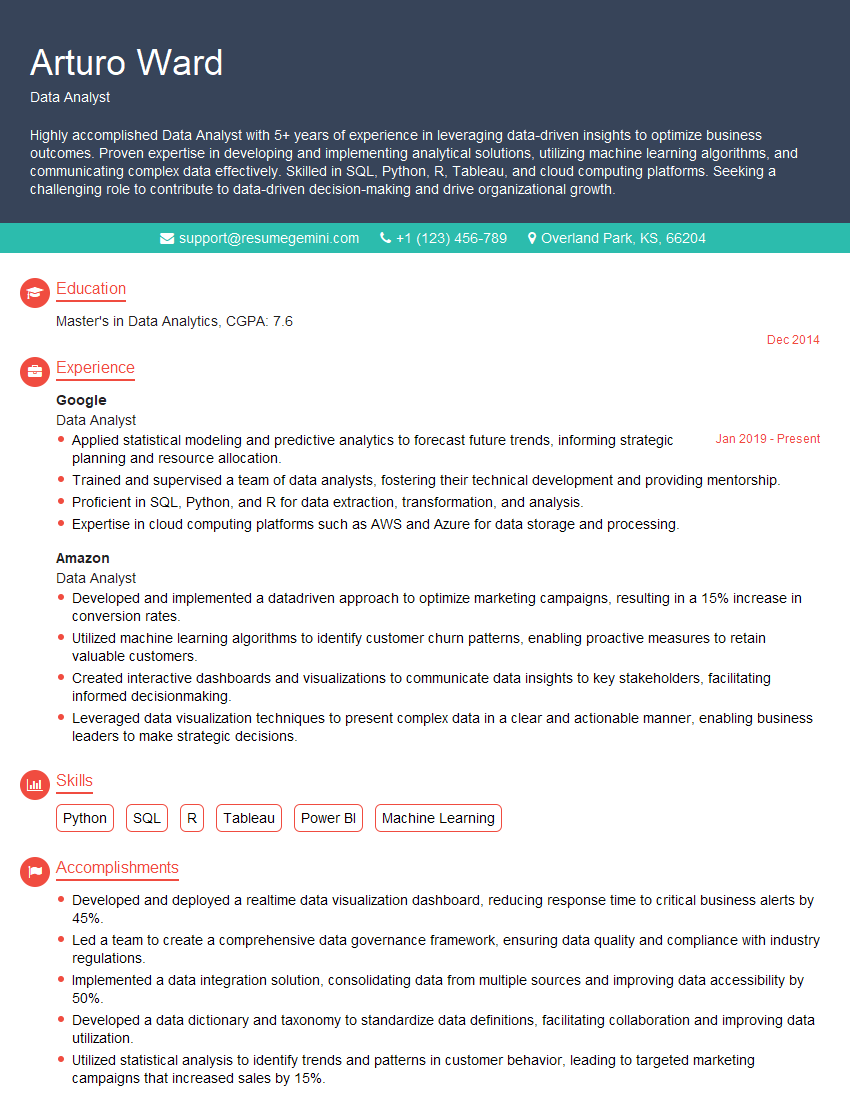
Data Analyst Resume Sample
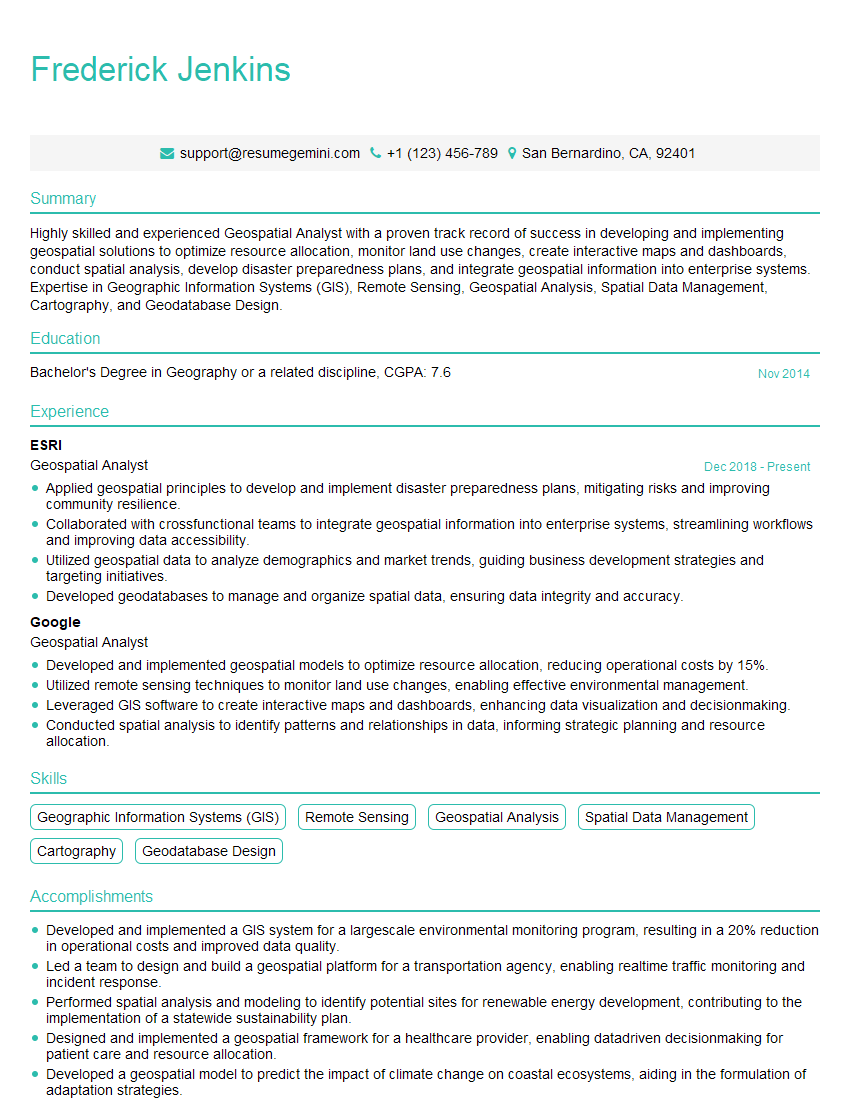
Geospatial Analyst Resume Sample
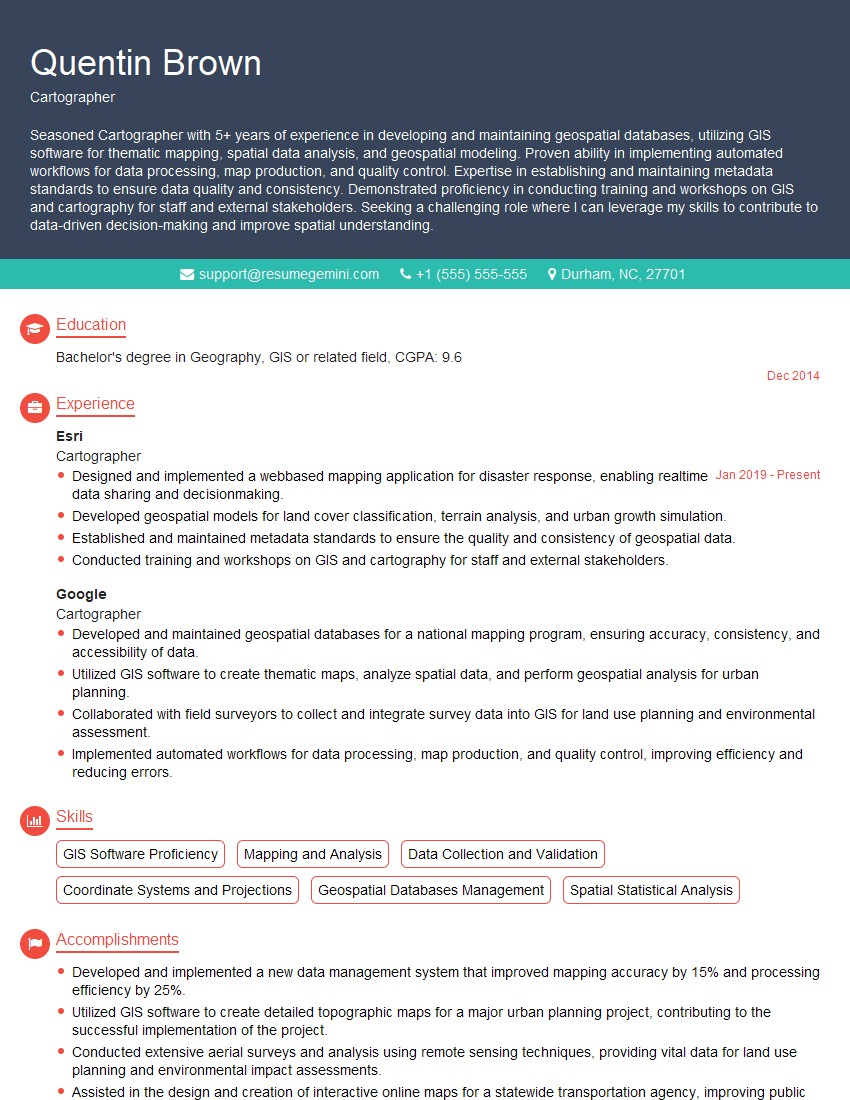
Cartographer Resume Sample
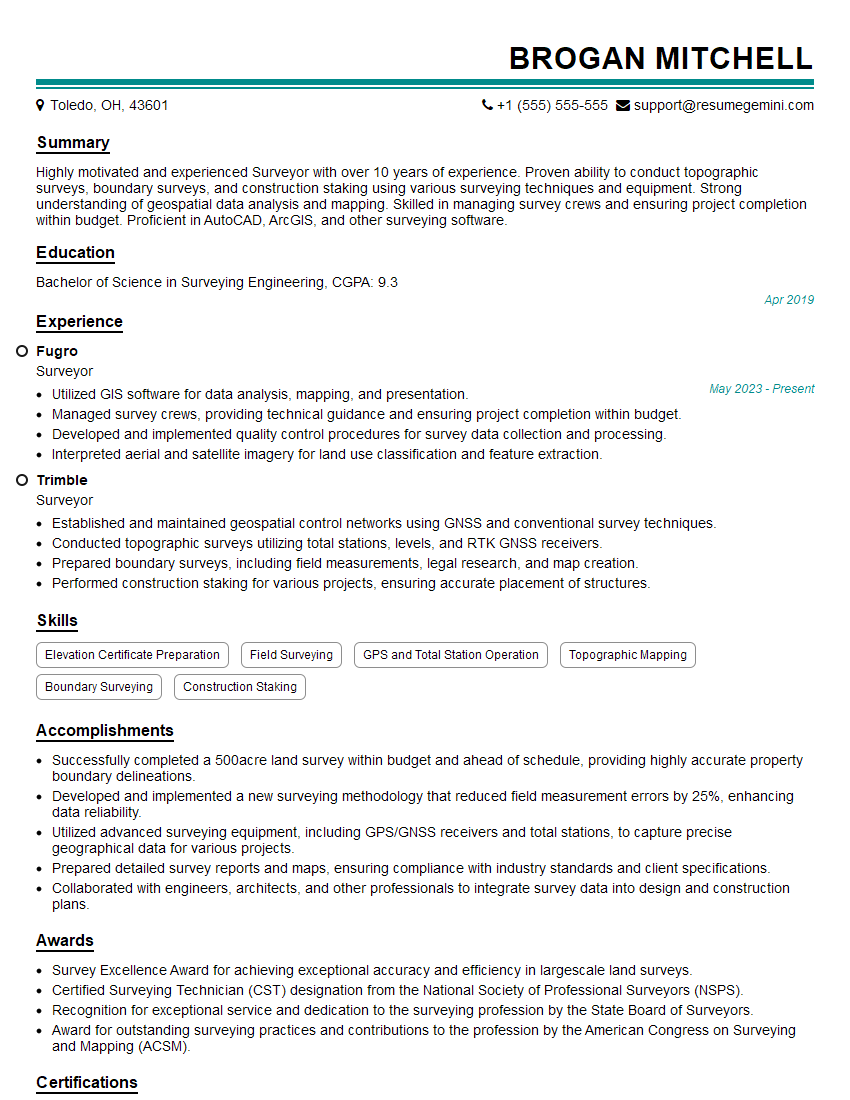
Surveyor Resume Sample
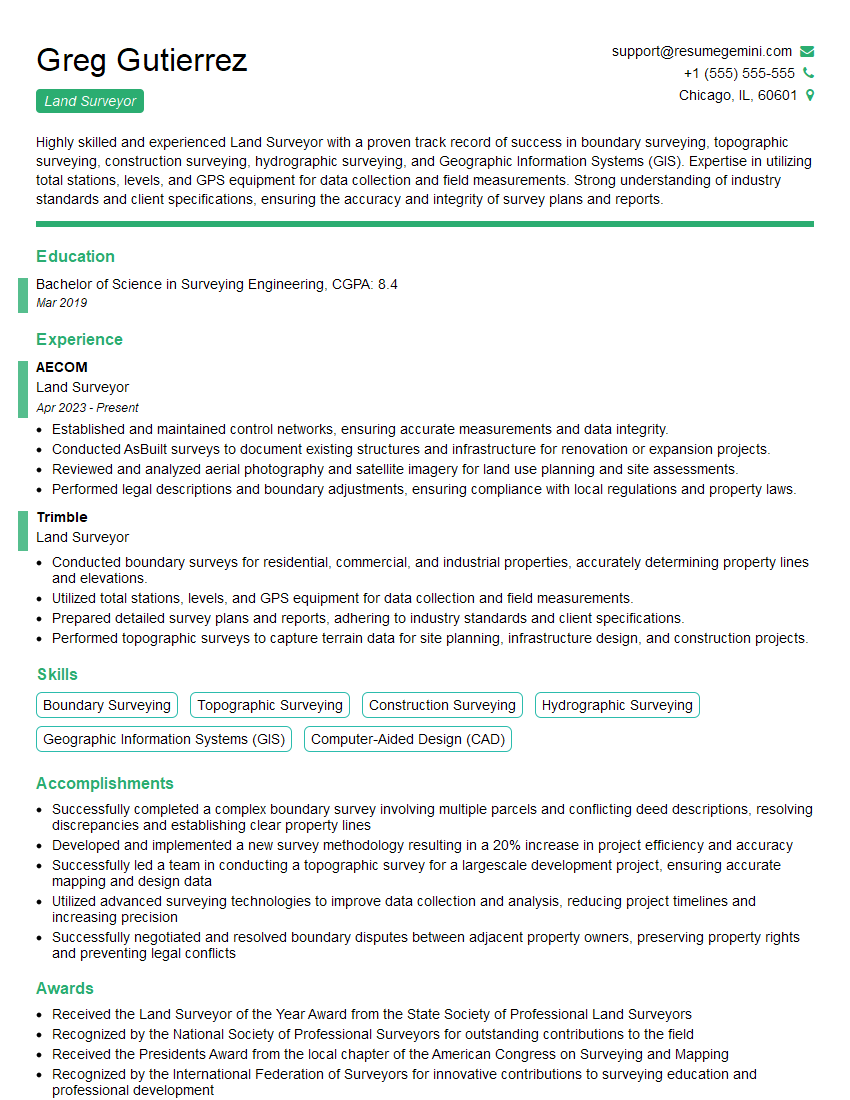
Land Surveyor Resume Sample
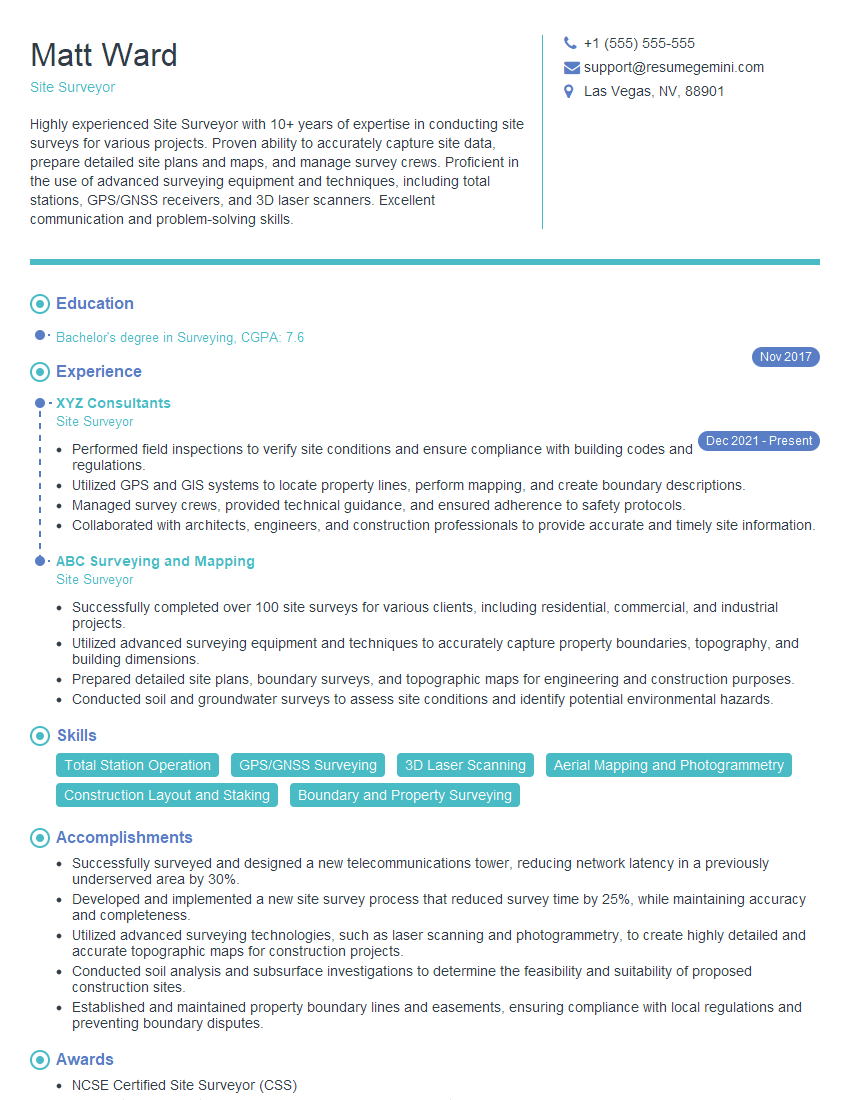
Site Surveyor Resume Sample
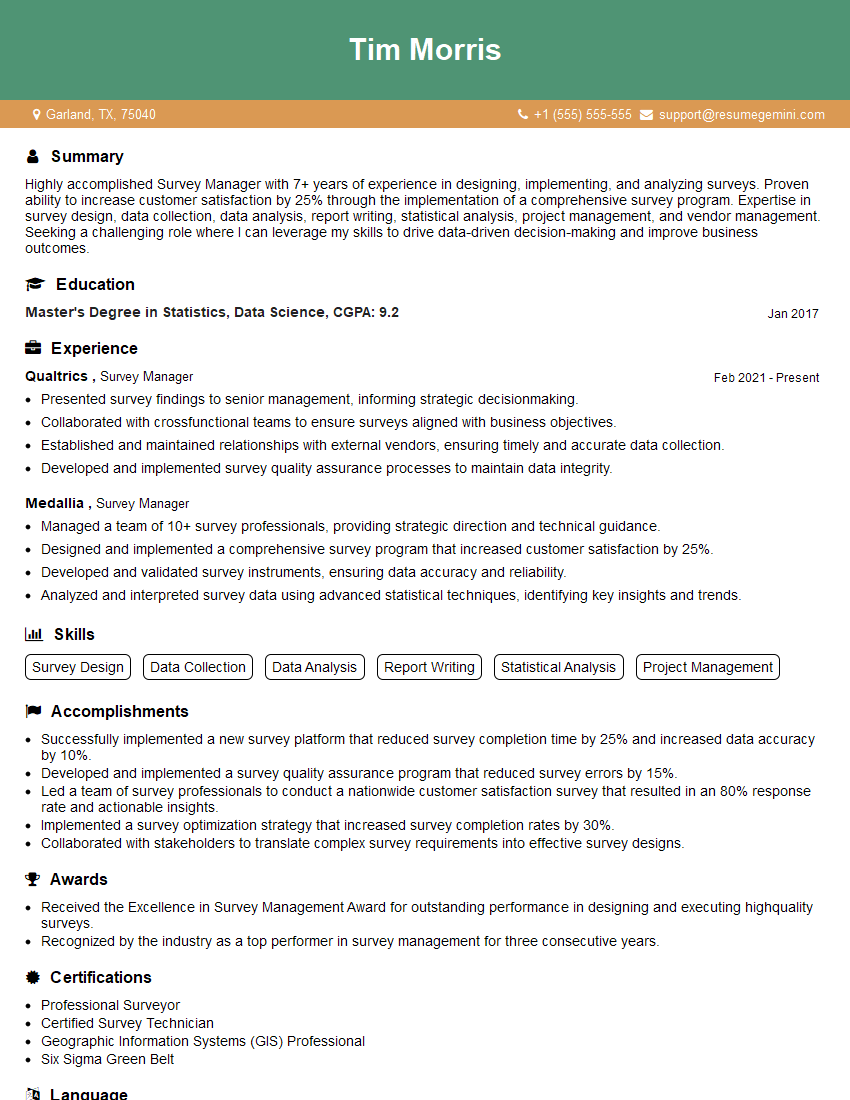
Survey Manager Resume Sample

Field Technician Resume Sample
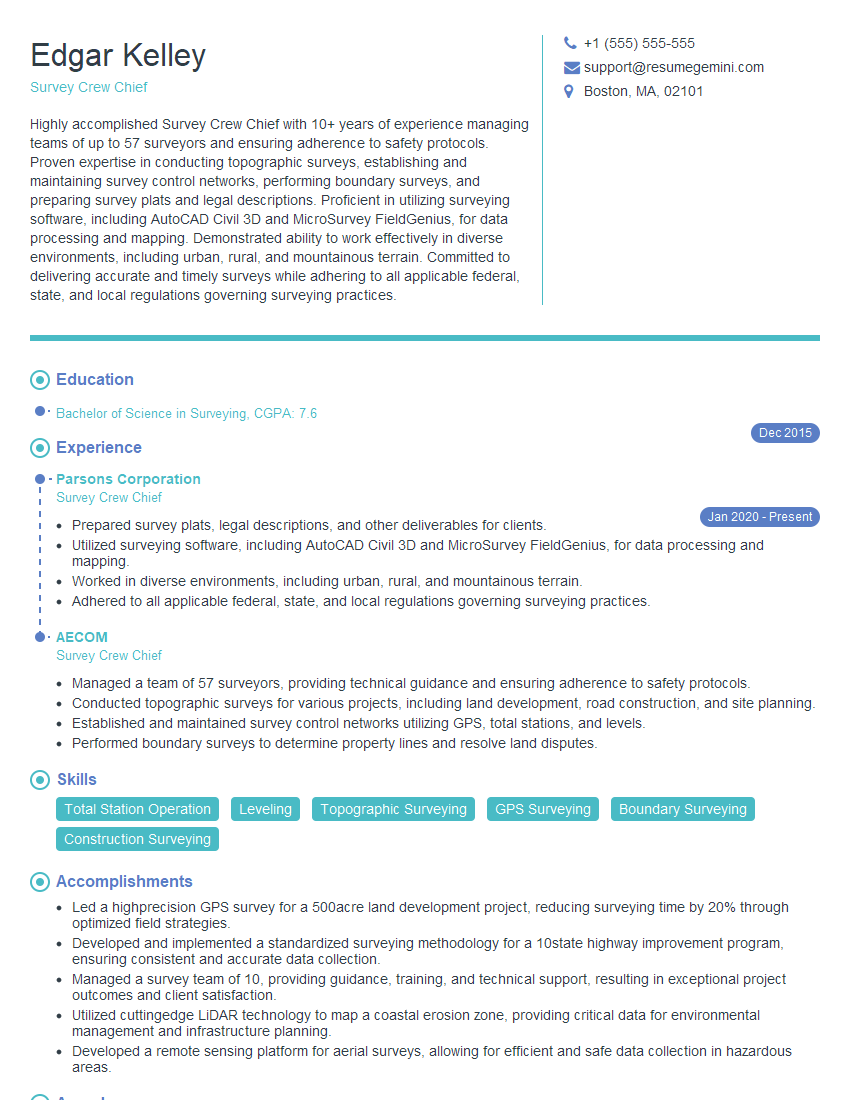
Survey Crew Chief Resume Sample

Remote Sensing Specialist Resume Sample
Explore more articles
Users Rating of Our Blogs
Share Your Experience
We value your feedback! Please rate our content and share your thoughts (optional).
What Readers Say About Our Blog
To the interviewgemini.com Webmaster.
Very helpful and content specific questions to help prepare me for my interview!
Thank you
To the interviewgemini.com Webmaster.
This was kind of a unique content I found around the specialized skills. Very helpful questions and good detailed answers.
Very Helpful blog, thank you Interviewgemini team.