The right preparation can turn an interview into an opportunity to showcase your expertise. This guide to Sludge Management and Disposal interview questions is your ultimate resource, providing key insights and tips to help you ace your responses and stand out as a top candidate.
Questions Asked in Sludge Management and Disposal Interview
Q 1. Explain the different methods of sludge thickening.
Sludge thickening is a crucial step in wastewater treatment, aiming to reduce the volume of sludge before further processing. This is achieved by increasing the concentration of solids within the sludge, thereby minimizing handling and disposal costs. Several methods exist, each with its own advantages and disadvantages.
Gravity Thickening: This is the simplest method, relying on gravity to separate the solids from the water. The sludge is simply allowed to settle in a tank, with the thickened sludge collected from the bottom. Think of it like letting sediment settle at the bottom of a glass of muddy water.
Flotation Thickening: This method uses dissolved air or other gases to create bubbles that attach to the sludge particles, making them float to the surface. This is particularly useful for sludge that doesn’t settle easily by gravity. Imagine bubbles lifting lighter materials in a soda.
Centrifugal Thickening: This method uses centrifugal force to separate the solids from the liquid. High-speed rotation pushes the denser sludge particles towards the outside of a rotating container, while the water is extracted. This is a more efficient method for smaller sludge particles.
The choice of method depends on factors like the type of sludge, the desired solids concentration, and the available budget.
Q 2. Describe the process of sludge dewatering.
Sludge dewatering aims to further reduce the water content of thickened sludge, making it easier and cheaper to handle and dispose of. This process reduces the volume and weight significantly, minimizing transportation costs and storage space. Several technologies are employed:
Belt Filter Presses: These use belts to squeeze water out of the sludge. Think of it like wringing out a wet sponge.
Centrifuges: Similar to centrifugal thickening, but often with a higher g-force to remove more water.
Vacuum Filters: These use vacuum pressure to draw water through a filter medium, leaving behind the dewatered sludge. This works like a very powerful vacuum cleaner that separates solid and liquid components.
Pressure Filters: These use pressure to force water through a filter medium. This method applies force to remove water, comparable to pressing juice from a fruit.
The selection of a dewatering method is based on the sludge’s properties (e.g., its solids content and the type of solids), the desired dryness, and the capital and operational costs.
Q 3. What are the common methods of sludge digestion?
Sludge digestion is a biological process that stabilizes sludge, reducing its volume and making it safer for disposal. It involves breaking down organic matter using microorganisms. The two main types are:
Aerobic Digestion: This process takes place in the presence of oxygen. Aerobic bacteria break down the organic matter, producing carbon dioxide and water. Think of this process as composting – the natural breakdown of organic materials with the presence of air.
Anaerobic Digestion: This process occurs in the absence of oxygen. Anaerobic bacteria break down the organic matter, producing biogas (a mixture of methane and carbon dioxide) and digestate. This process mimics natural decomposition in environments lacking oxygen.
The choice between aerobic and anaerobic digestion depends on several factors, including the characteristics of the sludge, the desired end-products (biogas or digestate), and the available space and energy requirements.
Q 4. Discuss the advantages and disadvantages of anaerobic digestion.
Anaerobic digestion offers several advantages, including biogas production which can be used for energy generation, reducing reliance on fossil fuels. It also significantly reduces sludge volume compared to aerobic digestion. However, it has its drawbacks. The process is slower than aerobic digestion and requires precise control of temperature and pH. Furthermore, it can produce odorous compounds if not properly managed.
Advantages: Biogas production (renewable energy source), significant volume reduction, lower energy consumption compared to aerobic digestion (once established).
Disadvantages: Slower digestion rate, sensitive to temperature and pH fluctuations, potential for odor production, more complex process control.
For example, a large wastewater treatment plant might find the energy benefits of anaerobic digestion outweigh the increased complexity, while a smaller plant might opt for the simpler aerobic digestion.
Q 5. How do you ensure compliance with environmental regulations regarding sludge disposal?
Ensuring compliance with environmental regulations for sludge disposal requires a multi-faceted approach. This involves meticulous record-keeping, regular testing, and adherence to specific disposal methods.
Regular Monitoring and Testing: Sludge must be regularly tested for various pollutants, such as heavy metals and pathogens, to ensure it meets regulatory limits before disposal. This helps prevent contamination of soil and groundwater.
Proper Documentation: Meticulous records of sludge generation, processing, and disposal are crucial. This ensures traceability and allows regulators to verify compliance.
Permitting and Reporting: Obtaining the necessary permits for sludge disposal and submitting regular reports to the relevant authorities are vital aspects of compliance.
Following Best Management Practices: Adhering to industry best practices for sludge handling, processing, and disposal helps minimize environmental impact and reduces the risk of non-compliance. For example, implementing an appropriate land application plan if this disposal route is selected.
Failure to comply can result in significant penalties, including fines and potential legal action.
Q 6. Explain the role of biosolids in land application.
Biosolids, the stabilized and treated sludge from wastewater treatment plants, can be valuable soil amendments when properly managed. Land application involves spreading biosolids onto land, where they serve as a source of nutrients and organic matter, improving soil structure and fertility.
Nutrient Enrichment: Biosolids contain essential plant nutrients like nitrogen, phosphorus, and potassium, reducing the need for synthetic fertilizers.
Improved Soil Structure: The organic matter in biosolids helps improve soil structure, water retention, and aeration, benefiting plant growth.
Sustainable Agriculture: Using biosolids as a fertilizer reduces the reliance on manufactured fertilizers, which have environmental and economic implications.
However, careful management is essential. Regulatory compliance requires monitoring for heavy metals and pathogens to prevent environmental contamination and ensure safe use.
Q 7. Describe the process of sludge incineration.
Sludge incineration is a thermal treatment method that involves burning sludge at high temperatures (typically above 850°C) to reduce its volume and destroy pathogens and pollutants. This process results in ash residue, which needs further management, and flue gases, which must be treated to remove pollutants before release into the atmosphere.
Volume Reduction: Incineration significantly reduces sludge volume, often by up to 90%, minimizing the space required for disposal.
Pathogen and Pollutant Destruction: The high temperatures destroy most pathogens and pollutants, ensuring safer disposal.
Energy Recovery: Some incineration plants recover energy from the combustion process, potentially generating electricity or heat.
However, incineration can be costly and requires stringent air pollution control measures to minimize emissions. Furthermore, ash management poses a challenge requiring special handling and disposal protocols.
Q 8. What are the health and safety considerations when handling sludge?
Handling sludge presents significant health and safety risks due to its potential for pathogen transmission and exposure to hazardous substances. Think of it like this: sludge is a concentrated mixture of everything removed from wastewater, including bacteria, viruses, parasites, and potentially heavy metals.
- Pathogens: Direct contact can lead to infections. Workers need protective gear like gloves, masks, and eye protection. Proper hygiene practices are crucial – thorough handwashing is paramount.
- Hazardous Substances: Sludge can contain heavy metals, pharmaceuticals, and other chemicals that pose acute and chronic health risks through skin contact, inhalation, or ingestion. Regular health monitoring is necessary for workers.
- Oxygen Depletion: Confined spaces containing sludge can become oxygen-deficient, posing suffocation hazards. Proper ventilation and safety checks before entry are essential.
- Physical Hazards: Sludge is often heavy and viscous, leading to risks of slips, trips, and falls. Appropriate personal protective equipment (PPE) and safe work practices are vital.
Effective safety procedures, including risk assessments, training programs, and the implementation of stringent safety protocols, are essential to mitigate these risks. Regular monitoring of worker health and the environment is also vital.
Q 9. How do you monitor and control the quality of treated sludge?
Monitoring and controlling the quality of treated sludge is crucial to ensure it meets regulatory requirements and is safe for disposal or beneficial reuse. This involves regular testing and analysis of key parameters throughout the treatment process. Imagine quality control like baking a cake – you need to check each step to ensure the final product is perfect.
- Solids Content: Regularly measuring the total solids (TS) and volatile solids (VS) helps determine the effectiveness of the dewatering process. This ensures proper sludge handling and disposal.
- Pathogens: Testing for the presence and concentration of pathogenic organisms, such as E. coli and Salmonella, is critical to ensure the safety of the final product and the environment.
- Heavy Metals: Analysis for heavy metals such as lead, cadmium, and mercury is important because they can accumulate in the environment and pose health risks.
- pH and other chemical parameters: Monitoring pH, temperature, and other chemical parameters ensures the sludge is stable and doesn’t pose environmental risks during disposal or reuse.
Data is routinely logged and analyzed to identify any deviations from the set standards, allowing for prompt corrective action. This continuous monitoring guarantees that the treated sludge meets all regulatory and safety standards.
Q 10. What are the different types of sludge produced in wastewater treatment plants?
Wastewater treatment plants produce several types of sludge, each with unique characteristics and treatment requirements. Think of it as sorting different types of garbage – each needs a separate approach.
- Primary Sludge: This sludge is settled out from the raw wastewater in primary clarifiers, largely comprised of organic matter and grit.
- Secondary Sludge: This is produced by biological treatment processes (activated sludge or trickling filters) and contains a higher concentration of microorganisms that break down organic matter.
- Digester Sludge: This sludge is the result of anaerobic digestion of primary and secondary sludge, reducing the volume and producing biogas. It’s typically more stable than raw sludge.
- Chemical Sludge: Produced during chemical treatment processes (e.g., lime softening), this sludge can contain significant amounts of heavy metals and chemicals that require special handling.
The exact sludge types and their proportions vary depending on the specific wastewater treatment plant and the influent characteristics.
Q 11. Explain the concept of sludge conditioning.
Sludge conditioning is a crucial step in the sludge management process, designed to improve its dewaterability, making it easier to handle and dispose of. Think of it like preparing dough before baking – you need to condition it for optimal results.
Conditioning techniques aim to alter the sludge’s physical and chemical properties to improve its separation of water from solids. This can involve:
- Chemical Conditioning: This involves adding chemicals like polymers or ferric chloride to alter the electrostatic forces between sludge particles, promoting flocculation (clumping) and reducing water content.
- Thermal Conditioning: Heat treatment improves the release of water from the sludge matrix.
- Mechanical Conditioning: This involves methods like mixing, aeration, or mechanical dewatering to reduce sludge viscosity and facilitate separation.
The choice of conditioning method depends on the type of sludge, its characteristics, and the desired outcome. The goal is to optimize the process to reduce the volume of sludge and minimize disposal costs while ensuring environmental compliance.
Q 12. Describe the various sludge disposal options available.
Several sludge disposal options exist, each with its own environmental and economic implications. The best option depends on several factors, including local regulations, cost considerations, and the characteristics of the sludge.
- Land Application: Sludge can be applied to land as a soil amendment, providing nutrients to the soil. However, careful consideration of potential pathogen contamination and heavy metal accumulation is crucial.
- Incineration: High-temperature incineration reduces the sludge volume significantly and can recover energy. But it can release air pollutants if not managed properly.
- Landfilling: Sludge can be disposed of in designated landfills, but it often requires special liners and management to prevent environmental contamination.
- Anaerobic Digestion: This process converts organic matter into biogas, a renewable energy source. The resulting digestate is then easier to handle and can be used for land application.
- Composting: Combining sludge with other organic materials creates compost, a useful soil amendment, requiring careful control to prevent odor and pathogen issues.
Regulations often dictate the acceptable disposal methods, and many facilities employ a combination of these techniques to optimize resource utilization and minimize environmental impact.
Q 13. What are the environmental impacts of sludge disposal?
Improper sludge disposal can have severe environmental consequences, impacting soil, water, and air quality. It’s like improperly disposing of hazardous waste – the consequences can be far-reaching and devastating.
- Water Pollution: Leakage from landfills or inappropriate land application can contaminate groundwater and surface water with pathogens, heavy metals, and organic pollutants.
- Soil Contamination: Excessive heavy metal accumulation in soil can harm plant life and potentially enter the food chain.
- Air Pollution: Incineration, if not done correctly, releases air pollutants, including greenhouse gases and potentially toxic substances.
- Greenhouse Gas Emissions: Landfilling produces methane, a potent greenhouse gas, while improper handling and storage of sludge can contribute to other emissions.
Therefore, proper sludge management is essential for minimizing these environmental impacts and ensuring sustainable practices. Following strict regulations and employing best practices are crucial to safeguard the environment.
Q 14. How do you manage the odor associated with sludge handling?
Odor management in sludge handling is a critical aspect of ensuring public acceptance and worker safety. Think of it as dealing with a smelly garbage can – you need to take effective steps to manage the unpleasant odor.
- Proper Containment: Sludge should be stored in sealed containers or covered lagoons to prevent odor release.
- Aeration: Aeration can reduce anaerobic conditions that promote odor-causing bacteria. It’s like giving the sludge a breath of fresh air.
- Chemical Treatment: Adding odor-absorbing chemicals or biological agents can neutralize unpleasant smells.
- Biofiltration: This involves using biological filters to remove odor-causing compounds from the air.
- Regular Cleaning and Maintenance: Maintaining equipment and facilities in a clean and sanitary condition is essential to prevent odor buildup.
A comprehensive odor management plan, including regular monitoring and appropriate control measures, is essential to mitigate odor problems and maintain a healthy and acceptable working environment.
Q 15. What are the key performance indicators (KPIs) for sludge management?
Key Performance Indicators (KPIs) in sludge management are crucial for assessing the efficiency and effectiveness of the entire process, from sludge generation to final disposal. They help us track progress, identify areas for improvement, and ensure compliance with environmental regulations. Think of them as the vital signs of a healthy sludge management system.
- Sludge Production Rate: This measures the volume of sludge generated per unit of time (e.g., gallons per day). A high rate might indicate operational inefficiencies upstream.
- Solids Reduction Efficiency: This KPI focuses on how effectively the treatment process reduces the total solids content of the sludge. A higher percentage indicates better dewatering and a reduction in final disposal volume.
- Water Content in Dewatered Sludge: The lower the better. This directly impacts the transportation and disposal costs.
- Digester Performance (if applicable): KPIs for anaerobic digestion include biogas production rate, methane content in biogas, and volatile fatty acid (VFA) levels. These indicate the health and efficiency of the digestion process.
- Chemical Usage: Tracking chemical consumption for processes like flocculation or conditioning is essential for cost optimization and environmental impact assessment.
- Energy Consumption: Monitoring energy use in various treatment stages helps identify energy-saving opportunities.
- Compliance with Discharge Limits: Regular monitoring of effluent parameters ensures adherence to environmental regulations.
- Disposal Costs: This tracks the total cost associated with sludge disposal, which helps in budget planning and the search for cost-effective solutions.
For instance, if our solids reduction efficiency drops significantly, we investigate potential causes like changes in influent characteristics or equipment malfunctions, adjusting our processes accordingly.
Career Expert Tips:
- Ace those interviews! Prepare effectively by reviewing the Top 50 Most Common Interview Questions on ResumeGemini.
- Navigate your job search with confidence! Explore a wide range of Career Tips on ResumeGemini. Learn about common challenges and recommendations to overcome them.
- Craft the perfect resume! Master the Art of Resume Writing with ResumeGemini’s guide. Showcase your unique qualifications and achievements effectively.
- Don’t miss out on holiday savings! Build your dream resume with ResumeGemini’s ATS optimized templates.
Q 16. How do you optimize the efficiency of sludge treatment processes?
Optimizing sludge treatment efficiency requires a holistic approach, considering all aspects of the process. It’s like fine-tuning an orchestra – each section needs to play in harmony for a perfect performance.
- Process Optimization: We use advanced process control strategies, including real-time monitoring and data analysis, to fine-tune parameters such as pH, temperature, and aeration rates in various treatment stages. This ensures optimal performance and minimizes energy consumption.
- Equipment Maintenance: Regular maintenance of equipment such as pumps, centrifuges, and digesters is paramount. Preventive maintenance minimizes downtime and prolongs equipment life, reducing operational costs.
- Sludge Thickening and Dewatering: Efficient thickening and dewatering techniques significantly reduce the volume of sludge requiring disposal, leading to substantial cost savings in transportation and final disposal.
- Alternative Technologies: Exploring advanced technologies like anaerobic digestion for biogas production can transform sludge from a waste product into a valuable resource, generating energy and reducing landfill burden.
- Data Analytics: Implementing a robust data management system allows us to track key performance indicators (KPIs) and analyze trends, enabling proactive adjustments and continuous improvement.
For example, during a period of unusually high sludge production, we analyzed the data and identified an issue with the primary clarifier’s efficiency. By implementing targeted improvements, we reduced sludge production by 15%.
Q 17. Explain the role of instrumentation and control systems in sludge management.
Instrumentation and control systems are the nervous system of a modern sludge management facility. They provide real-time monitoring of critical process parameters and enable automated control, ensuring optimal performance, safety, and compliance.
- Sensors and Transmitters: These devices measure parameters like pH, temperature, level, flow rate, and solids concentration. Data from these sensors is crucial for process monitoring and control.
- Programmable Logic Controllers (PLCs): PLCs are the brain of the system, executing control algorithms based on sensor readings to adjust operational parameters automatically. Think of them as the automated operators.
- Supervisory Control and Data Acquisition (SCADA) Systems: SCADA systems provide a centralized platform for monitoring and controlling the entire sludge treatment process. They offer a comprehensive overview and allow operators to remotely manage the system.
- Data Historians: These systems store historical process data, allowing for trend analysis, performance evaluation, and troubleshooting.
For instance, our SCADA system alerts us immediately if the sludge level in a digester exceeds a predetermined limit, preventing potential overflows and environmental incidents. It also allows us to remotely adjust parameters like the mixing speed to optimize biogas production.
Q 18. How do you handle unexpected issues or emergencies related to sludge management?
Unexpected issues are a reality in sludge management. Having a robust emergency response plan is critical for mitigating risks and ensuring environmental protection. We operate on a principle of preparedness and swift, decisive action.
- Emergency Response Team: We have a dedicated team trained to handle various emergencies, from equipment malfunctions to spills and leaks.
- Contingency Plans: We have detailed contingency plans for different scenarios, including equipment failure, power outages, and unexpected increases in sludge production.
- Communication Protocols: Clear communication protocols are in place to ensure rapid response and coordination among personnel during emergencies.
- Emergency Shutdown Systems: Our systems are equipped with emergency shutdown capabilities to minimize environmental impact in case of major failures.
- Spill Containment and Cleanup Procedures: We have designated containment areas and established procedures for handling spills or leaks, minimizing environmental damage.
For example, during a recent pump failure, our emergency response team was immediately deployed. Following established procedures, a backup pump was quickly activated, minimizing downtime and preventing sludge overflow.
Q 19. Describe your experience with different types of sludge handling equipment.
My experience encompasses a wide range of sludge handling equipment, from traditional to cutting-edge technologies. Understanding the strengths and limitations of each is crucial for selecting the right equipment for a specific application.
- Thickening Equipment: Gravity thickeners, dissolved air flotation (DAF) units, and belt thickeners are used to concentrate the sludge, reducing its volume and transportation costs.
- Dewatering Equipment: Belt presses, centrifuges, and filter presses are used to remove water from thickened sludge, creating a cake that is easier to handle and transport.
- Digesters: Anaerobic digesters break down organic matter in sludge, producing biogas – a valuable energy source.
- Sludge Pumps: Various types of pumps, such as positive displacement pumps and centrifugal pumps, are used to transfer sludge between different treatment units.
- Sludge Transportation Equipment: This includes trucks, tankers, and pipelines for transporting sludge to disposal sites.
In one project, we successfully transitioned from using belt filter presses to a more efficient centrifuge system, resulting in significant reductions in dewatering costs and energy consumption. The centrifuge offered improved dewatering capabilities, and the system’s footprint was smaller as well.
Q 20. What are the regulatory requirements for sludge disposal in your region?
Regulatory requirements for sludge disposal vary by region, but generally focus on protecting human health and the environment. Strict adherence is non-negotiable. In my region, key regulations include:
- Permitting: Obtaining permits from the Environmental Protection Agency (EPA) or equivalent regional agencies is mandatory for sludge disposal operations. These permits specify acceptable disposal methods and limits on pollutants.
- Sludge Quality Standards: Specific limits are set on parameters such as pathogens, heavy metals, and organic pollutants in the final sludge product.
- Disposal Methods: Regulations dictate acceptable sludge disposal methods, such as land application (with strict adherence to land application rates), incineration, or landfilling (often requiring pre-treatment to minimize environmental impacts).
- Record Keeping and Reporting: Detailed records of sludge generation, treatment, and disposal must be maintained and regularly reported to regulatory agencies. This documentation is critical for audits and compliance monitoring.
- Monitoring and Inspections: Regular monitoring of sludge quality and treatment processes is required, and facilities are subject to periodic inspections by regulatory agencies.
Non-compliance can result in significant penalties, including fines and operational shutdowns, hence our unwavering focus on regulatory compliance.
Q 21. How do you ensure the safety of personnel involved in sludge handling?
Ensuring personnel safety is paramount in sludge management. It’s not just a matter of compliance – it’s a moral obligation. We approach safety with a proactive, multi-layered strategy.
- Personal Protective Equipment (PPE): Providing and enforcing the use of appropriate PPE, including respirators, gloves, protective clothing, and eye protection, is essential. This prevents exposure to hazardous substances.
- Safety Training: Comprehensive safety training programs are implemented for all personnel involved in sludge handling, covering topics such as hazard identification, risk assessment, and emergency procedures.
- Lockout/Tagout Procedures: Strict lockout/tagout procedures are followed during equipment maintenance to prevent accidental starts and injuries.
- Confined Space Entry Procedures: Detailed procedures are in place for confined space entry, ensuring worker safety in enclosed areas such as digesters.
- Emergency Response Drills: Regular emergency response drills ensure personnel are prepared to respond effectively to various emergencies.
- Health Monitoring: Regular health monitoring may be required depending on the nature of sludge and potential health risks.
For instance, before entering a digester for maintenance, we meticulously follow our confined space entry procedures, including atmospheric testing and standby personnel monitoring. This ensures a safe work environment.
Q 22. Explain your understanding of life cycle assessment (LCA) related to sludge management.
Life Cycle Assessment (LCA) in sludge management is a crucial tool for evaluating the environmental impacts associated with the entire lifecycle of sludge, from its generation in wastewater treatment plants to its final disposal or beneficial reuse. It’s not just about the disposal step; it considers the energy used in treatment, the resources consumed in transportation, and the environmental consequences of the final destination.
A typical LCA for sludge would encompass the following stages:
- Raw Material Extraction and Processing: This involves assessing the environmental impacts of chemicals used in treatment processes.
- Sludge Treatment and Processing: This stage assesses the energy consumption and emissions from various treatment technologies (e.g., anaerobic digestion, dewatering, incineration).
- Transportation: The energy used and emissions from transporting the sludge to the disposal or reuse site.
- Disposal/Reuse: Assessing the environmental impact of land application, incineration, or other disposal methods. This includes factors like greenhouse gas emissions, soil contamination, and air pollution.
- End-of-life: Considering the long-term impacts of the final disposal or reuse option.
By quantifying the environmental burdens at each stage, an LCA helps determine the most sustainable management strategies. For example, an LCA might reveal that while anaerobic digestion produces biogas (a renewable energy source), the energy required for dewatering might offset the environmental benefits. This would then inform decisions toward optimization of the process.
Q 23. Describe your experience with different types of sludge treatment technologies.
My experience encompasses a wide range of sludge treatment technologies. I’ve worked extensively with:
- Thickening: Techniques like gravity thickening and dissolved air flotation (DAF) to concentrate the sludge and reduce transportation costs.
- Anaerobic Digestion: A biological process that breaks down organic matter in the sludge, producing biogas (methane and carbon dioxide) which can be used for energy generation. This reduces the volume of sludge needing disposal and creates a valuable energy resource.
- Aerobic Digestion: A similar biological process but utilizing oxygen, producing less biogas but often resulting in a more stable and readily dewaterable sludge.
- Dewatering: Methods like belt filter presses, centrifuges, and vacuum filters to remove water from the sludge, making it easier and cheaper to transport and dispose of.
- Incineration: High-temperature combustion of the dewatered sludge, reducing the volume significantly. This option, however, needs careful management of air emissions.
- Land Application: Spreading digested sludge on agricultural land as a bio-fertilizer. This requires rigorous monitoring to avoid soil and water contamination.
The selection of the most appropriate technology depends on several factors including the type and characteristics of the sludge, available resources, regulatory requirements, and the cost-effectiveness of each option.
Q 24. What are the economic factors influencing sludge management decisions?
Economic factors heavily influence sludge management decisions. The key players are:
- Capital Costs: The initial investment required for purchasing and installing treatment equipment (e.g., digesters, dewatering machines).
- Operational Costs: These include energy consumption, labor costs, chemical costs (for processes like flocculation), and maintenance expenses.
- Transportation Costs: The cost of transporting the sludge from the treatment plant to the disposal or reuse site. This is significantly affected by the sludge’s moisture content (dewatering is crucial here).
- Disposal/Reuse Fees: Costs associated with landfilling, incineration, or other disposal methods. Beneficial reuse options, such as land application, might have lower costs or even generate revenue.
- Regulatory Compliance Costs: Expenses related to obtaining permits, conducting environmental monitoring, and adhering to regulatory standards.
- Potential Revenue from Biogas: Anaerobic digestion can generate revenue by selling the produced biogas to energy companies.
- Potential Revenue from Biosolids as Fertilizer: Digested sludge may be sold to farmers as a fertilizer, generating additional revenue streams.
A comprehensive cost-benefit analysis is crucial for selecting the most economically viable sludge management strategy, balancing initial investments with long-term operational costs and potential revenues.
Q 25. How do you stay updated on the latest advancements in sludge management technologies?
Staying current in this rapidly evolving field is paramount. My strategies include:
- Professional Organizations: Active membership in organizations like the Water Environment Federation (WEF) provides access to publications, conferences, and networking opportunities.
- Conferences and Workshops: Attending industry conferences and specialized workshops allows me to learn about the latest technologies and best practices.
- Scientific Publications: Regularly reviewing peer-reviewed journals and research papers keeps me abreast of scientific advancements and new research findings.
- Industry Publications and Newsletters: Staying informed through industry-specific publications and newsletters that highlight current trends and news.
- Online Resources: Utilizing online databases and resources, such as those from government agencies and research institutions.
- Networking: Maintaining a professional network through collaboration with colleagues, researchers, and experts in the field.
Continuous learning is vital to ensure I can effectively address the challenges and opportunities presented by emerging technologies and regulatory changes in sludge management.
Q 26. Describe a time you had to troubleshoot a problem related to sludge handling.
During a project involving the land application of digested sludge, we encountered unexpectedly high levels of pathogens in the treated sludge, exceeding regulatory limits. This threatened the project’s completion and potential environmental contamination.
The troubleshooting process involved:
- Identifying the Root Cause: We thoroughly reviewed the treatment process parameters, looking for deviations from the standard operating procedure. This included examining the sludge’s characteristics, the effectiveness of the digestion process, and the pathogen reduction mechanisms. We also analyzed weather conditions and any potential cross-contamination possibilities.
- Testing and Data Analysis: Further lab testing on the sludge was conducted to pinpoint the specific pathogens and their concentration levels. Detailed data analysis helped understand the pattern of pathogen levels over time.
- Developing a Solution: Once the root cause—inefficient pathogen reduction in the anaerobic digester due to a malfunctioning mixing system—was identified, we developed a solution that included repairing the mixing system and implementing a more robust pathogen reduction step, such as an additional treatment stage.
- Implementation and Monitoring: The repair and additional treatment measures were implemented immediately, and we established a strict monitoring plan to track the pathogen levels and ensure that the new measures were effective.
This experience highlighted the importance of thorough process control, meticulous record-keeping, and proactive problem-solving in sludge management.
Q 27. How do you ensure proper record-keeping and documentation for sludge management activities?
Proper record-keeping is fundamental to compliance and effective sludge management. Our system includes:
- Detailed Logs: Maintaining detailed logs of all sludge treatment and disposal activities, including dates, times, quantities, and process parameters (e.g., temperature, pH, biogas production).
- Sampling and Testing Records: Comprehensive documentation of all sampling and testing procedures, including the results of laboratory analyses for parameters such as solids content, pathogens, and heavy metals.
- Transportation Records: Detailed records of all sludge transportation, including the origin, destination, quantities, and mode of transport. This includes tracking permits and associated documentation.
- Disposal Records: Complete records of sludge disposal, specifying the disposal method, location, and quantities disposed of.
- Permitting and Compliance Records: Thorough documentation of all permits, licenses, and authorizations required for sludge management activities, along with evidence of compliance.
- Electronic Database: We utilize a comprehensive electronic database to store and manage all sludge management records. This facilitates efficient data retrieval and analysis.
This detailed record-keeping system ensures regulatory compliance, enables traceability, facilitates performance evaluation, and supports informed decision-making related to sludge management.
Q 28. What are your strategies for minimizing the environmental footprint of sludge management?
Minimizing the environmental footprint of sludge management is a top priority. Our strategies include:
- Optimizing Treatment Processes: Improving the efficiency of sludge treatment processes to reduce energy and resource consumption. This includes exploring energy-efficient technologies and optimizing process parameters.
- Anaerobic Digestion and Biogas Recovery: Maximizing biogas production through anaerobic digestion, turning waste into a renewable energy source and reducing greenhouse gas emissions.
- Beneficial Reuse of Biosolids: Prioritizing beneficial reuse options, such as land application as a fertilizer, to divert sludge from landfills and promote sustainable resource management. Strict monitoring is crucial to ensure responsible application and prevent environmental pollution.
- Reducing Transportation Distances: Optimizing logistics to minimize the distance sludge needs to be transported, reducing fuel consumption and emissions.
- Dewatering: Employing efficient dewatering techniques to reduce the volume and weight of sludge, minimizing transportation costs and disposal volumes.
- Environmental Monitoring: Implementing a comprehensive environmental monitoring program to assess the potential impacts of sludge management activities on soil, water, and air quality.
- Compliance with Regulations: Strictly adhering to all environmental regulations and standards related to sludge management.
A holistic approach considering the entire lifecycle of sludge, from generation to disposal or reuse, is crucial to minimizing its environmental impacts.
Key Topics to Learn for Sludge Management and Disposal Interview
- Sludge Characteristics and Properties: Understanding sludge types (primary, secondary, etc.), their physical and chemical properties (moisture content, solids concentration, pH, etc.), and their impact on treatment processes.
- Sludge Thickening and Dewatering: Exploring various techniques like gravity thickening, centrifugation, belt filter presses, and their selection based on sludge characteristics and cost-effectiveness. Practical application: Analyzing the pros and cons of different dewatering methods for a specific sludge type.
- Sludge Digestion: Understanding aerobic and anaerobic digestion processes, their efficiency, biogas production, and operational considerations. Practical application: Troubleshooting issues in an anaerobic digester, such as decreased biogas production or increased volatile fatty acid concentrations.
- Sludge Treatment Technologies: Familiarizing yourself with advanced treatment methods like thermal drying, composting, incineration, and land application. Consider the environmental impact and regulatory compliance aspects of each.
- Sludge Disposal and Beneficial Reuse: Exploring options for final disposal, including landfilling, incineration, and beneficial reuse applications like land reclamation or biosolids production. Analyzing the economic and environmental feasibility of different disposal options.
- Regulations and Compliance: Understanding relevant environmental regulations (e.g., Clean Water Act) and permitting requirements for sludge management and disposal. Practical application: Ensuring compliance with discharge limits for treated sludge.
- Health and Safety: Understanding the potential health risks associated with sludge handling and disposal and implementing appropriate safety protocols.
- Instrumentation and Process Control: Understanding the sensors, controllers, and automation systems used in sludge management facilities. Practical application: Troubleshooting issues with a sludge dewatering system using process data.
- Life Cycle Assessment (LCA): Applying LCA principles to evaluate the environmental impact of different sludge management strategies.
Next Steps
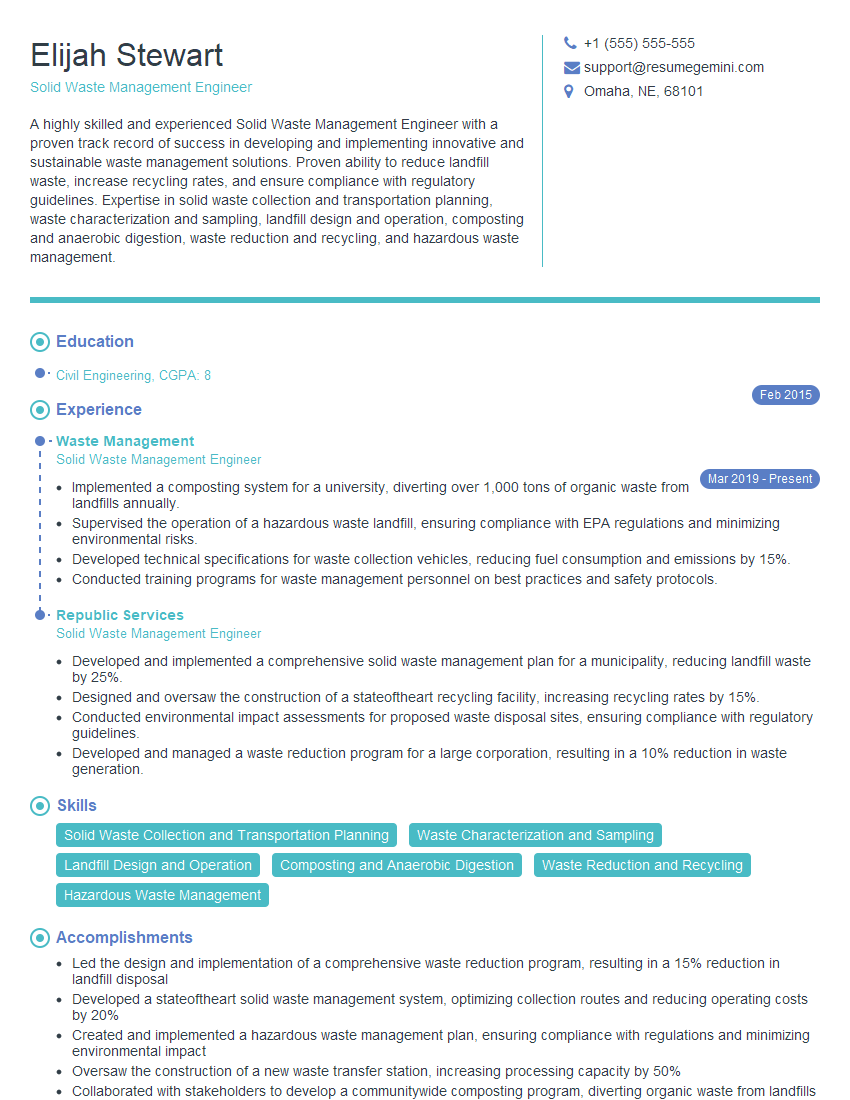
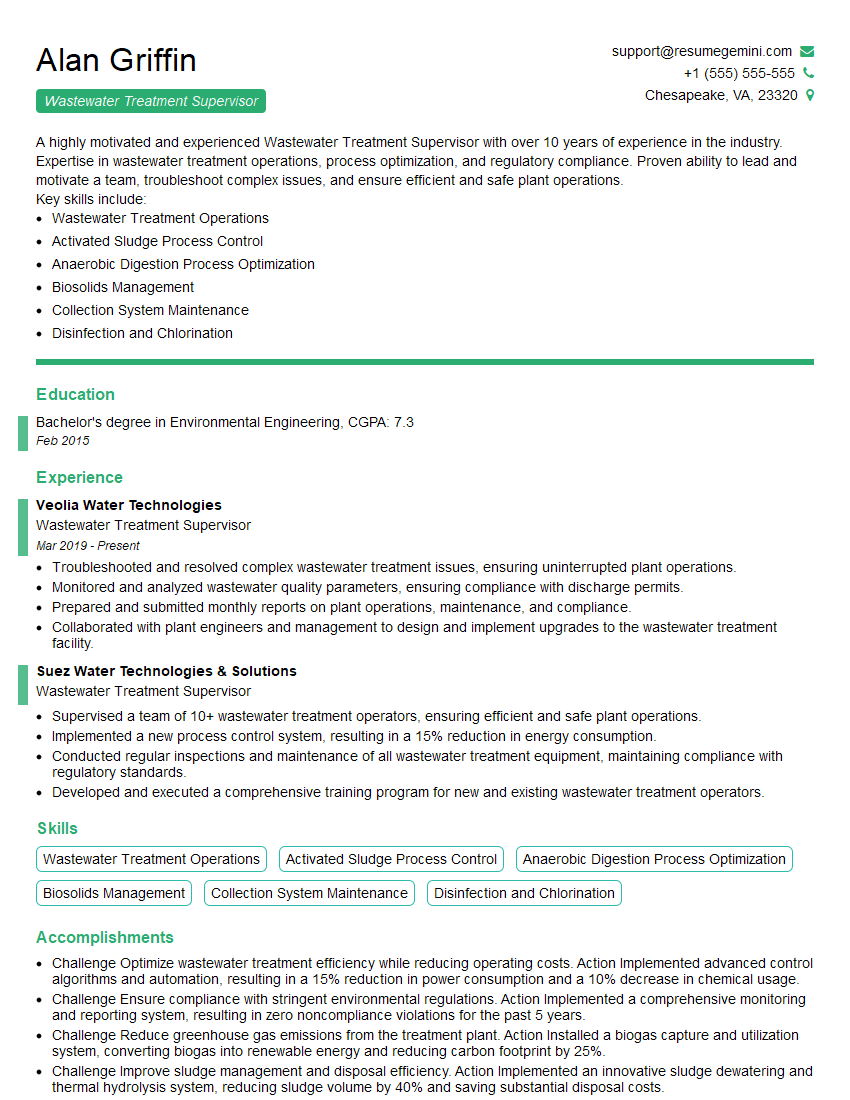
Mastering Sludge Management and Disposal opens doors to rewarding careers in environmental engineering and related fields, offering opportunities for advancement and specialization. To maximize your job prospects, focus on building an ATS-friendly resume that showcases your skills and experience effectively. ResumeGemini is a trusted resource that can help you create a professional and impactful resume. Examples of resumes tailored to Sludge Management and Disposal are available to help guide your resume building process. Invest the time in crafting a strong resume – it’s your first impression on potential employers.
Explore more articles
Users Rating of Our Blogs
Share Your Experience
We value your feedback! Please rate our content and share your thoughts (optional).
What Readers Say About Our Blog
To the interviewgemini.com Webmaster.
Very helpful and content specific questions to help prepare me for my interview!
Thank you
To the interviewgemini.com Webmaster.
This was kind of a unique content I found around the specialized skills. Very helpful questions and good detailed answers.
Very Helpful blog, thank you Interviewgemini team.