Interviews are opportunities to demonstrate your expertise, and this guide is here to help you shine. Explore the essential Solar Radiation Measurement and Analysis interview questions that employers frequently ask, paired with strategies for crafting responses that set you apart from the competition.
Questions Asked in Solar Radiation Measurement and Analysis Interview
Q 1. Explain the difference between direct, diffuse, and global solar radiation.
Solar radiation reaching the Earth’s surface is composed of three main components: direct, diffuse, and global radiation. Think of it like this: imagine the sun is a flashlight.
Direct radiation is the light shining directly from the flashlight to a specific point – it’s the beam of sunlight that reaches the surface without being scattered or absorbed by the atmosphere. This is the most intense component on a clear sunny day.
Diffuse radiation is the light that’s scattered by particles in the atmosphere (like clouds, dust, or water vapor). It’s like the light bouncing off the walls of a room and illuminating every corner, not just the directly lit area. This component is significant on cloudy days or when the sun is low on the horizon.
Global radiation is the sum of both direct and diffuse radiation. It represents the total solar energy received at a specific location on Earth’s surface. This is what solar panels actually utilize.
Understanding the difference between these components is crucial for accurate solar energy resource assessment and designing efficient solar systems. For instance, a system designer needs to consider the diffuse component, particularly in locations with frequent cloud cover, to accurately estimate the energy production of a solar power plant.
Q 2. Describe the operation of a pyranometer and its calibration process.
A pyranometer is a sensor that measures solar irradiance – the power of solar radiation received per unit area. It typically consists of a thermopile, a series of thermocouples, that generates a voltage proportional to the temperature difference between a blackened surface absorbing the solar radiation and a shaded reference surface. This voltage is then converted into irradiance values.
Calibration is crucial to ensure accurate measurements. The process typically involves comparing the pyranometer’s readings to a traceable standard, such as a reference pyranometer that’s been calibrated by a nationally recognized laboratory. Calibration may involve:
Laboratory calibration: The pyranometer is compared to a standard under controlled conditions, often using a solar simulator.
Field calibration: Comparing readings to another calibrated pyranometer under natural sunlight conditions. This method is quicker and often used for periodic checks in the field.
Calibration reports provide the correction factors needed to adjust the pyranometer’s readings for optimal accuracy. Regular calibration, ideally annually or more frequently depending on usage and environmental factors, is essential for reliable long-term solar radiation data collection.
Q 3. What are the key factors influencing solar radiation at a given location?
Several factors influence the amount of solar radiation reaching a specific location. Think of it as several layers of filters affecting the sunlight’s strength.
Latitude and Longitude: Locations closer to the equator receive more direct sunlight throughout the year compared to higher latitudes.
Time of Year (Season): The angle of the sun varies with the seasons, impacting the intensity and duration of solar radiation.
Time of Day: Solar radiation is highest at solar noon (when the sun is at its highest point in the sky).
Atmospheric Conditions: Clouds, dust, aerosols, and water vapor absorb and scatter sunlight, reducing the amount reaching the surface. This is why you’ll see less solar radiation on a cloudy day.
Altitude: Higher altitudes typically receive higher solar radiation due to less atmospheric attenuation.
Terrain and Shading: Mountains, buildings, and trees can significantly reduce solar radiation at ground level, a key consideration for solar power plant siting.
These factors interact to create complex patterns of solar radiation across the globe. Accurate modeling requires considering all of them.
Q 4. How do you account for atmospheric attenuation in solar radiation measurements?
Atmospheric attenuation refers to the reduction in solar radiation intensity as it passes through the atmosphere. This is mainly due to scattering and absorption by atmospheric constituents.
Accounting for attenuation involves using atmospheric correction models. These models use various inputs, including:
Air mass: This represents the path length of sunlight through the atmosphere, which increases as the sun’s angle decreases (e.g., sunrise/sunset).
Water vapor content: Water vapor is a significant absorber of solar radiation.
Aerosol concentration: Aerosols (dust, pollutants) scatter and absorb solar radiation.
Several models exist, including the Angstrom turbidity coefficient method and more complex radiative transfer models. These models estimate the attenuation and allow for the correction of measured data to determine the extraterrestrial solar radiation (the radiation incident at the top of the atmosphere), which provides a clearer representation of the solar resource available.
Q 5. Explain the concept of solar irradiance and its units.
Solar irradiance refers to the power of solar radiation received per unit area. Think of it as the amount of sunlight ‘hitting’ a square meter of surface.
The most common unit for solar irradiance is Watts per square meter (W/m²). For example, a solar irradiance of 1000 W/m² means that 1000 watts of solar power are incident on each square meter of surface area. Other units include kilowatts per square meter (kW/m²) and megawatts per square meter (MW/m²), depending on the scale of measurement. Understanding irradiance is fundamental for calculating the potential energy output of solar power systems.
Q 6. What are the different types of solar radiation models and their applications?
Several types of solar radiation models exist, each with specific applications.
Empirical models: These models are based on statistical correlations between measured solar radiation data and various meteorological parameters. They’re relatively simple to use but may not be accurate in all locations or conditions. An example is the Angstrom-Prescott model.
Physical models: These models simulate the radiative transfer processes in the atmosphere using detailed physical equations. They are more complex but can provide higher accuracy, particularly in diverse climates. Examples include Bird’s clear sky model and models based on radiative transfer codes (like MODTRAN).
Hybrid models: These models combine aspects of both empirical and physical models, trying to balance simplicity with accuracy. They are often used when data availability is limited, or for specific applications.
The choice of model depends on factors like the available data, desired accuracy, computational resources, and the specific application. For example, a simple empirical model might suffice for a preliminary site assessment, while a complex physical model might be necessary for detailed solar energy resource mapping.
Q 7. How do you analyze solar radiation data to determine the optimal location for a solar power plant?
Analyzing solar radiation data to determine the optimal location for a solar power plant is a crucial step in project development. It involves several stages:
Data Acquisition: Gather long-term (at least 10 years) solar radiation data from meteorological stations or satellite data products for potential locations.
Data Analysis: Calculate key parameters like average daily, monthly, and annual solar irradiance; also analyze the distribution of direct and diffuse radiation.
Site Selection Criteria: Define criteria for optimal locations, such as high annual solar irradiance, minimal shading, and proximity to transmission infrastructure.
Geographic Information Systems (GIS) analysis: Use GIS software to map solar radiation data, integrate with terrain data, and visualize potential shading effects.
Energy Yield Estimation: Using solar resource assessment tools and PV system performance models, estimate the energy yield for different locations to compare and rank them.
Economic Analysis: Assess the cost of land, connection to the grid, and other factors, integrating with energy yield calculations to determine the most economically viable location.
The ultimate goal is to find a location that maximizes energy production while minimizing costs and risks, resulting in a successful and profitable solar power plant.
Q 8. Describe the process of site assessment for solar energy projects.
Site assessment for solar energy projects is crucial for maximizing energy production and minimizing costs. It’s a multi-step process involving detailed analysis of the location’s solar resource potential, environmental factors, and logistical considerations.
- Solar Resource Assessment: This involves analyzing historical solar irradiance data from nearby weather stations or using satellite data to estimate the amount of sunlight the site receives throughout the year. Tools like PVsyst or SAM are frequently used to model this. We consider factors like average daily sun hours, cloud cover, and shading from surrounding objects (trees, buildings). A longer data set (ideally 10+ years) is preferred for statistical robustness.
- Shading Analysis: Detailed shading analysis is critical. We use software or even physical site surveys to identify potential shading from buildings, trees, or terrain throughout the day and year. This is crucial because even minor shading can significantly reduce energy production.
- Environmental Impact Assessment: This assesses the environmental impact of the project, including potential effects on wildlife, water resources, and the visual landscape. Regulations regarding environmental protection must be strictly followed.
- Grid Connection: Determining the feasibility and costs of connecting the solar plant to the electrical grid is vital. This involves assessing grid capacity, proximity to substations, and associated permitting processes.
- Land Ownership & Zoning Regulations: Securing necessary land permits and ensuring compliance with local zoning regulations is a critical step. This can involve considerable legal and administrative work.
- Financial Analysis: A thorough financial analysis is conducted to evaluate the project’s profitability, considering capital costs, operational expenses, and potential revenue streams. This analysis includes projected energy production, electricity prices, and incentives.
For example, a project in a consistently cloudy region might require a larger array or different panel technology compared to a project in a sunny desert location. The site assessment ensures we choose the optimal solution tailored to specific circumstances.
Q 9. What are the limitations of using satellite data for solar resource assessment?
While satellite data offers a convenient and cost-effective way to assess solar resources across large areas, it has limitations. The accuracy of these estimations can be significantly affected by several factors.
- Spatial Resolution: Satellite images have a finite resolution. This means that a single pixel might represent a relatively large area, masking variations in solar irradiance within that area. This is particularly problematic for sites with complex topography or significant shading.
- Atmospheric Effects: Clouds, aerosols, and dust particles in the atmosphere can significantly scatter and absorb solar radiation, leading to inaccurate measurements. Satellite algorithms attempt to correct for these effects, but these corrections are not perfect.
- Temporal Resolution: Satellites typically collect data at specific intervals (e.g., daily or hourly). This may not capture short-term fluctuations in solar irradiance due to rapidly changing cloud cover, particularly relevant for assessing the performance of small-scale rooftop systems.
- Calibration and Validation: Satellite data needs to be regularly calibrated and validated against ground-based measurements to ensure accuracy. Inconsistencies in calibration between different satellite sensors can also introduce errors.
- Data Availability: Data from specific regions or time periods might be unavailable or unreliable due to technical issues or atmospheric interference.
For example, a satellite might overestimate solar irradiance in an area with frequent, but quickly passing, clouds, while underestimating irradiance in areas with consistently hazy conditions.
Q 10. How do you handle data gaps or outliers in solar radiation measurements?
Handling data gaps and outliers in solar radiation measurements is crucial for obtaining reliable results. This often involves a combination of techniques.
- Gap Filling: For missing data, several methods exist. Simple methods like linear interpolation can be used for small gaps but may distort data. More sophisticated techniques include using data from nearby stations (considering spatial correlation) or employing statistical models to predict missing values based on existing data. Data from nearby stations with similar weather patterns can be quite useful.
- Outlier Detection: Outliers, which are values that are significantly different from other data points, may be due to instrument errors or unusual weather events. We use statistical methods like box plots or z-scores to identify them. Clearly erroneous data points can be removed or replaced after investigation.
- Data Validation: A critical step involves checking the data for consistency and plausibility. Are there any sudden jumps or drops in data that don’t correspond to known weather events? Thorough quality control checks and an understanding of the measurement equipment and its potential errors are essential.
- Data Smoothing: Smoothing techniques can help reduce noise and make the data easier to interpret. However, care must be taken to avoid overly smoothing the data and losing valuable information.
For instance, if a sensor malfunction causes a spike in radiation values, identifying this as an outlier and excluding it is crucial to prevent misrepresentation of the typical solar resource at that site.
Q 11. Explain the concept of solar insolation and its significance in solar energy applications.
Solar insolation refers to the total amount of solar radiation received by a surface per unit area over a given period. It’s measured in kilowatt-hours per square meter (kWh/m²) or similar units. It’s a crucial parameter in determining the potential energy output of a solar energy system.
Significance in Solar Energy Applications:
- System Sizing: Insolation data directly influences the sizing of solar photovoltaic (PV) systems. Higher insolation values indicate a greater potential for electricity generation, allowing for smaller PV array designs for the same energy output.
- Energy Yield Prediction: Accurate insolation data enables precise forecasting of a solar power plant’s annual energy yield, which is critical for financial modeling and investment decisions.
- System Performance Evaluation: Comparing actual system performance against predicted performance based on insolation values helps assess the efficiency of the system and identify potential problems.
- Site Selection: Areas with higher annual insolation are preferred for solar energy projects to maximize energy production and return on investment.
Think of insolation as the ‘solar fuel’ available to a solar panel. The more ‘fuel’ available, the more electricity can be generated. Different locations have different amounts of this ‘fuel’ available based on their geographic location and climate.
Q 12. Describe different types of solar trackers and their impact on energy yield.
Solar trackers adjust the angle of solar panels throughout the day to maximize their exposure to sunlight. This significantly improves energy yield compared to fixed-tilt systems.
- Single-Axis Trackers: These trackers rotate along a single axis, typically either east-west (azimuthal tracking) or north-south (altitude tracking). East-west trackers follow the sun’s movement across the sky from east to west, while north-south trackers adjust the tilt angle of the panels throughout the day to face the sun.
- Dual-Axis Trackers: These trackers rotate along two axes, allowing the panels to constantly face the sun at the optimal angle. They provide the highest energy yield but are also more complex and expensive.
- Fixed-Tilt Systems: These systems do not track the sun, and the panels remain at a fixed angle throughout the year. The optimal angle varies based on latitude and weather conditions.
Impact on Energy Yield: Solar trackers increase energy yield by up to 25%–40% compared to fixed-tilt systems, depending on the location and type of tracker. Dual-axis trackers generally outperform single-axis trackers. However, trackers add complexity and initial cost. The economic viability of trackers needs careful consideration, balancing increased energy production with increased installation and maintenance costs.
Q 13. What is the difference between tilted and horizontal plane irradiance?
Both tilted and horizontal plane irradiance measure solar radiation, but they do so on different surfaces.
- Horizontal Plane Irradiance (GHI): This measures the total solar radiation received by a horizontal surface, which is the amount of sunlight falling directly on the ground. This value includes direct beam radiation, diffuse sky radiation, and reflected radiation.
- Tilted Plane Irradiance (Plane of Array Irradiance – POA): This measures the total solar radiation received by a tilted surface, such as a solar panel. Calculating this requires considering the angle of the sun, the angle of the tilted surface, and factors like direct beam radiation and diffuse radiation.
The difference is significant because solar panels are rarely mounted horizontally. To accurately estimate the energy production of a solar panel array, we need to know the tilted plane irradiance. We use models and algorithms to calculate this based on GHI and the tilt angle, accounting for the angle of the sun. Using GHI alone would significantly underestimate solar panel energy output.
Q 14. Explain the role of albedo in solar radiation calculations.
Albedo is the fraction of solar radiation that is reflected by a surface. It plays a significant role in solar radiation calculations because it affects the amount of radiation available to solar panels and the surrounding environment.
Role in Solar Radiation Calculations:
- Ground Reflection: Solar radiation that hits the ground is partly absorbed and partly reflected. The amount of reflected radiation depends on the albedo of the surface. A high albedo surface (like snow) reflects more radiation, while a low albedo surface (like dark soil) absorbs more. This reflected radiation contributes to the diffuse radiation received by a solar panel.
- POA Calculation: Albedo is an input factor in calculating the tilted plane irradiance (POA) for solar panels. It influences the amount of radiation reflected from the ground onto the panels, especially for panels mounted close to the ground.
- Energy Yield: The albedo of the surrounding environment affects the total amount of solar radiation available for energy generation. High albedo can reduce energy yields by increasing the reflection of solar radiation away from solar panels.
For instance, a solar farm built on snow-covered ground will receive less solar radiation than a similar farm built on dark soil due to the higher albedo of snow. Accurate albedo values are therefore essential for precise solar energy modeling and system design.
Q 15. How do you use solar radiation data to estimate the energy output of a photovoltaic system?
Estimating a photovoltaic (PV) system’s energy output relies heavily on accurate solar radiation data. We use this data, typically measured in kilowatt-hours per square meter per day (kWh/m²/day) or similar units, to predict how much power the system will generate. The process involves several steps:
Determine the system’s capacity: This is the peak power output of the PV system under standard test conditions (STC), usually measured in kilowatts (kW).
Obtain solar irradiance data: This data can be sourced from various meteorological stations, satellite measurements, or specialized solar resource assessment tools. Ideally, you’d have data specific to the location of your PV system, accounting for variations due to latitude, altitude, and local climate.
Apply performance ratios (PR): PR accounts for real-world losses not captured in STC ratings. These losses stem from factors like temperature effects, shading, soiling, and system inefficiencies. Typical PR values range from 0.7 to 0.8, representing 70-80% efficiency compared to ideal conditions. A lower PR indicates greater losses.
Calculate the daily energy output: This is done by multiplying the daily solar irradiance (kWh/m²/day), the system’s capacity (kW), the panel area (m²), and the PR. For example: Let’s say the daily solar irradiance is 5 kWh/m²/day, the system capacity is 5kW, the panel area is 20 m², and the PR is 0.75. The daily energy output would be 5 kWh/m²/day * 5kW * 20 m² * 0.75 = 375 kWh/day.
Annual Energy Yield: To obtain an annual estimate, the daily output needs to be multiplied by the number of days in a year, and adjusted for seasonal variations in solar radiation.
Remember that this is an estimation. Accurate forecasting requires advanced modelling that incorporates weather patterns and system degradation over time.
Career Expert Tips:
- Ace those interviews! Prepare effectively by reviewing the Top 50 Most Common Interview Questions on ResumeGemini.
- Navigate your job search with confidence! Explore a wide range of Career Tips on ResumeGemini. Learn about common challenges and recommendations to overcome them.
- Craft the perfect resume! Master the Art of Resume Writing with ResumeGemini’s guide. Showcase your unique qualifications and achievements effectively.
- Don’t miss out on holiday savings! Build your dream resume with ResumeGemini’s ATS optimized templates.
Q 16. What are the common errors in solar radiation measurements and how to avoid them?
Errors in solar radiation measurements can significantly impact the accuracy of energy predictions and system design. Common errors include:
Calibration Issues: Pyranometers and other sensors need regular calibration to ensure accurate readings. Drift over time can lead to systematic errors.
Shading and Obstructions: Trees, buildings, or even sensor mounting structures can cast shadows on the sensor, leading to underestimation of solar irradiance. This is especially critical for measurements at ground level.
Cosine Response Error: Pyranometers are designed to measure radiation from all angles, but deviations from ideal cosine response can occur, particularly at low angles of incidence (sunrise/sunset). This leads to inaccuracies in total radiation measurements.
Temperature Effects: The sensor’s internal temperature affects its sensitivity. Some pyranometers include temperature sensors to compensate for this, but proper temperature control is crucial for precise measurements.
Data Acquisition Errors: Problems with the data logger, including malfunctioning sensors or faulty communication links, can lead to missing data or corrupted recordings. Regular system checks and data validation are necessary.
To avoid these errors:
- Regularly calibrate instruments using traceable standards.
- Choose a clear, unobstructed location for sensors.
- Employ sensors with good cosine response characteristics.
- Monitor and control sensor temperature.
- Implement robust data acquisition and quality control procedures.
Q 17. Explain different methods of measuring solar radiation.
Several methods exist for measuring solar radiation, each with its strengths and weaknesses:
Pyranometers: These are the most common instruments used for measuring global horizontal irradiance (GHI), the total solar radiation incident on a horizontal surface. They utilize thermopiles to convert solar energy into electrical signals, which are proportional to the incident radiation. Different types exist, such as thermopile pyranometers and silicon pyranometers, each with varying spectral responses and sensitivities.
Pyrheliometers: These instruments measure direct normal irradiance (DNI), the solar radiation from the sun’s disk incident on a surface perpendicular to the sun’s rays. They are typically more expensive and require precise solar tracking mechanisms. Usually used for high-accuracy solar resource assessment.
Shading Devices: Used in conjunction with pyranometers to separate diffuse and direct radiation components of the GHI.
Satellite-Based Measurements: Satellites such as the GOES and Meteosat series provide global solar irradiance maps. These data are valuable for large-scale estimations, but their spatial and temporal resolution may not always be sufficient for specific locations or highly dynamic conditions.
The choice of measurement method depends on the application. For example, site assessment for a large solar power plant may use a combination of satellite data, ground-based pyranometers, and specialized modelling to gain a comprehensive understanding of the solar resource.
Q 18. How does cloud cover affect solar radiation?
Cloud cover significantly impacts solar radiation reaching the Earth’s surface. Clouds act as a barrier, scattering and absorbing incoming solar radiation. The extent of this impact depends on several factors:
Cloud type: Thick, dense clouds (e.g., cumulonimbus) significantly reduce solar radiation, while thin, wispy clouds (e.g., cirrus) have a smaller effect.
Cloud cover fraction: The percentage of the sky covered by clouds directly correlates with the reduction in solar radiation. Complete cloud cover drastically reduces solar radiation, often to levels of diffuse sky radiation.
Cloud optical properties: Clouds’ albedo (reflectivity) and absorption characteristics influence the amount of radiation scattered back to space or absorbed within the cloud itself.
In essence, the presence of clouds leads to a reduction in direct normal irradiance (DNI) and an increase in diffuse horizontal irradiance (DHI), which is the radiation scattered by the atmosphere and clouds. The total amount of radiation reaching the surface (GHI) is reduced overall, particularly in instances of thick cloud cover. Accurate solar energy system design must account for cloud variability and its impact on energy production, often using cloud models and probabilistic approaches. A cloudy day may only yield a fraction of the energy compared to a clear day.
Q 19. What is the role of the sun’s angle in solar energy calculations?
The sun’s angle (solar zenith angle) plays a crucial role in solar energy calculations because it dictates the intensity and the path length of solar radiation through the atmosphere.
Intensity: When the sun is high in the sky (small zenith angle), solar radiation is more concentrated, resulting in higher irradiance. At low solar angles (near sunrise and sunset), the radiation is spread over a larger area, reducing irradiance. This is because the same amount of energy is spread across a wider area.
Path Length: A higher zenith angle implies a longer path length for solar radiation through the atmosphere. This increases atmospheric attenuation due to scattering and absorption, leading to lower irradiance at the Earth’s surface. This is why less solar energy reaches the earth at sunrise and sunset, even when the sky is clear.
In solar energy calculations, the sun’s angle is used in numerous equations to determine the amount of solar radiation incident on a tilted surface (like a solar panel). Algorithms and software packages utilize astronomical equations and solar geometry to accurately calculate the solar position for any given location and time. Accurate calculation of the sun’s angle is essential for designing optimally oriented and tilted solar panels that maximize energy capture.
Q 20. Describe the different types of solar collectors and their efficiency.
Solar collectors can be broadly classified into two main categories: flat-plate collectors and concentrating collectors. Their efficiency varies depending on design and operating conditions.
Flat-Plate Collectors: These are relatively simple and inexpensive collectors consisting of a flat absorber plate covered by a transparent glazing material (usually glass or plastic). They absorb solar radiation, and the absorbed energy is transferred to a fluid (e.g., water, air) that circulates through channels within the collector. Efficiency is typically in the range of 40-70%, depending on design, material, and operating temperature.
Concentrating Collectors: These collectors use mirrors or lenses to concentrate sunlight onto a smaller receiver area, increasing the temperature and thermal energy density. They are generally more efficient than flat-plate collectors, achieving efficiencies of up to 80%, even exceeding that at higher temperatures. However, they are more complex and expensive to manufacture and install. Several types exist, including parabolic trough, linear Fresnel, and point-focus collectors.
Efficiency is significantly influenced by factors like solar irradiance, ambient temperature, collector tilt angle, and heat transfer fluids. The performance of solar thermal systems is often characterized using efficiency curves that describe the relationship between collector efficiency and operating conditions.
Q 21. How does air mass affect solar radiation?
Air mass (AM) refers to the ratio of the mass of atmosphere the sun’s rays pass through at a given solar zenith angle to the mass of atmosphere it would pass through at a zenith angle of 0° (directly overhead). It quantifies the atmospheric path length.
A higher air mass indicates a longer path length, resulting in increased attenuation (scattering and absorption) of solar radiation. This means less solar radiation reaches the surface at higher air masses (lower sun angles). AM1 refers to the air mass at the zenith angle of 0°, while higher values of AM (e.g., AM1.5, representing an air mass corresponding to a solar zenith angle of approximately 48.2°) indicate greater atmospheric attenuation.
AM affects solar radiation measurements and calculations because it directly influences the spectral distribution and intensity of solar radiation reaching the Earth’s surface. Standard test conditions (STC) for photovoltaic cells often use AM1.5 as a reference, representing typical solar radiation conditions at sea level. However, actual air mass varies with location, time of day, and atmospheric conditions.
When calculating the energy output of a solar PV system, it’s important to consider the air mass to accurately account for atmospheric attenuation and obtain more realistic results.
Q 22. What software or tools are commonly used for solar radiation analysis?
Solar radiation analysis involves a range of software and tools, depending on the specific needs of the project. For data processing and analysis, I frequently use tools like MATLAB, Python (with libraries such as pandas, numpy, and scikit-learn), and R. These platforms offer powerful capabilities for handling large datasets, performing statistical analysis, and visualizing results. For example, I’ve used Python to create custom scripts for cleaning, interpolating, and analyzing solar irradiance data from multiple sensors.
Specialized software packages such as PVsyst and Helioscope are also invaluable. These programs are specifically designed for simulating the performance of photovoltaic (PV) systems, taking into account various factors including solar radiation data, shading, and system components. This allows for precise estimations of energy generation and system optimization. Finally, Geographic Information Systems (GIS) software like ArcGIS is crucial for integrating spatial data, such as solar maps, topography, and land use, into the analysis, giving context to the radiation data and enabling a complete site assessment.
Q 23. Describe your experience with different data acquisition systems used in solar radiation measurement.
My experience encompasses a variety of data acquisition systems, from simple standalone pyranometers to complex weather stations. I’ve worked extensively with systems utilizing Campbell Scientific data loggers, which are known for their reliability and flexibility. These loggers can handle various sensor inputs, including those from pyranometers, thermopiles, and other meteorological instruments, allowing for the collection of comprehensive datasets. I’ve also used systems that incorporate automated data transmission via cellular or satellite communication, enabling remote monitoring and data retrieval from geographically dispersed locations. For example, in a recent project monitoring solar radiation across a large agricultural field, we deployed a network of Campbell Scientific CR1000 loggers communicating data wirelessly back to a central server. This allowed for real-time monitoring and proactive maintenance, ensuring data quality.
I am also familiar with less sophisticated systems utilizing basic data loggers and manual data recording. This experience highlights the importance of understanding the limitations and uncertainties associated with each system and how these affect the subsequent analysis and interpretation of the data.
Q 24. How do you validate and quality control solar radiation data?
Validating and quality controlling solar radiation data is paramount to ensure accuracy and reliability in any analysis. My approach involves a multi-step process starting with data screening. This includes checking for unrealistic values (e.g., negative irradiance), identifying gaps in the data, and detecting outliers. Statistical methods such as box plots and scatter plots can identify unusual data points that may be due to sensor malfunction or external factors.
Next, I employ comparison and calibration techniques. For example, I’ll compare data from a given sensor to data from a secondary instrument, or reference data from a nearby weather station. This allows for the identification of systematic errors or biases in the measurements. Regular calibration of the pyranometers against traceable standards is essential.
Finally, I often apply data interpolation or imputation techniques to fill in gaps in the data, using methods such as linear interpolation or more sophisticated techniques based on neighboring data points or machine learning models. Documentation of every step in the quality control process is crucial for transparency and reproducibility. The final validated dataset forms the bedrock of any meaningful analysis.
Q 25. Explain the concept of solar radiation forecasting.
Solar radiation forecasting involves predicting future solar irradiance values. This is vital for optimizing the operation of solar power plants, managing energy grids, and improving the efficiency of solar energy systems. Accurate forecasts are particularly useful in managing energy dispatch and avoiding power outages when the solar resource is fluctuating.
Several approaches exist, ranging from simple persistence methods, which assume that irradiance will continue at its current level, to more sophisticated techniques employing numerical weather prediction (NWP) models. NWP models are complex atmospheric simulations that produce detailed predictions of meteorological variables, including cloud cover, which is a major factor influencing solar irradiance. These models can be coupled with physical models of solar radiation transfer to generate highly accurate forecasts.
Machine learning methods, particularly artificial neural networks (ANNs), have emerged as powerful tools for solar radiation forecasting. ANNs can learn complex relationships between various input parameters, such as historical irradiance data, weather forecasts, and satellite imagery, to make accurate predictions. The choice of forecasting method depends on factors such as the desired forecast horizon (short-term, medium-term, or long-term), the availability of data, and the required accuracy.
Q 26. What are the challenges in using ground-based measurements for solar resource assessment?
Ground-based measurements, while providing high-quality data at a specific location, face several challenges in solar resource assessment. One major limitation is their spatial representativeness; a single measurement point only reflects the solar resource at that precise location. To accurately assess the resource for a larger area, a dense network of measurement sites is required, increasing costs and logistical complexities.
Another challenge lies in the effects of local topography and shading. Mountains, buildings, and trees can significantly alter the amount of solar radiation received at a particular site. Ground-based measurements might not capture the full impact of these effects on the overall solar resource.
Moreover, ground-based systems require regular maintenance, calibration, and data quality control, which can be time-consuming and expensive. Data gaps can also occur due to equipment malfunctions, power outages, or adverse weather conditions. In contrast, satellite data provides broad spatial coverage but can be less accurate at the local level due to factors such as atmospheric interference.
Q 27. How do you interpret solar radiation data to optimize the design of a solar energy system?
Interpreting solar radiation data is crucial for optimizing the design of a solar energy system. The primary data needed is the solar irradiance throughout the year, at different times of day and under varying atmospheric conditions. This data is typically presented as hourly, daily, or monthly values of global horizontal irradiance (GHI), direct normal irradiance (DNI), and diffuse horizontal irradiance (DHI).
This data is utilized to determine the optimal system size and orientation. The annual energy yield of a PV system is directly proportional to the total solar irradiance received. By analyzing the distribution of irradiance throughout the year, the designer can choose the most suitable panel tilt angle and azimuth to maximize energy capture. For example, a steeper tilt angle might be better suited to locations with higher solar altitudes during summer, while a shallower tilt angle might be better suited to locations with lower solar altitudes during winter. Similarly, the optimal azimuth depends on the geographical location and the sun’s path across the sky.
Furthermore, understanding the variability of solar radiation allows for improved system design, including the incorporation of energy storage solutions to mitigate periods of low irradiance. This data can be used in conjunction with load profiles to size battery banks appropriately. This detailed analysis ensures that the solar system is tailored to meet the specific energy needs of the application whilst maximizing efficiency and minimizing costs.
Q 28. What is your experience with different types of pyranometers (e.g., thermopile, silicon photodiode)?
I have extensive experience with various pyranometer types, including both thermopile and silicon photodiode-based instruments. Thermopile pyranometers are widely used due to their high accuracy, stability, and wide spectral response. Their operation relies on the thermoelectric effect, where the temperature difference between junctions generates a voltage proportional to the incoming solar radiation. These are often considered the gold standard for precision measurements.
Silicon photodiode pyranometers are becoming increasingly popular due to their lower cost, faster response time, and potential for data logging capabilities. However, they have a more limited spectral response and are more susceptible to degradation over time. I’ve found that careful calibration and regular maintenance are vital for ensuring the accuracy of these devices. The choice between a thermopile and a silicon photodiode pyranometer often depends on the specific application and the trade-off between cost, accuracy, and response speed. For high-accuracy research, thermopile pyranometers are usually preferred, while silicon photodiode pyranometers are better suited for applications where cost and speed are paramount, such as real-time monitoring and forecasting applications. The understanding of the specific limitations and characteristics of each type is vital for selecting the most appropriate sensor for a given project and interpreting the obtained data correctly.
Key Topics to Learn for Solar Radiation Measurement and Analysis Interview
- Pyranometers and Pyrheliometers: Understanding the principles of operation, calibration techniques, and data acquisition for different types of solar radiation sensors.
- Data Acquisition and Processing: Familiarize yourself with common data logging methods, error analysis, and data cleaning techniques for accurate results. Practical application: Analyzing real-world datasets to identify trends and anomalies.
- Solar Geometry and Irradiance Models: Mastering the calculation of solar angles, solar irradiance on tilted surfaces, and understanding different solar radiation models (e.g., Angstrom-Prescott model).
- Atmospheric Effects on Solar Radiation: Learn about the impact of atmospheric scattering, absorption, and cloud cover on measured solar radiation. Practical application: Correcting measured data for atmospheric effects to obtain accurate solar resource assessments.
- Solar Resource Assessment and Site Selection: Understand the methodologies for evaluating solar resource potential at specific locations for solar energy projects. Practical application: Evaluating the suitability of different locations for solar power plants.
- Data Analysis and Interpretation: Develop skills in statistical analysis, data visualization, and interpreting results to draw meaningful conclusions from solar radiation measurements. This includes understanding uncertainty analysis and error propagation.
- Applications in Renewable Energy: Explore the role of solar radiation measurement and analysis in various renewable energy applications, such as solar photovoltaic (PV) system design and performance evaluation, concentrated solar power (CSP) systems, and building integrated photovoltaics (BIPV).
Next Steps
Mastering solar radiation measurement and analysis is crucial for a successful career in renewable energy, meteorology, and related fields. A strong understanding of these concepts opens doors to exciting opportunities and allows you to contribute significantly to the global transition towards sustainable energy solutions. To maximize your job prospects, it’s essential to present your skills and experience effectively. Crafting an ATS-friendly resume is key to getting your application noticed by recruiters. ResumeGemini is a trusted resource that can help you build a professional and impactful resume tailored to your specific skills and experience. Examples of resumes tailored to Solar Radiation Measurement and Analysis are available, providing you with a great starting point to showcase your expertise.
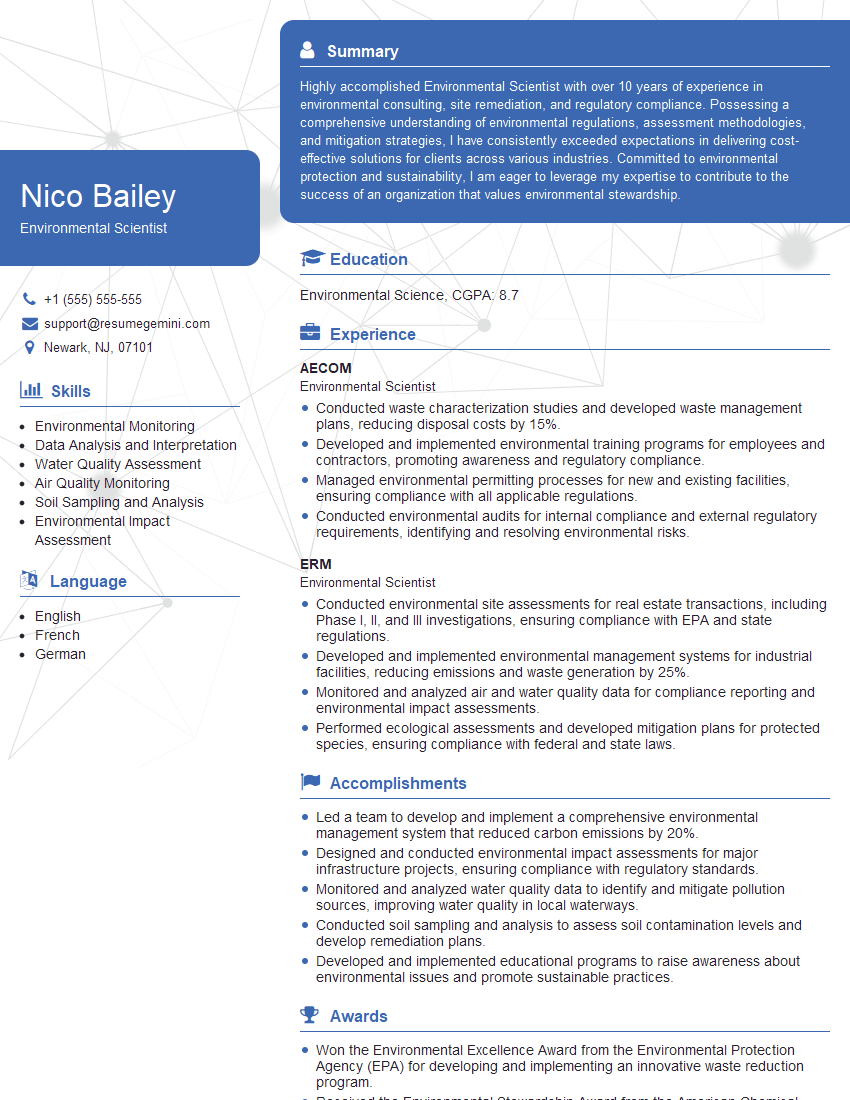
Environmental Scientist Resume Sample

Renewable Energy Consultant Resume Sample

Sustainability Consultant Resume Sample
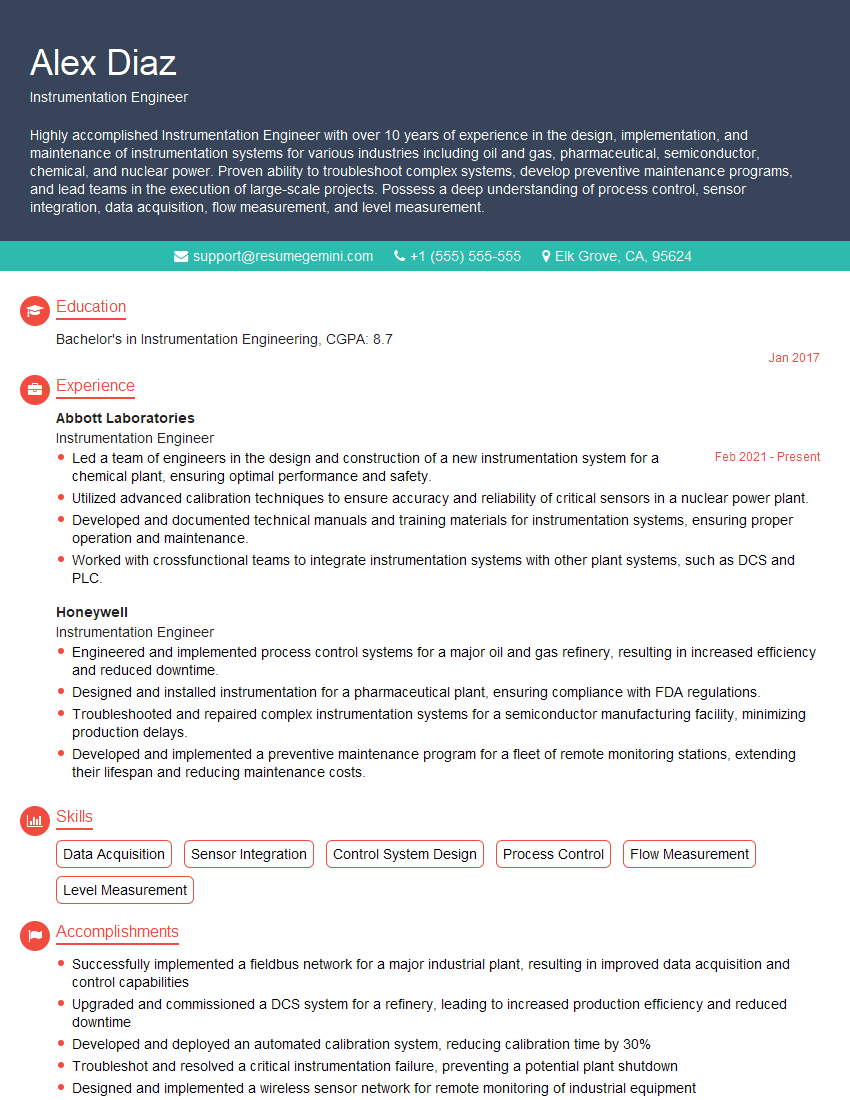
Instrumentation Engineer Resume Sample

Renewable Energy Engineer Resume Sample

Calibration Technician Resume Sample

Atmospheric Scientist Resume Sample

Remote Sensing Specialist Resume Sample

Solar Resource Assessor Resume Sample
Explore more articles
Users Rating of Our Blogs
Share Your Experience
We value your feedback! Please rate our content and share your thoughts (optional).
What Readers Say About Our Blog
To the interviewgemini.com Webmaster.
Very helpful and content specific questions to help prepare me for my interview!
Thank you
To the interviewgemini.com Webmaster.
This was kind of a unique content I found around the specialized skills. Very helpful questions and good detailed answers.
Very Helpful blog, thank you Interviewgemini team.