Every successful interview starts with knowing what to expect. In this blog, we’ll take you through the top Sparging Techniques interview questions, breaking them down with expert tips to help you deliver impactful answers. Step into your next interview fully prepared and ready to succeed.
Questions Asked in Sparging Techniques Interview
Q 1. Explain the difference between batch sparging and fly sparging.
Batch sparging and fly sparging are two primary methods for extracting the remaining wort (the sugary liquid) from the grain bed after mashing in the brewing process. The key difference lies in when the sparge water is added. In batch sparging, all the sparge water is added at once, whereas in fly sparging, the sparge water is added continuously while the wort is being collected.
Q 2. What are the advantages and disadvantages of each sparging method?
Batch Sparging:
- Advantages: Simpler setup, less equipment required, gentler on the grain bed (reducing the risk of channeling).
- Disadvantages: Lower efficiency due to less thorough extraction, potentially higher risk of stuck sparge if the grain bed isn’t properly prepared.
Fly Sparging:
- Advantages: Higher efficiency due to continuous extraction, better control over wort volume and temperature.
- Disadvantages: More complex setup, requires more equipment (e.g., a pump or a raised sparge arm), higher risk of channeling if not performed correctly, potentially more vigorous on the grain bed.
Think of it like this: batch sparging is like watering your lawn with a single, large watering can – simple but might miss some spots. Fly sparging is like using a sprinkler system – more complex to set up, but ensures more even coverage.
Q 3. How does grain bed permeability affect sparging efficiency?
Grain bed permeability refers to how easily water can flow through the grain bed. High permeability means the water flows easily, allowing for efficient wort extraction. Low permeability, on the other hand, restricts water flow, leading to poor extraction and potentially a stuck sparge (where water stops flowing through the grain bed altogether). A well-prepared grain bed, with properly milled grains and appropriate lautering techniques (like properly raking the grain bed), is crucial for maintaining optimal permeability.
Imagine trying to pour water through a tightly packed pile of sand versus a loosely packed pile. The loosely packed sand (high permeability) allows the water to flow easily, while the tightly packed sand (low permeability) hinders water flow.
Q 4. Describe the process of a batch sparge.
The batch sparge is a straightforward process. After mashing, the mash is rested and then the wort is drained (lautered) from the mash tun. Once the initial wort runoff (first runnings) is collected, a pre-determined volume of hot sparge water is added all at once to the grain bed. The sparge water is allowed to absorb into the grain bed and sit for a period of time (typically 10-20 minutes) before being drained. This process may be repeated to achieve the desired wort volume. The goal is to maximize the sugar extraction during this single sparge event.
Q 5. Describe the process of a fly sparge.
Fly sparging is a more dynamic process. After lautering, hot sparge water is continuously added to the top of the grain bed, while simultaneously collecting the wort. This continuous addition of sparge water keeps a consistent flow of wort from the grain bed. A pump or a raised sparge arm is typically used to evenly distribute the sparge water across the grain bed’s surface. Precise control of the sparge water flow rate is crucial to prevent channeling and maintain a consistent wort gravity.
Imagine a shower head gently spraying water evenly over a garden. This consistent and controlled watering represents the principles of fly sparging.
Q 6. How do you calculate sparging efficiency?
Sparging efficiency is calculated by comparing the actual amount of extract obtained from the sparge to the theoretical maximum extract available in the grain. The formula is:
Sparging Efficiency = (Actual Extract / Potential Extract) * 100%
The ‘Actual Extract’ is determined by measuring the gravity of the collected wort. The ‘Potential Extract’ can be estimated from the grain bill using data from the malt supplier or through established brewing software. Higher efficiency indicates a more effective sparge process.
Q 7. What factors influence sparging efficiency?
Several factors significantly influence sparging efficiency:
- Grain bed permeability: As discussed, better permeability leads to higher efficiency.
- Sparge water temperature: Too cold, and you extract less; too hot, and you risk scorching the grains and affecting flavor.
- Sparge water volume: Insufficient water results in poor extraction, while excessive water can dilute the wort.
- Sparging method: Fly sparging generally yields higher efficiency than batch sparging.
- Grain milling: Coarsely milled grains tend to have better permeability, whereas finely milled grains can pack tightly, resulting in lower efficiency.
- Lautering technique: Proper raking and even distribution of the grain bed are essential.
Optimizing these factors is key to achieving high sparging efficiency and producing a high-quality beer.
Q 8. What is the optimal temperature range for sparging?
The optimal temperature range for sparging is generally between 170°F (77°C) and 175°F (79°C). This temperature range ensures efficient extraction of sugars from the grain bed while minimizing the extraction of unwanted tannins and other compounds that can negatively impact beer flavor and clarity. Going too low risks incomplete extraction, resulting in a weaker beer. Going too high risks extracting undesirable compounds, leading to a harsh or astringent taste. Think of it like brewing tea – you wouldn’t use boiling water for a delicate green tea, and similarly, overly hot water during sparging can ruin your brew.
Q 9. How do you adjust sparging parameters to compensate for different grain bills?
Sparging parameters need adjustments based on the grain bill because different grains have varying absorption capacities and sugar profiles. A grain bill with a high percentage of highly absorbent grains like flaked oats or wheat will require a slower sparge rate and potentially a larger volume of sparge water to fully extract the sugars. Conversely, a grain bill dominated by barley malt might require less sparge water and a slightly faster rate. The key is to monitor the wort gravity throughout the sparge process. If the gravity is consistently low, you may need to increase your sparge volume or slow down your sparge rate. If the gravity is high, you may have over-extracted. Experience and experimentation are crucial in optimizing your sparge for various grain bills. You’ll likely develop a good ‘feel’ for this over time.
Q 10. How do you handle a stuck sparge?
A stuck sparge occurs when the sparge water fails to properly flow through the grain bed. This is often caused by grain bed compaction. To remedy this, try the following steps:
- Increase the sparge water temperature slightly: A slightly warmer sparge can help improve flow. However, avoid exceeding 180°F (82°C).
- Use a sparge arm with multiple spray heads: This promotes even distribution of water across the grain bed, reducing compaction.
- Slowly increase the sparge rate: A gentle increase allows the water to gradually work its way through the grain bed, breaking up any compaction.
- Gentle agitation (with caution): Carefully use a grain rake or similar tool to gently loosen the grain bed without disturbing it too much. Avoid excessive agitation, which can create channels.
- Consider fly sparging: Fly sparging is a technique that uses a hose to pour water directly onto the grain bed. It can help overcome compaction but requires careful control to avoid channeling.
- If all else fails: Sometimes, despite your best efforts, the sparge is hopelessly stuck. In such cases, you might need to accept a lower efficiency and proceed with the brew, learning from the experience to improve next time.
Q 11. Explain the concept of recirculation sparging.
Recirculation sparging involves pumping the initial wort runnings back through the grain bed before commencing the main sparge. This pre-sparge step helps to fully saturate the grain bed, leading to more even extraction and improved efficiency. Think of it as pre-soaking the grains to ensure they are properly hydrated and ready for the main sugar extraction. By recirculating the wort, you’re also washing out any residual fine grains which would otherwise contribute to a cloudy beer. Recirculation sparging tends to yield higher yields and cleaner wort than a batch sparge.
Q 12. What are the benefits of using a lauter tun?
A lauter tun is a specialized vessel used in brewing that significantly improves the sparging process. Its benefits include:
- Improved wort clarity: The tun’s false bottom provides a solid, even surface for the grain bed, preventing fine grains from entering the wort.
- Enhanced efficiency: The controlled drainage and sparging capabilities optimize sugar extraction from the grains.
- Reduced channeling: The false bottom facilitates uniform water distribution across the grain bed, minimizing channeling.
- Scalability: Lauter tuns are available in various sizes to accommodate different brewing scales, from homebrewing to large-scale commercial operations.
Essentially, a lauter tun provides a more controlled and efficient environment for sparging, directly translating to higher quality and yield. It’s a valuable tool for any serious brewer aiming for consistent, high-quality results.
Q 13. Describe how to prevent channeling during sparging.
Channeling, where sparge water finds paths of least resistance through the grain bed, is a common problem that results in inefficient sugar extraction. Prevention relies on creating a consistent, well-distributed grain bed:
- Proper mashing techniques: A well-mixed mash ensures even grain distribution.
- Even lautering: Avoid compacting the grain bed during the transfer to the lauter tun.
- Use of a sparge arm with multiple spray heads: This promotes even distribution of water.
- Slow and steady sparge rate: Avoid flooding the grain bed, allowing time for even saturation.
- Recirculation sparging: This helps pre-saturate the grain bed, reducing the likelihood of channeling.
The goal is to ensure the water slowly percolates through every part of the grain bed, similar to how water would gently filter through a coffee filter.
Q 14. What is the role of the rakes in a lauter tun?
Rakes in a lauter tun are crucial for ensuring proper drainage and preventing stuck sparges. These are used during the lautering process (the separation of the wort from the spent grains). The rakes gently agitate the grain bed, breaking up clumps and ensuring even drainage. This prevents channeling and maximizes wort extraction. They should be used carefully and cautiously to avoid damage to the false bottom. Think of them as delicate cultivators, gently turning the soil rather than aggressively plowing it. Their careful use is critical for optimal efficiency and consistent beer quality.
Q 15. Explain the importance of proper grain bed preparation before sparging.
Proper grain bed preparation is paramount to efficient sparging and a successful brew. Think of it like building a strong foundation for a house – if the foundation is weak, the entire structure suffers. A well-prepared bed ensures even water distribution and prevents channeling, leading to consistent wort extraction.
- Leveling: A consistently level grain bed is crucial. Uneven layers create preferential pathways for water, resulting in some areas being over-extracted while others remain under-extracted. Imagine trying to water your lawn with a hose that has holes only on one side – you’ll get uneven coverage.
- Consistency: The grain bed should be evenly packed to avoid large voids or pockets. This allows for consistent flow of sparge water through the entire mass. A loosely packed bed creates channels, allowing the water to flow quickly through these channels rather than interacting with all the grain.
- No channeling: Channeling refers to the formation of preferential pathways for water through the grain bed. It leads to uneven extraction and poor wort clarity. This is like trying to make coffee with a coffee filter that has a large hole – the water rushes straight through, leaving a significant amount of coffee grounds unexposed to the water.
Career Expert Tips:
- Ace those interviews! Prepare effectively by reviewing the Top 50 Most Common Interview Questions on ResumeGemini.
- Navigate your job search with confidence! Explore a wide range of Career Tips on ResumeGemini. Learn about common challenges and recommendations to overcome them.
- Craft the perfect resume! Master the Art of Resume Writing with ResumeGemini’s guide. Showcase your unique qualifications and achievements effectively.
- Don’t miss out on holiday savings! Build your dream resume with ResumeGemini’s ATS optimized templates.
Q 16. How does water chemistry impact sparging efficiency?
Water chemistry significantly impacts sparging efficiency. The pH of the sparge water influences the solubility of various compounds in the grain. An ideal pH range is generally between 5.2 and 5.8; too high or too low a pH can hinder extraction. Think of it like dissolving sugar – hot water dissolves it better than cold water, and the right type of water dissolves it more efficiently.
- pH: A lower pH enhances the extraction of some desirable compounds, while a higher pH can result in undesirable flavor compounds. Regularly checking and adjusting pH is important.
- Mineral Content: High mineral content in the water can affect the clarity and flavor profile of the wort. Minerals can react with components in the grains, and excessive mineral content can negatively affect extraction.
- Water Hardness: Hard water, rich in minerals like calcium and magnesium, can affect sparging efficiency, potentially clogging the grain bed and affecting the clarity of the wort.
Q 17. How do you monitor wort clarity during sparging?
Monitoring wort clarity during sparging is essential for assessing extraction efficiency and preventing cloudy beer. We can judge wort clarity visually.
- Visual Inspection: The simplest method is visual inspection. Look at the run-off wort; cloudy wort indicates incomplete extraction or the presence of fines (small grain particles). This is akin to making tea—you want clear tea, not cloudy tea with tea leaves.
- Sparge Water Clarity: As the sparge progresses, the clarity of the outflowing wort should gradually improve, becoming clearer as the sparge continues. Cloudy runoff suggests problems in the grain bed or inadequate lautering.
If the wort remains cloudy, adjustments to the sparging process may be necessary, such as a longer sparge time or using a finer filter.
Q 18. What adjustments would you make for a low-gravity wort?
Low-gravity worts typically require a gentler approach to sparging to avoid over-extraction of tannins and undesirable flavors.
- Longer Sparge Time: A longer, slower sparge time ensures better extraction without harshness.
- Lower Sparge Temperature: Slightly reducing the temperature can minimize over-extraction of tannins.
- Batch Sparging: Batch sparging often works better for low-gravity worts, as it provides more control over the extraction process compared to fly sparging.
Q 19. What adjustments would you make for a high-gravity wort?
High-gravity worts require a more aggressive sparging technique to efficiently extract sugars from the grain bed, while still maintaining wort quality.
- Faster Sparge Rate: A slightly faster sparge rate, though still avoiding channeling, is often used.
- Higher Sparge Temperature: A slightly higher sparge temperature can improve efficiency.
- Fly Sparging: Fly sparging can be effective for high-gravity worts, enabling efficient extraction while maintaining good control.
- Multiple Sparges: You may need multiple sparge steps to achieve your desired efficiency.
Q 20. How does the size of the grain bed impact sparging?
The size of the grain bed significantly impacts sparging. A larger bed requires more careful attention to ensuring even water distribution and minimizing channeling. A smaller bed, while easier to manage, can be less efficient in terms of total extraction.
- Water Distribution: In larger beds, techniques like using a sparge arm are more critical to ensure even distribution of water. Smaller beds often allow for simpler methods.
- Extraction Efficiency: Larger grain beds potentially offer better extraction efficiency due to greater surface area, but they may also require more time and care during sparging. The optimal grain bed size depends on your equipment and desired output.
- Dead Space: It’s important to avoid dead spaces, regardless of grain bed size, as these areas won’t be adequately sparged, leading to lost potential yield. A well-designed lauter tun helps avoid this problem.
Q 21. Describe the proper use of a thermometer during sparging.
Using a thermometer during sparging is crucial for maintaining consistent wort temperature and controlling extraction. Think of it as a thermostat for your brewing process.
- Monitoring Sparge Water Temperature: Regularly check the temperature of the sparge water before and during sparging to ensure it remains within the ideal range (typically 170-175°F / 77-79°C, although this can be adjusted based on your recipe and style). Temperature fluctuations can affect extraction efficiency and flavor profile.
- Monitoring Wort Temperature: Measure the temperature of the wort collected during sparging. This helps gauge the rate of extraction and ensures you aren’t over-extracting undesirable compounds or creating overly hot wort.
- Adjusting Sparge Water: If the wort temperature drops too low, you can adjust the temperature of the sparge water to maintain the desired range and ensure consistent extraction.
Q 22. What are the potential problems associated with over-sparging?
Over-sparging, essentially adding too much sparge water, leads to several undesirable outcomes. The most significant is wort dilution, resulting in a weaker beer with lower gravity. Imagine trying to make tea – if you add too much water, the tea will be weak. Similarly, excessive sparge water reduces the concentration of sugars and other valuable compounds extracted from the grain. This can negatively impact the beer’s body, mouthfeel, and overall character. Another consequence is increased lauter tun volume, potentially causing overflow. Finally, over-sparging can extend brew time unnecessarily.
Q 23. What are the potential problems associated with under-sparging?
Under-sparging, on the other hand, means insufficient sparge water is used. This results in high gravity loss, leaving behind valuable sugars in the grain bed. This translates to a lower final gravity and a weaker, less full-bodied beer. Think of it like squeezing a lemon – if you don’t squeeze enough, you’ll miss out on a lot of juice. The beer will be less flavorful and potentially less alcoholic. Under-sparging can also lead to stuck sparges, where the sparge water struggles to effectively flow through the grain bed due to compaction. This creates channeling and uneven extraction, again, leading to a less consistent and lower-quality beer.
Q 24. How do you determine the correct amount of sparge water?
Determining the correct sparge water volume requires a balanced approach. A common method involves using a batch sparge, where a predetermined amount of sparge water is added in one go, ensuring efficient extraction and preventing wort dilution. The optimal amount is usually calculated based on factors such as the grain bill, desired final volume, and efficiency of the brewing system. Many brewers use a ratio of roughly 1.5 quarts of sparge water per pound of grain. However, this can vary and you’ll want to consider your equipment and personal brewing style. Factors like mash thickness and grain absorption also influence this calculation. Experienced brewers often adjust this ratio based on their own experience and the specific characteristics of the grain.
Another technique is the fly sparge, where hot water is continuously added during the lautering process, carefully monitoring the wort gravity and volume. This requires more attention and control but can lead to improved efficiency and extraction. Regardless of the method, always track your volumes and gravity readings, enabling you to fine-tune your technique over time for consistent results.
Q 25. Explain the concept of infusion mashing and its impact on sparging.
Infusion mashing is a simple method where the entire mash is brought to a single temperature by adding hot water to the grist. Its impact on sparging is indirect. Because the temperature is controlled via the initial mash addition, the resulting mash consistency affects the ease and completeness of sparging. A properly conducted infusion mash, achieving a good balance of temperature and consistency, will result in a more efficient lauter process, minimizing stuck sparges and maximizing wort extraction. In contrast, an improperly prepared infusion mash with overly thick or thin consistency can lead to difficulties in sparging, impacting extraction.
Q 26. How does decoction mashing influence sparging techniques?
Decoction mashing involves removing a portion of the mash, boiling it, and returning it to the main mash to achieve specific temperature steps. The impact on sparging is significant because the boiling step modifies the grain’s structure, improving enzymatic activity. This can lead to more efficient conversion and a better filter bed during lautering. In essence, the grain bed will tend to be more open and permeable after a decoction mash, which means sparging will be more efficient and less prone to getting stuck. The improved drainage characteristics mean better sugar extraction with potentially less sparge water needed. However, understanding the decoction process is crucial for optimal results; improper decoction techniques can actually hinder sparging.
Q 27. What is the effect of mash pH on sparging?
Mash pH significantly affects sparging efficiency. An ideal mash pH range of 5.2 to 5.6 optimizes enzyme activity during the mash. A pH outside this range can lead to reduced efficiency and increased difficulties during sparging. For example, a low pH (too acidic) can hinder enzyme action, potentially resulting in incomplete conversion and increased filter bed compaction during lautering which leads to difficult and inefficient sparging. A high pH (too alkaline) causes similar problems. Therefore, monitoring and adjusting the mash pH before sparging is vital for successful lautering and efficient wort extraction. This ensures the optimal environment for enzymes to perform their task, producing a better grain bed and improving overall sparging efficiency.
Q 28. Describe how you’d troubleshoot a situation with high trub levels in the wort post-sparging.
High trub levels in the wort post-sparging can result from several issues. Firstly, a poorly prepared mash with excessive fine particles can lead to more trub in the wort. Secondly, aggressive sparging can disturb the grain bed, causing increased trub carryover. Thirdly, inadequate lautering technique, such as allowing the wort to become too turbid during the process, contributes to this problem. Troubleshooting involves several steps:
- Review the mash process: Ensure proper mashing techniques were used to minimize fine particles.
- Adjust sparging technique: Use a gentle, slow sparging method to avoid disturbing the grain bed. A gentle fly sparge may be superior to a batch sparge in these instances.
- Improve lautering technique: Carefully monitor the wort clarity and adjust the flow rate as needed to prevent excessive trub carryover. Consider adding a whirlpool in your process.
- Filter the wort: As a last resort, if trub levels are exceptionally high, you may need to use a filter to remove the solids before boiling.
Addressing these potential causes systematically can help resolve high trub issues and improve the quality and clarity of your wort.
Key Topics to Learn for Sparging Techniques Interview
- Fundamentals of Sparging: Understanding the principles of gas-liquid mass transfer, including Henry’s Law and equilibrium considerations. Explore different sparging methods and their applications.
- Sparger Design and Selection: Analyze various sparger types (e.g., porous, nozzle, orifice) and their suitability for different applications based on factors like gas flow rate, liquid viscosity, and desired bubble size distribution. Consider the impact of design on efficiency and pressure drop.
- Process Optimization: Discuss strategies for optimizing sparging processes to enhance mass transfer efficiency. This includes exploring the effects of operational parameters such as gas flow rate, liquid flow rate, and sparger placement.
- Scale-up and Scale-down: Understand the challenges and methodologies involved in scaling sparging processes from laboratory to industrial settings. Discuss the importance of maintaining consistent mass transfer performance across scales.
- Troubleshooting and Problem Solving: Identify common problems encountered in sparging operations (e.g., foaming, clogging, channeling) and discuss practical solutions. Develop a systematic approach to diagnose and resolve issues related to mass transfer efficiency and operational stability.
- Safety Considerations: Discuss the safety aspects of working with high-pressure gases and potentially hazardous liquids. Understand relevant safety protocols and regulations.
- Advanced Sparging Techniques: Explore more advanced techniques like membrane sparging or other specialized methods to enhance mass transfer in challenging applications.
Next Steps
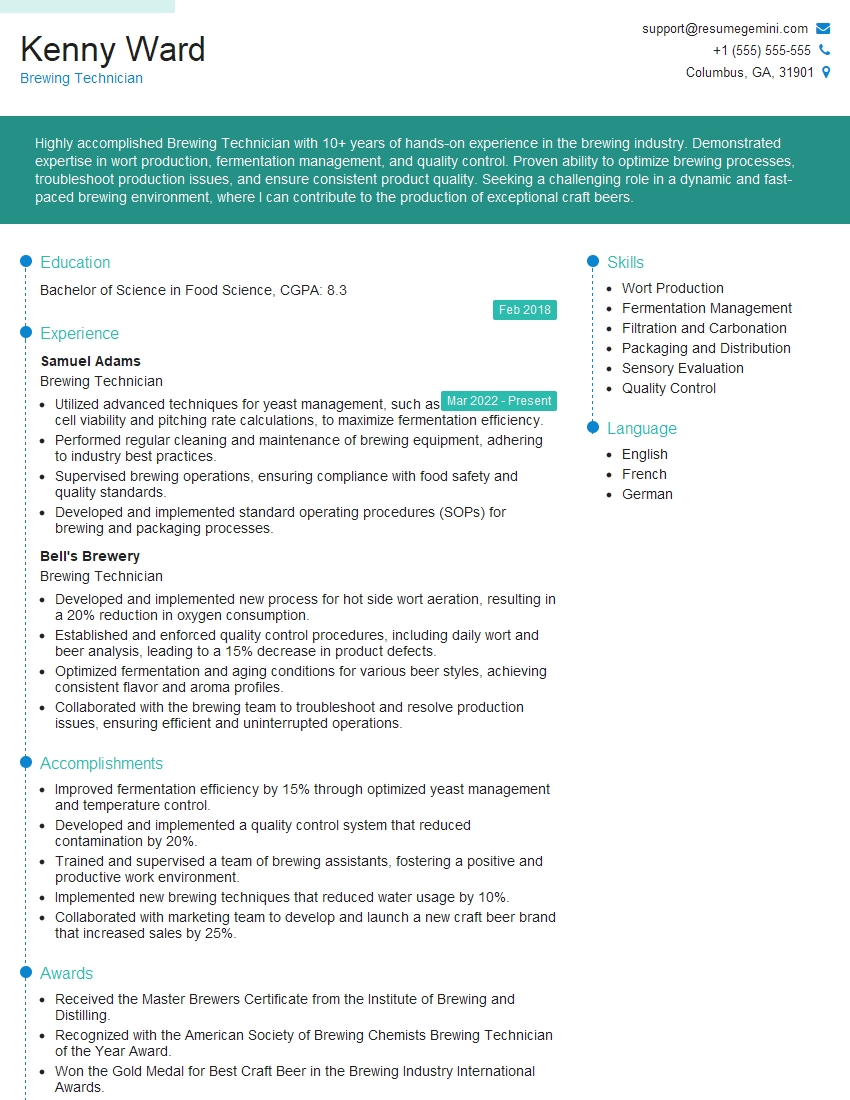
Mastering Sparging Techniques is crucial for career advancement in various process engineering fields. A strong understanding of these principles will significantly enhance your problem-solving abilities and make you a highly sought-after candidate. To further improve your job prospects, crafting an ATS-friendly resume is essential. We highly recommend using ResumeGemini to build a professional and impactful resume that highlights your skills and experience effectively. ResumeGemini provides examples of resumes tailored to Sparging Techniques to help guide you in creating a compelling application.
Explore more articles
Users Rating of Our Blogs
Share Your Experience
We value your feedback! Please rate our content and share your thoughts (optional).
What Readers Say About Our Blog
To the interviewgemini.com Webmaster.
Very helpful and content specific questions to help prepare me for my interview!
Thank you
To the interviewgemini.com Webmaster.
This was kind of a unique content I found around the specialized skills. Very helpful questions and good detailed answers.
Very Helpful blog, thank you Interviewgemini team.