Interviews are more than just a Q&A session—they’re a chance to prove your worth. This blog dives into essential Spine Injection Therapy interview questions and expert tips to help you align your answers with what hiring managers are looking for. Start preparing to shine!
Questions Asked in Spine Injection Therapy Interview
Q 1. Describe your experience with fluoroscopic guidance for spine injections.
Fluoroscopic guidance is indispensable for accurate and safe spine injections. It’s essentially real-time X-ray imaging that allows me to visualize the needle’s path as it advances towards the target area in the spine. This ensures precise placement of the medication, minimizing the risk of complications like nerve damage or unintended injection into other structures. I’ve used fluoroscopy extensively throughout my career, particularly for procedures like transforaminal epidural injections (TFESI) and selective nerve root blocks, where precise needle placement is critical. Imagine trying to navigate a maze blindfolded – fluoroscopy is like having a detailed map and GPS, guiding each movement for safety and accuracy.
For example, in a patient with severe spinal stenosis, fluoroscopy allows me to see the narrowed spinal canal and carefully guide the needle to deliver medication without damaging delicate nerve roots. The real-time feedback provided by fluoroscopy allows for adjustments during the procedure, ensuring optimal medication delivery.
Q 2. What are the contraindications for epidural steroid injections?
Contraindications for epidural steroid injections (ESIs) are situations where the procedure would be unsafe or ineffective. These include, but are not limited to: active local infection at the injection site, recent spinal surgery, bleeding disorders (such as hemophilia), and uncontrolled diabetes. A patient’s allergy to corticosteroids is also a significant contraindication. Furthermore, untreated or poorly controlled systemic infections, such as sepsis, pose considerable risk. Each patient’s condition must be carefully assessed to ensure the procedure’s safety. For example, a patient with a known history of bleeding disorders would require a thorough evaluation before even considering an ESI. Careful consideration of these factors prevents complications and ensures patient well-being.
Q 3. Explain the procedure for performing a transforaminal epidural injection (TFESI).
A transforaminal epidural injection (TFESI) targets medication delivery directly to a specific nerve root exiting the spine through the intervertebral foramen (the opening between vertebrae). The procedure starts with the patient lying prone (on their stomach) on the X-ray table. After proper skin sterilization, a small amount of local anesthetic is injected to numb the injection site. Under fluoroscopic guidance, a needle is carefully advanced through the intervertebral foramen, targeting the epidural space adjacent to the affected nerve root. Contrast dye is often injected to confirm needle placement before delivering the medication (usually a corticosteroid and local anesthetic). Throughout the procedure, continuous fluoroscopic monitoring ensures accurate placement. Post-procedure, the patient is closely monitored for any adverse effects. Think of it as a targeted delivery system, precisely addressing the source of pain at the nerve root level.
Q 4. How do you manage complications associated with spine injections?
Managing complications associated with spine injections requires a proactive and multifaceted approach. Potential complications can include bleeding, infection, nerve damage, and headaches. Prevention starts with meticulous sterile technique, careful patient selection (ruling out contraindications), and precise needle placement using fluoroscopic guidance. If bleeding occurs, immediate pressure should be applied. Infection is managed with antibiotics. If nerve damage occurs, appropriate supportive care and pain management are essential. Post-dural puncture headaches, a potential complication, are usually managed with bed rest, hydration, and blood patches in severe cases. Regular monitoring post-procedure is crucial to identify and manage any complications promptly. A clear protocol and skilled team response are key to effective complication management. For example, a comprehensive post-procedure checklist ensures timely identification of signs like increased pain or neurological deficits.
Q 5. What are the different types of spine injections and their indications?
Several types of spine injections exist, each with specific indications. Epidural steroid injections (ESIs) are commonly used for managing pain caused by spinal stenosis, disc herniation, and facet joint syndrome. Selective nerve root blocks target specific nerve roots, offering pain relief from radiculopathy (nerve root compression). Facet joint injections treat pain originating from the facet joints of the spine. Medial branch blocks target the nerves supplying the facet joints, providing pain relief in facet joint-related conditions. Finally, sacroiliac (SI) joint injections treat pain arising from the SI joint, a common source of lower back pain. The choice of injection type depends on the underlying cause of the patient’s pain and its anatomical location. For example, a patient with radiculopathy from a herniated disc at L5-S1 may benefit most from a selective nerve root block at L5.
Q 6. Describe your experience with different types of needles and catheters used in spine injections.
A variety of needles and catheters are used in spine injections, each chosen based on the procedure and patient anatomy. For example, smaller gauge needles are often preferred for less invasive procedures like facet joint injections, minimizing trauma. Larger gauge needles might be necessary for epidural injections where greater volume of medication is needed. Catheters are occasionally used for continuous epidural infusions of analgesics. The choice of needle or catheter is always a careful consideration, aiming to balance the need for accurate medication delivery with minimization of patient discomfort and potential complications. The selection process is influenced by factors like needle length, gauge, and material (stainless steel, platinum). Furthermore, the catheter’s design influences its suitability for the specific procedure. Choosing the appropriate instrumentation is a critical aspect of procedure success and patient comfort.
Q 7. How do you ensure patient safety during spine injection procedures?
Ensuring patient safety during spine injection procedures is paramount. This begins with a comprehensive pre-procedure assessment, including a thorough medical history, physical exam, and review of imaging studies. Confirming patient identification and allergy status is crucial. Meticulous sterile technique is adhered to throughout the procedure to minimize the risk of infection. Using fluoroscopic guidance for precise needle placement is key to avoiding nerve damage. Monitoring vital signs throughout the procedure and closely observing the patient post-procedure is also necessary to detect any adverse events promptly. Maintaining clear communication with the patient and addressing their concerns build trust and promote a safe environment. Ultimately, a multi-layered approach emphasizing preparation, precision, and vigilance is the foundation of patient safety in these procedures.
Q 8. What are the potential risks and benefits of facet joint injections?
Facet joint injections, a common type of spine injection therapy, aim to alleviate pain stemming from the facet joints, small joints located between the vertebrae in your spine. These joints can become inflamed or arthritic, causing significant pain. The procedure involves injecting medication, typically a corticosteroid and a local anesthetic, directly into the affected facet joint.
Benefits: A successful facet joint injection can provide significant pain relief, often lasting for several weeks or even months. This relief allows patients to reduce reliance on pain medications, increase mobility, and participate more fully in their daily activities. It can also help diagnose the source of pain; if the injection provides relief, it strongly suggests the facet joints are the culprit.
Risks: While generally safe, facet joint injections carry some potential risks. These include, but are not limited to:
- Bleeding at the injection site
- Infection
- Nerve damage (though rare)
- Temporary exacerbation of pain
- Allergic reaction to the medication
- Failure to achieve pain relief
It’s crucial to weigh these potential risks against the potential benefits before undergoing the procedure. A detailed discussion with a healthcare professional is vital to make an informed decision.
Q 9. How do you select the appropriate injection site and technique?
Selecting the appropriate injection site and technique for a spine injection is paramount for efficacy and safety. This involves a multi-step process combining imaging, anatomical knowledge, and patient-specific factors.
First, we obtain a detailed patient history, including the location and nature of their pain. This is followed by a thorough physical examination to assess the range of motion and identify any neurological deficits. Next, we use imaging, usually fluoroscopy (live X-ray) or ultrasound, to visualize the target anatomy – the specific facet joint or nerve root.
Fluoroscopic guidance allows us to precisely visualize the needle’s path in real-time, ensuring accurate placement of the medication. Ultrasound guidance offers a non-ionizing alternative, allowing for visualization of soft tissues and nerve structures.
The choice of technique (e.g., medial branch block for facet joint injections, transforaminal epidural steroid injection for nerve root issues) depends on the suspected source of pain and the patient’s anatomical characteristics. For instance, a patient with stenosis (narrowing) in the spinal canal might benefit from a different approach than a patient with facet joint arthritis. Each case requires careful consideration and a tailored approach.
Careful needle placement is critical. In some cases, we use a combination of techniques, such as fluoroscopy to ensure proper needle depth and ultrasound to locate and avoid vital structures. We also adjust the injection technique based on real-time observations during the procedure.
Q 10. Describe your experience with nerve root blocks.
Nerve root blocks are another essential tool in my practice. These injections target inflamed or compressed nerve roots, which frequently cause radicular pain (pain radiating down the arm or leg). Similar to facet joint injections, a local anesthetic and corticosteroid are typically used.
My experience with nerve root blocks spans a wide range of diagnoses, including herniated discs, spinal stenosis, and foraminal stenosis. The technique varies depending on the location of the nerve root compression. For example, a transforaminal epidural steroid injection targets the nerve root where it exits the spinal canal. I have had success in many cases in alleviating pain and improving patient function.
I have found that careful patient selection is key to success. Not all patients are suitable candidates, and a comprehensive evaluation, including a careful review of imaging studies, is essential before proceeding.
For instance, I recently treated a patient with severe sciatica due to a herniated disc. After a thorough evaluation and confirmation of the nerve root compression on MRI, I performed a transforaminal epidural steroid injection. The patient experienced significant pain relief within days, allowing for a return to normal activities and reduction of oral pain medication.
Q 11. How do you interpret fluoroscopic images during a spine injection?
Fluoroscopic images are crucial during spine injections, providing real-time visualization of the needle’s trajectory and the injection site. I interpret these images to ensure the needle is accurately positioned within the target structure (facet joint, epidural space, etc.) and to avoid potentially damaging structures such as blood vessels or nerves.
I look for key anatomical landmarks, such as the pedicles (the bony parts of the vertebrae), intervertebral foramina (the openings where nerves exit the spinal canal), and the facet joints themselves. The images allow me to confirm the depth and angle of the needle, ensuring the medication is delivered precisely where it is needed.
Accurate interpretation requires a strong understanding of spinal anatomy and the ability to correlate the fluoroscopic images with the patient’s clinical presentation. For example, a slight deviation of the needle from the ideal trajectory might be noticeable on fluoroscopy and could be corrected before injecting medication, preventing complications.
In addition to confirming proper needle placement, fluoroscopy also allows for real-time assessment of any complications, such as inadvertent puncture of a blood vessel or spread of the contrast material outside the target area. Immediate corrective actions can be taken if necessary.
Q 12. Explain the use of ultrasound guidance in spine injections.
Ultrasound guidance is a valuable adjunct to fluoroscopy in spine injections. It uses high-frequency sound waves to create real-time images of soft tissues, including muscles, ligaments, and nerves, which are not as clearly visualized with fluoroscopy.
In my practice, I frequently use ultrasound guidance for procedures like peripheral nerve blocks, particularly in areas where bony landmarks are less distinct. It helps to identify the target nerve and guide the needle precisely, minimizing the risk of accidental puncture of surrounding structures. This is particularly helpful in patients with obesity or anatomical variations that may make fluoroscopy challenging.
Combining ultrasound and fluoroscopy offers a synergistic approach. For example, fluoroscopy can confirm the depth and overall trajectory of the needle, while ultrasound can provide detailed visualization of the soft tissue anatomy surrounding the target nerve, ensuring safe and accurate injection.
Furthermore, ultrasound offers a non-ionizing radiation alternative to fluoroscopy, reducing the patient’s exposure to radiation, which is beneficial, especially in patients requiring multiple injections.
Q 13. How do you manage patient anxiety and pain during the procedure?
Managing patient anxiety and pain is a critical part of providing compassionate and effective care during spine injections. I begin by establishing a trusting relationship with the patient, explaining the procedure clearly and answering all their questions. I address any concerns they may have about pain or potential complications.
For pain management, we offer a variety of options, including local anesthetic infiltration at the injection site, oral or intravenous analgesics, and relaxation techniques. The choice of approach depends on the patient’s preference and the nature of their anxiety and pain.
To alleviate anxiety, I use a calm and reassuring demeanor, employing active listening and empathy. Offering the patient control over the procedure, such as allowing them to stop at any time, can empower them and reduce their anxiety. In some cases, I offer light sedation or anxiolytic medication to help them relax during the procedure.
For instance, if a patient expresses significant fear of needles, I may use topical anesthetic cream to numb the skin prior to the injection. I find that clear communication and a personalized approach significantly impact a patient’s comfort level throughout the entire process.
Q 14. What is your approach to post-procedure patient care?
Post-procedure patient care is equally important as the procedure itself. After the injection, I monitor the patient for any immediate adverse effects, such as bleeding or allergic reactions. I provide detailed instructions regarding activity limitations, pain management, and potential side effects.
Patients are typically advised to rest for the remainder of the day and avoid strenuous activity for at least 24 hours. I prescribe appropriate pain medications and provide information on how to manage post-procedure pain, including ice packs, elevation, and physical therapy referrals if necessary.
Follow-up appointments are scheduled to assess the effectiveness of the injection and address any ongoing concerns. I encourage patients to contact my office immediately if they experience any significant changes in their condition, such as increased pain, fever, or signs of infection.
I believe proactive communication and comprehensive post-procedure instructions are vital to ensuring a positive outcome and helping patients achieve long-term pain relief. For example, if a patient develops increased pain after 48 hours or experiences signs of infection, immediate intervention may be required to prevent complications.
Q 15. Describe your experience with medication management for pain relief.
Medication management for pain relief in the context of spine injections is crucial. It’s a multifaceted approach that considers the patient’s specific pain profile, co-morbidities, and response to previous treatments. We start with a thorough assessment, understanding not just the intensity and location of pain but also its impact on their daily life. This guides our choice of medications.
For instance, a patient with acute, severe pain post-surgery might receive short-term opioids, carefully managed to minimize risk of dependence. For chronic pain, the approach is often more nuanced. We might utilize a combination of non-opioid analgesics (like NSAIDs), adjuvant medications (such as antidepressants or anticonvulsants that have analgesic properties), and potentially long-acting opioids in select cases, always under strict monitoring and adherence to guidelines. The goal is to find the optimal balance of pain relief with minimal side effects, regularly evaluating and adjusting the regimen as needed. We also incorporate non-pharmacological pain management strategies, like physical therapy and lifestyle changes, to optimize outcomes.
For example, I recently managed a patient with chronic back pain due to degenerative disc disease. Initially, they were on high doses of opioids with limited pain control. We gradually tapered the opioid dosage while introducing a combination of gabapentin for neuropathic pain, NSAIDs for inflammation, and a comprehensive physical therapy program. The patient’s pain significantly decreased, and they were able to reduce their opioid dependency substantially.
Career Expert Tips:
- Ace those interviews! Prepare effectively by reviewing the Top 50 Most Common Interview Questions on ResumeGemini.
- Navigate your job search with confidence! Explore a wide range of Career Tips on ResumeGemini. Learn about common challenges and recommendations to overcome them.
- Craft the perfect resume! Master the Art of Resume Writing with ResumeGemini’s guide. Showcase your unique qualifications and achievements effectively.
- Don’t miss out on holiday savings! Build your dream resume with ResumeGemini’s ATS optimized templates.
Q 16. How do you document spine injection procedures?
Documentation of spine injection procedures must be meticulous and comprehensive to ensure patient safety and maintain accurate medical records. We follow a standardized format, including pre-procedure details (patient demographics, medical history, imaging studies, consent form), procedure details (type of injection, location, volume and type of medication administered, any complications encountered), and post-procedure details (patient’s response, complications, discharge instructions, and follow-up plan). We use a combination of electronic health records (EHR) and handwritten notes, depending on the specific setting and clinical workflow.
Critical information includes the specific anatomical target of the injection (e.g., L3-L4 facet joint), the fluoroscopic guidance used (if applicable), and the precise technique employed (e.g., transforaminal epidural steroid injection, medial branch block). Post-procedure notes document any immediate complications (such as bleeding, infection, or neurological deficits), the patient’s pain level using a validated pain scale (like the numerical rating scale), and a plan for follow-up visits. Imaging obtained during and after the procedure might be added to the record. This meticulous documentation ensures accurate record-keeping, facilitates communication among healthcare providers, and protects both the patient and the physician.
Q 17. How do you address patient questions and concerns about the procedure?
Addressing patient questions and concerns about spine injection procedures is paramount. It requires clear, empathetic communication, tailored to the individual’s level of understanding and anxiety. I begin by actively listening to their concerns, ensuring they feel heard and understood. I then explain the procedure in simple, non-medical terms, using analogies when helpful. For instance, I might explain an epidural steroid injection as a targeted ‘shot’ of medication to reduce inflammation in the spine, like using a localized spray to alleviate a painful rash.
I also discuss the potential benefits, risks, and alternatives to the procedure, ensuring they understand the informed consent process completely. I encourage them to ask questions and answer them thoroughly, honestly, and patiently. Visual aids, such as diagrams or short videos, can be particularly helpful in clarifying complex anatomical concepts. Follow-up phone calls or emails can address remaining questions and provide continued support. For example, I recently had a patient concerned about the needle used during the procedure. I showed them a picture and explained its small size, allaying their fears and contributing to a successful outcome. Addressing anxieties effectively contributes to a more positive patient experience and a more successful procedure.
Q 18. What is your experience with different types of contrast media used in spine injections?
My experience encompasses the use of various contrast media in spine injections, each with its advantages and limitations. The choice depends on factors such as the specific procedure, the patient’s medical history (including allergies), and the imaging equipment available. Non-ionic contrast media are generally preferred due to their lower incidence of adverse reactions compared to ionic contrast media.
Iodine-based contrast media are most commonly used; these are radiopaque, allowing visualization under fluoroscopy. We use different concentrations depending on the specific application. For instance, a higher concentration might be used for a myelogram to visualize the spinal cord, while a lower concentration might be suitable for identifying the targeted space during an epidural injection. Rarely, we might encounter patients with iodine allergies. In those cases, we carefully evaluate the risk-benefit ratio of proceeding with the injection and explore alternative approaches, or use alternative techniques that reduce the amount of contrast necessary. The key is selecting the optimal contrast agent that balances visualization clarity and patient safety.
Q 19. How do you differentiate between different types of back pain?
Differentiating between various types of back pain requires a thorough history and physical examination, often supplemented by imaging studies. The location, character, and radiation of pain offer crucial clues. For example, radicular pain, often shooting down the leg, suggests nerve root compression, possibly due to a herniated disc or spinal stenosis. Musculoskeletal pain, typically localized to the back and often aggravated by movement, might stem from muscle strain, ligament sprain, or facet joint dysfunction.
Visceral pain, originating from internal organs, can sometimes present as back pain; conditions like kidney stones or pancreatitis can cause referred pain to the back. Neurogenic pain is indicative of nerve damage, frequently characterized by a burning, tingling, or shooting sensation. A comprehensive evaluation is crucial as similar symptoms can have multiple causes; detailed history of injury, medical conditions, and symptom timeline is paramount to forming a differential diagnosis. Imaging techniques like X-rays, MRI, and CT scans aid in visualizing the underlying structural abnormalities contributing to the pain. The choice of specific imaging depends on the suspected etiology and clinical presentation.
Q 20. How do you assess the effectiveness of a spine injection?
Assessing the effectiveness of a spine injection involves a multi-faceted approach, combining subjective and objective measures. Subjectively, we rely heavily on the patient’s self-reported pain levels, often using standardized pain scales like the visual analog scale (VAS) or the numerical rating scale (NRS). We compare pre- and post-injection scores to gauge improvement. We also look for changes in their functional status; for instance, improvements in activities of daily living (ADLs) like bending, lifting, or walking are strong indicators of success.
Objectively, we may track physical examination findings, such as range of motion, muscle strength, and neurological function. Imaging studies, although not routinely used to assess immediate post-injection success, can be employed in certain cases, especially when investigating potential complications or persistent symptoms. The timeframe for assessment varies; acute pain often shows immediate relief, while chronic pain might require several days or weeks to assess substantial improvements. We also consider the duration of pain relief; sustained improvement is a better indicator of long-term success compared to temporary relief. The ultimate goal is to improve the patient’s quality of life by alleviating their pain and improving their functionality.
Q 21. Describe your experience with managing adverse events related to spine injections.
Managing adverse events related to spine injections requires vigilance, preparedness, and prompt action. Potential complications include bleeding, infection, nerve damage, headache, and allergic reactions to contrast media or medications. Prevention is key; a thorough patient history, meticulous sterile technique, and careful injection placement minimize risks.
Should a complication arise, immediate assessment and treatment are crucial. For example, if a patient experiences sudden neurological changes, immediate neurological consultation and intervention are warranted. For infection, prompt antibiotic treatment is necessary. Allergic reactions to contrast media are handled according to established protocols, potentially involving administration of antihistamines or epinephrine. Post-procedure monitoring is vital to identify and manage delayed complications. Careful documentation of all adverse events, including symptoms, treatment, and patient response, is essential for quality improvement and patient safety. Furthermore, timely reporting of serious adverse events is crucial for regulatory compliance and to contribute to overall patient safety efforts within the field.
Q 22. What are your knowledge and experience with different types of spinal anatomy?
My expertise in spine injection therapy necessitates a thorough understanding of spinal anatomy. This includes a detailed knowledge of the vertebral column, encompassing the various vertebrae (cervical, thoracic, lumbar, sacral, and coccygeal), their intervertebral discs, facet joints, ligaments, and the complex neural structures including the spinal cord, nerve roots, and dura mater. I understand the variations in anatomy across different individuals and age groups, which is crucial for accurate needle placement and minimizing risks during procedures.
For example, I’m very familiar with the subtle differences in the orientation of the facet joints across different lumbar levels, a crucial detail for performing accurate medial branch blocks. Similarly, my understanding of the location and course of nerve roots is paramount for avoiding inadvertent nerve injury during epidural injections. I regularly utilize anatomical atlases and imaging studies to meticulously plan procedures and ensure precision.
- Vertebral Column Segmentation: I possess detailed knowledge of the unique characteristics of each vertebral segment, enabling precise localization for injections.
- Neural Structures: My understanding extends to the intricate relationship between vertebrae, discs, and the nervous system, allowing me to safely navigate during procedures.
- Vascular Anatomy: A strong understanding of the vascular supply surrounding the spine is critical to avoid complications such as bleeding.
Q 23. What are your protocols for infection control during spine injection procedures?
Infection control is paramount in spine injection procedures. My protocols rigorously adhere to the highest standards of asepsis to prevent complications. We begin with a thorough hand hygiene using an alcohol-based hand rub, followed by donning sterile gloves, gown, and mask. The procedure area is prepared using an antiseptic solution, typically chlorhexidine gluconate, in a concentric circle technique, ensuring a wide sterile field. All equipment, including needles, syringes, and catheters, is sterile and single-use. We use sterile drapes to maintain a sterile field throughout the procedure. Post-procedure, appropriate disposal of sharps and waste is strictly followed according to established guidelines.
We also maintain a strict monitoring system for any signs of infection, including fever, redness, swelling, or purulent discharge at the injection site. Patients receive clear instructions regarding post-procedure care, emphasizing proper wound hygiene and prompt reporting of any concerning symptoms.
Think of it like performing surgery on a smaller scale – every step is meticulously designed to minimize the chance of infection. This attention to detail significantly decreases the risk of complications and improves patient outcomes.
Q 24. Describe your experience working in a multidisciplinary team setting for pain management.
My experience working within multidisciplinary teams for pain management is extensive and invaluable. I regularly collaborate with anesthesiologists, neurologists, physiatrists, physical therapists, and psychologists. This collaborative approach provides comprehensive pain management strategies. For instance, I might work with a neurologist to diagnose a specific nerve root compression, and then collaborate with a physical therapist to develop a targeted rehabilitation program following an injection procedure. The psychologist can assist patients with coping mechanisms and emotional aspects of chronic pain, rounding out the care plan. The anesthesiologist aids in choosing the appropriate sedation levels for comfort.
This team-based approach ensures a holistic perspective on the patient’s pain, leading to more effective and patient-centered care. We regularly hold case conferences to discuss challenging cases, share insights, and leverage each other’s expertise for optimal outcomes. This collaborative environment fosters a culture of continuous learning and improvement.
Q 25. How do you stay current with the latest advancements in spine injection therapy?
Staying current in spine injection therapy requires a multifaceted approach. I regularly attend national and international conferences, such as those offered by the American Society of Interventional Pain Physicians (ASIPP) and other related societies. These conferences provide updates on the latest techniques, research findings, and technological advancements. I also actively participate in continuing medical education (CME) courses, both online and in-person, to expand my knowledge base.
Furthermore, I maintain active memberships in professional societies, which provide access to journals, newsletters, and other resources. I regularly review peer-reviewed publications in leading journals in the field, focusing on advancements in techniques, efficacy of different interventions, and safety profiles. Staying connected to this evolving field is vital for providing the best possible care to my patients. Regularly reviewing new studies keeps me sharp and up-to-date with current best practices.
Q 26. What are your experience and knowledge of the different types of imaging modalities used in spine interventions?
Imaging modalities are essential for successful spine interventions. Fluoroscopy is the cornerstone of our procedures, providing real-time imaging guidance for accurate needle placement and verification of medication delivery. We use fluoroscopy for all types of spine injections, allowing us to visualize the needle tip’s position relative to anatomical landmarks. This minimizes the risk of complications like nerve or vascular injury.
Other imaging modalities, such as computed tomography (CT) and magnetic resonance imaging (MRI), play vital supporting roles in pre-procedural planning. CT scans are useful for assessing bony anatomy and identifying potential obstacles, while MRI scans offer detailed visualization of soft tissues, including the spinal cord, nerve roots, and intervertebral discs. These studies provide crucial information for planning the approach and tailoring the injection technique to each patient’s unique anatomy and pathology.
Q 27. How would you handle a situation where a patient experiences a severe adverse reaction during a spine injection?
Handling a severe adverse reaction during a spine injection requires immediate and decisive action. My training emphasizes a rapid, tiered response. The first step is to immediately stop the procedure and assess the patient’s vital signs (blood pressure, heart rate, respiratory rate, oxygen saturation). If a significant drop in blood pressure or signs of respiratory distress are observed, I would immediately initiate advanced cardiac life support (ACLS) protocols, including administering oxygen, intravenous fluids, and potentially vasopressors as needed.
Simultaneously, I would summon assistance from other team members – nurses, anesthesiologists, or other specialists – depending on the nature of the reaction. The patient’s condition would be closely monitored, and further interventions, such as administering antihistamines or steroids depending on the nature of the reaction, would be implemented as needed. Once the patient is stabilized, appropriate diagnostic testing (such as blood work) would be ordered to determine the cause of the reaction. The patient would be closely observed, and their condition would be reassessed regularly. If necessary, the patient would be admitted for further management. Finally, a thorough documentation of the event, including actions taken and patient response, would be maintained. The incident would also be reviewed internally to determine whether any aspects of the procedure could be improved to avoid similar events in the future.
Q 28. Explain your understanding of the legal and ethical considerations surrounding spine injection procedures.
Legal and ethical considerations are paramount in spine injection therapy. Informed consent is absolutely essential; patients must receive a thorough explanation of the procedure, including its benefits, risks, and potential complications, in terms they can understand. This ensures that patients make an informed and voluntary decision about their treatment.
Maintaining patient confidentiality, as mandated by HIPAA, is crucial. Accurate and complete documentation of the procedure, including the indication, technique, medication used, and patient’s response, is essential for both medical and legal purposes. Adhering to the highest standards of professional conduct and ethical principles is fundamental. This involves continuous professional development to stay updated on best practices and always acting in the best interest of the patient. Understanding and adhering to state and federal regulations is also vital. Finally, open and honest communication with patients is key to building trust and managing expectations. Addressing any concerns or complications promptly and transparently is important to maintaining a strong physician-patient relationship.
Key Topics to Learn for Spine Injection Therapy Interview
- Anatomy and Physiology of the Spine: Understanding spinal anatomy, including nerve roots, ligaments, and intervertebral discs, is crucial for accurate injection placement and procedure planning.
- Types of Spine Injections: Mastering the nuances of different injection techniques (e.g., epidural steroid injections, facet joint injections, selective nerve root blocks) and their indications is essential.
- Patient Selection and Assessment: Develop proficiency in evaluating patient history, physical examination findings, and imaging studies (X-ray, MRI, CT) to determine suitability for spine injection therapy.
- Image Guidance Techniques: Familiarize yourself with fluoroscopy, ultrasound, and CT guidance methods used to ensure accurate and safe injection placement.
- Complications and Management: Understand potential complications (e.g., infection, nerve damage, bleeding) and develop strategies for their prevention and management.
- Pain Management Principles: Integrate your knowledge of pain mechanisms and pathways to effectively address patient pain and improve outcomes.
- Post-Procedure Care and Patient Education: Know the importance of providing comprehensive post-procedure instructions and patient education to ensure successful recovery and patient satisfaction.
- Evidence-Based Practice: Stay updated on the latest research and clinical guidelines to ensure you’re using evidence-based techniques and protocols.
- Interprofessional Collaboration: Understand the importance of effective communication and collaboration with other healthcare professionals (e.g., physicians, nurses, physical therapists).
- Legal and Ethical Considerations: Be aware of the legal and ethical implications of performing spine injection procedures, including informed consent and documentation.
Next Steps
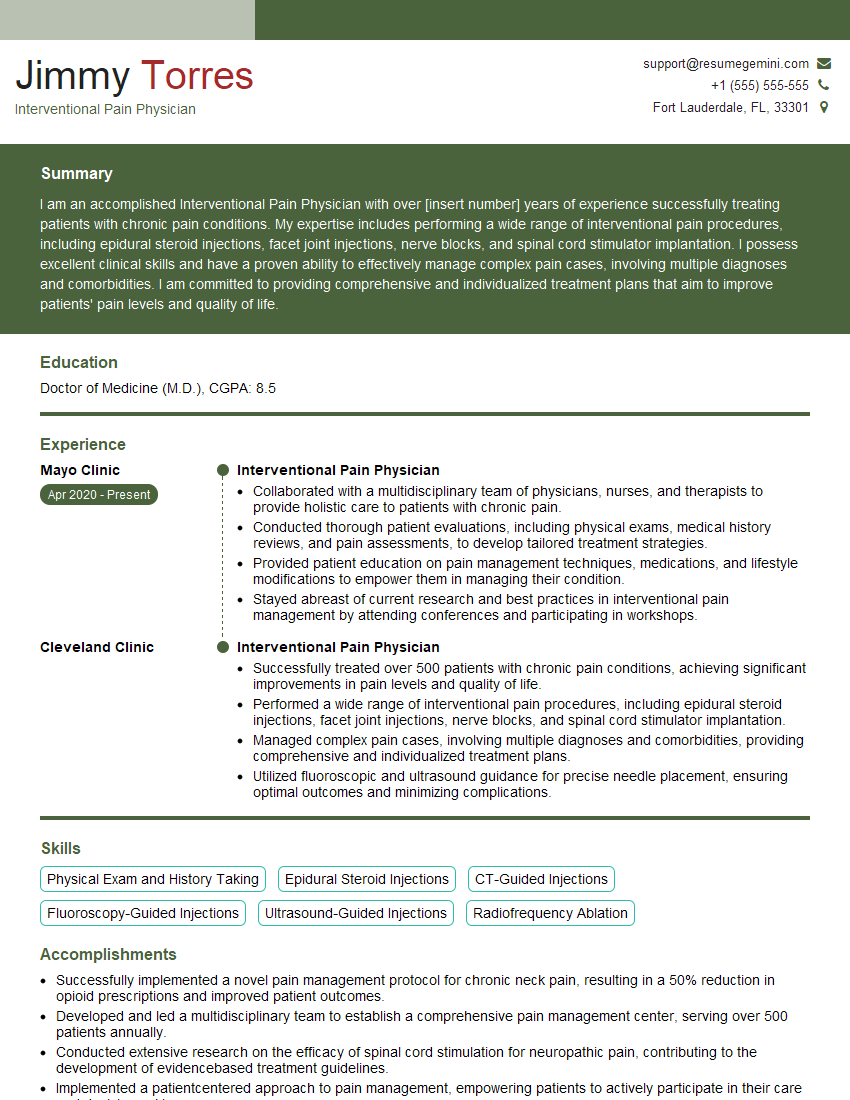
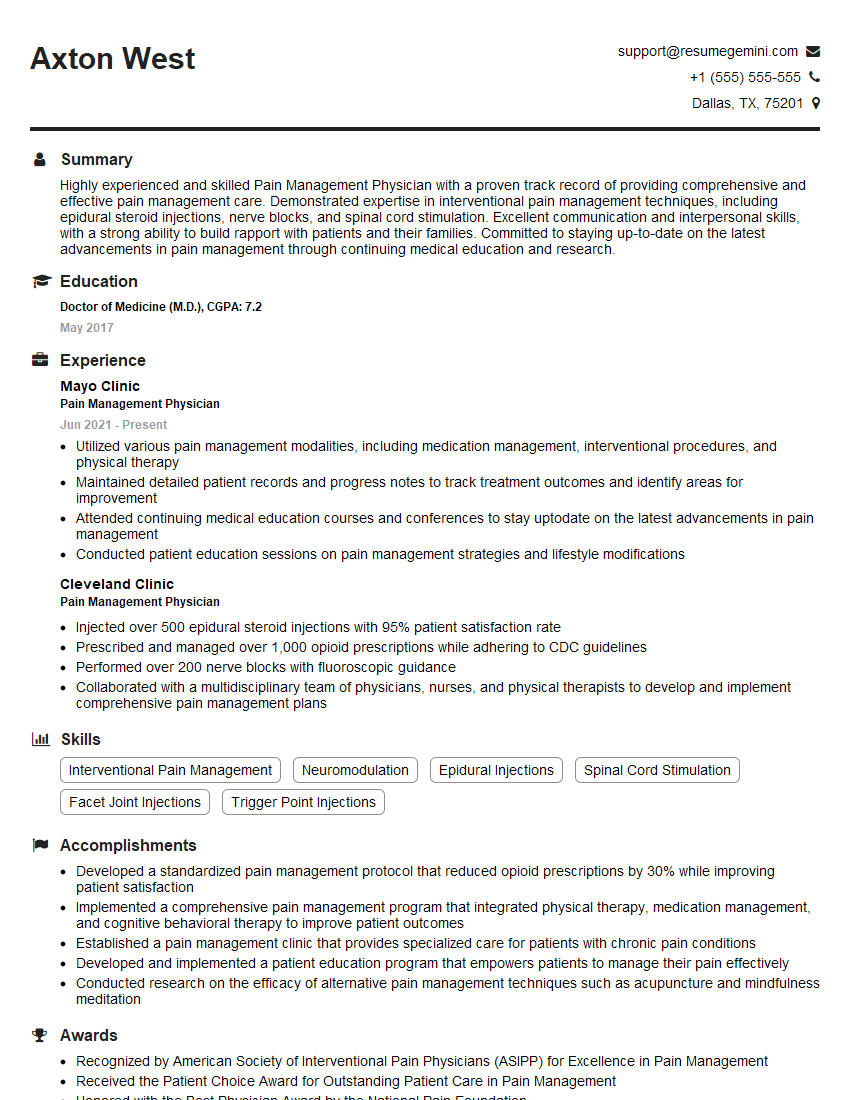
Mastering Spine Injection Therapy opens doors to exciting career opportunities with significant earning potential and professional growth. To maximize your job prospects, creating a strong, ATS-friendly resume is paramount. ResumeGemini is a trusted resource that can help you build a compelling resume tailored to the specific requirements of Spine Injection Therapy positions. ResumeGemini provides examples of resumes specifically designed for this field to give you a head start. Invest in crafting a professional resume that showcases your skills and experience effectively—it’s a crucial step towards securing your dream job.
Explore more articles
Users Rating of Our Blogs
Share Your Experience
We value your feedback! Please rate our content and share your thoughts (optional).
What Readers Say About Our Blog
To the interviewgemini.com Webmaster.
Very helpful and content specific questions to help prepare me for my interview!
Thank you
To the interviewgemini.com Webmaster.
This was kind of a unique content I found around the specialized skills. Very helpful questions and good detailed answers.
Very Helpful blog, thank you Interviewgemini team.