Feeling uncertain about what to expect in your upcoming interview? We’ve got you covered! This blog highlights the most important Steamfitting Knowledge interview questions and provides actionable advice to help you stand out as the ideal candidate. Let’s pave the way for your success.
Questions Asked in Steamfitting Knowledge Interview
Q 1. Explain the difference between high-pressure and low-pressure steam systems.
The key difference between high-pressure and low-pressure steam systems lies in the operating pressure and the applications they serve. High-pressure steam systems, typically operating above 15 psi (pounds per square inch), are used in processes requiring high-temperature heat transfer, such as industrial sterilization, power generation, and large-scale heating applications. Think of a massive industrial plant needing immense heat for a chemical process – that’s a high-pressure system. Low-pressure steam systems, generally operating below 15 psi, are more common in building heating systems, smaller industrial processes, and where less intense heat transfer is needed. Imagine a typical hospital or office building using steam for heating – that’s low-pressure.
This pressure difference significantly impacts system design. High-pressure systems require heavier-duty components like thicker pipes, reinforced valves, and specialized safety equipment to handle the increased stress. Low-pressure systems can utilize lighter components, resulting in lower installation costs. Furthermore, the safety protocols and operational procedures are more stringent for high-pressure systems due to the potential for more catastrophic failures.
Q 2. Describe the various types of steam traps and their applications.
Steam traps are crucial components in steam systems, preventing the escape of valuable steam while expelling condensate (water formed from steam condensation). Several types exist, each with specific applications:
- Thermostatic Traps: These rely on the temperature difference between steam and condensate. A temperature-sensitive element closes when steam is present (hot) and opens when condensate (cooler) is present, allowing it to drain. They are simple, relatively inexpensive, and suitable for low-pressure applications where the temperature difference is significant. Think of a simple radiator in a home heating system.
- Thermodynamic Traps: These utilize the difference in energy between steam and condensate. The flowing condensate creates a pressure drop that pushes open a valve, while steam pressure keeps it shut. They are less sensitive to variations in load and are well-suited for moderate to high-pressure systems. A good choice for processes with fluctuating demand.
- Inverter Traps: These work by sensing the density difference between steam and condensate. They provide accurate control and are appropriate for various pressures and applications. Their ability to adapt makes them suitable for a wider range of operating conditions.
- Float and Thermostatic Traps: These combine a float mechanism (sensitive to condensate level) and a thermostatic element (sensitive to temperature). This combination ensures efficient condensate removal regardless of fluctuations in pressure or load. They are excellent for applications with both large and intermittent condensate loads.
Choosing the right trap type depends on factors like pressure, temperature, condensate load, and the specific process requirements. Improper selection can lead to energy waste, system inefficiencies, and equipment damage.
Q 3. How do you identify and repair a leaking steam valve?
Identifying and repairing a leaking steam valve requires careful attention to safety. First, isolate the valve by closing the valves upstream and downstream, preventing steam flow to the leaking valve. Next, allow the valve and pipes to cool completely – this is crucial to prevent burns. Once cool, visually inspect the valve for obvious leaks. A leaky valve may have a damaged packing gland (the seal around the valve stem), a worn-out valve seat, or a cracked valve body.
For a leaking packing gland, you might need to tighten the gland nuts, carefully to avoid over-tightening and damaging the valve stem. If tightening doesn’t solve it, the packing may need replacement. For a worn valve seat, you may need to re-seat or replace the valve. If the valve body itself is cracked, replacement is usually necessary.
Remember to always use the proper tools and follow manufacturer’s instructions. If you are not comfortable handling the repair, it’s best to call a qualified steamfitter.
Q 4. What are the safety precautions when working with high-pressure steam?
Working with high-pressure steam presents serious safety hazards. Here are essential precautions:
- Lockout/Tagout Procedures: Always isolate the system before any work using lockout/tagout procedures. This prevents accidental activation.
- Personal Protective Equipment (PPE): Use appropriate PPE, including heat-resistant gloves, eye protection, and flame-resistant clothing. High-pressure steam can cause severe burns.
- Steam Burns: Be aware that steam burns are much more severe than hot water burns. Steam releases latent heat as it condenses, causing deep tissue damage.
- Scalding: Avoid direct contact with steam or hot surfaces.
- Pressure Relief Valves: Ensure pressure relief valves are functioning correctly. These devices prevent over-pressurization and potential explosions.
- Confined Space Entry: If working in a confined space, follow appropriate procedures to prevent asphyxiation.
- Training and Competence: Only trained and competent personnel should work on high-pressure steam systems. Improper handling can lead to serious injury or death.
Q 5. Explain the process of installing a steam pipe.
Installing a steam pipe is a complex process requiring precision and adherence to safety regulations. First, plan the layout carefully, considering factors like pipe size, slope (for condensate drainage), supports, and insulation. Prepare the pipe by cutting and threading it to the required length. Then, assemble the pipe sections using appropriate fittings (elbows, tees, etc.) and gaskets, ensuring tight connections to prevent leaks. For high-pressure systems, welding may be necessary, requiring specialized skills and equipment.
Support the pipe adequately using hangers and clamps at appropriate intervals to prevent sagging and stress. Insulate the pipe to minimize heat loss and prevent burns. After installation, pressure test the system to verify leak-free operation before introducing steam. Finally, commission the system by gradually increasing steam pressure and monitoring performance.
Always comply with local codes and regulations. Using inappropriate materials or neglecting safety procedures can result in dangerous situations.
Q 6. What are the common causes of steam hammer in a system?
Steam hammer, also known as water hammer, is a loud banging sound in steam pipes caused by the rapid condensation and expansion of steam. This occurs due to a few key reasons:
- Sudden Condensation: When steam rapidly cools (e.g., due to cold pipes or a sudden influx of cold condensate), it creates a shockwave from the pressure differences.
- Entrapped Air/Non-condensables: Air or non-condensable gases in the system compress and expand suddenly, creating a hammering effect.
- Improper Steam Trap Operation: A malfunctioning steam trap can allow condensate to accumulate and suddenly vaporize, leading to steam hammer.
- Pipe Design Issues: Sharp bends, abrupt changes in pipe diameter, and insufficient pipe support can contribute to the problem.
- Cyclic Operation: Systems with frequent start-ups and shutdowns can experience more frequent steam hammer as the system cools and reheats.
Addressing steam hammer often involves identifying the root cause and then taking corrective action, like installing proper steam traps, venting air from the system, or adjusting pipe supports. Ignoring steam hammer can cause pipe damage and system failures.
Q 7. How do you troubleshoot a steam system with low pressure?
Troubleshooting low steam pressure involves a systematic approach. First, check the steam source (boiler or steam generator) to ensure it’s operating at the correct pressure and producing sufficient steam. Then, inspect the main steam supply line for blockages or restrictions. A clogged filter or partially closed valve can drastically reduce pressure. Examine steam traps along the distribution lines; a malfunctioning trap can impede steam flow.
Check for air in the system; trapped air reduces the effective steam pressure. Verify the operation of pressure-reducing valves (if present); these valves can limit the pressure in specific sections of the system. Finally, examine the steam-consuming equipment to rule out problems with the equipment itself that could be drawing excessive steam.
A methodical approach to check each component in the steam system, going from the source to the end-use points, is the most efficient way to diagnose the problem and restore proper steam pressure.
Q 8. What are the different types of steam pipe insulation and their properties?
Selecting the right steam pipe insulation is crucial for minimizing heat loss, preventing condensation, and ensuring system efficiency. Several types exist, each with specific properties:
- Calcium Silicate: Excellent for high-temperature applications (up to 1200°F) due to its high thermal resistance and fire-resistant properties. It’s often used in industrial settings where safety is paramount.
- Fiberglass: A cost-effective option with decent thermal performance, suitable for moderate temperatures. It’s lightweight and easy to install, making it a popular choice for many applications. However, it’s not as durable as calcium silicate.
- Mineral Wool: Offers good thermal insulation and fire resistance, and it’s often used in areas with potential fire hazards. It’s a bit more expensive than fiberglass but offers better longevity and performance.
- Polyisocyanurate (Polyiso): Known for its high R-value (measure of thermal resistance) and moisture resistance. This makes it a good choice for applications where moisture is a concern, but it generally has a lower temperature rating than calcium silicate.
The choice depends heavily on the operating temperature, budget, and environmental conditions. For instance, a high-pressure steam line in a power plant would likely require calcium silicate for its superior heat resistance and fire safety, whereas a low-pressure system in a smaller building might use fiberglass for its cost-effectiveness.
Q 9. Explain the importance of proper steam system balancing.
Proper steam system balancing is essential for ensuring that each piece of equipment receives the correct amount of steam, optimizing efficiency and preventing issues like water hammer (a dangerous surge of water in the pipes). An unbalanced system leads to:
- Inefficient energy use: Some equipment may receive too much steam, wasting energy, while others may receive too little, impacting performance.
- Equipment damage: Overheating can damage equipment, while insufficient steam can reduce productivity.
- Increased maintenance costs: Imbalances put extra stress on system components, increasing the frequency of repairs and replacements.
- Safety hazards: Water hammer can cause significant damage and create safety risks.
Balancing involves adjusting valves to control steam flow to individual branches or equipment. This often requires careful calculation and on-site adjustments, often using specialized balancing valves and instruments.
Q 10. How do you determine the correct pipe size for a steam system?
Determining the correct pipe size for a steam system is crucial for efficient operation and preventing pressure drops. It involves several factors:
- Steam flow rate: The amount of steam needed by the equipment.
- Steam pressure: The pressure at which the steam is delivered.
- Pipe material: Different materials offer different flow characteristics.
- Pipe length and fittings: Longer lengths and numerous fittings increase friction, requiring larger pipes.
- Allowable pressure drop: The maximum acceptable reduction in pressure along the pipe.
Engineers use specialized software and steam tables (containing thermodynamic properties of steam) to perform these calculations. They often start with a preliminary estimate based on industry standards and then refine the calculation based on specific system parameters. Incorrect sizing can lead to excessive pressure drops, reducing efficiency or even causing equipment malfunction.
Q 11. Describe the process of pressure testing a steam system.
Pressure testing a steam system is a critical safety measure to identify leaks and ensure the integrity of the system before operation. The process generally involves these steps:
- System Isolation: Isolate the section of the system to be tested from the rest.
- Pressure Up: Introduce compressed air or water (depending on the system design) into the isolated section and slowly increase the pressure to the testing pressure. This is often significantly higher than the operating pressure to account for safety margins.
- Leak Detection: Carefully inspect all joints, welds, and fittings for leaks. Soap solution is commonly used to visualize leaks by creating bubbles.
- Pressure Holding: Maintain the test pressure for a specified period (often several hours) to check for slow leaks.
- Pressure Reduction: Slowly release the test pressure.
- Documentation: Record the test pressure, duration, and any findings.
Safety precautions are paramount during pressure testing. Appropriate personal protective equipment (PPE) must be worn, and qualified personnel should supervise the process. Failure to properly pressure test can lead to catastrophic failures during operation.
Q 12. What are the different types of steam fittings and their uses?
Steam fittings are essential components connecting various parts of a steam system, directing and controlling steam flow. Common types include:
- Elbows: Change the direction of the pipe.
- Tees: Create a branch in the pipe.
- Unions: Allow for easy disconnection and reconnection of pipes.
- Valves (globe, gate, ball, check): Control and regulate steam flow.
- Flanges: Provide a method for connecting larger diameter pipes.
- Reducers: Change pipe diameter.
The choice of fitting depends on its intended function, pipe size, pressure rating, and material compatibility. For instance, a high-pressure system would require fittings with higher pressure ratings than a low-pressure system. The material selection is important as well; some fittings may need to be made from materials that can withstand high temperatures and pressures.
Q 13. How do you read and interpret steam system schematics?
Steam system schematics are diagrams representing the layout and components of a steam system. Understanding these diagrams is vital for planning, maintenance, and troubleshooting. They typically include:
- Piping layout: Shows the arrangement of pipes, valves, and fittings.
- Equipment locations: Indicates the position of steam-using equipment like heaters or turbines.
- Pipe sizes and materials: Specifies the dimensions and types of pipes.
- Valve designations: Identifies various valves and their function.
- Insulation details: Shows the type and thickness of insulation used.
Reading a schematic requires a basic understanding of piping symbols and conventions. The schematic provides a visual roadmap of the entire system, allowing engineers and technicians to quickly understand the flow path, identify components, and diagnose problems.
Q 14. Explain the principles of steam thermodynamics.
Steam thermodynamics involves the principles of heat transfer and energy conversion related to steam. Key concepts include:
- Latent heat: The heat required to change the phase of water from liquid to vapor (boiling) or vice-versa (condensation) without a change in temperature. This is a significant factor in steam system design and efficiency.
- Sensible heat: Heat that causes a temperature change in a substance without changing its phase.
- Steam properties: Understanding the relationship between steam pressure, temperature, and specific volume (volume per unit mass) is essential for system calculations and design. Steam tables are frequently used to obtain these properties.
- Thermodynamic cycles: Steam power plants often utilize Rankine cycles, which involves steam generation, expansion through a turbine, condensation, and pumping back to the boiler.
Understanding steam thermodynamics is critical for designing efficient and safe steam systems. Improper application of these principles can lead to inefficiencies, safety hazards, and increased operational costs.
Q 15. What are the common materials used for steam piping?
The choice of material for steam piping hinges on factors like pressure, temperature, and the corrosive nature of the steam. Common materials include:
- Carbon Steel: A workhorse in steam systems, carbon steel is cost-effective and readily available. However, it’s susceptible to corrosion, especially in high-moisture environments. We often use it for lower-pressure applications where corrosion mitigation strategies are implemented, such as proper insulation and regular inspection.
- Stainless Steel: Superior corrosion resistance makes stainless steel ideal for high-pressure, high-temperature systems or those handling aggressive steam. The added cost is justified by its longevity and reduced maintenance needs. Think of pharmaceutical or food processing plants needing impeccable hygiene.
- Cast Iron: Though less common in new installations due to its weight and potential for fragility, cast iron remains present in older systems. Its use is generally restricted to lower-pressure applications.
- Copper: Excellent corrosion resistance makes copper a viable option in certain specialized applications. However, its higher cost and lower strength relative to steel often limit its use.
The selection process always involves a careful evaluation of cost, lifespan, maintenance requirements, and the specific operating conditions of the steam system. For instance, a large industrial power plant would favor the durability and high-temperature tolerance of stainless steel, whereas a smaller commercial building might opt for the cost-effectiveness of carbon steel with appropriate corrosion protection.
Career Expert Tips:
- Ace those interviews! Prepare effectively by reviewing the Top 50 Most Common Interview Questions on ResumeGemini.
- Navigate your job search with confidence! Explore a wide range of Career Tips on ResumeGemini. Learn about common challenges and recommendations to overcome them.
- Craft the perfect resume! Master the Art of Resume Writing with ResumeGemini’s guide. Showcase your unique qualifications and achievements effectively.
- Don’t miss out on holiday savings! Build your dream resume with ResumeGemini’s ATS optimized templates.
Q 16. How do you calculate steam system heat loss?
Calculating steam system heat loss is crucial for designing efficient and safe systems. It’s typically done using a combination of calculations and established formulas, often accounting for several factors:
- Pipe Surface Area: This is calculated based on the pipe diameter and length. Think of it like calculating the area of a cylinder.
- Temperature Difference: The difference between the steam temperature and the ambient temperature is a major driver of heat loss. The greater the difference, the higher the loss.
- Insulation Thickness and Type: Insulation significantly reduces heat loss. Different insulation materials have varying R-values (resistance to heat flow). Thicker insulation provides better protection.
- Pipe Fittings and Valves: Fittings and valves contribute to heat loss due to their increased surface area and potential for heat leakage.
- Environmental Factors: Wind speed, humidity, and ambient temperature all influence heat loss.
Several engineering handbooks and software packages provide detailed methods for calculating heat loss, often involving complex equations that consider these factors. A simplified method might use a basic formula, accounting for surface area and temperature difference, but a precise calculation usually requires a more sophisticated approach to ensure efficient system design.
Q 17. What are the regulations and codes related to steam system installation?
Steam system installation is governed by a number of stringent regulations and codes to ensure safety and efficiency. Key codes and standards include:
- ASME Boiler and Pressure Vessel Code (BPVC): This comprehensive code sets the standards for boiler design, construction, inspection, and testing. It directly impacts steam system components like boilers and pressure vessels.
- ASME B31.1 Power Piping Code: This code covers the design, materials, fabrication, assembly, erection, testing, and inspection of power piping, encompassing the steam piping systems.
- International Building Code (IBC): This code, adopted by many jurisdictions, sets standards for the installation and maintenance of mechanical systems, including steam systems, within buildings. It addresses issues such as fire safety and accessibility.
- National Fire Protection Association (NFPA) Standards: NFPA standards address fire safety concerns related to steam systems, specifically regarding the prevention of leaks and potential fire hazards.
Compliance with these codes requires meticulous documentation, regular inspections, and adherence to strict design and construction practices. Failure to comply can lead to serious safety hazards and legal consequences. It’s crucial to engage qualified engineers and contractors experienced in steam system design and installation to ensure adherence to the relevant codes and regulations.
Q 18. How do you maintain and inspect a steam system?
Maintaining and inspecting a steam system is critical for safety, efficiency, and longevity. A robust maintenance program involves:
- Regular Inspections: Visual inspections should be conducted frequently to check for leaks, corrosion, insulation damage, and other potential issues. This is often aided by using thermal imaging cameras to quickly locate heat loss.
- Pressure Testing: Periodic pressure testing verifies the integrity of the piping and components. This helps detect leaks before they become major problems.
- Chemical Treatment: Water treatment is essential to prevent scale buildup and corrosion in the boilers and piping. Proper chemical analysis and adjustments ensure optimal water quality.
- Trap Inspection and Maintenance: Steam traps, which remove condensate, should be regularly inspected and maintained to ensure they function correctly. Failure can lead to water hammer and reduced efficiency.
- Insulation Checks: Insulation should be checked for damage and repaired or replaced as needed to minimize heat loss.
A well-maintained steam system operates efficiently, minimizes downtime, and enhances safety. Neglecting maintenance can lead to costly repairs, increased energy consumption, and even hazardous situations like steam leaks or boiler failures.
Q 19. Describe your experience with different types of steam boilers.
My experience encompasses various types of steam boilers, including:
- Fire-Tube Boilers: These are more common in smaller applications. Hot gases pass through tubes surrounded by water. Simpler in design but generally less efficient than water-tube boilers.
- Water-Tube Boilers: Water circulates within tubes surrounded by hot gases. More efficient and capable of handling higher pressures and capacities, making them suitable for large industrial applications. I’ve worked extensively on designs involving various water-tube configurations like D-type, O-type and A-type.
- Electric Boilers: These are typically smaller and suitable for applications where electricity is readily available and emission control is a priority. They are simple to operate and maintain but can be more costly to run, depending on the cost of electricity.
- Packaged Boilers: These are pre-assembled units that offer convenience and ease of installation. A popular choice for smaller industrial and commercial settings. I’ve overseen several projects involving the integration of these units into existing systems.
The selection of a boiler depends on several factors, including required steam capacity, operating pressure, fuel type, space constraints, and budget. Each type presents its own strengths and weaknesses, and proper selection requires a thorough understanding of the application’s specific needs.
Q 20. Explain the role of steam separators in a system.
Steam separators play a vital role in removing moisture and entrained liquids from steam lines. They’re crucial for preventing problems such as:
- Water Hammer: This destructive phenomenon occurs when condensate travels at high velocity, impacting pipes and causing damage.
- Erosion: Moisture in steam can erode piping and turbine blades.
- Reduced Efficiency: Wet steam is less efficient for heating or power generation.
Steam separators work by utilizing centrifugal force or other means to separate the liquid from the steam. Common types include cyclone separators and mesh-type separators. The selection of a separator depends on factors such as steam flow rate, pressure, and the amount of moisture present. Improper selection or maintenance can lead to reduced efficiency, damage to downstream equipment, and even safety hazards.
In my experience, proper sizing and placement of steam separators is crucial for the efficient and reliable operation of a steam system. A poorly designed or maintained separator can negate many of the benefits of a well-engineered system.
Q 21. How do you deal with steam condensate?
Steam condensate is the water formed when steam condenses after giving up its heat. Effective condensate management is vital for several reasons:
- Energy Recovery: Condensate is still hot and contains significant thermal energy. Returning it to the boiler (boiler feedwater) can substantially reduce energy consumption.
- Corrosion Prevention: Leaving condensate in the system can lead to corrosion. Prompt removal prevents damage and extends system life.
- System Efficiency: Condensate buildup reduces the effectiveness of the steam system. Efficient removal ensures optimal performance.
Methods for dealing with condensate include:
- Steam Traps: These automatic valves remove condensate while preventing steam loss. Various types are available, each suited for specific applications. Proper selection and maintenance of steam traps is critical for efficient condensate removal.
- Condensate Return Systems: These systems collect and return condensate to the boiler, recovering valuable energy. They often involve pumps and piping networks tailored to the specific system design. I have significant experience designing and troubleshooting these systems to maximize energy efficiency.
- Condensate Flash Tanks: These can be used to separate non-condensable gases from condensate before returning it to the boiler, preventing gas build-up and system inefficiencies.
The approach to condensate management is tailored to the size and complexity of the steam system. Proper design and maintenance are key to efficient energy use, optimal system performance, and reduced operational costs.
Q 22. What are the common problems associated with steam traps?
Steam traps, crucial components of any steam system, prevent the escape of valuable steam while allowing condensate (water formed by condensation of steam) to drain. Malfunctioning traps lead to several problems. Common issues include:
- Air Binding: Air trapped in the trap prevents proper condensate drainage, reducing heating efficiency and potentially leading to water hammer.
- Flashing: If the trap isn’t sized or selected correctly, high-pressure steam might flash into vapor within the trap, causing it to fail to operate efficiently. This wastes energy and reduces system performance. Imagine trying to drain a bucket full of water that’s rapidly turning to steam—it’s difficult!
- Leakage: A faulty trap can leak steam, wasting energy and posing safety risks. This often manifests as hissing or visible steam escaping.
- Erosion/Corrosion: Aggressive condensate can erode internal trap components, particularly in systems with high mineral content. This leads to premature failure and requires frequent replacements.
- Freezing: In colder climates, traps can freeze if they don’t drain condensate effectively, leading to damage and system shutdown. A common solution is insulation or the use of freeze-protected traps.
Regular inspection and maintenance are essential to prevent these problems and ensure efficient steam system operation. A simple observation of the trap’s operation (listening for sounds, checking for leaks) can help identify issues early on.
Q 23. Explain the different methods of steam distribution.
Steam distribution methods aim to efficiently deliver steam to various points of use within a facility. The choice depends on factors like system size, pressure, and required temperature control. Common methods include:
- High-Pressure Distribution: Steam is generated at high pressure and distributed through a network of mains and smaller branches. This is suitable for large systems needing high-temperature processes. Think of it like a highway system—efficient for long-distance transport.
- Low-Pressure Distribution: Steam is distributed at lower pressures, often requiring pressure-reducing valves along the route. This is generally safer and more suitable for smaller systems or areas requiring lower temperatures. Imagine distributing steam in a smaller residential building; lower pressure is adequate and safer.
- High-Pressure/Low-Pressure Combination: Many industrial systems use a combination, employing high-pressure mains and then stepping down to lower pressure nearer the point of use. This offers a good balance between efficiency and safety.
- Flash Steam System: High-pressure condensate is used to generate lower-pressure steam at the point of use, reducing energy waste. This is beneficial in areas with limited space or requiring multiple processes.
Each method presents advantages and disadvantages concerning energy efficiency, safety, and capital costs. The optimal choice demands careful consideration of all these factors.
Q 24. Describe your experience with different types of steam valves.
My experience encompasses a wide range of steam valves, each with specific applications and characteristics:
- Globe Valves: These are common for regulating steam flow, offering excellent control but can suffer from cavitation if not selected and installed properly.
- Gate Valves: Primarily used for on/off service, offering minimal pressure drop when fully open. They’re not ideal for throttling applications because they can experience significant wear.
- Ball Valves: Provide quick on/off service and relatively good throttling capabilities, making them suitable for various applications. However, they’re not as precise as globe valves for fine control.
- Check Valves: Prevent reverse flow of steam, protecting equipment from back pressure. Common types include swing check and lift check valves.
- Control Valves: These sophisticated valves automate steam flow based on system demands, maintaining consistent pressures and temperatures. These often employ pneumatic or electronic actuators.
Selection of the appropriate valve is crucial, influenced by factors like pressure, temperature, flow rate, and the level of control needed. I’ve encountered instances where improper valve selection led to system inefficiencies and even equipment damage. For example, using a gate valve for throttling might cause excessive wear and potentially lead to a system failure.
Q 25. How do you troubleshoot a steam system with excessive noise?
Excessive noise in a steam system often indicates problems that need immediate attention. Troubleshooting involves a systematic approach:
- Identify the noise source: Carefully pinpoint the location of the noise to narrow down potential causes. Use sound-level meters if necessary.
- Check for water hammer: This is a common cause of banging noises. It usually points to excessive condensate accumulation or inadequate venting. Check for proper trap operation and venting system functionality.
- Inspect steam traps: Defective or improperly sized steam traps are a frequent source of noise. Listen closely to the traps; a clicking or banging sound may indicate issues.
- Examine valves and piping: Loose fittings, vibrating pipes, or partially closed valves can generate noise. Tighten loose connections and ensure valves are fully open or closed as required.
- Assess insulation: Inadequate insulation can contribute to excessive steam noise, particularly if the pipes are exposed. Insulation improves not only sound dampening but also energy efficiency.
- Review operating pressure and flow rates: High steam velocity or pressure can cause significant noise. Adjusting these parameters might reduce noise.
Addressing the underlying cause is key; simply masking the noise with additional insulation may hide a more serious problem.
Q 26. What are the environmental considerations related to steam system operation?
Environmental considerations related to steam system operation are crucial due to the energy consumption and potential emissions. Key factors include:
- Energy Efficiency: Steam systems are energy-intensive. Optimizing trap performance, proper insulation, and efficient steam distribution are crucial for reducing energy waste and carbon footprint. Implementing energy monitoring and management systems helps track energy consumption and identify areas for improvement.
- Water Consumption: Steam generation requires a significant amount of water, so effective condensate return systems are needed to minimize water usage and reduce wastewater discharges. This also reduces the strain on municipal water supplies.
- Air Emissions: Steam generation may produce emissions, depending on the fuel source. Minimizing emissions requires using low-emission fuels, employing efficient combustion equipment, and properly maintaining the system.
- Noise Pollution: Excessive noise from steam systems can affect the surrounding environment. Implementing noise-reduction measures such as insulation and proper valve selection is important.
Meeting environmental regulations and implementing sustainable practices are vital in today’s world. The overall environmental impact of steam systems should be a central consideration during design, operation, and maintenance.
Q 27. Describe your experience working with different types of steam system controls.
My experience with steam system controls spans various technologies, each offering distinct advantages:
- Pneumatic Controls: These use compressed air to operate valves and other control elements. They are reliable and well-suited for harsh industrial environments. However, they can be less precise than electronic controls.
- Electronic Controls: These use electronic signals to control steam flow. They offer greater precision, programmability, and integration with other systems, leading to better optimization and monitoring. They also enable advanced features like data logging and remote monitoring.
- Distributed Control Systems (DCS): These sophisticated systems manage and monitor an entire steam system or even a plant-wide network. They offer advanced process control, data acquisition, and alarm management capabilities.
The selection of control systems depends on the system’s size, complexity, and control requirements. For example, a simple small building might only require pneumatic valves with simple manual controls, while a large industrial plant would benefit from a sophisticated DCS.
Q 28. Explain the process of commissioning a new steam system.
Commissioning a new steam system is a critical phase, ensuring its proper operation and meeting the design specifications. The process generally involves these steps:
- Pre-commissioning: This includes a thorough inspection of all components and equipment to ensure they are installed correctly and meet specifications. Thorough testing of individual components, such as pumps and valves, should also be conducted.
- System Flushing: The system is flushed with clean water to remove debris and impurities from the pipes and equipment before steam introduction.
- Leak Testing: A detailed leak test is performed to identify and repair any leaks in the piping and components before steam is introduced into the system.
- Start-up and Commissioning: The system is gradually brought online, following a pre-defined procedure. Parameters such as pressure, temperature, and flow rates are closely monitored and adjusted as needed.
- Performance Testing: Once the system is operational, performance testing is carried out to verify that it is meeting the design requirements. This may involve monitoring steam consumption, efficiency, and system response to load changes.
- Documentation and Handover: Detailed documentation of the commissioning process, test results, and operating procedures are prepared. The system is then handed over to the operating personnel.
Successful commissioning ensures a safe, efficient, and reliable steam system, minimizing downtime and maximizing performance. Proper planning and execution of each step are crucial for a smooth transition from project completion to daily operation.
Key Topics to Learn for Your Steamfitting Knowledge Interview
Ace your upcoming interview by mastering these essential areas of steamfitting knowledge. We’ve broken down the key concepts to help you feel confident and prepared.
- Steam System Design & Layout: Understanding the principles behind efficient and safe steam system design, including pipe sizing, valve selection, and pressure drop calculations. Consider practical applications like designing systems for various building types and understanding the impact of different system configurations.
- Pipefitting and Welding Techniques: Proficiency in various pipefitting methods, including cutting, threading, and joining techniques. Demonstrate your knowledge of different welding processes relevant to steam systems and their appropriate applications. This includes understanding safety procedures and quality control.
- Steam Trap Selection and Maintenance: Knowing how to select the correct steam trap for a specific application and understanding the principles behind their operation and maintenance. Be prepared to discuss troubleshooting common steam trap issues and their potential impact on system efficiency.
- Safety Regulations and Codes: Familiarity with relevant safety regulations, codes, and best practices related to steamfitting and pressure vessel operation. This includes understanding permit requirements, lockout/tagout procedures, and hazard recognition.
- Troubleshooting and Diagnostics: Ability to identify and troubleshoot common problems in steam systems, including leaks, pressure drops, and inefficient operation. Highlight your problem-solving skills and experience with diagnostic tools.
- Instrumentation and Control Systems: Understanding the role of pressure gauges, temperature sensors, and control valves in maintaining optimal steam system performance. Consider discussing your experience with different control system types and their applications.
Next Steps: Boost Your Career with a Strong Resume
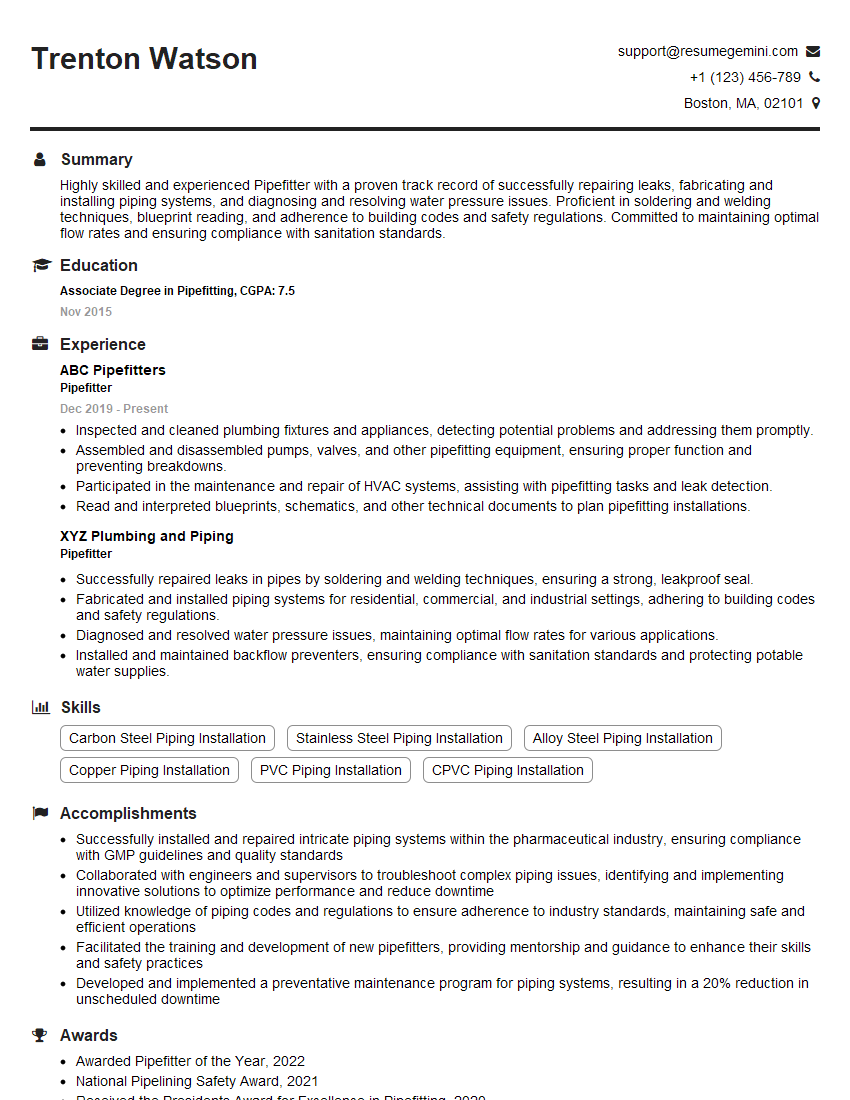
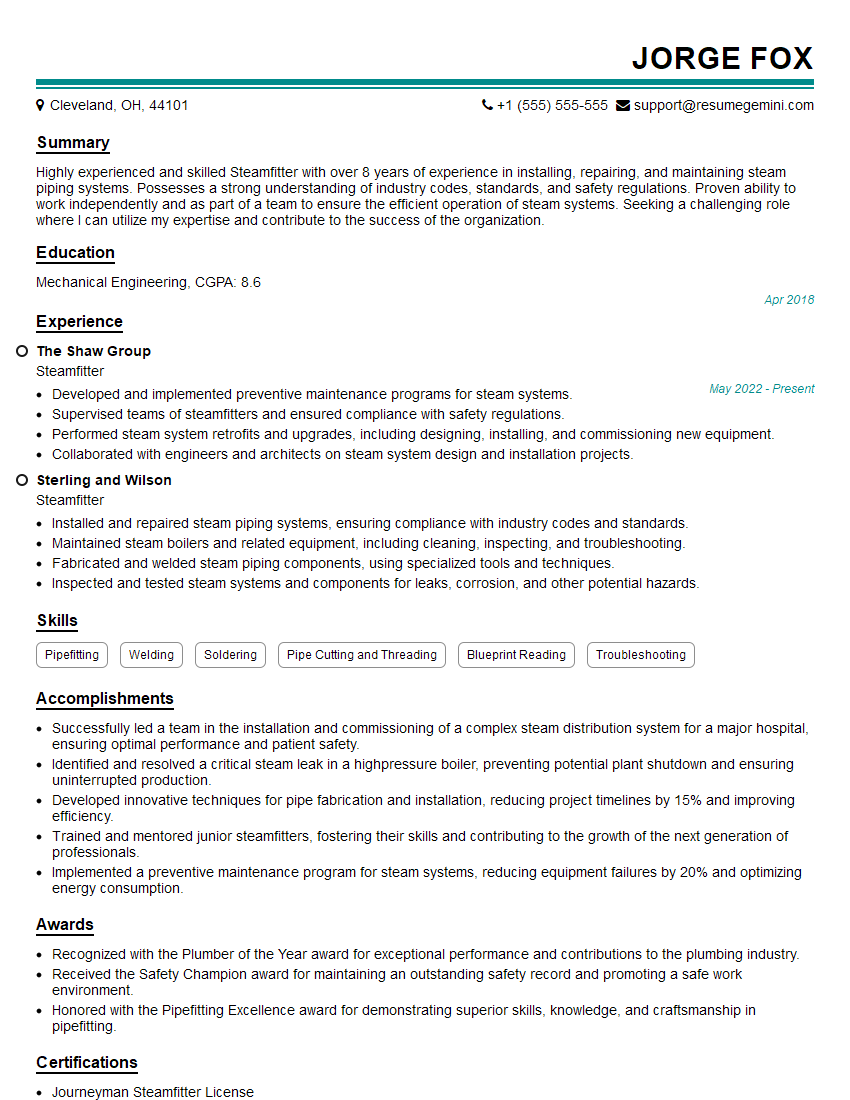
Mastering steamfitting knowledge is crucial for career advancement in this field. A well-crafted resume is your key to unlocking exciting opportunities. Make sure yours is ATS-friendly (Applicant Tracking System-friendly) to ensure it gets seen by potential employers. To build a truly stand-out resume, we recommend using ResumeGemini. ResumeGemini provides tools and resources to create a professional resume that highlights your skills and experience effectively. Examples of resumes tailored to Steamfitting Knowledge are available within ResumeGemini to help guide you.

Explore more articles
Users Rating of Our Blogs
Share Your Experience
We value your feedback! Please rate our content and share your thoughts (optional).
What Readers Say About Our Blog
To the interviewgemini.com Webmaster.
Very helpful and content specific questions to help prepare me for my interview!
Thank you
To the interviewgemini.com Webmaster.
This was kind of a unique content I found around the specialized skills. Very helpful questions and good detailed answers.
Very Helpful blog, thank you Interviewgemini team.