The thought of an interview can be nerve-wracking, but the right preparation can make all the difference. Explore this comprehensive guide to Stuttering Treatment interview questions and gain the confidence you need to showcase your abilities and secure the role.
Questions Asked in Stuttering Treatment Interview
Q 1. Explain the difference between developmental and neurogenic stuttering.
Developmental stuttering and neurogenic stuttering are two distinct types of stuttering, differing primarily in their underlying causes. Developmental stuttering is the most common type, typically beginning in early childhood (between ages 2 and 5) and often resolving spontaneously or with therapy. It’s thought to arise from a complex interplay of genetic predisposition, neurological factors, and environmental influences like speech and language development pressures. In contrast, neurogenic stuttering is acquired later in life (typically after the age of 25) due to a neurological event, such as a stroke, brain injury, or tumor. It differs significantly in its characteristics, often featuring less variability in stuttering and being less responsive to traditional fluency-shaping techniques.
Imagine two individuals: a child who starts stuttering around age 3, exhibiting variable blocks and repetitions (developmental stuttering), and an adult who experiences sudden-onset stuttering following a head injury (neurogenic stuttering). The child’s stuttering might be influenced by factors like family history and communication styles within their home. The adult’s stuttering, however, is directly linked to a specific neurological event impacting brain areas that control speech.
Q 2. Describe the Lidcombe Program and its effectiveness.
The Lidcombe Program is a parent-administered therapy for young children (typically preschool-aged) who stutter. It’s based on operant conditioning, focusing on providing positive reinforcement for fluent speech and gentle corrective feedback (e.g., ‘That was a little bit bumpy; say it again’) for disfluent speech. The parents are trained to implement this feedback system consistently throughout the child’s day. The program’s effectiveness is well-documented, with many studies showing high rates of fluency recovery and reduced stuttering severity. It empowers parents as active participants in their child’s treatment, promoting positive interactions and reducing parental anxiety around the child’s stuttering. However, it’s crucial that parents are adequately trained to administer the program correctly, and it’s not appropriate for all children with stutters; suitability is assessed by a speech-language pathologist.
For example, a parent might say, ‘That was smooth!’ after a fluent utterance and then, gently, ‘Let’s try that word again’ if their child stutters. The aim is to increase fluent speech through positive feedback and gentle corrections, fostering a supportive environment to improve fluency.
Q 3. What are the key components of a comprehensive stuttering assessment?
A comprehensive stuttering assessment involves a multifaceted approach to understand the nature and severity of an individual’s stuttering. It goes beyond simply measuring the frequency of disfluencies. Key components include:
- Detailed case history: Gathering information about the onset, development, and course of stuttering; family history of stuttering; and the individual’s perception and feelings about their speech.
- Speech sample analysis: Quantifying the frequency and types of disfluencies (repetitions, prolongations, blocks), assessing speech rate, and identifying any associated secondary behaviors (e.g., eye blinks, head movements).
- Assessment of speech and language skills: Evaluating articulatory skills, phonological awareness, language comprehension, and expressive language skills to rule out any underlying communication difficulties.
- Assessment of psychological and emotional factors: Exploring the individual’s self-esteem, anxiety levels, and overall emotional well-being related to their stuttering.
- Assessment of the impact of stuttering on daily life: Determining how the stuttering affects communication, academic or professional performance, social interactions, and overall quality of life.
A thorough assessment provides a comprehensive profile of the individual’s stuttering, which guides the selection of the most effective treatment approach.
Q 4. How do you differentiate between cluttering and stuttering?
While both cluttering and stuttering involve disruptions in speech fluency, they are distinct disorders. Stuttering is characterized by disruptions in the smooth flow of speech, often involving repetitions, prolongations, and blocks. It’s frequently accompanied by significant anxiety and avoidance behaviors. Cluttering, on the other hand, involves rapid, erratic speech that’s often disorganized and difficult to understand. It typically lacks the tension and struggle often seen in stuttering and is less associated with anxiety or avoidance. Individuals who clutter may also exhibit problems with rapid thought processes and disorganized planning.
Think of it this way: stuttering is like getting stuck on a particular word, while cluttering is like speaking too quickly and tangling the words together. A person who stutters might repeatedly say ‘b-b-ball,’ whereas someone who clutters might rush through a sentence with unclear articulation and word omissions, even if they get the words out quickly.
Q 5. Outline your approach to counseling individuals who stutter.
My approach to counseling individuals who stutter is holistic and person-centered. It goes beyond just addressing the speech fluency itself; it recognizes the emotional, social, and psychological impact of stuttering. My approach involves:
- Building a strong therapeutic alliance: Creating a safe and supportive environment where the individual feels understood, respected, and empowered.
- Cognitive restructuring: Challenging negative thoughts and beliefs about stuttering and replacing them with more positive and realistic ones.
- Relaxation and stress management techniques: Teaching techniques to manage anxiety and reduce tension associated with speaking.
- Communication skills training: Enhancing communication strategies to improve interaction fluency and manage communication challenges.
- Self-advocacy skills development: Empowering the individual to manage their stuttering effectively in various situations and advocate for their communication needs.
For example, I might work with a client on reframing their belief that stuttering means they’re incompetent or that others will judge them negatively. We would explore alternative thoughts and develop strategies to cope with communication anxieties.
Q 6. What are some evidence-based treatment approaches for adults who stutter?
Several evidence-based treatment approaches are available for adults who stutter, with the best choice depending on individual needs and preferences. These include:
- Fluency-shaping techniques: These techniques aim to modify speech production to reduce stuttering frequency. Examples include prolonged speech, easy onset, and gentle airflow. These approaches often improve speech fluency.
- Stuttering modification techniques: These techniques focus on changing the way a person stutters, making it less tense and disruptive. They aim to help individuals manage their stuttering behavior more effectively, reducing the negative impact of stuttering without fundamentally altering their speech patterns. This strategy helps clients become more comfortable with stuttering.
- Cognitive-behavioral therapy (CBT): CBT addresses negative thoughts and beliefs about stuttering, promoting self-acceptance and reducing anxiety. This helps clients build self-confidence and self-esteem.
- Support groups: Participation in support groups allows individuals to connect with others who stutter, share experiences, and build coping strategies. Building a support network is vital to reducing the isolation that can be associated with stuttering.
Often, a combination of these approaches is most effective.
Q 7. Discuss the role of parental involvement in childhood stuttering treatment.
Parental involvement is crucial in childhood stuttering treatment, particularly for younger children. Parents can significantly impact the child’s progress and overall well-being. Their role includes:
- Consistent implementation of therapy techniques: For therapies like the Lidcombe Program, parental involvement is essential for success. Parents act as therapists, providing consistent positive reinforcement and gentle corrections.
- Creating a supportive communication environment: Parents can reduce pressure on the child by avoiding interruptions and rushing, allowing the child to express themselves at their own pace.
- Modeling fluent speech: Parents can serve as positive models for fluent speech, helping the child learn effective communication styles. This includes conscious slowing down, paying attention to phrasing, and maintaining eye contact.
- Reducing parental anxiety: Parental anxiety can negatively affect the child’s speech. Therapy can also help parents manage their own feelings, reducing the child’s anxieties surrounding their speech.
- Working closely with the speech-language pathologist: Parents should actively participate in therapy sessions and maintain close communication with their child’s therapist.
Parental support and active participation are key to creating a positive and effective treatment environment for young children who stutter.
Q 8. How do you adapt treatment plans based on the client’s age and severity of stuttering?
Treatment plans for stuttering must be highly individualized, adapting to the client’s age and the severity of their stuttering. Younger children, for example, often benefit from play-based therapy focusing on building overall communication skills and reducing anxiety surrounding speech. We might use techniques like speech modeling and positive reinforcement. For older children and adults, the focus might shift towards more complex strategies like fluency-shaping techniques (e.g., prolonged speech) or self-management strategies (e.g., identifying and modifying negative self-talk). The severity of the stuttering impacts the intensity and duration of therapy. Someone with mild stuttering might require fewer sessions and less intensive interventions compared to someone with severe stuttering, potentially involving multiple treatment modalities.
For instance, a preschooler with mild stuttering might participate in weekly 30-minute sessions focusing on playful speech activities, while a teenager with severe stuttering might require more intensive, longer sessions, incorporating a combination of fluency-shaping and self-management techniques, coupled with parental support and education. A thorough assessment, including speech samples, questionnaires, and parent/client interviews, is crucial in determining the appropriate approach.
Q 9. Explain the concept of secondary behaviors in stuttering.
Secondary behaviors in stuttering are learned reactions that individuals develop in response to their stuttering. They are not a core part of the fluency disorder itself, but rather coping mechanisms that often worsen the stuttering over time. These behaviors are often unintentional and develop as the individual tries to avoid or escape moments of stuttering.
Common secondary behaviors include:
- Eye blinking or closing: Rapid blinking or tightly shut eyes during moments of stuttering.
- Head nods or movements: Rhythmic head movements that accompany speech blocks.
- Facial grimaces or tension: Tightening of facial muscles, often accompanied by strained vocalizations.
- Interjections (e.g., ‘um,’ ‘uh’): Inserting filler words to avoid moments of stuttering.
- Circumlocution (talking around words): Replacing words that are anticipated to cause stuttering with other words.
These secondary behaviors can become ingrained habits, making it essential to address them during therapy. We often use techniques like awareness training to help the client recognize these behaviors, followed by strategies to reduce or eliminate them. This often involves relaxation techniques and practicing smoother speech patterns.
Q 10. What are the limitations of specific stuttering treatment approaches?
While various stuttering treatment approaches offer benefits, they each have limitations. For instance, fluency-shaping techniques, like prolonged speech or easy onset, may improve fluency in clinical settings but may not generalize well to real-life conversations. Clients may revert to old patterns in less controlled situations. Similarly, stuttering modification techniques (e.g., cancellations, pull-outs) can help individuals manage moments of stuttering with more control and less tension; however, these techniques might not be as effective for individuals with severe stuttering or significant emotional reactions to stuttering.
Another limitation is the lack of a ‘one-size-fits-all’ approach. The effectiveness of each technique varies significantly depending on individual characteristics, including personality, age, the severity and type of stuttering, and the client’s motivation and commitment to therapy. Furthermore, long-term maintenance of fluency often requires ongoing practice and self-monitoring. Finally, the success of therapy is also heavily influenced by the therapist’s experience and the therapeutic relationship.
Q 11. Describe your experience with various fluency-shaping techniques.
My experience encompasses a wide range of fluency-shaping techniques. I regularly use prolonged speech, where clients intentionally slow down their speech rate and smoothly connect sounds, which helps to reduce the frequency and severity of stuttering. I also employ easy onset, a technique that involves starting vocalizations with a gentle, relaxed onset rather than a sudden burst. Furthermore, I have extensive experience with light articulatory contacts, which focuses on reducing tension in the articulatory muscles, creating more effortless speech.
Integrating these techniques requires careful consideration of individual needs. For example, a client who struggles with rapid speech would greatly benefit from prolonged speech, while a client with tense articulatory movements might require a focus on light articulatory contacts. I tailor the application of these techniques to each client’s specific needs and progress. The process includes frequent monitoring and adjustments based on the client’s responses and progress in therapy.
Q 12. How do you measure treatment progress and effectiveness?
Measuring treatment progress is multifaceted and crucial for effective therapy. We utilize various methods to track improvements. Quantitative measures include standardized speech fluency assessments, such as counting the number of stuttered syllables or words per 100 words of speech. These objective measures allow us to track changes in fluency over time. Qualitative measures include observing changes in secondary behaviors, reductions in avoidance behaviors, and improvements in the client’s self-confidence and communication comfort. Client-reported measures, such as questionnaires evaluating their perceived fluency and communication anxiety, are also invaluable.
For example, we might use the Stuttering Severity Instrument (SSI) at the beginning and end of treatment to objectively measure changes in stuttering severity. Concurrently, we’d track subjective improvements through client self-reports and observations of behavior change during therapy sessions. Regular review of these measures, combined with ongoing client feedback, helps us to adjust the treatment plan and ensure the therapy remains targeted and effective.
Q 13. How do you incorporate technology into stuttering therapy?
Technology plays an increasingly significant role in stuttering therapy. Speech analysis software allows for objective measurement of speech fluency, providing quantitative data to track progress and tailor treatment. Augmentative and alternative communication (AAC) devices can be beneficial for clients with severe stuttering, offering alternative means of communication. Virtual reality (VR) technology offers simulated social interaction environments, allowing clients to practice their communication skills in a safe and controlled setting. Apps for mobile devices can provide self-monitoring tools, allowing clients to track their speech fluency and practice fluency-enhancing techniques independently.
For example, I might use speech analysis software to identify specific speech patterns contributing to stuttering, providing the client with visual feedback. Similarly, a VR application allows a client to practice a job interview or presentation in a safe environment, reducing their anxiety and building confidence. The key is to use technology to augment, not replace, the core therapeutic relationship and individual attention.
Q 14. Discuss the ethical considerations in stuttering treatment.
Ethical considerations are paramount in stuttering therapy. Informed consent is essential, ensuring clients understand the treatment plan, its limitations, and potential risks. Maintaining confidentiality is crucial, protecting clients’ personal information and experiences. Therapists must be aware of their own biases and strive for cultural sensitivity, recognizing that stuttering and its impact can vary across different cultures and communities. It’s vital to prioritize the client’s autonomy, empowering them to make decisions about their treatment and goals. It’s equally important to avoid making false promises and setting unrealistic expectations.
For example, I ensure every client understands their treatment options and the potential outcomes before starting therapy. Furthermore, I actively work to create a safe and supportive environment where clients feel comfortable sharing their experiences without fear of judgment or criticism. This approach fosters trust and allows for a collaborative therapeutic relationship that respects the client’s values and beliefs.
Q 15. What are your strategies for managing difficult or unmotivated clients?
Managing unmotivated or difficult clients in stuttering therapy requires a multifaceted approach focusing on building rapport and understanding their perspective. It’s crucial to remember that their lack of motivation often stems from underlying anxieties, fears of failure, or negative past experiences with therapy.
- Building Rapport: I begin by actively listening to their concerns and validating their feelings. Creating a safe and non-judgmental space is paramount. I might ask open-ended questions like, “What are your biggest concerns about starting therapy?” or “What are your hopes for what we can achieve together?” This helps me understand their perspective and tailor the therapy accordingly.
- Collaborative Goal Setting: Instead of imposing a treatment plan, I work collaboratively with the client to set realistic, achievable goals that align with their needs and motivations. These goals should be specific, measurable, achievable, relevant, and time-bound (SMART). For instance, instead of a broad goal like “reduce stuttering,” we might set a goal like “reduce the frequency of stuttering blocks during a 5-minute conversation by 20% within 8 weeks.”
- Addressing Underlying Issues: Often, lack of motivation is linked to underlying anxiety or depression. If necessary, I refer the client to a psychologist or other mental health professional for concurrent treatment. Addressing these underlying issues can significantly improve their engagement and progress in therapy.
- Flexibility and Adaptation: I’m prepared to adjust the treatment plan based on the client’s feedback and progress. If a particular technique isn’t working, we explore alternatives. Maintaining a flexible and adaptable approach fosters a sense of control and empowers the client to actively participate in their recovery.
For example, I once worked with a young adult who initially showed little motivation. After several sessions focused on building trust and understanding his anxieties about speaking, he began to participate more actively and eventually made significant progress.
Career Expert Tips:
- Ace those interviews! Prepare effectively by reviewing the Top 50 Most Common Interview Questions on ResumeGemini.
- Navigate your job search with confidence! Explore a wide range of Career Tips on ResumeGemini. Learn about common challenges and recommendations to overcome them.
- Craft the perfect resume! Master the Art of Resume Writing with ResumeGemini’s guide. Showcase your unique qualifications and achievements effectively.
- Don’t miss out on holiday savings! Build your dream resume with ResumeGemini’s ATS optimized templates.
Q 16. Explain your understanding of the role of self-efficacy in stuttering therapy.
Self-efficacy, the belief in one’s ability to succeed in specific situations or accomplish a task, plays a crucial role in stuttering therapy. Clients with high self-efficacy are more likely to persevere through challenges, practice new techniques consistently, and ultimately achieve better outcomes.
I incorporate self-efficacy enhancement strategies throughout the therapy process. This includes:
- Setting Achievable Goals: Starting with small, easily attainable goals builds confidence and a sense of accomplishment, progressively increasing the difficulty as the client’s self-efficacy grows.
- Positive Reinforcement and Feedback: Providing frequent positive feedback and celebrating even small successes helps reinforce the client’s belief in their ability to improve. Focus is always on progress, not perfection.
- Modeling and Social Comparison: Showing clients examples of successful strategies and comparing their progress to their own past performance (rather than to others) can boost self-belief.
- Self-Monitoring and Goal Tracking: Encouraging clients to track their progress and reflect on their successes strengthens their self-awareness and reinforces their belief in their ability to manage their stuttering.
- Cognitive Restructuring: Addressing negative self-talk and replacing it with more positive and realistic self-statements is essential. Techniques like cognitive behavioral therapy (CBT) can be extremely helpful.
Imagine a client who believes they will always stutter. Building self-efficacy involves helping them see that while stuttering is a part of them, it doesn’t define them and that they can learn strategies to manage it effectively. This shift in perspective is powerful.
Q 17. How do you work with clients to reduce communication anxiety?
Reducing communication anxiety in clients with stuttering involves a combination of techniques targeting both the cognitive and behavioral aspects of anxiety. The goal is to help clients replace anxious thoughts and avoidance behaviors with more adaptive coping strategies.
- Cognitive Behavioral Therapy (CBT): CBT helps clients identify and challenge negative thoughts and beliefs about speaking situations. We work together to replace catastrophic thoughts (“I’ll completely freeze and humiliate myself”) with more realistic and manageable ones (“It’s okay if I stutter; I can use my strategies to manage it”).
- Exposure Therapy: Gradually exposing clients to feared speaking situations, starting with less anxiety-provoking scenarios and progressing to more challenging ones, helps desensitize them to the anxiety. This is often done using a hierarchy of feared situations, starting with the least anxiety-provoking and working up to more difficult situations.
- Relaxation Techniques: Teaching relaxation techniques like deep breathing, progressive muscle relaxation, and mindfulness meditation helps clients manage their physiological responses to anxiety.
- Social Skills Training: Improving social skills and communication strategies can significantly reduce anxiety. Role-playing and practicing effective communication techniques in a safe environment builds confidence and reduces fear of negative social judgment.
- Positive Self-Talk and Visualization: Encouraging clients to use positive self-talk before and during speaking situations, and visualizing successful communication experiences, can boost their confidence and reduce anxiety.
For instance, a client who dreads public speaking might start by practicing a short presentation to a small, supportive group, gradually increasing the audience size and the complexity of the presentation as they gain confidence.
Q 18. Describe your experience with various assessment tools for stuttering.
Assessment for stuttering is crucial to understanding the individual’s specific needs and tailoring effective treatment. I utilize a range of assessment tools, combining standardized measures with clinical observations to create a comprehensive profile.
- Standardized Measures: These include the
SSI-4 (Stuttering Severity Instrument-Fourth Edition), which assesses the frequency, duration, and severity of stuttering, and scales measuring speech anxiety and related communication attitudes. TheOASES (Overall Assessment of the Speaker's Experience of Stuttering)is also frequently used to understand the client’s experience of stuttering. - Speech Samples: I analyze spontaneous speech samples to evaluate the frequency, types, and context of stuttering behaviors. These samples are usually recorded and later transcribed for detailed analysis.
- Behavioral Observations: I observe the client’s communication behaviors in different settings, noting their reactions to challenging speaking situations and their use of coping mechanisms.
- Client Interviews: Detailed interviews help me understand the client’s history with stuttering, their perception of the problem, and their expectations for therapy. This also helps me determine the client’s personal goals and priorities.
The combination of these methods provides a thorough understanding of the client’s stuttering, beyond just frequency and severity data, allowing for a more personalized and effective treatment plan.
Q 19. What are some strategies for managing stuttering in stressful situations?
Managing stuttering in stressful situations requires a multi-pronged approach combining proactive strategies with techniques to manage the moment.
- Preparation and Planning: Anticipating stressful situations and proactively planning strategies to manage them is crucial. This could involve practicing the speech beforehand, identifying potential triggers and developing coping strategies, or having a support person present.
- Modifying Speech Rate and Breathing: Slowing down speech rate and using controlled breathing techniques can help reduce stuttering frequency and severity.
- Using Fluency-Shaping Techniques: Techniques like easy onset, prolonged speech, and light articulatory contacts, can help reduce the occurrence of stuttering blocks in stressful situations. Clients should practice these techniques regularly and incorporate them into their daily conversations to build automatic use of these strategies.
- Self-Talk and Visualization: Using positive self-talk and visualizing successful communication can improve confidence and reduce anxiety, especially in anticipation of stressful conversations.
- Acceptance and Self-Compassion: Encouraging clients to accept that stuttering may still occur even with strategies helps reduce the emotional distress associated with stuttering episodes. Fostering self-compassion allows clients to practice kindness and understanding toward themselves when they stutter.
For example, a client preparing for a job interview might practice their responses beforehand, using relaxation techniques to manage anxiety, and reminding themselves that even if they stutter, their skills and qualifications are still valuable.
Q 20. How do you collaborate with other professionals (e.g., psychologists, teachers)?
Collaboration with other professionals is essential for holistic stuttering treatment, especially when addressing co-occurring conditions like anxiety or learning difficulties.
- Psychologists: Collaboration with psychologists is crucial when addressing anxiety, depression, or other mental health issues that may contribute to or exacerbate stuttering. Regular communication and joint treatment planning ensure a coordinated approach.
- Teachers and Educators: Working closely with teachers is important for supporting students with stuttering in the classroom setting. This might involve modifying classroom routines, providing accommodations, and educating peers about stuttering. Open communication is essential, providing teachers with strategies to support and understand their students better.
- Speech-Language Pathologists (SLPs): Collaboration with other SLPs, particularly those specializing in fluency disorders, provides access to diverse expertise and treatment approaches. This collaboration can result in a better understanding of the client’s needs and a wider variety of treatment options.
- Other Professionals: Depending on the client’s needs, collaboration with other professionals like occupational therapists (for motor skill development), or psychiatrists (for medication management) could be beneficial.
For example, I collaborate closely with school psychologists to support children with stuttering and create inclusive classroom environments. The psychologist addresses emotional and behavioral issues, while I focus on speech and fluency-enhancing strategies. This integrated approach leads to more effective outcomes.
Q 21. Describe a case where you had to modify a treatment plan due to client response.
I recall a case where a young client responded poorly to a traditional fluency-shaping approach. While initially showing some progress, he became increasingly frustrated and anxious due to the perceived unnaturalness of the techniques. His motivation declined, and sessions became difficult.
Based on his feedback and observation, I modified the treatment plan by incorporating more emphasis on self-acceptance and cognitive restructuring. We shifted the focus from solely eliminating stuttering to managing it effectively while also working to reduce his anxiety surrounding his speech. We integrated techniques like acceptance and commitment therapy (ACT), which emphasize self-compassion and mindful communication, along with strategies for managing his self-perceptions and reducing negative self-talk.
The results were remarkable. The client became more engaged, his anxiety reduced significantly, and, while stuttering didn’t completely disappear, he developed a greater sense of self-acceptance and confidence in his communication. This case highlighted the importance of adapting treatment based on the individual client’s response and needs, demonstrating flexibility and a collaborative approach are crucial aspects of effective stuttering therapy.
Q 22. What are the long-term goals you set for clients who stutter?
Long-term goals for clients who stutter are multifaceted and personalized, focusing on fluency, communication confidence, and overall well-being. We don’t aim for perfect fluency, which is unrealistic, but rather for functional fluency – the ability to communicate effectively in various situations with minimal disruption. This includes reducing the frequency and severity of stuttering, developing coping mechanisms for moments of disfluency, and building self-esteem and communication confidence.
- Fluency Improvement: This involves reducing the frequency and severity of stuttering behaviors through techniques like easy onset, prolonged speech, and light articulatory contacts. The goal is not to eliminate stuttering entirely, but to manage it effectively.
- Communication Confidence: We work to empower clients to approach communication situations with less anxiety and more self-assurance. This involves addressing negative self-perceptions and developing strategies for managing challenging communication contexts.
- Improved Quality of Life: The ultimate aim is to improve the client’s overall quality of life by reducing the negative impact stuttering has on their social, academic, and professional lives. This might involve improved social interactions, enhanced academic performance, and increased job satisfaction.
For example, a client might initially struggle to order food in a restaurant. A successful long-term outcome would be that they can confidently and smoothly place their order, even if they experience a few moments of disfluency. The focus shifts from eliminating disfluency to effectively managing it and maintaining communication confidence.
Q 23. How do you address the emotional impact of stuttering on clients?
Addressing the emotional impact of stuttering is crucial; it’s often as significant as the speech disfluency itself. Many clients experience feelings of shame, frustration, anxiety, and even depression related to their stuttering. We use a holistic approach that combines speech therapy techniques with strategies to manage emotional responses.
- Counseling and Support: We provide a safe and supportive environment for clients to express their emotions and discuss the challenges they face. This might involve cognitive-behavioral therapy (CBT) techniques to address negative thoughts and feelings about stuttering.
- Self-Acceptance and Self-Compassion: We help clients develop a more compassionate and accepting view of themselves and their stuttering. This involves challenging negative self-perceptions and fostering self-esteem.
- Relaxation and Stress Management Techniques: Stress can exacerbate stuttering. We teach relaxation techniques, such as deep breathing and mindfulness exercises, to help clients manage their anxiety in communication situations.
- Support Groups and Social Connections: Connecting clients with support groups or peer mentors can be invaluable in reducing feelings of isolation and fostering a sense of community.
For instance, a client might feel intensely anxious before public speaking. We’d work to help them understand and manage this anxiety through techniques like breathing exercises, positive self-talk, and gradual exposure to public speaking situations.
Q 24. What are some common misconceptions about stuttering that you address with clients?
Several common misconceptions about stuttering need to be addressed. These misconceptions can perpetuate negative self-perceptions and hinder treatment progress.
- Stuttering is a sign of low intelligence: This is completely false. Stuttering is a speech disorder, not a cognitive impairment.
- Stuttering is caused by nervousness or anxiety: While anxiety can exacerbate stuttering, it is not its root cause. Stuttering has complex neurological and developmental factors.
- Stuttering can be cured: While significant improvements are possible, ‘cure’ is misleading. The goal is effective management and fluency.
- Just slow down and think before you speak: This simplistic advice is often unhelpful and can increase anxiety. It ignores the complex neurological mechanisms involved in stuttering.
- Ignoring or avoiding stuttering will make it go away: Avoidance strategies often lead to increased anxiety and limitations in communication opportunities.
Addressing these misconceptions involves providing evidence-based information and helping clients understand the true nature of stuttering, its complexities, and the potential for effective management.
Q 25. What professional organizations do you belong to, and how do they support your practice?
I am a member of the American Speech-Language-Hearing Association (ASHA) and the National Stuttering Association (NSA). These organizations are vital for maintaining my professional standards and supporting my practice.
- ASHA: Provides continuing education opportunities, access to research and best practices, and maintains ethical guidelines for speech-language pathologists. Their resources ensure I stay current with the latest evidence-based treatments.
- NSA: Offers support and resources for people who stutter and their families. Their connection to the stuttering community enhances my understanding of the lived experience of stuttering and allows for collaboration with other professionals in the field.
Membership in these organizations provides a network of colleagues, access to research, and ensures adherence to high ethical and professional standards, benefiting both my practice and my clients.
Q 26. Describe your experience with conducting stuttering research or contributing to the field.
While I haven’t directly conducted large-scale stuttering research, my practice is grounded in evidence-based treatments. I actively stay abreast of the latest research findings published in peer-reviewed journals such as Journal of Fluency Disorders and American Journal of Speech-Language Pathology. I incorporate these findings into my treatment plans and adapt them based on each client’s unique needs and responses.
My contribution to the field lies in effectively applying and disseminating research-based techniques to my clients, resulting in measurable improvements in their fluency and overall quality of life. This includes presenting case studies at professional conferences and actively participating in ongoing professional development focused on the latest advances in stuttering treatment.
Q 27. How do you stay updated on the latest research and advancements in stuttering treatment?
Staying updated on the latest research is critical. I achieve this through multiple avenues.
- Professional Journals: Regular review of peer-reviewed journals, such as the Journal of Speech, Language, and Hearing Research and Journal of Fluency Disorders.
- Professional Conferences: Attending national and international conferences to learn about new research and treatment approaches.
- Continuing Education Courses: Participating in continuing education workshops and seminars offered by ASHA and other reputable organizations.
- Professional Networks: Engaging with colleagues and mentors through professional organizations and online forums to discuss new findings and treatment strategies.
This multi-faceted approach ensures that my treatment strategies are informed by the latest scientific evidence and best practices.
Q 28. Discuss your familiarity with different types of stuttering (e.g., clonic, tonic)
I am familiar with various types of stuttering, recognizing that stuttering is a complex phenomenon with diverse manifestations.
- Clonic Stuttering: Characterized by repetitions of sounds, syllables, or words (e.g., ‘m-m-m-my name is…’).
- Tonic Stuttering: Involves prolongations of sounds (e.g., ‘ssssssso sorry’).
- Other Types: Beyond clonic and tonic, stuttering can also involve blocks (inaudible sound cessation), interjections (inserting ‘um’ or ‘uh’), and revisions (restarting sentences). The severity and combination of these types vary significantly between individuals.
Understanding these different types is crucial for developing targeted and effective treatment plans. For example, a client predominantly exhibiting clonic stuttering might benefit from techniques focused on reducing repetitions, while a client with tonic stuttering might require strategies aimed at easing prolongations.
It’s vital to remember that stuttering is highly individualistic. Treatment plans are tailored to the specific types and patterns of stuttering, as well as the individual’s emotional and communicative needs.
Key Topics to Learn for Stuttering Treatment Interview
- Fluency Shaping Techniques: Understand various techniques like prolonged speech, easy onset, and light articulatory contacts. Be prepared to discuss their application and effectiveness with different client populations.
- Stuttering Modification Techniques: Explore methods like cancellations, pull-outs, and preparatory sets. Know how to assess client needs and select appropriate techniques.
- Behavioral Therapies: Discuss the role of operant conditioning, classical conditioning, and social learning theory in stuttering treatment. Be ready to explain how these principles are applied in practice.
- Cognitive-Behavioral Therapy (CBT) for Stuttering: Understand the integration of CBT to address negative thoughts and feelings associated with stuttering. Discuss techniques for managing anxiety and improving self-esteem.
- Assessment and Diagnosis of Stuttering: Explain different assessment tools and methods used to identify the severity and characteristics of stuttering. Be able to discuss differential diagnosis from other speech disorders.
- Evidence-Based Practices: Discuss the importance of utilizing evidence-based interventions and the ability to critically evaluate research findings related to stuttering treatment.
- Case Management and Collaboration: Describe your approach to working with clients, families, and other professionals (e.g., educators, physicians) in a collaborative and supportive manner.
- Ethical Considerations: Be prepared to discuss ethical dilemmas that might arise in stuttering treatment and how you would approach them professionally and responsibly.
- Technology in Stuttering Treatment: Explore the use of technology (e.g., apps, software) to support fluency and therapy progress. Discuss potential benefits and limitations.
- Cultural Considerations: Understand how cultural factors can influence stuttering and the approaches to treatment.
Next Steps
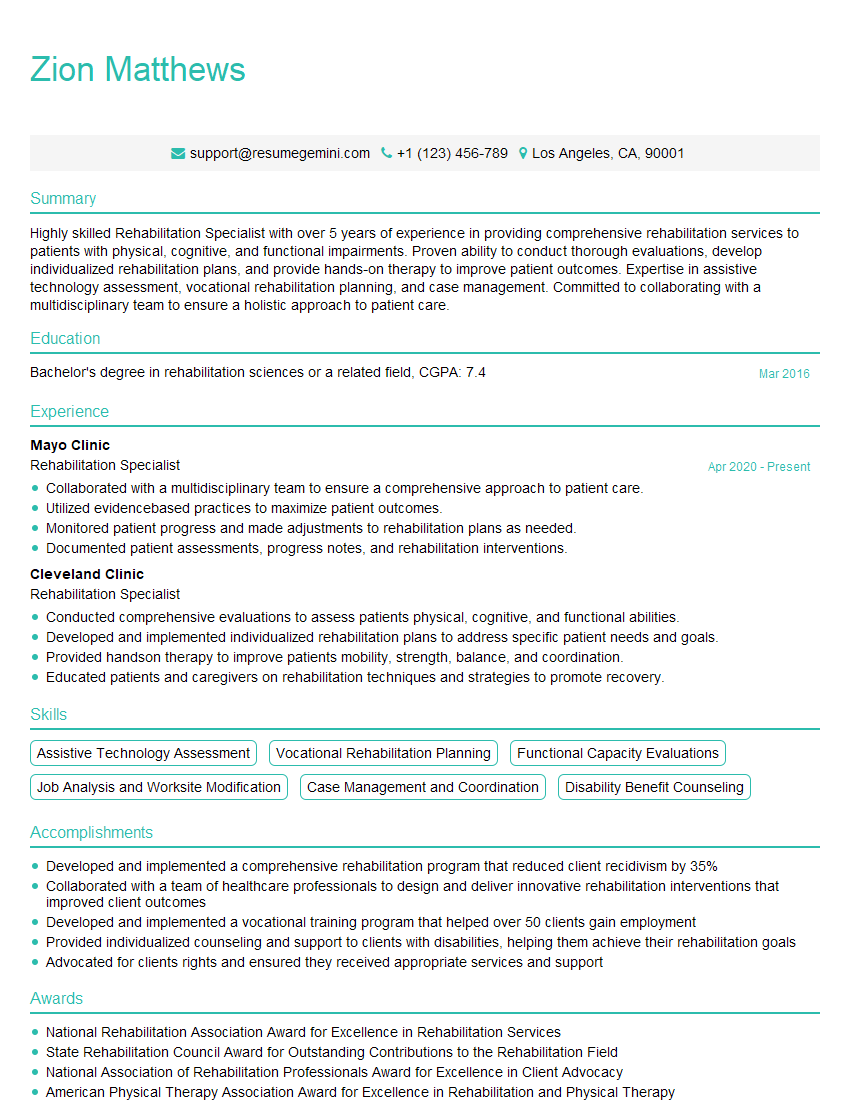
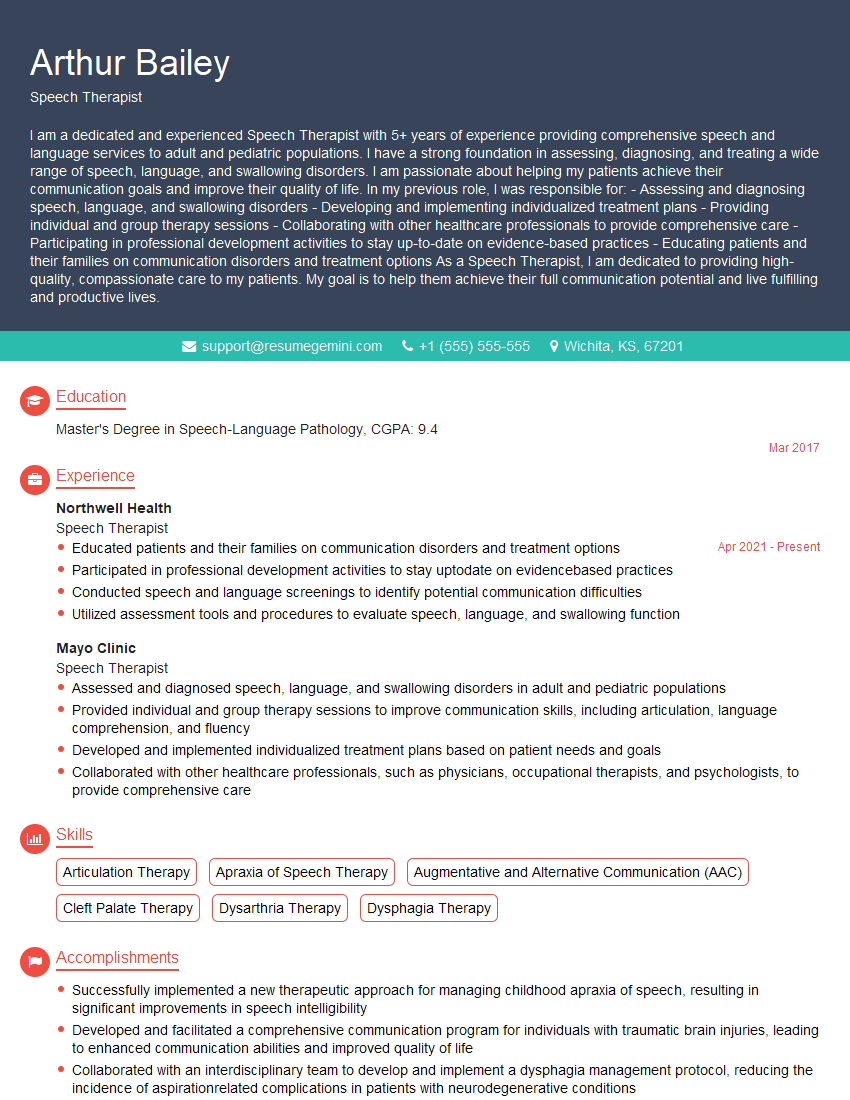
Mastering stuttering treatment opens doors to a rewarding career helping individuals overcome significant communication challenges. A strong resume is crucial for showcasing your skills and experience to potential employers. Creating an ATS-friendly resume significantly increases your chances of getting noticed. We highly recommend using ResumeGemini to build a compelling and effective resume. ResumeGemini provides tools and resources to help you craft a professional document that highlights your unique qualifications. Examples of resumes tailored to Stuttering Treatment are available to guide you.
Explore more articles
Users Rating of Our Blogs
Share Your Experience
We value your feedback! Please rate our content and share your thoughts (optional).
What Readers Say About Our Blog
To the interviewgemini.com Webmaster.
Very helpful and content specific questions to help prepare me for my interview!
Thank you
To the interviewgemini.com Webmaster.
This was kind of a unique content I found around the specialized skills. Very helpful questions and good detailed answers.
Very Helpful blog, thank you Interviewgemini team.