Cracking a skill-specific interview, like one for System Commissioning and Testing, requires understanding the nuances of the role. In this blog, we present the questions you’re most likely to encounter, along with insights into how to answer them effectively. Let’s ensure you’re ready to make a strong impression.
Questions Asked in System Commissioning and Testing Interview
Q 1. Describe your experience with different commissioning methodologies (e.g., phased commissioning, retro-commissioning).
Commissioning methodologies are crucial for ensuring building systems perform as designed. I have extensive experience with both phased commissioning and retro-commissioning. Phased commissioning involves integrating commissioning activities throughout the design and construction process, breaking it down into manageable phases. This allows for early problem detection and correction. For instance, on a recent hospital project, we performed phased commissioning of the HVAC system, testing individual components (like chillers and air handlers) as they were installed, catching several control wiring errors before they became major issues. Retro-commissioning, on the other hand, focuses on existing buildings. It’s like giving a building a thorough system checkup. We recently improved the energy efficiency of an older office building by 20% through retro-commissioning. This involved identifying and fixing inefficiencies in the HVAC and lighting systems using advanced testing and analysis techniques. The process involved detailed data logging, operational assessments, and implementation of control adjustments, resulting in significant energy savings.
Q 2. Explain the process of developing a commissioning plan.
Developing a commissioning plan is like creating a roadmap for a successful project. It starts with a clear understanding of the project scope, identifying all systems requiring commissioning. Then, we establish a clear definition of the commissioning process which will include a timeline, responsibilities of each team member (Owner, Contractor, Commissioning Authority), testing procedures, documentation requirements and acceptance criteria. For example, we define specific performance metrics for HVAC systems, such as temperature uniformity and air quality parameters. The plan needs to clearly outline the sequence of activities, from pre-design review to the final system acceptance testing. We use project management software to track progress, manage documentation, and ensure timely completion of tasks. A robust commissioning plan minimizes risks, avoids delays, and helps ensure a smooth and efficient process.
Q 3. How do you ensure that the commissioning process complies with relevant codes and standards?
Compliance with codes and standards is paramount. We meticulously ensure adherence to relevant codes like ASHRAE 90.1 (energy efficiency), ASHRAE 189.1 (green buildings), and local building codes. For each project, we identify all applicable codes and standards early on and integrate them into the commissioning plan. We leverage industry-standard commissioning specifications and protocols which often act as a reference point. During the testing phase, we rigorously document the results and ensure they meet or exceed the requirements specified in these codes and standards. Non-compliance is documented and reported as a deficiency which must be resolved before final acceptance. We continuously update our knowledge of the latest codes and standards to ensure best practices.
Q 4. What are some common challenges encountered during system commissioning and how have you overcome them?
Common challenges include unclear design documents, incomplete construction drawings, and scheduling conflicts between various trades. We overcome these by proactive communication and collaboration with the design and construction teams. For example, if ambiguous design drawings cause discrepancies, we promptly hold meetings with architects and engineers to clarify requirements. We also use advanced software tools for scheduling and progress tracking to mitigate conflicts. Another major challenge is getting access to equipment for testing. We proactively plan access to equipment and space in advance and actively follow up with relevant parties if access is delayed to prevent project delays. Ultimately, the best solution is early identification and pro-active communication to minimize the impact of these challenges.
Q 5. How do you manage a commissioning schedule and budget effectively?
Effective commissioning schedule and budget management is critical. We use project management tools to create detailed schedules, assigning tasks to team members and tracking progress. Budget management involves careful cost estimation at the outset, accounting for all aspects, including labor, materials, and testing equipment. Regular budget reviews allow us to monitor expenses and proactively address any potential overruns. We employ value engineering techniques to identify opportunities for cost savings without compromising quality. For example, instead of replacing an entire failing chiller, a simple repair could prove to be more cost effective while ensuring its functionality. Transparency and clear communication with the client about the budget and schedule are paramount.
Q 6. Describe your experience with different testing methods (e.g., functional testing, performance testing).
Testing methodologies are central to commissioning. Functional testing verifies that each system component operates as designed. For instance, we would test an HVAC damper to ensure it opens and closes correctly based on the control signal. Performance testing goes further, evaluating the system’s overall performance against established benchmarks. For example, we perform load tests on chillers to confirm they meet their rated capacity. Other methods include operational testing, which evaluates the system’s operational aspects under normal conditions, integrated system testing, which checks the functionality of several interacting systems, and safety testing where we ensure the system is safe and meets relevant safety standards. The choice of testing method depends on the system and its complexity.
Q 7. How do you identify and document commissioning deficiencies?
Commissioning deficiencies are identified through a comprehensive testing process and documented rigorously. We use checklists and deficiency reporting forms to systematically document any issues discovered during testing. These forms include details about the deficiency, its location, severity, and suggested remediation measures. This documentation is essential for tracking progress, ensuring that all deficiencies are addressed, and achieving final system acceptance. For example, a deficiency might be a malfunctioning sensor which causes the HVAC system to operate inefficiently. Photographs and videos are often incorporated as evidence. All deficiencies are tracked until closure, ensuring that all issues are resolved and documented before project completion. A final commissioning report summarizes all testing activities and the status of all deficiencies.
Q 8. How do you prioritize commissioning activities based on risk and criticality?
Prioritizing commissioning activities hinges on a thorough risk assessment. We use a matrix that considers both the criticality of the system and the potential risk of failure. Criticality is assessed based on the system’s impact on building operations, occupant safety, and overall project goals. Risk considers factors like complexity, the potential for cascading failures, and the difficulty of repairs.
For example, a fire suppression system is both highly critical and high-risk. Its failure could have catastrophic consequences. Therefore, its commissioning would be prioritized very early in the process. Conversely, a decorative lighting system might be less critical and lower risk, allowing for later commissioning. We often utilize a scoring system, assigning weights to each factor (criticality and risk) and then ranking the systems accordingly. This process is documented and shared with all stakeholders for transparency and buy-in.
- High Criticality, High Risk: Immediate prioritization (e.g., fire alarm, life safety systems).
- High Criticality, Low Risk: High priority (e.g., HVAC main chillers).
- Low Criticality, High Risk: Moderate priority (e.g., specialized equipment with limited redundancy).
- Low Criticality, Low Risk: Lower priority (e.g., non-critical lighting systems).
Q 9. Explain your experience with commissioning documentation (e.g., commissioning reports, test procedures).
Commissioning documentation is crucial for demonstrating compliance, maintaining a record of the process, and providing a basis for future maintenance. My experience encompasses the entire lifecycle, from the initial development of test procedures to the final commissioning reports.
I’ve developed and executed hundreds of test procedures, ensuring they are comprehensive, clearly written, and aligned with the project specifications. These procedures detail the specific tests to be performed, the acceptable ranges of results, and the corrective actions if failures are encountered. I am proficient in using various software to document test results, generate reports, and track progress. I always ensure that the documentation is complete, accurate, and readily accessible to all stakeholders. For example, on a recent hospital project, we implemented a system using a dedicated commissioning software, which allowed real-time updates, electronic signatures, and the generation of comprehensive reports, improving traceability and collaboration.
Commissioning reports are a key deliverable. They summarize the commissioning process, detailing the performed tests, their results, and any necessary corrective actions. They serve as a record of compliance with project requirements and industry standards.
Q 10. How do you collaborate with other project stakeholders (e.g., engineers, contractors, owners)?
Collaboration is the cornerstone of successful commissioning. I believe in fostering open communication and proactive engagement with all stakeholders. This starts with clearly defined roles and responsibilities at the outset of the project.
Regular meetings are crucial, whether they are daily huddles, weekly progress meetings, or monthly review sessions with the owner. These meetings help to address challenges, share information, and ensure alignment on priorities. I’m proficient in using collaborative platforms for sharing documents and communicating updates.
For instance, on a large-scale data center project, I facilitated weekly meetings with the engineers, contractors, and owner’s representatives. This ensured that issues were addressed promptly and that everyone was informed about the project’s progress. This collaborative environment fostered a strong sense of teamwork and facilitated efficient problem-solving.
Q 11. Describe your experience using commissioning software and tools.
I have extensive experience using a variety of commissioning software and tools. This includes dedicated commissioning management systems, data logging software, and specialized testing equipment.
I’m proficient in using software for tracking work progress, managing test procedures, recording test results, generating reports, and creating as-built documentation. I am familiar with both cloud-based and on-premise solutions, selecting the optimal tool based on project requirements and budget considerations. I can seamlessly integrate different software and hardware to streamline the commissioning process. For example, I’ve used software to interface with building automation systems, directly collect data from various sensors and controllers, and automatically generate reports analyzing the performance of the systems. This approach reduces the risk of manual error and accelerates the process.
Q 12. How do you ensure the accuracy and completeness of commissioning data?
Ensuring accuracy and completeness of commissioning data is paramount. We employ a multi-layered approach to ensure data integrity. This involves rigorous quality control procedures at each stage, from data collection and analysis to reporting.
We use calibrated instruments and established protocols for data acquisition. Data is double-checked and verified by multiple team members. Regular audits and spot checks are conducted to identify and rectify any inconsistencies or errors. We utilize version control systems for all documentation and data, ensuring traceability and minimizing the risk of losing information. A comprehensive quality assurance program is integral to this process. For example, in a recent project, we implemented a data validation system that automatically flagged any anomalies or outliers in the collected data, prompting further investigation to identify the source of the error and prevent its propagation in the final report.
Q 13. What is your experience with building automation systems (BAS) commissioning?
Building Automation Systems (BAS) commissioning is a significant part of my expertise. I have extensive experience commissioning various BAS platforms, including their associated hardware and software components.
My experience encompasses the entire commissioning process, from reviewing the design documents to verifying the functionality of the system. This includes testing the various control sequences, verifying the accuracy of the sensors and actuators, and ensuring the system’s compliance with the project requirements. I’m proficient in using various BAS programming languages and troubleshooting techniques. I also have experience with integrating various systems into a cohesive BAS, for instance, incorporating energy management systems, security systems, and fire alarm systems into a unified platform. On a recent project involving a large commercial building, we successfully commissioned a sophisticated BAS, ensuring optimal energy efficiency and occupant comfort while maintaining the building’s security systems.
Q 14. Explain your knowledge of different control systems (e.g., PLC, DCS).
I have a solid understanding of various control systems, including Programmable Logic Controllers (PLCs) and Distributed Control Systems (DCS). PLCs are typically used for smaller, simpler systems while DCSs are employed in larger, more complex applications that require distributed control and redundancy.
My experience includes programming, configuring, and testing both PLC and DCS systems. I understand the differences in their architectures, communication protocols, and programming languages. For example, I’ve worked with various PLC manufacturers (e.g., Rockwell Automation, Siemens) and DCS platforms (e.g., Honeywell, Emerson). This experience enables me to effectively commission a wide range of control systems, ensuring their proper integration and operation within the overall building system. Understanding these diverse platforms allows me to make informed decisions about system design, selection of appropriate control strategies and effective troubleshooting techniques.
Q 15. How do you handle commissioning issues and discrepancies during construction?
Handling commissioning issues and discrepancies during construction requires a proactive and systematic approach. My strategy involves regular site visits, meticulous record-keeping, and effective communication among all stakeholders. I start by establishing a clear baseline – comparing the as-designed documents with the as-built conditions. Discrepancies are documented using a standardized reporting system, often including photographs and detailed descriptions. This documentation forms the basis of a formal request for information (RFI) to the contractor, requesting clarification or a proposed solution. We then collaboratively review the proposed solutions, ensuring they meet the project requirements and are technically sound. If the discrepancy is significant, it might require a change order process.
For example, during the commissioning of a hospital HVAC system, we discovered that the ductwork layout differed from the design drawings. Using our documentation, we issued an RFI, and after review, a solution was implemented involving minor adjustments to the dampers. This prevented potential performance issues and maintained the project schedule. This process emphasizes transparency, collaboration, and a focus on timely resolution to prevent delays and cost overruns.
Career Expert Tips:
- Ace those interviews! Prepare effectively by reviewing the Top 50 Most Common Interview Questions on ResumeGemini.
- Navigate your job search with confidence! Explore a wide range of Career Tips on ResumeGemini. Learn about common challenges and recommendations to overcome them.
- Craft the perfect resume! Master the Art of Resume Writing with ResumeGemini’s guide. Showcase your unique qualifications and achievements effectively.
- Don’t miss out on holiday savings! Build your dream resume with ResumeGemini’s ATS optimized templates.
Q 16. Describe your experience with Factory Acceptance Testing (FAT) and Site Acceptance Testing (SAT).
Factory Acceptance Testing (FAT) and Site Acceptance Testing (SAT) are crucial steps in ensuring equipment and system functionality. FAT, conducted at the vendor’s facility, involves verifying that the equipment meets the specified performance criteria before it’s shipped to the job site. This includes testing individual components and their integrated operation. I’ve been involved in several FATs, including those for large chillers and building automation systems (BAS). We develop a detailed test plan outlining the specific tests and acceptance criteria, and we participate actively in the testing process, documenting all results and ensuring any discrepancies are resolved before equipment is released.
Site Acceptance Testing (SAT), conducted on-site after installation, verifies that the installed equipment functions correctly within the overall system. SAT expands upon FAT, testing the interactions of the different systems and their compatibility. This includes verifying control sequences, alarm functionality, and overall system performance. During a recent SAT for a new data center, we performed extensive testing on the UPS system, generator, and cooling system to ensure uninterrupted power and proper environmental conditions. This thorough testing process is essential for confirming that the systems meet the project’s requirements and are ready for operation.
Q 17. How do you ensure that the commissioned systems meet the owner’s operational needs?
Ensuring commissioned systems meet the owner’s operational needs requires a deep understanding of their requirements from the project’s inception. This begins with detailed discussions with the owner to identify their specific operational goals, including performance targets, energy efficiency expectations, and maintenance considerations. These requirements are then translated into specific commissioning requirements and incorporated into the project documents. Throughout the commissioning process, we regularly engage with the owner to demonstrate system performance and address their concerns. This includes reviewing test results, providing training, and obtaining their formal acceptance of the systems.
For instance, when commissioning a large commercial office building, we worked closely with the building manager to establish occupancy load profiles and energy consumption benchmarks. During SAT, we demonstrated that the HVAC system could maintain comfortable temperatures under various occupancy scenarios, confirming that the design met their specific operational needs. Post-commissioning, we provide ongoing support and training to ensure they can effectively operate and maintain the systems.
Q 18. What is your understanding of preventative maintenance and its relation to commissioning?
Preventative maintenance (PM) is crucial for maintaining the long-term performance and reliability of commissioned systems. It’s directly related to commissioning because a well-commissioned system is easier and more efficient to maintain. Commissioning establishes a baseline performance level, providing a reference for future maintenance activities. A thorough commissioning process identifies potential maintenance issues early on, improving the effectiveness of the PM plan. A comprehensive PM plan should include regular inspections, cleaning, lubrication, and calibration of critical equipment, extending the lifespan and improving the efficiency of the systems.
Think of it like a car; regular maintenance (oil changes, tire rotations) keeps it running smoothly and prevents major problems down the line. Similarly, a proactive PM program based on the commissioning findings ensures the building systems perform optimally and minimizes costly repairs or unexpected downtime. This also leads to greater energy efficiency and reduced operational costs.
Q 19. Explain your experience with energy modeling and commissioning.
Energy modeling plays a significant role in commissioning, especially for projects focused on energy efficiency. Before construction, energy models are used to predict the building’s energy performance. During commissioning, we compare the actual energy performance data to the model’s predictions. Any discrepancies can highlight areas for improvement or identify issues with the design, construction, or operation of the systems. This process allows for iterative adjustments to optimize performance. I use various energy modeling software packages, such as EnergyPlus and eQUEST, to create and analyze energy models. This data informs our commissioning strategy and helps us pinpoint opportunities for system optimization.
For a recent project involving a LEED-certified office building, we used energy modeling to identify potential energy savings through optimized control strategies for the HVAC system. After commissioning, we compared the actual energy consumption data to the model’s predictions, and then fine-tuned the controls based on the observed data. This iterative process led to a significant reduction in energy consumption compared to the initial model predictions, exceeding the project’s energy efficiency goals.
Q 20. How do you manage changes to the commissioning scope during the project?
Managing changes to the commissioning scope during a project requires a formal change management process. Any proposed changes must be documented, reviewed, and approved by all relevant stakeholders including the owner, contractor, and the commissioning authority. This process involves evaluating the impact of the change on the project schedule, budget, and performance requirements. The change should be formally documented in a change order, which outlines the scope of the change, the associated costs, and the revised schedule. It is essential to maintain clear and open communication throughout this process, ensuring all parties are informed and agree on the revised scope of work.
For example, during a recent project, the owner requested the addition of a new energy monitoring system after the initial commissioning scope was finalized. We followed our formal change management process, documented the change, evaluated its impact, and obtained approval for the added scope. This structured approach ensured that the change was implemented efficiently, minimizing disruption to the project and avoiding potential conflicts.
Q 21. Describe your experience with different types of sensors and instrumentation used in commissioning.
Commissioning relies heavily on various sensors and instrumentation to measure and verify system performance. These instruments provide the data needed to evaluate whether systems are meeting the required specifications. My experience includes working with a wide range of sensors, including:
- Temperature sensors: Thermocouples, RTDs, and thermistors are used to measure temperatures throughout HVAC systems.
- Pressure sensors: Used to monitor pressure in air ducts, piping systems, and refrigeration circuits.
- Flow sensors: Various types such as ultrasonic, differential pressure, and magnetic flow meters, measure air and water flow rates.
- Humidity sensors: Measure humidity levels to ensure proper indoor environmental quality.
- Power meters: Used to monitor energy consumption of various equipment.
- Building Automation System (BAS) sensors: These integrated sensors provide data on various aspects of the building’s performance, including temperature, humidity, lighting levels, and equipment operation.
The selection of appropriate sensors is critical and depends on the specific system being commissioned, the required accuracy, and the environmental conditions. Proper calibration and data logging procedures are essential for accurate and reliable data acquisition, forming the basis for informed commissioning decisions.
Q 22. How do you ensure the safety of personnel during commissioning activities?
Safety is paramount during commissioning. My approach is multifaceted and begins with a thorough pre-commissioning safety plan. This plan details all potential hazards – electrical shock, falls from heights, confined space entry, exposure to hazardous materials – and outlines preventative measures. We conduct comprehensive site-specific safety training for all personnel involved, emphasizing proper use of PPE (Personal Protective Equipment), lockout/tagout procedures (to prevent accidental energization), and emergency response protocols. Daily toolbox talks address specific risks relevant to the day’s tasks. We utilize a permit-to-work system for high-risk activities, ensuring all safety checks are completed before work commences. Finally, regular safety inspections and audits are conducted throughout the commissioning process to ensure continuous compliance.
For example, during the commissioning of a large HVAC system, we implemented a strict permit-to-work system for accessing the roof where the equipment was located. This involved a risk assessment, specific training for working at heights, and a designated supervisor overseeing all activities. We also utilized fall arrest systems and designated safe zones to mitigate potential risks.
Q 23. Explain your experience with data analysis and reporting related to commissioning data.
Data analysis is crucial for successful commissioning. I’m proficient in using various software tools to collect, analyze, and report commissioning data. This typically involves gathering data from building automation systems (BAS), testing equipment, and field observations. I’m experienced with tools like Excel, specialized commissioning software, and database management systems to create comprehensive reports that document system performance, identify deviations from design specifications, and track corrective actions. I create clear and concise reports with visual aids like graphs and charts, making it easy for stakeholders to understand the findings and make informed decisions.
For instance, on a recent hospital project, I used a commissioning software to collect data on the performance of the medical gas system. By analyzing the pressure and flow rates, I identified inconsistencies that were subsequently addressed, ensuring the system met safety and operational requirements. My final report clearly presented the findings, including deviations, proposed solutions, and implementation status.
Q 24. What is your approach to troubleshooting system malfunctions during and after commissioning?
Troubleshooting is a core aspect of commissioning. My approach is systematic and starts with a thorough understanding of the system’s design and operational parameters. I begin by reviewing the system documentation, including drawings, specifications, and operational manuals. Then, I gather data on the malfunction using diagnostic tools and observations. I use a structured troubleshooting methodology, such as a fault tree analysis or a five-why analysis, to isolate the root cause. Once identified, I develop and implement a corrective action plan, and then verify the solution using further testing and data analysis. Throughout this process, I meticulously document each step, including the problem, the investigation, the solution, and the verification.
For example, during commissioning of a power plant, we encountered a problem with the turbine’s control system. By analyzing the system logs and conducting controlled tests, we isolated the issue to a faulty sensor. We replaced the sensor, documented the entire process, and verified the solution through subsequent testing, ensuring the turbine operated within its specified parameters.
Q 25. How familiar are you with LEED or other green building certifications and their commissioning requirements?
I’m very familiar with LEED (Leadership in Energy and Environmental Design) and other green building certifications, and their associated commissioning requirements. LEED specifically emphasizes the importance of commissioning to ensure building systems perform efficiently and meet sustainability goals. My experience includes working on projects pursuing LEED certification, understanding the requirements for enhanced commissioning (Cx) which includes more rigorous testing, documentation, and verification. I’m also familiar with other green building standards like BREEAM (Building Research Establishment Environmental Assessment Method) and Green Globes. I know how to integrate these standards into the commissioning process, ensuring all requirements are met throughout the project’s lifecycle.
For example, on a recent project aiming for LEED Gold certification, we performed extensive performance testing of the HVAC system to verify its energy efficiency. This data was crucial in achieving the energy performance points required for the LEED certification.
Q 26. Describe your experience with commissioning complex systems (e.g., power plants, hospitals).
I’ve had extensive experience commissioning complex systems in various sectors. This includes work on power plants, where the commissioning process involved rigorous testing of critical systems like turbines, generators, and control systems, ensuring compliance with strict safety and performance standards. In hospitals, I’ve commissioned critical medical gas systems, ensuring the safe and reliable delivery of medical gases to patient care areas. This required a deep understanding of medical gas codes and standards. The complexity of these systems necessitates meticulous planning, detailed documentation, and a thorough understanding of the interconnectedness of various components. Effective communication and collaboration with various stakeholders, including engineers, contractors, and facility operators, are crucial.
Commissioning a hospital’s critical power system, for instance, required coordination with multiple teams to ensure uninterrupted power during testing. The rigorous testing protocol minimized the impact on hospital operations while rigorously testing system performance and backup systems’ functionality.
Q 27. How do you stay up-to-date with the latest trends and technologies in system commissioning?
Staying current in this rapidly evolving field is vital. I actively participate in professional organizations like ASHRAE (American Society of Heating, Refrigerating and Air-Conditioning Engineers) and attend industry conferences and workshops to learn about the latest technologies and best practices. I regularly read industry publications and journals, and I also engage in online learning platforms to stay updated on new commissioning tools and methodologies. Moreover, I actively seek opportunities to work on diverse projects, exposing me to a wide range of systems and challenges, fostering continuous learning and skill development.
For example, I recently completed a course on the application of Building Information Modeling (BIM) in commissioning, allowing me to leverage BIM data for more efficient and comprehensive commissioning processes.
Q 28. What are your salary expectations?
My salary expectations are commensurate with my experience and expertise in the field of system commissioning and testing, and are aligned with the industry standards for professionals with my qualifications and years of experience. I am open to discussing a competitive salary range based on the specific details of the position and responsibilities.
Key Topics to Learn for System Commissioning and Testing Interview
- System Requirements Verification: Understanding and verifying the system meets its defined requirements before commissioning. This involves reviewing specifications, drawings, and other documentation.
- Pre-Commissioning Activities: Practical application includes preparing the system for testing, including inspection of equipment, installation verification, and the creation of test procedures.
- Commissioning Procedures and Protocols: Understanding and applying industry best practices and standards for commissioning. This might involve following specific checklists or procedures for different types of systems.
- Functional Testing: Testing individual components and subsystems to ensure they operate as intended. Practical application includes documenting test results and identifying discrepancies.
- Integration Testing: Testing the interactions between different components and subsystems to ensure seamless operation as a whole. This may involve complex troubleshooting and problem-solving.
- Performance Testing: Evaluating the system’s performance against specified criteria, including efficiency, capacity, and reliability. This often involves data analysis and reporting.
- Safety and Compliance: Ensuring the system adheres to all relevant safety regulations and industry standards. This is crucial for minimizing risk and ensuring safe operation.
- Documentation and Reporting: Meticulous documentation of all testing activities, including procedures, results, and any issues encountered. This forms an essential part of the overall commissioning process.
- Troubleshooting and Problem-Solving: Developing effective strategies to diagnose and resolve technical issues arising during commissioning. This involves using diagnostic tools and applying problem-solving methodologies.
- Commissioning Handover: Successfully transferring responsibility for the commissioned system to the client or operations team, including providing comprehensive documentation and training.
Next Steps
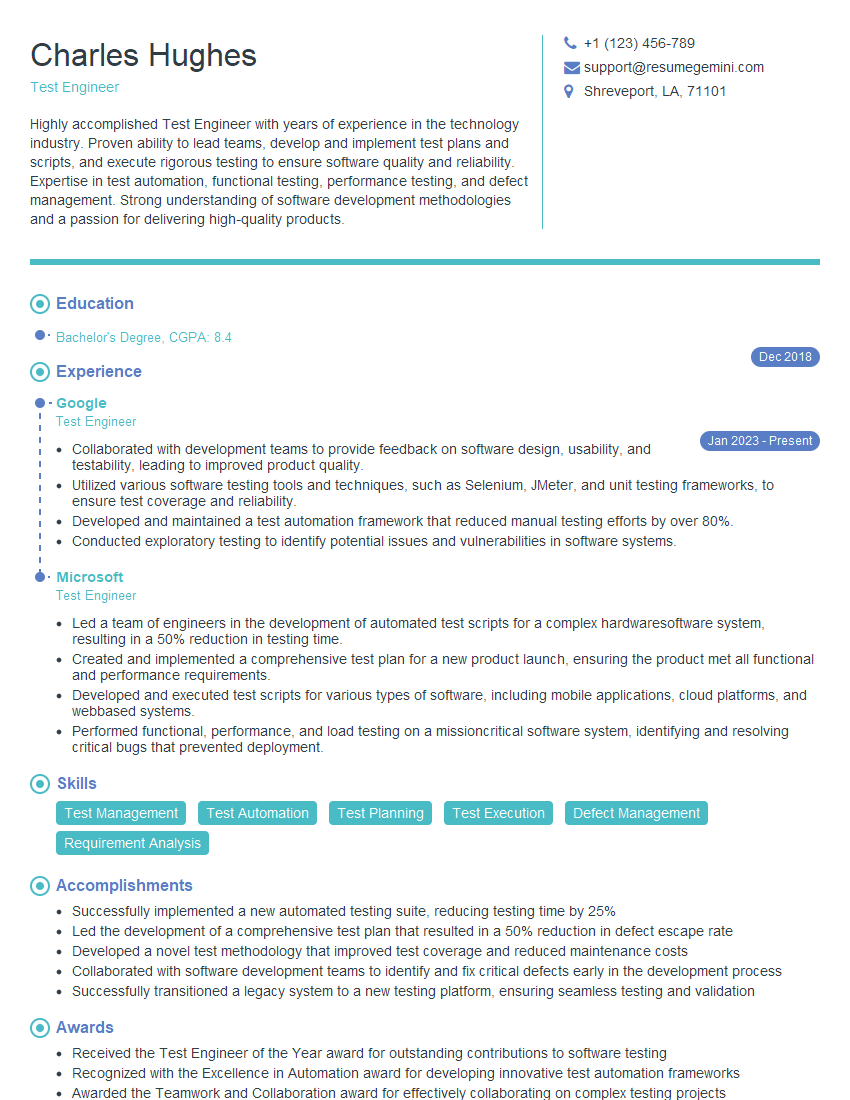
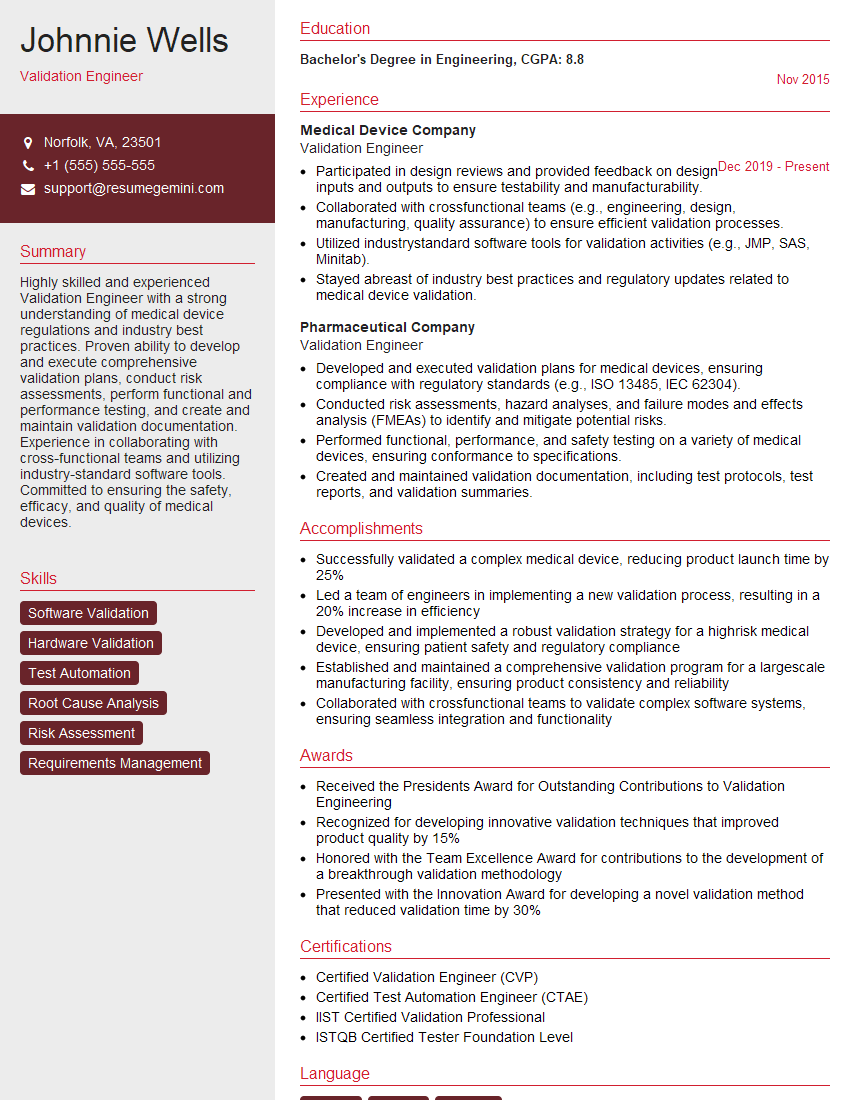
Mastering System Commissioning and Testing opens doors to exciting career opportunities in various industries, offering significant growth potential and competitive salaries. To maximize your job prospects, it’s crucial to create a compelling, ATS-friendly resume that highlights your skills and experience effectively. We strongly recommend using ResumeGemini, a trusted resource for crafting professional resumes tailored to specific industries. ResumeGemini offers examples of resumes specifically designed for System Commissioning and Testing professionals, helping you showcase your qualifications in the best possible light.
Explore more articles
Users Rating of Our Blogs
Share Your Experience
We value your feedback! Please rate our content and share your thoughts (optional).
What Readers Say About Our Blog
To the interviewgemini.com Webmaster.
Very helpful and content specific questions to help prepare me for my interview!
Thank you
To the interviewgemini.com Webmaster.
This was kind of a unique content I found around the specialized skills. Very helpful questions and good detailed answers.
Very Helpful blog, thank you Interviewgemini team.