Interviews are more than just a Q&A session—they’re a chance to prove your worth. This blog dives into essential Target Irradiation interview questions and expert tips to help you align your answers with what hiring managers are looking for. Start preparing to shine!
Questions Asked in Target Irradiation Interview
Q 1. Explain the principles of target irradiation.
Target irradiation, at its core, involves delivering a precisely controlled dose of ionizing radiation to a specific area within a patient’s body – the ‘target’ – while minimizing radiation exposure to surrounding healthy tissues. This is achieved by using sophisticated techniques to shape and direct the radiation beam, ensuring maximum effectiveness against the targeted diseased area (like a tumor) while protecting organs at risk.
Imagine a highly focused laser beam – that’s the analogy for the radiation beam in target irradiation. The goal is pinpoint accuracy to destroy cancerous cells or a specific lesion, leaving surrounding healthy cells relatively unharmed.
Q 2. Describe different types of target irradiation techniques.
Several techniques exist for target irradiation, each with its strengths and limitations:
- External Beam Radiotherapy (EBRT): This is the most common method, where radiation is delivered from a machine outside the body, often using linear accelerators. Techniques include three-dimensional conformal radiotherapy (3D-CRT), intensity-modulated radiotherapy (IMRT), and volumetric modulated arc therapy (VMAT), each offering increasing precision in targeting the tumor.
- Brachytherapy: This involves placing radioactive sources directly into or near the tumor. This delivers a high dose to the target with minimal exposure to surrounding tissues. It’s frequently used for cancers of the prostate, cervix, and breast.
- Proton Therapy: This utilizes protons instead of photons (X-rays or gamma rays). Protons have a unique energy deposition pattern, allowing for more precise targeting and reduced damage to healthy tissues, particularly beneficial for tumors near critical organs.
- Gamma Knife Radiosurgery: This non-invasive technique uses multiple precisely focused gamma ray beams to converge on a target, delivering a very high dose to a small area. It’s ideal for treating small brain tumors and arteriovenous malformations (AVMs).
Q 3. What are the safety protocols for target irradiation?
Safety protocols in target irradiation are paramount. They encompass:
- Precise Treatment Planning: Detailed imaging and sophisticated software are used to meticulously plan the treatment, ensuring accurate targeting and dose delivery.
- Radiation Shielding: Specialized rooms with lead shielding protect healthcare workers and others from radiation exposure.
- Regular Quality Assurance (QA): Daily and periodic QA checks ensure the equipment is functioning correctly and delivering the prescribed dose.
- Emergency Procedures: Protocols are in place to handle any unexpected events, including equipment malfunctions or patient emergencies.
- Patient Monitoring: During and after treatment, patients are carefully monitored for any adverse reactions or side effects.
- Regulatory Compliance: Strict adherence to national and international radiation safety regulations is mandatory.
These protocols aim to minimize the risks to both patients and healthcare personnel, ensuring the highest standards of safety are maintained throughout the treatment process.
Q 4. How do you calculate radiation dose in target irradiation?
Calculating radiation dose in target irradiation is complex and requires specialized software and expertise. It involves several factors:
- Target Volume: The size and shape of the tumor or target area.
- Prescription Dose: The total radiation dose to be delivered to the target, usually expressed in Gray (Gy).
- Fractionation: The total dose is divided into smaller fractions delivered over several days or weeks to enhance efficacy and minimize side effects.
- Beam Geometry: The angles and intensity profiles of the radiation beams used.
- Tissue Attenuation: How much radiation is absorbed by different tissues.
Sophisticated treatment planning systems (TPS) utilize algorithms and computer models to calculate the dose distribution throughout the patient’s body, ensuring the prescribed dose is delivered to the target while sparing surrounding healthy tissue. This process takes into account the patient’s anatomy, tumor location and size, and other relevant factors.
Q 5. What are the potential side effects of target irradiation?
The potential side effects of target irradiation vary greatly depending on the location of the target, the total dose delivered, and the individual’s sensitivity. Side effects can range from mild to severe, and not all patients experience the same effects.
- Acute Effects: These appear during or shortly after treatment and can include fatigue, skin reactions (redness, dryness, peeling), nausea, vomiting, and diarrhea.
- Late Effects: These can occur months or years after treatment and might include fibrosis (scarring), organ damage, and secondary cancers.
The severity of side effects is carefully weighed against the potential benefits of the treatment during the treatment planning phase. Strategies for managing side effects, such as medication and supportive care, are an integral part of the treatment process. For example, a patient undergoing radiotherapy for lung cancer might experience fatigue and shortness of breath, requiring management strategies like rest and oxygen therapy.
Q 6. Describe the role of dosimetry in target irradiation.
Dosimetry plays a crucial role in ensuring the accuracy and safety of target irradiation. It’s the science and practice of measuring and calculating radiation doses. Accurate dosimetry is essential for:
- Treatment Planning: Dosimetry calculations are fundamental to the treatment planning process, ensuring the prescribed dose is delivered to the target while minimizing dose to healthy tissues.
- Quality Assurance: Dosimetry is critical for quality assurance checks, confirming the accuracy of radiation delivery from the equipment.
- Patient Safety: Accurate dosimetry ensures that the patient receives the correct dose and minimizes the risk of complications.
Different dosimetry techniques, including ionization chambers, thermoluminescent dosimeters (TLDs), and electronic portal imaging devices (EPIDs), are used to measure the radiation dose at various points in the treatment process.
Q 7. Explain the process of treatment planning in target irradiation.
Treatment planning in target irradiation is a multi-step process that requires collaboration between radiation oncologists, medical physicists, dosimetrists, and other healthcare professionals:
- Imaging: Detailed images of the tumor and surrounding anatomy are acquired using techniques like CT, MRI, and PET scans.
- Tumor Delineation: The tumor and organs at risk are identified and outlined on the images.
- Treatment Planning: Using specialized software (TPS), radiation oncologists and medical physicists design the treatment plan, determining beam angles, intensities, and fractionation schedules to deliver the prescribed dose to the target while minimizing dose to healthy tissues.
- Dosimetry Calculations: The planned treatment is carefully analyzed using dosimetry calculations to ensure that the radiation dose is delivered as intended.
- Plan Approval and Implementation: Once the plan is approved, it is implemented using the appropriate radiation therapy equipment.
This rigorous process helps to optimize the treatment plan to maximize its effectiveness while reducing potential side effects. Each step involves careful consideration of the specific tumor characteristics, patient anatomy, and treatment goals to personalize the treatment to individual needs.
Q 8. What are the different types of radiation sources used in target irradiation?
Target irradiation, primarily used in radiotherapy, employs various radiation sources to deliver a precisely controlled dose to a cancerous tumor. The choice of source depends on factors like tumor location, size, and patient characteristics. Common sources include:
- Linear Accelerators (LINACs): These are the most common source, generating high-energy X-rays or electrons. They are versatile, allowing for precise beam shaping and intensity modulation. Think of them as highly sophisticated, controllable ‘X-ray guns’ for cancer treatment.
- Cobalt-60 Units: These use gamma rays emitted by radioactive Cobalt-60. While less flexible than LINACs in beam shaping, they are simpler, more robust, and require less maintenance. They’re like a powerful, constant source of gamma radiation.
- Brachytherapy Sources: These involve placing radioactive sources directly into or near the tumor. Sources include Iodine-125, Iridium-192, and Cesium-137, emitting gamma rays or beta particles. This is like placing a small ‘radioactive seed’ directly into the tumor.
The selection of the optimal radiation source is a crucial part of treatment planning, a collaborative effort involving radiation oncologists, physicists, and dosimetrists.
Q 9. How do you ensure accurate targeting in target irradiation?
Accurate targeting in target irradiation is paramount to maximize tumor control while minimizing damage to surrounding healthy tissues. This is achieved through a multi-faceted approach:
- Imaging Techniques: High-resolution imaging like CT, MRI, and PET scans precisely delineate the tumor and adjacent organs. These images serve as the roadmap for treatment planning.
- Treatment Planning Systems (TPS): Sophisticated software uses the imaging data to create a 3D model of the patient’s anatomy. The radiation oncologist then contours the target volume (tumor) and organs at risk (OARs), defining the areas to be irradiated and protected.
- Beam Shaping and Modulation: LINACs allow for sophisticated beam shaping techniques like intensity-modulated radiation therapy (IMRT) and volumetric modulated arc therapy (VMAT) to deliver highly conformal radiation doses, hugging the tumor while sparing surrounding tissues. This is like sculpting the radiation beam to perfectly fit the tumor.
- Patient Positioning and Immobilization: Accurate patient positioning is crucial. Devices such as thermoplastic masks, vacuum cushions, and specialized tables help maintain consistent patient positioning throughout the treatment course. This ensures that the radiation is delivered to the planned target consistently.
- Image Guidance During Treatment: Real-time imaging techniques like kV cone-beam CT (CBCT) can verify patient position and tumor location during treatment, allowing for corrections if necessary. It’s like having a GPS for the radiation beam, ensuring it stays on target.
Q 10. What are the quality assurance procedures for target irradiation equipment?
Rigorous quality assurance (QA) procedures are vital for ensuring the safety and efficacy of target irradiation equipment. These procedures involve regular checks and calibrations to guarantee the accuracy and reliability of the radiation delivery system. QA procedures include:
- Daily QA: This involves checking the output of the radiation source, beam alignment, and the functionality of various components. Think of it as a daily health check for the machine.
- Weekly/Monthly QA: These more extensive tests assess the accuracy and precision of the radiation delivery system, including the beam profiles, and dose distributions. This is a more thorough checkup.
- Annual QA: More comprehensive checks, often involving independent audits and verification of the entire system, including the treatment planning system. This is the annual comprehensive medical check.
- Dosimetry QA: Regular checks of the dose delivered to the patient, ensuring accuracy in dose calculation and delivery. This ensures that the patient receives the prescribed dose.
- Image QA: Regular verification of the accuracy and quality of the imaging systems used in treatment planning and image-guided radiation therapy. Ensuring the maps are clear and accurate.
All QA results are meticulously documented, ensuring traceability and adherence to regulatory standards.
Q 11. How do you manage radiation emergencies in target irradiation?
Radiation emergencies in target irradiation are rare but require immediate and decisive action. A robust emergency plan, including trained personnel and well-defined protocols, is crucial. Key elements include:
- Emergency Response Team: A designated team of trained individuals ready to respond to any incident.
- Radiation Monitoring Equipment: Dosimeters and radiation detection instruments for assessing radiation levels.
- Evacuation Procedures: Clear procedures for evacuating personnel from the treatment area in case of an emergency.
- Contamination Control: Procedures for handling potential contamination from radioactive sources.
- Communication Protocols: Efficient communication channels to inform relevant personnel and authorities.
- Medical Treatment: Access to medical facilities equipped to handle radiation injuries.
Regular drills and training exercises are essential to ensure the effectiveness of the emergency plan. The goal is to minimize exposure, ensure safety, and provide prompt medical attention if necessary.
Q 12. Describe the importance of patient positioning in target irradiation.
Patient positioning is absolutely critical in target irradiation. Inaccurate positioning can lead to suboptimal dose delivery, potentially resulting in incomplete tumor control or damage to healthy tissues. Imagine aiming a dart at a target – if your aim is off, you’ll miss the bullseye. Similarly, if the patient isn’t precisely positioned, the radiation won’t hit the intended tumor accurately.
Precise positioning requires careful attention to detail, including the use of immobilization devices, meticulous setup procedures, and often image guidance techniques during treatment. The goal is to ensure consistent and accurate delivery of the radiation dose to the target throughout the entire treatment course.
Q 13. Explain the concept of dose fractionation in target irradiation.
Dose fractionation is a cornerstone of modern radiotherapy. Instead of delivering the total radiation dose in a single session, it’s divided into smaller fractions delivered over several weeks or months. This approach maximizes tumor cell kill while allowing healthy tissues to repair themselves between treatments.
Think of it like repeatedly chipping away at a rock. A single, massive blow might shatter the rock but also cause a lot of collateral damage. Smaller, repeated blows gradually wear down the rock with less overall damage to the surrounding area. Similarly, fractionation maximizes tumor damage while minimizing damage to healthy tissues.
The specific fractionation schedule (e.g., 2 Gy per fraction, 5 days a week for 6 weeks) is carefully chosen based on the type and location of the tumor, patient factors, and treatment goals.
Q 14. What are the limitations of target irradiation?
While target irradiation is a highly effective cancer treatment modality, it does have limitations:
- Toxicity to Healthy Tissues: Even with advanced techniques, some healthy tissues inevitably receive radiation exposure, leading to side effects. These can range from mild to severe, depending on the location and dose.
- Tumor Heterogeneity: Tumors are not uniformly dense or radiosensitive; variations within the tumor can limit the effectiveness of treatment.
- Treatment Time: Treatment can take several weeks or months, requiring significant commitment from the patient.
- Not Suitable for all Cancers: Target irradiation may not be appropriate for all types of cancers or all stages of the disease.
- Technological Limitations: Even with sophisticated technology, there are limitations in precisely targeting certain tumors, particularly those located near critical organs.
These limitations highlight the importance of careful patient selection, meticulous treatment planning, and ongoing research to refine target irradiation techniques.
Q 15. How do you address uncertainties in target irradiation?
Addressing uncertainties in target irradiation is crucial for ensuring treatment safety and efficacy. These uncertainties stem from various sources, including anatomical variations between imaging and treatment delivery, organ motion during treatment, and uncertainties in dose calculations. We mitigate these uncertainties through a multi-pronged approach.
Robust Treatment Planning: We employ advanced treatment planning techniques like inverse planning (explained in more detail in a later answer) to optimize dose distribution while accounting for uncertainties. This often involves creating multiple treatment plans, each addressing different possible scenarios.
Image Guidance: Real-time imaging during treatment, such as kilovoltage imaging (kV-imaging) or megavoltage imaging (MV-imaging), allows us to monitor the target’s position and adjust the beam delivery accordingly, correcting for any movement or setup errors. Imagine it like using GPS navigation to constantly correct the route of a delivery truck.
Margin Addition: We add safety margins around the target volume to account for uncertainties in target localization and organ motion. This ensures that even with slight variations, the target receives the prescribed dose. The size of these margins is carefully determined based on the specific uncertainties involved.
Quality Assurance: Rigorous quality assurance procedures, including plan checks by multiple physicists and dosimetrists, are implemented to identify and correct potential errors before treatment begins.
Treatment Fractionation: Delivering the radiation dose in multiple smaller fractions allows for better tumor control and reduces the risk of side effects. This is partly because smaller fractions allow for biological recovery, reducing the damage to healthy tissues.
Career Expert Tips:
- Ace those interviews! Prepare effectively by reviewing the Top 50 Most Common Interview Questions on ResumeGemini.
- Navigate your job search with confidence! Explore a wide range of Career Tips on ResumeGemini. Learn about common challenges and recommendations to overcome them.
- Craft the perfect resume! Master the Art of Resume Writing with ResumeGemini’s guide. Showcase your unique qualifications and achievements effectively.
- Don’t miss out on holiday savings! Build your dream resume with ResumeGemini’s ATS optimized templates.
Q 16. What are the ethical considerations related to target irradiation?
Ethical considerations in target irradiation are paramount. The potential benefits of the treatment must be carefully weighed against the risks of side effects. Key ethical considerations include:
Informed Consent: Patients must be fully informed about the risks and benefits of the treatment, including potential side effects, before consenting to undergo irradiation. This requires clear, understandable communication, tailored to the individual’s comprehension level.
Beneficence and Non-Maleficence: The treatment must aim to maximize benefits while minimizing harm. This involves careful planning and delivery to ensure that the target is accurately irradiated while sparing healthy tissues as much as possible.
Justice and Equity: Access to target irradiation should be equitable, regardless of socioeconomic status or other factors. This requires addressing disparities in access to healthcare.
Confidentiality: Patient information must be kept strictly confidential and protected in accordance with relevant regulations and ethical guidelines.
Research Ethics: Any research involving target irradiation must adhere to strict ethical guidelines, including informed consent, risk-benefit assessment, and independent review by an ethics committee.
For example, in a scenario involving a pediatric patient, extra caution and considerations are essential due to the long-term effects radiation can have on development. A thorough risk-benefit analysis with careful consideration of alternative treatment options becomes crucial.
Q 17. Describe the role of imaging in target irradiation.
Imaging plays a vital role in target irradiation, forming the foundation upon which accurate treatment plans are built and treatment is delivered. It provides the information needed to define the target volume, delineate surrounding organs at risk (OARs), and monitor treatment response. Different imaging modalities are used at various stages.
Diagnostic Imaging: CT, MRI, and PET scans are commonly used to visualize the tumor and surrounding anatomy. These scans provide high-resolution images that allow for precise delineation of the target and OARs. This stage is crucial as it defines the very ‘target’ we are irradiating.
Treatment Planning Imaging: The diagnostic images are used to create a 3D model of the patient’s anatomy, which serves as the basis for treatment planning. This model allows the radiation oncologist to plan the beam angles and intensities to deliver the optimal dose distribution.
Image-Guided Radiation Therapy (IGRT): During treatment delivery, imaging techniques like kV or MV imaging are used to verify the patient’s position and monitor target motion. This ensures that the radiation beams are accurately targeted to the tumor, even if the patient’s position changes slightly during treatment. Think of it like using a targeting laser on a moving object.
Response Assessment Imaging: After treatment, imaging is used to assess the tumor response and monitor for any recurrence. This information is crucial for evaluating the effectiveness of the treatment and making decisions about follow-up care.
Q 18. Explain the concept of inverse planning in target irradiation.
Inverse planning is a sophisticated treatment planning technique that allows radiation oncologists to specify dose constraints for both the target volume and organs at risk (OARs). Instead of manually defining beam parameters, the planner specifies the desired dose distribution (e.g., minimum dose to the target, maximum dose to OARs), and the inverse planning algorithm calculates the optimal beam parameters to achieve that distribution. This is quite different from forward planning where you define beam parameters and calculate the resulting dose distribution.
Imagine you want to fill a glass (the target) with water (radiation) without spilling any onto the table (OARs). In forward planning, you would try different pouring methods (beam angles and intensities) until you find one that works. In inverse planning, you tell the system to fill the glass completely without spilling, and the system figures out the best pouring method.
This allows for a more precise and efficient dose distribution, leading to improved tumor control and reduced side effects. The algorithm essentially solves a complex optimization problem, taking into account factors like dose constraints, beam angles, and treatment time to determine the optimal beam arrangement.
Q 19. How do you verify the accuracy of treatment plans in target irradiation?
Verifying the accuracy of treatment plans in target irradiation is a critical step to ensure patient safety and treatment efficacy. Several methods are used for verification, ensuring the plan delivered matches the plan designed.
Dose Calculation Verification: Independent dose calculations are performed using different treatment planning systems or algorithms to compare results and identify potential discrepancies. This ensures the accuracy of the planned dose distribution.
Plan Review: Experienced radiation oncologists and medical physicists review the treatment plan to check for any errors or inconsistencies. This involves verifying the target volume, OAR contours, dose constraints, and beam parameters.
Dosimetry Verification: Physical dosimetry measurements are performed using ionization chambers or film dosimetry to verify the accuracy of the dose distribution delivered by the radiation therapy machine. This provides a direct measurement of the dose delivered to the patient.
Quality Assurance: Regular quality assurance checks are performed on the treatment machine and the treatment planning system to ensure they are functioning correctly and delivering the planned dose accurately.
Image-Guided Verification: During treatment, imaging techniques such as kV or MV imaging are used to verify the patient’s position and confirm that the radiation beams are accurately targeted to the tumor. This is particularly crucial for moving targets like those in the lung or abdomen.
These verification methods form a multi-layered approach to ensure the plan is both mathematically and practically correct, leading to a high confidence in the treatment’s accuracy.
Q 20. What is the role of computer-aided design in target irradiation?
Computer-aided design (CAD) plays an increasingly significant role in target irradiation, streamlining and improving the accuracy and efficiency of the entire process. It’s involved in several key aspects:
Contouring: CAD software assists in the delineation of target volumes and organs at risk (OARs) on medical images. This involves sophisticated algorithms and tools that aid in accurate and consistent contouring, reducing inter-observer variability.
Treatment Planning: CAD systems are integrated into treatment planning systems, providing tools for dose calculation, plan optimization, and visualization. This allows for more efficient and accurate treatment plan creation.
Plan Evaluation: CAD software facilitates the analysis and evaluation of treatment plans, allowing clinicians to assess dose distributions, target coverage, and OAR sparing. This enables optimized dose delivery.
Treatment Delivery: CAD software interfaces with radiation therapy machines, providing tools for image guidance, beam alignment, and quality assurance. This ensures the treatment is delivered accurately and precisely.
For instance, CAD systems can automate some aspects of contouring, such as the identification of specific anatomical structures, thereby freeing up clinicians to focus on the more complex aspects of treatment planning.
Q 21. Explain the use of different treatment modalities in target irradiation (e.g., IMRT, VMAT).
Different treatment modalities in target irradiation offer varying approaches to dose delivery, each with its own strengths and limitations. The choice of modality depends on factors like tumor location, size, and proximity to critical organs.
Intensity-Modulated Radiation Therapy (IMRT): IMRT uses multiple radiation beams with varying intensities to precisely conform the radiation dose to the target volume while sparing surrounding healthy tissues. Imagine shaping a clay sculpture with multiple tools, carefully sculpting around delicate parts. This allows for highly conformal dose delivery, reducing the risk of side effects.
Volumetric Modulated Arc Therapy (VMAT): VMAT is an advanced form of IMRT that delivers the radiation dose using a single arc, continuously modulating both the beam intensity and the gantry speed. It’s like a highly precise robotic arm that swiftly and efficiently shapes the dose. This technique is faster and more efficient than IMRT, reducing treatment time.
Proton Therapy: Proton therapy uses protons, rather than photons (X-rays), to deliver radiation. Protons deposit most of their energy at the end of their range, resulting in a sharp dose fall-off beyond the target. This minimizes radiation dose to healthy tissues beyond the target, especially beneficial for tumors near critical organs. It is, however, a more expensive treatment option.
Stereotactic Body Radiation Therapy (SBRT): SBRT delivers high doses of radiation in a small number of fractions to precisely targeted areas. This technique is commonly used for smaller tumors and is extremely accurate, although it results in high acute radiation effects.
The choice of the treatment modality requires a thorough discussion between the radiation oncologist and the patient, carefully considering the tumor characteristics, the patient’s overall health, and their treatment preferences.
Q 22. Discuss the impact of different tumor characteristics on target irradiation.
Tumor characteristics significantly influence target irradiation planning and delivery. Factors like size, shape, location, proximity to critical organs, and histological type all play crucial roles. For example, a large, irregularly shaped tumor near the spinal cord presents a much greater challenge than a small, well-defined tumor in a less sensitive area.
- Size and Shape: Larger, irregularly shaped tumors require more complex treatment plans to ensure adequate dose coverage while minimizing damage to surrounding healthy tissues. This often necessitates techniques like intensity-modulated radiation therapy (IMRT) or volumetric modulated arc therapy (VMAT).
- Location: Tumors near critical organs like the spinal cord, brainstem, or heart necessitate stringent dose constraints to prevent serious side effects. Precise targeting and advanced treatment planning are essential.
- Histological Type: The type of cancer influences radiosensitivity – how well the tumor responds to radiation. Some cancers are more resistant, requiring higher doses or different treatment approaches.
- Proximity to Critical Organs: This is a paramount consideration. Sophisticated treatment planning software and techniques are used to carefully balance tumor dose with the acceptable dose limits for nearby organs at risk (OARs).
Imagine trying to paint a target on a bumpy surface near fragile objects. The shape and location of the target (tumor) and the delicate nature of the surrounding objects (OARs) dictate how carefully you must paint (deliver radiation).
Q 23. How do you manage patient specific constraints in target irradiation?
Managing patient-specific constraints in target irradiation is paramount for successful and safe treatment. These constraints stem from anatomical variations, pre-existing conditions, and individual tolerances to radiation. We address this through a multi-faceted approach:
- Comprehensive Imaging: High-resolution CT, MRI, and PET scans provide detailed anatomical information, allowing for precise tumor delineation and identification of critical structures.
- Advanced Treatment Planning Systems: These systems allow for the creation of highly conformal plans, tailoring the radiation dose distribution to the unique geometry of the tumor and surrounding organs. They incorporate algorithms to optimize dose delivery while adhering to strict organ-at-risk constraints.
- Dose-Volume Histograms (DVHs): DVHs graphically represent the dose received by various organs and tissues. These are carefully analyzed to ensure that dose limits for OARs are not exceeded.
- Individualized Treatment Plans: Each patient receives a personalized plan, considering their specific anatomy, tumor characteristics, and overall health. This is a collaborative process involving radiation oncologists, medical physicists, and dosimetrists.
- Regular Monitoring and Adjustments: Throughout treatment, the patient is monitored for any signs of toxicity or treatment response. The treatment plan can be adjusted as needed to optimize efficacy and minimize side effects.
For instance, a patient with pre-existing lung disease might have stricter dose constraints for their lungs, necessitating a more conservative treatment approach compared to a patient without such conditions.
Q 24. What are the advantages and disadvantages of different radiation delivery techniques?
Various radiation delivery techniques offer distinct advantages and disadvantages:
- 3D Conformal Radiotherapy (3D-CRT): This technique shapes the radiation beams to conform to the tumor’s shape. Advantages include simplicity and relatively short treatment times. However, it lacks the precision of more advanced techniques.
- Intensity-Modulated Radiation Therapy (IMRT): IMRT uses multiple beams with varying intensities to create a highly conformal dose distribution. Advantages include superior target coverage and reduced dose to surrounding healthy tissue. Disadvantages include longer treatment times and increased complexity.
- Volumetric Modulated Arc Therapy (VMAT): VMAT delivers radiation through continuous rotation of the treatment gantry, further increasing efficiency and conformality. Advantages include shorter treatment times and potentially improved dose distributions compared to IMRT. Disadvantages include increased complexity and reliance on sophisticated equipment.
- Proton Therapy: This technique uses protons instead of photons, resulting in a more precise dose distribution and reduced dose to surrounding tissues. Advantages include superior sparing of critical organs. Disadvantages include high cost and limited availability.
The choice of technique depends on several factors, including tumor location, size, and proximity to critical organs, as well as patient-specific factors and institutional capabilities. Often, a combination of techniques is used to maximize treatment effectiveness.
Q 25. Describe your experience with quality assurance and quality control in target irradiation.
Quality assurance (QA) and quality control (QC) are fundamental to ensure the safety and accuracy of target irradiation. My experience encompasses:
- Daily QA: This involves daily checks of the linear accelerator (LINAC) using various physical and dosimetric measurements to verify the machine’s accuracy and performance.
- Treatment Planning QA: This involves independent verification of the treatment plan by a qualified medical physicist, checking for accuracy, completeness, and compliance with safety standards.
- Dosimetry QA: This entails regular checks of the accuracy of dosimetry equipment, ensuring that the dose delivered to the patient matches the planned dose.
- Image QA: This involves review of imaging data to confirm correct patient setup and target localization.
- Annual QA: Comprehensive annual audits of equipment and procedures are conducted to maintain compliance with national and international standards.
For example, a discrepancy in daily QA measurements might trigger immediate investigation and repair of the LINAC, preventing potential errors in patient treatment. Similarly, meticulous treatment planning QA helps prevent unintended radiation exposure to healthy tissues.
Q 26. How do you stay updated on the latest advancements in target irradiation?
Staying updated on advancements in target irradiation is crucial. I utilize several methods:
- Professional Organizations: Active membership in organizations like the American Association of Physicists in Medicine (AAPM) and the American Society for Radiation Oncology (ASTRO) provides access to journals, conferences, and continuing medical education (CME) opportunities.
- Peer-Reviewed Journals: Regularly reading relevant journals like Radiotherapy and Oncology and the International Journal of Radiation Oncology, Biology, Physics keeps me abreast of the latest research and technological advancements.
- Conferences and Workshops: Attending national and international conferences and workshops facilitates direct interaction with leading experts and provides valuable learning experiences.
- Online Resources: Utilizing reputable online resources and databases helps access cutting-edge information and research findings.
- Collaboration with Colleagues: Interacting with colleagues, both domestically and internationally, provides insights into current practices and challenges.
For instance, attending the ASTRO annual meeting often introduces new treatment planning techniques or technological innovations that are directly applicable to improving the quality of patient care.
Q 27. Explain your understanding of radiation protection regulations.
My understanding of radiation protection regulations is comprehensive and encompasses several key aspects:
- ALARA Principle: All radiation exposure should be kept As Low As Reasonably Achievable (ALARA). This guides all procedures and protocols.
- Radiation Safety Officer (RSO): Strict adherence to protocols and regulations established by the RSO, who oversees radiation safety programs.
- Shielding and Safety Measures: Thorough understanding and application of shielding techniques, interlocks, and safety mechanisms to protect both patients and healthcare professionals.
- Regulatory Compliance: Strict adherence to regulations set by bodies like the Nuclear Regulatory Commission (NRC) and state-level agencies.
- Documentation and Record-Keeping: Meticulous documentation of all radiation procedures and dosimetry readings, ensuring compliance with regulatory requirements.
We follow strict protocols, for example, ensuring that all staff members involved in radiation therapy are properly trained and certified, and that all equipment is regularly calibrated and maintained to the highest standards.
Q 28. Describe a challenging case in target irradiation and how you overcame it.
A particularly challenging case involved a patient with a large, locally advanced pancreatic cancer tumor abutting the celiac axis and superior mesenteric artery. These are critical vascular structures, and high radiation doses can cause life-threatening complications like vessel stenosis or occlusion.
The challenge was to deliver a sufficient radiation dose to the tumor to maximize the chance of local control while minimizing the risk of vascular damage. We overcame this challenge by employing several strategies:
- High-precision IMRT planning: We utilized advanced IMRT techniques to meticulously shape the radiation beams, conforming them to the tumor while sparing the critical vascular structures.
- Multi-disciplinary collaboration: Close collaboration with surgical oncology and interventional radiology allowed for precise delineation of the tumor and vascular structures. This included reviewing CT angiography and other relevant imaging studies.
- Fractional dose optimization: We employed a hypofractionated radiation regimen to deliver a larger dose per fraction over a shorter treatment period. This balance ensured the efficacy of the radiation while reducing overall treatment time and subsequent risk of toxicity.
- Real-time imaging guidance: We implemented image guidance techniques to ensure accurate patient positioning and tumor targeting throughout the treatment process.
Through careful planning, collaboration, and the use of advanced techniques, we successfully delivered a high dose of radiation to the tumor, resulting in tumor regression and improved patient outcomes with acceptable toxicity.
Key Topics to Learn for Target Irradiation Interview
- Radiation Physics Fundamentals: Understanding radiation types (e.g., gamma, electron, proton), their interactions with matter, and associated calculations (e.g., dose calculations, shielding design).
- Target Material Selection and Characterization: Exploring the properties of target materials, their suitability for specific irradiation processes, and techniques for material analysis and quality control.
- Irradiation Techniques and Equipment: Familiarizing yourself with different irradiation methods (e.g., electron beam, gamma irradiation, ion implantation) and the operation of associated equipment.
- Process Optimization and Control: Mastering techniques for optimizing irradiation parameters (e.g., dose, dose rate, beam energy) to achieve desired effects and maintain consistent product quality.
- Safety and Regulatory Compliance: Understanding radiation safety protocols, regulatory requirements, and best practices for minimizing risk in a target irradiation environment.
- Data Analysis and Interpretation: Developing skills in analyzing irradiation data, interpreting results, and troubleshooting potential problems in the irradiation process.
- Practical Applications: Exploring the diverse applications of target irradiation in various industries, such as medical isotopes production, materials modification, and sterilization processes.
- Troubleshooting and Problem-Solving: Developing the ability to diagnose and resolve issues related to target irradiation equipment, processes, or results.
Next Steps
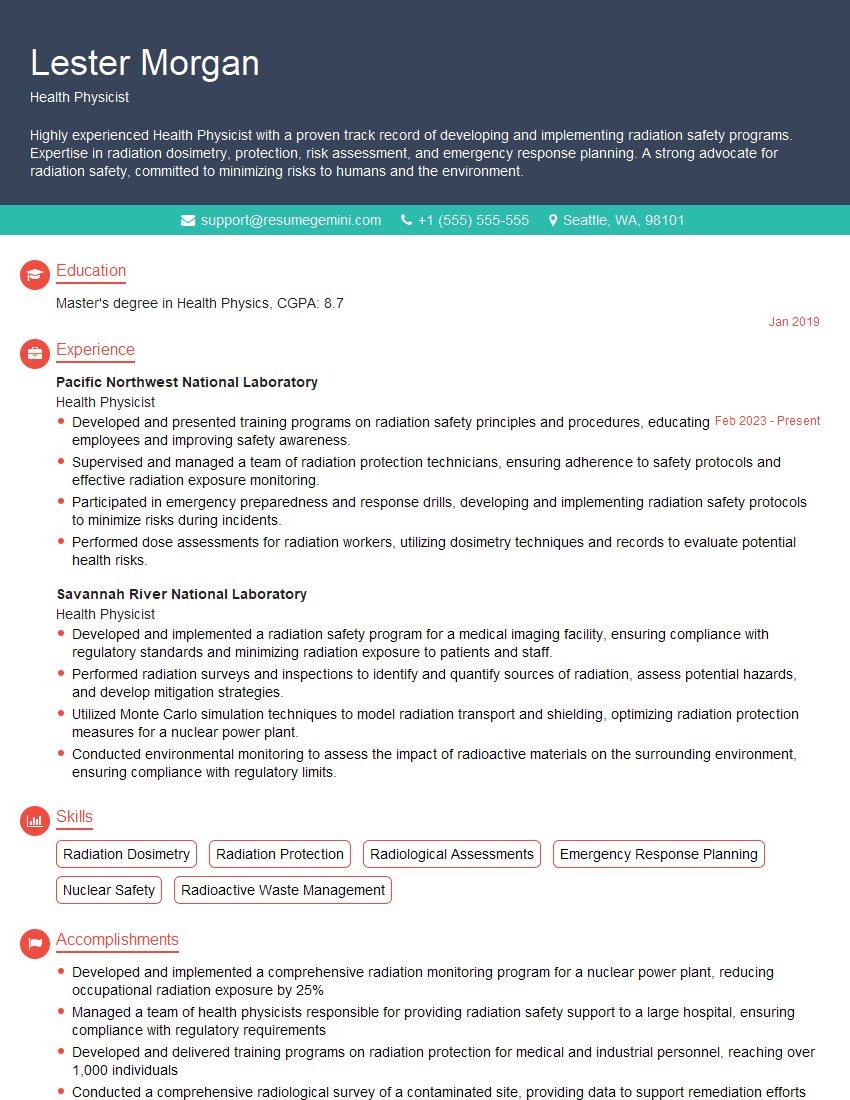
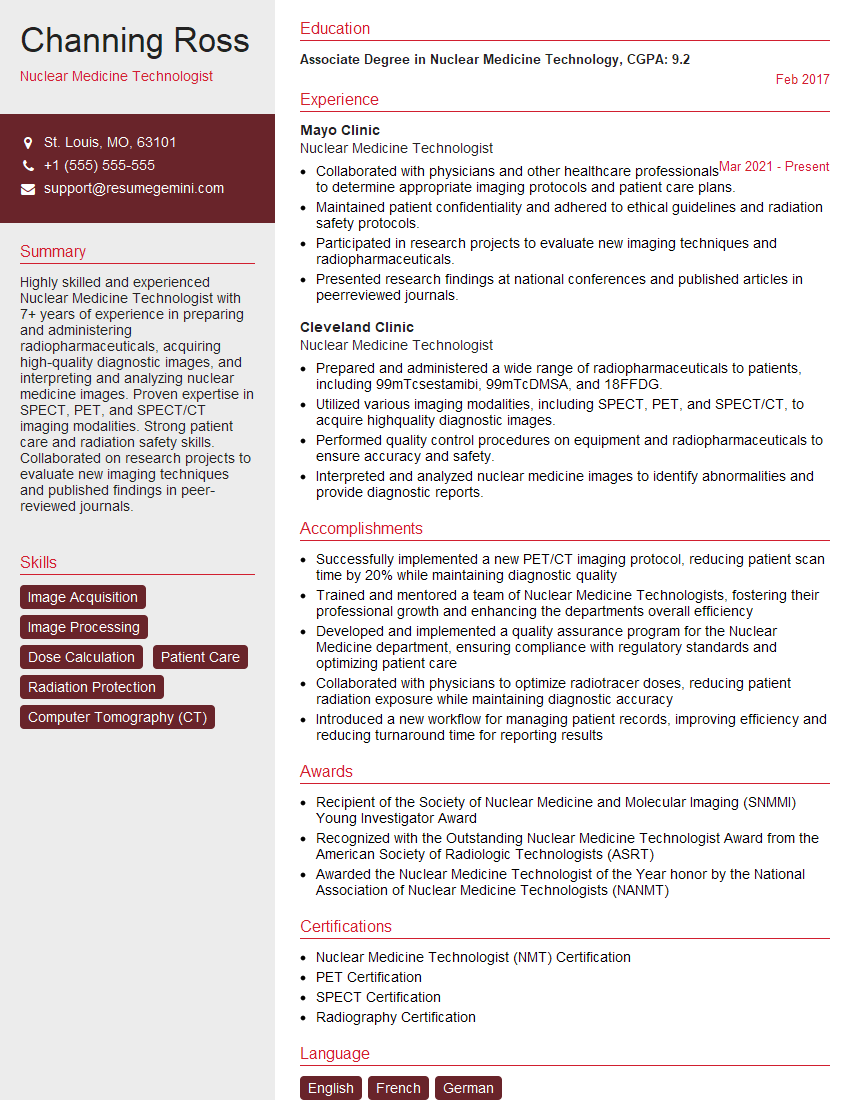
Mastering Target Irradiation opens doors to exciting career opportunities in cutting-edge fields like nuclear medicine, materials science, and advanced manufacturing. A strong resume is crucial for showcasing your expertise and landing your dream job. Creating an ATS-friendly resume ensures your application gets noticed by recruiters and hiring managers. To build a compelling and effective resume, we highly recommend using ResumeGemini. ResumeGemini provides a user-friendly platform to create professional resumes, and we offer examples of resumes tailored to Target Irradiation to help you get started. Invest in your future – craft a resume that reflects your skills and experience in Target Irradiation and stand out from the competition.
Explore more articles
Users Rating of Our Blogs
Share Your Experience
We value your feedback! Please rate our content and share your thoughts (optional).
What Readers Say About Our Blog
To the interviewgemini.com Webmaster.
Very helpful and content specific questions to help prepare me for my interview!
Thank you
To the interviewgemini.com Webmaster.
This was kind of a unique content I found around the specialized skills. Very helpful questions and good detailed answers.
Very Helpful blog, thank you Interviewgemini team.