The thought of an interview can be nerve-wracking, but the right preparation can make all the difference. Explore this comprehensive guide to Technical Blueprint Interpretation interview questions and gain the confidence you need to showcase your abilities and secure the role.
Questions Asked in Technical Blueprint Interpretation Interview
Q 1. What are the common types of technical blueprints you have worked with?
Throughout my career, I’ve extensively worked with various technical blueprints, each serving a specific purpose. These include architectural blueprints detailing building structures, mechanical blueprints showcasing machinery and its components, electrical blueprints illustrating wiring diagrams and power distribution, and piping and instrumentation diagrams (P&IDs) used in process engineering. I’ve also encountered structural blueprints for bridges, civil engineering plans for roadways, and even specialized blueprints for aerospace and automotive applications. The common thread is the use of standardized symbols and conventions to represent complex systems in a clear and understandable way.
- Architectural Blueprints: These detail floor plans, elevations, and sections of buildings.
- Mechanical Blueprints: These show detailed views of machinery, including dimensions and assembly instructions.
- Electrical Blueprints: These depict wiring schematics, circuit diagrams, and panel layouts.
- Piping and Instrumentation Diagrams (P&IDs): Used in process industries to show piping systems, instrumentation, and equipment.
Q 2. Explain the difference between orthographic and isometric projections.
Orthographic and isometric projections are two different ways of representing a three-dimensional object on a two-dimensional surface like a blueprint. Think of it like taking photographs of a building from different angles.
Orthographic projection uses multiple views (typically top, front, and side) to show the object’s dimensions. Each view shows only two dimensions at a time, effectively creating a ‘flat’ representation of one face of the object. It’s precise and accurate for measurements but can be difficult to visualize the object’s overall shape. Imagine looking at a building’s floor plan (top view), elevation (front view), and side view separately – that’s orthographic projection.
Isometric projection shows three faces of the object simultaneously, giving a more intuitive three-dimensional perspective. While not perfectly accurate for precise measurements, it provides a better overall visual understanding of the object’s form. Think of a simple sketch that shows the top, front, and side in a single drawing – that’s a simplistic isometric representation.
In essence, orthographic is like a technical drawing, very accurate and precise, while isometric is like a quick sketch, easier to visualize but not as precise for dimensioning.
Q 3. How do you interpret scale notations on a blueprint?
Scale notations on blueprints are crucial for understanding the relationship between the drawing and the real-world object. They are expressed as a ratio, such as 1:100 or 1/100. This means that 1 unit on the drawing represents 100 units in reality. For example, if a wall is 10cm long on a blueprint with a scale of 1:100, the actual wall would be 10m long (10cm * 100).
Interpreting scale is straightforward: you simply multiply the measurement on the blueprint by the scale factor. If the scale is given as a fraction (e.g., 1/2), you multiply by the denominator; if it’s a ratio (e.g., 1:50), you multiply by the second number. It’s important to always check the scale stated on each blueprint as it can vary between drawings or sections within the same document. Incorrect scale interpretation can lead to significant errors in construction or manufacturing.
I always double-check the scale and any key dimensions against reference points or known dimensions on the blueprint to ensure consistency and avoid errors.
Q 4. What are the standard symbols and conventions used in blueprints?
Blueprints employ a standardized set of symbols and conventions to represent various elements efficiently. These symbols minimize the need for lengthy written descriptions and ensure clarity and consistency across disciplines. For instance, standard symbols exist for doors, windows, pipes, electrical components, structural members, and many more. There are also specific conventions for dimensioning, labeling, and referencing different parts of the drawing.
These standards are often based on industry-specific guidelines like ASME (American Society of Mechanical Engineers) or ISO (International Organization for Standardization). Understanding these symbols and conventions is essential for accurate interpretation. For example, a filled circle might represent a weld, while a dashed line could indicate a center line. A detailed legend usually accompanies the blueprint to define the meaning of each symbol used. Familiarity with these conventions allows for a quick and accurate understanding of the blueprint’s content, minimizing ambiguity and mistakes.
Q 5. Describe your experience using CAD software for blueprint interpretation.
I possess extensive experience utilizing CAD software (AutoCAD, Revit, MicroStation) for blueprint interpretation and manipulation. My skills extend beyond simply viewing drawings; I can use these programs to measure dimensions, extract data, create sections and details, and even generate 3D models from 2D blueprints. This is especially useful when assessing complex designs or identifying potential conflicts between different systems within a building or structure.
For instance, in one project, I used AutoCAD to overlay different disciplines’ blueprints (electrical, mechanical, structural) to identify clashes between ductwork and pipe routes. The ability to work with digital blueprints in CAD allows for more efficient analysis and quick resolution of discrepancies. This also enables easier collaboration with project teams, allowing for more effective communication and problem-solving.
Q 6. How do you identify potential errors or inconsistencies in a blueprint?
Identifying errors or inconsistencies in blueprints requires a meticulous and systematic approach. My process begins with a thorough review of the entire document, verifying the completeness and consistency of the information. I look for:
- Dimensional Inconsistencies: Discrepancies between stated dimensions and the graphical representation.
- Missing Information: Gaps in specifications or incomplete details.
- Conflicting Information: Contradictions between different sections or views of the blueprint.
- Symbol Errors: Incorrect usage or absence of standard symbols.
- Scale Errors: Inconsistency in the applied scale throughout the document.
- Annotation Errors: Typos or unclear notations.
Furthermore, I utilize CAD software’s features to perform checks, such as comparing dimensions and detecting potential interferences between components. For example, I would compare the actual length of a pipe on a drawing against calculated lengths from various points and check for mismatches. A keen eye for detail and familiarity with industry standards are critical to this process.
Q 7. Explain your process for verifying the accuracy of a blueprint.
Verifying the accuracy of a blueprint is a crucial step, ensuring that the design is buildable and functions as intended. My verification process involves multiple checks and cross-referencing:
- Cross-referencing Dimensions: Verifying measurements across multiple views and sections of the blueprint to ensure consistency.
- Checking against Specifications: Comparing the blueprint details with the project’s specifications, ensuring adherence to codes and standards.
- Reviewing Calculations: For structural or mechanical blueprints, verifying the accuracy of calculations and formulas used in the design.
- Utilizing CAD Software: Employing CAD’s tools for dimension checking, interference detection, and 3D modeling to identify any potential errors.
- Consultation with Other Experts: Seeking input from other engineers or specialists when needed to ensure accuracy and consistency in critical areas.
- Site Verification (when possible): Comparing the blueprint with the physical site during construction phases to identify any discrepancies.
This multi-faceted approach minimizes the risk of errors and ensures the blueprint accurately represents the intended design. It’s about being proactive in finding potential problems early rather than reacting to issues during construction, saving time and resources.
Q 8. How do you interpret different line types and weights on a blueprint?
Line types and weights on a blueprint are crucial for understanding the different elements and their relationships. Think of it like a visual code. Different line types represent different things, such as walls, doors, or utilities, while the weight (thickness) indicates the importance or prominence of that element.
- Thick, solid lines: Usually represent walls, building outlines, or major structural elements. Imagine these as the ‘bones’ of the structure.
- Thin, solid lines: Typically show details like door and window outlines, or smaller architectural features. These are like the ‘muscles’ – the finer details.
- Dashed lines: Often represent hidden or concealed elements, such as plumbing pipes behind a wall. It’s like seeing a faint outline of something beneath the surface.
- Dotted lines: May show centerlines or other reference points. These are guidelines, like a lightly sketched plan before the final drawing.
- Different line weights: Thicker lines generally indicate more significant elements or components, helping prioritize what’s most important in the design.
For example, a thick, solid black line might represent an exterior wall, while a thin, solid line might indicate a partition wall within a room. Understanding these conventions is key to correctly interpreting the blueprint.
Q 9. How do you handle ambiguous or incomplete information on a blueprint?
Ambiguous or incomplete information is a common challenge when working with blueprints. My approach involves a systematic process:
- Identify the ambiguity: Carefully examine the area of uncertainty. Is it a missing dimension, a conflicting symbol, or unclear labeling?
- Consult related documents: Check specifications, other drawings, or project documentation for clarifying information. Often, details are spread across multiple documents.
- Seek clarification from the designer or engineer: If the ambiguity persists, contact the original creator of the blueprint for clarification. A quick call can save significant time and potential errors.
- Make informed assumptions (with documentation): If clarification isn’t immediately possible, carefully document any assumptions made. This is crucial for traceability and avoiding later misunderstandings. Always highlight these assumptions clearly on any derived documentation or plans.
- Use professional judgment: Employ your experience and knowledge of building codes and industry best practices to make informed decisions. But prioritize getting clarification whenever possible.
For instance, if a dimension is missing on a blueprint for a critical element, I would always try to find it in the specifications document. If it’s missing there too, I would highlight the issue and discuss it with the engineering team before proceeding.
Q 10. How do you use blueprints to understand the spatial relationships between different components?
Blueprints excel at depicting spatial relationships. They’re essentially 2D representations of 3D spaces. Understanding these relationships requires careful observation and analysis of various aspects:
- Dimensions and scales: Precise measurements and the provided scale are fundamental to understanding the actual sizes and distances between components.
- Orthographic projections: Blueprints often use multiple views (plan, elevation, section) to represent the same object from different angles. By correlating these views, a 3D understanding emerges.
- Symbols and annotations: These provide important context, clarifying the function and relationships of different components. For instance, a symbol representing a pipe might be shown crossing a wall in a section view, indicating its location and run.
- Relationship between elements: Observe how different elements are positioned relative to each other and whether there are any intersections or overlaps. For example, the relationship between a foundation and the building’s walls is crucial.
Imagine you’re assembling a complex piece of furniture from a diagram. The diagram shows the various parts and their relative positions. Similarly, blueprints show the relative positions and sizes of components within a building or system, allowing us to understand the overall arrangement.
Q 11. How familiar are you with different blueprint formats (e.g., PDF, DWG, TIFF)?
I’m proficient in various blueprint formats, including:
- PDF (Portable Document Format): A universally accepted format for sharing and archiving blueprints. I’m skilled in using PDF viewers and annotation tools.
- DWG (Drawing Interchange File): The native format for Autodesk AutoCAD, a widely used CAD software. I can work directly with DWG files using CAD software for editing and analysis.
- TIFF (Tagged Image File Format): Often used for scanned blueprints or raster images. I understand the limitations of TIFFs in terms of editing and precise measurements, and I use appropriate tools to manage them.
My experience extends to converting between these formats, when necessary, to ensure compatibility with different software and workflows. I understand the importance of preserving data integrity during conversion.
Q 12. Describe your experience extracting specific information from blueprints.
I have extensive experience extracting specific information from blueprints. This often involves:
- Identifying relevant sections: Quickly locating the specific area or component of interest within the blueprint set.
- Measuring dimensions: Using the blueprint scale and measuring tools (digital or physical) to accurately determine sizes and distances.
- Interpreting symbols and annotations: Understanding the meaning of different symbols, abbreviations, and notations used within the blueprint.
- Extracting data for calculations: Obtaining necessary information to perform calculations, such as area calculations, volume calculations, or material estimations.
- Using CAD software: Employing CAD software tools for precise measurement, data extraction, and generation of reports.
For example, in a recent project, I extracted dimensions for a specific component from a DWG file using AutoCAD to generate a detailed parts list for manufacturing. Another example includes extracting floor plans and elevations to create 3D models for visualization and design optimization.
Q 13. How do you collaborate with engineers or other professionals using blueprints?
Collaboration is essential when working with blueprints. My approach emphasizes clear communication and shared understanding:
- Regular meetings: Participating in design reviews or construction meetings to discuss the blueprint and any uncertainties.
- Version control: Using version control systems (e.g., software like Autodesk Vault) to manage revisions and ensure everyone is working with the latest version.
- Annotations and markups: Utilizing digital annotation tools to highlight changes, clarifications, or questions directly on the blueprint.
- Clear communication channels: Maintaining open communication channels with engineers, architects, and contractors, ensuring that everyone is aligned on the project goals.
- Organized documentation: Maintaining organized documentation of all changes, revisions, and discussions, enhancing transparency and accountability.
I’ve successfully collaborated on numerous projects, using these strategies to minimize misunderstandings and ensure project success. For instance, during a recent construction project, I used annotations to clarify issues identified by the contractor, ensuring that revisions to the blueprints were clearly documented and approved by all stakeholders.
Q 14. Describe your experience in using blueprints for construction or manufacturing processes.
My experience with blueprints in construction and manufacturing is extensive. I’ve used them for:
- Construction planning: Using blueprints to plan the sequence of construction activities, material ordering, and resource allocation.
- Fabrication: Working with blueprints to guide the manufacturing of components, ensuring accuracy and consistency.
- Quality control: Comparing actual construction or manufacturing progress to the blueprint, to detect any deviations and make necessary adjustments.
- Troubleshooting: Using blueprints to diagnose problems, identify the root cause of discrepancies, and propose solutions.
- As-built documentation: Documenting the final construction or manufacturing output, updating the blueprints to reflect the actual implementation.
For example, on a manufacturing project, I used blueprints to guide the assembly of a complex machine, ensuring the components were correctly positioned and connected. In a construction project, I used blueprints to track the progress of various building systems, comparing the as-built drawings to the original design plans.
Q 15. How do you manage multiple blueprints for a large project?
Managing multiple blueprints for a large project requires a systematic approach. Think of it like conducting a symphony orchestra – each section (blueprint) plays a crucial role, and they must harmonize. I typically employ a robust digital document management system (DMS) to organize and track all blueprints. This allows for version control, easy searching, and collaborative access for the team. Further, I create a comprehensive blueprint index – a master document detailing the purpose and location of each blueprint within the overall project. This index acts as a roadmap, making it easy to find specific information quickly.
- Version Control: I use a DMS with version history, ensuring everyone works with the latest approved revision.
- Color-Coding: I often color-code different blueprint types (e.g., architectural, structural, MEP) for easy visual identification within the DMS.
- Metadata Tagging: Each blueprint is tagged with relevant metadata (e.g., date, revision number, author) for streamlined searching and filtering.
For example, on a recent stadium construction project, we had over 500 blueprints. Our DMS, coupled with a detailed index and a system of color-coding, allowed us to efficiently navigate this volume of information and easily identify conflicts or discrepancies.
Career Expert Tips:
- Ace those interviews! Prepare effectively by reviewing the Top 50 Most Common Interview Questions on ResumeGemini.
- Navigate your job search with confidence! Explore a wide range of Career Tips on ResumeGemini. Learn about common challenges and recommendations to overcome them.
- Craft the perfect resume! Master the Art of Resume Writing with ResumeGemini’s guide. Showcase your unique qualifications and achievements effectively.
- Don’t miss out on holiday savings! Build your dream resume with ResumeGemini’s ATS optimized templates.
Q 16. What is your experience with 3D modeling software and its relation to blueprints?
3D modeling software is an invaluable tool for interpreting blueprints. It transforms 2D drawings into three-dimensional representations, providing a much clearer understanding of spatial relationships and design details. I’m proficient in various software like Revit, AutoCAD, and SketchUp. These programs allow me to import blueprint data, create 3D models, perform clash detection (identifying conflicts between different systems), and even generate construction simulations. This process significantly enhances visualization and collaboration, reducing errors and improving efficiency.
For instance, imagine a complex HVAC system depicted in 2D blueprints. Using 3D modeling, we can create a virtual model to check for ductwork clashes with structural elements or other systems *before* construction begins, saving considerable time and expense.
Q 17. How do you ensure you’re using the most up-to-date version of a blueprint?
Ensuring I use the most up-to-date blueprint version is paramount. This is where a robust document management system (DMS) shines. A well-implemented DMS typically incorporates version control, allowing us to easily track revisions and identify the latest approved version. I also maintain a detailed revision log, documenting changes made to each blueprint. Before starting any work, I always verify the document’s revision number against the latest approved version number listed in the project’s master document or the DMS. Furthermore, regular communication with the design team is key to staying informed about any updates or revisions.
Think of it like software updates; you wouldn’t use an outdated version of a program. Similarly, outdated blueprints can lead to costly rework and errors on the job site.
Q 18. Describe your process for identifying and resolving conflicts between different blueprints.
Identifying and resolving conflicts between blueprints is a critical skill. My process starts with a thorough review of all relevant blueprints, paying close attention to potential areas of conflict, such as overlapping elements or conflicting dimensions. I then use 3D modeling software to visualize and analyze these conflicts. This allows for a more accurate assessment than relying solely on 2D drawings. Once conflicts are identified, I engage in a collaborative process with the design team to determine the best resolution, often involving compromises and adjustments to the design.
- Documentation: All identified conflicts and their resolutions are meticulously documented.
- Collaboration: Regular meetings with the design team are held to discuss and solve conflicts.
- Prioritization: Conflicts are prioritized based on their potential impact on the project.
For example, a conflict between the architectural and structural blueprints regarding a column placement might require a joint decision on relocation, potentially impacting both the building’s aesthetics and structural integrity. Through collaborative discussion, we arrive at a solution that satisfies both disciplines’ requirements.
Q 19. What is your experience working with different units of measurement on blueprints?
Experience with different units of measurement on blueprints is essential. I’m proficient in working with both metric (millimeters, meters) and imperial (inches, feet) systems. My approach involves: careful verification of the units stated on each blueprint, consistent use of conversion tools (both manual and software-based) to ensure accuracy, and double-checking all calculations to avoid errors. Inconsistency in units is a common source of errors, so meticulous attention to detail is crucial. I always cross-reference dimensions and confirm they are consistent across different views and blueprints.
Using a conversion tool to ensure consistent units throughout the project minimizes the risk of costly mistakes caused by misinterpretations of measurement scales.
Q 20. How familiar are you with relevant building codes and standards?
Familiarity with relevant building codes and standards is fundamental. I have extensive knowledge of IBC (International Building Code), NFPA (National Fire Protection Association) codes, and other relevant local and regional codes. I understand the importance of adhering to these regulations throughout the project lifecycle. My process involves reviewing blueprints for compliance, flagging any potential violations, and collaborating with the design team to ensure compliance before construction commences. This includes understanding accessibility requirements, fire safety regulations, and other crucial aspects of building codes.
Ignoring building codes can result in significant penalties, delays, and even safety hazards. My role ensures we build safely and according to all regulations.
Q 21. Explain how you approach interpreting complex or highly detailed blueprints.
Interpreting complex or highly detailed blueprints requires a systematic and methodical approach. I start by breaking down the drawing into smaller, manageable sections, focusing on understanding the individual components before assembling a complete picture. This includes using cross-referencing to connect different views and sections of the blueprint. I utilize 3D modeling to enhance understanding of complex spatial relationships. Furthermore, I always consult with the design team if there is any ambiguity or uncertainty. Clear communication and collaboration are key to accurately interpreting intricate blueprints.
Think of it like assembling a complex puzzle; you start with the edges and then gradually work your way to the center. Similarly, I approach complex blueprints by breaking down the information into digestible parts before combining them to understand the overall design.
Q 22. How do you ensure the safety and accuracy of your interpretations?
Ensuring the safety and accuracy of my blueprint interpretations is paramount. It’s a multi-step process that starts with understanding the context. I always begin by identifying the project, its purpose, and the relevant standards and regulations. This might involve checking for revision numbers, dates, and any accompanying documentation.
- Cross-referencing: I meticulously cross-reference different sections of the blueprint, verifying that dimensions, materials, and specifications are consistent. Discrepancies are flagged immediately for clarification.
- Scale and Units: I pay close attention to the scale and units used (e.g., metric vs. imperial). A simple mistake here can lead to catastrophic errors. I always double-check this information and convert units if necessary.
- Detailed Examination: I thoroughly examine all details—including notes, symbols, and annotations—to avoid misinterpretations. I utilize magnification tools when needed for fine details.
- Consultation: When faced with ambiguity or a complex detail, I consult with engineers, architects, or other relevant experts for clarification, ensuring a collective understanding and a second pair of eyes on the interpretation. This reduces the risk of human error.
- Documentation: All interpretations, including any clarifications sought, are meticulously documented to maintain a clear audit trail. This is essential for future reference and accountability.
This layered approach significantly minimizes the chance of error and ensures the safety and accuracy of my interpretations.
Q 23. What are some common mistakes to avoid when interpreting technical blueprints?
Common mistakes in blueprint interpretation often stem from haste or overlooking crucial details. Here are a few to avoid:
- Ignoring Revision Numbers: Using an outdated version of a blueprint can lead to serious discrepancies and costly errors. Always verify the revision number matches the latest version.
- Misinterpreting Symbols and Abbreviations: Each discipline (electrical, mechanical, architectural) has its own set of symbols and abbreviations. A lack of familiarity with these can lead to misinterpretations. I maintain a comprehensive reference library and regularly consult relevant standards.
- Overlooking Details: Tiny details like notes, tolerances, or special instructions are often crucial. A hasty review can lead to omissions. A methodical, slow and careful approach is needed.
- Inaccurate Scaling: Incorrectly interpreting the scale can result in significant dimensional errors. I double-check the scale and use appropriate measurement tools.
- Failure to Understand the Context: Interpreting a blueprint without understanding the overall project goals and context is another frequent mistake. I always seek to understand the bigger picture before delving into the details.
By adopting a systematic and careful approach, these errors can be largely avoided.
Q 24. Describe a time you had to interpret a difficult or ambiguous blueprint.
I once encountered a blueprint for a complex piping system in a chemical plant. The original blueprint was poorly drawn and lacked some key dimensions, while other dimensions were ambiguous or conflicting. The problem was exacerbated by the age of the plant. The system’s original designer was long retired and the blueprint did not reflect subsequent modifications.
My approach involved a combination of techniques:
- On-Site Inspection: I started with an on-site inspection of the existing system, using measurements and observations to clarify ambiguous details in the blueprint.
- Historical Documentation Review: I reviewed historical maintenance records and other documentation which aided in understanding past modifications.
- Software Modeling: I used CAD software to digitally reconstruct sections of the piping system, based on the measurements and observations.
- Expert Consultation: I consulted with senior process engineers experienced in this specific type of plant. Their practical knowledge proved invaluable in filling in the gaps and resolving conflicting information.
Through this multi-faceted approach, we successfully resolved the ambiguities and created an accurate representation of the piping system, suitable for planning maintenance and upgrades.
Q 25. How do you stay up-to-date with the latest changes and standards in blueprint interpretation?
Staying current in blueprint interpretation requires continuous learning and professional development. I employ several strategies:
- Professional Organizations: I actively participate in professional organizations such as ASME (American Society of Mechanical Engineers) or similar organizations relevant to my field. These offer continuing education opportunities, conferences, and access to the latest standards.
- Industry Publications and Journals: I regularly read industry publications and journals to keep abreast of technological advancements and evolving best practices in blueprint creation and interpretation.
- Online Courses and Webinars: Online platforms offer a wide range of courses and webinars on CAD software, blueprint reading, and related topics, which I regularly utilize.
- Software Updates: I ensure my CAD software and annotation tools are updated to the latest versions, incorporating new features and improvements.
- Networking: I network with colleagues and peers, exchanging knowledge and insights on new technologies and standards.
This ongoing process allows me to adapt to industry changes and consistently provide high-quality and accurate interpretations.
Q 26. Explain your proficiency in using blueprint annotation tools.
My proficiency in blueprint annotation tools extends beyond basic markup. I’m proficient in using software like AutoCAD, Revit, and Bluebeam Revu. I can efficiently create detailed annotations, dimensioning, and callouts using these tools. This enables clear communication of findings and proposed changes.
For example, I can:
- Create precise measurements and annotations directly onto the blueprints.
- Highlight areas of concern or ambiguity for easy identification.
- Insert digital stamps, signatures, and other relevant metadata.
- Utilize markup tools for efficient redlining and collaboration.
- Create layers for organization and clarity, separating various annotations.
I’m also adept at using tools for creating hyperlinks within the blueprint document to connect related drawings or specifications. My skills extend to exporting annotated blueprints in various formats to suit different needs.
Q 27. What is your experience with various blueprint revision control systems?
I have extensive experience with various blueprint revision control systems, including both cloud-based and on-premise solutions. This includes experience with systems such as:
- Autodesk Vault: For managing revisions and collaboration in CAD projects.
- Bluebeam Studio: Facilitating collaborative review and markup of blueprints.
- SharePoint: A more general document management system used for storing and managing blueprints.
- Traditional File Servers: I understand the challenges and limitations of maintaining version control on traditional file servers and can implement effective strategies to mitigate risks.
My expertise lies in selecting the appropriate system based on project needs and ensuring effective workflows to manage different versions, track changes, and maintain audit trails. I understand the importance of controlled access to blueprints to ensure data integrity and prevent accidental overwriting of critical information.
Q 28. How do you communicate your blueprint interpretations to others effectively?
Effective communication of blueprint interpretations is crucial for project success. My approach involves a combination of methods tailored to the audience:
- Clear and Concise Reporting: I prepare clear and concise reports that summarize my interpretations, highlight key findings, and address any potential issues or concerns. These reports are structured logically and use plain language to avoid technical jargon where possible. I always include supporting visuals such as annotated blueprints.
- Visual Aids: I utilize annotated blueprints, 3D models, and other visual aids to illustrate complex concepts and make the information more accessible.
- Verbal Presentations: For complex projects or for audiences unfamiliar with technical drawings, I deliver verbal presentations, employing visual aids and analogies to aid understanding.
- Interactive Collaboration: I encourage open communication and collaboration through meetings and discussions. This allows me to address any questions or concerns directly and ensure a shared understanding.
- Documentation: I always maintain comprehensive documentation of my interpretations, including all relevant data, assumptions, and decisions made. This ensures transparency and provides a valuable resource for future reference.
By tailoring my communication approach to the audience and the complexity of the blueprint, I ensure that my interpretations are understood accurately and effectively.
Key Topics to Learn for Technical Blueprint Interpretation Interview
- Blueprint Reading Fundamentals: Understanding symbols, scales, and conventions used in various blueprint types (e.g., architectural, mechanical, electrical).
- Dimensioning and Tolerancing: Interpreting dimensional notations, understanding tolerance limits, and their implications for manufacturing and construction.
- Material Specifications: Identifying materials used in a project from blueprint notations and understanding their properties and applications.
- Assembly Drawings: Interpreting assembly drawings to understand component relationships and the overall assembly process.
- Section Views and Details: Understanding the purpose and interpretation of section views and detailed drawings to visualize complex assemblies.
- Practical Application: Analyzing blueprints to identify potential design flaws, inconsistencies, or areas needing clarification. This includes considering factors like manufacturability and cost-effectiveness.
- Problem-Solving Approach: Developing a systematic approach to interpret blueprints efficiently, identifying key information, and addressing potential ambiguities.
- Blueprint Software Proficiency: Demonstrating familiarity with CAD software and its role in creating and interpreting blueprints (mention specific software if relevant to the target audience).
- Industry Standards and Codes: Understanding relevant industry standards and building codes that influence blueprint interpretation and design.
Next Steps
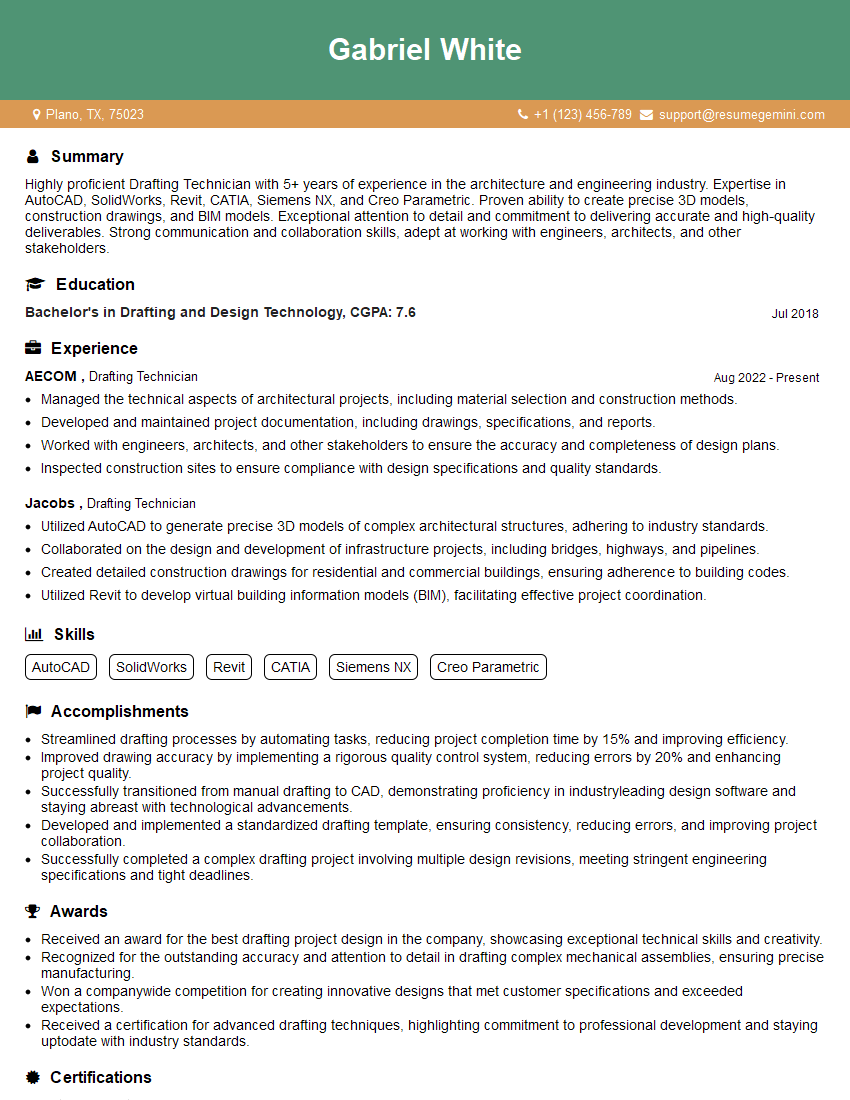
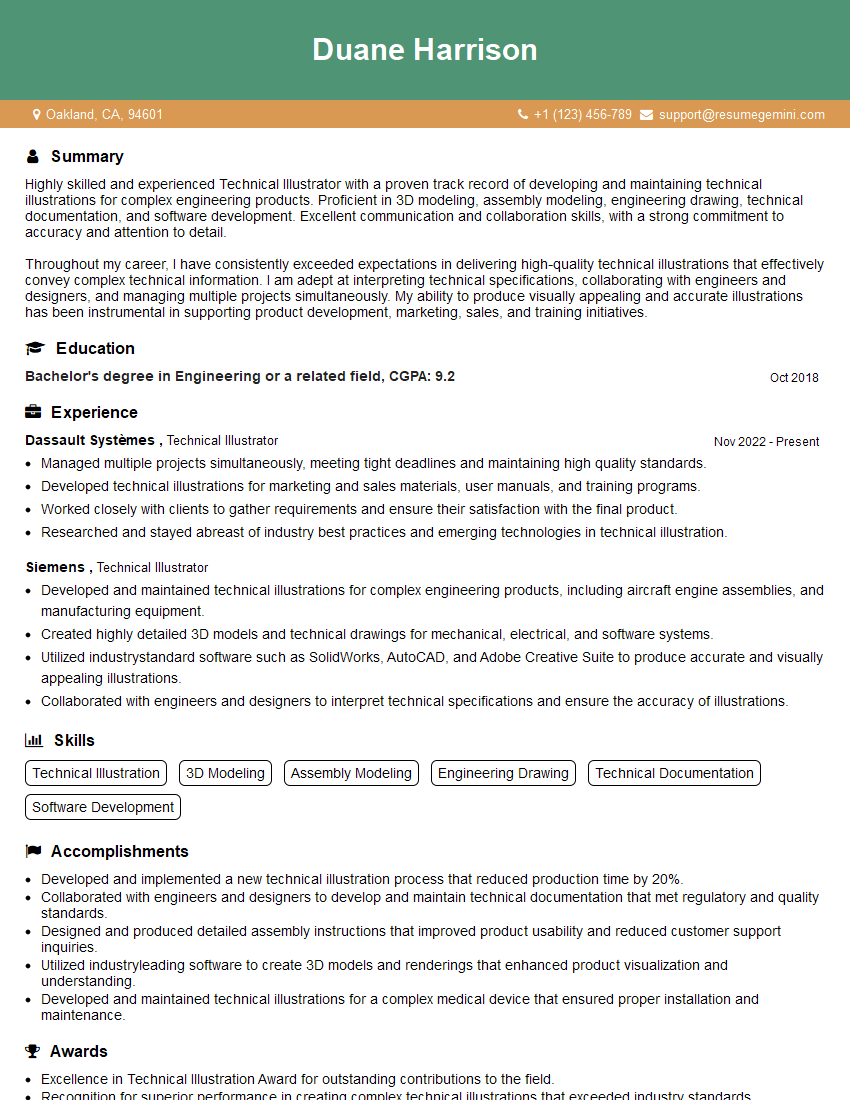
Mastering Technical Blueprint Interpretation is crucial for career advancement in engineering, construction, and manufacturing. A strong understanding of blueprints translates directly into improved efficiency, accuracy, and problem-solving capabilities on the job. To significantly boost your job prospects, it’s vital to present your skills effectively. Create an ATS-friendly resume that highlights your expertise in interpreting technical blueprints and showcases your relevant experience and accomplishments. ResumeGemini is a trusted resource to help you build a professional and impactful resume. We provide examples of resumes tailored to Technical Blueprint Interpretation to guide you in creating a winning application.
Explore more articles
Users Rating of Our Blogs
Share Your Experience
We value your feedback! Please rate our content and share your thoughts (optional).
What Readers Say About Our Blog
To the interviewgemini.com Webmaster.
Very helpful and content specific questions to help prepare me for my interview!
Thank you
To the interviewgemini.com Webmaster.
This was kind of a unique content I found around the specialized skills. Very helpful questions and good detailed answers.
Very Helpful blog, thank you Interviewgemini team.