The right preparation can turn an interview into an opportunity to showcase your expertise. This guide to Tender Preparation interview questions is your ultimate resource, providing key insights and tips to help you ace your responses and stand out as a top candidate.
Questions Asked in Tender Preparation Interview
Q 1. Describe your experience in developing winning tender responses.
Developing winning tender responses involves a multifaceted approach that blends strategic thinking, meticulous planning, and a deep understanding of the client’s needs. It’s not just about meeting the minimum requirements; it’s about exceeding expectations and demonstrating a clear competitive advantage. My experience involves leading cross-functional teams to craft compelling proposals, focusing on value proposition, innovative solutions, and demonstrable past performance. For instance, in a recent tender for a large-scale software implementation, we highlighted our proprietary methodology, which reduced implementation time by 20% compared to competitors, a key factor in securing the win. Another successful bid involved crafting a detailed risk mitigation plan which addressed potential client concerns proactively, significantly improving our score in the evaluation process.
- Understanding the Client: Thoroughly researching the client’s business, goals, and challenges is crucial. This allows us to tailor our response to their specific needs.
- Value Proposition: Clearly articulating the unique value our solution offers is key. This might involve highlighting cost savings, improved efficiency, reduced risk, or innovative technology.
- Teamwork and Collaboration: Winning bids are a team effort. Effective communication and collaboration across departments (sales, technical, legal) are essential for a cohesive and persuasive response.
- Compelling Narrative: The proposal needs to tell a story that resonates with the client, demonstrating our understanding of their problems and showcasing our ability to solve them effectively.
Q 2. How do you identify key requirements and criteria in a tender document?
Identifying key requirements and criteria is the cornerstone of a successful tender response. It’s akin to detective work, requiring careful scrutiny of the tender document itself. I start by reading the document multiple times, focusing on different aspects each time. First, I look for the overall goals and objectives. Then, I identify the evaluation criteria, usually weighted percentages assigned to various aspects of the bid, such as price, experience, technical capability, and approach. I then break down the requirements into smaller, manageable tasks, using a matrix to track each requirement against our capabilities. For example, if a tender requires experience in a specific technology, I’ll verify if our team has that experience and document it with evidence such as case studies or project references. Any ambiguities are clarified with the client through formal questions, ensuring a complete understanding before commencing the response.
- Keyword Analysis: Identifying frequently used keywords and phrases can help align our response with the client’s priorities.
- Requirement Prioritization: Not all requirements carry equal weight. Understanding which criteria are most important allows us to focus our efforts effectively.
- Compliance Matrix: A compliance matrix helps visually track progress against each requirement, ensuring nothing is overlooked.
Q 3. Explain your process for analyzing competitor bids and strategies.
Analyzing competitor bids and strategies involves a combination of intelligence gathering and strategic thinking. It’s not about copying; it’s about learning from their strengths and weaknesses and identifying opportunities to differentiate ourselves. We’ll gather information from publicly available sources, such as past bids, company websites, and industry reports. If possible, we’ll review competitor responses to understand their approach and identify potential vulnerabilities. This analysis informs our pricing strategy and helps us develop a value proposition that is both compelling and competitive. For example, if a competitor is heavily focusing on price, we might emphasize our superior technical capabilities and long-term value. If a competitor is lacking in a particular area, we can highlight our strengths in that area. This comparative analysis is crucial in crafting a winning response.
- Competitive Benchmarking: We compare our capabilities against those of our competitors to identify areas where we excel and areas where we need improvement.
- SWOT Analysis: We conduct a SWOT analysis (Strengths, Weaknesses, Opportunities, Threats) to understand our own position relative to the competition.
- Differentiation Strategy: Based on the analysis, we develop a strategy to differentiate our offering from the competition.
Q 4. How do you manage multiple tender submissions concurrently?
Managing multiple tender submissions concurrently requires a structured approach and robust project management skills. I utilize project management tools and methodologies, such as Agile or Kanban, to track progress, allocate resources, and manage deadlines effectively. This often involves breaking down each tender into smaller, manageable tasks, assigning them to team members with the appropriate skills, and setting clear deadlines for each stage. Regular progress meetings are crucial to monitor progress, identify potential roadblocks, and make necessary adjustments. A centralized document repository is essential to ensure everyone has access to the latest information and to avoid version control issues. Prioritization is key – we might focus resources on tenders with higher potential return or shorter deadlines, ensuring the most impactful bids receive the necessary attention.
- Project Management Software: Tools like Asana, Trello, or Microsoft Project help track tasks, deadlines, and resources.
- Resource Allocation: Effectively allocating team members based on their skills and availability.
- Prioritization Matrix: A matrix to rank tenders based on potential value and urgency.
Q 5. What tools and technologies do you use for tender preparation?
Effective tender preparation relies on leveraging the right tools and technologies. Beyond standard office software (Microsoft Word, Excel, PowerPoint), I utilize specialized tools to enhance efficiency and collaboration. These include project management software (e.g., Asana, Trello), document management systems (e.g., SharePoint, Google Drive), and proposal automation software which streamlines the proposal writing process. For example, I use specialized proposal software to manage proposal templates, create a consistent brand identity, and streamline the review and approval process. For data analysis, we use spreadsheet software and potentially database software to manage large datasets and conduct thorough financial modelling.
- Proposal Automation Software: Streamlines the creation and management of proposals.
- Project Management Software: Tracks tasks, deadlines, and resources.
- Document Management Systems: Centralizes and manages all tender documents.
- Data Analysis Tools: Excel, databases, and potentially specialized financial modelling software.
Q 6. How do you ensure compliance with tender specifications and regulations?
Ensuring compliance with tender specifications and regulations is paramount to avoid disqualification. This involves a rigorous review process at each stage of tender preparation, starting with a thorough understanding of the specific requirements outlined in the tender document. This includes reviewing legal clauses, technical specifications, and ethical guidelines. We meticulously check for compliance against each requirement, documenting our compliance in a compliance matrix. We also incorporate internal checks and balances, including multiple reviews by team members with different expertise, to ensure comprehensive coverage. Any deviations from the specifications are clearly documented and justified. We maintain a detailed audit trail of all changes and approvals, demonstrating our commitment to transparent and accountable processes.
- Compliance Matrix: A comprehensive tool to track compliance against each requirement.
- Internal Review Process: Multiple checks and balances to ensure thorough compliance.
- Documentation and Audit Trail: Maintaining detailed records of all changes and approvals.
- Legal Review: Ensuring compliance with all applicable legal and regulatory requirements.
Q 7. Describe your experience in cost estimation and pricing strategies for tenders.
Cost estimation and pricing strategies are critical components of a successful tender response. We utilize a combination of bottom-up and top-down approaches to develop accurate and competitive pricing. The bottom-up approach involves detailed costing of individual resources, labor, materials, and overheads. The top-down approach involves analyzing market rates and competitor pricing to establish a competitive benchmark. We consider factors such as risk, profit margin, and potential cost overruns when developing our pricing strategy. For example, we might include contingency buffers to mitigate potential risks. This meticulous process ensures our pricing is both realistic and competitive, maximizing our chances of winning the tender. We also carefully consider alternative pricing models, such as value-based pricing or tiered pricing, to tailor our approach to the specific requirements of the tender.
- Bottom-up Costing: Detailed estimation of individual resources and costs.
- Top-down Pricing: Analyzing market rates and competitor pricing.
- Risk Assessment: Incorporating contingency buffers to mitigate potential risks.
- Profit Margin Analysis: Ensuring a reasonable profit margin while maintaining competitiveness.
- Alternative Pricing Models: Considering value-based pricing or tiered pricing.
Q 8. How do you handle unexpected challenges or changes during a tender process?
Handling unexpected challenges during a tender process requires a proactive and adaptable approach. My strategy centers around meticulous planning, robust communication, and a willingness to pivot when necessary. Think of it like navigating a complex maze – you have a map (your initial plan), but you need to be prepared for unexpected dead ends and alternative routes.
- Proactive Monitoring: I consistently monitor the tender documentation for any amendments or changes, utilizing email alerts and regularly checking the tender portal. This ensures I’m aware of updates immediately.
- Contingency Planning: My preparations always include a ‘Plan B’ – alternative solutions or approaches to address potential setbacks. For example, if a key subcontractor pulls out, I have a backup lined up and ready to step in.
- Effective Communication: Open and frequent communication with the client is crucial. If a challenge arises, I immediately inform them, propose solutions, and work collaboratively to find the best path forward. Transparency builds trust and demonstrates professionalism.
- Problem-Solving Framework: I utilize a structured approach to problem-solving, involving clearly defining the challenge, brainstorming solutions, analyzing their feasibility and impact, and then implementing the best option.
For example, in a recent tender for a large-scale construction project, a sudden change in building regulations emerged midway through the process. I quickly assessed the implications, adapted our proposal accordingly, communicated the changes to the client, and successfully demonstrated our flexibility and competence.
Q 9. How do you ensure the quality and accuracy of tender documents?
Ensuring the quality and accuracy of tender documents is paramount. It’s akin to building a house – you wouldn’t start without detailed blueprints. My process emphasizes meticulous attention to detail, rigorous review, and the use of technology to minimize errors.
- Checklist Approach: I use comprehensive checklists at every stage of document preparation to ensure all required sections are completed and accurate. This includes technical specifications, cost breakdowns, and legal compliance aspects.
- Cross-Verification: Before submission, I always have at least one colleague independently review all documents. This ‘four-eyes’ principle helps catch inconsistencies and oversights.
- Template Utilization: Utilizing pre-approved templates for commonly used sections ensures consistency and minimizes the risk of errors. This also streamlines the process and saves valuable time.
- Technology Integration: I utilize project management software to manage versions, track edits, and ensure everyone has access to the most current documents. This helps prevent confusion and maintain a clear audit trail.
For instance, in a recent tender for a software development project, using a standardized template and a version-control system ensured all documents reflected the latest specifications and all team members were working from the same information, resulting in a higher-quality submission.
Q 10. What’s your approach to risk management in tender preparation?
Risk management in tender preparation is a proactive and strategic process. It’s like assessing the weather before a long journey – you need to prepare for various conditions. My approach includes identifying potential risks, assessing their likelihood and impact, and developing mitigation strategies.
- Risk Identification: I meticulously review the tender documents, identifying potential risks such as technical challenges, cost overruns, regulatory changes, or competition.
- Risk Assessment: For each identified risk, I assess its likelihood and potential impact on the project. This involves considering various scenarios and their consequences.
- Mitigation Strategies: Based on the risk assessment, I develop specific mitigation strategies. This could involve securing contingency funds, developing alternative solutions, or incorporating risk clauses into contracts.
- Regular Monitoring and Review: Throughout the tender process, I continuously monitor risks and adjust mitigation strategies as needed. Regular reviews are crucial to ensure effectiveness.
In a previous project, we identified the risk of material price fluctuations. To mitigate this, we incorporated a price escalation clause in our proposal, protecting us from unforeseen increases in material costs.
Q 11. Explain your experience with pre-qualification questionnaires (PQQs).
Pre-qualification questionnaires (PQQs) are a critical first step in many tender processes. They serve as a filter, ensuring only qualified bidders proceed to the next stage. My approach is to meticulously complete each question, providing clear, concise, and compelling evidence of our capabilities.
- Thorough Review: I carefully review the PQQ document, ensuring I understand all requirements and deadlines. This includes understanding any specific formatting requirements or submission criteria.
- Evidence Gathering: I gather supporting evidence to back up my answers, including past project examples, client testimonials, and certifications. This demonstrates our competence and track record.
- Clear and Concise Answers: I provide clear, concise, and unambiguous answers, avoiding jargon or overly technical language. The aim is to make a strong impression on the evaluator.
- Compliance and Accuracy: Accuracy is paramount. I ensure all information provided is accurate, up-to-date, and compliant with any relevant regulations.
I’ve successfully navigated numerous PQQs for diverse projects. In one instance, showcasing our experience in a specific software application, backed up with client testimonials, secured us a place in the next round of a highly competitive tender.
Q 12. How do you develop compelling and persuasive written proposals?
Developing compelling and persuasive proposals requires a deep understanding of the client’s needs and a clear articulation of our value proposition. It’s about telling a story that resonates with the client and showcases how we can solve their problems.
- Understanding the Client’s Needs: I start by thoroughly understanding the client’s requirements, challenges, and objectives. This informs the entire proposal’s structure and content.
- Clear and Concise Language: The proposal should be written in clear, concise, and easy-to-understand language. Avoid jargon and complex technical terms unless absolutely necessary.
- Strong Value Proposition: I clearly articulate our value proposition, demonstrating how our solution is superior to the competition and how it directly addresses the client’s needs. This often involves quantifying the benefits, where possible.
- Compelling Narrative: I weave a compelling narrative, using storytelling techniques to engage the reader and create an emotional connection. This goes beyond simply listing facts and figures.
- Visual Appeal: A well-designed proposal, with clear visuals like charts, graphs, and images, enhances readability and impact.
In a previous proposal, using a case study to illustrate our successful implementation of a similar project for another client, and showcasing measurable results, played a crucial role in winning the tender.
Q 13. How do you work collaboratively with different teams during tender preparation?
Collaborative teamwork is essential for successful tender preparation. It’s like an orchestra – each section plays a vital role, but it’s the combined effort that creates a harmonious and impactful performance. My approach to collaboration focuses on open communication, clearly defined roles, and regular meetings.
- Clearly Defined Roles: From the outset, I ensure each team member understands their responsibilities and deadlines. This includes assigning ownership of specific sections of the tender.
- Regular Meetings: I schedule regular team meetings to discuss progress, address challenges, and ensure everyone is aligned. These meetings also serve as opportunities to share knowledge and expertise.
- Open Communication: I encourage open communication amongst team members, facilitating a collaborative environment where ideas are freely shared and questions are readily answered.
- Centralized Communication Hub: Using project management tools allows all team members to access the latest versions of the documents and communicate updates seamlessly.
In a recent project, the successful collaboration between our technical team, financial team, and legal team ensured a well-rounded and comprehensive tender submission that addressed all aspects of the client’s requirements.
Q 14. Describe your experience in presenting tender proposals to clients.
Presenting tender proposals requires confidence, clear communication, and the ability to engage the audience. It’s like giving a compelling speech – you need to capture the audience’s attention, clearly convey your message, and leave a lasting positive impression.
- Preparation and Rehearsal: I meticulously prepare the presentation, rehearsing it multiple times to ensure a smooth delivery and to address potential questions. Knowing the material thoroughly boosts confidence.
- Clear and Concise Delivery: I deliver the presentation in a clear, concise, and engaging manner, using visual aids to illustrate key points. Visual aids greatly enhance audience understanding.
- Tailoring the Presentation: I tailor the presentation to the specific audience and their needs. This ensures the message resonates with them and demonstrates my understanding of their requirements.
- Handling Questions Effectively: I confidently handle questions from the audience, providing clear and concise answers that demonstrate my expertise and knowledge. Being prepared for potential questions is vital.
In a recent presentation, I successfully addressed the client’s concerns regarding cost and timelines by presenting a detailed breakdown of our approach and providing assurance of our capacity to deliver on time and within budget. This ultimately led to securing the contract.
Q 15. How do you track and manage tender submissions throughout the process?
Tracking and managing tender submissions requires a robust system. I typically use a combination of project management software and spreadsheets. This allows for a centralized location to store all relevant documents, deadlines, and communication. For example, I might use a tool like Asana or Monday.com to create a project board with tasks for each stage of the tender process, from initial document review to final submission. Each task is assigned a responsible party and a deadline. Spreadsheets help me track key information like submission dates, contact information, and the status of each tender.
Critical to this process is version control. I ensure all team members use a shared document repository, preventing conflicting edits and ensuring everyone is working with the most up-to-date documents. We utilize a naming convention (e.g., TenderName_vX.docx) to easily identify revisions. A clear audit trail of changes is maintained for accountability and to facilitate future improvements.
Career Expert Tips:
- Ace those interviews! Prepare effectively by reviewing the Top 50 Most Common Interview Questions on ResumeGemini.
- Navigate your job search with confidence! Explore a wide range of Career Tips on ResumeGemini. Learn about common challenges and recommendations to overcome them.
- Craft the perfect resume! Master the Art of Resume Writing with ResumeGemini’s guide. Showcase your unique qualifications and achievements effectively.
- Don’t miss out on holiday savings! Build your dream resume with ResumeGemini’s ATS optimized templates.
Q 16. How do you monitor progress against deadlines in tender preparation?
Monitoring progress against deadlines is paramount to successful tender submissions. I utilize Gantt charts within my project management software to visualize the timeline and identify potential bottlenecks early on. Regular progress meetings with the team are essential. These meetings aren’t just status updates; they’re proactive problem-solving sessions. If a deadline is at risk, we immediately identify the cause and implement corrective actions. For instance, if we’re facing a delay in obtaining a crucial piece of information, we proactively contact the relevant stakeholder.
I also utilize automated reminders and alerts within the project management software. These reminders are set well in advance of each deadline, allowing ample time for action. A key element is building in buffer time for unforeseen delays. This proactive approach minimizes stress and maximizes the chances of on-time submission.
Q 17. How familiar are you with different types of tendering procedures (e.g., open, restricted)?
I’m highly familiar with various tendering procedures. Open tendering, where any eligible bidder can participate, requires a broader approach focusing on strong competitive pricing and clear communication. Restricted tendering, where a pre-selected list of bidders is invited, allows for a more tailored response based on specific requirements and a deeper understanding of the client’s needs. Negotiated tendering, involving discussions with potential bidders to refine proposals, necessitates strong negotiation and interpersonal skills. Each procedure demands a distinct strategy.
My experience also extends to frameworks like PQQ (Pre-Qualification Questionnaire) which evaluate a company’s capabilities before a full tender is considered, and competitive dialogue procedures where bidders can engage with the client iteratively to refine proposals. Understanding the nuances of these procedures is vital in ensuring a compliant and winning submission.
Q 18. What are your strategies for improving tender response success rates?
Improving tender response success rates requires a multi-pronged approach. Firstly, thorough understanding of the client’s needs is paramount. This involves meticulously reviewing the tender documents, identifying key requirements, and addressing them directly and convincingly. I focus on providing solutions, not just meeting specifications. A strong, compelling narrative that showcases our understanding and capabilities is essential.
Secondly, I prioritize quality over quantity. A meticulously crafted, tailored response is far more effective than a generic submission. We invest time in refining our pricing strategies, ensuring they’re both competitive and profitable. Thirdly, we invest in continuous learning and improvement by analyzing past submissions, identifying areas for improvement, and incorporating client feedback. Finally, a strong team with diverse skills and expertise contributes significantly to our success.
Q 19. How do you incorporate client feedback into future tender responses?
Client feedback is invaluable in refining future tender responses. After each tender, regardless of the outcome, we conduct a thorough post-mortem analysis. This includes reviewing the client’s feedback (if provided), evaluating our proposal’s strengths and weaknesses, and identifying areas for improvement. We document this feedback in a centralized repository accessible to the entire tender preparation team.
For example, if a client mentioned a lack of detail in a specific section, we’ll revise our template to incorporate more comprehensive information in that area for future tenders. This continuous feedback loop allows us to learn from both wins and losses, constantly improving our tendering process and response quality.
Q 20. How do you manage budget constraints during tender preparation?
Managing budget constraints necessitates meticulous planning and resource allocation from the outset. Before even beginning a tender response, we develop a detailed budget outlining costs associated with personnel, research, printing, and other resources. This budget is shared with the team, fostering a sense of responsibility and accountability.
Value engineering plays a crucial role. We focus on identifying areas where we can optimize costs without compromising quality or the overall value proposition. For instance, we might explore alternative solutions or technologies to achieve the same outcome at a lower cost. Prioritization is key; we focus on the essential elements of the response, ensuring that the most impactful aspects receive the necessary investment.
Q 21. Describe your experience with using different tendering software.
I’ve extensive experience using various tendering software solutions, including dedicated platforms like Tender Management Systems and more general project management software like Asana, Monday.com, and Trello adapted for tender management. My experience extends to using CRM systems to track client interactions and maintain a comprehensive record of tendering activities.
The choice of software depends on the specific needs of the project and the organization’s existing infrastructure. I’m proficient in utilizing these platforms for document management, collaboration, deadline tracking, and reporting. I find that successful tendering software integrates seamlessly with other business systems, streamlining the overall process and ensuring data consistency.
Q 22. How do you ensure the confidentiality and security of tender information?
Confidentiality and security are paramount in tender preparation. Think of it like guarding a state secret – any leak could cost you the bid, or worse, legal repercussions. My approach is multi-faceted and begins even before the tender documents are accessed. We use secure document management systems with access control lists, limiting visibility to only authorized personnel. This ensures that only those needing the information can access it. Sensitive data, like pricing strategies or innovative technologies, are often encrypted both in transit and at rest. We also implement robust password policies and multi-factor authentication for added protection. Regular security audits and employee training on data protection protocols are vital in maintaining this high level of confidentiality. For example, I once worked on a tender for a sensitive government project; we implemented a dedicated, air-gapped network for all tender-related activities, preventing any potential intrusion from external sources.
Furthermore, we meticulously track all document versions and revisions using a version control system, ensuring auditability and accountability. Any external collaborators are bound by strict non-disclosure agreements (NDAs) that clearly outline the confidentiality obligations. We treat the entire tender process as a high-security operation, and this attention to detail helps prevent any breaches and protects our intellectual property.
Q 23. How do you identify potential risks and mitigation strategies in a tender?
Risk identification in tendering is like conducting a pre-flight check for a complex aircraft. Ignoring potential problems is a sure-fire way to crash and burn. My approach involves a structured risk assessment framework. First, we identify potential risks across all aspects of the tender: technical, financial, legal, and logistical. We consider factors like competition intensity, project complexity, potential delays, cost overruns, regulatory changes, and even unforeseen circumstances like natural disasters. For each identified risk, we analyze its likelihood and potential impact, quantifying the severity where possible. This helps us prioritize which risks need immediate attention.
Next, we develop mitigation strategies. These could include contingency planning (e.g., having backup suppliers or alternative technological solutions), insurance coverage, robust project management methodologies, and thorough due diligence on subcontractors. We also engage subject matter experts to assess specific risks, leveraging their expertise to create well-informed mitigation plans. For example, in a large construction tender, we assessed the risk of material price fluctuations by securing fixed-price contracts with key suppliers and building a buffer into our pricing model.
Finally, we regularly monitor and review the risk landscape throughout the project, adapting our strategies as needed. This dynamic approach ensures we remain agile and capable of navigating unexpected challenges successfully.
Q 24. Describe your approach to writing a strong executive summary for a tender proposal.
The executive summary is the first and often only part of a tender proposal that some reviewers will read thoroughly. Think of it as a captivating movie trailer – it needs to hook the reader immediately and compel them to delve deeper into the proposal. My approach starts with a clear understanding of the client’s needs and priorities, gleaned directly from the tender document. I focus on highlighting the most impactful aspects of our solution, emphasizing the value proposition and unique selling points. We don’t just reiterate the proposal’s content; instead, we present a compelling narrative that showcases our understanding of the problem and our proposed solution.
The summary is concise, typically no more than one page. We use strong action verbs and avoid technical jargon whenever possible, ensuring it’s accessible to a broad audience. Key performance indicators (KPIs) and quantifiable results are crucial; demonstrating our achievements with numbers adds weight to our claims. We structure the summary logically, following a clear sequence: problem statement, proposed solution, key benefits, and a call to action. For instance, if we’re bidding on a software development project, we would highlight the software’s key features and quantify the expected improvement in efficiency or cost savings for the client, rather than getting lost in technical specifications. This ensures the client understands the value we offer at a glance.
Q 25. What is your experience with value engineering in tender preparation?
Value engineering is a core component of my tender preparation process. It’s about maximizing value while minimizing cost – think of it as finding clever ways to achieve the same result more efficiently. My experience spans numerous projects where we systematically analyzed each aspect of the proposed solution, searching for opportunities for improvement without compromising quality or functionality. This could involve exploring alternative materials, technologies, or construction methods; streamlining processes; or optimizing project schedules.
For example, in a recent infrastructure project, our initial design proposed using a specific type of steel. Through value engineering, we identified a comparable, yet more cost-effective alternative that met all the required specifications. This substitution resulted in significant cost savings without sacrificing structural integrity or performance. This approach is documented meticulously, clearly outlining the initial proposal, the proposed value engineering changes, and a comprehensive cost-benefit analysis. This demonstrates our commitment to delivering the best possible value for the client and enhances our competitiveness.
Q 26. How do you build strong relationships with stakeholders involved in tendering?
Building strong stakeholder relationships is crucial for successful tendering. It’s not just about winning the bid, it’s about establishing long-term partnerships. My approach involves proactive communication and collaboration throughout the entire process. I initiate contact early on with key decision-makers, engaging them in discussions and demonstrating our understanding of their needs and priorities. We hold regular meetings, providing updates and seeking feedback. Transparency is key – we openly address any challenges or concerns, ensuring everyone is informed and aligned.
Active listening and empathy are vital. I ensure I understand their perspectives and tailor our communication style accordingly. We develop personalized communication plans for each stakeholder, recognizing their individual preferences and communication styles. We also leverage different communication channels, such as emails, phone calls, and in-person meetings, to maintain open lines of communication and foster collaboration. Building rapport goes beyond formal interactions; informal networking events and proactive relationship building can foster a strong foundation for future collaborations.
Q 27. How do you handle rejection or unsuccessful tender bids?
Rejection is a part of the tendering process; it’s not a reflection of personal failure. My approach to handling unsuccessful bids is analytical and constructive. Immediately after receiving the rejection, we request feedback from the client to understand the reasons for their decision. This feedback is invaluable, highlighting areas where we can improve our proposals or processes. We then conduct a thorough post-mortem analysis, examining each stage of the tender process to identify areas for improvement. We document the lessons learned and use this knowledge to inform future strategies.
This process ensures that every unsuccessful bid becomes a learning opportunity. We analyze our strengths and weaknesses, refining our approach to enhance future success rates. This includes reviewing our pricing strategies, proposal writing techniques, and risk management processes. This continuous improvement approach is fundamental in building resilience and fostering long-term success in the competitive tendering landscape.
Q 28. Describe a time you had to adapt a tender strategy due to unexpected circumstances.
During a large-scale technology implementation project, we encountered an unexpected change in the client’s requirements mid-tender. The original scope involved a specific software platform, but due to unforeseen circumstances, the client decided to shift their preference to a different, less compatible system. Our initial strategy was built around the original platform.
We quickly adapted by convening a team meeting to assess the implications of this change. We acknowledged the challenges but remained proactive. We reassessed our technical proposal, adjusting the solution design, timelines, and budget accordingly. This involved researching the new platform, analyzing its capabilities, and demonstrating our flexibility to the client by presenting a revised proposal that addressed their new requirements effectively. We also highlighted our experience and expertise with other similar platforms, underscoring our ability to quickly adapt to technological shifts. This adaptability not only saved the tender but also impressed the client with our responsiveness and problem-solving capabilities. The willingness to adjust our strategy in the face of unexpected circumstances strengthened our credibility and ultimately contributed to securing the project.
Key Topics to Learn for Tender Preparation Interview
- Understanding Tender Documents: Learn to thoroughly analyze tender specifications, requirements, and timelines. This includes identifying key clauses and potential challenges.
- Cost Estimation and Budgeting: Develop skills in accurately estimating project costs, incorporating contingency plans, and presenting a compelling budget proposal.
- Risk Assessment and Mitigation: Practice identifying potential risks in the tender process and develop strategies to mitigate these risks throughout the project lifecycle.
- Compliance and Regulatory Requirements: Understand relevant laws, regulations, and industry standards, ensuring your tender submission is compliant.
- Proposal Writing and Presentation: Master the art of crafting a persuasive and well-structured tender proposal, showcasing your understanding of the client’s needs and your capabilities.
- Teamwork and Collaboration: Demonstrate your ability to effectively collaborate with cross-functional teams to develop winning tender submissions. Discuss experiences involving teamwork and coordination.
- Negotiation and Contract Management (Advanced): Explore the nuances of negotiating favorable terms and conditions within the tender process, and managing contracts effectively post-award.
- Technical Specifications and Solutions: Develop the ability to understand and respond to technical aspects of the tender, presenting innovative and cost-effective solutions.
Next Steps
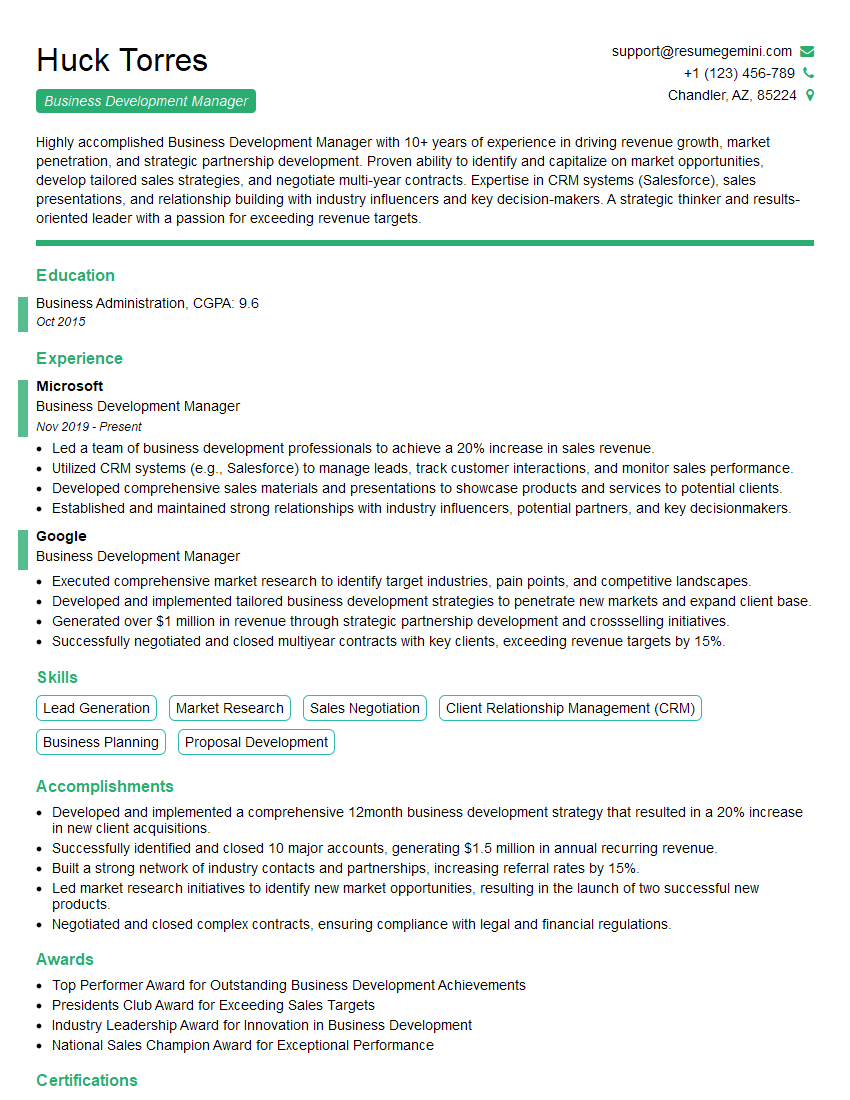
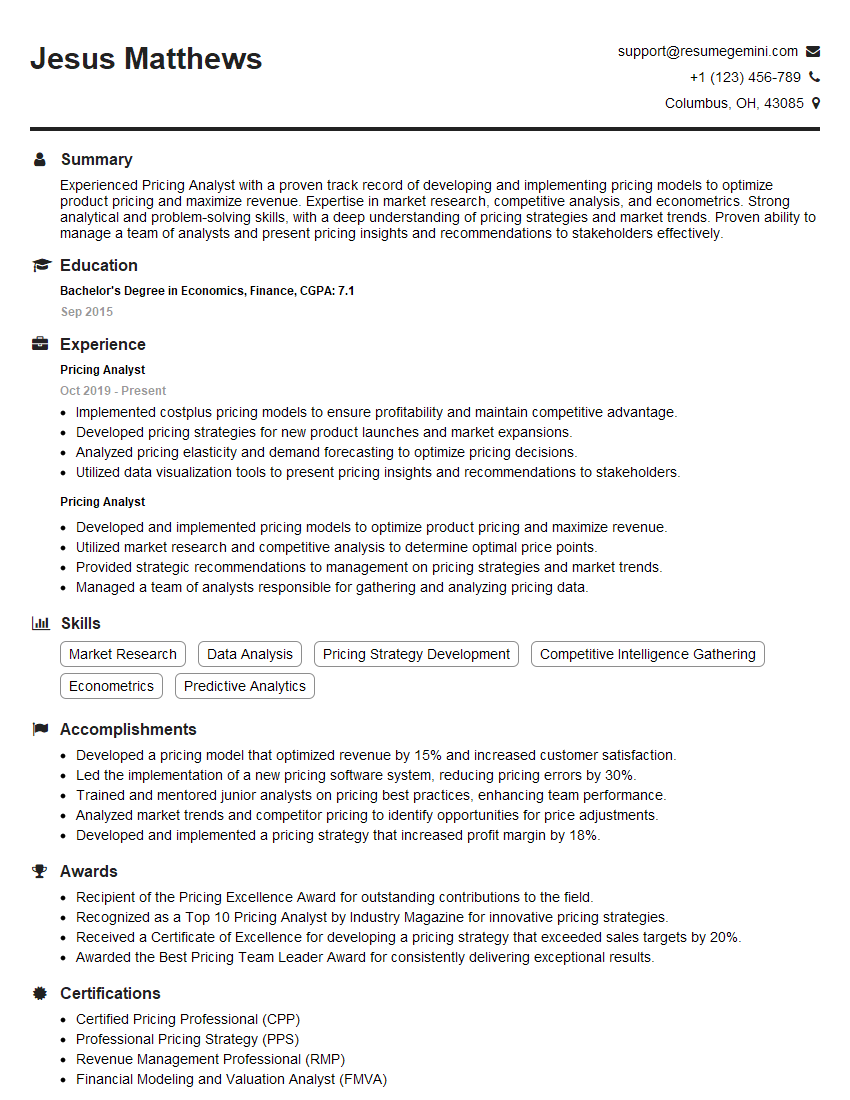
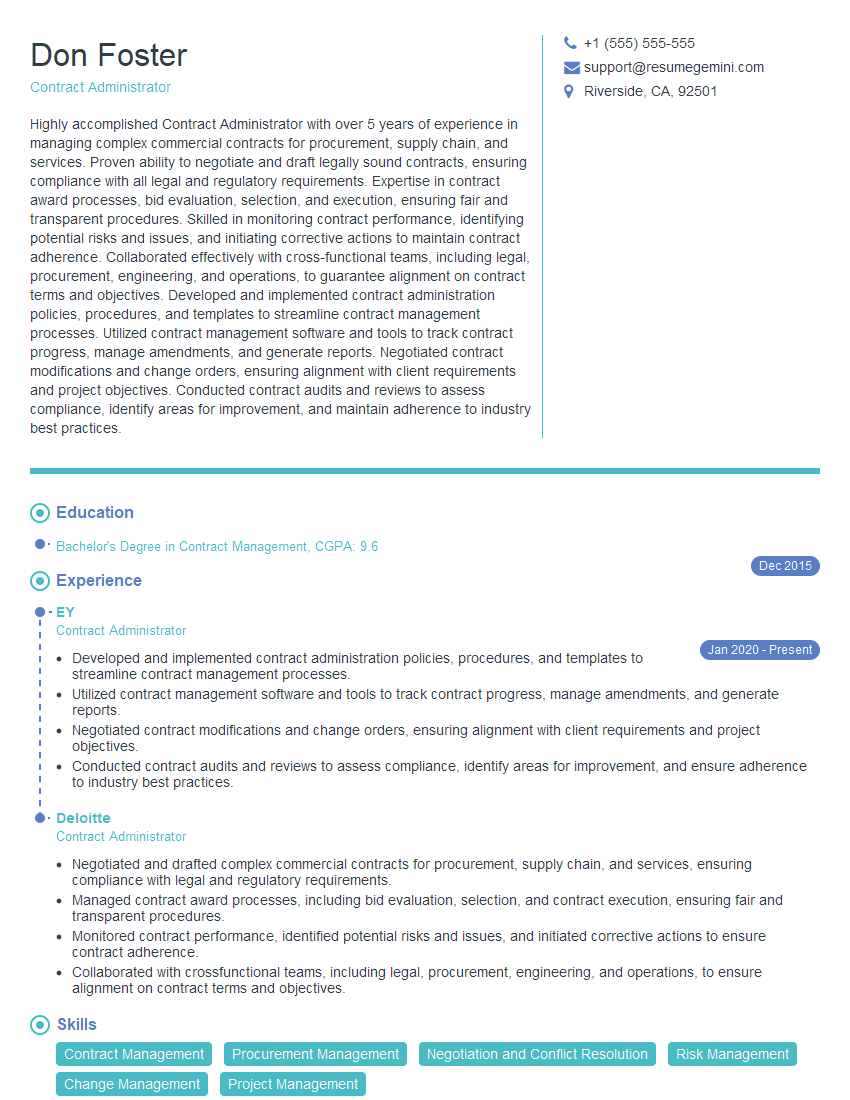
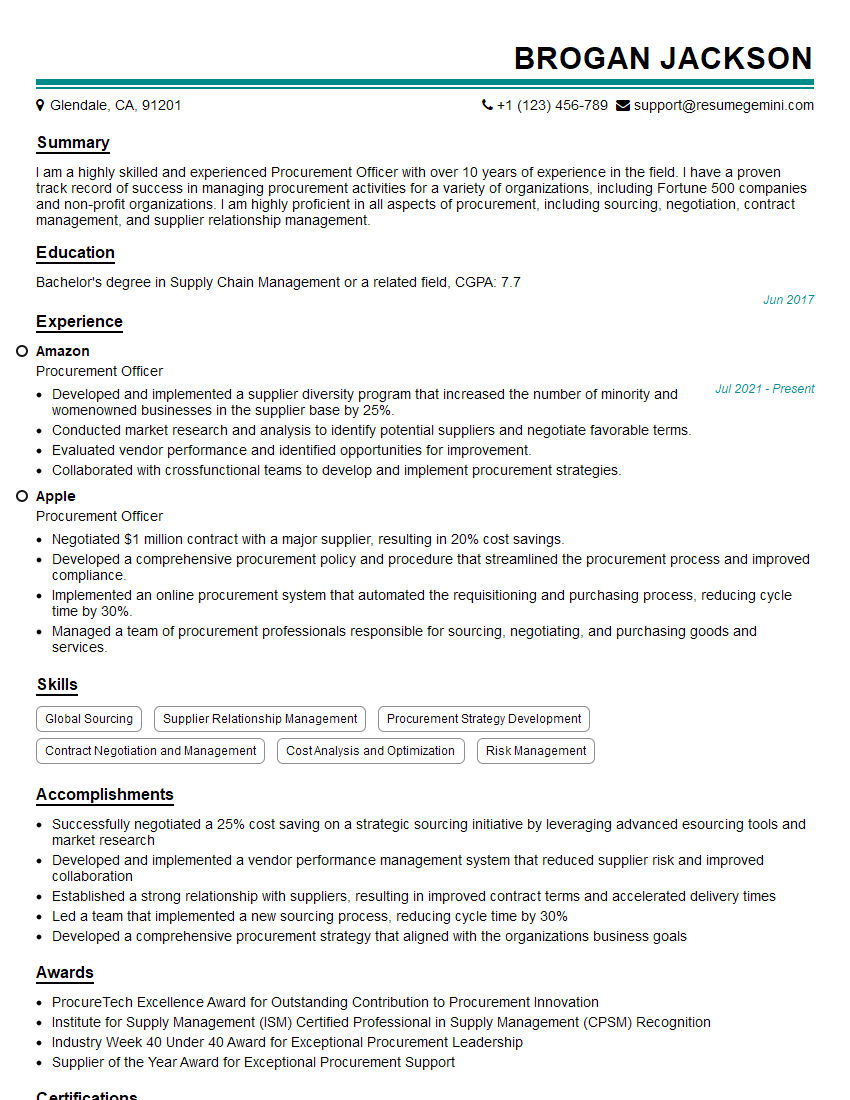
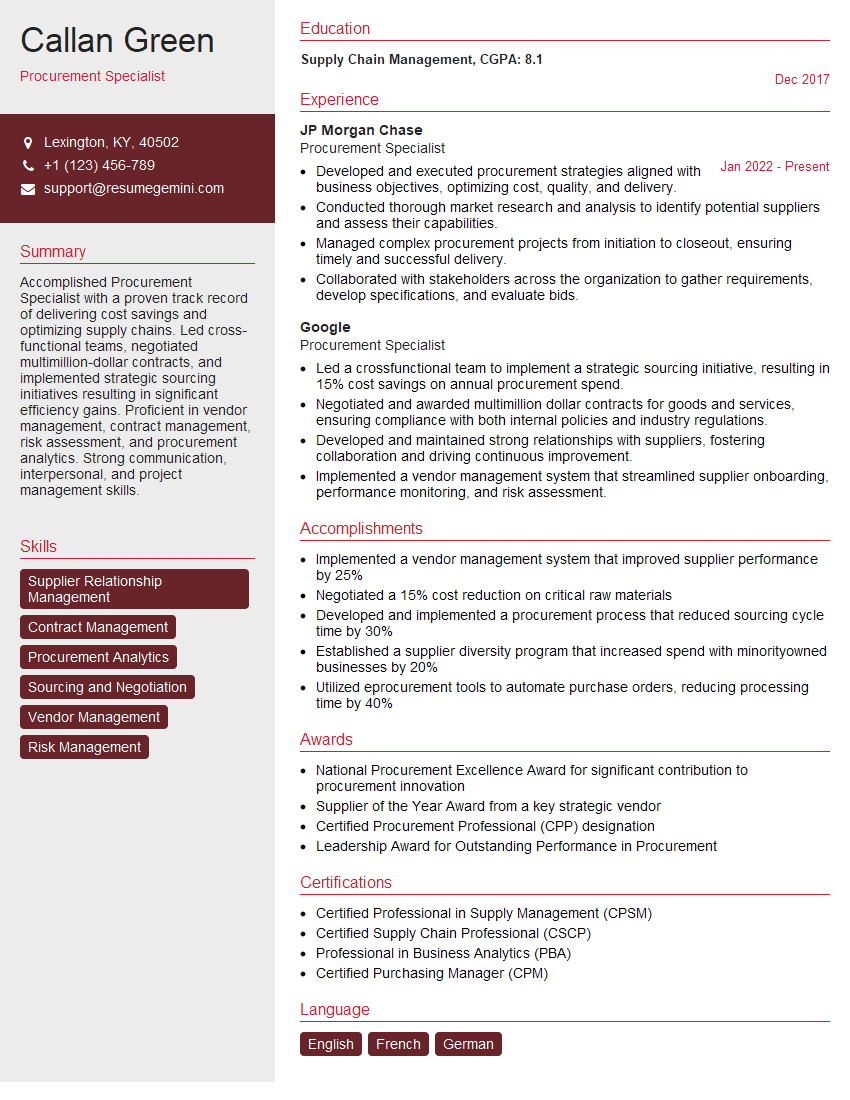
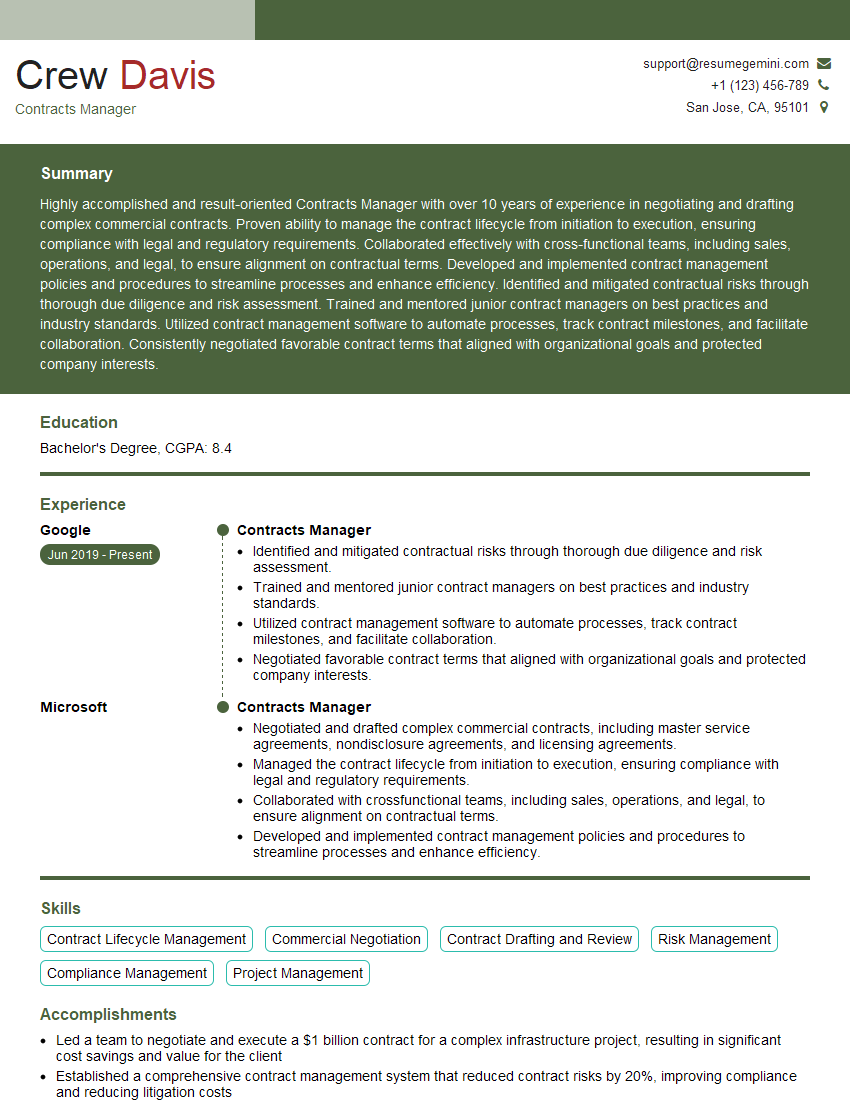
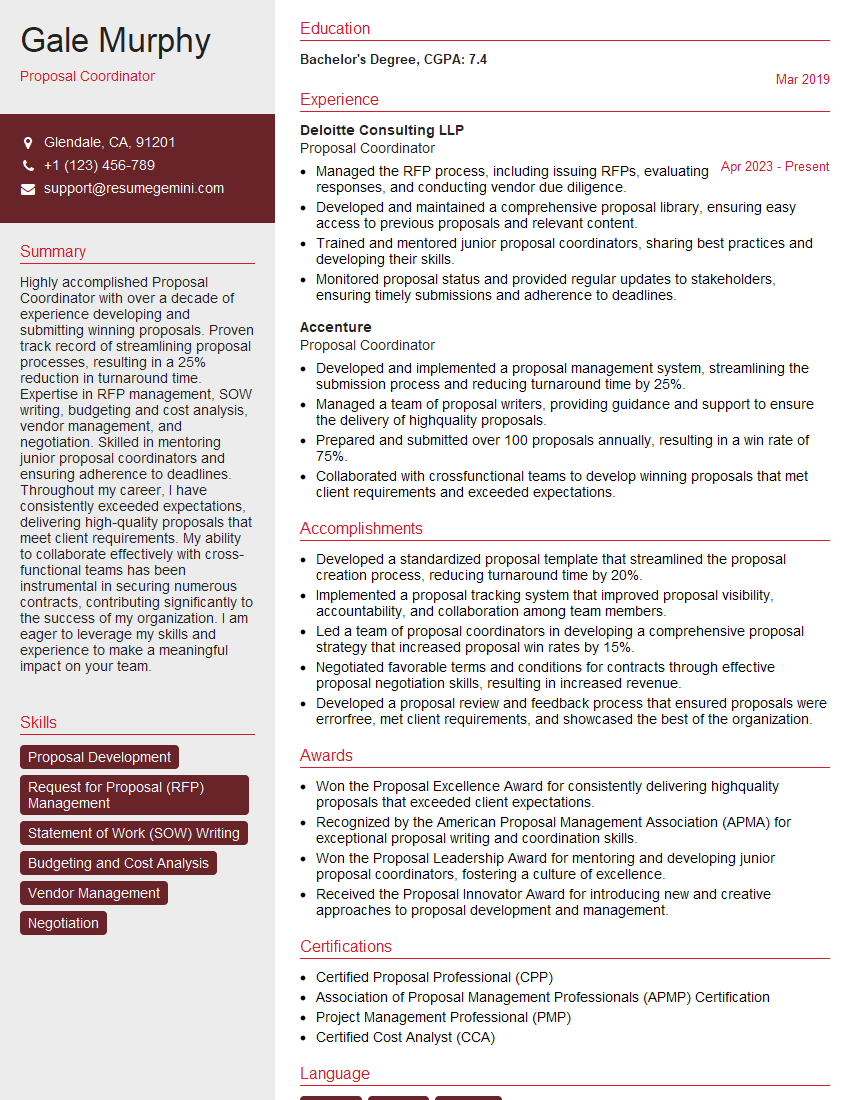
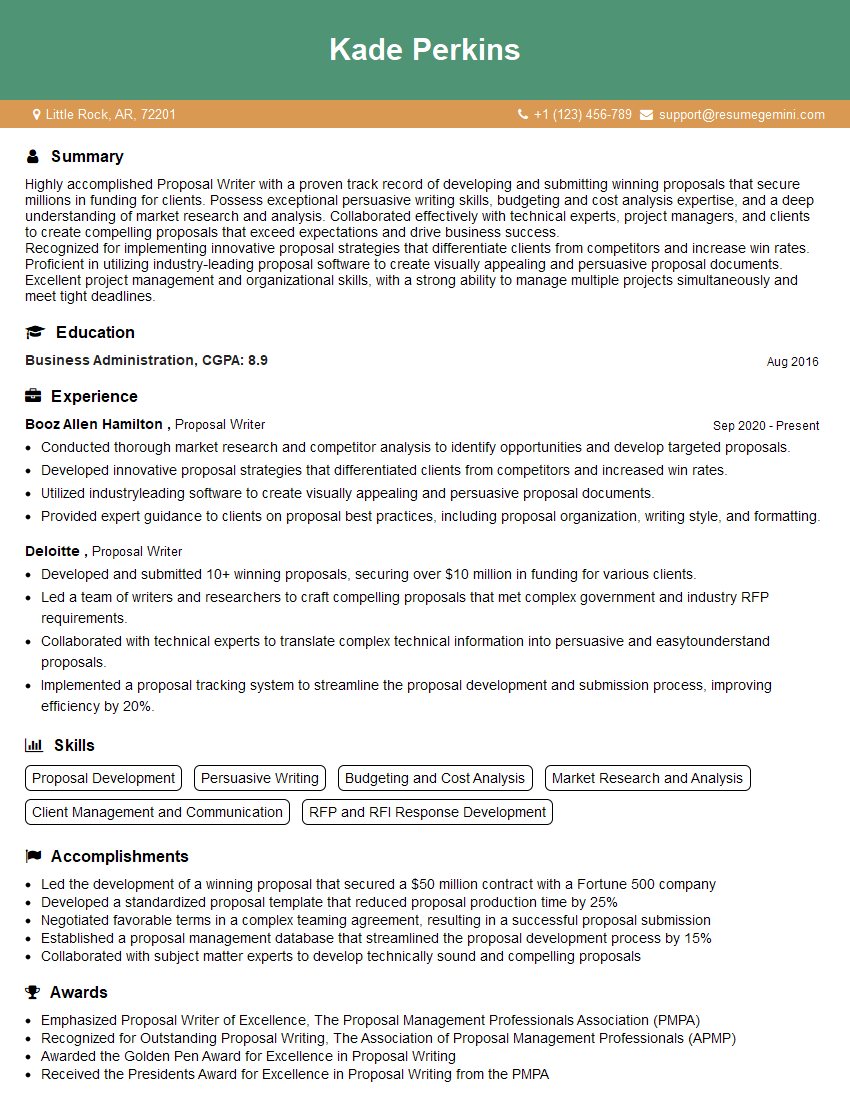
Mastering tender preparation significantly enhances your career prospects, opening doors to exciting opportunities and higher earning potential. A strong understanding of the process is highly sought after in many industries. To maximize your chances of landing your dream role, invest time in creating an ATS-friendly resume that highlights your key skills and experience. ResumeGemini is a trusted resource to help you build a professional and impactful resume. We provide examples of resumes specifically tailored to the Tender Preparation field to help you get started. Take the next step towards a successful career today!
Explore more articles
Users Rating of Our Blogs
Share Your Experience
We value your feedback! Please rate our content and share your thoughts (optional).
What Readers Say About Our Blog
To the interviewgemini.com Webmaster.
Very helpful and content specific questions to help prepare me for my interview!
Thank you
To the interviewgemini.com Webmaster.
This was kind of a unique content I found around the specialized skills. Very helpful questions and good detailed answers.
Very Helpful blog, thank you Interviewgemini team.