Are you ready to stand out in your next interview? Understanding and preparing for Tour Guiding and Commentary interview questions is a game-changer. In this blog, we’ve compiled key questions and expert advice to help you showcase your skills with confidence and precision. Let’s get started on your journey to acing the interview.
Questions Asked in Tour Guiding and Commentary Interview
Q 1. Describe your experience delivering engaging commentary to diverse audiences.
Engaging diverse audiences requires understanding and adapting to varying interests and backgrounds. My approach focuses on creating a narrative that resonates with everyone, regardless of their prior knowledge or cultural perspective. I achieve this through a combination of techniques:
- Storytelling: I weave historical facts and anecdotes into compelling narratives, making the information memorable and relatable. For example, when guiding tours of ancient Roman ruins, I might share stories of the people who lived there, making the stones come alive.
- Visual Aids and Interactive Elements: I incorporate images, maps, and even short interactive activities to cater to different learning styles. For instance, a quick quiz about a specific landmark can keep the audience engaged and test their comprehension.
- Humor and Personal Anecdotes: Appropriate humor and personal anecdotes can make the experience more enjoyable and help create a connection with the audience. I ensure the humor is culturally sensitive and avoids potentially offensive stereotypes.
- Open Communication: Encouraging questions and interactions fosters a sense of participation and allows me to tailor the commentary based on audience feedback. If I notice a section is confusing, I’ll rephrase or provide additional context.
By combining these methods, I ensure the commentary remains engaging, informative, and inclusive for everyone on the tour, irrespective of their age, nationality, or background.
Q 2. How do you handle unexpected situations or emergencies during a tour?
Unexpected situations are an inevitable part of tour guiding. My approach to handling them involves preparedness, quick thinking, and effective communication.
- Pre-Tour Planning: Before each tour, I thoroughly research the route, identify potential risks (e.g., areas with limited accessibility, potential traffic congestion), and have contingency plans in place. This includes having alternative routes and backup activities.
- Emergency Protocols: I’m familiar with emergency procedures and have a contact list of relevant authorities (police, medical services, etc.). I know how to react calmly and swiftly in case of an accident or medical emergency.
- Communication is Key: In the event of an unexpected disruption, I clearly and calmly communicate the situation to the group, explaining what’s happening and what steps will be taken. Transparency helps maintain trust and prevent panic.
- Adaptability: I am adept at adapting to unexpected changes. For instance, if a site is unexpectedly closed, I can seamlessly adjust the itinerary to an alternative location with comparable historical significance.
For example, during a walking tour in a city center, if a street suddenly gets blocked due to an accident, I’d immediately guide the group to a nearby alternative route, explaining the detour and ensuring everyone’s safety.
Q 3. Explain your approach to managing a large group of tourists.
Managing large groups requires organization, clear communication, and effective leadership. My strategies include:
- Pre-Tour Briefing: Before starting the tour, I provide a concise introduction, outlining the itinerary, expectations, and emergency procedures. This ensures everyone understands the plan.
- Clear Instructions: I use clear and concise language, avoiding jargon, and provide directions that are easy to follow. I repeat instructions as needed to ensure comprehension, particularly in situations with language barriers.
- Visual Cues: I use visual cues like flags or brightly colored clothing to maintain group cohesion and make it easier to spot individuals who may have fallen behind.
- Regular Check-ins: During the tour, I regularly check in with the group to ensure everyone is following and answer any questions. I also strategically pause at various points to allow for breaks and regrouping.
- Teamwork (if applicable): If working with a co-guide, we collaborate to manage different sections of the group, ensuring everyone receives adequate attention.
For instance, when guiding a large group on a historical walking tour, I’ll use visual cues and clear instructions to guide them through crowded streets, ensuring that no one gets lost or separated from the group.
Q 4. What strategies do you use to maintain audience interest and engagement during long tours?
Maintaining audience engagement during long tours requires a multifaceted approach that involves varying the delivery style and keeping the content fresh and relevant.
- Variety in Delivery: I switch between storytelling, factual information, and interactive elements to maintain interest. I might incorporate a short quiz, a quick game, or a brief opportunity for participants to share their own experiences relevant to the tour.
- Pacing and Breaks: I vary the pace of the commentary, pausing regularly for breaks and providing opportunities for photos or relaxation. I avoid overwhelming the audience with too much information at once.
- Relatability and Personalization: I relate historical events or locations to current events or pop culture references whenever possible, making the information more relatable and easier to understand.
- Audience Participation: I encourage audience participation through Q&A sessions, small group discussions, or simple polls to keep them actively involved.
- Interactive Elements: Using maps, visual aids, or even short videos interspersed with commentary keeps the tour dynamic and visually stimulating.
For example, during a long bus tour of a scenic region, I would strategically incorporate short breaks at scenic overlooks, tell stories about the history of the area, and ask the audience questions about what they’re seeing, keeping their attention focused and preventing monotony.
Q 5. How do you adapt your commentary style to different age groups and cultural backgrounds?
Adapting my commentary style depends on the age and cultural background of the audience.
- Age Groups: When guiding younger audiences, I use simpler language, shorter sentences, and more interactive elements like games and storytelling. For older audiences, I might delve into more detailed historical analysis or focus on specific periods they may be interested in.
- Cultural Backgrounds: I’m mindful of cultural sensitivities and tailor my language and examples accordingly. I avoid using humor or phrases that might be offensive or misinterpreted in different cultural contexts. I also try to incorporate examples relevant to the audience’s cultural heritage to create a sense of connection.
- Language: I adjust my language to the proficiency level of the audience. If the audience is predominantly non-native English speakers, I use clearer, simpler language and avoid complex vocabulary or idioms. In situations with multilingual groups, I might rely on written materials or utilize a translation app where appropriate.
For example, when guiding a tour for children, I would use playful language, incorporate songs, and create hands-on activities to keep them engaged. In contrast, for an adult audience, I might engage in in-depth discussions about the historical context of the sites visited.
Q 6. Describe your experience using various tour guiding equipment (e.g., microphone, headsets).
I am proficient in using various tour guiding equipment, including microphones, headsets, and other assistive technologies. My experience encompasses:
- Microphones: I’m comfortable using various types of microphones, including handheld, lavalier, and headset microphones. I understand how to adjust volume and gain levels to ensure clear and audible commentary, even in noisy environments.
- Headsets: I have experience using both individual and group headsets, understanding the technical aspects of their setup and operation, including audio balancing and troubleshooting connectivity issues.
- Other Equipment: I have familiarity with using other equipment, such as public address systems, tour guiding apps (for providing information digitally), and multimedia presentation tools. This expertise allows me to adjust effectively to diverse settings.
- Troubleshooting: I am able to quickly diagnose and resolve common technical issues such as microphone malfunctions, low battery indicators, and connectivity problems to minimize disruptions to the tour.
For instance, when leading a large group tour in an outdoor setting, I efficiently set up a wireless microphone system, ensuring clear audibility for all participants despite background noises. I’m also adept at quickly resolving any technical glitches that may arise.
Q 7. How familiar are you with different tour guiding techniques (e.g., storytelling, historical interpretation)?
I’m well-versed in various tour guiding techniques and utilize them to enhance the overall experience for my visitors.
- Storytelling: I craft compelling narratives that bring historical events and places to life, drawing the audience into the story and making it more memorable.
- Historical Interpretation: I go beyond simply stating facts; I analyze the historical context, presenting diverse perspectives and engaging in critical analysis to offer a deeper understanding of the subject matter. I avoid presentism (imposing modern values onto the past), instead presenting information within its proper historical context.
- Thematic Tours: I can structure tours around specific themes, such as architecture, art, or social history, allowing for a more focused and in-depth exploration.
- Experiential Learning: I incorporate interactive elements, such as hands-on activities or sensory experiences, to enhance learning and create a more engaging experience for the audience. This might involve tasting local food, engaging in role-playing activities, or using objects as prompts for discussions.
For instance, when conducting a tour of a historic neighborhood, I might use storytelling to bring to life the lives of the people who lived there, connecting the historical narrative with the physical environment. This helps the audience visualize the past and develop a deeper appreciation for the significance of the location.
Q 8. What is your experience with pre-tour planning and preparation?
Pre-tour planning is the bedrock of a successful tour. It’s not just about creating an itinerary; it’s about crafting an experience. My process begins with meticulous research. I delve into historical documents, local publications, and even firsthand accounts to gain a deep understanding of the destination, its history, culture, and nuances. This research forms the foundation of my narrative.
Next, I develop a detailed itinerary, considering factors like travel time, accessibility, and the group’s interests and fitness levels. For example, if I’m guiding a tour of ancient Roman ruins, I’ll account for potential uneven terrain and incorporate rest stops. I also prepare backup plans, anticipating potential disruptions like unexpected closures or inclement weather.
Finally, I prepare my presentation materials. This includes researching interesting facts, anecdotes, and visuals, ensuring they are accurate, engaging, and relevant to the target audience. I might even prepare interactive games or quizzes depending on the tour’s theme. For instance, a historical tour might include a short quiz about key historical figures. This proactive preparation ensures a smooth, informative, and engaging tour experience.
Q 9. How do you ensure the safety and well-being of your tour group?
Safety and well-being are my top priorities. Before the tour begins, I provide a thorough briefing covering important safety guidelines, emergency procedures, and local customs. This includes information on appropriate attire, hydration, and necessary precautions. I emphasise the importance of staying together as a group and highlighting potential hazards like busy roads or uneven paths.
During the tour, I continuously monitor the group, paying close attention to any signs of distress or fatigue. I have a first-aid kit readily available and am trained in basic first aid. I also ensure I have all the necessary contact information for emergency services and relevant authorities. For example, if guiding a hiking tour, I’ll confirm everyone’s fitness level beforehand and adjust the route accordingly. I always communicate with the group regularly, ensuring they feel comfortable and safe.
Post-tour, I always follow up with the group to ensure that everyone reached home safely and addresses any concerns or feedback they may have. This proactive approach fosters trust and ensures a positive experience for everyone.
Q 10. Explain your knowledge of the destination you typically guide tours in.
I specialize in guiding tours in the historical city of Rome, Italy. My knowledge extends beyond just the iconic landmarks like the Colosseum and the Roman Forum. I possess an in-depth understanding of Roman history, architecture, art, and culture. This includes understanding the social, political, and economic structures of ancient Rome and how they shaped the city’s development.
My knowledge also encompasses the intricate details of specific sites. For example, I can discuss the engineering marvels behind the Pantheon’s dome, the symbolism embedded in the sculptures of the Forum, or the stories behind the lesser-known catacombs. I’m familiar with hidden gems and lesser-known facts, allowing me to provide a rich and nuanced experience that goes beyond the typical tourist narrative. I stay updated on the latest archaeological discoveries and scholarly interpretations to ensure my information is accurate and current.
Furthermore, my knowledge extends to practical aspects, such as understanding the city’s layout, transportation systems, and local customs. This ensures a smooth and efficient tour experience, allowing me to navigate the city effectively and address any practical questions or concerns my guests might have.
Q 11. How do you handle difficult or demanding tourists?
Handling demanding tourists requires patience, diplomacy, and a proactive approach. My first step is always to listen empathetically and understand their concerns. Often, a simple explanation or adjustment can resolve the issue. For instance, if a tourist is unhappy with the pace of the tour, I might offer them the option to explore a particular site independently while the rest of the group continues.
If the situation escalates, I maintain a calm and professional demeanor, avoiding confrontations. I try to find a compromise or alternative solution that satisfies everyone’s needs. I might refer them to other resources, such as tourist information centers or local guides who can provide alternative experiences. If the behavior is disruptive or unethical, I may need to involve tour management or other authorities to ensure the safety and enjoyment of the entire group.
Ultimately, my approach prioritizes de-escalation and finding a resolution that maintains a positive and respectful atmosphere for all participants.
Q 12. How do you effectively manage time constraints during a tour?
Time management is crucial for a successful tour. I start by creating a realistic and flexible itinerary, incorporating buffer time for unforeseen delays. I use various time-management techniques, including time-boxing specific segments of the tour and utilizing visual aids like maps or timelines to help illustrate the tour’s progress.
During the tour, I’m mindful of the clock, ensuring we remain on schedule. I adjust the pace and content as needed, prioritizing key elements. I communicate proactively with the group about the schedule, keeping them informed of the time remaining for each site and the overall itinerary. For instance, if we’re running behind schedule, I might suggest shortening a less essential portion of the tour or combining two adjacent stops. Flexibility and clear communication are key.
I also incorporate techniques to keep the group engaged, reducing the perception of time constraints. This can include interactive elements, storytelling, or simply encouraging questions and discussions.
Q 13. What is your approach to handling questions and inquiries from tourists?
I encourage questions throughout the tour, viewing them as opportunities to enhance the experience. I respond to each question thoroughly and accurately, drawing upon my extensive knowledge of the destination and tailoring my answers to the individual’s level of understanding. If I don’t know the answer immediately, I acknowledge that and commit to finding the information and providing it later.
I use storytelling and anecdotes to make complex information more accessible and engaging. For example, instead of simply listing historical dates and events, I weave them into captivating narratives that bring the past to life. I also try to anticipate common questions, addressing them proactively during the tour to avoid repetitive explanations.
My approach to questions aims to facilitate a dynamic learning environment where visitors feel comfortable expressing their curiosity and gaining a deeper understanding of the destination.
Q 14. How do you incorporate interactive elements into your tour?
Incorporating interactive elements makes the tour more engaging and memorable. I use various techniques, depending on the tour’s context and the group’s demographics. For example, I might use interactive maps or games to encourage participation and active learning. I may encourage a group discussion on a specific historical event or architectural style, or I might ask guests to share their own personal experiences related to the tour’s theme.
I might include sensory experiences such as tasting local foods or smelling regional herbs. I may also utilize technology, such as augmented reality apps or interactive presentations, to enhance the experience. I incorporate quizzes or polls to gauge understanding and encourage interaction. For instance, a walking tour could include a ‘photo challenge’ where participants take photos of certain landmarks, fostering interaction and active observation.
These interactive elements transform a passive experience into an active learning journey, enriching the participants’ understanding and fostering a deeper connection to the destination.
Q 15. Describe your experience with different types of transportation used in tours.
Throughout my career, I’ve guided tours using a variety of transportation methods, each presenting unique challenges and opportunities. My experience spans from walking tours, ideal for intimate exploration of historic neighborhoods, to comfortable coach bus tours catering to larger groups covering longer distances. I’ve also led tours utilizing boats, such as canal cruises providing a unique perspective on a city, and even hot air balloon rides offering breathtaking panoramic views. Each mode necessitates a different approach to commentary and safety considerations. For example, walking tours allow for more interactive engagement and spontaneous detours, whereas coach tours require pre-planned stops and a louder, more projected voice. Boat tours demand awareness of maritime safety regulations and a consideration for potential seasickness among passengers. The key is adaptability and preparedness, ensuring a smooth and engaging experience regardless of the mode of transport.
Career Expert Tips:
- Ace those interviews! Prepare effectively by reviewing the Top 50 Most Common Interview Questions on ResumeGemini.
- Navigate your job search with confidence! Explore a wide range of Career Tips on ResumeGemini. Learn about common challenges and recommendations to overcome them.
- Craft the perfect resume! Master the Art of Resume Writing with ResumeGemini’s guide. Showcase your unique qualifications and achievements effectively.
- Don’t miss out on holiday savings! Build your dream resume with ResumeGemini’s ATS optimized templates.
Q 16. What is your approach to dealing with language barriers during a tour?
Language barriers are a common challenge in tour guiding, but I’ve developed strategies to overcome them effectively. Firstly, I always strive to learn basic phrases in the languages most frequently spoken by my tour groups. This simple act of showing respect and effort goes a long way. Secondly, I utilize visual aids such as maps, photos, and even short videos to supplement my verbal explanations. Thirdly, I employ clear, concise language and avoid complex sentence structures. Finally, I leverage technology. Translation apps on smartphones can be invaluable for real-time interpretation, although human interaction remains crucial. I find that a combination of these methods, coupled with patience and clear communication, ensures everyone can enjoy and understand the tour.
Q 17. How do you evaluate the success of a tour?
Evaluating the success of a tour goes beyond simply completing the itinerary. I use a multi-faceted approach. Post-tour feedback forms are essential, providing direct insights into the guests’ experiences. I carefully analyze comments regarding the content, pacing, clarity of my commentary, and overall enjoyment. Observation during the tour itself is equally important. I look for indicators like enthusiastic participation, engaged questions, and overall positive body language. I also consider the level of group cohesion and any unexpected challenges or incidents that might have impacted the experience. Ultimately, a successful tour is measured by a balance of meeting the itinerary’s objectives, creating an enjoyable learning experience, and ensuring guest satisfaction.
Q 18. How do you stay informed about changes and updates in your tour destination?
Staying updated on changes in my tour destination is an ongoing process requiring diligent effort. I subscribe to relevant newsletters and publications from local tourism boards and historical societies. I actively monitor local news sources for any construction, events, or closures that might affect tour routes. I regularly revisit websites of museums, historical sites, and other points of interest to check for schedule changes, new exhibits, or altered accessibility information. Finally, I actively engage with local contacts – fellow guides, business owners, and residents – fostering a network that provides informal updates and insights not readily found in official publications. This proactive approach ensures my tours are always relevant, accurate, and safe.
Q 19. What are your strategies for dealing with challenging weather conditions?
Challenging weather conditions can significantly impact a tour, but preparedness is key. I always check the forecast prior to each tour and develop contingency plans for different scenarios. For example, if rain is expected, I’ll have waterproof maps and umbrellas on hand, and adjust the itinerary to prioritize indoor locations. If extreme heat or cold is forecast, I’ll communicate this to the group in advance, advising them on appropriate attire and potentially altering the pacing of the tour to accommodate comfort. Safety is paramount, so I’ll have emergency protocols in place, including communication plans and knowledge of shelter options. Being flexible and communicating clearly with the group helps minimize disruption and ensure everyone’s safety and comfort.
Q 20. How do you promote responsible tourism practices?
Promoting responsible tourism is a core value in my guiding practice. I actively encourage respect for local cultures and environments. I educate my guests about appropriate behavior, emphasizing the importance of respecting local customs and avoiding actions that could negatively impact the environment, such as littering or disturbing wildlife. I support local businesses by recommending locally-owned restaurants and shops, contributing to the economic well-being of the community. I also stress the importance of sustainable practices and encourage my guests to make conscious choices, such as minimizing their environmental footprint by using public transportation or minimizing single-use plastics. Leading by example and incorporating these practices into my tours helps instill responsible tourism as a habit.
Q 21. Describe your experience working independently and as part of a team.
I thrive in both independent and team-based environments. When working independently, I am highly organized and self-motivated, meticulously planning and executing my tours with a focus on detail and personal touch. My experience includes designing my own walking tours and handling all aspects independently, from marketing and bookings to delivering the tour itself. However, teamwork is also essential. I’ve collaborated with other guides on larger-scale tours, each bringing unique strengths to the collaborative effort. This involved coordinating logistics, sharing expertise, and ensuring a seamless experience for guests. This shared responsibility allows for more efficient tour management and allows a wider range of expertise to benefit our clients. Whether independent or collaborative, communication and a customer-centric approach remain paramount.
Q 22. How would you handle a situation where a tourist gets lost or separated from the group?
Losing a tourist is a serious issue, demanding immediate and calm action. My first step is to immediately stop the tour and conduct a headcount. This is crucial. If someone is missing, I’d first retrace our steps, looking for any signs they might have strayed. I’d then use my radio or phone to contact other tour guides or staff, describing the missing person and their last known location. While doing this, I’d try to keep the remaining group engaged and reassured to prevent further anxieties. Simultaneously, I’d use the contact information gathered at the beginning of the tour to call the missing person. If that doesn’t work, I’d activate our predetermined emergency protocol, contacting tour management immediately. We have clear procedures for such situations, involving notifying authorities if necessary. Prevention is key, too. Before the tour starts, I emphasize the importance of staying close to the group, pointing out potential hazards, and reminding everyone about meeting points and emergency procedures. It’s all about clear communication and preparedness.
Q 23. How do you ensure the accuracy and historical context of your commentary?
Accuracy is paramount in historical commentary. I ensure accuracy through rigorous research, consulting multiple reputable sources like academic journals, books from established publishers, and museum archives. Cross-referencing information is vital—it helps me identify inconsistencies and biases. I meticulously fact-check every detail. For instance, if I’m discussing a particular battle, I’d verify dates, troop numbers, and outcomes from several historical accounts. I also maintain a personal library of relevant materials and regularly update my knowledge base to reflect new discoveries and interpretations. Furthermore, I’m always learning, attending workshops and conferences to enhance my understanding. Finally, I welcome respectful challenges from tourists. A thoughtful question can prompt further investigation, which ultimately improves my accuracy. Avoiding sensationalism and presenting facts objectively are key.
Q 24. What is your experience with using technology to enhance your tour experience?
Technology has dramatically enhanced my tours. I utilize tablets or smartphones for presenting high-resolution images, videos, and maps, offering a more immersive experience. For example, showing a 360-degree video of a historical site that’s no longer accessible adds another dimension to the narrative. I also use apps for real-time translation, enabling me to cater to a diverse international audience. GPS tracking within a mobile app keeps me aware of my group’s location, which is especially valuable during hikes or tours with dispersed locations. Interactive elements are exciting—quizzes or polls using mobile devices can engage participants, assess comprehension and enhance learning. However, I always balance technology with face-to-face interaction to ensure the personal connection remains strong. The tech is a tool, not the primary focus.
Q 25. How do you adapt to changes in tour schedules or itineraries?
Flexibility is crucial. Unforeseen circumstances, like traffic jams or unexpected closures, can alter schedules. To handle this smoothly, I maintain constant communication with tour operators. This allows for rapid adjustment of the itinerary, focusing on what’s realistically achievable. If a site is closed, I’ll use my knowledge to offer an alternative location of similar historical or cultural significance, seamlessly integrating it into the narrative. I believe in keeping the tourists informed and actively involved. Explaining the reason for any changes transparently ensures their understanding and cooperation, minimizing potential disappointment. It’s about problem-solving on the spot and keeping a positive attitude, even when dealing with unexpected disruptions.
Q 26. What are your strategies for maintaining a positive and professional demeanor under pressure?
Maintaining a positive demeanor under pressure is essential. I prioritize thorough preparation: familiarizing myself with the tour route, anticipating potential issues, and planning for contingencies. Deep breaths and a moment of self-reflection are vital when things become challenging. A positive attitude is contagious. If I can maintain composure and address problems with a smile, it sets a calming tone for the entire group. Practicing mindfulness techniques helps me remain centered and respond constructively to difficult situations, such as a grumpy tourist or an unexpected delay. Being empathetic and understanding, actively listening to tourist concerns, also goes a long way in diffusing tense moments.
Q 27. Describe your experience with providing excellent customer service.
Excellent customer service is about exceeding expectations. It begins with a warm welcome and continues with clear, engaging, and informative commentary. I actively solicit feedback, not just at the end of the tour, but throughout, to address any concerns promptly. Being approachable and genuinely interested in my tourists’ experiences is key. I remember names where possible, and I answer questions patiently and thoroughly. Addressing individual needs, accommodating dietary restrictions, or suggesting alternative activities based on their interests, demonstrates personalization. If an issue arises, I handle it efficiently and fairly. A follow-up email after the tour, thanking them for their participation and inviting future bookings, adds a personal touch and demonstrates professionalism.
Q 28. How do you use storytelling to enhance the tourist experience?
Storytelling transforms a tour from a simple recitation of facts into a captivating journey. I weave historical narratives, local legends, and anecdotes into my commentary, connecting the tourists emotionally to the sites. For example, instead of simply stating the year a building was constructed, I’d share a story about the architect, the challenges faced during construction, or a significant event that happened within its walls. This transforms a dry fact into a vivid experience. I use vivid imagery, descriptive language, and engaging dialogue to bring the past to life. I might even incorporate a bit of theatrical flair—a change in tone or a dramatic pause at a crucial point—to enhance the emotional impact. The goal is not just to inform but to evoke feelings and create lasting memories.
Key Topics to Learn for Tour Guiding and Commentary Interview
- History & Cultural Context: Understanding the historical background and cultural significance of the sites you’ll be presenting. Practical application: Weaving compelling narratives that connect historical facts with the present day.
- Storytelling & Engagement Techniques: Mastering the art of captivating storytelling, using effective vocal delivery, and employing techniques to maintain audience engagement. Practical application: Adapting your presentation style to different audience demographics and tour environments.
- Route Planning & Logistics: Efficiently planning tour routes, considering factors like accessibility, time constraints, and potential disruptions. Practical application: Developing contingency plans and effectively managing unexpected situations during a tour.
- Customer Service & Communication: Providing exceptional customer service, addressing questions and concerns professionally and respectfully. Practical application: Handling difficult customers or unexpected situations with grace and professionalism.
- Interpretation & Presentation Skills: Clearly and concisely conveying complex information in an engaging manner, tailored to different audience knowledge levels. Practical application: Using visuals, anecdotes, and interactive elements to enhance understanding and engagement.
- Health & Safety Procedures: Understanding and adhering to safety protocols, risk assessment, and emergency response procedures. Practical application: Ensuring the safety and well-being of tour participants throughout the tour.
- Sustainability & Responsible Tourism: Demonstrating awareness of environmental concerns and promoting responsible tourism practices. Practical application: Incorporating sustainable practices into tour planning and delivery, highlighting ethical considerations.
Next Steps
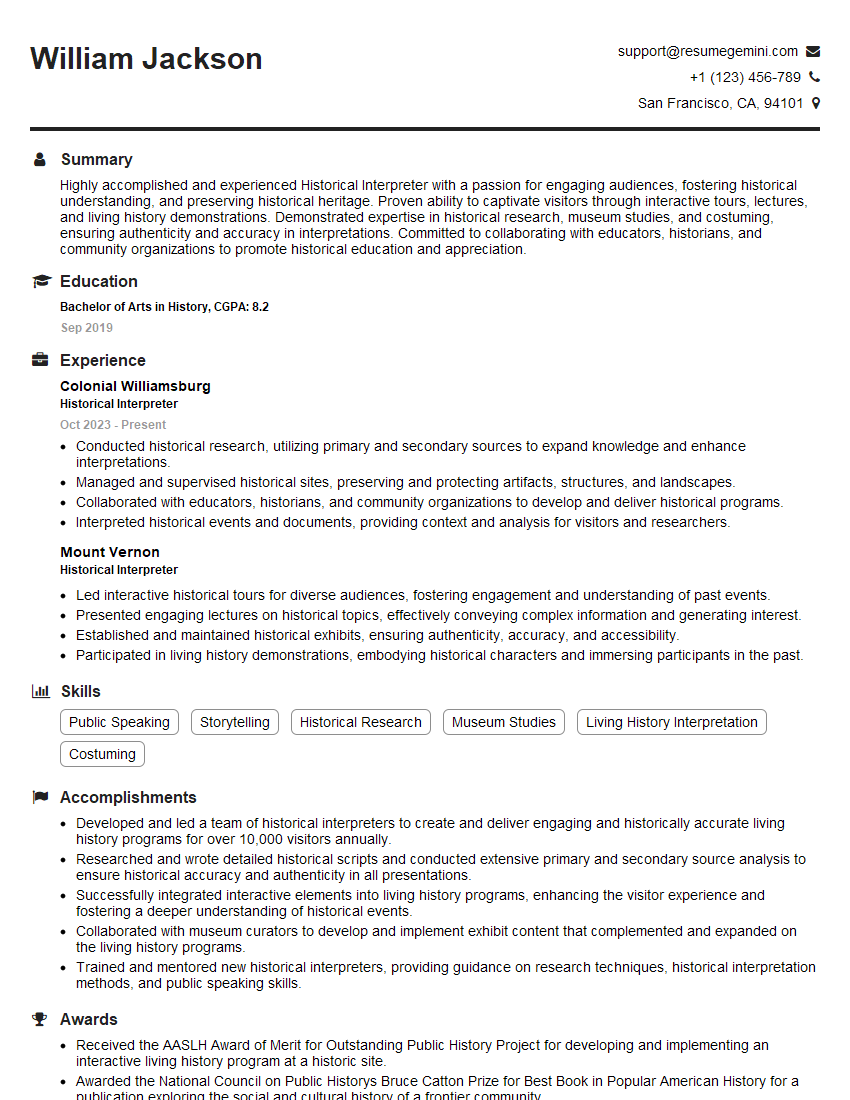
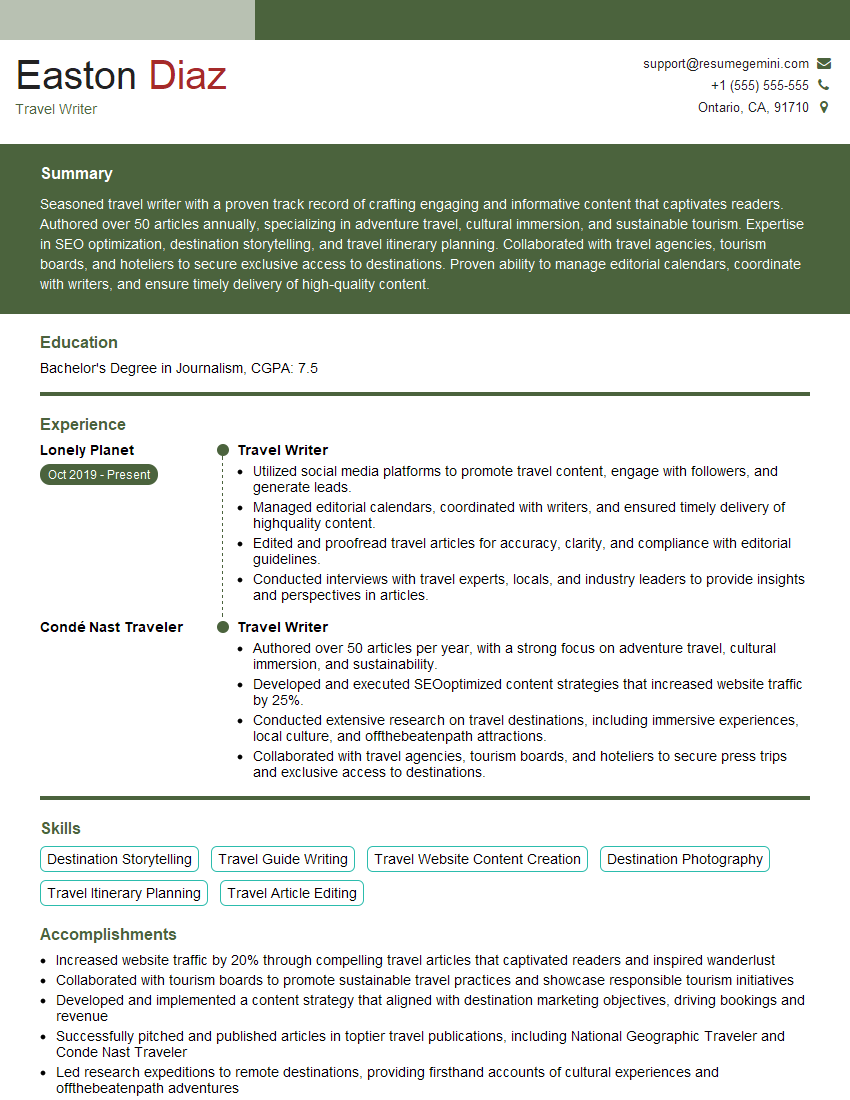
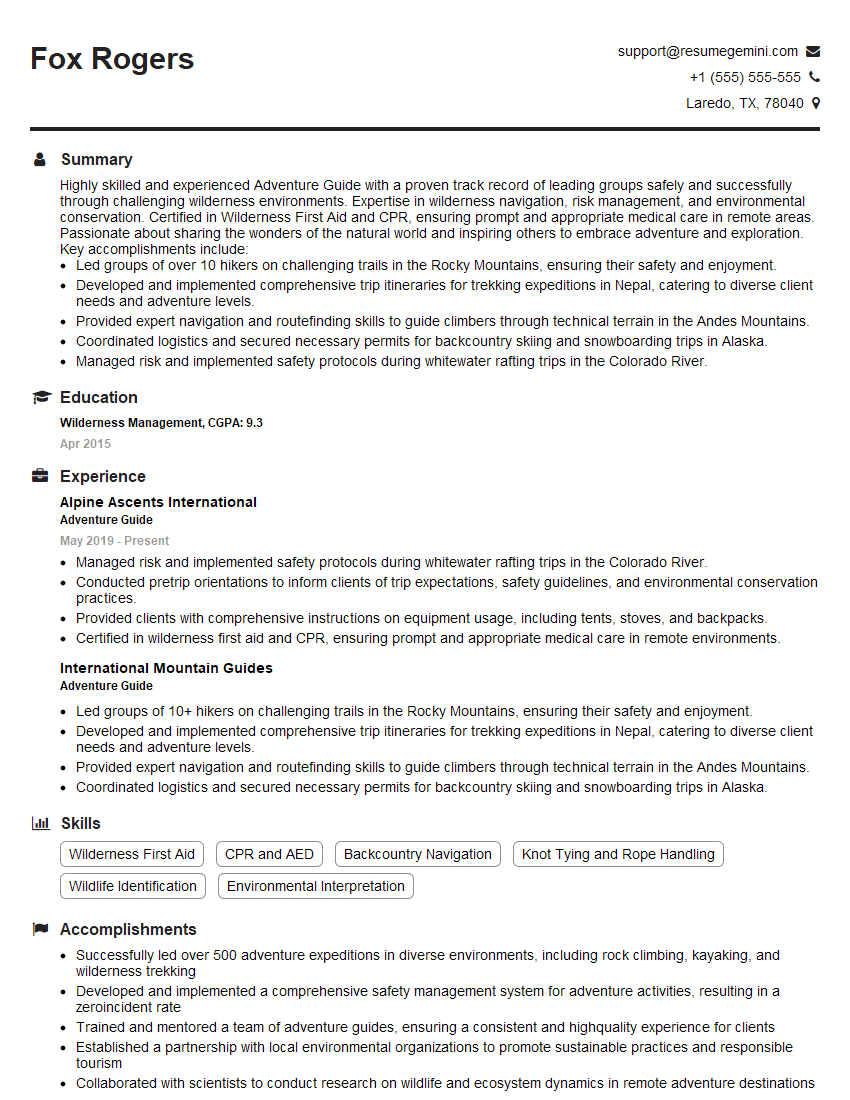
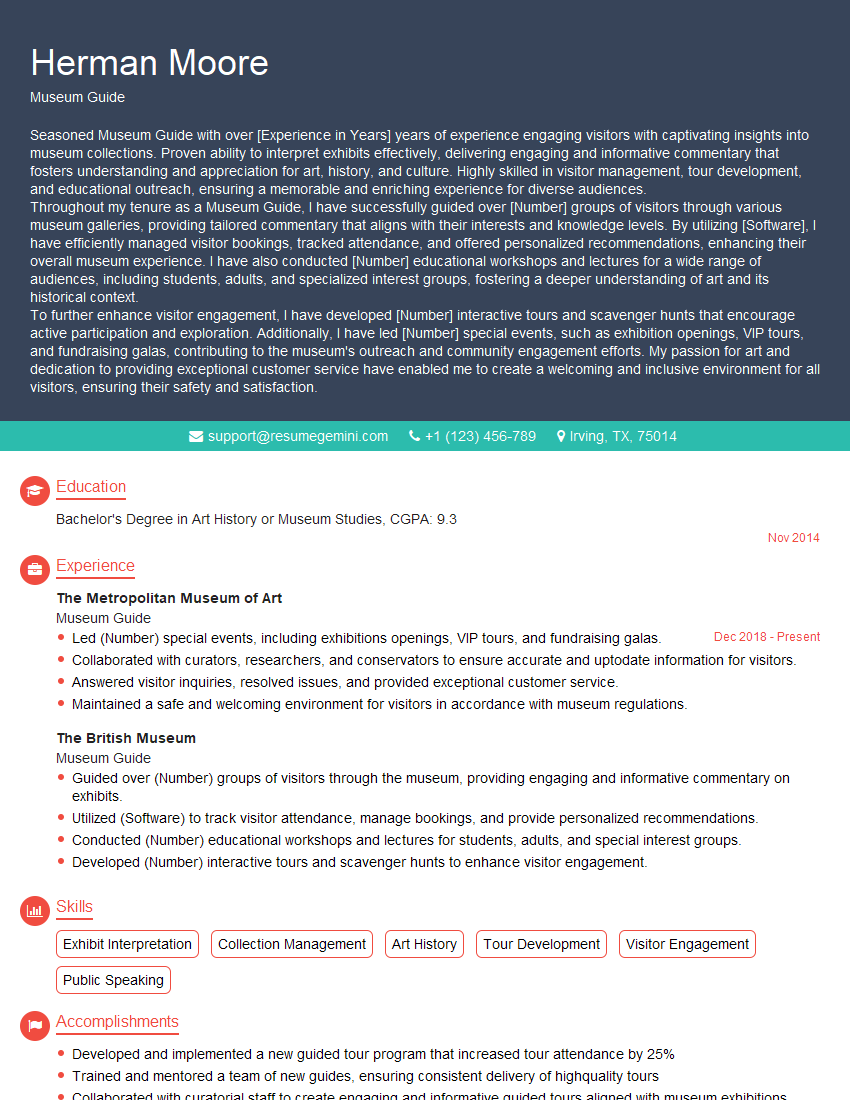
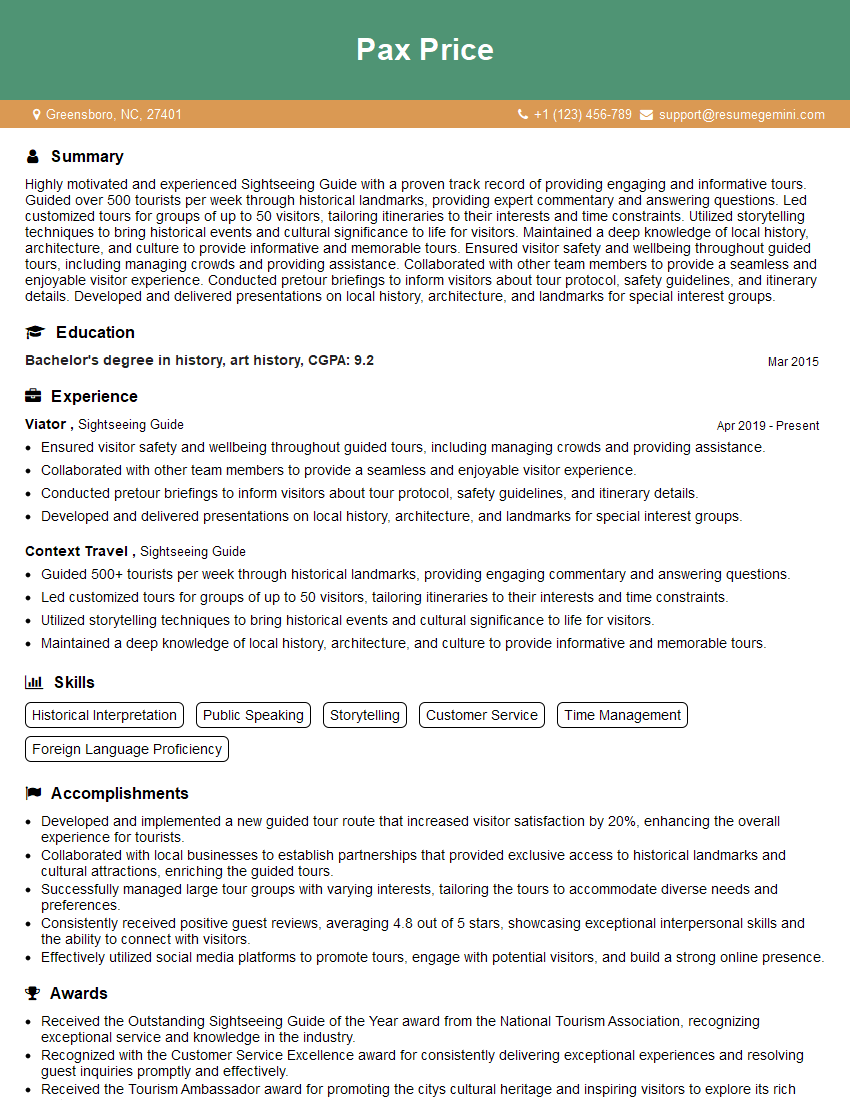
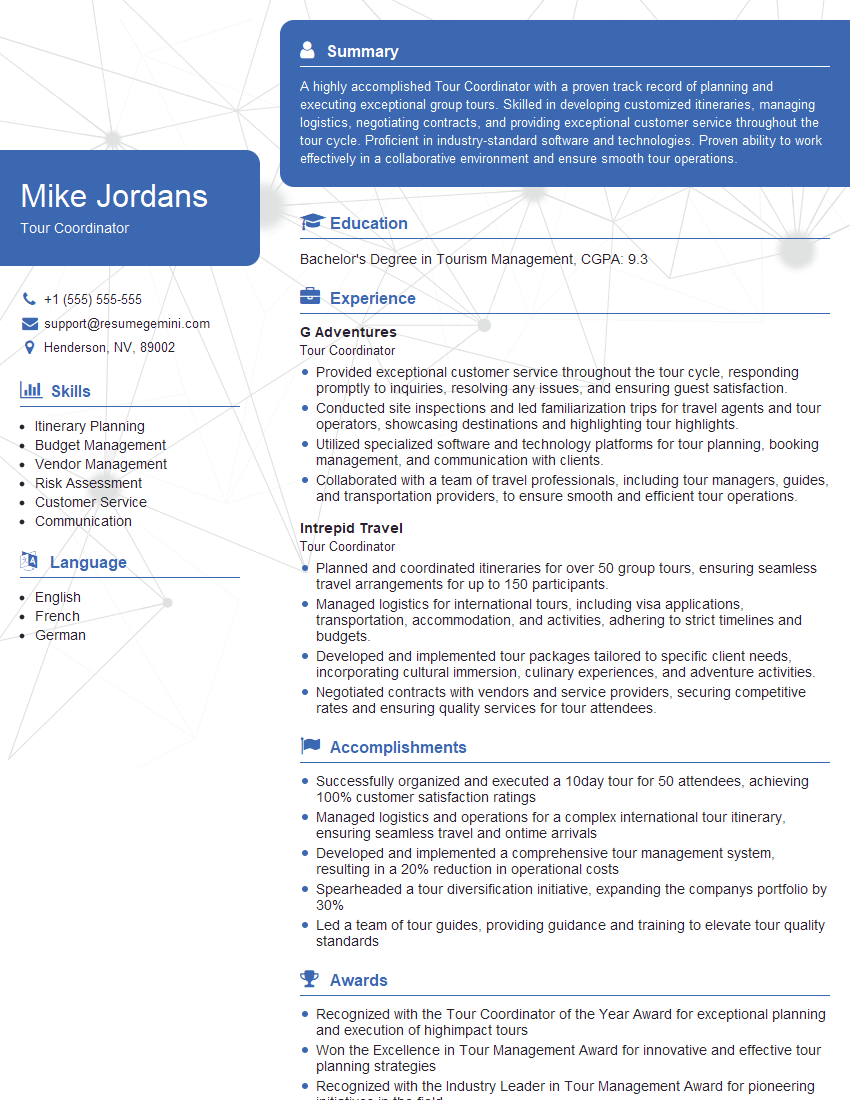
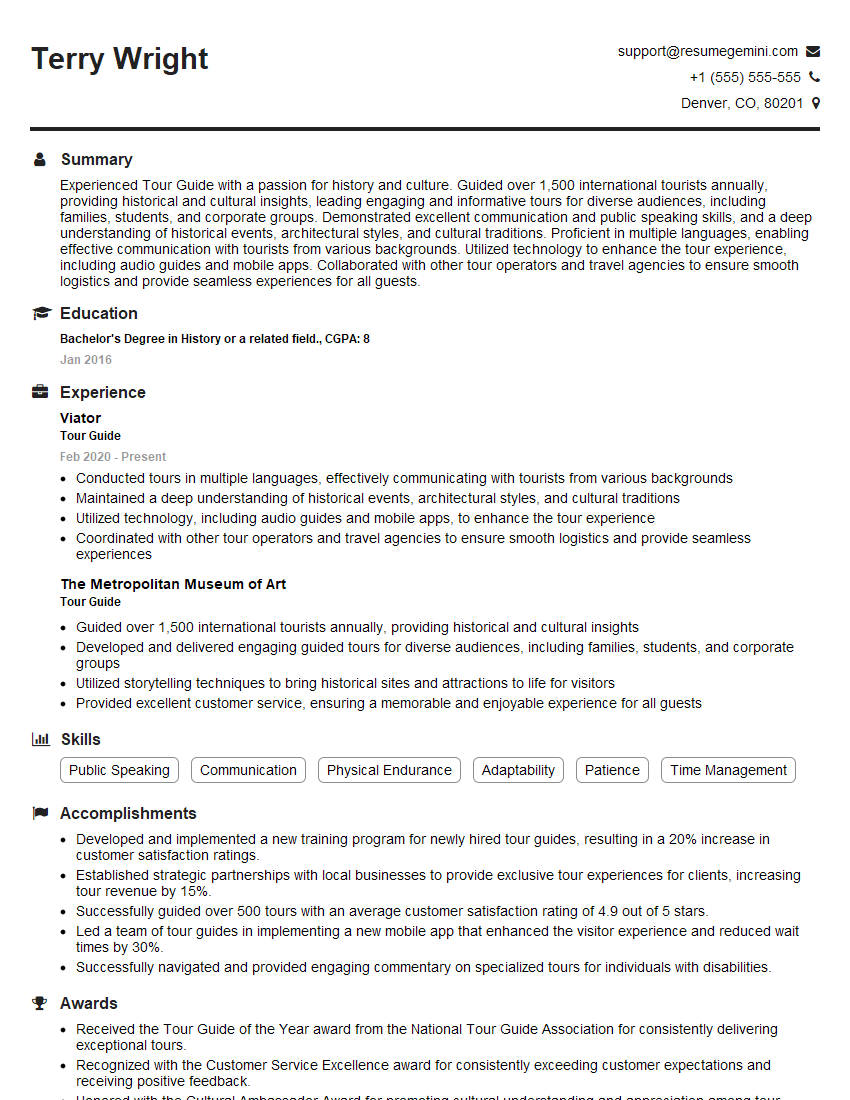
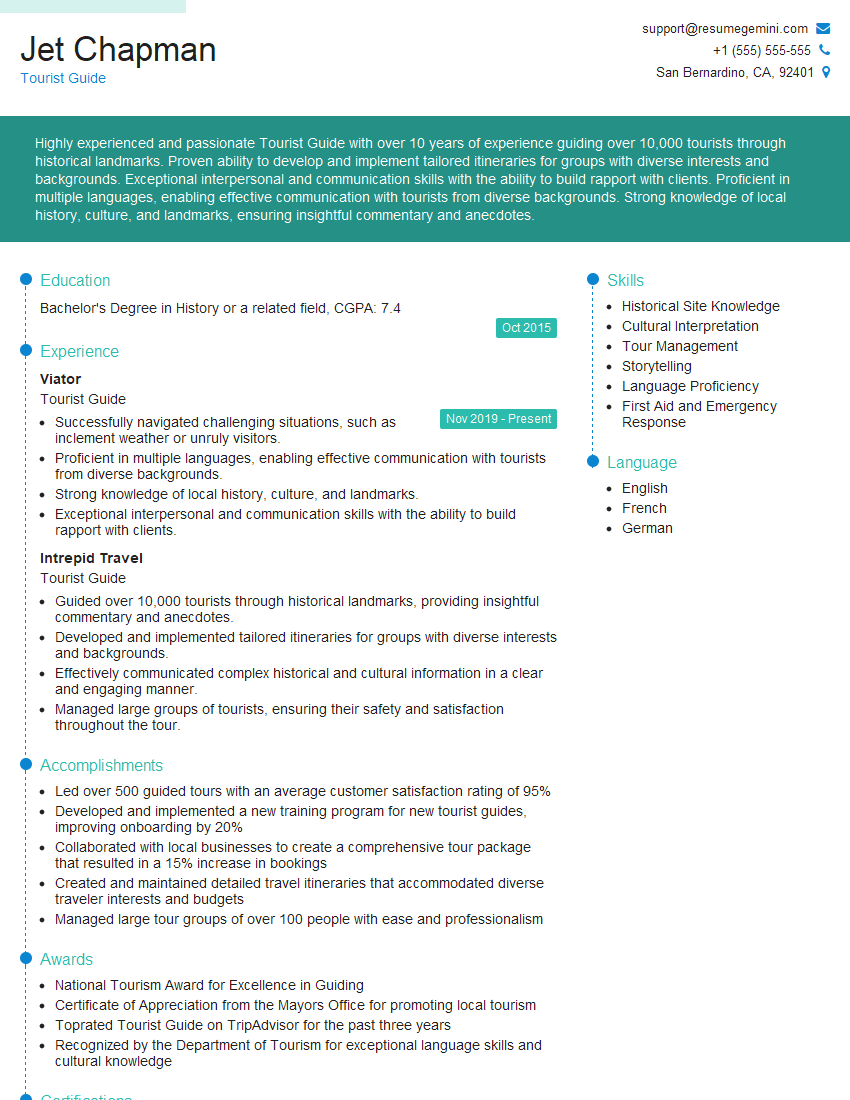
Mastering Tour Guiding and Commentary opens doors to a fulfilling and rewarding career, offering diverse opportunities for growth and travel. A strong resume is crucial for showcasing your skills and experience to potential employers. Creating an ATS-friendly resume significantly increases your chances of getting your application noticed. To build a compelling and effective resume, we highly recommend using ResumeGemini, a trusted resource designed to help you craft a professional document that highlights your unique qualifications. Examples of resumes tailored to Tour Guiding and Commentary are available to guide you through the process.

Explore more articles
Users Rating of Our Blogs
Share Your Experience
We value your feedback! Please rate our content and share your thoughts (optional).
What Readers Say About Our Blog
To the interviewgemini.com Webmaster.
Very helpful and content specific questions to help prepare me for my interview!
Thank you
To the interviewgemini.com Webmaster.
This was kind of a unique content I found around the specialized skills. Very helpful questions and good detailed answers.
Very Helpful blog, thank you Interviewgemini team.