Interviews are more than just a Q&A session—they’re a chance to prove your worth. This blog dives into essential Tracheal, Bronchial, and Esophageal Surgery interview questions and expert tips to help you align your answers with what hiring managers are looking for. Start preparing to shine!
Questions Asked in Tracheal, Bronchial, and Esophageal Surgery Interview
Q 1. Describe your experience with minimally invasive esophagectomy.
Minimally invasive esophagectomy, often performed using video-assisted thoracoscopic surgery (VATS) or robotic-assisted techniques, offers significant advantages over open surgery. My experience encompasses a wide range of minimally invasive approaches, including transhiatal, transthoracic, and hybrid techniques, tailored to the individual patient’s anatomy and tumor characteristics. For example, a patient with a small, localized tumor in the lower esophagus might be a good candidate for a VATS transhiatal esophagectomy, allowing for smaller incisions and faster recovery. Conversely, a patient with a more extensive tumor requiring a wider resection might benefit from a robotic-assisted transthoracic approach, offering enhanced dexterity and precision during complex dissection.
Preoperative planning is crucial, involving detailed imaging (CT, PET scan) to assess tumor stage, location, and involvement of adjacent structures. This helps determine the feasibility of minimally invasive surgery and guides the choice of approach. Postoperative care focuses on meticulous pain management, early mobilization, and careful monitoring for complications such as anastomotic leaks, which we manage proactively with close surveillance and appropriate interventions.
Q 2. Explain the surgical approach you prefer for tracheal resection and reconstruction.
The surgical approach to tracheal resection and reconstruction depends heavily on the location and extent of the pathology. For benign lesions, a limited resection with primary anastomosis might suffice, often performed through a cervical approach. However, malignant tumors usually necessitate more extensive procedures. I prefer a tailored approach, combining anterior cervical and median sternotomy incisions when needed for complex cases involving extensive tracheal involvement. This allows for optimal exposure and facilitates safe resection with minimal damage to adjacent structures.
Reconstruction involves meticulous techniques, such as end-to-end anastomosis for shorter resections or the use of cartilage grafts, prosthetic materials, or even jejunal interposition for more significant defects. Careful attention to airway patency and suture technique is paramount to avoid stenosis and fistula formation. Postoperative management includes intensive respiratory support, tracheostomy placement (if necessary), and vigilant monitoring for complications like infection or anastomotic dehiscence.
Q 3. What are the key considerations in managing postoperative complications after a complex bronchial resection?
Managing postoperative complications after a complex bronchial resection is a critical aspect of care that demands vigilance and a multidisciplinary approach. Potential complications include respiratory complications like pneumonia, atelectasis, and respiratory failure; bleeding; infection; and anastomotic leaks. We utilize a proactive strategy that includes meticulous surgical technique, intraoperative bronchial lavage to minimize inflammation, and meticulous hemostasis.
Postoperative care emphasizes aggressive airway clearance through physiotherapy and bronchoscopy. Early identification and treatment of infection are vital, employing broad-spectrum antibiotics guided by culture and sensitivity results. Respiratory support with mechanical ventilation might be necessary, and close monitoring of oxygen saturation, vital signs, and respiratory mechanics is crucial. Anastomotic leaks can be catastrophic, often necessitating reoperation. Early detection through chest tube output monitoring, bronchoscopy, and radiological imaging is crucial. Nutritional support is also essential, as adequate nutrition is crucial for healing and recovery.
Q 4. Discuss the different surgical techniques for esophageal atresia repair.
Esophageal atresia, a congenital anomaly where the esophagus fails to develop properly, requires surgical repair. The surgical technique selected depends on the specific type of atresia and the presence of associated anomalies, such as tracheoesophageal fistula (TEF). The most common procedure is a primary end-to-end anastomosis, aiming to connect the upper and lower esophageal segments. This is often performed via a right thoracotomy approach.
In cases with a long gap between the segments or if primary anastomosis is not feasible, various techniques are employed, including esophageal lengthening procedures (e.g., using gastric pull-up, colonic interposition) to bridge the gap. The choice depends on the patient’s age, the length of the gap, and the presence of other anomalies. Postoperative management involves careful monitoring of the anastomosis for leaks and strictures, nutritional support, and ongoing assessment of esophageal motility.
Q 5. How do you assess the suitability of a patient for video-assisted thoracic surgery (VATS)?
Assessing a patient’s suitability for video-assisted thoracic surgery (VATS) involves a multi-faceted evaluation. Factors considered include the patient’s overall health status, pulmonary function, and the nature and extent of the pathology. Patients with severe cardiopulmonary disease or significant comorbidities might not be ideal candidates. The size and location of the lesion also play a role; very large tumors or those involving critical structures might necessitate an open thoracotomy.
Preoperative imaging is vital, providing detailed visualization of the lesion and surrounding anatomy. We also assess the patient’s ability to tolerate one-lung ventilation. A thorough discussion of risks, benefits, and alternative treatment options is essential to ensure informed consent. A multidisciplinary approach, involving surgeons, anesthesiologists, and other specialists, is key to selecting the most appropriate surgical strategy for each individual patient.
Q 6. Explain your approach to managing a patient with a tracheoesophageal fistula.
Managing a patient with a tracheoesophageal fistula (TEF) requires a coordinated approach depending on the type and severity. A newborn with a TEF will require immediate stabilization to prevent aspiration pneumonia. This involves placing a nasogastric tube for decompression and ensuring airway patency. Surgical repair is usually necessary and involves separating the trachea from the esophagus and repairing both structures. The specific surgical technique varies depending on the type of TEF, but the goal is to create a functional separation between the respiratory and digestive tracts.
Postoperative management focuses on preventing complications like pneumonia, recurrent TEF, and esophageal stricture. This includes careful monitoring of the airway, nutritional support, and regular endoscopic examinations to assess the healing process. Early detection and management of any complications are crucial for optimal outcomes. Long-term follow-up is essential to address potential problems like esophageal dysmotility or strictures.
Q 7. What are the potential complications of thoracoscopic lung volume reduction surgery?
Thoracoscopic lung volume reduction surgery (LVRS) is used for patients with severe emphysema, aiming to improve lung function. However, it carries potential complications, including bleeding, infection (pneumonia, empyema), air leaks, and pneumothorax. The risk of these complications is influenced by the patient’s overall health, surgical technique, and adherence to postoperative care protocols.
Other less common but serious complications include cardiac arrhythmias, chylothorax (leakage of lymphatic fluid), and vocal cord paralysis. Careful patient selection and meticulous surgical technique are essential to minimize these risks. Postoperative monitoring and prompt management of complications are crucial. Patients require respiratory support and close observation for signs of infection, bleeding, or air leaks. Multidisciplinary management, involving respiratory therapists, pulmonologists, and critical care specialists, is often necessary for optimal patient care and to improve overall outcomes.
Q 8. Describe your experience with robotic-assisted thoracic surgery.
Robotic-assisted thoracic surgery (RATS) has revolutionized minimally invasive approaches to lung cancer, esophageal cancer, and other thoracic conditions. My experience encompasses a wide range of procedures, including lobectomies, pneumonectomies, segmentectomies, and esophageal resections. The da Vinci Surgical System, for example, provides enhanced visualization, dexterity, and precision compared to traditional open surgery. This translates to smaller incisions, less pain, reduced blood loss, shorter hospital stays, and faster recovery times for patients. I’ve particularly found RATS beneficial in cases where anatomical complexity or patient frailty makes traditional open surgery more challenging. For instance, I successfully used RATS to perform a right upper lobectomy on a patient with significant cardiopulmonary comorbidities, achieving excellent outcomes with minimal complications. The technology also allows for improved surgical precision, particularly beneficial in cases near vital structures such as the heart and major blood vessels.
Q 9. Discuss your experience in managing patients with tracheomalacia.
Tracheomalacia, the softening and collapse of the trachea, presents a significant challenge. Diagnosis typically involves flexible bronchoscopy, which allows direct visualization of the tracheal cartilage and assessment of its flexibility. Imaging studies such as CT scans can also be helpful in evaluating the severity of the collapse. Management strategies depend on the severity and the patient’s symptoms. Mild cases may only require conservative management with close monitoring. More severe cases might necessitate surgical intervention, ranging from tracheal stenting to tracheoplasty, a procedure to reconstruct and stiffen the trachea. In children, we often employ techniques to support the trachea externally until it matures. Patient selection and surgical technique are crucial to minimize complications such as stent migration or infection. I remember a young child with severe tracheomalacia who struggled to breathe. After a successful tracheoplasty, the child’s respiratory function improved dramatically, and the family expressed immense gratitude. Each case requires a tailored approach based on the patient’s specific anatomy and clinical presentation.
Q 10. How do you diagnose and treat esophageal perforation?
Esophageal perforation is a life-threatening emergency requiring prompt diagnosis and management. Diagnosis relies on a high index of suspicion in patients with chest pain, dysphagia, and fever following procedures like endoscopy or trauma. Imaging studies, such as a contrast-enhanced CT scan (using water-soluble contrast) are crucial to identify the location and size of the perforation. Treatment is primarily surgical. The approach depends on the location, size, and time since perforation. Early perforations may be managed with primary repair, while larger or delayed perforations might require resection and reconstruction, often involving a bypass procedure with a jejunostomy tube for feeding. Broad-spectrum antibiotics are essential to prevent infection. I recall a case where a patient presented with a perforation following an endoscopic procedure. Immediate surgical intervention, including primary repair and drainage, was successful in preventing sepsis and achieving a positive outcome. Timely diagnosis and aggressive management are critical in improving survival rates.
Q 11. What are the indications and contraindications for lung transplantation?
Lung transplantation is a complex procedure indicated for end-stage lung disease unresponsive to medical therapy. Key indications include cystic fibrosis, emphysema (severe COPD), pulmonary fibrosis, and pulmonary hypertension. Contraindications include active infection, significant cardiovascular disease, malignancy, irreversible neurologic disease, and significant psychosocial issues that might compromise post-operative care and adherence to medications. Careful patient selection is critical for success, including detailed assessment of pulmonary function, cardiac function, and overall health. Pre-operative evaluation involves a multidisciplinary team, assessing the risks and benefits for each individual patient. Thorough psychological assessment is also critical to ensure patient compliance with the intensive post-transplant care regimen. Ultimately, the goal is to improve quality of life and extend survival in patients with otherwise fatal lung disease.
Q 12. Describe the management of postoperative chylothorax.
Postoperative chylothorax, a leakage of lymphatic fluid into the pleural space, is a potentially serious complication of thoracic surgery. Management starts with conservative measures like chest tube drainage and dietary modifications, including a low-fat diet to reduce lymphatic flow. If conservative management fails, surgical intervention might be necessary. This can include video-assisted thoracoscopic surgery (VATS) to ligate the leaking lymphatic duct or pleurodesis to obliterate the pleural space and prevent further fluid accumulation. Somatostatin analogues can also be employed to reduce lymphatic flow. I remember a patient who developed a significant chylothorax after a pneumonectomy. Despite initial conservative management, the fluid continued to accumulate. VATS was successfully performed, identifying and ligating the damaged lymphatic vessel. This intervention effectively resolved the chylothorax, and the patient recovered without further complications. Early recognition and timely intervention are critical to minimize morbidity.
Q 13. How do you manage a patient with a tension pneumothorax in the operating room?
A tension pneumothorax is a life-threatening condition requiring immediate intervention. In the operating room, the first step is to insert a large-bore needle (typically 14-16 gauge) into the second intercostal space in the mid-clavicular line on the affected side. This allows for immediate decompression of the lung, relieving pressure on the heart and great vessels. This is followed by the insertion of a chest tube to ensure adequate drainage and prevent reaccumulation of air. The insertion site is selected based on anatomical landmarks and the suspected location of the pneumothorax. Monitoring of the patient’s vital signs and oxygen saturation is crucial throughout the procedure. Prompt recognition and immediate decompression are paramount to prevent cardiovascular collapse and death. In the operating room setting, immediate needle decompression and chest tube insertion are the mainstay of treatment, potentially followed by surgical repair of the underlying lung injury depending on the cause of the pneumothorax.
Q 14. Explain the different types of bronchial stents and their applications.
Bronchial stents are used to maintain airway patency in various conditions, including tracheal stenosis, bronchial tumors, and post-surgical airway compromise. Several types exist, including self-expanding metallic stents (SEMS), silicone stents, and covered metallic stents. SEMS are commonly used for their ability to conform to the airway and provide long-term patency. Silicone stents are often used for temporary airway support or in cases of sensitive airways. Covered metallic stents minimize tissue ingrowth and can be useful in managing airway leaks. The choice of stent depends on the specific clinical scenario, considering factors such as the location and extent of the airway obstruction, the patient’s overall health, and the anticipated duration of stent placement. For instance, a patient with malignant airway obstruction might benefit from a SEMS for palliative relief, while a patient with post-surgical tracheomalacia might require a silicone stent for temporary support. Careful consideration of the airway anatomy and potential complications, such as stent migration or infection, is crucial for appropriate selection and placement.
Q 15. Discuss your understanding of esophageal motility disorders.
Esophageal motility disorders encompass a range of conditions affecting the esophagus’s ability to transport food to the stomach. These disorders arise from dysfunction in the muscles and nerves controlling esophageal contractions and relaxation. This dysfunction can manifest as difficulty swallowing (dysphagia), chest pain (odynophagia), or regurgitation. The disorders can be broadly categorized into those affecting the upper esophageal sphincter (UES), the body of the esophagus (peristalsis), or the lower esophageal sphincter (LES).
- Achalasia: This is a condition where the LES fails to relax properly, leading to food trapping in the esophagus. Imagine a malfunctioning valve that won’t open, causing a blockage. Treatment often involves surgical myotomy (cutting the muscle to relax the sphincter) or endoscopic dilation.
- Diffuse esophageal spasm (DES): Here, the esophageal muscles contract chaotically and forcefully, causing intense chest pain and dysphagia. It’s like the muscles having a spasm, squeezing the esophagus unpredictably. Treatment focuses on managing symptoms with medication and sometimes botulinum toxin injections.
- Scleroderma: This autoimmune disease can weaken esophageal muscles, causing ineffective peristalsis and LES incompetence. The esophagus becomes atonic, like a floppy tube. Management involves lifestyle modifications, medication, and sometimes surgery for severe cases.
Diagnosis involves a combination of clinical evaluation, barium swallow studies, manometry (measuring esophageal pressure), and endoscopy. Treatment is tailored to the specific diagnosis and severity of the symptoms.
Career Expert Tips:
- Ace those interviews! Prepare effectively by reviewing the Top 50 Most Common Interview Questions on ResumeGemini.
- Navigate your job search with confidence! Explore a wide range of Career Tips on ResumeGemini. Learn about common challenges and recommendations to overcome them.
- Craft the perfect resume! Master the Art of Resume Writing with ResumeGemini’s guide. Showcase your unique qualifications and achievements effectively.
- Don’t miss out on holiday savings! Build your dream resume with ResumeGemini’s ATS optimized templates.
Q 16. Describe the perioperative management of a patient undergoing a pneumonectomy.
Perioperative management of a pneumonectomy (surgical removal of a lung) is complex and requires a multidisciplinary approach. The goal is to minimize complications and optimize patient outcomes.
- Preoperative Phase: This includes a thorough assessment of pulmonary function, cardiac status, and nutritional status. Patients undergo detailed imaging (CT scan, MRI) to assess the extent of the tumor and potential involvement of other structures. Preoperative pulmonary rehabilitation is crucial to improve lung function and exercise capacity. This might involve breathing exercises and physical therapy to strengthen respiratory muscles.
- Intraoperative Phase: The surgery itself is lengthy and technically demanding. Careful attention is paid to controlling bleeding, preserving the remaining lung tissue, and securing the chest tube placement. We utilize advanced imaging and surgical techniques (e.g., video-assisted thoracoscopic surgery, VATS, whenever possible) to minimize invasiveness.
- Postoperative Phase: Pain management is paramount. Patients are monitored closely for respiratory complications (e.g., atelectasis, pneumonia), bleeding, and infection. Early mobilization and pulmonary physiotherapy are essential to prevent complications and promote recovery. Close monitoring of oxygen saturation, respiratory rate, and vital signs is maintained throughout this period. Regular follow-up assessments are crucial to monitor for recurrence and to address any post-surgical concerns.
A typical example of a perioperative challenge would be managing a patient with poor pre-operative lung function. In such cases, we might utilize techniques like bronchoscopic lung volume reduction or even consider a less extensive lobectomy instead of a pneumonectomy to preserve as much lung tissue as possible.
Q 17. Explain the principles of lung cancer staging.
Lung cancer staging is a critical process that determines the extent of the cancer’s spread. It utilizes a system (typically the TNM system) that assesses the size and location of the primary tumor (T), the involvement of regional lymph nodes (N), and the presence of distant metastases (M). This information guides treatment decisions, predicts prognosis, and facilitates communication among healthcare providers.
- T (Tumor): This describes the size and location of the primary tumor. T1 indicates a small tumor, while T4 denotes a large tumor invading adjacent structures.
- N (Nodes): This classifies the involvement of regional lymph nodes. N0 means no lymph node involvement, while N3 indicates extensive lymph node spread.
- M (Metastases): This indicates the presence of distant metastases. M0 denotes no distant metastases, while M1 signifies distant spread.
These three components are combined to create a stage (e.g., Stage I, Stage II, Stage III, Stage IV), with Stage I representing localized disease and Stage IV indicating widespread metastasis. Other factors, such as patient performance status and comorbidities, also play a role in overall treatment planning. For instance, a Stage IA patient may be suitable for surgical resection alone, while a Stage IV patient may receive palliative chemotherapy or radiotherapy. Imaging techniques like CT scans, PET scans, and bronchoscopy are crucial in accurate staging.
Q 18. What are the various surgical options for treating esophageal cancer?
Surgical options for esophageal cancer depend on the tumor’s location, stage, and the patient’s overall health. The primary goal is to remove the cancerous tissue while preserving as much esophageal function as possible.
- Esophagectomy: This is the most common surgical approach. It involves removing the cancerous portion of the esophagus and reconstructing the pathway using a portion of the stomach or colon. There are several types of esophagectomy, including transthoracic, transhiatal, and minimally invasive approaches (e.g., VATS esophagectomy). The choice depends on factors like tumor location and the surgeon’s expertise. Imagine it like replacing a damaged pipe with a new one made from another part of the body.
- Endoscopic mucosal resection (EMR): This is a minimally invasive procedure suitable for early-stage, superficial cancers. A specialized scope is used to remove the cancerous tissue.
- Endoscopic submucosal dissection (ESD): This procedure is also minimally invasive and suitable for early-stage cancer, removing a thicker layer of tissue than EMR.
Adjuvant therapies, such as chemotherapy and radiation, are often used before or after surgery to improve treatment outcomes. The choice of surgery depends on a careful assessment of the individual patient’s condition. For instance, a patient with a very advanced tumor might be more suitable for palliative treatment than curative resection.
Q 19. Describe the techniques for performing a sleeve gastrectomy.
Sleeve gastrectomy is a restrictive bariatric surgery procedure. It involves removing a significant portion of the stomach, leaving a narrow, tube-like structure resembling a sleeve. This reduces the stomach’s capacity, leading to weight loss by limiting food intake.
The procedure is typically performed laparoscopically (minimally invasive). The surgeon inserts instruments through small incisions in the abdomen. Using advanced imaging and specialized instruments, the surgeon removes the greater curvature of the stomach, carefully preserving the pylorus (the opening to the duodenum). The remaining sleeve is then stapled closed, creating a smaller stomach pouch. The procedure is typically associated with a faster recovery time compared to more complex bariatric procedures such as Roux-en-Y gastric bypass.
A critical aspect is maintaining the integrity of the staple line to avoid leaks. Postoperative care includes monitoring for any complications, such as bleeding, infection, or leak. Patients usually require a modified diet post-operation and close nutritional monitoring. It’s important to note that a sleeve gastrectomy, like all bariatric procedures, is not a simple weight loss solution and requires a commitment to long-term lifestyle changes.
Q 20. What is your approach to managing mediastinitis?
Mediastinitis, an infection in the mediastinum (the space between the lungs), is a life-threatening condition requiring aggressive management. Early diagnosis and prompt intervention are crucial to prevent potentially fatal complications.
Our approach involves a combination of:
- Surgical debridement: This involves removing infected tissues, necrotic material, and foreign bodies. It may involve an open thoracotomy or a minimally invasive procedure. This is akin to cleaning out a wound to remove all infected material and allow it to heal.
- Antibiotic therapy: Broad-spectrum antibiotics are initiated based on culture and sensitivity testing. The antibiotics need to target the specific bacteria causing the infection.
- Drainage: Drainage of the infected mediastinum is necessary. This may be achieved using chest tubes or other drainage systems.
- Supportive care: This includes hemodynamic support, ventilatory support if necessary, and nutritional support.
The severity of the condition dictates the management approach; some patients might require multiple surgical procedures, whereas others might respond well to medical management alone. The key is aggressive early intervention, meticulous surgical debridement, and close monitoring of the patient’s response.
Q 21. Discuss your experience with the management of empyema.
Empyema, a collection of pus in the pleural space (the space surrounding the lungs), requires a multifaceted approach. The management strategy depends on the severity of the infection and the patient’s overall clinical status.
Our approach typically incorporates:
- Thoracentesis: In early-stage empyema, aspiration of the pus through a needle is performed. This is a minimally invasive way to remove the pus and obtain a sample for culture and sensitivity.
- Chest tube drainage: If thoracentesis is insufficient or the empyema is loculated (contained within compartments), a chest tube is inserted to drain the pus. This ensures ongoing drainage of the infected fluid.
- Video-assisted thoracoscopic surgery (VATS): For more complex cases, VATS is used to perform decortication (removal of the thickened pleural lining) and ensure complete drainage and resolution of infection. VATS offers a minimally invasive approach with improved recovery.
- Open thoracotomy: In severe cases, open surgery might be necessary for complete debridement and drainage. This is usually reserved for cases where other methods have failed.
- Antibiotic therapy: Appropriate antibiotics are administered based on the identified pathogen.
Regular monitoring of clinical parameters such as fever, leukocytosis, and chest X-ray findings helps guide the management strategy. The aim is to resolve the infection, restore lung function, and prevent recurrence. The specific approach is tailored to each individual patient, considering their underlying medical conditions and response to treatment. For example, an immunocompromised patient may require more aggressive treatment compared to an otherwise healthy individual.
Q 22. How do you manage a patient with postoperative bleeding after thoracic surgery?
Postoperative bleeding after thoracic surgery is a serious complication requiring immediate attention. Management depends on the severity and location of the bleed. Initial steps involve stabilizing the patient – ensuring adequate oxygenation, intravenous access, and monitoring vital signs (heart rate, blood pressure).
Mild bleeding, often managed conservatively, might involve close observation, blood transfusions if necessary, and supportive care. We’ll monitor hemoglobin levels closely.
Significant bleeding requires more aggressive intervention. This could involve returning to the operating room for surgical exploration and control of the bleeding source. This might involve identifying and ligating bleeding vessels, applying pressure, or packing the bleeding site. Angiography (X-ray imaging of blood vessels) might be used to locate and embolize (block) bleeding vessels less invasively. In some cases, interventional radiology techniques are used, allowing us to place coils or other devices into the bleeding vessel to stop the flow. The choice of treatment depends on several factors, including the patient’s overall condition, the location and severity of the bleeding, and the availability of resources.
For example, I recently managed a patient who experienced significant bleeding after a lobectomy (removal of a lung lobe). Due to the location and amount of bleeding, we had to return to the operating room to control the hemorrhage, ultimately leading to a successful outcome. Each case is unique, requiring a tailored approach.
Q 23. Explain your understanding of the anatomy relevant to tracheal and bronchial surgery.
A thorough understanding of the tracheobronchial and esophageal anatomy is paramount for safe and effective surgery. The trachea, a rigid tube reinforced by cartilage rings, branches into the right and left main bronchi, leading to the lungs. The bronchial tree further subdivides into smaller and smaller airways. Each bronchus has specific vascular supply and lymphatic drainage that surgeons must be acutely aware of to avoid complications.
The esophagus, a muscular tube for food transit, lies posterior to the trachea and bronchi in the mediastinum. Its proximity to these structures is crucial during surgery. We need to understand the relationship of the esophagus to vital structures such as the recurrent laryngeal nerves, which supply the vocal cords; damage to these can cause vocal cord paralysis. The vagus nerves and other major vessels are also in close proximity and must be carefully protected.
Key anatomical considerations include:
- Vascular supply: Knowing the branches of the pulmonary artery, bronchial arteries, and esophageal arteries is essential to avoid inadvertent injury.
- Nerve supply: Careful dissection around the recurrent laryngeal nerve and vagus nerve is critical to prevent vocal cord paralysis or other neurological deficits.
- Lymphatic drainage: Understanding the lymphatic pathways is important for staging cancers and assessing the extent of disease.
This intricate anatomy requires meticulous surgical planning and execution, often assisted by 3D imaging and intraoperative navigation.
Q 24. Describe your experience in managing patients with esophageal strictures.
Esophageal strictures, narrowings of the esophageal lumen, can result from various causes including acid reflux (esophageal damage from stomach acid), radiation therapy, caustic ingestion, or surgery. Management strategies depend on the severity and cause.
Conservative Management: Mild strictures may be managed with esophageal dilation – gradually stretching the narrowed area using progressively larger bougies (dilating instruments). This can be performed endoscopically, a minimally invasive procedure. Patients are often given medication to help relax the esophageal muscles during the procedure to lessen the chance of complications. Patients are often taught to swallow appropriately to promote self-dilation.
Surgical Intervention: For more severe or recurrent strictures unresponsive to dilation, surgical intervention might be necessary. This may involve esophageal myotomy (surgical cutting of the esophageal muscle to relax the stricture) or esophageal resection (removal of the strictured segment) with anastomosis (reconnection) of the remaining parts. Surgical options will often involve laparoscopy for less invasive procedures.
I’ve managed numerous patients with esophageal strictures, employing a combination of dilation and surgical techniques as appropriate. For example, a patient with a severe post-caustic stricture required a long course of repeated dilations and then ultimately required surgery to reconstruct the esophagus.
Q 25. How do you differentiate between benign and malignant tracheal tumors?
Differentiating between benign and malignant tracheal tumors requires a multi-modal approach.
Clinical Presentation: Benign tumors often present with less aggressive symptoms such as mild cough, wheezing, or dyspnea (shortness of breath), whereas malignant tumors might cause more severe symptoms like hemoptysis (coughing up blood), significant airway obstruction, or even distant metastasis.
Imaging Studies: CT scans and MRI provide detailed anatomical information, helping to assess the tumor’s size, location, and extent of invasion. Bronchoscopy, a procedure where a thin tube with a camera is inserted into the airway, allows for direct visualization, biopsy (tissue sampling), and sometimes even removal of the tumor. The tissue sample is sent to the pathologist who can examine it under a microscope to determine if it is cancerous (malignant) or benign.
Biopsy and Histopathology: Histopathological examination of the biopsy specimen is crucial for definitive diagnosis. Malignant tumors show atypical cells with increased mitotic activity (cell division) and evidence of invasion into surrounding tissues.
Staging: Once a malignancy is confirmed, staging (determining the extent of the disease) is performed. This may include imaging studies, bronchoscopy, and mediastinoscopy (surgical examination of lymph nodes in the chest).
In short, a combination of clinical presentation, imaging studies, and histopathological examination are necessary for accurate differentiation and management.
Q 26. What are the challenges in managing patients with tracheobronchomalacia?
Tracheobronchomalacia, the softening and collapse of the trachea or bronchi, presents unique challenges in management. The underlying cause, whether congenital or acquired (e.g., after surgery or trauma), will influence the treatment strategy.
Challenges include:
- Diagnosis: Diagnosis can be challenging, often requiring advanced imaging techniques such as fluoroscopy (real-time X-ray imaging), bronchoscopy, and computed tomography (CT).
- Symptom Variability: Symptoms can vary greatly, ranging from mild wheezing and coughing to severe respiratory distress, making management difficult to standardize.
- Treatment Options: Treatment options are limited and often depend on severity. Conservative management may include airway clearance techniques and bronchodilators, but more severe cases may require surgical intervention such as tracheal stenting or even tracheal resection and reconstruction.
- Long-term Management: Even with successful treatment, long-term follow-up and monitoring are essential, as tracheobronchomalacia can recur or worsen over time.
For example, a young child with severe congenital tracheobronchomalacia might require a tracheostomy (creating a surgical opening in the trachea) for airway management until surgical reconstruction is possible. The timing and type of intervention require careful consideration and multidisciplinary discussion.
Q 27. Describe your experience with the management of esophageal varices.
Esophageal varices, abnormal enlarged veins in the esophagus, are a serious complication of portal hypertension, most commonly caused by cirrhosis of the liver. These varices are prone to rupture, leading to life-threatening hemorrhage. Management strategies focus on preventing rupture and controlling bleeding when it occurs.
Prevention of Rupture: Non-selective beta-blockers are often used to reduce portal pressure and decrease the risk of rupture. Endoscopic band ligation, a minimally invasive procedure where rubber bands are placed around the varices to cut off their blood supply, is another effective preventive measure.
Management of Bleeding: Once bleeding occurs, prompt intervention is crucial. This typically involves endoscopic therapy, such as injection sclerotherapy (injecting a substance to cause the varices to shrink) or band ligation. In emergency situations, balloon tamponade (using a balloon to compress the bleeding vessels) might be employed to temporarily stop bleeding. Transjugular intrahepatic portosystemic shunt (TIPS) placement, a procedure to create a new pathway for blood flow, may be used to decrease portal pressure in cases that do not respond to other therapies. In some cases, a surgical approach will be necessary.
My experience includes managing numerous patients with esophageal varices. The approach is highly individualized based on the severity of the varices, the presence of bleeding, and the overall health of the patient. It is often a multi-disciplinary effort involving gastroenterologists, hepatologists and surgeons.
Q 28. Explain the use of advanced imaging techniques (CT, MRI, etc.) in the diagnosis of thoracic diseases.
Advanced imaging techniques are indispensable in the diagnosis of thoracic diseases. They provide non-invasive ways to visualize the intricate anatomy of the chest and assess the extent of various pathologies.
Computed Tomography (CT): CT scans offer detailed cross-sectional images of the chest, providing excellent visualization of the lungs, trachea, bronchi, esophagus, mediastinal structures, and blood vessels. CT scans with contrast can further enhance the visualization of vascular structures and aid in the diagnosis of conditions such as pulmonary emboli (blood clots in the lungs), aortic aneurysms, and lung cancers.
Magnetic Resonance Imaging (MRI): MRI provides superior soft-tissue contrast compared to CT, making it particularly useful in evaluating mediastinal masses, esophageal lesions, and vascular abnormalities. MRI is generally preferred for assessment of the heart and the great vessels.
Positron Emission Tomography (PET): PET scans are functional imaging techniques that measure metabolic activity. They are particularly useful in staging lung cancers, differentiating between benign and malignant lesions, and detecting distant metastases (spread of cancer to other parts of the body).
Fluoroscopy: Fluoroscopy provides real-time X-ray imaging, allowing dynamic assessment of swallowing function (esophageal motility studies) and airway patency. This is invaluable in the diagnosis of tracheobronchomalacia and other dynamic airway disorders.
The selection of the appropriate imaging modality is based on the clinical suspicion and the specific question to be answered. Often, a combination of these techniques is used to obtain the most comprehensive diagnostic information.
Key Topics to Learn for Tracheal, Bronchial, and Esophageal Surgery Interview
- Anatomy and Physiology: Detailed understanding of the trachea, bronchi, and esophagus; including their vascular supply, lymphatic drainage, and innervation.
- Surgical Techniques: Mastery of minimally invasive techniques (VATS, robotic surgery) and open surgical approaches for tracheal resection, bronchoplasty, esophageal resection, and reconstruction.
- Pre-operative Assessment and Planning: Thorough evaluation of patients, including imaging interpretation (CT, MRI, endoscopy), and development of a comprehensive surgical plan.
- Intraoperative Management: Understanding of airway management, anesthesia considerations, hemorrhage control, and strategies for minimizing complications.
- Post-operative Care: Management of pain, respiratory support, nutritional considerations, and monitoring for complications (e.g., anastomotic leak, infection).
- Oncological Principles: Knowledge of staging, treatment strategies, and prognostic factors for lung and esophageal cancers.
- Benign Conditions: Diagnosis and management of tracheal stenosis, esophageal atresia, and other benign conditions.
- Advanced Techniques: Familiarity with complex procedures like tracheal transplantation, esophageal replacement, and advanced reconstructive techniques.
- Complications and their Management: Proficient understanding of potential complications and their effective management strategies.
- Research and Innovation: Awareness of current research and advancements in the field, demonstrating a commitment to lifelong learning.
Next Steps
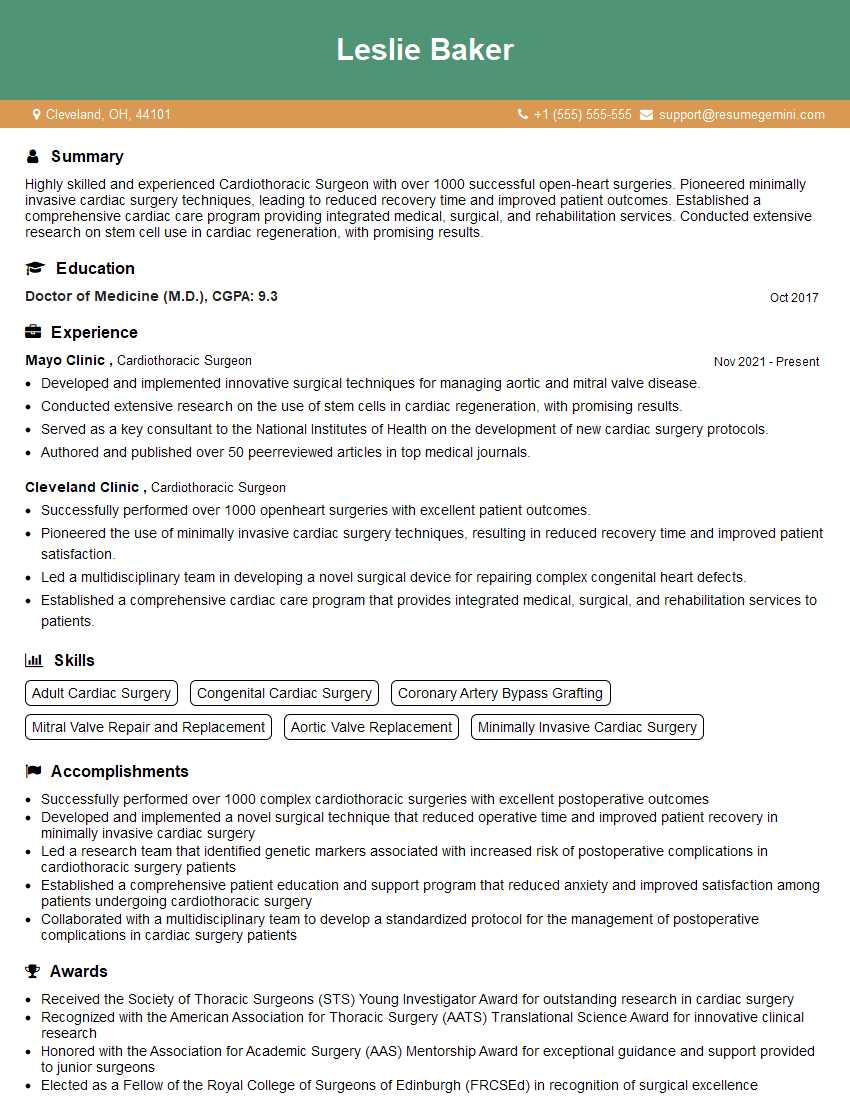
Mastering Tracheal, Bronchial, and Esophageal Surgery opens doors to specialized and highly rewarding career paths within thoracic surgery. A strong foundation in these areas significantly enhances your competitiveness in the job market. To maximize your chances of securing your dream position, crafting a compelling and ATS-friendly resume is crucial. ResumeGemini is a trusted resource that can help you build a professional and impactful resume tailored to highlight your skills and experience in this specialized field. Examples of resumes tailored to Tracheal, Bronchial, and Esophageal Surgery are available to provide you with further guidance.
Explore more articles
Users Rating of Our Blogs
Share Your Experience
We value your feedback! Please rate our content and share your thoughts (optional).
What Readers Say About Our Blog
To the interviewgemini.com Webmaster.
Very helpful and content specific questions to help prepare me for my interview!
Thank you
To the interviewgemini.com Webmaster.
This was kind of a unique content I found around the specialized skills. Very helpful questions and good detailed answers.
Very Helpful blog, thank you Interviewgemini team.