Interviews are opportunities to demonstrate your expertise, and this guide is here to help you shine. Explore the essential Trail Camera Use interview questions that employers frequently ask, paired with strategies for crafting responses that set you apart from the competition.
Questions Asked in Trail Camera Use Interview
Q 1. What are the key factors to consider when choosing a trail camera location?
Choosing the right location for a trail camera is crucial for capturing compelling footage. Think of it like setting up a stage for a wildlife show – you want the best possible view! Several key factors determine the ideal spot. First, animal activity is paramount. Look for signs of wildlife like tracks, droppings, or well-worn paths. Second, line of sight is key. Position the camera to avoid obstructions like dense vegetation that could block your view. Third, security is vital. Conceal the camera well to prevent theft or damage, utilizing natural camouflage whenever possible. Fourth, consider the lighting. Cameras need enough light to take clear pictures, especially at night. Finally, accessibility matters. You need a location you can easily access to retrieve the SD card, change batteries, and perform maintenance.
Example: I once placed a camera overlooking a salt lick in a remote area. The salt lick attracted deer, elk, and even bears, resulting in incredible footage. However, I had to consider the difficult terrain when choosing the location, ensuring it was accessible even during the winter months.
Q 2. Explain the different types of trail cameras and their functionalities.
Trail cameras fall into several categories, each with unique features. The most common is the basic scouting camera. These are budget-friendly, offering decent image quality and basic features like motion detection. They are perfect for casual wildlife observation. Next, we have cellular trail cameras. These transmit images directly to your phone or computer via cellular networks, allowing for real-time monitoring, which is invaluable for immediate insights. A step up are high-definition cameras, offering superior image quality and details, capturing even fine nuances in the environment. Finally, there are specialized cameras designed for specific tasks like long-range detection, time-lapse photography, or video recording. The selection depends heavily on your budget, the complexity of the monitoring task, and the level of detail required.
Q 3. How do you ensure optimal image quality in various lighting conditions?
Optimal image quality in varied lighting conditions requires understanding your camera’s capabilities and adjusting settings accordingly. During daytime, ensure the camera’s flash is disabled to avoid disturbing wildlife and obtain more natural-looking images. Nighttime photography requires utilizing infrared (IR) illumination. Modern cameras have powerful IR LEDs, allowing for clear images even in complete darkness. However, it’s important to note that some animals are sensitive to IR light. A good strategy is experimenting with different flash settings and IR ranges. For low-light conditions, adjusting the camera’s sensitivity (ISO) can help, although higher ISO values may introduce noise. Another crucial factor is lens quality. A high-quality lens will gather more light, leading to sharper images in low light. Finally, careful camera placement, ensuring no backlighting or harsh shadows is critical for optimized imaging, no matter the lighting condition.
Q 4. Describe your experience with setting up and maintaining trail cameras in challenging terrains.
Setting up and maintaining trail cameras in challenging terrains demands resilience and careful planning. I’ve worked in dense forests, rocky mountains, and swampy wetlands. Securing cameras in such environments requires sturdy mounting techniques. I often use strong straps, bolts, or even custom mounts to secure the cameras to trees or rocks. Protecting them from the elements is vital; I use waterproof cases or protective housings, especially in harsh climates. Navigation to remote locations often involves using GPS devices and compass, mapping trails to ensure the safety and easy retrieval of the cameras. Maintenance involves regular battery checks and SD card swaps. In challenging terrains, this could involve days of hiking or using all-terrain vehicles to access the cameras. Wildlife behavior always needs to be considered, hence, ensuring the cameras are placed safely away from potential hazards.
Q 5. What are the common troubleshooting steps for malfunctioning trail cameras?
Troubleshooting malfunctioning trail cameras involves a systematic approach. First, check the batteries – low power is the most common cause of failure. Next, verify the SD card is correctly inserted and has sufficient storage space. Examine the camera’s settings to ensure motion detection is enabled, the date and time are correct, and the image resolution is appropriate. If the camera is still malfunctioning, check the lens for dirt, debris, or damage. Sometimes, the issue might be related to extreme temperatures; ensure the camera is stored correctly during non-usage or extreme temperatures. If none of the above resolves the problem, it could indicate a hardware failure, requiring repair or replacement. Keeping a log of your camera placement and functioning is vital for quick diagnosis.
Q 6. How do you manage and organize large datasets from multiple trail cameras?
Managing large datasets from multiple trail cameras requires a well-structured approach. I start by clearly labeling each camera’s location and deployment date. Then, I utilize a robust file naming convention, including camera ID, date, and time. This ensures efficient sorting and organization. Once downloaded, I use image-management software to batch rename, sort and even create preliminary analysis. Cloud storage solutions are helpful for archiving and backing up large amounts of data, and cloud-based photo management tools can make searching and analyzing the images easier. Developing a structured database to record meta-data (location, date, species observed, camera settings) enhances the research value of the data. It is important to be mindful of storage space and data backup procedures to maintain data integrity.
Q 7. What software or tools are you proficient in for analyzing trail camera data?
I am proficient in several software and tools for analyzing trail camera data. For image management and organization, I use tools like Adobe Lightroom or similar software. For detailed species identification, I leverage online databases and expert resources to aid in species identification. For quantitative analysis, I use spreadsheet software like Microsoft Excel or Google Sheets to analyze data points such as counts, timestamps, and activity patterns. In more complex scenarios involving large datasets, I employ statistical analysis software packages such as R or Python with relevant libraries for data visualization and modeling. The choice of software depends on the project’s complexity and the specific analytical questions being addressed.
Q 8. Explain your process for identifying different animal species from trail camera images.
Identifying animal species from trail camera images requires a multi-faceted approach combining image analysis with a strong understanding of local fauna. It’s like a wildlife detective’s puzzle!
Visual Identification: This is the primary method. I start by focusing on key features like size, shape, coat color and patterns, tail length, ear shape, and unique markings. For instance, distinguishing a bobcat from a lynx involves carefully scrutinizing ear tufts and tail length. A longer tail usually points to a bobcat.
Behavioral Clues: Animal behavior provides valuable context. A deer gracefully leaping across a stream is easily identified, but understanding gait patterns and hunting strategies can help identify elusive predators even when only partially visible.
Location Data: Knowing where the image was captured significantly narrows the possibilities. A species commonly found in a specific habitat is more likely to be the subject in an image from that location.
Reference Materials: I constantly rely on field guides, online databases, and images from trusted sources. Comparing images side-by-side helps eliminate uncertainty. Apps and online resources that use image recognition can also be helpful, but always cross-reference with reliable sources.
Consultation: In challenging cases, consulting with other experts or wildlife biologists is crucial to ensure accuracy. Sometimes a second set of eyes and a deeper knowledge of specific species can make all the difference.
Q 9. How do you ensure the ethical and responsible use of trail cameras?
Ethical and responsible trail camera use is paramount. It’s about minimizing our impact on wildlife while maximizing the value of our data.
Placement: I carefully select camera locations to avoid disturbing sensitive habitats or animal trails. Cameras should be unobtrusive and ideally camouflaged.
Privacy: I’m mindful of potential impacts on human privacy, particularly near residential areas or private property. I always obtain necessary permissions before deploying cameras on private land.
Data Use: I adhere to strict guidelines regarding data storage, access, and sharing. This includes anonymizing any potentially identifying information about individuals and carefully considering the potential implications of data sharing with third parties.
Wildlife Welfare: I ensure that camera activity and placement do not pose a risk to animals’ safety. For instance, avoiding flashing lights during nighttime captures and avoiding placement in high-traffic areas.
Legal Compliance: It’s vital to stay up-to-date with all local, state, and national regulations regarding wildlife monitoring and data collection.
Q 10. Describe your experience with data security and privacy related to trail camera data.
Data security and privacy are critical when working with trail camera data. We’re dealing with sensitive information, potentially involving unique animal identifiers, location data, and timestamps. Think of it as safeguarding a wildlife ‘secret identity’!
Data Encryption: I use strong encryption methods, both during data transfer and storage, to protect against unauthorized access. This ensures that even if data is intercepted, it cannot be readily deciphered.
Secure Storage: I utilize secure storage methods, including password-protected drives and cloud storage with robust security protocols. I implement multi-factor authentication whenever possible.
Access Control: Access to the data is strictly controlled. Only authorized personnel with a legitimate need to access the data are granted permissions.
Data Anonymization: To protect animal identities and location details when sharing data, I use data anonymization techniques where possible. This could involve removing GPS coordinates or blurring identifying features.
Regular Audits: I conduct regular security audits to ensure that our systems and processes remain secure and up-to-date.
Q 11. How do you handle missing or corrupted data from trail cameras?
Missing or corrupted data is an unfortunate reality of working with trail cameras. It’s like encountering a missing page in a wildlife diary. However, there are strategies to handle these challenges.
Regular Checks: Frequent checking of the cameras reduces the risk of prolonged data loss and allows for timely intervention.
Data Backup: Implementing regular backups to a separate storage medium is crucial. This helps to recover data in case of card failure or corruption.
Card Formatting: Using a high-quality SD card and formatting it properly can prevent some corruption issues. Avoid removing cards while the camera is writing data.
Data Recovery Software: If data corruption occurs, specialized data recovery software can sometimes retrieve lost information. However, success is not guaranteed.
Documentation: Keeping careful logs of camera deployments, including dates, locations, and any observed issues, helps track down potential sources of data loss.
Q 12. What are the limitations of using trail cameras for wildlife monitoring?
Trail cameras, while incredibly useful, have limitations. They provide a snapshot of wildlife activity, not the whole story. Think of it as looking through a keyhole – you see a glimpse but not the full picture.
Sampling Bias: Cameras only capture images within their limited field of view, creating a biased representation of the overall animal population. Animals could be avoiding the camera, or the camera could be in a less-used part of the habitat.
Habitat Representation: Cameras can’t capture data from areas inaccessible to them.
Species Identification Challenges: Some species are challenging to identify accurately from images alone, especially if only a part of the animal is visible.
Technological Limitations: Image quality can be affected by factors like lighting, weather, and camera technology limitations. This can impact accuracy and reliability of data.
Behavioral Influence: The presence of a camera itself might alter animal behavior, leading to less natural patterns.
Q 13. How do you calibrate trail cameras to minimize inaccuracies?
Calibrating trail cameras helps ensure accuracy and consistency in data collection. It’s like fine-tuning a scientific instrument for optimal results. While there’s no single calibration method for every camera, certain practices are universal.
Testing: Before deploying a camera, I conduct thorough testing to ensure proper image quality and functionality in various lighting conditions. This involves taking multiple test shots.
Image Review: Regularly reviewing images during and after deployments helps identify any issues with focus, lighting, or triggering mechanisms. This helps spot and correct problems early on.
Sensor Adjustment: Many cameras allow adjustments to trigger sensitivity and detection range. Fine-tuning these settings based on the environment and target species improves accuracy.
Camera Placement: Strategic placement minimizes chances of false triggers and helps get clearer images of the target animals.
Maintenance: Regular cleaning of the camera lens and sensor prevents accumulation of debris that can affect image quality.
Q 14. What are the best practices for battery management in trail cameras?
Battery management is crucial for prolonged trail camera operation. A dead battery means lost data and wasted effort. Think of it as refueling your wildlife observation mission.
High-Capacity Batteries: Utilize high-capacity rechargeable batteries to maximize operational time between changes.
Battery Type: Using batteries specifically designed for low-temperature operation is essential for extended use in cold environments.
Regular Checks: Monitor battery levels regularly and replace batteries before they completely drain.
Power Saving Modes: Utilize the power-saving modes offered by many cameras. This involves optimizing image resolution and video settings to reduce power consumption without drastically affecting data quality.
Low-Power Accessories: Use low-power infrared (IR) flash settings for nighttime photography. Overly bright flashes can both drain the battery and affect the wildlife’s behavior.
Q 15. How do you deal with issues like theft or vandalism of trail cameras?
Camera theft and vandalism are unfortunately common issues in remote settings. My approach is multi-faceted, focusing on deterrence and mitigation. Firstly, I prioritize discreet camera placement. Blending the camera with its surroundings, using camouflage or natural cover, makes it less conspicuous to potential thieves. Secondly, I utilize robust mounting solutions; securely attaching the camera to a sturdy tree or post significantly increases the difficulty of removal. Thirdly, I often use locking devices on the camera itself or on the memory card compartment for added security. Lastly, in particularly high-risk areas, I consider employing alternative surveillance methods or working with local landowners or authorities to monitor the area.
For example, in a recent project monitoring endangered birds, I used a combination of camouflage, a strong metal mounting bracket bolted to a tree, and a lockable enclosure protecting the SD card. This helped prevent the loss of valuable data during a period of particularly high poaching activity in the area.
Career Expert Tips:
- Ace those interviews! Prepare effectively by reviewing the Top 50 Most Common Interview Questions on ResumeGemini.
- Navigate your job search with confidence! Explore a wide range of Career Tips on ResumeGemini. Learn about common challenges and recommendations to overcome them.
- Craft the perfect resume! Master the Art of Resume Writing with ResumeGemini’s guide. Showcase your unique qualifications and achievements effectively.
- Don’t miss out on holiday savings! Build your dream resume with ResumeGemini’s ATS optimized templates.
Q 16. Explain your experience with using different types of memory cards in trail cameras.
Memory card selection is crucial for trail camera success. I’ve experimented with various card types, and my experience shows that high-capacity cards with a high speed rating are essential. Specifically, I primarily use high-endurance, Class 10 or UHS-I rated SD cards with capacities ranging from 32GB to 256GB, depending on the project duration and expected capture frequency. I’ve found that cheaper cards often fail under the conditions of a trail camera. They might corrupt data, experience read/write errors or simply fail completely because of moisture, extreme temperature, or constant write cycles.
For instance, I once lost irreplaceable data due to a lower-quality card failing mid-project. Since then, I’ve standardized on higher-end brands known for reliability. Regular card formatting and data backups are equally crucial to maintain data integrity.
Q 17. How do you interpret trail camera data to inform management decisions?
Interpreting trail camera data is a crucial step in informing management decisions. The process involves analyzing various aspects of the collected images and videos. This includes identifying the species present, assessing their activity patterns (day/night, seasonal variations), estimating abundance, and understanding habitat use. This information then informs decisions related to habitat management, species conservation, and human-wildlife conflict mitigation. I use specialized software to sort through images and identify key variables like animal presence and activity levels.
For example, a study where we used trail camera data to demonstrate the impact of habitat fragmentation on deer movement patterns led to recommendations for creating wildlife corridors. These corridors are now being incorporated into land management plans to enhance connectivity among habitat patches.
Q 18. What are the legal and regulatory considerations for using trail cameras?
Legal and regulatory considerations for trail camera use are significant and vary greatly depending on location. It’s imperative to be aware of local, regional, and national laws regarding wildlife observation, privacy, and property rights. In many jurisdictions, explicit permission is needed to place cameras on private land. Furthermore, regulations on the types of wildlife that can be monitored might exist. Some areas have strict rules against disturbing wildlife or capturing images in sensitive areas. It’s crucial to understand and comply with these regulations before deploying cameras.
For instance, before deploying cameras on public land, I always obtain the necessary permits from relevant authorities. In areas with human populations, I carefully consider privacy concerns. If there is any potential for capturing images of individuals without their consent, I take measures to avoid doing so or obtain consent beforehand.
Q 19. How do you ensure the longevity and durability of trail cameras in harsh environments?
Ensuring the longevity of trail cameras in harsh environments demands a careful approach. I prioritize rugged, weatherproof cameras designed to withstand extreme temperatures, moisture, and impacts. Proper camera placement is also vital. Cameras should be shielded from direct sunlight, heavy rain, and snow accumulation. Regular maintenance, such as cleaning the lens and checking battery levels, extends their operational life significantly. I also opt for cameras with durable housings and robust mounting systems, ensuring they can withstand the elements and potential animal interference.
In one project, I used waterproof housings and protective covers to safeguard cameras deployed in a tropical rainforest. Regular inspection and battery changes, coupled with the robust camera design, allowed us to gather data uninterrupted for an entire year.
Q 20. Describe your experience in using time-lapse photography with trail cameras.
Time-lapse photography with trail cameras offers unique insights into ecological processes occurring over extended periods. While most trail cameras operate on motion detection, they can be configured for time-lapse mode, capturing images or videos at predetermined intervals. This allows for documenting gradual changes, such as plant growth, landscape alterations, or slow animal movements. Analyzing these sequences reveals information not readily apparent from typical motion-activated recordings. The analysis usually requires specialized software capable of processing and assembling time-lapse sequences.
For example, I used time-lapse to monitor the growth of vegetation after a wildfire, capturing the stages of regrowth and ecological succession over several months. This provided invaluable data for ecological restoration efforts. It’s worth noting that batteries will deplete faster with continuous recording.
Q 21. How do you utilize trail camera data to estimate animal population density?
Estimating animal population density using trail camera data is a complex task, but it can be achieved using various techniques. The simplest involves counting individual animals detected during a specific period, often correcting for detection probability (the chance that an animal will be captured on camera) which varies by species and camera setup. More sophisticated methods use occupancy modeling, a statistical approach that accounts for imperfect detection to estimate the proportion of the area occupied by the target species. These estimations are most accurate when the study area is well-defined, cameras are strategically placed, and enough sampling time is provided.
A recent project used camera trap data alongside other data sources (e.g., scat surveys) to produce a better estimate of the population density of a rare deer species. By combining multiple data sources and applying statistical modeling, we significantly improved the accuracy of our population estimates.
Q 22. What are the advantages and disadvantages of using cellular-enabled trail cameras?
Cellular-enabled trail cameras offer significant advantages in remote monitoring, primarily the ability to receive images and videos in real-time or near real-time without physically retrieving the camera’s SD card. This is particularly useful for large study areas or locations with difficult access. Think of it like having a live feed from the wilderness, instantly alerting you to activity.
- Advantages: Real-time data access, improved monitoring efficiency, reduced fieldwork, immediate alerts for significant events (e.g., rare species sighting).
- Disadvantages: Higher initial cost, reliance on cellular network coverage (which can be unreliable in remote areas), potential for higher data usage charges, increased risk of theft due to higher value, and potential for data security concerns.
For example, I once used a cellular camera to monitor a sensitive nesting site. The real-time alerts allowed for immediate response to potential disturbances, ensuring the nest’s protection.
Q 23. Explain your experience working with GPS-enabled trail cameras.
GPS-enabled trail cameras add a crucial layer of geospatial information to the data they collect. Each image or video is tagged with precise coordinates, eliminating the need for manual location mapping. This is especially important when working across large study areas with multiple cameras. Think of it as adding a built-in map to each photo.
My experience with GPS cameras has been largely positive. They drastically improve the accuracy of data analysis, especially when assessing habitat use or home ranges. For instance, I used GPS cameras in a project studying bobcat movement patterns. By analyzing the GPS coordinates from each photo, we could accurately map their movements, identify core areas, and understand their habitat preferences.
Q 24. How do you analyze trail camera data to identify animal behavior patterns?
Analyzing trail camera data to understand animal behavior is a multi-step process. It starts with organizing and cataloging the images. I typically use software designed specifically for managing trail camera data – they allow for filtering images, sorting by date/time, and tagging species. This allows for efficiency.
Next, I examine activity patterns: frequency of visits, time of day/night activity, and the sequence of events. For example, consistent activity at dawn and dusk could suggest crepuscular behavior. Analyzing the images, especially those showing multiple animals, can also reveal social interactions, such as territorial disputes or mating rituals. Statistical analysis can quantify these patterns, providing objective measures of behavioral differences.
Finally, I cross-reference this data with other environmental information, like weather patterns or habitat features, to get a holistic view of behavior. For example, a reduction in activity during a storm might explain decreased sighting numbers.
Q 25. Describe your method for identifying individual animals based on trail camera images.
Identifying individual animals is crucial for detailed population studies. It’s often a challenging task, requiring careful observation of unique markings and characteristics. I use a combination of approaches.
- Unique Markings: Scars, patches of fur, or unusual antler formations can serve as individual identifiers. I create detailed marking maps or use photo-comparison software to track individuals across multiple images.
- Body Size and Shape: Comparing body size and shape across images helps distinguish between individuals, especially when coupled with other identifying features.
- Natural Variation: While using software for image comparison, I also verify that apparent differences are not merely differences in camera angle, lighting, or image quality.
I once worked on a project identifying individual snow leopards based on their unique spot patterns. We developed a detailed catalog of individual spot patterns and could effectively track individual movements and interactions.
Q 26. How do you use trail camera data to assess habitat use by different species?
Assessing habitat use involves analyzing the locations where animals are detected by the trail cameras in relation to specific habitat characteristics. I begin by creating a map of the study area overlaying camera locations and habitat features like vegetation types, elevation, water sources, and human disturbance levels.
Next, I assess the frequency of animal sightings in relation to each habitat type. Higher sighting frequencies in a particular habitat suggest preference for that type. I also use statistical analysis to determine if observed differences in habitat use are statistically significant. Geographic Information Systems (GIS) are immensely helpful for visualization and analysis in this context.
For example, I’ve used this method to show a species preference for forested areas with high tree density, demonstrating their use of such habitat for foraging or shelter.
Q 27. What are some innovative applications of trail cameras you are familiar with?
Trail cameras have expanded beyond traditional wildlife monitoring. They are increasingly used in:
- Agriculture: Detecting crop damage, identifying pests, and monitoring livestock.
- Security: Monitoring remote properties, enhancing security measures, and deterring trespassing.
- Conservation: Studying rare or endangered species, monitoring poaching activity, and assessing the impact of conservation efforts.
- Citizen Science: Engaging the public in wildlife monitoring and collecting data for research purposes.
I’m particularly interested in their application in citizen science projects, empowering communities to participate directly in wildlife research and conservation.
Q 28. Explain your experience in collaborating with other researchers or professionals using trail camera data.
Collaboration is essential in trail camera research. I regularly collaborate with other researchers, wildlife managers, and conservation organizations. This usually involves sharing data, analyzing results jointly, and combining datasets to address broader ecological questions.
For example, in a recent project studying the impact of habitat fragmentation on wildlife movement, I worked with a team of ecologists and GIS specialists to analyze data collected from trail cameras across a fragmented landscape. This combined expertise enabled a deeper analysis than could have been achieved alone. Data sharing is often done through secure cloud platforms, allowing for transparent and efficient data management.
Key Topics to Learn for Trail Camera Use Interview
- Camera Placement and Deployment Strategies: Understanding optimal locations for maximizing wildlife capture, considering factors like terrain, wind direction, and animal movement patterns.
- Camera Settings and Functionality: Mastering settings such as time-lapse photography, trigger sensitivity, image resolution, and night vision capabilities. Practical application: Troubleshooting common camera malfunctions in the field.
- Data Management and Organization: Efficiently organizing and archiving captured images and videos. This includes file naming conventions, data backup strategies, and using software for image analysis.
- Image and Video Analysis: Identifying and interpreting captured images and videos. Differentiating between various species, analyzing animal behavior, and recognizing potential issues with camera placement or settings.
- Wildlife Behavior and Ecology (Basic): Understanding basic wildlife behavior to anticipate animal movement and improve image capture success. This could include understanding animal activity patterns based on time of day or season.
- Troubleshooting and Maintenance: Identifying and resolving common problems such as low battery life, SD card errors, and malfunctioning sensors. Proactive maintenance to ensure reliable camera operation.
- Legal and Ethical Considerations: Understanding regulations related to wildlife observation and camera placement on private and public lands. Adhering to ethical guidelines for wildlife research and monitoring.
Next Steps
Mastering trail camera use opens doors to exciting career opportunities in wildlife management, conservation, research, and ecological monitoring. To stand out, you need a resume that showcases your skills effectively. An ATS-friendly resume is crucial for getting your application noticed by recruiters. ResumeGemini is a trusted resource that can help you craft a compelling and ATS-optimized resume tailored to highlight your trail camera expertise. Examples of resumes specifically designed for trail camera use positions are available to guide you.

Security Specialist Resume Sample
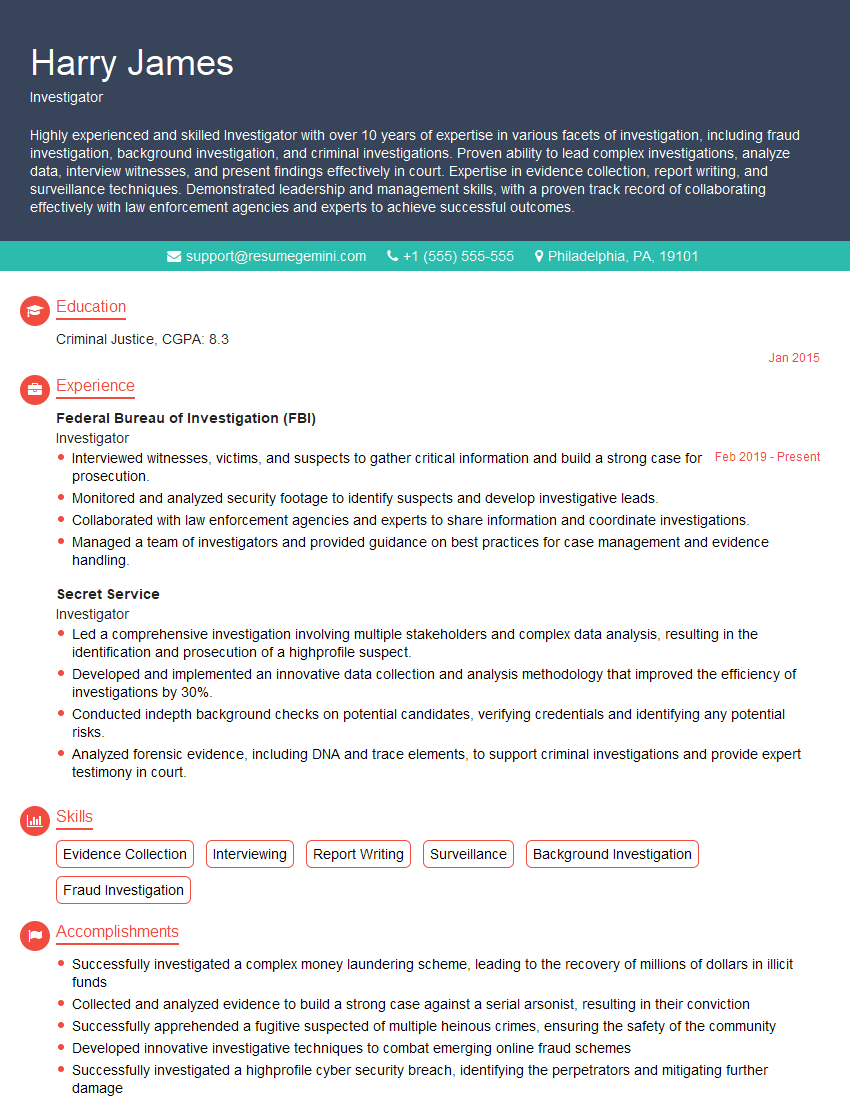
Investigator Resume Sample

Environmental Scientist Resume Sample

Environmental Consultant Resume Sample

Wildlife Biologist Resume Sample

Wildlife Technician Resume Sample

Park Ranger Resume Sample

Forestry Technician Resume Sample

Remote Sensing Specialist Resume Sample

Conservation Officer Resume Sample

Wildlife Photographer Resume Sample

Game Warden Resume Sample

Law Enforcement Officer Resume Sample

Pest Control Specialist Resume Sample
Explore more articles
Users Rating of Our Blogs
Share Your Experience
We value your feedback! Please rate our content and share your thoughts (optional).
What Readers Say About Our Blog
To the interviewgemini.com Webmaster.
Very helpful and content specific questions to help prepare me for my interview!
Thank you
To the interviewgemini.com Webmaster.
This was kind of a unique content I found around the specialized skills. Very helpful questions and good detailed answers.
Very Helpful blog, thank you Interviewgemini team.