Unlock your full potential by mastering the most common Training and Mentoring of Junior Staff interview questions. This blog offers a deep dive into the critical topics, ensuring you’re not only prepared to answer but to excel. With these insights, you’ll approach your interview with clarity and confidence.
Questions Asked in Training and Mentoring of Junior Staff Interview
Q 1. Describe your experience designing and delivering training programs for junior staff.
Designing and delivering training programs for junior staff requires a multifaceted approach. It begins with a thorough needs assessment to identify skill gaps and learning objectives. I then leverage various methodologies, including blended learning, which combines online modules with in-person workshops and hands-on practice. For example, when onboarding new marketing assistants, I developed a program incorporating online modules on SEO and social media marketing, followed by in-person sessions focused on campaign strategy and client communication, culminating in a practical project where they manage a mini-campaign. I always strive to make the training engaging, relevant, and directly applicable to their roles. I use a variety of media – videos, interactive exercises, case studies, and group discussions – to cater to diverse learning styles. Finally, post-training support, including access to resources and ongoing mentorship, is crucial for knowledge retention and successful application in the workplace.
Q 2. What methods do you use to assess the effectiveness of your training programs?
Assessing training effectiveness is crucial for program improvement. I use a multi-pronged approach. Immediately following the training, I conduct short knowledge checks and quizzes to gauge immediate understanding. More importantly, I track performance on the job. This includes reviewing their work, providing constructive feedback, and setting clear, measurable goals. For instance, for the marketing assistants, I monitor the success of their mini-campaigns, analyzing metrics like engagement and lead generation. Additionally, I gather feedback through surveys and one-on-one discussions to understand participants’ perception of the training’s value and identify areas for enhancement. This data-driven approach allows for continuous improvement and ensures the training remains effective and relevant.
Q 3. How do you adapt your training style to different learning styles and personality types?
Recognizing that individuals learn in different ways is fundamental to effective training. I employ a variety of teaching methods to cater to visual, auditory, and kinesthetic learners. For example, I use visual aids like diagrams and presentations for visual learners, provide audio recordings and discussions for auditory learners, and incorporate hands-on activities and simulations for kinesthetic learners. Furthermore, I adapt my communication style based on personality types. For introverted learners, I provide opportunities for individual reflection and one-on-one feedback. For extroverted learners, I encourage group discussions and collaborative activities. Flexibility and personalization are key to ensuring all participants benefit from the training.
Q 4. Explain your approach to mentoring junior staff, including setting goals and providing feedback.
My mentoring approach focuses on establishing a strong rapport built on trust and mutual respect. The first step is collaborative goal-setting, where we jointly define specific, measurable, achievable, relevant, and time-bound (SMART) goals. Regular check-ins, which are often informal, allow for open communication and ongoing feedback. Feedback is delivered constructively, focusing on both strengths and areas for improvement, with an emphasis on growth and development. I use the GROW model (Goal, Reality, Options, Will) which facilitates self-discovery and problem-solving. This enables mentees to take ownership of their development. For example, I might help a mentee identify their career aspirations, map out a developmental plan, and provide guidance and support along the way. Regular feedback sessions help me tailor support to address specific challenges.
Q 5. How do you handle situations where a mentee is struggling to grasp a concept?
When a mentee struggles, patience and understanding are paramount. I first try to identify the root cause of the difficulty. Is it a lack of foundational knowledge, a misunderstanding of the concept, or perhaps a lack of confidence? I then adapt my approach. I might revisit the basics, offer different explanations, use analogies or real-world examples to illustrate the concept, or break down complex tasks into smaller, manageable steps. Providing additional resources, such as relevant articles or videos, can also be helpful. Sometimes, peer learning or collaborative problem-solving can prove beneficial. The key is to create a safe space where the mentee feels comfortable asking questions and seeking clarification without fear of judgment.
Q 6. What strategies do you use to foster a positive and supportive learning environment?
Fostering a positive learning environment is essential for maximizing engagement and success. This involves establishing clear expectations, creating a respectful and inclusive atmosphere where everyone feels comfortable participating, and celebrating successes. Open communication is crucial, and I encourage participants to share their feedback and suggestions. I promote collaboration through group activities and peer learning opportunities. Positive reinforcement and constructive feedback are essential, focusing on progress rather than solely on mistakes. Regular social interaction, even brief informal chats, helps foster a sense of community and belonging. A supportive environment allows learners to feel empowered, confident, and motivated to learn and grow.
Q 7. Describe a time you had to develop a training program from scratch. What were the key steps?
Developing a training program from scratch for new customer service representatives involved several key steps. First, I conducted a thorough needs assessment, interviewing managers and analyzing existing data to identify critical skills and knowledge gaps. Then, I defined clear learning objectives, outlining what participants should be able to do after completing the program. Next, I designed the curriculum, selecting appropriate training methods, including interactive simulations and role-playing exercises to mimic real-world scenarios. I created engaging content, leveraging diverse media like videos and case studies. The program was piloted with a small group to gather feedback and make necessary adjustments before full-scale deployment. Finally, I developed a robust evaluation strategy, incorporating post-training assessments and on-the-job performance monitoring to assess program effectiveness. Throughout this process, ensuring alignment with organizational goals and learner needs was paramount.
Q 8. How do you incorporate technology into your training programs?
Technology is integral to modern training. I leverage various tools to enhance engagement and accessibility. For example, I use Learning Management Systems (LMS) like Moodle or Canvas to deliver online courses, track progress, and provide automated feedback. These platforms allow for asynchronous learning, meaning trainees can access materials at their own pace. I also incorporate video conferencing tools like Zoom for live sessions, webinars, and virtual mentoring. Interactive elements such as simulations, gamified quizzes (using platforms like Kahoot!), and virtual reality (VR) experiences are used where appropriate to boost engagement and knowledge retention. For instance, a sales training program might include a VR simulation of a customer interaction to practice negotiation skills in a safe environment. Finally, I utilize collaboration tools like Microsoft Teams or Google Workspace to foster communication and knowledge sharing among trainees and mentors.
Q 9. How do you measure the return on investment (ROI) of your training initiatives?
Measuring ROI on training is crucial. I employ a multi-faceted approach. Firstly, I define clear learning objectives before the program begins. These objectives are directly linked to measurable business outcomes – improved efficiency, reduced errors, increased sales, etc. Secondly, I collect pre- and post-training data using assessments, surveys, and performance evaluations. This allows me to quantify the improvement in knowledge and skills. Thirdly, I track key performance indicators (KPIs) relevant to the training objectives. For example, if the training aims to improve customer service, I’d monitor customer satisfaction scores and call resolution times. Finally, I use cost-benefit analysis to compare the investment in training with the financial gains realized through improved performance. This might include quantifying reduced error rates, leading to cost savings, or increased sales generated by improved sales skills. This comprehensive approach allows for a robust evaluation of the training’s effectiveness and its return on investment.
Q 10. What are some common challenges you face in training junior staff, and how do you overcome them?
Training junior staff presents unique challenges. One common issue is a lack of prior experience and foundational knowledge. To address this, I use a phased approach, starting with fundamental concepts and progressively building complexity. I also find that providing ample opportunities for practical application, through real-world projects or case studies, significantly improves learning. Another challenge is maintaining motivation and engagement. To overcome this, I incorporate interactive activities, group work, and positive reinforcement. I also make sure to provide regular, constructive feedback. Finally, different learning styles need to be accommodated. Some learners prefer visual aids, others hands-on activities. To address this, I incorporate a variety of learning methods into my programs – a blended learning approach – incorporating visual presentations, interactive exercises, and group discussions.
Q 11. How do you stay current with best practices in training and development?
Staying current is vital in this rapidly evolving field. I actively participate in professional development activities, attending conferences and webinars related to training and development. I subscribe to industry publications and follow thought leaders on social media platforms like LinkedIn. I also actively seek feedback from trainees and stakeholders to identify areas for improvement and to learn about emerging trends and technologies. Additionally, I regularly review and update my training materials to reflect the latest best practices and industry standards. For instance, I might incorporate new research findings on adult learning principles or update the software used in the training program to align with the latest version.
Q 12. What is your experience with different training methodologies (e.g., blended learning, microlearning)?
My experience encompasses various training methodologies. Blended learning, combining online and in-person instruction, is a favorite approach because it caters to diverse learning styles and allows for flexible scheduling. Microlearning, delivering content in short, focused bursts, is highly effective for knowledge retention, particularly for busy professionals. I have used microlearning modules to deliver updates on compliance procedures or brief tutorials on software functionalities. I’ve also used on-the-job training, coaching, and mentoring, which are particularly useful for developing practical skills and building confidence. The choice of methodology always depends on the learning objectives, target audience, and available resources. For example, a complex technical skill might benefit from a combination of instructor-led training, online modules, and hands-on practice, while a quick refresher on a company policy might be best served by a short microlearning module.
Q 13. Describe your experience creating training materials (e.g., presentations, handbooks, online modules).
I have extensive experience in creating various training materials. For presentations, I utilize tools like PowerPoint or Google Slides, focusing on clear visuals and concise text. I ensure all content is aligned with adult learning principles. For handbooks, I prioritize clear structure, easy navigation, and consistent formatting. I use a combination of text, images, and diagrams to convey information effectively. For online modules, I utilize LMS platforms, incorporating interactive elements such as quizzes, videos, and simulations to engage learners. Regardless of the format, I always pilot test materials with a small group before full implementation, gathering feedback to improve clarity and effectiveness. For instance, I recently developed a series of online modules for new software implementation. The feedback I received during pilot testing led to significant improvements in the user interface and the clarity of instructions, resulting in a smoother rollout.
Q 14. How do you ensure your training programs are inclusive and accessible to all learners?
Inclusivity and accessibility are paramount in my training design. I ensure materials are accessible to learners with disabilities by following accessibility guidelines such as WCAG (Web Content Accessibility Guidelines). This includes using alternative text for images, providing transcripts for videos, and using clear, simple language. I also cater to diverse learning styles and cultural backgrounds. This could include providing materials in multiple languages or using a variety of instructional methods (visual, auditory, kinesthetic). When designing activities, I ensure that they are inclusive and promote collaboration among diverse groups. For example, I might use group projects that encourage diverse perspectives and collaborative problem-solving. Regularly evaluating accessibility and inclusivity through feedback from learners and stakeholder reviews helps me continuously improve the program.
Q 15. How do you handle difficult or challenging participants during training sessions?
Handling challenging participants requires a calm, empathetic, and proactive approach. It’s crucial to understand the root cause of the difficulty – is it a lack of understanding, disengagement, personal issues, or something else?
- Address the Behavior, Not the Person: I focus on the specific behavior causing the disruption, not attacking the individual. For example, if someone is consistently interrupting, I’d say, ‘I appreciate your enthusiasm, but let’s allow everyone a chance to share their thoughts.’
- Empathetic Listening and Understanding: I make an effort to understand their perspective. Sometimes, a participant’s challenge stems from past experiences or anxieties. Addressing these concerns can significantly improve their engagement.
- Individualized Approach: One-size-fits-all solutions rarely work. I might need a private conversation to understand their concerns and adjust my approach. This could involve offering additional support, resources, or modifying activities to better suit their learning style.
- Clear Expectations and Boundaries: Setting clear expectations from the beginning about respectful behavior and participation is essential. This reduces the chance of disruptive behavior occurring in the first place.
- Seeking Collaboration: If the challenge persists, involving HR or management may be necessary to provide further support or address underlying issues.
For example, I once had a participant who consistently arrived late and seemed disengaged. After a private conversation, it turned out they were dealing with a family emergency. By showing empathy and flexibility, I was able to help them manage their situation while still ensuring they benefited from the training.
Career Expert Tips:
- Ace those interviews! Prepare effectively by reviewing the Top 50 Most Common Interview Questions on ResumeGemini.
- Navigate your job search with confidence! Explore a wide range of Career Tips on ResumeGemini. Learn about common challenges and recommendations to overcome them.
- Craft the perfect resume! Master the Art of Resume Writing with ResumeGemini’s guide. Showcase your unique qualifications and achievements effectively.
- Don’t miss out on holiday savings! Build your dream resume with ResumeGemini’s ATS optimized templates.
Q 16. What is your experience with performance management systems and how do you integrate training into them?
I have extensive experience integrating training into performance management systems. A robust performance management system should be a cycle of goal setting, performance monitoring, feedback, and development. Training is a vital component of the development phase.
- Needs Assessment: I begin by conducting a thorough needs assessment aligned with the organization’s performance goals. This helps identify skill gaps that training can address. For example, if performance reviews reveal a lack of proficiency in a specific software, training on that software would be incorporated.
- Goal Setting: Training objectives must directly support the overall performance goals set for individual employees. This creates a clear link between training and improved performance.
- Training Delivery and Evaluation: I use a variety of training methods – workshops, online modules, coaching, mentoring – tailored to the specific needs and learning styles of employees. Post-training evaluations help determine the effectiveness of the program and its impact on performance.
- Ongoing Support and Monitoring: Training isn’t a one-time event. I facilitate ongoing support through mentoring, coaching, or follow-up sessions. I regularly monitor performance metrics to assess if training has achieved its intended impact.
In a previous role, we implemented a system where employees identified their development needs during their performance reviews. These needs were then used to design tailored training programs. We tracked the impact of training on subsequent performance reviews, demonstrating a direct correlation between training participation and improved performance metrics.
Q 17. Describe your approach to providing constructive feedback to mentees.
My approach to providing constructive feedback centers around the SBI (Situation-Behavior-Impact) model. It’s a structured method that ensures feedback is specific, actionable, and avoids being overly critical or subjective.
- Situation: I begin by describing the specific situation where the behavior occurred. This provides context and avoids ambiguity.
- Behavior: I clearly and objectively describe the behavior observed. Instead of saying ‘You’re lazy,’ I would say, ‘I noticed that the project deadline was missed, and the report was not completed.’
- Impact: I describe the impact of the behavior on the team, the project, or the organization. For example, ‘Missing the deadline impacted the overall project timeline and put extra pressure on the rest of the team.’
- Future-Oriented Suggestions: Finally, I focus on solutions and suggest steps for improvement. This avoids solely dwelling on the negative. I might suggest strategies, resources, or additional training to address the issues.
For instance, if a mentee consistently misses deadlines, I wouldn’t simply say, ‘You need to be more organized.’ Instead, I’d describe specific instances, explain the impact on the team, and suggest strategies like time management techniques or prioritization frameworks. Following up and providing ongoing support is key to ensuring the feedback is received and acted upon.
Q 18. How do you build rapport and trust with junior staff?
Building rapport and trust is foundational to effective mentoring. It involves creating a safe and supportive environment where junior staff feel comfortable sharing their thoughts, concerns, and challenges without fear of judgment.
- Active Listening: I truly listen and show genuine interest in what junior staff have to say, both professionally and personally (appropriately).
- Open Communication: I foster open communication by actively soliciting feedback and creating opportunities for regular check-ins. I make myself accessible and approachable.
- Empathy and Understanding: I show empathy and understanding towards their challenges, acknowledging that they might face different obstacles than experienced staff.
- Shared Goals and Expectations: Setting clear, shared goals and expectations helps build mutual trust. It clarifies roles and responsibilities and creates a collaborative environment.
- Mentorship Relationship: Mentorship goes beyond just providing instructions; it’s about guiding, supporting, and celebrating the mentee’s successes. I strive to be a role model and help them grow professionally.
For example, I like to start mentoring relationships with an informal conversation, getting to know their background, interests, and aspirations. This helps build a personal connection, which strengthens trust and the mentoring relationship.
Q 19. How do you encourage active participation in training sessions?
Encouraging active participation is essential for effective training. It moves the learning from passive absorption to active engagement, leading to greater knowledge retention and skill development.
- Interactive Activities: I incorporate interactive activities, such as group discussions, brainstorming sessions, case studies, role-playing, and quizzes to break up lectures and encourage engagement.
- Small Group Discussions: Smaller group discussions allow for more individual participation, allowing quieter individuals to contribute more confidently.
- Real-World Examples and Case Studies: Relating the training material to real-world scenarios and case studies makes the information more relevant and relatable.
- Polls and Surveys: Using polls and surveys during training allows for immediate feedback and gauges understanding of the material.
- Gamification: Incorporating elements of gamification, such as points, badges, or leaderboards, can significantly boost engagement and motivation.
For example, during a training session on customer service, I might use a role-playing exercise where participants simulate real-life customer interactions, fostering active learning and skill development.
Q 20. How do you track the progress of mentees?
Tracking mentee progress is crucial for evaluating the effectiveness of the mentoring program and ensuring the mentee achieves their goals. I use a combination of methods to track progress.
- Regular Check-ins: Scheduled meetings provide opportunities to discuss progress, challenges, and adjust strategies as needed.
- Performance Metrics: Where applicable, I monitor relevant performance metrics to assess progress towards goals. These could be project completion rates, client feedback, or sales targets.
- Self-Assessments: I encourage mentees to conduct self-assessments to evaluate their own progress and identify areas needing improvement.
- Feedback from Others: Seeking feedback from colleagues and supervisors who interact with the mentee provides another perspective on their progress.
- Documentation: I maintain detailed records of our mentoring sessions, including key discussions, agreed-upon action items, and observations on the mentee’s progress.
By using a multifaceted approach, I get a comprehensive view of the mentee’s development and can adjust the mentoring strategy to support their growth effectively. For example, if self-assessments show a mentee struggling with a specific skill, I can adjust our focus and provide extra support in that area.
Q 21. What is your experience with different learning management systems (LMS)?
I have experience with several Learning Management Systems (LMS), including Moodle, Canvas, and Cornerstone OnDemand. My experience encompasses both using these platforms to deliver training and evaluating their effectiveness for different learning styles and training needs.
- Course Design and Delivery: I’m proficient in designing and delivering training courses within various LMS platforms. This includes creating engaging content, incorporating interactive elements, and tracking learner progress.
- Content Management: I understand how to manage course content, update materials, and organize resources effectively within different LMS environments.
- Reporting and Analytics: I leverage LMS reporting and analytics to track learner engagement, completion rates, and course effectiveness. This data informs improvements to future training programs.
- Integration with Other Systems: I have experience integrating LMS platforms with other HR and performance management systems to create a seamless flow of data and information.
- Technical Proficiency: While I don’t handle the technical setup and maintenance of the LMS, I’m sufficiently technically proficient to navigate the systems and effectively utilize their features.
For example, in a previous role, we used Moodle to deliver online training modules on compliance procedures. The platform’s built-in reporting tools allowed us to track completion rates and identify areas where learners struggled, which helped us to improve the training materials.
Q 22. How do you identify the training needs of junior staff?
Identifying training needs for junior staff is crucial for effective onboarding and development. My approach is multifaceted and involves a combination of methods to gain a comprehensive understanding of their skill gaps and learning requirements.
- Performance Reviews and Assessments: I thoroughly analyze past performance reviews, identifying areas where the junior staff member consistently falls short of expectations. This provides a data-driven approach to pinpoint specific skill deficits.
- Job Task Analysis: I break down each job role into its core tasks and responsibilities. This helps identify the essential skills needed to perform each task effectively. Any gaps between the required skills and the staff member’s current capabilities highlight areas for training.
- Interviews and Surveys: Direct communication is essential. I conduct one-on-one interviews and distribute anonymous surveys to gather feedback directly from the junior staff, their supervisors, and even their colleagues. This offers valuable insights into their self-perceived needs and areas where others observe improvement potential.
- Observation and Shadowing: Observing junior staff members in their daily work allows for direct assessment of their performance and identification of areas needing immediate improvement. Shadowing enables deeper understanding of their workflow and challenges.
By combining these methods, I create a holistic picture of training needs, ensuring that the training is targeted, relevant, and addresses the specific challenges faced by each individual.
Q 23. How do you create engaging and relevant training content?
Creating engaging and relevant training content requires careful consideration of the learner’s needs and learning style. My strategy focuses on several key principles:
- Interactive Learning: I incorporate interactive elements like quizzes, group discussions, role-playing, and simulations. This keeps trainees actively engaged and encourages active learning rather than passive absorption.
- Real-World Scenarios and Case Studies: I use real-world examples and case studies relevant to the junior staff’s roles to illustrate concepts and their practical applications. This helps them connect the training to their daily work.
- Variety of Learning Methods: I leverage diverse training methods such as videos, presentations, online modules, and hands-on workshops to cater to different learning styles and preferences. This keeps the training dynamic and prevents learner fatigue.
- Modular Design: Breaking down complex topics into smaller, manageable modules allows for easier comprehension and retention. This also permits flexible scheduling and allows trainees to revisit specific sections as needed.
- Feedback and Assessment: Integrating regular feedback mechanisms and assessments helps gauge comprehension and allows for adjustments to the training based on learner performance.
For example, when training junior marketing staff on social media strategies, instead of just a lecture, I’d incorporate a hands-on social media campaign simulation where they create a strategy, manage a mock budget, and track results. This makes learning active and directly applicable to their jobs.
Q 24. Describe a time you had to adapt a training program based on participant feedback.
During a training program on customer service techniques, I received feedback that the role-playing scenarios were too simplistic and didn’t reflect the challenges faced in real-world customer interactions. The participants felt the scenarios lacked the nuance and complexity of actual customer complaints.
Based on this feedback, I immediately adapted the program. I replaced the existing scenarios with more realistic, complex situations that included difficult customers, ambiguous requests, and escalated complaints. I also incorporated a ‘hot seat’ activity where participants could address actual customer service challenges they had faced in the past, receiving immediate peer and expert feedback. This helped the training become more directly relevant and impactful. Post-training surveys showed a significant improvement in participant satisfaction and perceived learning outcomes.
Q 25. How do you handle conflict resolution within a training group?
Conflict resolution in a training group requires a proactive and empathetic approach. My strategy involves:
- Early Intervention: Addressing minor disagreements promptly prevents them from escalating. I facilitate open communication, encouraging participants to express their viewpoints respectfully.
- Neutral Facilitation: If a conflict arises, I act as a neutral facilitator, ensuring everyone feels heard and understood. I guide the discussion towards finding a mutually acceptable solution.
- Active Listening and Empathy: I actively listen to all sides of the conflict, demonstrating empathy and understanding. This helps de-escalate tensions and build rapport.
- Focus on Shared Goals: I remind participants of the training’s objectives and how resolving the conflict contributes to achieving those goals. This shifts the focus from personal differences to collaborative learning.
- Confidentiality and Respect: I maintain confidentiality and treat all participants with respect, fostering a safe and inclusive learning environment.
For example, if two participants disagree on a particular technique, I encourage them to present their arguments respectfully, explore the rationale behind each approach, and potentially even work together to test both methods in a controlled environment.
Q 26. What are some key metrics you use to evaluate the success of a mentoring program?
Evaluating the success of a mentoring program requires a multi-faceted approach, using both quantitative and qualitative data. Key metrics I employ include:
- Mentee Performance Improvement: This is assessed through performance reviews, project outcomes, and 360-degree feedback, comparing performance before and after the mentorship.
- Mentee Career Advancement: Tracking promotions, salary increases, and new responsibilities reflects the program’s impact on career progression.
- Mentee Satisfaction: Surveys and interviews assess mentee satisfaction with the program, the mentor-mentee relationship, and the overall experience.
- Mentor Satisfaction: Similarly, assessing mentor satisfaction helps gauge the program’s effectiveness from the mentor’s perspective and identifies areas for improvement.
- Retention Rate: Tracking the retention rate of mentees provides an indication of the program’s contribution to employee loyalty.
- Skill Development: Specific skills targeted by the mentorship should be assessed for improvement using relevant tests or project-based evaluations.
By combining these metrics, I gain a comprehensive understanding of the program’s effectiveness and identify areas for enhancement.
Q 27. Describe your experience with different mentoring styles (e.g., coaching, advising, sponsoring).
My experience encompasses various mentoring styles, each with its strengths and applications:
- Coaching: This style focuses on developing specific skills and improving performance. I utilize coaching techniques like goal setting, feedback, and action planning to guide mentees in achieving their professional goals. I recently coached a junior developer to improve their coding efficiency by introducing them to new techniques and providing regular feedback on their projects.
- Advising: This style involves providing guidance and expertise based on my own experience. I share my knowledge and insights to help mentees navigate complex situations and make informed decisions. I advised a new marketing manager on navigating the company’s political landscape and building effective cross-functional relationships.
- Sponsoring: This is a more strategic approach where I advocate for the mentee’s career advancement, helping them gain visibility and access to opportunities. I sponsored a high-potential mentee for a leadership development program, ensuring their application was prioritized and highlighting their capabilities to senior management.
The most effective mentoring often involves a blend of these styles, tailored to the individual mentee’s needs and developmental stage. I assess each mentee’s situation and choose the most appropriate combination of techniques to optimize their growth.
Key Topics to Learn for Training and Mentoring of Junior Staff Interview
- Needs Assessment and Learning Objectives: Defining clear training goals and identifying individual learning styles and needs of junior staff members. Practical application: Developing a training plan that addresses specific skill gaps and incorporates diverse learning methods.
- Instructional Design and Delivery: Creating engaging and effective training materials and delivering sessions that are both informative and interactive. Practical application: Designing a training module using various techniques (e.g., presentations, role-playing, case studies) and adapting your style to different learning preferences.
- Mentoring Strategies and Techniques: Establishing strong mentor-mentee relationships, providing constructive feedback, and guiding professional development. Practical application: Developing a mentoring plan that includes regular check-ins, goal setting, and performance reviews. Addressing challenges like managing conflict or overcoming plateaus.
- Performance Evaluation and Feedback: Measuring the effectiveness of training and mentoring programs, providing regular feedback, and identifying areas for improvement. Practical application: Implementing a system for tracking progress, delivering constructive criticism, and providing encouragement to support growth.
- Building a Positive Learning Environment: Fostering a supportive and collaborative atmosphere where junior staff feel comfortable asking questions, seeking guidance, and taking risks. Practical application: Techniques for encouraging active participation, building trust, and addressing concerns constructively.
- Technology Integration in Training: Leveraging technology (e.g., learning management systems, online resources) to enhance training effectiveness and accessibility. Practical application: Selecting appropriate technology tools, creating online training materials, and providing technical support to junior staff.
- Addressing Challenges and Problem-Solving: Identifying and resolving common challenges associated with training and mentoring, such as resistance to change, lack of motivation, or performance issues. Practical application: Developing strategies for overcoming these obstacles and providing tailored support to individual junior staff members.
Next Steps
Mastering the art of training and mentoring junior staff is crucial for career advancement, demonstrating your leadership potential and ability to develop others. This skill is highly valued across many industries. To increase your job prospects, creating an ATS-friendly resume is essential. ResumeGemini is a trusted resource that can help you build a professional and impactful resume, maximizing your chances of landing your dream job. Examples of resumes tailored to Training and Mentoring of Junior Staff are available to further guide your preparation.
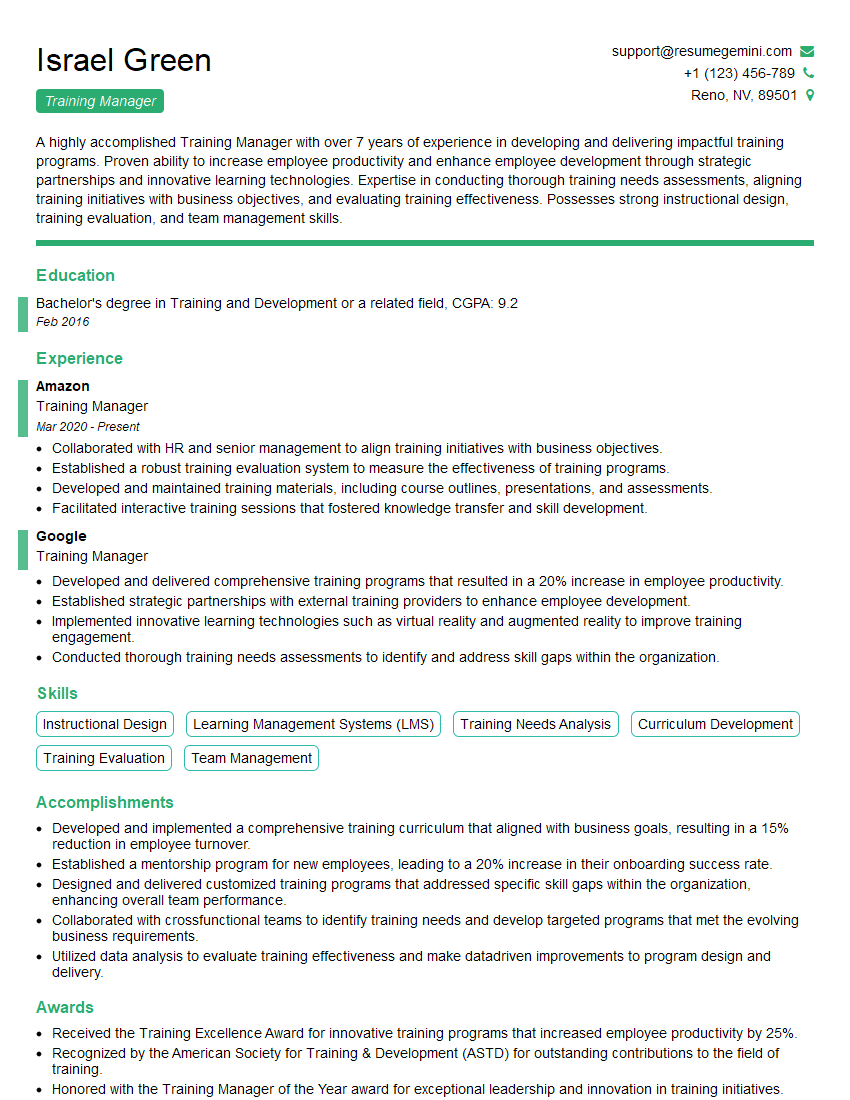
Training Manager Resume Sample
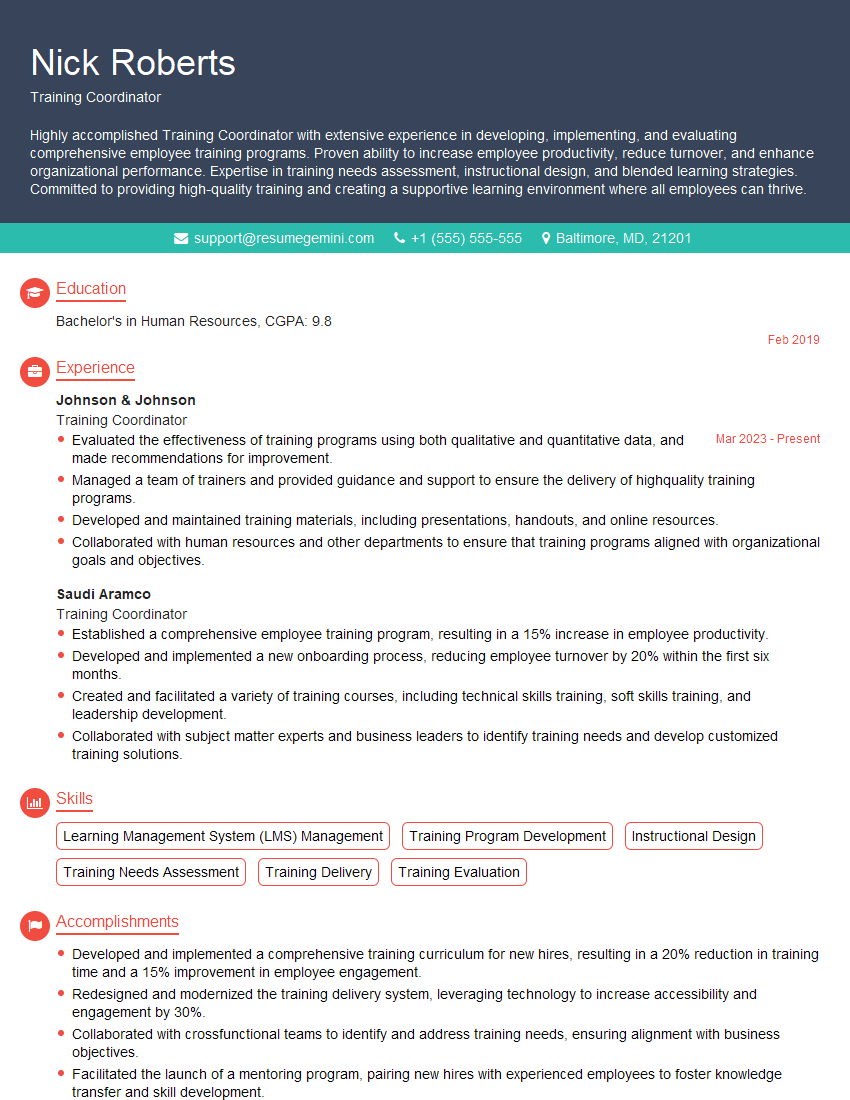
Training Coordinator Resume Sample
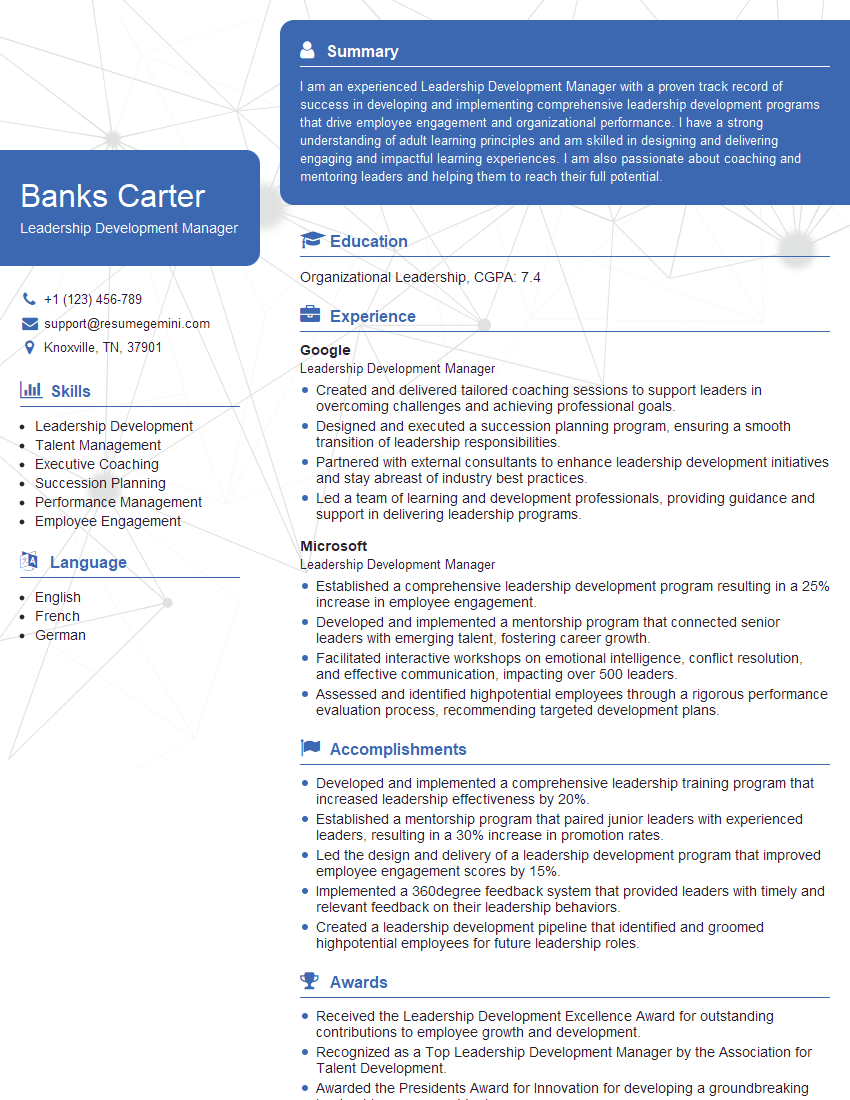
Leadership Development Manager Resume Sample
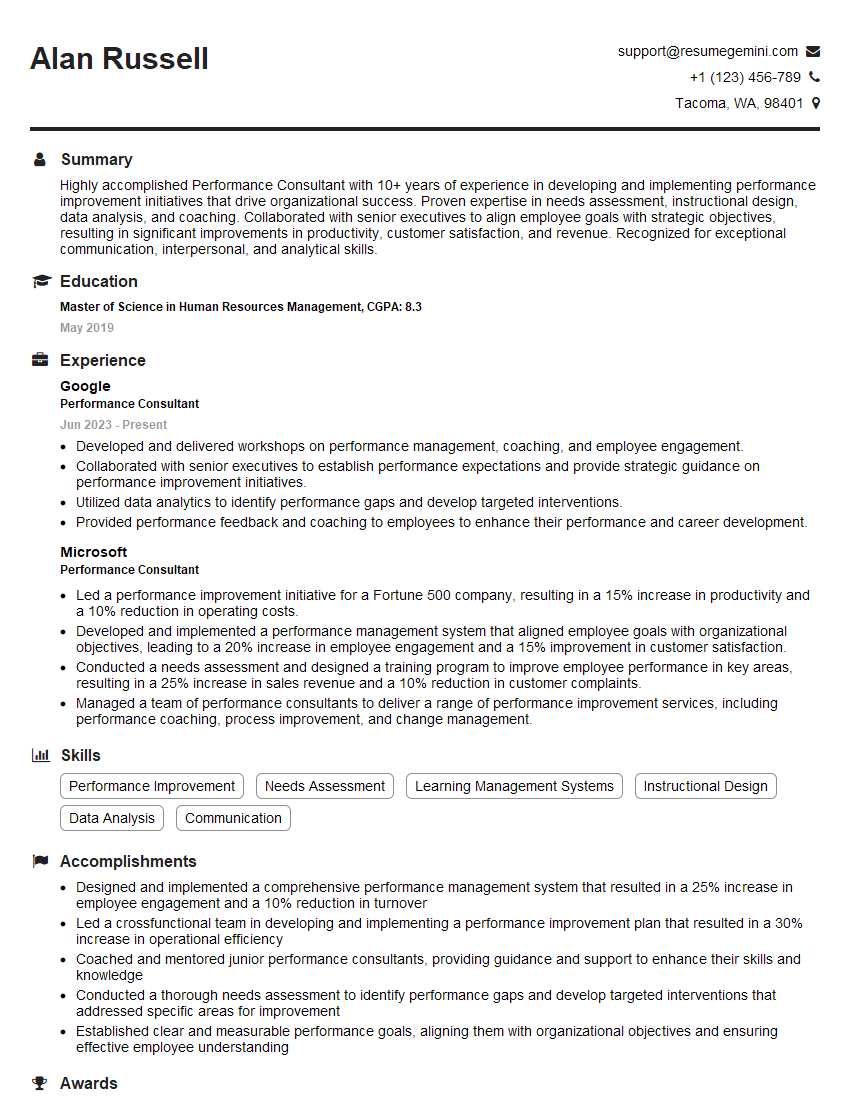
Performance Consultant Resume Sample
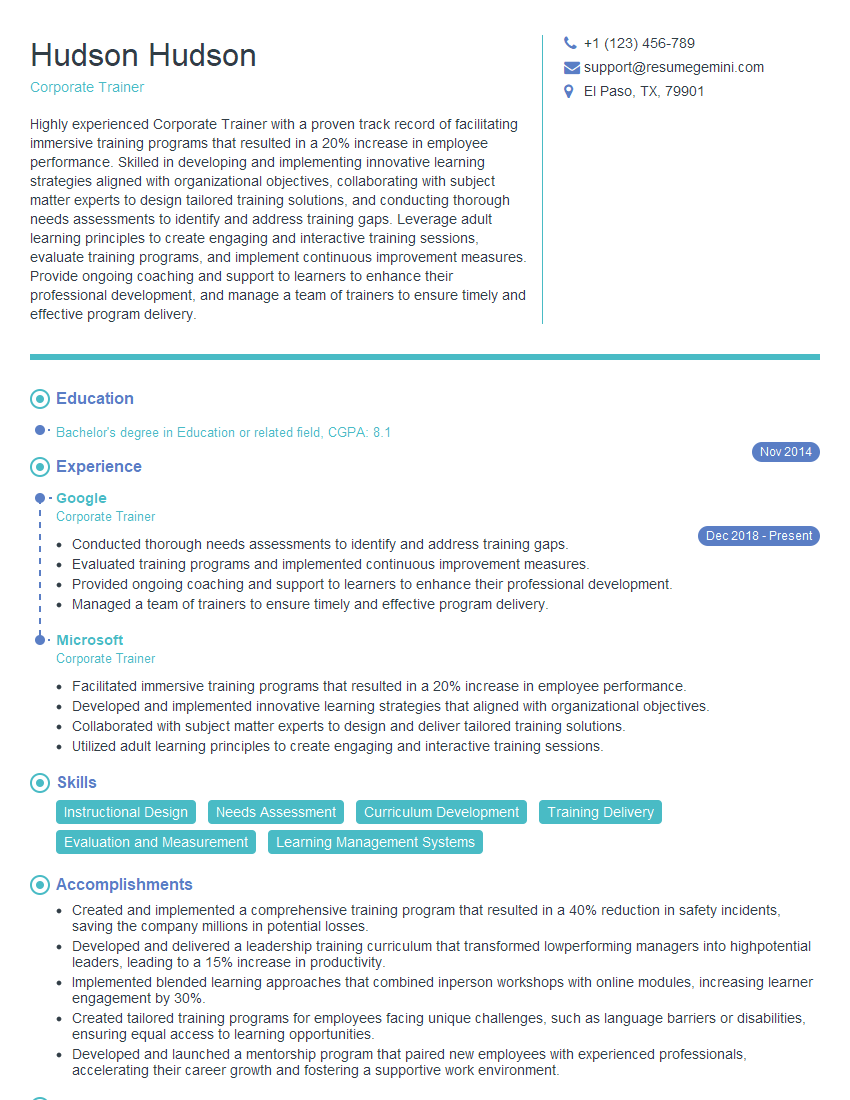
Corporate Trainer Resume Sample

Curriculum Developer Resume Sample
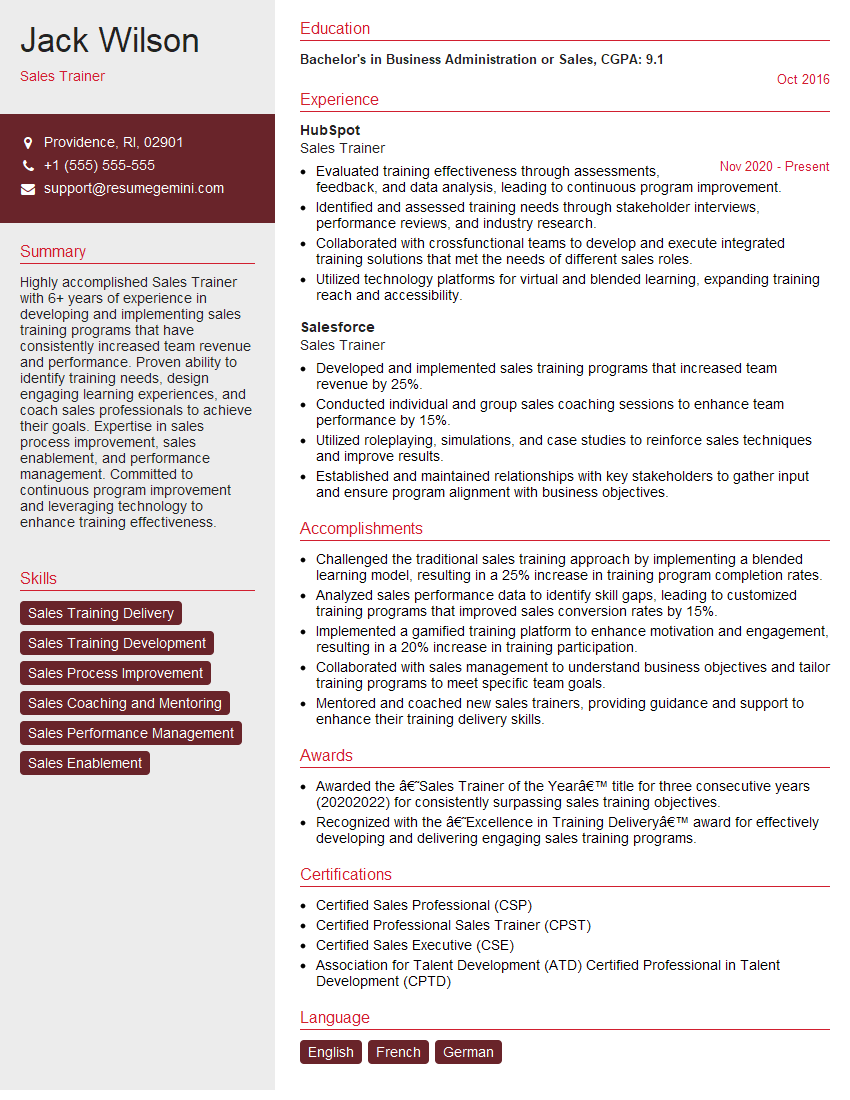
Sales Trainer Resume Sample
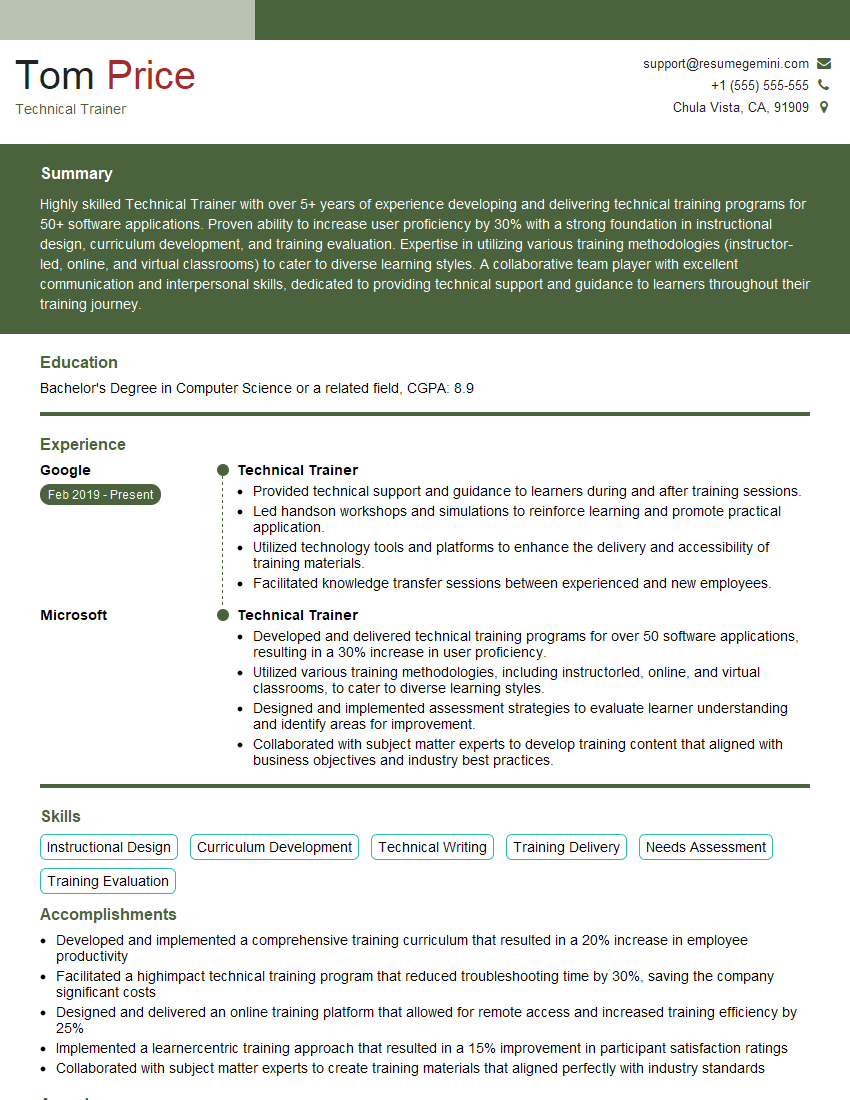
Technical Trainer Resume Sample
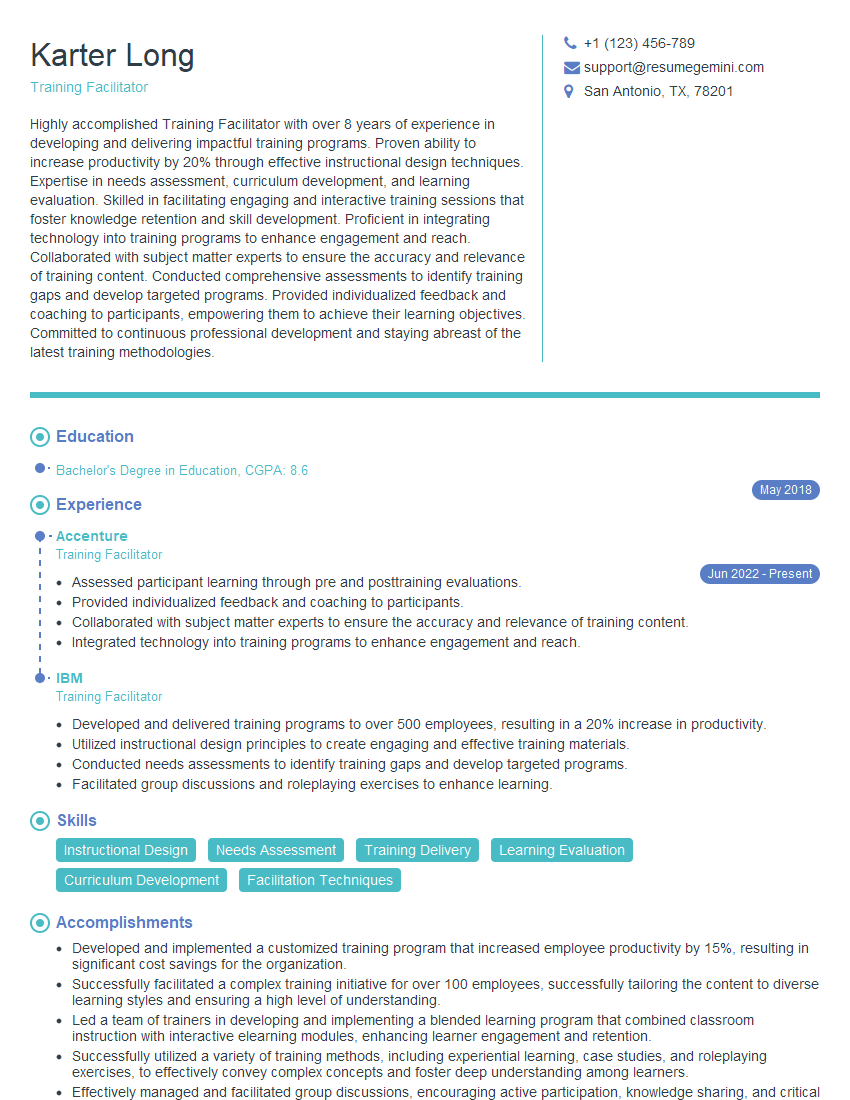
Training Facilitator Resume Sample
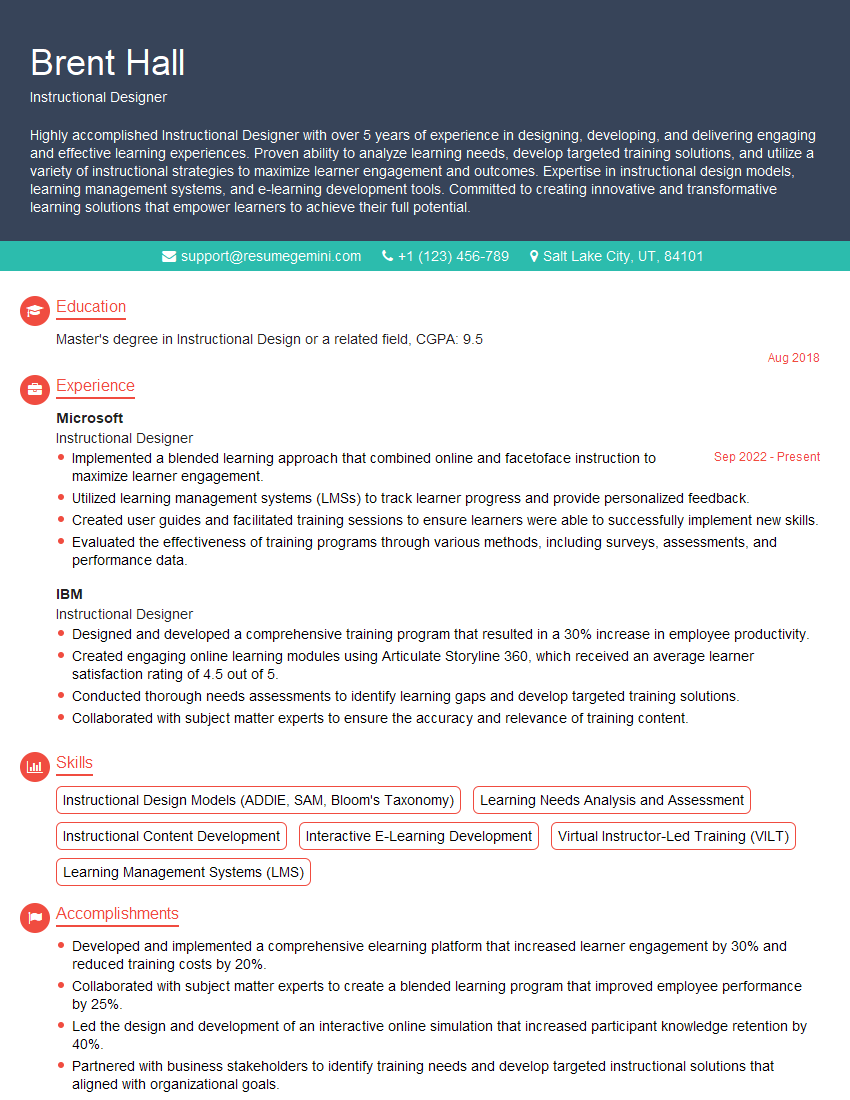
Instructional Designer Resume Sample
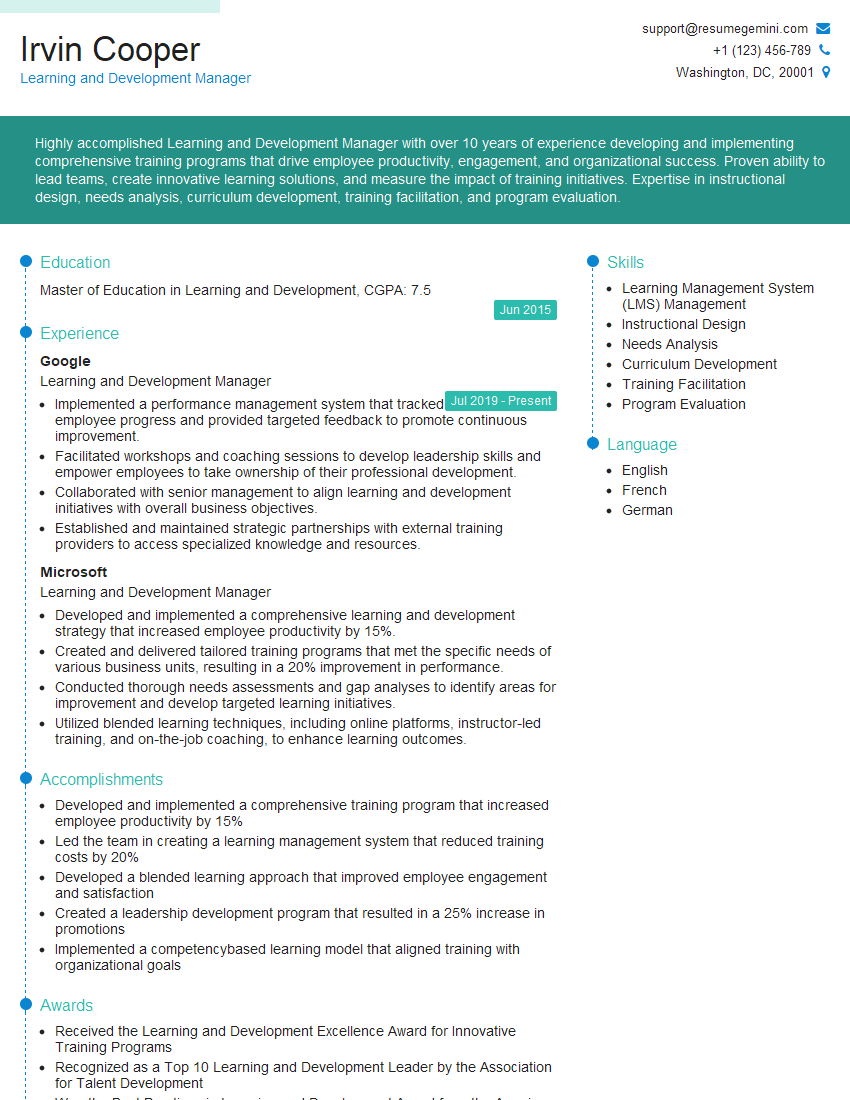
Learning and Development Manager Resume Sample
Explore more articles
Users Rating of Our Blogs
Share Your Experience
We value your feedback! Please rate our content and share your thoughts (optional).
What Readers Say About Our Blog
To the interviewgemini.com Webmaster.
Very helpful and content specific questions to help prepare me for my interview!
Thank you
To the interviewgemini.com Webmaster.
This was kind of a unique content I found around the specialized skills. Very helpful questions and good detailed answers.
Very Helpful blog, thank you Interviewgemini team.