Interviews are more than just a Q&A session—they’re a chance to prove your worth. This blog dives into essential Transit Systems Planning and Design interview questions and expert tips to help you align your answers with what hiring managers are looking for. Start preparing to shine!
Questions Asked in Transit Systems Planning and Design Interview
Q 1. Explain the difference between transit-oriented development (TOD) and transit-supportive development.
Transit-Oriented Development (TOD) and Transit-Supportive Development (TSD) are both urban planning strategies aiming to integrate transit systems with land use, but they differ in their scope and intensity.
TOD focuses on creating high-density, mixed-use developments centered around high-quality transit stations. It prioritizes walkability, bikeability, and a vibrant public realm, minimizing the need for personal vehicles. Think of a bustling area with apartments, shops, offices, and restaurants all within easy walking distance of a train station – that’s TOD in action. A key characteristic is the *intentional* clustering of development *around* transit.
TSD, on the other hand, is a broader approach that encourages development that supports transit, but without the strict density and mixed-use requirements of TOD. It might involve zoning changes to allow higher densities near transit corridors, or improvements to pedestrian and cycling infrastructure. It’s less prescriptive and can be implemented across larger areas. Think of a suburban area with improved bus routes and sidewalks, encouraging more people to use public transit – that’s TSD.
Essentially, TOD is a subset of TSD; all TOD is TSD, but not all TSD is TOD. TOD is a more focused, intensive approach, while TSD takes a more holistic, less stringent view.
Q 2. Describe your experience with different transit demand modeling techniques (e.g., four-step model, activity-based models).
My experience encompasses a range of transit demand modeling techniques, from traditional methods to more sophisticated behavioral models. I’ve extensively used the four-step model for its simplicity and ability to provide a macro-level understanding of travel patterns.
The four-step model involves trip generation, trip distribution, mode choice, and trip assignment. It’s useful for understanding overall demand and evaluating the impact of large-scale transit changes. However, it has limitations; it assumes a rather rigid relationship between land use and travel behavior, often failing to capture the nuances of individual choices.
More recently, I’ve become increasingly involved with activity-based models. These models simulate individual travel decisions based on activities, such as work, shopping, or leisure. They offer a more realistic representation of travel behavior by considering the purpose of trips and the sequence of activities. This allows for a more accurate prediction of demand under various scenarios, including the introduction of new transit services or changes in land use patterns. For example, an activity-based model can help predict ridership changes resulting from a new light rail line connecting suburban areas to a city center by considering how access to this line affects people’s choices of where to live, work and shop.
I also possess experience with other techniques including stated preference and revealed preference surveys to collect valuable data to calibrate and validate my models.
Q 3. How do you evaluate the effectiveness of a transit system?
Evaluating transit system effectiveness requires a multi-faceted approach, considering both quantitative and qualitative measures. We need to look beyond just ridership numbers.
- Ridership and ridership growth: This is a fundamental indicator, but it’s crucial to understand the factors driving ridership changes (e.g., population growth, service improvements, or economic conditions).
- Speed and reliability: Consistent travel times and minimal delays are essential for attracting and retaining riders. We use metrics like average trip times and on-time performance to assess this.
- Accessibility and equity: The system should serve all members of the community, regardless of income, age, or ability. This involves evaluating access to stops, fare affordability, and the availability of accessible vehicles.
- Safety and security: Riders need to feel safe and secure while using the system. This requires assessing crime rates, lighting, and the presence of security personnel.
- Financial sustainability: A financially sound system is essential for long-term success. This involves analyzing operating costs, revenue generation, and the need for subsidies.
- Environmental impact: Transit systems play a crucial role in reducing greenhouse gas emissions. We assess this through metrics like energy consumption and carbon footprint.
By combining these measures, we get a comprehensive picture of a transit system’s performance and identify areas for improvement.
Q 4. What are the key factors to consider when designing a bus rapid transit (BRT) system?
Designing an effective Bus Rapid Transit (BRT) system requires careful consideration of several key factors:
- Dedicated right-of-way: This is crucial for ensuring speed and reliability. Bus lanes, off-street pathways, or even exclusive busways can significantly reduce travel times and improve overall performance.
- High-quality stations: Well-designed stations with features like level boarding, off-board fare collection, real-time information displays, and comfortable waiting areas enhance the rider experience and attract more users.
- Frequent service: Headways (the time between buses) should be short enough to provide convenient service and reduce wait times. This is critical for attracting riders who are sensitive to travel time.
- Integrated ticketing and fare systems: Seamless transfers and easy-to-use fare systems encourage ridership and increase efficiency. This often involves integrated ticketing with other transit modes.
- Signage and wayfinding: Clear and consistent signage is essential for guiding riders and making the system easy to navigate. This is especially important for those unfamiliar with the system.
- Accessibility: The entire system, including stations and vehicles, must be accessible to people with disabilities. This involves features like ramps, elevators, and accessible vehicles.
- Alignment with land use and development: BRT corridors should be planned in conjunction with land use and development plans to maximize ridership and minimize negative impacts.
Failing to address any of these elements can significantly compromise the effectiveness of a BRT system.
Q 5. Discuss the challenges of integrating different modes of transportation into a unified transit network.
Integrating different modes of transportation into a unified transit network presents significant challenges, but it is essential for creating a comprehensive and efficient transportation system.
Technological Challenges: One major hurdle is the development of seamless fare payment and information systems across different modes. Imagine having a single card or app to pay for bus, train, and bike share rides—this requires interoperability of systems, which can be complex due to different technological platforms and data standards used by various operators.
Operational Challenges: Effective coordination between different transit operators is necessary to ensure smooth transfers and avoid conflicts. This requires collaborative planning and scheduling, which can be challenging due to differing organizational structures and operational priorities.
Financial Challenges: Funding integration across various agencies and modes can be a major hurdle. This requires creative financial mechanisms and collaboration between different levels of government and the private sector. Securing funding for infrastructure improvements that support multiple transit modes requires persuasive arguments and well-defined benefits.
Examples of solutions: Implementing a unified fare payment system, real-time multimodal trip planning apps, and integrated scheduling systems helps to address some of these challenges. Consider London’s Oyster card, which provides a seamless payment experience across various transit modes. The success of such integrated systems relies heavily on strong inter-agency collaboration and technological innovation.
Q 6. How do you incorporate accessibility considerations into transit planning?
Incorporating accessibility considerations into transit planning is not just ethically right, it’s legally mandated in many places and essential for achieving equitable service. It requires a holistic approach from the initial planning stages through to implementation and ongoing monitoring.
Universal design principles: This is crucial, ensuring the system is usable by people of all abilities from the outset. This involves designing stations and vehicles with features like ramps, elevators, tactile paving, audible announcements, and clear signage.
Accessibility assessments: Regular accessibility assessments are vital, often involving on-site inspections and rider feedback to identify and rectify barriers. This may involve consultations with disability advocacy groups to ensure inclusive design.
Data-driven decisions: Using data on ridership demographics and patterns of disability helps to identify areas where accessibility is lacking and to prioritize investments in improvements. This data can also be used to track the effectiveness of accessibility improvements.
Affordable fares: Fare policies should ensure affordability for low-income individuals and families, many of whom may rely on public transportation. This may involve discounted fares or subsidized passes for specific demographics.
Community engagement: Involving people with disabilities in the planning and design process is crucial for ensuring their needs are adequately addressed. This can involve focus groups, surveys, and consultations.
Example: Designing a bus stop with level boarding, ample space for wheelchair users, and clear audio announcements exemplifies good accessibility planning. Ignoring these aspects results in exclusion and inequality.
Q 7. Explain your understanding of Level of Service (LOS) in transit planning.
Level of Service (LOS) in transit planning is a qualitative measure of the quality of service provided by a transit system. Unlike quantitative metrics like ridership or speed, LOS provides a holistic assessment encompassing various factors that influence the overall rider experience.
LOS is usually categorized using a letter scale (e.g., A, B, C, D, E, F), where A represents the highest level of service and F the lowest. Each letter grade corresponds to a range of performance levels across several factors:
- Frequency of service: How often buses or trains arrive.
- Waiting time: The time riders spend waiting at stops or stations.
- In-vehicle time: The time spent traveling on the vehicle.
- Transfer convenience: The ease of transferring between different routes or modes.
- Comfort and amenities: The level of comfort on the vehicle, and the availability of amenities such as seating, air conditioning, and information displays.
- Safety and security: Riders’ perceptions of safety and security on the system.
LOS is determined by a combination of these factors, with different weights assigned based on the specific context and goals of the transit system. It’s frequently used to evaluate the effectiveness of different transit strategies, plan for service improvements, and compare different transit modes.
For instance, a high-frequency bus route with comfortable vehicles and short wait times would likely receive a higher LOS rating than a low-frequency route with older buses and long wait times.
Q 8. How do you assess the environmental impact of a transit project?
Assessing the environmental impact of a transit project requires a holistic approach, considering various factors throughout the project lifecycle. We use a combination of methodologies, including Life Cycle Assessment (LCA) and Environmental Impact Assessment (EIA). LCA quantifies the environmental burdens associated with a project from raw material extraction to disposal, encompassing greenhouse gas emissions, air and water pollution, resource depletion, and land use change. EIA, on the other hand, focuses on identifying potential environmental impacts and proposing mitigation measures.
For instance, when assessing a light rail project, we would consider the energy consumption of manufacturing the trains and infrastructure, the emissions from vehicle operation, the potential disruption to local ecosystems during construction, and the long-term impacts on air and noise pollution in surrounding areas. We then use this data to compare different transit options and identify the most environmentally friendly solutions, often employing software like SimaPro or GaBi for LCA calculations and incorporating the results into comprehensive EIA reports. Mitigation strategies, such as using sustainable materials, optimizing energy efficiency, and implementing noise barriers, are crucial components of the assessment.
Q 9. Describe your experience with GIS software in the context of transit planning.
GIS (Geographic Information System) software is indispensable in transit planning. My experience includes extensive use of ArcGIS and QGIS for various tasks, including network analysis, spatial data modeling, and visualization. For example, I’ve used ArcGIS to model travel times and identify optimal bus routes considering factors like road network characteristics, population density, and land use patterns. This involves importing data layers such as road networks, points of interest, and census data, and then using tools to perform network analysis, overlay different data layers, and create maps illustrating potential routes and their performance metrics.
Another application was utilizing QGIS to create a visual representation of the accessibility of different transit modes within a specific urban area. This involved creating buffer zones around transit stops and calculating the population within those zones. The results allowed for a better understanding of service gaps and informed decisions on route optimization and expansion. My proficiency extends to scripting and automation using Python within both platforms, enabling efficient processing of large datasets and customized analysis.
Q 10. What are the key performance indicators (KPIs) you would use to monitor a transit system’s performance?
Key Performance Indicators (KPIs) for monitoring a transit system’s performance are multifaceted and should encompass operational efficiency, passenger satisfaction, and financial sustainability. Crucial KPIs include:
- On-time performance: Percentage of trips arriving on schedule.
- Passenger ridership: Number of passengers carried per day, week, or year.
- Average speed: Reflects the efficiency of the system and impacts passenger travel time.
- Vehicle occupancy: Average number of passengers per vehicle, indicating capacity utilization.
- Passenger satisfaction: Measured through surveys and feedback mechanisms, reflecting customer experience.
- Operating cost per passenger-mile: Indicates the system’s economic efficiency.
- Safety incidents: Number of accidents and incidents per passenger-mile traveled.
By tracking these KPIs over time, we can identify areas for improvement and assess the overall effectiveness of the transit system. For example, a consistent decline in on-time performance might indicate problems with traffic congestion or signal timing, while low passenger satisfaction scores could highlight the need for improved customer service or amenities.
Q 11. How do you incorporate public input into the transit planning process?
Incorporating public input is paramount for successful transit planning. We use a multi-pronged approach involving various engagement methods to ensure a broad range of perspectives are considered. This includes:
- Public forums and meetings: Direct interaction with the community to present plans and gather feedback.
- Online surveys and questionnaires: Reaching a larger audience through digital platforms and collecting structured data.
- Focus groups: Targeted discussions with specific community segments to gather in-depth insights.
- Interactive online mapping tools: Allowing community members to provide location-specific feedback and suggestions.
- Community workshops and charrettes: Collaborative sessions to explore different options and reach consensus.
In one project, we organized a series of community workshops where residents could actively participate in designing new bus routes. This participatory approach led to a significant increase in community support and a more effective system design that better addressed the needs of the local population. Careful documentation and analysis of public input are critical to inform decisions and justify choices made in the planning process.
Q 12. Explain your experience with different transit scheduling software or techniques.
My experience encompasses various transit scheduling software and techniques, including HASTUS, GIRO, and manual scheduling methods. HASTUS is a powerful software package used for optimizing bus and rail schedules, considering factors such as vehicle availability, crew constraints, and service frequency. I’ve used it to generate schedules that minimize costs while maximizing service coverage and adherence to predetermined service standards. GIRO, on the other hand, is a more general-purpose optimization tool that can be applied to various transportation problems. Manual scheduling, though time-consuming, allows for granular control and is sometimes necessary for smaller systems or for handling unique operational situations.
In a recent project, we used HASTUS to optimize the schedule of a regional bus network, resulting in a 15% reduction in operating costs while maintaining service levels. The software’s ability to handle complex constraints and generate multiple scenarios was crucial in achieving this outcome. Understanding the strengths and limitations of different scheduling tools allows for the most appropriate selection based on project requirements and available resources.
Q 13. How do you handle conflicts between different stakeholders during the transit planning process?
Handling stakeholder conflicts requires skillful negotiation and facilitation. It begins with open communication and identifying the core interests of each stakeholder. This includes understanding their concerns, identifying potential points of compromise, and building consensus. Effective strategies include:
- Collaborative workshops and meetings: Bringing stakeholders together to discuss concerns and find common ground.
- Mediation and arbitration: Utilizing neutral third parties to assist in resolving disputes.
- Transparency and clear communication: Keeping stakeholders informed of the planning process and progress.
- Data-driven decision making: Using objective data to support proposed solutions and address concerns.
- Compromise and negotiation: Finding solutions that address the concerns of all stakeholders, even if not completely satisfying all parties.
In one instance, a disagreement arose between residents concerned about increased traffic and businesses hoping for improved accessibility. By using traffic modeling and demonstrating how the proposed transit system could actually alleviate congestion, we were able to achieve a mutually beneficial agreement. Documenting all agreements and decisions is vital in maintaining transparency and mitigating future conflicts.
Q 14. Describe your experience with cost-benefit analysis in transit projects.
Cost-benefit analysis (CBA) is fundamental in evaluating the economic viability of transit projects. It compares the total costs of a project (including construction, operation, and maintenance) with the total benefits (such as reduced travel time, improved accessibility, and environmental benefits). We use a variety of techniques to quantify costs and benefits, including discounted cash flow analysis, which accounts for the time value of money. Benefits are often expressed in monetary terms through techniques like valuing time savings, reduced accident costs, and environmental damage avoidance.
For example, in assessing a new light rail line, we would estimate the construction costs, operating costs (including labor, energy, and maintenance), and the benefits (reduced travel times for commuters, increased property values along the corridor, and decreased greenhouse gas emissions). We use software like Microsoft Excel or specialized CBA software to perform the calculations and present the results in a clear and concise manner. The CBA informs decisions about project feasibility and assists in justifying funding requests to stakeholders. Sensitivity analysis is crucial to assess how uncertainties in cost and benefit estimates could affect the overall outcome of the project.
Q 15. What are some common challenges in implementing transit projects, and how do you address them?
Implementing transit projects is rarely straightforward. Challenges often arise from a complex interplay of factors. Let’s consider some key difficulties:
- Funding limitations: Securing sufficient funding is a perennial challenge. Projects often require significant upfront investment, and securing funding from various sources (federal, state, local, private) can be a lengthy and competitive process. For example, a light rail project might need to navigate competing priorities for infrastructure funding within a city budget. We address this by developing robust financial models demonstrating project viability, exploring various funding streams, and strategically phasing project implementation.
- Community Engagement: Gaining public support and addressing community concerns is crucial. Some residents may be concerned about noise, property values, or displacement. Effective community engagement involves proactive outreach, transparent communication, and addressing concerns proactively. For instance, in a bus rapid transit (BRT) implementation, holding public forums and actively incorporating feedback on route planning is essential.
- Right-of-way acquisition: Obtaining necessary land for new transit lines or stations can be a lengthy and complex process. Dealing with landowners, navigating legal complexities, and potentially facing eminent domain proceedings can significantly delay projects. Careful planning, early engagement with landowners, and creative solutions like partnerships with private developers can help mitigate this.
- Environmental considerations: Environmental impact assessments are vital, and mitigating any negative impacts requires careful planning. For instance, a new subway line might require careful consideration of its impact on groundwater or protected habitats. Addressing these through environmental mitigation plans and adhering to strict regulations is paramount.
- Construction complexities: Transit projects are often large and complex construction undertakings. Managing schedules, budgets, and coordinating various contractors requires experienced project management. Employing robust project management methodologies, including critical path analysis, helps to mitigate risks and delays.
Addressing these challenges requires a multi-faceted approach: thorough planning, proactive stakeholder engagement, strong project management, and a commitment to transparency and adaptability throughout the project lifecycle. A successful transit project requires navigating these difficulties successfully.
Career Expert Tips:
- Ace those interviews! Prepare effectively by reviewing the Top 50 Most Common Interview Questions on ResumeGemini.
- Navigate your job search with confidence! Explore a wide range of Career Tips on ResumeGemini. Learn about common challenges and recommendations to overcome them.
- Craft the perfect resume! Master the Art of Resume Writing with ResumeGemini’s guide. Showcase your unique qualifications and achievements effectively.
- Don’t miss out on holiday savings! Build your dream resume with ResumeGemini’s ATS optimized templates.
Q 16. Discuss the importance of data collection and analysis in transit planning.
Data collection and analysis are the bedrock of effective transit planning. They provide the evidence-based insights necessary to make informed decisions about service design, resource allocation, and project prioritization.
Importance:
- Understanding demand: Data on ridership patterns, origin-destination matrices, and passenger demographics help us understand travel demand and design efficient routes and schedules. For example, analyzing smart card data can reveal peak travel times and popular routes, allowing optimized service provision during peak hours.
- Performance evaluation: Data allows us to measure the effectiveness of existing services and identify areas for improvement. We can track on-time performance, passenger wait times, and service reliability to identify bottlenecks and areas requiring attention.
- Safety and security: Data on crime incidents, accidents, and security breaches helps us allocate resources and implement strategies to enhance safety and security.
- Financial planning: Data on ridership, operating costs, and fare revenue is crucial for developing realistic budgets and evaluating the financial sustainability of transit projects.
- Predictive modeling: Using historical and real-time data, we can build models to predict future ridership and adjust service levels proactively. This allows for efficient resource allocation and minimizes operational inefficiencies.
Methods: Data collection involves a variety of methods, including automated passenger counters (APCs), smart card systems, GPS tracking of vehicles, surveys, and publicly available data sources such as census data. Sophisticated analytical techniques including GIS, statistical modeling, and network analysis are used to interpret this data.
In essence, data-driven decision making ensures that transit planning moves beyond assumptions and is grounded in a deep understanding of the system and its users.
Q 17. How do you ensure the safety and security of a transit system?
Ensuring safety and security in a transit system is paramount. It requires a multi-layered approach incorporating both preventative measures and reactive strategies.
- Physical security: This includes well-lit stations and platforms, security cameras with live monitoring, emergency call boxes readily accessible at platforms and on vehicles, and the presence of transit police or security personnel, particularly during late hours.
- Vehicle safety: Regularly scheduled maintenance to ensure mechanical reliability is essential. Advanced technologies such as automatic braking systems and collision avoidance systems contribute to safety. Driver training programs focusing on safe driving practices and passenger interaction are equally important.
- Cybersecurity: Protecting the transit system’s digital infrastructure from cyberattacks is crucial. This includes securing fare payment systems, communications networks, and operational control systems, employing robust cybersecurity protocols and regular vulnerability assessments.
- Emergency response planning: Having comprehensive emergency response plans in place is vital. This includes protocols for handling accidents, emergencies, and security incidents; regular drills and training for staff; and clear communication systems to coordinate responses.
- Passenger education and awareness: Educating passengers about safe transit practices and encouraging reporting of suspicious behavior is an integral part of security. Clear signage, announcements, and communication campaigns can help reinforce safety guidelines.
In practice, a successful safety and security program involves collaboration between transit authorities, law enforcement, and other stakeholders. Regular risk assessments and continuous improvement based on data analysis are critical for evolving the system’s approach.
Q 18. How do you adapt transit planning strategies for different population densities and demographics?
Transit planning strategies must be adaptable to varying population densities and demographics. What works in a densely populated urban core won’t necessarily work in a sprawling suburban area.
- High-density areas: High-density urban areas typically benefit from high-capacity transit modes like subway systems, light rail, and bus rapid transit (BRT) with dedicated lanes. These systems provide high frequency service and large passenger capacity, alleviating congestion. Prioritizing pedestrian and cyclist infrastructure is also essential in these environments. Think of the extensive subway system in New York City as an example.
- Medium-density areas: Areas with medium population densities often benefit from a mix of transit modes, possibly including local bus routes, light rail lines serving key corridors, and potentially some BRT lines. Flexibility and a balanced approach are essential here.
- Low-density areas: Suburban areas with lower population densities often rely more on bus services, possibly with demand-responsive transit (DRT) options in areas with lower ridership. In these cases, focusing on efficient routing, integration with other transportation modes, and strategic placement of bus stops is crucial.
- Demographics: Consideration of demographic factors such as age, income, and accessibility needs is important. For example, ensuring accessibility for people with disabilities requires adherence to standards like the Americans with Disabilities Act (ADA). Elderly populations might benefit from features like easily accessible stops and clearly marked signage.
The key is to develop a multimodal transportation network tailored to the specific needs and characteristics of each area. Data analysis, community engagement, and a comprehensive understanding of the local context are essential for creating effective and equitable transit solutions for diverse populations.
Q 19. Describe your understanding of different types of transit vehicles and their suitability for various contexts.
Various transit vehicles are suited for different contexts. The choice depends on factors like passenger capacity, speed, operating costs, infrastructure requirements, and environmental impact.
- Buses: Buses are versatile and cost-effective for many applications. They are adaptable to various route configurations and can serve a wide range of population densities. However, they can be subject to traffic congestion and may have lower passenger capacity compared to rail systems.
- Light Rail Transit (LRT): LRT systems offer higher capacity than buses and can operate at higher speeds. They are suitable for corridors with moderate to high ridership. However, they require dedicated right-of-way and involve higher upfront capital costs than buses.
- Heavy Rail Transit (subway/metro): Heavy rail systems have the highest capacity and operate at the highest speeds. They are suitable for densely populated urban areas where large passenger volumes require high capacity and speed. However, they require significant upfront investment and extensive underground infrastructure.
- Bus Rapid Transit (BRT): BRT systems utilize buses but incorporate features like dedicated lanes, signal priority, and off-board fare collection to improve speed and efficiency. They represent a cost-effective alternative to LRT in some contexts.
- Streetcars/Trams: Streetcars operate on city streets, often sharing space with other traffic. They offer a more aesthetically pleasing option than buses, but can be slower and have lower capacity.
- Automated Guided Vehicles (AGVs): AGVs are increasingly used for specialized applications such as airport transport or smaller, localized transit systems. They offer automated operation, but may have limited capacity and flexibility.
The optimal choice often involves a combination of these modes, creating an integrated multimodal network that effectively serves the diverse needs of the community.
Q 20. What are some innovative strategies for improving transit ridership?
Improving transit ridership requires a multi-pronged approach focusing on service improvements, enhanced passenger experience, and innovative marketing strategies.
- Service improvements: Increased frequency of service, extended operating hours, improved reliability, and convenient routes are essential. Data analysis helps identify areas needing improvement. For example, increasing bus frequency during peak hours can significantly reduce passenger wait times and improve ridership.
- Enhanced passenger experience: Clean, safe, and comfortable vehicles, user-friendly information systems, real-time tracking apps, convenient fare payment options (e.g., contactless payment), and accessibility features all contribute to a positive passenger experience. Free Wi-Fi on board can also attract more riders.
- Marketing and outreach: Targeted marketing campaigns emphasizing the benefits of transit can attract new riders. This could involve highlighting cost savings, reduced congestion, and environmental benefits. Partnerships with local businesses and community organizations can further expand reach.
- First/Last Mile Solutions: Addressing the challenge of getting to and from transit stations is vital. Integration with bike-sharing programs, ride-sharing services, or improved pedestrian infrastructure can ease the first/last-mile problem.
- Incentivized programs: Fare discounts, loyalty programs, and promotional fares can encourage more people to use public transportation, particularly during off-peak hours.
- Integration with other modes: Seamless integration with other modes of transportation, such as biking and walking paths, improves accessibility and overall convenience.
A successful strategy combines operational efficiency with a focus on the passenger experience. Continuous monitoring and data analysis are vital for adapting to changing needs and optimizing ridership.
Q 21. Explain your experience with different transit funding mechanisms.
Transit funding is a complex area involving various mechanisms, each with its own advantages and disadvantages.
- Local taxes: Cities and counties often levy property taxes, sales taxes, or dedicated transit taxes to fund local transit systems. This provides a consistent revenue stream but can be subject to local political considerations.
- State funding: State governments may provide funding through general funds, dedicated transportation funds, or grants. This can provide significant support for larger projects but may be subject to competition with other state priorities.
- Federal funding: The federal government provides significant funding through programs such as the Federal Transit Administration (FTA). These funds often require matching contributions from local or state sources and are subject to specific eligibility requirements.
- Farebox recovery: Revenue generated from fares contributes to operating costs. The level of farebox recovery varies significantly across systems but is generally not sufficient to cover all capital and operating expenses.
- Value capture: This involves capturing increased property values generated by transit projects through mechanisms like tax increment financing (TIF) districts. This can provide a significant funding source but requires careful planning and analysis.
- Public-private partnerships (P3s): P3s involve collaboration between public agencies and private companies to finance and implement transit projects. This can leverage private sector expertise and funding but requires careful structuring to manage risks and ensure public accountability.
- Grants and donations: Transit agencies often seek grants from foundations, non-profit organizations, and other sources. These can supplement other funding streams but are generally limited in scale.
My experience encompasses working with all these mechanisms. Successful funding requires a comprehensive understanding of available sources, careful budgeting, and strong advocacy to secure necessary approvals. The optimal strategy usually involves a balanced portfolio of funding sources to mitigate risks and leverage available opportunities.
Q 22. How do you incorporate resilience into transit system design and planning, considering natural disasters or other disruptions?
Building resilience into transit systems is crucial for ensuring continuous service. It involves anticipating potential disruptions – be it natural disasters like hurricanes or earthquakes, or human-caused events like cyberattacks or labor strikes – and designing systems that can withstand and recover quickly from these events.
This is achieved through a multi-faceted approach:
- Redundancy: Implementing backup systems for power, communication, and control. For example, having multiple power sources for signal systems and utilizing diverse communication networks to prevent total communication failure.
- Diversification of Routes and Infrastructure: Designing routes and infrastructure to avoid single points of failure. This might involve creating alternative routes that can be used during disruptions or strategically placing depots in multiple locations to avoid concentration of assets in one vulnerable area.
- Robust Materials and Construction: Utilizing durable materials and robust construction techniques in infrastructure projects to withstand extreme weather events. Bridges designed to withstand earthquakes are a prime example.
- Emergency Preparedness Planning: Developing comprehensive emergency response plans that include procedures for evacuation, damage assessment, and service restoration. This often includes simulations and drills to test the effectiveness of these plans.
- Data-Driven Decision Making: Utilizing real-time data and predictive modelling to identify vulnerabilities and optimize response strategies. This could include analyzing historical weather patterns to predict potential flood risks affecting particular sections of the rail network.
Imagine a coastal light rail system. Resilient design would include elevated tracks to minimize flood risk, backup generators at key stations, and a system to quickly reroute trains in case of track damage. This proactive approach ensures minimal service interruption during and after a disaster, minimizing the impact on passengers.
Q 23. How do you use technology to improve efficiency and effectiveness of transit operations?
Technology plays a pivotal role in improving transit efficiency and effectiveness. It enhances operational control, improves passenger experience, and optimizes resource allocation.
- Advanced Traffic Management Systems (ATMS): ATMS uses real-time data to optimize signal timing, reduce congestion, and improve bus speeds. This leads to more punctual service and reduced travel times.
- Automatic Vehicle Location (AVL) and Automatic Passenger Counting (APC): AVL tracks vehicle locations in real-time, allowing for better scheduling and dispatching. APC systems count passengers boarding and alighting, providing data for service planning and resource allocation.
- Intelligent Transportation Systems (ITS): ITS integrates various technologies, including AVL, APC, and ATMS, to provide a holistic view of the transit system’s performance, allowing for more data-driven decision-making.
- Predictive Maintenance: Using sensor data to predict equipment failures and schedule maintenance proactively, reducing downtime and improving reliability. Think of sensors on train wheels detecting wear and tear before a major failure occurs.
- Mobile Ticketing and Payment Systems: These reduce transaction times at boarding, improve passenger flow, and offer convenient payment options.
For instance, in a city with a large bus network, using AVL and APC data allows operators to dynamically adjust schedules based on real-time demand, ensuring that buses are deployed where and when they are needed most. This results in improved on-time performance and passenger satisfaction.
Q 24. Explain your understanding of smart transit systems and their components.
Smart transit systems utilize data, technology, and analytics to optimize operations, enhance the passenger experience, and improve overall efficiency. They are far more than simply having a mobile ticketing app.
Key components include:
- Data Acquisition and Management: Gathering real-time data from various sources (AVL, APC, smart cards, weather sensors, social media) and managing it efficiently.
- Advanced Analytics and Modeling: Using sophisticated algorithms to analyze data and predict future trends, enabling proactive decision-making.
- Real-time Operational Control: Dynamically adjusting service schedules and resource allocation based on real-time demand and operational conditions.
- Integrated Communication and Information Systems: Providing real-time information to passengers through various channels (mobile apps, digital displays, announcements) about schedules, delays, and service disruptions.
- Cybersecurity: Protecting sensitive data and infrastructure from cyber threats. This is critical in an increasingly interconnected system.
Think of a smart transit system as a central nervous system for the entire network. It gathers information, analyzes it, and then responds intelligently to optimize the system’s performance, ultimately benefiting both operators and passengers. For example, a smart system can predict potential overcrowding at a particular station during rush hour and dispatch additional buses to alleviate the congestion.
Q 25. Describe your experience with transit route optimization techniques.
Transit route optimization involves finding the most efficient and effective routes to maximize ridership, minimize operating costs, and improve service quality. It’s a complex problem often requiring specialized software and expertise.
My experience includes using various techniques, such as:
- GIS-based route planning: Utilizing Geographic Information Systems (GIS) software to visualize routes, analyze passenger demand, and identify potential improvements.
- Mathematical optimization models: Employing algorithms like linear programming or network flow optimization to find optimal routes that minimize distance, travel time, or cost while meeting demand.
- Simulation modeling: Simulating different route scenarios to evaluate their impact on system performance before implementation.
- Data-driven adjustments: Continuously monitoring and analyzing operational data (ridership, travel times, delays) to make iterative improvements to existing routes.
In one project, we used GIS software to analyze ridership data and identify underserved areas. By strategically adjusting routes and adding new stops, we were able to significantly increase ridership and improve access to transit service in those areas. The iterative process involved using simulation to test route changes before implementation and further optimizing based on the real-world performance data.
Q 26. How do you balance the needs of different user groups when planning a transit system?
Balancing the needs of different user groups is crucial for creating a successful and equitable transit system. Different groups have varying needs and priorities, such as commuters, students, seniors, people with disabilities, and tourists.
This is achieved through:
- Accessibility Planning: Ensuring that the system is accessible to all users, including those with disabilities, through features like ramps, elevators, and accessible vehicles.
- Demand Analysis: Conducting thorough demand analysis to understand the travel patterns and needs of different user groups. This informs decisions about route planning, service frequency, and vehicle type.
- Community Engagement: Actively engaging with communities to gather input and incorporate their perspectives into the planning process. Public forums, surveys, and stakeholder meetings are essential tools.
- Multi-modal Integration: Designing a system that integrates seamlessly with other modes of transportation, such as biking, walking, and ride-sharing, to provide more choices for users.
- Fare Policies: Implementing fair and equitable fare policies that take into account the financial constraints of different user groups, such as discounted fares for seniors and students.
For example, in designing a new bus rapid transit (BRT) system, we worked closely with community groups representing seniors and people with disabilities to ensure that stations were accessible and that routes served key destinations for those groups. This participatory approach helped us design a system that truly met the needs of everyone in the community.
Q 27. What are your thoughts on the future of transit systems and emerging technologies?
The future of transit systems will be shaped by several emerging technologies and evolving societal needs. We can expect to see:
- Autonomous Vehicles: The integration of self-driving buses and shuttles into transit networks, potentially increasing efficiency and reducing labor costs. Safety and regulatory frameworks are crucial here.
- Micro-transit: On-demand, shared mobility services that fill gaps in traditional transit networks, particularly in areas with low ridership.
- Hyperloop and Maglev technology: Potentially revolutionizing long-distance travel with high-speed, energy-efficient transportation systems, though significant infrastructure investment is required.
- Improved Data Analytics and Artificial Intelligence: More sophisticated use of data to predict demand, optimize operations, and personalize the passenger experience. This includes using AI for predictive maintenance and real-time traffic optimization.
- Increased focus on sustainability: A shift towards electric vehicles, renewable energy sources, and sustainable infrastructure to reduce the environmental impact of transit systems.
However, challenges remain. The successful integration of these technologies requires significant investments in infrastructure, robust cybersecurity measures, and careful consideration of their social and economic impact. Addressing equity and access concerns is paramount as we move towards a more technologically advanced transit future.
Q 28. Describe a situation where you had to make a difficult decision in a transit planning project. How did you approach it?
In a recent light rail project, we faced a difficult decision regarding route alignment. Two options existed: a more direct route through a densely populated residential area, or a longer route that would minimize disruption to existing businesses and homes but increase travel time for passengers.
My approach involved:
- Data gathering and analysis: We thoroughly analyzed ridership projections, environmental impact assessments, and the economic impact of both options.
- Stakeholder engagement: We organized public forums and met with community representatives, business owners, and local officials to gather feedback and understand their concerns.
- Multi-criteria decision analysis (MCDA): We used MCDA to weigh the different factors – cost, ridership, environmental impact, community disruption – and assign relative importance to each. This allowed us to compare options objectively.
- Transparency and communication: Throughout the process, we maintained open communication with all stakeholders, explaining the rationale behind our decisions and addressing their concerns transparently.
Ultimately, we opted for the longer route due to the significant negative impacts on community members and businesses from the shorter, more direct path. This decision, though not the most efficient in terms of travel time, prioritized community wellbeing and long-term project acceptance, contributing to the project’s success and building trust with stakeholders.
Key Topics to Learn for Transit Systems Planning and Design Interview
- Demand Forecasting and Modeling: Understanding how to predict future transit ridership using various models and data sources. Practical application includes justifying route expansions or reductions based on projected demand.
- Network Design and Optimization: Exploring principles of route design, frequency optimization, and network connectivity. Practical application involves evaluating the efficiency of existing networks and proposing improvements for better accessibility and travel times.
- Transit Technology and ITS: Familiarizing yourself with Intelligent Transportation Systems (ITS) and their integration into transit planning, including real-time information systems, automated fare collection, and advanced signaling.
- Accessibility and Equity: Understanding the importance of inclusive design and how to ensure equitable access to transit for all demographics and abilities. This includes addressing issues of social equity and geographic disparities.
- Sustainable Transit Planning: Exploring environmentally friendly solutions, including electric vehicle integration, alternative fuels, and strategies to reduce the carbon footprint of transit systems.
- Financial Planning and Budgeting: Understanding the financial aspects of transit planning, including cost-benefit analysis, funding sources, and operating budgets.
- Project Management and Implementation: Knowing the processes involved in delivering transit projects on time and within budget, including stakeholder management and risk assessment.
- Data Analysis and Visualization: Developing skills in data analysis and visualization to effectively communicate complex information to stakeholders. This includes using GIS software and creating clear and concise reports.
- Policy and Regulations: Understanding relevant regulations, policies, and legal frameworks that govern transit planning and operations at local, regional and national levels.
Next Steps
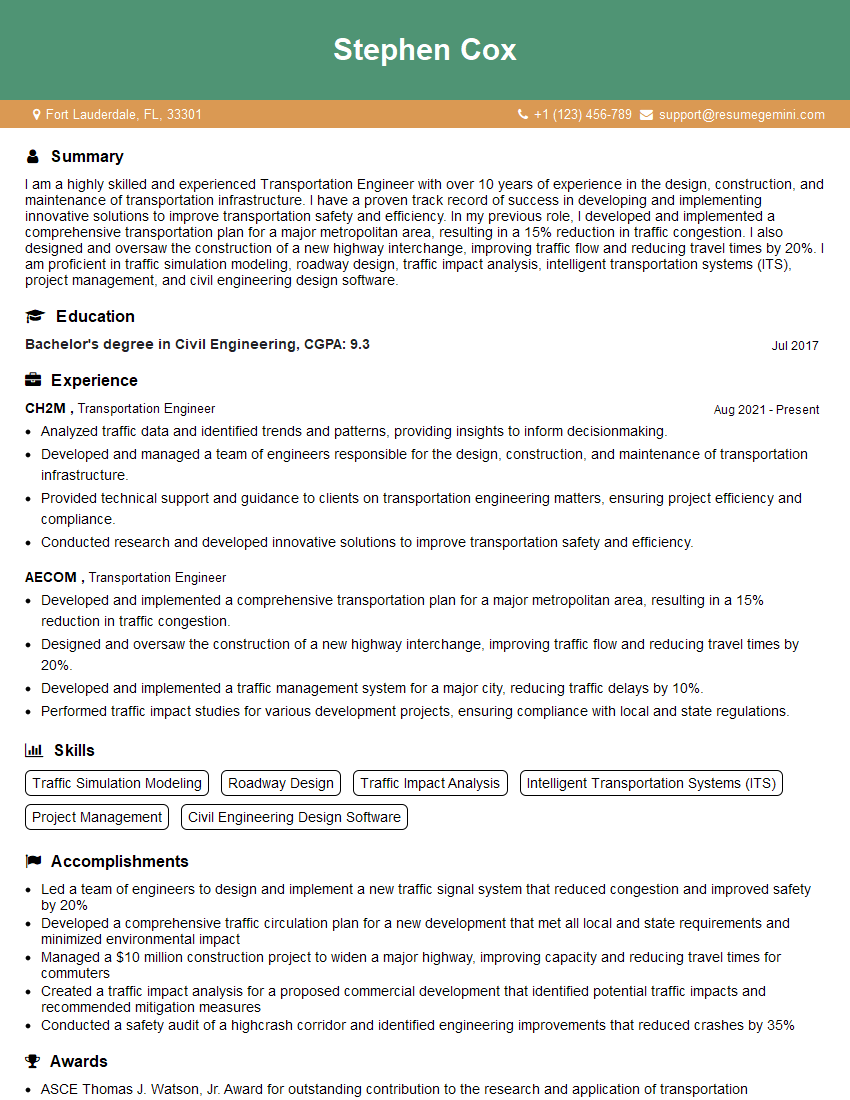
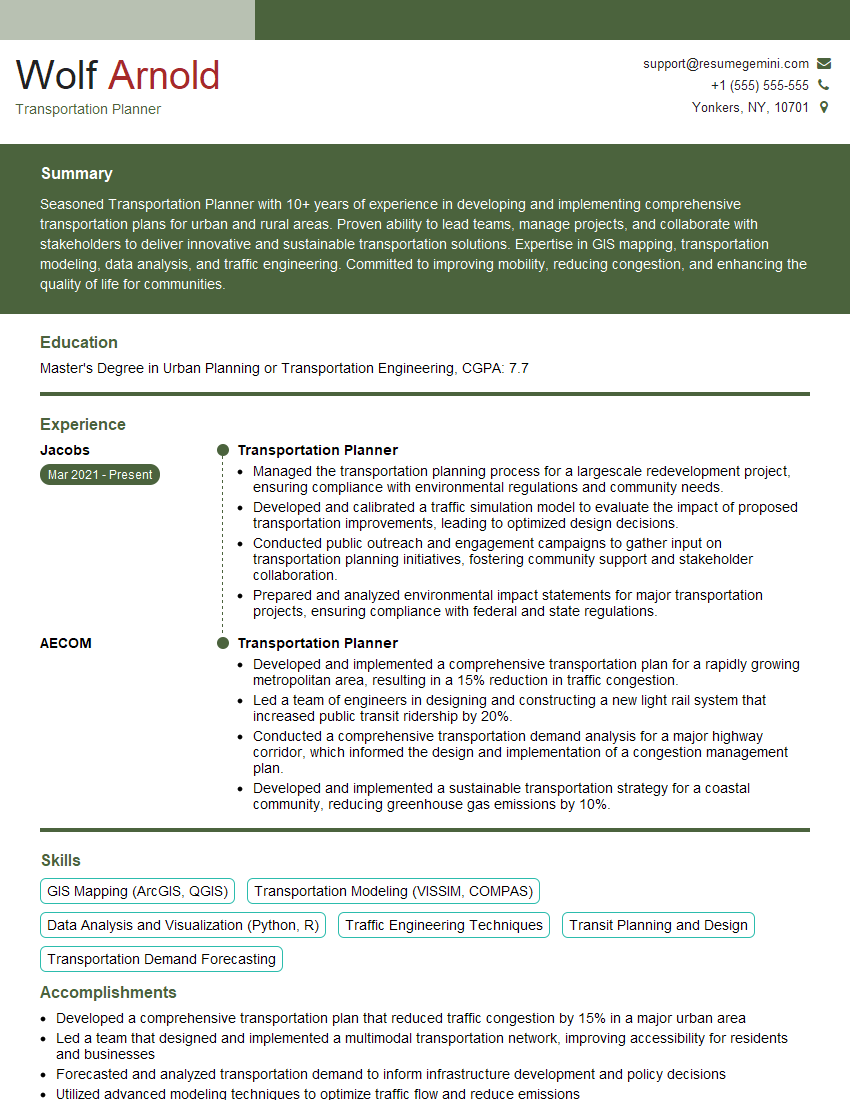
Mastering Transit Systems Planning and Design opens doors to exciting and impactful careers, shaping the future of urban mobility. A strong understanding of these principles is crucial for career advancement and securing your dream role. To maximize your job prospects, invest time in crafting an ATS-friendly resume that effectively showcases your skills and experience. ResumeGemini is a trusted resource that can help you build a professional and impactful resume tailored to the specific requirements of the Transit Systems Planning and Design field. Examples of resumes tailored to this field are available to guide you. Take this opportunity to refine your resume and present your qualifications compellingly to potential employers.
Explore more articles
Users Rating of Our Blogs
Share Your Experience
We value your feedback! Please rate our content and share your thoughts (optional).
What Readers Say About Our Blog
To the interviewgemini.com Webmaster.
Very helpful and content specific questions to help prepare me for my interview!
Thank you
To the interviewgemini.com Webmaster.
This was kind of a unique content I found around the specialized skills. Very helpful questions and good detailed answers.
Very Helpful blog, thank you Interviewgemini team.