Every successful interview starts with knowing what to expect. In this blog, we’ll take you through the top Turnaround and Shutdown Management interview questions, breaking them down with expert tips to help you deliver impactful answers. Step into your next interview fully prepared and ready to succeed.
Questions Asked in Turnaround and Shutdown Management Interview
Q 1. Describe your experience in planning and executing turnaround activities.
Planning and executing turnaround activities is a complex undertaking requiring meticulous attention to detail and a strong understanding of the plant’s operations. My experience spans over 15 years, encompassing various roles from planning engineer to turnaround manager. I’ve led teams in planning and executing turnarounds for refineries, petrochemical plants, and chemical manufacturing facilities. This involves a multi-stage process.
- Detailed Planning Phase: This includes reviewing historical data, identifying critical equipment, developing a detailed scope of work, creating a comprehensive budget, and assembling the project team. We use specialized software to model the process, allowing for efficient resource allocation and scheduling.
- Procurement and Logistics: Securing necessary parts, materials, and contracting specialized services well in advance is crucial. We leverage robust supply chain management techniques to minimize delays and cost overruns. One project involved securing a rare replacement valve from a manufacturer overseas, requiring proactive planning and close coordination to ensure timely delivery.
- Execution Phase: This involves meticulous execution of the planned activities according to the schedule. I utilize Lean methodologies to optimize workflows and identify bottlenecks in real-time. Daily progress meetings, rigorous safety checks, and effective communication are vital here.
- Post-Turnaround Review: A thorough post-turnaround review analyzes the success of the plan, identifies areas for improvement, and documents lessons learned. This feedback is crucial for continuous improvement in future turnarounds. We utilize key performance indicators to assess efficiency and identify areas where we can improve.
For example, in a recent turnaround at a refinery, I led a team that successfully completed a major reactor overhaul within the planned timeframe and budget, resulting in a 15% reduction in downtime compared to previous turnarounds.
Q 2. What are the key performance indicators (KPIs) you monitor during a turnaround?
Key Performance Indicators (KPIs) are critical for monitoring the success of a turnaround. They provide real-time insights into the project’s progress and potential risks. The specific KPIs monitored vary based on the project’s scope and objectives, but generally include:
- Safety: Lost Time Injury Frequency Rate (LTIFR), Total Recordable Incident Rate (TRIR), and near-miss reporting rates are crucial. A zero-incident goal is always paramount.
- Schedule: Percentage of work completed against schedule, critical path adherence, and duration of individual tasks are carefully tracked.
- Cost: Actual vs. budgeted costs, spending variances, and cost-saving initiatives implemented are analyzed continuously.
- Quality: Quality inspections and testing data are reviewed to ensure compliance with standards and specifications. We utilize checklists and documented procedures to ensure quality throughout the process.
- Production Restoration: Time to achieve full production capacity after the turnaround and the subsequent rate of production are monitored to measure the effectiveness of the shutdown.
For instance, during a recent project, we developed a customized dashboard that displayed real-time data on key KPIs, allowing the project team to proactively identify and mitigate potential issues. This proactive approach helped ensure the turnaround was completed on time and within budget.
Q 3. How do you manage the risks associated with a plant shutdown?
Risk management is paramount in turnaround management. We employ a systematic approach that begins in the planning phase and continues throughout the execution and post-turnaround review. This involves:
- Hazard Identification and Risk Assessment: Thorough hazard identification is undertaken using tools like HAZOP (Hazard and Operability) studies, what-if analyses, and check lists tailored to the specific equipment and processes. This helps identify potential hazards and assess their severity, likelihood, and potential impact.
- Risk Mitigation Strategies: Based on the risk assessment, appropriate mitigation strategies are developed and implemented. This can include engineering controls (e.g., isolation valves, lockout/tagout procedures), administrative controls (e.g., training programs, work permits), and personal protective equipment (PPE).
- Emergency Response Planning: Detailed emergency response plans, including procedures for various scenarios (e.g., fire, gas leaks, injuries), are developed and regularly tested. This involves training personnel and ensuring that the necessary equipment and resources are readily available.
- Contingency Planning: Contingency plans are put in place to address potential delays or unexpected events. This includes identification of alternative resources, scheduling flexibility, and escalation procedures for unforeseen challenges.
For example, in one project involving a high-pressure system, we used advanced simulations to identify potential failure points and developed a comprehensive risk mitigation strategy that included redundant safety systems and a step-by-step procedure for isolating the system during maintenance.
Q 4. Explain your approach to developing a turnaround schedule.
Developing a turnaround schedule is a critical aspect of turnaround management. It requires careful planning and consideration of various factors. My approach involves:
- Defining the Scope of Work: A detailed scope of work is prepared, outlining all the tasks required for the turnaround. This involves a collaborative effort with various engineering disciplines and operation personnel to ensure comprehensive coverage.
- Sequencing of Tasks: Tasks are sequenced logically, taking into account dependencies and constraints. Critical path analysis is employed to identify the tasks that impact the overall duration of the turnaround.
- Resource Allocation: Resources, including personnel, equipment, and materials, are allocated to each task based on availability and requirements. This step requires careful coordination with contractors and internal resources.
- Scheduling Software: Specialized scheduling software (like Primavera P6 or Microsoft Project) is used to create and manage the schedule. The software enables efficient tracking of progress, identification of potential delays, and reporting.
- Contingency Time: Contingency time is built into the schedule to account for unexpected delays and unforeseen circumstances. This helps to ensure that the turnaround is completed within a reasonable timeframe.
A recent project involved utilizing a critical path method (CPM) network diagram to visualize and optimize the schedule, resulting in a 10% reduction in turnaround duration.
Q 5. How do you ensure safety during a turnaround?
Safety is the absolute top priority during a turnaround. We implement a comprehensive safety program that begins in the planning stages and continues throughout execution. This includes:
- Pre-Turnaround Safety Training: All personnel involved in the turnaround, both internal and contractors, receive thorough safety training specific to the tasks they will be performing. This includes hazard awareness, safe work practices, emergency procedures, and the use of personal protective equipment (PPE).
- Job Safety Analysis (JSA): JSAs are conducted for each task to identify potential hazards and develop safe work procedures. These JSAs are reviewed and approved before work commences.
- Permit-to-Work System: A strict permit-to-work system is implemented to control access to hazardous areas. Permits are issued only after verification that safety precautions are in place.
- Toolbox Talks: Regular toolbox talks are conducted to reinforce safety awareness and address specific safety concerns.
- Safety Audits and Inspections: Regular safety audits and inspections are conducted to ensure compliance with safety regulations and procedures. Findings are documented and addressed promptly.
In one instance, a proactive safety audit identified a potential hazard related to confined space entry. Immediate action was taken to implement additional safety measures, preventing a potential accident.
Q 6. What is your experience with HAZOP studies in the context of turnarounds?
HAZOP (Hazard and Operability) studies are an integral part of my approach to turnaround management. I have extensive experience conducting and participating in HAZOP studies for various plants and processes. These studies systematically examine the process and equipment to identify potential hazards and operability problems.
- Team Composition: A multi-disciplinary team, including process engineers, operations personnel, safety professionals, and contractors, participates in HAZOP studies.
- Structured Approach: A structured approach, using guide words (e.g., no flow, low flow, high flow, etc.), is employed to systematically analyze each part of the process.
- Risk Assessment: Identified hazards are assessed based on their severity, likelihood, and potential impact.
- Recommended Actions: Recommended actions are developed to mitigate the identified hazards. This can include engineering controls, administrative controls, and procedural changes.
For example, a HAZOP study conducted on a distillation column before a major turnaround identified a potential hazard related to liquid carryover. This allowed us to implement additional safety measures during the turnaround, mitigating potential risk and ensuring safe operations.
Q 7. Describe your experience in managing contractors during a turnaround.
Managing contractors effectively is critical to the success of a turnaround. My approach focuses on clear communication, collaboration, and accountability. This involves:
- Contractor Selection: Careful selection of qualified and experienced contractors based on their safety record, technical expertise, and capacity is crucial. This includes thorough vetting of their safety procedures and insurance coverage.
- Clear Scope of Work: Detailed scope of work documents and specifications are prepared, outlining the tasks, deliverables, and performance expectations. This minimizes ambiguity and avoids misunderstandings.
- Pre-work Meetings: Pre-work meetings are held to clarify expectations, review safety procedures, and coordinate logistics with contractors.
- Regular Monitoring and Reporting: Regular monitoring of contractor activities ensures compliance with safety standards, schedules, and quality requirements. Progress reports are obtained and reviewed regularly.
- Conflict Resolution: Clear procedures are in place to address and resolve any disputes or conflicts that may arise between the contractors and the project team.
I once managed a team of over 50 contractors during a complex refinery turnaround. Effective communication and proactive problem-solving ensured that the project was completed on time and within budget without compromising safety.
Q 8. How do you control costs during a turnaround?
Controlling costs during a turnaround is crucial for project success. It’s a multifaceted process requiring proactive planning and rigorous execution. We achieve this through a combination of strategies:
- Detailed Budgeting and Forecasting: We begin with meticulous budgeting, breaking down costs into individual work packages. This allows for precise tracking and early identification of potential cost overruns. For instance, we might allocate specific budgets for labor, materials, permits, and waste disposal.
- Efficient Resource Allocation: Optimizing resource utilization is key. This includes careful scheduling of personnel, equipment, and materials to minimize downtime and idle time. For example, utilizing just-in-time inventory delivery minimizes storage costs and reduces the risk of material obsolescence.
- Vendor Management: Negotiating favorable contracts with vendors and subcontractors plays a crucial role. Competitive bidding processes and strong contract management ensures value for money and prevents unexpected costs. We always factor in potential escalation clauses and clearly define responsibilities.
- Preventive Maintenance and Inspection: Integrating proactive maintenance practices into the turnaround plan minimizes the need for costly emergency repairs during the shutdown. Regular inspections prior to the shutdown can identify and address minor issues before they become major problems.
- Waste Reduction and Recycling: Implementing efficient waste management practices, including recycling and proper disposal, can significantly reduce costs associated with waste handling and environmental compliance. We use checklists to ensure proper waste segregation and tracking.
In one project, by implementing a just-in-time inventory strategy and negotiating better rates with our primary vendor, we were able to reduce material costs by 15%, exceeding initial budget expectations.
Q 9. What is your experience with turnaround scope definition and change management?
Scope definition and change management are critical aspects of successful turnarounds. I have extensive experience in developing clear, concise, and comprehensive scopes of work, utilizing tools like Work Breakdown Structures (WBS) to break down the project into manageable tasks. This ensures everyone understands their responsibilities.
Change management is integrated into our process from the beginning. We establish a formal change control process with clearly defined procedures for requesting, evaluating, approving, and documenting any scope changes. This involves a Change Control Board (CCB) that reviews all change requests to assess their impact on cost, schedule, and safety. We use a change management software to track and manage change requests effectively.
For instance, in a recent refinery turnaround, we faced a late request to upgrade a crucial piece of equipment. The CCB carefully evaluated the request, assessing the impact on the schedule and budget. We worked with the stakeholders to find a solution that minimized disruption, adjusting the schedule and incorporating the change within budget constraints.
Q 10. How do you handle unexpected problems during a turnaround?
Handling unexpected problems is a core competency in turnaround management. Our approach involves a combination of proactive planning and reactive problem-solving.
- Contingency Planning: We develop detailed contingency plans to address potential issues, including equipment failures, weather delays, and supply chain disruptions. This ensures that we have alternative solutions readily available.
- Incident Management System: A well-defined incident management system, including communication protocols and escalation procedures, is crucial. This ensures rapid response and effective resolution of any unforeseen problems.
- Root Cause Analysis: For every unexpected event, a thorough root cause analysis is conducted to identify the underlying causes and prevent recurrence. This often involves utilizing techniques like the 5 Whys.
- Effective Communication: Maintaining open and transparent communication with all stakeholders is vital during any disruption. Regular updates keep everyone informed and helps foster collaboration in finding solutions.
In one instance, a critical pump failed unexpectedly. Our pre-planned contingency plan involved a spare pump, which our team quickly installed, minimizing downtime. Post-incident, root cause analysis revealed a maintenance oversight, and we adjusted our maintenance procedures accordingly to avoid future failures.
Q 11. Explain your experience with pre-commissioning and commissioning activities.
Pre-commissioning and commissioning activities are essential for ensuring the safe and reliable operation of the plant after a turnaround. My experience encompasses all aspects of these phases.
Pre-commissioning involves verifying that all systems and equipment are installed correctly and are ready for testing. This includes inspections, walkthroughs, and functional checks of individual components.
Commissioning involves systematically testing and verifying the integrated operation of all systems to meet design specifications and performance standards. This often involves rigorous testing procedures, data logging, and documentation.
For example, I’ve managed pre-commissioning activities such as pressure testing pipelines, verifying electrical connections, and calibrating instruments. During commissioning, I oversaw the phased startup of different systems, ensuring seamless integration and performance verification. We use checklists, documented procedures, and data management systems to ensure thoroughness and traceability throughout this phase.
Q 12. What are some common causes of turnaround delays, and how do you mitigate them?
Turnaround delays are costly and disruptive. Common causes include:
- Inadequate Planning: Insufficient time allocated for planning and execution is a major contributor. Insufficient detail in the turnaround plan leads to unexpected challenges.
- Scope Creep: Uncontrolled changes to the scope of work during the turnaround, without proper change management, often lead to delays.
- Material Delays: Delays in receiving critical materials and equipment due to supply chain issues or logistical problems.
- Equipment Failures: Unexpected equipment failures requiring unplanned repairs and extending the duration of the turnaround.
- Lack of Skilled Personnel: Shortage of qualified personnel can hinder progress and cause delays.
Mitigation involves proactive measures:
- Thorough Planning: Developing detailed and realistic plans with sufficient contingency time.
- Robust Change Management: Implementing a strong change control process to manage scope changes effectively.
- Supply Chain Management: Proactive vendor engagement and inventory management to prevent material delays.
- Preventive Maintenance: Regular maintenance to prevent equipment failures.
- Skilled Workforce: Ensuring adequate skilled personnel are available.
In a previous project, we prevented a potential material delay by proactively engaging with our supplier months in advance to secure the needed components. This careful planning avoided a critical delay to the schedule.
Q 13. How do you communicate effectively during a turnaround with different stakeholders?
Effective communication is paramount during a turnaround. We employ a multi-faceted approach:
- Regular Meetings: Holding regular meetings with different stakeholders, including contractors, operations personnel, and management, to keep everyone informed and aligned.
- Communication Plan: Developing a detailed communication plan outlining communication channels, frequency, and responsibilities.
- Daily Reports: Providing daily progress reports outlining key performance indicators (KPIs), challenges encountered, and planned activities.
- Incident Reporting System: Implementing a system for promptly reporting and resolving incidents or unexpected issues.
- Dedicated Communication Channels: Utilizing different communication tools, such as email, instant messaging, and project management software, to facilitate prompt and effective communication.
For instance, we use a daily stand-up meeting with all key personnel, followed by weekly progress meetings with management and other stakeholders. We make full use of project management software to share documents, track progress and communicate instantly. Transparency ensures everyone is informed, leading to more effective problem-solving and a smoother turnaround.
Q 14. What is your experience with developing and implementing a turnaround emergency response plan?
Developing and implementing a turnaround emergency response plan is critical for ensuring safety and minimizing the impact of any unforeseen event. The plan must be comprehensive, addressing a wide range of potential emergencies.
- Hazard Identification and Risk Assessment: Identifying potential hazards and conducting a risk assessment to determine the likelihood and severity of various emergency scenarios (e.g., fire, explosion, chemical spills, medical emergencies).
- Emergency Response Procedures: Developing clear and detailed procedures for responding to each identified hazard, including evacuation plans, emergency shutdown procedures, and first aid protocols.
- Emergency Communication System: Establishing a reliable communication system to alert personnel, emergency services, and other stakeholders in case of an emergency.
- Emergency Equipment and Supplies: Ensuring adequate emergency equipment, such as fire extinguishers, spill containment materials, and first-aid kits, is available and readily accessible.
- Training and Drills: Conducting regular training exercises and drills to familiarize personnel with emergency response procedures and ensure their preparedness.
Our emergency response plan is regularly reviewed and updated, and we conduct full-scale emergency drills to test its effectiveness and identify areas for improvement. This proactive approach ensures that our team is well-prepared to handle any emergency situation that may arise during a turnaround.
Q 15. Describe your experience with utilizing turnaround management software.
My experience with turnaround management software spans several years and various platforms. I’ve worked extensively with solutions designed to optimize scheduling, resource allocation, and risk management throughout the lifecycle of a turnaround. For instance, in a recent project at a large refinery, we utilized a software package that integrated detailed equipment lists, work packages, and critical path analysis. This allowed us to create a dynamic schedule that could adapt to unforeseen circumstances and ensure minimal downtime. Another system I’ve used incorporated real-time data feeds from various plant sensors, providing continuous monitoring of critical parameters and alerting us to potential issues before they escalated. These tools help streamline communication, improve collaboration, and significantly reduce the risk of schedule slippage and cost overruns.
These software solutions usually include features such as:
- Scheduling & Sequencing: Optimizing the order of tasks to minimize downtime.
- Resource Management: Tracking personnel, equipment, and materials.
- Risk Management: Identifying and mitigating potential hazards.
- Document Management: Centralized repository for all turnaround-related documents.
- Reporting & Analytics: Tracking progress, identifying bottlenecks, and measuring success.
Selecting the right software depends on the complexity of the project, the size of the team, and the specific needs of the plant. A robust system can significantly improve the efficiency and safety of a turnaround.
Career Expert Tips:
- Ace those interviews! Prepare effectively by reviewing the Top 50 Most Common Interview Questions on ResumeGemini.
- Navigate your job search with confidence! Explore a wide range of Career Tips on ResumeGemini. Learn about common challenges and recommendations to overcome them.
- Craft the perfect resume! Master the Art of Resume Writing with ResumeGemini’s guide. Showcase your unique qualifications and achievements effectively.
- Don’t miss out on holiday savings! Build your dream resume with ResumeGemini’s ATS optimized templates.
Q 16. How do you ensure the quality of work during a turnaround?
Ensuring quality during a turnaround is paramount. It’s not just about completing the tasks; it’s about executing them correctly and safely. My approach is multifaceted and begins long before the turnaround even starts.
- Rigorous Planning: This includes detailed work scopes, comprehensive risk assessments, and meticulous planning of each task. We use checklists, standardized procedures, and pre-job briefings to eliminate ambiguity.
- Competent Workforce: Employing skilled and qualified personnel is crucial. This involves rigorous training, certifications, and ongoing competency assessments. We emphasize clear roles and responsibilities, ensuring everyone understands their contribution to overall quality.
- Quality Control Inspections: Throughout the turnaround, we employ rigorous quality control inspections at multiple stages. This includes visual inspections, non-destructive testing (NDT), and functional testing to verify compliance with standards and specifications.
- Real-time Monitoring: Close monitoring of critical parameters during the turnaround enables us to identify and address potential quality issues promptly. This might involve continuous monitoring of welding quality, pressure testing, or material traceability.
- Documentation and Audits: Maintaining detailed records of all activities, inspections, and test results is crucial. This information is used for continuous improvement and compliance audits.
Imagine it like building a house: you wouldn’t skip inspections or use substandard materials. Similarly, in a turnaround, meticulous quality control measures are the foundation of a successful and safe outcome.
Q 17. How do you measure the success of a turnaround?
Measuring the success of a turnaround goes beyond just completing it on time and within budget. It involves evaluating several key performance indicators (KPIs).
- On-Time Completion: Did the turnaround finish as scheduled? Any delays and their root causes need analysis.
- Within-Budget Completion: Was the project completed within the allocated budget? Cost variances require investigation and future process improvements.
- Safety Performance: Was the turnaround completed without any lost-time injuries (LTIs)? A perfect safety record is the ultimate goal.
- Equipment Reliability: Did the turnaround improve the reliability and lifespan of the equipment? Post-turnaround monitoring tracks this.
- Production Output: After the turnaround, did production levels return to or surpass pre-turnaround levels? This measures the impact of repairs and upgrades.
- Compliance: Did the turnaround adhere to all relevant regulatory requirements and internal standards?
We use a combination of quantitative data (such as cost and time metrics) and qualitative data (such as safety reports and employee feedback) to create a comprehensive assessment. A post-turnaround review meeting is essential to discuss findings and identify areas for improvement in future turnarounds.
Q 18. Describe your experience with different types of turnarounds (e.g., major, minor, planned, unplanned).
My experience encompasses various types of turnarounds, each with its unique challenges and considerations:
- Major Turnarounds: These are extensive overhauls involving significant plant shutdowns, often lasting several weeks. They typically involve complex projects, numerous work crews, and extensive planning. I’ve managed major turnarounds in petrochemical plants, requiring intricate coordination of numerous contractors and specialized equipment.
- Minor Turnarounds: These are smaller-scale events, focusing on specific equipment or systems, with shorter durations. They still require careful planning and execution but on a smaller scale. I’ve been involved in several minor turnarounds focused on optimizing specific process units while minimizing overall plant disruption.
- Planned Turnarounds: These are scheduled in advance, allowing ample time for planning and preparation. This is the ideal scenario, allowing for resource optimization and mitigation of risks. Most of my experience falls under this category, where meticulous planning leads to smoother operations.
- Unplanned Turnarounds: These are emergency shutdowns caused by unexpected equipment failures or safety concerns. They demand swift action, quick decision-making, and efficient resource mobilization. I’ve handled several unplanned turnarounds, emphasizing quick and safe resolution while minimizing production losses.
The approach to each type differs significantly in terms of planning, resource allocation, and risk management. A major planned turnaround might involve months of preparation, while an unplanned shutdown necessitates immediate action and often involves working around the clock.
Q 19. What is your experience in developing and managing a turnaround budget?
Developing and managing a turnaround budget requires meticulous planning and control. It begins with a comprehensive cost estimation based on the scope of work, including labor, materials, equipment rentals, and contractor fees. I utilize various cost estimation techniques such as bottom-up budgeting and parametric estimating.
Once the budget is established, I implement a robust system of tracking and control. This involves:
- Regular Budget Reviews: Monitoring actual spending against the budgeted amounts, identifying variances, and taking corrective actions.
- Change Management: A formal process for evaluating and approving any changes to the scope of work, ensuring that budget impacts are understood and controlled.
- Cost Optimization Strategies: Exploring options for reducing costs without compromising safety or quality, such as optimizing material usage or negotiating better prices with vendors.
- Contingency Planning: Allocating a portion of the budget to address unforeseen circumstances and potential cost overruns.
In one project, we were able to achieve significant cost savings through creative material sourcing and optimized scheduling, ultimately completing the turnaround under budget while maintaining high quality.
Q 20. How do you ensure compliance with regulatory requirements during a turnaround?
Ensuring regulatory compliance during a turnaround is critical. This involves understanding and adhering to all applicable local, national, and international regulations. My approach involves:
- Regulatory Compliance Audit: Before the turnaround begins, we conduct a comprehensive review of all applicable regulations and permits.
- Permitting and Approvals: Obtaining all necessary permits and approvals from regulatory bodies, ensuring compliance with environmental protection and safety standards.
- Hazard Identification and Risk Assessment: A thorough assessment of potential hazards associated with the turnaround, including process safety risks, environmental impacts, and worker safety.
- Implementation of Control Measures: Implementing control measures such as lockout/tagout procedures, confined space entry protocols, and environmental protection measures.
- Documentation and Reporting: Maintaining detailed records of all activities, inspections, and compliance-related data to facilitate audits and demonstrate compliance.
We treat regulatory compliance not as a mere checkbox exercise, but as an integral part of the turnaround planning and execution, ensuring safety and preventing potential environmental damage.
Q 21. Explain your experience in post-turnaround analysis and reporting.
Post-turnaround analysis and reporting are crucial for continuous improvement. This involves a thorough review of all aspects of the turnaround, identifying successes, failures, and areas for improvement. My process includes:
- Data Collection: Gathering data from various sources, such as time sheets, cost reports, safety records, and equipment performance data.
- Performance Evaluation: Comparing actual performance against planned targets, identifying variances, and analyzing their causes.
- Lessons Learned: Conducting a thorough review to identify lessons learned and areas for improvement in future turnarounds.
- Reporting and Documentation: Preparing detailed reports summarizing the findings of the post-turnaround analysis, including recommendations for future improvements.
- Continuous Improvement: Implementing actions based on the lessons learned, such as updating procedures, improving training programs, or refining planning processes.
This iterative approach uses data to refine processes and prevent past mistakes from recurring. A well-executed post-turnaround analysis significantly contributes to increased efficiency, improved safety, and reduced costs in future turnarounds.
Q 22. Describe your experience with the use of critical path method (CPM) in turnaround scheduling.
The Critical Path Method (CPM) is a crucial project management technique used to schedule turnarounds efficiently. It identifies the sequence of tasks that determine the shortest possible duration of the project. In turnaround scheduling, this translates to pinpointing the activities that, if delayed, will directly impact the overall turnaround time.
My experience involves using CPM software to create network diagrams that visually represent the project’s tasks and their dependencies. Each task is assigned a duration, and the software calculates the critical path – the longest sequence of dependent tasks. This allows us to prioritize resources and focus on these critical tasks to avoid delays. For example, in a refinery turnaround, the critical path might involve major equipment repairs and subsequent testing, which must be completed before startup. We use this information to create realistic schedules, allocate resources optimally, and identify potential bottlenecks early on. We regularly update the CPM schedule as the turnaround progresses, tracking actual progress against planned timelines. Any deviations from the critical path are immediately flagged and addressed to maintain schedule adherence.
Q 23. How do you handle stakeholder expectations during a turnaround?
Managing stakeholder expectations is paramount during a turnaround. Stakeholders include plant operations, maintenance teams, contractors, regulatory bodies, and even local communities. A proactive communication strategy is key. This involves setting clear expectations from the outset by:
- Establishing regular communication channels – daily or weekly progress reports, meetings, and dedicated communication platforms.
- Developing a transparent communication plan: Clearly outline the turnaround scope, schedule, key milestones, and potential risks.
- Establishing a dedicated communication team: This ensures consistent messaging and addresses concerns efficiently.
- Proactively addressing concerns: Addressing issues promptly and transparently builds trust. Transparency is crucial; even if there are setbacks, open communication prevents misinterpretations and maintains stakeholder confidence.
For example, during a major refinery turnaround, we held weekly meetings with plant operations to keep them informed of the progress of critical maintenance tasks. This allowed us to address their concerns regarding potential production disruptions and ensured they were well-prepared for the restart.
Q 24. What is your experience in the use of simulation software in turnaround planning?
Simulation software plays a vital role in turnaround planning. It allows us to model various scenarios, test different strategies, and identify potential risks before they occur. I have extensive experience using software such as Arena and AnyLogic. These tools enable the creation of detailed models of the turnaround process, incorporating factors such as crew availability, equipment constraints, and task durations. We can then run simulations to evaluate different scheduling options, resource allocation strategies, and contingency plans. For instance, we used simulation software to optimize the sequence of tasks during a major chemical plant shutdown. By running multiple simulations with different scenarios (e.g., equipment failure, crew absences), we were able to identify the most robust schedule and contingency plans that minimized downtime and project costs.
Q 25. How do you ensure a smooth transition from shutdown to startup?
A smooth transition from shutdown to startup is crucial for minimizing downtime and ensuring plant safety and integrity. This requires meticulous planning and coordination. Key elements include:
- Pre-commissioning activities: Thorough inspection, testing and validation of all systems before startup.
- Clear startup procedures: Detailed step-by-step procedures for each system, equipment and process should be developed and available to the startup crew.
- Crew training: Training of all personnel involved in startup operations is mandatory to minimize errors and maintain safety.
- Effective communication: A robust communication system to manage the information flow between different teams involved in the transition.
- Progressive startup: A phased approach to startup, starting with smaller systems and incrementally moving to larger systems.
In one project, we implemented a comprehensive checklist system for pre-commissioning activities. This ensured that no critical step was missed, and improved the efficiency of the process and greatly reduced the risk of problems during the startup phase.
Q 26. What is your approach to managing the human resources aspects of a turnaround?
Managing the human resources aspect of a turnaround is critical to its success. It involves careful planning for personnel needs, training, safety, and motivation. My approach includes:
- Accurate workforce planning: Determining the required skills and numbers for each phase of the turnaround and establishing a staffing plan.
- Contractor management: Selecting, coordinating and managing contractors, ensuring adherence to safety standards and schedule.
- Safety training: Providing comprehensive safety training to all personnel, including contractors, to minimize incidents and injuries.
- Motivation and morale: Maintaining a safe and positive working environment, recognizing contributions, and addressing concerns promptly.
- Fatigue management: Implementing strategies to manage fatigue among the workforce to improve safety and productivity.
During a large-scale refinery turnaround, I implemented a system for tracking contractor performance, ensuring that only qualified and vetted contractors were utilized. This significantly reduced the risk of incidents and improved the overall quality of work.
Q 27. Describe a challenging turnaround situation you faced and how you resolved it.
One particularly challenging turnaround involved an unexpected equipment failure during the critical path of a petrochemical plant shutdown. The failure of a crucial heat exchanger threatened to delay the entire turnaround by several weeks.
My approach involved the following steps:
- Rapid assessment: We quickly assessed the extent of the damage and its impact on the project schedule.
- Problem-solving team: We assembled a multi-disciplinary team comprising engineers, maintenance personnel, and contractors to brainstorm solutions.
- Alternative solutions: We explored alternative repair strategies, including expedited repairs, sourcing a replacement component, and even modifying the process to work around the failed equipment.
- Risk assessment: We conducted a risk assessment for each proposed solution, identifying potential safety implications and cost considerations.
- Communication: We kept all stakeholders informed of the situation, explaining the proposed solutions and their potential impact.
- Implementation and monitoring: We chose the most effective solution (expedited repair in this instance) and closely monitored its implementation, making adjustments where necessary.
Through decisive action, effective communication and diligent teamwork, we minimized the delay to only a few days, proving the turnaround’s success despite the unforeseen equipment failure.
Q 28. Explain your understanding of the different phases of a turnaround lifecycle.
The turnaround lifecycle comprises several key phases:
- Planning Phase: This involves defining the scope of work, developing the turnaround plan, creating schedules using CPM, resource allocation, risk assessment, and securing necessary permits and approvals.
- Preparation Phase: This stage focuses on procurement of materials, pre-commissioning checks, contractor mobilization, training personnel, safety briefings, and finalizing the communication plan.
- Execution Phase: This is the actual shutdown and maintenance period, where the planned work is executed according to the schedule. Continuous monitoring, progress reporting, and problem-solving are critical during this phase.
- Commissioning Phase: After maintenance, this phase involves systematically restarting and testing all systems and equipment to ensure proper functionality and safety. This includes leak testing, functional testing and performance testing.
- Startup Phase: This phase begins with the gradual startup of the plant, bringing different parts of the process online in a controlled manner. Once stable operation is achieved, the transition back to normal operations takes place.
- Post-Turnaround Review Phase: This critical phase involves evaluating the performance of the turnaround, identifying areas for improvement, and documenting lessons learned for future turnarounds. This review informs improved planning and scheduling processes and enhances future turnaround efficiency.
Understanding these phases is vital for successful turnaround management. Each phase has specific requirements and challenges that need to be addressed effectively.
Key Topics to Learn for Turnaround and Shutdown Management Interview
- Planning & Scheduling: Understanding critical path analysis, resource allocation, and developing detailed schedules for efficient turnaround execution. Consider the impact of potential delays and develop contingency plans.
- Risk Assessment & Management: Identifying and mitigating potential hazards, including safety risks, environmental concerns, and cost overruns. Discuss practical strategies for risk mitigation and emergency response.
- Permitting & Compliance: Navigating regulatory requirements, obtaining necessary permits, and ensuring compliance with environmental, safety, and health regulations throughout the turnaround process.
- Cost Control & Budgeting: Developing accurate budgets, tracking expenses, and implementing cost-saving measures while maintaining project quality and safety.
- Team Management & Communication: Leading and motivating diverse teams, fostering effective communication, and managing conflicts to ensure project success. Explore various communication strategies and conflict resolution techniques.
- Project Execution & Monitoring: Overseeing the execution of the turnaround plan, monitoring progress, and making necessary adjustments to maintain schedule and budget. Highlight real-world examples of effective project management and problem-solving.
- Scope Management: Defining and controlling the scope of work, managing changes effectively, and ensuring all tasks are completed within the defined parameters.
- Post-Turnaround Evaluation & Reporting: Conducting thorough post-turnaround evaluations, documenting lessons learned, and preparing comprehensive reports for stakeholders.
- Maintenance Strategies: Discuss various maintenance philosophies (e.g., predictive, preventive, reactive) and their implications on turnaround planning and execution.
Next Steps
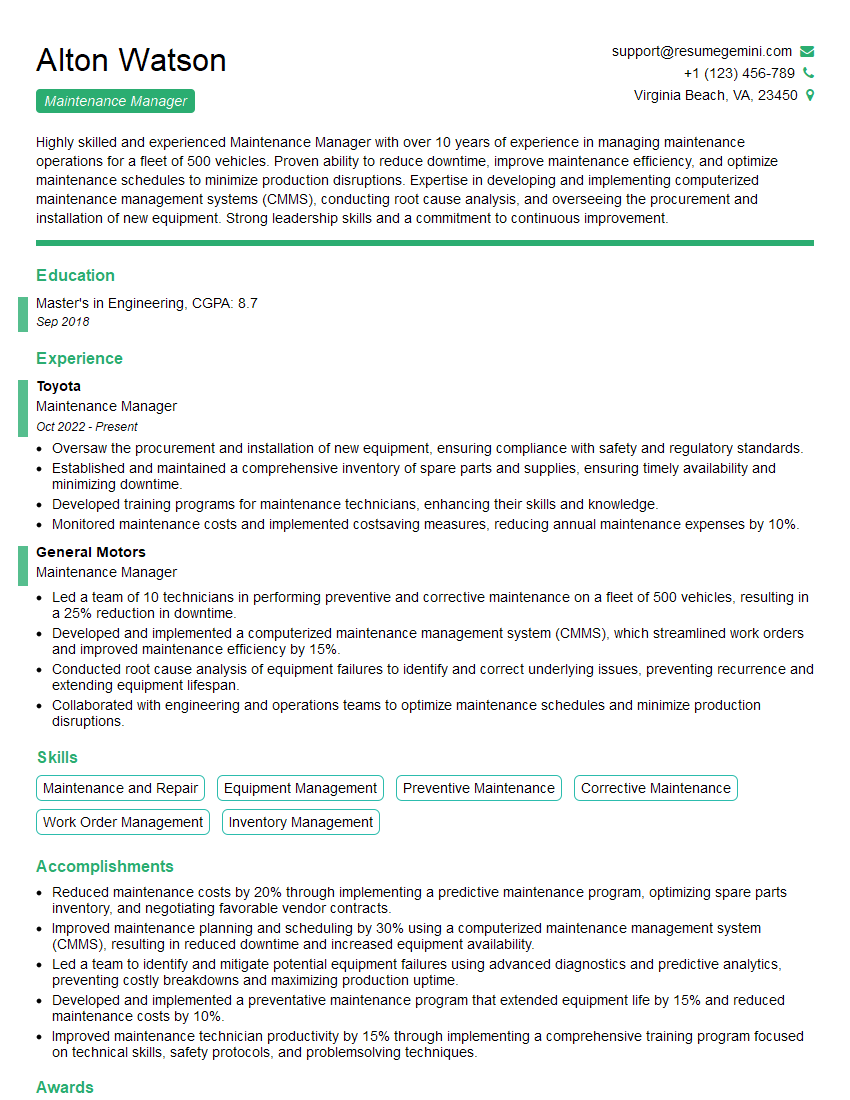
Mastering Turnaround and Shutdown Management is crucial for career advancement in the process industries, offering opportunities for leadership roles and increased earning potential. An ATS-friendly resume is key to getting your application noticed. To significantly improve your chances, leverage the power of ResumeGemini to craft a compelling and effective resume that showcases your skills and experience. ResumeGemini provides examples of resumes tailored to Turnaround and Shutdown Management, ensuring your application stands out from the competition. Invest time in crafting a strong resume; it’s your first impression and your key to unlocking exciting career opportunities.
Explore more articles
Users Rating of Our Blogs
Share Your Experience
We value your feedback! Please rate our content and share your thoughts (optional).
What Readers Say About Our Blog
To the interviewgemini.com Webmaster.
Very helpful and content specific questions to help prepare me for my interview!
Thank you
To the interviewgemini.com Webmaster.
This was kind of a unique content I found around the specialized skills. Very helpful questions and good detailed answers.
Very Helpful blog, thank you Interviewgemini team.