Unlock your full potential by mastering the most common Underground Cable Installation and Maintenance interview questions. This blog offers a deep dive into the critical topics, ensuring you’re not only prepared to answer but to excel. With these insights, you’ll approach your interview with clarity and confidence.
Questions Asked in Underground Cable Installation and Maintenance Interview
Q 1. Describe the different types of underground cable.
Underground cables come in various types, each suited for different applications and environments. The choice depends on factors like voltage level, current carrying capacity, installation depth, and environmental conditions.
- Low-voltage cables: Used for applications such as residential power and control circuits. These are typically smaller in diameter and have simpler insulation.
- Medium-voltage cables: Used for distribution networks supplying power to substations or large buildings. These require more robust insulation and shielding to handle higher voltages.
- High-voltage cables: Employed in transmission lines carrying substantial power over long distances. They are designed with enhanced insulation, multiple layers of shielding, and often oil-filled or gas-filled to manage heat dissipation and voltage stress.
- Fiber optic cables: Transmit data as light pulses, used extensively for communication networks. These can be installed alongside power cables or independently.
- Coaxial cables: Used for high-frequency applications like cable television and internet services. They feature a central conductor surrounded by a dielectric insulator and a conductive shield.
For example, you might find low-voltage cables in a residential neighborhood, while high-voltage cables are buried beneath major highways supporting a city’s power grid. The choice is always determined by the specific requirements of the project.
Q 2. Explain the process of cable trenching and backfilling.
Cable trenching and backfilling are critical steps in underground cable installation. It’s crucial to ensure proper depth, stability, and protection of the cable.
- Trenching: This involves excavating a trench of the appropriate width and depth using trenchers (mechanical excavators), hand tools (for smaller jobs), or a combination of both. The trench depth depends on the cable type, voltage, and local regulations, but typically ranges from several feet to well over 10 feet for high-voltage lines. Accuracy is vital; deviations can damage the cable and surrounding infrastructure.
- Cable laying: Once the trench is prepared, the cable is carefully laid in the bottom, ensuring it’s free from kinks, sharp bends, and contact with rocks or debris. A bedding layer of sand or gravel is often placed beneath the cable for protection.
- Backfilling: This involves gradually refilling the trench with soil, starting with finer material around the cable for added protection. Compaction is often done in layers to ensure soil stability and prevent settling, which could damage the cable. Warning tape is usually placed above the cable to alert future excavators. The soil should be meticulously backfilled, returning the area to its original state to avoid any hazards or land-level problems.
Imagine building a road: the trench is like the foundation; careful preparation is crucial. A poorly executed backfill could lead to cable damage or ground settling later, necessitating costly repairs.
Q 3. What safety precautions are crucial during underground cable installation?
Safety is paramount during underground cable installation. Accidents can lead to serious injury or even fatalities. Here are some crucial precautions:
- Proper Training and Certification: All personnel involved must receive thorough training on safe excavation practices, handling high-voltage equipment, and emergency procedures.
- Call Before You Dig (811): Contact the utility locating service before any excavation to prevent accidental damage to existing underground utilities, including cables, gas lines, and water pipes.
- Lockout/Tagout Procedures: De-energize and lock out power lines before working on them to avoid electrical shocks. Properly labeled lockout/tagout devices are essential.
- Personal Protective Equipment (PPE): Use appropriate PPE, including hard hats, safety glasses, gloves, high-visibility clothing, and safety footwear to protect against injuries.
- Ground Monitoring: Regularly monitor the ground for voltage to prevent electrical shocks.
- Safe Excavation Practices: Use appropriate equipment and techniques to prevent cave-ins and trench collapses. Shoring may be necessary for deep trenches.
- Emergency Response Plan: Have a well-defined emergency response plan in place to deal with any accidents or incidents.
Ignoring these precautions can result in catastrophic consequences. Always prioritize safety and follow established industry standards.
Q 4. How do you test for cable faults?
Testing for cable faults is essential for ensuring the reliability and safety of underground power systems. Several techniques are employed:
- Continuity testing: This simple test verifies the electrical connection between the ends of the cable, identifying open circuits or significant breaks.
- Insulation resistance testing: Measures the resistance of the cable’s insulation to determine its condition. Lower resistance indicates insulation degradation, potentially leading to short circuits or ground faults.
- Time domain reflectometry (TDR): This advanced technique uses pulses of electricity to locate faults along the cable’s length. The reflected signals reveal the distance and type of fault, allowing for more precise repairs.
- Frequency domain reflectometry (FDR): Similar to TDR, but uses a range of frequencies to analyze cable characteristics and detect faults, including moisture ingress or conductor defects.
- Cable mapping: Using specialized equipment to identify the physical location and path of the cable underground, aiding in locating faults or planning excavation.
Imagine a doctor performing diagnostics: these tests are like X-rays and blood tests, pinpointing the problem for effective repair.
Q 5. Explain the process of cable splicing.
Cable splicing involves joining two or more cable sections to extend the length or replace a damaged segment. It requires precision and skill to ensure a secure, reliable connection.
- Preparation: Carefully strip the outer jacket and insulation from the cables, exposing the conductors. Clean the conductors thoroughly to remove any dirt or debris.
- Conductor Joining: The conductors are joined using various methods, depending on the cable type and size. This may involve crimping, soldering, or using specialized connectors. Ensure a secure and consistent connection.
- Insulation Application: Apply insulation tape or heat-shrink tubing to the joined conductors, providing electrical insulation and environmental protection.
- Outer Jacket Restoration: The outer jacket is sealed to restore the cable’s watertight integrity. This is usually done with specialized sealants and heat-shrink tubing.
- Testing: After completion, the splice is rigorously tested to ensure that the electrical and mechanical properties meet the required standards. This may involve continuity, insulation resistance, and high-voltage testing.
A proper splice is invisible to the naked eye; a poorly executed one might lead to system failures.
Q 6. What are the different types of cable splices?
Several types of cable splices exist, chosen based on the cable type, voltage level, and application.
- Mechanical splices: Use compression connectors or crimping tools to join conductors. Simple and fast, but may not be suitable for high-voltage applications.
- Soldered splices: Use solder to create a permanent, reliable connection. They offer excellent conductivity but require more skill and careful heat management.
- Heat-shrink splices: Employ heat-shrink tubing to insulate and seal the joint. Suitable for various applications due to their durability and ease of use.
- Compression splices: Use specialized connectors that compress the conductors, creating a secure connection. Excellent for high-voltage applications and ensure reliable connections.
Each type has its strengths and weaknesses, and the selection should be based on thorough analysis.
Q 7. What tools and equipment are used for underground cable installation?
Underground cable installation requires specialized tools and equipment to ensure efficiency and safety.
- Trenchers: Mechanical excavators for digging trenches of various sizes and depths.
- Backhoes: For larger excavation jobs and backfilling.
- Cable reels: To transport and handle large cable spools.
- Cable pullers: To guide and pull cables through conduits or ducts.
- Splicing kits: Containing tools and materials for cable splicing.
- Cable testers: To measure insulation resistance, continuity, and fault location.
- Ground monitoring equipment: To detect the presence of underground utilities and prevent accidental damage.
- Safety equipment: Hard hats, safety glasses, gloves, high-visibility clothing, and safety footwear.
Investing in high-quality equipment leads to efficient, safe installations.
Q 8. Describe your experience with different types of cable pulling equipment.
My experience with cable pulling equipment spans a wide range, from basic hand-pulled methods for smaller projects to sophisticated motorized equipment for large-scale installations. I’m proficient with various types of winches, including hydraulic and electric models, each suited for different cable diameters and trench lengths. I’ve worked extensively with cable pulling lubricants, understanding the importance of selecting the correct type to minimize friction and cable damage. For example, in one project involving a long, complex duct run, we used a combination of a powerful electric winch and a specialized lubricant to successfully pull a large bundle of fiber optic cables without incident. On smaller jobs, we sometimes use simpler capstans and hand-operated pulling grips. Safety is always paramount, and I’m thoroughly trained in the safe operation and maintenance of all equipment, including regular inspections for wear and tear. Experience has also taught me the importance of pre-planning, carefully calculating pulling tensions, and using appropriate safety measures throughout the process.
Q 9. How do you ensure the proper grounding of underground cables?
Proper grounding of underground cables is crucial for safety and preventing damage. It involves connecting the cable sheath to earth, effectively diverting any stray current and preventing voltage buildup. This is typically achieved using grounding wires connected to grounding rods driven into the earth, following local electrical codes and best practices. We carefully inspect the grounding system at regular intervals, ensuring that connections remain tight and the grounding rods maintain good contact with the soil. In some cases, we use specialized grounding clamps and conductors designed for this purpose, and always document the grounding points. Think of it like a lightning rod for your cables – it protects the entire system from voltage surges and ensures worker safety.
Q 10. What are the common causes of underground cable damage?
Underground cable damage can stem from several sources. Mechanical damage is common, often caused by excavation activities – such as digging or trenching – that accidentally strike the cable. Environmental factors like soil erosion or ground settling can also put stress on cables, leading to damage. Corrosion, especially in wet or corrosive soils, gradually weakens cable sheathing. Overloading, where too much current is passed through the cable, creates excessive heat and can melt the insulation. Rodents and other animals can also gnaw on cables, causing short circuits or complete breaks. Finally, improper installation, such as sharp bends or inadequate protection during installation, can predispose the cable to future damage.
Q 11. How do you identify and repair damaged underground cables?
Identifying damaged underground cables often starts with detecting anomalies like power outages or signal loss in the affected area. We use specialized cable testing equipment, such as time-domain reflectometers (TDRs) or cable fault locators, to pinpoint the exact location of the fault. Once the location is known, excavation is carefully undertaken to expose the damaged section. Repair methods depend on the type and extent of the damage. Minor damage might be repaired with splicing, involving the removal of the damaged section and the connection of new cable using specialized connectors and insulating materials. Severe damage may require replacing a longer section of the cable. After repair or replacement, thorough testing is carried out to ensure functionality and safety before backfilling the trench.
Q 12. Explain the importance of proper cable labeling and documentation.
Proper cable labeling and documentation are vital for efficient maintenance and future upgrades. Clear labeling ensures that cables can be easily identified and traced, preventing accidental damage during future excavation or maintenance. Detailed documentation, including cable type, routing, termination points, and splicing details, aids in troubleshooting and maintenance. Imagine trying to diagnose a fault in a vast network without any documentation – it would be a nightmare. Consistent and accurate labeling and documentation save time, reduce errors, and enhance safety.
Q 13. What are the regulatory requirements for underground cable installation in your area?
The regulatory requirements for underground cable installation in my area are extensive and vary depending on the type of cable (power, communication, etc.). We must adhere strictly to local and national electrical codes, ensuring proper depth of burial, conduit sizing, grounding, and safety measures. Permits are usually required before commencement of any work, and inspections are conducted at various stages of the installation to confirm compliance. We also have to follow stringent safety protocols throughout the entire process, emphasizing worker protection from electrical hazards and potential excavation dangers. Failure to comply with these regulations results in fines and potential project delays.
Q 14. Describe your experience working with different types of conduit.
My experience includes working with various conduit types, each suited for different applications and environmental conditions. I’m familiar with PVC conduit, which is lightweight, cost-effective, and suitable for many applications. High-density polyethylene (HDPE) conduit offers greater strength and resistance to chemicals, making it ideal for harsh environments. For demanding applications, such as areas with heavy traffic or corrosive soils, we might use steel or fiber-reinforced plastic (FRP) conduit. The choice of conduit depends on factors such as soil conditions, cable type, expected lifespan, and local codes. Proper conduit selection is critical to ensure the long-term protection and performance of the installed cables.
Q 15. How do you manage cable slack during installation?
Managing cable slack during underground cable installation is crucial for preventing damage from thermal expansion and contraction, ground movement, and tension during pulling. Insufficient slack can lead to cable stretching, breaks, or damage to the terminations. Too much slack, however, can create a tripping hazard or allow the cable to sag excessively, potentially accumulating water and causing corrosion.
We typically manage slack using several methods:
- Calculating Slack: We use industry-standard formulas that account for cable length, temperature variations, and the type of terrain. This calculation determines the optimal amount of slack needed.
- Slack Loops: At intervals along the cable route, we create slack loops, which are loops of extra cable secured to prevent excessive tension. These loops absorb movement.
- Pulling Tension Control: During the pulling process, we carefully monitor and control pulling tension using specialized equipment like tension meters and winches. Exceeding the manufacturer’s recommended tension can cause irreversible damage.
- Cable Lubrication: Lubricating the cable before pulling reduces friction and minimizes the stress on the cable, therefore reducing the needed slack.
For instance, on a recent project involving a long run across uneven terrain, we implemented multiple slack loops along the route and precisely monitored pulling tension using a digital tension meter to ensure the cable was not overloaded. This prevented damage and ensured a long lifespan for the cables.
Career Expert Tips:
- Ace those interviews! Prepare effectively by reviewing the Top 50 Most Common Interview Questions on ResumeGemini.
- Navigate your job search with confidence! Explore a wide range of Career Tips on ResumeGemini. Learn about common challenges and recommendations to overcome them.
- Craft the perfect resume! Master the Art of Resume Writing with ResumeGemini’s guide. Showcase your unique qualifications and achievements effectively.
- Don’t miss out on holiday savings! Build your dream resume with ResumeGemini’s ATS optimized templates.
Q 16. How do you prevent cable damage during backfilling?
Preventing cable damage during backfilling is critical for the longevity and reliability of the underground cable system. Improper backfilling can lead to cable crushing, abrasion, or water ingress, resulting in costly repairs and potential service interruptions.
We employ several strategies to protect cables:
- Protective Bedding: Before backfilling, we always place a layer of protective bedding material, such as sand or non-compacting gravel, around the cable. This acts as a cushion against the weight of the backfill material.
- Gradual Backfilling: We avoid dropping large amounts of backfill material directly onto the cable. Instead, we gradually fill the trench, starting with finer materials near the cable and progressively using coarser materials further away.
- Controlled Compaction: We use mechanical compactors that are carefully managed to avoid over-compacting the soil around the cables. Over-compaction can crush the cable’s outer sheathing.
- Warning Tapes: We place brightly colored warning tapes above the cable to alert future excavators to the presence of buried utilities.
In one instance, we encountered a rocky section during a backfilling operation. To mitigate the risk of cable damage from sharp rocks, we hand-placed the bedding material and carefully monitored compaction, ensuring the cable remained undisturbed. This proactive approach prevented a potential cable failure.
Q 17. What is your experience with fiber optic cable installation and splicing?
I have extensive experience in fiber optic cable installation and splicing, encompassing both single-mode and multi-mode fibers. This includes everything from planning and design to testing and commissioning.
My experience includes:
- Installation: I am proficient in various cable pulling and installation techniques, ensuring minimal fiber damage and proper cable routing within conduits and micro-ducts.
- Fusion Splicing: I’m skilled in using fusion splicers to create precise and low-loss fiber optic connections. I understand the importance of maintaining cleanliness and accurately aligning fibers for optimal performance.
- Mechanical Splicing: I am familiar with mechanical splice techniques as well, which are appropriate for quicker installation in some scenarios, though fusion splicing is generally preferred for its superior performance.
- Testing and Certification: I can perform OTDR (Optical Time-Domain Reflectometer) testing to identify and measure fiber loss, locate faults, and verify the quality of splices. This ensures the fiber optic network meets the required performance specifications.
A recent project involved installing a high-capacity fiber optic network for a data center. The careful fusion splicing and OTDR testing ensured minimal signal loss and met the demanding performance requirements.
Q 18. Explain your understanding of cable routing and design.
Cable routing and design are paramount for ensuring the reliability, efficiency, and longevity of an underground cable system. Poor design can lead to cable damage, increased installation costs, and difficult maintenance.
My understanding encompasses:
- Route Surveying: Thorough route surveys are essential to identify potential obstacles, such as underground utilities, rocky terrain, or high water tables. This informs the optimal cable route.
- Cable Selection: The appropriate cable type (e.g., shielded, armored, fiber optic) must be chosen based on factors like voltage, current, environment, and expected lifespan.
- Duct and Conduit Selection: Selecting appropriate conduits or ducts is essential to protect the cables from environmental hazards and mechanical damage. The choice depends on factors such as cable type, soil conditions, and expected lifespan.
- Pulling Strategies: Developing a safe and effective pulling strategy is crucial to prevent cable damage. This involves considering factors such as pulling tension, bending radius, and the use of lubrication.
- Manhole and Handhole Placement: Strategically placed manholes and handholes provide access points for maintenance and future expansion.
For a recent project in a densely populated area, careful route planning and coordination with other utility companies were essential to avoid conflicts and ensure safe cable installation.
Q 19. Describe your experience with cable fault location techniques.
Locating cable faults efficiently is crucial for minimizing downtime and repair costs. I’m experienced with several techniques:
- Time Domain Reflectometry (TDR): TDR measures the reflection of electrical signals to pinpoint the location of faults in metallic cables. It’s particularly useful for detecting shorts, opens, and high-resistance faults.
- Optical Time-Domain Reflectometry (OTDR): OTDR is used for locating faults in fiber optic cables. It measures the backscattered light to identify breaks, splices, and other impairments.
- Cable Tracing: Using specialized tracing equipment, we can trace the path of the cable underground, which is helpful in locating cables for repair or maintenance.
- Ground Penetrating Radar (GPR): GPR uses radio waves to create an image of underground structures, including cables, to help determine cable location and depth before excavation.
In one case, we used a combination of TDR and cable tracing to quickly locate and repair a fault in an underground power cable, minimizing the impact on customers.
Q 20. How do you handle emergency cable repairs?
Emergency cable repairs require a rapid and efficient response to minimize disruption. Our approach involves:
- Rapid Assessment: First, a quick assessment of the situation is needed to determine the extent of the damage and the potential safety hazards.
- Safety Precautions: Safety is paramount. Before starting any repairs, we take necessary safety precautions, like de-energizing the cable and setting up appropriate safety zones.
- Temporary Repairs: In some cases, temporary repairs may be needed to restore service quickly while a permanent repair is planned.
- Permanent Repairs: Once the situation is assessed, permanent repairs can be undertaken using appropriate techniques and materials. This may involve replacing sections of cable, splicing fibers, or other necessary repairs.
- Testing and Verification: After repairs, thorough testing is done to ensure the cable system is functioning correctly and safely before restoring power or service.
During a recent storm, we experienced multiple cable failures. Our team’s rapid response, effective temporary repairs, and efficient use of TDR and OTDR allowed us to restore service to most customers within a few hours.
Q 21. Explain your experience with preventive maintenance of underground cables.
Preventive maintenance is essential for maximizing the lifespan and reliability of underground cable systems. Our preventive maintenance program includes:
- Regular Inspections: We conduct regular visual inspections of manholes and handholes to check for signs of damage, corrosion, or water ingress.
- Testing and Measurements: Periodic testing of cable insulation resistance, ground resistance, and other relevant parameters helps to identify potential problems before they become serious.
- Cleaning and Drying: Manholes and handholes should be kept clean and dry to prevent corrosion and other damage.
- Vegetation Management: Excessive vegetation growth near underground cables can cause damage or create a safety hazard. We implement programs for vegetation management.
- Documentation and Record Keeping: We meticulously document all inspections, tests, and maintenance activities. This facilitates better understanding of the cable’s health and helps to predict future problems.
Our proactive approach to preventive maintenance has resulted in reduced repair costs, improved system reliability, and increased the lifespan of our cable infrastructure significantly.
Q 22. What is your experience with working in confined spaces?
Working in confined spaces is a regular part of underground cable installation. It requires specialized training and adherence to strict safety protocols. My experience encompasses working in manholes, trenches, and cable vaults, all of which demand awareness of potential hazards like limited ventilation, confined space syndrome, and the presence of hazardous gases. I’m proficient in using and inspecting confined space entry permits, utilizing gas detection equipment, and following procedures for rescue and emergency response. For instance, on a recent project involving a deep manhole, we meticulously followed a confined space entry plan, including atmospheric testing before entry, continuous monitoring during work, and having a standby crew ready for immediate assistance.
Q 23. How do you ensure the safety of yourself and your crew during cable installation?
Ensuring crew safety is paramount. Our approach involves a multi-layered strategy. This begins with thorough risk assessments before any work commences, identifying potential hazards such as traffic, energized cables, and excavation risks. We implement stringent safety measures including lockout/tagout procedures for electrical equipment, wearing appropriate personal protective equipment (PPE) such as hard hats, safety glasses, and high-visibility vests, and using trench boxes and shoring to prevent cave-ins. Regular safety briefings are conducted to reinforce safe working practices and address potential issues. We also utilize traffic control measures and maintain clear communication between crew members throughout the project. For example, before any excavation, we always use a ‘call before you dig’ service to locate existing underground utilities to prevent damage and injury.
Q 24. What is your experience with using GIS mapping for underground utilities?
GIS mapping is crucial for efficient and safe utility management. My experience includes using GIS systems to locate existing underground cables, plan new installations, and minimize conflicts with other utilities. I’m proficient in interpreting GIS data, identifying potential conflicts, and using this information to optimize cable routes and installation plans. For example, on a recent project, GIS mapping helped us avoid a conflict with an existing gas pipeline, saving time and preventing potential damage. The precision offered by GIS helps reduce excavation risks significantly, improving both safety and project efficiency.
Q 25. Describe a challenging cable installation project you worked on and how you overcame the challenges.
One challenging project involved installing high-capacity fiber optic cable through a densely populated area with limited access. The challenge was navigating existing underground utilities – water lines, sewer pipes, and other communication cables – in a very confined space with heavy pedestrian and vehicular traffic. To overcome this, we employed a combination of techniques: Firstly, thorough GIS mapping and utility locates were performed. Secondly, we used a directional drilling technique to minimize excavation and disruption. Thirdly, we implemented a strict traffic management plan to ensure pedestrian and vehicular safety. Finally, close coordination with local authorities and utility companies was crucial for success. This multi-pronged approach allowed us to complete the project safely, on schedule, and without causing significant disruption to the public.
Q 26. What are the different types of cable termination techniques?
Cable termination techniques vary depending on the cable type and application. Common methods include:
- Compression Connectors: These utilize crimping tools to create a secure mechanical connection. They are often used for smaller cables and offer a quick and efficient termination.
- Splices: These involve joining two cable ends using specialized connectors and insulation. They’re commonly used for larger cables or in situations where a direct connection isn’t feasible.
- Heat-Shrink Connectors: These employ heat-shrink tubing to insulate and seal the connection, providing a durable and weatherproof termination.
- Cold-Shrink Connectors: Similar to heat-shrink, these use a flexible, pre-expanded tube that contracts once installed, providing a reliable seal.
Q 27. How do you ensure the integrity of cable connections?
Ensuring connection integrity is vital. We use a combination of techniques. Firstly, meticulous preparation is crucial: cleaning the cable ends properly before connection is essential to achieve a high-quality connection and prevent corrosion. Secondly, we use proper tools and techniques for each termination method, ensuring correct crimping force for compression connectors or proper heat application for heat-shrink connectors. Thirdly, we perform rigorous testing after termination, using specialized equipment to check for continuity, insulation resistance, and voltage levels. Finally, we document all terminations, including dates, methods, and test results, for future reference and maintenance.
Q 28. What are your strengths and weaknesses related to this job?
My strengths lie in my detailed knowledge of cable installation and maintenance techniques, my commitment to safety, and my problem-solving abilities. I’m adaptable, capable of working effectively both independently and as part of a team. My experience with diverse cable types and installation methods allows me to handle a wide range of projects. A potential area for improvement is expanding my knowledge of the newest trenchless technologies, although I’m actively pursuing training in this area. I’m eager to further enhance my expertise in this rapidly evolving field.
Key Topics to Learn for Underground Cable Installation and Maintenance Interview
- Cable Types and Properties: Understanding different cable types (fiber optic, coaxial, copper), their applications, and properties (resistance, capacitance, attenuation) is crucial. Consider the impact of environmental factors on cable performance.
- Installation Techniques: Mastering various installation methods like trenching, plowing, directional drilling, and hand-hole construction. Be prepared to discuss safety protocols and best practices for each method. Think about challenges encountered in different soil conditions.
- Splicing and Termination: Demonstrate knowledge of proper splicing techniques for various cable types, ensuring signal integrity and minimizing signal loss. Discuss different termination methods and their applications.
- Testing and Troubleshooting: Familiarity with testing equipment (OTDR, TDR, cable testers) and troubleshooting techniques to identify and resolve faults in underground cable systems. Be ready to explain your approach to diagnosing problems efficiently.
- Safety Regulations and Compliance: Thorough understanding of OSHA regulations and industry best practices related to underground cable installation and maintenance. Highlight your commitment to safety.
- Preventive Maintenance and Repair Strategies: Discuss proactive maintenance schedules and strategies to prevent cable failures. Explain your approach to repairing damaged cables and restoring service quickly and effectively.
- Geographic Information Systems (GIS): Knowledge of using GIS for cable mapping, locating faults, and planning future installations is a valuable asset. Discuss your experience with GIS software and its applications.
Next Steps
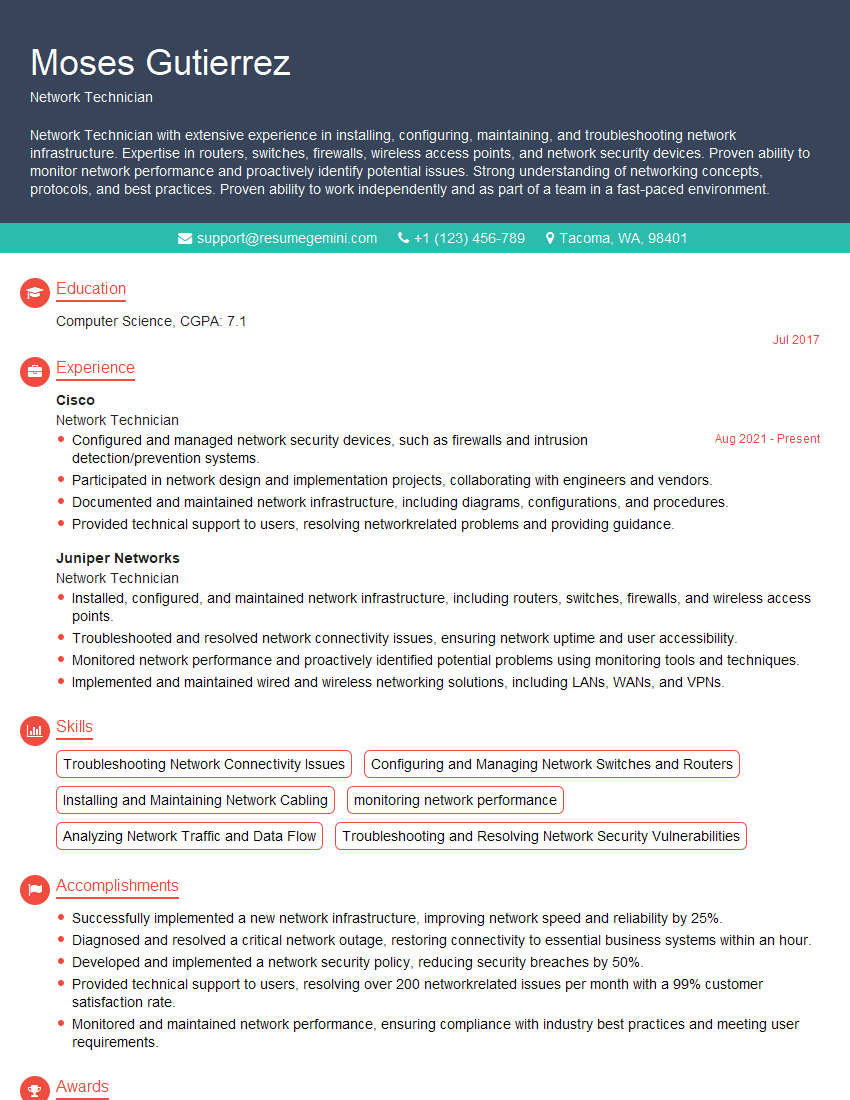
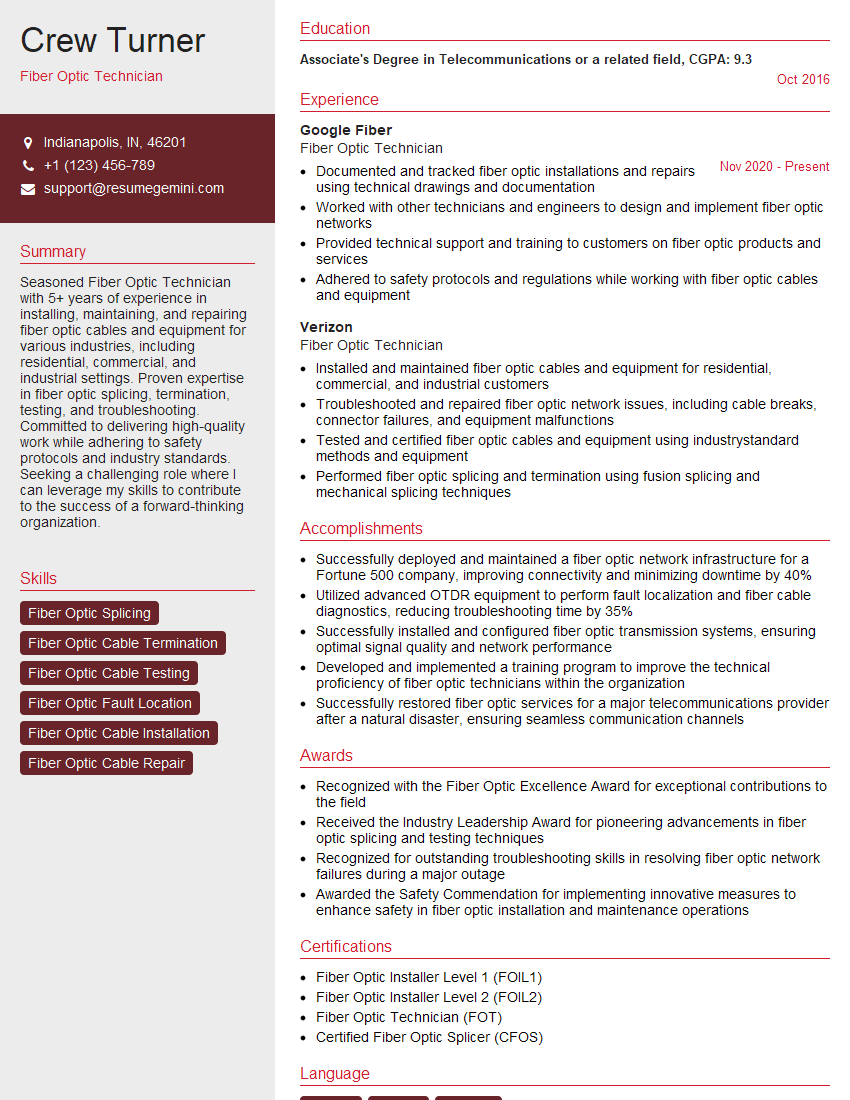
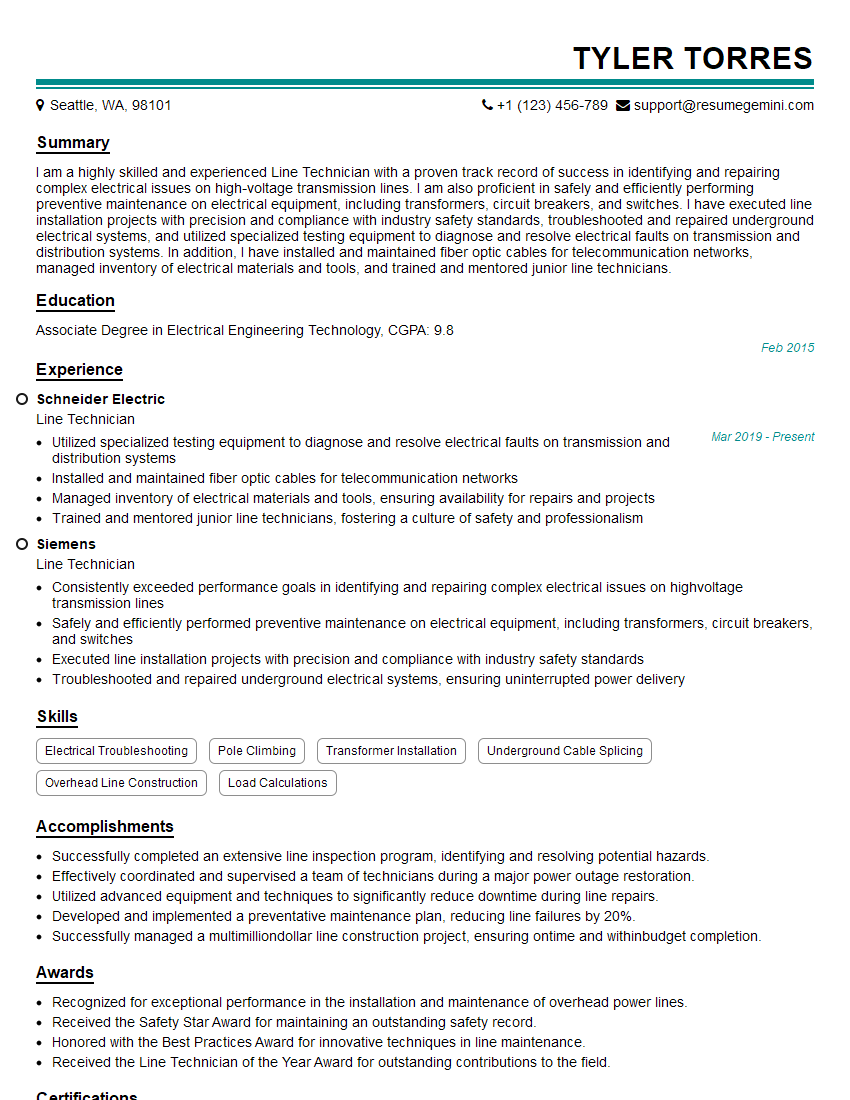
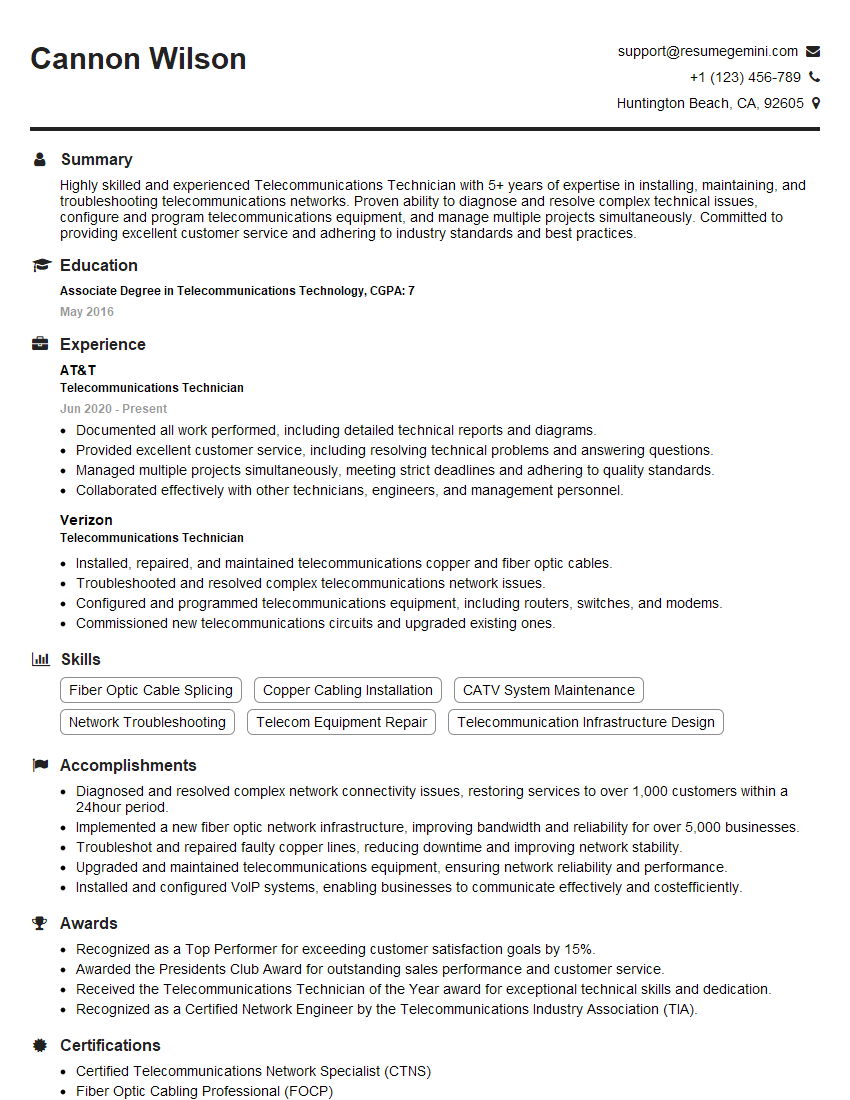
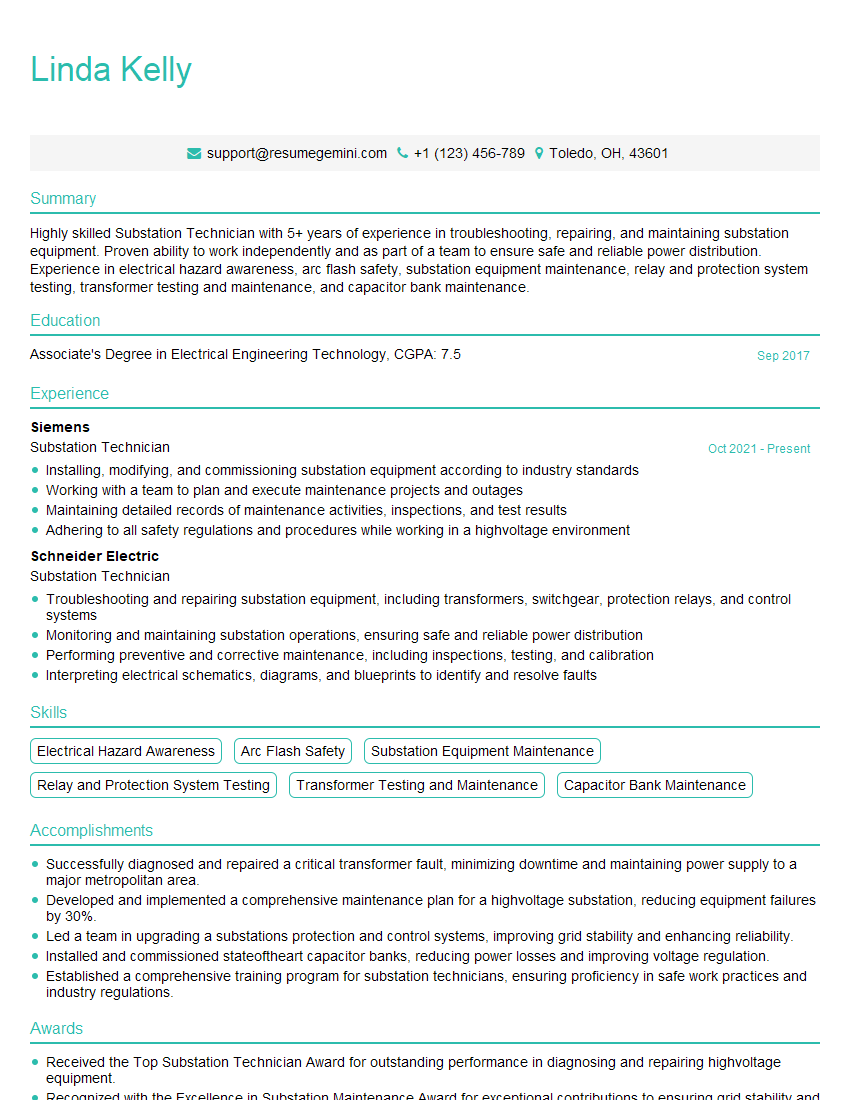
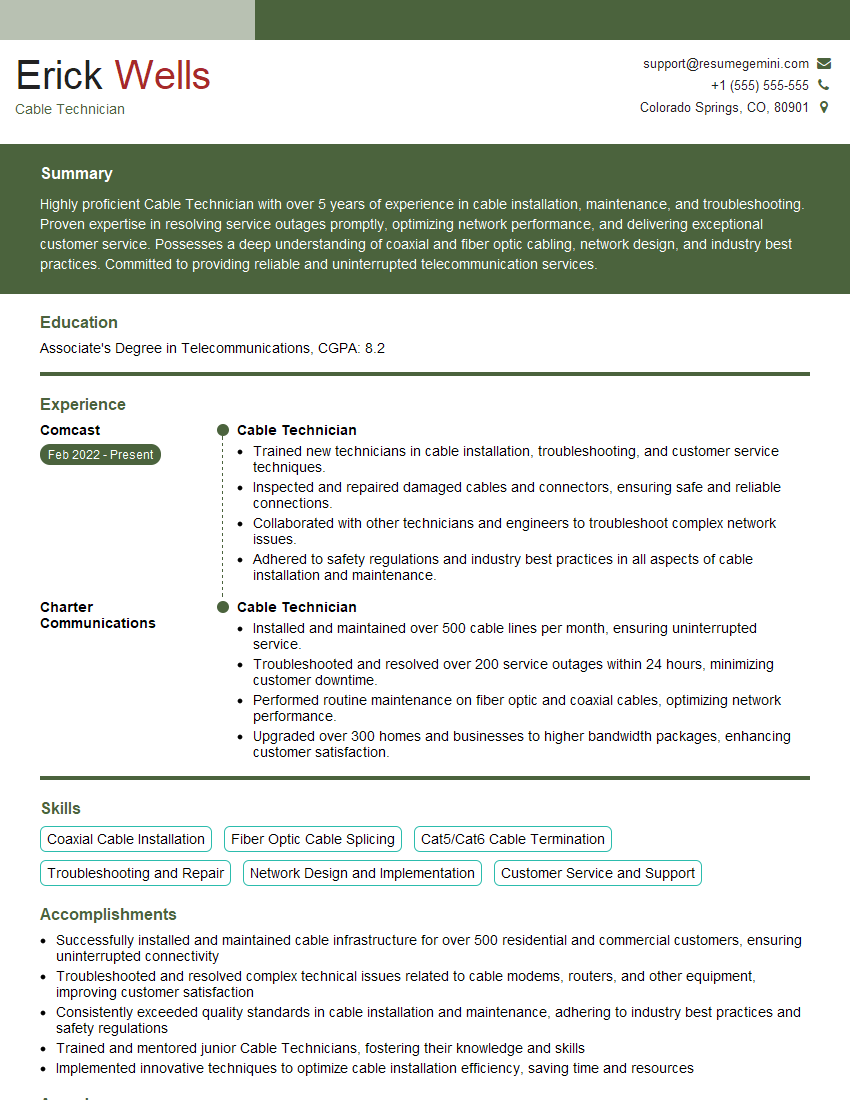
Mastering Underground Cable Installation and Maintenance opens doors to a rewarding career with excellent growth potential. This field demands skilled professionals who can ensure reliable communication and data transmission. To significantly improve your job prospects, it’s vital to craft a compelling, ATS-friendly resume that highlights your skills and experience effectively. ResumeGemini is a trusted resource that can help you build a professional resume tailored to this industry. We offer examples of resumes specifically designed for Underground Cable Installation and Maintenance professionals to help guide you.


Explore more articles
Users Rating of Our Blogs
Share Your Experience
We value your feedback! Please rate our content and share your thoughts (optional).
What Readers Say About Our Blog
To the interviewgemini.com Webmaster.
Very helpful and content specific questions to help prepare me for my interview!
Thank you
To the interviewgemini.com Webmaster.
This was kind of a unique content I found around the specialized skills. Very helpful questions and good detailed answers.
Very Helpful blog, thank you Interviewgemini team.